
On the three-party collaboration that built the template for fashion hospitality in the Gulf, and what a Sicilian horse-drawn cart is doing on a sky pool above the Palm Jumeirah.
The Carretto Siciliano is a painted wooden cart, the most recognisable object of Sicilian folk tradition, built for three centuries to carry goods and visual storytelling across the island’s agricultural interior. At Cloud 22, 96 metres above the Palm Jumeirah, its folkloric print covers the sun loungers, the umbrellas, the floating pool beds, and the beach balls. Dolce&Gabbana put it there. Ounass made it available to buy on the ground floor below. Neither fact alone explains why the collaboration works.
The Carretto Siciliano
The Carretto Siciliano — a horse-drawn cart used across Sicily from the eighteenth century onward — was never simply transport. Its painted wooden panels carried a visual vocabulary drawn from the island’s layered history: scenes from Ariosto’s Orlando Furioso, episodes from the lives of local saints, the geometric interlace of Sicily’s Arab-Norman architectural heritage, all rendered in the deep reds, burning yellows, and cobalt blues that distinguish Sicilian folk aesthetics from every other regional tradition in Italy. For populations that were largely illiterate, the Carretto functioned as a mobile painted narrative — cultural memory moving through the landscape it depicted.
Dolce&Gabbana’s relationship with this specific object is biographical rather than referential. Domenico Dolce was born in Polizzi Generosa, a small town in the Sicilian interior, and the Carretto’s visual language is one he grew up inside rather than one the house acquired through research. Its recurring presence across Dolce&Gabbana’s design archive — alongside the sacred heart, the Trinacria, and the island’s ecclesiastical Baroque — is a return to origin, which is the specific quality that separates its arrival at Cloud 22 from a fashion house applying a decorative motif to a hotel pool. The same distinction between a genuine, evidenced commitment and a borrowed aesthetic gesture is what separates a collaboration built to last from one built to trend.


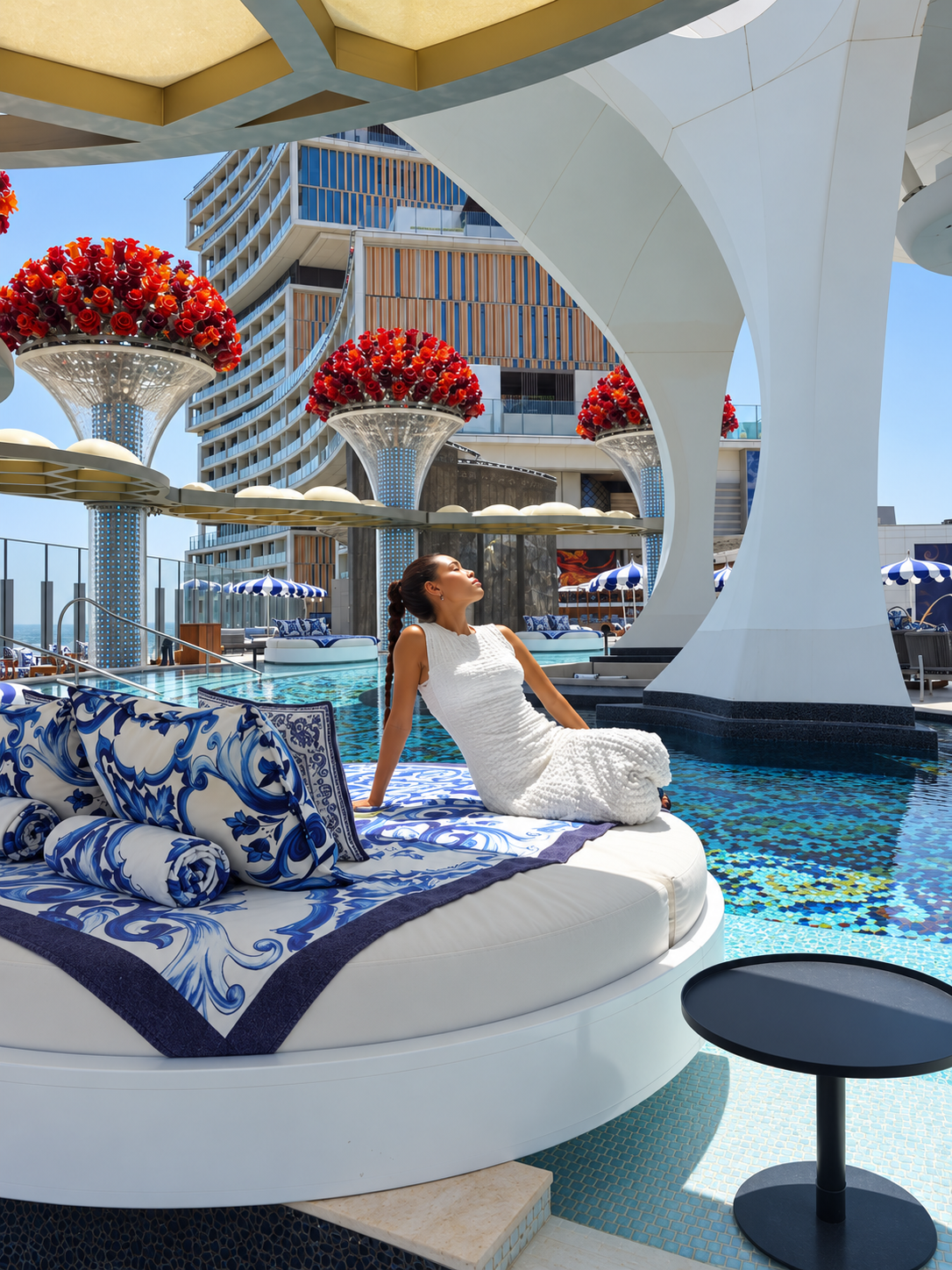
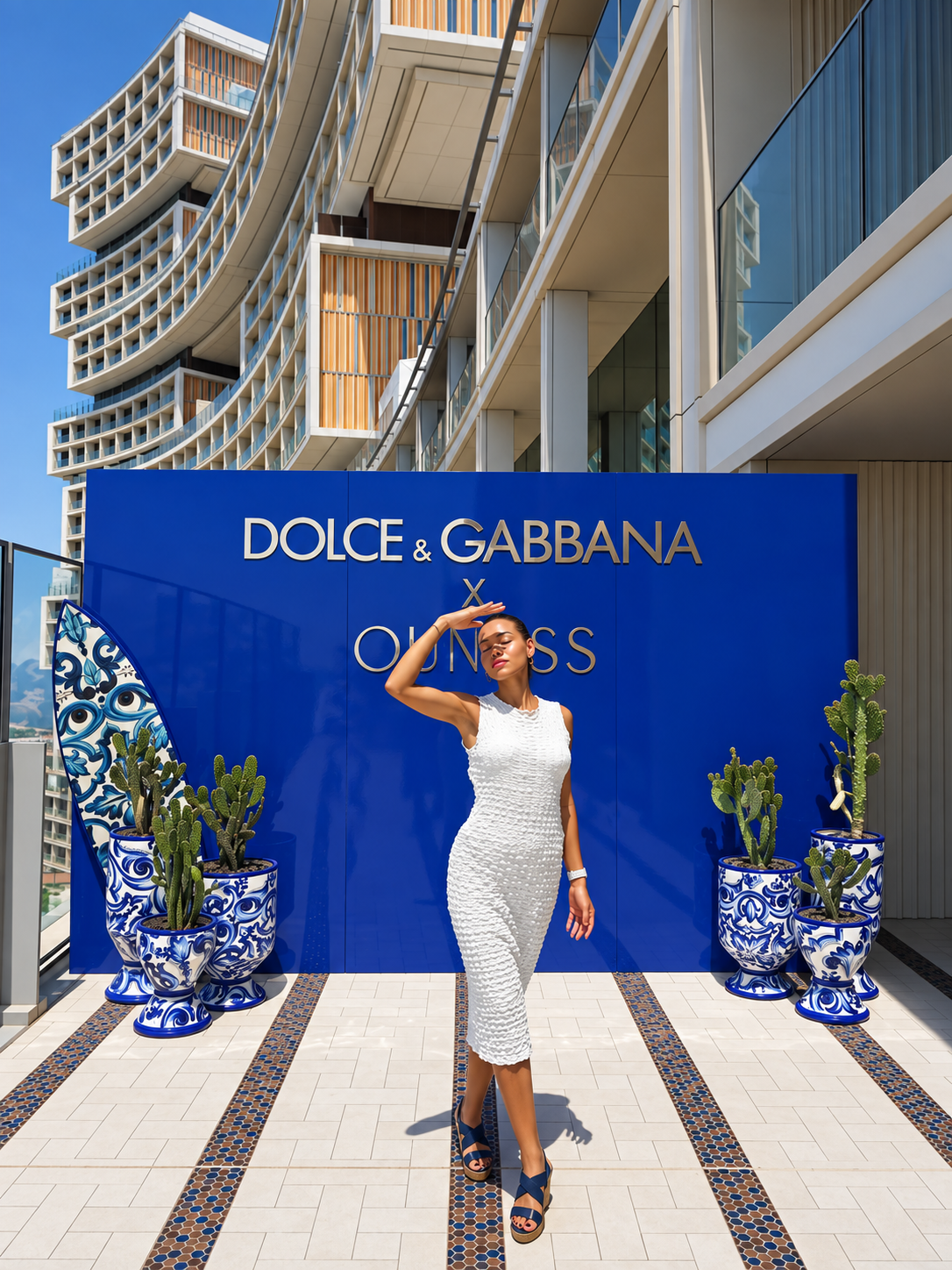
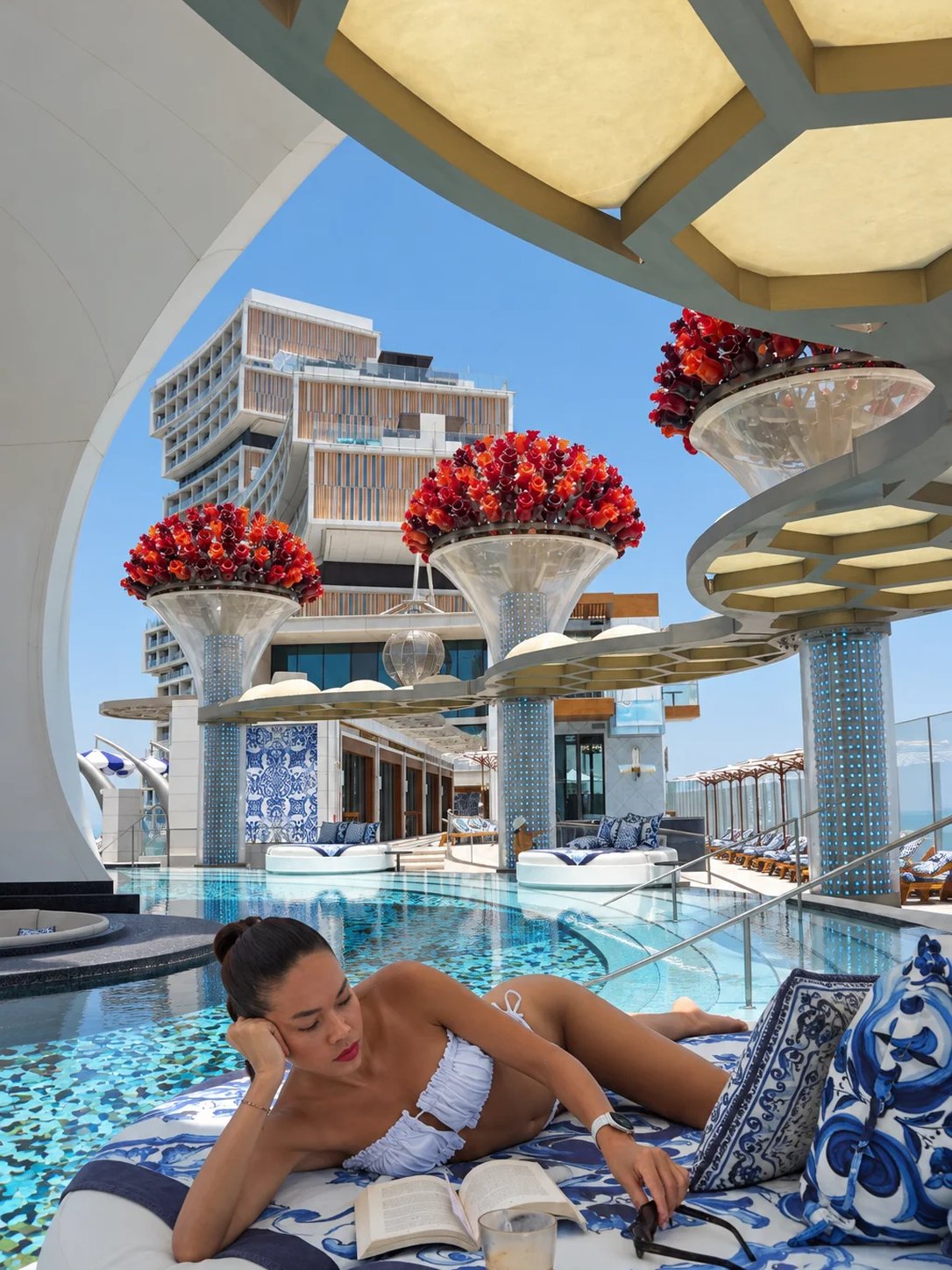
Cloud 22
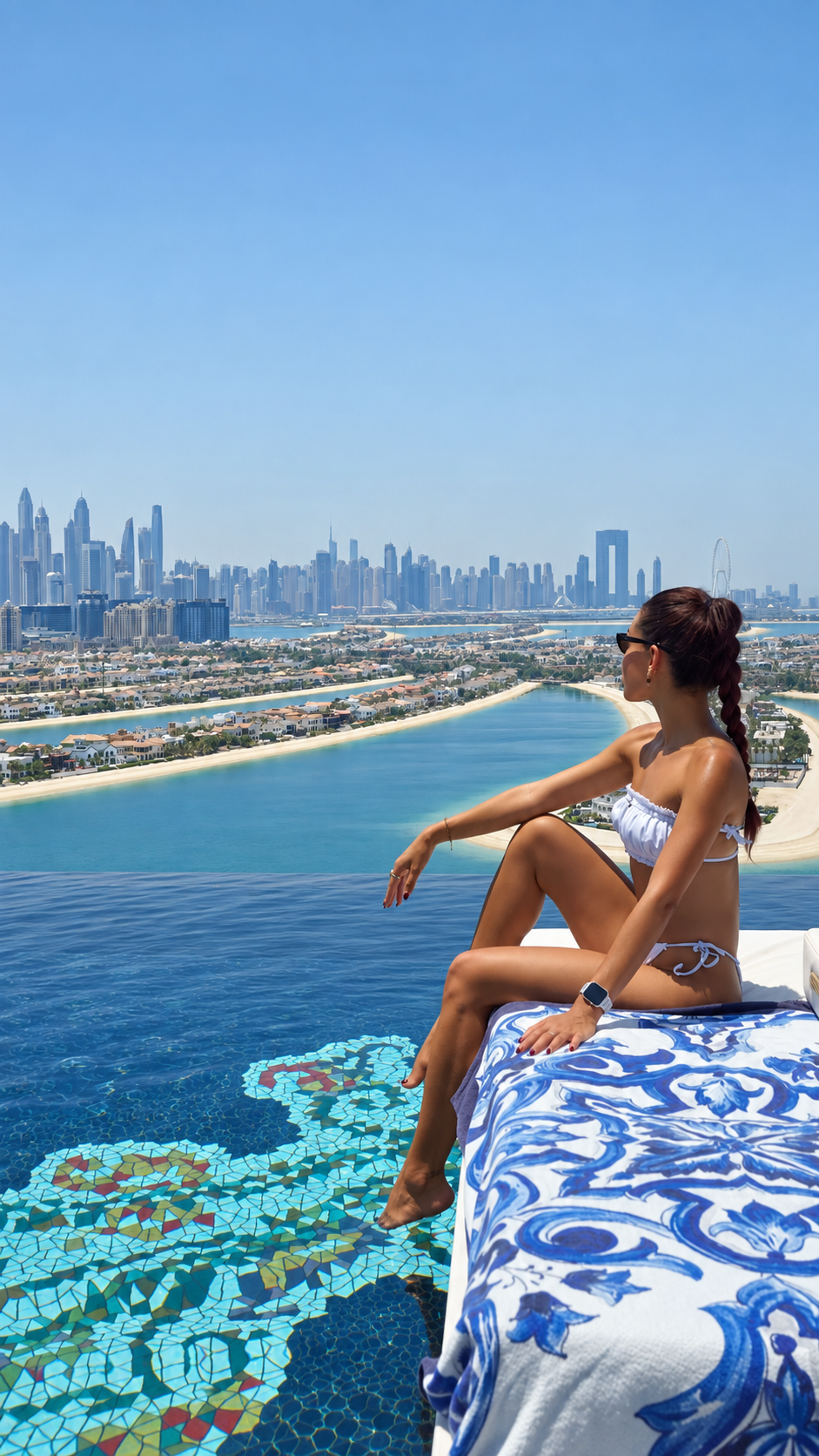
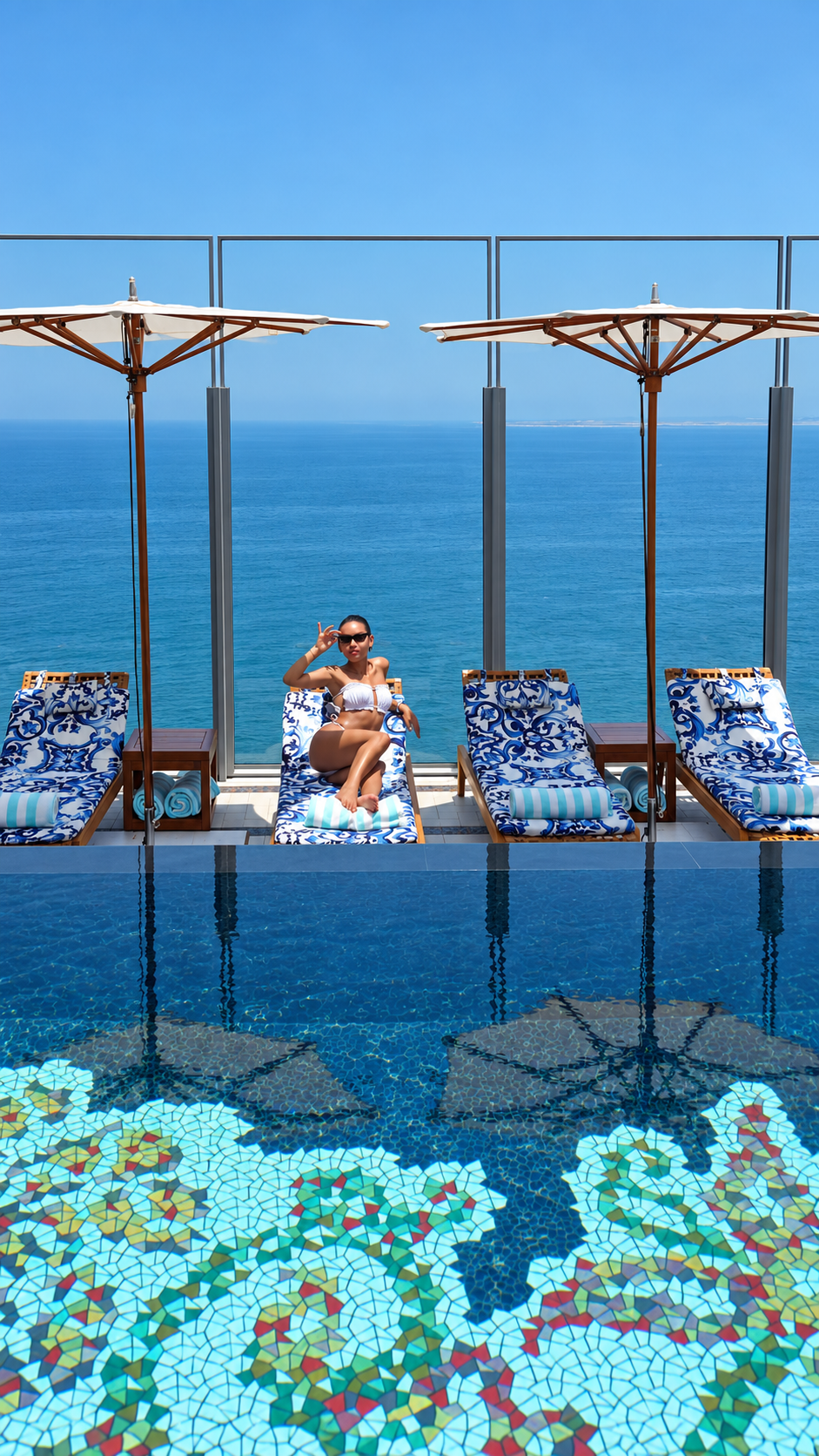
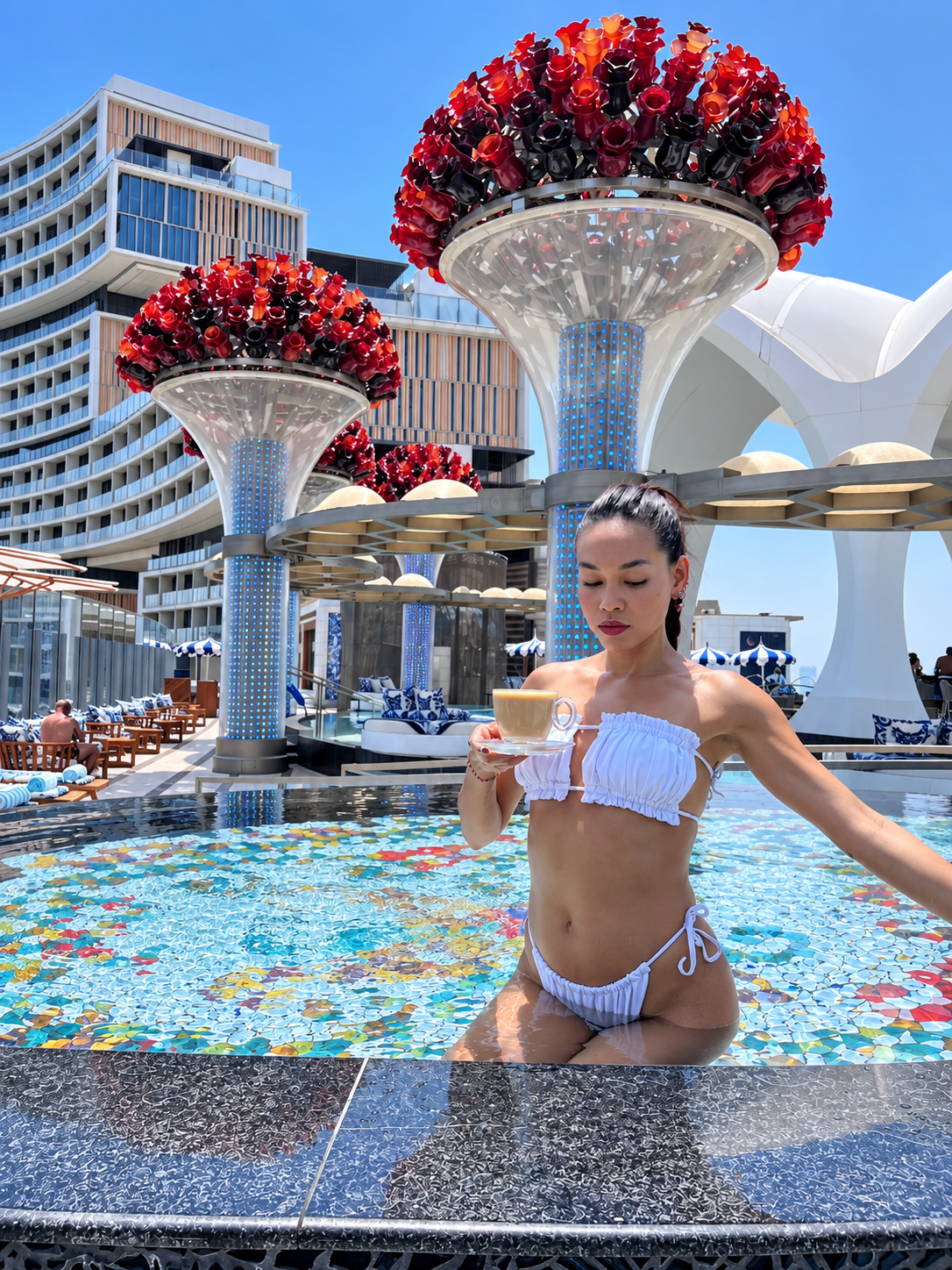
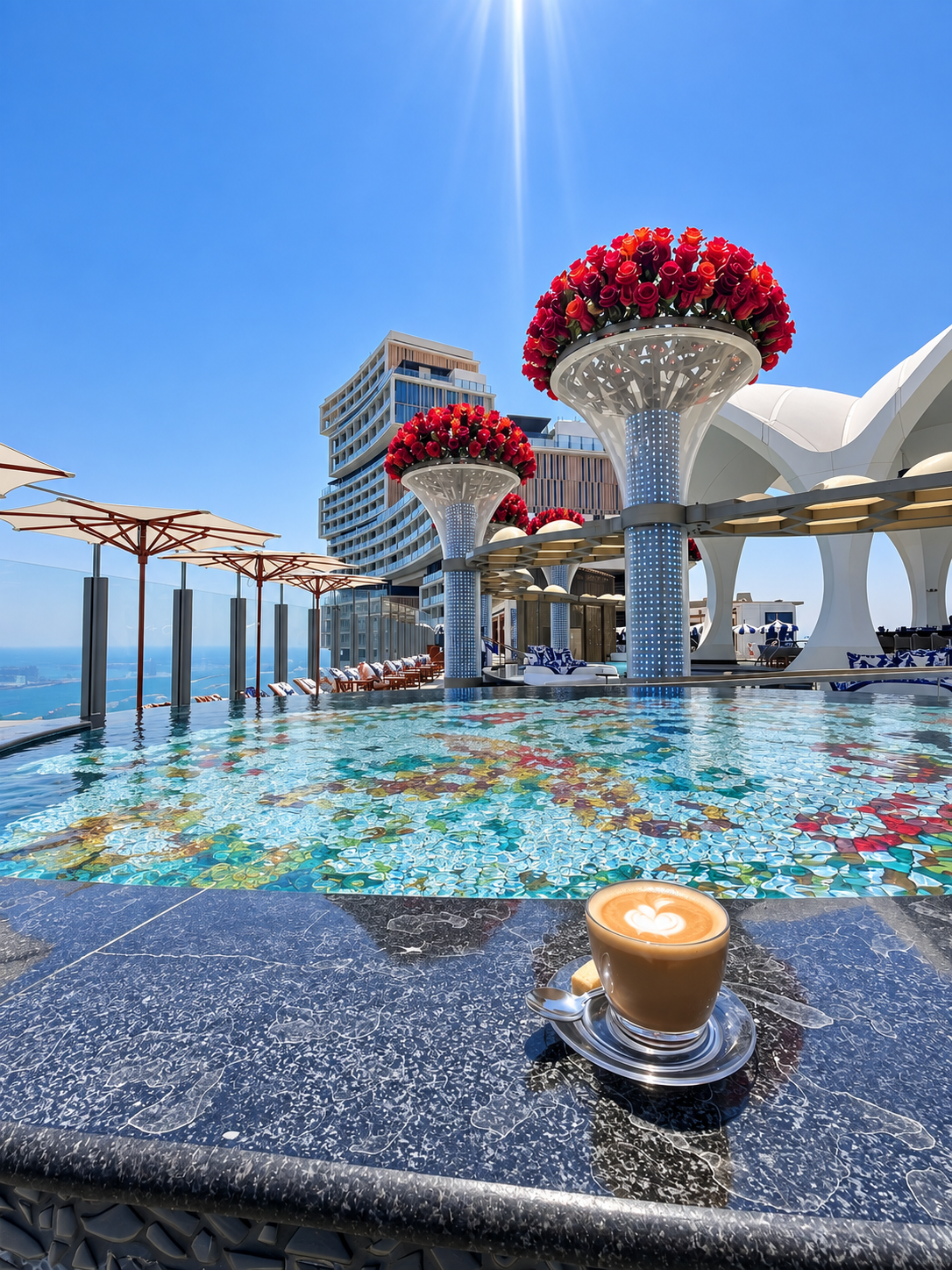
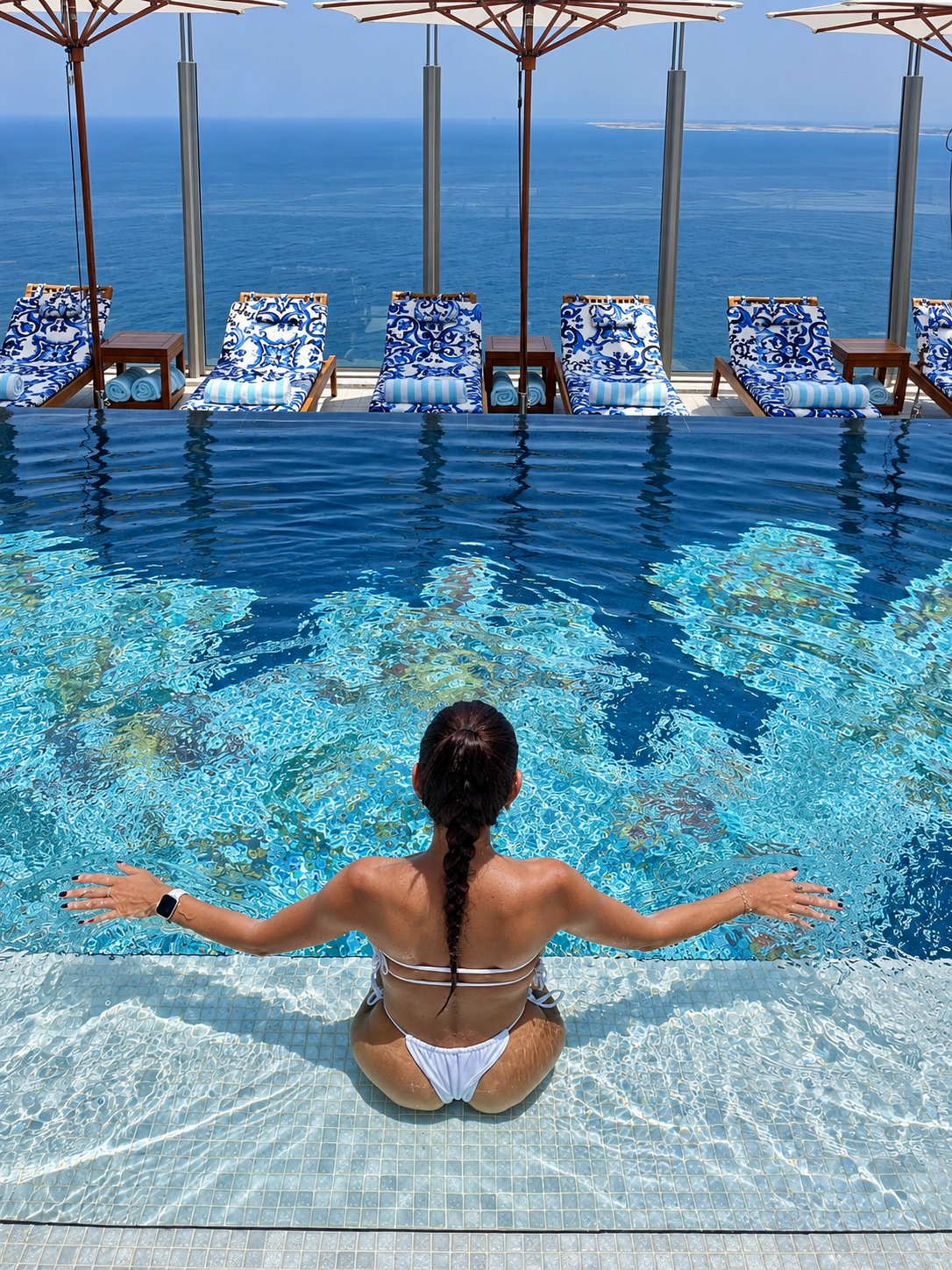
Cloud 22 sits on the 22nd floor of Atlantis The Royal, the ultra-luxury hotel that opened on the Palm Jumeirah in February 2023, designed by Kohn Pedersen Fox Associates across 795 rooms and suites. The pool itself soars 96 metres above the Palm and stretches 90 metres in length — a scale that places it among the largest sky pool environments at any hotel globally, framing an uninterrupted view across the Palm’s frond structure, the Arabian Sea, and the Dubai skyline. Eleven private cabanas, each with its own plunge pool, sit beneath a two-storey VVIP cabana with its own floating infinity pool at the apex of the offer. Floating beds set directly into the main pool — rather than positioned beside it — are the detail that most sharply distinguishes Cloud 22 from a conventional pool deck: guests don’t lie next to the water. They lie inside it.
Cloud 22 is the signature sky pool at Atlantis The Royal on the Palm Jumeirah, Dubai, located on the hotel’s 22nd floor. It soars 96 metres above the Palm and spans 90 metres in length, featuring an infinity pool, in-water floating beds, 11 private cabanas with plunge pools, and a two-storey VVIP cabana. It has been recognised as one of Dubai’s best swimming pools in consecutive annual industry awards.
A setting this specific and this technically accomplished makes real demands on any collaboration that wants to inhabit it with genuine authority: an addition that merely decorates an already complete environment produces decoration, not transformation. What follows is the case for why the Dolce&Gabbana takeover, in partnership with Ounass, clears that bar.
The transformation
The Carretto Siciliano print, applied at Cloud 22 across the sun loungers, the umbrellas, the floating in-pool beds, and the beach balls, produces an immediate and total chromatic shift from the neutral luxury palette — cream, sand, silver water — common to ultra-premium pool environments elsewhere. Dolce&Gabbana’s own account of the takeover frames it as a tribute to Italy’s artistic and cultural legacy rather than a seasonal decorative refresh, and the level of detail supports that framing: the print is applied to the loungers with the same attention to proportion and pattern repeat that would govern its use on a garment, not simply printed flat across a surface.
The most striking single image the collaboration produces is also its most conceptually interesting: the Carretto Siciliano, an object built for a farmer’s transport across Sicily’s agricultural interior, floating in an infinity pool 96 metres above the Arabian Sea. It’s a genuinely incongruous juxtaposition on paper — landlocked folk art relocated to altitude above open water — and the fact that it reads as coherent rather than jarring is the clearest evidence of the design team’s confidence in the material. The beach balls, printed in the same folkloric motifs, extend the playfulness the Carretto tradition has always carried alongside its more solemn narrative content.
The culinary programme
The most revealing single decision in the collaboration isn’t a visual one — it’s the bruschetta with Oscietra caviar on the Dolce&Gabbana-curated menu. Bruschetta is the most humble preparation in the Italian culinary vocabulary, grilled bread rubbed with garlic and oil, developed in agricultural regions including Sicily as a way to test each season’s olive oil. Oscietra caviar, produced from the roe of the Osetra sturgeon native to the Caspian and Black Seas, is among the most expensive commercial food ingredients available. Placing the two together on the same plate isn’t a fusion gesture — it’s the same aesthetic principle that puts a farmer’s cart in a sky pool: the meeting of the folk and the palatial, which has been Dolce&Gabbana’s founding design tension since the house’s earliest collections.
Gillardeau oysters, cultivated by the Gillardeau family in France’s Marennes-Oléron basin and widely regarded among the finest available commercially, paired with Amalfi lemon and balsamico, extend the same geography-as-argument logic — French Atlantic coast, Amalfi Coast citrus, Modena’s balsamic tradition, served together above the Arabian Sea. The steak tartare with truffle closes the menu’s most uncompromising statement: raw beef, classical French technique, no concession to the spectacle of the setting. The food doesn’t perform the view’s function, and the view doesn’t perform the food’s.



The Ounass architecture
Ounass launched on 15 December 2016 as Al Tayer Group’s first dedicated luxury e-commerce platform, built on decades of the Group’s existing Gulf luxury retail relationships — including its operation of Harvey Nichols across the UAE, Bahrain, Saudi Arabia, and Kuwait. Independent reporting on the platform’s position confirms the scale of what it has since built: approximately 80% of all GCC luxury e-commerce orders, 4 million monthly active users, over 1,300 brands including Dolce&Gabbana, two-hour delivery in Dubai. Only around 13% of GCC luxury sales currently happen online — below the global average of 20% and well below the UK’s 39% — meaning Ounass is simultaneously dominant in its category and operating in a market with substantial growth still ahead of it.
The Galleria Level pop-up store, stocking the Dolce&Gabbana collections in physical retail form, is the collaboration’s commercial hinge. It exists to catch the guest at the point of maximum desire — leaving Cloud 22 still holding the sensory memory of the Carretto’s colours and the Oscietra caviar — and present the objects that experience has made them want. Harper’s Bazaar Arabia’s coverage of the collaboration frames the pop-up correctly as an extension of the pool experience rather than a separate retail moment — the two are designed to function as a single continuous loop. The same logic that shapes how global luxury brands calibrate their Dubai activations — reaching the Gulf consumer on infrastructure built for them, rather than adapted for them — is the structural intelligence behind Ounass’s entire model. The same pattern is visible across Dubai’s other infrastructure-scale ambitions: build the platform the market actually needs, rather than importing one built for somewhere else.
The global context
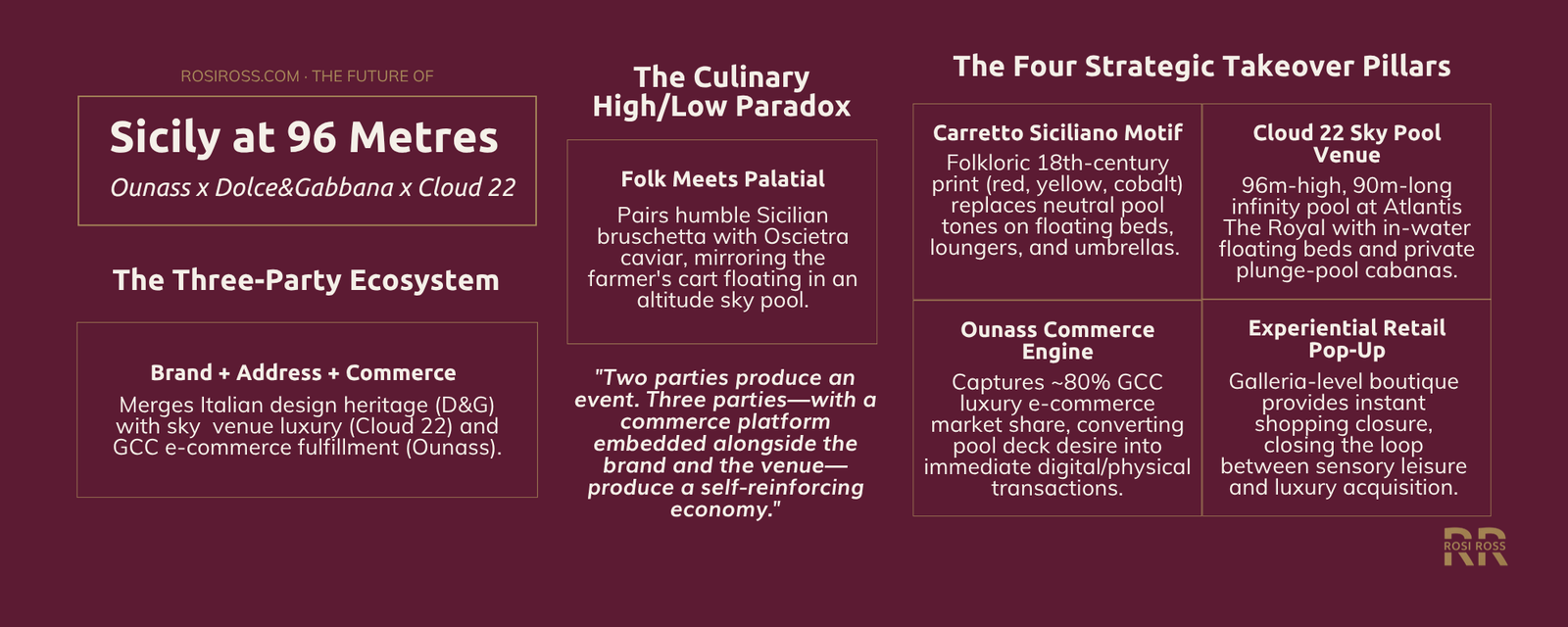
Fashion-hospitality collaborations are not a new category, but the three-party structure here is more sophisticated than most of its precedents. Two parties — a brand and a venue — typically produce an event. Three parties, with a commerce platform embedded alongside the brand and the address, produce something closer to a self-reinforcing economy: the print makes the guest want the object, the object is available to buy without leaving the building, and the purchase carries the brand relationship home. Not every fashion-hospitality crossover in this region is built on that kind of confirmed, structured foundation — which is precisely what makes a genuinely three-party, independently documented collaboration like this one worth examining as a template rather than a one-off activation.
The Gulf intelligence
The GCC luxury consumer is younger, more digitally fluent, and more socially active than the European luxury consumer this industry was originally built around, and Ounass’s own leadership has been explicit about expecting a substantial share of the region’s luxury retail to move online in the coming years. What the Cloud 22 collaboration demonstrates is a model built to meet that consumer at every stage of the relationship simultaneously — the experiential point, the aesthetic point, and the transactional point — inside a single, unified design environment, rather than addressing each in isolation the way most luxury activations in the region still do.
Sicily arrived in the Gulf at 96 metres above sea level, and it brought its horse-drawn cart with it. Dubai’s leisure landscape has no shortage of spectacle built purely to be photographed, but the Carretto’s presence at Cloud 22 carries a genuine biographical and commercial architecture behind it — which is the difference between an activation and a template. The same sensory specificity that separates a considered design decision from a decorative one runs through every layer of this collaboration, from the pattern repeat on a sun lounger to the Gillardeau oyster on the menu.
“The Carretto is there
because Domenico Dolce grew up in its shadow.
It is there because Ounass understands
that the Gulf luxury consumer wants a world,
not a product.
And it is there because Cloud 22
is the rare address in this city
that can make a Sicilian farmer’s cart
look like it was always meant
to be floating at altitude
above the Arabian Gulf.”

