
On how an old preference for light skin, youth, and slenderness entered a digital system powerful enough to intensify it, and how the same system is now giving competing definitions of beauty a chance to be seen
Beauty standards were never only about faces. They were about who could stay out of the sun, who could afford the time, who was allowed to be seen. Now the question is who gets shown.
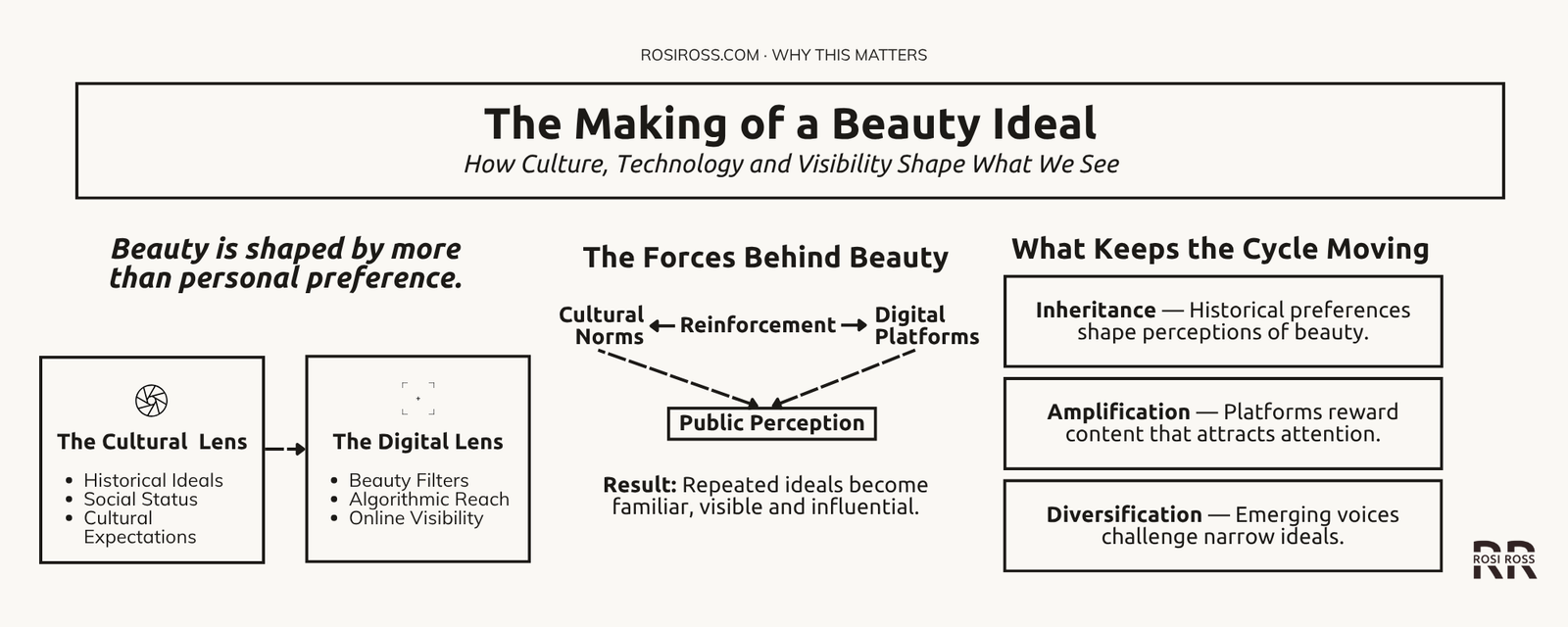
Beauty standards have always existed. Social media turned them into a feedback system. Aesthetic preferences become filters, filters become templates, templates become engagement signals, and engagement signals become recommendation systems, until the faces and bodies that already perform well become even more visible. China’s beauty standards are not disappearing. They are becoming more contested.
The question this essay asks is not what Chinese people find beautiful. That question assumes a single answer, and the research does not support one. The better question is what happens when a culture’s ideals are absorbed into an algorithm, and who gets visibility as a result. Beauty standards are not merely personal preferences. They are cultural signals shaped by history, technology, status, commerce and visibility, and China, where beauty apps, e-commerce and social platforms are tightly integrated, makes the mechanism unusually easy to see. It is a case study in mechanism, not a verdict on a culture, and every culture builds its own systems of aesthetic discipline.
What are Chinese beauty standards? There is no single Chinese beauty standard. Research on Chinese social media documents mainstream ideals that favour light skin, youthful and delicately proportioned facial features and slim bodies, summed up in the phrase “white, young and thin”, alongside growing counter-currents including body positivity, fitness culture and an appreciation of darker skin. The ideals vary by age, region, class and platform.
Where China’s Preference for Light Skin Comes From
The logic scholars describe is largely one of class.
The preference is old. Aesthetic admiration of fair skin can be traced to the Book of Songs, the oldest surviving Chinese poetry collection, in which a poem praises a woman’s hands like buds and skin like tallow, as Sixth Tone has noted. A proverb still in circulation says that one whiteness covers three flaws. Only those who did not labour outdoors could stay out of the sun, so paleness signalled leisure and rank, a pattern documented in several societies, including Europe, which turned toward tanned skin only in the early twentieth century.
Why is pale skin considered beautiful in China? The preference for light skin in China has a long history tied largely to class: pale skin signalled a life spent indoors rather than in outdoor labour. It appears in classical poetry and proverbs, including the saying that one whiteness covers three flaws. Scholars distinguish it from Western racial categories, although later contact with Western racial thought and modern commerce have also shaped it.
This is not the same as the Western racial hierarchies it is sometimes mistaken for, and it is not wholly separate from them either. The same commentary notes that, from the late nineteenth century, contact with Western theories of race influenced Chinese ideas about “Western” features such as larger eyes, and that the fair-skin standard appears to have intensified in more recent decades. An analysis in the journal Social Media + Society goes further about the tools themselves, arguing that commercial beauty filters embed canons of whiteness not only by brightening skin but by altering facial features. Old preference and new infrastructure are not rivals. They compound, and the difference between a standard that is inherited and one that is merely borrowed is rarely visible in a feed.
It is worth remembering that ideals of the body have also moved over time. Art historians often cite the fuller figures celebrated in Tang-dynasty imagery as a reminder that even the Chinese canon of the body has not been fixed. A standard that feels timeless from inside a moment is usually a product of that moment, and the speed at which platforms can now spread a single ideal is what is new.
The “Pale, Young and Thin” Ideal
Researchers compress the mainstream ideal into three words: white, young and thin.
Studies of beauty discourse on Xiaohongshu, the lifestyle platform also known as RedNote, describe influencers’ posts that emphasise fair complexion, youthful looks and a slim figure, and researchers studying body-positive creators on the platform frame their work as a challenge to precisely that standard. Qualitative interviews with 24 female university students, published in Frontiers in Psychology, found that young women were well aware of the mainstream ideals on social media and of their negative effect on body image.
The ideal is also a young one. It rewards a look of youthfulness that research on selfie editing, discussed below, shows being actively produced by software.
Two older ideas from psychology help explain why awareness does not neutralise the effect. Leon Festinger’s social comparison theory, proposed in 1954, holds that people evaluate themselves by comparing themselves with others, and a feed is an unusually efficient comparison machine. Barbara Fredrickson and Tomi-Ann Roberts’s objectification theory, published in 1997, argues that cultures which treat the body as an object to be looked at can lead people to monitor their own appearance from the outside, a habit often called self-objectification. Neither theory was written about China or about platforms, but both describe the psychological ground on which the digital mechanism operates.
When Thinness Became a Measurement
A body that earns praise becomes a body that is shown more.
A feature of digital culture is that it converts ideals into numbers: likes, views, comments, shares. A study in the journal Body Image analysed 757 trending thinspiration videos on Douyin, the Chinese counterpart of TikTok, and nearly three million associated comments, using computer vision and language analysis. It found that the videos promoted the thin ideal together with the fit ideal and the beauty ideal, often through gendered portrayals of the body. An earlier pilot study of three viral Douyin body challenges, published in the Journal of Eating Disorders, found comment themes of thin praise, self-comparison and dieting, with participants who objectified their bodies more reporting more negative body image.
How does Douyin affect body image? Research suggests that popular body-related content on Douyin can reinforce thin, fit and beauty ideals. A Body Image study of 757 trending thinspiration videos and nearly three million comments found the thin ideal overlapping with fit and beauty ideals, while a pilot study of body challenges found comments praising thinness and encouraging comparison. These findings describe patterns in content, not all users.
Measurement matters because it changes what is visible. Once praise can be counted, it can be optimised, and the content that earns the most of it becomes the template for the next wave.
Beauty Apps Turn Ideals Into Infrastructure
Templates become norms.
The clearest evidence for the loop comes from editing behaviour. A study in Telematics and Informatics analysed more than 80,000 selfies, drawn from before-and-after editing posts on RedNote, and found that edits frequently emphasised youthful, “baby-schema” traits such as enlarged eyes and softened facial contours, with a persistent preference for lighter skin tones. A study of 767 Chinese adolescents followed for six months found that selfie editing predicted later consideration of cosmetic surgery, with facial dissatisfaction as the link, and it found no gender differences in the pattern.
A paper in Frontiers in Psychology puts a name to the cost. It describes an “imagination tax”, the time, money and effort spent conforming to dominant ideals, and argues that routine filter use makes self-objectification part of everyday practice, deepening self-surveillance and comparison. The point is not that filters create vanity. It is that they make a particular face easy to produce, easy to compare against and therefore easy to expect.
How Xiaohongshu and Douyin Accelerate the Beauty Loop
An ideal that is rewarded with visibility becomes a self-reinforcing norm.
Recommendation systems close the circuit. Content that performs is shown more widely, creators learn what performs, and the next wave of content converges on it. Researchers have described the algorithmic and visual mechanisms of these platforms as carrying a disciplinary logic, which users internalise through feedback. A single platform’s data can mislead, and the studies here are mostly correlational, but they converge on a mechanism. This is the dynamic that attention economies reward long before they test it.
How has Xiaohongshu influenced beauty standards? Xiaohongshu, also known as RedNote, is a lifestyle platform where beauty, fashion and fitness content circulates widely. Research on its posts finds that mainstream beauty content often emphasises fair complexion, youthful looks and slimness, that selfie edits on the platform lean toward lighter skin and baby-schema features, and that it also hosts body-positive communities challenging those norms.
From Thin to Fit: Is Healthy the New Beautiful?
Wellness aesthetics can repackage thinness.
The shift toward fitness, sleep and recovery culture, outdoor activity, skin health rather than only skin whiteness, and nutrition literacy looks like progress, and in part it is. Ritual-based skin care and recovery-focused routines are healthier frames than correction. But the harder question is whether this is a broader definition of beauty or simply a more demanding one.
The evidence is mixed. A study of college students found that exposure to fitness role models on social media was associated with stronger upward body comparison, greater body self-discrepancy and higher social physique anxiety. A paper in Frontiers in Psychology cited earlier work finding that appearance-based exercise motivation can coexist with frequent exercise and a less positive body image, and that internalising an athletic ideal predicted change in compulsive exercise. Researchers studying functionality-focused imagery note that many such images still depict thin-ideal bodies, equating capability with a particular appearance. Genuine health, diversity and functionality deserve reward. Rebranded restriction does not.
Is fitness changing beauty standards in China? Partly. Fitness, outdoor activity and strength are gaining visibility as alternatives to the slim-and-pale ideal, but research is mixed. Studies find fitness content associated with both motivation and heightened comparison and anxiety, and many fitness images still depict thin-ideal bodies, so a healthier-looking standard is not automatically a less demanding one.



When Social Media Pushes Back
The loop is not uniform in its effects, even if it is uniform in its incentives.
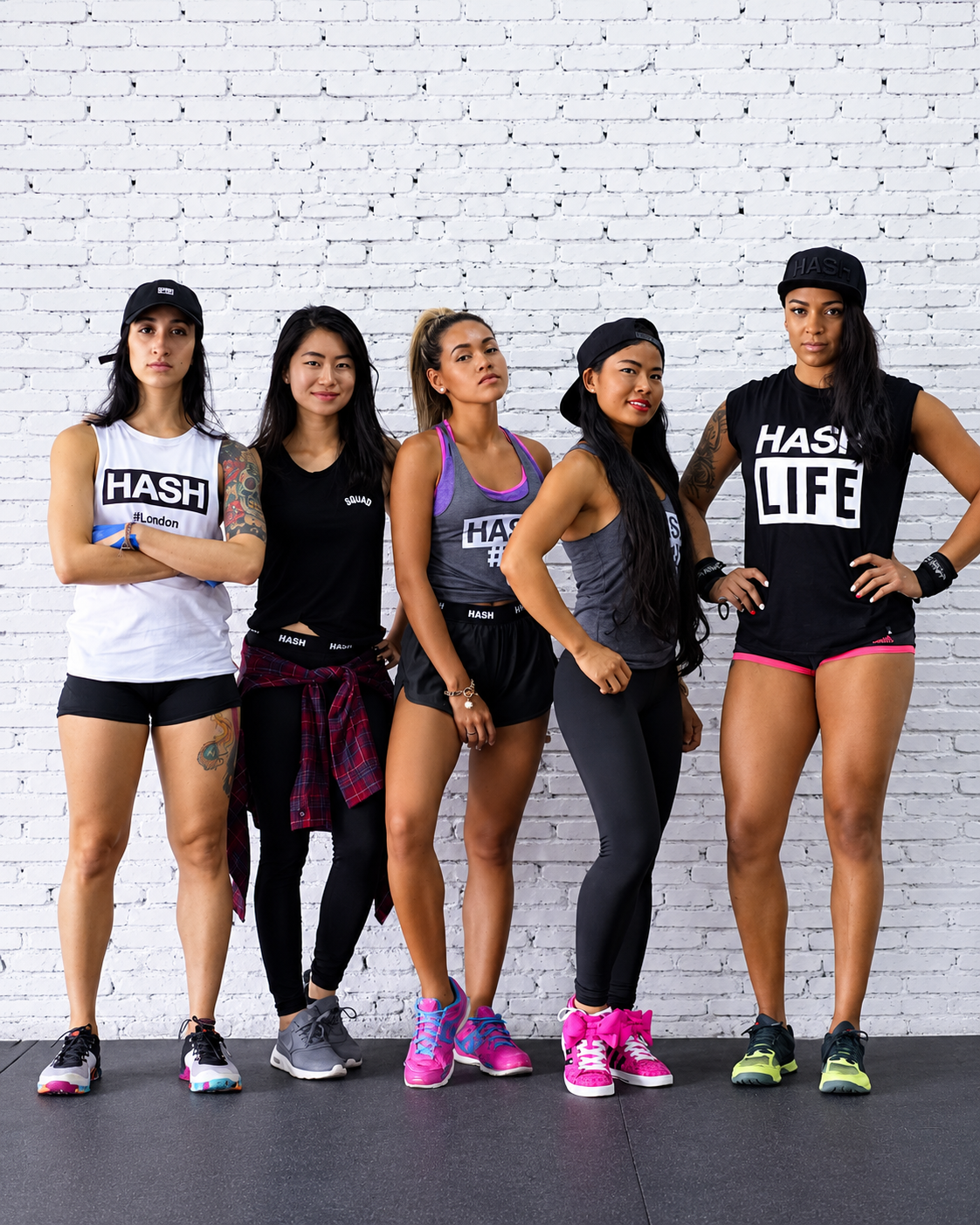
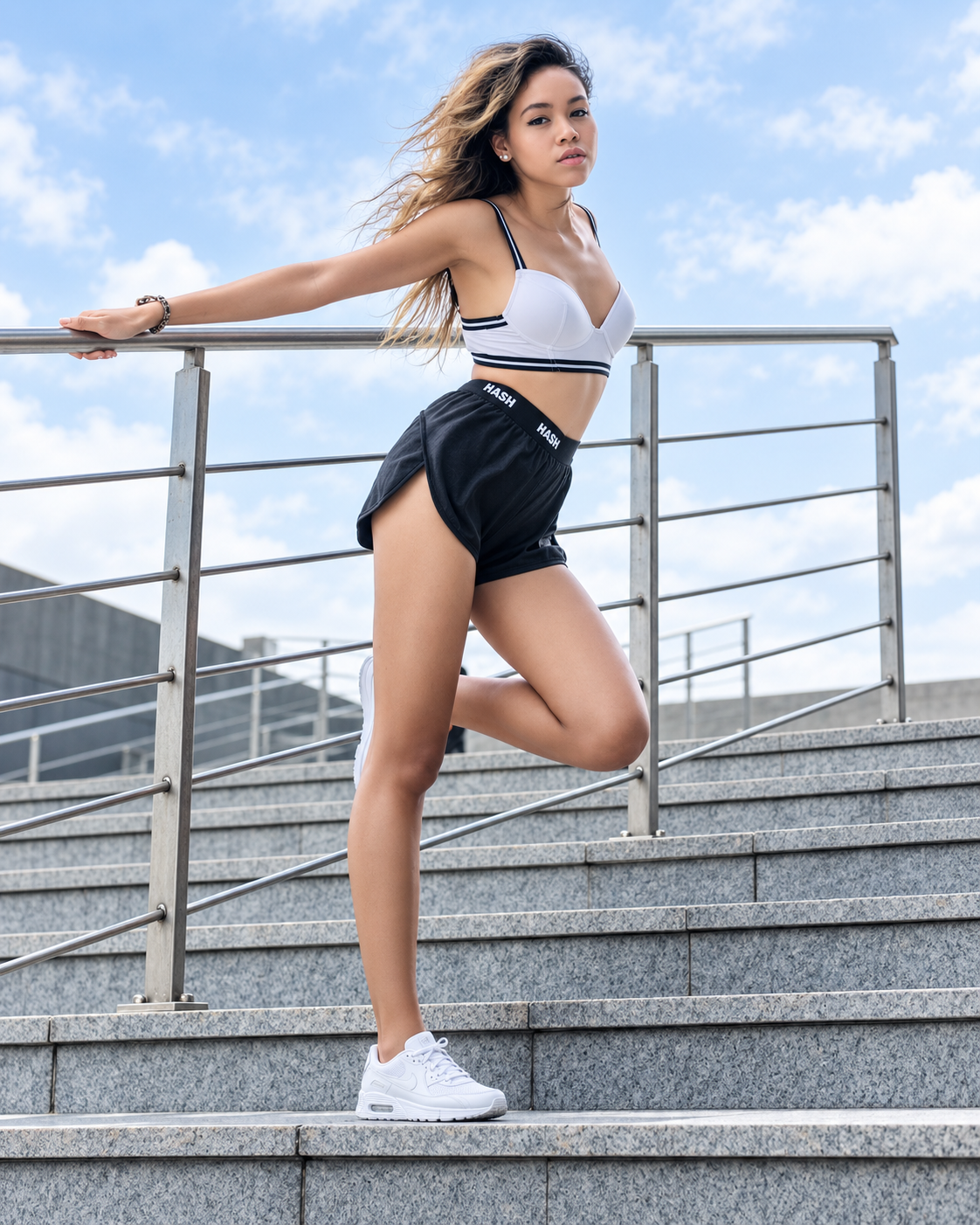
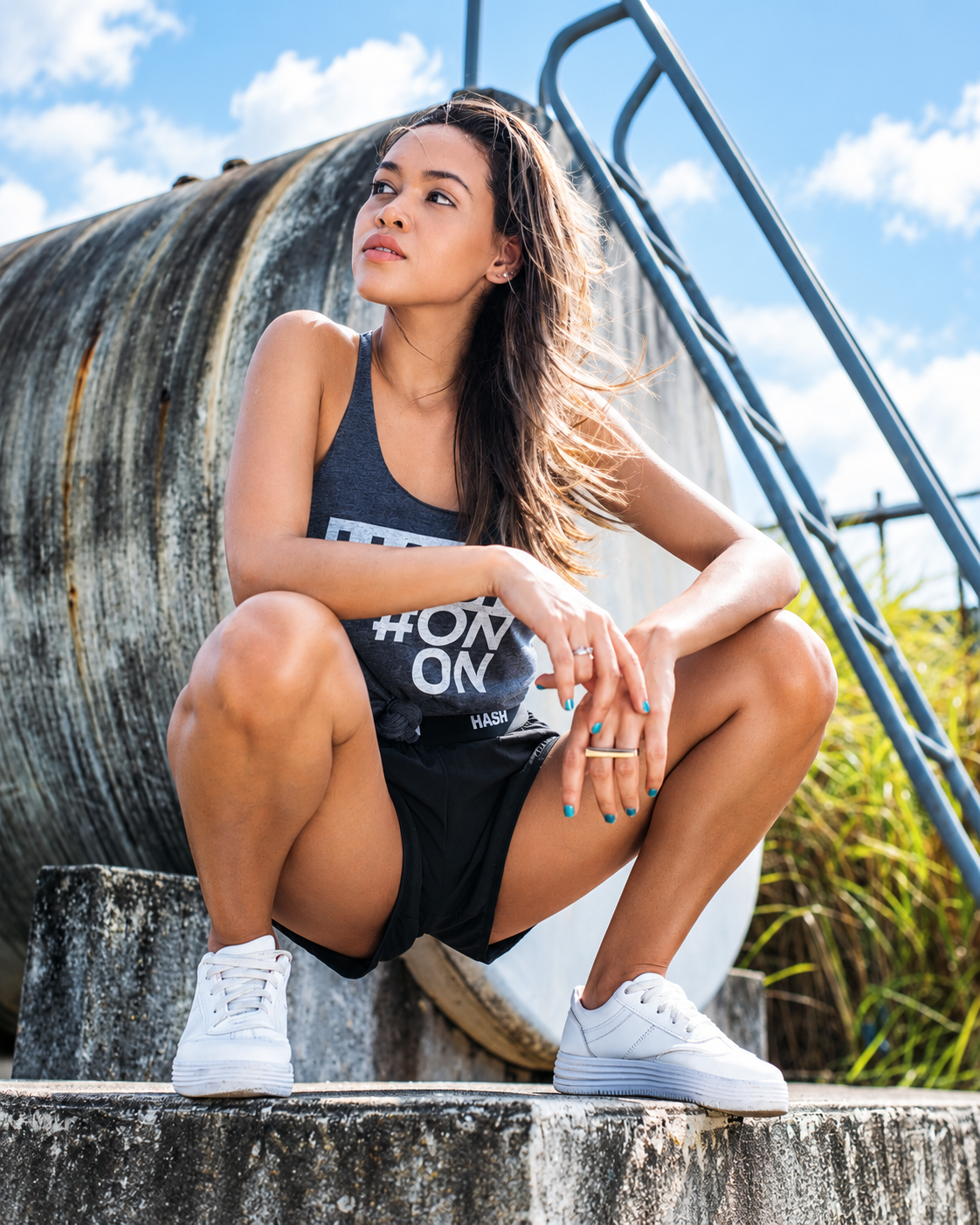
The same platforms host resistance. The mechanism that rewards a narrow ideal is indifferent to what it amplifies, and a post that challenges the standard can travel on exactly the same machinery as one that enforces it. A content analysis of body-positive posts on Chinese social media, summarised in later research, found that more than 40 percent carried appearance-focused messages, yet the posts showed substantial diversity and realistic bodies, most contained positive body-image themes and nearly half contained self-compassion themes. An analysis of 134 posts by five Xiaohongshu influencers who campaign under the theme of rejecting body anxiety concluded that such content helps challenge the “white, young and thin” standard. In the interview study, young women generally welcomed body positivity but noted its limitations.
The first of those findings contains a quiet complication. A body-positive post that is still appearance-focused is saying that the body should be accepted, which is not the same as saying that the body is not the point. Researchers and critics of the wider movement have raised the same concern elsewhere: a message of acceptance that keeps appearance at the centre of attention can leave the underlying logic of the feed intact, so that what changes is which bodies are admired and not whether bodies are being judged. The idea of body neutrality, which asks people to value what a body does and to give less weight to how it looks, has grown in part as a response to that limit, and it is better held as a companion to body positivity than as its replacement.
The presence of self-compassion in nearly half of the posts is the more hopeful signal. Psychologists such as Kristin Neff define self-compassion as treating oneself with the kindness one would offer a friend, recognising that imperfection is part of shared human experience, and holding painful feelings in balance without being swallowed by them. It is a different register from admiration. A culture of comparison asks how one measures up; self-compassion asks how one is treated by oneself when one does not. Content that models the second question, even imperfectly, interrupts the loop at the point where the loop is most effective.
It would be wrong to say that body positivity has replaced narrow standards. It has found an audience. Its limits are the limits of the system it works inside: a recommendation engine rewards whatever holds attention, and the algorithm does not distinguish between a post that comforts and a post that provokes. A creator who rejects body anxiety must still compete for visibility with the content that feeds it, and the measure of her success is, awkwardly, the same engagement the older ideal also earns.
Effects also vary. An experiment with 420 young female RedNote users found that exposure to idealised influencer images did not always reduce body satisfaction, and that the effect depended on how far a viewer’s own ideal differed from her body. The finding is a useful corrective to the simplest version of the argument. The same image does not land the same way on every viewer. A person whose ideal sits close to her own body may be unaffected, or even encouraged, while a person whose ideal sits far from it may be left dissatisfied. Platforms deliver the same feed to people with very different starting points, and the outcome depends on who is looking as much as on what is shown.
That variation is what makes resistance possible and what makes it incomplete. It suggests that the loop is not a fixed force acting on passive viewers, and that the conditions of viewing matter: whose bodies appear, how often, and in what company. It also suggests that individual resilience cannot carry the whole burden. A feed that shows a wider range of bodies, ages, and skin tones changes the baseline against which every viewer compares herself, and that is a change in the environment, not in the viewer. The more durable form of pushing back is therefore structural: more people gaining the power to define their own ideals, and a feed wide enough to let those ideals be seen.
Darker Skin, Stronger Bodies and the Expansion of Beauty
Standards shift without losing their social function.
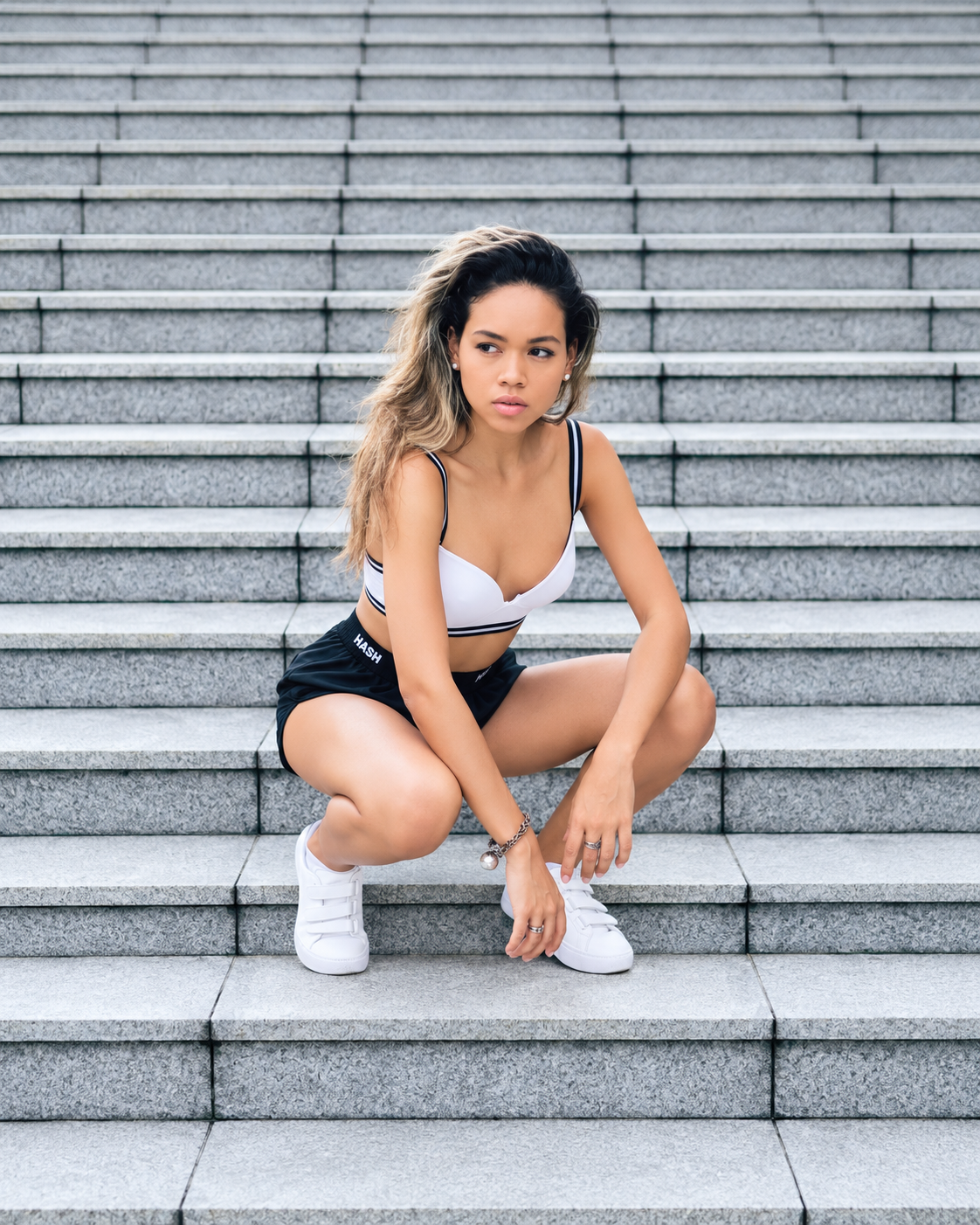
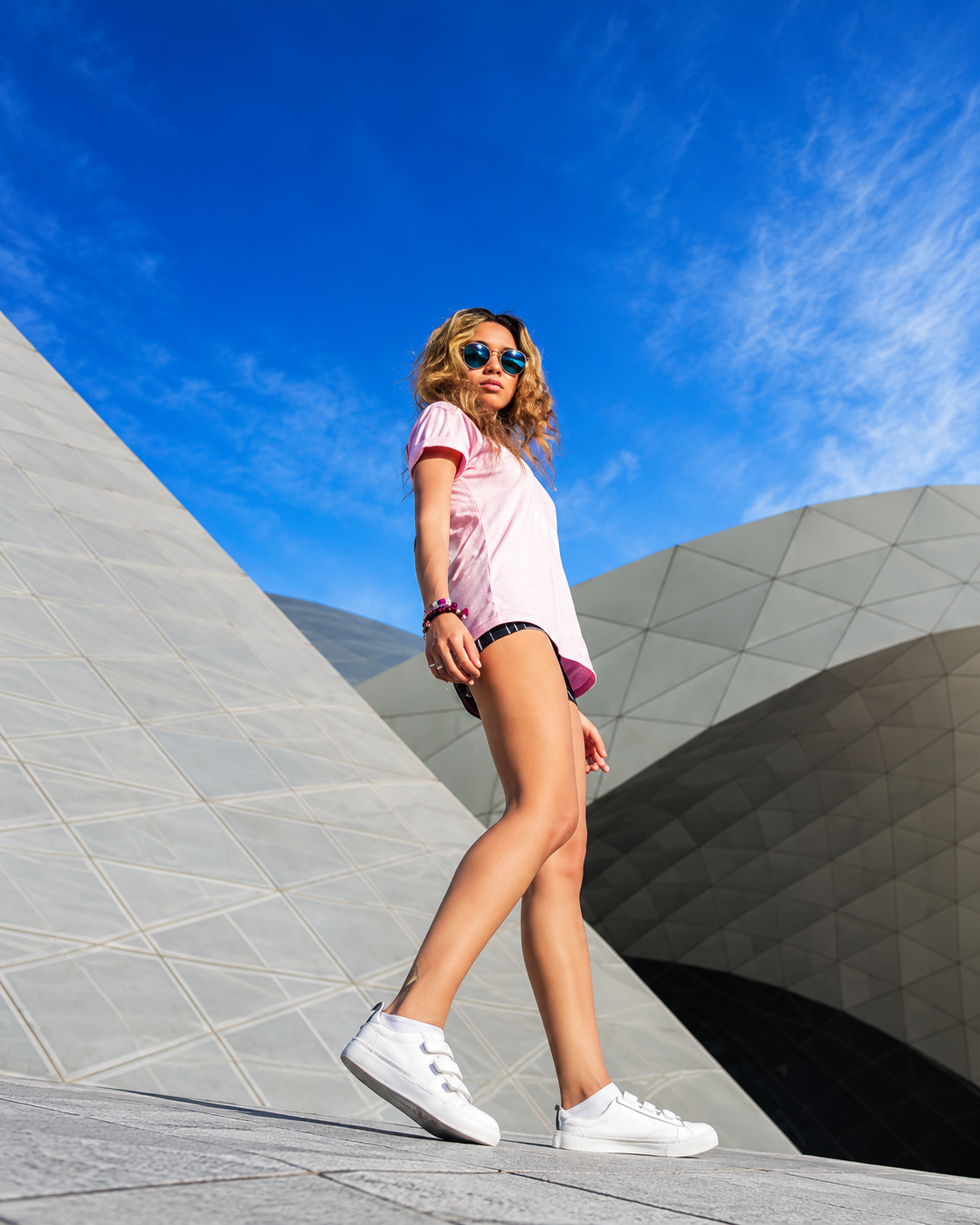
One of the clearest signs of contest is the niche tanning movement in China’s largest cities. Coverage from Jing Daily and Daxue Consulting describes a small community that links tanned skin with fitness, outdoor sport and a rejection of the fair-skin norm, while noting that skin-whitening products still dominate the market. The class logic does not disappear; it can invert. In first-tier cities, one analysis observed, a tan is increasingly associated with leisure and time spent outdoors, not with outdoor labour. A darker complexion becomes a status signal for those who can afford the time, which is the same old logic running in reverse.
Is darker skin becoming more accepted in China? In some communities, yes, but it remains a niche. Tanning and an appreciation of darker, stronger bodies have grown in larger cities alongside fitness and outdoor culture, and some creators openly reject the fair-skin norm. Skin-whitening products still dominate the market, and fair skin remains the mainstream ideal, so acceptance is expanding unevenly, not replacing the older standard.



The Economics of Appearance Anxiety
Beauty anxiety creates markets.
The more precise the perceived defect, the easier it becomes to sell a product, service or procedure as the solution. The commercial chain is easy to trace. Filters reveal or invent a difference. Influencers normalise correction. Beauty content names the problem. Commerce offers a solution. The improved image becomes new content, and the loop begins again, connecting platform engagement, cosmetics, skincare, fitness, aesthetic medicine and consumer identity. This is analysis and not a measured finding, but each link has support in the research above. The “imagination tax” is, in effect, the consumer’s side of the same ledger.
It is also a class story. The RedNote editing study found that the intensity of edits was inversely related to a region’s economic development: users in less affluent regions edited more heavily. The authors interpret this as bound up with identity construction, social capital and expectation, which is to say aspiration, though the data come from one platform and cannot represent all of China. Beauty practices communicate time, money, access and labour. They also communicate what a person hopes to be taken for.
And it is not a women’s story alone. Research often concentrates on women because appearance pressure is best documented there, but muscularity ideals, skin quality, facial editing and idol-driven aesthetics shape expectations for men too, and the adolescent study above found no gender difference in its main pathway.
Why China’s Beauty Standard Is Becoming Harder to Define
Visibility, the real currency, is the thing being negotiated.
Do not predict a single future face. The stronger conclusion is fragmentation. As platforms personalise what each user sees, one feed may deliver hyper-polished femininity, another fitness, another outdoor tanning, another minimal skincare, another body neutrality. Beauty culture becomes simultaneously more diverse and more segmented. That negotiation is not unique to China; it is what happens wherever platforms decide who is seen, whether in fashion systems that decide whose work is shown or in a feed. Western platforms have their own thin, fit, youthful and filtered ideals, which the Chinese research itself describes as thinspiration and fitspiration, and the useful comparison is of mechanisms, not of cultures.
The future of beauty may therefore be less about eliminating standards than about multiplying the number of standards capable of gaining visibility. That is a better outcome than one narrow ideal, and it is not the same as freedom from standards. Which brings the argument back to its starting point. Beauty standards are not merely personal preferences. They are cultural signals shaped by history, technology, status, commerce and visibility.
“Beauty standards were never only about faces.
They were about who could stay out of the sun,
who could afford the time,
who was allowed to be seen.
Now the question is who gets shown.
The future of beauty may not be one new ideal
but more people gaining the power
to define their own —
and a feed wide enough
to let them be seen.”

