
On why a Shanghai trade fair built around pumps, formulas, laboratories and contract manufacturers can reveal the next beauty product cycle before retail does, and how to read it as industry intelligence
The most interesting beauty product at a trade fair may not have a brand name yet.
It may exist as a pump, a refill mechanism, an active-ingredient sample, a texture developed by a contract manufacturer’s laboratory, a new tube material, or an unfinished formula waiting for someone to turn it into a story. Retail shows what has already succeeded. A supply-chain fair shows what is becoming technically possible.
That is the case for walking the supply chain instead of the retail floor, and it is the argument this essay makes about China Beauty Expo in Shanghai. The fair is usually described by what it shows to consumers. Its more useful identity is as an intelligence layer: a place where packaging, formulation, raw materials, machinery, contract manufacturing and brand strategy meet on the same floor, early enough that patterns become visible before they harden into trends. A beauty product is not simply a marketing idea. It is the output of an industrial system, and few places make that system as legible as this one.
The framing matters because beauty is routinely discussed from the shelf backwards: the finished serum, the launch, the campaign, the influencer. Industry intelligence runs the other way. It asks what a supplier can make, at what volume, under which regulation, and who else is making the same bet. This guide reads the fair in that direction, as a method for founders, buyers and product developers, and as a way for anyone curious about the industry to see what sits behind the object they buy.
Why Shanghai Matters to the Global Beauty Supply Chain
The city is part of the thesis.
Shanghai is not merely the host city. It sits at the intersection of Chinese consumer culture, global brands, retail innovation, manufacturing networks and capital, which means a beauty trade show there is embedded in one of Asia’s most sophisticated consumer environments instead of isolated from it. It is where manufacturing intelligence meets brand ambition: the people who make products and the people who must sell them are in the same city, often in the same room.
That proximity changes what a visit teaches. A buyer who meets a contract manufacturer in Shanghai can ask how a formula behaves in the market that will test it hardest, and a founder can see within a single day how packaging, texture and price point interact. The fair’s value is not that any one booth is the answer. It is that the questions can be asked in context, with the market itself a short ride away.
What China Beauty Expo Actually Is
Read the structure before the superlatives.
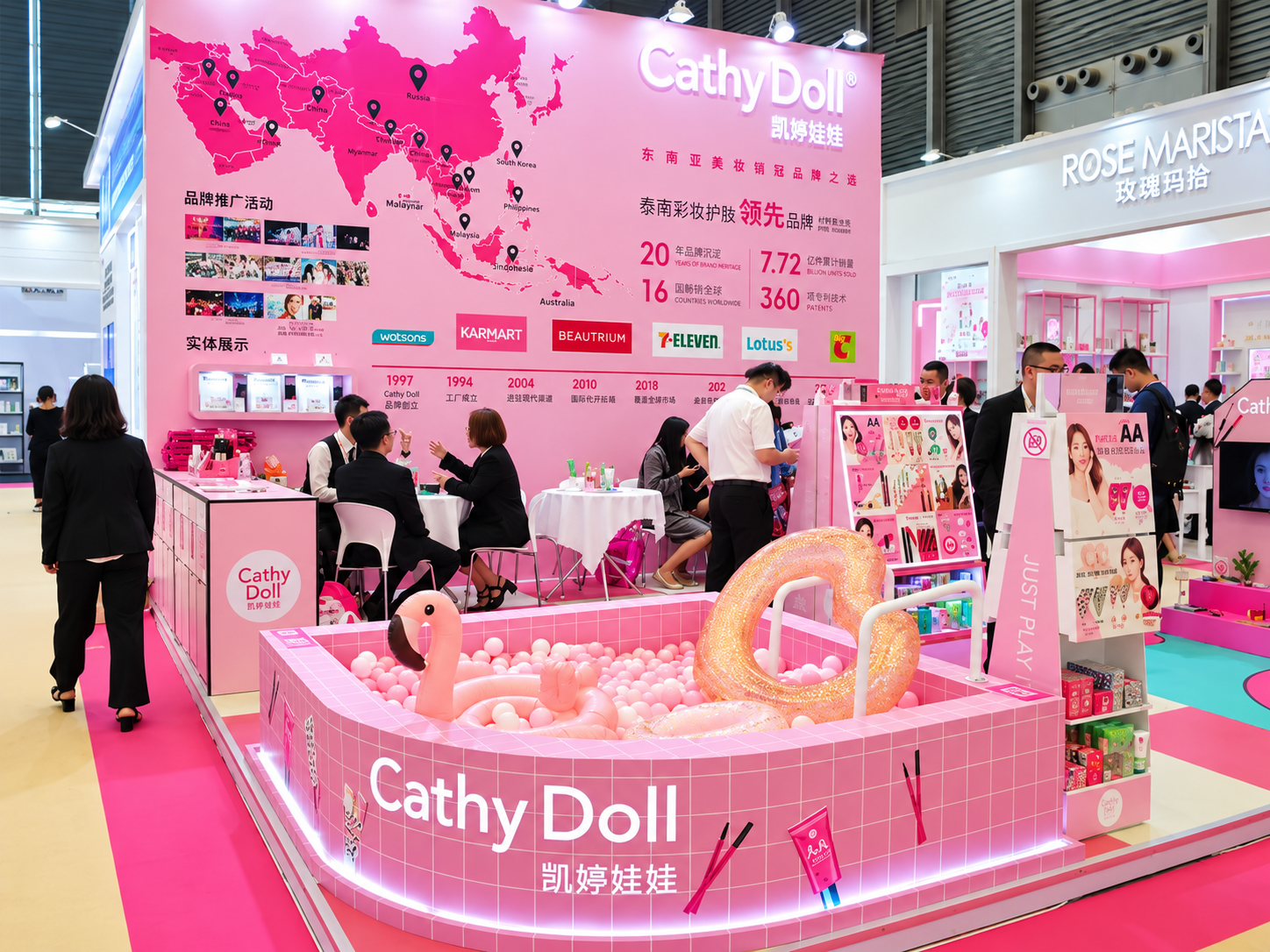
China Beauty Expo, known as CBE, is held each spring at the Shanghai New International Expo Centre in Pudong. According to the official site, it presents the whole spectrum of the beauty industry, from supply chain to professional beauty to finished products, and its materials describe more than 1,500 enterprises at the supply-chain end. Per those materials it is organised by Shanghai Baiwen Exhibitions and Informa Markets, and it positions itself as a leading B2B platform for beauty brands and the beauty supply chain. Like all organiser descriptions, its claims of scale, including the “largest” label that trade listings repeat, are organiser claims, and they change by edition.
What is China Beauty Expo? China Beauty Expo (CBE) is an annual B2B beauty trade fair held in Shanghai at the Shanghai New International Expo Centre in Pudong. It combines a finished-products section for beauty brands with CBE Supply, a supply-chain section covering OEM/ODM manufacturers, packaging, ingredients, machinery, testing and related technologies, and it is organised by Shanghai Baiwen Exhibitions and Informa Markets.
Why is China Beauty Expo important? It concentrates the beauty supply chain in one place: contract manufacturers, packaging specialists, ingredient developers, laboratories and machinery makers exhibit alongside Chinese brands, so a visitor can see how products are built as well as what is sold. Its importance is analytical, because patterns in what many suppliers develop at once become visible before they reach retail.
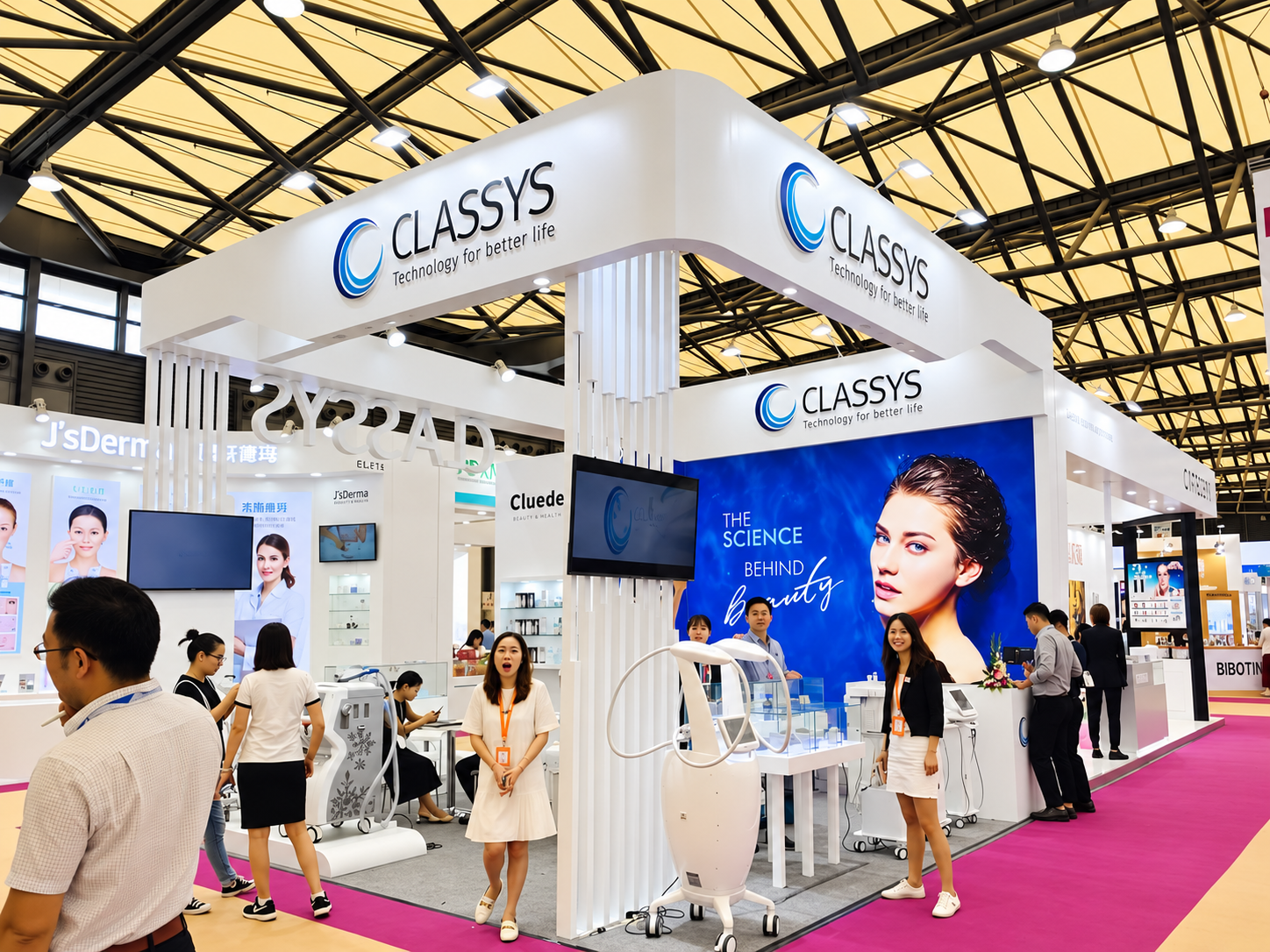
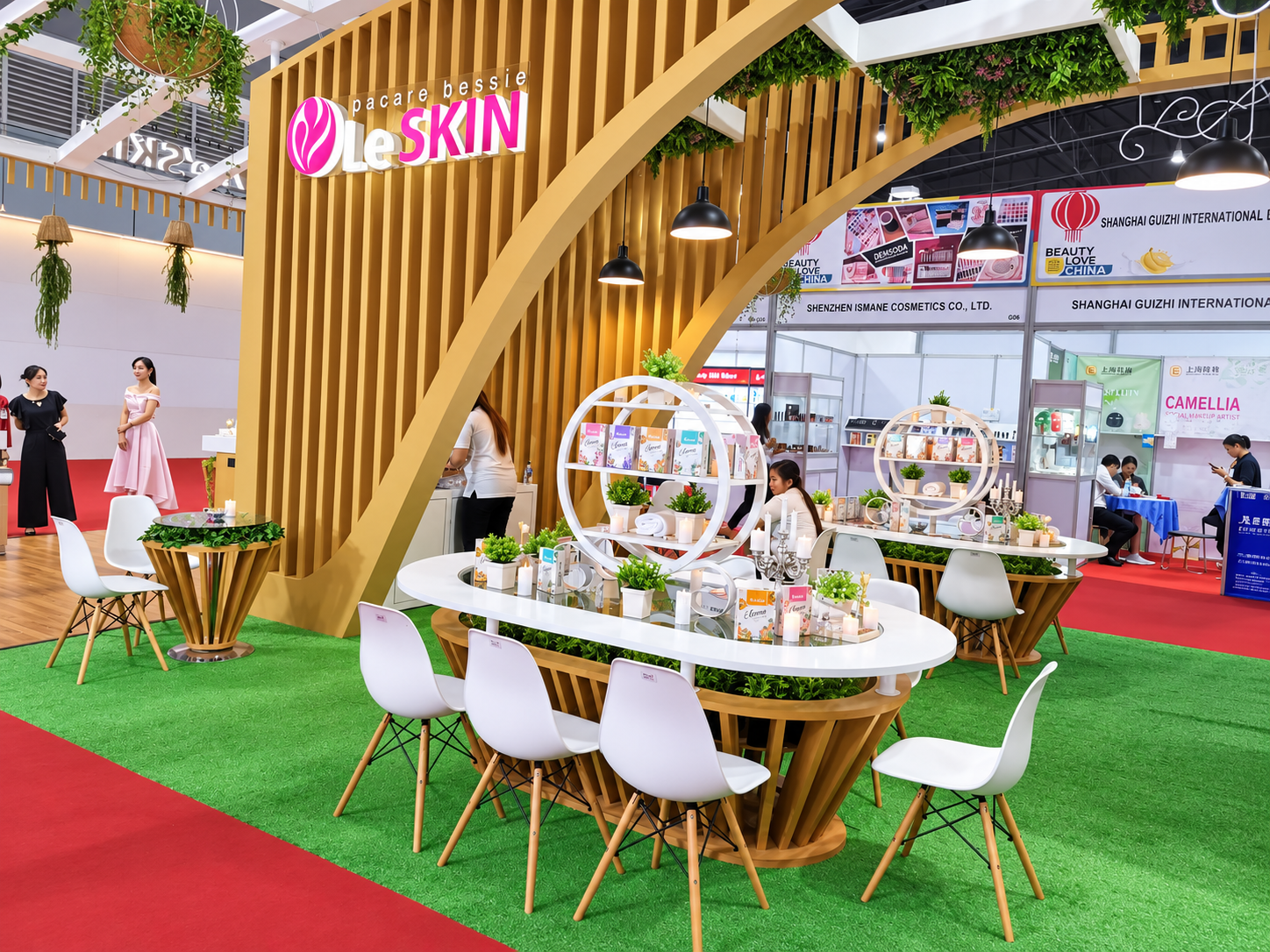
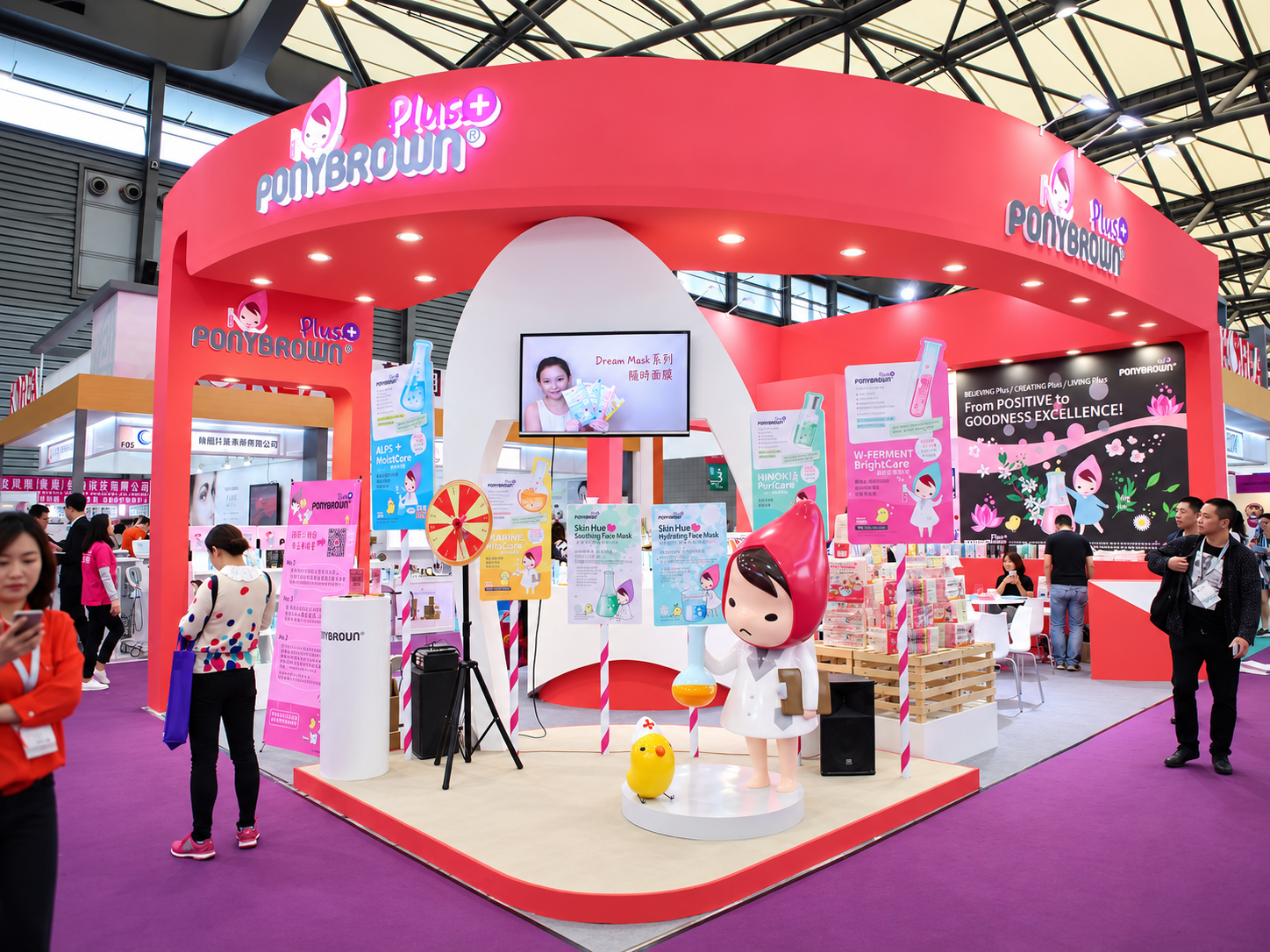
The structure matters more than the superlatives. In its supply section, official materials describe more than 1,500 companies across about 100,000 square metres and themed halls covering OEM/ODM, ingredients and raw materials, packaging, machinery and equipment, testing and inspection, and advanced science. A published hall plan has dedicated halls to contract manufacturing, Japanese manufacturing, innovative ingredients and fragrance, essential-oil hydrosols, purification, stirring and emulsifying machinery, colour-cosmetics equipment and AI-assisted assembly lines, printing and labels, paper packaging, and containers in plastic, glass and metal. Those figures belong to the editions they describe. In one edition’s own promotional material, the organiser said that more than 3,200 of China’s roughly 6,000 licensed cosmetics manufacturers were exhibiting, an organiser claim worth treating with the caution the rest of the figures deserve.


Why CBE Is Different From a Conventional Beauty Show
A conventional show is a window onto finished goods. A supply-chain fair is a window onto what can be made.
The distinction is the core of the argument, and it separates six kinds of discovery. Finished brands show what is already for sale. OEM and ODM partners show what can be developed. Packaging suppliers show how the product experience can change. Ingredient companies show where claims and formulas may move next. Machinery suppliers show how production economics may evolve. Testing and inspection providers reveal the regulatory and quality infrastructure behind every launch. A visitor who understands which kind of discovery each hall offers reads the fair as a map and not as a crowd.
I came to beauty from nearly a decade in clothing and styling, a few months into a role with a cosmetics supplier, and what stayed with me from the fair was less the finished displays than the halls where products had not yet been assembled: the technology exhibition of packaging materials, machinery and formulation techniques, which showed the inner workings of an industry usually seen only at the point of sale. A beauty product, from that angle, is a negotiation between chemistry, engineering, packaging and economics. Branding is only the last layer of it.
Is China Beauty Expo good for finding cosmetic manufacturers? Yes, for the purpose of comparing capabilities. CBE Supply brings contract manufacturers, ingredient developers, packaging specialists, machinery makers and testing providers together in dedicated halls, so a founder can meet many potential partners in one place. A trade-show conversation is a starting point, not a substitute for audits, samples, stability testing and due diligence.
Packaging: The Part of Beauty Innovation Consumers Rarely See
The pump that delivers a serum correctly is as much a part of the product as the serum.
Packaging is the section of the fair that rewards the most patient attention and the one consumers think about least. Official materials describe multiple packaging halls, with several hundred suppliers across glass, metal, paper, flexible tubes, colour-cosmetics components, pumps, valves, sprayers, caps, labels and printing. For a founder or product developer, packaging is not decoration. It affects margin, breakage, shipping, dosing, sustainability claims, user experience, and whether a formula can be delivered correctly at all.
Is China Beauty Expo good for packaging sourcing? Yes. CBE Supply includes dedicated packaging halls covering containers in glass, plastic and metal, tubes, pumps, valves, sprayers, caps, printing, labels and paper boxes, alongside packaging machinery. The depth lets product developers compare dispensing systems, materials and components, and ask which suppliers can customise at realistic minimum order quantities.
Where can beauty brands find Chinese packaging suppliers? A supply-chain fair such as CBE Supply concentrates them in one venue, grouped by material and component, which allows side-by-side comparison of dispensers, closures, containers and printing. Supplier quality should still be verified through samples, factory audits and references after the fair.
The useful questions are strategic, and they are the questions an industry analyst would ask of any manufacturing floor. Which dispensing systems keep appearing across unrelated suppliers? Where are refill formats genuinely practical rather than cosmetic? Which materials are becoming lighter or easier to ship? What packaging ideas are moving from luxury into mass-accessible production? Which suppliers can customise at realistic minimum order quantities? Which visual codes are already overused? Even a modest product shows why this matters: a daily-use item such as a lip balm lives or dies on its format, its pigment loading and its closure as much as on its marketing.
Inside the Formula: Ingredients, Labs and ODM Development
Trend forecasting is more credible when it begins with manufacturing capability.
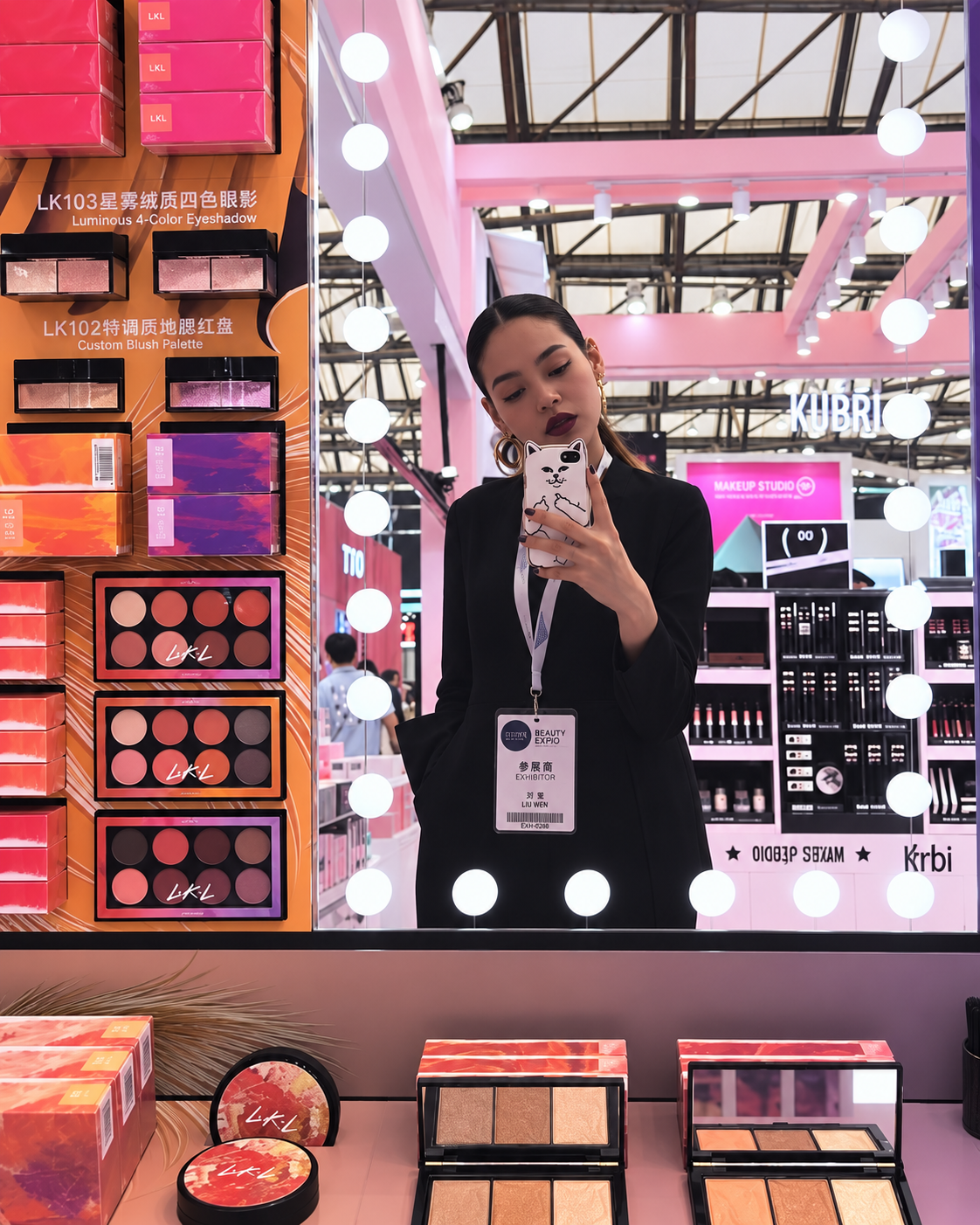
The ingredient and formulation halls let visitors see active ingredients, base materials, fragrance systems, pigments, testing services and development capabilities before they are translated into trend language. Organisers have promoted themes such as biosynthesis, green ingredients and sustainable packaging, and have introduced awards for beauty technology and for Chinese ingredients, which signal where the supply side thinks it is heading, as Premium Beauty News reported ahead of the 2026 edition.
A founder looking for the next hero ingredient should not assume that every new material is commercially meaningful. The more reliable approach is to watch what several suppliers are developing at once, then ask whether the science, regulation, stability and consumer story can support it. The vocabulary of ingredient claims can be learned elsewhere, in places such as the science of serums, the chemistry of hair oils or the skin-barrier case in Barrier Beauty Returns: Why Lanolin Is a Skin Investment. What the fair adds is the supply side of the same story: who can make it, in what form, and at what volume.
Colour is a supply-chain story as much as a creative one. The expressive-makeup argument in NARS and the Language of Expressive Makeup rests on pigments, effect materials and filling equipment that a trade floor displays in raw form. Fragrance works the same way: the identity argument made in The Language of Scent depends on fragrance systems and delivery formats that are easiest to read at source, and the way those systems behave in heat is the subject of Summer Fragrance Science: Heat and Skin Chemistry.
Where can I source cosmetic formulas in China? Contract manufacturers and ODM laboratories offer formulation libraries and development services, and ingredient suppliers offer active and base materials. A trade fair such as CBE concentrates both, so a developer can compare capabilities, but formula ownership, exclusivity and stability should be agreed in writing and tested before launch.
OEM, ODM and OBM: Why the Distinction Matters
Treating all factories as interchangeable is the commonest error in sourcing.
The three terms describe different relationships, and the fair is useful for comparing them side by side. As industry explainers such as Cosmetics Business note, interpretations of OEM and ODM vary within the cosmetics sector, so it is wise to confirm what a given supplier means by each term before assuming anything about ownership.
What is the difference between OEM, ODM and OBM? OEM (original equipment manufacturer) means a factory produces to a brand’s specifications. ODM (original design manufacturer) means the manufacturer provides development and design capability that a brand adapts or commercialises. OBM (original brand manufacturer) means a manufacturer develops or operates its own branded products and intellectual property. The distinction matters because the three models allocate cost, risk and ownership differently.
Can you find OEM and ODM cosmetic factories at China Beauty Expo? Yes. Dedicated contract-manufacturing halls bring OEM and ODM enterprises together across skincare, colour cosmetics, fragrance and personal care, so capabilities can be compared in one visit. Whether a given factory suits a brand depends on category expertise, minimum order quantities, quality systems and formula ownership, which must be verified after the fair.



Why China’s Manufacturers Are Becoming Product-Development Partners
The competitive question is shifting from who can make this cheapest to who can help make something worth launching.
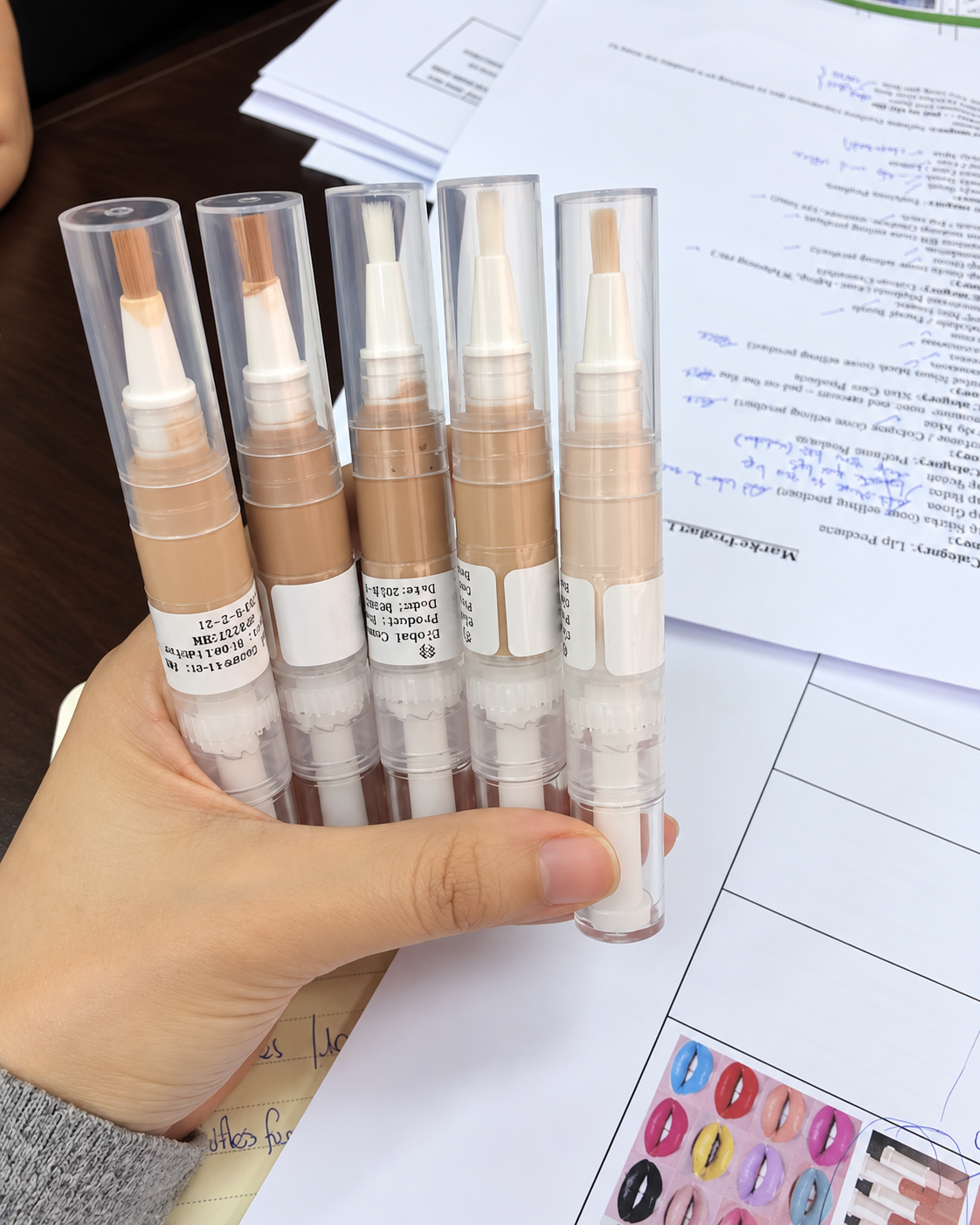
The word factory has stopped describing what many of these companies do. Chinese beauty manufacturers increasingly compete on research and development, speed, packaging design, formulation libraries, regulatory support and product development, not on unit cost alone. For global buyers, that changes the sourcing relationship: the supplier may function as a development partner, and the relationship is judged on judgement, responsiveness and shared risk as much as on price.
That shift is also why the fair is not only a Chinese conversation. International contract manufacturers and machinery companies exhibit alongside Chinese ones, and official materials describe a matchmaking programme in which selected Chinese supply-chain companies meet global brands one to one ahead of the show. Treating all OEM factories as interchangeable is the commonest error in sourcing, and a floor with this many of them in one place is the easiest way to see why. The honest framing is that capability varies enormously, and the fair’s value is that the variation is visible.
CBE vs. Cosmoprof Asia: Different Windows Into the Beauty Industry
Each show is a different instrument for a different question.
The two events are best understood as complements. Cosmoprof Asia is a Hong Kong platform that separates finished goods from the supply chain. According to its official fair information, Cosmopack Asia at AsiaWorld-Expo showcases supply-chain companies in ingredients and raw materials, machinery and equipment, packaging, print and label, and contract manufacturing and private labels, while Cosmoprof Asia at the Hong Kong Convention and Exhibition Centre presents branded finished products. It is highly international and works well for scanning the wider Asia-Pacific market and meeting a global exhibitor base.
How is China Beauty Expo different from Cosmoprof Asia? Cosmoprof Asia in Hong Kong is an international platform that splits finished goods and the supply chain across two co-located shows, and suits scanning the wider Asia-Pacific market. China Beauty Expo in Shanghai offers deeper immersion in the Chinese domestic beauty ecosystem, combining supply-chain sourcing with exposure to Chinese brands, channels and market signals. Neither is categorically better; serious sourcing teams often use both.
CBE’s advantage is immersion. It is especially useful for understanding China’s manufacturing, packaging and product-development capabilities in context, alongside Chinese brands and channels, when the objective is not simply sourcing in Asia but understanding how China builds beauty products. The sensible conclusion is portfolio thinking. A team that wants an international scan and a first round of introductions may start in Hong Kong; a team that wants to understand the domestic ecosystem may go deeper in Shanghai; a mature sourcing programme may use both, for different reasons and at different stages.



CBE vs. Canton Fair: Why Specialisation Matters
Canton is powerful for broad sourcing. CBE is powerful for beauty-specific product development.
The comparison with the Canton Fair is clearer still. Canton, held in Guangzhou in spring and autumn, is one of the world’s major general trade fairs, and its third phase does include personal-care products; JETRO’s trade-fair listing for that phase lists personal care and toiletries alongside home textiles, office supplies, medicines and health products, food, sports and travel goods, and pet products. That breadth is its strength for general sourcing and its limit for beauty specifically.
How is China Beauty Expo different from Canton Fair? Canton Fair is a broad, multi-industry export fair in Guangzhou whose later phase includes personal care among many unrelated categories. China Beauty Expo is specialised in beauty, which matters when the aim is to compare formulas, packaging components, laboratories, contract manufacturers and production technology in depth. Canton is powerful for broad sourcing; CBE is powerful for beauty-specific product development.
The Regulation Layer: What the Fair Cannot Tell You
A trade-show conversation is a hypothesis. Compliance is the proof.
Behind every launch sits a regulatory system, and a visitor who forgets it will mistake enthusiasm for readiness. China’s Cosmetics Supervision and Administration Regulation took effect on 1 January 2021, with supporting registration and filing measures following on 1 May 2021, and legal commentary on the new rules notes that marketing a cosmetic in China is prohibited unless it has first been registered or filed with the competent authority. The text of the Provisions for Registration and Filing of Cosmetics, published through China Daily’s NMPA subsite, is a useful primary source for the rules a Chinese-market product must meet. Markets elsewhere have their own systems, and the right posture is to treat each as a separate verification task.
This is why the brief’s guardrails belong in the article itself. A conversation at a booth does not establish that a supplier meets European, American, Gulf or other regulatory standards, and no exhibitor’s claim should be accepted without supplier-level verification. It does not replace audits, samples, stability testing, quality agreements or legal due diligence. The fair is where relationships begin and hypotheses are formed. Quality is established afterwards, on paper and in the laboratory, and brands that skip that step discover the cost later.
How to Spot a Real Product Signal Before It Becomes a Trend
The fair is useful only to a visitor who arrives with a method.
Seven checks separate a real signal from a gimmick. Look for repetition: if unrelated suppliers invest in the same format, material or ingredient, the signal is stronger. Ask what problem it solves, because innovation without a consumer or operational benefit is usually novelty. Check manufacturability, since a beautiful prototype is not scalable production. Check regulation and claims, because the commercial story must survive legal scrutiny. Check compatibility, since packaging and formula must be tested together. Ask about minimum order quantity and lead time, because an idea is only useful if it fits the brand’s economics. And separate visual novelty from defensible differentiation: a new bottle is easier to copy than a strong product system.
What should I look for at a beauty manufacturing trade show? Look for repetition across unrelated suppliers, a clear problem each innovation solves, proof of manufacturability, claims that can survive regulation, packaging and formula tested together, minimum order quantities and lead times that fit your economics, and differentiation that is hard to copy. Treat every conversation as a lead to be verified, not a conclusion.
A practical habit helps: keep a running note, by hall, of what appears more than once. A single innovative pump is a booth. The same dispensing principle at five unrelated stands is a pattern. A single ingredient story is marketing. The same ingredient class in the development pipelines of several laboratories is a signal worth testing. The intelligence is in the repetition, which is something only a concentrated floor can show.
What a Beauty Founder Should Actually Ask a Manufacturer
Arrive with questions, not a wish to find something interesting.
A new brand can use CBE as a live product-development laboratory, provided it arrives with questions instead of a vague wish to find something interesting. The evaluation list is concrete: category expertise, research and development capability, minimum order quantities, formula ownership and exclusivity, testing support, regulatory documentation, packaging compatibility, lead times, quality control, export experience, depth of customisation and the boundaries of intellectual property. Write the list down before the fair, ask the same questions at every relevant stand and record the answers in the same format, so that suppliers can be compared on evidence and not on charm.
Equally important is the follow-through. After the fair, request samples, ask for documentation, commission independent testing where claims matter, and put quality expectations in a written agreement before volume is committed. The same logic runs through any category where performance is a promise that has to be proved, and where credibility outlasts attention.
The Beauty Industry Before the Shelf
Beauty feels less like magic and more like industrial design.
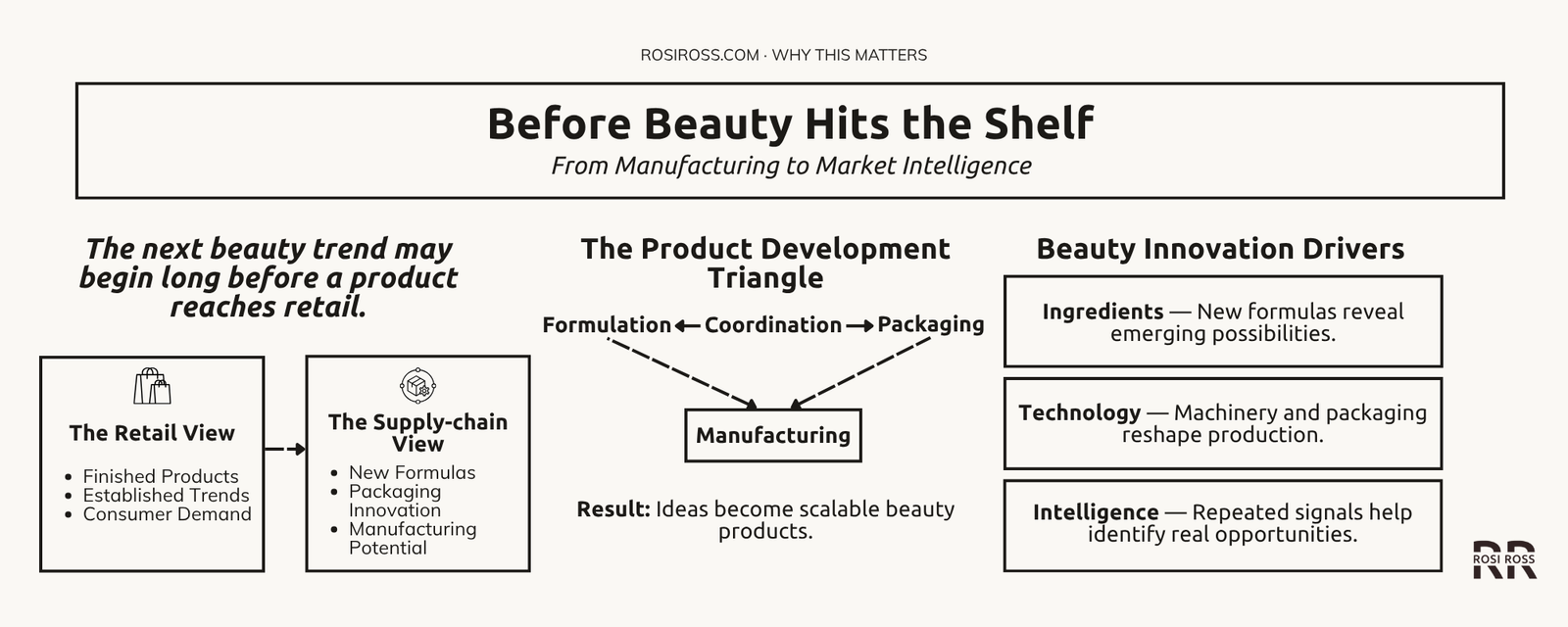
Consumers meet a finished serum, lipstick or cream as a single object. Trade shows reveal the dozens of decisions behind it: chemistry, texture, testing, cap torque, pump dosage, carton structure, filling speed, logistics, compliance and margin. That perspective makes beauty feel less like magic and more like industrial design, and it is why a supply-chain fair can say more about the next product cycle than another finished-goods trend report.
The structural point is also the forward-looking one. The competitive advantage in beauty will increasingly belong to brands that can shorten the distance between consumer insight and product development without sacrificing quality or compliance, and China’s dense manufacturing ecosystem plays an important role in that equation. Fairs such as CBE matter because they expose the infrastructure through which ideas travel from concept to scalable product. The future of beauty is often visible first in the parts consumers never see. To understand where beauty is going, sometimes the most useful place to stand is behind the brand.
Service box: check before you go. Edition dates, hall plans, exhibitor counts, registration rules, visa requirements and government travel advice change by year. Confirm them with the organiser’s official site and your own government before travelling. This guide deliberately keeps booth-level and edition-specific detail out of its main narrative.
“Before the shelf,
there is the pump,
the cap, the torque,
the texture
that took forty tries.
The consumer meets a serum.
The industry meets a thousand decisions
that had to agree.
To see where beauty is going,
stand behind the brand
for an afternoon.”

