
On mobility, identity and the changing codes of luxury travel, and why the new traveller is an editor of possessions, time, routines and identity
Old luxury said: I can bring everything. New luxury says: I do not need everything. The new luxury traveller is not defined by how much they can carry, but by how little friction they create around movement.
The old image of luxury travel was abundance: trunks, porters, several changes of clothes, objects transported because the infrastructure of elite travel could carry them. The new image is quieter and harder to fake. It is a person moving through an airport, a station, a lobby and a street without being slowed by what they own: the same clothes working in three settings, the same few objects earning their place on every trip, the destination changing while the system does not.
Picture the platform in the old film: a pyramid of trunks, a porter in a peaked cap, a traveller who has delegated the entire problem of possessions to someone else. For a long stretch of history, visible luggage was a statement about class, resources, staff and the time that slow travel demanded. Then picture the present. Airports reward speed. Trains reward mobility. Cities reward people who can move through them. Time has become more valuable than excess baggage, and the traveller who understands this arrives in a different condition from the one who does not.
This is a cultural story about mobility, not a utilitarian one about folding clothes. Packing is the evidence; the subject is the evolution of the traveller. A globally mobile life has changed what sophisticated travel looks like, and the most modern traveller is increasingly defined not by visible abundance but by the ability to move between places, climates, social settings and modes of transport with ease. It would be wrong to say that every wealthy or frequent traveller now travels light, and nothing here suggests it. It is an observed shift, not a universal behaviour, and it is worth understanding on its own terms. For the practical companion to this essay, see our guide to packing light and the two-bag system.
From Tourist to Global Citizen: The Difference Between Performing a Place and Living Across Them
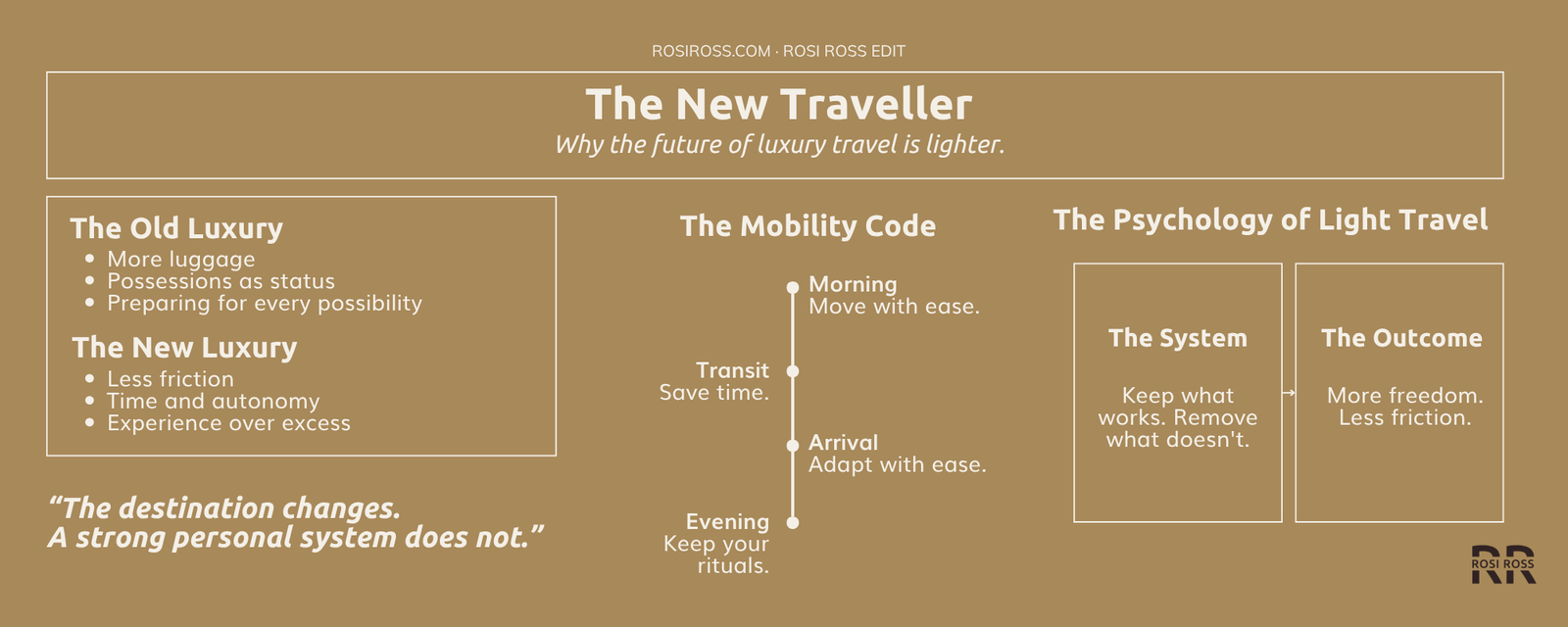
The destination changes. A strong personal system does not.
Travel was once treated as an interruption to ordinary life: home, journey, destination, return. For a growing class of globally mobile people it has become part of life itself, moving between work, culture, family, hospitality and leisure without adopting a different identity for each stop. The traditional tourist packs for a place. The global traveller increasingly packs for movement.
| The tourist | The global traveller |
|---|---|
| Destination-specific identity | A recognisable personal identity |
| Occasion-by-occasion outfits | A flexible wardrobe system |
| Packing for every hypothetical | Trusting local problem-solving |
| Travel as escape | Travel as continuity |
| Accumulation | Repeatable systems |
An editorial contrast, not a taxonomy of people. Most travellers are both at different moments, and nothing here implies placelessness: cultural fluency includes respect for local context, dress norms and customs.
A sophisticated traveller does not need to become someone else on arrival. The most modern form of travel style may be consistency: the ability to remain visually and functionally oneself in different contexts, adapting where it is respectful to adapt and holding steady where it is not necessary to change.
When Luggage Was a Status Symbol: A Short History of Carrying Everything
The meaning of luxury changes when speed, autonomy and time become more valuable than volume.
The Grand Tour, the custom of young, wealthy Europeans travelling the Continent that flourished from the seventeenth century into the early nineteenth, made abundance structural. Tours could last months or years, and tourists frequently travelled with tutors and servants and large amounts of luggage. The UK National Archives’ teaching material on the Grand Tour notes that the more luggage people took, the more expensive the journey, which is as plain a statement of luggage as status as exists. Etiquette histories describe Grand Tourists accompanied by a carriage given over to wardrobes and even furniture, and Victorian travellers who handed the problem of their trunks to fleets of porters on railways, steamships and hotel steps. The freedom was real, and so was the price.
The architecture of grand travel was then engineered into something more efficient. In the mid-nineteenth century, Louis Vuitton replaced the rounded trunk lid with a flat top that could be stacked, a design response to the railway and the steamship, and the Victoria and Albert Museum’s account of trunks and travelling places the trunk within that larger story of travel becoming faster and more organised. Recognisably modern, portable suitcases began to appear toward the end of that century. Steamships and rail also made touring accessible to the middle classes, and Thomas Cook organised his first railway excursion in 1841. Luggage became a problem of logistics and not only of status, and the story since has been the slow transfer of responsibility for possessions from the staff to the traveller.
None of this calls for nostalgia, and none of it implies that light packing is morally superior. It establishes a contrast. Today’s mobility rewards a different kind of privilege: fewer transitions, less waiting, greater control over time. The old signal was how much a traveller could bring. The new one is how little a traveller needs to.
Why Time Replaced Baggage as a Luxury Signal
The point is not speed for speed’s sake. It is preserving attention and agency.
Luxury travel increasingly operates through the removal of friction: direct routes, central locations, efficient airport transitions, good sleep, reliable technology and fewer logistical decisions. Packing fits the same logic. A traveller carrying less may gain faster departures, easier transfers, greater flexibility when plans change, less waiting, less physical strain, a simpler hotel arrival and departure, and more attention for the destination itself.
The commercial research points the same way. Studies of luxury consumers by the Business of Fashion, McKinsey and Bain & Company have repeatedly found experiences, and travel above all, rising in priority against tangible goods, and the hospitality end of luxury has been described as growing faster than leather goods or watches. Those findings concern luxury clients and not all travellers, and their figures change from year to year, but the direction is consistent: when the experience is the aspiration, the objects that serve it are judged by how well they stay out of the way.
Baggage is also where journeys quietly fail. SITA’s annual baggage reports show that the great majority of mishandling incidents are delays and not losses. The usual failure is not a lost bag but a late one, and a traveller whose essentials never leave their side is simply insulated from it.
Why is travelling light considered more luxurious? Because the scarce resources have changed. Travelling light preserves time and attention: faster departures, easier transfers, flexibility when plans change, less waiting and less physical strain. Research on luxury clients shows travel and experiences taking priority over goods, so the objects that serve a journey are judged by how little friction they create. The luxury is autonomy, not deprivation.
Why Experiences Outlast Objects
There is a psychological case underneath the commercial one. In a widely cited study, “To Do or to Have? That Is the Question”, published in the Journal of Personality and Social Psychology, Leaf Van Boven and Thomas Gilovich found that people tended to report that experiential purchases, such as a trip, made them happier and were more central to their sense of self than material purchases, and that they were less likely to be compared unfavourably with alternatives. Later research has qualified the finding, and not every object is a lesser source of satisfaction, but the idea has endured because it matches what many travellers observe: what remains from a journey is rarely the luggage. It is the memory of where the traveller was, and the attention they were free to give it. A bag that weighs less leaves more of that attention available.
The End of the Destination Costume
The sophisticated traveller adapts to a destination without dressing as an idea of it.
Contemporary travel imagery has long encouraged destination-specific identities: a wardrobe for Paris, another for the Mediterranean, another for a safari, another for a ski resort. The result can be compelling to look at. The deeper question is whether style becomes stronger when it is less dependent on place. A defined personal aesthetic reduces the need for reinvention, and the traveller edits a recognisable visual language rather than replacing it.
Climate and culture still matter, and cultural fluency is more than aesthetic consumption. It means knowing when adaptation is respectful, in dress norms, in religious or formal settings, in the codes of a particular city, and when destination dressing has become a performance of the place instead of a participation in it. Covered shoulders and knees in a place of worship, a jacket for a formal restaurant, a scarf that doubles as a head covering where custom requires it: these are small, portable acts of respect that a well-edited wardrobe can absorb without adding volume. The test is whether the clothes show attention to where you are while still looking like they belong to you.
The Rise of the Mobile Wardrobe
This is not the capsule wardrobe as internet minimalism. It is wardrobe architecture: reducing incompatibility so that fewer pieces create more usable combinations.
A mobile wardrobe is a system designed around transitions and not individual outfits, and its value comes from compatibility. It prioritises repeat wear without looking repetitive, a coherent colour language, layering across temperature changes, comfortable movement, one or two strong silhouettes, fabrics that recover well after travel, and pieces that move from day to evening through styling rather than replacement. It also treats shoes as a spatial budget: footwear has to earn its place in a bag, a principle explored in The Architecture of Power: How Sculptural Footwear Defines Modern Luxury, where structure and design intelligence justify the space an object occupies.
How do you build a travel capsule wardrobe? Build around compatibility, not count. Choose a coherent colour language, a few pieces that layer across temperature changes, one or two strong silhouettes, fabrics that recover well after travel and shoes that justify their space. Every piece should work with several others and cross more than one environment without becoming visually anonymous. The aim is wardrobe architecture: reducing incompatibility so that fewer pieces create more usable combinations.
How can you travel with fewer clothes without looking repetitive? By choosing pieces that repeat without looking repetitive: a coherent colour language, layers that change the silhouette, one or two strong shapes, and accessories that shift the tone of an outfit without adding volume. Day-to-evening change comes through styling rather than replacement. When pieces are well made and clearly chosen, repetition reads as consistency and not as shortage.
What is the best way to pack for multiple cities? Pack one coherent wardrobe, not one per city: a consistent colour language, layers that handle temperature changes, one or two strong silhouettes, shoes that earn their space, and pieces that move from day to evening through styling. Adjust for climate and local dress norms, keep documents, devices and medication in the personal bag, and plan laundry or a re-wear instead of adding an outfit for each stop.
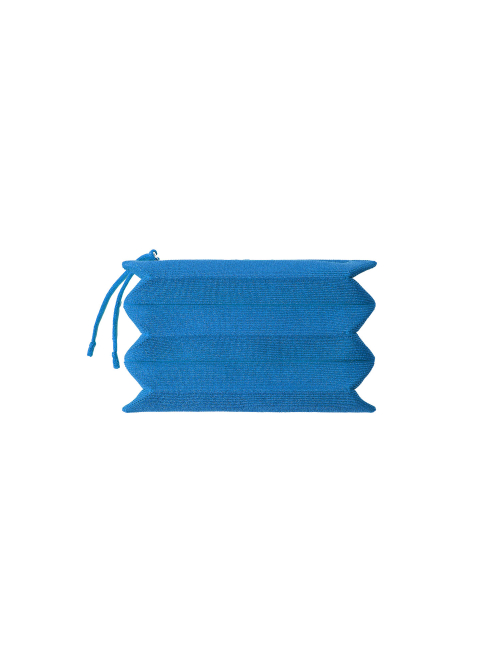
What changes the tone of an outfit without adding volume is usually small. The Joseph & Stacey Lucky Pleats is named for its pleats, which places it in the category of the tone-setting accessory: a single object that shifts a look from travel to evening. It is an optional example, in the spirit of the principle described in The Language of Modern Necklaces: Metals, Stones, and the New Codes of Personal Luxury, where a few pieces chosen for meaning do more than many chosen for effect.
The same logic extends to the smallest scale. The Lemasque Daisy Keyring is a keyring, an accessory that adds a point of personality to a bag or a set of keys at almost no cost in space, and it illustrates the editorial point that identity travels in details and not in volume.

The Personal Travel Ecosystem
Experienced travellers gradually build an ecosystem of objects that repeatedly prove useful across destinations. The aim is not to prescribe products but to describe a way of choosing.
Beyond clothing, a personal travel system tends to include a cabin trolley or weekender with a layout that supports the traveller’s habits, a backpack or structured personal bag that works from airport to city, a universal charging system, compact and familiar grooming and skincare essentials, reliable headphones, a travel layer for aircraft and changing weather, digital backups of documents, and a small group of accessories. The category list is evergreen. The objects are personal, and the specific products shown here are optional examples that illustrate each category, not a list of must-haves.
What is a personal travel system? A personal travel system is the set of objects, routines and rules that a traveller has repeatedly proved useful: a bag layout that supports their habits, a charging setup, familiar grooming and skincare, a travel layer, document backups and a few accessories. It is built by subtraction and informed by experience, and it stays largely constant while the destination changes.
What should a modern traveller always carry? A reliable core that supports movement: identity documents with digital backups, a universal charging system, familiar grooming and skincare essentials, reliable headphones, a travel layer for aircraft and changing weather, any medication, and a small group of accessories that change the tone of an outfit without adding volume. The exact objects are personal. The principle is that each one has repeatedly proved useful.
The bag is the anchor of the system. The Horizn Studios Weekenders SoFo represents the weekender format, a structured bag for short trips that sits between a trolley and a tote and suits journeys by train and car as readily as by air. The sensible test of any such bag is whether it carries a realistic load comfortably, opens cleanly and still looks appropriate in a hotel lobby.

The personal bag is the other half. The Horizn Studios High-Performance Backpack is an example of the backpack that works from airport to city, the control centre that keeps documents, devices and the day’s essentials within reach whether or not the larger bag is.

Technology is where redundancy accumulates unnoticed, and a lightweight organiser keeps it contained. The Trail Runner Mesh String Tech is named for a mesh string bag intended for tech, an example of the category in its simplest form: one place for the cables and chargers that otherwise migrate to the bottom of a bag.

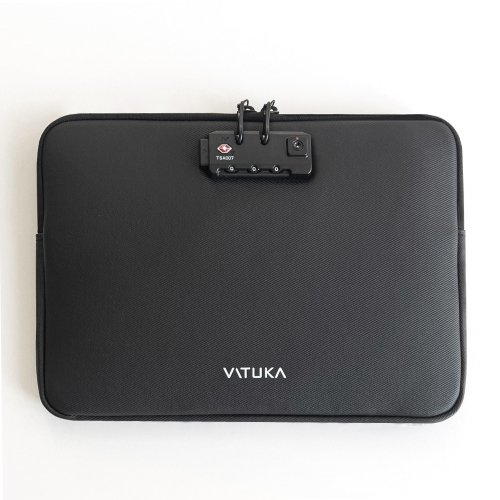
Privacy is a quieter luxury, and a good system accounts for it. The Vatuka T7 Secret Number Lock is a number lock, a small object that makes a bag or case a little more private without any display, which is what privacy means in a system built on discretion. A practical caution applies to any lock on checked luggage: security screeners in some countries may cut locks they cannot open, so travellers heading to such destinations typically look for locks that carry a recognised screening-authority mark, and for a cabin bag the lock is a matter of discretion more than protection.
And for city transitions, a body-worn pouch frees the hands for stairs, tickets and doors. The Ball Pouch Belt is an example of the category, useful for the few things needed on a walk between a station and a hotel.

Why Experienced Travellers Become Better Editors
The best travel system is built by subtraction informed by experience. Repetition teaches the traveller what is actually used, and that information is worth more than any aspirational advice.
Experience changes decision-making in predictable ways. Objects that return untouched eventually disappear from the system. Comfort becomes easier to tell apart from anxiety. Quality matters more when the same item travels often, because a weakness is exposed on the third trip, not the thirtieth. The line between “just in case” and genuinely necessary redundancy becomes clearer, and personal rituals become more precise.
Why do frequent travellers pack lighter? Because repetition teaches what is actually used. Frequent travellers learn that objects that return untouched are dead weight, that comfort is different from anxiety, and that the time lost to luggage, in waiting, transfers, stairs and reorganising, costs more than the occasional missing item, which can usually be bought locally. Not all frequent travellers pack light, and some obligations legitimately require more.
How do experienced travellers avoid overpacking? They pack for probability, not possibility: the life most likely to be lived, plus a small buffer for reasonable deviation. Objects that repeatedly return untouched are removed, comfort is distinguished from anxiety, and local problem-solving is trusted in place of a backup life carried in a case. They also check what the accommodation provides and leave margin in the bag.
Pack for Probability, Not Possibility
Preparedness is not the same as carrying a solution for every imaginable scenario.
Overpacking often comes from trying to control uncertainty. Every hypothetical dinner, weather event, social plan or imagined version of the trip produces another object. The more useful framework is to pack for the life most likely to be lived, plus a small buffer for reasonable deviation. It has a psychological dimension as well as a practical one: confidence in travel can come from trusting one’s ability to adapt locally, from knowing that a missing item can usually be found, borrowed or done without, rather than from transporting an entire backup life. Hospitality has long been built on this fact. A good hotel, a good host and a good city are, in effect, co-packers: they supply the towel, the adaptor, the umbrella and the shop on the corner, and the traveller who trusts them carries less and notices more.
Creating Continuity Away From Home
Continuity should support presence, not recreate home so completely that the destination disappears.
Modern travel does not always require abandoning routine. For the globally mobile traveller, a few consistent rituals make movement sustainable and not disruptive: sleep, hydration, a familiar skincare or grooming sequence, a reliable technology setup, one or two objects that make an unfamiliar room feel functional, simple walking or exercise habits, and, when travel includes professional obligations, boundaries around work. These are the quieter luxuries. A familiar scent can carry identity across hotel rooms, the argument made in The Language of Scent: How Fragrance Becomes Identity in Modern Beauty. A considered sleep routine is the travelling form of the atmosphere explored in Inside the Atmosphere Economy: How NEOM Is Redefining Modern Home Wellness. And a skincare sequence that stays the same across climates is the practical case for what skin actually needs, described in The Return of Barrier Beauty: Why Lanolin Is the Ultimate Skin Investment.
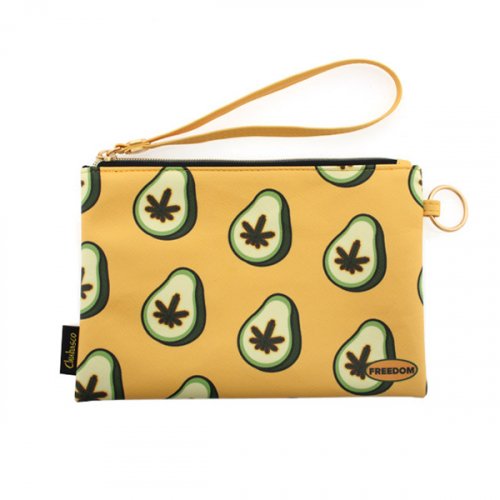
The grooming kit is where continuity becomes physical, and a good pouch keeps it compact and wipe-clean. The Chubasco Avocado Pouch is an example of a small pouch for the familiar basics.
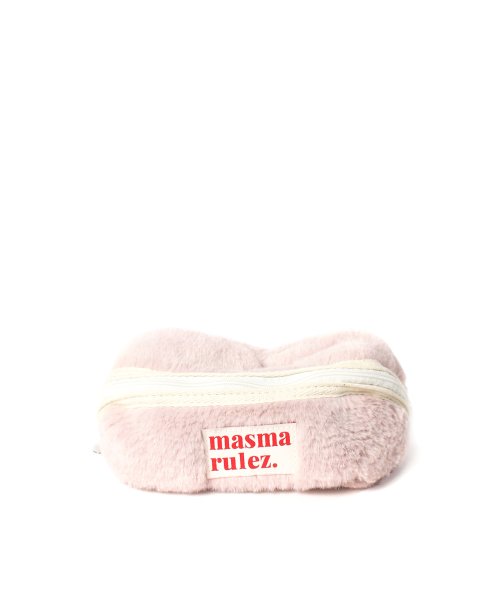
The 180 Degree Hapoom Cosmetic Pouch is a compact cosmetic pouch, the kind of case that organises a skincare and grooming routine without turning the hotel bathroom into a second home.
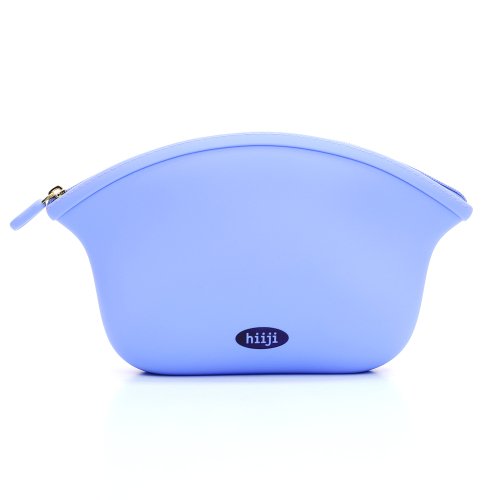
And the Silicone Dumpling Pouch Lavender is a silicone pouch in lavender, a practical wipe-clean format for the small objects, such as cables, lip care or a travel-size essential, that benefit from a dedicated place.
The New Codes of Luxury Travel
The new traveller becomes less defined by possessions and more by systems.
The argument can be reduced to eight codes. They apply regardless of gender, route or budget, and each can be tested against any bag, wardrobe or itinerary.
| Code | What it means |
|---|---|
| 1. Mobility | The ability to move without possessions dictating the journey |
| 2. Time | Reducing unnecessary waiting, reorganising and logistical friction |
| 3. Reliability | Choosing systems and objects that work repeatedly |
| 4. Adaptability | Moving between climates, contexts and plans without total reinvention |
| 5. Privacy | Maintaining personal comfort without requiring visible display |
| 6. Cultural fluency | Understanding when adaptation is respectful and when destination dressing becomes performance |
| 7. Continuity | Preserving the routines that make travel sustainable over time |
| 8. Freedom | Knowing that possessions support the journey rather than control it |
The traveller this story speaks to is not one person. It describes several, and it is not confined to business travel.
| The traveller | What they value |
|---|---|
| The global professional | Moves between work and leisure without wanting two separate travel identities |
| The cultural traveller | Values cities, design, art, food and local context over conspicuous consumption |
| The frequent flyer | Has learned through repetition that operational ease can be more luxurious than volume |
| The design-minded traveller | Treats wardrobe, luggage and technology as systems, not isolated purchases |
| The independent traveller | Values autonomy, mobility and the ability to change plans without being constrained by possessions |
These are descriptive archetypes. Not every frequent or wealthy traveller travels light, and not every frequent traveller travels for work.
The Sustainability of Fewer, Better Travel Objects
Lighter travel is not automatically sustainable. The stronger point is that frequent movement exposes the weakness of disposable objects very quickly.
It would be convenient to claim that carry-on travel is environmentally superior, and the evidence does not support the claim. Weight does affect fuel burn, as Finnair notes in its explanation of why aircraft weight matters: a lighter aircraft consumes less fuel and produces less carbon dioxide. But for an individual passenger the benefit of leaving a bag at home is generally small beside the emissions of the flight itself, which are driven by distance, aircraft type, load factor and the number of flights taken. A lighter bag is a marginal gain and not a moral position.
The better argument concerns objects. A mobile life rewards high utility and long service, because limited space makes durability, repeat wear, repairability and versatility visible. A zip that fails, a seam that frays or a bag that does not survive the third trip is exposed immediately. That is the case for fewer, better travel objects, and it is the same instinct described in The Return of the Pearl: Inside the Quiet Luxury of Robert Wan: choosing once, with knowledge, and living with the result for as long as it holds.
What Remains Defines the Traveller
As global mobility becomes more digitised and logistically optimised, the scarce luxuries are likely to remain deeply human: time, attention, privacy, autonomy, comfort and the ability to move without cognitive overload. The traveller of the near future is therefore less defined by possessions than by systems, and the story of packing is only the most visible part of it.
The ultimate privilege may not be taking everything with you, but knowing you can go almost anywhere without it. Perhaps the future of luxury travel is not more access to more things. It is greater freedom from needing them.
“Old luxury was the ability
to take everything with you.
New luxury is the confidence
to know what can be left behind.
The destination changes.
A strong personal system does not.
Perhaps the future of travel
is not more access to more things —
but greater freedom from needing them.”

