
On the feng shui logic hiding inside the skyline, a staircase older than the skyscrapers around it, and why understanding Hong Kong means looking past Victoria Peak entirely
Beyond the glitz sits another Hong Kong entirely — in a staircase lined with antiques, a hotel that still runs its own fleet of green Rolls-Royces, a gap deliberately left inside a skyscraper for reasons that have nothing to do with engineering.
Hong Kong’s skyline photographs itself so efficiently that it is easy to mistake the photograph for the whole story. Neon streets, harbour views from Victoria Peak, the sheer density of towers stacked against the hillside — these are the images the city is best known for, and they are accurate as far as they go. What they leave out is the older, quieter texture running beneath all of it: a colonial-era staircase that predates most of the buildings around it, a museum devoted entirely to space rather than skyline, a hotel whose fleet of cars has become a piece of civic folklore in its own right. Hong Kong’s more interesting argument is rarely made from the observation deck. It is made a few streets over, at ground level, by things that have simply been there long enough to stop announcing themselves.
Spend a week here and the postcard starts to feel like a decoy. Hong Kong is a city that has been arguing with its own geography for two centuries, a few hundred square kilometres of steep hillside, deep harbour and not nearly enough flat ground, and the argument shows up everywhere you look: in the way buildings lean on each other, in the paint that peels in colours no designer would dare specify, in a stone staircase that nobody bothered to knock down because it was still doing its job. This is a guide to the version of the city that happens at street level, where the architecture is not a skyline but a set of decisions made under pressure, and where the hidden places are not hidden so much as ignored by people looking up.
The Architecture of Density
Most cities grow outward. Hong Kong grew up, sideways and through itself, and the result is the most vertical urban landscape on earth.
Hong Kong is regularly cited as having more skyscrapers than any other city in the world, and the reason is not ambition so much as arithmetic. With a great deal of its land too steep to build on or protected as country parkland, the city has compressed millions of people into a small fraction of its territory and then stacked them. The consequence is an architecture of necessity: towers rising from podiums of shops and car parks, apartment blocks standing so close that residents can see into one another’s kitchens, and, in older districts, the narrow tenement shophouses known as tong lau, with their balconies and ground-floor trades, built for a city that was already running out of room.
The details reward attention. In the older parts of the city, bamboo scaffolding, lashed together with plastic ties and climbing the face of a building like a woven shell, is still a common sight, a construction technique of astonishing speed and flexibility that has been used here for generations and is gradually giving way to steel. Dense clusters of residential towers in districts such as Quarry Bay stand so close together that locals call them “handshake buildings,” and one of them, a mass of interlocking blocks, has become a familiar backdrop to films. Covered walkways, footbridges and the Central to Mid-Levels escalator, one of the longest outdoor covered escalator systems in the world, thread through the city at upper levels, so that a resident can cross whole districts without touching a pavement. This is not architecture designed to be admired. It is architecture designed to be survived, and some of it is magnificent in spite of itself.
There is a grittier truth in it as well. The city’s density has always been unequal: the same steep terrain produces both a billionaire’s tower and a subdivided flat measured in a few square metres. Any honest account of Hong Kong’s architecture has to hold both, the glass on the harbour and the cramped rooms behind the neon, because they are the same system seen from two floors apart.
Colour, Form and Heritage: The Hidden Gems of Hong Kong’s Architecture
Hong Kong is usually described by its height, but its more lasting identity is carried by colour, shape and the quiet presence of nature. Look past the skyline and the city reads as a palette: the pale pastels of public housing, the burnt orange and lacquered red of timber temples, the poured-concrete greys of modern civic design, and the deep green of hillsides that never fully leave the frame. Together they form an architectural vocabulary that is unmistakably local, and every part of it carries a history.
Colour as civic identity. Few buildings show this better than Choi Hung Estate in Wong Tai Sin, one of the city’s early public housing estates, whose name means “rainbow”. Its stacked blocks of sky blue, soft grey and terracotta, patterned with repeating ventilation screens, turned a practical housing solution into one of the most recognisable colour compositions in the city. The point is worth holding on to: the beauty here was not added as decoration but built from the discipline of repetition, scale and proportion. Colour, in Hong Kong, is often a heritage story told by ordinary buildings.
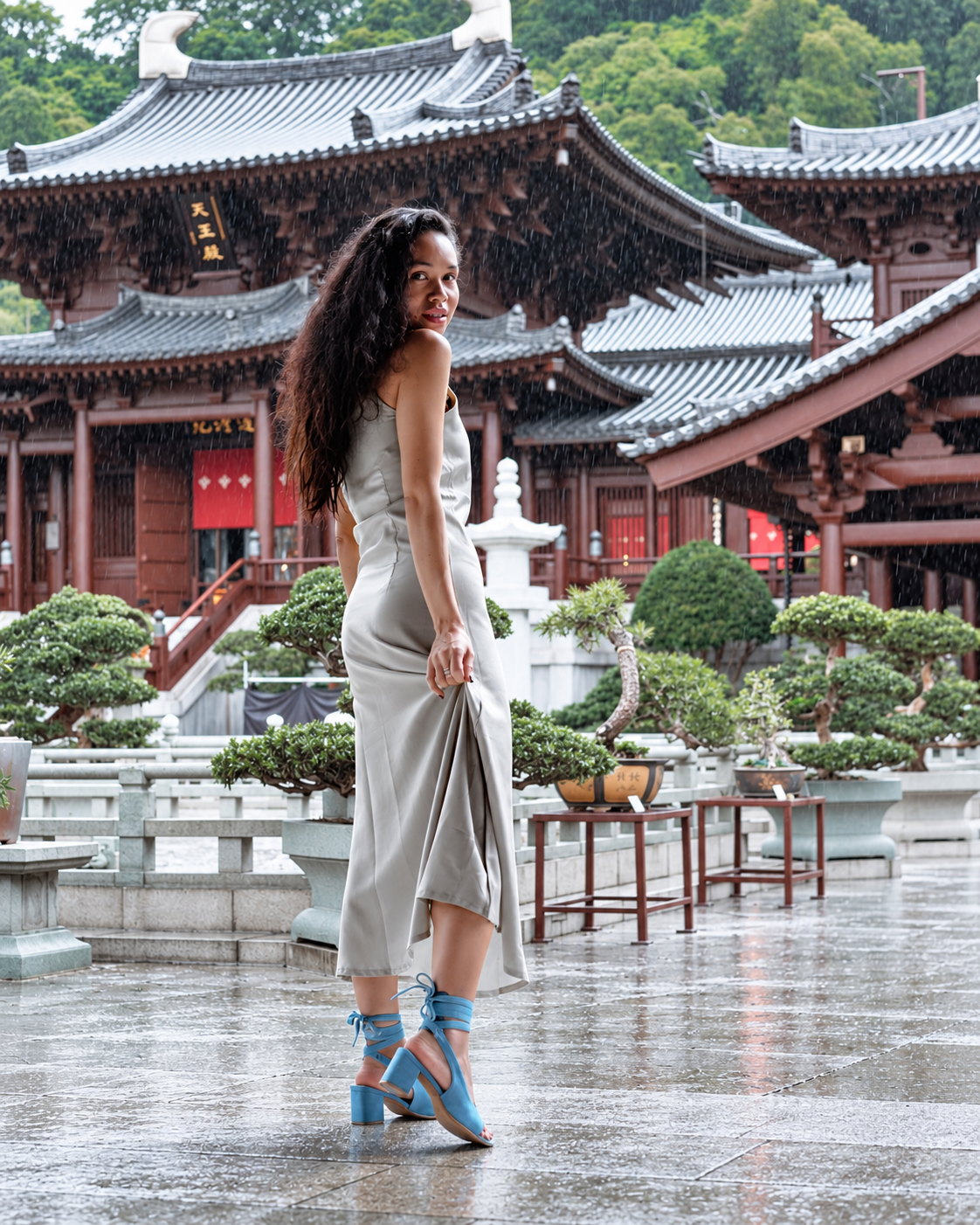
Timber, tradition and the logic of nature. At the other end of the register sit Nan Lian Garden and Chi Lin Nunnery in Diamond Hill, built in the Tang dynasty style and widely admired for their timber construction. Their sweeping roofs, lacquered orange and red pavilions, arched bridges and carefully pruned bonsai are arranged so that building and landscape read as one composition. The details are the value: interlocking timber, layered eaves, water, stone and planting, each placed according to a tradition that treats architecture as part of nature rather than an interruption of it. In rain, as the stone courtyards darken and the roofs gleam, the effect is a lesson in why heritage craft endures.
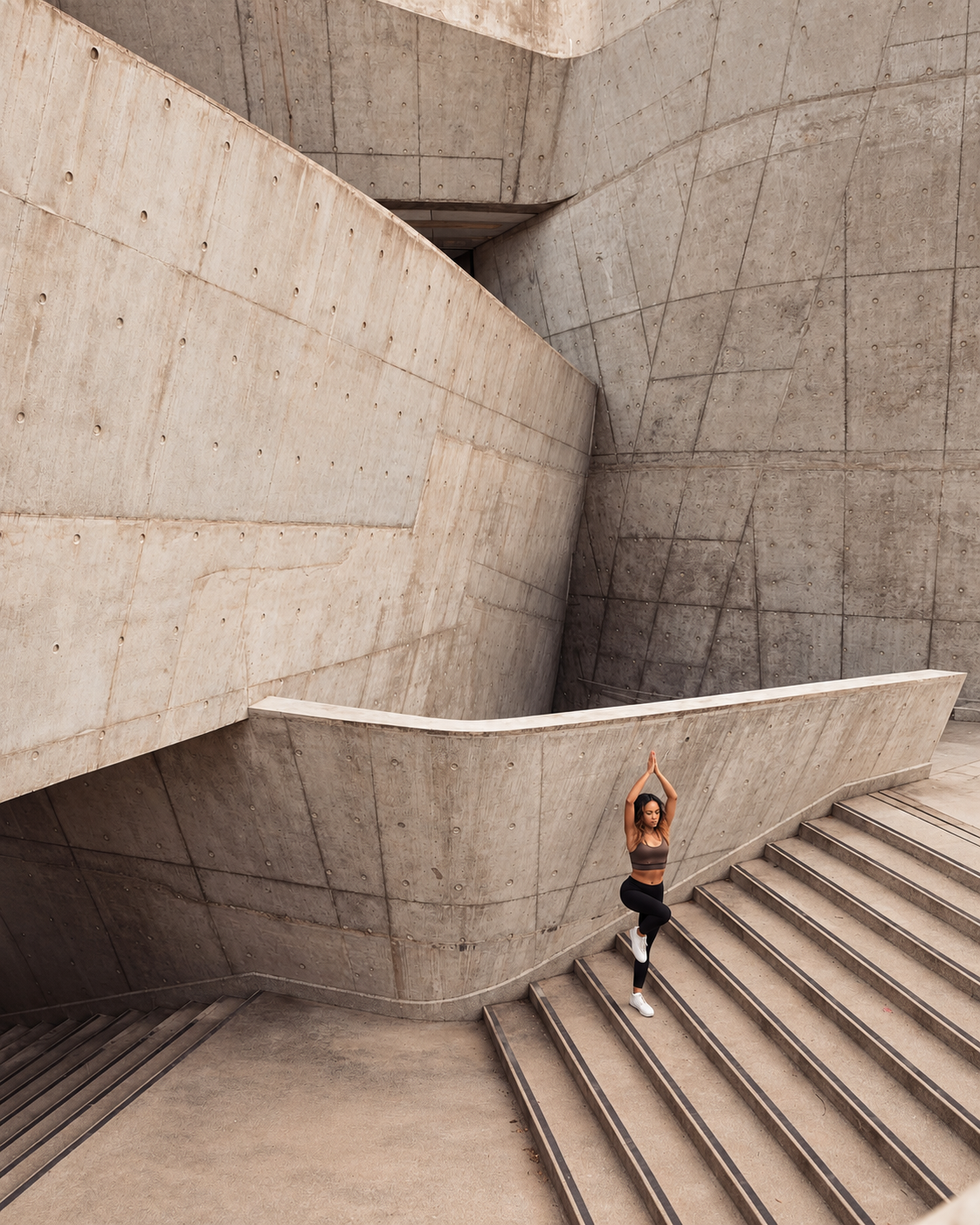
Concrete, geometry and the modern gem. The newer end of the city’s architecture speaks through form. Raw concrete, folded planes, sculpted staircases and sharp shadow lines belong to a confident modern tradition in which material honesty is the aesthetic. Set beside the colour of Choi Hung and the warmth of the timber pavilions, these spaces show that Hong Kong’s design language is wide: it can be restrained and monumental as easily as it can be bright and ornamental.
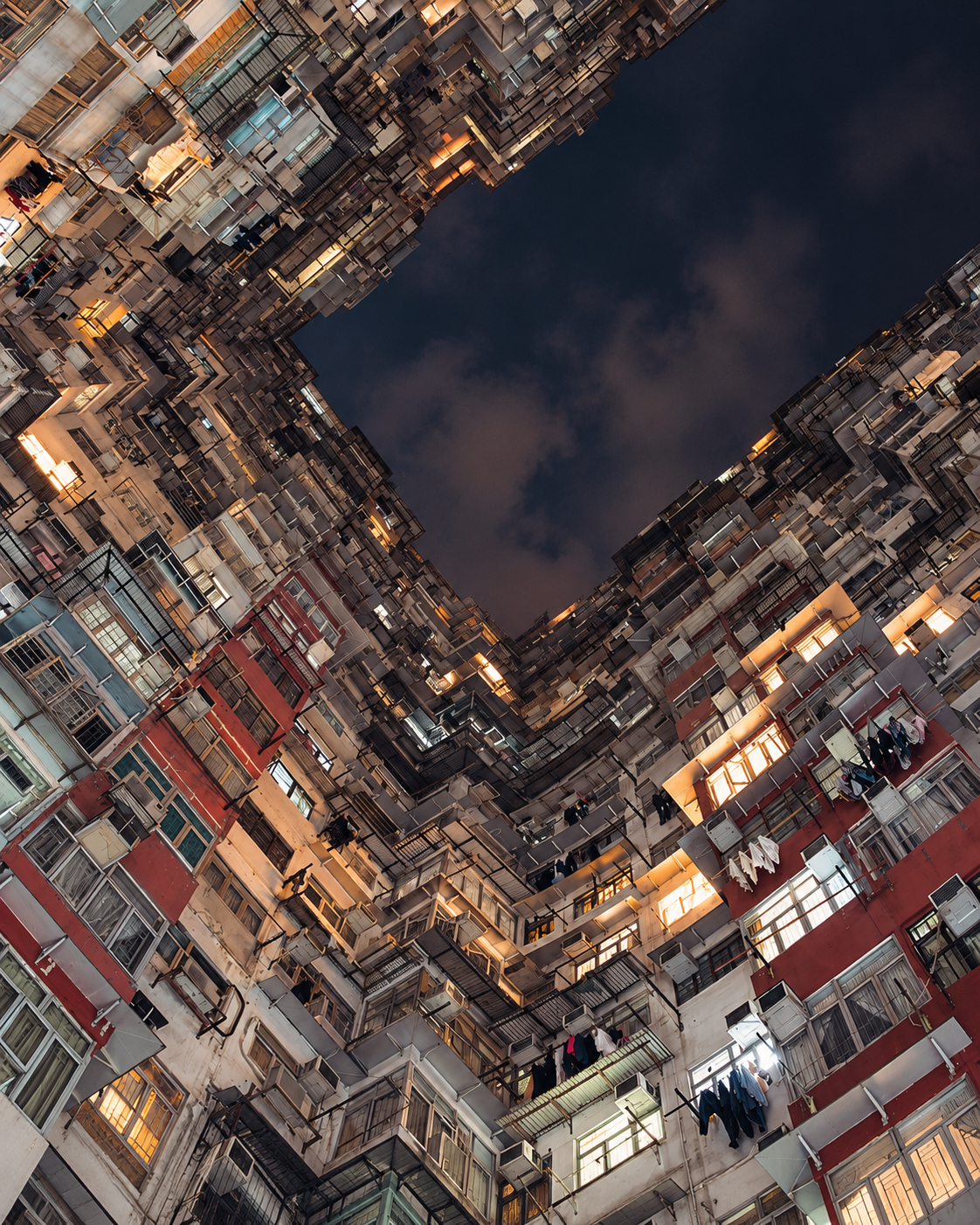
Density as pattern. Look straight up inside one of the city’s older, tightly packed residential complexes, such as the interlocking blocks of Quarry Bay, and density turns into abstraction. Windows, balconies and laundry lines form a vertical mosaic of warm light, rust red and deep shadow, an everyday landscape that has become one of the city’s most photographed and most honest portraits. It is a reminder that the value of a place’s architecture is not always in its landmarks. Sometimes it is in the lived texture of the ordinary.
The green frame. Behind all of it, the hills and coastline do the final work. Much of Hong Kong’s land is protected countryside and the built city rarely sits far from trees, ridgelines or water, so even the densest district keeps a sightline to green. That proximity is part of the city’s heritage and part of its design logic: architecture here is always read against nature.
The traditional beliefs that shaped the skyline, including the feng shui practice of leaving open gaps in certain hillside towers so that qi can pass, belong to the same story. They are one more reminder that in Hong Kong, form has rarely been only form.
What are the best places to see colour and heritage architecture in Hong Kong? For colour, Choi Hung Estate in Wong Tai Sin is the city’s best-known example of pastel public housing. For traditional craft and landscape, Nan Lian Garden and Chi Lin Nunnery in Diamond Hill offer Tang-style timber architecture in a garden setting. For the density the city is known for, the residential blocks of Quarry Bay show the modern urban pattern at its most striking.




Sky100 and the Tsim Sha Tsui Harbour: The City Seen From Both Ends
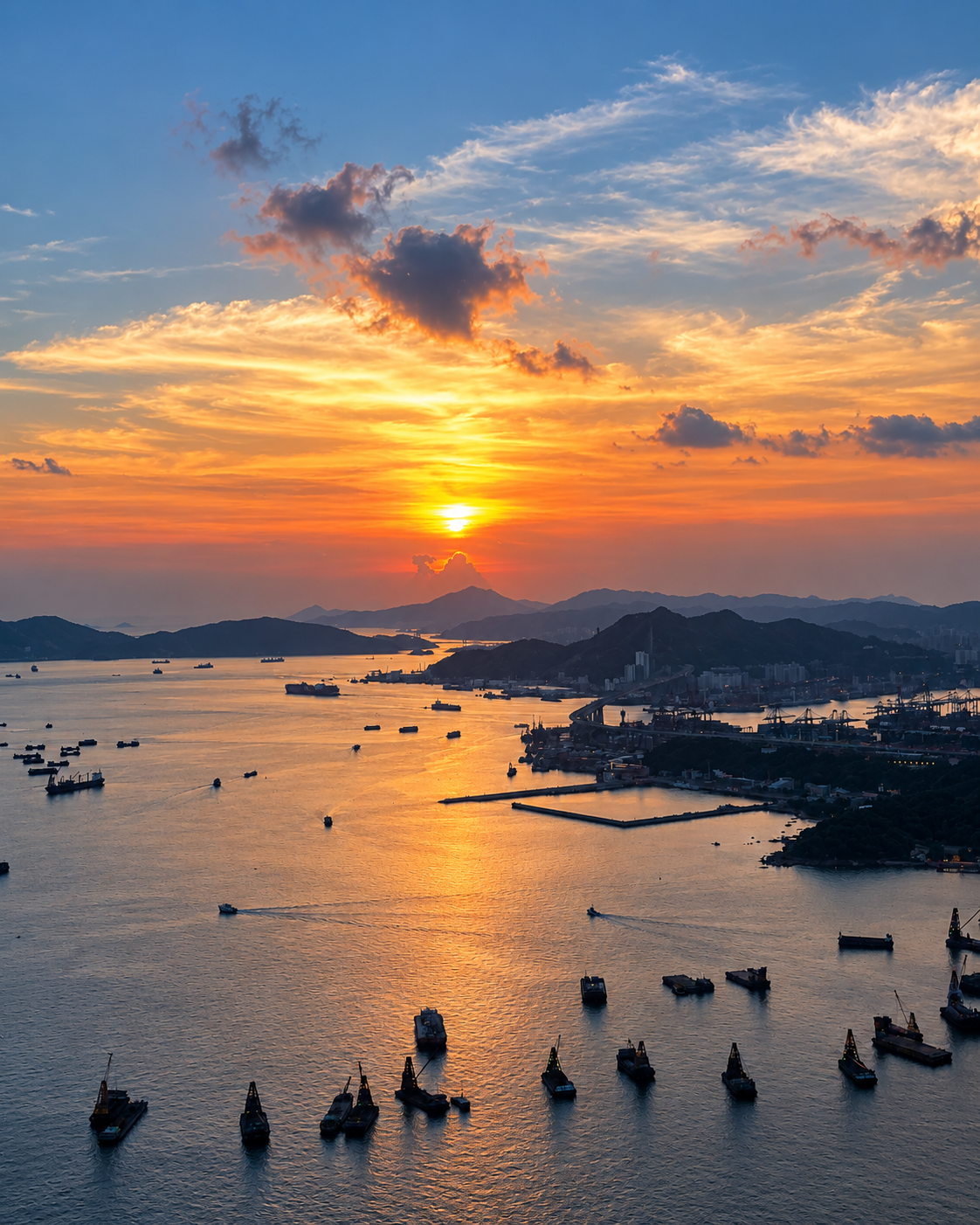
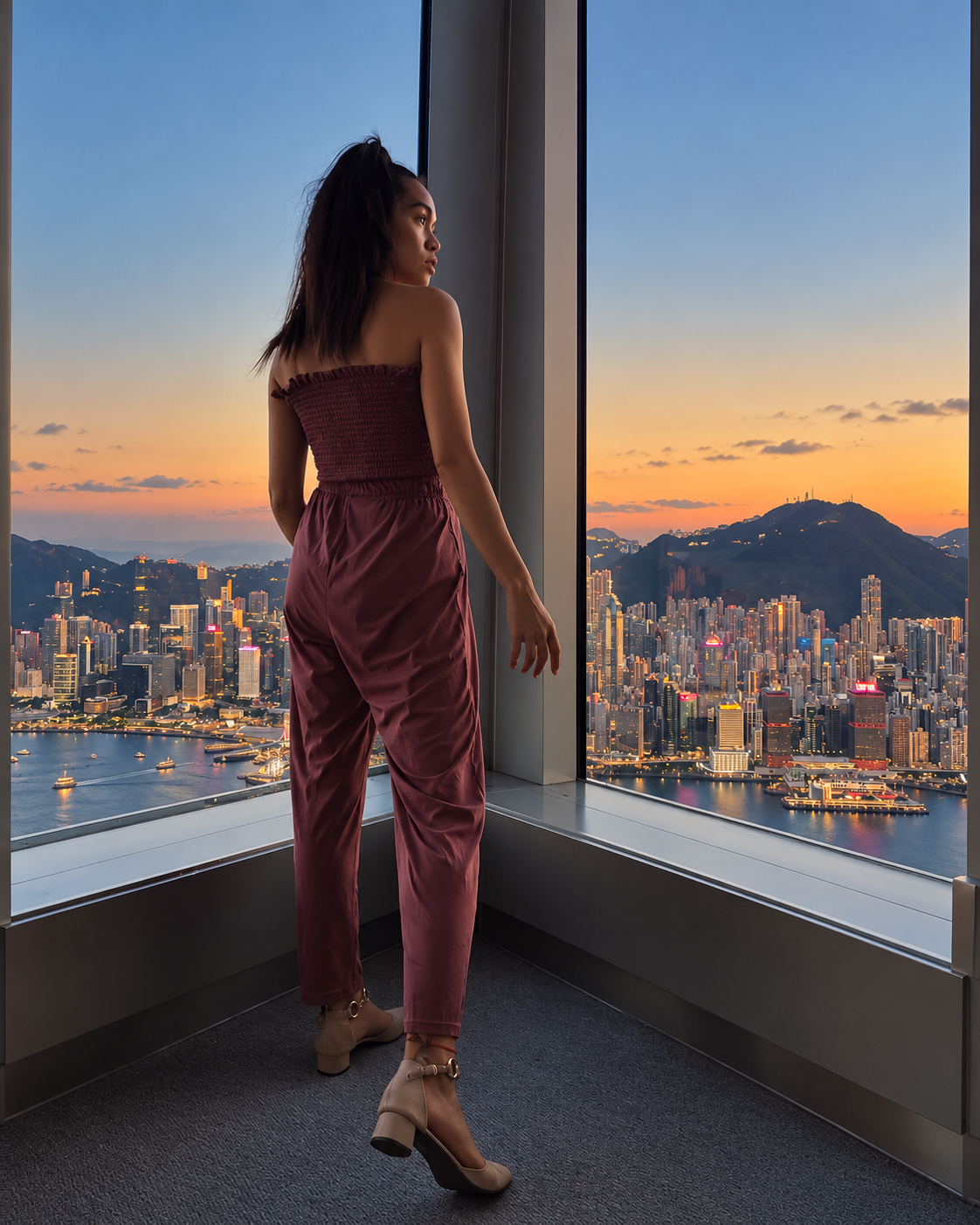
There are two ways to understand the Hong Kong harbour, and they sit a short ferry ride apart. One is from a hundred floors up, where the city flattens into a diagram. The other is from the water’s edge, where the same city rises in front of you like a wall. Seeing both is the quickest education the city offers, and the images in this section come from exactly those two vantage points: the observation deck at Sky100 and the waterfront at Tsim Sha Tsui.
Sky100 occupies the hundredth floor of the International Commerce Centre, the tallest building in Hong Kong, in West Kowloon. At roughly four hundred metres above sea level, it is where the logic of the place becomes legible. From the glass you can read the whole argument at once: the narrow strip of Kowloon below, the dark band of Victoria Harbour, the packed towers of Hong Kong Island stacked against their hillside and, behind them, the green ridge of the mountains that explains why the city had nowhere to go but up. The tower itself is part of the story. It rises directly above Kowloon Station, a reminder that in Hong Kong the transport line, the shopping floors and the skyscraper are conceived as a single structure, and that a building of this scale is as much a piece of infrastructure as a landmark.
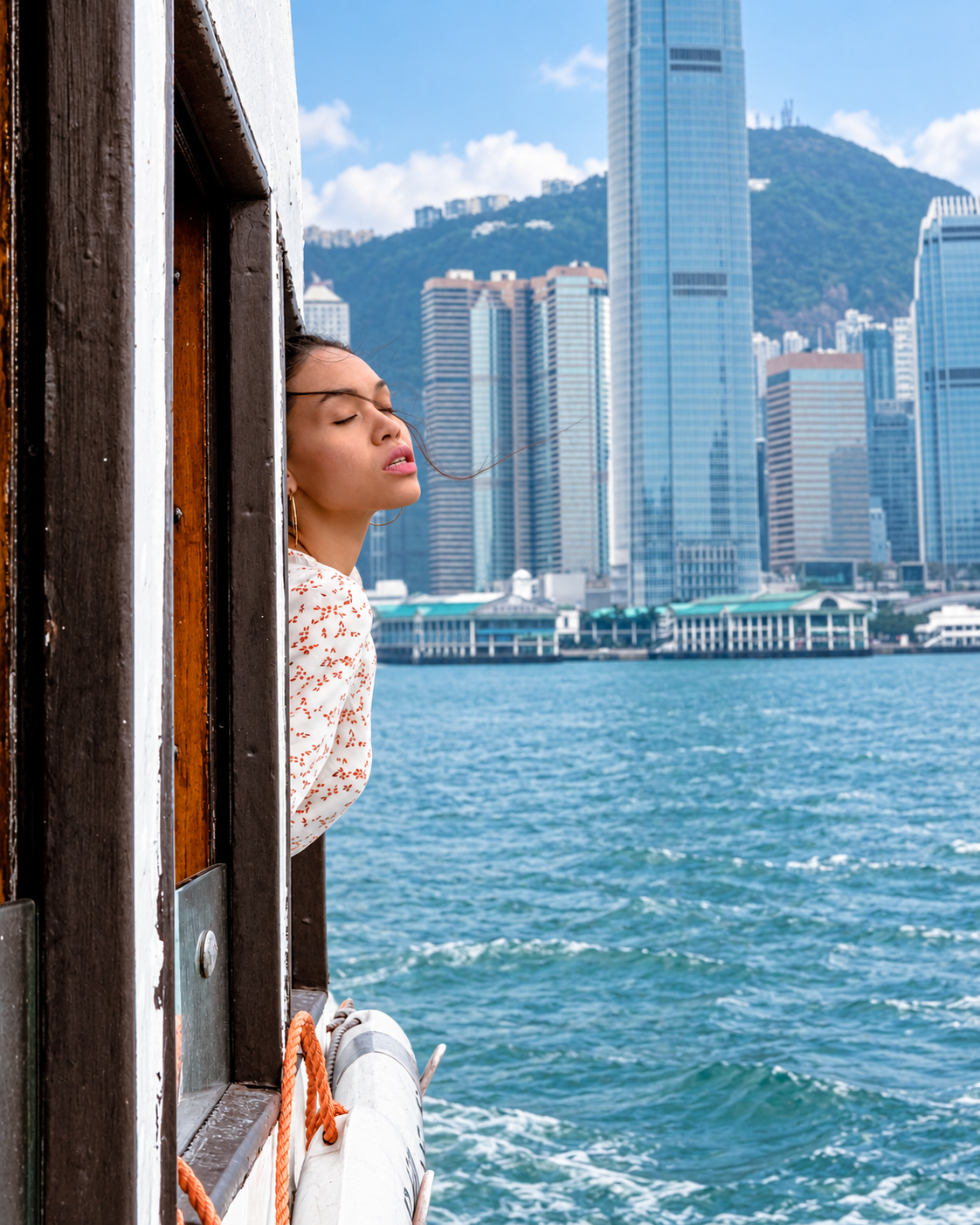
Come down to the waterfront at Tsim Sha Tsui and the perspective reverses. The promenade runs along the edge of Kowloon, with Hong Kong Island facing you across the water, and from here the skyline is not a diagram but a performance. The towers, lit at night in competing colours, are reflected in a harbour that is still busy with ferries, barges and the occasional old junk with its red sails. It is the best free view in the city, and it is where residents and visitors alike come to look at Hong Kong rather than to be in it.
What the two views share is distance. Sky100 gives you altitude, the harbour gives you the horizontal, and together they make the point the whole city makes: that Hong Kong is best understood from a slight remove, and that the clearest way to see it is to stand somewhere that lets it be seen. Sky100: International Commerce Centre, 1 Austin Road West, Kowloon. Tsim Sha Tsui promenade: along the waterfront between the Star Ferry pier and the Cultural Centre.
Where are the best views of Hong Kong? For altitude, the observation deck at Sky100 on the hundredth floor of the International Commerce Centre gives a sweeping view across the harbour to Hong Kong Island. For atmosphere, the Tsim Sha Tsui waterfront promenade offers the classic view of the island’s skyline across the water, particularly after dark.



The Peninsula Hotel: A Living Record of the City’s History
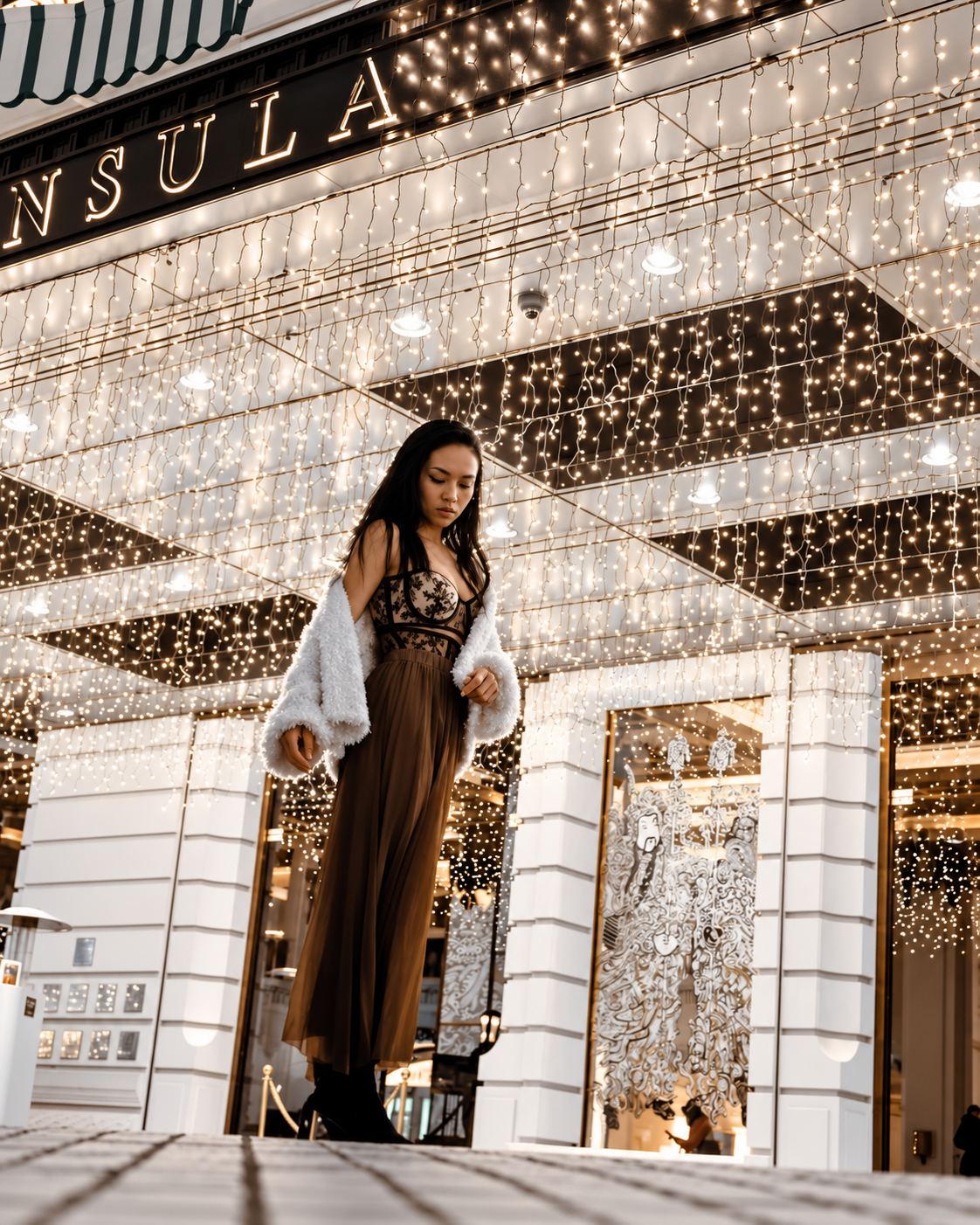
Few addresses in Hong Kong carry the accumulated weight of the Peninsula Hotel, standing at the edge of Tsim Sha Tsui since 1928 as a genuine record of the city’s colonial-era grandeur rather than a themed recreation of it. Its lobby, its service, and its famously matched fleet of green Rolls-Royces — maintained specifically for guest transport rather than display — have functioned for close to a century as a kind of institutional memory for the city, a place where the Hong Kong of an earlier era remains genuinely, operationally intact rather than simply referenced. Stepping inside does not feel like visiting a museum piece. It feels like entering a version of the city that has continued running, uninterrupted, since long before most of the skyline around it existed. Salisbury Road, Tsim Sha Tsui.
The Peninsula is also a lesson in architectural survival. It has stood beside the harbour since 1928, through war, occupation, boom and the transformation of the waterfront from a working edge into a canyon of towers, and it has remained recognisable because its owners treated the building as an asset rather than an obstacle. The lobby, with its high ceiling and its tradition of afternoon tea, is a deliberate piece of theatre, and in a city that demolishes and rebuilds faster than almost anywhere, deciding to keep a building as it was is itself a statement of confidence.




Ladder Street: The Staircase That Predates the Skyline
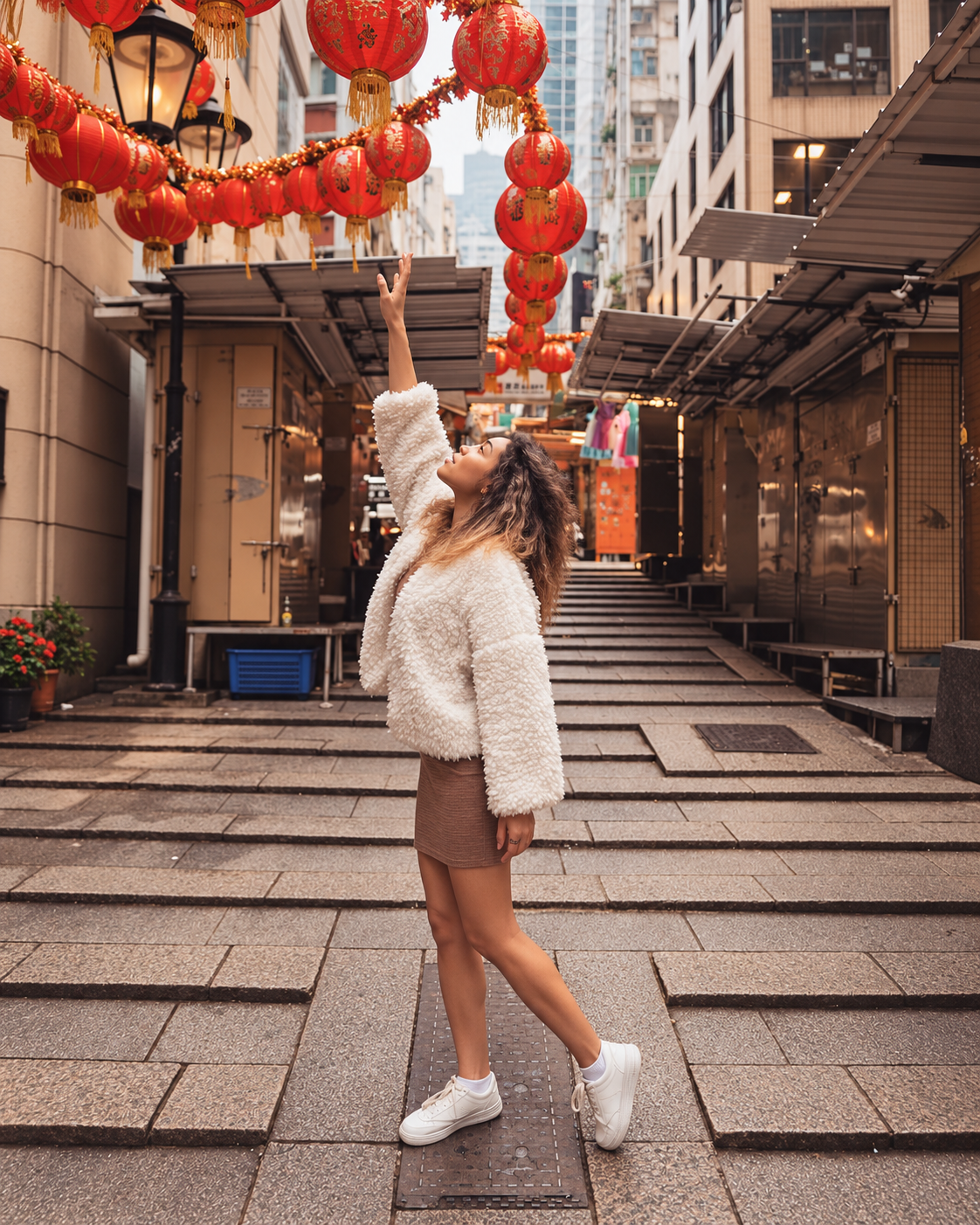
Ladder Street, threading between Central, Sheung Wan, and the Mid-Levels, is one of the oldest surviving thoroughfares in Hong Kong — a stone staircase built during the nineteenth century, long before the district’s current density existed, designed simply to help residents navigate the hillside’s steep gradient on foot. Its surrounding lanes, and Hollywood Road in particular, have since become the city’s recognised centre for antiques and curio dealing, drawing collectors toward porcelain, furniture, and artefacts sourced from across the region. The street has also served as a filming location for productions set in an older, pre-handover Hong Kong, its worn stone steps and colonial-era street lamps offering a texture the surrounding glass towers cannot replicate. Walking it remains one of the more direct ways to feel the physical age of the city beneath its contemporary surface.
The surrounding streets are worth the detour. Hollywood Road is lined with antique dealers and, nearby, the Man Mo Temple, founded in the nineteenth century and filled with great hanging coils of incense that burn for weeks, sends a smoky amber light across the street. Further down the slope, the stone-paved lanes of old Central, steep, narrow and often shaded by banyan roots that have cracked through retaining walls, preserve a layer of the city that the modern grid has almost entirely paved over. Walk it in the late afternoon, when the light comes in low between the towers and the steps turn the colour of honey.



Hong Kong Space Museum: Where the City Looks Outward
Set on the Tsim Sha Tsui waterfront beside the Cultural Centre, the Hong Kong Space Museum occupies one of the district’s most distinctive structures — a golden, egg-shaped planetarium building that has become a recognisable landmark in its own right. Inside, exhibitions on astronomy and space science sit alongside a full planetarium programme, giving the museum a genuinely different register from the city’s more expected cultural offerings. It is a reminder that Hong Kong’s identity has never been built exclusively around commerce and density; a meaningful strand of civic investment has gone toward scientific literacy and public education as well, delivered through one of the more architecturally memorable buildings on the harbourfront. 10 Salisbury Road, Tsim Sha Tsui.




Harbour City: Where Retail Becomes Waterfront Architecture
Stretching along the Tsim Sha Tsui waterfront, Harbour City ranks among the largest retail complexes in Hong Kong, its scale functioning less like a conventional shopping centre and more like an extension of the harbourfront itself — glass-fronted concourses opening directly onto views across Victoria Harbour toward Hong Kong Island. Beyond its retail density, the complex has become a genuine gathering point for the district, its promenade drawing both locals and visitors for the harbour view alone, independent of any particular purchase. It is, in its own way, a distinctly Hong Kong solution to a common urban problem: treating commerce and public space not as competing uses of land but as the same use, executed well. 3–27 Canton Road, Tsim Sha Tsui, Kowloon.




The City in Colour
Hong Kong’s palette was never designed. It accumulated, one sign, one paint job and one municipal decision at a time, and it is the most honest portrait the city has.
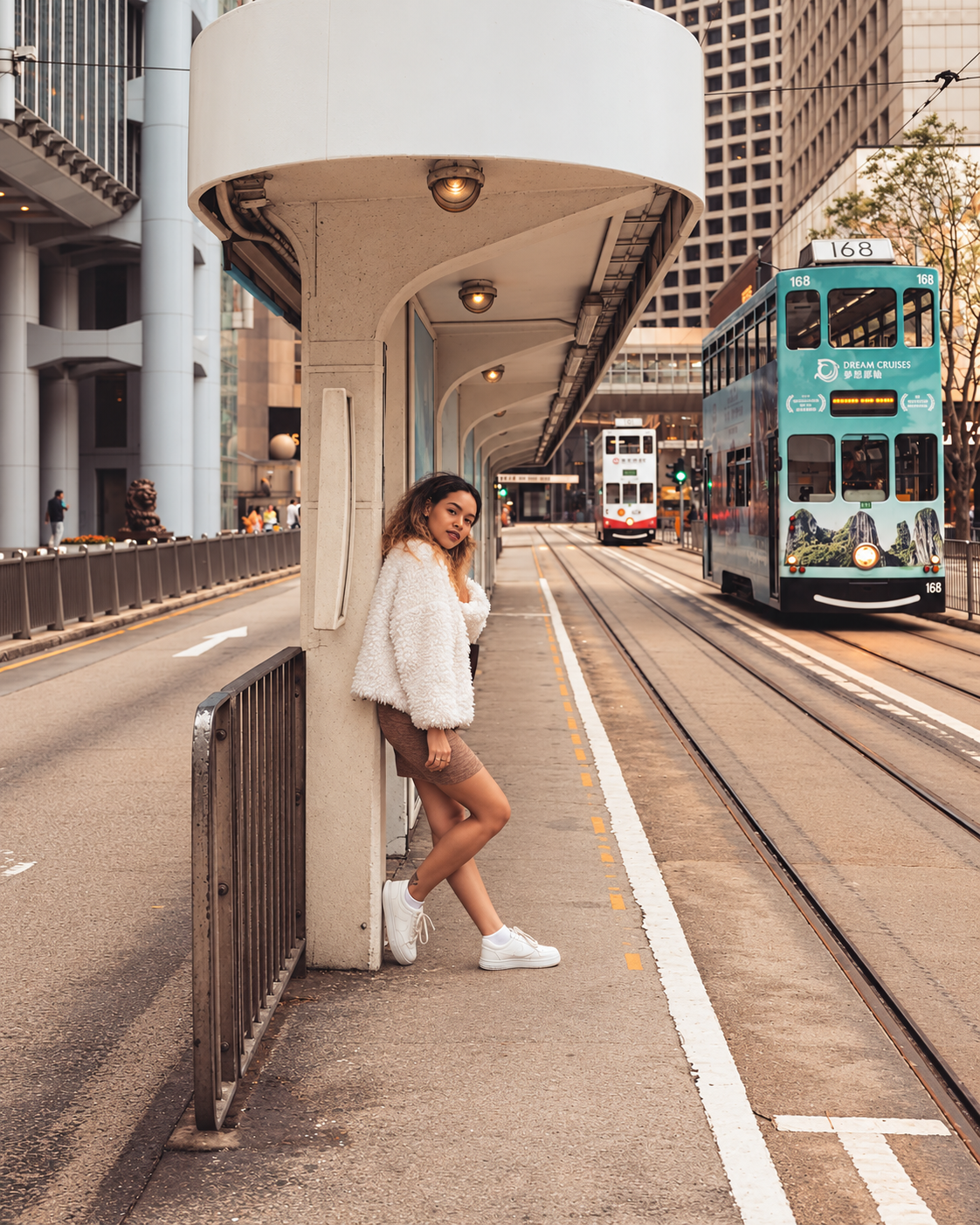
The first thing the eye registers is not a building but a colour. Neon, historically the city’s signature, once lit entire streets in saturated red, green and blue, and although LED has replaced much of it and regulations have retired many of the old signs, the glow still defines the night in districts such as Mong Kok and Yau Ma Tei. Red taxis, the colour assigned to the urban areas, glide through the streets beside the green taxis of the New Territories and the blue taxis of Lantau, a quiet system of colour coding that tells you where in the territory you are. The Star Ferry, green and white, has crossed the harbour for well over a century, and the old double-decker trams on Hong Kong Island, long covered in advertising, trundle along the northern shore in a continuous slow ribbon of colour.
Then there are the places where colour is architecture. Choi Hung Estate in Kowloon, whose name means “rainbow,” is a public housing estate built in the 1960s whose pastel-painted blocks have become one of the city’s most photographed sites, a reminder that even housing for ordinary residents was once given a sense of joy. In Wan Chai, the Blue House cluster, a rare surviving group of early tenement buildings, stands in a vivid shade of blue that makes it unmistakable among the towers. The red and gold of the city’s temples, the jade green of the Yau Ma Tei jade market, the grey-green of concrete streaked by decades of subtropical rain and the harsh white of fluorescent-lit shopfronts at midnight all belong to the same palette.
The deeper point is that Hong Kong’s colours are not decorative. They carry information, such as which taxi, which district, which trade or which temple, and they are the visual language of a city that has always communicated in a hurry. To read it is to understand how the city actually thinks.
Hidden Hong Kong: A Field Guide Beyond the Postcard
The most rewarding places in Hong Kong are rarely the ones with queues. A short list of places worth looking for, offered as a starting point rather than a ranking:
Tai Kwun, Central. The former Central Police Station compound, a cluster of nineteenth- and twentieth-century buildings that includes a barracks, a magistracy and a prison, was converted into a heritage and arts centre that opened in 2018. It is a case study in how the city can keep old buildings alive by giving them a second purpose, and its courtyards are among the quietest spaces in the district.
PMQ and the lanes of Soho. A former police married quarters turned creative hub, with studios, small design shops and workshops tucked into a mid-century building, sits above a district of steep streets lined with independent cafés and galleries.
Kowloon Walled City Park. Where the infamous Walled City, an extraordinarily dense, unregulated settlement that once housed tens of thousands in a tiny area, stood until its demolition in the 1990s, there is now a quiet park in the style of a Qing-dynasty garden. A small museum records the site’s strange history. It is among the clearest places to understand how far the city has travelled.
Sham Shui Po. One of the city’s oldest working-class districts, known for its fabric, button and electronics markets and its inexpensive, excellent food, offers an unvarnished view of daily life far from the glossy districts.
Tai O and the outlying islands. On Lantau, the stilt houses of Tai O, built over tidal creeks by a fishing community, and the quieter pace of Cheung Chau and Lamma offer a Hong Kong of seafood restaurants, narrow lanes and ferries, a short ride from the financial towers.
What should I see in Hong Kong beyond Victoria Peak? Look for the older, quieter city: Ladder Street and Hollywood Road for historic stonework and antiques, Tai Kwun and PMQ for adaptive reuse, Choi Hung Estate and the Blue House for colour, Sham Shui Po for working-class street life and the outlying islands for a slower pace. The skyline is the introduction; these are the argument.

Why Hong Kong Rewards the Slower Route
Hong Kong’s more famous images, the skyline from Victoria Peak and the neon corridors of Central and Causeway Bay, remain accurate, but they were never the entire argument. The dragon gates, the antique-lined steps of Ladder Street and a hotel that has run the same fleet of cars for the better part of a century make a different case: that this city’s real texture sits in the details that have simply persisted long enough to stop calling attention to themselves. Resources such as the Hong Kong Tourism Board and the South China Morning Post are useful starting points for exploring the city’s older neighbourhoods, and the MTR Corporation’s network and the Hong Kong Space Museum’s public science programmes both quietly reinforce the same point: the systems holding this city together are frequently more interesting than the skyline they support.
This same instinct — toward the overlooked detail rather than the obvious postcard — runs through other cities this editorial series has traced: the same city’s rooftop culture, read from an entirely different altitude, Shanghai’s own temples continuing to operate beneath its skyline, and Cairo’s layered, unbroken relationship with its own history. A comparable argument about continuity over spectacle runs through an island that never needed to perform its own authenticity, and the same principle of adaptation over replication shapes how a city without Christmas built its own version of one anyway. Anyone relocating to the region entirely, meanwhile, will find the same patience rewarded in the wider cultural intelligence required to actually live inside it, not simply visit.
Hong Kong was never only the skyline. It is the staircase beneath it, the gap deliberately left in a tower for a dragon that may or may not exist, and a hotel that kept its Rolls-Royces running long after the rest of the city moved on to something faster. The postcard was always true. It was simply never the whole photograph.
“A city this tall
still left room
for a dragon to pass through.
A staircase built
before the towers
still carries more
of the city’s actual memory
than the towers themselves.
Hong Kong was never
hiding these details.
It simply trusted
that the skyline
would get all the attention,
and let everything else
quietly keep working
underneath it.”

