
On why relocating to China is less a change of address than an entry into an entirely different social operating system, and what genuine preparation actually looks like before that transition begins
Relocating to China is not simply moving countries. It is entering a completely different social operating system — one built on ancient tradition and futuristic technology, collectivism and individual ambition, existing simultaneously rather than in sequence.
China has always existed between two versions of itself, held in the outside world’s imagination without much reconciliation between them. To some, it represents pure acceleration: advanced infrastructure, global manufacturing scale, some of the most technologically dynamic cities on earth. To others, it remains genuinely mysterious — shaped by philosophical traditions and social structures that have persisted for thousands of years, largely unbothered by whichever narrative happens to dominate outside coverage in a given decade. The more accurate picture holds both of these at once. China does not reveal itself quickly to anyone arriving from outside it. It requires curiosity, patience, and a willingness to be genuinely wrong about a first impression before understanding what actually replaces it.
Who This Guide Is For
This guide is written for the global citizen and the first-timer: the professional weighing a posting, the graduate considering a language year, the entrepreneur testing a market, the partner following a relocation, and the curious reader who simply wants to understand how living in China actually works. It does not assume prior knowledge of the language, the system or the culture, and it is organised in the order that a real move unfolds: deciding, planning, arriving and settling.
A single principle runs through every section. China is best approached as a set of interlocking systems, among them immigration, language, communication, payment, housing, healthcare and relationships, each of which works well once its logic is understood and poorly when it is guessed at. The newcomer’s task is not to master all of them at once. It is to understand the order in which they matter.
Before You Decide: Reading China Honestly
The most useful preparation for China is not a checklist. It is the willingness to hold two truths at once: that the country is extraordinarily advanced, and that it is operated by rules and norms that are not the ones you were raised with.
Most newcomers arrive carrying one of two stories: of a hyper-modern country that runs flawlessly, or of an opaque one that is difficult to navigate. Both contain truth, and both mislead. Daily life in a major Chinese city can be remarkably convenient, with fast transport, near-universal mobile payment and delivery of almost anything within hours. It can also be disorienting, because the convenience depends on local apps, local identity systems and local habits that a foreigner must learn from the beginning. The honest posture is neither enthusiasm nor apprehension, but curiosity combined with preparation.
It also helps to ask early what kind of stay is being planned. A short assignment, a multi-year career move and a permanent life require different levels of investment in language, relationships and administration, and the right answer shapes every decision that follows, including which city to choose and how deeply to commit to Mandarin.

The First Step: Understanding China’s Visa System
China’s immigration system reflects a larger cultural principle worth absorbing early: access here is structured, intentional, and frequently relationship-driven rather than simply procedural.
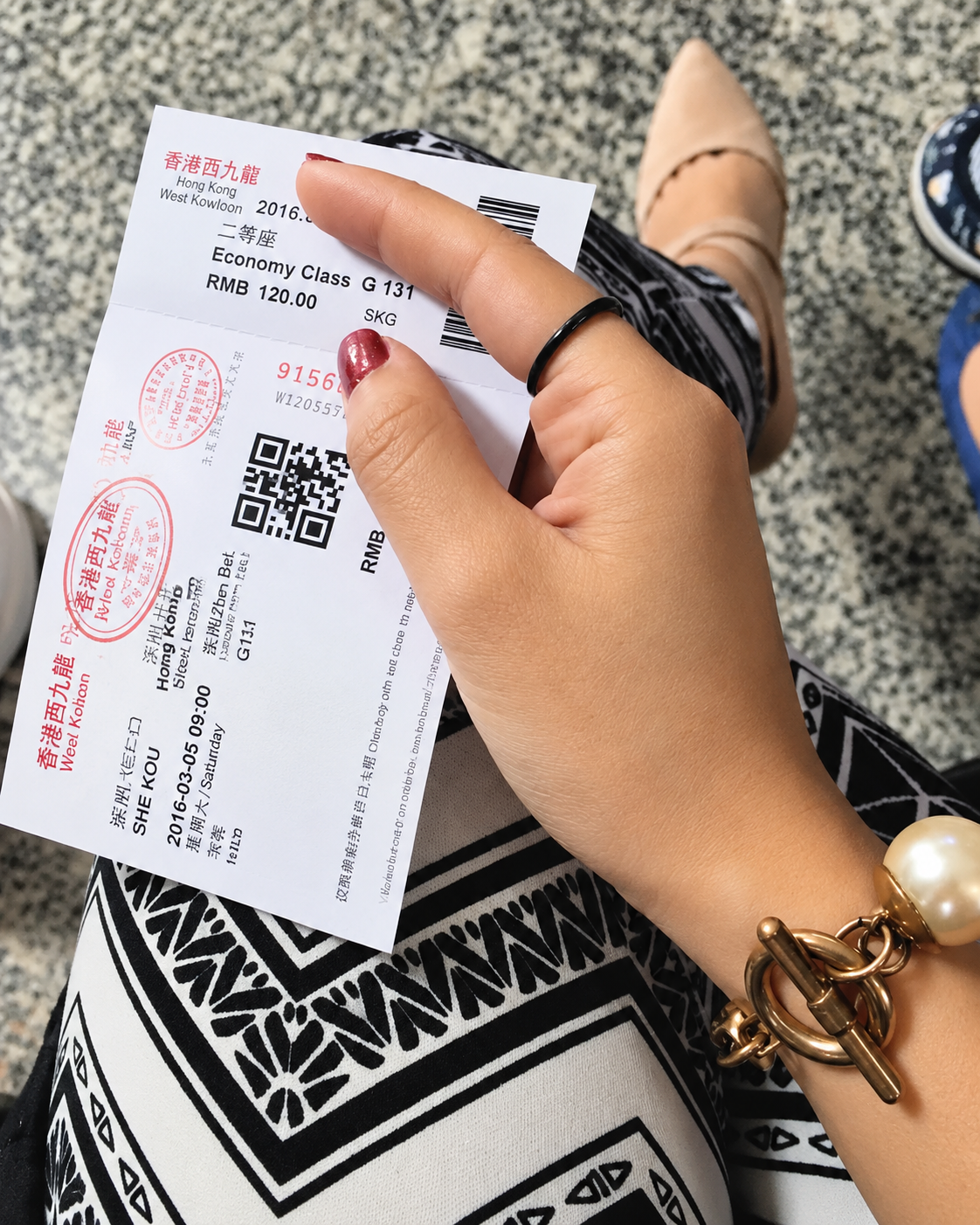
What visa do I need to move to China? The answer depends entirely on the purpose of the stay, and the system is organised by letter. The Z visa is the primary route for foreign professionals employed by a Chinese company. It follows a defined sequence: the employer applies for a work authorisation, the applicant receives a Z visa to enter, and, after arrival, the visa is converted into a residence permit, typically within thirty days. The X visa serves students on longer programmes (the X1 category covers study of more than one hundred and eighty days, and the X2 shorter courses). The M visa covers commercial and trade activity, such as business meetings and market exploration, while the F visa is intended for non-commercial exchanges, visits and study tours; travellers often confuse the two, and the distinction matters. Family categories exist for relatives of foreigners and of Chinese citizens, and the D visa, tied to China’s permanent residence permit, is reserved for a very small number of long-term residents who meet strict criteria. Official guidance from China’s National Immigration Administration sets out these categories, and the central lesson holds regardless of category: preparation here is not optional, and the paperwork itself is often the first real test of whether an applicant understands how the system works.
Two practical points deserve emphasis. First, entry policy has changed repeatedly in recent years, with visa-free arrangements and transit rules extended to many nationalities and adjusted over time, so any plan should start from the current rules for your passport rather than from a remembered one. Second, foreigners are required to register their address with the local authorities shortly after arrival, within twenty-four hours if staying in private accommodation, a step that hotels normally complete automatically. Residents on long-term permits should also understand that changes of employer, address or status carry their own reporting obligations.
Can foreigners live in China long term? Yes, and many do, typically on employment-based or family-based residence permits that are renewed periodically. Permanent residence exists but is difficult to obtain. Long-term residents benefit from treating the administrative side of life as an ongoing responsibility rather than a one-time task.
A Planning Timeline: From Decision to Departure
The most reliable way to reduce stress is to sequence preparation. The timeline below is a general framework; individual circumstances will vary.
Six to twelve months before. Clarify the purpose and duration of the stay, research cities, and begin Mandarin if time allows. If relocating for work, understand the employer’s obligations and what documentation the work authorisation will require. Check passport validity, since the visa process generally requires a passport with substantial validity remaining.
Three to six months before. Begin the visa process through the employer, university or relevant channel. Gather and, where required, authenticate documents such as degree certificates and criminal-record checks, which can take time to obtain and legalise. Review health insurance and arrange any needed medical or dental work, and copy medical records and prescriptions.
One to three months before. Secure temporary accommodation for the first weeks rather than committing to a long lease unseen. Download and configure the essential apps and any VPN or roaming solution while still outside the country. Arrange international payment options, notify banks and plan how funds will move.
The final weeks. Confirm entry requirements for your passport, carry original documents in hand luggage and save offline copies of addresses in Chinese characters, since a driver or landlord will read characters more easily than a romanised address.
Mandarin: The Language That Opens Doors
Mandarin functions as considerably more than a communication tool in this context. It operates as a form of cultural access, and its global weight — across international business, technology, entertainment, and diplomacy — means that even a modest working vocabulary changes the texture of daily life meaningfully. A handful of first phrases carry real weight: nǐ hǎo for hello, xièxiè for thank you, duōshǎo qián when asking a price, and wǒ bù míngbái when genuine clarification is needed. The specific words matter less than what the effort itself communicates — humility, curiosity, and a visible willingness to integrate rather than simply expecting the country to accommodate a visitor’s existing habits.
A little structure helps the beginner. Mandarin has a standard romanisation system called pinyin, which spells sounds with the Latin alphabet, and four tones plus a neutral one, which change the meaning of a syllable. Learners usually start with pinyin and tones, then spoken phrases, and only later characters. The standard international proficiency test is the HSK, which many employers and universities recognise, though daily life rewards practical speech far more than test scores. Translation and dictionary apps, offline maps and the habit of showing addresses and instructions in characters close much of the gap in the early months.
How much Mandarin do I need to live in China? In the largest, most international cities, a newcomer can function with very little, thanks to apps and a significant English-speaking community. Anyone planning to live beyond a short stay, work in a local environment or build real friendships will find that even basic conversational ability changes the experience from managing the country to participating in it. Smaller cities require considerably more.





Understanding China’s Unique Sense of Time
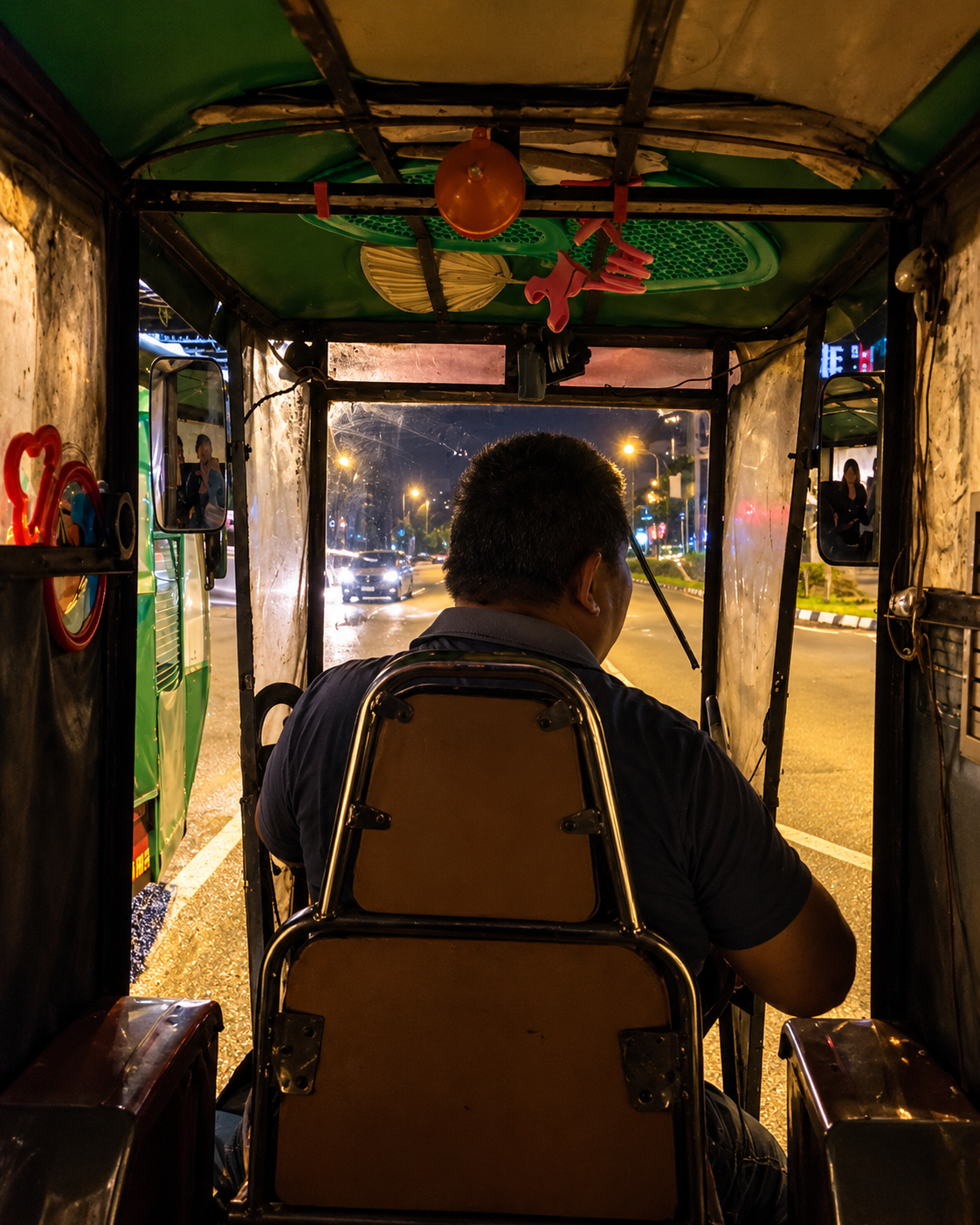
Despite spanning a geographic breadth that would ordinarily justify several time zones, the entire country runs on a single official standard: China Standard Time, commonly known as Beijing Time. This produces a genuinely fascinating expression of national identity — sunrise and sunset shift dramatically depending on region, and daily business rhythms adapt locally around a clock that was never designed with any single region’s actual solar day in mind. It is a small but telling detail about how the country privileges unity over strict local convenience, a pattern that recurs across several of the systems discussed here.
The time standard is one of several features that reward early understanding. China Standard Time is UTC+8 across the whole country, though some residents of the far west informally keep a local time two hours behind. The working calendar is also distinctive: public holidays are concentrated into long breaks, most importantly the Spring Festival around the lunar new year and the National Day holiday in early October, during which transport is heavily booked and many businesses close. Newcomers who plan arrivals, travel and administrative errands around these periods avoid some of the year’s most predictable frustrations.






The Digital Reality: Life Behind the Great Firewall
One of the more immediate adjustments for anyone relocating involves China’s digital ecosystem, which functions almost as a parallel internet entirely. Familiar international platforms — Google’s services, Instagram, Facebook, and X among them — remain restricted, and daily digital life instead runs through domestic alternatives. WeChat operates as something closer to essential infrastructure than a simple messaging app, combining communication, payments, business networking, and social connection inside a single platform; Weibo fills a comparable role for news and public conversation. Do I need a VPN in China? Most expatriates use one to maintain access to international platforms and services, and the practical guidance here matters considerably: downloading and configuring a VPN before arrival is far simpler than attempting the same task once already inside the country’s network restrictions.
It is worth understanding the arrangement in layers. The restrictions are the visible part; the less visible part is how much of daily life runs on domestic platforms with their own logic. Apps for navigation, food delivery, ride-hailing, train tickets, shopping and public services are built around local identity and payment systems, and a new arrival usually needs a Chinese mobile number, which is registered against a passport, to use many of them. International roaming and certain travel eSIMs, which route traffic through the home network, give some visitors unrestricted access without a VPN, though arrangements vary. Residents should also be aware that the regulatory status of VPN services is itself a matter of rules that change, and the sensible course is to follow current official guidance and the practice of reputable employers rather than assume.
The deeper adjustment is behavioural. A resident who learns the domestic ecosystem quickly, WeChat first, then payments, maps and delivery, will find daily life becoming efficient far sooner than one who tries to recreate their home digital habits.




Cultural Intelligence: Learning How China Communicates
Relationships are not separate from business in China. They are, more often than not, the actual foundation of it — a distinction that changes almost everything about how professional life there should be approached.
Confucian influence remains genuinely visible across contemporary Chinese society, even in contexts that appear, on the surface, thoroughly modern. Professional environments frequently emphasise seniority, formal titles, and accumulated experience over the flatter hierarchies familiar in some Western business cultures. Family retains a central social position, and harmony — avoiding unnecessary confrontation in favour of preserving a working relationship — is often actively valued over the kind of direct conflict resolution treated as a virtue elsewhere.
Several concepts help a newcomer read situations that might otherwise seem puzzling. Face (mianzi) refers to dignity, reputation and social standing, and much of Chinese communication is shaped by the effort to protect one’s own and others’ face: criticism is usually delivered privately and gently, disagreement is often softened, and a direct “no” may be replaced by something like “it may be difficult.” Hierarchy and respect for seniority shape meetings, introductions and seating at meals. Gifts, banquets and shared meals are not incidental; they are the ordinary means by which trust is built. Small gestures, such as presenting a business card with both hands, accepting tea graciously or letting the host order for the table, carry meaning out of proportion to their size.
What is Guanxi? Guanxi refers to the networks of trust and reciprocal relationship that underpin much of Chinese social and professional life — opportunity built and reinforced through personal connection, reputation, and long-term relationship rather than a single transactional interaction. Business scholarship, including work published in outlets such as the Harvard Business Review, treats Guanxi as a structural feature of Chinese commerce rather than simply informal networking by another name, a distinction worth taking seriously before assuming Western business instincts will translate directly.
The practical rule is to listen for what is implied as well as what is said, to avoid public confrontation, and to remember that patience is itself a signal of respect. Visitors should also be aware that some topics, particularly political ones, are sensitive, and that the sensible approach in public settings and online is discretion.
Navigating China’s Megacities
Shanghai, Beijing, Shenzhen, and Guangzhou each operate at a scale that can genuinely disorient anyone arriving without preparation — dense, fast-expanding, and organised around addressing conventions that rarely map cleanly onto the systems many newcomers already know. Local navigation and translation apps, alongside a working understanding of the relevant metro system, become close to essential rather than optional. China’s public transportation infrastructure, meanwhile, ranks among the most genuinely advanced in the world: an extensive high-speed rail network and comprehensive urban metro systems that make moving between and within its megacities considerably more efficient than the initial impression of scale might suggest. The same layered contrast — density and disorientation resolving, with the right tools, into genuine efficiency — echoes the argument made by Hong Kong’s own relationship to its extreme urban density, a short flight away and facing a comparable set of spatial constraints.
Choosing Your City
China is not one place, and the choice of city shapes almost every part of a stay. Shanghai is the most internationally oriented, with deep expatriate infrastructure, finance, luxury and creative industries. Beijing is the political and academic centre, home to major universities, embassies and cultural institutions. Shenzhen is the country’s technology and manufacturing frontier, young, fast and entrepreneurial. Guangzhou is a historic trading city with a strong commercial culture and a distinct southern identity, close to Hong Kong. Beyond the four, cities such as Chengdu and Hangzhou have grown in prominence for lifestyle and technology, and smaller cities offer lower costs and a more local experience, with fewer international services. The right choice depends on career, budget, language ability and the kind of daily life being sought.
Housing and Settling In
Housing is usually arranged through agents or online platforms, and leases commonly involve a deposit plus several months’ rent paid in advance. Newcomers are generally advised to take short-term accommodation first and search in person, to read the lease carefully, ideally with a Chinese-speaking colleague or friend, and to confirm that the landlord can complete the registration required of foreign tenants. Neighbourhood matters considerably: proximity to a metro line, to work and to everyday amenities will shape daily life more than the apartment itself.

Money in China: The Rise of the Cashless Society
Is China cashless? Functionally, in most major cities, close to it. Alipay and WeChat Pay have become the default mechanism for daily transactions — payments, transportation, restaurant bills, personal transfers — to a degree that leaves cash feeling almost like a backup system rather than a primary one. Before relocating, organising banking access, preparing international payment options, and understanding currency exchange mechanics ahead of arrival removes one of the more disorienting early adjustments new residents otherwise face. The broader lesson here runs parallel to any transition into an unfamiliar digital-payment ecosystem: verify the system’s actual mechanics before trusting it fully, the same diligence any considered digital consumer should already be applying regardless of geography.
Several practical points apply. Foreign bank cards can now be linked to the major mobile wallets in many cases, subject to limits and verification, which makes arrival easier than it once was; the arrangements change, so confirm the current process before travelling. Opening a local bank account generally requires a passport and, for long-term residents, a residence permit, and often a local phone number. Cash remains legal tender, and merchants are expected to accept it, though it is used far less than in most countries, so carrying a small amount as a backup is sensible.
Longer-term residents should also understand the tax position early. Under Chinese individual income tax rules, a person who spends a sufficient number of days in the country in a tax year, commonly one hundred and eighty-three days, is generally treated as a tax resident, with consequences for how income is taxed. Because the rules interact with the laws of the home country, professional advice is worthwhile.
Building a Career: Work Culture and Opportunity
China offers genuine opportunity across technology, luxury, education, international trade, design, and hospitality — but success inside any of these sectors depends considerably on cultural adaptation rather than credentials alone. Professional relationships require consistency, patience, and trust built over time rather than requested upfront, and platforms like LinkedIn and its domestic counterpart MaiMai function as starting points rather than substitutes for the in-person relationship-building the culture actually rewards. The country’s creative economy, illustrated clearly by Shanghai’s own transformation from manufacturing power to genuine creative authority, gives a concrete sense of how quickly opportunity can move for those who invest seriously in the relationships that precede it. China, broadly, rewards those who build trust before requesting anything from it.
Expectations differ from many Western workplaces in useful ways. Decision-making can be more hierarchical, with senior figures setting direction; working hours and the boundary between professional and social life may be more fluid; and speed can be remarkable when a decision has been made. Foreign professionals are generally most effective when they invest in understanding their colleagues’ context, contribute expertise without presenting it as a correction, and build relationships beyond the meeting room, through shared meals and ordinary conversation. Employment contracts, social-insurance arrangements and the terms of the work authorisation deserve careful reading, since they affect both status and benefits.




Healthcare: Understanding the System Before You Need It
Healthcare preparation deserves attention well before it becomes urgent. Major cities maintain international hospitals staffed with English-speaking physicians and genuinely specialised care; smaller cities frequently offer considerably less in the way of international services and carry a higher likelihood of language barriers during an already stressful moment. Securing comprehensive insurance, identifying nearby hospitals in advance, and keeping medical records accessible before relocation are not precautions to defer until a problem actually arises — they are, functionally, part of the same preparation that makes every other system on this list workable.
The structure of care is worth understanding in advance. Large public hospitals provide excellent treatment but are often crowded, organised around registration and payment steps that are easier with a local companion, and not always set up for English. Private and international hospitals and clinics in major cities offer English-speaking staff, shorter waits and higher costs, and typically work with international insurers. Pharmacies are plentiful, but medications available at home may be sold under different names or may require a prescription, so residents on regular medication should carry documentation and plan supply carefully. Knowing the emergency numbers, 110 for police, 120 for ambulance and 119 for fire, and saving the address of the nearest hospital in Chinese characters costs nothing and can matter greatly.
Safety, Law and Everyday Conduct
Major Chinese cities are generally regarded as having low rates of violent crime, and many residents, including foreigners, find them comfortable to move through at night. The more common issues for newcomers are ordinary ones: petty theft in crowded places, taxi and market scams aimed at those unfamiliar with prices, and confusion over local rules. Carrying identification, keeping passport copies and respecting local regulations, including those governing photography near sensitive sites, online conduct and public gatherings, form the basis of sensible conduct. Foreign residents are expected to abide fully by Chinese law, and a basic awareness of what is regulated avoids misunderstandings.
Is China safe for foreigners? For most visitors and residents, daily life in the major cities is safe, and violent crime against foreigners is uncommon. The greater risks are practical rather than dramatic: administrative missteps, scams and the stress of unfamiliar systems, all of which preparation reduces.
The First Ninety Days: A Settling-In Checklist
-
- Register your address with local authorities, or confirm that your hotel has done so, within the required period.
- Complete the conversion of your entry visa to a residence permit if required, within the permitted window.
- Obtain a local phone number and set up WeChat, a payment wallet, maps, transport and delivery apps.
- Open a local bank account once your documents allow.
- Learn your neighbourhood on foot: the nearest metro, pharmacy, hospital and grocery.
- Find at least one local companion or colleague willing to answer questions, and one community of other newcomers.
- Begin or continue Mandarin lessons while motivation is high, and build one small social habit, such as a weekly meal, that connects you to the place.
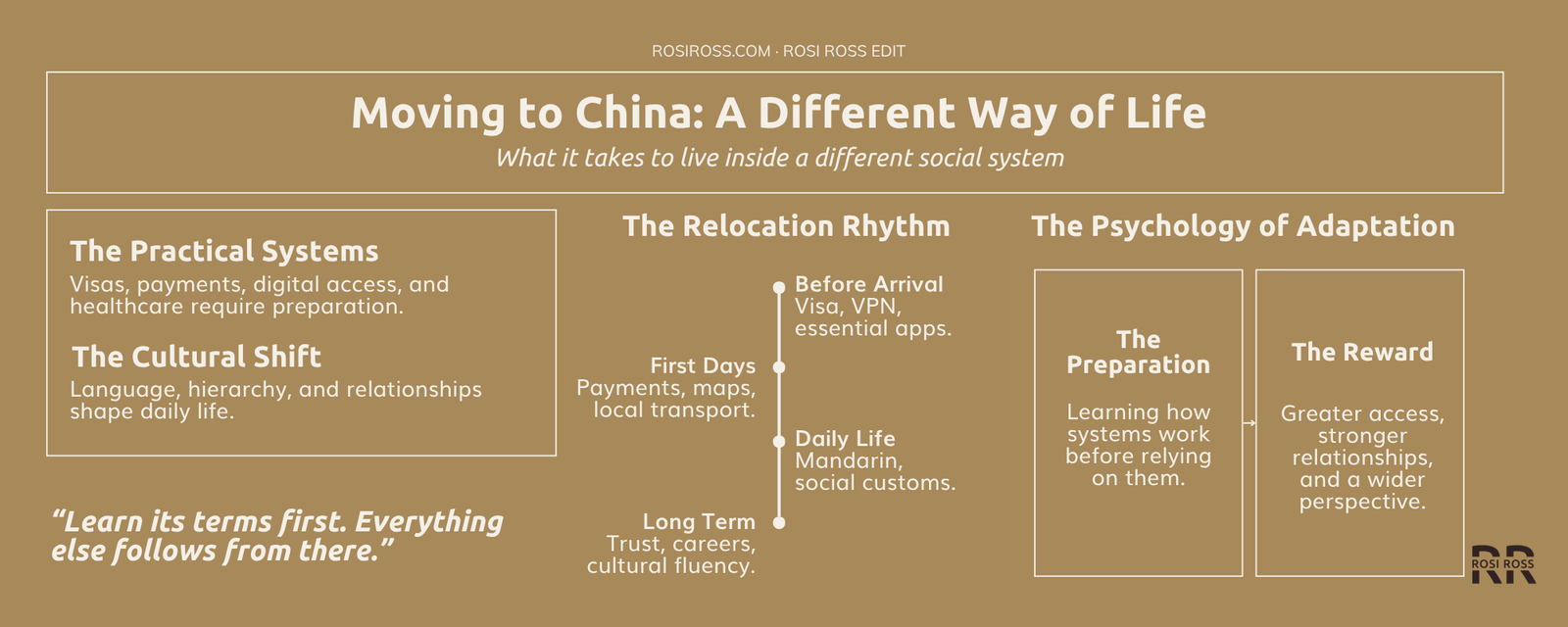
Why China Rewards Patience
Living in China was never about adapting the country to match a newcomer’s existing expectations. It is about genuinely learning how a different civilisation operates on its own terms, a lesson that runs directly parallel to what makes cities like Shanghai worth understanding rather than simply visiting, where centuries-old temples continue operating beneath a genuinely futuristic skyline, or where an imported holiday gets reinterpreted entirely on the city’s own terms rather than simply replicated. Publications such as the Financial Times and Monocle are useful further reading for anyone who wants to follow the country’s cities and economy on their own terms rather than through an imported framework. This same instinct toward patience over assumption runs through an island that has survived by remaining functional rather than performing itself for visitors: proof that genuine cultural continuity, wherever it appears, rewards the traveller willing to slow down and actually look rather than arrive with the answer already assumed.
The reward for that patience is not simply access to new places. It is a genuinely different perspective on technology, community, business, tradition, and human connection — the specific kind of perspective a civilisation this old and this fast-moving can offer only to those willing to observe before concluding. China refuses simplicity by design. For anyone willing to learn its actual terms rather than impose their own, it becomes considerably more than a relocation. It becomes a genuine transformation.
“China was never going to
explain itself
on anyone else’s timeline.
It asks instead
for the one thing
most relocations
never actually require:
patience,
before conclusion,
before comfort,
before the assumption
that a system
built over thousands of years
owes anyone
a quick read.
Learn its terms first.
Everything else
follows from there.”

