

True luxury has always belonged to the things that cannot be rushed. And of all the objects that human beings have used to express desire, permanence, and beauty across recorded history, none embodies this principle more completely than the pearl. In an age of synthetic abundance, natural rarity becomes its own currency. The pearl is among the last luxury objects whose quality is ultimately determined not by human skill alone but by the collaboration between human patience and the intelligence of the sea.
On Tahitian black pearl cultivation, investment-grade jewellery, the Robert Wan Dubai DMCC showroom, and why the pearl — the only gem produced by a living organism — is returning to the centre of considered luxury in an era that has exhausted synthetic alternatives
In the South Pacific, five thousand kilometres from the nearest industrial activity, an oyster named the Pinctada Margaritifera is producing something that no laboratory has successfully replicated and no technological process has meaningfully accelerated. The Tahitian pearl grows inside the oyster across years of incremental deposition — layer by layer of nacre, the organic compound that gives the gem its particular quality of light, built at a pace determined entirely by the oyster’s biology and the temperature and mineral content of the water surrounding it. Two years at minimum. Often three, four, or five. No intervention changes this. The pearl is ready when the pearl is ready.
This temporal stubbornness is not incidental to the pearl’s investment value. It is the foundation of it. In an era defined by synthetic abundance — by lab-grown diamonds that replicate geological processes in weeks, by algorithmic design that produces thousands of variations on a theme in hours, by a luxury market that has learned to manufacture the impression of rarity while systematically removing the conditions that produce it — the Tahitian pearl remains genuinely irreplaceable. Its quality is determined by factors outside human control: the health of the ocean, the specific mineral composition of a particular lagoon, the biological idiosyncrasies of a specific oyster at a specific depth in a specific year. These variables cannot be optimised. They can only be respected.
This is why the pearl is returning to the centre of luxury jewellery culture — not because of a trend, but because the conditions of contemporary life have made its particular form of authenticity more legible and more desirable than at any previous point in recent memory. The quiet luxury movement, the heirloom investment culture, the growing preference for objects whose value rests on natural origin rather than brand association — all of these point toward the same destination, which is the pearl, understood as what it has always been: a living organism’s response to the world it inhabits, preserved in nacre and worn against human skin.
The cultural turn toward jewellery chosen for what it means rather than what it signals — for the emotional and symbolic intelligence it carries rather than for its logo or its price point — is explored in depth in The Language of Modern Necklaces: Metals, Stones, and the New Codes of Personal Luxury: the argument that the most significant jewellery in a life is the jewellery chosen with the most precise self-knowledge, and that natural materials with their own history of meaning — Tahitian pearl among them — carry a depth of symbolic authority that manufactured alternatives cannot replicate. Robert Wan’s pearls belong entirely within this understanding.
The quiet luxury of the Tahitian pearl — why natural rarity is the most durable form of jewellery value
Quiet luxury is not restraint for its own sake. It is the confidence of someone who knows that the most significant things are rarely the loudest — and who chooses accordingly. The pearl answers the questions that the quiet luxury movement is asking in ways that few other jewellery categories can.
The Tahitian black pearl carries no brand equity in the conventional sense — its jewellery value does not rest on a house’s marketing spend or a season’s editorial positioning. It carries something more durable: the accumulated cultural authority of a material that has been valued across every civilisation that has encountered it, for the same qualities, in the same terms. The Ancient Romans reserved pearls for the highest levels of the senatorial class. The Renaissance courts of Europe considered them the most prized of all gems. The pearl belongs to the ears of Vermeer’s Girl with a Pearl Earring, to every generation of women who have understood that the pearl’s particular quality of light — generated from within the gem rather than reflected off its surface — communicates something that no other material has found a way to say.
That pearl communication is intimate rather than performative. A Tahitian pearl necklace does not announce itself across a room. It reveals itself at proximity — which is precisely the register of luxury that the current cultural moment values most. The piece that rewards close attention, that becomes more interesting rather than less as it is studied, that communicates its investment value through what it is rather than what it costs to manufacture: this is the jewellery that the quiet luxury sensibility seeks, and this is what a fine Tahitian pearl provides with an authority that no alternative material can match.
As Harper’s Bazaar has explored in its analysis of jewellery as investment and the return of quiet luxury aesthetics, the most sophisticated jewellery collectors are increasingly choosing Tahitian pearl pieces for their natural rarity and material excellence rather than their seasonal relevance — understanding that the pearl represents a category of wearable wealth that compounds in value alongside its emotional significance.
Robert Wan — the fifty-year making of the world’s most significant Tahitian pearl operation
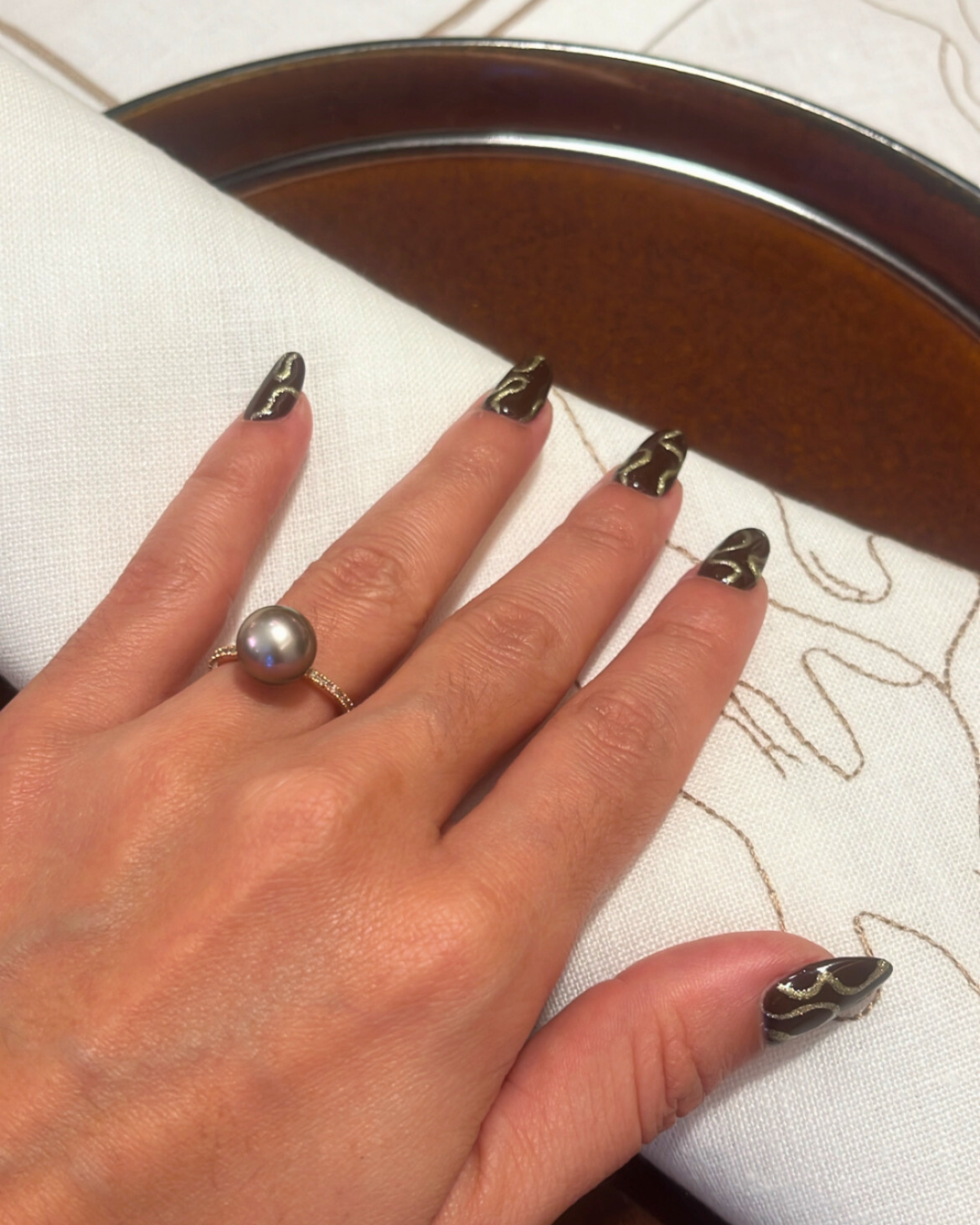
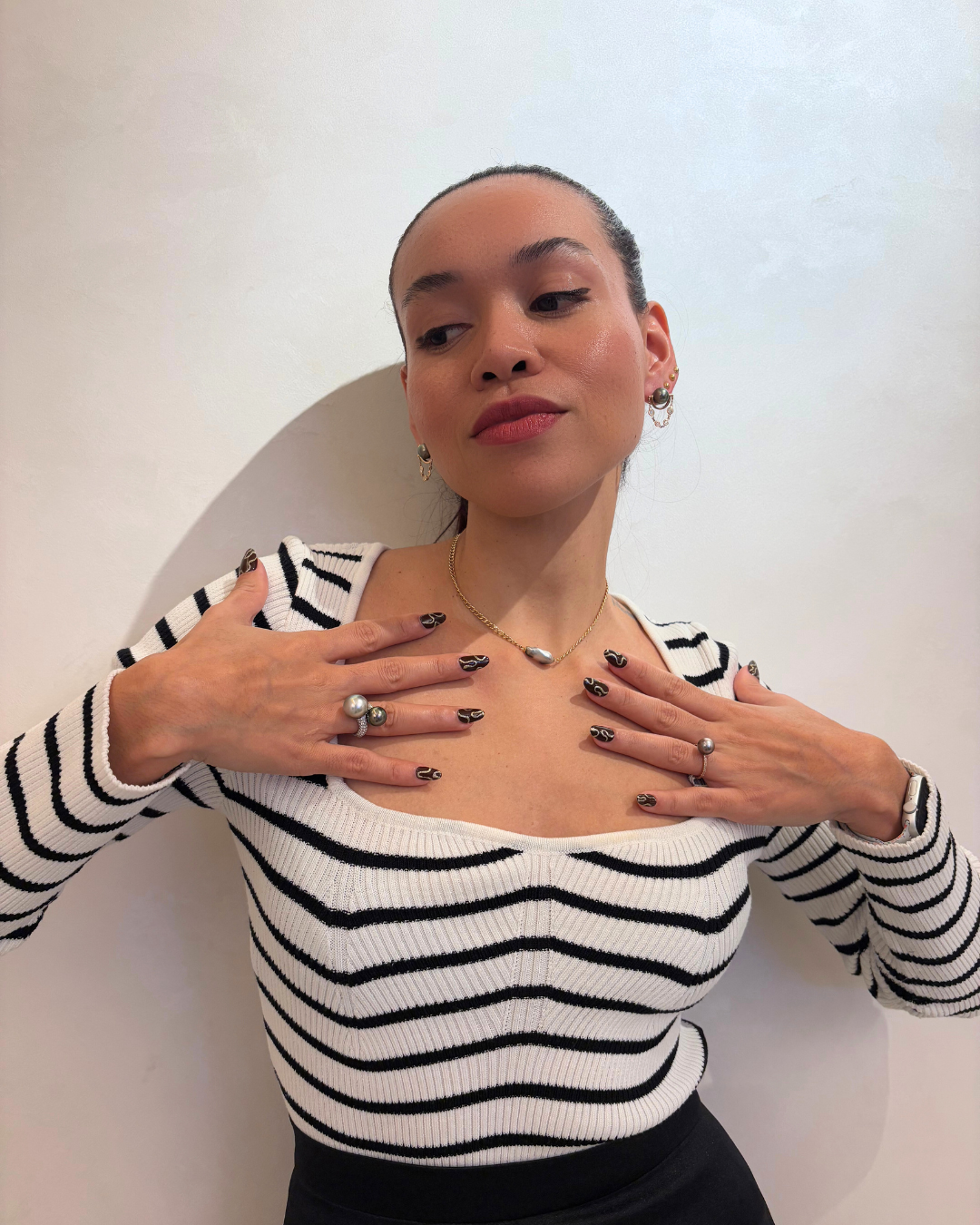
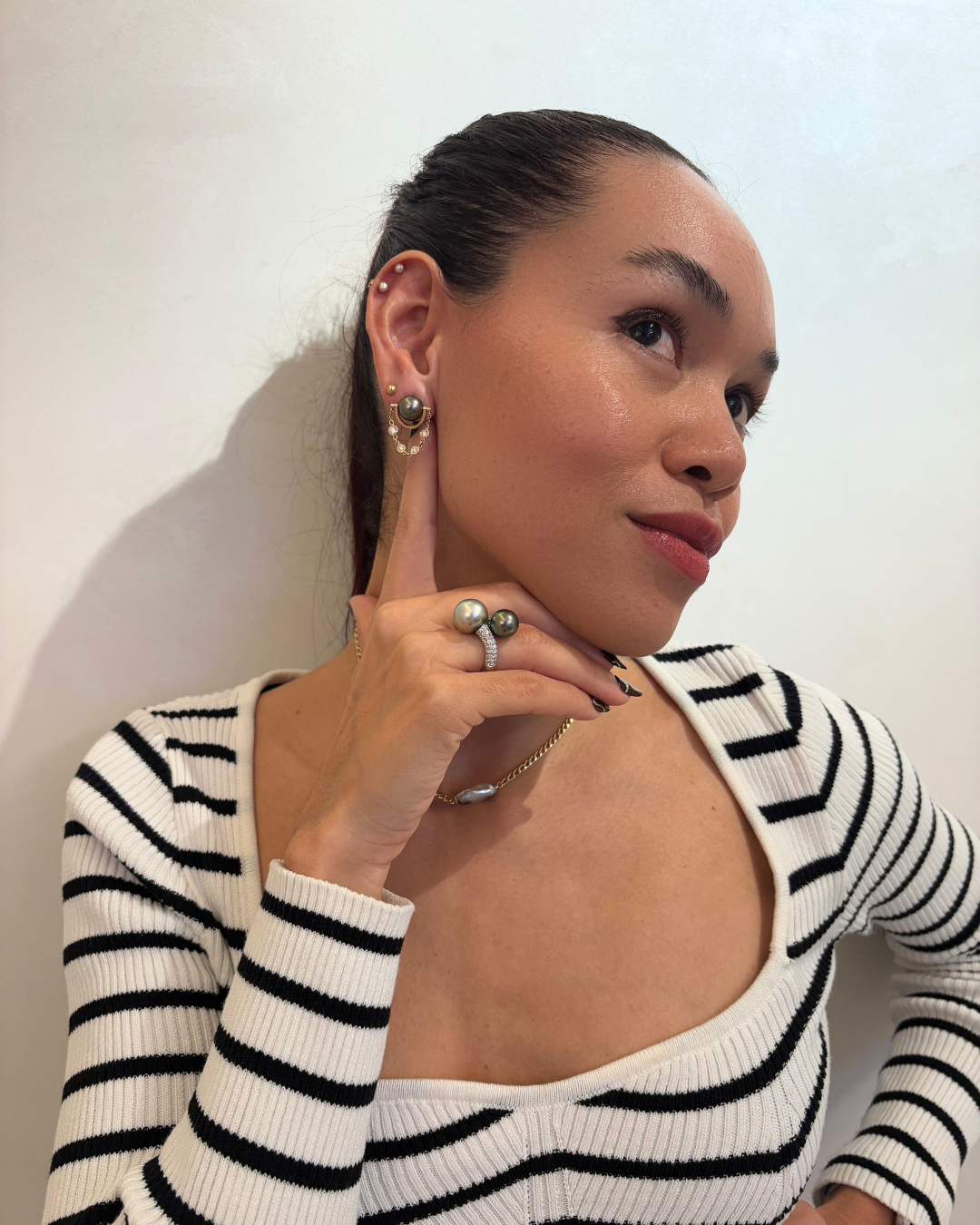
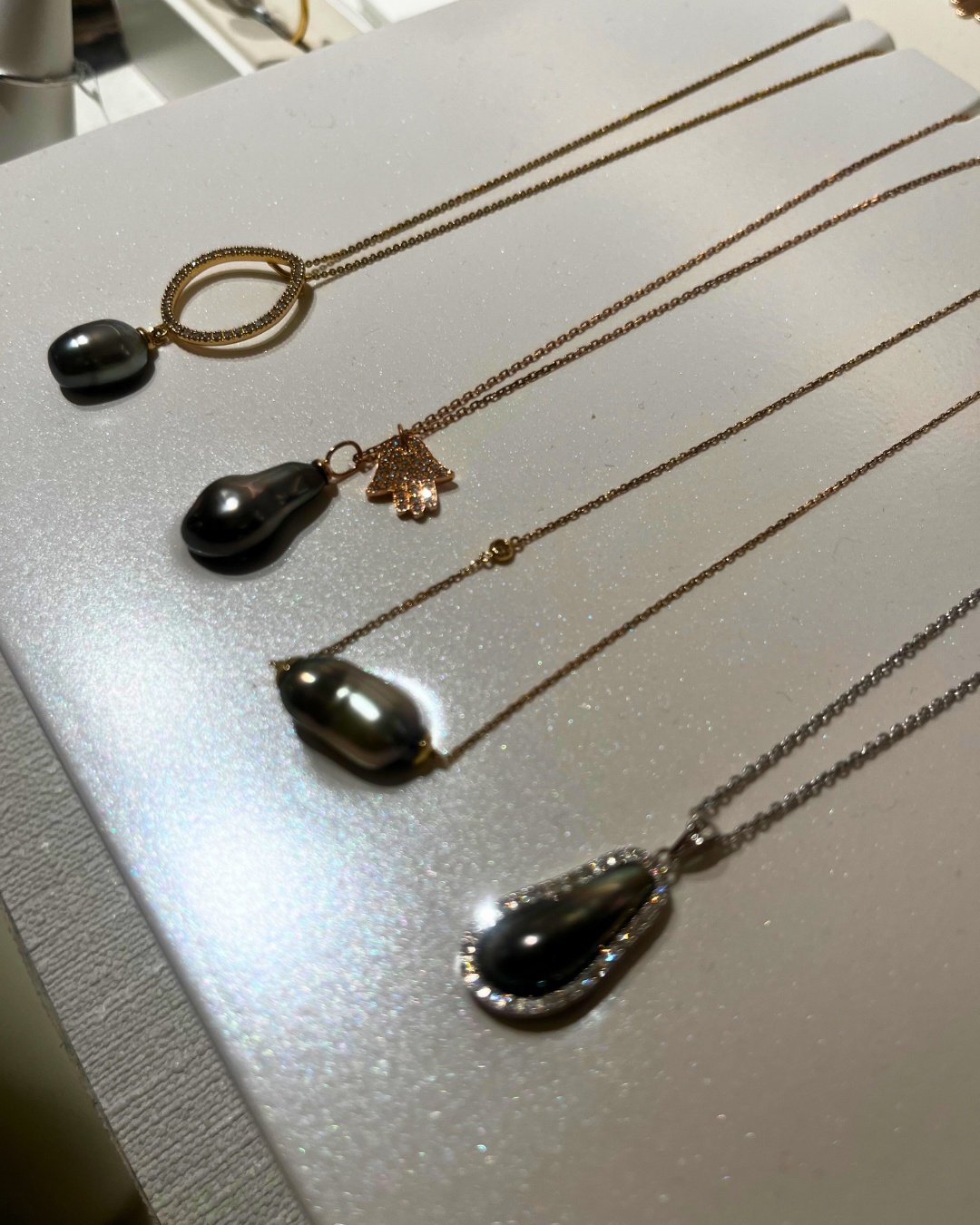
The rarest luxury objects are the ones that nature controls. The pearl farmer who understands this works not to accelerate or optimise the process but to create the conditions under which nature can do what only it can do — and then to wait. Robert Wan’s fifty-year commitment to this principle produced the most significant Tahitian pearl operation in the history of the industry.
In 1973, in an anonymous notarial office in Papeete, Tahiti, a young Chinese-Polynesian businessman purchased his first pearl farm on the remote island of Aukena in the Gambier Archipelago. The Tahitian black pearl was barely known outside the region. Its cultivation was in its early experimental stages. The conditions for success — the regulatory framework, the gemological recognition, the international marketing — did not yet exist. Robert Wan spent fifty years creating them.
In 1974, Wan travelled to Japan — the birthplace of the cultured pearl industry — to meet Professor Sato, an associate of Kokichi Mikimoto, the father of commercial pearl farming. Sato introduced Wan to Mikimoto’s grandson, who made a specific and consequential promise: if Wan could produce high-quality Tahitian pearls with sufficient consistency, Mikimoto would purchase his entire harvest. Three years later, he did. This endorsement from the most prestigious name in pearl history was the first and most significant external validation that what Wan was producing was not merely interesting but extraordinary.
The 1980s brought cyclones that destroyed many farms in the Tuamotu Archipelago. Wan persisted. He acquired the South Marutea atoll — 1,550 kilometres from Tahiti, never heavily populated, with waters fifty metres deep and rich in the minerals that the Pinctada Margaritifera oyster requires for the nacre deposition that creates exceptional lustre. This remote atoll, spotted by the explorer Quiros in 1606, became the crown jewel of the Robert Wan Tahitian pearl operation: a location so pristine that the pearls it produces carry qualities unattainable anywhere else on earth.
The work on these Tahitian pearl farms is not what the word cultivation suggests in its modern usage. Baby oysters are collected twice a year, in a two-week window determined by specific water temperature conditions. They are cleaned and cared for by hand across two to three years of growth. Workers dive daily to monitor the grafted oysters, check for rejection, and ensure the health of the underwater environment. The grafting itself — the introduction of the nucleus around which the pearl will form — requires the skill of experienced Japanese technicians working with surgical precision. The Tahitian pearl that emerges from this process, between two and five years after the graft, is the product of patience on a scale that no industrial process has learned to replicate.
Wan’s most significant contribution to the global pearl industry came not from the quality of his Tahitian pearls alone but from his campaign to have them officially recognised as such. He lobbied the Gemological Institute of America to evaluate Tahitian pearls by the same criteria applied to diamonds and precious stones. In 1997, the Robert Wan Educational Wing was established at the GIA campus in Carlsbad, California: the gem world’s formal acknowledgment that the Tahitian black pearl had earned its position at the highest tier of natural luxury. The houses that subsequently incorporated Wan’s pearls — Harry Winston, Tiffany, Chaumet, Boucheron, Chanel, Mikimoto — were working with a material whose excellence had been fifty years in the making.
As Vogue’s editorial coverage of pearls and their cultural resurgence documents, Tahitian pearls have evolved from a category associated with conventional femininity to one that represents the most forward-looking expression of considered luxury — chosen by the full range of the most style-conscious consumers for their natural complexity, their wearability across contexts, and the quality of their connection to a biological and historical narrative that no other gemstone provides.
The Robert Wan Dubai DMCC showroom — connoisseurship in the world’s most significant luxury trade hub
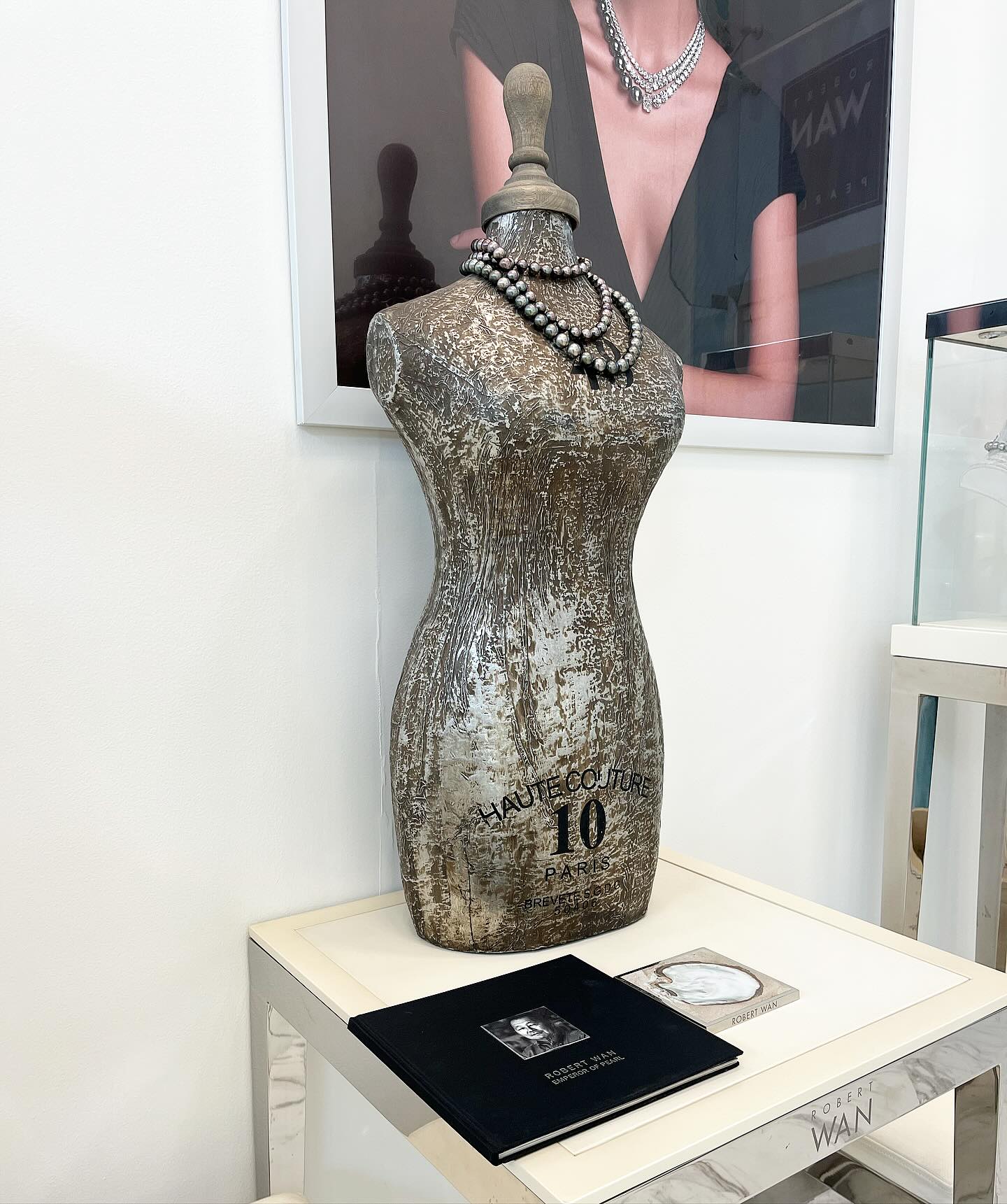
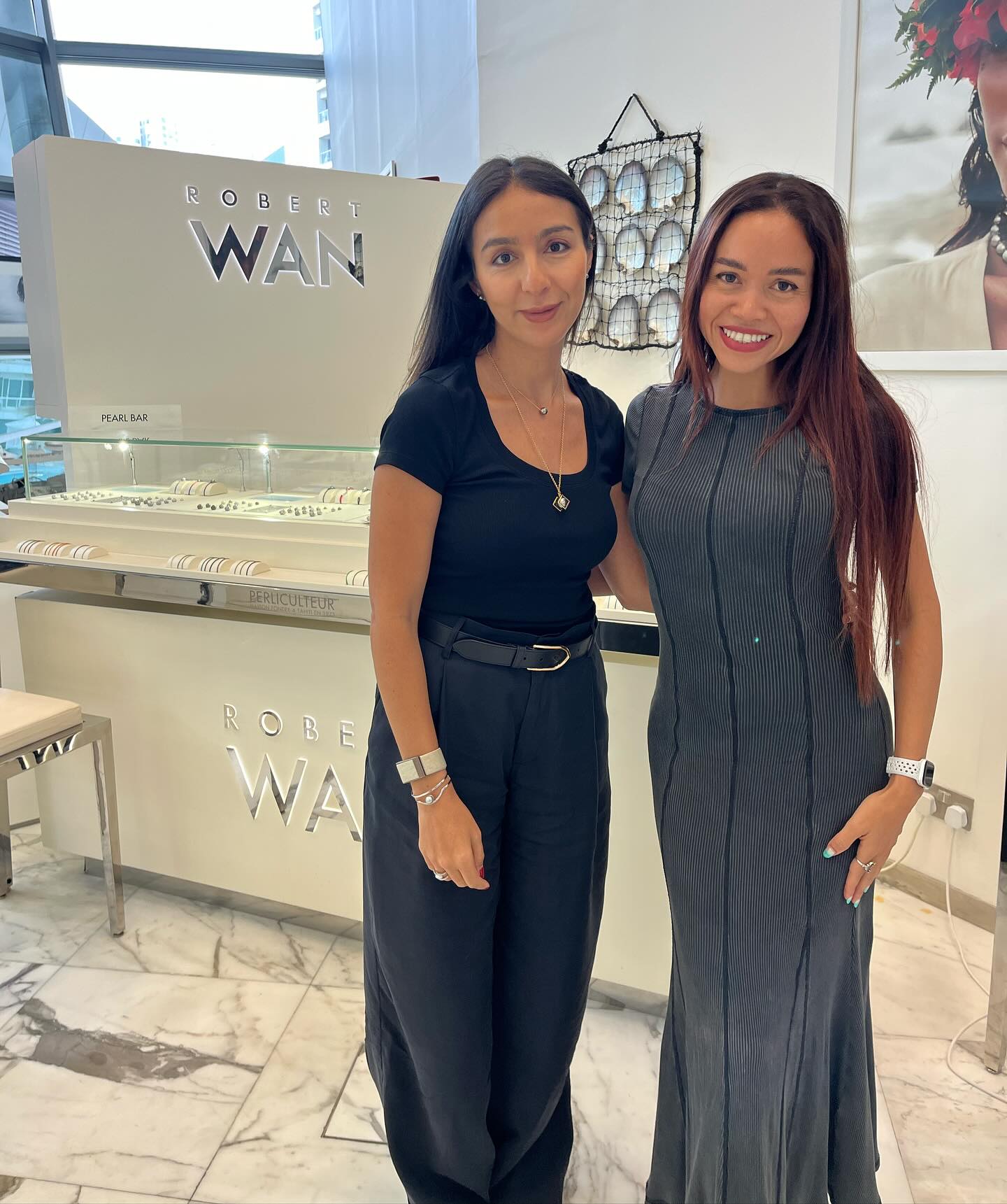
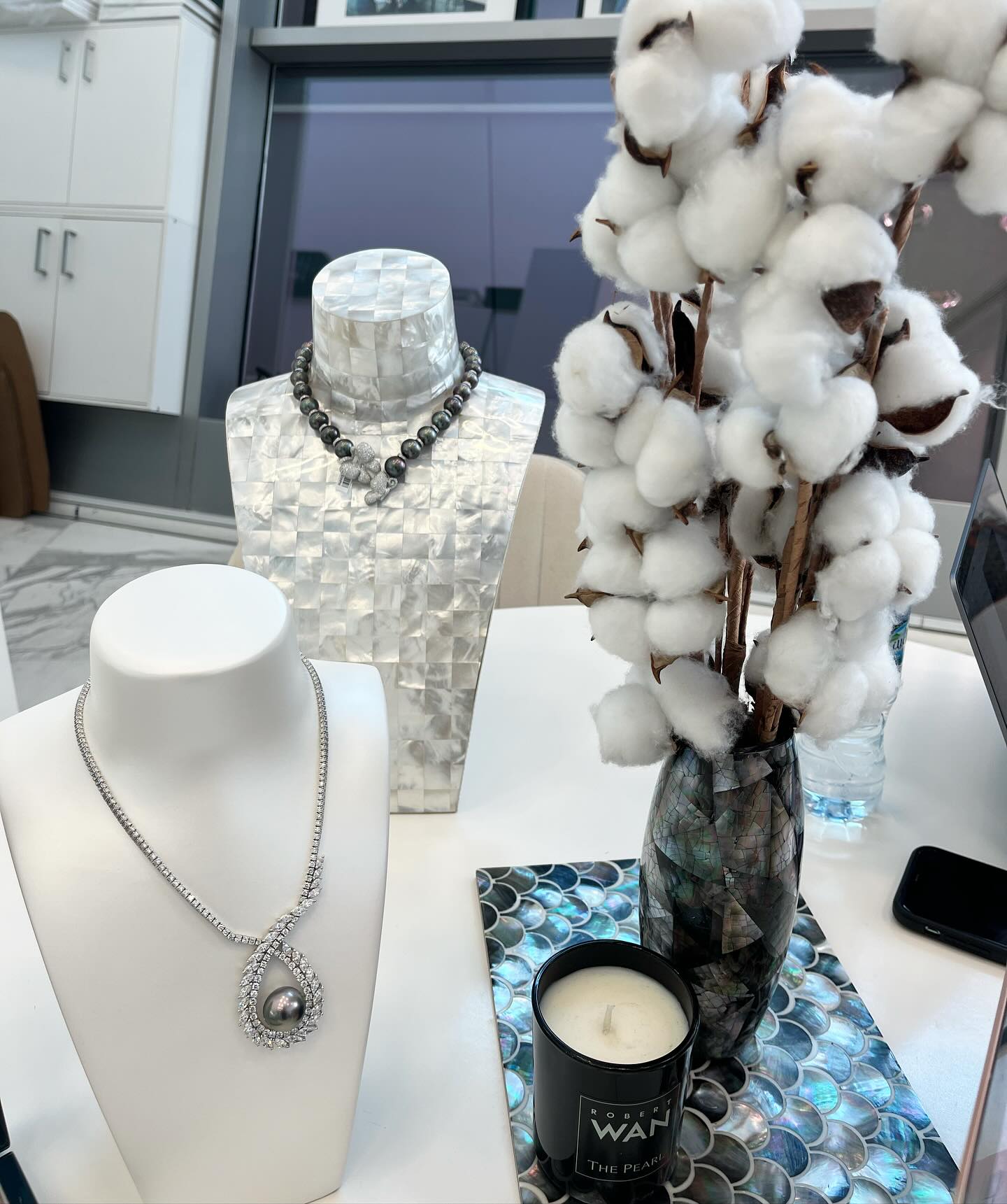
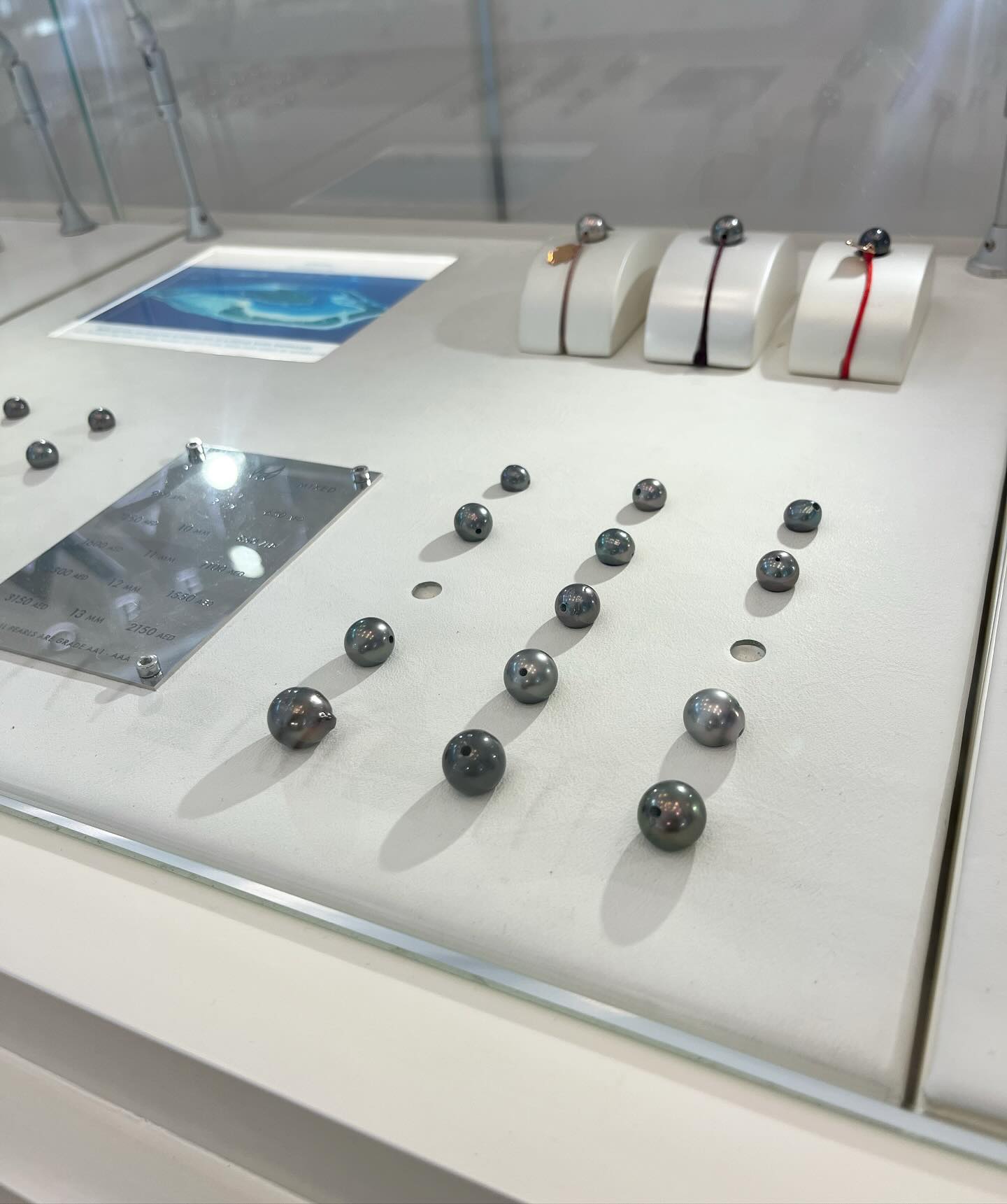
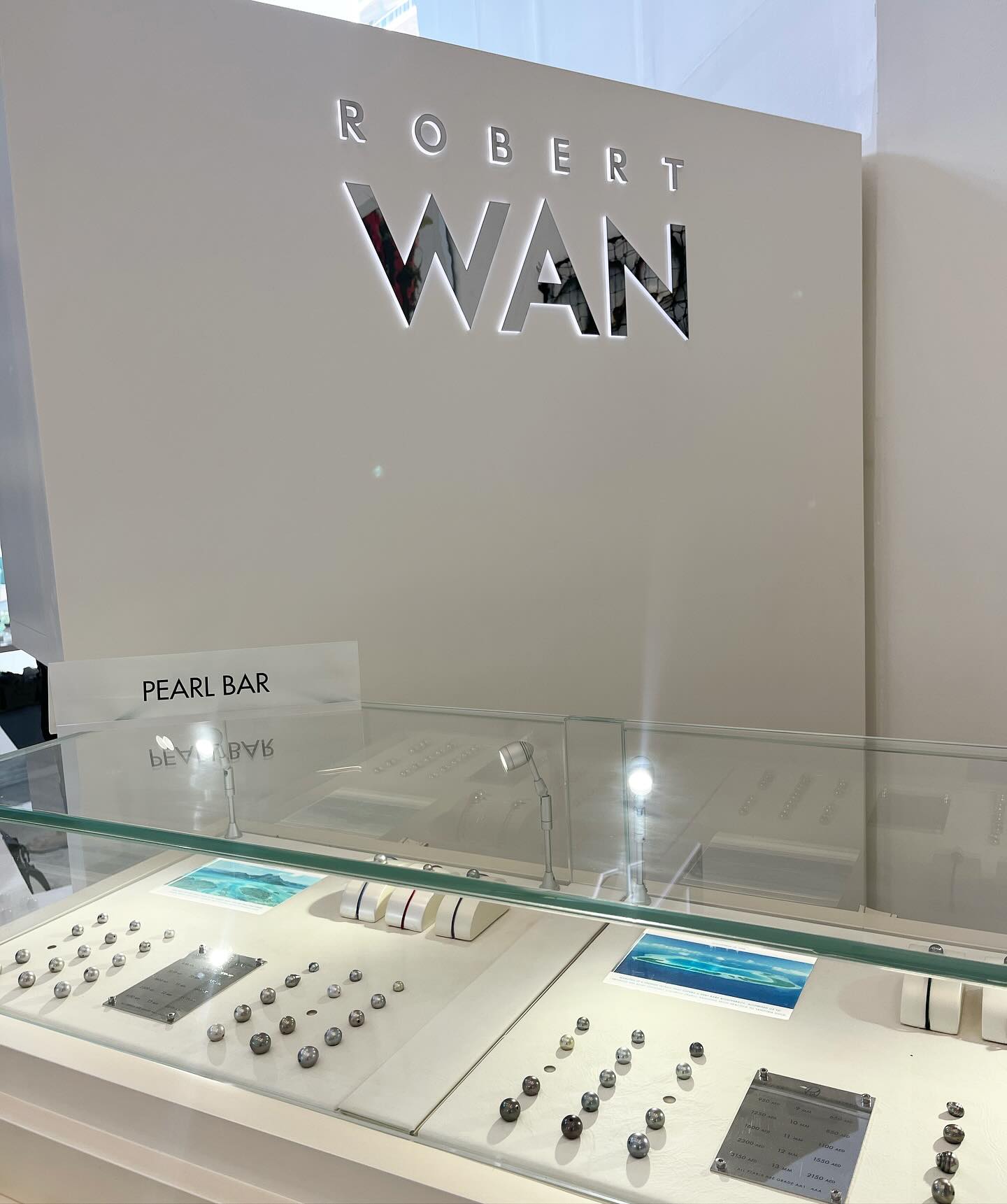
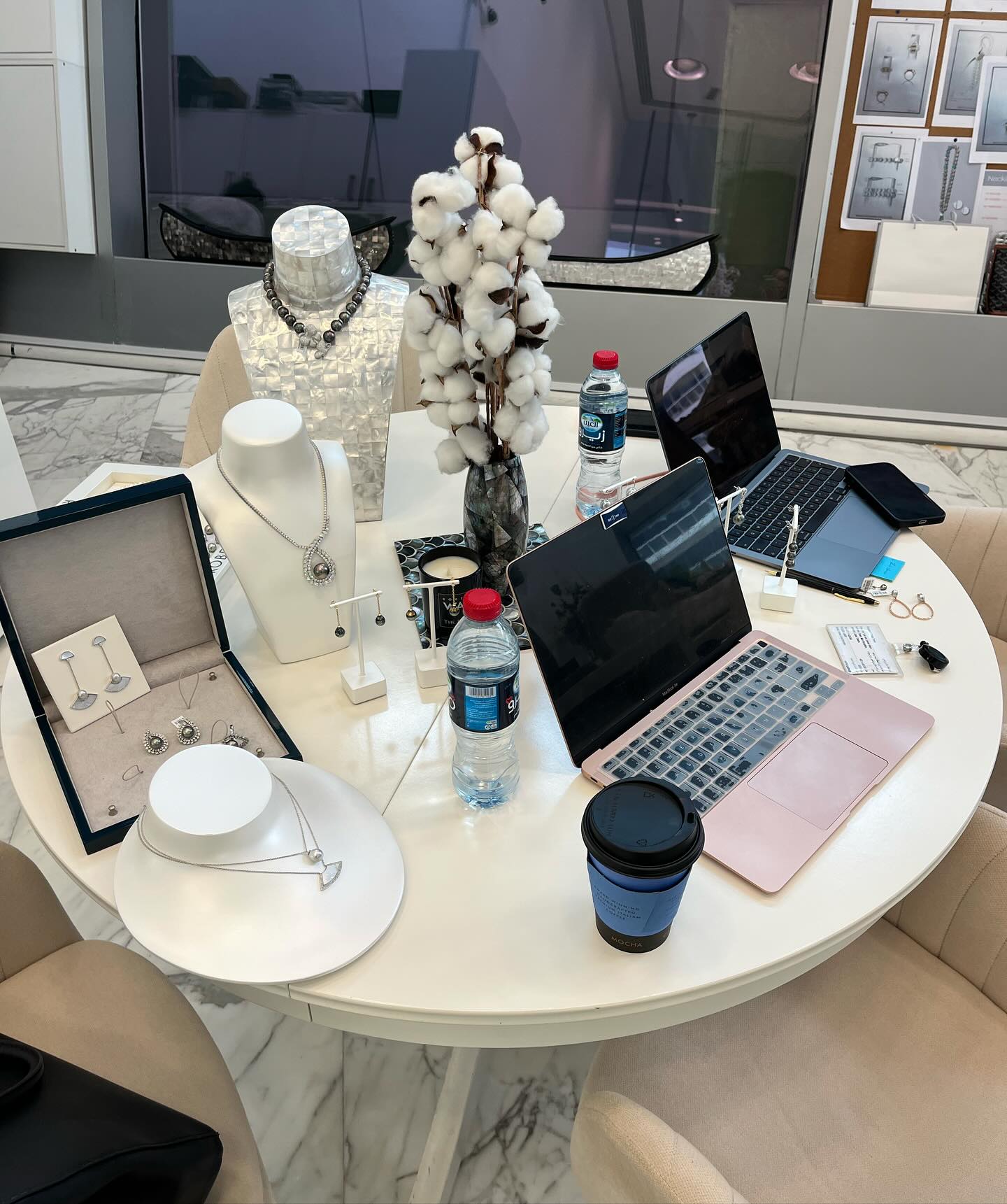
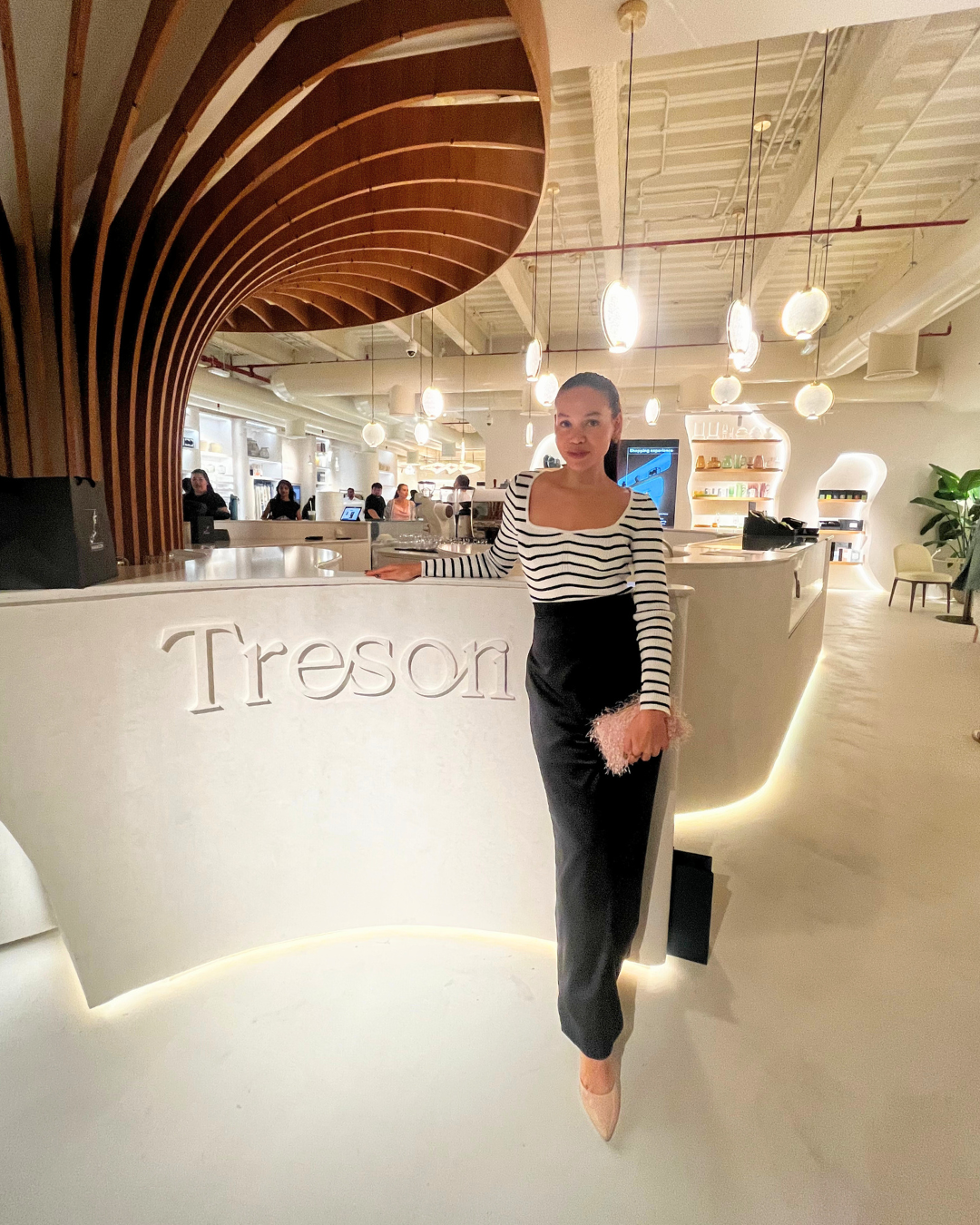
The most considered jewellery purchases are not transactions. They are conversations — between the object’s history and the person’s own, between what the Tahitian pearl is and what the person choosing it understands themselves to be. The Robert Wan DMCC showroom in Dubai provides the environment in which that conversation can happen with the depth and honesty that a genuine pearl investment requires.
The United Arab Emirates represents one of Robert Wan’s most significant finished jewellery markets — a fact that reflects something specific about Dubai’s relationship with natural luxury and its position as a city where the world’s most serious collectors gather. Within the Dubai Multi Commodities Centre, which has established itself as one of the most significant luxury trade ecosystems outside the traditional European capitals, the Robert Wan showroom operates in a register that has nothing in common with retail as conventionally understood.
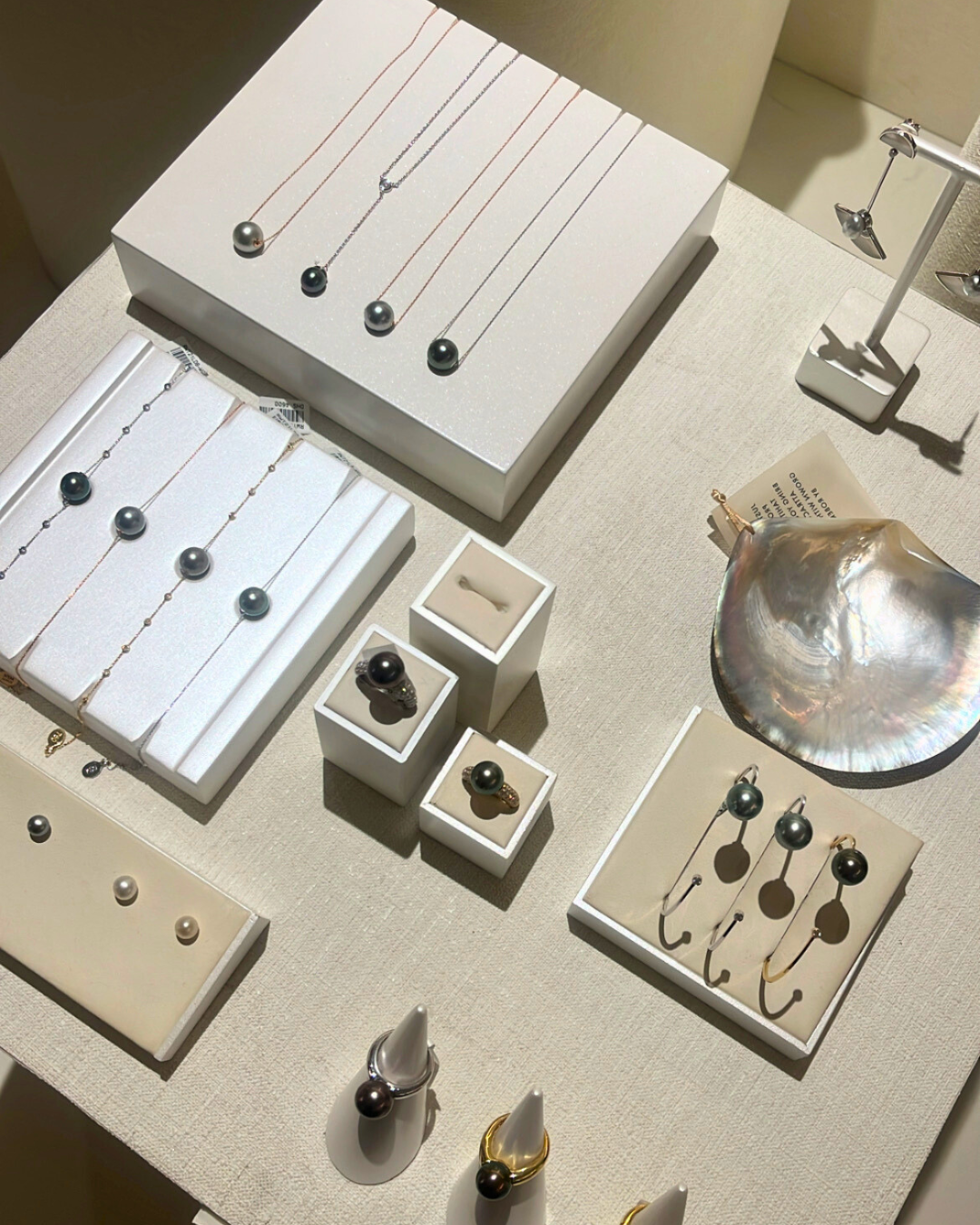
Stepping into the Robert Wan Dubai DMCC office is like entering a pearl sanctuary. The interior is adorned with shimmering displays of the finest Tahitian pearls, each carefully curated to showcase their natural beauty. The showroom features exclusive collections, including rare investment-grade pearls hand-selected by Wan himself. Each pearl tells a story — its formation, journey, and transformation into a masterpiece of high jewellery.
The DMCC showroom’s most significant offering is not any individual Tahitian pearl but the private consultation experience. Investors, collectors, and jewellery enthusiasts can schedule consultations to learn about the nuances of pearl grading, the investment potential of specific pieces, and the significance of various colours and shapes. Serious pearl collectors require an environment in which the conversation about quality can be conducted with enough time and enough expertise to be genuinely educational — where the differences between a pearl of exceptional lustre and one of merely good lustre can be placed side by side in light conditions calibrated to reveal them, where the meaning of a surface characteristic can be explained not as a defect to be apologised for but as evidence of the pearl’s natural origin. This level of personalised pearl education is rare in the jewellery industry, and it speaks to Wan’s commitment to ensuring that those who acquire his Tahitian pearls do so with the knowledge that genuine investment requires.
The principle that investment in natural quality — in jewellery objects chosen for what they are rather than what they announce — produces returns that trend-driven acquisition cannot is one that runs through the most considered luxury sensibility across categories. The New Language of Quiet Luxury: Inside the Timeless Wardrobe of Apparis explores this logic in fashion — the argument that what endures is what was chosen for how it holds rather than how it reads in a single moment. The investment logic for Robert Wan Tahitian pearls is identical: a pearl acquired with genuine knowledge of what makes it exceptional is an object whose value compounds independently of trend cycles.
The anatomy of a perfect Tahitian pearl — the five quality criteria that define investment value
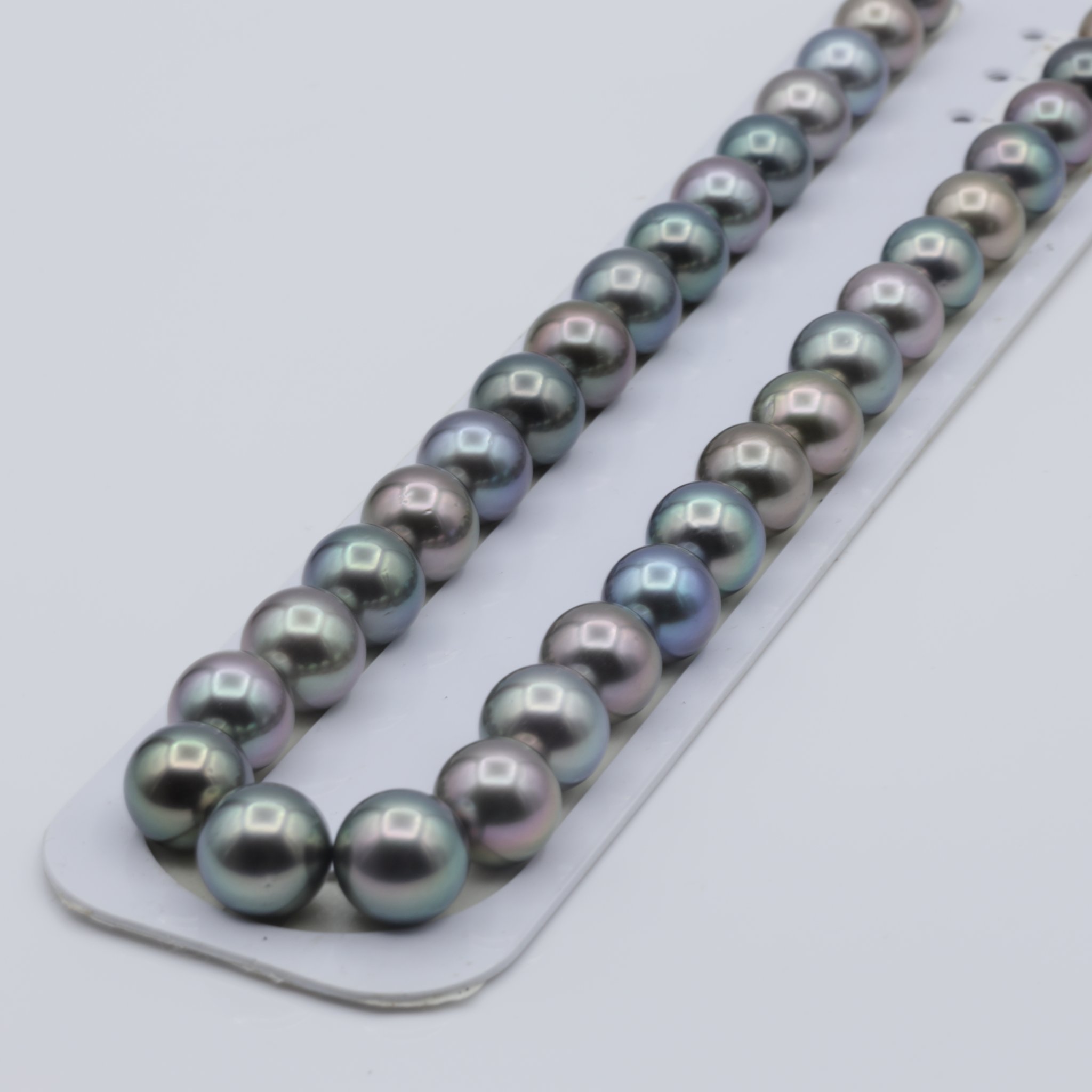
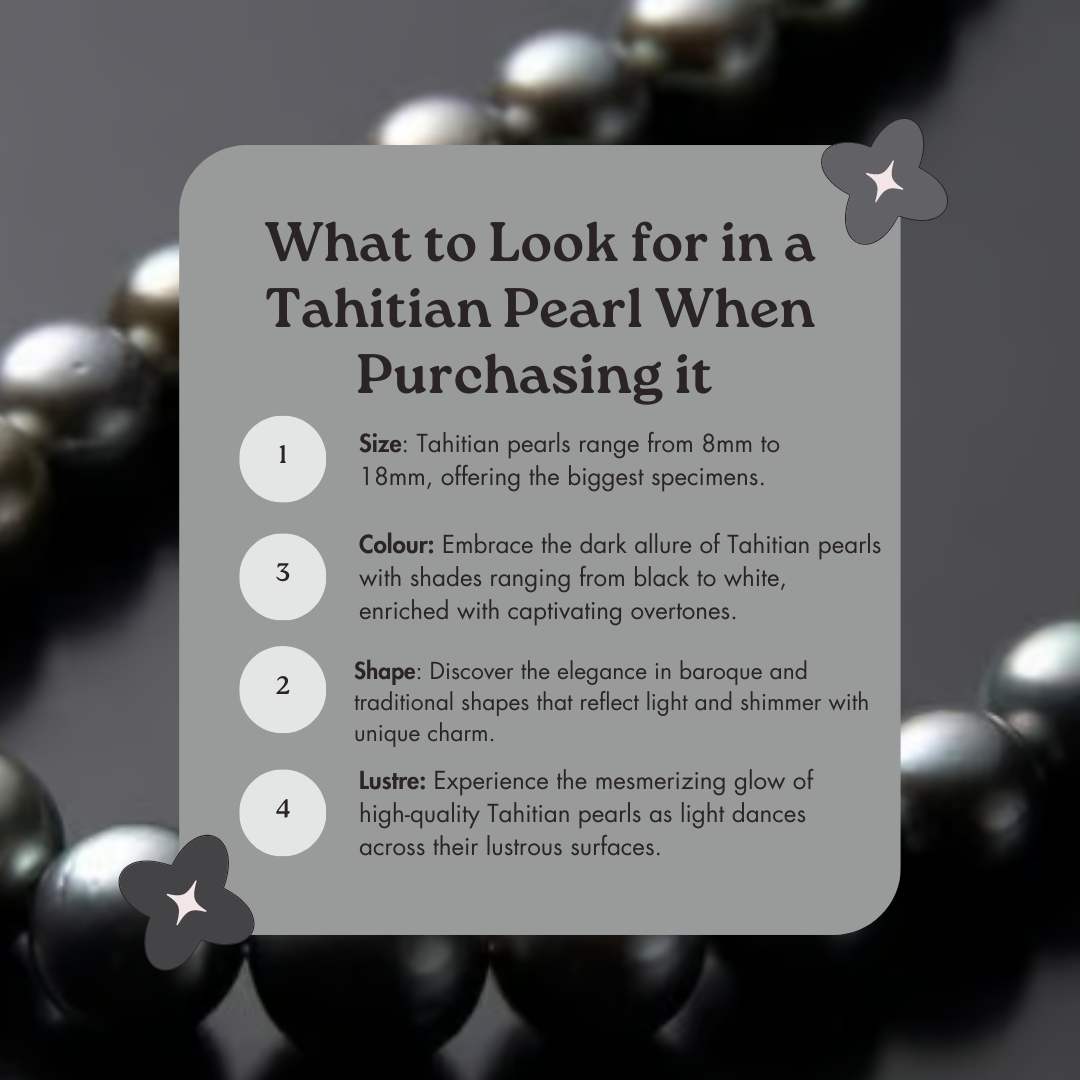
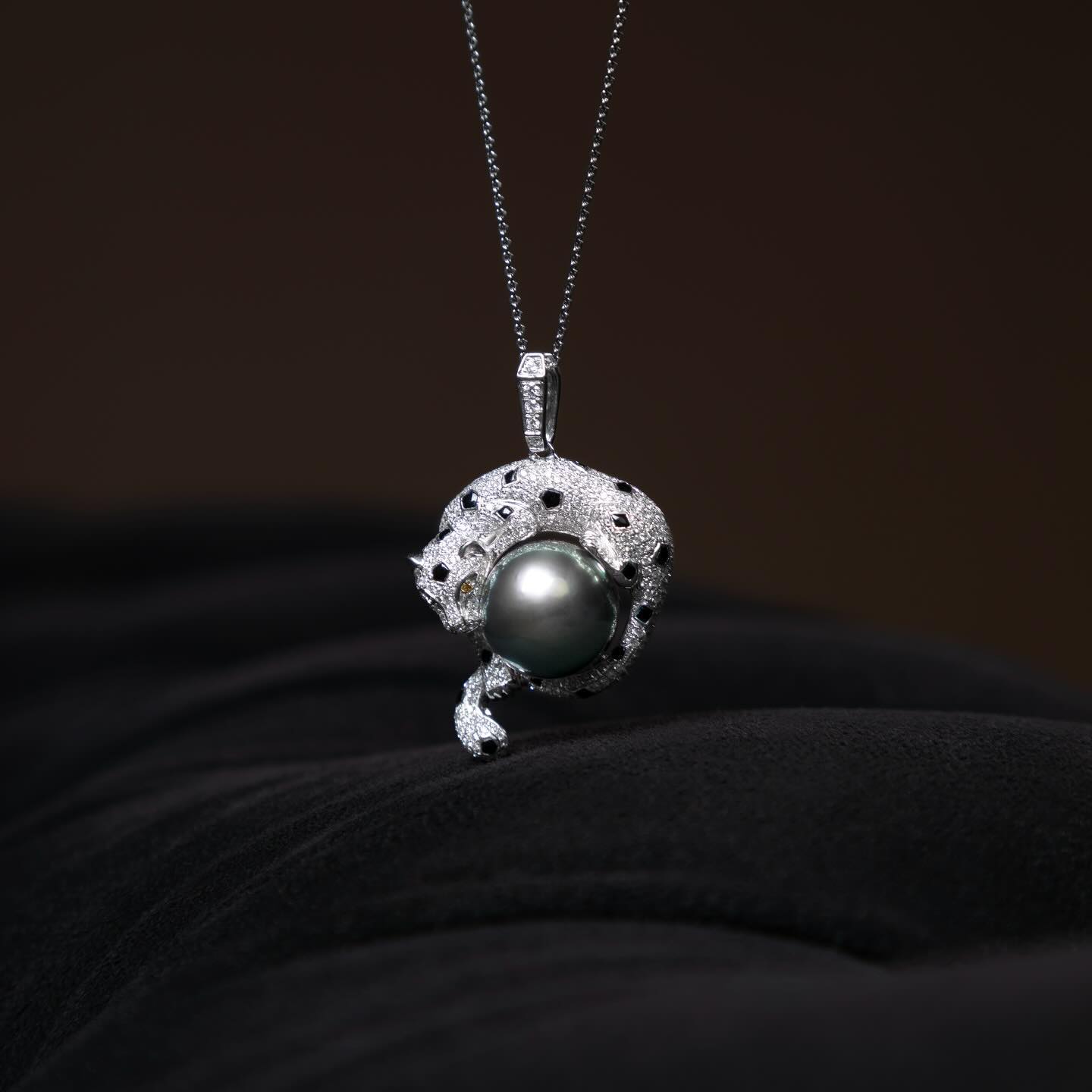
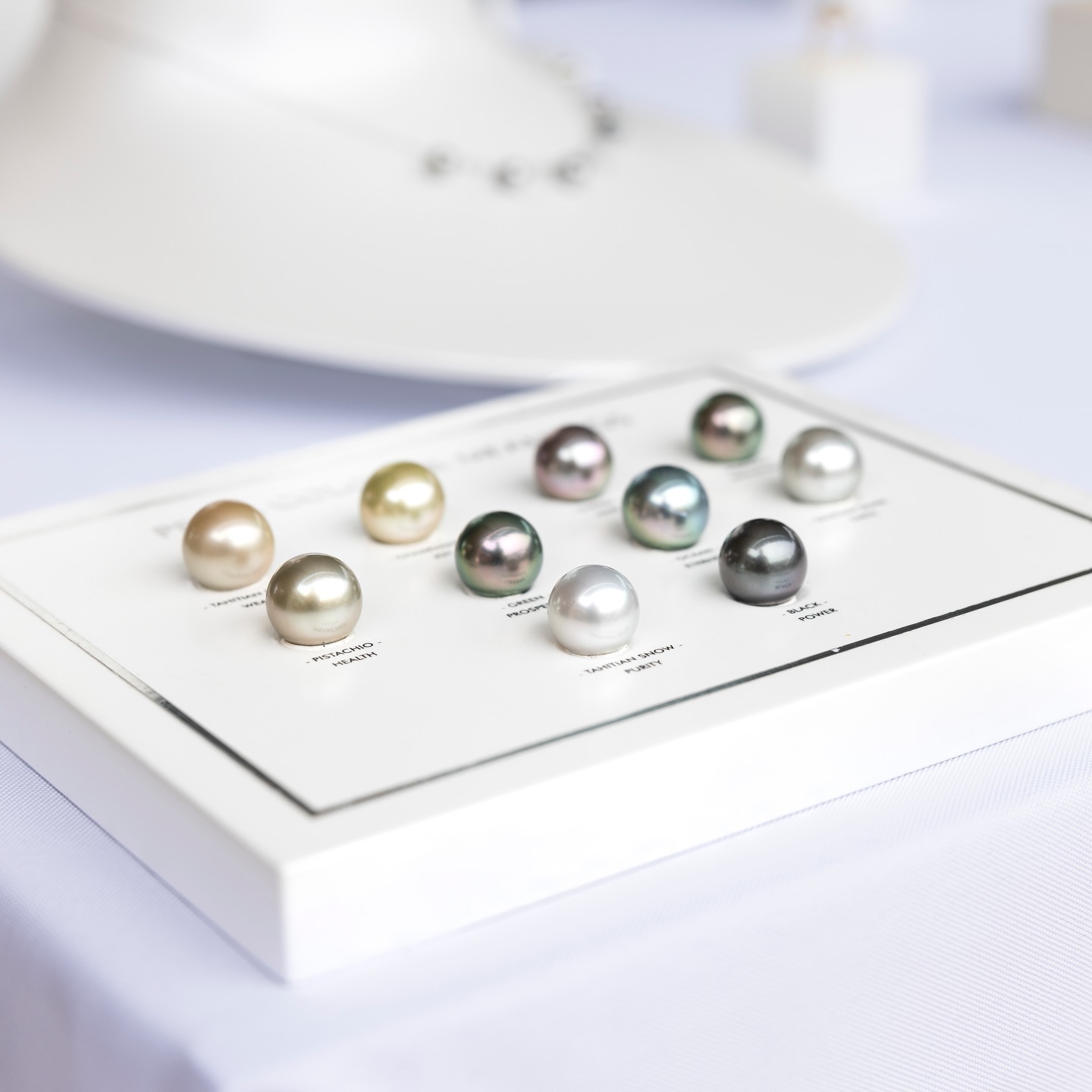
The beauty of a Tahitian pearl is not decorative. It is structural — the product of a specific biological process occurring under specific environmental conditions, recorded in the layers of nacre that constitute the gem itself. Every quality criterion is a reading of that process. Understanding these five criteria is the foundation of any intelligent Tahitian pearl investment.
Lustre is the quality that defines a Tahitian pearl above all others — the light held beneath the surface rather than reflected off it. It is produced by the thickness and regularity of the nacre layers and by the specific optical properties of the aragonite crystals from which nacre is composed. When nacre layers are thick and evenly deposited, light enters the pearl’s surface, refracts through successive layers, and returns to the eye as the characteristic inner glow that gives a fine Tahitian pearl its quality of appearing lit from within. A pearl with exceptional lustre in good light seems almost to generate its own illumination. This is the physics of biologically deposited aragonite, and it cannot be replicated by any coating, treatment, or manufacturing process. Robert Wan’s Tahitian pearls are distinguished by their exceptional lustre, achieved through careful pearl farming techniques and extended cultivation periods.
Surface is the record of the Tahitian pearl’s life inside the oyster — the biological autobiography of an organism that spent years in an environment it could not control. The perfectly smooth surface is the rarest possible outcome, representing an oyster that experienced no significant environmental disruption across the full period of nacre deposition. Fine pearls may carry minor surface characteristics — barely perceptible irregularities that gemologists evaluate for their type, location, and extent. These are not flaws in the way that diamond inclusions are flaws. They are evidence of natural origin, and their honest evaluation is part of what distinguishes a pearl acquisition conducted with genuine knowledge from one conducted on the basis of appearance alone. Robert Wan’s selection process ensures that only pearls with the cleanest surfaces make it into his collections.
Shape plays a significant role in determining Tahitian pearl investment value. The most commercially prized shape is the perfectly round pearl — an anomaly in nature, making these Tahitian pearls incredibly rare. Round pearls from Robert Wan’s South Marutea operation constitute approximately forty percent of production, a proportion that reflects both the quality of the environment and the skill of the grafting team. Baroque and uniquely shaped Tahitian pearls have gained considerable prominence in contemporary high jewellery, offering a sculptural authority that no perfectly round pearl can achieve. Robert Wan’s collections feature both classic round pearls and extraordinary baroque pieces that showcase the full spectrum of pearl formation.
Colour in Tahitian pearls encompasses a chromatic range that no other cultured pearl variety produces: the deep peacock greens, the aubergine purples, the silver greys, the rare and prized pure blacks, and the subtle golden overtones that the most exceptional specimens carry simultaneously. Colour in a fine Tahitian pearl is not monochromatic. It is oceanic in its complexity — the surface colour, the overtone that floats above it, and the orient that shifts as the pearl moves in light are three distinct qualities that interact to produce the particular visual character of each individual gem. No two Tahitian pearls present precisely the same combination.
Size in Tahitian pearls is measured in millimetres of diameter and ranges from eight millimetres, which is the minimum for commercial trading, to the remarkable specimens above fifteen millimetres that Robert Wan’s South Marutea farms produce with a regularity no other source in the world can match. The largest round Tahitian cultured pearl in existence — a twenty-six millimetre silver-grey specimen of AAA quality — bears the name Robert Wan. It is held in the Pearl Museum in Papeete. It represents what fifty years of careful stewardship of the right environment can produce.
As the GIA’s authoritative guide to evaluating Tahitian cultured pearls establishes, these five principal quality factors — lustre, surface, shape, colour, and size — are evaluated within a framework that recognises the inherent variability of natural pearl production and the specific characteristics that distinguish the Tahitian pearl from all other cultured pearl varieties. The gemological standards governing this evaluation were established, in significant part, through Robert Wan’s own advocacy with the GIA.
Tahitian pearls as investment assets — the structural case for natural pearl as a wearable luxury investment
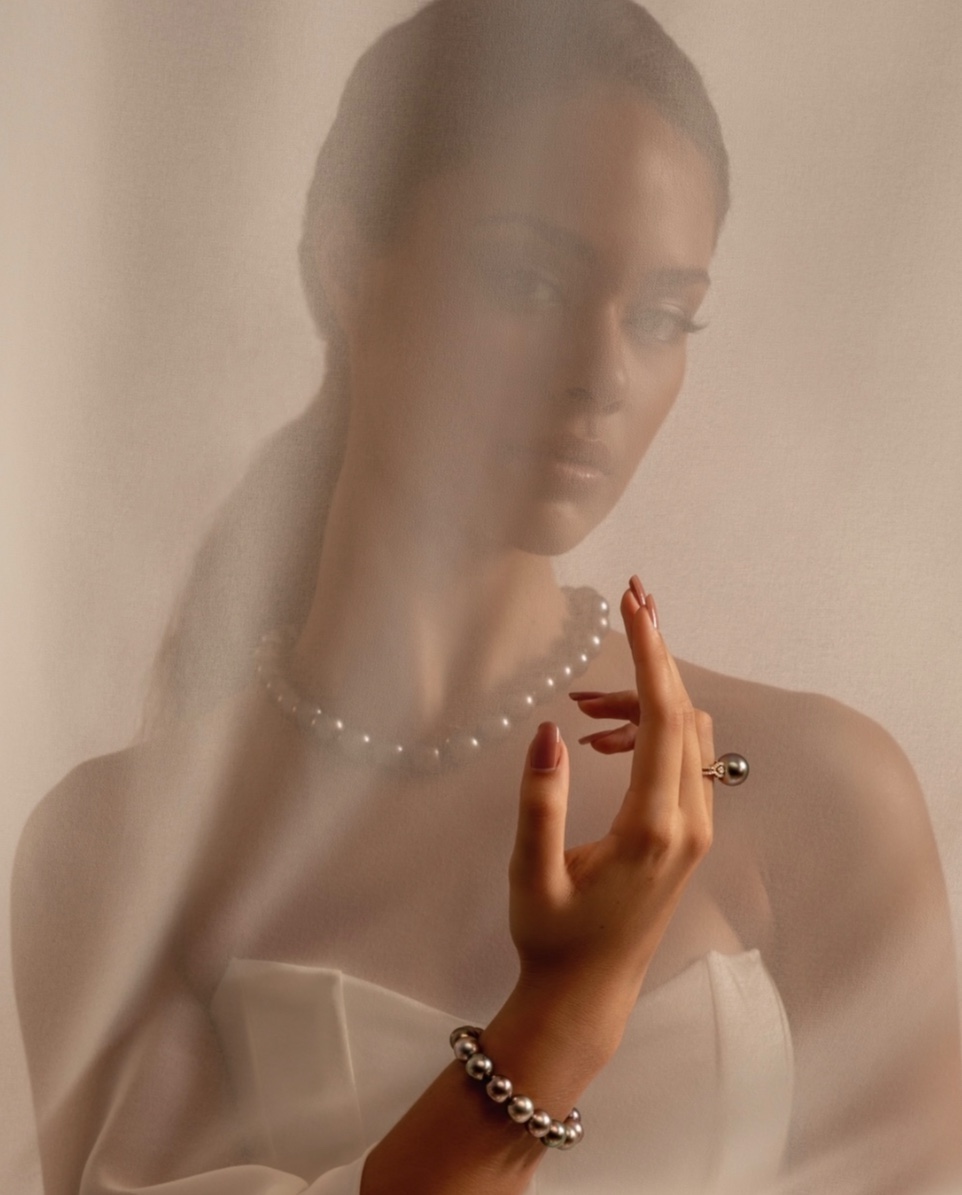
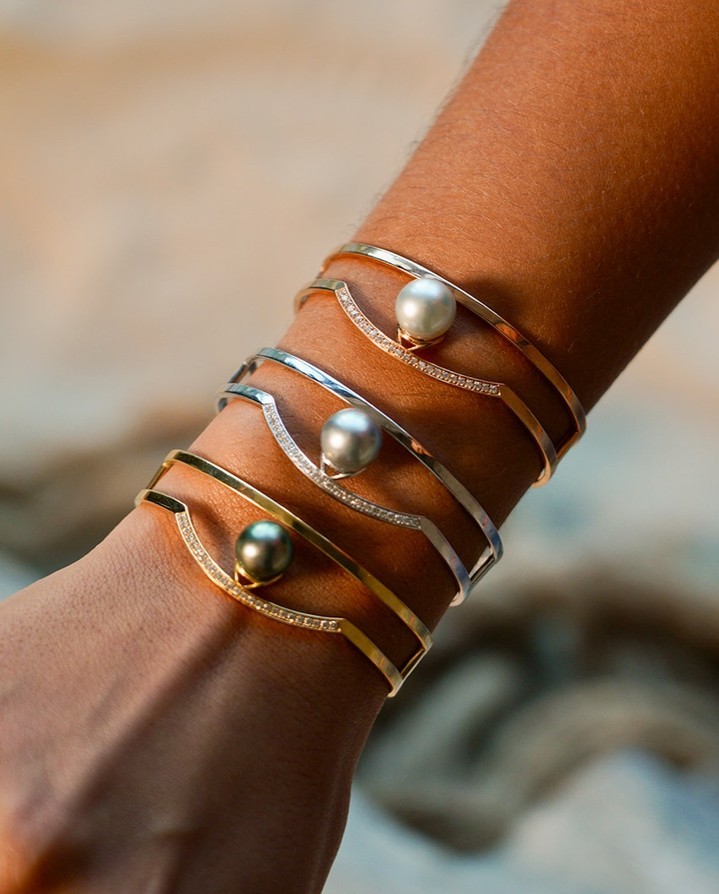
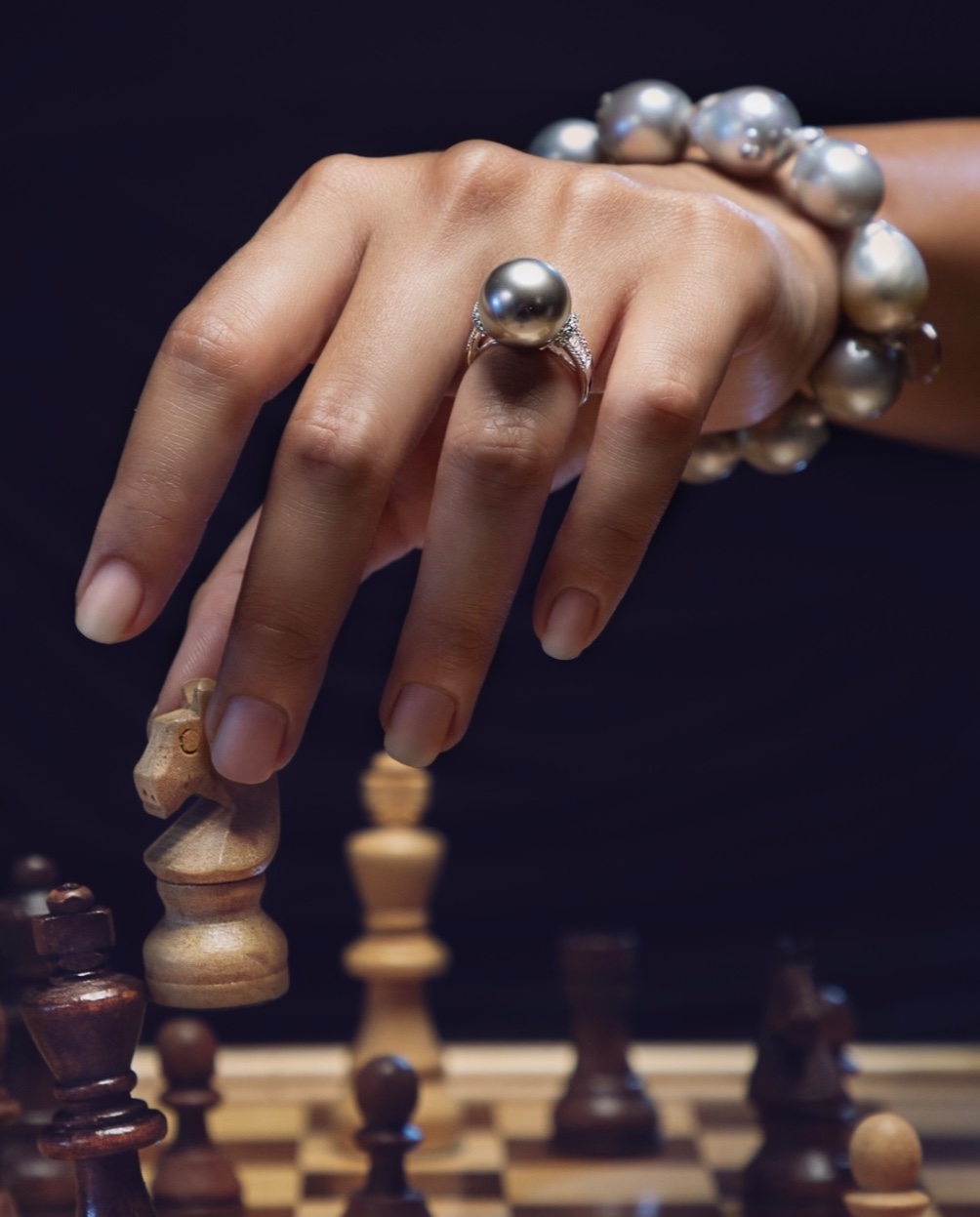
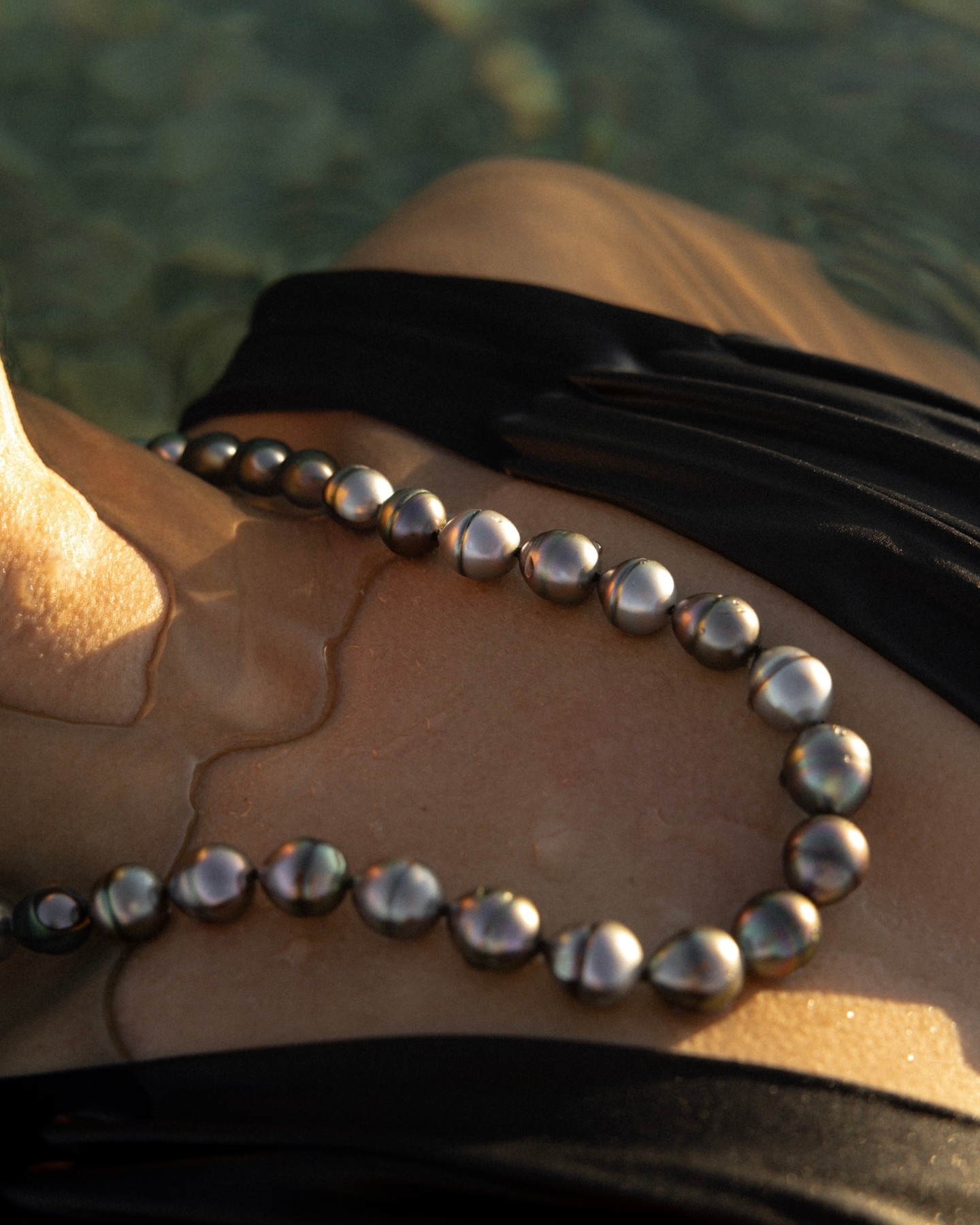
Pearls are among the few gemstones that are alive before they become adornment. The biological origin that makes Tahitian pearls extraordinary also makes them genuinely scarce — subject to conditions that no human decision can override and no market force can replicate. The investment case for natural pearls of exceptional quality rests on structural conditions that are becoming more rather than less pronounced over time.
Tahitian pearl production is constrained by environmental factors — water temperature, ocean chemistry, the health of the oyster populations — that climate change is affecting in ways that reduce rather than expand the supply of fine-quality gems. The Pinctada Margaritifera oyster requires specific water temperatures and mineral compositions. As ocean conditions shift, the windows of optimal cultivation narrow. The South Marutea atoll cannot be substituted — the particular combination of depth, temperature, mineral content, and freedom from pollution that makes it exceptional cannot be recreated elsewhere. Supply is structurally tightening.
Against this tightening supply stands demand that has been building across the same demographic that has driven the quiet luxury movement broadly: consumers who have developed the knowledge and the inclination to acquire jewellery objects for their intrinsic quality rather than their brand positioning, who understand the difference between investment and consumption, and who are increasingly interested in tangible assets whose value is grounded in natural rarity rather than manufactured scarcity. The Tahitian pearl sits at the intersection of these forces in a way that is structurally different from diamonds, which can now be produced in laboratories of increasing quality, or coloured gemstones, which while naturally rare are produced globally from multiple sources.
Pearls remain an often-overlooked yet highly valuable jewellery investment asset. Unlike gold, which is traded on financial markets, or diamonds, which have an established resale system, Tahitian pearls require a deeper understanding of value, quality, and provenance — which is precisely why those who develop that understanding are entering a market with less competition and more genuine scarcity than any other category of natural luxury gemstone. Major luxury brands including Chanel, Dior, and Mikimoto have incorporated Tahitian pearls into their high-jewellery collections with increasing frequency, driving renewed interest among younger buyers and further validating the investment thesis.
The heirloom dimension of pearl investment is inseparable from its financial dimension. A strand of Robert Wan Tahitian pearls acquired with genuine knowledge — bought not for its price but for the specific quality of its lustre, the complexity of its colour, the regularity of its surface — is a jewellery object that will be worn across decades, passed to the next generation, and acquired in that generation as already invested with the emotional and cultural history of the family it has passed through. Unlike gold, which depreciates in condition through storage, or diamonds, which maintain their value in isolation, the Tahitian pearl is maintained by wear — the nacre deepened by consistent contact with human warmth, the lustre amplified by the body’s own moisture.
The structural forces driving interest in investment-grade natural luxury are part of the broader transformation of the luxury market that serious analysis has been tracking. As McKinsey’s analysis of luxury in the digital age documents, the luxury category that sustains its authority is the one that preserves its irreducible qualities — the craftsmanship, the unique design, the natural origin — while developing the commercial intelligence to communicate those qualities to new audiences. Robert Wan’s fifty-year project is the fullest possible expression of this principle applied to a natural luxury material.
What the pearl has always known — and what the current moment is finally in a position to fully understand
Quiet luxury is ultimately about permanence rather than visibility — about the things that hold rather than the things that announce, and about the choice, made with knowledge, to invest in what endures. The Tahitian pearl’s return to cultural prominence is not a fashion cycle. It is a recognition — gradual, distributed across multiple simultaneously developing cultural shifts, but coherent in its direction — that the qualities the pearl embodies are precisely the qualities that the most considered contemporary consumers are actively seeking.
Authenticity in an era of synthetic production. Natural origin in an era of technological manufacture. Patience as a value in an era of acceleration. Emotional permanence in an era of disposable consumption. The Tahitian black pearl embodies all four of these qualities simultaneously and absolutely — which is why it is not a category experiencing a trend but one receiving the recognition it has always deserved, from an audience that has finally developed the knowledge and the cultural conditions to give it.
The gender dimension of the pearl’s contemporary resurgence is also worth noting. The pearl has historically been coded as feminine — worn by women across virtually every culture and era in which it has been available. This coding is not being abandoned in its contemporary resurgence. It is being expanded. Men in fashion, in the arts, in the full range of contemporary cultural life have reclaimed the Tahitian pearl as an object of personal adornment without the historical associations that might have discouraged this in previous generations. The pearl is increasingly understood as an object of natural rarity and beauty rather than gendered convention — which is, arguably, the most sophisticated understanding of it.
Robert Wan, who has spent fifty years in service to the Tahitian black pearl and who approaches his tenth decade with the same relationship to the oyster that began on Aukena Island in 1973, represents something that luxury culture produces very rarely: a figure whose entire life’s work has been the careful stewardship of a natural resource and the sustained advocacy for its recognition as among the most significant of all natural luxury materials. His legacy is not merely commercial. It is environmental — he has demonstrated, across five decades of pearl farming practices that maintain the pristine condition of the lagoons his oysters inhabit, that the highest quality luxury and the deepest environmental responsibility are not competing values but necessary complements.
The pearl’s capacity to produce emotional states through sustained contact — to deepen in meaning through consistent wearing, to carry the history of the person who has worn it — connects it to the broader understanding of natural materials as emotional infrastructure explored in The Language of Scent: How Fragrance Becomes Identity in Modern Beauty: the argument that the most resonant objects in a life are those that operate on the emotional and neurological systems of the person inhabiting them, compounding in significance through repeated encounter. The Tahitian pearl worn daily and the fragrance worn with intention are built on the same principle of emotional accumulation through natural material.
The understanding that the most valuable luxury experiences are those that compound through time connects the pearl to every other category of considered luxury that this site explores. The Return of Barrier Beauty: Why Lanolin Is the Ultimate Skin Investment makes the same argument in the skincare context: that the ingredient with the deepest relationship to the body’s own biology produces results that more sophisticated interventions cannot replicate. The Tahitian pearl and lanolin are both expressions of the same foundational insight — that nature, given sufficient time and the right conditions, produces what no human process can substitute.
“Pearls are not returning as a trend.
They are returning as a recognition —
that what cannot be rushed, replicated, or manufactured at scale
is precisely what holds its value
across the time that everything else takes to exhaust itself.
Robert Wan understood this in 1973.
The world, at this particular moment in its relationship
with luxury and with nature,
is finally in a position to fully understand
what he has always known.”

