
On Seven Wonders Luxury Camp, the Nabataean city carved from living rock, the Bedouin knowledge that cannot be learned from any other source, and what it means to encounter a landscape that was ancient before the concept of tourism existed
The temperature drops faster than you expect. One hour after sunset in Wadi Rum, the warmth that accumulated in the sandstone all day releases itself upward into a sky that has been turning colours since late afternoon — amber, then rose, then a deep violet that never quite settles before the stars begin to appear. You are standing outside a desert pod on the floor of a valley that is 74,200 hectares of protected landscape, a UNESCO World Heritage Site since 2011, and one of the most geologically and culturally significant environments on earth. The rock formations rising around you are between 30 and 50 million years old. The inscriptions etched into the canyon walls nearby are between two and twelve thousand years old. The silence, at this hour, is almost physical in its completeness.
This is the paradox that Jordan presents to anyone willing to approach it slowly enough to feel it: a landscape that appears empty at first and reveals itself, the longer you remain, to be so dense with history, with geological time, with accumulated human stories, that the act of simply standing in it becomes a form of education that no other medium can replicate.


The desert as architecture
Wadi Rum — known in Arabic as the Valley of the Moon — is not a desert in the way that most travellers conceive of deserts. It is not an undifferentiated expanse of sand dunes. It is, rather, a landscape of extraordinary architectural complexity: towering sandstone and granite massifs rising from a valley floor in formations that have been sculpted by millions of years of tectonic activity, erosion, and the particular weathering processes of extreme heat and occasional flood. Natural arches span gorges. Honeycomb weathering creates textures in cliff faces that look designed. Narrow canyons conceal ancient springs that have sustained life here since prehistoric times.
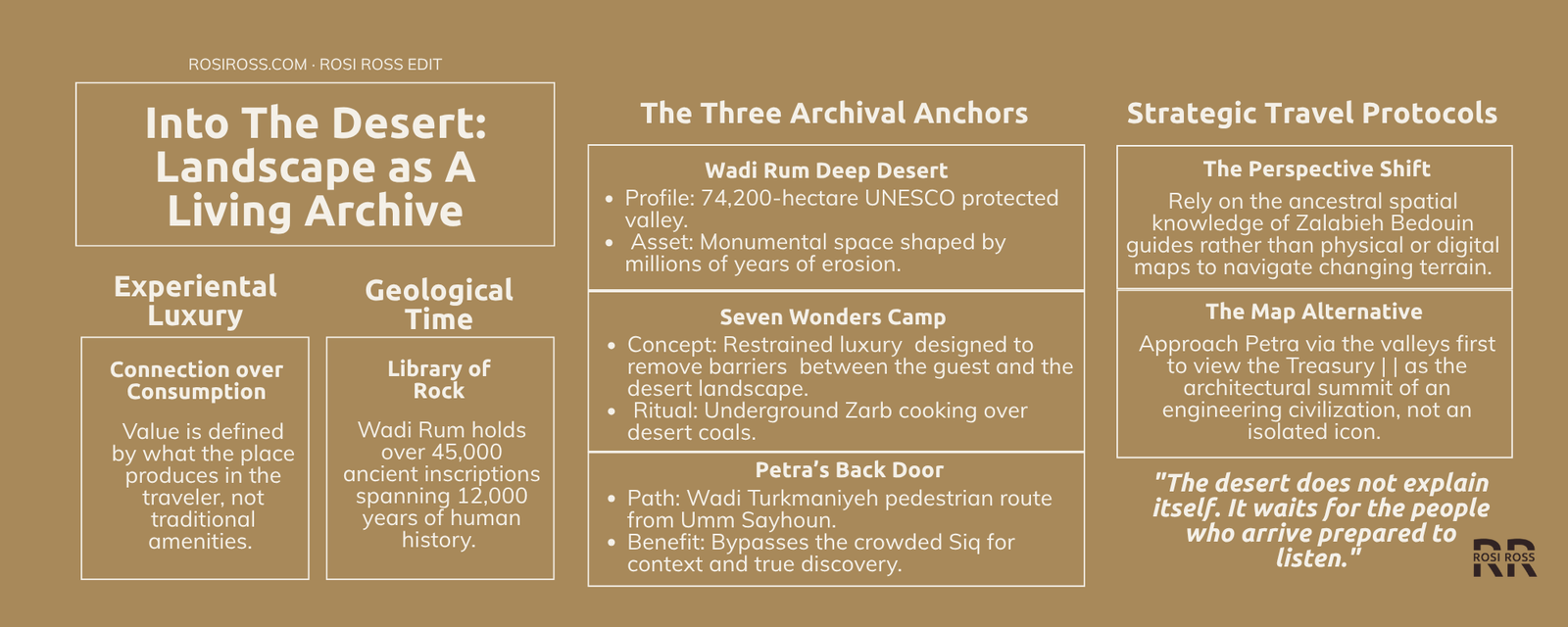
The UNESCO designation recognizes what the Bedouin communities who have inhabited this landscape for centuries have always understood: that Wadi Rum is simultaneously a natural wonder and a cultural archive. The protected area contains more than 25,000 rock carvings and 20,000 inscriptions documenting 12,000 years of continuous human presence — from Thamudic petroglyphs in the canyon walls at Khazali to Nabataean inscriptions left by the same civilisation that built Petra forty kilometres to the north. The desert is not empty. It is a library.
T.E. Lawrence, who established his Arab Revolt base here during the First World War, described Wadi Rum as “vast, echoing, and god-like” in his account of the campaign, Seven Pillars of Wisdom — a book whose title was itself inspired by one of the valley’s most imposing rock formations. The observation is accurate in a way that photographs can gesture toward but never quite capture: Wadi Rum imposes itself on the imagination not through scale alone, which is considerable, but through the specific quality of scale that only occurs when a landscape has been shaped by geological time rather than human intention.
What desert environments produce, when they are experienced rather than simply witnessed, is a different relationship to time. The pace of life in Wadi Rum has always been determined by the landscape itself — by the availability of water, by the movement of caravans along ancient trade routes, by the rhythm of temperature change between day and night. Luxury travellers increasingly seek this quality not because it is comfortable, but because it is rare: the experience of inhabiting a place whose pace cannot be accelerated and whose demands cannot be renegotiated.
Seven Wonders Luxury Camp: luxury defined by location
Seven Wonders Luxury Camp is situated minutes from Petra, in a desert landscape that renders the conventional categories of luxury hospitality — thread count, architecture, service standard — secondary to a more fundamental question: where are you, and what does that place allow you to feel?
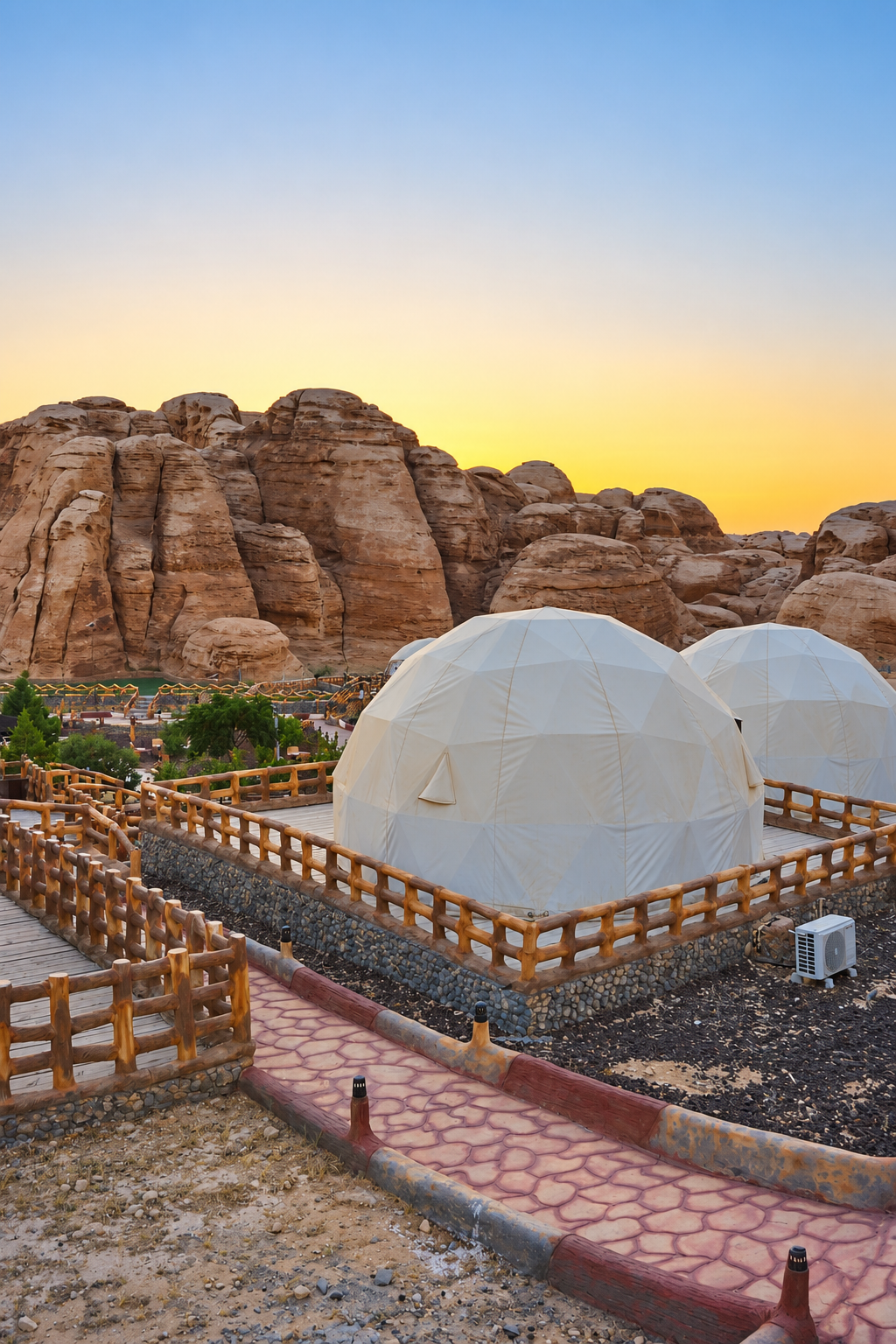
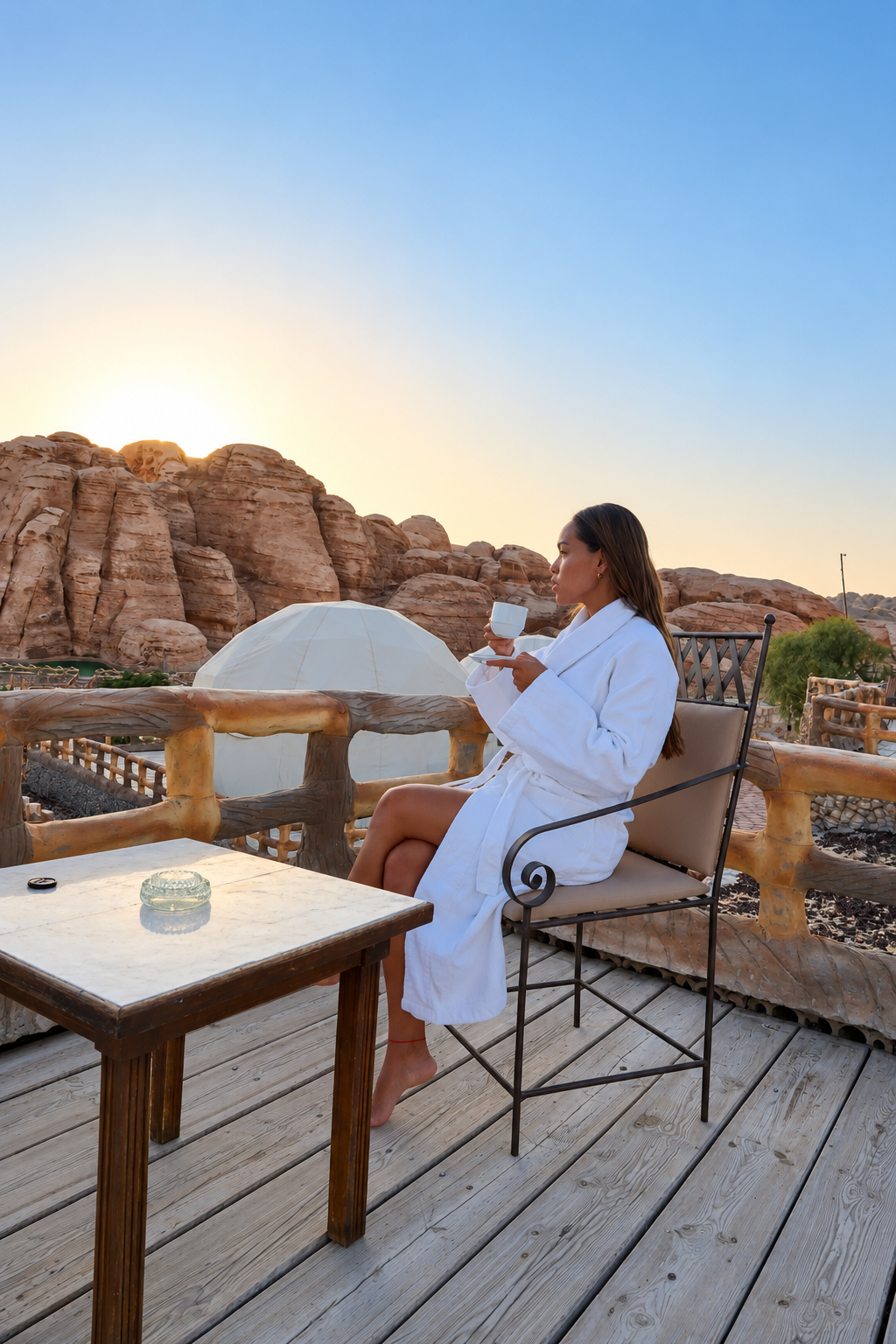
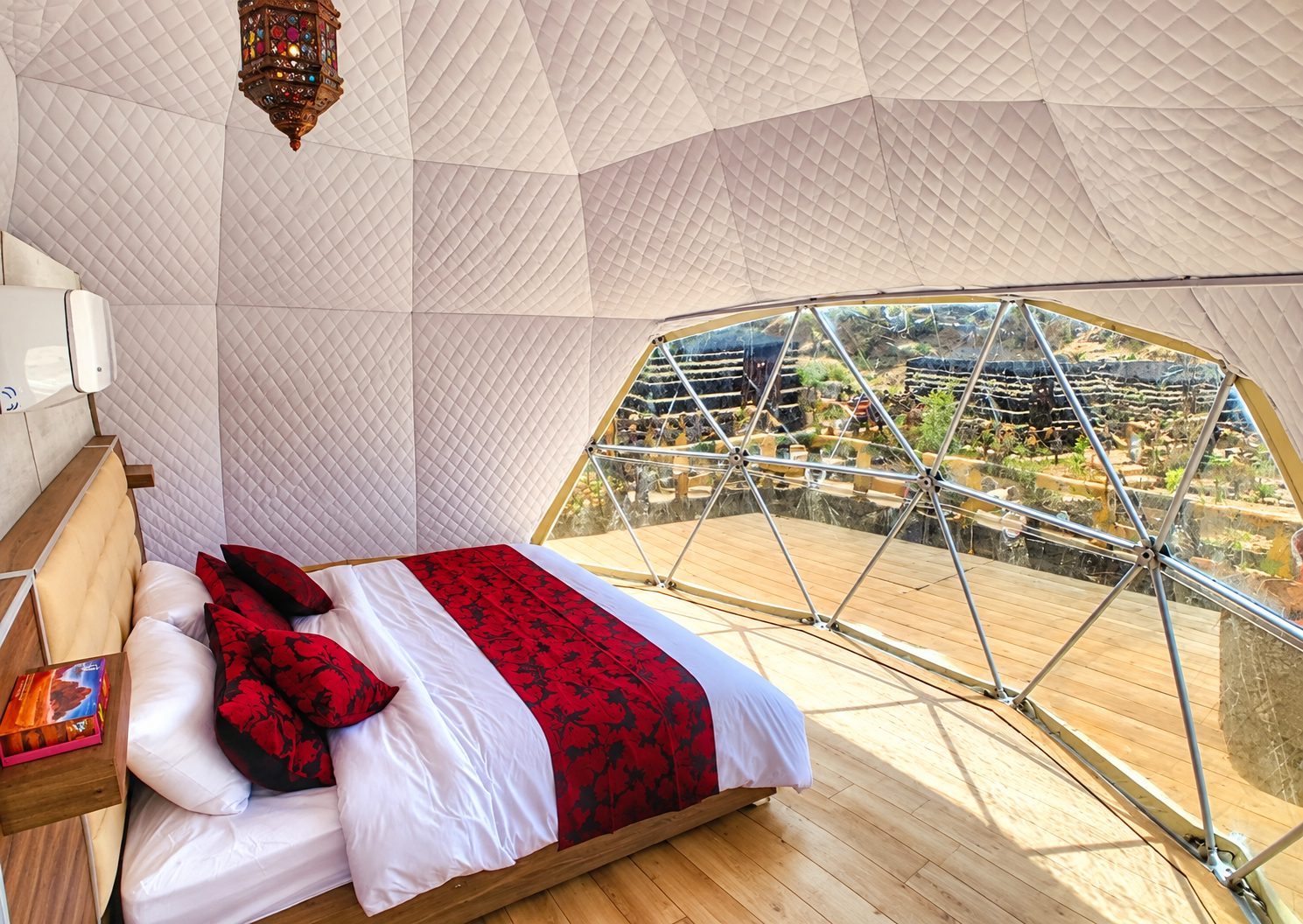
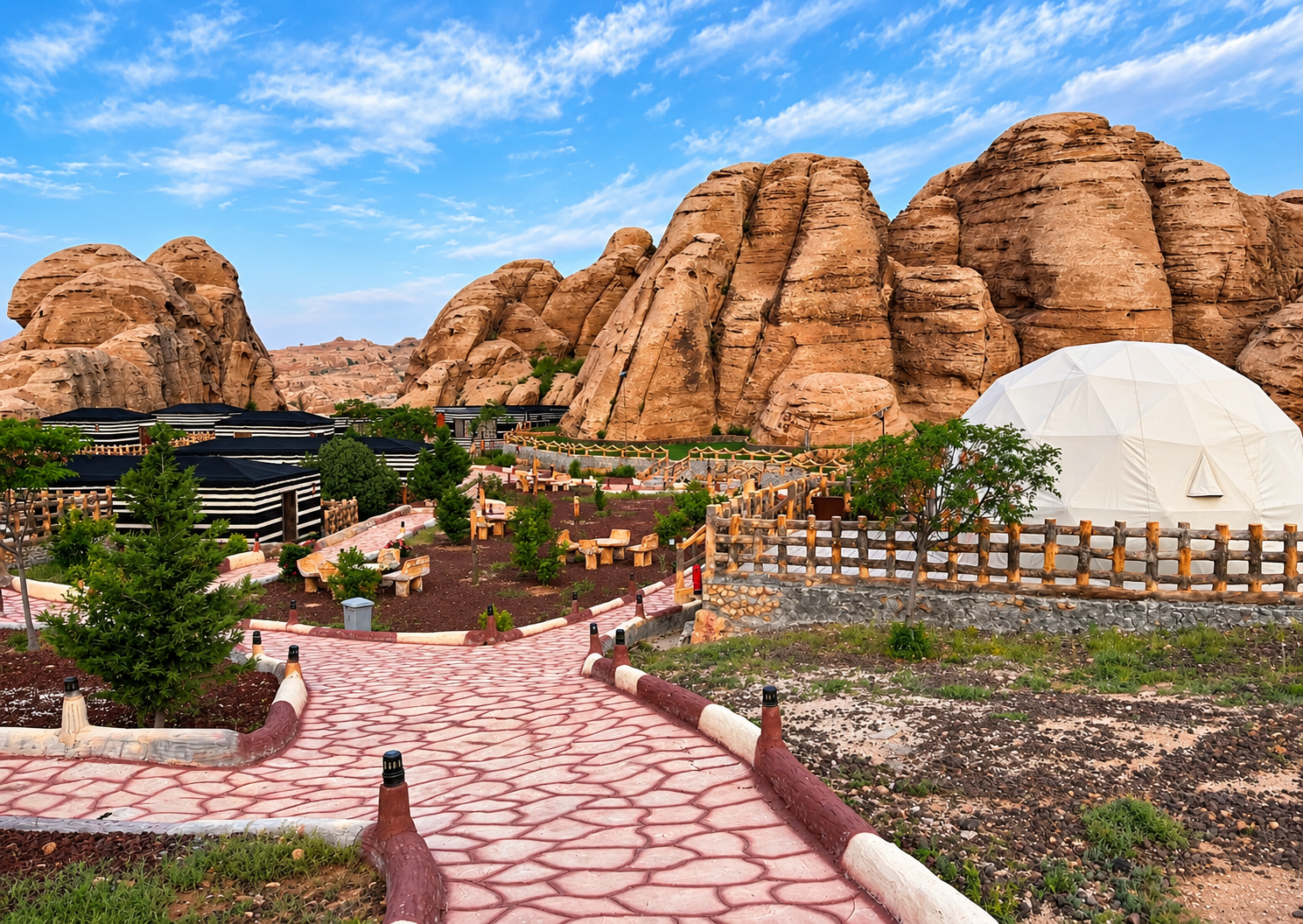
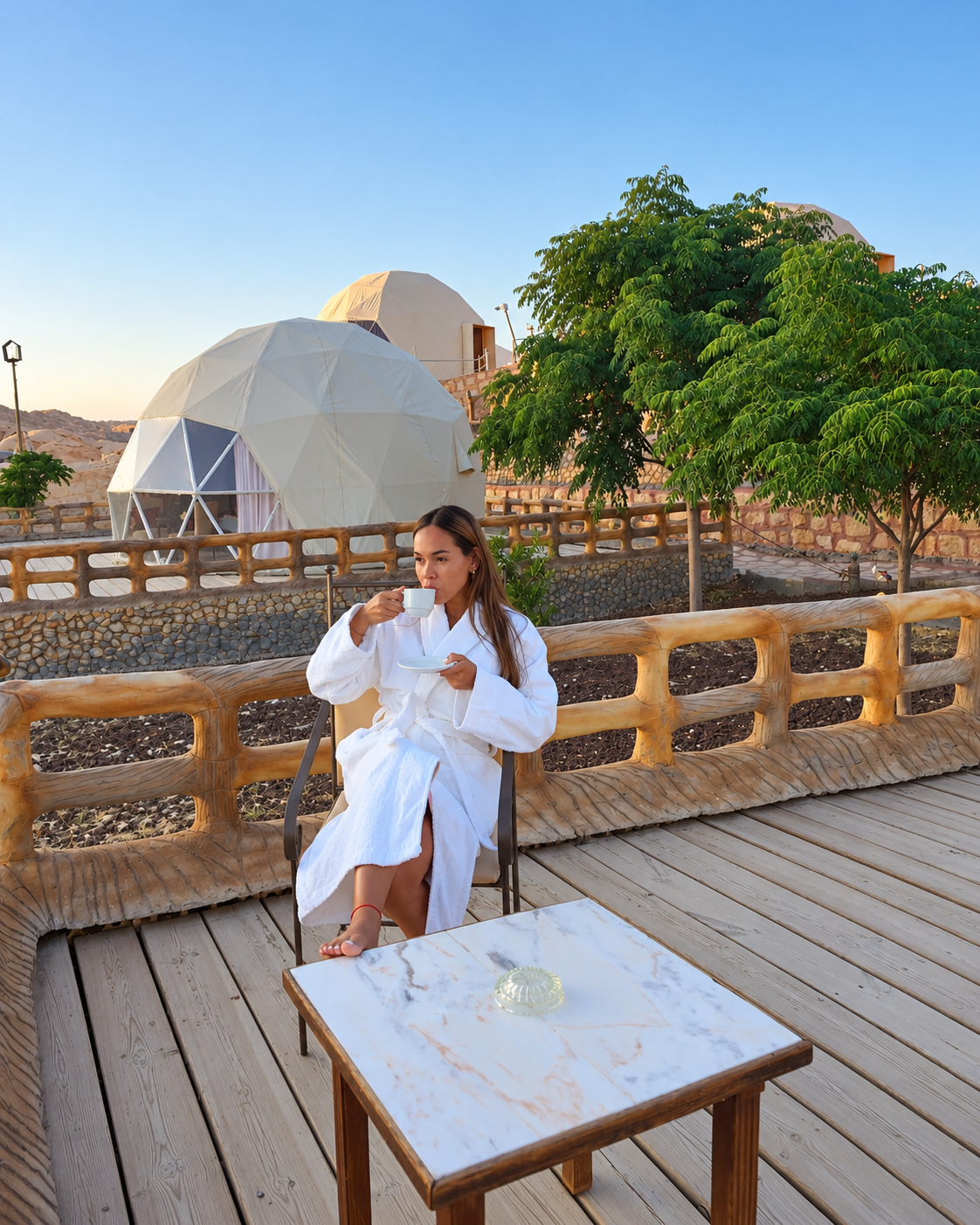
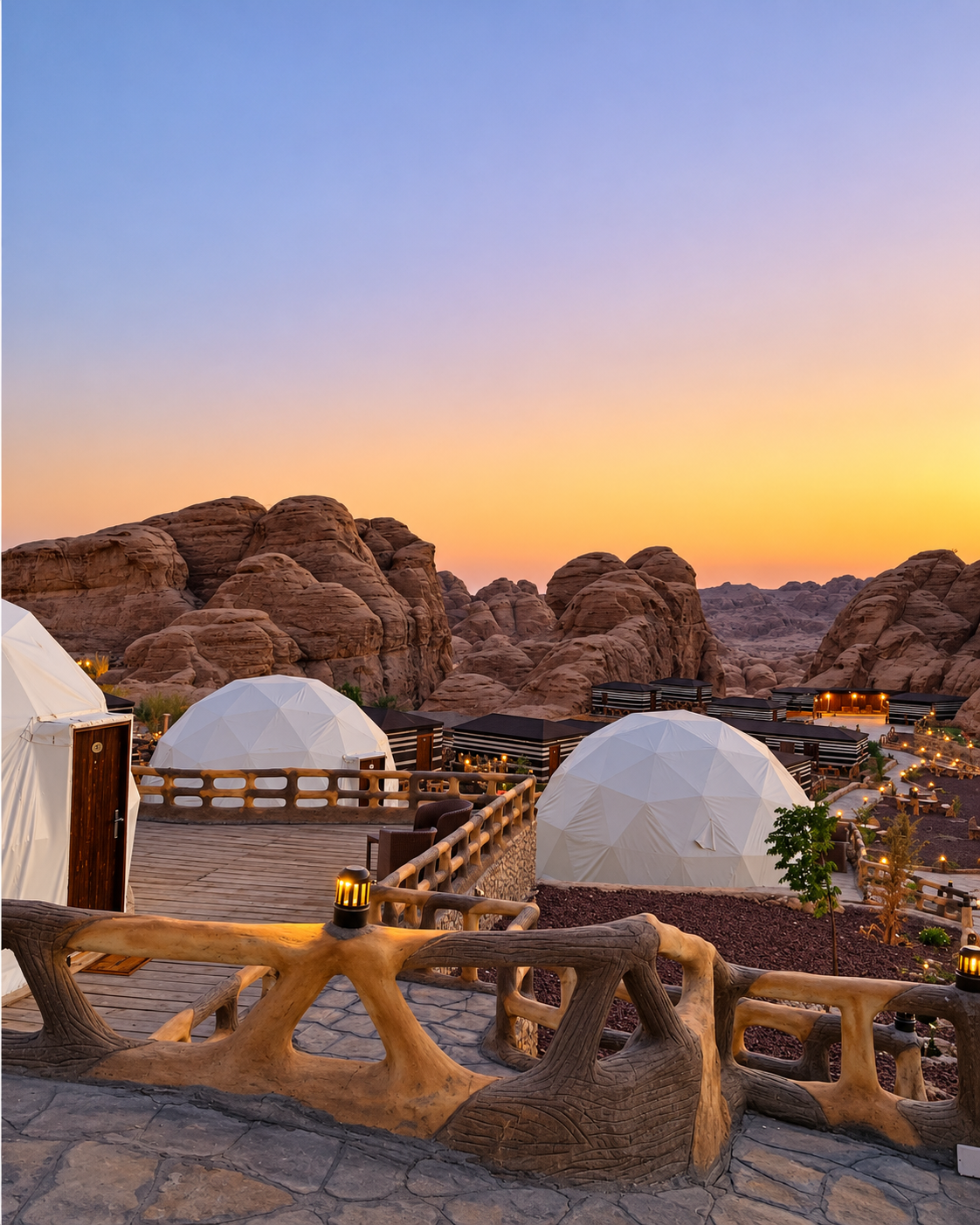
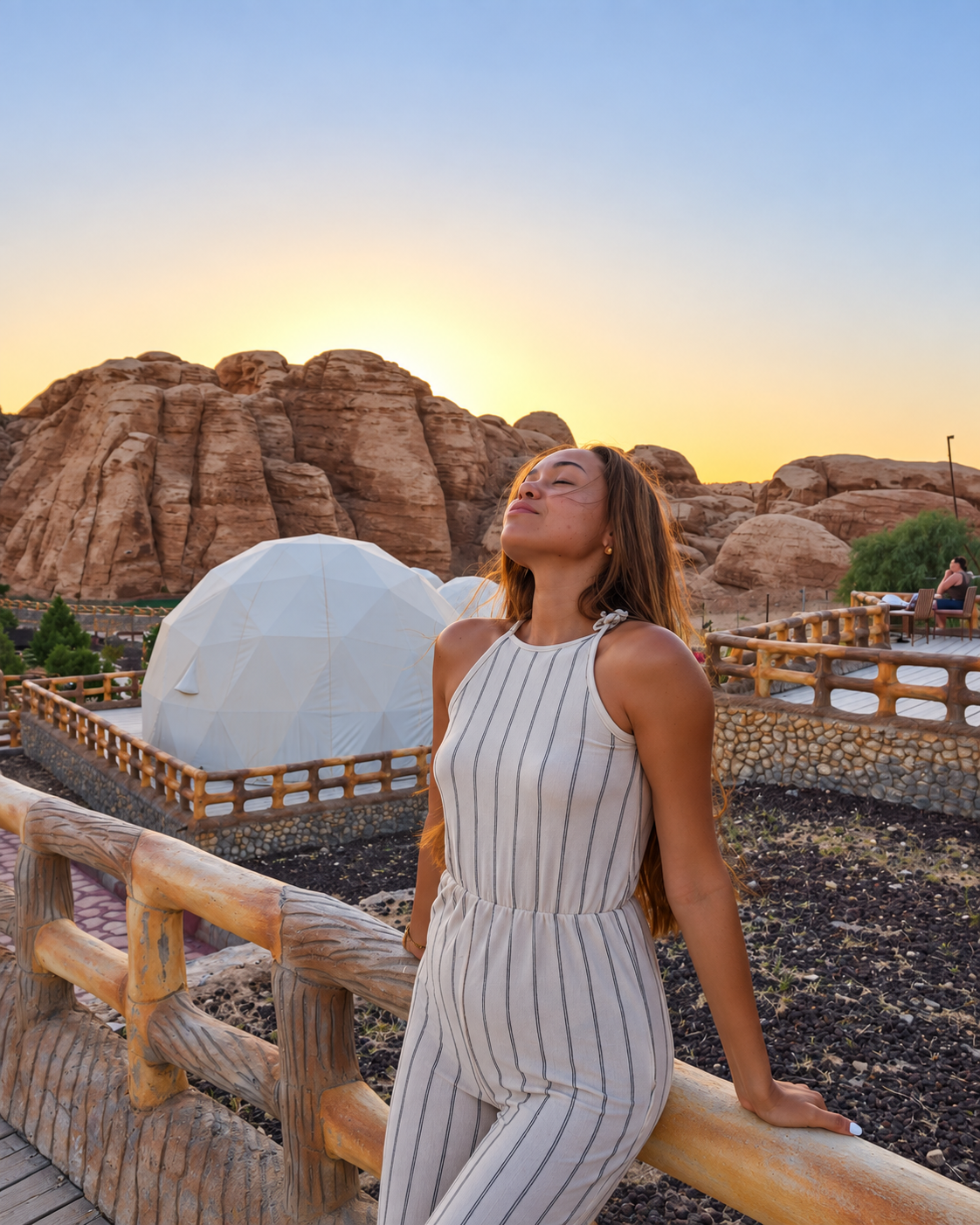
The desert pod experience begins with this reorientation. The accommodation is not designed to compete with the landscape. It is designed to be continuous with it. Panoramic windows place the valley floor, the rock formations, the changing desert light, and the night sky not as a backdrop behind glass but as the primary and continuous content of the stay. The first view from the pod at dawn — the gradual revelation of a landscape that has been absorbing cold and darkness all night, beginning to warm, the colours shifting from grey to the iron-rich reds and oranges that give Wadi Rum its particular visual character — is an experience that no interior design decision can replicate. The location is the amenity. The desert is the architecture.
This is the distinction that separates experiential luxury from traditional luxury. Traditional hospitality asks what the property can provide. Experiential hospitality asks what the place can make you feel. Seven Wonders Luxury Camp is important not because it places travellers in the desert but because it changes how they understand the desert — by removing every unnecessary layer between the traveller and the landscape and allowing proximity to do what proximity in a place of this kind does: it produces a quality of attention that is not available through any other means.


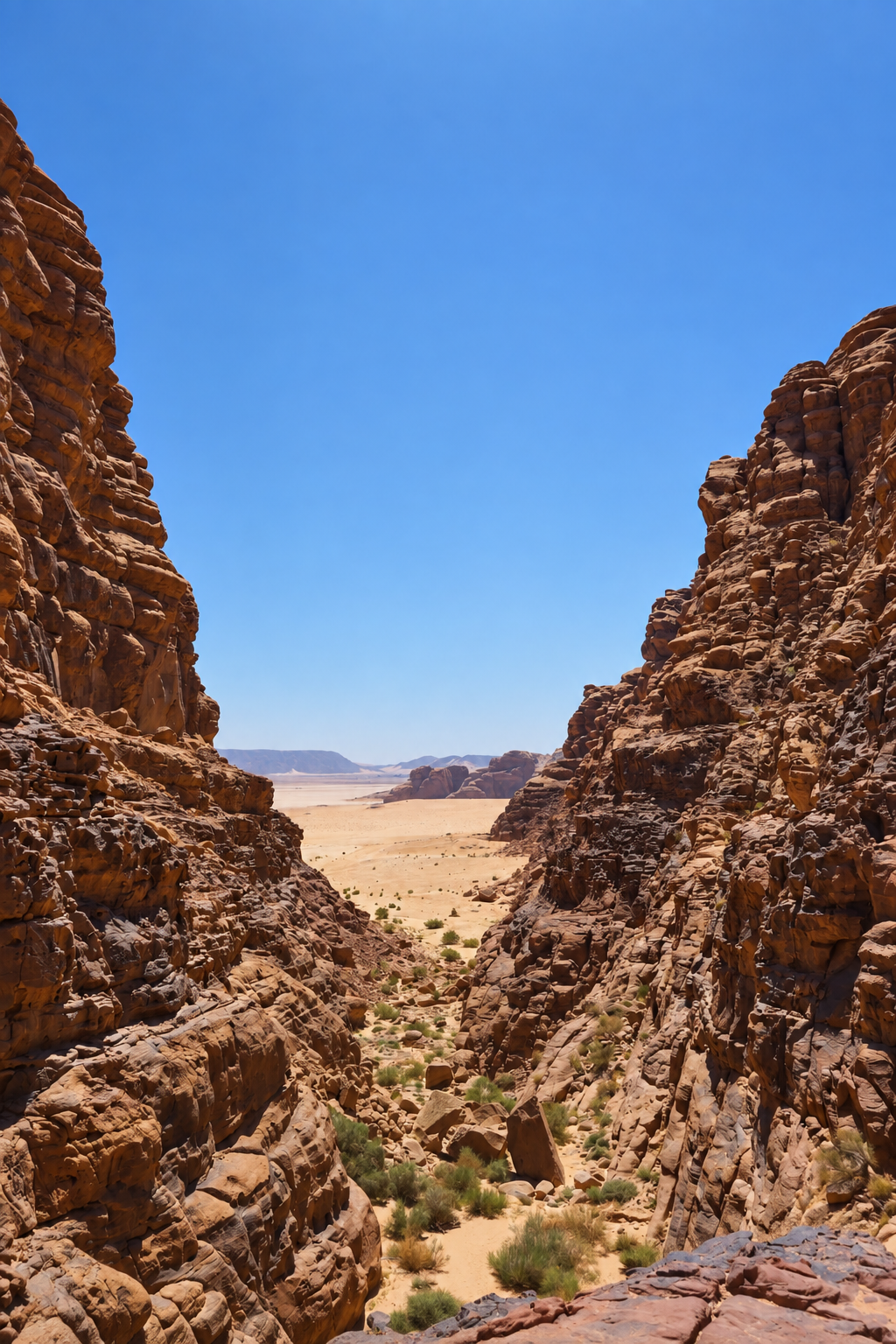


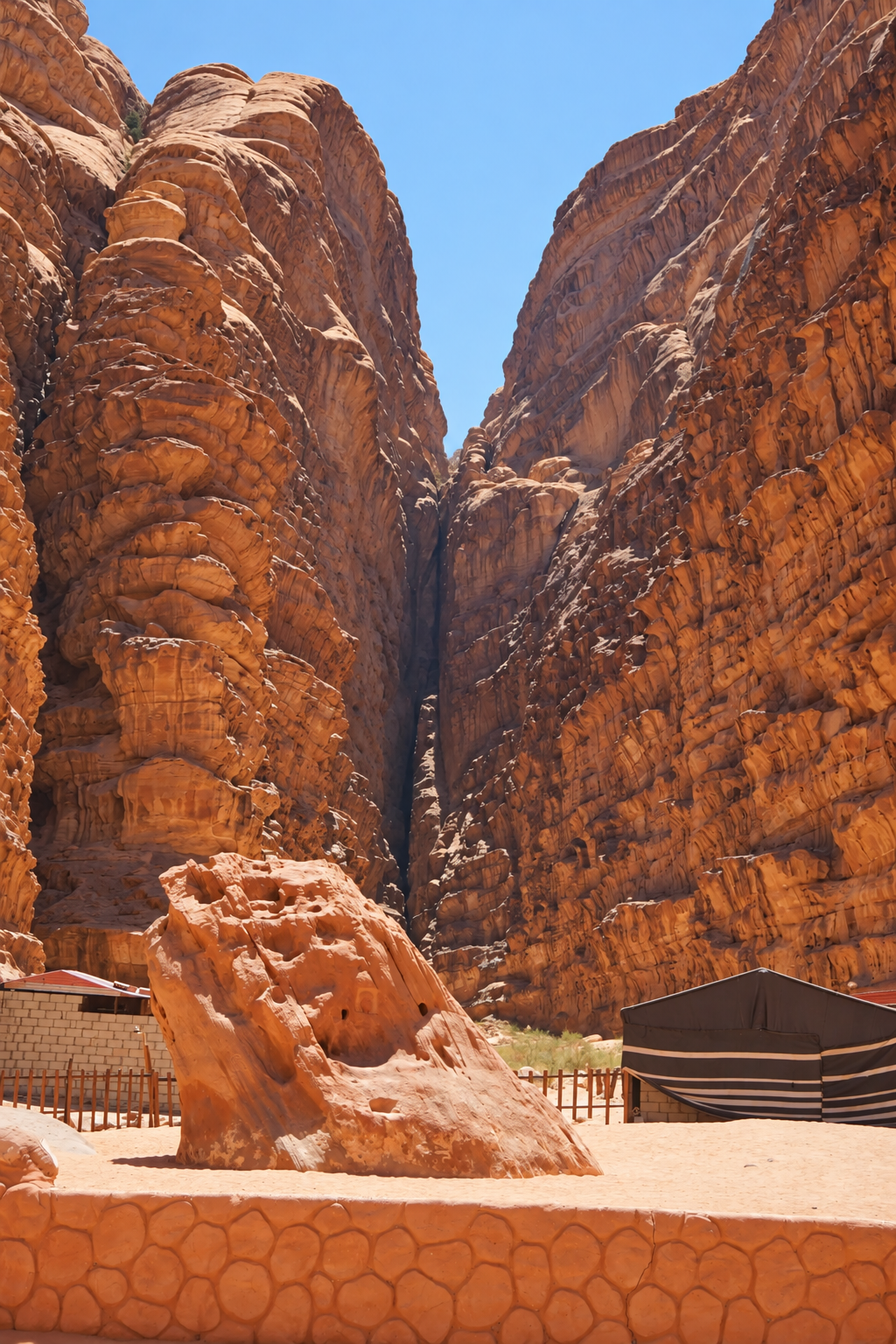


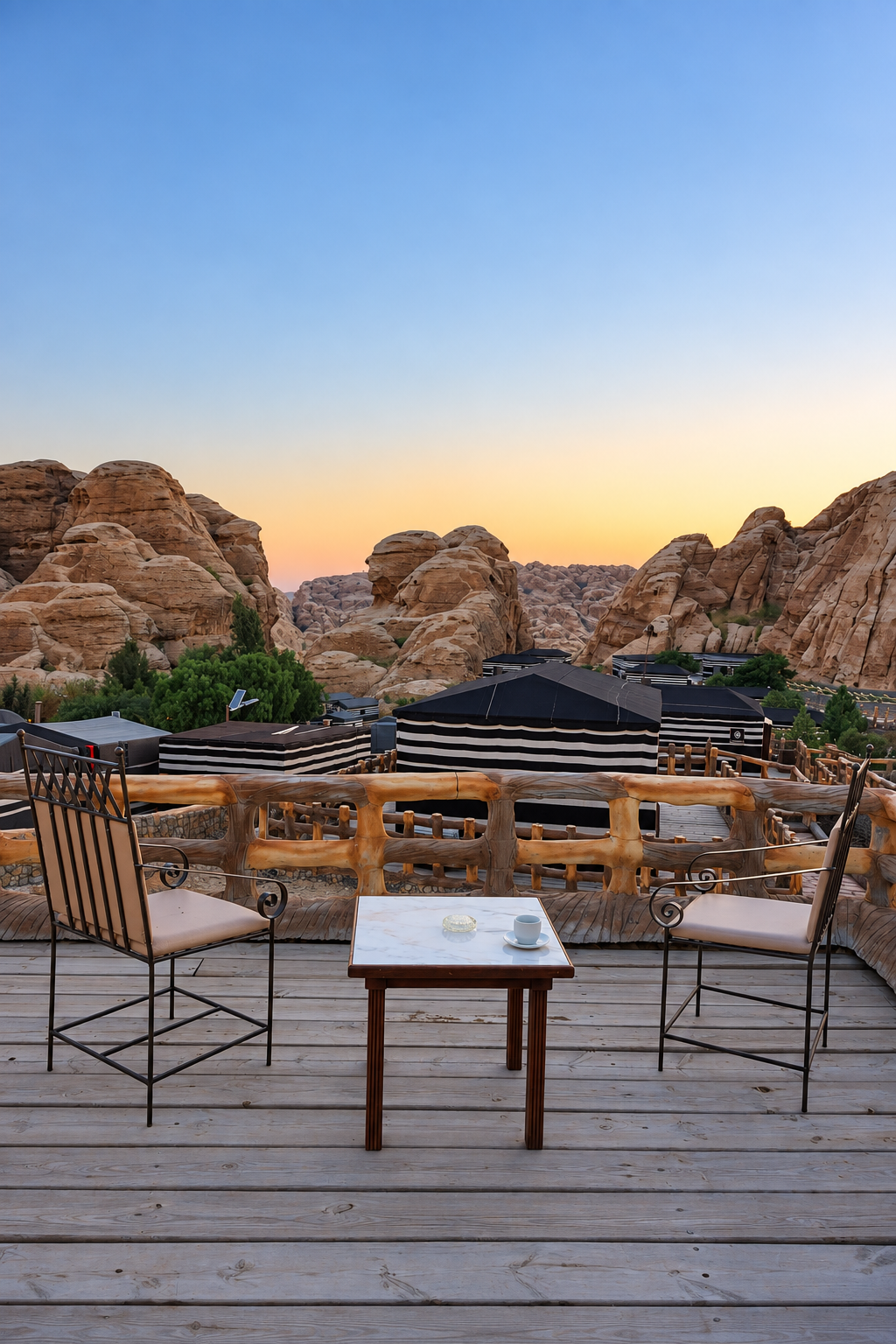
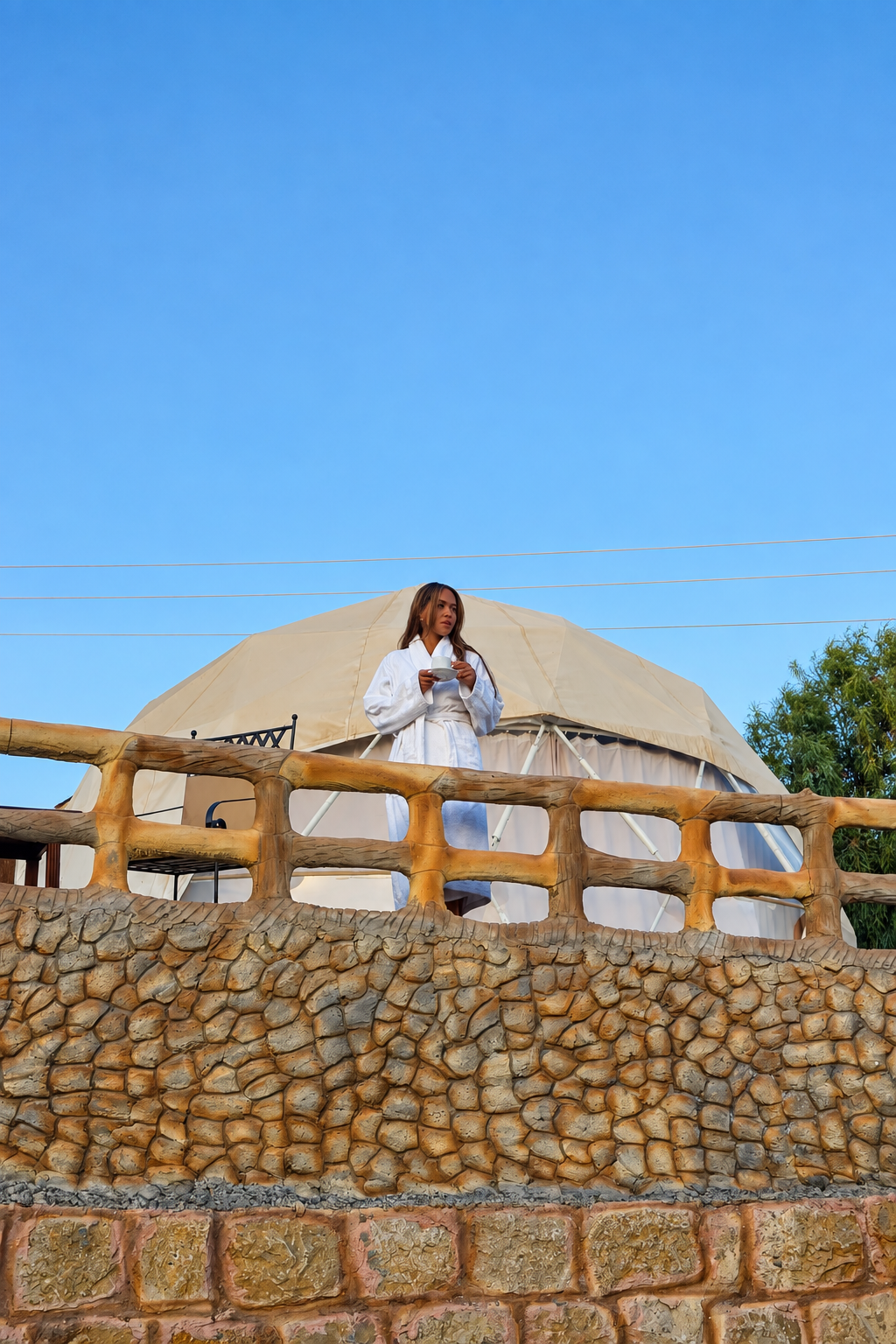
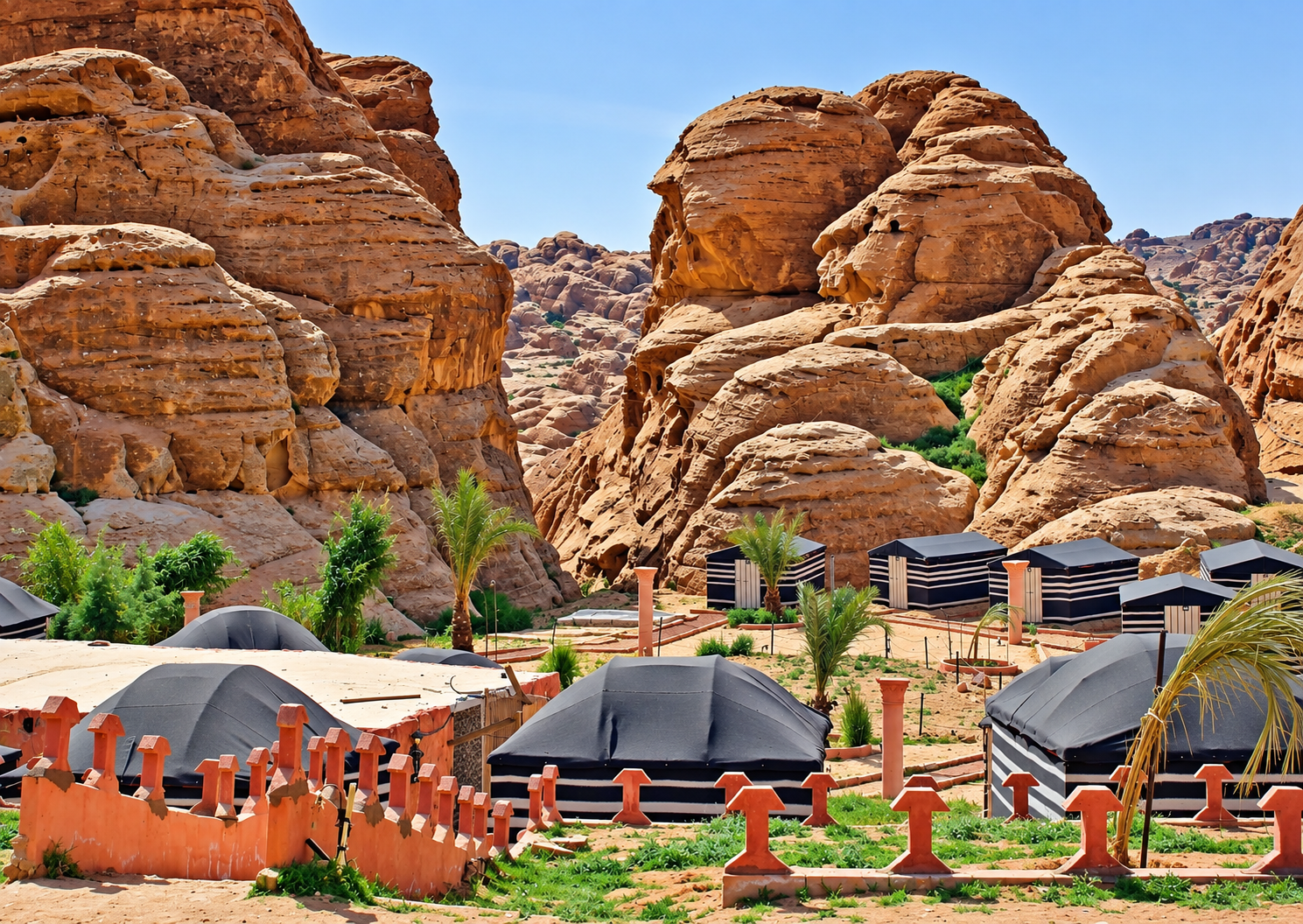
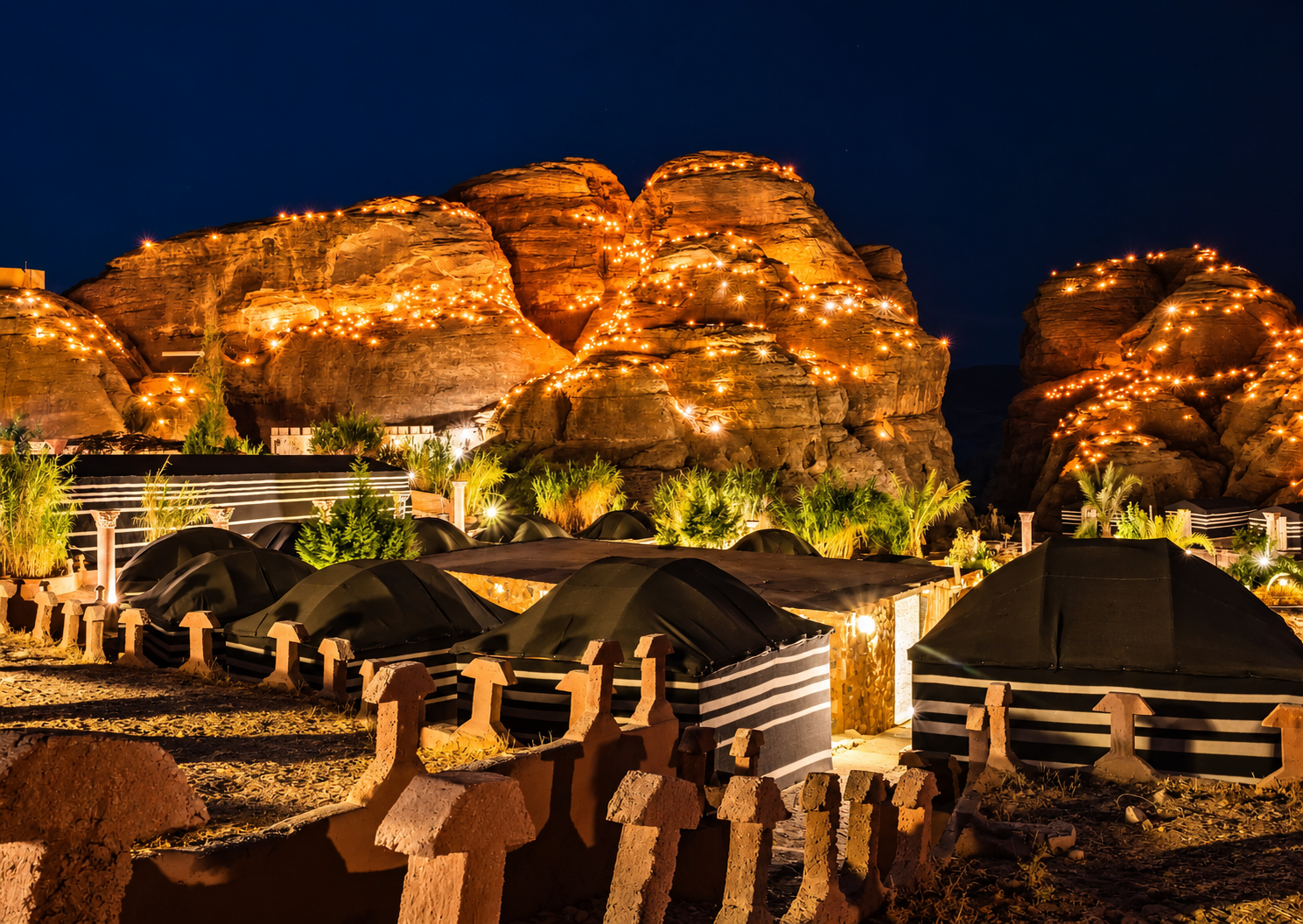
The accommodation options range from traditional Bedouin-inspired tents — elegant in their material honesty, equipped with every modern convenience, their private patios oriented toward the landscape — to dome structures whose curved forms echo the geological language of the valley and whose large windows create the specific experience of inhabiting the desert night. Each option resolves the same design question in a slightly different register: how do you create privacy and comfort in one of the most dramatic natural environments on earth without interrupting the relationship between the guest and the place?
The answer is restraint. The greatest luxury available here is not having more around you. It is having fewer barriers between you and the world.
The dining experience extends this philosophy to the table. Traditional Zarb — the Bedouin underground cooking technique in which meat is slow-cooked over coals in a sealed pit in the earth — produces food that tastes of both the place and the method: smoky, unhurried, carrying the specific flavour of something that could only be produced here, by people who inherited this knowledge rather than learned it from a recipe. Dining under the desert sky, at a table surrounded by the specific darkness that only exists far from urban light pollution, with stars that are present as a genuinely overwhelming quantity of light rather than a decorative backdrop, is not a restaurant experience with outdoor seating. It is something categorically different.
The knowledge behind the landscape
The most significant thing a Bedouin guide carries is not a map. The desert of Wadi Rum does not require maps in the conventional sense — there are no roads, the tracks left by vehicles are erased by wind, and the landscape’s navigability depends on a form of spatial knowledge that is accumulated over generations of living within it rather than learned from any external document.
The Zalabieh Bedouin who have inhabited Wadi Rum for generations know the location of springs that are invisible to an uninformed eye. They know the canyons that contain petroglyphs that have been there for ten thousand years. They know how to read the desert’s daily weather system — the specific quality of morning light that predicts afternoon wind, the temperature shifts that indicate where shelter will be needed — not as theoretical knowledge but as practical intelligence accumulated through the experience of living in a landscape that does not tolerate misunderstanding.
The relationship between Bedouin communities and desert survival is not a cultural artifact to be observed from a respectful distance. It is a living system of expertise that constitutes the most valuable available key to the landscape for any visitor who is paying attention. A guide who can explain how the ancient Nabataeans engineered their water collection systems — the rock-cut channels, the cisterns, the dams designed to capture and redirect the rare desert floods — transforms what would otherwise be a beautiful but opaque rock surface into evidence of one of the most sophisticated adaptive civilizations in the ancient world. The desert becomes legible.


This is the experiential argument that the most significant luxury travel experiences are increasingly built around: that the most valuable thing a destination can offer is access to knowledge that cannot be obtained elsewhere. Not the knowledge available in books or documentaries, which is plentiful, but the knowledge that exists only in the presence of people who inherited it and in the landscape that produced it. This is what the presence of a certified Egyptologist transforms in the experience of Saqqara and Giza — the monuments stop being visually impressive objects and become legible arguments about cosmology, power, and the human relationship to mortality. The same transformation is available in Wadi Rum, when the guide is someone whose relationship to this landscape is not professional but ancestral.
Traditional meals shared with Bedouin hosts carry this same quality of knowledge-transfer: the ingredients, the techniques, the specific combinations of spice and herb that reflect centuries of adaptation to a desert environment, tell a story about how intelligent people survive in conditions that most of the world’s populations would find impossible. The meal is not a cultural performance. It is a demonstration of expertise. The difference between the two — between observing a culture and being welcomed into it — is the difference between tourism and the travel that changes something in the traveller.
Petra through the back door
Petra is one of the most recognised archaeological sites in the world. UNESCO inscribed it as a World Heritage Site in 1985, and in 2007 it was named one of the New Seven Wonders of the World. The Nabataeans, an Arab people who established Petra as the capital of their kingdom in the second century BC, built a city of approximately 20,000 people in a desert landscape through a combination of architectural genius and hydraulic engineering of extraordinary sophistication — rock-cut channels, cisterns, dams, and reservoirs that transformed an essentially arid environment into a thriving commercial metropolis at the intersection of the frankincense routes from Arabia, the spice routes from India, and the silk routes from China. The Swiss explorer Johann Ludwig Burckhardt rediscovered the site in 1812, disguised as a Muslim pilgrim. It had been lost to the outside world for centuries, known only to the Bedouin who had always lived among its ruins.
Familiarity with Petra’s reputation — the Treasury facade, the Siq, the photographs reproduced so many times that they function as icons rather than images — creates a specific problem for the contemporary traveller. The monument is so thoroughly known in advance that the first sight of it risks being experienced as recognition rather than discovery: the confirmation of an image already held rather than the encounter with a place previously unknown.
The back door route — the Wadi Turkmaniyeh pedestrian path from Umm Sayhoun — addresses this problem by refusing the conventional approach entirely. Instead of entering through the Siq, the dramatic narrow gorge that funnels the traditional visitor toward the Treasury in a single revelatory moment, the back door route moves through the wider landscape first: through valleys that reveal the geological context of the site, past tombs and water systems and the physical evidence of a civilisation that existed here for centuries, and toward the Treasury from a direction that places it within its environment rather than presenting it in isolation.


The result is an encounter rather than an arrival. The Treasury emerges not as the climax of a theatrical approach designed to produce maximum visual impact but as the most elaborate expression of an architectural language that the walk has already introduced through its quieter monuments. The traveller who arrives by the back door understands, in a way that the traditional approach does not produce, that the Treasury is not the exception in Petra but the summit of a consistent design philosophy applied across hundreds of structures over several centuries.
As National Geographic’s archaeological investigation of Petra documents, much of the city remains unexcavated — archaeologists found a tomb containing twelve skeletons beneath the Treasury as recently as 2024, and the full extent of the Nabataean city is still not known. To walk through Petra with the understanding that what is visible represents perhaps a fraction of what is there is to experience the site not as a completed monument but as an ongoing archaeological argument whose most significant conclusions have not yet been reached. That understanding converts the experience from sightseeing to something closer to reading — and the back door route is what provides the context in which it becomes possible.
The new luxury traveller: connection over consumption
The most significant shift in luxury travel over the past decade is not a shift in standards. Five-star hotels have not declined. Service has not deteriorated. What has changed is the criterion by which the most sophisticated travellers evaluate an experience — and that criterion has moved, decisively, from the quality of what the property provides to the quality of what the place produces in the traveller.
Jordan represents this evolution in its most complete available form because its luxury is rooted in what cannot be manufactured: ancient landscapes whose geological time makes every human concern feel briefly, usefully small; a tradition of Bedouin hospitality that operates on values — generosity, attention to the guest, the offering of food and shelter as moral rather than commercial acts — that predate the hospitality industry by centuries; and a depth of history that rewards engagement rather than observation.
The parallel with the most considered experiences elsewhere in the region — the encounter with Cairo as a city that has never stopped, layer on layer of civilisation inhabiting the same urban fabric without the sanitising distance of pure heritage; the manufactured paradise of Nikki Beach Dubai, where the engineering of leisure is itself the argument the place is making — is precise. In all of these cases, the most significant luxury is not an amenity. It is a quality of attention that the place produces in its most engaged visitors, and that cannot be found through any other means.
Lonely Planet’s editorial assessment of Jordan as a travel destination identifies what any serious visitor confirms: Jordan rewards the traveller who comes prepared to understand it. The landscape’s complexity, the cultural depth, the specific expertise that local guides carry — none of these yield their full value to the visitor who is moving quickly. The most memorable experiences here are built around the pace of the place, which is determined not by schedule but by the rhythm of desert light, the temperature arc of a desert day, and the unhurried quality of hospitality that has never been in a hurry.
The journey beyond the photograph
The greatest souvenir from Jordan is not an object. It is a recalibration of scale — a restored sense of how long the human story has been running and how recently our own moment in it began. Standing on the valley floor at Wadi Rum, surrounded by rock formations that were already ancient before the Nabataeans began carving their city at Petra, the categories that organise ordinary life become temporarily and usefully relativised. The silence is not the absence of sound. It is a presence.
For those who seek the same quality of encounter with the ancient world at its most continuously inhabited, the journey continues. The stillness available at Tanoak Hotel in Ain Sokhna, watching the Suez Canal’s global commerce move in slow procession across the horizon, offers a different version of the same experience: the world moving at full speed while the traveller remains still long enough to understand their relationship to it. And the charging infrastructure of considered travel — the equipment that ensures the journey proceeds without the interruptions that matter least — and the luggage that carries it all with the same intention the journey deserves — are the invisible architecture on which every significant experience depends.
What Jordan offers — and what Seven Wonders Luxury Camp provides the most complete available access to — is not escape. It is the opposite of escape. It is immersion: in a landscape that has been shaped by forces operating over geological time, in a cultural tradition whose hospitality values have survived every political transformation the region has experienced over centuries, and in an ancient city that a civilisation of twenty thousand people built in a desert by understanding their environment more completely than anyone since has managed to do.
The traveller who leaves Wadi Rum carries something that is genuinely difficult to name and impossible to purchase. It is closer to a shift in the relationship between the self and time — a reminder, produced by proximity to a landscape that has been there for millions of years and a culture that has adapted to it for thousands, that the most significant experiences available to any traveller are not those that confirm what was already known but those that produce a new understanding of what it means to be somewhere.
The desert does not explain itself. It waits for the people who arrive prepared to listen.
“The desert appears empty
until you have been inside it long enough to understand
that it contains more history, more knowledge,
and more of what constitutes civilisation
than most cities manage to accumulate
in the entire span of their existence.
The most extraordinary journeys in Jordan
are not about witnessing a landscape.
They are about being educated by one —
slowly, privately, and with a depth
that only arrives when you stop moving
long enough for the place to find you.”

