
On the cultural evolution of personal adornment, the 2,500-year craftsmanship tradition behind Polki, Kundan, Meenakari, and Jadau, the movement of Indian jewellery into global luxury wardrobes, and what it means to build a jewellery collection rather than accumulate one
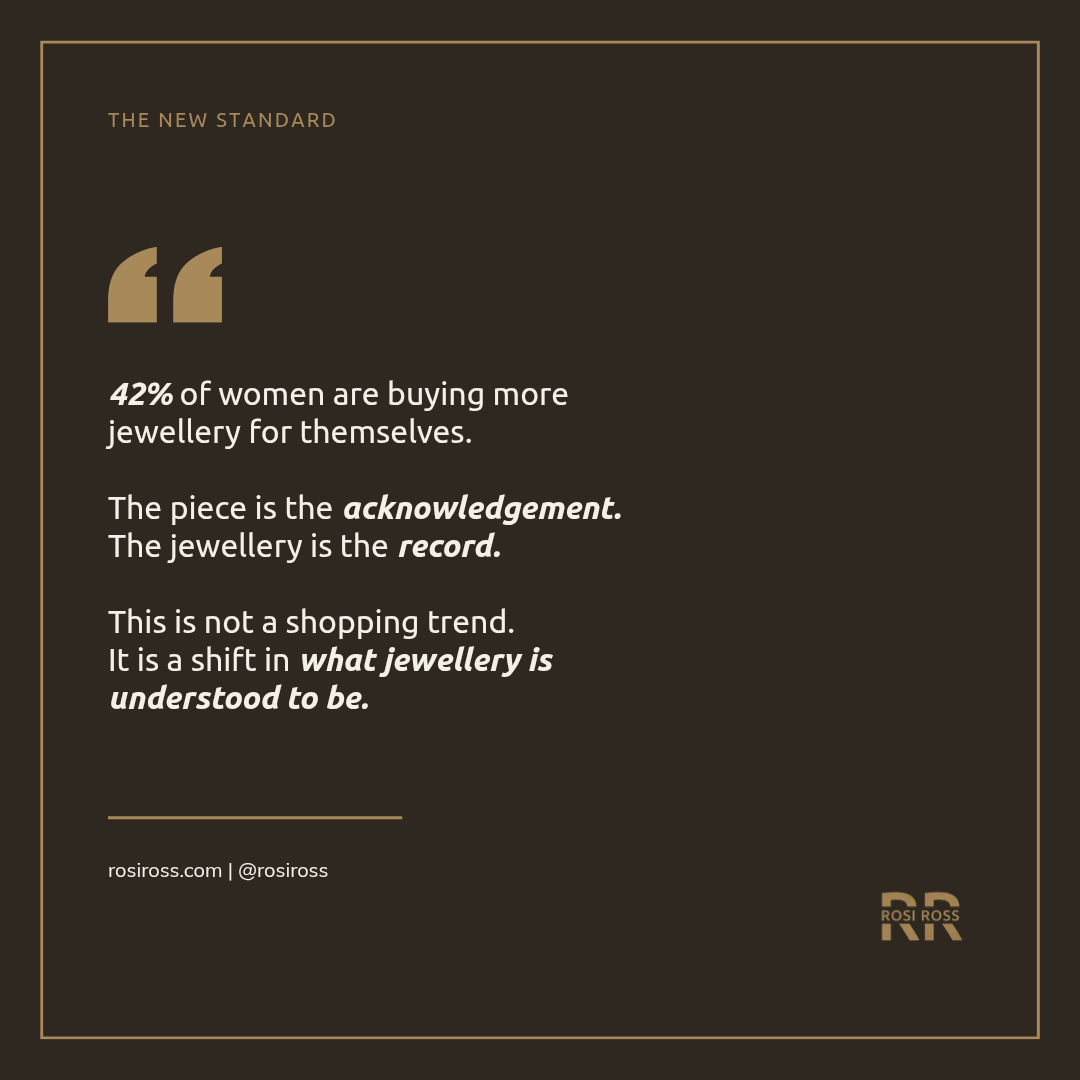
For generations, fine jewellery lived primarily inside moments: the wedding chest, the ceremony, the inherited occasion. Today, something more interesting is happening. Women are buying jewellery for themselves — to mark a promotion, celebrate a first home, recognise a milestone that no social script requires them to acknowledge in any particular way. The piece is the acknowledgement. The jewellery is the record. The same instinct drives the most considered fragrance selection — an object chosen for what it carries rather than what it costs. This is not a shopping trend. It is a shift in what jewellery is understood to be.
The data confirms what the cultural instinct already knows. Research cited by Vogue India from the Business of Fashion–McKinsey State of Fashion 2026 report found that 42% of women say they are buying more jewellery for themselves than they did several years ago. In India, where jewellery has always carried exceptional cultural and emotional weight, this shift is particularly significant: women are retaining the meaning that has always been embedded in fine jewellery while becoming, for the first time at scale, the decision-makers behind the purchase. The jewellery has not changed its fundamental proposition. Its relationship to the woman wearing it has changed completely.
This editorial is an attempt to understand that change — through the lens of craftsmanship, cultural heritage, styling intelligence, and the specific techniques that have been practised across five millennia of Indian jewellery-making. The modern heirloom is not a category or a price point. It is a way of thinking about what an object can mean across multiple chapters of a life — and why the most considered jewellery is always the kind that earns its place not through spectacle but through staying power.
Jewellery as identity — the new language of personal adornment
There has always been a dimension of jewellery that functions as pure self-expression — a way of saying something about who one is that clothing alone cannot carry. But the way that function operates has changed. For most of the twentieth century, fine jewellery was primarily a social language: it communicated status, marital standing, inherited wealth, and cultural belonging. The pieces most women owned were chosen within these coordinates, and their meaning was largely legible to others before it was personal to the wearer.
What is emerging now is a more private and more precise relationship. The woman who selects a Polki necklace because it connects her to a grandmother’s aesthetic, or who chooses a Meenakari-backed earring because the enamel colour corresponds to something she loves, is not making a social statement in the old sense. She is making a record. The jewellery is a material memory — an object that holds a meaning specific to her, that will continue to hold that meaning across every context in which she wears it.
This is what the brief for contemporary jewellery intelligence should describe when it discusses identity: not a category of styling choices but a relationship between the person and the object that deepens rather than dates with time. As Elle India’s analysis of the Kundan, Polki, and Jadau trend documents, the appeal of heritage jewellery extends well beyond its visual beauty — these pieces carry memory, artistry, and identity in ways that fast-fashion accessories structurally cannot, which is precisely why they are moving from bridal trunks onto the streets and into everyday wardrobes. The language has not become more decorative. It has become more specific.
Fashion functions this way, as does fragrance and the beauty ritual. A wardrobe is not merely a collection of garments; it is the accumulated evidence of taste, personality, and how a person has chosen to present herself to the world across years and decades. Jewellery, at its most considered, operates by the same principle — with the added dimension that its material properties allow it to outlast every other category in the wardrobe, and to accumulate meaning in ways that a dress or a coat cannot. The coat worn to a first job interview does not hold that memory. The ring worn to it might be passed to a daughter. This is the structural difference between a fashion accessory and a jewellery piece that has been chosen with intention. The same movement reshaping beauty consumption — from trend-driven purchasing toward objects chosen for durability, meaning, and long-term value — is reshaping how the most considered consumers approach jewellery.
Research cited by Vogue India from the BoF–McKinsey State of Fashion 2026 report found that 42% of women are buying more jewellery for themselves than they did several years ago. The shift reflects growing financial independence, the erosion of the cultural script that reserved fine jewellery for gifts or occasions, and a broader movement toward objects that carry personal meaning rather than social signal. Women are using jewellery to mark self-defined milestones — promotions, personal achievements, significant transitions — rather than waiting for external occasions. The jewellery becomes the record of a life that the wearer is writing herself.


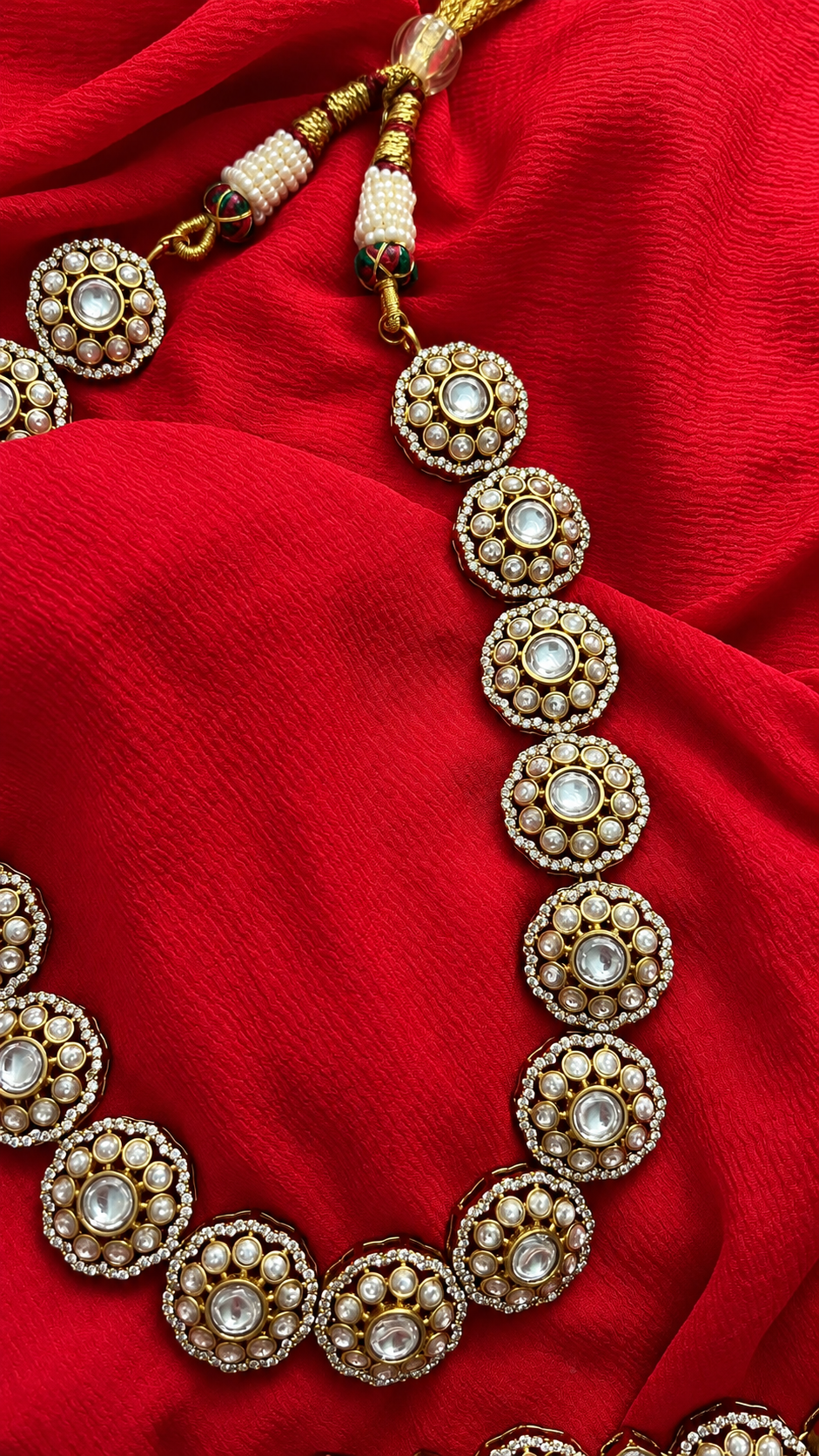
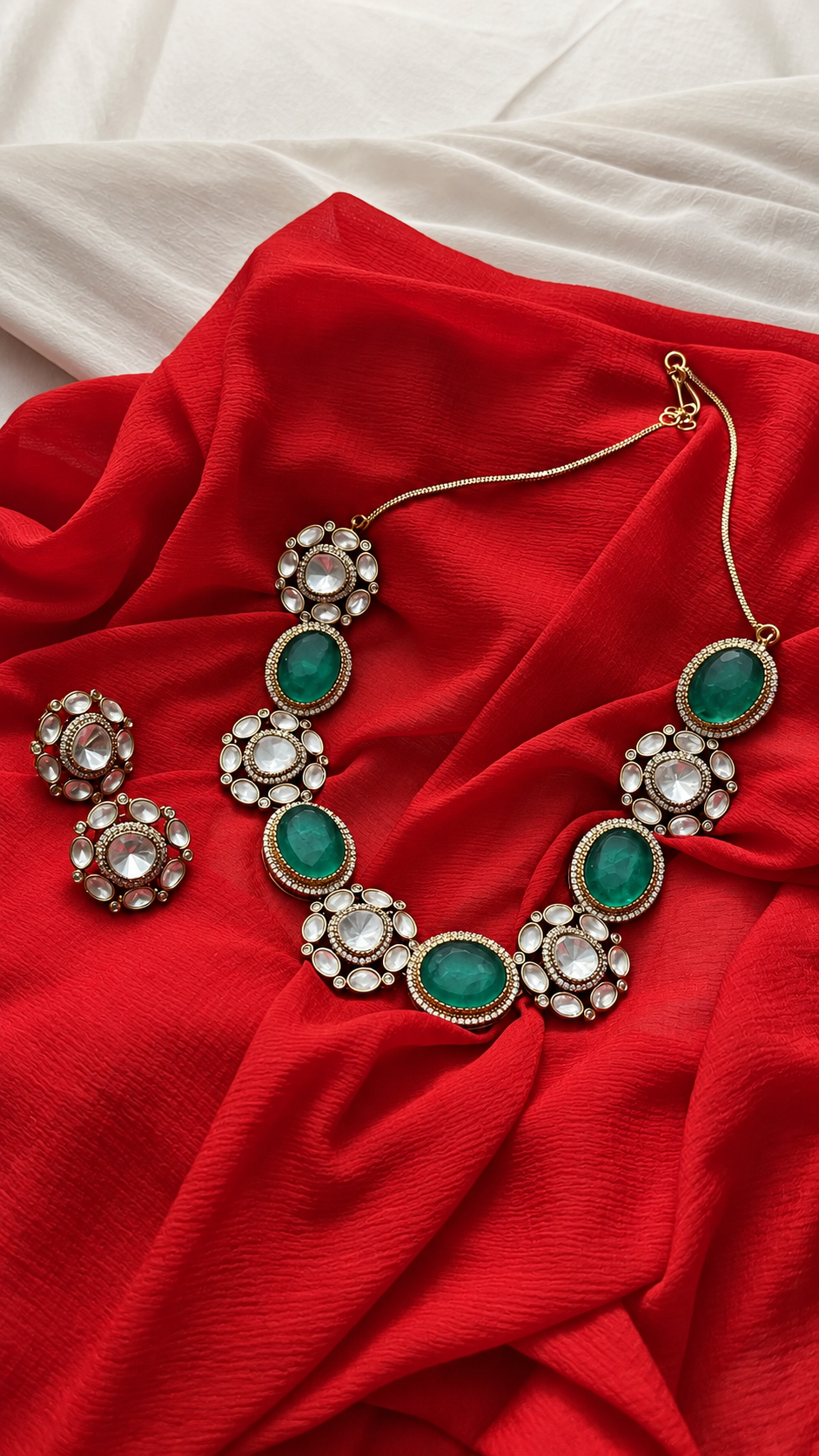
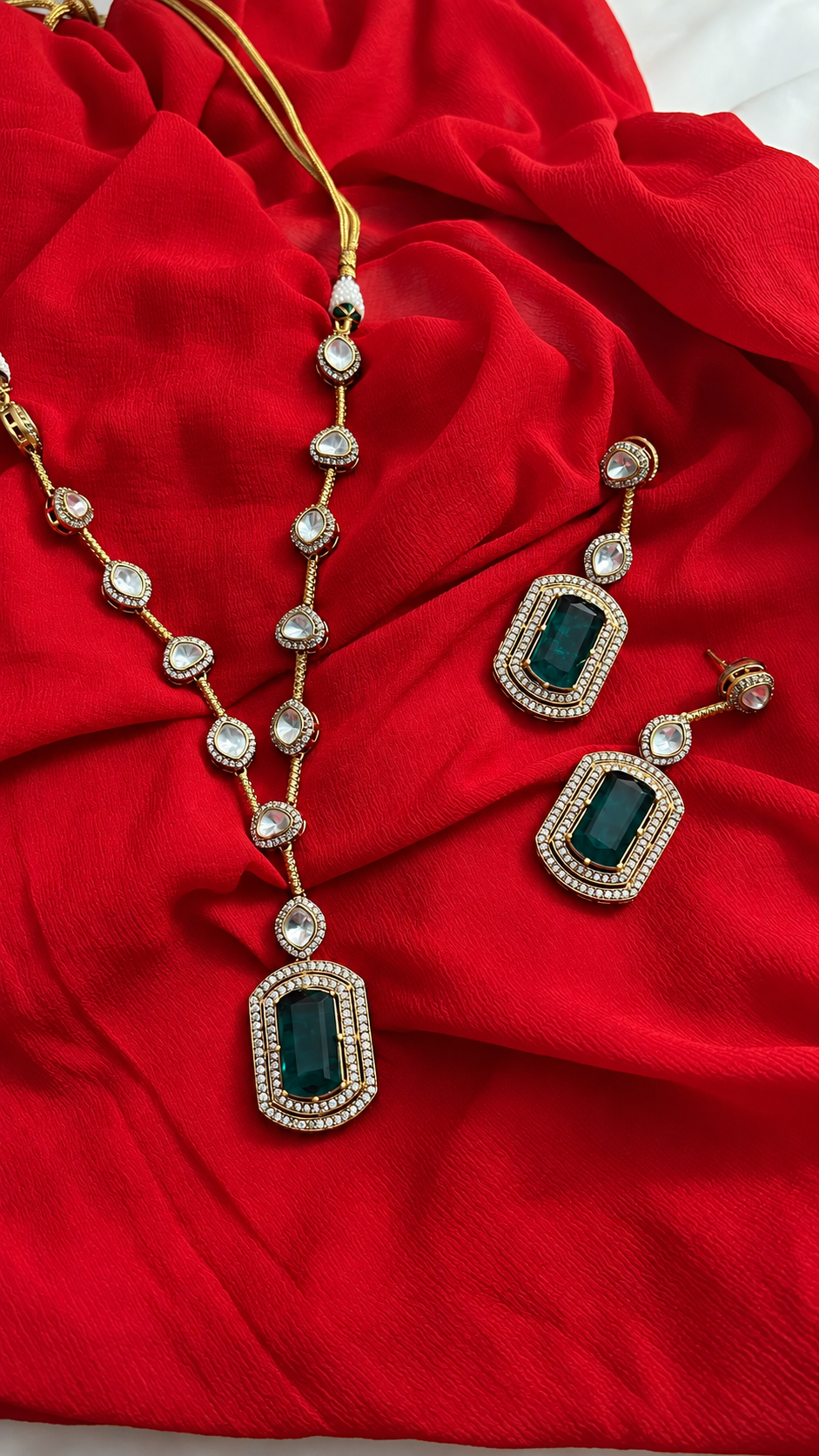
The return of the modern heirloom — why heritage craftsmanship is entering everyday wardrobes
Heritage jewellery is not returning because it never left. It is returning to visibility — to editorial coverage, to global red carpets, to the daily wardrobes of women who might previously have reserved these pieces for weddings and celebrations. The reason is structural: the techniques that produce Polki, Kundan, Meenakari, and Jadau jewellery are inherently slow, inherently handcrafted, and inherently resistant to the mass production that has dominated fashion’s faster categories. They are, by definition, the opposite of trend. And in a market where the most sophisticated consumers are actively moving away from disposable aesthetics toward objects with provenance, craftsmanship history, and genuine material value, that opposition is their most compelling contemporary quality.
Indian jewellery craftsmanship spans approximately 5,000 years. The specific techniques that define its finest expressions — the uncut diamond setting of Polki, the gold foil refinement of Kundan, the enamel artistry of Meenakari, the stone-embedding mastery of Jadau — were developed in the Mughal courts of the 16th and 17th centuries and refined by Rajput craftsmen across the royal workshops of Rajasthan. These techniques were developed not for their efficiency but for their beauty, at the specific historical moment when the most powerful courts in the world were commissioning objects whose primary purpose was to embody the fullness of what human skill could achieve. The results were pieces of such material and artistic complexity that they have not been improved upon by any subsequent technology. They can only be replicated — by hand, slowly, by artisans who have inherited the specific knowledge required to do them.
India’s gem and jewellery exports to the UAE — one of the most important markets for this category — grew from $4.95 billion in fiscal year 2022 to $8.04 billion in fiscal year 2024, following the India-UAE Comprehensive Economic Partnership Agreement. This is not simply trade data. It is evidence that the global market for Indian craftsmanship is growing at a rate that reflects genuine demand from sophisticated luxury consumers, not just diaspora purchasing. Dubai functions as the primary bridge between Indian heritage techniques and international luxury consumers — the city where Polki sits alongside French haute joaillerie and Swiss precision watch-making as a recognised language of serious luxury rather than an exotic category on the periphery of the conversation.
Tiramisu operates within this context not as a luxury heritage house with centuries of documented provenance but as a contemporary curatorial intelligence — a brand that understands these techniques deeply enough to translate them for wardrobes that move between cultures, contexts, and occasions. The modern heirloom it offers is not a reproduction of a museum piece. It is a contemporary object that carries the structural DNA of the heritage tradition — the same commitment to handcrafting, the same respect for the material properties of the stone and metal, the same understanding that the value of the piece is ultimately located in the skill that produced it rather than the volume of material it contains. The same intelligence that governs investment-grade pearl collecting applies to heritage jewellery: what is chosen deliberately, understood properly, and cared for consistently holds a different kind of value than what is simply acquired.


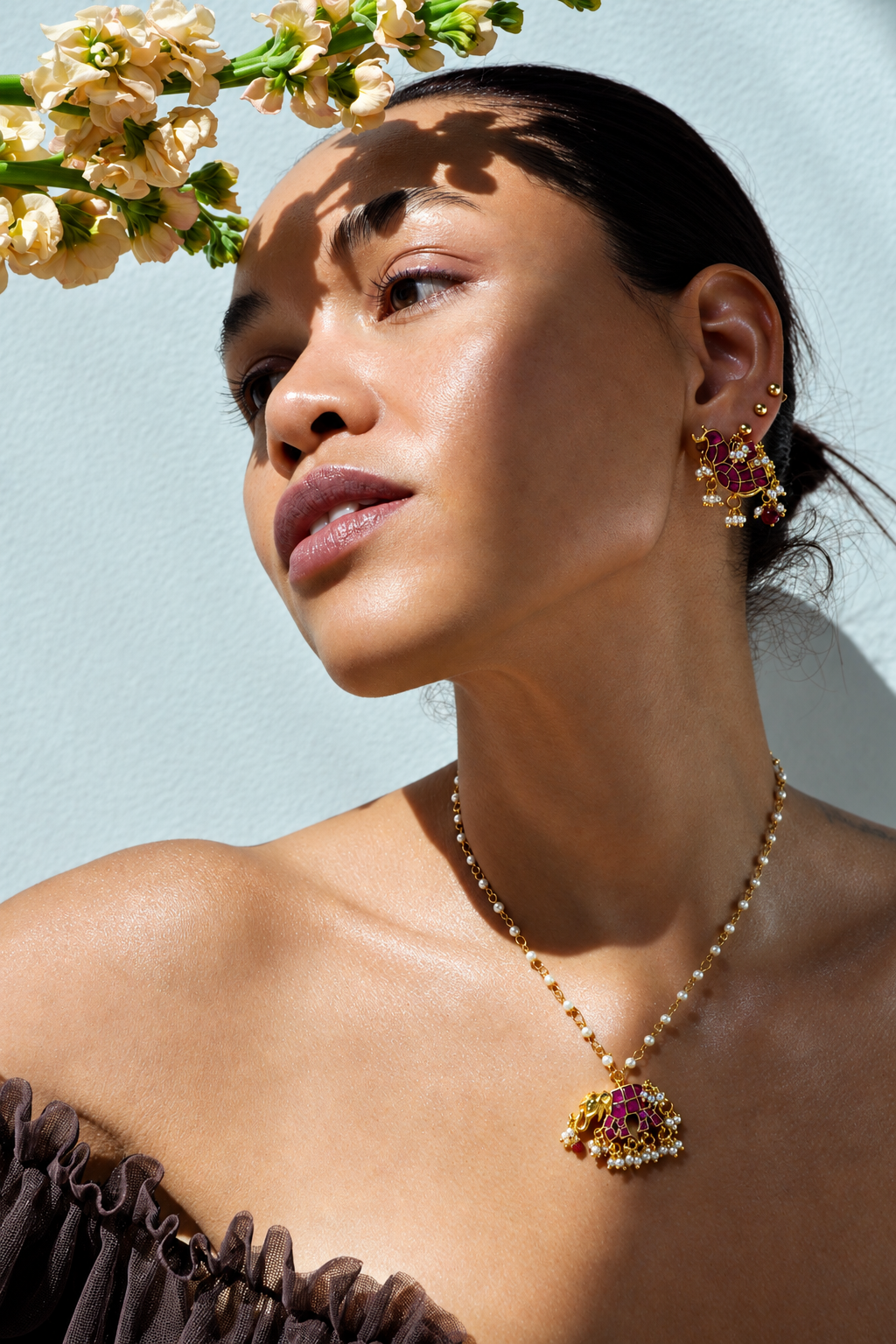
Craftsmanship before trends — the intelligence behind the making
The single most important piece of education available to any serious jewellery consumer is the understanding that craftsmanship is not a quality claim. It is a set of specific technical practices, each of which produces specific outcomes, each of which can be evaluated objectively rather than accepted on trust. Understanding what Polki work requires, what Kundan setting involves, what Meenakari demands of the artisan who executes it — this is the vocabulary that allows a person to distinguish between a piece that will hold its material integrity and aesthetic presence across decades and one that will not.
What is Polki jewellery?
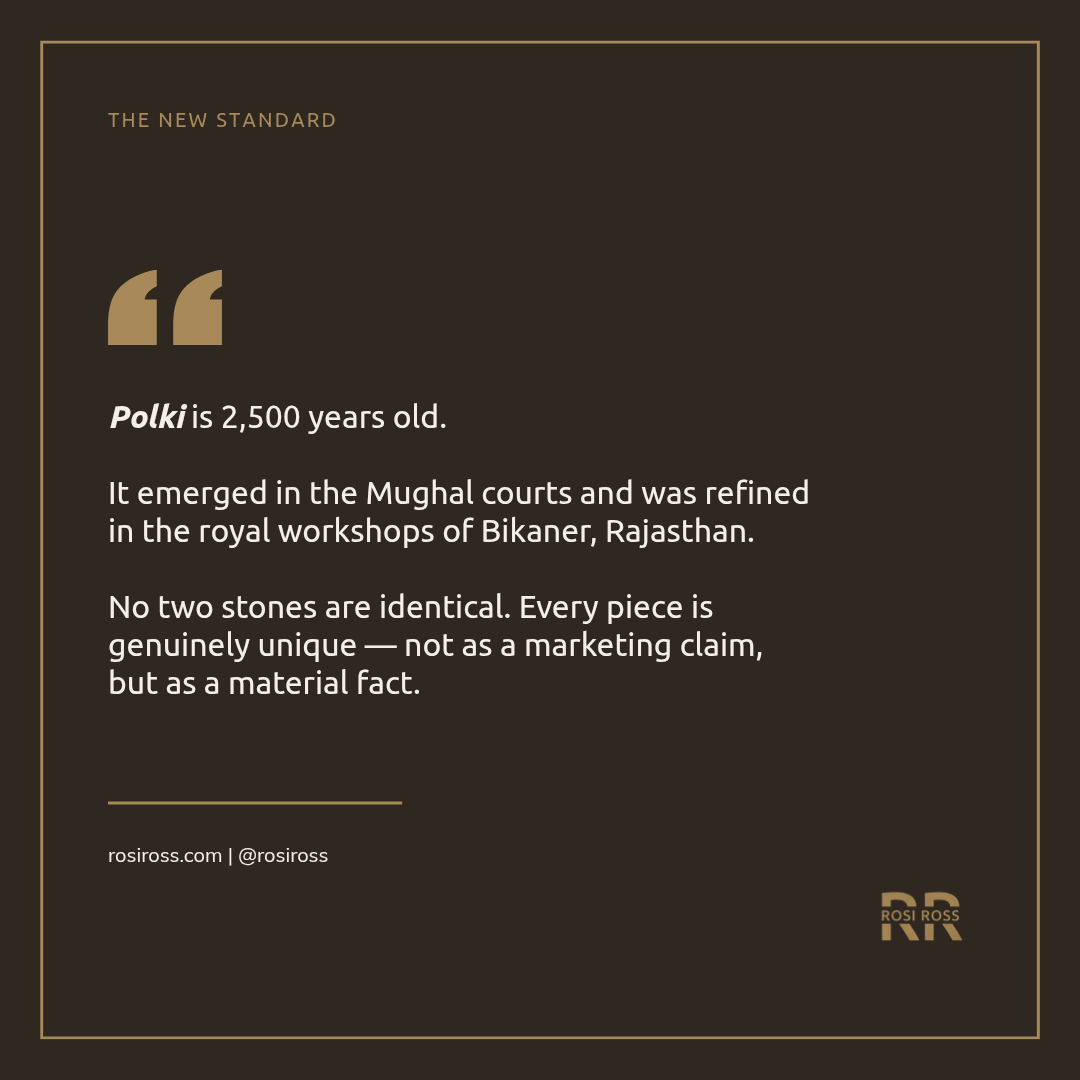
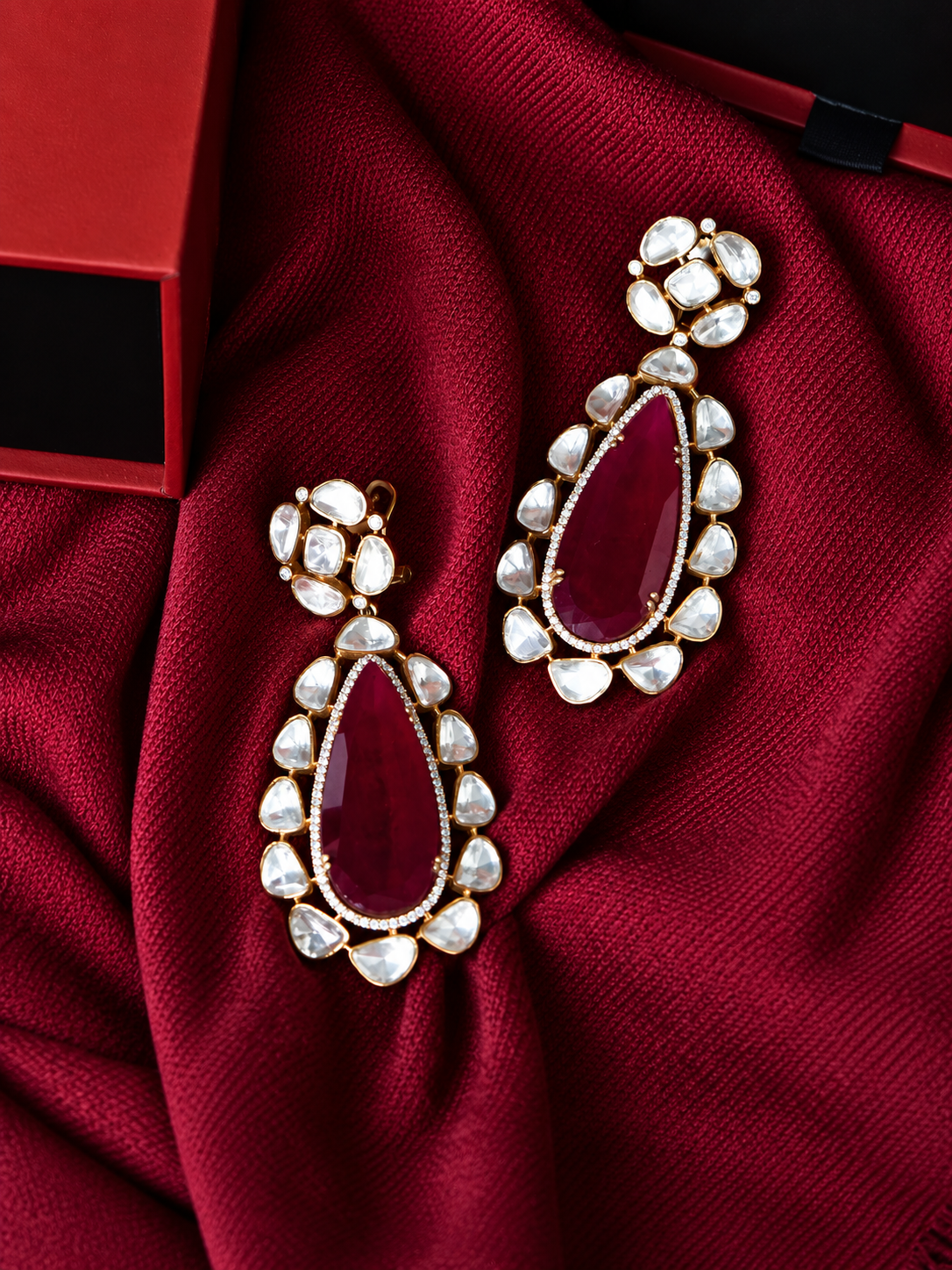
Polki is an uncut, unpolished diamond retained in its near-earth-mined form — not faceted into the geometric precision of a modern brilliant-cut diamond, but sliced to a slightly convex shape with one flat side, preserving the natural surface texture and the organic variability of the stone as it came from the ground. The word derives from Hindi and refers specifically to this uncut form. The technique dates back approximately 2,500 years, introduced to the Indian subcontinent during the Mughal era and subsequently adopted and refined by Rajput royal courts across Rajasthan, with Bikaner emerging as the historical epicentre of Polki craftsmanship.
The artistic argument for Polki is specific and not replicable by any machine process. Because the stone is uncut, its surface catches light organically rather than through the mathematical precision of a faceted gem — producing what jewellers describe as a natural, warm brilliance, softer than the flash of a polished diamond but more complex and more variable. No two Polki stones are identical. Each piece made with Polki is therefore genuinely unique — not as a marketing claim but as a material fact, determined by the specific characteristics of each stone in its natural state. Authentic Polki pieces carry both investment value — reflecting the value of genuine uncut diamonds — and heirloom potential; many families pass them across generations precisely because their material quality does not diminish and their cultural significance only deepens with time.
Polki refers to uncut, unpolished natural diamonds used in their near-earth-mined form. Unlike modern brilliant-cut diamonds, which are faceted to maximise refraction through mathematical precision, Polki stones are sliced flat with a slightly convex reverse side, preserving the natural organic surface of the stone. This produces a warm, diffuse brilliance rather than the sharp flash of a faceted diamond. The technique dates to the Mughal era and was refined in the royal courts of Rajasthan, with Bikaner remaining the historical centre of the craft. Because each uncut stone is unique, no two Polki pieces are identical. Authentic Polki carries genuine diamond value and is considered heirloom-grade. In contemporary jewellery, Polki settings are combined with Kundan gold foil work (a technique known as Jadau) and often feature Meenakari enamel decoration on the reverse.
What is Kundan jewellery?
Kundan refers both to a material — highly refined 24-karat gold, the word meaning “pure gold” in Hindi — and to the setting technique that uses this gold in its most refined form. In Kundan work, the artisan creates a jewellery framework from lac, a natural resin that gives the piece its characteristic weight and rigidity, and sets stones — traditionally glass, rock crystal, onyx, coral, turquoise, or semi-precious gems — into this base using wafer-thin sheets of refined gold foil rather than prongs, bezels, or adhesive. The gold is burnished around each stone to hold it through purely mechanical tension, with the gold foil conforming to the exact contours of each individual stone.
The Mughal courts of the 16th and 17th centuries were the primary patrons of Kundan work, commissioning elaborate necklaces, earrings, armlets, and maang tikkas that served simultaneously as adornment and as demonstrations of the political power available to a court that could command this level of artisanal skill. The tradition of decorating the reverse of Kundan pieces with Meenakari enamel — creating pieces that are as elaborately beautiful on the side no one sees as on the face everyone does — is itself a Persian import, brought to Jaipur by craftsmen who arrived in the Mughal court and were subsequently invited to the royal workshops of Rajasthan.
Kundan is a gold setting technique in which highly refined 24-karat gold foil (Kundan) is used to set stones — traditionally glass, rock crystal, or semi-precious gems — into a lac resin base, with the gold burnished around each stone without prongs or adhesive. Polki is a stone type: uncut natural diamonds in their raw, unpolished form. The two frequently appear together — Polki diamonds set using the Kundan gold-foil technique — in pieces known as Kundan-Polki. The key distinction: Kundan describes the gold setting method and can be applied to any stone; Polki describes the specific stone. The setting technique for Polki stones is technically known as Jadau. Kundan jewellery without Polki typically uses glass or semi-precious stones and is more accessible in price. Polki pieces carrying genuine uncut diamonds are heirloom-grade investments.
What is Meenakari?
Meenakari is the art of fusing coloured enamel onto metal surfaces — a technique of Persian origin, brought to Rajasthan by Mughal artisans during the 16th century and subsequently developed by the craftsmen of Jaipur into one of the most sophisticated decorative traditions in the history of Indian metalwork. The word derives from the Persian mina, meaning “heaven” or “sky” — a reference to the brilliant blue that was the original dominant colour of the enamel tradition before the Rajasthani workshops expanded it into the full chromatic range that defines contemporary Meenakari work: deep red, emerald green, peacock blue, ivory white.
The technical process of Meenakari requires multiple firings of the metal at precisely controlled temperatures, with different enamel colours applied sequentially, each requiring its own firing because different mineral compounds fuse at different temperatures and cannot be applied simultaneously without compromising the colour integrity of the others. The result, on a finished piece of Meenakari work, is a surface whose depth and luminosity cannot be replicated by any printing or coating process — the enamel is fused into the metal surface rather than applied to it, and its quality only becomes visible through proximity and against the light.
Meenakari is the traditional Indian art of fusing coloured enamel onto metal surfaces. The technique originated in Persia (the word derives from the Persian mina, meaning “sky”) and was brought to Rajasthan by Mughal artisans in the 16th century, where it was refined by the craftsmen of Jaipur into one of the most sophisticated decorative metalwork traditions in the world. The process requires multiple kiln firings at precisely controlled temperatures, with enamel colours applied sequentially because different mineral compounds fuse at different temperatures. The result is a fused surface whose colour depth and luminosity cannot be achieved by any coating or printing technique. Meenakari is most commonly seen on the reverse of Kundan jewellery pieces — the hidden interior surface decorated with the same care as the visible face — which is itself the most telling demonstration of the craftsmanship tradition’s commitment to completeness.


What is Jadau jewellery?
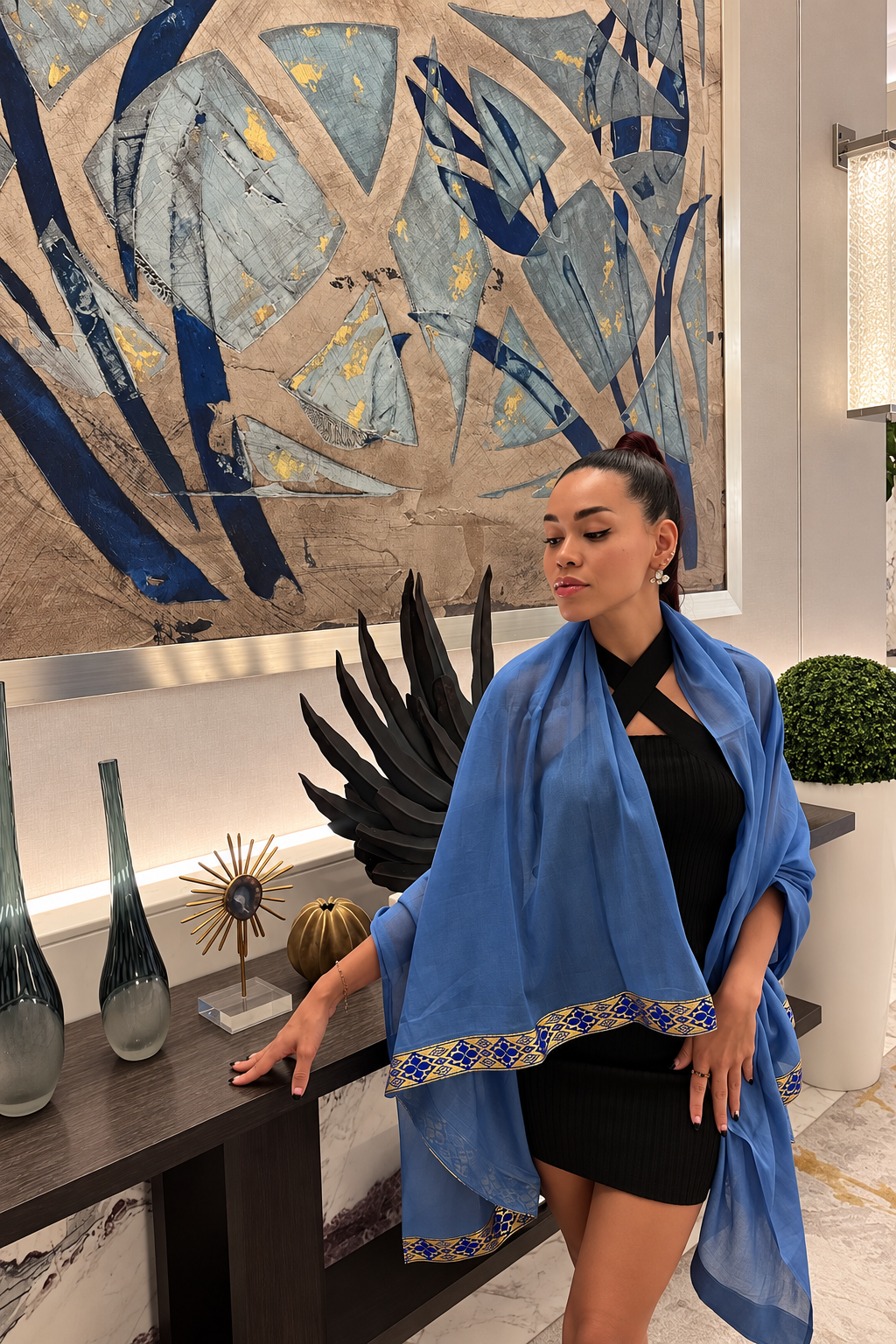
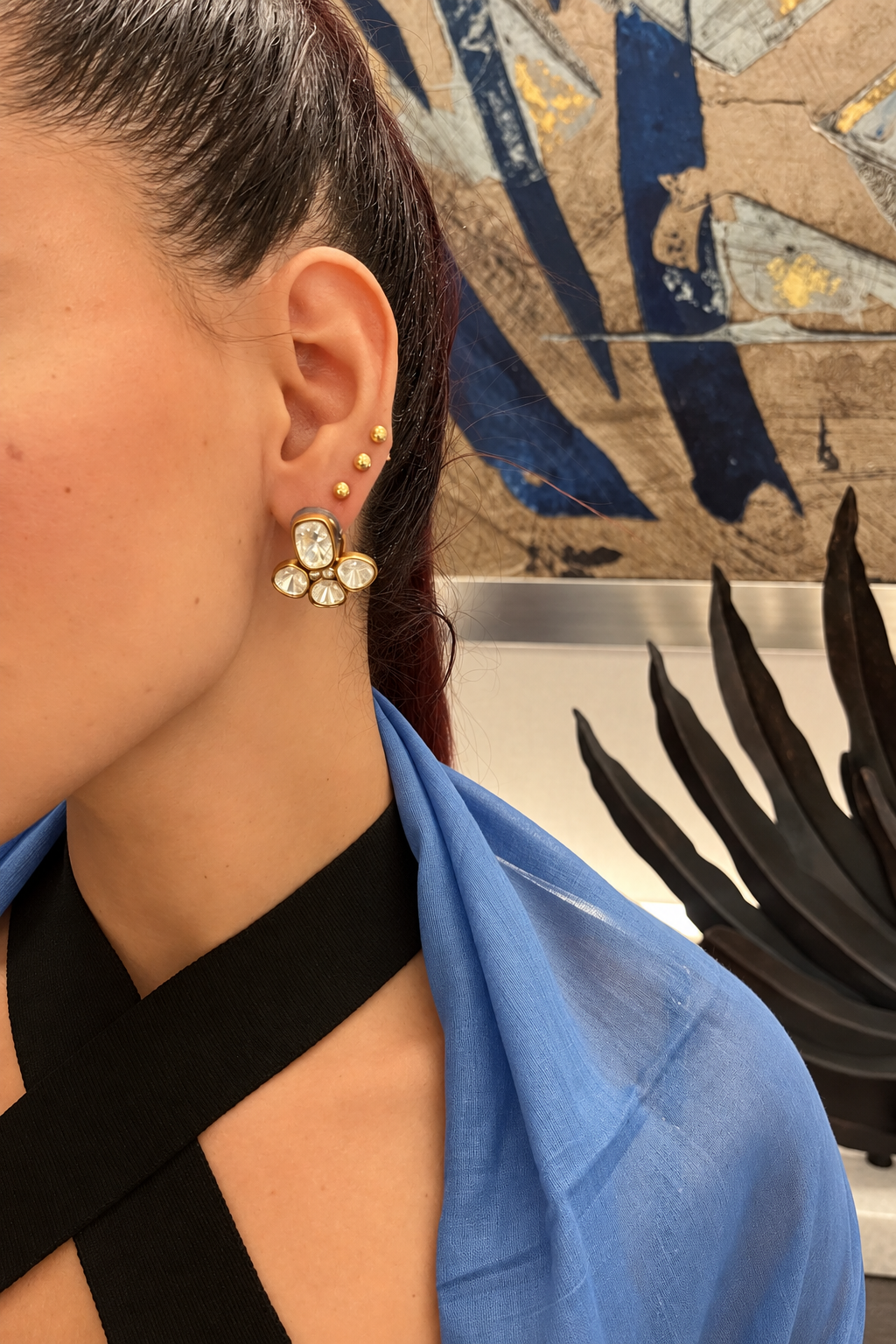
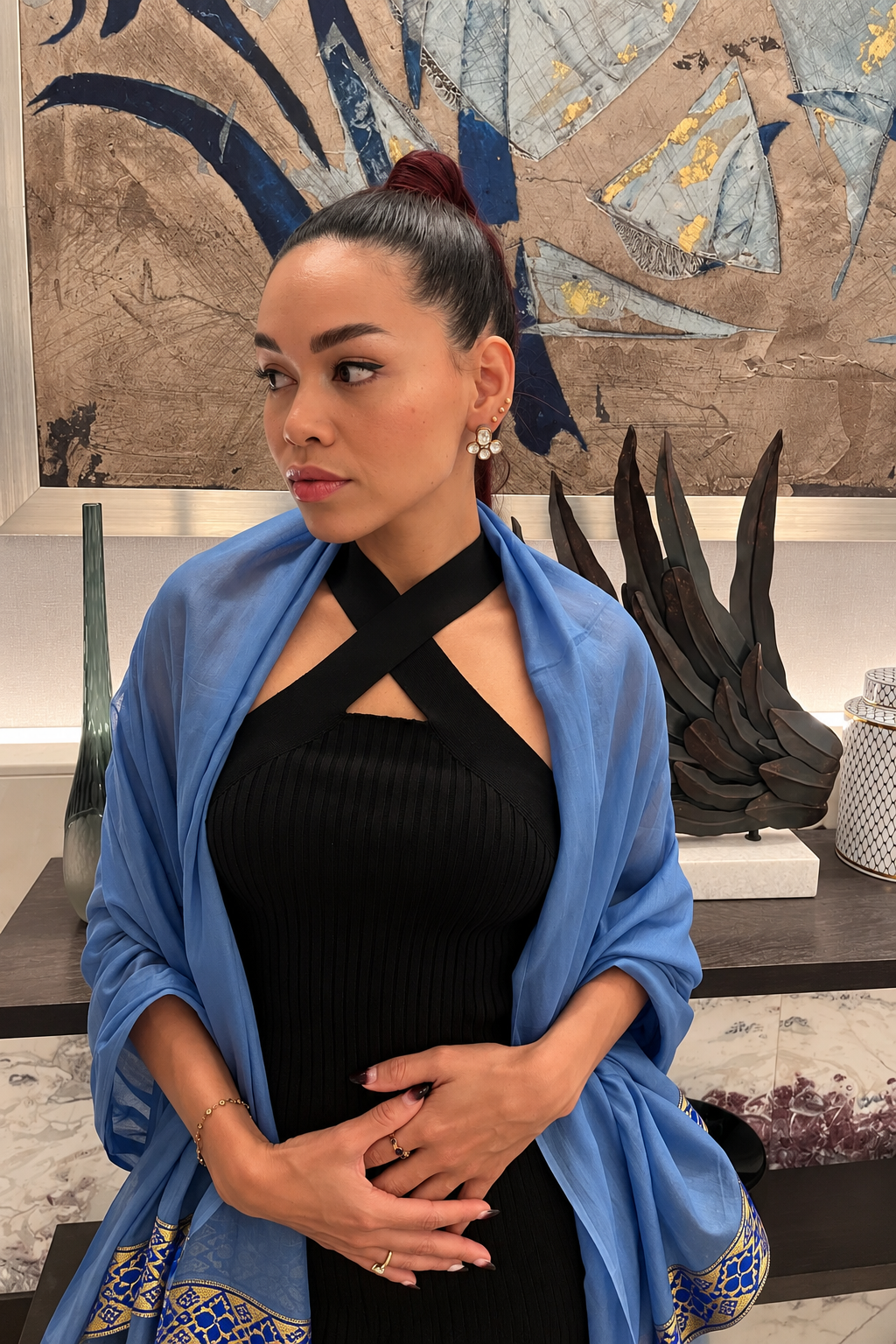
Jadau is the technique rather than the material — the specific method by which stones are embedded into a gold framework without the use of prongs, bezels, or adhesive. In Jadau work, the artisan creates a framework of gold, heats it, presses the stones directly into the softened metal, and then works the gold around each stone as it cools, using only the mechanical properties of the metal itself to hold the stone in place permanently. The name derives from the Hindi jadna, to embed — and the verb is the most accurate description of the technique: the stone is not placed on the gold, it is pressed into it.
Jadau is the setting technique most associated with Polki stones and Kundan gold work, and the combination of all three — Polki diamonds embedded using the Jadau technique within a Kundan gold foil framework, decorated on the reverse with Meenakari enamel — represents the fullest expression of the Mughal and Rajput jewellery tradition. A single piece of genuine Jadau work may take days or months to complete, depending on its complexity, because each stone is embedded individually by hand and the gold framework must be constructed around it with a precision that cannot be accelerated without compromising the integrity of the setting.
Occasion dressing has changed — the new jewellery wardrobe
The most significant practical change in how contemporary women relate to heritage jewellery is the collapse of the categorical distinction between occasion and everyday. For most of the twentieth century, fine jewellery — and particularly the heritage pieces of the Indian tradition — was stored between uses. It came out for weddings, festivals, formal celebrations, and significant rituals. Its storage was a form of preservation: the acknowledgement that these objects were too valuable and too precious for the ordinary day.
Contemporary jewellery intelligence has largely overturned this framework — not because the objects have become less precious, but because the understanding of their value has shifted. A piece that spends most of its life in a box is not fulfilling its function. The emotional and aesthetic value of a fine jewellery piece is realised through wearing, not through preservation. The modern heirloom is not a museum object. It is a daily companion that accumulates the specific patina of a life actually lived in it.
This has practical implications for how heritage jewellery is now being designed and selected. The most considered contemporary pieces — including Tiramisu’s collections — are built around the principle of transitional wearability: the same piece should be able to accompany a linen shirt at a morning meeting, a silk dress at a wedding reception, and a cashmere sweater at a winter dinner without requiring any accommodation from the wearer. This is not a new requirement for jewellery; it is, in fact, the original design principle of pieces made for women who wore them continuously rather than storing them between performances. The innovation is the rediscovery of that principle within a contemporary context where the average wardrobe moves between five or six different registers of dress in a single week. The same principle that defines the most considered wardrobe investments in every category — that the piece which performs well across the widest range of contexts is the one worth owning — applies here at the level of jewellery selection.
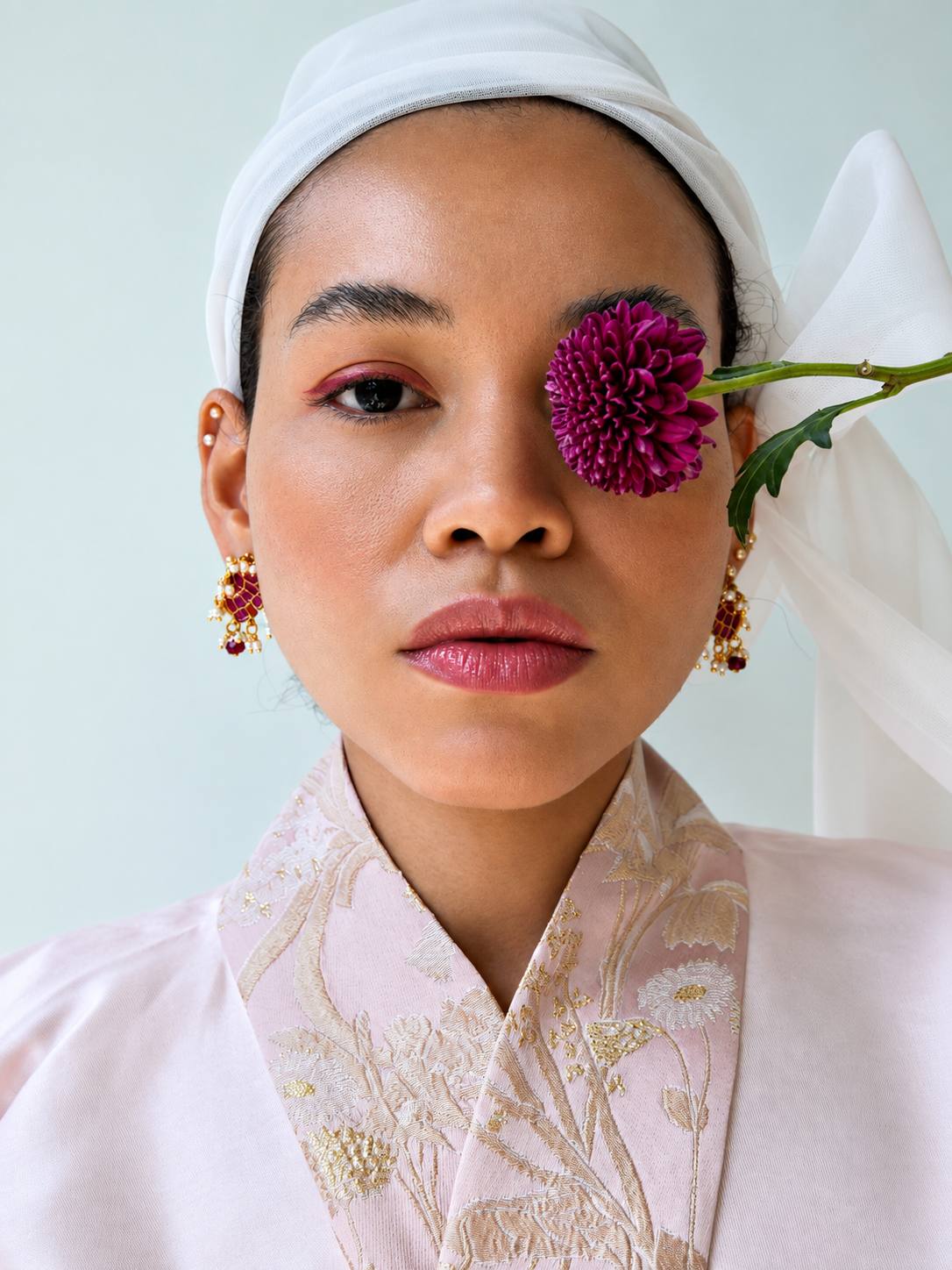
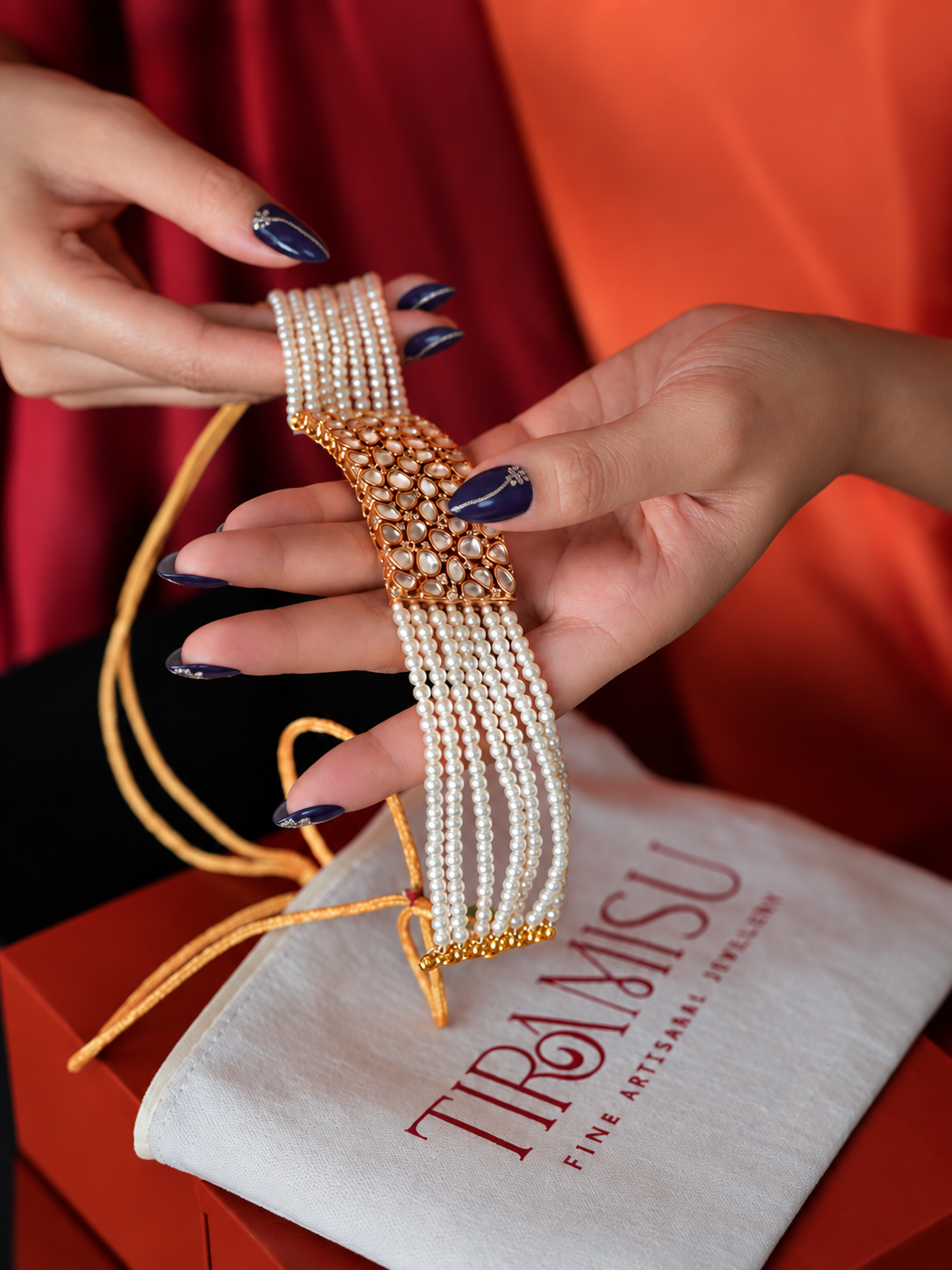
The transition from occasion jewellery to lifestyle jewellery does not require simplification. The most striking contemporary development in Indian heritage jewellery is that pieces of genuine complexity — Kundan necklaces, Polki earrings, Meenakari bangles — are being worn in contexts that previous generations would have reserved for a fine gold chain. The reason this works is the specific visual quality of handcrafted heritage jewellery: because the brilliance of Polki and the luminosity of Kundan enamel are diffuse rather than sharp, they do not compete with minimal contemporary styling the way a chandelier of modern-cut diamonds might. They complement it. The organic quality of uncut stones, the warm gold of refined Kundan work, the depth of fused enamel — these are not maximalist properties. They are complex ones. And complexity reads differently in a contemporary wardrobe than spectacle does.


Contemporary Indian luxury — heritage meets global design
The international standing of Indian jewellery craftsmanship has shifted over the past decade from cultural curiosity to genuine luxury authority — a shift visible in the work of designers like Sabyasachi Mukherjee, whose use of heritage jewellery alongside contemporary fashion has made it visible on international stages with a consistency that no previous generation of Indian designers achieved at comparable scale. When Priyanka Chopra pairs Polki pieces with global fashion on international red carpets, the effect is not cultural juxtaposition — it is the demonstration that Indian craftsmanship belongs as naturally within the vocabulary of international luxury as French haute joaillerie or Swiss horology.
This is the moment that brands like Tiramisu occupy: the intersection between a deeply specific heritage tradition and an internationally mobile consumer who understands that craftsmanship is the most durable language luxury has, regardless of the cultural context from which it emerges. The Indian jewellery tradition spans 5,000 years and represents one of the most technically sophisticated and culturally rich bodies of handcrafted knowledge in the world. India’s gem and jewellery industry exports to more than 100 countries, with the UAE representing one of the most significant markets — a recognition not merely of the diaspora but of the fact that Dubai’s luxury consumers, across every cultural background, have developed the literacy to appreciate what these techniques represent at the level of genuine craftsmanship intelligence.
The contemporary interpretation of heritage jewellery is not a compromise or a dilution. The finest contemporary pieces retain the technical standards of their historical antecedents — the Jadau embedding, the Kundan gold foil setting, the Meenakari enamel work — while adapting their proportions, their silhouettes, and their stone selections to the specific requirements of a contemporary wardrobe. The choker rather than the full bridal set. The Polki stud rather than the chandelier earring. The Meenakari bangle worn alone rather than stacked with a full set of chura. These are not lesser expressions of the heritage tradition. They are more precise ones: pieces designed for a life that moves between contexts, cultures, and occasions at a speed and variety that the royal courts of Rajasthan never required.
Tiramisu’s position within this movement is that of a brand that understands the intelligence of both its source tradition and its contemporary audience — that knows what makes Polki work technically irreplaceable and what makes a Polki piece practically wearable for a woman whose week moves between a boardroom in Dubai, a wedding in Jaipur, and a dinner in London. The gap between those two understandings is where the most interesting contemporary Indian jewellery is being created. The same logic that makes the most considered daily-use products worth owning applies to jewellery: the piece that performs well across the full range of contexts, rather than the one that performs perfectly in one, is the one that earns its place in the wardrobe permanently.
Building a jewellery wardrobe — the curatorial approach
A jewellery wardrobe should be built the way a fashion wardrobe is built: not by accumulation but by curation. The distinction matters because accumulation is driven by acquisition — by the pleasure of a new object, by a response to a moment or a trend — while curation is driven by an understanding of what is already present and what would genuinely extend its range. The most considered jewellery wardrobes are not necessarily the largest. They are the ones where every piece earns its position within the whole.
Foundation pieces — everyday identity
Foundation pieces are the jewellery that a woman reaches for without deliberating — the pieces that have become, over time, an expression of identity so consistent that their absence is more noticeable than their presence. For most women, these are relatively simple in their construction: a fine chain, a pair of studs, a slim bangle. The intelligence in selecting foundation pieces is not in choosing the simplest available option but in choosing the option whose material quality — the weight of the gold, the cut of the stone, the precision of the finish — will hold its integrity across years of daily wear. A foundation piece should improve with age rather than degrade. It should develop the specific patina of an object that has been genuinely used, not the dullness of one that has been poorly made.
Statement pieces — the defining object
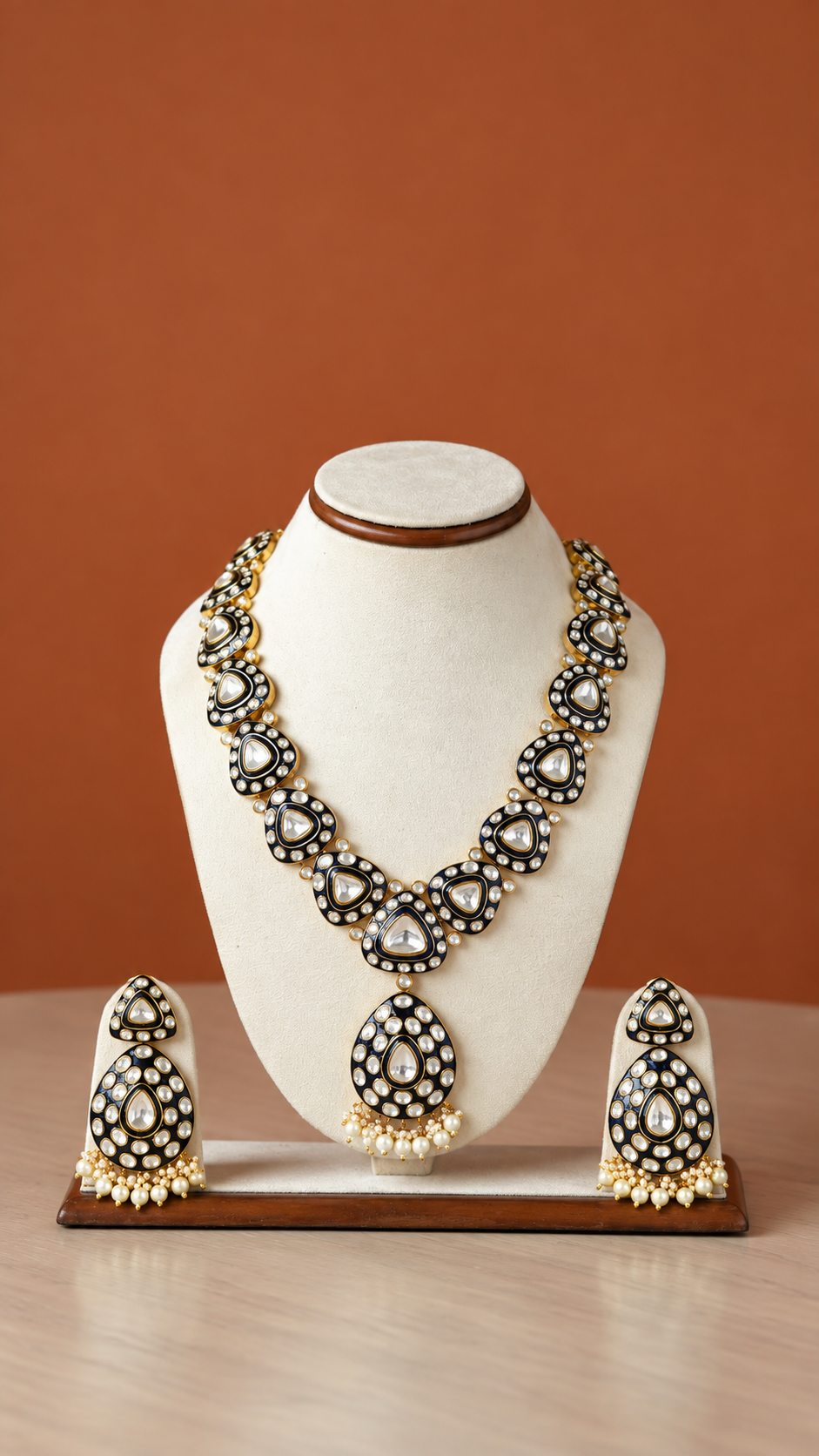
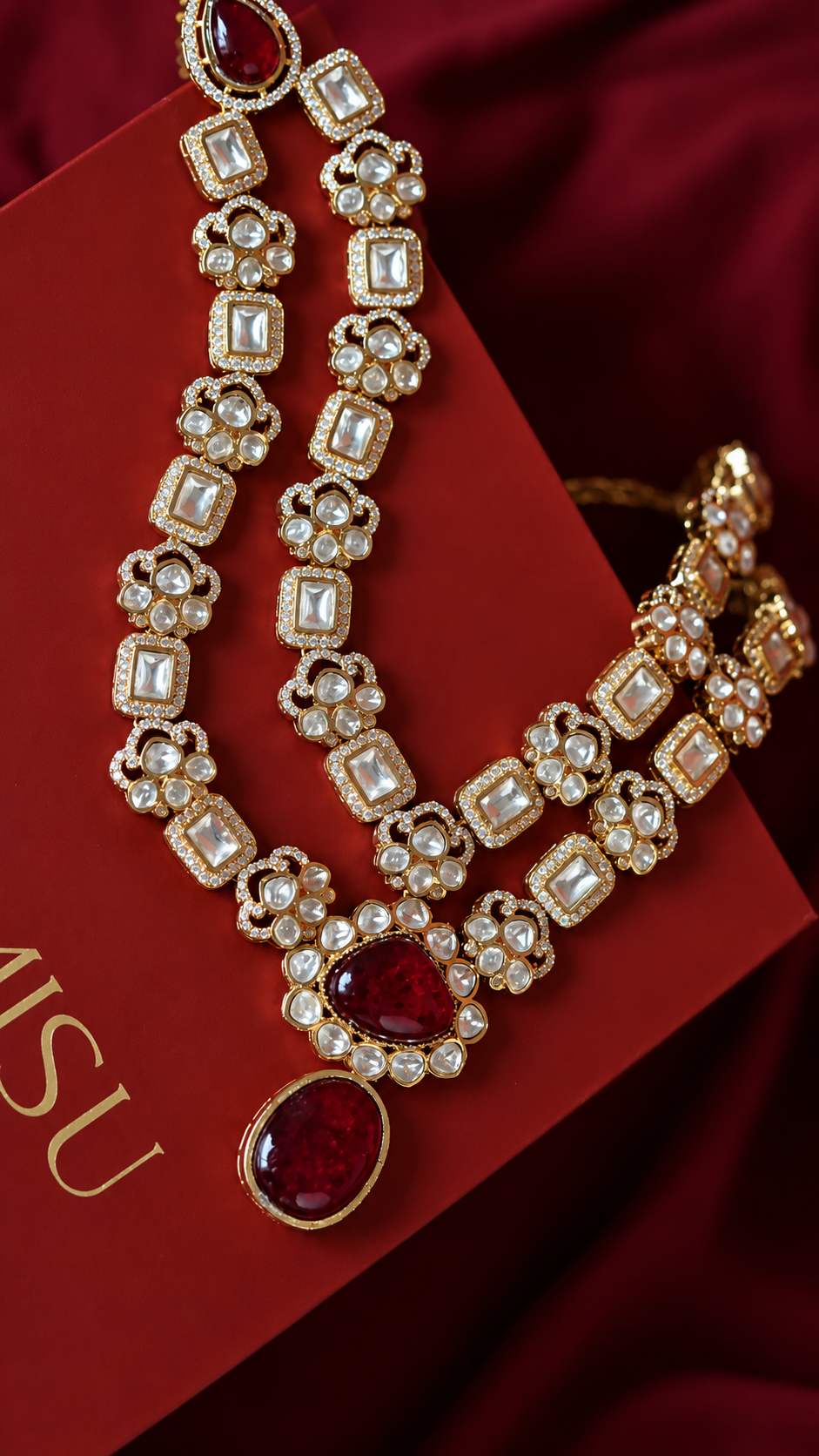
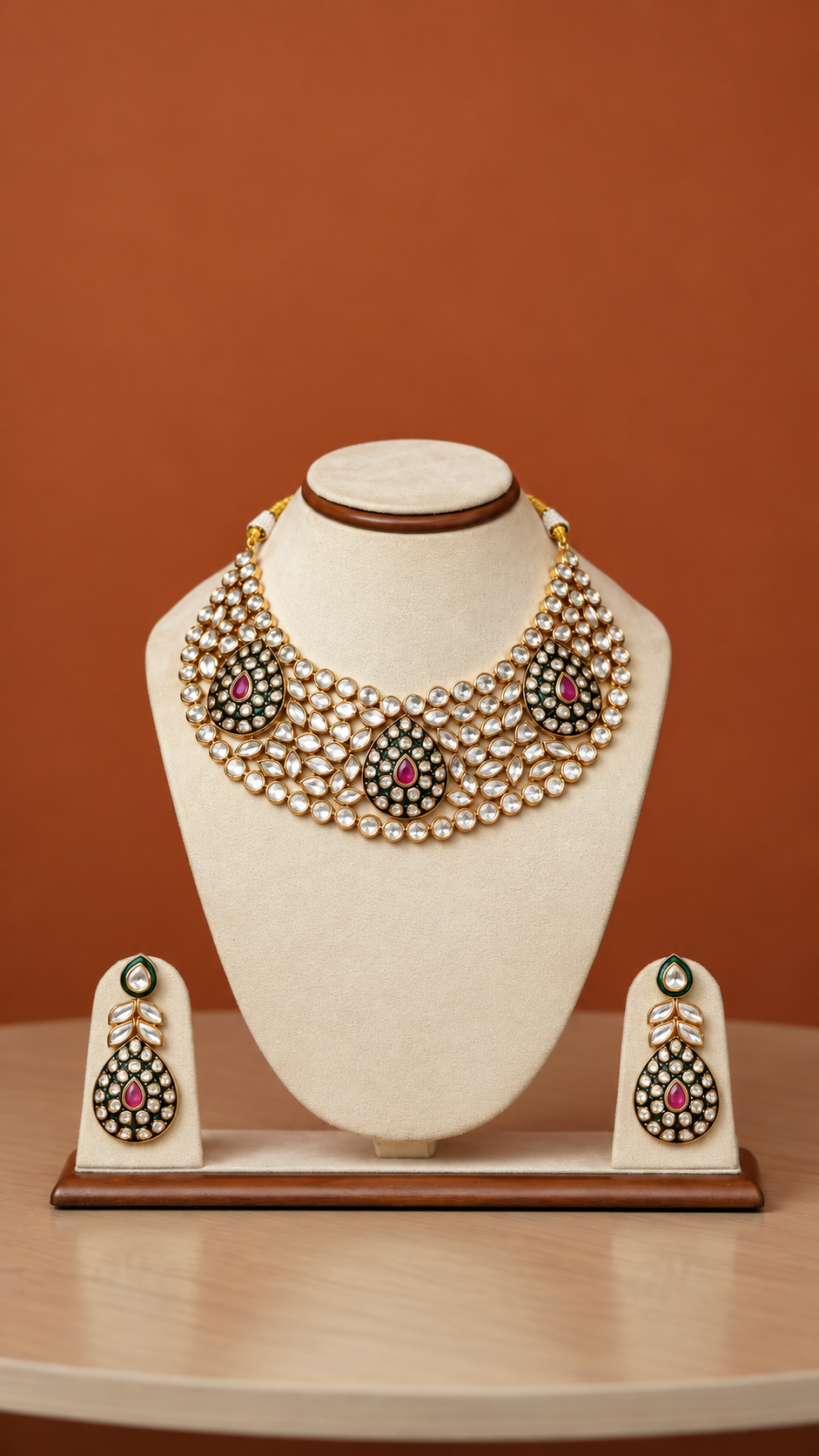
Statement pieces are not defined by their scale or their cost but by their function within an outfit: the single object that does not support the look but anchors it. A Kundan-Polki necklace worn with a simple silk blouse is a statement piece — not because the piece is large but because the outfit has been built around its presence. The key discipline in selecting statement pieces is understanding that a genuine statement piece requires less from its surrounding wardrobe, not more. It does not need to be supported by other jewellery. It needs space. The most common mistake in building a jewellery wardrobe is wearing too many statement pieces simultaneously — which cancels each one’s individual authority and produces a combined visual effect that is less powerful than any single piece worn alone.


Heirloom pieces — memory and legacy
Heirloom pieces are chosen for the specific quality that distinguishes them from every other category: the potential to carry memory, to accumulate meaning, and to move through time in ways that the wearer may not live to witness. An heirloom piece is not necessarily a family inheritance — it can be a piece that a woman selects with the full understanding that its value will compound across the life of whoever wears it after her. The selection criteria for heirloom pieces are specific: material integrity that will not degrade; craftsmanship quality that will not date; design intelligence that belongs to an aesthetic language older than any trend cycle, which means it will not become illegible to a future generation that encounters it in a different cultural moment.
The traditional Indian jewellery techniques — Polki, Kundan, Meenakari, Jadau — are uniquely suited to the heirloom category because they were specifically designed to produce objects of this quality. The Mughal craftsmen who developed these techniques were not making seasonal collections. They were making pieces for courts whose aesthetic and material standards persisted across generations. The longevity they built into their work was not accidental. It was the design brief. A genuine Jadau-set Polki piece, properly maintained, will not look different in fifty years from how it looks today. It will look exactly the same — which is the most precise available definition of a well-made object.
Investment pieces — craft, longevity, and emotional value
The investment piece occupies a specific position in the curated jewellery wardrobe: it is chosen at the intersection of material value, craftsmanship quality, and personal meaning, with the understanding that its value will not diminish with time and may increase. The financial investment argument for Polki jewellery is documented — authentic pieces carry genuine diamond value and hold strong resale and buyback potential. But the deeper investment argument is not financial. It is the recognition that the most valuable things a person can own are those that reward the quality of attention they receive — that become richer, not poorer, with understanding.
A Polki piece understood in terms of the craftsmanship tradition that produced it — the specific technique, the historical context, the artisan knowledge that makes each stone unique — is worth more, to the person who wears it, than a Polki piece selected only for its visual appeal. The investment is in understanding as much as in acquisition. The most significant things acquired through considered travel and the most significant things acquired through considered jewellery selection share the same underlying logic: value that compounds through intention rather than through price alone.
The craftsmanship glossary — intelligence for the considered buyer
The vocabulary of Indian jewellery craftsmanship is specific, historical, and in some cases, used inconsistently even within the trade. The following definitions represent the clearest available explanations of the terms most relevant to any serious engagement with contemporary heritage jewellery.
Semi-precious stones in Indian jewellery include emerald, ruby, sapphire, turquoise, coral, onyx, and rock crystal — stones whose cultural and aesthetic significance within the tradition is independent of their commercial classification as “semi-precious” relative to diamonds and precious gems. Many pieces of genuinely fine Indian jewellery are designed around semi-precious stones rather than diamonds because the colour, cut, and cultural resonance of the stone — the green of an emerald symbolising growth, the red of a ruby carrying the fire of passion, the blue of a sapphire holding the depth of the sky — is the artistic point of the piece rather than the material value of the stone per se.
Gold plating and gold vermeil in contemporary heritage-inspired jewellery allows the aesthetic tradition to be made accessible at price points that genuine Kundan gold work cannot reach. The intelligent consumer understands the distinction: gold plating applies a thin layer of gold to a base metal, while gold vermeil applies a thicker layer (typically at least 2.5 microns) to sterling silver. The durability and quality of the finish varies significantly by manufacturing standard. Well-executed gold plating on high-quality base metal, properly maintained, can hold its finish across years of careful wear. Poorly executed plating will degrade within months of regular contact with skin, moisture, and perfume.
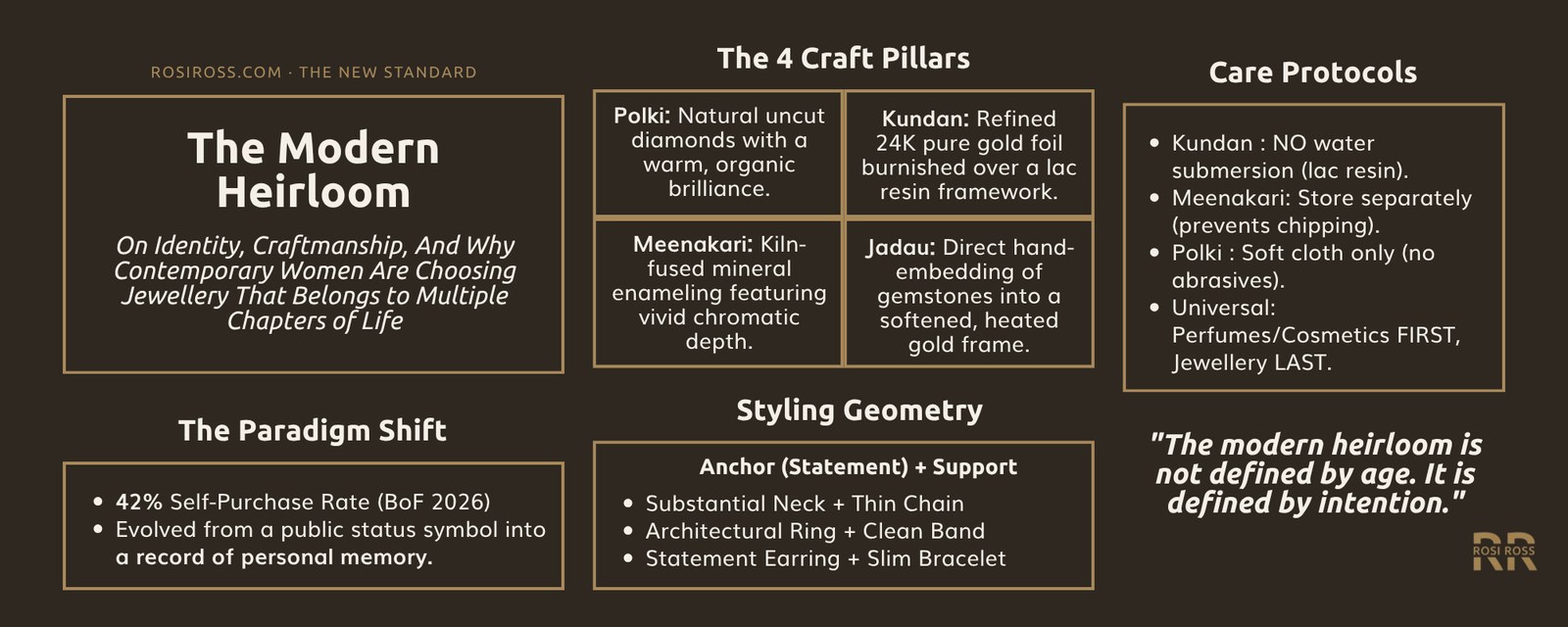
Layering in jewellery styling follows the same logic as layering in fashion: it requires a clear understanding of the hierarchy within the look. The dominant piece — the piece that carries the most visual weight — should be identified first, and everything layered with it should support rather than compete with it. In practice, this means combining pieces from different visual weight categories: a substantial necklace with delicate chains, a significant ring with a simple band, a statement earring with a minimal bracelet. The most common layering error is combining two pieces of equal visual weight, which cancels both.
Jewellery care for heritage pieces follows specific requirements that differ from the care of modern jewellery. Lac-based Kundan settings should not be submerged in water or exposed to harsh chemicals, as the lac can soften or deteriorate. Meenakari enamel surfaces are resistant to scratching but can chip under impact; these pieces should be stored individually rather than together. Polki stones, because they are uncut and unpolished, do not require the same care as faceted diamonds but should be cleaned gently with a soft cloth rather than abrasive materials that might disturb the surface of the gold setting around them. Perfume and cosmetics should always be applied before jewellery is put on — the alcohol in fragrances and the chemicals in beauty products are the most common causes of deterioration in both metal finishes and enamel surfaces.
The most considered approach to jewellery care is the one that mirrors the most considered approach to jewellery selection: understanding what a piece is made of, how it was made, and what it therefore requires from the person who has chosen to own it. This is not maintenance. It is the continuation of the relationship between the wearer and the object — the ongoing attention that allows a piece to remain what it was designed to be across the full span of time it is capable of lasting.
“The modern heirloom is not defined by age.
It is defined by intention.
A piece chosen with the understanding
that its value will compound across a lifetime —
that it belongs to multiple chapters,
not a single occasion —
is already an heirloom,
regardless of when it was made.
The craftsmanship that produces it
is 2,500 years old.
The woman who wears it
is writing a story
that will outlast the trend
that was current
the day she chose it.”

