
On informal capital, relational infrastructure, and why proximity remains the most durable competitive advantage in a digital-first economy
In Web3, money is no longer only financial. It is access, timing, network, and positioning — and the spaces where these forms of capital converge are where the real economy moves.
There is a version of money that shows up in wallets and wire transfers. And then there is the version that shows up in rooms — in introductions made at the right moment, in information shared before it becomes public, in the quiet alignment between a founder and an investor who have spent enough time in the same ecosystem to trust each other’s instincts. In Web3 and decentralised finance, both versions matter. But only one of them is talked about openly.
Money Monday Dubai exists at the intersection of both. It is not a conference. It is not a pitch event. It is something harder to categorise and, because of that, harder to replicate — a recurring convergence point where the financial and the relational, the strategic and the informal, meet without an agenda separating them. What emerges from that meeting is not always visible in deal announcements or funding rounds. It moves through the crypto ecosystem in subtler ways: in the quality of the decisions people make, the speed at which ideas find the right hands, and the confidence that comes from knowing exactly where you stand in a room.
Dubai did not become a crypto and Web3 hub by accident. The conditions that make it function as one were built deliberately — through regulatory frameworks like VARA that provide clarity without restricting movement, through institutions like the Dubai Multi Commodities Centre that give blockchain businesses a stable foundation, and through a civic ambition to position the city at the leading edge of the global digital economy. The result is an environment where founders, investors, operators, and institutions exist within the same ecosystem rather than in separate orbits — and where informal gathering spaces like Money Monday Dubai are not peripheral to that ecosystem. They are the mechanism through which it functions.
Capital flows toward clarity. In environments where regulation, infrastructure, and community are aligned, money moves faster and compounds differently. Dubai has built that alignment deliberately. Money Monday is where it becomes observable.
To understand Money Monday Dubai is to understand something broader about how capital actually moves in a Web3 city — and why proximity, in a digital-first industry, remains one of the most durable forms of advantage available. That dynamic is visible across Dubai’s wider Web3 ecosystem, including inside the institutional layer documented in Inside Token2049 Dubai: The Infrastructure Era of Web3, where the same convergence of capital, founders, and blockchain infrastructure makes the case that what happens informally and what happens institutionally in this city are not separate tracks. They are the same system, running at different registers.
Dubai as a capital magnet — how the city built its Web3 infrastructure


A city becomes a capital magnet not when it attracts money, but when it creates the conditions for money to find the right home. Dubai has built those conditions with a precision that no other city in the region has replicated.
The Dubai Blockchain Strategy, introduced in 2016, was one of the first institutional signals of the city’s intention to integrate blockchain technology into its core infrastructure. Since then, the Virtual Assets Regulatory Authority — VARA — has established a legal framework that is both comprehensive and calibrated for the pace at which the crypto and Web3 industry actually moves. VARA’s licensing categories, compliance architecture, and cross-border participation rules provide the institutional certainty that allows businesses to commit resources, build teams, and deploy capital with the confidence that their regulatory foundation will hold.
The Dubai Multi Commodities Centre now houses over 600 Web3 companies. Over 1,000 crypto firms have established a presence in the city, drawn by regulatory clarity, investment access, and a business environment that treats digital assets as a legitimate and strategically important asset class rather than a tolerated novelty. Companies like Zodia Markets, backed by Standard Chartered, have expanded their Dubai operations to serve both institutional and retail crypto traders — a signal that the city’s appeal extends well beyond the startup community and into the established financial infrastructure that Web3 requires to reach its next stage of maturity.
What this creates, practically, is a compression of the distance between intent and execution. Ideas move faster. Capital is closer to the point of origination. Decisions that might take months in other jurisdictions happen in weeks — sometimes in a single conversation between people who have already built the relational foundation that makes rapid commitment possible. As Fortune’s reporting on Dubai’s regulatory architecture and hub strategy makes clear, the city’s advantage lies precisely in this combination — regulatory clarity that allows institutions to commit, and an environment where the informal relationships that precede formal commitments are already forming at scale.
Dubai’s financial institutions have also begun integrating blockchain and crypto services into their core offerings. Leading banks are experimenting with blockchain for cross-border payments, supply chain management, and digital asset custody — creating a symbiotic relationship between traditional finance and the emerging decentralised economy that no other city in the region has developed at comparable depth or speed.
Why original gathering spaces shape Web3 ecosystems


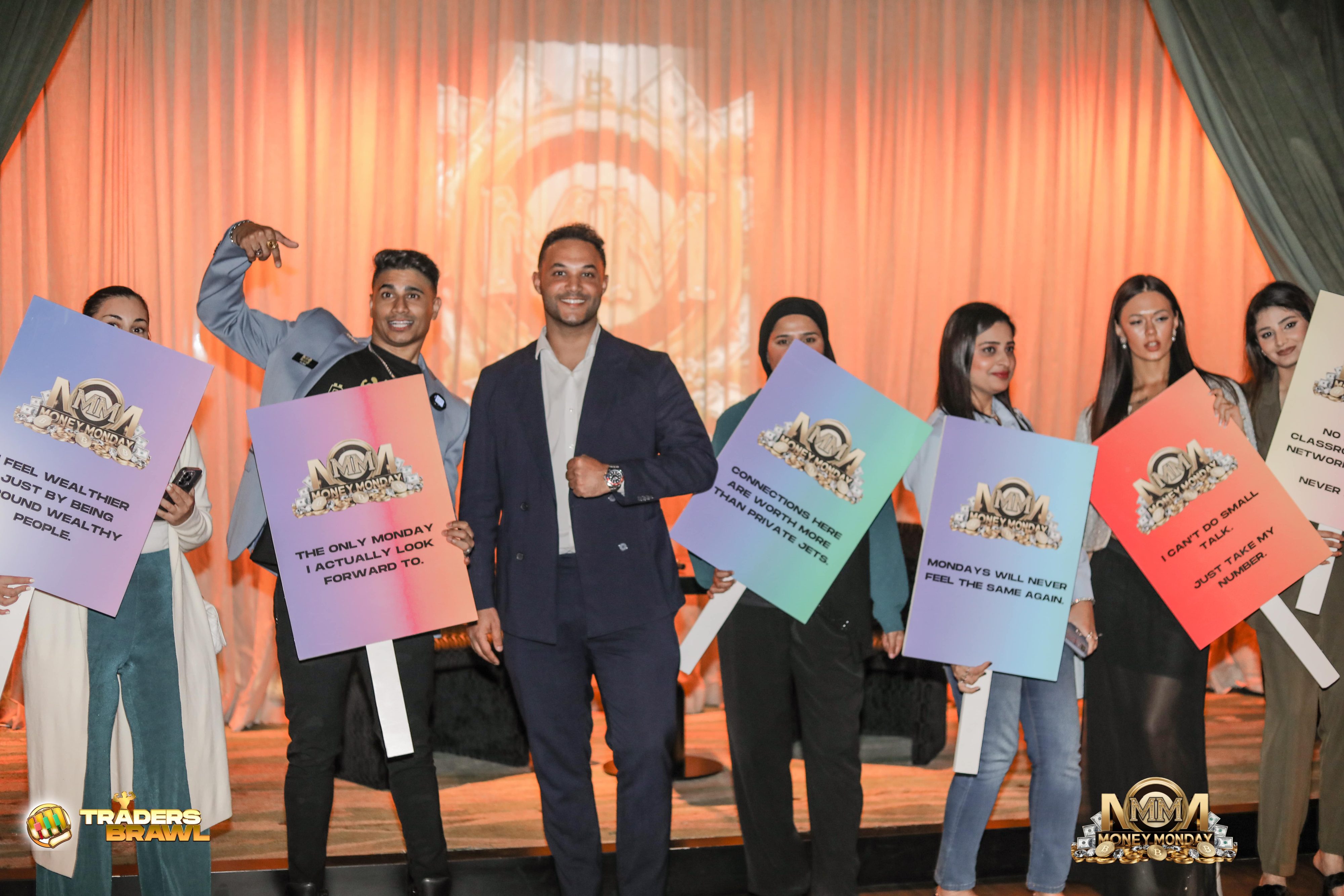
The most influential events in any ecosystem are rarely the largest ones. They are the earliest — the spaces that shape culture before institutions arrive to formalise it. Money Monday Dubai holds that position within Dubai’s crypto and Web3 community.
Every mature ecosystem has its origin gatherings — the rooms that existed before the industry had a name, where the people who would go on to define the space first found each other. These events are not significant because of their size or production value. They are significant because of their timing. They arrive at the moment when a community is still forming its norms, its language, and its sense of who belongs — and in doing so, they help determine all three.
Money Monday Dubai holds that position within Dubai’s crypto and blockchain ecosystem. It is an original gathering in the most precise sense — a space present through the formative years of the city’s Web3 development, hosting conversations before they became consensus, and introducing people who have gone on to build significant things together. Its value is not located in any single edition. It is located in the accumulated weight of every edition — in the trust networks it has helped create, the patterns of connection it has established, and the culture it has shaped through consistent, reliable, weekly presence across a community that has grown from a small group of believers into one of the most connected Web3 ecosystems in the world.
Trust in Web3 is not given easily. It is built through repetition — through showing up in the same spaces with the same people over time, through being present not just when something is being announced but in the quieter moments between announcements. Recurring events create the conditions for that kind of trust to develop. They provide the structure within which relationships can deepen at the pace relationships actually require — which is slower than any single event can accommodate, and faster than any purely digital interaction can produce.
Original gathering spaces matter because they create trust networks before capital scales. The relationships formed in early rooms often outlast the market cycles that follow them. That principle holds across every stage of ecosystem development.
That principle holds across every expression of Dubai’s Web3 calendar — from the informal weekly rhythm of Money Monday to the institutional depth documented in the Dubai AI and Web3 Festival, where the same community that built its trust in rooms like this one finds its formal infrastructure. Both expressions are necessary. Neither works without the other. The formal depends on the informal having come first — on the relationships, norms, and shared conviction that informal gatherings like Money Monday have been quietly building for years.
The anatomy of the room — how Money Monday Dubai actually works

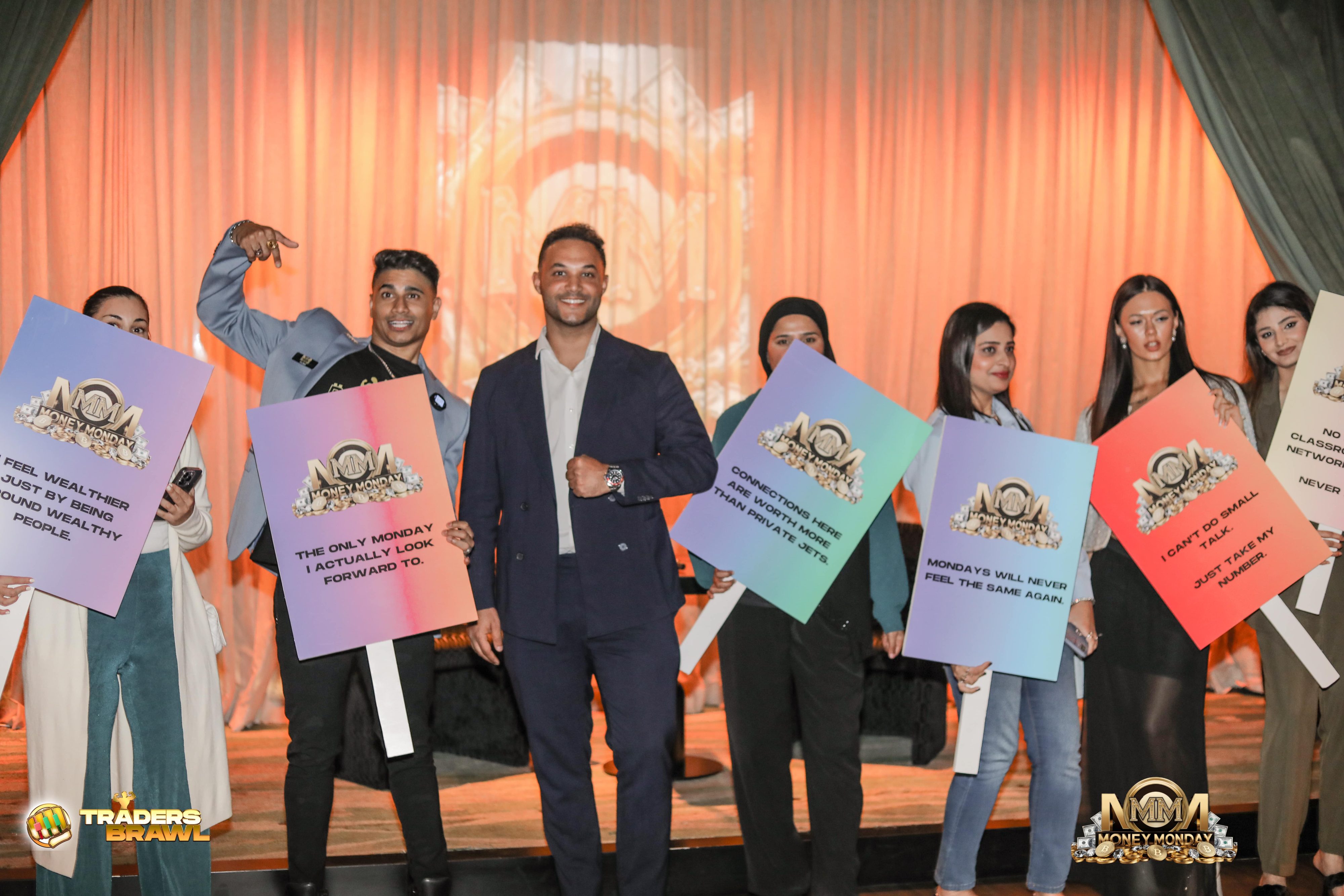
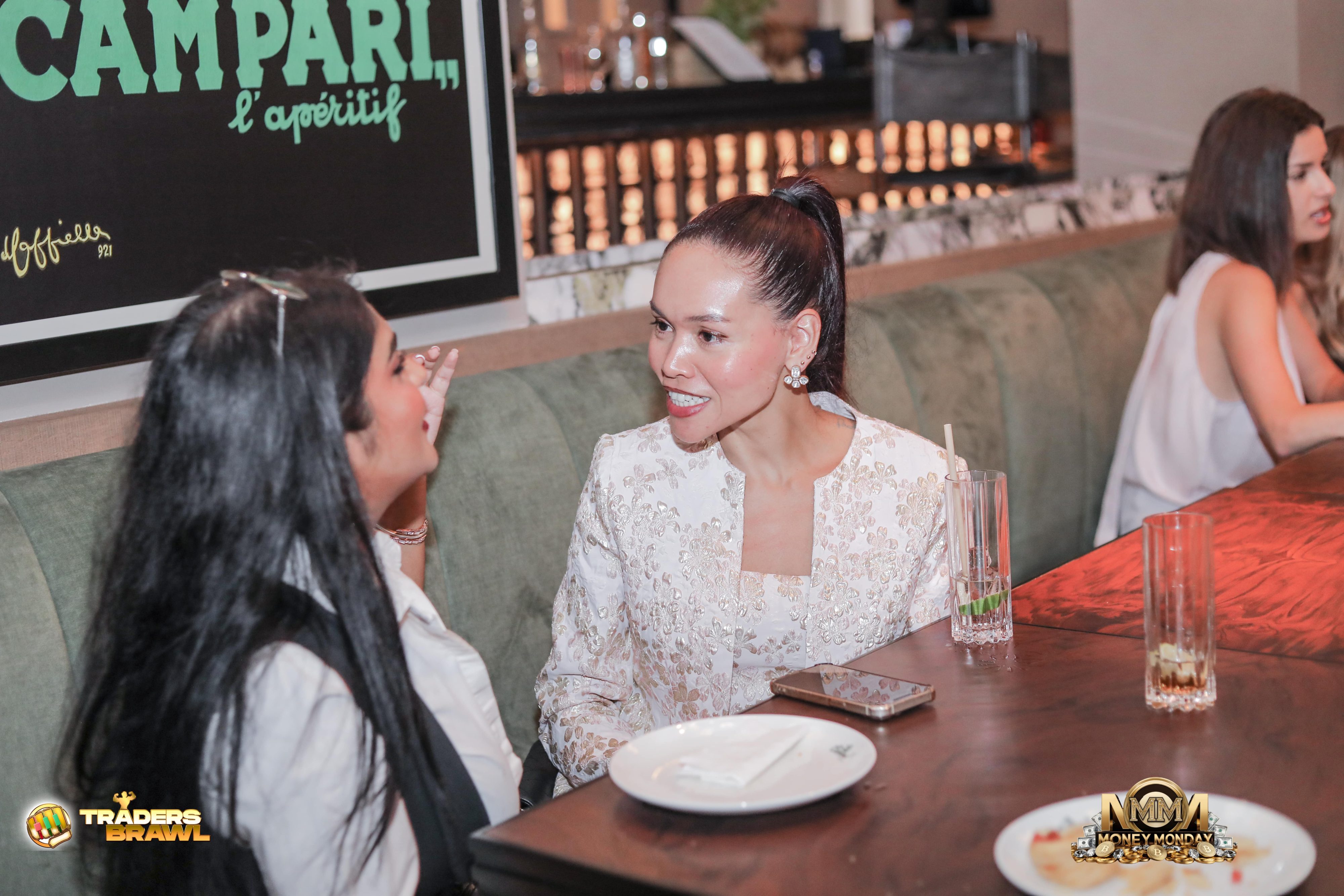
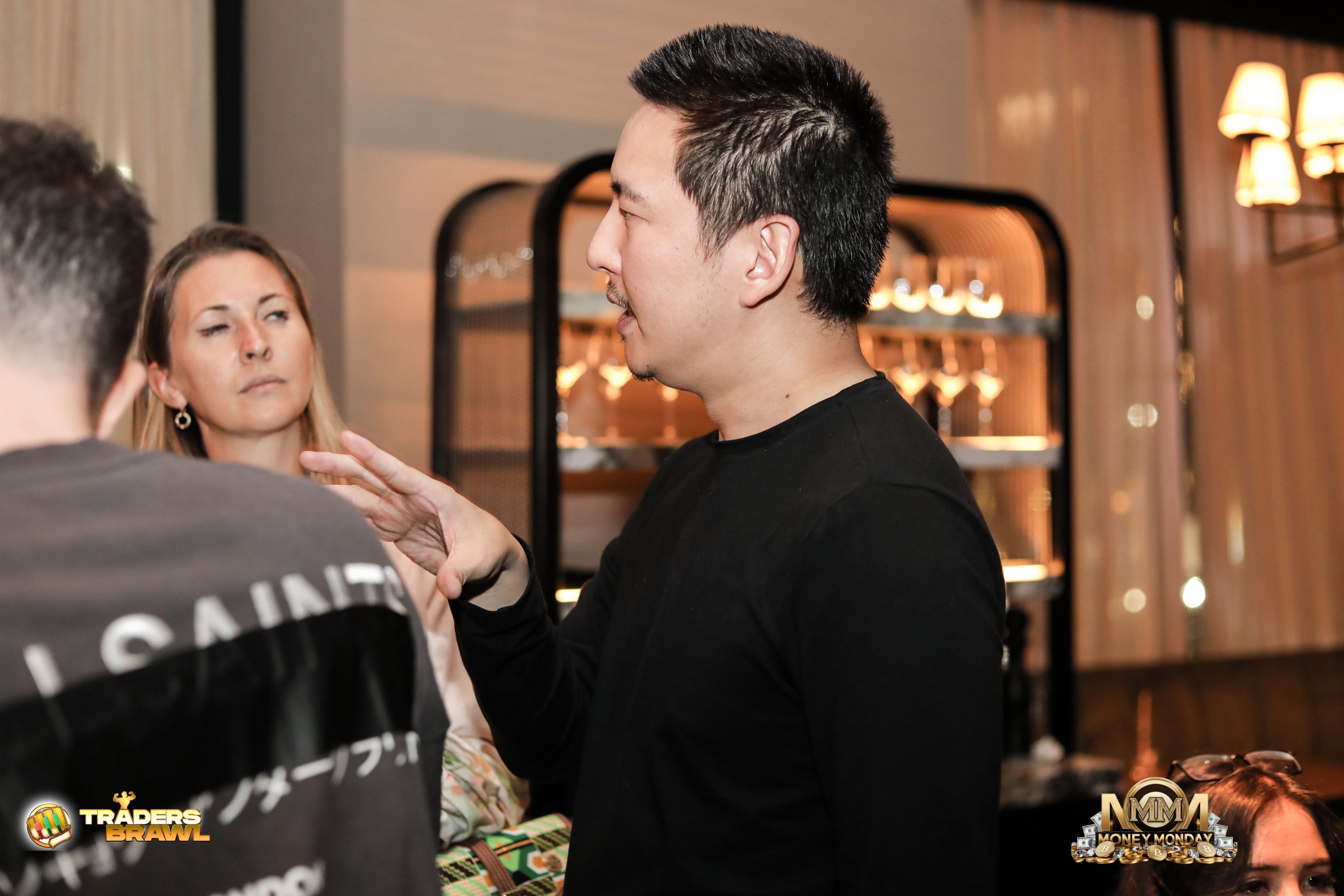
What happens in these rooms cannot be fully planned or replicated. The value is in the composition — founders, investors, traders, creatives, and operators in the same space, without a structured agenda separating them from each other.
Move through a Money Monday gathering and the range of conversation becomes immediately apparent. At one end of the room, a DeFi founder is walking an investor through the mechanics of a new liquidity model. Nearby, a blockchain developer and a creative director are in the early stages of something that does not yet have a name. Further along, two traders are debating crypto market structure — not with the detachment of analysts but with the specificity of people who have skin in the outcome. These conversations are happening simultaneously, in the same space, without walls between them.
That proximity is not incidental. It is the point. When a founder can overhear a conversation between two investors and understand, in real time, how the market is reading a particular category of blockchain infrastructure — that is information that would otherwise take weeks to surface through formal channels. When an investor can observe how a founder handles a challenging question in a social setting, they learn something a pitch deck cannot convey. The informal environment does not lower the stakes of the interaction. It raises the quality of the information available within it.
The conversations at Money Monday range across the full spectrum of what the Web3 and crypto industry is working through — DeFi protocols and their second-order effects, AI’s integration into blockchain systems, the evolution of digital ownership models and NFT utility, the geopolitics of crypto regulation across the GCC and Southeast Asia, what gaming has already taught the broader Web3 ecosystem about onboarding users into decentralised systems. These are not panel discussions. They are working conversations between people actively inside the problems being discussed.
The value of a room is not measured by who speaks from a stage. It is measured by the quality of the conversations that happen in the margins — and by how many of those conversations become something real.
What makes the room work is not curation in the traditional sense. It is consistency — the same crypto and Web3 community returning, week after week, with deepening familiarity and expanding trust. New people enter and the existing network absorbs them. Ideas that were speculative one week are refined by the following Monday. Relationships that began as an introduction develop into collaboration, then into partnership, then into the kind of institutional relationship that shows up in a term sheet or a protocol launch. The room functions as a live environment for the ecosystem to process itself.
The cultural dimension of that processing — how Web3 norms, aesthetics, and identity are formed through community — extends into other expressions of Dubai’s ecosystem too, including Fashion Meets Web3 at DGISLAND, where the same community that meets at Money Monday extends its culture into creative and luxury contexts that reinforce how the ecosystem defines itself beyond finance.
Money as multi-dimensional capital — the four layers that move in these rooms
In Web3, the most valuable forms of capital are often the least visible. Financial capital opens doors. Social capital determines which doors are worth opening. Informational capital decides the timing. Cultural capital shapes whether you are trusted once you are inside.
Financial capital is the most obvious layer, and it is present at Money Monday in substantial form. The investors who attend are not passive participants. They are actively deploying, actively evaluating, actively shaping the direction of the blockchain companies and DeFi protocols they back. For founders seeking crypto investment in Dubai, the proximity is direct — there is no intermediary, no weeks of back-and-forth before a first meeting. The capital is in the room.
Social capital is what makes financial capital accessible. In a room like this, who introduces you matters as much as what you are building. The network you carry into a conversation determines how that conversation is received. Social capital in Web3 is built through contribution — through showing up consistently, through being useful to others without an immediate transaction attached, through building a reputation that precedes you into rooms you have not yet entered. Money Monday is a space where social capital accumulates visibly, where the people who invest in the community over time are recognised as having done so.
Informational capital is the layer that is hardest to describe and most consequential to hold. In markets that move as quickly as crypto and Web3 decentralised finance, the difference between knowing something before the consensus forms and knowing it after is often the difference between a significant opportunity and a missed one. The conversations at Money Monday carry information that has not yet been published, synthesised, or priced in. As Fortune’s analysis of how crypto venture capital is evolving in the UAE notes, the winning investors in this space are those who can combine broad business networks with the highly specific dynamics of Web3 — and that combination is built precisely in rooms like this one, not in formal investment processes. The same informational advantage that operates in Dubai functions across Singapore’s structurally distinct Web3 ecosystem, explored in Singapore Web3 Intelligence: Why the Most Structurally Coherent Blockchain Market Rewards Proximity Over Observation — two ecosystems, two regulatory philosophies, the same fundamental principle that proximity to the source of information compounds differently than distance from it.
Information asymmetry in Web3 is not purely technical. It is social. The people closest to the source of new ideas, new capital, and new decisions hold a structural advantage that compounds over time. Money Monday is where that proximity is built.
Cultural capital is the layer that determines whether the other three compound or stay flat. In a space like Web3 — with its own norms, its own language, its own hierarchy of credibility — the ability to move through that culture fluently is a genuine form of capital. It signals alignment. It communicates that you understand not just the mechanics of what you are building but the context within which it is being built. The capital that flows through these informal spaces does not stay informal. It moves into structured environments — into the regulated digital finance infrastructure that Dubai has built to receive it, and into formal frameworks where what began as a relationship becomes a transaction, and what began as a transaction becomes a portfolio.
Why physical spaces remain irreplaceable in digital industries
Proximity accelerates what distance cannot. In industries built on digital infrastructure, the physical gathering remains the most efficient mechanism for building the trust that digital systems require to function at scale.
There is a reasonable argument that Web3, of all industries, should have the least need for physical gatherings. It is built on trustless systems — on blockchain protocols that replace the need for interpersonal trust with mathematical certainty. And yet the Web3 and crypto community gathers in person with more intensity, more regularity, and more evident purpose than almost any other industry of comparable size. This is not a contradiction. It is a reflection of how trust actually works.
Trustless blockchain systems require trusted builders. The protocols may be decentralised, but the people who design them, fund them, govern them, and advocate for them are not. They are individuals making decisions under uncertainty, in rapidly moving crypto markets, with imperfect information. The trust required to commit capital, form partnerships, and build collaboratively within Web3 is not generated by whitepapers. It is generated by presence — by the accumulated experience of being in the same rooms with the same people over time.
Online communities can maintain relationships. They can distribute information. They can coordinate at scale. What they struggle to generate is the kind of trust that comes from reading a person in three dimensions — from understanding how they handle uncertainty, how they engage with people who challenge their thinking, how they treat the people in the room who have less obvious utility to them. These signals are available in physical spaces. They are largely invisible in digital ones. As the World Economic Forum’s analysis of blockchain as trust infrastructure makes clear, the foundational value of Web3 is its capacity to industrialise trust at scale — but the human layer of that trust, the part that precedes protocol, is still built in rooms, in real time, through presence.
The enduring relevance of physical gathering in a digital industry is not nostalgia. It is practicality. The mechanisms that build durable trust have not been replaced by digital infrastructure. They have been supplemented by it. For Dubai’s Web3 and crypto ecosystem, events like Money Monday are not peripheral to how the industry functions — they are central to it. The full account of how Money Monday has shaped Dubai’s Web3 community across its editions is documented in Money Monday Dubai Is Back on this site — the record of a recurring gathering that has earned its position through consistency rather than spectacle. They are the mechanism through which the relationships that sustain the ecosystem are formed, maintained, and deepened across market cycles that have tested every conviction the community holds.
The system behind the gathering — what Money Monday Dubai has actually built
What Money Monday Dubai represents, across its full history, is not a series of events. It is a system — one that has been quietly building the relational infrastructure of Dubai’s Web3 and crypto ecosystem gathering by gathering, introduction by introduction, conversation by conversation.
The founders who found their first investors here. The operators who found their first collaborators. The investors who found the market signal that shifted their thesis on a particular blockchain category or DeFi protocol. These outcomes are not always attributed to the room in which they began. But they began somewhere — in a conversation that happened in a specific space, between people brought into proximity by a recurring event that understood, early, that the ecosystem needed exactly this kind of informal infrastructure to complement the institutional layer that was being built around it.
As Web3 and decentralised finance mature — as blockchain protocols become more robust, crypto regulation provides more clarity, and institutional capital moves deeper into the digital asset space — the informal gathering does not become less important. It becomes differently important. In early ecosystems, gatherings build the culture. In mature ones, they sustain it. The institutional layer that has grown up around Dubai’s Web3 community — documented in Inside Token2049 Dubai: The Infrastructure Era of Web3 — would not function at the level it does without the relational infrastructure that events like Money Monday have been quietly building for years. Both layers are necessary. The formal depends on the informal having come first.
Dubai’s Web3 ecosystem is not built only in boardrooms or on blockchains. It is built in the spaces between — where capital, culture, and conversation meet without an agenda separating them from each other. That ecosystem extends from the informal weekly rhythm of Money Monday through to the institutional programming of gatherings like the Dubai AI and Web3 Festival, forming a continuous infrastructure that runs from community to capital and back again. Every layer reinforces the others. Every gathering adds to the accumulated weight of what the ecosystem has built.
Money in Web3 is not only earned. It is accessed, exchanged, and amplified — through proximity, through networks, and through the trust that only recurring presence can build. As Fortune’s analysis of Dubai’s position as a global crypto hub makes clear, the city’s advantage is not regulatory alone. It is the combination of institutional clarity and the informal ecosystem that surrounds it — the rooms where relationships form before they formalise, and where the market’s direction is often set before it becomes public. The gatherings that make this possible are not decorative features of the ecosystem. They are structural ones. They are, quietly and consistently, part of what makes the system work.
“The rooms that shape ecosystems are rarely the loudest ones.
They are the ones people keep returning to.
Money Monday Dubai is one of those rooms.
It has been, quietly and consistently,
part of what makes the system work.”

