
On mineral versus organic filters, what SPF and PA++++ actually measure, why texture determines whether protection is ever delivered at all, how sunscreen became a treatment category, and the body parts nobody is protecting — examined through twelve formulas that illuminate every principle the science has to offer
The most consequential skincare decision most people make every morning is not which serum to apply. It is whether to apply sunscreen at all — and if so, which one, and how much. Get this right, consistently, across a lifetime, and the clinical evidence suggests you will age more slowly, carry less chronic UV damage, and face a measurably lower risk of the three most common skin cancers. Get it wrong, or skip it, and no combination of actives, retinoids, or antioxidants will compensate for what daily unprotected UV exposure accumulates. Sunscreen is not the final step in a routine.
It is the step on which every other step depends.For decades, sunscreen occupied a peculiar position within the skincare canon: universally recommended, rarely understood, and chosen, more often than not, by SPF number at a checkout counter. That number — the only figure most consumers ever interrogate — is, in isolation, among the least informative pieces of data on the packaging. A reader who completes this guide will be able to evaluate any sunscreen regardless of its price, brand prestige, or the number printed on its front. That is the only outcome worth pursuing.
Modern sun protection is no longer simply about blocking ultraviolet radiation. The best formulas combine photoprotection with barrier support, pigment regulation, and cosmetic elegance — and the most sophisticated do all four simultaneously, at concentrations that produce measurable outcomes. Twelve formulas follow. Each illustrates a distinct scientific principle. Together they map the complete landscape of what this category has become. The same structural shift reshaping every category of performance skincare — from marketing claims toward ingredient evidence — has arrived in sun protection, and it is overdue.

Mineral versus organic filters — the architecture of protection
Sunscreen filters divide into two categories whose mechanisms are fundamentally different. Mineral filters — principally zinc oxide and titanium dioxide — sit on the skin surface and physically scatter incoming ultraviolet photons before they penetrate the epidermis. Organic filters — previously called chemical filters, though both categories involve chemistry — absorb UV radiation and convert it into heat through a molecular excitation and relaxation cycle. Neither is inherently superior. They are different tools with different strengths, and the most sophisticated formulas combine both.
Zinc oxide is the most comprehensively protective single filter available. It covers the full UVA spectrum — 320 to 400 nanometres — and the full UVB spectrum simultaneously, which no single organic filter achieves alone. It is photostable, meaning its protective capacity does not degrade under UV exposure. It is non-sensitising, making it the filter of choice for reactive, rosacea-prone, and post-procedure skin. Its limitation has historically been cosmetic: at the concentrations required for high SPF ratings, zinc oxide particles produce the white cast that made mineral sunscreens unwearable on deeper skin tones and under makeup.
The formulation science of the past decade has largely addressed this through suspension chemistry: the way zinc oxide particles are distributed through an emulsion base determines how they sit on the skin, how they blend on application, and whether they settle into a white film or disappear into a finish. The difference between a mediocre mineral sunscreen and an excellent one is almost entirely a formulation question rather than a filter question.
The Caudalie Vinosun Protect Daily Mineral Sunscreen SPF50 is the most instructive case study in what an intelligently formulated zinc oxide base achieves. The active — 21.1% non-nano zinc oxide — is suspended in a silicone-free emulsion that includes carthamus tinctorius (safflower) oleosomes: micro-encapsulated oil droplets that release their emollient content gradually on application, producing the skin-warming that allows the zinc oxide to disperse without settling. Bentonite clay provides structural support to the film. The result is a formula that achieves SPF50 with a weightless finish, without the silicones that have historically been the formulator’s shortcut to cosmetic elegance in mineral sunscreen. It is also powered by niacinamide and viniferine — which belong in a later chapter — but their presence here signals what the category’s most ambitious formulas are now attempting: not just protection, but treatment simultaneously.

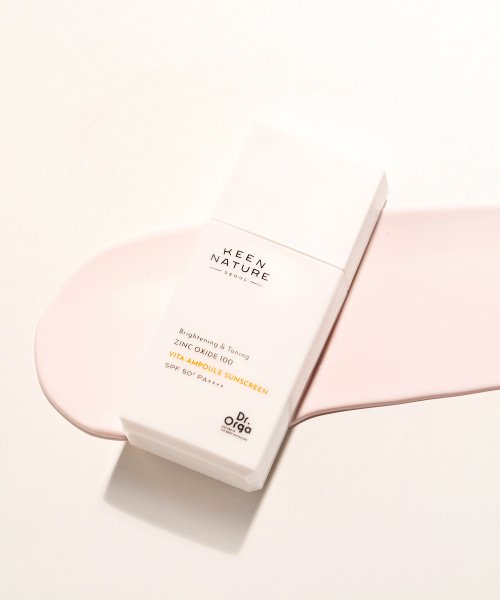
DR. ORGA’s Zinc Oxide 100 Vita Ampoule Sunscreen SPF50+ takes the mineral argument to a concentrated format: a dedicated zinc oxide ampoule designed to be layered within an existing routine rather than applied as a standalone final step. This format reflects the most significant behavioural evolution in the category — the recognition that photoprotection is most effective when integrated into what a consumer is already doing, rather than added as an extra step whose compliance erodes under time pressure. The ampoule delivers a higher zinc oxide concentration in a lighter carrier than a traditional emulsion allows.
The Dr. Brandt Bright This Way Liquid Sun Shield SPF50 represents the hybrid approach: a formula combining mineral and organic filters to achieve the cosmetic elegance of an organic system with the UVA breadth of a mineral one. Organic filters provide high SPF efficiency per unit weight and invisible application. Zinc oxide broadens the UVA coverage that organic filters’ narrower absorption spectrum cannot fully achieve alone. This combination is the formulation industry’s answer to consumers who require SPF50 without white cast — and it is the approach of the most commercially serious sunscreens across every price bracket.

Mineral filters — principally zinc oxide and titanium dioxide — physically scatter ultraviolet photons on the skin surface before they penetrate the epidermis. They are photostable, non-sensitising, and provide the broadest single-filter UV spectrum coverage available, with zinc oxide covering the full UVA range (320–400nm) and full UVB range simultaneously. Organic (formerly called chemical) filters absorb UV radiation and convert it into heat through a molecular excitation cycle. They produce no white cast and achieve high SPF ratings more efficiently per unit concentration. The most sophisticated modern formulas combine both: the cosmetic elegance of organic systems with the protective breadth of mineral ones.
Understanding protection ratings — what SPF, UVA, UVB, and PA++++ actually measure
SPF — Sun Protection Factor — measures the ratio of UV energy required to produce a minimal erythemal dose (the threshold of sunburn) on protected versus unprotected skin, specifically under UVB radiation between 290 and 320 nanometres. An SPF50 product theoretically requires fifty times more UVB energy to produce sunburn than unprotected skin. In clinical testing, this is measured with a standardised application of 2mg per square centimetre of skin — approximately a quarter teaspoon for the face alone. Most consumers apply less than half this quantity. A consumer applying SPF50 at 1mg per square centimetre is receiving the UV protection of approximately SPF7. Application quantity is the most consequential variable in photoprotection.
UVB causes acute sunburn and contributes significantly to squamous cell carcinoma. UVA — 320 to 400 nanometres — penetrates more deeply into the dermis, causing the collagen degradation and DNA damage associated with photoageing, basal cell carcinoma, and melanoma. UVA produces no immediate redness, which is precisely why it remained underprotected for decades: its damage is cumulative, invisible in real time. The NIH’s clinical documentation of UVA radiation biology confirms that UVA protection is as essential as UVB protection in any daily regimen.
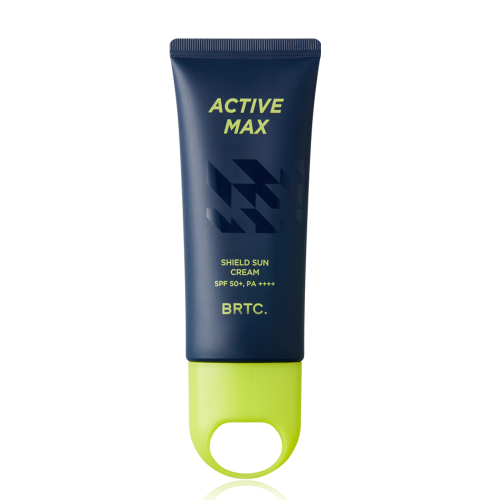
The PA rating system — developed in Japan and now standard across Asian beauty markets — measures UVA protection using persistent pigment darkening as the endpoint. PA++++ indicates a PPD of 16 or higher: the maximum available quantified UVA protection. The BRTC Active Max Shield Sunscreen SPF50+ PA++++ is the most precisely specified product in this selection: its dual designation sits at the ceiling of both systems simultaneously. The formula’s Korean formulation architecture — lightweight, high-filter-concentration, PA++++ rated — represents the most complete protection specification available in a daily wearable format. This is not marketing. PA++++ is a standardised clinical measurement requiring demonstrated PPD values of 16 or higher to be declared.
SPF (Sun Protection Factor) measures protection against UVB radiation (290–320nm) — the wavelengths responsible for sunburn. PA++++ is a Japanese-origin rating measuring UVA protection via persistent pigment darkening (PPD). PA++++ requires PPD of 16 or higher — the maximum available quantified UVA protection. UVA (320–400nm) penetrates deeply into the dermis, driving photoageing, collagen degradation, and melanoma risk without causing immediate redness. A product rated SPF50+ PA++++ provides maximum protection against both simultaneously. Practical note: SPF50 applied at half the standardised 2mg/cm² quantity delivers approximately SPF7 protection in real-world conditions. Application quantity is the most consequential compliance variable in photoprotection.
Texture is performance — why format determines whether protection is ever actually delivered
The most effective sunscreen is the one that gets applied. Clinical photoprotection research consistently identifies under-application and inconsistent daily use as the primary variables separating theoretical protection from real-world outcomes. Both are determined primarily by the sensory experience of application. A sunscreen that feels heavy, greasy, or residual is a sunscreen that consumers apply inadequately, skip in warm weather, or discontinue within weeks. Texture is not peripheral to photoprotection. It is the compliance variable that determines whether the formula’s protection is ever delivered at all. The same principle governs every category of considered daily objects: the tool whose design makes consistent use possible outperforms any specification that requires effort to maintain.
The e.l.f. Suntouchable Invisi-Stick SPF50 addresses the compliance gap that dermatology’s reapplication recommendation has always identified and never adequately solved. The standardised recommendation — reapply every two hours during sun exposure — is almost universally ignored not from ignorance but from inconvenience. A fluid requires a mirror, clean hands, deliberate application. A stick requires none of these. The anhydrous (waterless) stick base is inherently water-resistant, making it appropriate for reapplication after swimming or sweating without degrading the underlying filter layer. This is the reapplication tool the clinical recommendation was always written for.

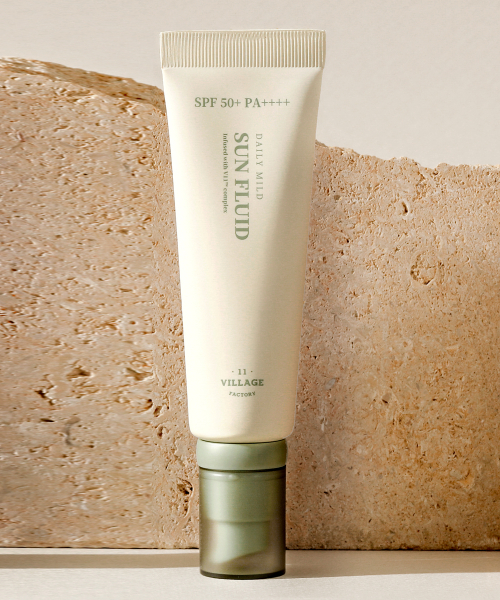
Village11factory’s Daily Mild Sun Fluid SPF50+ PA++++ is the Korean beauty formulation industry’s answer to the same compliance question from a different direction: a formula that performs as both dedicated sunscreen and final hydrating layer of a morning routine, without the sensory penalty of either. The fluid designation is precise — not an emulsion in the conventional sense but a lighter suspension architecture that sits above serum without the occlusive weight of a traditional lotion. PA++++ at SPF50+: the complete dual-spectrum ceiling. The mild designation refers to the filter profile, optimised for sensitive skin, without the higher-irritation organic filters some consumers react to. The same principle that governs ingredient selection in high-performance lip care — that the most sophisticated formula is the one that does the most with the least perceptible presence — applies with equal force here.
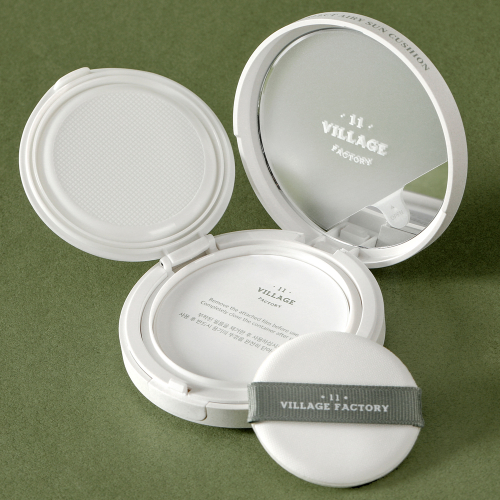
The Village11factory Perfect Airy Sun Cushion SPF50+ PA++++ completes the format argument from a third angle: the cushion compact that enables application and reapplication as a single gesture, with no hands, no mirror, and no interruption to the day. The cushion format — a Korean beauty innovation now adopted globally — saturates a sponge applicator with fluid formula, allowing controlled, precise application to specific areas. Its PA++++ rating means the convenience comes at no sacrifice of protective standard. The most intelligent sun protection systems are not those with the highest individual product specification. They are those designed around the reality of when, where, and how a person actually applies something to their face in the middle of a working day.
Hybrid makeup and SPF — what skin tints and tinted moisturisers actually deliver
The convergence of cosmetics and photoprotection is among the most commercially significant developments in modern beauty — and one of the most misunderstood in practice. A skin tint with SPF50 is not equivalent to a dedicated SPF50 sunscreen applied underneath a skin tint. The reason is quantity. Standardised SPF laboratory testing uses 2mg per square centimetre. A consumer applying a pigmented skin tint at that quantity would achieve heavy coverage on most skin tones. In practice, skin tints are applied at a fraction of this amount. A product applied at 0.5mg per square centimetre of an SPF50 formula delivers approximately SPF7 in real conditions. This does not render SPF-rated skin tints valueless — they provide meaningful incidental protection superior to none — but it requires honest acknowledgement when considering them as standalone photoprotection.
The Apricot Tone Up Sunscreen SPF50+ PA++++ takes this understanding in the opposite direction: not a skin tint claiming SPF, but a dedicated SPF50+ PA++++ formula with a tone-correcting apricot tint — applied at sunscreen quantity, achieving sunscreen protection, with the cosmetic benefit as a secondary property rather than the primary one. This is the correct architecture for anyone who wants both. The tone-up colour technology common in Korean photoprotection brightens the skin surface without requiring cosmetic coverage quantity, so the full SPF and PA++++ protection is achievable at the standardised application amount.
The NARS Pure Radiant Tinted Moisturiser SPF30 occupies the premium end of the convergence category and makes a different calibration: SPF30 rather than SPF50, deeper coverage, a luminosity proposition built around how light interacts with skin at different depths. SPF30 blocks approximately 97% of UVB radiation; SPF50 blocks approximately 98%. The practical gap is narrower than the numbers suggest. The American Academy of Dermatology recommends SPF30 as a minimum for daily use, with SPF50 for extended outdoor exposure. NARS’s claim to seriousness is texture architecture: hyaluronic acid and glycerin genuinely hydrate within a formula that also protects and provides coverage. Its value as a daily formula is predicated on consistent use — which its cosmetic elegance makes achievable in ways heavier SPF formulas do not.
Not in practice. SPF ratings are tested at 2mg of product per square centimetre of skin. Consumers apply skin tints and tinted moisturisers at a fraction of this quantity. A formula applied at 0.5mg/cm² of an SPF50 product delivers approximately SPF7–10 in real conditions. SPF-rated skin tints provide meaningful incidental protection superior to no sunscreen — but not equivalent to dedicated SPF applied underneath. For reliable photoprotection under extended UV exposure, apply a dedicated SPF base first, then the tinted product on top. The AAD recommends SPF30 as a minimum for daily use; SPF50 for sustained outdoor exposure.
Sunscreen becomes skincare — niacinamide, viniferine, salicylic acid, antioxidants
UV radiation drives four distinct biological processes in sun-exposed skin: DNA damage and mutations in keratinocytes; free radical generation and oxidative stress; post-inflammatory hyperpigmentation through melanin stimulation; and degradation of the extracellular matrix through MMP activation. A sunscreen that addresses only the first of these — blocking UV before it reaches the skin — is doing one quarter of the available work. The most ambitious formulas in the contemporary category address all four simultaneously. The same integrated approach to environmental impact on skin biology that defines the most considered wellness formulations applies here: outcomes compound when multiple mechanisms are addressed through a single, consistent daily practice.
Returning to Caudalie’s formula: viniferine — a natural extract derived from vine sap — inhibits tyrosinase, the enzyme responsible for converting tyrosine into melanin in melanocytes. Caudalie’s own in vitro data indicates 62 times greater tyrosinase inhibition than vitamin C. By doing so, it addresses the pigmentation consequence of UV exposure at the same step that prevents the exposure itself. Niacinamide (vitamin B3) operates on a different mechanism downstream: regulating the transfer of melanosomes — melanin-containing organelles — from melanocytes to keratinocytes, the step that actually deposits pigment into the visible skin cell layer. The combination addresses pigmentation through two distinct enzymatic pathways simultaneously: tyrosinase inhibition upstream, melanosome transfer inhibition downstream. The same principle of addressing multiple mechanisms through a single formula — rather than stacking redundant ingredients — produces the most durable outcomes across every category of performance skincare.
The Bliss Block Star Clarifying Mineral Sunscreen SPF30 extends the convergence argument into the acne-prone category. Its inclusion of salicylic acid — the beta-hydroxy acid that penetrates pore lining through its oil-solubility — within a mineral SPF30 formula addresses the tension that has made sunscreen compliance difficult for acne-prone skin: most sunscreens contain emollients that trigger comedone formation. The Block Star’s mineral filter base avoids the heavy organic filters most associated with comedogenicity, and the salicylic acid counteracts any pore-blocking tendency in the remaining emollient system. The full BlissWorld skincare architecture demonstrates what it means to build an entire product system around clinical clarity rather than category convention.

The SPF we forget — lips, ears, neck, hands, and scalp
The areas of the body that receive the most consistent daily UV exposure and the most consistent daily under-protection are not the cheeks or the forehead. They are the lip vermilion, the ears, the back of the neck, the dorsal surface of the hands, and the scalp — collectively the sites that account for the majority of actinic keratoses and a disproportionate share of skin cancers relative to their surface area. The reasons are anatomical and behavioural simultaneously: these areas lack the melanin, sebaceous gland activity, and stratum corneum thickness that provide modest baseline protection on other skin surfaces, and consumers who perform rigorous facial SPF routines rarely extend them to the hands at the steering wheel, the ears below a haircut, or the neck above the collar.
The Skin Cancer Foundation’s guidance on comprehensive photoprotection explicitly identifies the lips, ears, and scalp as high-risk sites requiring the same SPF discipline as the face. The Lanolips Sun Balm SPF30 Tropical is the only product in this selection that directly addresses the lip photoprotection gap. The Lanolips range, built entirely around pharmaceutical-grade lanolin, has applied the same ingredient intelligence to sun protection that it brought to daily moisturising: pharmaceutical-grade lanolin as both the moisturising vehicle and the formula matrix within which broad-spectrum SPF30 mineral filters are suspended. The untinted formulation is designed to be applied as a base layer under any other lip product — SPF first, colour or treatment second. This is the correct sequencing: the mineral filter must maintain direct contact with the skin surface to function. A lip SPF buried under two cosmetic layers is a lip SPF partially compromised. The lip vermilion, with almost no melanin and a stratum corneum three to five cell layers thin, is the most photosensitively vulnerable skin on the face. Actinic cheilitis — precancerous chronic UV damage — is entirely preventable through consistent SPF application.

The Laura Geller Shine-N-Shield Lip Balm SPF15 addresses the cosmetic barrier to daily lip SPF compliance: a product that functions as a lip colour and a photoprotection product simultaneously, so consumers actually apply it. SPF15 is the minimum threshold at which meaningful UV blocking begins — appropriate for daily ambient exposure context, not for sustained direct sun. The accumulated UV that passes through car windows, reaches the lips through incidental outdoor exposure, and compounds over decades into the chronic UV damage the photoprotection literature consistently identifies as the primary preventable driver of lip ageing: this is what SPF15, consistently applied every morning, addresses. The sheer wearable colour is the compliance mechanism. The SPF is the clinical argument. Both are necessary. Neither alone is sufficient.

Which body parts are most commonly unprotected from UV — and why does it matter?
The most chronically under-protected sun-exposed surfaces are the lip vermilion, ears, back of the neck, dorsal hands, and scalp. These share common vulnerabilities: limited or absent melanin protection, thin or absent stratum corneum, and consistent daily UV exposure — combined with consistent exclusion from facial SPF routines. The lip vermilion has almost no melanin and a stratum corneum three to five cell layers thin — the most photosensitively vulnerable skin on the face. Actinic keratoses (precancerous UV damage) develop at disproportionate rates on these surfaces. The Skin Cancer Foundation and the AAD both recommend extending SPF coverage to these sites daily, using SPF30+ lip products and reapplying SPF to the hands after washing.

What the twelve formulas in this guide collectively argue is not that photoprotection has become complicated. It is that it has become intelligent — capable of doing more, across more mechanisms, in more formats and for more skin types, than any previous generation of the category offered. The consumer who understands zinc oxide’s mechanism, what PA++++ requires to be legally declared, why a stick solves the reapplication problem that clinical recommendations have never adequately addressed, how viniferine and niacinamide address pigmentation through distinct enzymatic pathways, and why the lip is the most UV-vulnerable surface on the face — that consumer is equipped to evaluate any sunscreen that comes to market in the years ahead, regardless of what it claims, who endorses it, or what it costs.
“The sunscreen that produces the best outcomes
over a lifetime
is not the one with the highest SPF rating.
It is the one that gets applied,
correctly,
every day.
Texture determines compliance.
Compliance determines outcomes.
Every other variable —
filter type, SPF number, antioxidant complex,
PA rating, price, brand prestige —
is secondary to the foundational question
of whether the product is on the skin
when the UV arrives.”

