
On talisman jewellery, gemstone symbolism, fine jewellery investment, and why the necklaces that hold value across decades are the ones chosen for meaning rather than the moment
Modern fine jewellery necklaces are no longer styled. They are selected — as extensions of self-definition, as articulations of identity that the rest of an outfit does not need to explain, and as emotional anchors in a world that moves faster than it communicates. The pieces that hold value across time are the ones that carry genuine symbolic intelligence.
Luxury has changed its grammar. The visible logos, the immediately legible status signals, the fine jewellery pieces whose authority was located in recognition rather than understanding — these have not disappeared, but they have moved to the periphery of how the most considered luxury consumers think about investing in jewellery. What has moved to the centre is meaning: the capacity of a fine jewellery piece to communicate something specific and true about the person who chose it, independently of what anyone else is choosing at the same time.
This is not sentiment masquerading as trend. It is a structural shift in what luxury jewellery requires of the objects it encompasses. The necklaces that hold investment value across time — across market cycles, across changes in what the culture decides is beautiful this season — are the ones that carry genuine symbolic intelligence. They are chosen not for their immediate visual authority but for their resonance, their material precision, their capacity to mean something to the wearer in a way that outlasts the first season of wearing. This is the definition of fine jewellery investment: acquisition for decades, not seasons.
Necklaces occupy a singular position within this fine jewellery shift. Of all the forms jewellery takes, none sits closer to the self in its simultaneous physical and psychological proximity. They rest near the face — the primary surface of identity projection — and above the chest, where the accumulated cultural language of emotional symbolism has located the self for as long as human beings have been telling stories about what they feel. This double proximity is why the necklace has always been the most psychologically charged of all jewellery categories: the form most often chosen for what it means to the wearer rather than for what it communicates to an audience.
The movement from fine jewellery as decoration to jewellery as identity infrastructure has not made necklaces less beautiful. It has made beauty a consequence of meaning rather than its foundation. A necklace chosen for its symbolic resonance reads differently from one chosen for its visual effect — not necessarily to the observer, but to the wearer. And the wearer’s knowledge of the meaning they are carrying changes the quality of presence it confers.
This understanding of fine jewellery as silent identity signal has deep roots. As Harper’s Bazaar has explored in its examination of jewellery’s symbolic history, the metals and gemstones displayed on the body transmit silent signals about identity and emotional truth — and the milestones of a life have always been marked through jewellery chosen to carry the weight of what was felt. What contemporary luxury culture has added is consciousness: the deliberate, articulate choice of what symbolic weight to carry, and the design intelligence to make that choice with precision. Dower and Hall works within this tradition, designing fine jewellery necklaces whose material intelligence is matched by their symbolic coherence.
For those beginning to explore the Dower and Hall design language, The Dower and Hall Jewellery Guide provides a foundational entry point — an introduction to the brand’s jewellery philosophy through the lens of what their fine pieces actually do for the people who wear them, season after season and year after year.
The metal foundation — gold as the architectural identity tone of fine jewellery
Metal is not the background of a fine jewellery necklace. It is the foundational identity tone — the architectural decision that precedes every other jewellery choice and determines the emotional register in which the entire piece will be read across every context it enters.
Gold has carried the same symbolic grammar across every culture that has worked with it: permanence, warmth, the accumulation of meaning that does not diminish with use or time. There is something in the visual quality of gold that precedes cultural conditioning — its warmth against skin reads as intimate rather than cold, as organic rather than industrial, as chosen rather than imposed. To wear fine gold jewellery is to make a statement about legacy: not necessarily the legacy of wealth, but the more durable claim of emotional permanence — the choice of what endures over what is immediate.
9k gold makes a specific argument within this fine jewellery framework. Harder than its higher-karat equivalents, more resistant to the marks of daily wear, it carries its warmth in a register designed for constancy rather than occasion. The 9k Gold St. Michael Tiny Talisman Necklace works precisely because of this material quality: the gold metal speaks the same language as the symbolic talisman content, both communicating durability, both chosen for the long relationship rather than the strong impression.

18k gold makes the opposite fine jewellery argument with equal precision. Softer, more immediately responsive to light, more overtly warm against skin, it is the metal that rewards proximity. The 18k Gold Sapphire and Aquamarine Cascade Bar Necklace uses this quality deliberately — the gold is not a neutral setting but a collaborator with the gemstones, its warmth creating a dialogue with the cool intelligence of sapphire and the still clarity of aquamarine. At this karat, fine metal and precious stone enter a relationship of equals.

What both gold registers share is the foundational architectural quality that all considered fine jewellery requires: the knowledge that metal is not neutral. Every decision about karat, surface treatment, and form is a decision about the emotional register in which the jewellery piece will operate for years. Metal is the grammar. Everything built upon it is vocabulary. The fine jewellery investment that begins with the right metal foundation does not require revision across decades of wearing.
The gemstone system — emotional coordinates through precious and semi-precious stones
Gemstones in fine jewellery are not colour choices. They are emotional coordinates — each one placing the wearer within a specific psychological and symbolic register, and each one carrying a history of meaning that precedes the individual piece by centuries of accumulated human culture.
Sapphire is the stone of interior depth in fine jewellery. Its colour resists easy reading — it does not project outward with the immediacy of ruby or the cheerful clarity of topaz, but draws attention inward, into a hue that deepens the more closely it is observed. This quality communicates intellectual gravity: the authority of someone whose confidence does not require performance. The Blue Sapphire Dewdrop Chain Necklace works within this understanding — a form that allows sapphire’s depth to operate without visual noise, suspending the precious stone in space rather than framing it in a complex setting.

Aquamarine operates through a different but related principle in fine jewellery. Where sapphire deepens and concentrates, aquamarine clarifies and opens. It is a gemstone whose visual quality is inseparable from its association with water — the particular quality of calm that deep, clear water carries as a permanent psychological symbol. The Hammered Disc and Aquamarine Array Necklace uses this with structural fine jewellery intelligence: the hammered gold disc introduces warmth and the visible trace of a maker’s hand, while the aquamarine array extends the necklace into distributed calm. Movement and stillness in formal conversation.

White topaz works through jewellery presence rather than gemstone depth. The Hammered Disc and White Topaz Array Necklace functions as optical generosity: gemstones that make the fine jewellery piece feel given-toward rather than withheld. The Blue and White Topaz Duo Tutti Frutti Necklace extends this into deliberate expressive play — two tonal gemstone registers placed in formal contrast, communicating the pleasure of duality. The capacity to contain both the considered and the joyful within a single fine jewellery identity.


The Hammered Disc and Mixed Gemstone Array Necklace brings multiple precious and semi-precious stones into a single coherent form — multiple colours, multiple symbolic registers, multiple points of light held without competition. This is the visual equivalent of a layered fine jewellery identity: not fragmented, but genuinely multidimensional, rewarding the attention that can hold complexity without resolving it into a single tone.

The Carnival Mixed Gemstone Necklace extends this into deliberate chromatic gemstone abundance, communicating that expressive fine jewellery dressing is a form of intelligence rather than frivolity — the piece that contains a complete range of symbolic registers within a single, coherent jewellery statement.

Talisman fine jewellery — the psychological architecture of the piece worn for the self
Modern talisman jewellery functions through a psychology as old as the human impulse to wear meaningful objects. The talisman necklace is not chosen to be seen. It is chosen to be felt — its psychological mechanism operating through awareness rather than display. The wearer knows it is there. That knowledge changes the quality of their relationship to themselves.
The 9k Gold St. Michael Tiny Talisman Necklace carries the explicit symbolic weight of protection — St. Michael as the figure of guardianship and moral clarity — within a form small enough to sit against the skin without drawing external attention. The wearer who puts on this talisman necklace is not simply accessorising. They are making a decision about the internal symbolic resources they want to carry, and that decision has real psychological consequences that compound across daily, habitual wearing. As research published in the National Institutes of Health on the psychology of superstition and symbolic objects documents, the consistent use of a personally meaningful symbolic object produces measurable improvements in confidence and performance — the object functions not as decoration but as a psychological anchor that reinforces the emotional and motivational state it represents.
The Diamond Starry Sky Talisman Necklace extends this into a different fine jewellery symbolic register — celestial rather than devotional. Diamonds as permanence, as the most compressed and enduring form of light, arranged to evoke the structure of the sky: fine jewellery that places the wearer within a larger frame of reference than the immediate moment, offering orientation in scale as a form of psychological resource.

Both talisman fine jewellery pieces share the quality that defines the archetype: they are chosen for what they mean to the person wearing them, not for what they communicate to anyone else. Their audience is interior. Their value compounds through daily wearing rather than through external recognition — which is precisely what makes talisman jewellery the most enduring investment in any considered fine jewellery wardrobe.
Pearl fine jewellery — the oldest luxury material and its permanent investment value
Pearl requires a different mode of attention than any other gemstone in fine jewellery. It is the oldest luxury material in continuous human use, carried forward across millennia not through habit but through the persistence of what it communicates. Pearl luxury is the luxury of restraint — the fine jewellery piece that does not need to announce its value because its value is immediately legible to those who can read the material.
The Timeless Keshi Pearl Drop Chain Necklace uses baroque keshi pearl form rather than uniform cultured pearls. This is a significant fine jewellery design choice: baroque pearl irregularity is not a compromise. It is a statement about the nature of investment value — that what makes a fine jewellery piece irreplaceable is precisely what a standardised production process cannot reproduce. The specific, unrepeatable character of a naturally formed organic gem.

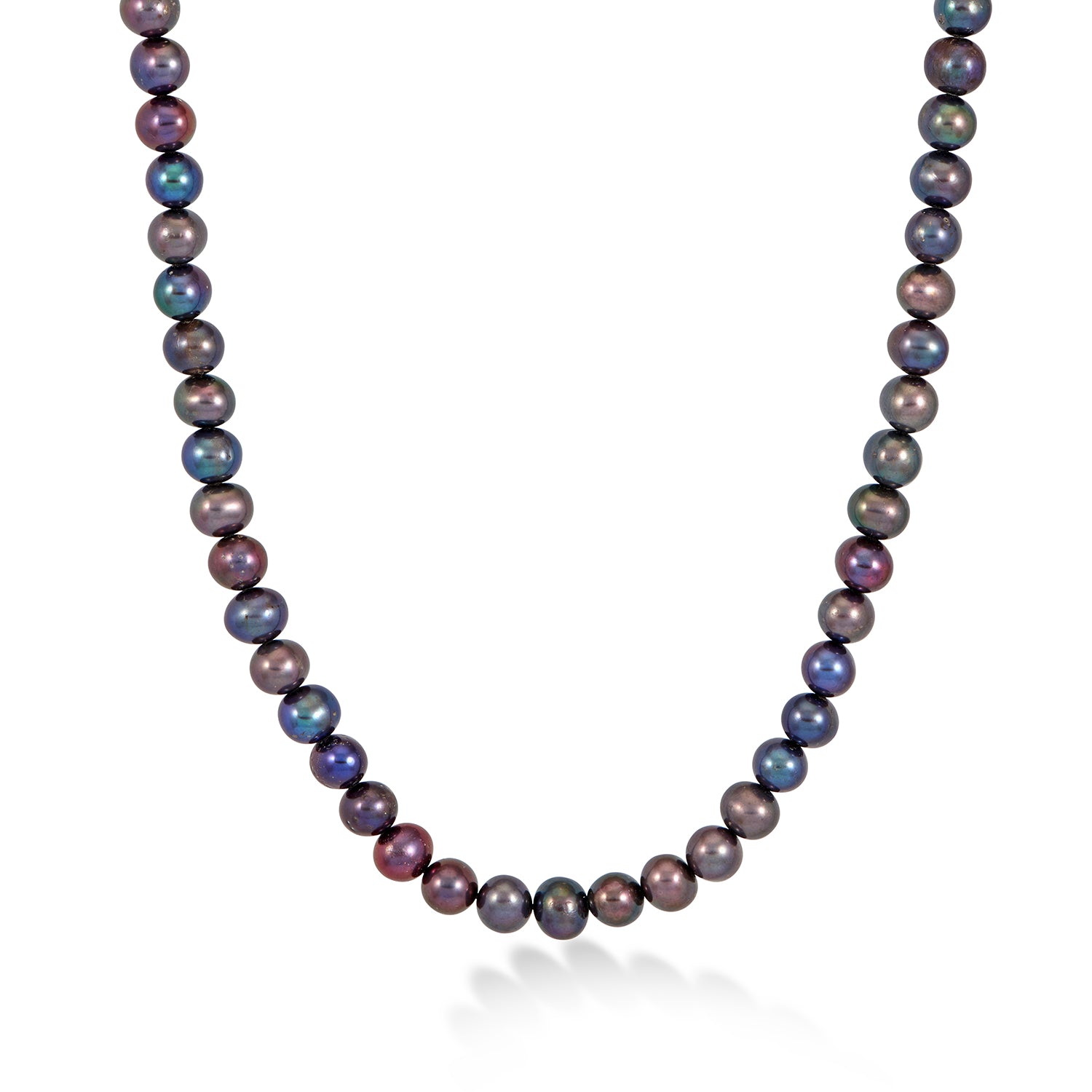
The Timeless Peacock Freshwater Pearl Necklace occupies the most temporally stable position in the Dower and Hall fine jewellery collection. Neither traditional nor trend-driven, it exists in the specific register that characterises all genuinely timeless luxury jewellery: a piece whose relevance is not subject to revision by seasonal dictates. Peacock freshwater pearls in their full baroque character carry the investment authority of natural organic gems whose value is permanently grounded in what cannot be manufactured at scale.
For a deep understanding of how pearl cultivation, rarity, and investment value intersect at the highest level of the fine jewellery market, Inside the World of Robert Wan explores the Emperor of the Tahitian Pearl’s legacy — and why organic gems formed through meticulous natural process represent a category of luxury jewellery investment that manufactured stones cannot replicate. The same understanding of pearl investment value that governs the Robert Wan collection governs Dower and Hall’s pearl design choices: baroque irregularity as the definition of irreplaceable fine jewellery value.
The Long Turquoise and Baroque Pearl Necklace combines turquoise’s earthen opacity with the luminous depth of baroque pearl in a formal tension that is also a harmony. Turquoise is the stone that carries explicit spiritual and protective symbolism more overtly than any other in fine jewellery design — across the widest range of cultural contexts and centuries of human adornment. Against baroque pearl, it produces the jewellery piece for an identity that contains both protection and restraint — that does not resolve easily into a single symbolic reading, and does not try to.

The fine jewellery wardrobe — layered necklaces as architecture of identity
The fine jewellery wardrobe has replaced the jewellery collection. Where the collection was assembled for display, the jewellery wardrobe is built for daily deployment — a system of symbolic tools for navigating the different registers of a layered life. The layered necklace wardrobe is the material form of a layered self.
The singular statement fine jewellery piece belongs to a period when identity was understood as more singular — when the professional self and the personal self could be cleanly separated. Contemporary life does not afford those separations. The same person moves through professional, social, intimate, and public contexts within a single day, and the fine jewellery that moves with them needs to register differently across each without losing its fundamental coherence. This is why necklace layering has become the dominant grammar of contemporary fine jewellery wear — not a styling technique in the superficial sense, but a structural response to the complexity of identity that modern life requires.
When a sapphire chain sits beneath a baroque pearl drop, the combination communicates something that neither piece communicates alone: intellectual depth in one register, natural restraint and the quiet confidence of irreplaceable material in another. When a talisman necklace sits against the skin beneath both — privately, invisibly, known only to the wearer — it provides the personal symbolic foundation upon which the more visible layers of fine jewellery aesthetic decision rest.
The Blue Sapphire Dewdrop Chain Necklace functions as one of the most important pieces in this fine jewellery layering system precisely because of its formal restraint — the piece that sits closest to the skin, provides the foundation layer, and allows more complex necklaces to speak more openly without visual competition. This is the foundational chain’s contemporary purpose: not to be the jewellery statement, but to be the ground upon which the statement is built.
The philosophy of building a fine jewellery wardrobe around necklaces that hold — that do not need to be replaced because they do not exhaust novelty — runs through the most coherent expressions of quiet luxury. The same insistence that what holds value is chosen with intelligence appears in how the most considered wardrobes are built: fewer pieces, each earning its place through material quality and symbolic resonance rather than seasonal relevance. Quiet Luxury with Giuseppe Zanotti explores that logic in the context of footwear — the same principle that what endures is always chosen for how it holds over time rather than how it reads in a moment.
The rise of symbolic fine jewellery — why meaning-driven luxury is a permanent shift
Meaning-driven luxury consumption is not a category within fine jewellery. It is the direction the entire jewellery market is moving — away from objects chosen for immediate visual authority and toward fine jewellery pieces chosen for what they communicate to the person who wears them, independently of what the season is doing around them.
The cultural shift toward symbolic fine jewellery is part of a broader reorientation in how valuable objects are understood. A necklace chosen for its resonance — for the accuracy with which it articulates who the wearer is and what they value — retains relevance across contexts and years in ways that a purely decorative jewellery piece cannot. Decoration is subject to aesthetic cycles: it arrives, dominates, is displaced. Meaning is not subject to those cycles, because the human psychological conditions that make symbolic objects valuable — the need for grounding, for identity expression, for the tangible articulation of intangible values — do not change with the season.
As The Business of Fashion has identified in its analysis of quiet luxury and conscious consumption, the most durable version of this shift is not aesthetic restraint for its own sake but a genuine reorientation toward buying less and better — choosing fine jewellery pieces for how they last, for the quality of their material and gemstones, and for the meaning they carry rather than the moment they serve. As Vogue’s guide to fine jewellery as investment pieces confirms, the jewellery that holds its value across decades is consistently the kind chosen for gemstone quality, material integrity, and personal symbolic resonance rather than trend alignment — the same criteria that define the Dower and Hall design philosophy. In fine jewellery, this logic produces exactly the kind of pieces that Dower and Hall designs: objects chosen for decades rather than seasons, whose symbolic relevance compounds rather than expires.
What gives talisman fine jewellery, gemstone symbolism, and the luxury of natural organic pearl materials their enduring cultural presence is precisely this immunity to trend cycles. The St. Michael figure has carried protective symbolic function across centuries of changing aesthetic fashions. Sapphire’s association with intellectual depth predates the modern fine jewellery market by millennia. Pearl’s status as the most restrained expression of natural luxury material has remained constant through every reorientation in what other luxury signals meant. These are cultural inheritances — accumulated layers of human response to material and symbol — that contemporary fine jewellery design can access and bring forward into new formal expressions.
The same cultural movement that is reorienting fine jewellery toward meaning over novelty is visible across every category of considered luxury. The same intelligence that chooses a baroque pearl necklace for its irreplaceable individuality chooses a faux fur coat for its material consistency across seasons. The New Language of Quiet Luxury: Inside the Timeless Wardrobe of Apparis explores that logic through the lens of sustainable fashion investment — pieces built for endurance over trend, for material quality over seasonal visibility. The underlying principle is identical across categories. Only the material changes.
The philosophy of chosen objects — of the fine jewellery piece selected for what it means rather than what it announces — extends through every category of considered luxury. Jewellery, fragrance, skincare, fashion: each category has its own material language, its own register of meaning, its own version of the same underlying intelligence. The Aesthetics and Beauty section of this site continues to explore that landscape — the principle that what holds value in a life of considered luxury is what was chosen with intelligence, and what endures is what was never chosen for the moment.
“Modern fine jewellery no longer functions as an accessory to fashion.
It functions as a framework of identity.
Necklaces, in particular, have become the most precise articulation
of how individuals construct meaning, presence, and emotional language
in a world defined by layered selves.
The piece chosen for what it means, not what it announces,
is the piece that remains.”

