
On what a stylist learned in the fitting rooms and product shoots of Shenzhen about China’s changing luxury wardrobe, and what the data on luxury, retail and discovery suggests about where it goes next: a cultural-intelligence essay for the new citizen of the world
Understatement is a cultural code, not a law of luxury.
The outfit could be perfectly cut, expensive and technically elegant, and still feel unfinished. Then came the metallic shoe, the crystal detail, the sculptural earring or the jacket with enough presence to register across a room. Suddenly it made sense. The look had not been wrong before. It had simply been speaking quietly in a room that expected to be addressed.
That moment, repeated in different forms across fittings and product shoots in Shenzhen, is the starting point of this essay. It raises a question that fashion media rarely asks directly: why can a garment signal refinement in Paris or London and read as visually underpowered in Shenzhen? The easy answers are that one market has louder taste, or that another has better taste. Both are wrong. The more useful answer is that luxury is not a universal visual language, that what reads as sophisticated in one market can read as anonymous in another, and that the difference is a matter of what a culture asks clothing to communicate.
The larger question is who decides what luxury is supposed to look like. Western fashion media spent several years treating quiet luxury, meaning cashmere, neutral tailoring, discreet branding and tightly controlled minimalism, as though it were the natural endpoint of sophistication. China complicates that assumption. In one of the world’s most important luxury markets, status has historically mattered, brand recognition still carries weight, digital visibility shapes consumption, private-client service matters intensely, and fashion is increasingly used to express individual identity rather than to disappear into good taste. At the same time, affluent consumers are becoming more selective and harder to impress. This essay explores that contradiction instead of resolving it.
It is written as intelligence, not as a trend report: a stylist’s observations from two professional settings, tested against the best available data on luxury, retail and discovery, and extended into a framework for what comes next. The data cited here describes specific years and specific surveys, and it should be read as a set of dated signals, not as permanent facts. The patterns the data points to are the durable part.
How to Read This Essay: Three Layers
Experience, evidence and interpretation are different kinds of knowledge, and they should not be mixed.
The first layer is lived experience: what I saw in private styling appointments and in commercial styling for brands. It is specific, it is limited to the clients and briefs I worked with, and it is never offered as proof of a national preference. The second layer is market evidence: published research from McKinsey, Business of Fashion, Bain & Company, Bluebell Group, China’s National Bureau of Statistics and others, each cited with its source and year. The third layer is interpretation: my argument about how the first two interact. It is the layer most open to disagreement, and it is labelled as argument wherever it appears.

Why Luxury Does Not Speak One Visual Language
One upper-class Western code was mistaken for a universal definition of sophistication.
The Western luxury conversation of the early 2020s elevated discretion: logo-free bags, beige palettes, fine knitwear and the social code of knowing without showing. That aesthetic was real, and its appeal is explored in the new language of quiet luxury. But its media dominance often turned one class-specific visual code into a supposedly neutral standard, with everything else treated as an error of taste. A code of discretion works because the people who share it already know how to read it. Where that shared reading cannot be assumed, understatement can simply disappear, and a look built to be recognised by insiders is not recognised at all.
This is why the essay does not argue for loud over quiet. It argues that both are codes, each with its own audience, its own grammar and its own failure mode. Quiet luxury fails when nobody in the room can read it. Visible luxury fails when it has nothing specific to say. A stylist, a brand or a traveller who treats either one as the natural endpoint of good taste will misread a great deal of the world, and will mistake a difference in grammar for a difference in quality.
How is Chinese luxury different from Western luxury? Chinese luxury is not a single aesthetic, and it is not simply louder. Research on Chinese and US luxury clients suggests that established brands, recognition and visibility still carry more weight in China, that emotional connection is rising in both markets, and that personalised service is an unusually strong marker of exclusivity. The differences are real, but they vary by client, city, age group and occasion.
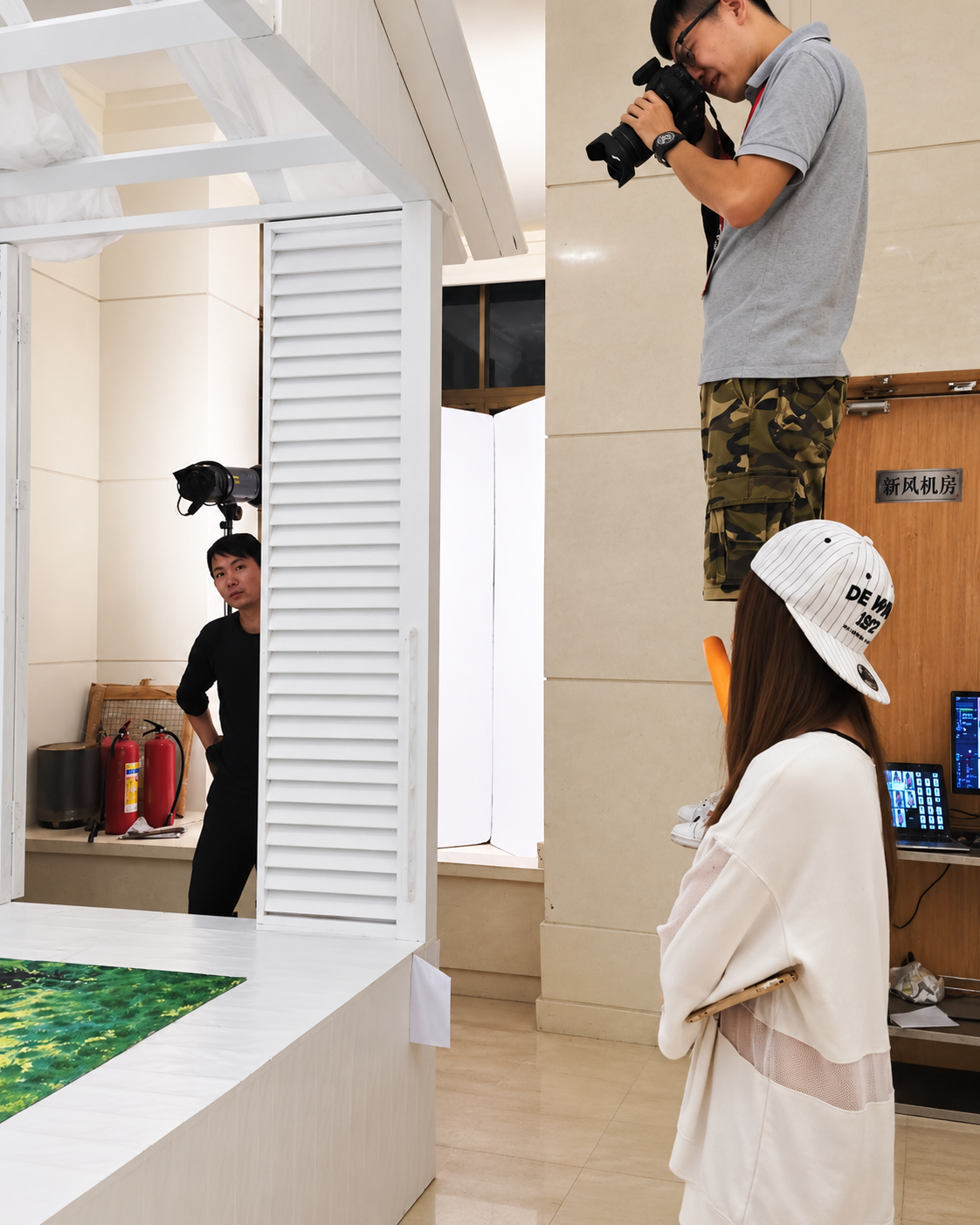
How a Stylist Arrived in Shenzhen
A career in styling is a sequence of rooms, and each one teaches a different grammar.
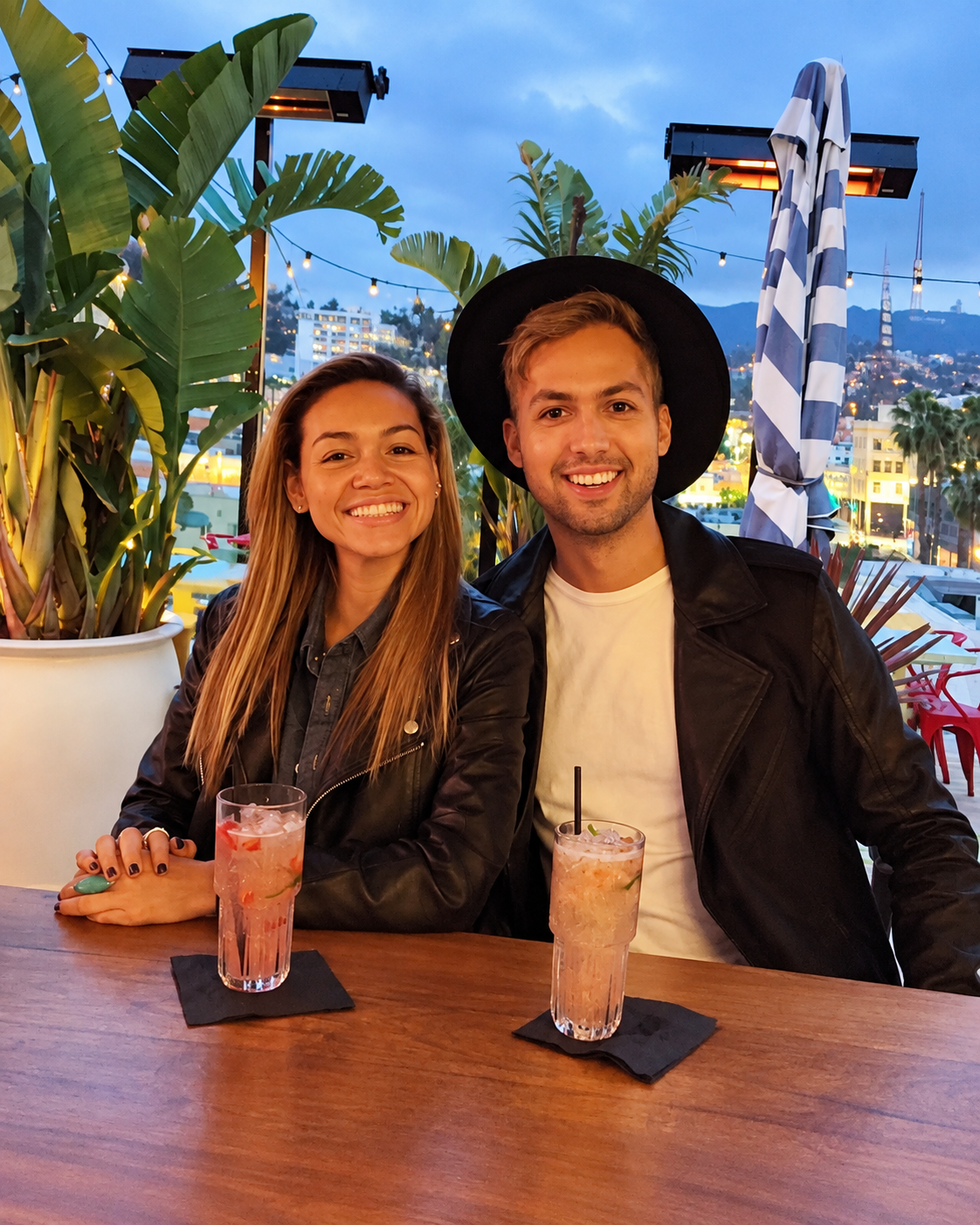
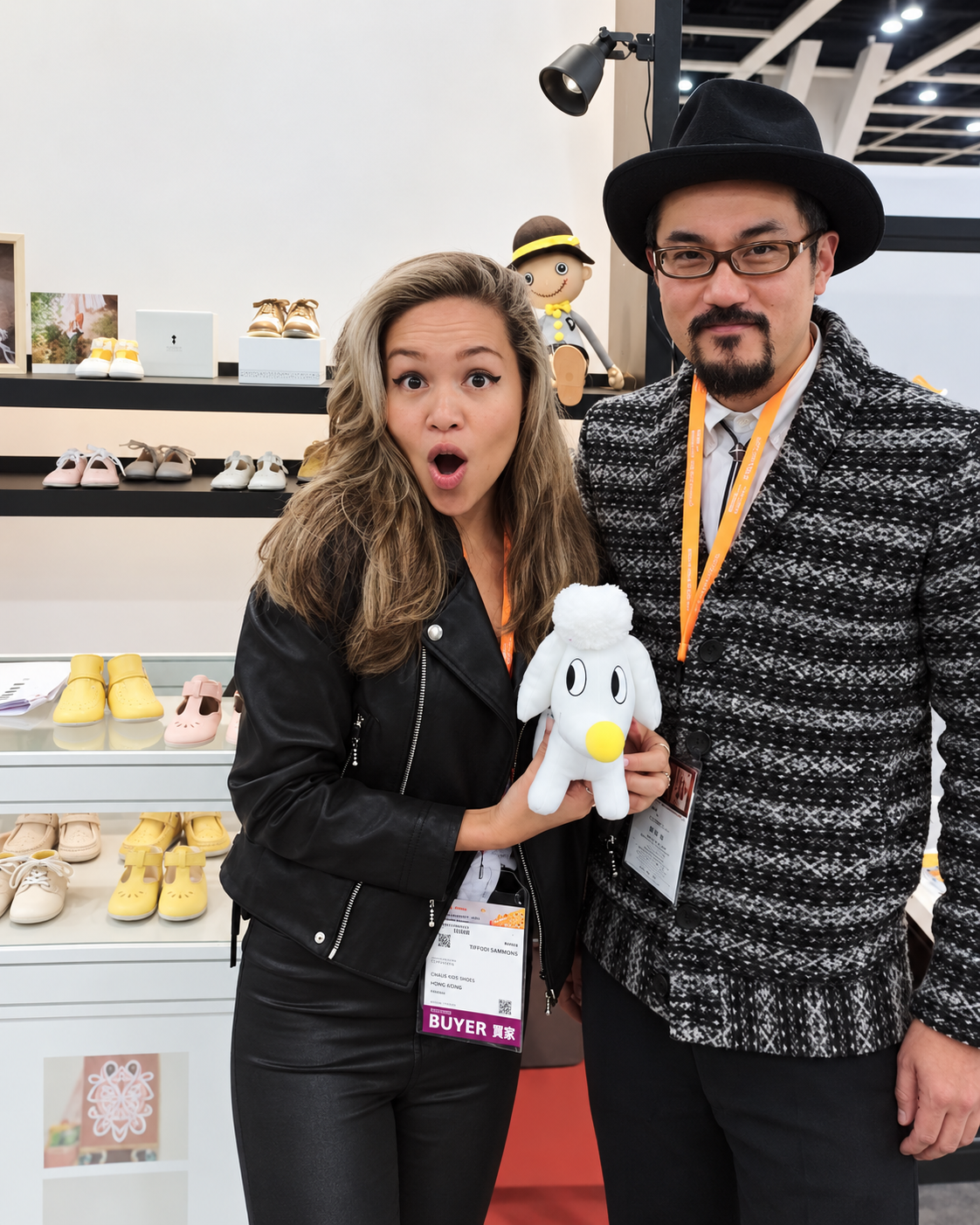
My own route into the subject began in television. I spent four years as a fashion stylist on a Panamanian street-style programme, where style was something to be spotted, shot and celebrated at the speed of a broadcast schedule. Those years taught me to read people quickly: how a silhouette, a colour or an accessory announces who someone wants to be on a given day. A chance encounter on LinkedIn then led me to China, first to a manufacturer in Dongguan, where eight months among assembly lines and factory floors offered a close look at how consumer goods are actually made, and then to Shenzhen in 2015, where I worked as both marketer and stylist for Globalgrow, a large name in mass fashion.
Dongguan and Shenzhen shaped the way I look at clothes. A city whose identity is tied to manufacturing, technology and e-commerce is a different setting for fashion from one built on heritage or subculture. The glamour that television teaches you to expect is replaced by logistics, deadlines and measurement, and the gap between the screen version of fashion and the production version is where this essay’s questions began. It was there that I first understood how much of what we call taste is the output of a system: the factory that makes the garment, the platform that sells it, the camera that frames it and the client who finally wears it.



Shenzhen Changes the Styling Conversation
A city is not a backdrop. It is a theory of what consumers want.
Shenzhen is worth reading as more than a location. Its identity is tied to technology, entrepreneurship, manufacturing, e-commerce and rapid wealth creation, which means its fashion consumer is better read through a different lens from Parisian heritage or London subculture. A styling practice here sits close to the machinery of contemporary Chinese consumption: factories, digital commerce, platforms, founders, globally mobile professionals and a population accustomed to speed. Clothing in this environment is judged quickly, photographed constantly and expected to justify itself.
The scale of that machinery is visible in the national figures. According to China’s customs administration, as reported by China Daily, imports and exports through cross-border e-commerce reached 2.63 trillion yuan in 2024, up 10.8 percent year on year, and industry reporting describes Shenzhen as one of the leading hubs of that trade. A stylist working here is therefore close to two systems at once: the domestic luxury market, with its own codes and expectations, and a global export engine that turns garments into thumbnails for buyers on other continents. The same person can spend a morning on a commercial shoot designed to travel and an afternoon with a private client who wants one outfit to be remembered.
None of this should be generalised to the whole city or the whole country. The point is narrower: the local economic culture creates a distinct setting for fashion, and a stylist who ignores it is styling in a vacuum.
Why is Shenzhen important to fashion and e-commerce? Shenzhen’s identity is tied to technology, entrepreneurship, manufacturing and e-commerce, and it is a major hub for cross-border online trade. A styling practice there sits close to platforms, factories and founders, which makes it a useful vantage point on how Chinese consumption and global digital retail interact, although it does not describe the whole country.
Inside the Shenzhen Fitting Room
What suddenly makes an outfit feel finished tells you what the room expects.
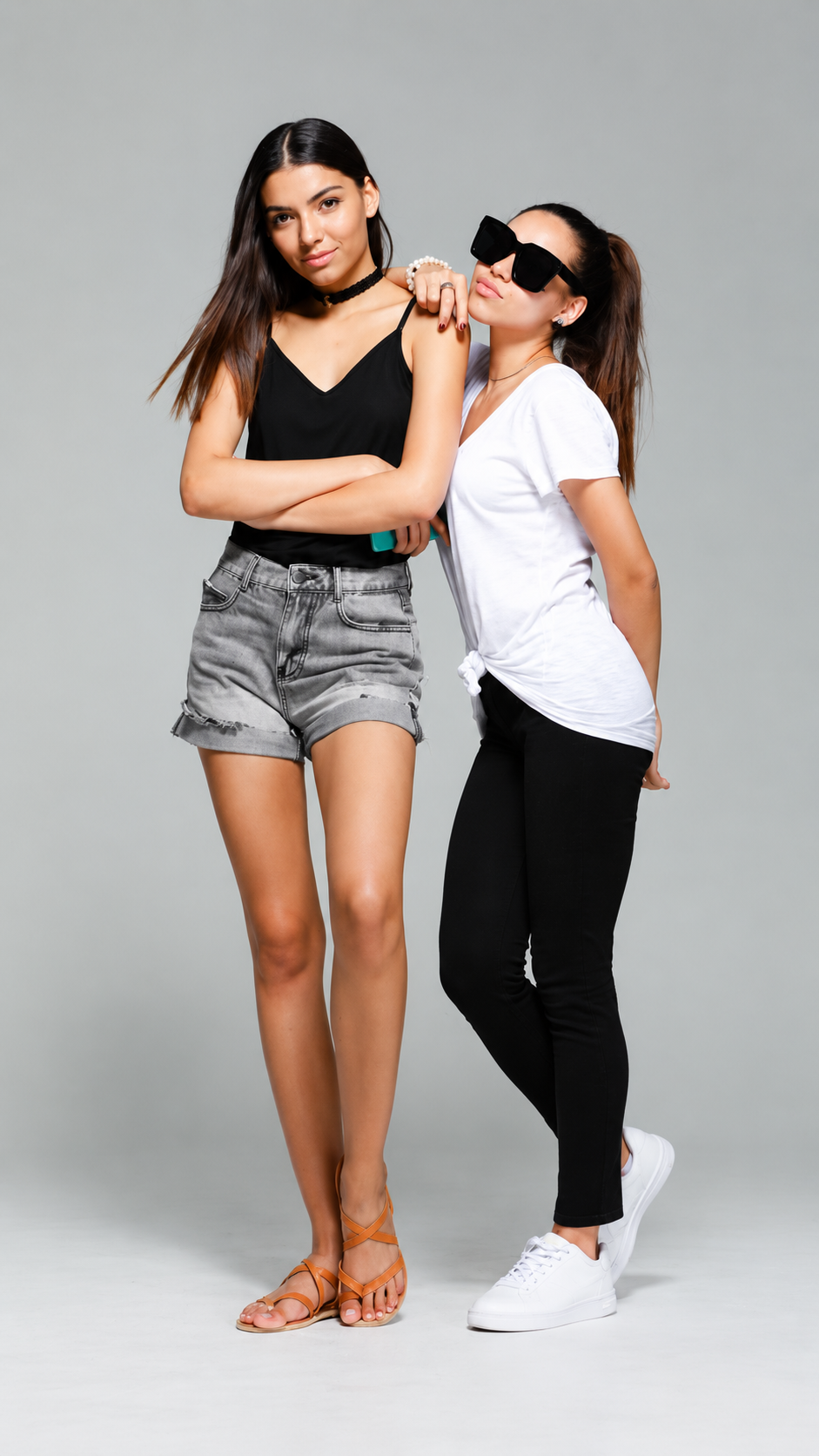
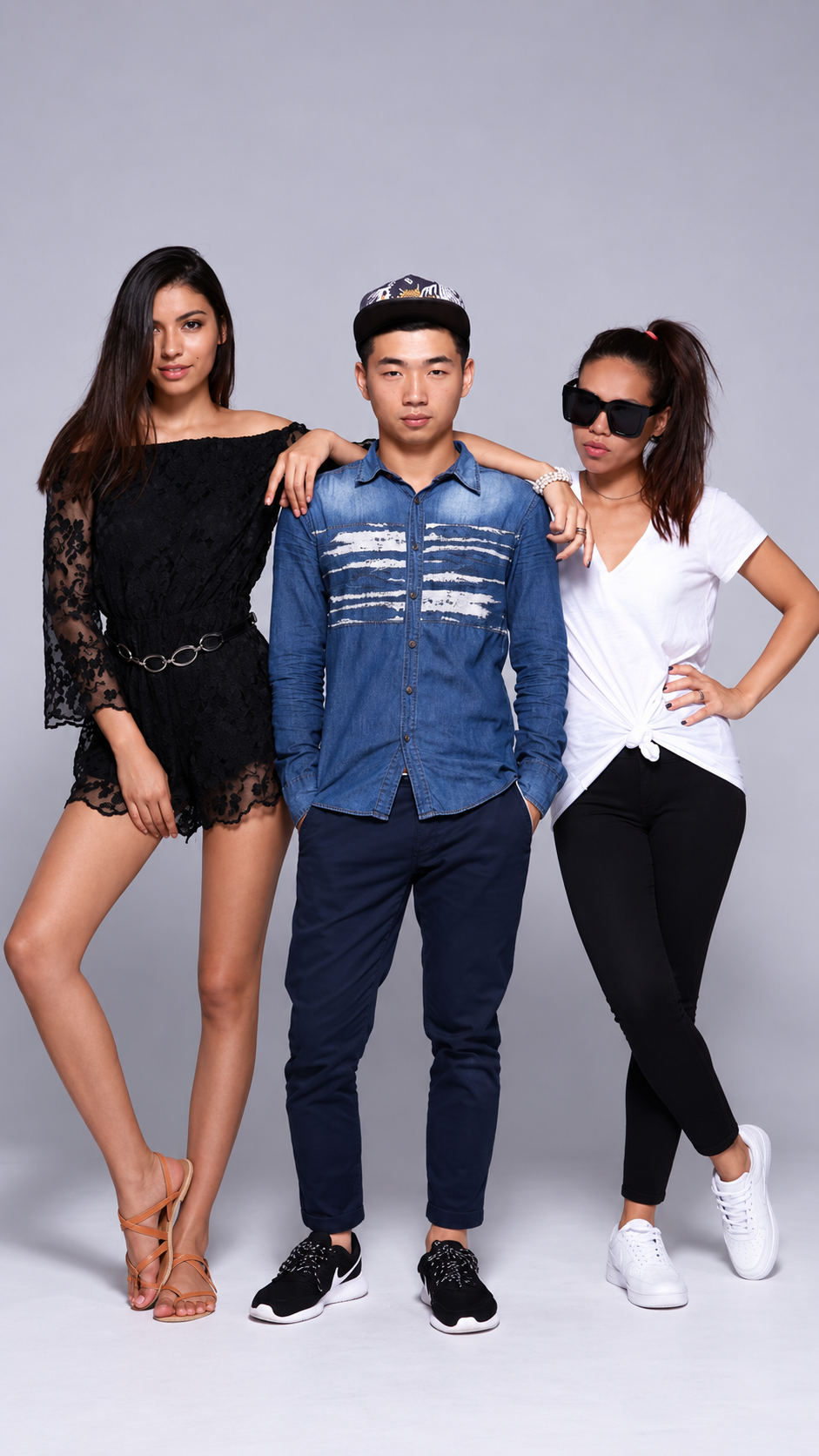
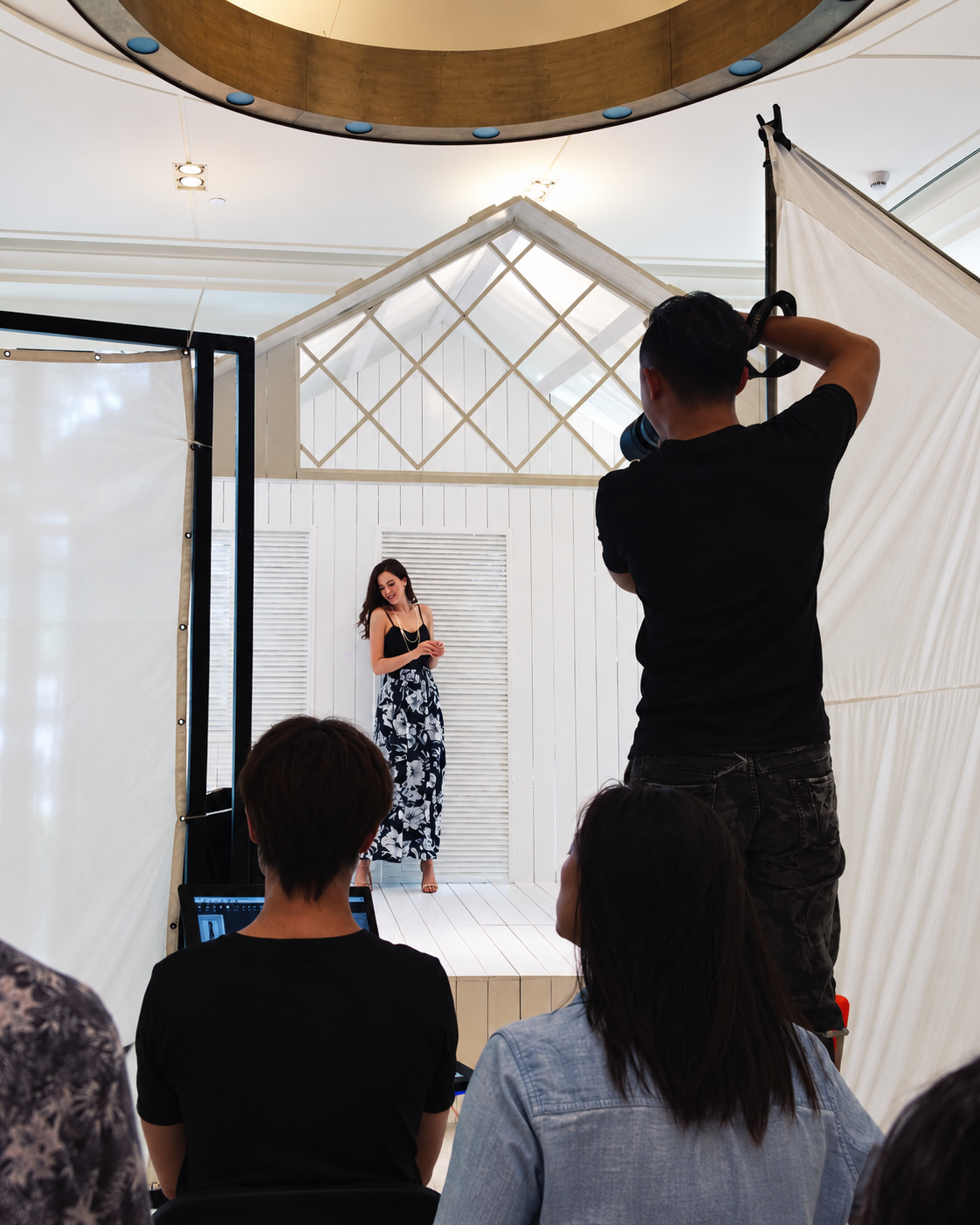
In private styling sessions, the work is close observation: how a client stands in a garment, what they reach for, what they put back and what changes their expression. In a number of fittings I noticed a recurring response to shine, statement pieces, embellishment, visual impact and a sense of occasion, a contrast with the neutral, deliberately understated language that dominated much Western fashion discourse. I want to be careful with that observation. It describes recurring preferences in specific contexts, usually where clothing needed to signal an occasion, photograph strongly or feel visibly transformed from everyday dress. It does not describe a national taste, and one client is never evidence of one.
The difference between editorial taste and client desire is the lesson of the fitting room. An editor’s instinct is to subtract. A client’s instinct is often to ask what the outfit is for, who will see it and what it will say. A good stylist has to hold both, and the best sessions are the ones where the answer to the second question changes the answer to the first. A look can be flawless on a mood board and still fail the one test that matters, which is whether the person wearing it feels it is theirs.
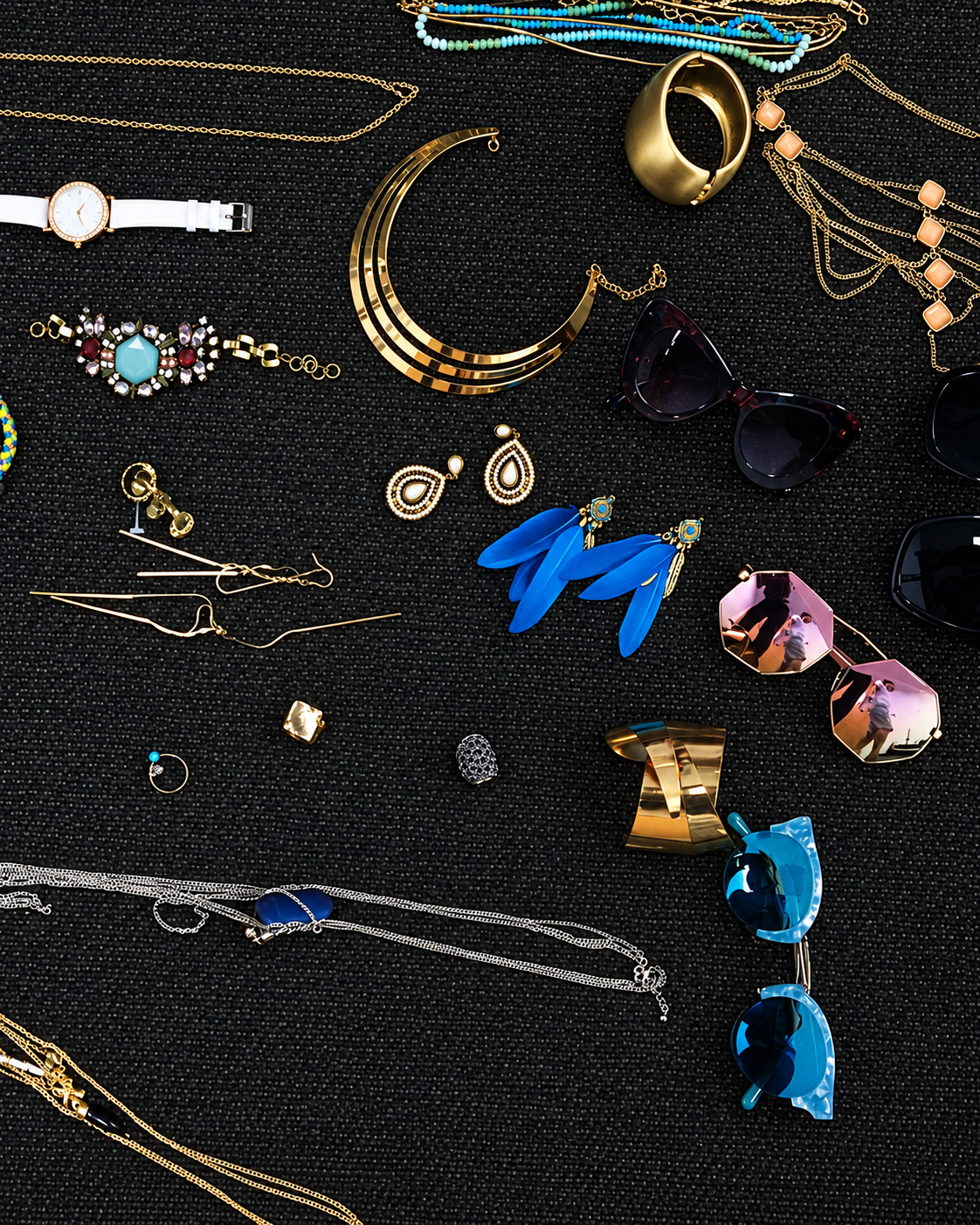
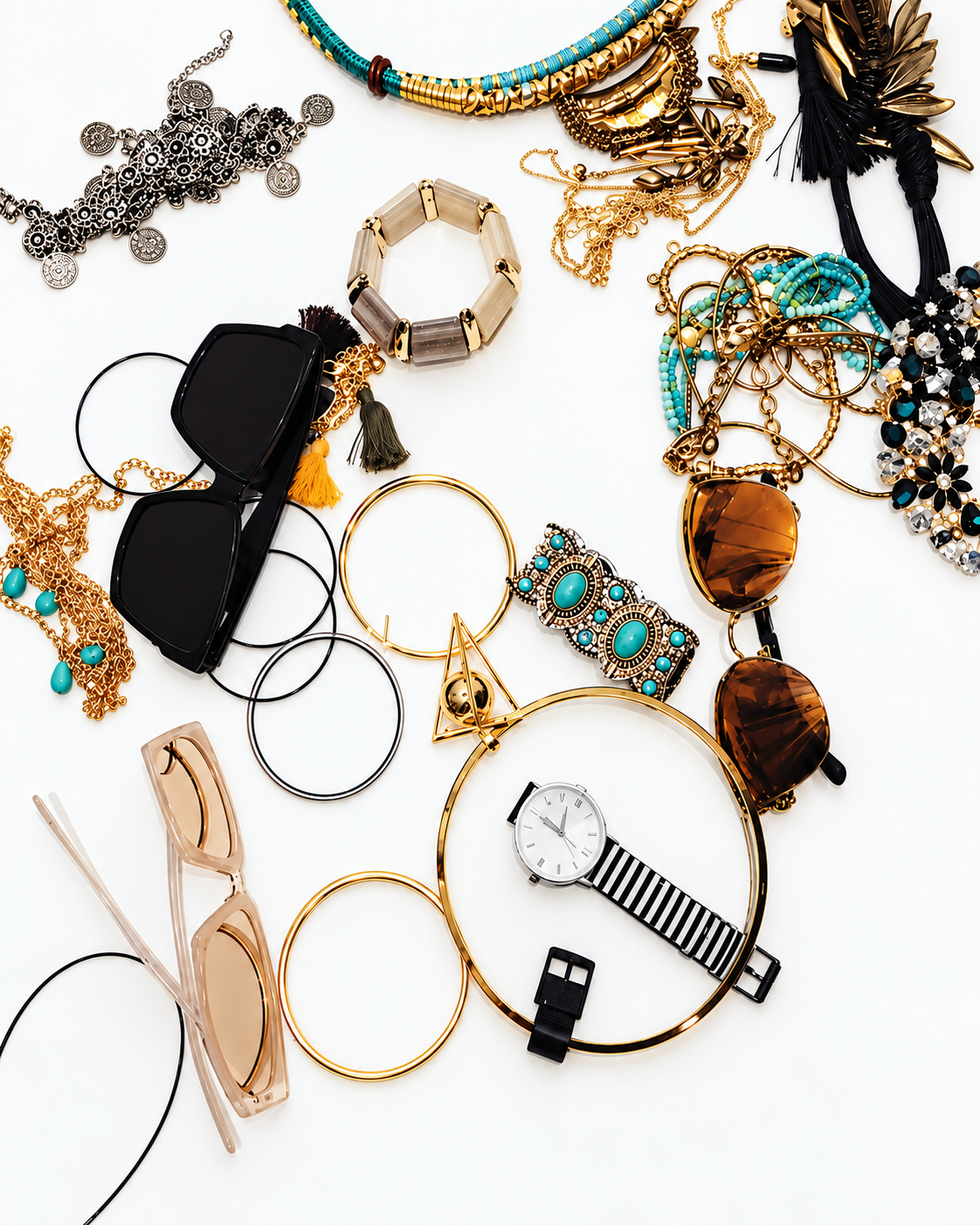
It also changes what counts as a finishing touch. In editorial work, a finished look is one in which nothing is superfluous. In a client fitting, a finished look is one in which the wearer can answer the question of why they are wearing it. A crystal detail, a metallic shoe or a sculptural earring is often the answer to that question, and the stylist’s craft lies in choosing the detail that says something specific, not the one that merely shines.
Styling Brands at Globalgrow: When Fashion Has to Read on a Screen
In e-commerce styling, subtlety must survive compression.
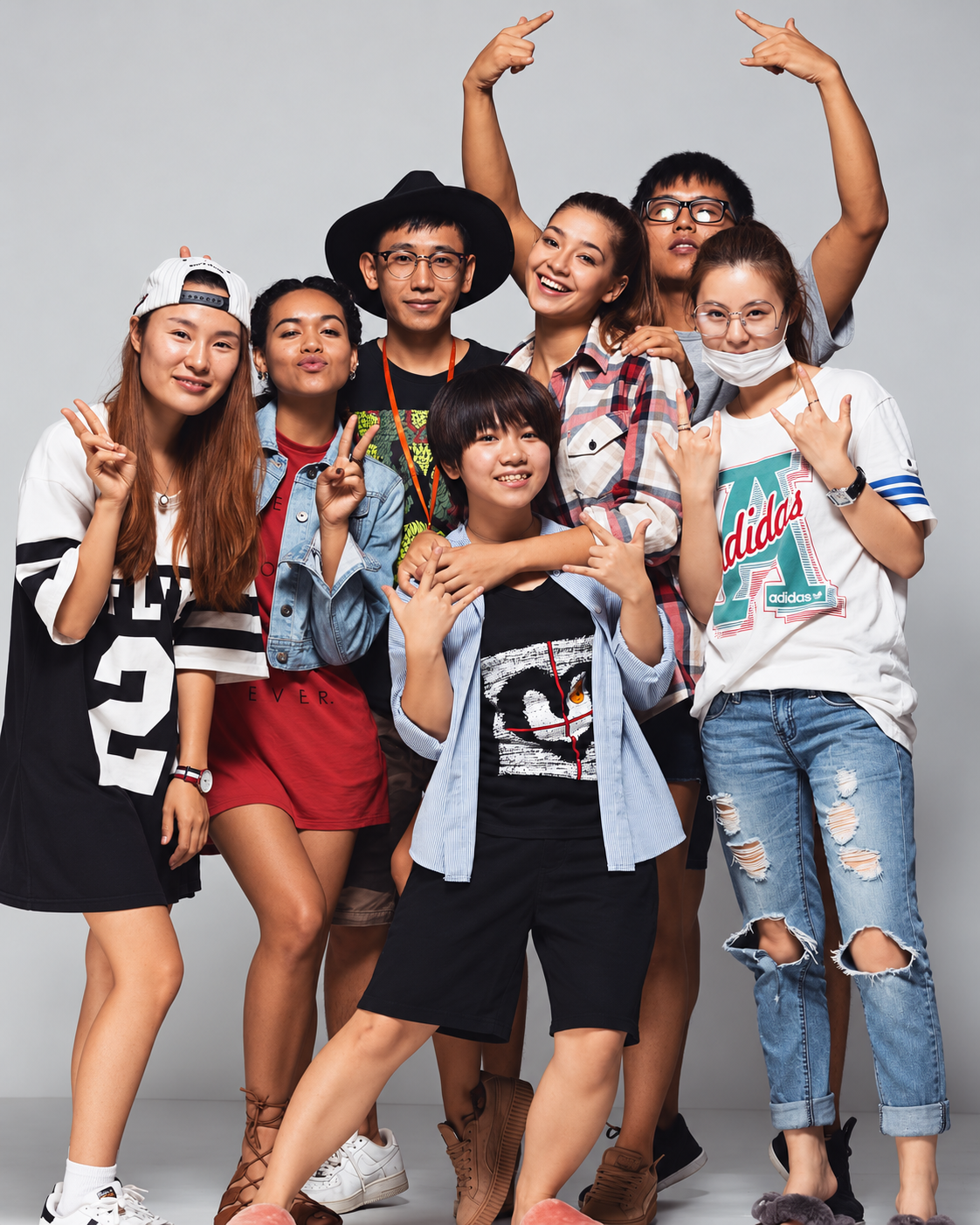
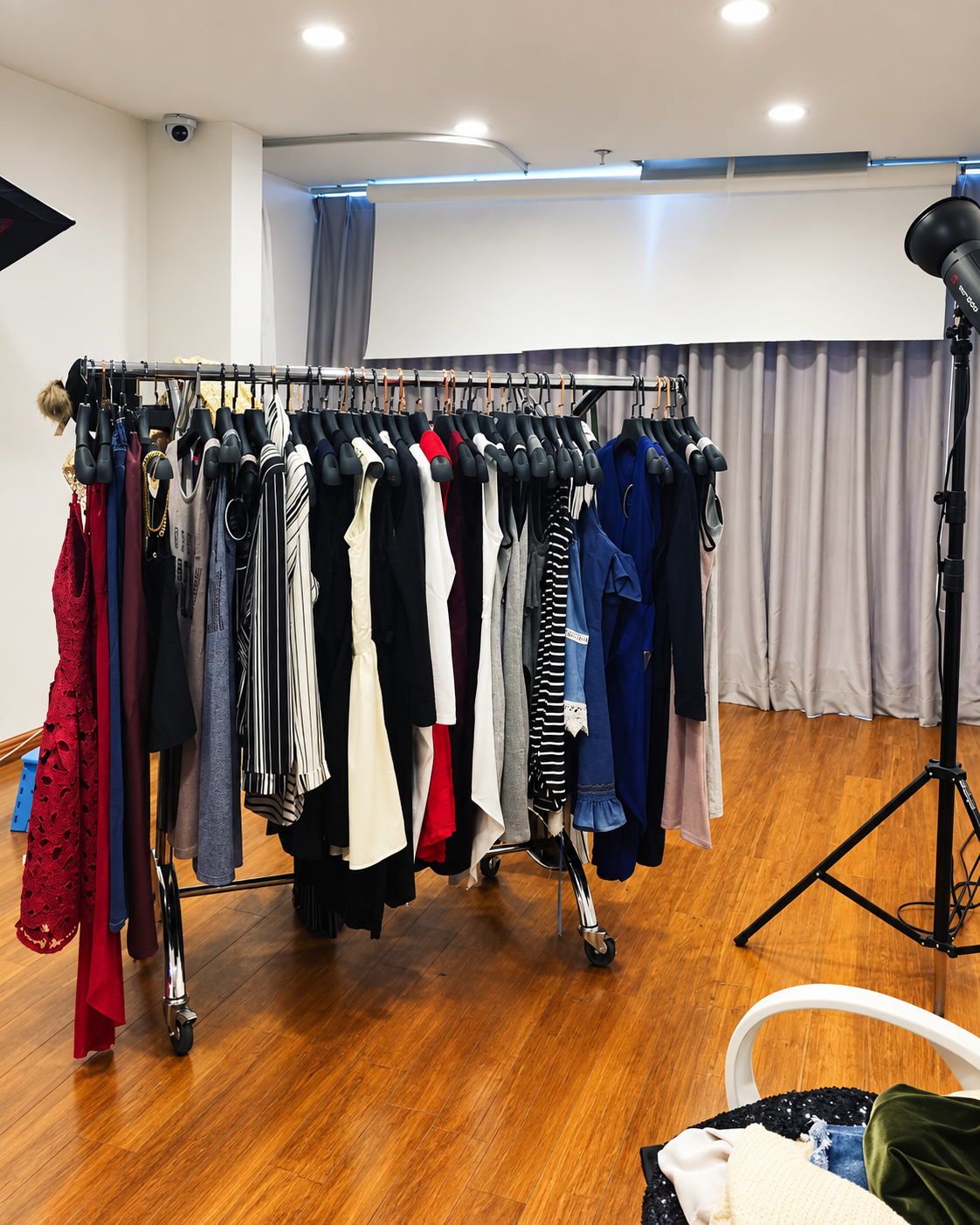
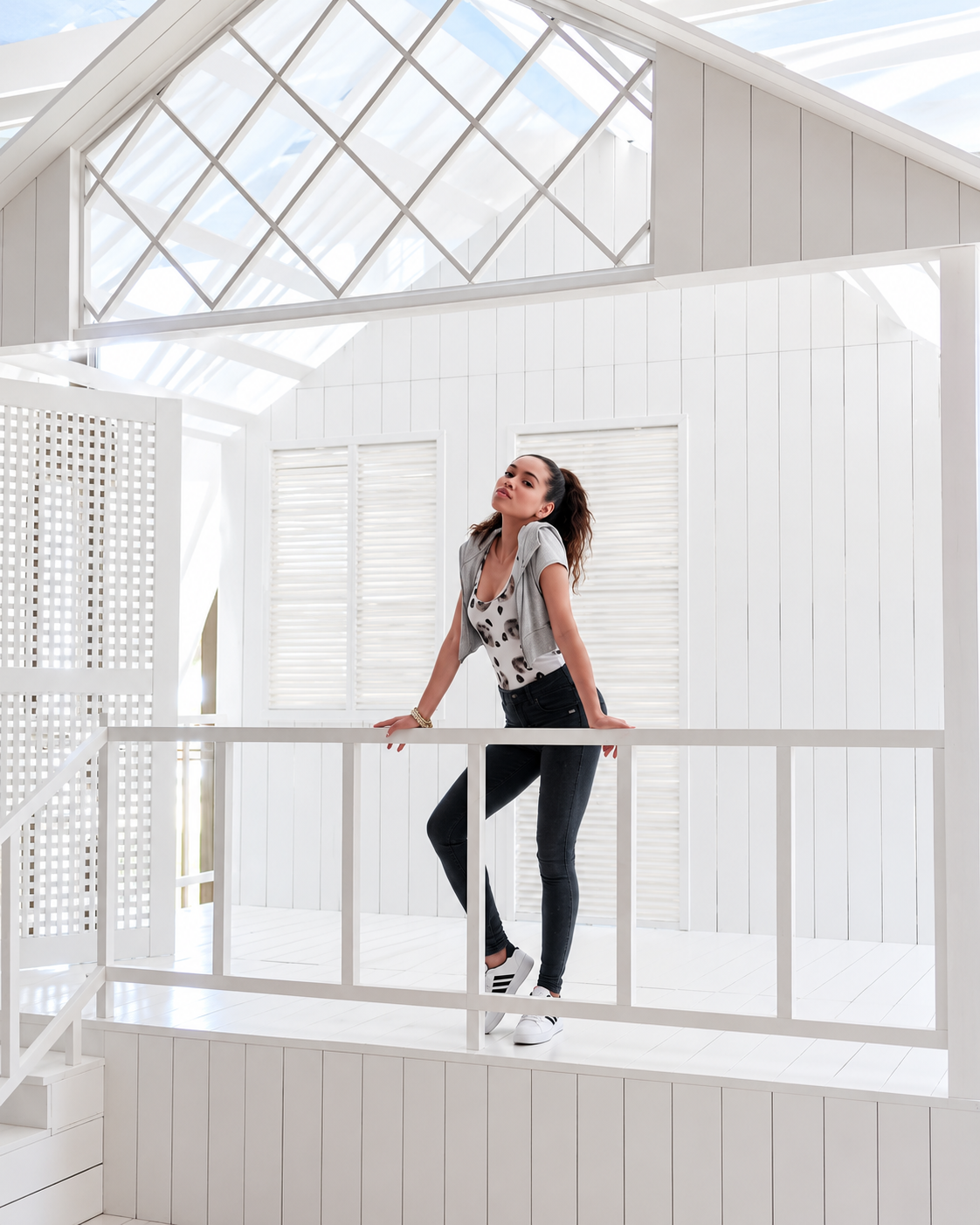
Commercial styling asks a different question from private styling. Instead of dressing a person, it dresses a product: what will read instantly on camera, what will sell across an e-commerce platform, how texture and embellishment survive a small screen, and which combinations create enough distinction to stop a scroll. Over roughly three years in Shenzhen I worked with mass-fashion names, including Zaful and Wish, while taking private clients as a personal shopper in my spare time. The two kinds of work sat side by side, and the contrast between them was instructive: one trained the eye for what travels through a feed, the other for what holds up across a table.
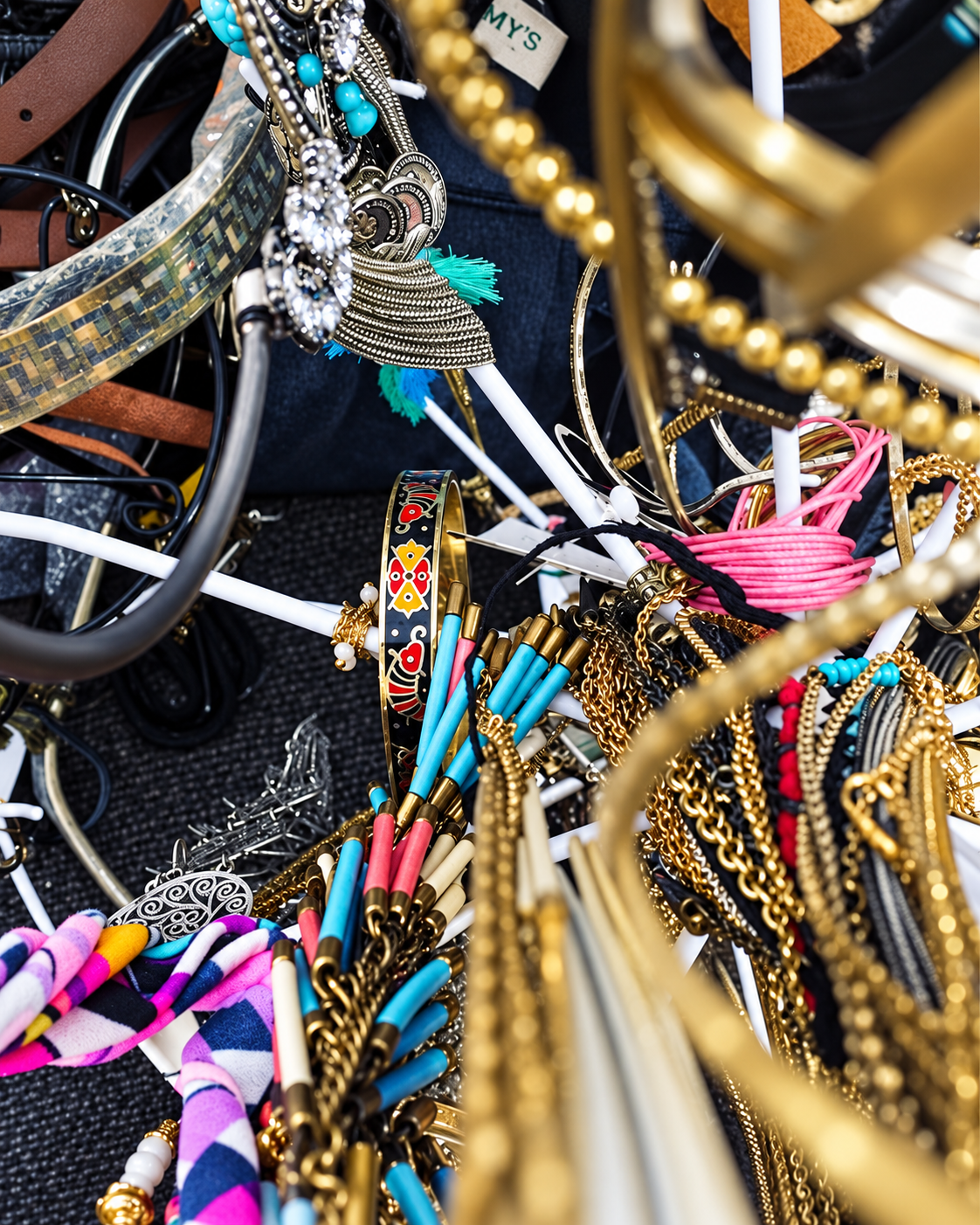
A screen rewards particular qualities. High contrast survives a small display. Metallic or crystal surfaces create movement that a still garment lacks. A large accessory establishes hierarchy immediately. Colour photographs more assertively than subtle tonal variation, an unusual silhouette makes a recognisable thumbnail, and a signature detail helps an outfit stay memorable after the scroll. None of this is a guide to chasing engagement. It is an observation that platform architecture shapes what consumers perceive as visually valuable, and that a stylist who ignores it is styling for a room that no longer exists.
The commercial work also taught a discipline that editorial work rarely does: measurement. Every styling choice produced a number, whether a click, a conversion or a return, and the numbers were not always kind to taste. That tension between creative instinct and quantitative feedback is the subject of the lessons later in this essay, and it is the reason this essay leans on data wherever it can.



The Social-Media Mirror: Where Discovery Now Happens
Clothes are now judged twice: in the room and on the screen.
China’s fashion consumer cannot be separated from platform culture. Xiaohongshu, the lifestyle and social-commerce platform also known as RedNote, is a good example. Accounts from 2025 and 2026 put its monthly active users at more than 300 million, and Daxue Consulting reports that the platform told a Chinese business newspaper in May 2026 that it had passed 400 million monthly users and about 800 million searches a day. The figures vary by source and date, but the direction is clear: discovery is happening in notes, short videos and search, not only in shop windows and brand channels.
The wider retail data shows the same shift. According to China’s National Bureau of Statistics, total retail sales of consumer goods reached 50.12 trillion yuan in 2025, up 3.7 percent, while online retail sales reached 15.97 trillion yuan, up 8.6 percent. Online sales of physical goods were 13.09 trillion yuan, up 5.2 percent and equal to 26.1 percent of total retail sales. Clothing was a slower category within that total, with a news summary of the release putting online clothing growth at 1.9 percent, which is a reminder that a platform-driven market does not mean an automatically booming one.
McKinsey and Business of Fashion’s 2026 luxury research adds a more precise picture of how discovery is changing. Luxury relationships increasingly begin outside brands’ control: the report finds that discovery is moving beyond boutiques and brand-owned channels into AI platforms, resale marketplaces and peer networks, and coverage of the research reports that as many as 46 percent of established luxury clients across the US and China use AI for inspiration and discovery. For a stylist, the implication is practical. A look must now work in a fitting room, in a photograph, in a search result and in the summary an AI assistant might produce, and the details that survive that chain are the ones that are distinctive, legible and specific.
This is not a case for chasing visibility. It is a case for understanding that visual value is partly a product of the channel. The same outfit can read as refined in person and as invisible in a feed, and a stylist’s job is to know which room the client cares about most.
Why Visibility Still Matters in Chinese Luxury
Visibility can be one component of luxury communication, increasingly combined with recognition, service and personal relevance.
The fitting-room observation needs evidence, and the best current evidence is McKinsey’s State of Luxury research, produced with Business of Fashion’s data team in 2026 and based on a survey of more than 2,000 luxury clients in the United States and China. Its headline finding applies to both markets: emotional connection is overtaking status as a driver of desire, ahead of traditional markers such as craftsmanship, heritage and exclusivity. But the way that desire is expressed differs. In China, according to the research, established brands retain the advantage, with consumers placing greater value on trust, recognition and brand authority, and brand desire is more closely tied to visibility, recognition and the shopping experience itself.
That combination explains statement dressing better than the cliché does. Visibility is not vanity in this reading. It is a way of confirming that a purchase carries recognition, and it sits alongside a demand for service and relevance. A statement piece can function as social punctuation: it marks an occasion, ends a sentence and tells the room that effort was made. McKinsey’s framing of exclusivity supports the same idea. In both markets, exclusivity is shifting from scarcity to insider recognition, meaning not whether something is rare but whether the right people know what it signifies.
Do affluent Chinese consumers prefer visible luxury? Some do, in some contexts, but the evidence does not support a blanket preference. Research suggests that recognition and established brands carry more weight in China than in the US, while emotional connection, quality and personal meaning are rising in both. The honest answer varies by cohort, city and occasion.
Shine, Statement Pieces and the Return of Maximalism
Fashion reporting suggests expressive dressing is currently welcome in China, which is not the same as minimalism being over.
Reflective surfaces, crystals, metallics, jewellery, graphic construction and strong accessories share one quality: immediate visual presence. Fashion reporting suggests that this quality is currently in favour. Jing Daily described an “economic boom” maximalism, a style that flips fashion’s rules by dressing with bold flair against the gloom of slow growth. Other 2025 coverage tied the mood to nostalgia for the boom years of the early 2000s and noted that international labels sponsored “boom era” themed posts on RedNote. The point is not that minimalism is dead. It is that Chinese fashion is hospitable to competing aesthetics at the same time: quiet luxury, relaxed tailoring, domestic design pride, maximalist nostalgia, sportswear and highly individual styling can all coexist.
A useful way to read the revival is as a signal about mood and not about class. Expressive dressing tends to return when consumers want visible optimism, and it tends to recede when they want visible prudence. That is a dynamic, not a destiny, and it is the reason a stylist should be wary of any trend that is presented as permanent.
Is maximalism returning in Chinese fashion? Fashion reporting from 2025 describes a revival of bold, nostalgic and expressive styling in China, partly as a reaction to slower economic times. It is best read as one current among several and not as a permanent replacement for quieter styles.
Why Quiet Luxury Is Also Growing in China
The Chinese luxury market is not moving from loud to quiet or from quiet to loud. It is fragmenting.
The counter-evidence matters as much as the evidence. Jing Daily has also reported that, amid economic headwinds, Chinese fashion shifted from bold, dopamine-coloured looks toward quieter, heritage-inspired aesthetics, and it has documented pop-up and flagship openings by understated brands that point to a demand for durability and restraint. Taken beside the maximalism reporting, the pattern is not contradiction but oscillation: taste in a large, diverse market responds to mood, income, city and cohort, and it moves in more than one direction at once.
What both currents share is a demand for meaning. Quiet luxury in China is sometimes read as a signal of quality, durability and cultivated taste, and in some segments it is a way of expressing individual taste rather than withdrawing from visibility. A stylist who assumes quiet means “low impact” misreads it as badly as one who assumes loud means “low discernment.”
Is quiet luxury popular in China? Yes, in particular segments. Reporting describes affluent consumers embracing understated, durable and well-made pieces, and quiet-luxury labels expanding their presence in the market. It sits beside, and competes with, bolder trends, which is why neither label describes the market well.
The Data Room: What the Numbers Say About Luxury and Retail
When a market shrinks and splinters, averages mislead and segments tell the story.
The sections above rely on observation and reporting. This section collects the quantitative signals in one place, each attributed to its source and year. The aim is not to forecast but to show the shape of the market that styling operates in, and the table below is designed to be refreshed as new editions of these reports appear.
| Signal | Figure | Source and year |
|---|---|---|
| Mainland China personal luxury market | 17%-19% decline in 2024; 3%-5% decline in 2025 | Bain & Company, 2026 |
| Share of Chinese luxury spending made on the mainland | 65% in 2025 (35% outside) | Bain & Company, 2026 |
| Secondhand luxury in China | Grew 15%-20% in 2025; under 10% of the primary market | Bain & Company, 2026 |
| Global luxury growth outlook | 4%-6% a year through 2030; by market about 6% in China, 5% in the US and 4% in Europe | McKinsey and BoF, 2026 |
| Underserved “established” luxury clients | A pool of roughly $70-90 billion among clients spending $5,000-$50,000 a year | McKinsey and BoF, 2026 (as reported) |
| Global personal luxury goods market | About EUR 358 billion in 2025; consumer base down from 400 million (2022) to about 340 million (2025) | Altagamma-Bain Monitor, 2025 (as reported) |
| Luxury as “quality over design or brand” | 92% of Chinese respondents agreed | Bluebell Group, 2025 |
| Preference for homegrown Asian labels | 86% of Chinese respondents | Bluebell Group, 2025 (as reported) |
| China total and online retail | Retail 50.12 trillion yuan (+3.7%); online 15.97 trillion yuan (+8.6%); online physical goods 26.1% of retail | National Bureau of Statistics, 2025 |
| AI in luxury discovery | Up to 46% of established clients in the US and China use AI for inspiration; 54% to evaluate brands | McKinsey and BoF, 2026 (as reported) |
The category picture inside Bain’s 2025 China figures shows how uneven the market has become. The chart below uses the midpoint of each reported range, so it should be read as an illustration of direction and scale and not as a precise measurement.
Mainland China personal luxury, 2025: change by category (midpoint of Bain’s reported range)
Sources: Bain & Company, 2026; jewellery range as reported by GJEPC citing Bain. Bars scale to the midpoint of each range. Overall mainland market: -3% to -5%.
Five readings of the numbers. First, the market is a barbell. Bain’s full report and coverage of it describe affordable luxury and ultra-premium segments outperforming the middle, with top-tier consumers accounting for a disproportionate share of spending. Second, desire has moved toward the emotional and the sensory: beauty, the one category that grew, was driven by demand for ultra-premium skincare and fragrance, while watches and leather goods, the categories most associated with price-led status, fell furthest. Third, repatriation matters. With a weaker renminbi narrowing price gaps, 65 percent of Chinese luxury consumption took place on the mainland in 2025, which makes the domestic client, the domestic store and the domestic stylist more important to the market than they have been for years.
Fourth, fashion held up better than leather goods, and Bain attributes that to faster innovation cycles, stronger digital engagement and fashion’s role as a vehicle for self-expression and social participation. That is an important point for stylists, because it suggests that clothing is the category where interpretation, not only possession, still drives the purchase. Fifth, consumers are consolidating spending among fewer preferred brands that deliver what Bain calls “true value,” which means the gap between winners and laggards is widening. In a market like this, a client is not spending less because they are caring less. They are spending more deliberately, and they expect every choice to be explainable.
The editorial implication is the sentence this essay keeps returning to: affluent Chinese shoppers are not becoming less discerning. They are becoming harder to impress.
What do affluent Chinese consumers value in luxury? Current research points to emotional connection, product quality, recognition and trust in established brands, personalised service and, increasingly, pieces that express individual identity. In a more selective market, clients also look for what Bain describes as true value. The weighting varies by client segment and by occasion.
Private Styling and the Luxury of Being Recognised
For an affluent client, being understood can be more luxurious than being impressed.
A private styling appointment is a form of luxury in its own right: attention, editing, discretion, memory and the ability to make a client feel recognised. It means remembering what was tried last time, what was rejected and why, what the next occasion is and what the client would never say aloud. This matches the data. In China, according to coverage of the McKinsey and BoF report, bespoke and personalised service ranks as the number-one driver of exclusivity, followed by private appointments and personal relationships with sales advisers, and it is particularly important for Gen X clients, who hold significant spending power.
The same research draws a conclusion that applies directly to retail strategy. Because Chinese consumers tend to equate luxury experiences with high-touch service, brands should use AI to deepen client confidence and not to reduce human interaction, pairing advisory services with tools a shopper can navigate. The finding is a useful corrective to the assumption that automation is the future of luxury retail. In this market, the human adviser is not a cost to be removed. It is the product.
Why is private styling important in luxury retail? Research suggests that high-touch service, including bespoke treatment, private appointments and trusted-adviser relationships, is a leading marker of exclusivity for Chinese luxury clients. A private styling session delivers recognition, editing and discretion, which can feel more luxurious than the object alone, and it supports the repeat relationship on which a selective market depends.
From Status Symbol to Identity Signal
The job is no longer matching a client with an expensive object. It is building a visual language in which the object feels specific to them.
Older narratives about luxury growth in China emphasised status display and globally recognisable brands. That history still matters, but clients increasingly want luxury to reflect identity, taste and personal meaning. Jewellery is the clearest evidence. Business of Fashion has reported that part of the jewellery boom is driven by design-led pieces that consumers use to symbolise their own personal style. A statement accessory can operate on several levels at once: status, symbolism, identity, memory and visual drama. That is why the investment logic behind modern necklaces and fine jewellery applies so well here: the piece works hardest when it means something to the person wearing it.
The shift from status to identity also explains why emotional connection now sits at the top of McKinsey’s desirability rankings. Status is a message sent to others. Identity is a message the wearer sends to themselves and chooses to share. For a stylist, that moves the question from “what will impress?” to “what is true to this person, and how do we make it legible?”
China’s Affluent Consumer Is Not One Person
Never write “Chinese clients prefer X.” Write which clients, in which context, and what the stylist observed.
China’s luxury market contains legacy-wealth consumers, newly affluent entrepreneurs, younger status seekers, connoisseurs, trend-driven spenders, globally educated professionals and increasingly confident buyers of local brands. Their preferences differ by age, city, occasion and the mood of the economy, and the data confirms the fragmentation. McKinsey’s research finds that Gen X clients, who hold significant spending power, place particular weight on bespoke service, while it also finds high-spending clients gravitating toward smaller, less saturated “challenger” brands that offer recognition from a selective inner circle rather than from the general public.
The practical consequence is that one-size-fits-all styling is less useful than ever. A look that signals confidence to one cohort can signal nothing to another, and a brand that styles identically for London, Shenzhen and Shanghai is choosing to be misread in at least two of them. The only responsible form of the sentence names a client type, a context and an observation, and it leaves the rest as a question.
Six Lessons From the Production Floor
A fashion career in China is partly an education in scale, systems and numbers.
Years of work between factory floors, e-commerce teams and private fittings taught me six things I would not have learned in a studio.
1. Mass fashion is massive. Production at scale reaches an almost unimaginable volume, and the pressure on designers to deliver within that framework is immense, often favouring quantity over creativity. 2. Systems are primordial. In fast-moving photography and e-commerce, efficient processes and strict guidelines decide whether work ships on time, and a creative idea without a system rarely reaches the customer. 3. Anyone can make e-money. The democratisation of online commerce lets people from many backgrounds build a niche, though ethical standards matter most when profit is quick. 4. On the internet, nothing is as it seems. Visual commerce demands a discerning eye, and aesthetics should never be bought at the expense of integrity. 5. Numbers rule. In a landscape of metrics and market value, numerical literacy is as essential as creative flair, and the best stylists learn to read a spreadsheet the way they read a silhouette. 6. Context decides meaning. The same garment can say different things in different places, which is the lesson this entire essay rests on.




Craftsmanship, Local Brands and the New Chinese Confidence
Maximum visual impact and maximum product discernment can coexist.
Visual flamboyance should never be confused with low discernment. A client can want an ornate, bold or shiny piece and still be highly demanding about material, construction and finish, which is why quality has become a baseline and not a differentiator. McKinsey puts it plainly: in both markets, craftsmanship and quality, while essential, have become the price of entry. Bluebell Group’s 2025 consumer profile of Asia sharpens the point: in that survey, 92 percent of Chinese respondents agreed that luxury is more about the quality of the material and product than about the design or the brand behind it.
Another change follows from that confidence: being foreign is no longer sufficient proof of taste. Bluebell’s survey found that 86 percent of Chinese respondents said they preferred homegrown Asian labels, and Bain’s analysis highlights the continued rise of local Chinese luxury players, who are gaining share not only in beauty, where they have long been competitive, but increasingly in ready-to-wear, jewellery and leather goods. This does not mean local brands have displaced international luxury. It means the field has widened, and that design confidence, cultural reference and local understanding are now features of the competition and not footnotes to it.
Both sets of figures come with a caution. Surveys describe their respondents, not the whole population, and the beauty category in particular is adjacent evidence for fashion and not direct proof of it. The direction, however, is consistent across sources: more discernment, more choice and more confidence in local design.
Are Chinese consumers buying more local luxury brands? Surveys and market reports point in that direction: a 2025 Bluebell survey found that most Chinese respondents preferred homegrown Asian labels, and Bain describes a continued rise of local players across several categories. The evidence is directional and varies by category, and it does not mean that international luxury has been displaced.
What Western Stylists Often Misread
The stylist’s job is to learn the client’s visual grammar, not to translate it into their own.
The errors are consistent, and they are not unique to any one country. They include assuming that neutral automatically means sophisticated, treating visible luxury as unsophisticated by definition, and confusing minimalism with universality. They include underestimating the importance of occasion and photography, styling a global brand identically for London, Shenzhen and Shanghai, ignoring the client’s digital life, and applying Western class codes to Chinese consumers without translation. This is not a boast about better judgement. It is a reminder that a stylist works inside a culture’s grammar, and that grammar has to be learned before it can be edited. The same dynamic of power, perception and who sets the standard is traced in the fashion-power argument made about a famous film and in the shift in fashion authority seen around the Met Gala.
How do luxury consumers dress in China? There is no single answer. Affluent Chinese consumers move between understated knitwear, recognisable heritage pieces, local designer jewellery, sportswear and expressive evening dress, depending on the occasion, their age and their city. What unites them is an expectation that clothing communicates something specific.
What fashion trends are popular among wealthy Chinese consumers? Reporting describes several currents at once: quiet luxury and relaxed, versatile tailoring; a revival of maximalist and nostalgic styling; design-led and personally meaningful jewellery; domestic brands gaining confidence; and a growing interest in pre-owned luxury. Trends in a market this large coexist and compete, and they tend to follow mood and income as much as taste.





Five Trend Lines: What the Data Suggests About Luxury and Retail
The useful forecast is not a prediction. It is a set of pressures worth watching.
The following five trend lines are an analytical framework drawn from the sources above, not a forecast. Each is stated with the evidence behind it and the question it raises for stylists, brands and travellers who work with Chinese luxury consumers. The 2026 McKinsey and BoF research frames the backdrop: the luxury industry has moved past its post-pandemic super-cycle into a market described as shrinking and splintering, with normalised growth projected at 4 to 6 percent a year through 2030.
1. Polarisation. Bain describes a barbell in which affordable luxury and ultra-premium segments outperform the middle. If that holds, the mid-priced, logo-led handbag or watch is the most exposed product, and the clearest “true value” offers, whether a distinctive local design or a deeply personalised service, are the most protected. Question: what does a client get here that they could not get more cheaply or more personally elsewhere?
2. Service as infrastructure. If bespoke service is the leading driver of exclusivity in China, then advisers, private appointments and memory become capital assets. McKinsey’s advice to use AI to deepen, not replace, high-touch service points to a hybrid model in which tools do the searching and people do the recognising. Question: who in this business knows the client well enough to be trusted with their next occasion?
3. Discovery outside brand control. Peer networks, creators, resale and AI are increasingly where luxury relationships begin. In China, McKinsey notes that resale is still relatively nascent and that trust in authenticity is the main barrier, while Bain reports secondhand luxury growing 15 to 20 percent while remaining under 10 percent of the primary market. Question: how does a look, or a brand, establish trust before the client ever enters a store?
4. Repatriation and local confidence. With 65 percent of Chinese luxury spending taking place on the mainland in 2025 and local players gaining share across ready-to-wear, jewellery and leather goods, the centre of gravity for Chinese luxury is moving closer to home. Question: what does a brand know about local culture that a global campaign cannot supply?
5. Experiences compete with objects. Both McKinsey and Bain describe experiences taking priority over material purchases. In the McKinsey and BoF survey, travel came first in both markets when clients were asked how they would spend an additional $5,000, and Bain reports that travel and wellness retained priority over material purchases in China. Question: how can a garment, a fitting or a styling session become an experience that is remembered, not merely an item that is owned?
What would change this view? A durable recovery in consumer confidence, a shift in property or equity markets that restores aspirational spending, or a breakthrough in resale trust could all strengthen the middle of the barbell and slow the move toward the extremes. The responsible reading is that these are pressures with evidence behind them, not outcomes with guarantees attached.
The New Affluent Aesthetic Is Plural, Not Uniform
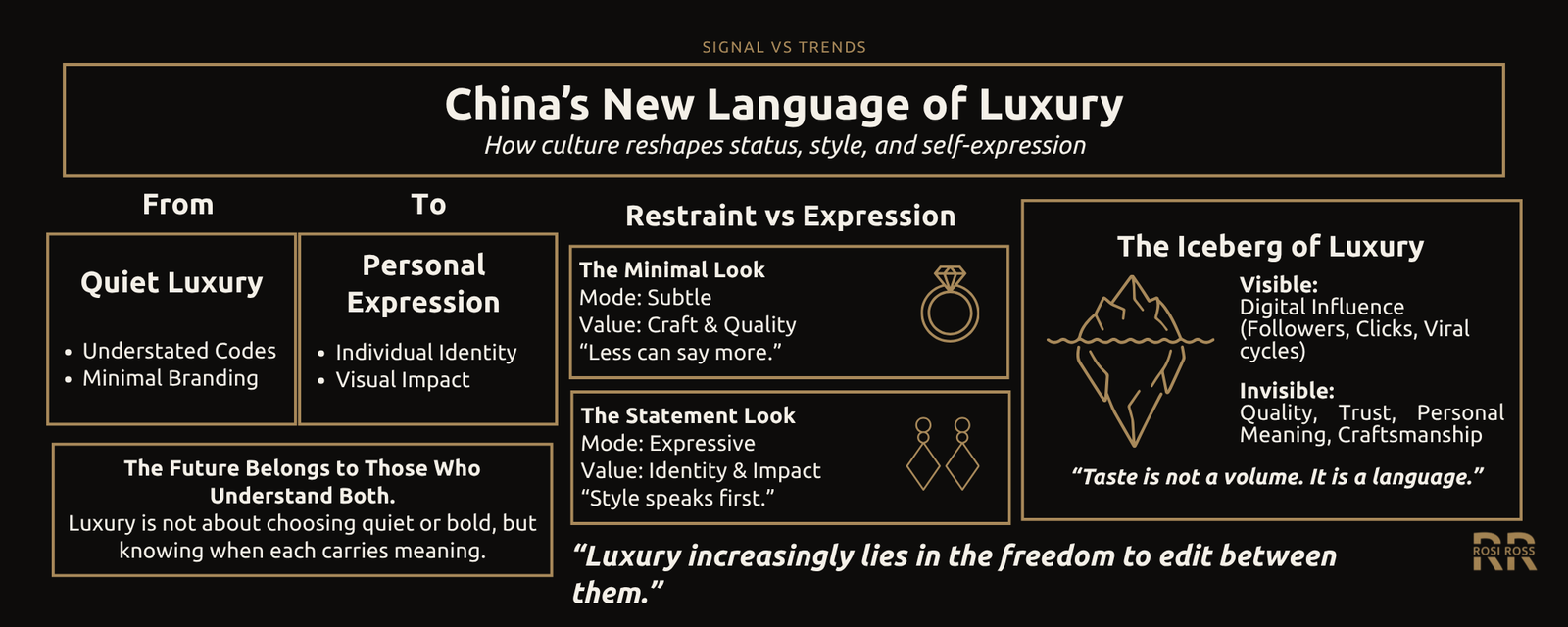
Luxury increasingly resides in the freedom to edit codes, not obey a single one.
High-spending consumers can move between an understated cashmere coat, a recognisable heritage bag, local designer jewellery, athleisure, maximalist eveningwear and a highly personalised private-shopping experience in the same week. The freedom to edit those codes, instead of obeying one, is where luxury increasingly sits. As a framework and not a forecast, five signals describe what the new affluent aesthetic tends to require.
Recognition: the brand or piece carries enough authority or distinctiveness to feel intentional. Quality: material and construction are increasingly non-negotiable, the price of entry. Identity: the object says something specific about the wearer, which is the logic behind the rise of emotional connection. Experience: private service and personalised attention increase perceived exclusivity. Visual relevance: the look works both in person and within a platform-driven image culture.
The long-term story is not Westernisation. Affluent Chinese consumers are likely to become more locally confident, more fragmented and more selective, while continuing to participate in global luxury culture. For stylists and brands, the opportunity is not to choose between quiet and loud. It is to understand a client well enough to know when each code carries meaning.
What China Taught a Stylist About Taste
Success is not a destination. It is a dynamic journey of adaptation.
Each twist in this path, from a television set to a Dongguan factory floor to a Shenzhen fitting room, enriched my understanding of the industry and reinforced the importance of adaptability. It taught me to read context before judging taste, to treat data as a check on instinct, and to respect the way a screen and a room can judge the same outfit differently. It also taught me a humility that fashion education rarely does: that a refined eye is a trained eye, trained inside a particular culture, and that it becomes more useful once it admits as much.
To fellow stylists and entrepreneurs, the advice that follows is simple: learn the grammar before you edit it, keep evidence and interpretation separate, treat service and memory as part of the craft, and let curiosity outrun certainty. The best styling lesson China taught me was not how to make an outfit louder. It was how to stop assuming my own definition of luxury was universal.
“Understatement is a cultural code,
not a law of luxury.
The outfit that felt finished in one room
felt unfinished in another —
and neither room was wrong.
Restraint and spectacle can both be sophisticated
when they are culturally legible,
well made
and intentionally worn.”

