

On ritual versus routine, botanical skincare ingredients, sensory beauty formulation, and why the most considered modern skincare practice is defined not by what it applies to the skin but by the quality of presence brought to the application
Modern skincare is not defined by steps, but by moments of contact — between skin, texture, and time. What the most considered beauty practice offers is not efficiency but presence: the specific quality of attention that the act of caring for the self, done slowly and with intention, makes possible. Skincare is no longer simply applied. It is experienced. And the experience — the texture, the scent, the moment of contact between product and skin — is where the most considered modern beauty practice actually lives.
There is a particular quality to the ten minutes at the bathroom mirror in the early morning or the late evening — a quality that has nothing to do with the efficacy of the products being applied and everything to do with the act of applying them. The hands moving across the face. The warmth of the water. The specific scent that arrives before the conscious mind has categorised it. The texture of a skincare product that behaves differently at different temperatures, that changes in contact with skin, that communicates through touch something that its ingredients list could never capture. These are not incidental qualities of skincare. For a growing number of people, they are the point.
Beauty culture has spent a significant portion of its recent history moving in the opposite direction — toward the clinical, the accelerated, the measurably optimised. The language of skincare results dominated. The active ingredient was king. The routine was evaluated by its efficiency rather than its experience. And the consumer who followed this logic arrived, eventually, at a paradox: a bathroom shelf full of skincare products that worked, in the measurable sense, while somehow failing to provide the particular quality of daily self-care that a ritual is supposed to produce.
What a ritual provides that a skincare routine does not is not merely clean skin. It is a moment of deliberate presence — the interruption of the day’s velocity, the specific quality of attention that comes from contact with textures and scents that require you to be in the moment of applying them rather than already thinking about what comes next. Fresh has understood this since its founding in 1991. Lev Glazman and Alina Roytberg built the brand on the conviction that beauty should be felt as well as measured — that the sensory experience of a skincare product is not supplementary to its efficacy but inseparable from it. Three decades later, the broader beauty culture has begun to arrive at the same position.
The understanding that sensory experience is not separable from functional wellbeing — that how something feels in the using shapes the psychological benefit it produces — runs through the most considered approaches to beauty beyond skincare. In fragrance, this produces the conviction that the scent chosen with genuine intention outperforms the one chosen by default, explored in The Language of Scent: How Fragrance Becomes Identity in Modern Beauty: the argument that what we smell, how we feel it, and what we associate it with are inseparable from one another. Fresh operates within the same understanding — that the olfactory dimension of skincare, the tactile quality of formulation, and the clinical outcome are all threads of the same experience.
Cleansing as transition — the Fresh Soy Face Cleanser and the ritual threshold
Gentleness is the new luxury code in skincare — not because strength has been abandoned, but because the person who chooses gentleness has understood that the most significant threshold in a daily ritual is the one crossed when the external world is released and the internal one attended to. The cleanser that performs this function is not a functional product. It is an architectural one.
The Fresh Soy Face Cleanser is among the most studied objects in Fresh’s skincare range — not by dermatologists alone, but by the people who have used it every evening for years and are attempting to understand why this particular skincare product, in this particular moment of the day, produces an effect disproportionate to its apparent simplicity. The formula contains soy proteins, cucumber extract, and rosewater. It removes what the day has deposited on the face without removing what the face requires to function. But this description addresses the wrong dimension of the product’s skincare value.
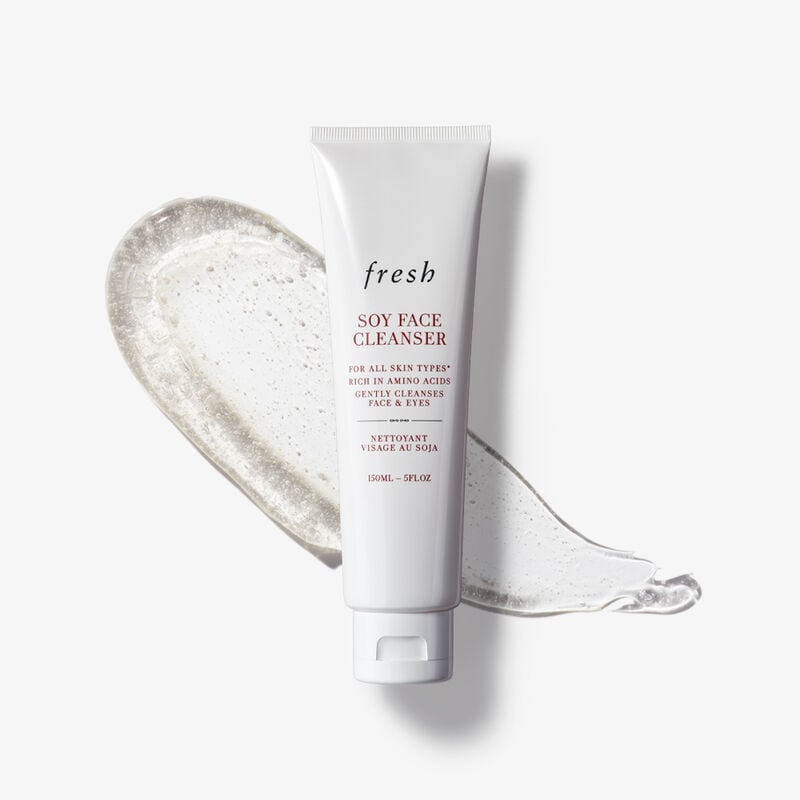
What the Fresh Soy Cleanser provides is a threshold. The moment of application — the texture arriving on dry or wet skin, the gentle emulsification, the warmth of the water that completes the rinse — is the moment at which the day ends and the evening begins. This is not a metaphor. It is a documented function of ritual: the repeated sequence of physical skincare actions that signals to the nervous system that a transition has occurred. A scent experienced at the same moment every evening, over years, accumulates neurological authority: it does not merely smell of rosewater. It smells of the transition, of the permission to stop, of the specific quality of an evening that belongs to the self.
Hydration as layered sensory architecture — the Fresh rose and kombucha ritual sequence
The layering of skincare hydration is not a functional sequence. It is a choreography — three different forms of water’s relationship with skin, each one communicating through texture something that the next layer will not repeat, building a sensory and structural whole that no single skincare product could produce.
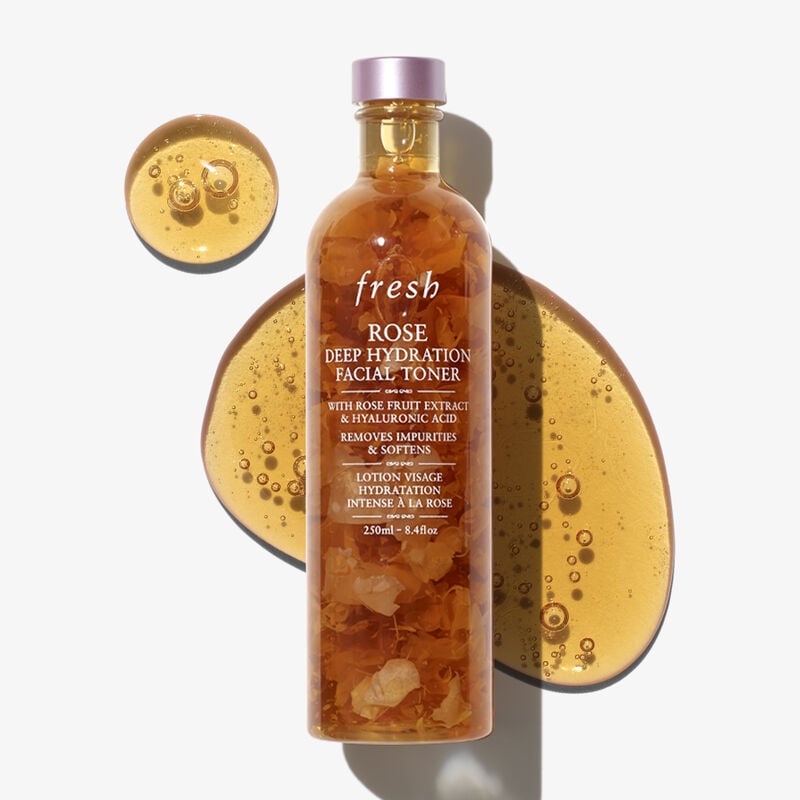
The Fresh Rose and Hyaluronic Acid Deep Hydration Toner arrives first and arrives lightly: a liquid that spreads across the face with an immediacy that communicates both its mission and its skincare ingredient intelligence. Hyaluronic acid is the most powerful humectant available to skincare formulation — a molecule that attracts and binds water at volumes vastly exceeding its own weight — but its effect in a toner is not merely the delivery of moisture. It is the preparation of the skin to receive everything that follows. The face after the toner is not yet hydrated; it is opened, made receptive, its surface tension altered by the rosewater and the hyaluronic acid into something more willing to accept what comes next. This is the quality of a good first skincare layer: it changes the conditions under which all subsequent layers operate.
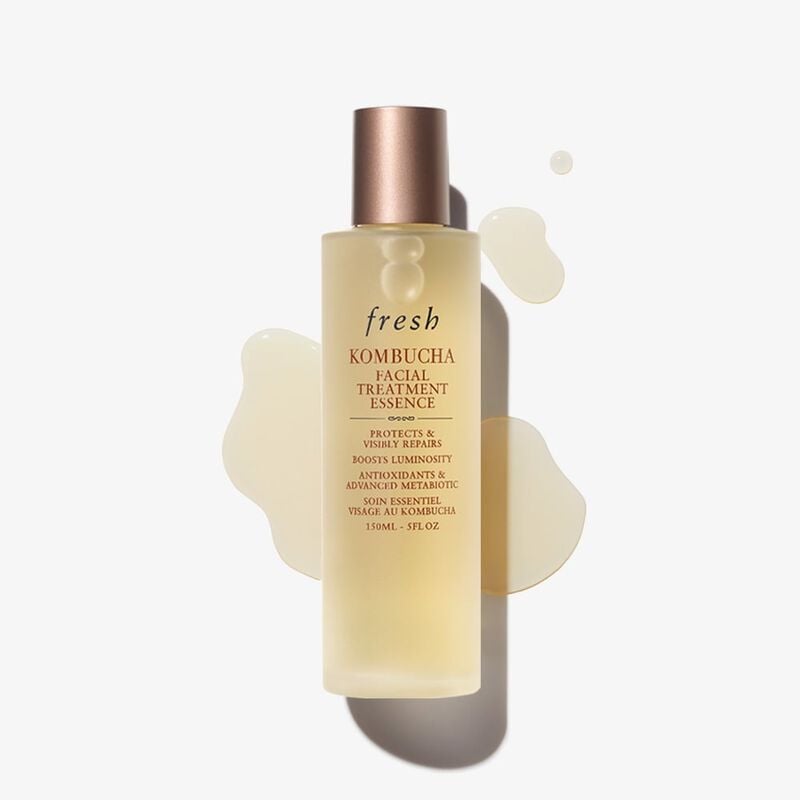
The Fresh Kombucha Antioxidant Facial Treatment Essence introduces a different texture and a different quality of contact. Pressed into the skin rather than swept across it, it asks for a slower, more deliberate form of skincare attention. The fermented kombucha, with its complex mixture of organic acids and B vitamins, interacts with the skin’s surface in a way that is qualitatively different from the toner that preceded it. Where the toner was an invitation, the essence is a conversation: the face and the skincare product in dialogue, the skin absorbing what the fermentation process has produced. The kombucha skincare essence is the moment in the sequence that most rewards slowness — modern alchemy not in the mystical sense, but in the material one: the transformation of raw skincare ingredients through biological process into something with properties the original components did not possess.
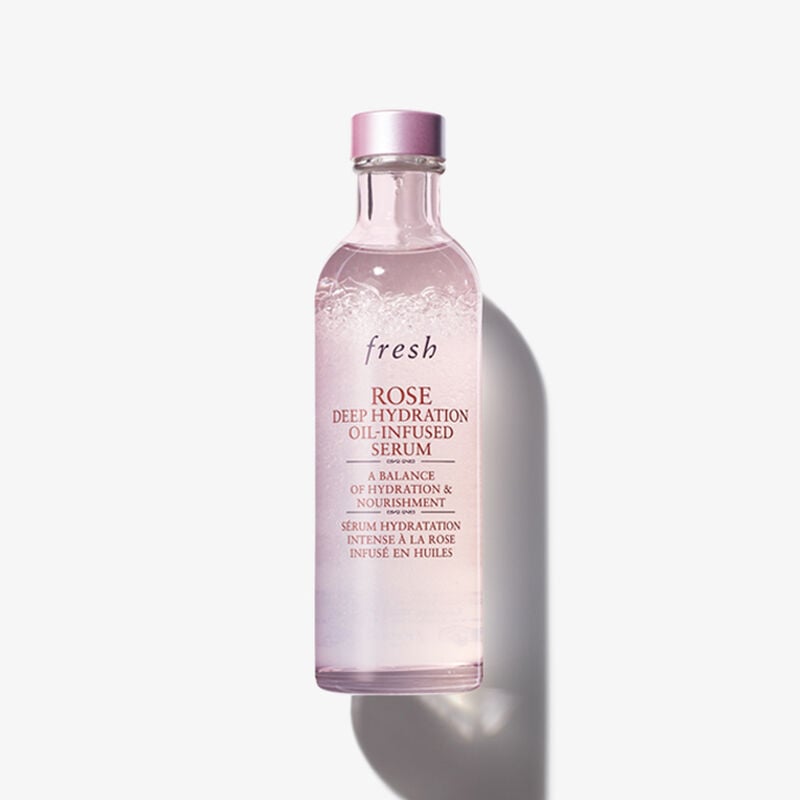
The Fresh Rose Deep Hydration Oil-Infused Serum is the third and most complex texture in the skincare sequence — a hybrid formulation that exists in the territory between oil and water, behaving initially like the former before resolving into the latter. Its application introduces warmth — the friction of the hands warming the oil, the oil warming the skin, the skin responding to the warmth with an increased receptivity that the earlier skincare layers have prepared it for. The rose extract delivers colour and scent and the anti-inflammatory properties of its compounds. The oil-infused base reinforces the skin barrier that the hyaluronic acid has hydrated from within. Together, the three skincare layers constitute not a routine but a choreography — each texture distinct, each contact different, each layer building what the next one requires.
The shift from single-product skincare toward layered, texture-conscious rituals reflects a broader cultural understanding of how skincare actually produces its most significant effects. As Vogue’s editorial coverage of modern skincare philosophy documents, the most compelling contemporary skincare is the kind that rewards the attention invested in its application — where the quality of the experience contributes to the quality of the outcome, because skin that is treated with care and time responds differently from skin that is processed in haste.
Time and transformation — the Fresh Rose Face Mask and Sugar Polish skincare ritual
The skincare mask is the ritual’s most honest moment — the point at which the products ask for something that the modern pace of life does not easily accommodate. They ask for time. Not long, but uninterrupted. Specifically yours. The skincare ritual that requires fifteen minutes of stillness is making a counter-cultural claim: that the self is worth this specific quality of undivided attention.
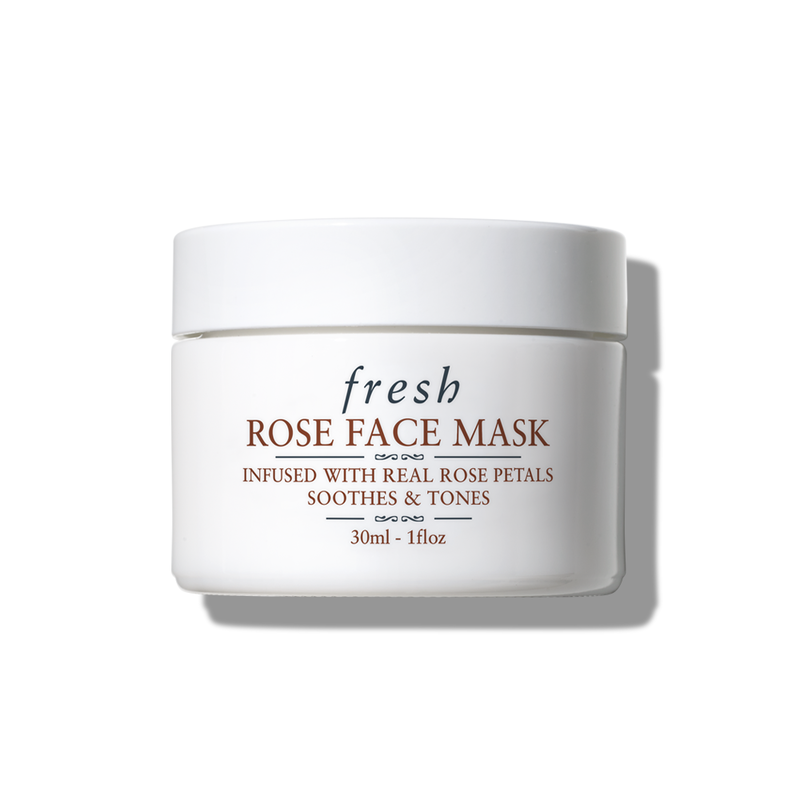
The Fresh Rose Face Mask requires fifteen minutes of stillness. The rose clay draws impurities from the pores through a physical mechanism that cannot be accelerated. The real rose petals embedded in the skincare formula — pressed against the skin during application, visible in the product as evidence of the ingredient’s natural origin — deliver their anti-inflammatory compounds across the duration of the mask’s contact with the face. The cooling sensation that arrives almost immediately and sustains itself across the fifteen minutes is both the skincare experience and the function: the reduction in surface temperature produces the vascular response that reduces redness and prepares the skin to receive the hydration that will follow the mask’s removal.
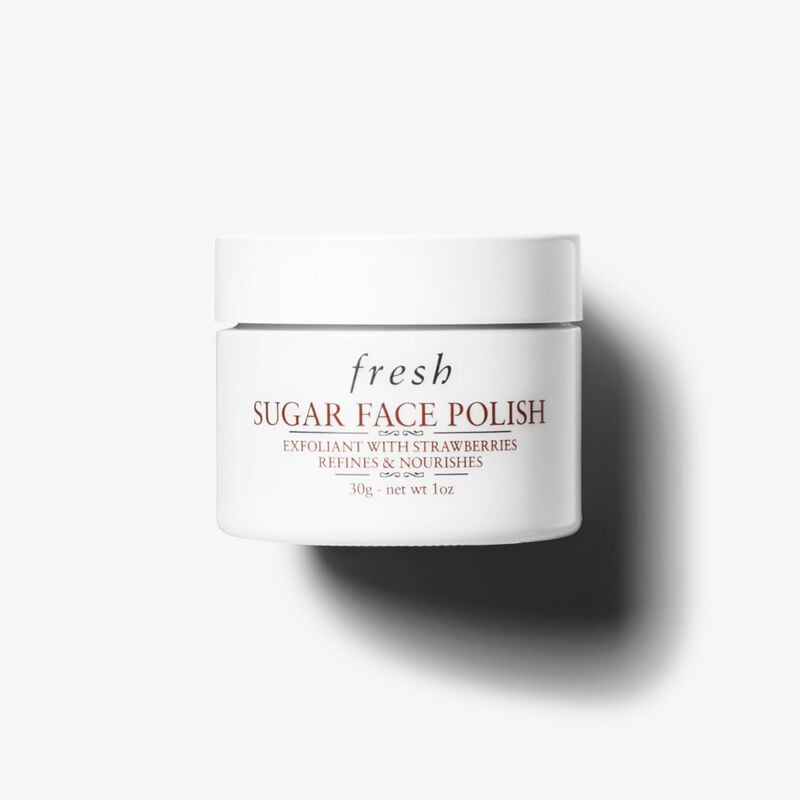
The Fresh Sugar Face Polish Exfoliator occupies a different temporal register — quicker, more actively physical, the hands moving across the face with a deliberateness that the toner and the essence did not require. Sugar crystals dissolve on contact with water, which means the skincare exfoliation is not fixed at the intensity of first application but decreases as the crystals melt — a self-limiting mechanism that prevents the over-exfoliation that more aggressive skincare formulas produce. The sweetness of the sugar, present in the scent before it is present in the texture, introduces a sensory note that is unexpected in the context of facial skincare and all the more memorable for it. The skin after the Sugar Polish has been transformed in the most literal sense — the accumulated surface of the week removed, the freshness beneath it revealed.
The intelligence of choosing skincare ingredients that work with the skin’s own biology — that reinforce rather than override the skin’s natural systems — connects Fresh’s ingredient philosophy to the most considered approaches to skin health across brands and categories. The Return of Barrier Beauty: Why Lanolin Is the Ultimate Skin Investment explores this principle directly: the argument that the ingredient most closely mirroring the skin’s own lipid matrix produces results that more aggressive skincare interventions cannot replicate. Fresh’s botanical skincare intelligence — rose for its anti-inflammatory properties, sugar for its self-limiting exfoliation, kombucha for its biologically complex actives — rests on the same foundational principle.
Extending the sensory skincare ritual — body care, the Sake Bath, and the Fresh body range
The body is not a lesser surface than the face — it is the face’s context, the full environment of skin that the ritual touches when it is understood as more than facial maintenance and approached as what it actually is: the daily practice of inhabiting the self with care. The elevation of body skincare from a functional necessity to a full sensory ritual is one of the most significant developments in contemporary luxury beauty culture.
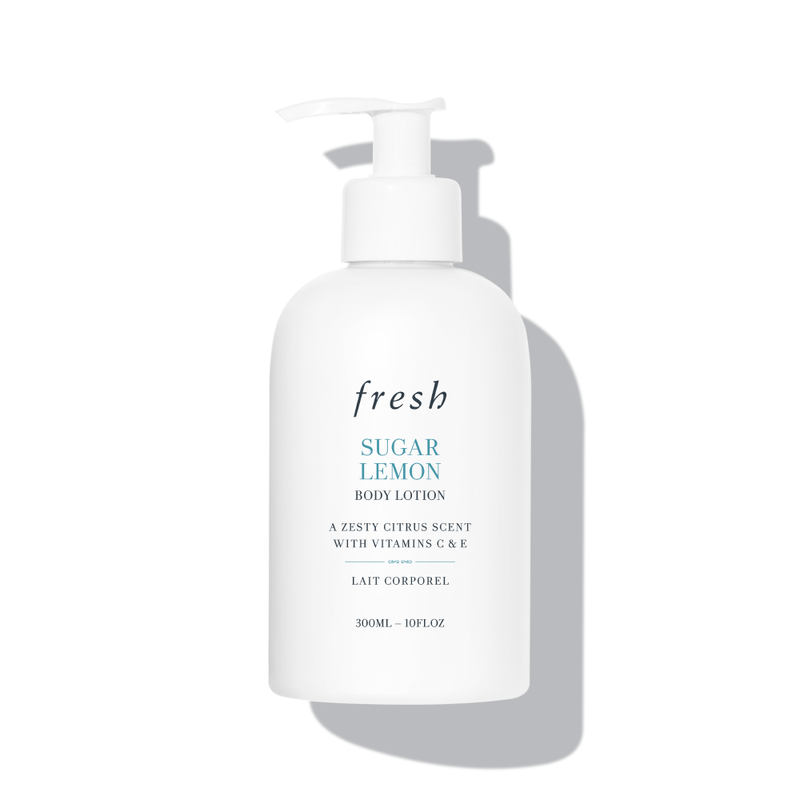
The Fresh Sugar Lemon Body Lotion introduces the skincare ritual’s vocabulary to the largest surface available — and in doing so, changes the nature of the experience. The lemon extract carries brightness in scent and skincare function: a citric lightness that lifts the register of body moisturising from the dutiful to the pleasurable. The sugar extract delivers the same humectant skincare intelligence it provides in the Polish, drawing moisture to the skin’s surface and maintaining it across the hours of the day. Applied immediately after bathing, while the skin retains the warmth of the water, the lotion performs a different skincare function than it does applied to dry skin: it seals in the ambient moisture of the shower, extending the body’s contact with warmth into the minutes that follow.
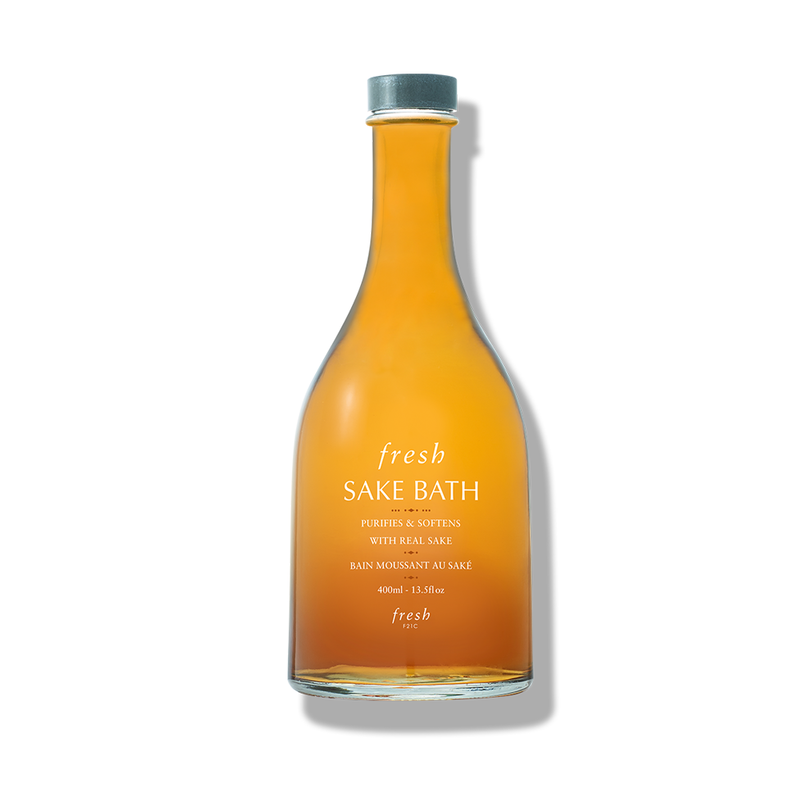
The Fresh Sake Bath requires a different kind of time from the skincare mask — not fifteen minutes of stillness but the duration of a bath, which is to say the duration of a genuine interruption to the day’s velocity. Sake dissolved in warm water creates a bathing environment that is qualitatively different from plain water: softer against the skin, carrying the faint warmth of the rice fermentation, delivering amino acids and minerals to the skin’s surface across the full period of immersion. Steam rises from the water. The scent of the sake preparation — mild, faintly floral, entirely its own — occupies the bathroom in a way that transforms it, temporarily, from a functional space to a restorative skincare environment. The skin that emerges from a sake bath is not merely clean. It is different in texture and in luminosity, and the difference is felt before it is seen.
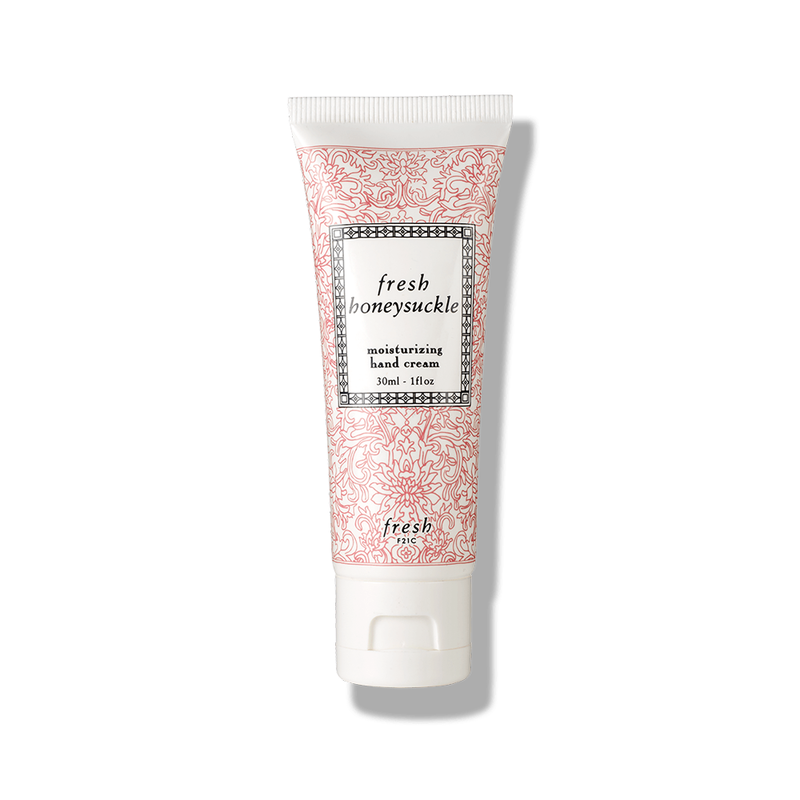
The Fresh Honeysuckle Moisturizing Hand Cream closes the circuit between the face and the body by attending to the surface that is most continuously exposed and most consistently neglected: the hands. The honeysuckle extract provides anti-inflammatory and antioxidant skincare properties to the skin of the hands — skin that is more prone to visible change than almost any other area, and that communicates, through its texture and condition, the level of skincare care that has been invested in the whole body. The scent of honeysuckle — sweet, floral, distinctly its own — makes the act of applying the cream a moment of sensory pleasure rather than functional maintenance.
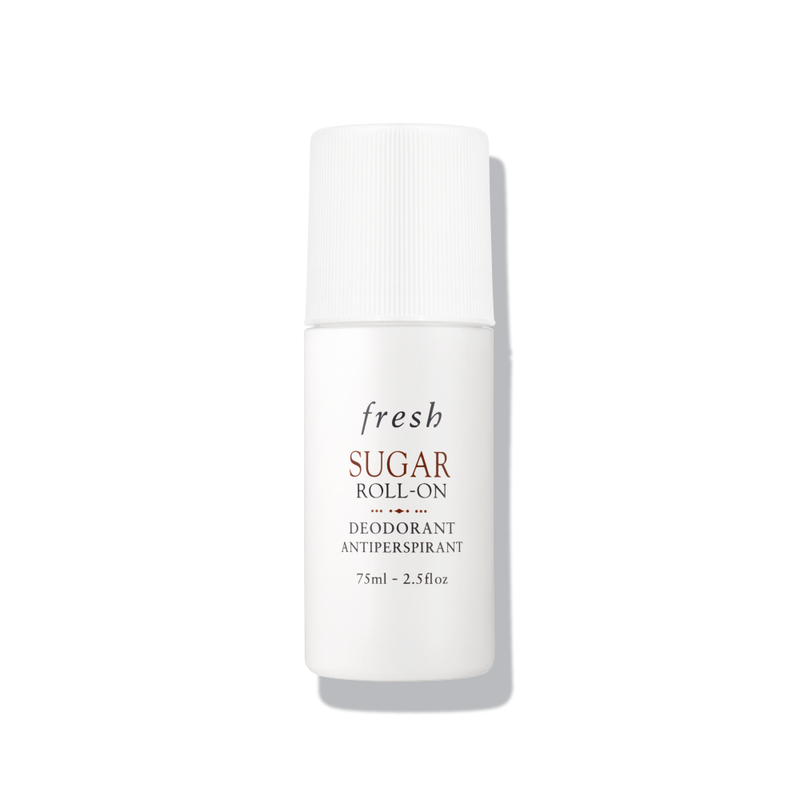
The Fresh Sugar Roll-On Deodorant Antiperspirant extends the Fresh skincare ritual’s sugar intelligence into the most functional of the body’s daily requirements — the protection of the skin under the conditions of daily life, delivered through the same sugar-based formulation philosophy that defines the broader Fresh product architecture. The skincare ritual that began with the face extends to the body’s full surface without a change in philosophy.
As Harper’s Bazaar has documented in its coverage of the body care ritual and its role in modern self-care, the consumer who invests in the sensory quality of their body skincare routine is making a statement about how they understand the relationship between the body’s full surface and their sense of wellbeing — a statement that facial skincare alone, however sophisticated, cannot complete.
Micro-rituals — the Fresh Rose Pore-Minimizing Hydration Mist and the skincare reset
The most powerful skincare rituals are not necessarily the longest ones. The two-second mist, applied at the moment the day has demanded more than it should, is as much an act of deliberate self-attention as the fifteen-minute skincare mask — because both are the decision, made against the momentum of everything else, to interrupt and to care.
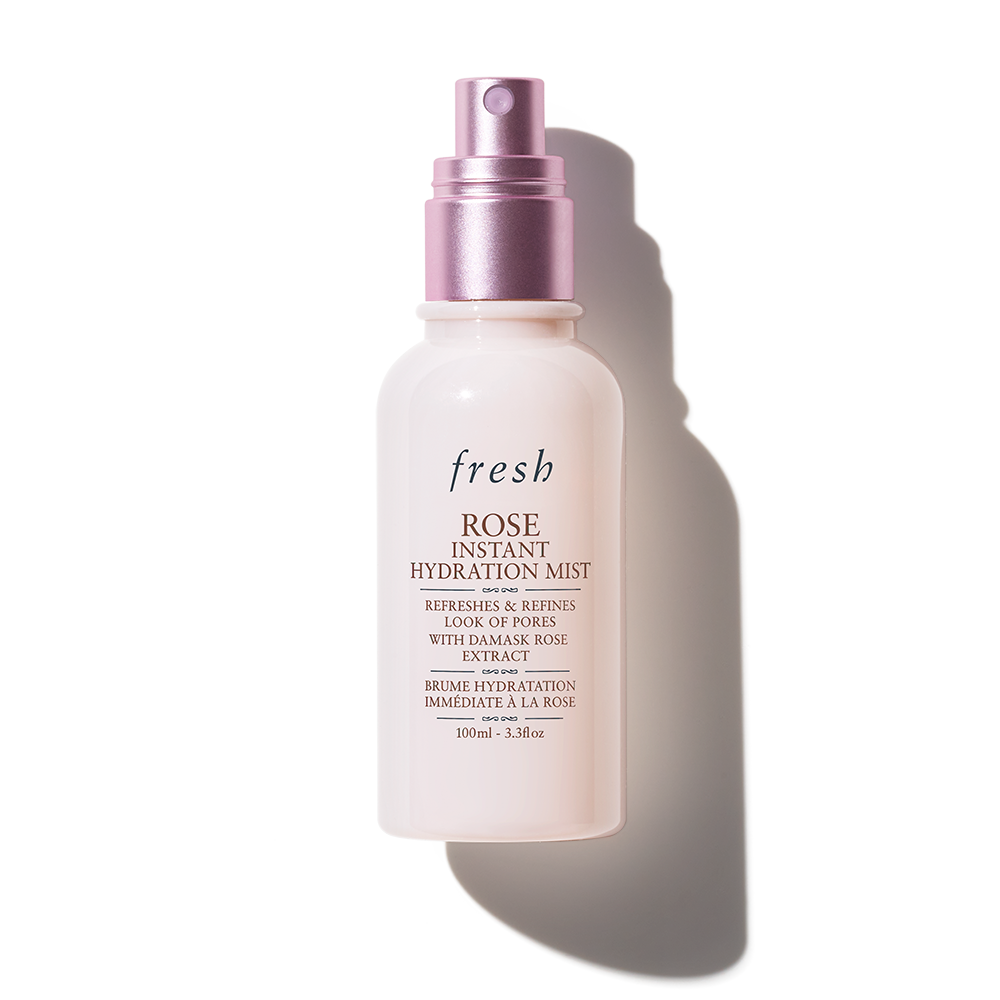
The Fresh Rose Pore-Minimizing Hydration Mist is Fresh’s acknowledgment that the skincare ritual cannot be confined to morning and evening — that the skin signals its needs across the hours of the day, and that responding to those signals is as much a practice of skincare presence as the longer rituals that bracket them. A skincare mist requires nothing: no technique, no sequence, no preparation. It is applied by the decision to apply it — which is to say by the moment of noticing that the skin is tight, or dull, or simply that the day has become too continuous and something is needed to interrupt it. The rosewater and the humectants deliver their moisture. The cooling sensation provides the sensory reset that a moment of genuine attention to the body produces. And the scent — the rosewater that is the olfactory signature of the Fresh skincare ritual — connects this brief midday interruption to the fuller practice that began in the morning and will continue in the evening.
Night as closure and renewal — the Fresh Lotus Youth Preserve Night Cream
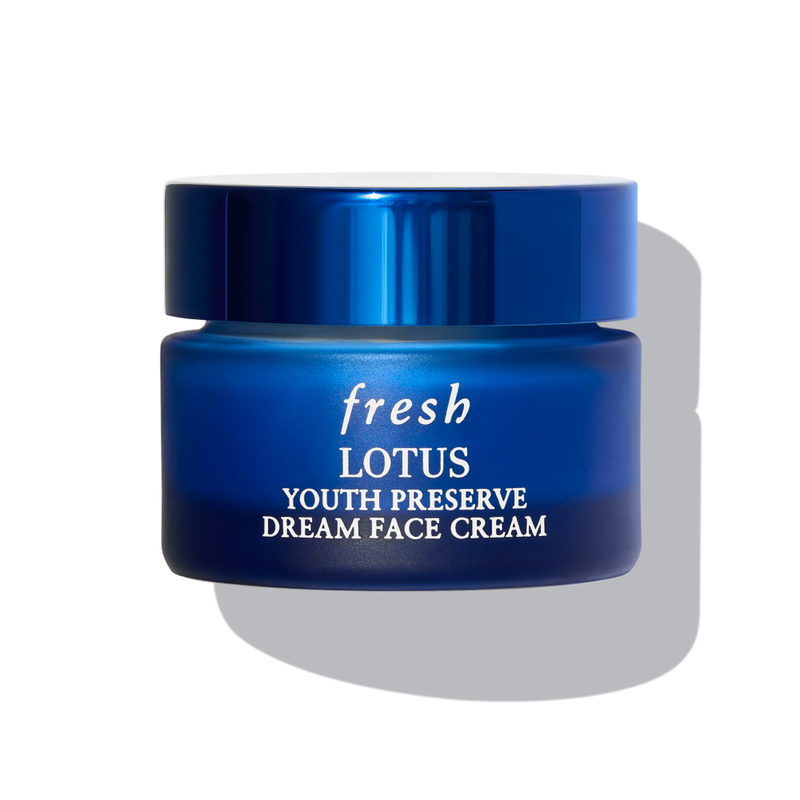
The night skincare cream is not the last step of a routine. It is the closing of a ritual — the act of returning the face to itself at the end of the day, leaving it what it needs to repair and regenerate in the hours that belong entirely to the body’s own intelligence. Lotus suggests regeneration — the ancient symbol of renewal that emerges daily from the water it inhabits. As the primary skincare ingredient of the night cream that closes the ritual, lotus carries the logic of overnight renewal in its cultural meaning as well as its chemistry.
The Fresh Lotus Youth Preserve Radiance Renewal Night Cream arrives at the end of the skincare sequence with a different quality of texture from everything that has preceded it: richer, more substantial, designed for the specific conditions of overnight skincare application in which absorption happens without the interference of the environment, and in which the skin’s own regenerative processes are at their most active. The lotus extract works with the skin’s elevated cellular turnover during sleep, providing the antioxidant protection and the skincare renewal support that the biology of the night-time skin requires.
The understanding that the designed sensory environment — its scent, its texture, its sequence — actively participates in psychological restoration rather than merely accompanying it connects Fresh’s skincare ritual philosophy to the broader culture of intentional sensory design explored in Inside the Atmosphere Economy: How NEOM Is Redefining Modern Home Wellness: the argument that scent and environmental design are functional tools for emotional regulation rather than aesthetic additions. The Fresh bathroom skincare ritual and the NEOM-scented bedroom are expressions of the same understanding — that the designed sensory environment produces psychological states, and that designing it with intention is an act of genuine self-care rather than indulgence.
The skincare ritual as the fullest expression of modern luxury beauty
The scientific basis for the relationship between the quality of skincare practice and its psychological effects is well established. As research published in the National Institutes of Health on the connection between skin and emotional wellbeing confirms, psychological stress produces measurable changes in skin barrier function, inflammatory response, and healing capacity — while practices that reduce stress and provide genuine care produce measurable improvements in the same parameters. The skincare ritual that provides emotional comfort alongside functional skin support is not supplementing science with sentiment. It is addressing the full biological reality of how skin responds to care.
The intelligence of a skincare ritual that earns each step’s place through the specific experience it produces — rather than accumulating products for their individual clinical claims — connects to the broader philosophy of considered beauty explored in Minimalist Skincare with Kylie Skin: the preference for fewer, better skincare products each contributing something distinct to the whole. Fresh’s ritual skincare range achieves this at the level of sensory experience: each product has a different texture, a different quality of contact, a different role in the sequence that the others cannot fill. The system is complete because each element within it is irreplaceable.
The movement toward sensorial, experience-driven skincare has been recognised across the most authoritative beauty editorial as one of the most durable and culturally significant developments in modern beauty. As Allure has documented in its editorial coverage of sensorial beauty and the return of ritual skincare, rose-based skincare in particular has experienced a cultural resurgence that reflects the broader shift toward ingredients with emotional resonance as well as clinical efficacy — products chosen for how they make the experience of skincare feel, not only for what they produce on the skin’s surface. Fresh’s Rose collection is among the most complete expressions of this tendency in contemporary luxury beauty.
The practice of surrounding the self with objects chosen for their sensory and emotional precision — objects that produce specific states in the person who encounters them daily — connects the Fresh skincare ritual to the broader culture of intentional personal luxury explored in The Language of Modern Necklaces: Metals, Stones, and the New Codes of Personal Luxury: the argument that the objects we choose to engage with daily shape our experience of inhabiting ourselves. The Fresh skincare ritual and the carefully composed jewellery wardrobe are expressions of the same underlying intelligence — the decision to let the texture of daily life be as considered as any single moment within it.
“As beauty continues to evolve,
its most enduring shift may not be technological, but emotional.
In the return to texture, scent, and skincare ritual,
beauty becomes more than maintenance —
it becomes a daily act of presence,
where luxury is defined not by results alone,
but by the experience of caring for the self.
The skin that has been attended to with genuine presence
is different from the skin that has been processed in haste.
And the person who has provided that attention
is different, in ways that persist beyond the bathroom mirror,
from the person who has not.”

