
On a Bornean waterfront capital where island ferries, a colonial-era name and a rainforest lodge sit within an hour of one another, and why Kota Kinabalu rewards the traveller who treats a city as a gateway and not a destination: a travel-intelligence guide for the new citizen of the world
Some cities are destinations. Others are doorways, and the best of them make you want to walk through.
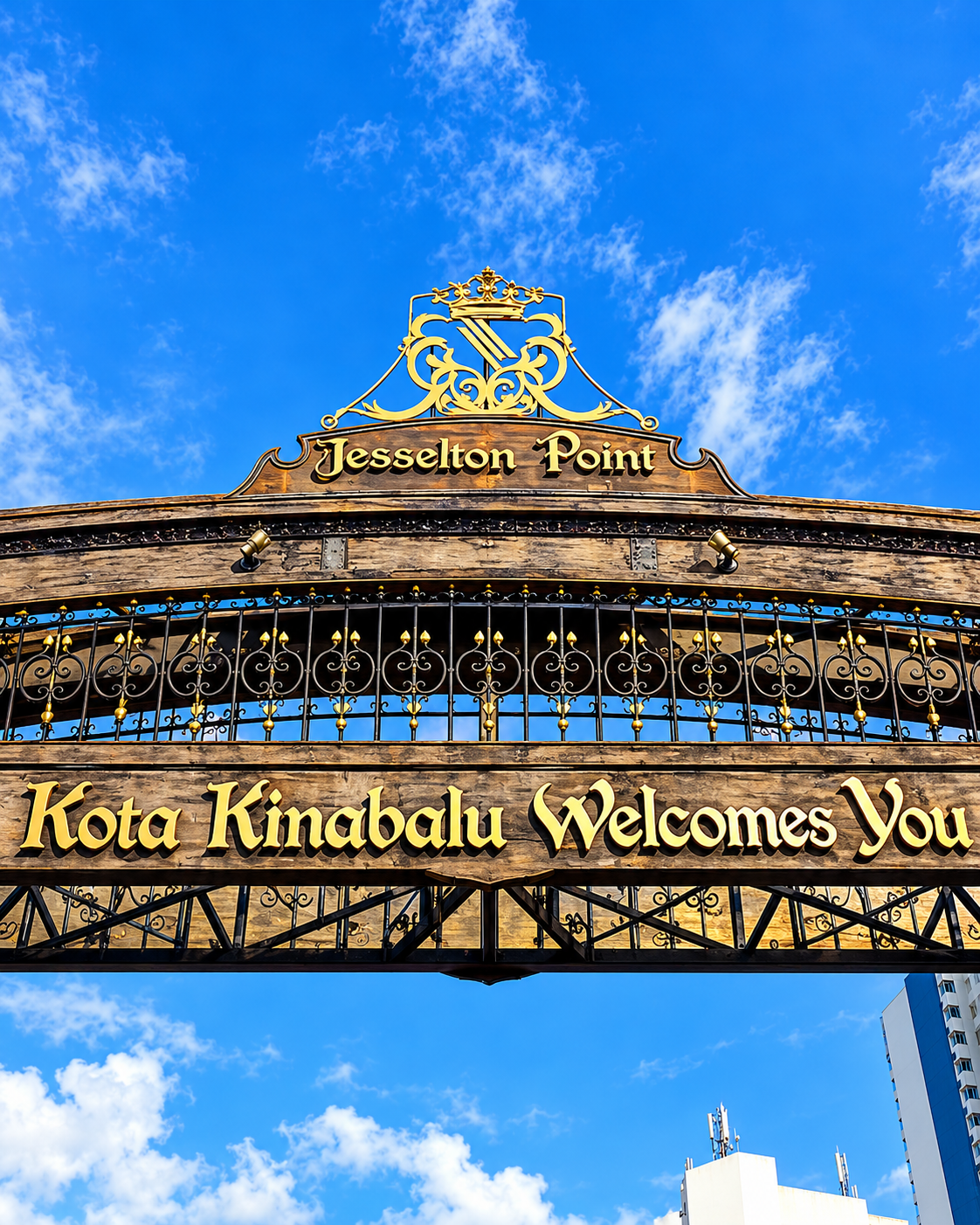
Arrival in Kota Kinabalu begins at the water. A gateway at Jesselton Point announces the welcome in gold lettering, ferries nose out toward islands that lie close enough to see, and behind the waterfront a city of mosques, markets and old shopfronts goes about its day. This is the capital of Sabah, on the northern edge of Borneo, and its character is the character of a threshold: the sea in front, the forest and mountain behind, and a modest city between them that has learned to make the crossing easy.
This guide is written for a particular kind of traveller: the new citizen of the world, who moves between cities, climates and cultures without treating any of them as a backdrop. That traveller does not need a list of attractions. They need intelligence: how a place is organised, what it asks of a visitor, what it gives back, and in what order its parts are best met. Kota Kinabalu is easy to reduce to a transit point, a place to land before an island or a summit. It repays a slower reading. The city, the islands, the forest lodges and the beach resorts within an hour or so of it are not separate trips but parts of one system, and the best way to spend time here is to move through that system in sequence: waterfront, lodge, market, sunset, shoreline.
What is Kota Kinabalu known for? Kota Kinabalu is the capital of Sabah, in Malaysian Borneo, known for its waterfront, its island park a short boat ride offshore, its sunsets over the South China Sea and its position as the gateway to Mount Kinabalu and the rainforest. It is a compact, multicultural city that works as both a destination and a base.
A Short History: From Jesselton to Kota Kinabalu
A name can change in a generation. A waterfront keeps its purpose.
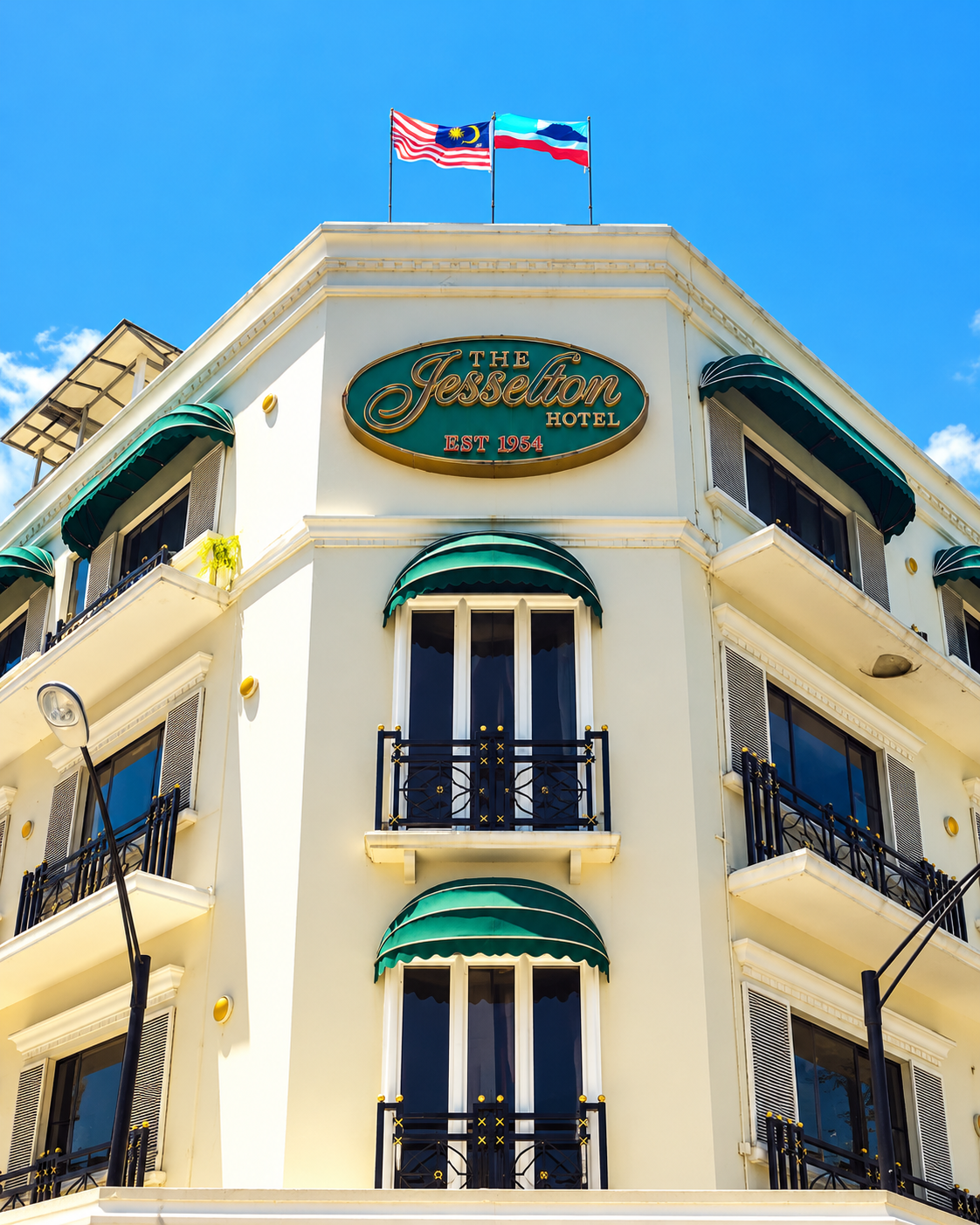
The sign at Jesselton Point is a reminder that the city was not always called Kota Kinabalu. According to Britannica, the settlement was re-established on its present site in 1899 as Jesselton, for Sir Charles Jessel, a director of the British North Borneo Company, and it was later renamed Kota Kinabalu, “Fort of Kinabalu,” after the mountain that rises behind it. Sources disagree on whether the change came in 1967 or 1968, so it is safest to say the late 1960s, in the years after North Borneo joined the Federation of Malaysia in 1963 and became Sabah. Much of the original town was destroyed in the Second World War, partly razed in the British retreat and further damaged by Allied bombing, and was rebuilt afterwards, which is one reason the modern city reads as a place of low, practical buildings and a few surviving older facades. A hotel such as the Jesselton, whose sign records an establishment date in the 1960s, belongs to that later chapter: not a relic of the first town, but a witness to the second. The outline is enough to help a visitor read the streets as layers and not as a blank modern grid.

Reading Borneo: An Island of Three Countries
To understand the city, begin with the island.
Borneo is the world’s third-largest island, and it is shared by three countries: Malaysia, Indonesia and Brunei Darussalam. Sabah, with Sarawak, is the Malaysian part. That fact shapes the traveller’s map. A visit to Kota Kinabalu is a visit to the northern edge of a landmass whose forests are among the most biologically important on earth. WWF describes Borneo as home to an estimated 6 percent of global biodiversity despite being a tiny fraction of the planet’s land, and notes that the three governments have jointly committed to conserving the “Heart of Borneo,” an area of roughly 220,000 square kilometres of equatorial rainforest. WWF’s Heart of Borneo overview sets out why the island’s interior matters, and it is a useful frame for a trip that begins in a city but is justified by the forest. The new citizen travels with that frame in mind: the coast is hospitality, the interior is the reason.



Begin at the Water: Jesselton Point and the Islands
The sea is the first road, and the islands are the city’s front garden.
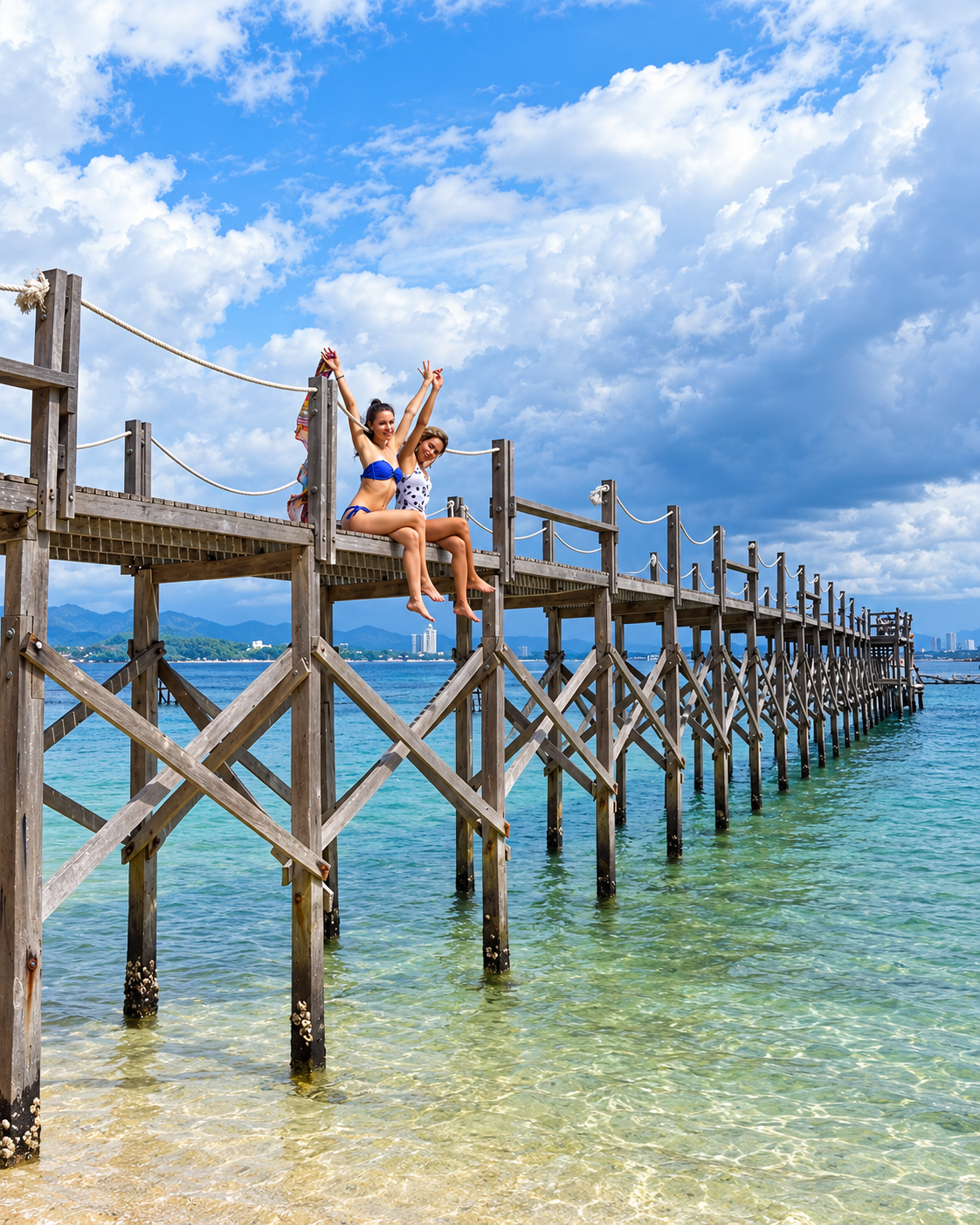
Jesselton Point is the departure point for the islands of Tunku Abdul Rahman Park. Sabah Parks describes the park as a state park in Gaya Bay, about 3 kilometres offshore from Kota Kinabalu, gazetted in 1974 as Sabah’s second national park and named after Malaysia’s first Prime Minister. It comprises five islands, Gaya, Manukan, Mamutik, Sapi and Sulug, and the surrounding reefs. The crossing is short, and it changes the register of the day: within a few minutes of the waterfront the water clears, the shoreline turns to sand and rock, and a visitor can stand in shallows watched by small fish, as the first image of this article shows.
The intelligence here is about restraint. The park exists because the coastline is ecologically valuable, and it should be visited as such: with care for reef and wildlife, with attention to the rules set by the park authority and the boat operators, and with the understanding that access to individual islands, camping and activities can change. The best practice for a thoughtful visitor is to treat the islands as a protected place that happens to be easy to reach, not as a beach that happens to be protected.
Back on shore, the city offers its quieter counterpoints. A mosque lit at night and reflected in still water, a street of shopfronts with deep green awnings, a waterfront promenade where families gather as the light goes: these are the textures that distinguish Kota Kinabalu from a purely resort-led coast. It is a living city with a working harbour, and that is part of its appeal.
Mari Mari Sepanggar Lodge: Sleeping in the Forest Above the Bay
A lodge in the trees is a different way of being near a city.
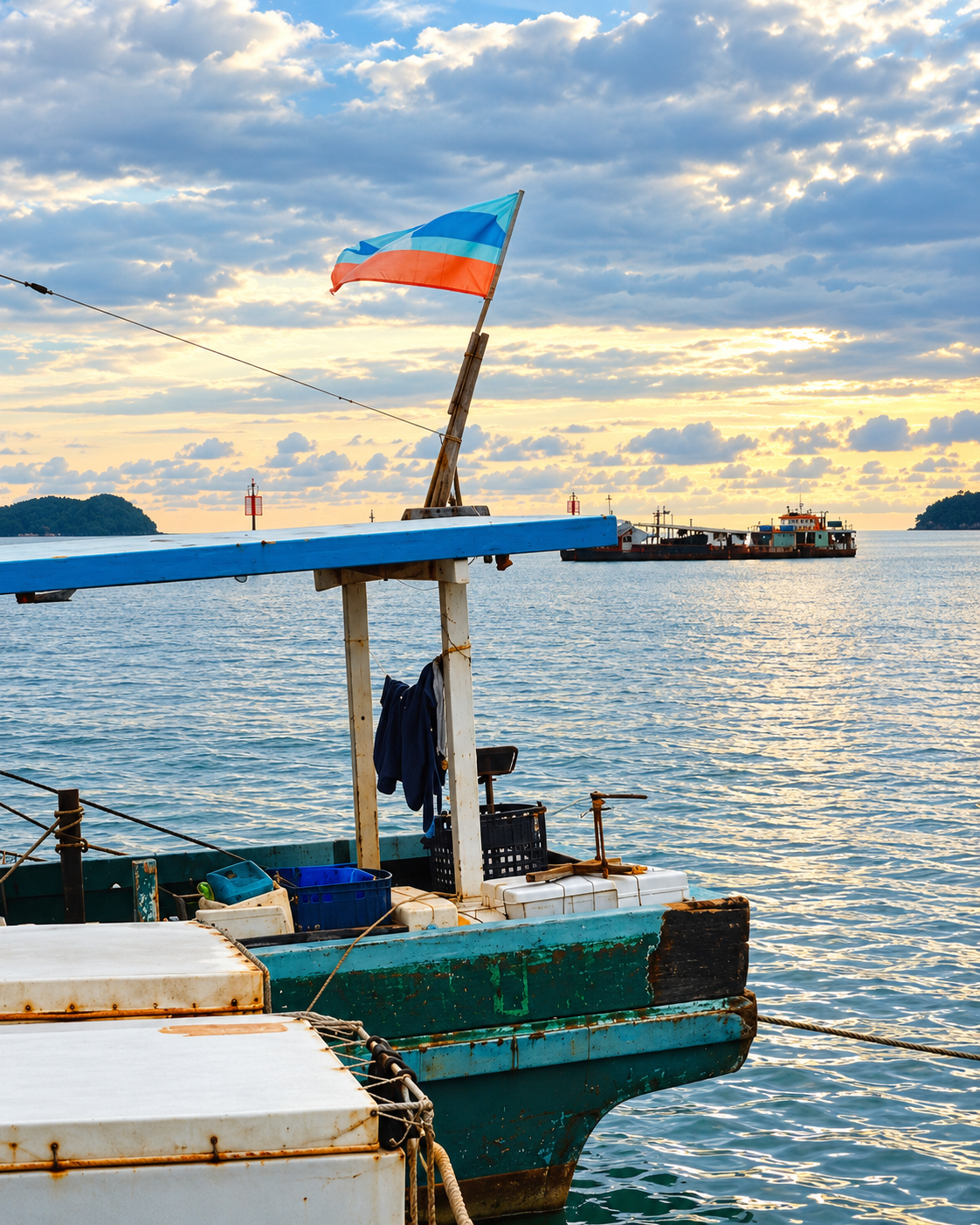
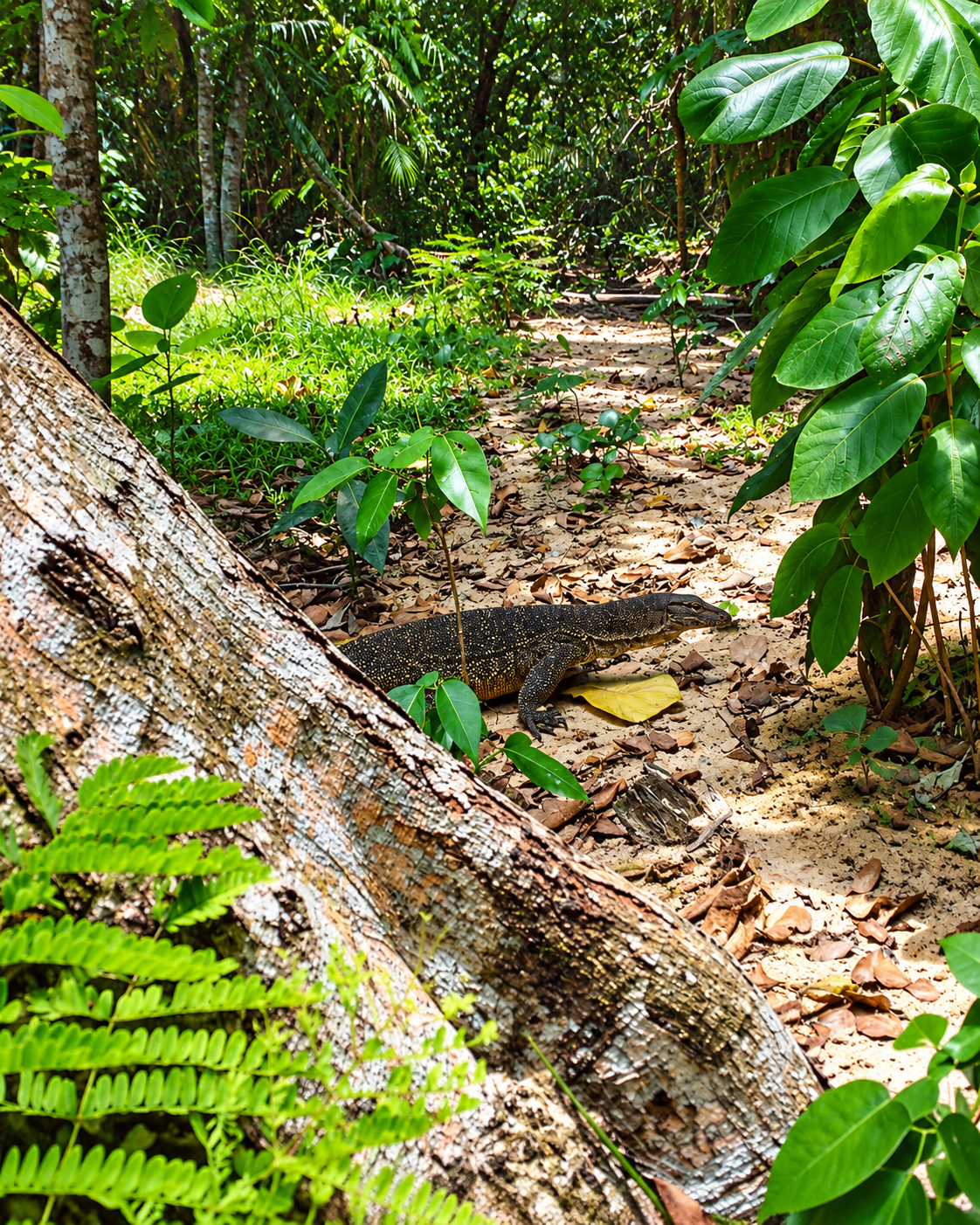
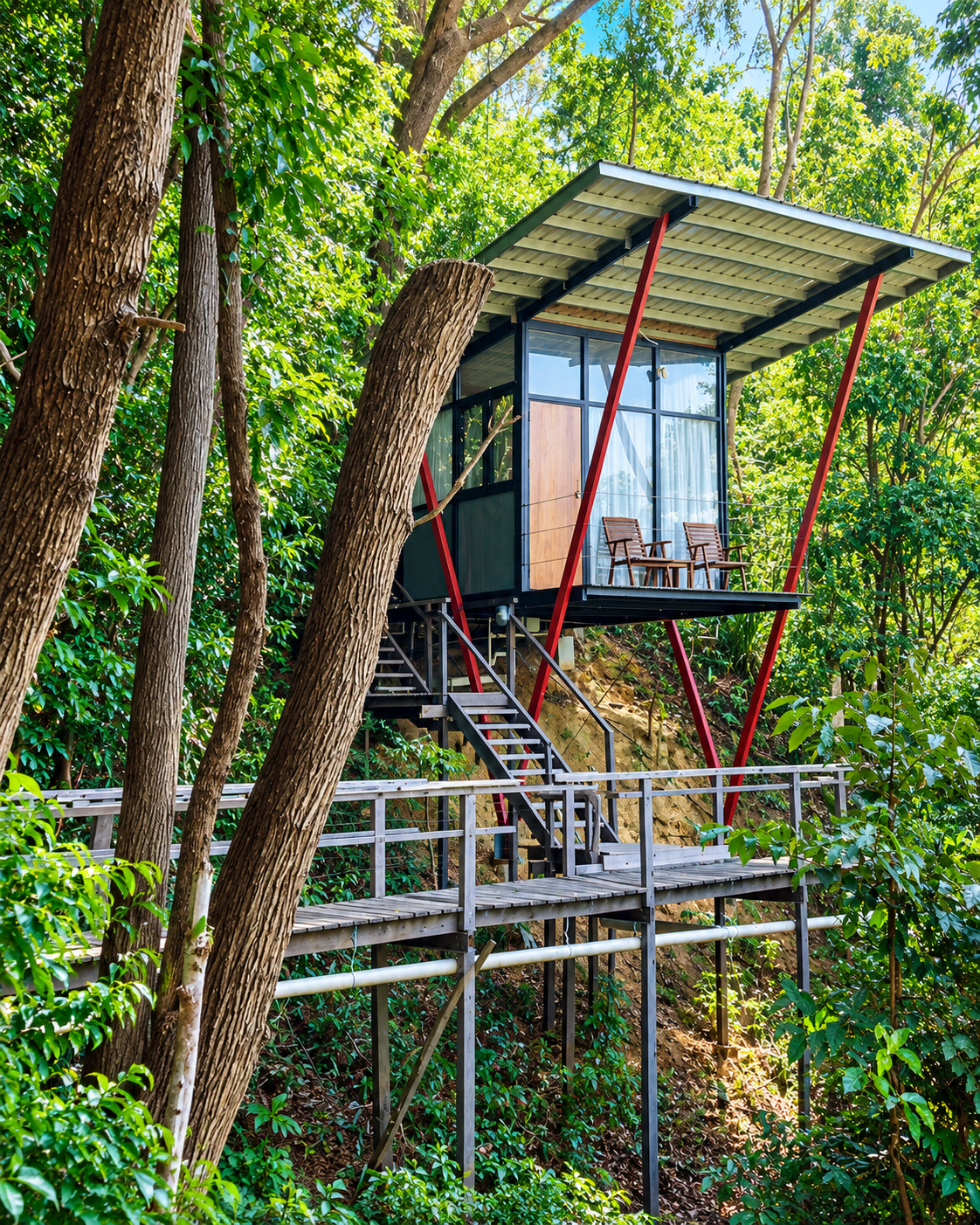
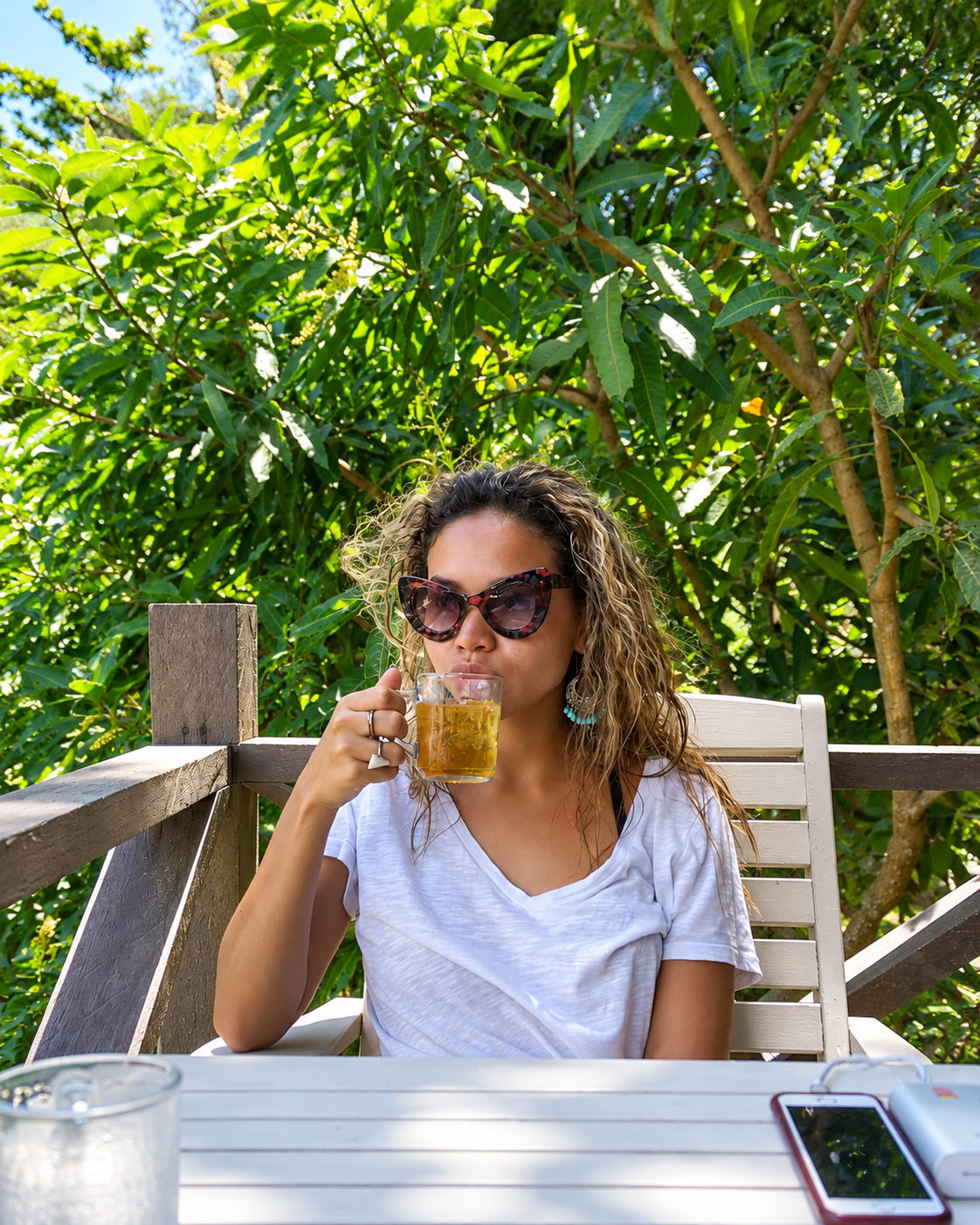
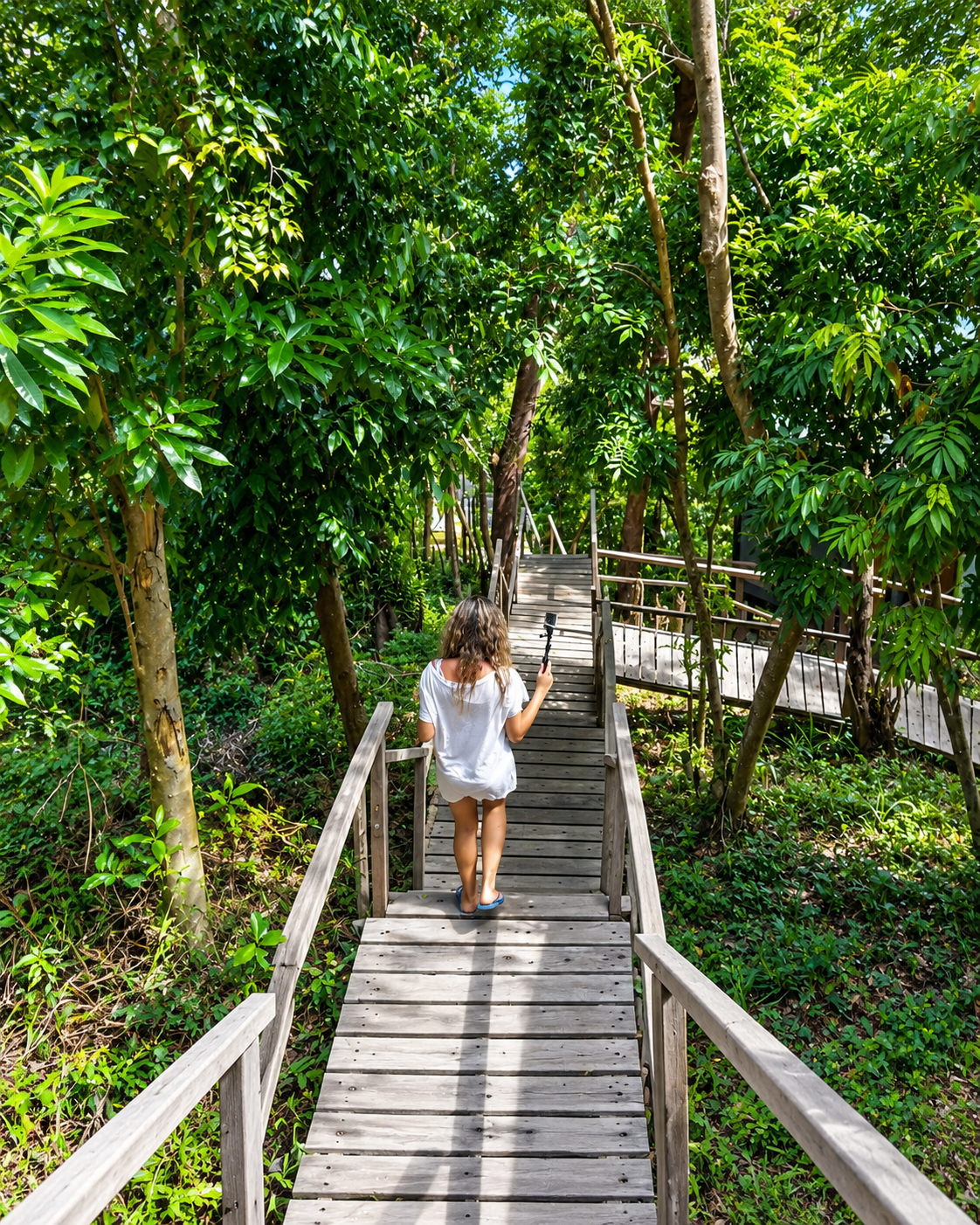
Twenty minutes or so from the centre, by the property’s own description, Mari Mari Sepanggar Lodge sits in a different world from the waterfront. Its rooms are set in an old mountain retreat, reached by climbing wooden stairs through the trees, and the buildings sit above the bay, with a view over the water from the room or from the pool. Common kitchens and sun beds give the place a communal, unhurried character: it is a lodge for travellers who want to be in the landscape and not merely look at it. In the photographs, boats rest at a wooden jetty under a Sabah flag, a monitor lizard moves along a forest path, a cabin stands on stilts among the trees and a boardwalk winds through the green.
The forest here is not decoration. Monkeys and large monitor lizards move through the grounds, and the first rule of staying in such a place is to treat them as wild animals. They are not tame, they should not be fed, and they will take an interest in unattended belongings, so food and valuables are best kept closed and close at hand. That is not a warning but a form of courtesy to the animals, whose habits are the reason the place feels alive. A lodge like this teaches the lesson that the whole island teaches: the visitor is a guest in someone else’s ecosystem.


Everyday Kota Kinabalu: Markets, Gateways and the Street as Stage
A city is best read where people actually go about their day.
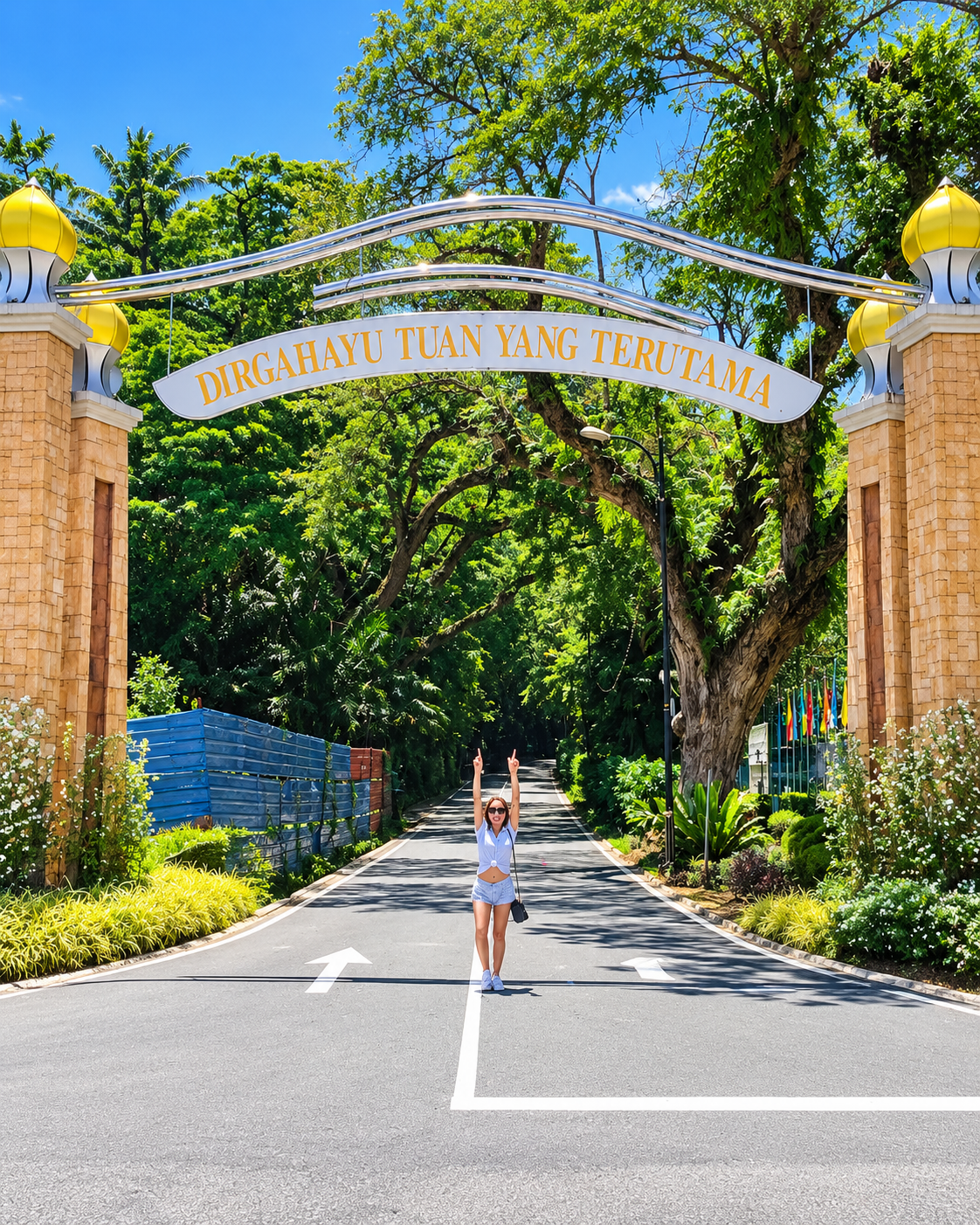
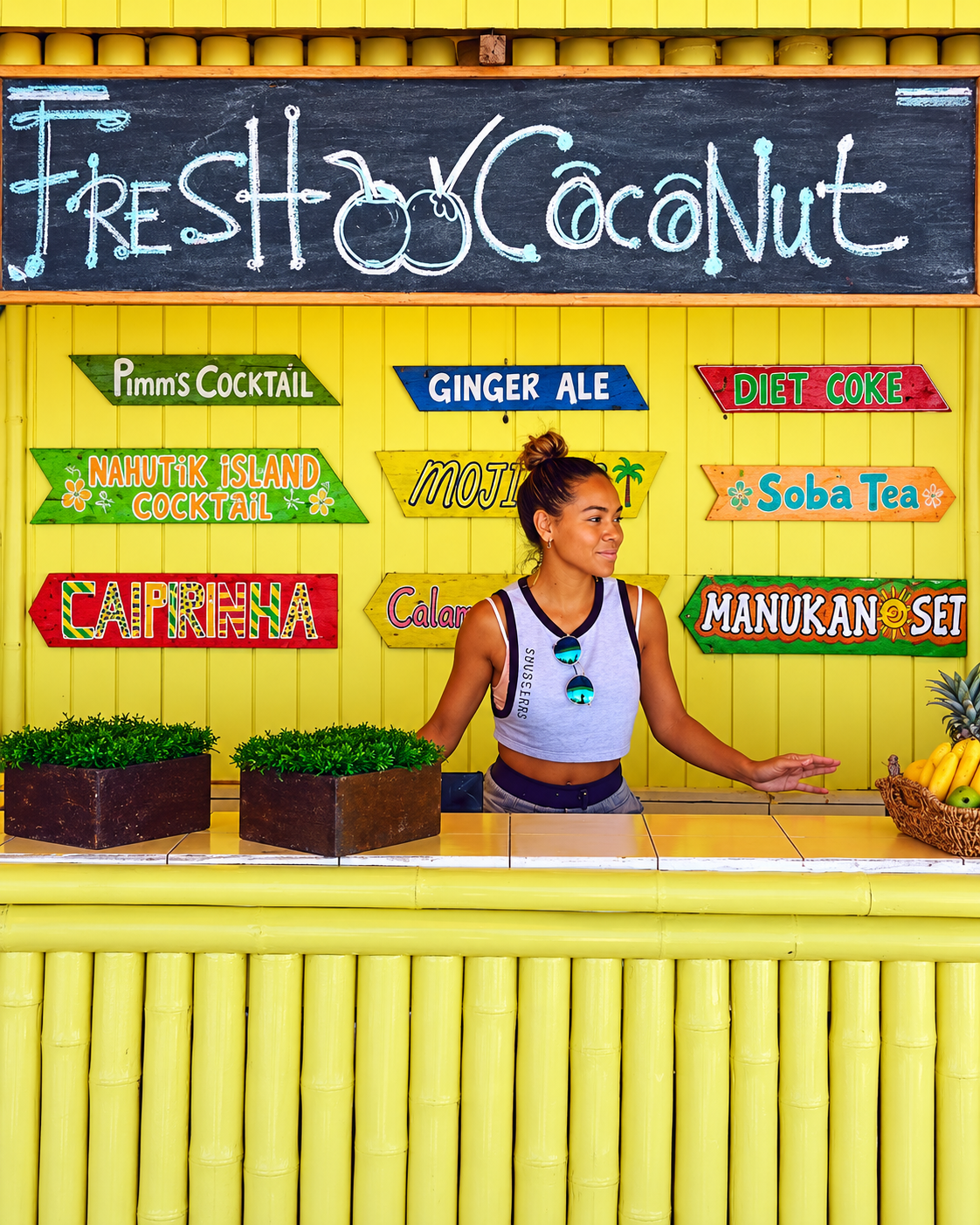
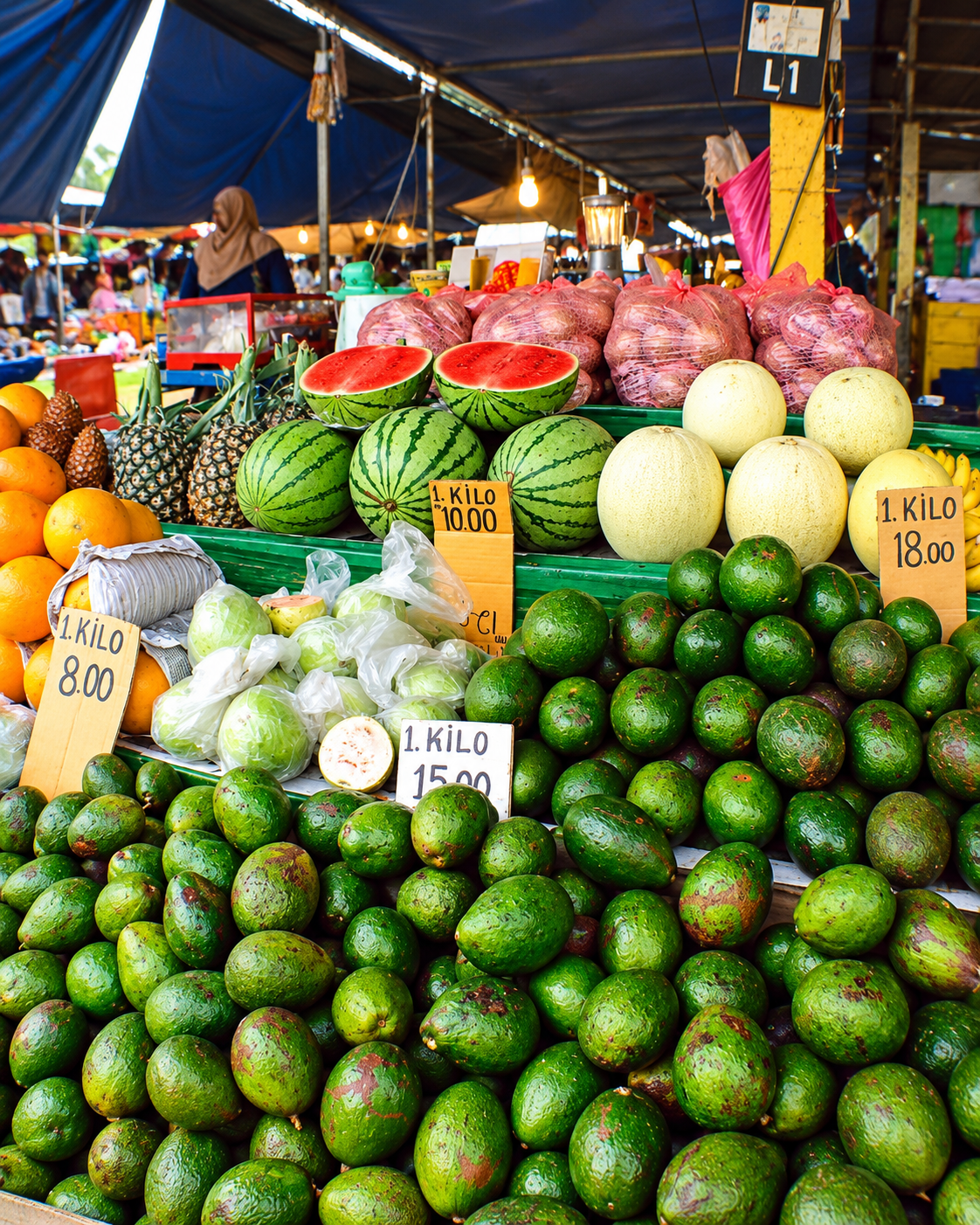
Between the waterfront and the sunset, Kota Kinabalu is a city of small, vivid scenes. A ceremonial gateway bears a loyal greeting to the head of state, a reminder that Sabah is part of a federation with its own forms of public ritual. A yellow coconut stall hands out cold drinks in the heat. A covered market stacks melons, pineapples, avocados and onions in tidy pyramids, with prices written on small cards, so that the economy of the street is visible at a glance. A public sculpture spelling LOVE has become a place to stop and take a picture. Taken together, these are less a list of attractions than a portrait of a city that is relaxed, outward-facing and used to visitors.
The markets in particular reward attention. Food markets show what a region grows, what people eat and how trade is organised, and they are a better introduction to Sabah than any menu. A visitor who walks through one with curiosity, asks before photographing people and buys a little fruit or a cold drink is taking part in the same exchange that the locals do. It is a small act of participation, and it teaches more than a monument.


Tanjung Aru: Sunsets, Rooftops and the City’s Beach
The city turns to face the sea at the end of the day.
Tanjung Aru is the district where Kota Kinabalu gathers for sunset, and it is also where several of the city’s most considered stays sit. C’haya Hotel, in the green part of Tanjung Aru, is a chic and cosy property about 8 kilometres from the city centre and a short distance from the airport, by its own description, with a rooftop pool and bar that look out over the lights of the city and the dark shapes of the islands. Tanjung Aru Beach, a long white strand shaded by casuarina trees, is the classic place to watch the sun go down, and Prince Philip Park runs along the shore with food stalls for the wait. In the same district, the Shangri-La Tanjung Aru Resort and Spa offers a larger-scale, resort version of the same coastline.
The rooftop pool is the most modern expression of an old habit. Watching the sky change from gold to orange to deep blue while the city’s lights come on below is a pleasure that costs nothing on the beach and a little more from a rooftop, and in both cases it is the same ritual. It is also an example of the quiet kind of luxury that a place like this offers: not spectacle, but a well-chosen vantage point at the right hour. It is the kind of unhurried end to a day that a deliberate evening routine tries to build at home.


Karambunai: Leaving the City for a Bay of Its Own
Far enough to feel like a getaway, close enough to make it easy.
Nexus Resort and Spa Karambunai lies about 28 kilometres from the city and about 38 kilometres from Kota Kinabalu International Airport, a distance that, by the resort’s own account, puts it close enough to reach easily and far enough to feel removed. It sits within some 3,335 acres of natural and landscaped grounds, with 485 guest rooms, suites and villas, a scale that allows a long beach, a lily-pond boardwalk, quiet lawns for the evening and the kind of wooded bay that a smaller property could not hold. In the images, a turtle mascot greets guests beside the pool, a cove of clear green water meets the forest, and bean bags are scattered across a lawn to watch the sun set over the headland.
Beyond the resort, the district offers the beach and gardens of Karambunai itself, Lagoon Park at the edge of the peninsula and guided jungle treks into the nearby rainforest, according to the resort’s materials. The advantage of staying out here is the gradual change of pace: a day that might otherwise be spent moving between attractions becomes a day of swimming, walking and watching light change, with the city kept at a comfortable distance.



Mount Kinabalu: The Reason the City Is a Gateway
The mountain is not in the city. It is why the city exists as a threshold.
Mount Kinabalu rises to 4,095 metres and gives the city its name. The park around it, Kinabalu Park, was inscribed as a UNESCO World Heritage Site in December 2000, as Malaysia’s first, for its outstanding natural values; the property covers about 75,370 hectares. It is not on the edge of the city, as some summaries suggest. It is a day trip or an overnight journey, roughly two hours by road, and that distance is part of its meaning: the mountain is the great counterweight to the sea, and the pairing of the two within a single short journey is what makes Kota Kinabalu a rare base for travellers who want both.
A visit to the mountain’s gardens and lower trails offers a taste of its flora and fauna without the commitment of a summit climb. The summit climb itself is a serious undertaking with formal rules. Sabah Parks states that climbers must engage a registered mountain guide and obtain a climbing permit, and that a basic level of fitness is expected. The practical consequence for the new citizen is simple: arrange a climb only through licensed channels, well in advance, and treat the permit system as part of the mountain’s protection and not an inconvenience. Fees, quotas and itineraries change, so confirm them with Sabah Parks before planning.
Sabah’s Peoples: Travelling With Cultural Fluency
A little attention goes a long way.
Sabah is one of the most ethnically varied places in Southeast Asia. The Minority Rights Group’s profile of Sabah’s peoples lists communities that include the Kadazan-Dusun, Bajau, Murut, Malay, Bugis and Chinese, and other sources count more than thirty indigenous groups speaking dozens of languages and dialects between them. The Kadazan-Dusun are the largest indigenous group, followed by the Bajau and Murut, and religions in the state include Islam, Christianity, Buddhism, Taoism and traditional beliefs. A visitor does not need to master this variety. They need to be aware of it, which means avoiding the assumption that Sabah is a single culture.
In practice, cultural fluency is a few habits. Dress respectfully in towns and markets, and more fully at mosques and other religious sites, where covered shoulders and knees, covered hair for women at mosques and the removal of shoes are the usual expectations. Ask before photographing people, particularly at markets and in villages. Treat wildlife with distance, and treat the marine park as a protected place. And remember that a country with many communities has many sets of manners: the right posture is attention, not assumption.
The New Citizen’s Toolkit: Heat, Skin, Scent and Restraint
Equatorial travel rewards a small, well-chosen system.
Northern Borneo is hot and humid for much of the year, and rain can arrive suddenly. That changes what a traveller should carry and how they should think about their body in the climate. Heat and humidity alter how skin behaves and how fragrance wears, a subject explored in Summer Fragrance Science: Heat and Skin Chemistry, and lighter, more breathable choices tend to serve better than heavy ones. Sun, salt water and air conditioning in quick succession also stress the skin barrier, which is the practical case made in Barrier Beauty Returns: Why Lanolin Is a Skin Investment; a short, protective routine matters more than a long one.
Scent is a quieter tool. A familiar fragrance can carry a sense of identity from one hotel room to the next, the argument made in The Language of Scent: How Fragrance Becomes Identity, but in a humid climate and around shared, sometimes close environments such as markets and boats, restraint is the better courtesy. The same logic governs the wardrobe: light fabrics, covered options for religious sites, a layer for air-conditioned rooms and a few pieces that work together, in the spirit of the new language of quiet luxury. The sort of travel essentials that keep a day on the move manageable matter more here than an itinerary.
Sequencing the Region: A Travel-Intelligence Approach to Time
The question is not how much to see. It is in what order.
The strength of Kota Kinabalu as a base is that its parts can be sequenced to change pace gradually. A sensible arrangement begins with the city and the waterfront, to get a sense of the place and its people, then moves to the islands for a day of sea, then to a forest lodge or a beach resort for a night or two of slower time, and finally, if the schedule allows, to the mountain or the lowland forest, where the reason for the whole island becomes visible. Three to four days is enough to read the area properly; a shorter stay can cover the city and one island; a longer one allows slower resort time, the quieter coast and a proper day in the highlands.
The principle behind the sequence is contrast. Sea, then forest; city, then shoreline; crowded market, then quiet lawn. A traveller who alternates between environments feels the island’s variety more sharply than one who stays in a single mode, and the transitions between them are where the trip is remembered.
How many days do you need in Kota Kinabalu? Three to four days is enough to read the area properly: a day for the city and waterfront, a day for the islands, a night in a forest lodge or beach resort, and a day for the mountain or the rainforest. A shorter stay can cover the city and one island, while a longer one allows slower resort time and the quieter coast.
The Quiet Luxury of a City That Does Not Hurry You
The rarest thing a destination offers may be time.
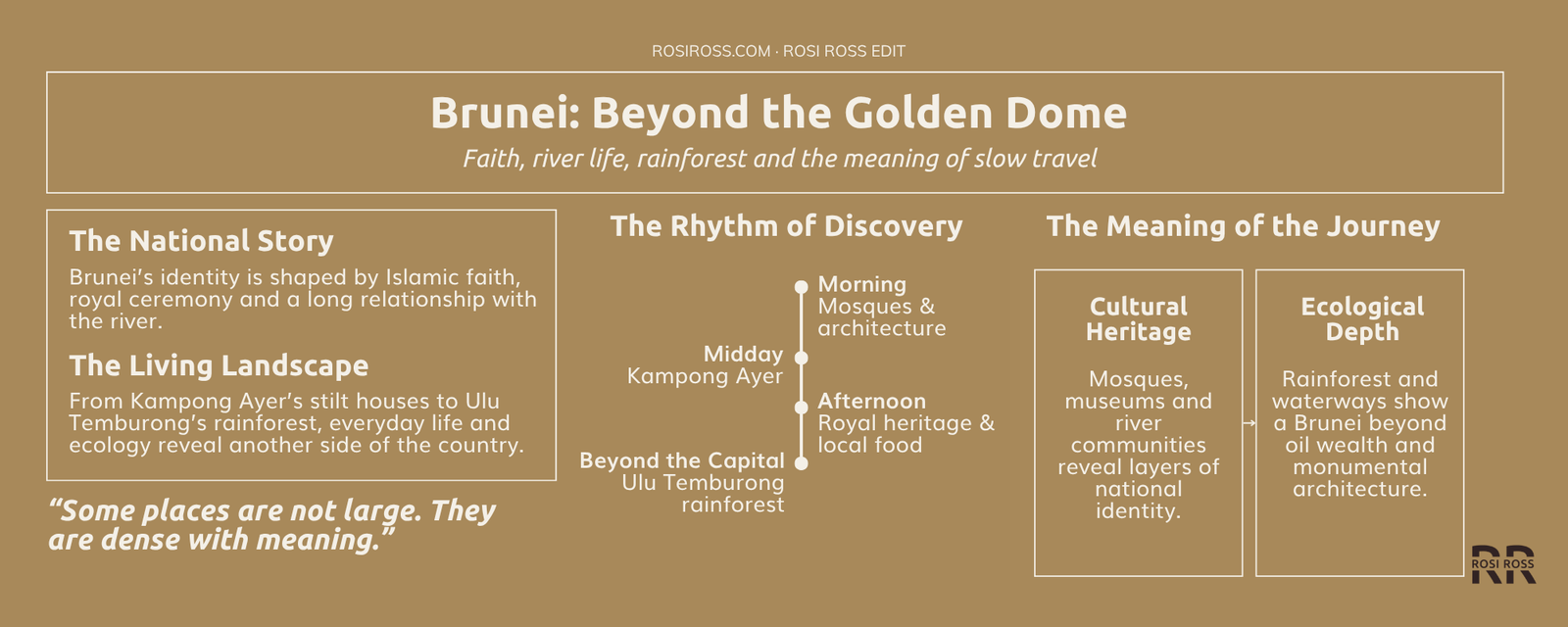
Kota Kinabalu does not try to match Bangkok or Singapore for density of attractions, and it is better for that. Its value is a way of moving between environments: the clear water of an island, the forest of a lodge, the market of a morning, the sunset of an evening. The interesting definition of luxury here is the one that survives a change of fashion: space, nature, privacy and an absence of urgency. It is the same quiet logic that sets a place like Brunei, a short flight away on the same island, against louder neighbours, and the two are often paired for exactly that reason.
Is Kota Kinabalu worth visiting? Kota Kinabalu is worth visiting for travellers who want the sea, the forest and a mountain within a short distance of one another, with a relaxed, multicultural city as a base. It is not a destination of grand monuments, and its appeal lies in the relationships between its waterfront, islands, markets and sunsets.
Service box: check before you travel. Ferry schedules and park rules, opening hours, permit requirements and fees for Mount Kinabalu, tour operators, hotel facilities, airport transfers, entry requirements and government travel advice all change. Confirm them with Sabah Parks, the operators concerned and your own government before travelling. This article deliberately keeps hours, fares and booking details out of its main narrative.
Kota Kinabalu’s appeal is not the number of attractions it contains, but how many different environments sit within a short distance of one another. It is a city where the sea, the forest, the market and the mountain are neighbours, and it is better read as a sequence than collected as a list. A place that rewards attention gives something back to those who give it.
“Arrive by water.
Sleep among the trees.
Walk through the market
while the fruit is still cool.
Watch the sky change colour
from a beach or a rooftop —
the ritual is the same.
Some cities are destinations.
Others are doorways,
and the best of them
make you want to walk through.”

