
On how the well-travelled can see Madrid’s essential icons without reducing the city to them, by connecting art, architecture and luxury to neighbourhood life, food rituals, public space and the rhythm that makes Madrid itself: a city-intelligence guide for the new citizen of the world
Madrid is one of those rare capitals where doing the obvious things does not make you a tourist. Doing them at the wrong rhythm does.
The Prado is essential, and so is leaving it slowly. The Retiro matters, and so does the hour when the city begins to fill its terraces. The point is not to reject the icons. It is to connect them to the way Madrid actually moves.
The difference between seeing Madrid and knowing how to be in it is rhythm. The museum, the aperitif, the park, the shop, the long lunch and the late evening are not separate attractions. They are one urban lifestyle, and the city rewards the traveller who treats them that way. Luxury here is not about isolating yourself from the city. It is about knowing how to enter it well, which is why this edit is organised as a sequence of experiences, not a ranking of sights: the city’s power, its culture, its breathing space, its dress, its daily life, its memory, its theatre, its pauses, and its view from above.
This guide is written for the new citizen of the world, the traveller who moves between capitals often enough to know that a list of sights is the least useful thing a city can offer. What that reader needs is intelligence: how a city is laid out, what its institutions mean, when it is used and by whom, and which choices will still make sense in several years. Madrid answers those questions unusually well, because its grandeur and its daily life occupy the same streets.
What are the essential places to see in Madrid? The essential places in Madrid are the Prado Museum, the Retiro Park and Paseo del Prado (together a UNESCO World Heritage cultural landscape), the Royal Palace, Gran Vía, and the civic landmarks of Cibeles and the Puerta de Alcalá. They are best experienced alongside Madrid’s neighbourhood rituals, including the vermouth hour, markets and long lunches, which give the icons their meaning.

The Icons You Should Still See
Do not be contrarian for effect.
Some places are famous because they carry genuine cultural weight, and a well-travelled reader loses nothing by seeing them. The Prado, the Retiro and the Paseo del Prado, the Royal Palace, Gran Vía, and the civic markers of Cibeles and the Puerta de Alcalá together help a visitor read central Madrid spatially and historically. Each deserves context, not merely a photograph.
The southern threshold of that central axis is Atocha, where the Paseo del Prado ends and where a glass-and-iron station hall, dating from the mid-nineteenth century, shelters a tropical garden, an unexpectedly gentle first or last impression of the city. It is also the doorway to what the city calls its Paseo del Arte, the cluster of museums that makes Madrid one of the great art capitals. Arriving through a station that doubles as a garden is itself a small lesson in the city’s habit of blending infrastructure with pleasure.
Reading the Axis: How Central Madrid Fits Together
A city is easier to love once it is legible.
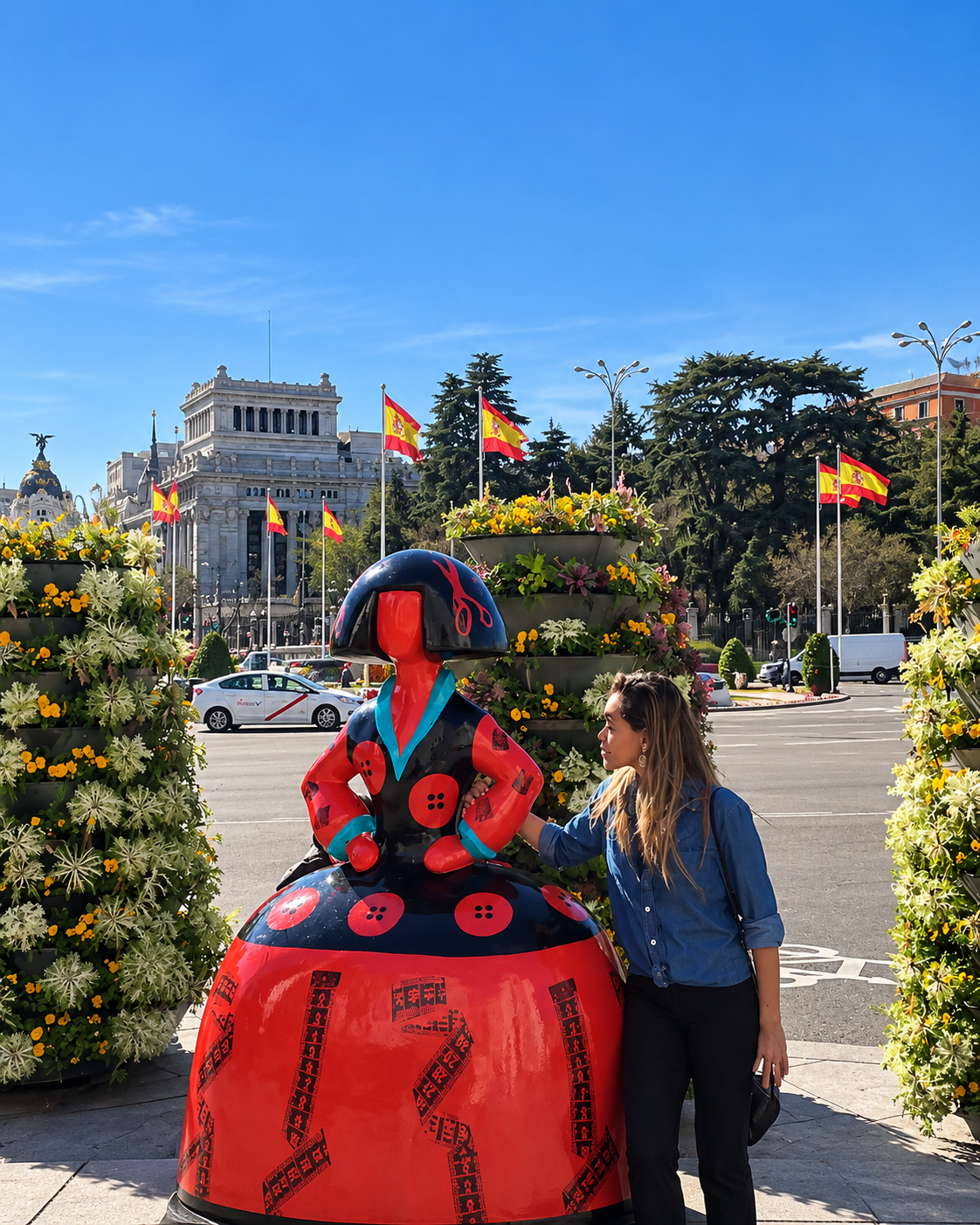
The first piece of intelligence worth carrying is spatial. Central Madrid is organised along a north-south axis of boulevards and fountains, with Cibeles and the Puerta de Alcalá as civic anchors, the Paseo del Prado running toward Atocha and the Retiro opening to the east. Around that spine sit the other chapters of the city: the old royal quarter to the west, the Literary Quarter below the centre, the grid of Salamanca to the northeast and the residential districts to the north. A traveller who understands the spine can walk from any one of those chapters to the next without a map, and every change of neighbourhood reads as a change of register: monumental, then literary, then commercial, then domestic.
The second piece of intelligence is temporal. Madrid keeps a later clock than many capitals, and the sequence of the day, museum, aperitif, long lunch, a pause, an evening that begins late, is part of what the city is. To arrive on another schedule is not wrong, but it is to meet the city at its least characteristic hours.
Gran Vía is easy to dismiss as crowded or overly commercial, and that would be a mistake. According to Madrid’s official tourism site, its construction between 1910 and 1931 marked the beginning of the city’s modernisation, with the country’s first skyscrapers and modern architectural trends from the United States. It was built in stages to decongest a tangle of narrow streets, many of which disappeared, and its landmarks include the Metrópolis and Telefónica buildings, the Capitol and the Callao cinema. It is urban theatre: façades, cinema history, hotels, retail, traffic, and the feeling of Madrid as a European capital as well as a collection of neighbourhoods.
The well-travelled reader should observe the avenue architecturally from the pavement, then find an upper-floor vantage point to understand its scale.
Perspective is the enduring idea.
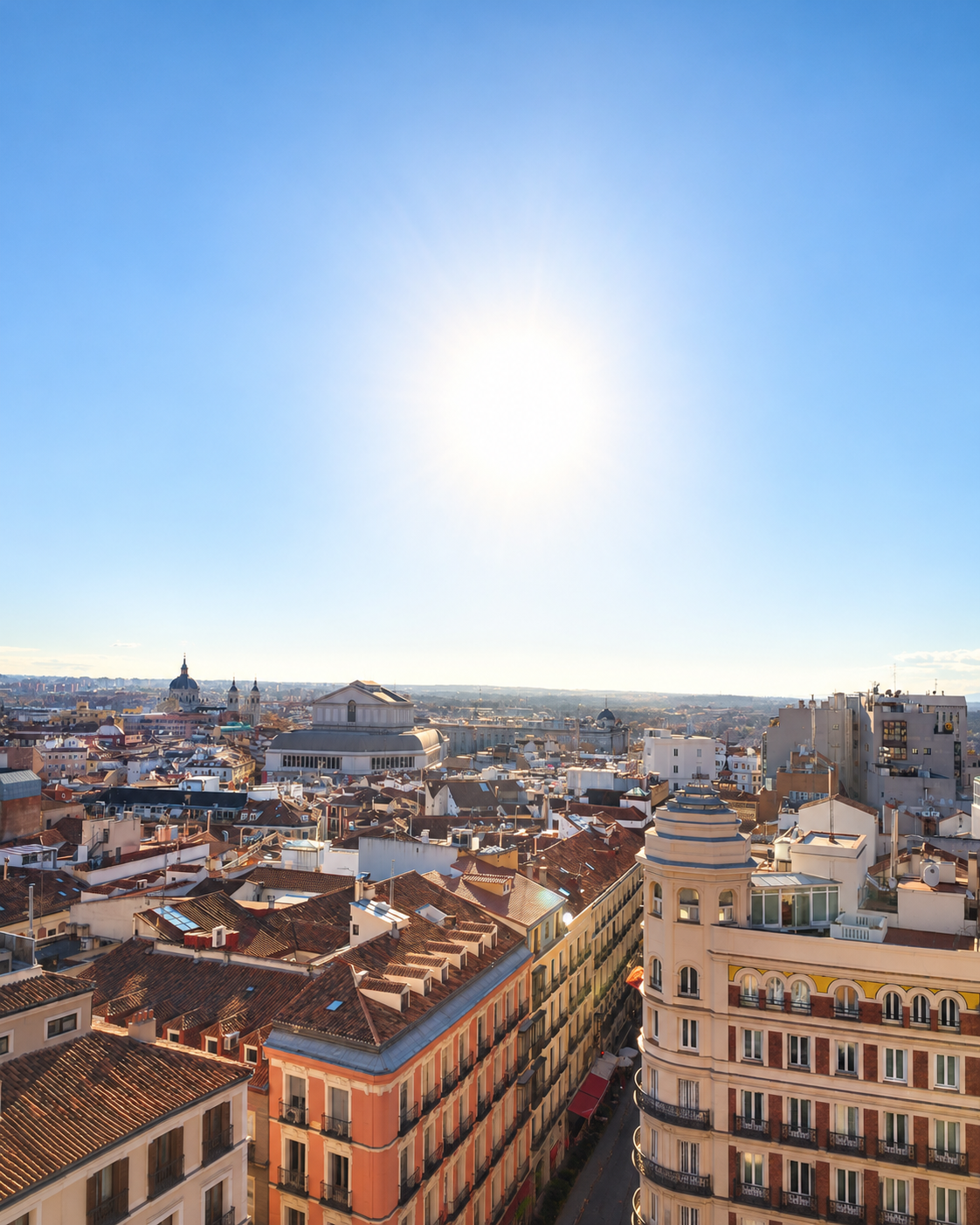
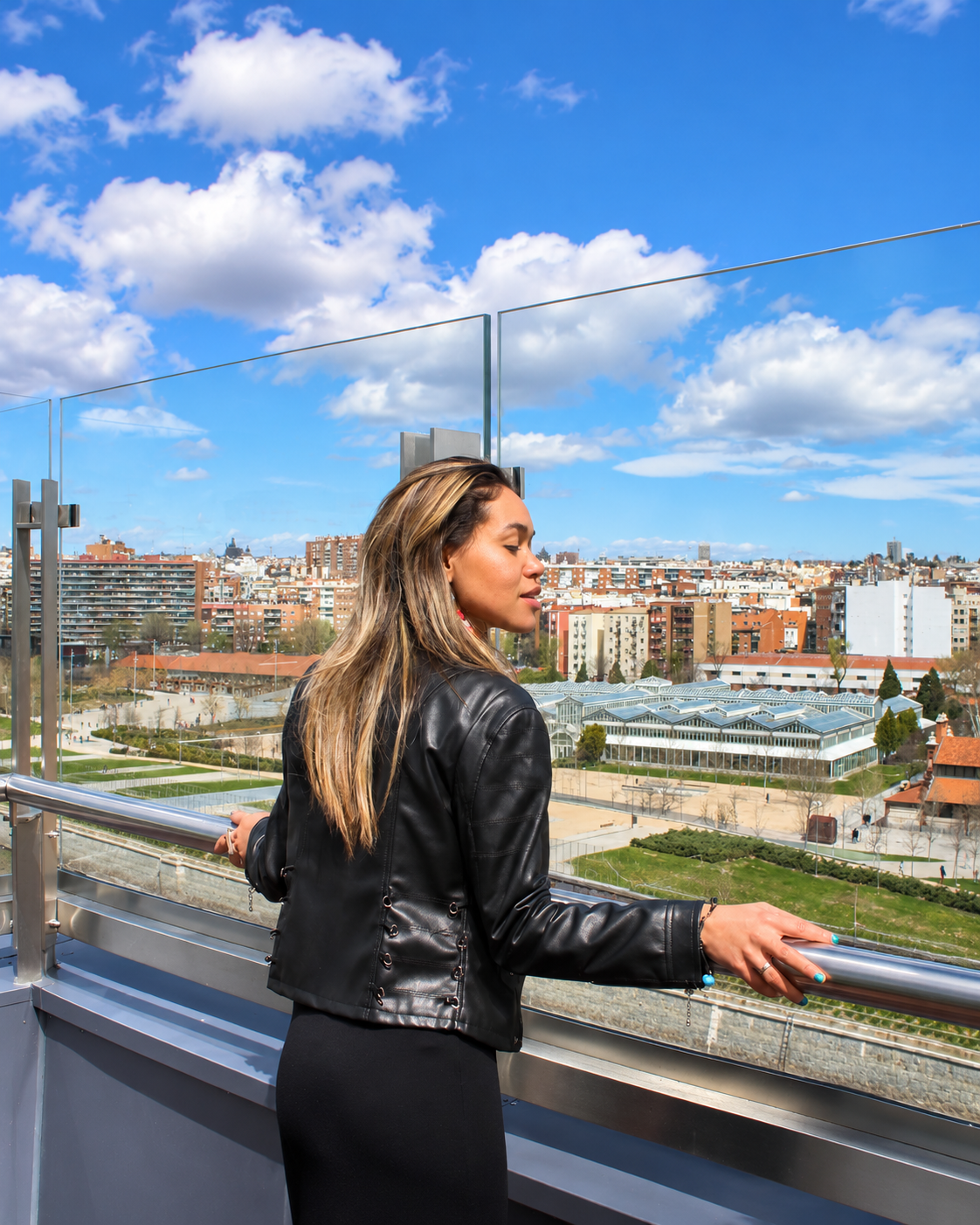
Rooftops are useful because Madrid’s relationship with sky and light is part of the city’s identity. This is not a list of fashionable bars. From above, the city becomes legible, with its domes, terraces, boulevards and dry Castilian horizon. A well-chosen rooftop at the hour the light turns can be one of the few luxury experiences that genuinely changes how a traveller understands Madrid, and it works best as a pause in a day, not as its purpose. It is also the right moment to apply a little restraint: a fragrance that suits the evening and the setting, as in The Language of Scent, is a quieter companion to a view than a loud one.
In Madrid, time at the table is not inefficiency. It is part of the destination.
Madrid is a city where lunch can still structure the day instead of interrupting it. The traveller who protects time for the meal, instead of compressing it between attractions, is following the city’s logic. The same instinct is visible in cities that are rethinking dining as an experience, as the new geography of luxury dining shows, and in the wider understanding that rest is a form of value, whether it arrives as a considered evening routine or as an unhurried midday.
Markets belong in this rhythm too. The Mercado de San Miguel, opened in 1916 and reopened in 2009, is one of Madrid’s finest examples of cast-iron architecture and an enjoyable stop beside the Plaza Mayor. It is also a different thing from a neighbourhood market, where daily shopping, produce, prepared food and social life intersect. A visitor who sees both understands the difference between a destination and a habit. elaborate a similar writing about Puerta de Atocha what is is and its value




The Prado Is Not a Box to Tick
Cultural luxury is the ability to stay with something long enough for it to become memorable.
According to the museum’s own history, the building was designed by Juan de Villanueva in 1785 for Charles III, originally to house a natural history cabinet, and the Prado Museum opened to the public in November 1819. It is one of the city’s defining institutions, and its collection grew from the Spanish royal collections, which is why the Spanish court, Velázquez and Goya run through it as threads.
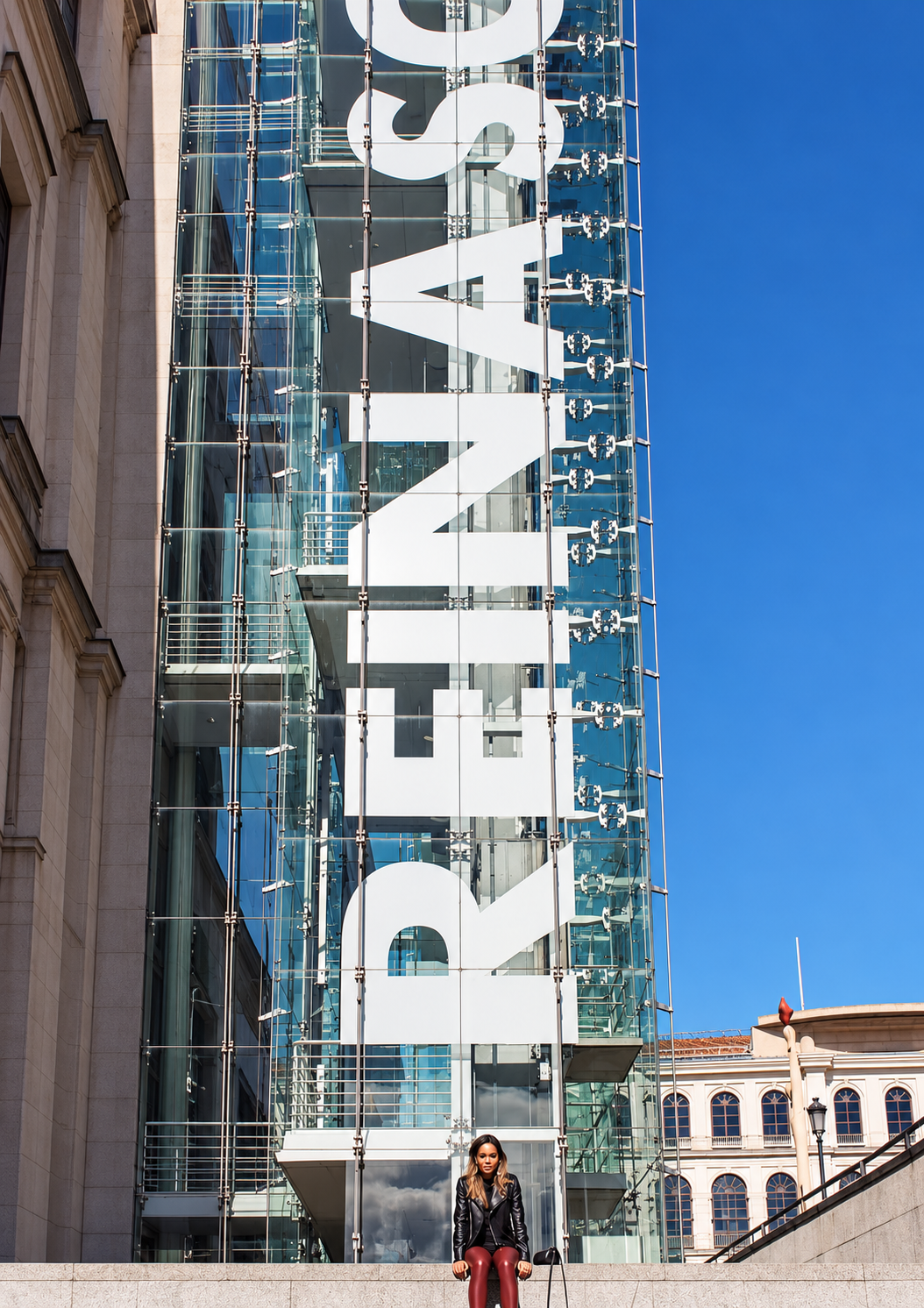
The luxury traveller’s advantage is time. Instead of racing through masterpieces, choose a small number of works and a thread: the Spanish court, Velázquez, Goya. Let the museum shape the rest of the day. The same logic extends along the Paseo del Arte. The Reina Sofía, devoted to twentieth-century and contemporary art, sits near Atocha and offers a different register from the Prado: the modern century, argued in rooms where Spain’s own history is never far from the frame. A day that pairs one museum with a long pause is better than a day that tries to consume three.




Retiro and Madrid’s Public Luxury
Some of the city’s most valuable experiences are public, democratic and habitual.
The Retiro should not be framed merely as a beautiful park. It belongs to the Landscape of Light, which UNESCO inscribed in 2021 as the Paseo del Prado and Buen Retiro, a landscape of Arts and Sciences. UNESCO describes the 120-hectare Jardines del Buen Retiro as a remnant of the seventeenth-century Buen Retiro Palace and the largest part of the property, which also includes the Paseo del Prado, the Royal Botanical Garden and the Jerónimos district. Madrid’s tourism material describes the Paseo del Prado as the first tree-lined urban promenade in a European capital. The park began in the 1630s as a retreat for Philip IV, from which it takes its name, and in the late eighteenth century Charles III began opening its gardens to the public.
What is the Landscape of Light in Madrid? The Landscape of Light, officially the Paseo del Prado and Buen Retiro, a landscape of Arts and Sciences, is a UNESCO World Heritage cultural landscape inscribed in 2021. It includes the Paseo del Prado, the Retiro Park and the surrounding area, and recognises how nature, culture and science have intersected in Madrid’s urban planning for centuries.
That history matters because it explains an idea that runs through the whole city: some of Madrid’s most valuable experiences are public, democratic and habitual. Walking, reading, meeting someone, sitting in shade or crossing the park without an agenda can reveal as much about the city as a reservation. The same impulse extends to the river that runs along the city’s western edge, where the Manzanares has become another place for walking and pausing.





Royal Madrid: The Palace and the Austrias
Madrid’s grandeur is comparatively young but historically dense.
Pair the Royal Palace with the old city around it, not treating it as an isolated monument. Britannica describes it as the large eighteenth-century palace in downtown Madrid that is the official residence of the Spanish royal family, although the family lives elsewhere. Patrimonio Nacional, which manages it, describes it as used for audiences and official events and, unusually for a head of state’s residence, open to the public. It stands on the site of the medieval Alcázar, a fortress with Islamic origins that Philip II made the seat of the court in 1561 and that burned on Christmas Eve 1734. Philip V commissioned a new palace in stone and brick, without the timber that had fed the flames, and Charles III was the first monarch to live in it, in 1764.
That layering is useful, because it explains the city. The traveller should move from monumental architecture into the streets of the Habsburg quarter and its taverns, where scale becomes human again. The Plaza Mayor and the lanes around it are where the monarchy’s Madrid meets the city’s everyday one, and the transition from palace to tavern within a few minutes’ walk is among the clearest demonstrations of how the city holds its history.
What makes a luxury district feel like a real neighbourhood rather than an open-air mall? Salamanca.
This is the natural jet-setter section. The Barrio de Salamanca, laid out on a regular grid and named for the nineteenth-century financier and developer José de Salamanca, is Madrid’s established luxury district. According to Madrid’s official tourism site, Calle Ortega y Gasset is its main shopping axis, known as the Golden Mile of fashion, where leading couturiers present their creations, with Calle Serrano, Claudio Coello and the Callejón de Jorge Juan completing the quarter. International maisons, Spanish fashion, jewellery and restaurants are all here, and the same quarter is where the case for buying jewellery as an investment, as in the guide to modern necklaces and fine jewellery, finds its most natural setting.
Is Barrio de Salamanca worth visiting? Yes, for travellers interested in fashion, jewellery, fine dining and the way a luxury district integrates into daily life. Barrio de Salamanca is Madrid’s established luxury quarter, anchored by Calle Ortega y Gasset, known as the Golden Mile, and Calle Serrano. The more rewarding experience is the transition from the storefronts into quieter residential streets, cafés and long lunches.
But the section should move beyond labels. The question worth asking is what makes a luxury district feel like a real neighbourhood instead of an open-air mall. Environments assembled purely for spectacle rarely last, whereas a district that people actually live and eat in does. Not every resident uses Salamanca in the same way, and the distinction between its tourist-facing and residential rhythms is part of reading it. Platforms elsewhere, such as the fashion weeks that connect brands to markets, show how luxury becomes a calendar, and the fashion-power argument made about a famous film is a reminder that a district’s glamour is built by institutions as much as by shops. Here the calendar is a street.


Puerta de Atocha: The Iron Threshold of Madrid
A station is a city’s first and last sentence.
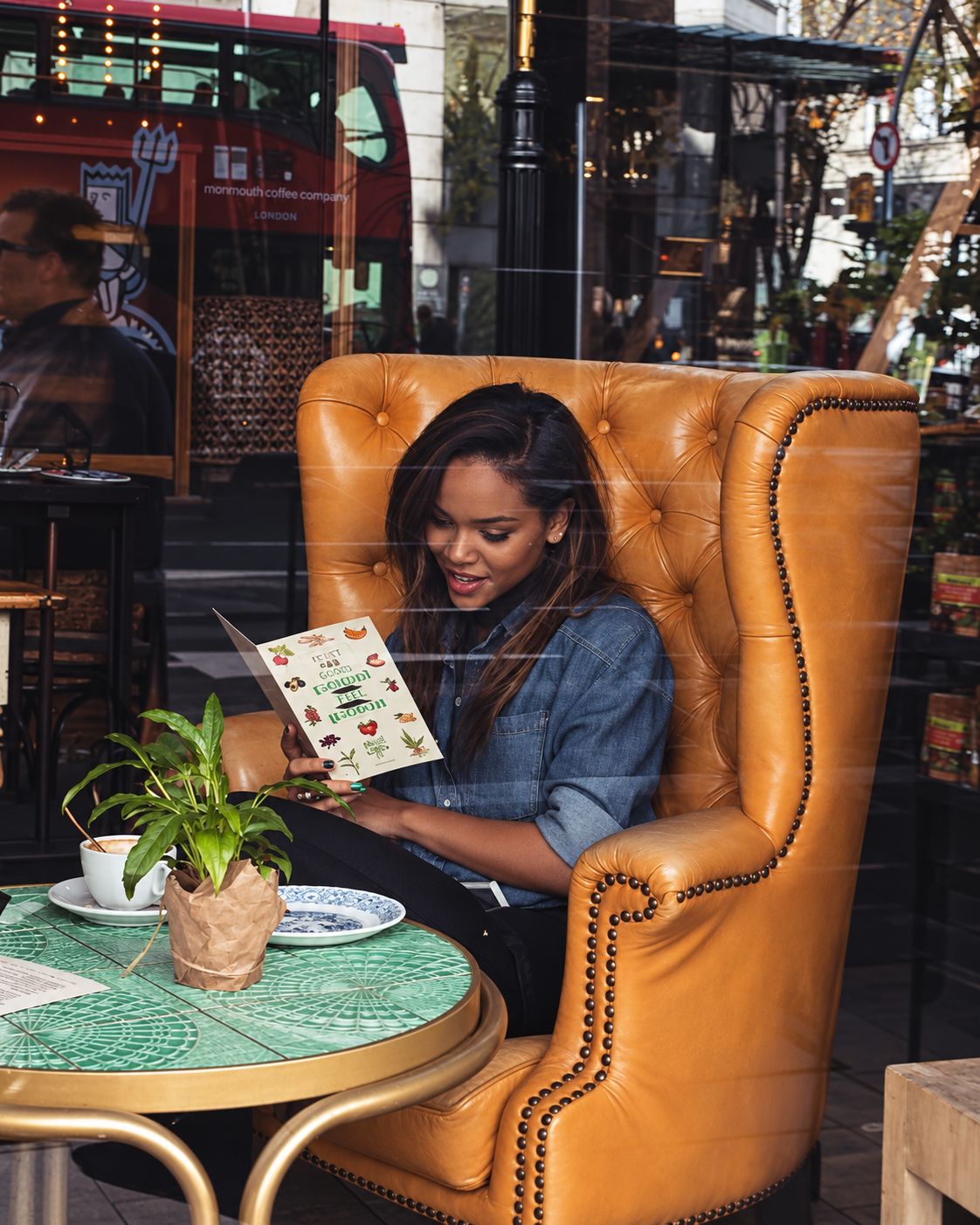
Most capitals hide their railway stations behind their monuments. Madrid put a garden inside one. Atocha, the station at the southern end of the Paseo del Prado, is the place where the city’s nineteenth-century ambition, its late-twentieth-century modernisation and its present-day habit of lingering all meet under one roof. For the traveller, it is an arrival hall, a piece of architecture and a quiet argument about what infrastructure can be.
What is Puerta de Atocha? Puerta de Atocha, usually called Atocha, is Madrid’s principal railway complex and its first railway station. It combines a nineteenth-century iron-and-glass hall, now a tropical garden and concourse, with a late-twentieth-century terminal that serves high-speed AVE and regional trains. It stands beside the Paseo del Arte, so it is also the most natural gateway to the city’s museum district.
The building has been rebuilt twice, and each version tells you what Madrid wanted to be.
Madrid Tourism dates the station to 1851, when the second railway line in Spain, linking the capital with Aranjuez, opened with a modest wooden platform. After a fire, the building was replaced in 1892 by a monumental hall of iron and glass, the work of the architect Alberto de Palacio, who is described as a collaborator of Gustave Eiffel, with the engineer Henry Saint James. The scale was deliberate: a train shed of roughly 150 metres in length and nearly 30 in height announced that the railway was now a civic institution and that Madrid, a capital with no seaport, would receive the world through its stations.
The third chapter came with the arrival of high-speed rail. Between 1984 and 1992, according to Madrid Tourism, Rafael Moneo remodelled the complex, building a new terminal for the AVE services that opened with the line to Seville and, crucially, keeping the old hall. Instead of demolishing the nineteenth-century shed, Moneo gave it a new life as a concourse filled with a tropical garden. That decision is the reason the station is worth writing about: it preserved a piece of industrial heritage by giving it a use that no engineer of 1892 would have imagined.
Preservation works best when it adds a purpose and not only a plaque.
Under the great vault, where the old platforms stood, palms and tropical plants now grow in a garden of roughly four thousand square metres, according to published guides. It is the quality of the light that makes the space: filtered through glass and iron, it turns a place of movement into a place of pause, and it gives a traveller arriving in a dry Castilian city an unexpected moment of green. The sensation is the most distinctive of any capital railway station, and it explains why the Landscape of Light project, which promotes the city’s heritage corridor, describes Atocha as a railway infrastructure transformed into a tropical garden.
The lesson for a well-travelled reader is a practical one. The best arrival in Madrid is not the quickest exit. A few minutes under the canopy, before moving on to the museums or the hotel, sets a tempo that matches the rest of the city: unhurried, spacious and slightly theatrical.
Atocha is where Madrid’s culture corridor begins.
Geography is Atocha’s quiet advantage. The station sits at the southern point of the Paseo del Arte, the stretch of Madrid that Madrid Tourism describes as grouping, in barely two kilometres, three of the world’s most important picture galleries, the Prado, the Thyssen-Bornemisza and the Reina Sofía. The Reina Sofía, devoted to twentieth-century and contemporary art, lies close to the station, and the Prado, the Royal Botanical Garden and the Retiro, parts of the UNESCO-inscribed Paseo del Prado and Buen Retiro landscape, follow along the same axis. A traveller can step off a train and reach one of the great cultural circuits in the world within a short walk.
Is Atocha worth visiting if you are not catching a train? Yes. Atocha is worth a short visit for its nineteenth-century iron-and-glass architecture, its tropical garden and its position at the start of the Paseo del Arte. It combines infrastructure, heritage and public space in a way that shows how Madrid treats its everyday landmarks.
How does Atocha connect to the Prado and the Reina Sofía? Atocha stands at the southern end of the Paseo del Arte, close to the Reina Sofía and along the same boulevard as the Prado, so both museums are within a short walk. The nearby Estación del Arte metro stop is named for the district, and the route can also be done entirely on foot along the Paseo del Prado.
A city’s public spaces carry its history as well as its architecture.
Atocha is also a place of remembrance. A glass memorial near the station honours the victims of the attacks of 11 March 2004, and visitors who come across it should treat it as they would any memorial: quietly and without the camera at the front. The station’s place in daily life, the arrivals, reunions and departures that happen beneath the canopy every hour, is part of what gives the building its emotional weight, and it is another reason to see Atocha as a lived civic space and not only as a heritage attraction.
Atocha is a compact case study in destination intelligence. It shows a city that rebuilt rather than erased, that turned a transport hall into a place to rest, and that placed its most important gateway beside its most important cultural district. Few capitals make the first ten minutes of arrival so legible. For a traveller organising a trip around rhythm, not around a checklist, the practical conclusion is simple: arrive by the iron hall if the route allows it, give the garden a few unhurried minutes, then walk north along the Paseo del Prado with the museums and the Retiro ahead. A light, well-organised travel kit makes that arrival easier.
Service note: check before you go. Station layouts, platform access, garden opening arrangements, ticketing and works can change, and the animals and plantings in the garden vary. Confirm current details with Renfe, Adif and Madrid’s official tourism site before travelling.
rent thing from a neighbourhood market, where daily shopping, produce, prepared food and social life intersect. A visitor who sees both understands the difference between a destination and a habit.




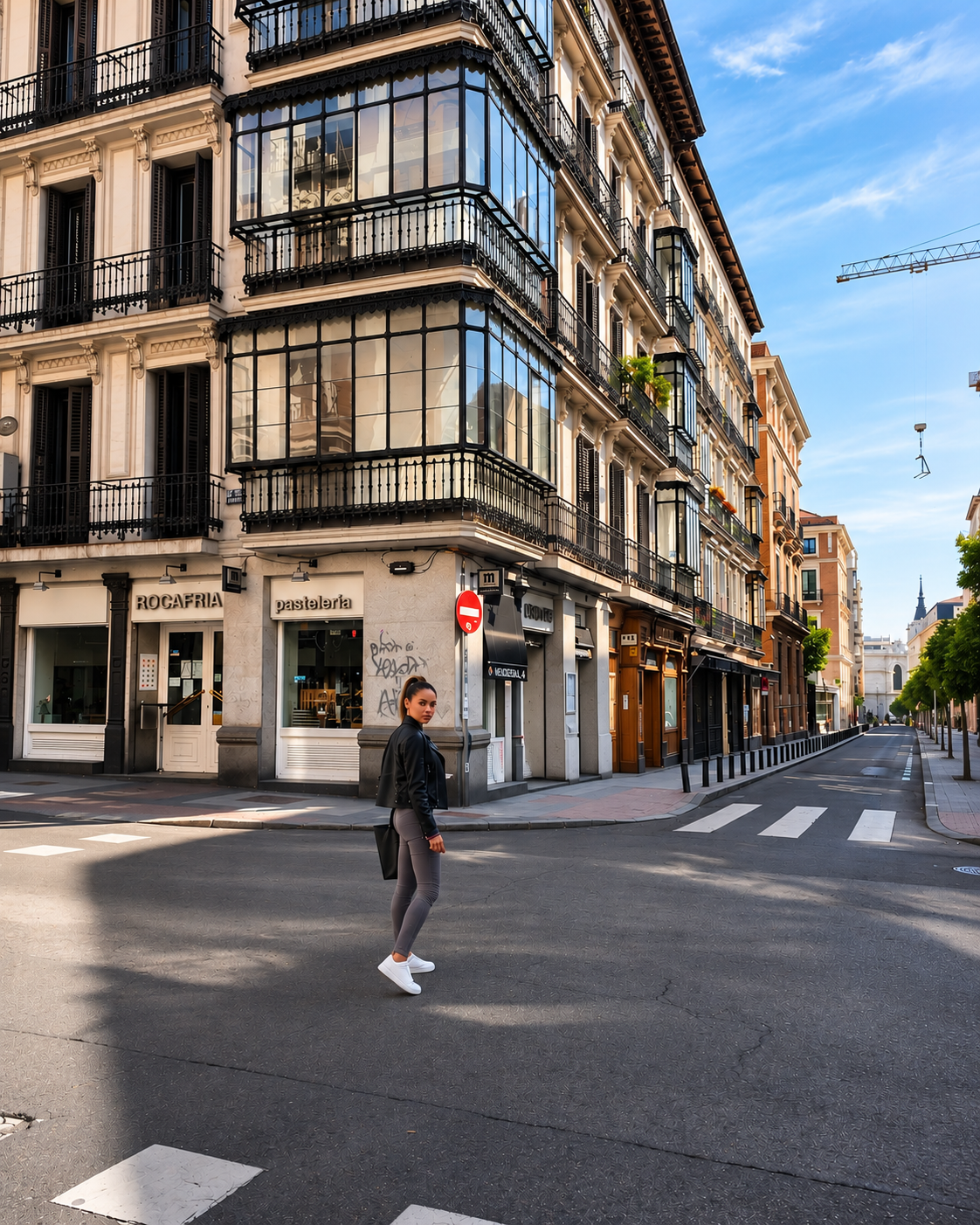
The Jet-Setter’s Madrid Is Not Only Five-Star
The sophistication lies in the edit.
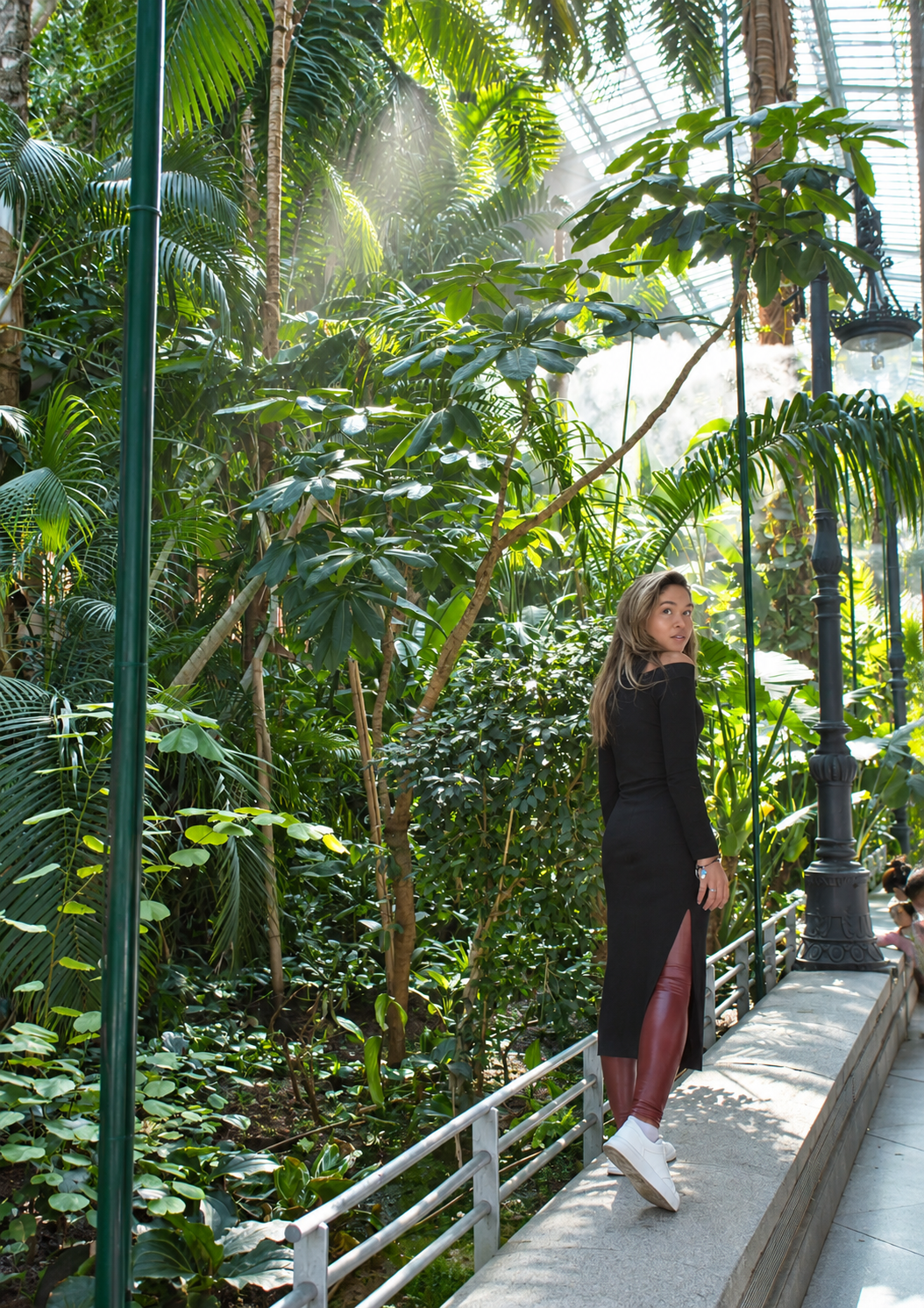
This is the edit’s most important corrective. Luxury should include exceptional hotels, restaurants, fashion and service, but it should not confuse exclusivity with depth. A perfect Madrid day might combine a palace or museum, a refined lunch, a walk through Salamanca, vermouth in an old bar, time in the Retiro and a late dinner.
What makes Madrid a luxury travel destination? Madrid combines grand culture, a established luxury district, serious dining and an unusually social street life, so luxury here is as much about time, access to public space and a long lunch as about five-star service. Its appeal lies in how the icons, the shops and the neighbourhood rituals sit within the same city.
Five questions keep that edit honest, and they work as a portable test for any city. Would this place still matter if it were not photogenic? Does it reveal something specific about Madrid? Do residents actually use the surrounding area? Does it connect to a larger history, ritual or neighbourhood? And will the recommendation still make sense several years from now? That test separates lasting recommendations from trends in any category, which is why credibility outlasts attention. It is also why this edit names almost no restaurants: venues change, and rhythm does not.
The same logic extends to culture. Matadero Madrid, a former municipal slaughterhouse converted into a centre for contemporary creation, shows a city that reuses its industrial past for art, exhibitions and performance, and it is a reminder that Madrid’s contemporary life is not confined to the historic centre.
What are the best cultural experiences in Madrid? The best cultural experiences combine a major institution with time to absorb it: a selective visit to the Prado or the Reina Sofía, a walk through the Retiro and the Paseo del Prado, the Royal Palace and the old city, the Literary Quarter’s streets, and contemporary spaces such as Matadero. Choosing fewer places and staying longer is the more rewarding approach.


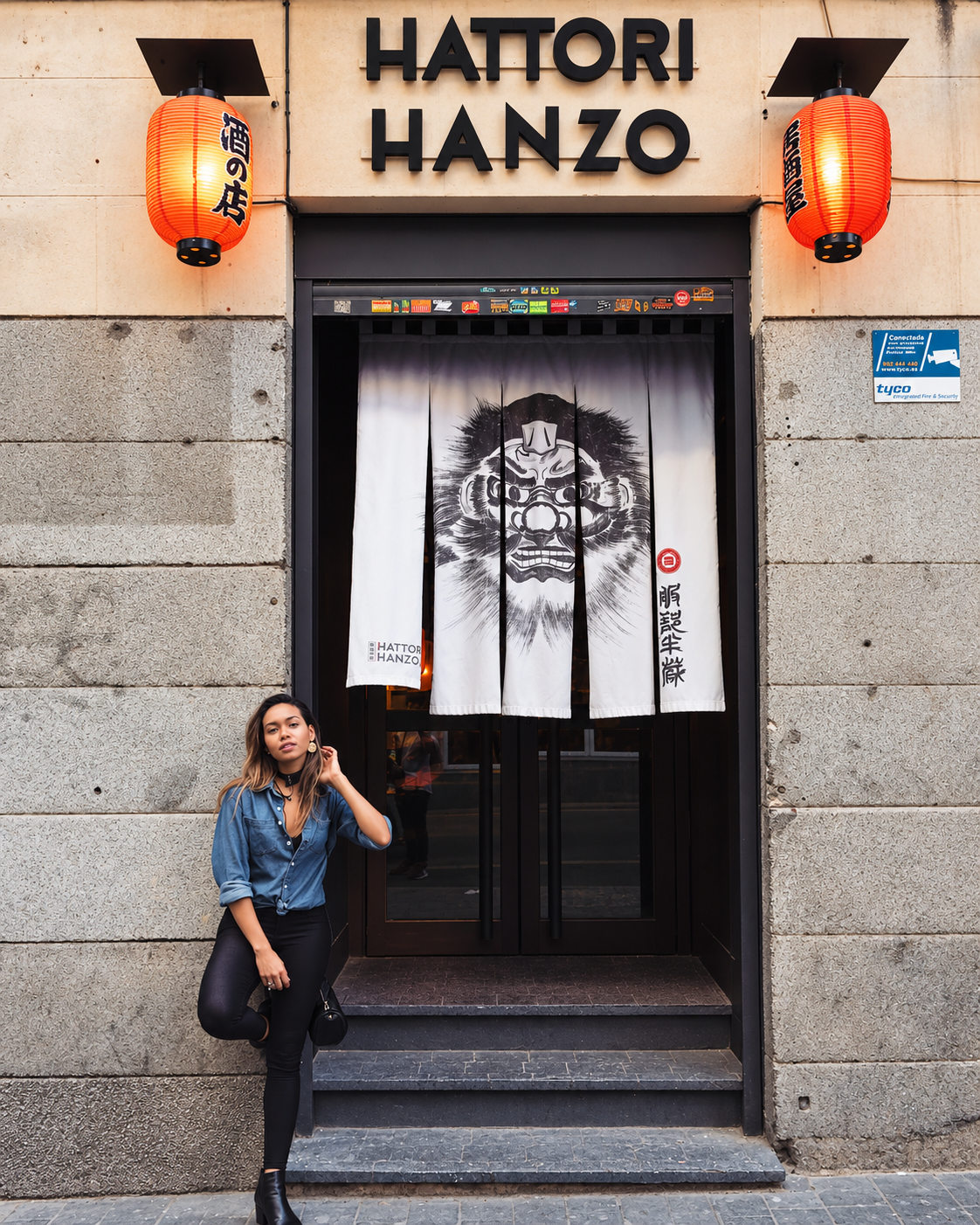
Chamberí: The Madrid That Feels Lived-In
Luxury travel becomes more interesting when part of the itinerary has no monument attached to it.
Chamberí gives the edit its local credibility without manufacturing obscurity. The neighbourhood combines aristocratic architecture, traditional taverns, markets and contemporary dining, with squares and terraces that serve residents first. It offers a strong counterpoint to central sightseeing, and a reminder that the best part of a day may be the part nobody put on a list.
What is local life like in Chamberí? Chamberí is a residential Madrid neighbourhood known for traditional taverns, neighbourhood markets, terraces and an established aperitif culture, alongside contemporary dining. It is included among the districts on Madrid’s official vermouth-bar map, and it offers a view of everyday city life away from the main monuments.
What neighbourhoods should you explore in Madrid? Beyond the central icons, the most rewarding districts for a first extended visit are the Barrio de Salamanca for luxury and polished evenings, Chamberí for neighbourhood markets, taverns and terraces, and the Barrio de las Letras for Golden Age literary history with a living street life. Together they show three different registers of the same city.
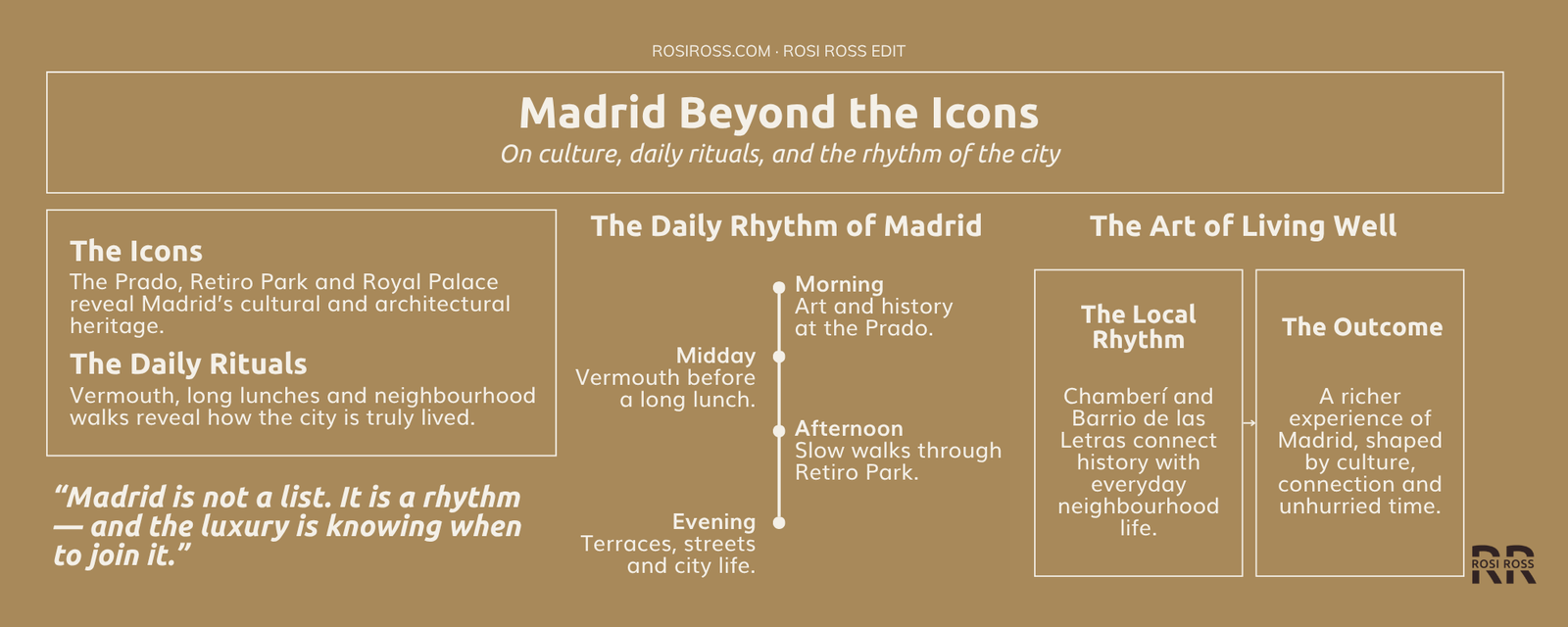
A Sequence, Not a List
The edit is a way of ordering a day.
The simplest way to use this guide is as a sequence. See the city’s power, at the palace and the old city. See its culture, at the Prado and along the Paseo del Arte. See the city breathe, in the Retiro. See it dress, in Salamanca and on Jorge Juan. See it live, in Chamberí and its markets. See it remember, in the Barrio de las Letras. See it perform, on Gran Vía. See it pause, at the vermouth counter and the long lunch. And see it from above, at the hour the light turns. Few visitors will do all of it in one trip, and none should try. The sequence is a vocabulary, and each visit can choose a different sentence.
The world’s growing interest in Madrid’s fashion, hospitality and luxury scene is best read as evidence that others are noticing something the city already possessed: an unusually convincing combination of grand culture, sophisticated consumption and daily social life. That makes the story contemporary without making it disposable.
How can you experience Madrid like a local without skipping the icons? See the major sights, but set them inside the city’s rhythm: visit the Prado and leave slowly, walk the Retiro without an agenda, take vermouth before a long lunch, spend time in a lived-in neighbourhood such as Chamberí or the Barrio de las Letras, and view Gran Vía architecturally. The icons matter most when they are connected to how Madrid is actually used.
What should you do in Madrid besides tourist attractions? Spend time in a residential neighbourhood such as Chamberí, visit a neighbourhood market, take the vermouth hour, walk the Retiro or the riverside without an agenda, and protect time for a long lunch. These everyday rituals are as much a part of Madrid as its monuments.
Service note: check before you go. Opening hours, ticketing, museum and palace closures, event dates and venue details change, and individual restaurants, bars and rooftops should be rechecked before booking. Confirm them with Madrid’s official tourism site and the institutions concerned. This edit deliberately keeps hours and venue lists out of its main narrative; a light, well-organised travel kit is worth more here than an itinerary.
The best Madrid itinerary is not the one with the most places. It is the one that understands how the city wants to be lived: see the Prado and stay for vermouth, walk Serrano and wander into Chamberí, book something exceptional and still leave enough room in the day to sit somewhere with no agenda at all.
“Do the obvious things.
Do them slowly.
Leave the museum at the hour
the terraces begin to fill,
take the long way through the park,
let lunch be the plan.
Madrid is not a list.
It is a rhythm —
and the luxury is knowing
when to join it.”

