On Dolce & Gabbana’s #DGIsland Sacred Heart, the structural convergence of luxury fashion and blockchain infrastructure, digital garments as NFT-based asset classes, on-chain identity systems, and why the most significant development in contemporary luxury is the shift from what you wear to what you own on-chain
At #DGIsland, fashion is no longer a seasonal expression of style — it becomes a programmable system of identity, ownership, and economic participation. What emerges is not simply a collaboration between fashion and Web3, but a structural redefinition of how luxury is created, verified, and circulated. Garments are no longer just worn. They are owned, authenticated, and activated across interconnected digital and physical ecosystems. Fashion, in this new paradigm, is not an industry. It is an infrastructure of identity.
Luxury used to rely on scarcity in physical space. The limited-edition garment was scarce because producing more of it would take more time and material than the brand chose to invest. The runway piece was exclusive because only a finite number of people could attend the show, acquire the piece, and inhabit the social world in which wearing it carried meaning. This model of exclusivity was simple, legible, and structurally dependent on the physical world’s constraints — on the inability to duplicate a hand-sewn garment, on the friction of international retail distribution, on the social architecture of fashion weeks that concentrated cultural authority in specific rooms in specific cities on specific days.
Digital replication dissolved these constraints entirely. A photograph of a luxury garment can be reproduced infinitely and circulated globally within seconds of its creation. The cultural authority of the image — the signal value of being seen wearing something extraordinary — was radically democratised and simultaneously radically devalued, because the scarcity on which its signal value depended had been removed. Web3 reintroduces scarcity through a mechanism the physical world never had available: programmable ownership, enforced by blockchain verification, that cannot be duplicated, transferred without consent, or counterfeited without detection. #DGIsland Sacred Heart by Dolce & Gabbana is the most complete available exploration of what this mechanism produces when applied to luxury fashion at the level of a major global house.
The broader context of how Dubai and the Gulf’s digital economy ecosystem provides the regulatory and institutional infrastructure for this kind of phygital luxury experiment connects #DGIsland directly to the Web3 landscape documented across this site’s digital economy editorial. Inside Dubai’s Web3 Infrastructure: Blockchain, AI, and Digital Capital provides the regulatory architecture analysis — VARA, DIFC, ADGM — that makes the Gulf the world’s most structurally aligned jurisdiction for digital asset experimentation at institutional scale. Inside the Dubai AI & Web3 Festival documents the convergence environment in which fashion, technology, and blockchain capital interact at their highest institutional register.
What is #DGIsland Sacred Heart — the structure of a cultural-technical hybrid environment
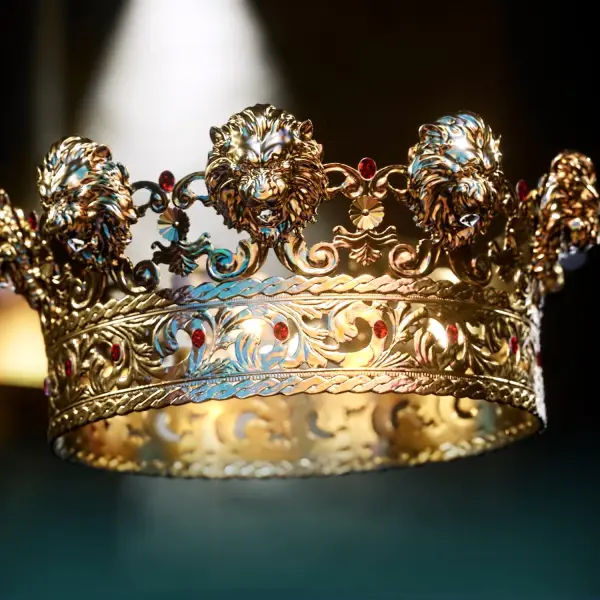
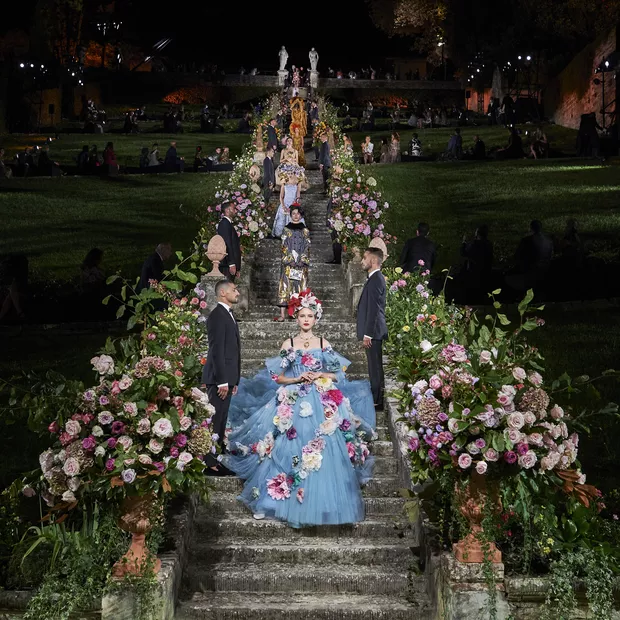

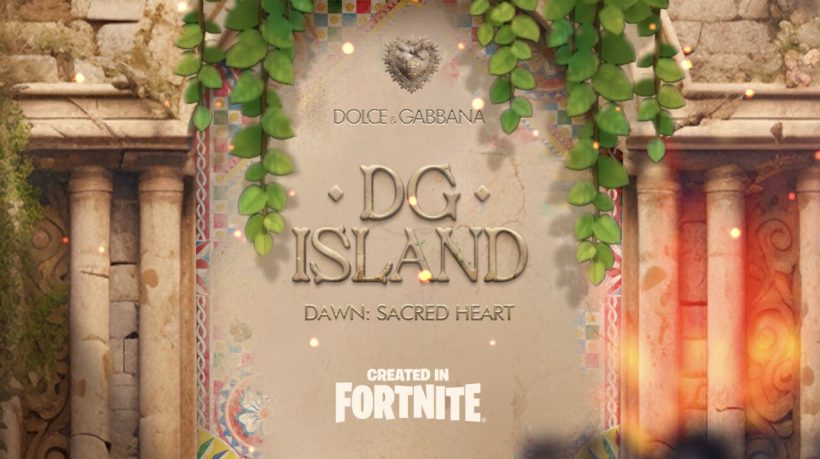
#DGIsland Sacred Heart is a gaming experience that merges Dolce & Gabbana’s iconic luxury aesthetic with the immersive infrastructure of Web3 — but describing it as a game understates the structural significance of what it represents. It is more precisely a live ecosystem in which cultural production is directly tied to digital verification layers: a cultural-technical hybrid environment that functions simultaneously as a fashion showcase, a blockchain activation zone, and a digital identity laboratory.
The game’s architecture is Dolce & Gabbana’s most explicit statement yet about where luxury fashion’s future lies. Players navigate intricate, dreamlike realms — environments whose visual language is an extension of the house’s luxury aesthetic into the virtual space: bold, unapologetic, breathtakingly intricate, unmistakably the product of a design intelligence that is translating its physical design philosophy into a digital medium rather than simply creating visual content for a screen. The challenges within these realms are structured around the same creative and strategic engagement that the best luxury brand experiences produce in the physical world: the specific combination of aspiration, exclusivity, and the pleasure of being among those who have found their way in.
What distinguishes #DGIsland from previous fashion-adjacent gaming experiences is the structural integration of Web3 ownership into the core mechanic of the experience. The rewards unlocked through gameplay — rare digital garments, NFTs, items that carry value across the broader digital ecosystem beyond the game itself — are not in-game currency. They are blockchain-native assets, their ownership recorded on-chain, their scarcity enforced by smart contract logic that no central authority can override. This is the structural shift that transforms #DGIsland from a brand marketing activation into a prototype of the tokenized identity economy that the convergence of luxury fashion and Web3 infrastructure is producing.
As Bloomberg’s analysis of NFT luxury fashion and blockchain brand strategy and Business of Fashion’s analysis of Web3 luxury fashion and digital ownership together document, the luxury brands building the most durable positions in the digital fashion economy are those that understand the structural shift from selling products to issuing access systems — those whose digital fashion activations create genuine ownership infrastructure rather than merely extending brand imagery into new visual contexts. #DGIsland Sacred Heart is the most complete available expression of this understanding from any major global luxury house.
Fashion as a tokenized asset class — garments on-chain, smart contract scarcity, and programmable royalties
The most structurally significant development that #DGIsland Sacred Heart represents for the luxury fashion industry is the transformation of the garment from a physical object into a digital asset class — one whose scarcity is enforced by smart contract logic rather than production limits, whose provenance is recorded on-chain rather than through paper certificates, and whose resale value flows through programmable royalty systems that return value to the original creator with every secondary market transaction.
The conventional luxury garment’s value proposition has always rested on a combination of material quality, design intelligence, and the social authority conferred by the brand whose label it carries. The limited-edition piece added scarcity to this combination: the knowledge that only a finite number of these objects exist in the world, and that owning one places the wearer within a specifically limited social group. This scarcity was always ultimately dependent on the brand’s willingness to maintain production limits — a willingness that could be compromised by commercial pressure, by counterfeit production, or by the simple inability to verify whether the garment in front of you is genuinely what it claims to be.
Blockchain-enforced scarcity resolves all of these vulnerabilities simultaneously. A digital garment issued as an NFT within the #DGIsland ecosystem has a provenance that is verifiable by anyone, a scarcity that is enforced by code rather than by institutional commitment, and an ownership record that is immutable and transferable without the involvement of any intermediary. The garment — or rather, the digital asset that represents it — cannot be counterfeited because the blockchain record of its existence and ownership is the only authoritative source of truth about it. It cannot be duplicated because the smart contract that governs it allows only the specified number of instances to exist. And its value in secondary markets can flow back to Dolce & Gabbana through programmable royalty mechanisms that have no equivalent in the physical garment economy.
This creates, for the first time, a luxury fashion asset class that is simultaneously scarce, verifiable, liquid, and capable of generating ongoing economic returns for its original creator. The implications for how luxury fashion brands structure their product and revenue models are structural rather than cosmetic — and #DGIsland Sacred Heart is the live demonstration of what those implications look like in practice.
On-chain identity systems — wallets as fashion passports, digital wardrobes as blockchain identity
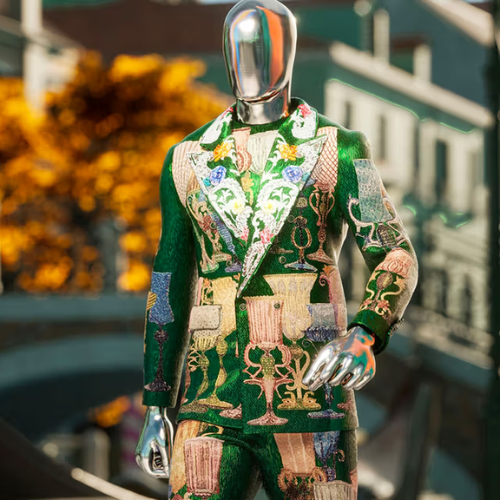
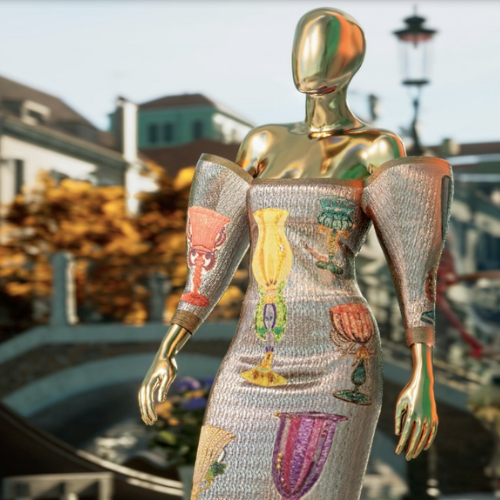
The most culturally consequential dimension of what #DGIsland Sacred Heart represents is not the financial mechanics of NFT ownership — it is the structural shift in how identity functions in digital environments. When a Dolce & Gabbana digital garment becomes a blockchain-native asset tied to a wallet address, the wallet is no longer merely a financial instrument. It becomes a fashion passport — a portable, verifiable record of identity that travels with its owner across every digital environment that recognises the Web3 standard on which it is built.
Fashion has always been one of the most powerful available mechanisms for identity construction and communication. The social function of the garment — its capacity to signal affiliation, aspiration, and self-understanding to others — is not diminished by its migration to digital environments. It is amplified by the specific properties of digital environments: the global reach of the signal, the persistence of the record, and the cross-platform portability that blockchain ownership enables. A digital garment unlocked in #DGIsland can be worn as a profile avatar in one environment, displayed in a virtual gallery in another, and activated as a physical experience trigger in a third — all while the ownership record remains immutably on-chain, verifiable by anyone, and transferable at the owner’s discretion.
This cross-platform wearability of digital fashion assets is the technical foundation of what the convergence of fashion and Web3 is producing at its most structurally significant level: the digital wardrobe as a unified identity infrastructure that operates across every context in which the owner is present, rather than being confined to a single platform or a single garment. The social status signal that in the physical world requires the owner to be physically present — and the garment to be physically worn — becomes, in the Web3 model, a persistent property of the identity itself, verifiable and visible across every digital environment simultaneously.
The understanding that identity is increasingly constructed and communicated through the objects and assets we choose to associate ourselves with — and that the most sophisticated contemporary luxury is the kind chosen with the most precise self-knowledge — connects the digital fashion identity dimension of #DGIsland to the broader luxury philosophy explored across this site’s editorial. The New Language of Quiet Luxury: Inside the Timeless Wardrobe of Apparis makes the foundational argument: that what endures in fashion is what was chosen for identity resonance rather than trend compliance. The on-chain garment that carries its owner’s identity across digital environments is the most technologically advanced expression of this same foundational intelligence — the object chosen not for its visibility but for what it says, and able to say it consistently across every context its owner inhabits.
Luxury brands entering the Web3 stack — phygital releases, NFT collections, and digital twins
Dolce & Gabbana’s #DGIsland Sacred Heart is not an isolated experiment. It is the most ambitious entry in a wave of luxury brand Web3 strategy that is transforming the industry’s understanding of what a luxury product is — and what the relationship between a luxury brand and its most engaged consumers can become when the infrastructure of digital ownership makes continuous, programmable, multi-dimensional brand relationships structurally possible.
The phygital product release — a physical garment paired with a digital twin, whose NFT ownership record verifies the physical piece’s authenticity and extends its value lifecycle into digital environments — is becoming the standard model for luxury brand digital fashion strategy. The digital twin serves multiple simultaneous functions: authentication mechanism, whose blockchain record makes the physical piece unambiguous in provenance; digital asset in its own right, with value in virtual environments and secondary markets; and ongoing connection point between brand and owner, through which new experiences, community access, and physical activations can be delivered to the NFT holder throughout the garment’s lifecycle.
The blockchain-backed exclusivity drop — a limited-edition digital release whose scarcity is enforced by smart contract logic and whose distribution is governed by criteria the brand sets directly, without intermediaries — enables luxury brands to manage the social architecture of exclusivity with a precision that physical retail channels have never been able to provide. Who gets access, in what sequence, under what conditions: these are all programmable within the smart contract, making the exclusivity as deliberately designed as the garment itself.
As Vogue’s analysis of luxury fashion’s Web3 evolution and the future of digital ownership documents, the luxury houses that are building the most durable positions in the digital fashion economy are those developing genuine Web3 infrastructure around their brand relationships — those whose digital fashion strategy is architected around the specific capabilities of blockchain ownership rather than those treating NFTs as a marketing format. Dolce & Gabbana’s #DGIsland Sacred Heart is the most complete available expression of the former approach.
The economics of digital scarcity — secondary markets, programmable royalties, and fashion as a self-reinforcing luxury economy
The financial architecture of the tokenized fashion economy that #DGIsland Sacred Heart exemplifies represents a structural transformation in the economics of luxury brand value creation — one whose implications extend well beyond digital fashion into the broader question of how creative industries can build durable economic relationships with the communities that generate the cultural value their products embody.
The programmable royalty — the smart contract mechanism that returns a percentage of every secondary market transaction to the original creator — is the most consequential financial innovation in the tokenized fashion economy. In the physical luxury garment economy, the brand’s economic relationship with its products ends at the first sale. The secondary market — the resale of vintage Chanel, the auction of rare Hermès, the transfer of a limited-edition Dolce & Gabbana piece between collectors — generates significant financial value, none of which flows back to the original creator. Programmable royalties change this structural relationship entirely: the creator participates economically in the cultural value their work generates across its entire lifecycle, rather than only at its moment of initial production.
The real-time tracking of cultural value appreciation that blockchain-native fashion assets enable — the public record of every transaction, every transfer, every price point at which a specific digital garment has changed hands — creates a transparency of value formation that the physical luxury market has never approached. The collector who acquired a specific #DGIsland digital garment at initial release can see exactly how its cultural value has evolved, exactly which community of owners has held it, and exactly what the market believes it to be worth at any given moment. This transparency is not merely informational — it is structurally value-creating, because it makes the cultural authority of scarce digital fashion assets legible in ways that secondary market price discovery alone cannot produce.
The broader investment intelligence about how natural scarcity and genuine rarity create compounding value over time — the same intelligence that governs the luxury goods categories explored in The Return of the Pearl: Inside the Quiet Luxury of Robert Wan, where supply constrained by conditions no human process can override produces the most durable form of luxury value — applies with equal structural force to digital fashion assets whose scarcity is enforced by blockchain logic rather than biological patience. The mechanism is different; the underlying economics of irreplaceable scarcity are identical.
Dubai and the Gulf as the laboratory for digital fashion infrastructure — why geography matters in the tokenized identity economy
The convergence of luxury fashion and Web3 infrastructure is not geographically neutral. The jurisdictions that develop the regulatory clarity, institutional capital, and cultural appetite for digital fashion experimentation at the highest level will define the direction of the tokenized identity economy — and Dubai’s structural position in this emerging competition is among the most significant and least analysed dimensions of its broader digital economy strategy.
The concentration of luxury consumers in the Gulf — their global mobility, their digital sophistication, their cultural openness to new forms of luxury expression, and the specific appetite for exclusivity and identity signalling that makes them the most commercially valuable early adopter market for digital fashion assets — makes Dubai the most strategically significant single location for luxury brands seeking to develop and validate their Web3 fashion strategies. The consumer who acquires a Dolce & Gabbana NFT in Dubai is not a niche digital asset collector. They are the global luxury consumer in their most engaged and most commercially sophisticated form.
The regulatory infrastructure that supports this market — VARA’s digital asset framework, DIFC’s Web3-compatible financial architecture, the UAE government’s explicit commitment to blockchain and AI as core economic infrastructure — provides the institutional certainty that luxury brands require to deploy serious Web3 strategies rather than experimental marketing activations. When Dolce & Gabbana issues digital fashion assets into an ecosystem whose regulatory architecture is as carefully constructed as VARA’s, the brand is making a commitment to the permanence and legitimacy of those assets that no unregulated digital environment can provide. As McKinsey’s State of Fashion analysis confirms, the luxury market’s adoption of Web3 infrastructure will be led by the jurisdictions that combine consumer appetite with regulatory clarity — and Dubai is the most complete available expression of both simultaneously.
The specific social and cultural dimensions of digital identity formation in the Gulf context — and the ways in which Web3 ownership infrastructure aligns with the region’s existing cultural frameworks around exclusivity, community membership, and the social architecture of luxury — connect #DGIsland’s identity economy to the broader understanding of how Dubai’s most significant cultural ecosystems develop. The Gulf luxury consumer’s specific relationship to digital ownership — their comfort with blockchain-verified assets, their appetite for exclusivity enforced by programmable rather than physical scarcity, and their established engagement with luxury as identity infrastructure rather than mere consumption — makes the region the most commercially significant single market for the tokenized fashion economy that #DGIsland Sacred Heart represents. What is being tested here is not whether luxury fashion and Web3 can coexist. It is what that coexistence produces when deployed in the market most structurally prepared to receive it. Soigné Middle East: The Modest Fashion Magazine the Region Has Always Deserved explores how fashion identity infrastructure built from within a community produces a cultural authority that no externally imposed framework can replicate. The tokenized identity ecosystem of #DGIsland operates on the same principle — the garment that carries its owner’s identity across digital environments is most culturally powerful when it is chosen with the same self-knowledge and community intelligence that the best physical fashion choices have always required.
“At #DGIsland, fashion is no longer a seasonal expression of style —
it becomes a programmable system of identity,
ownership, and economic participation.
What emerges is not simply a collaboration between fashion and Web3,
but a structural redefinition of how luxury is created,
verified, and circulated.
Garments are no longer just worn.
They are owned, authenticated, and activated
across interconnected digital and physical ecosystems.
Fashion, in this new paradigm, is not an industry.
It is an infrastructure of identity.”