
The nighttime skincare routine is typically framed as a ritual — a sequence of steps performed before sleep whose value is measured by the quality of the products applied and the consistency with which the sequence is maintained. This framing is not wrong, but it is incomplete. It treats the night as a neutral period during which skincare products work while the skin passively receives them.
The skin at night is not a passive recipient of whatever is applied to its surface. It is an active biological system operating within a precisely timed programme of cellular repair. Understanding that programme does not make the routine less important — it makes it considerably more so.
The more accurate picture is considerably more interesting: the skin at night is not a passive recipient but an active biological system operating within a precisely timed programme of cellular activity that has nothing to do with the products applied to its surface and everything to do with the molecular biology of the circadian clock. Understanding this programme changes not just how the night routine is performed but why it matters — and makes clear that the most important factor in nocturnal skin health is not which serum is applied but the quality of the biological environment in which any topical product is operating.
The most considered nocturnal beauty practices share a common foundation: understanding the biological conditions they are working within rather than simply the products they are applying. The skin possesses its own circadian clock — a molecular timekeeping system operating through the expression of specific genes (most significantly CLOCK, BMAL1, PER1, and PER2) that regulate the timing of cellular processes across a twenty-four-hour cycle. This clock operates semi-autonomously from the brain’s master circadian pacemaker in the suprachiasmatic nucleus, responding to the same environmental time cues — primarily light and darkness — but capable of maintaining its own rhythm across multiple tissue types simultaneously. What this means for the skin is that cellular activities do not simply accelerate or decelerate uniformly across the day and night. They are scheduled: specific repair and regeneration processes occur at specific times, in a sequence whose precision has been increasingly mapped by circadian biology research over the past two decades. The nighttime skincare routine, at its most biologically informed, is not an addition to this schedule. It is a response to it.
The circadian schedule of skin repair — what happens and when
The twenty-four-hour cycle of skin biology is not a simple day-active, night-passive alternation. It is a precisely sequenced programme in which different cellular processes peak at different times, with the repair and regeneration functions concentrated in the sleep period for specific biological reasons.
Research on collagen metabolism published in the journal Frontiers in Pharmacology has identified that the genes associated with collagen synthesis and secretion are predominantly expressed during the night phase, while genes involved in collagen assembly operate primarily during the day — meaning that the two phases of collagen production are not simply accelerated and decelerated versions of the same process but distinct biological activities governed by separate temporal programmes.

Keratinocyte division — the cell proliferation that renews the epidermis — peaks at approximately midnight in healthy circadian-regulated skin. Transepidermal water loss (TEWL) shows its minimum values between 8 and 10 in the morning and reaches a relative peak in the evening hours, with maximum skin permeability occurring between 3 and 5 in the morning. Growth hormone, which supports fibroblast activity and collagen synthesis in the dermis, is concentrated in the first half of sleep, with approximately 70% of daily growth hormone secretion occurring during slow-wave sleep stages that typically occur before midnight. This temporal precision is not incidental. It reflects the evolutionary logic of concentrating metabolically expensive repair activity in the period when the organism is not exposed to the UV radiation and oxidative stress that would interfere with DNA repair and cellular regeneration — and when the reduced muscular and metabolic demands of sleep leave biological resources available for tissue maintenance.
Supporting this biological window is where an essence earns its place in the routine — delivering active hydration at the precise moment the skin’s repair programme is beginning to accelerate.

What is the skin’s circadian clock — and how does it govern the timing of nocturnal repair? The skin’s circadian clock refers to the molecular timekeeping system operating within skin cells through the rhythmic expression of a specific set of genes — including CLOCK, BMAL1, PER1, PER2, CRY1, and CRY2 — that regulate the timing of cellular processes across a 24-hour cycle. This system operates semi-autonomously from the brain’s master circadian pacemaker (the suprachiasmatic nucleus in the hypothalamus) but responds to the same environmental synchronising signals, primarily the light-dark cycle. In the skin, the circadian clock governs the timing of keratinocyte cell division (peaking near midnight), collagen synthesis gene expression (concentrated in the night phase), barrier lipid restoration, sebum production rhythms, and the skin’s antioxidant defence capacity. Research has confirmed that disruption of the key circadian clock genes CLOCK and BMAL1 accelerates degenerative processes in skin cells and increases susceptibility to UV-induced DNA damage. The resulting accelerated ageing process associated with circadian rhythm disruption is termed chronoaging — a mechanism distinct from photoaging, though both processes frequently coexist and exacerbate each other. The skin’s permeability to topically applied ingredients also follows a circadian pattern, with maximum permeability occurring between 3 and 5am — a finding with direct implications for the timing and formulation of nocturnal skincare products.
Cortisol, collagen, and the cost of sleep deprivation
The most consequential hormonal event in nocturnal skin biology is the retreat of cortisol. Sleep, and specifically the reduction in cortisol that healthy sleep structure produces, is the condition under which the skin’s collagen-building fibroblasts are most free to perform their function without suppression.
Cortisol — the primary glucocorticoid stress hormone, produced by the adrenal cortex in response to physiological and psychological stress signals — is at its highest circulating levels during the active day, where it performs essential regulatory functions in metabolism, immune response, and inflammatory management. In the skin, however, chronically elevated cortisol has specific and well-documented negative effects: it suppresses collagen synthesis by reducing the transcriptional activity of the fibroblasts responsible for producing it; it impairs barrier lipid production; it activates matrix metalloproteinases — the enzymes that degrade existing collagen — through inflammatory pathways. The cortisol that helps the body manage the stresses of the waking day is, from the skin’s collagen-producing perspective, a structural adversary.
The significance of adequate sleep for skin health therefore operates not only through the positive mechanisms of cellular repair and regeneration but through this negative mechanism of cortisol clearance. Research has shown that sleep-deprived skin has measurably higher transepidermal water loss, reduced barrier recovery after disruption, and increased fine line visibility. Poor sleep elevates cortisol, which suppresses collagen synthesis, impairs barrier lipid production, and slows epidermal cell renewal. The practitioner who applies a peptide serum designed to stimulate collagen synthesis before sleeping on three hours of disrupted rest is working against the biology rather than with it — because the cortisol environment of a sleep-deprived night actively counteracts the collagen-stimulating mechanism of the product.
A concentrated ampoule, formulated to support the fibroblast activity that cortisol otherwise suppresses, is where this biology is most directly addressed.

Sleep quality is not a preparation for the skincare routine. It is the primary skincare variable. The barrier-first principle that governs the most considered approach to moisturisation extends to the nocturnal period: the most important thing the night routine can support is the biological environment in which it operates, not simply the ingredients it delivers.
Melatonin — the skin’s nocturnal antioxidant
Melatonin protects skin cells from oxidative stress, UV radiation, and environmental damage by directly scavenging free radicals and activating endogenous defence systems — while promoting tissue repair and reducing signs of skin ageing.
Melatonin is most widely understood as the hormone of sleep onset — the signal released by the pineal gland in response to darkness that initiates the physiological cascade of sleep preparation. Its role in skin biology is more extensive than this framing suggests. Melatonin is synthesised not only by the pineal gland but also in peripheral tissues including the skin itself, where its antioxidant, anti-inflammatory, and immunomodulatory properties have been extensively studied. It also modulates immune responses, making it relevant in inflammatory dermatoses such as atopic dermatitis, while promoting tissue repair and reducing signs of skin ageing.
The antioxidant potency of melatonin in the skin context deserves specific attention. The cutaneous melatonergic system produces antioxidant activity with higher electron-donating potential than vitamin C for hydroxyl radicals — a finding that positions melatonin not simply as a useful antioxidant but as among the most potent available to the skin during the nocturnal period. This has direct implications for the relationship between screen exposure before sleep and skin health: exposure to artificial light before bed interferes with melatonin production and disrupts the body’s natural repair cycle. A habit that delays or suppresses melatonin secretion does not simply affect sleep onset. It reduces the cutaneous antioxidant protection available during the skin’s primary repair period — a consequence that is not visible in the morning but accumulates across months and years of consistent pattern.
A brightening serum, layered to support the skin’s own antioxidant defences through the night, works in concert with this mechanism rather than against it.

What is chronoaging — and how does circadian disruption accelerate skin ageing through mechanisms distinct from UV damage? Chronoaging refers to the skin ageing process associated with the disruption of biological cellular rhythms — specifically the circadian clock genes that regulate the timing of repair, regeneration, and antioxidant protection in skin cells. It is mechanistically distinct from photoaging (UV-induced skin ageing) though the two processes frequently coexist and amplify each other. Chronoaging operates through several converging pathways: disruption of CLOCK and BMAL1 gene expression impairs the temporal coordination of DNA repair processes that address UV damage accumulated during the day; reduced melatonin secretion (caused by artificial light exposure, shift work, or irregular sleep schedules) diminishes the skin’s nocturnal antioxidant protection; chronically elevated cortisol from insufficient or fragmented sleep suppresses fibroblast collagen synthesis and activates matrix metalloproteinases that degrade existing collagen; and the disruption of keratinocyte division timing reduces the efficiency of epidermal renewal. Research has demonstrated that people sleeping fewer than six hours per night more frequently exhibit measurable signs of accelerated skin ageing, including reduced elasticity, impaired barrier recovery, increased TEWL, and greater fine line visibility. The emerging field of chronocare — adapting active ingredients and treatment timing to the skin’s biological rhythm — represents the practical clinical response to this body of research.
Transepidermal water loss at night — why the order of products matters more than the products themselves
The sequence matters: humectant, then emollient, then occlusive is the biological analogue of the skin’s own layered moisture retention system, and working in this order with the nocturnal biology rather than against it produces measurably better barrier hydration outcomes.
Transepidermal water loss — the passive diffusion of water vapour through the skin to the external environment — follows its own circadian pattern that has specific implications for nocturnal skincare practice. TEWL shows its daily minimum in the morning hours and increases notably in the evening, with an additional rise occurring between 9pm and 11pm associated with protein assembly processes in which amino acids binding to form connective tissue release water as a byproduct that travels to the surface, increasing moisture loss and contributing to nocturnal dehydration. Simultaneously, skin permeability to topically applied substances reaches its maximum in the early morning hours between 3 and 5am — meaning that the skin is most actively losing water and most receptive to topical penetration at different times within the same night.
This biological sequence has practical consequences for the logic of nocturnal skincare application. An occlusive applied at bedtime — petrolatum, dimethicone, certain plant waxes — reduces the TEWL that would otherwise occur across the full sleep period, maintaining the hydrated barrier environment in which the skin’s own lipid restoration processes operate most efficiently. A humectant applied beneath the occlusive attracts water to the stratum corneum during the period when the barrier is actively working to retain it.
A lightweight daily moisturiser, formulated to lock in hydration without disrupting this overnight barrier function, is the practical expression of this principle.

What is transepidermal water loss — and why does its nocturnal pattern matter for skincare routine design? Transepidermal water loss (TEWL) refers to the passive diffusion of water vapour from the dermis through the epidermis to the external environment — a continuous process whose rate is governed by the integrity of the stratum corneum’s lamellar lipid structure. TEWL follows a circadian pattern: it is lowest in the morning hours (approximately 8–10am) and elevates during the evening period, with a notable increase between 9 and 11pm associated with protein assembly processes in which amino acids binding to form connective tissue release water as a byproduct. Simultaneously, skin permeability to topically applied substances reaches its maximum between approximately 3 and 5am. The practical implications for nocturnal skincare sequencing are specific: applying occlusive-forming ingredients before sleep reduces the TEWL that would otherwise occur across the full sleep period, while applying humectants beneath an occlusive layer attracts water to the stratum corneum during the period when the barrier is actively working to retain it.
The cleanse — why it is the most biologically consequential step
The specific benefit of thorough cleansing at night is not primarily sensory — the subjective experience of clean skin — but biological: it removes the surface environment that would otherwise impose an oxidative and inflammatory burden on the skin during the period when its repair systems are most active.
The cleansing step is typically understood as the beginning of the skincare routine — a preparation for the steps that follow rather than a significant intervention in itself. From a circadian biology perspective, this framing underestimates its importance. During the day, the skin surface accumulates oxidised sebum (which contains prooxidant compounds that can initiate lipid peroxidation in the barrier), particulate pollution (which has been independently associated with barrier disruption and inflammatory signalling), UV-generated free radicals, cosmetic residue, and the accumulated cellular debris of normal epidermal turnover. All of these, if left on the skin surface at the onset of the nocturnal repair period, represent a pro-oxidant, pro-inflammatory environment that actively competes with the repair processes attempting to begin beneath them.
A gentle, thorough gel cleanse that dissolves the day’s surface debris without disrupting the barrier lipids that need to be present for the overnight repair process is not a first step. It is the biological prerequisite for everything that follows.

The double cleanse — oil cleanser first to dissolve lipid-soluble debris, water-based cleanser second to remove residue — addresses precisely this requirement: the oil cleanser reaches the lipid-soluble materials that water-based formulas cannot dissolve, while the second cleanser removes the oil cleanser’s own emulsified residue without stripping the barrier. The Japanese beauty philosophy that positions skin preparation as the foundational step of the entire practice — understanding that a well-prepared surface receives everything applied to it more effectively — is the most accurate available framing of what the nocturnal cleanse achieves biologically.
What is chronocare in skincare — and how is the emerging science of circadian biology changing product formulation and routine design? Chronocare refers to the emerging approach in dermatology and cosmetic formulation that adapts active ingredients, concentrations, and application timing to the skin’s circadian biological rhythm in order to maximise efficacy and minimise irritation risk. Practical applications of chronocare currently being studied and applied include: the application of retinoids at night, when cell turnover acceleration aligns with the natural peak of keratinocyte division; the use of antioxidants in daytime formulations to address the peak of oxidative stress from UV and pollution during waking hours; the formulation of occlusive and barrier-supportive products specifically for overnight use; and the development of proprietary compounds — such as Tripeptide-32, developed by researchers in collaboration with Estée Lauder Companies — designed to help skin cells re-synchronise their circadian rhythm and optimise nocturnal repair.
An intensively nourishing essence, rich in honey and propolis, offers the kind of concentrated overnight nutrient delivery this chronocare research points toward.
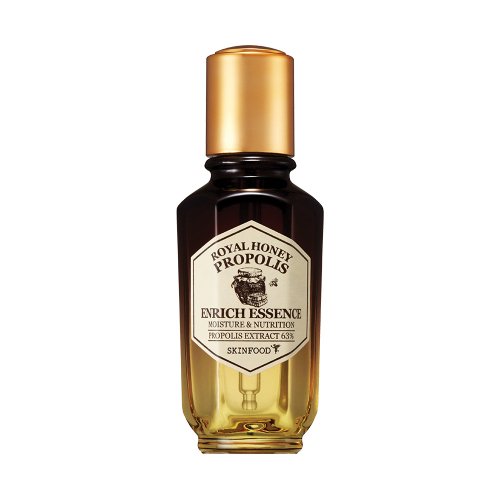
Retinoids at night — why the timing is biological, not conventional
The most effective night routine is not one that applies the most potent available actives but one that applies the right actives at the right biological moment — working with the skin’s own programme rather than independently of it.
The convention of applying retinoids exclusively at night is frequently explained in consumer skincare communication through the lens of photosensitivity: retinoids, it is said, degrade in sunlight and make the skin more sensitive to UV damage, making daytime application inadvisable. Both of these are true, but they are not the most interesting explanation for why nocturnal application is the biologically correct protocol. The deeper reason is circadian alignment: retinoids stimulate keratinocyte division and accelerate epidermal turnover — and keratinocyte division naturally peaks at approximately midnight in healthy circadian-regulated skin. Applying a retinoid at night is therefore not simply avoiding a daytime problem. It is synchronising the retinoid’s mechanism of action with the biological programme that is already operating in the same direction.
Similarly, the collagen synthesis stimulation that peptides and certain growth factor-inspired ingredients provide aligns most usefully with the nocturnal phase of collagen gene expression that research has now confirmed. A concentrated overnight sheet mask, rich in actives and worn during the window of peak nocturnal permeability, is one of the most direct ways to work with this timing.

The genes governing collagen synthesis and secretion in fibroblasts are predominantly expressed during the night phase — meaning that a peptide applied at night is not simply delivering its active to a receptive surface but doing so at the precise biological moment when the cellular machinery it aims to support is already operating at its highest natural level of activity. This is the argument that chronocare makes that conventional skincare communication rarely articulates: the most effective night routine is not one that applies the most potent available actives but one that applies the right actives at the right biological moment — working with the skin’s own programme rather than independently of it. The barrier-first, restoration-before-stimulation sequence that governs the most considered mature skin routine is also the sequence most aligned with circadian biology: establish the biological conditions in which repair can occur, then support the specific mechanisms of repair with targeted actives timed to the biological window in which they are most relevant.
An essence with a concentrated brightening base — such as one built around fermented ingredients — can be layered ahead of these targeted actives to prepare the skin for maximum receptivity during the peak permeability window.

The night routine and skin longevity — why the biological argument outlasts every trend
The most durable thing that any nocturnal skincare routine can do is not deliver the most impressive active or achieve the most dramatic visible result. It is create the conditions in which the skin’s own biology can perform the repair activity that it is already attempting to perform.
Beauty trends come and go with a speed that the science underlying them consistently fails to match. The ingredient of the moment, the protocol of the season, the device that everyone is using — these cycle through the beauty economy at a pace determined by commercial calendars rather than biological ones. The circadian biology of skin repair does not cycle. It is not a trend. It is a programme encoded in the molecular machinery of every skin cell, operating in the same sequence whether or not the consumer is aware of it, whether or not the routine they perform before sleep is calibrated to support it.
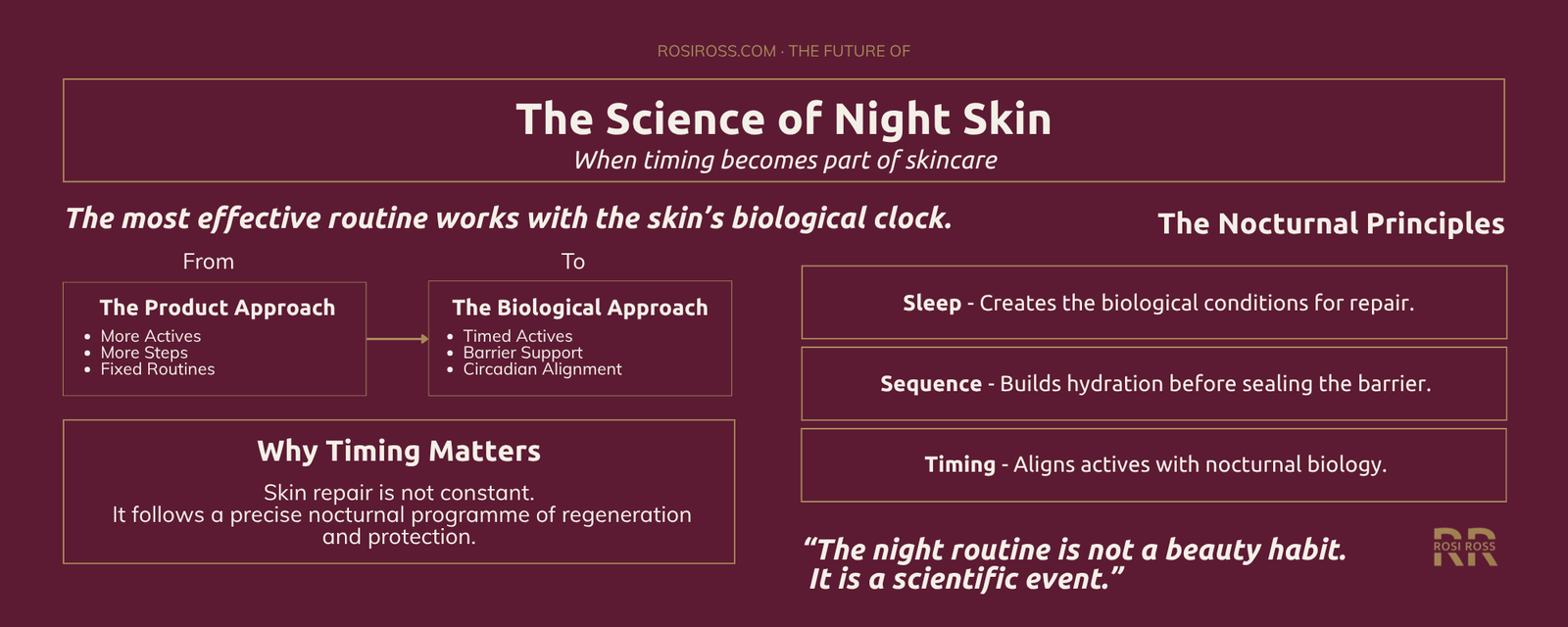
This is the skin longevity argument that dermatological research increasingly supports and that the most considered nocturnal skincare practice increasingly embodies: not more products doing more things, but a more precise relationship between what the routine provides and what the biology actually needs. The night routine is not a beauty habit. It is a scientific event. And the science, once understood, changes everything about how it is approached. The same evidence-based approach that separates genuinely effective skincare from trend-driven accumulation applies here with particular force — because the biology of nocturnal repair is one of the most clearly understood and most practically actionable bodies of knowledge available to the engaged skincare consumer.
“The skin at night
is not a passive recipient
of whatever is applied to its surface.
It is an active biological system
operating within a precisely timed programme
of cellular repair
that was running before
the first skincare product was ever invented
and will continue running
regardless of what is applied above it.
Understanding that programme
does not make the routine less important.
It makes it considerably more so —
because the routine that works with the biology
achieves things
that the routine working independently of it
never quite can.”