

On the launch of Soigné Middle East at Babel Dubai Mall, the cultural significance of the region’s first dedicated modest fashion print magazine, and why the publication that serves a community rather than addresses it from the outside is the most important kind of fashion media the industry can produce
The most significant publications are not those that arrive at the right time — they are those that arrive to fill a space that the industry had not fully acknowledged was empty. Soigné Middle East arrived to fill a very specific space: the absence of a print publication that could hold the full complexity of modest fashion in the Middle East with the editorial intelligence it deserves. Fashion media becomes powerful when it reflects the people reading it back to themselves with honesty and intelligence. In the Middle East, Soigné is the first publication to attempt this for the modest fashion community at the level of print.
Fashion media in the Middle East has not been short of publications. Since Vogue Arabia launched and Harper’s Bazaar Arabia established its regional presence, the Middle East has had access to international luxury fashion titles operating through regional editions. What it has not had — until now — is a magazine built from the inside out rather than adapted from the outside in: a publication whose editorial framework begins with the specific cultural, aesthetic, and identity dimensions of the region’s modest fashion community rather than translating a global template into Arabic.
Soigné Middle East is the region’s first print magazine dedicated to modest fashion — a category that moves billions of dollars annually through a global market that ranges from traditional Islamic dress to the contemporary modest aesthetic that has found its way into the wardrobes of women far beyond the Muslim community. The modest fashion industry has produced some of the most creative and culturally resonant design of the past decade. It has done so largely without the serious print editorial infrastructure that the industry’s most significant creative movements require to sustain and amplify their best work.
The emergence of purpose-driven fashion publications that challenge the inherited frameworks of legacy media is part of a broader redistribution of authority across the fashion industry. From Editors to Engineers: The Power Shift Reshaping the Met Gala explores this redistribution in the context of technology capital entering fashion’s cultural spaces. Soigné operates within the same cultural shift, but from a different direction: not the disruption of legacy media by digital platforms, but the emergence of media that the legacy system structurally could not produce — editorial intelligence rooted in a community that has been present in fashion all along.
What modest fashion has always been — creative brief, not creative constraint
Modest fashion is not a constraint on creativity. It is a creative brief — one of the most demanding and most generative available to contemporary designers, because it requires solving an aesthetic problem that maximalism has never had to address: how to produce presence, beauty, and self-expression through selection rather than exposure.
The global modest fashion market has been estimated at over three hundred billion dollars — a figure that reflects the purchasing power of Muslim consumers worldwide, but also the far wider demographic of women who choose modest dressing for reasons that range from religious conviction to personal aesthetic preference to a deliberate rejection of over-exposed silhouettes. This is a market defined by intention rather than by restriction, and the distinction matters enormously for how it is designed for and communicated to.
Modest fashion at its most sophisticated is not clothing that covers more. It is clothing that communicates differently — through silhouette, through fabric quality, through the specific intelligence of layering and proportion that the modest aesthetic rewards with a precision that maximalist dressing does not require. The designers who work within these parameters produce some of the most formally interesting work in contemporary fashion: garments whose beauty is located in the relationships between volumes and lengths, in the quality of movement that certain fabrics produce at those volumes, in the colour and pattern decisions that carry the visual weight that exposure would otherwise provide.
Soigné Middle East positions itself as the editorial platform for this creative conversation — the publication that can hold the full range of modest fashion, from the traditional abayas and hijabs of the Gulf to the contemporary modest streetwear emerging from Dubai, London, and Istanbul, within a single editorial framework that does not require any of them to be explained or justified. The reader who picks up Soigné is assumed to understand what she is looking at. The magazine speaks to her as a peer rather than as a student.
The broader context within which Soigné Middle East has emerged has been documented across the most authoritative fashion industry analysis. As Business of Fashion has explored in its analysis of Arab-led fashion media, Harper’s Bazaar and Esquire have both launched Saudi Arabian editions, signalling a recognition that localisation in the Middle East is not merely commercially attractive but editorially essential. Soigné goes further than any of these: it is not a local edition of an international title but an independent publication built entirely from the specific needs and creativity of its community.
The editorial vision of Soigné Middle East — inclusivity, diversity, and sustainability as structural commitments
The publication that serves a community rather than addresses it from the outside is built on a different foundation entirely. Its authority comes not from heritage or institutional position but from recognition — the reader’s experience of seeing herself reflected accurately and intelligently in its pages. Soigné Middle East’s editorial framework is built on three commitments that are not decorative but structural.
Inclusivity, in Soigné’s context, does not mean the occasional feature on a broader range of body types or backgrounds. It means that the editorial logic of every piece of content — every cover decision, every designer choice, every model selection — is evaluated through the lens of who it includes and who it excludes. This is a demanding editorial standard, and the magazines that maintain it consistently are those that produce the most loyal readerships in the history of fashion media.
Diversity, in Soigné’s usage, honours the cultural complexity of the Middle East itself — a region whose fashion culture spans the Gulf’s traditional luxury aesthetic, the Levant’s more Mediterranean sensibility, the North African influences that produce their own distinct approach to modesty and adornment, and the global diaspora communities whose fashion identity sits at the intersection of their heritage and their adopted cities. A modest fashion magazine that can hold this range without either the tension of forced comparison or the flatness of treating these traditions as interchangeable is a magazine that understands the community it is serving.
Sustainability, the third commitment, addresses the craft dimension of modest fashion in a way that connects it to the broader slow fashion conversation. The designers who work within the modest aesthetic frequently produce pieces with a different relationship to trend cycles than those of mainstream fashion — pieces chosen for their versatility across contexts, their quality of construction, their capacity to be worn across years rather than seasons. This is a natural alignment with sustainable fashion values, and Soigné’s commitment to spotlighting craft and environmental responsibility within this framework gives the modest fashion conversation a dimension that purely aesthetic coverage cannot provide.
The values that Soigné Middle East has placed at its editorial foundation connect directly to the broader cultural movement toward intentional fashion explored in The New Language of Quiet Luxury: Inside the Timeless Wardrobe of Apparis: the argument that the most enduring fashion choices are those made with the most precise self-knowledge. Modest fashion at its most sophisticated is quiet luxury by another name — the aesthetic of intention, of choosing well rather than choosing visibly.
The launch at Babel Dubai Mall — what the evening communicated
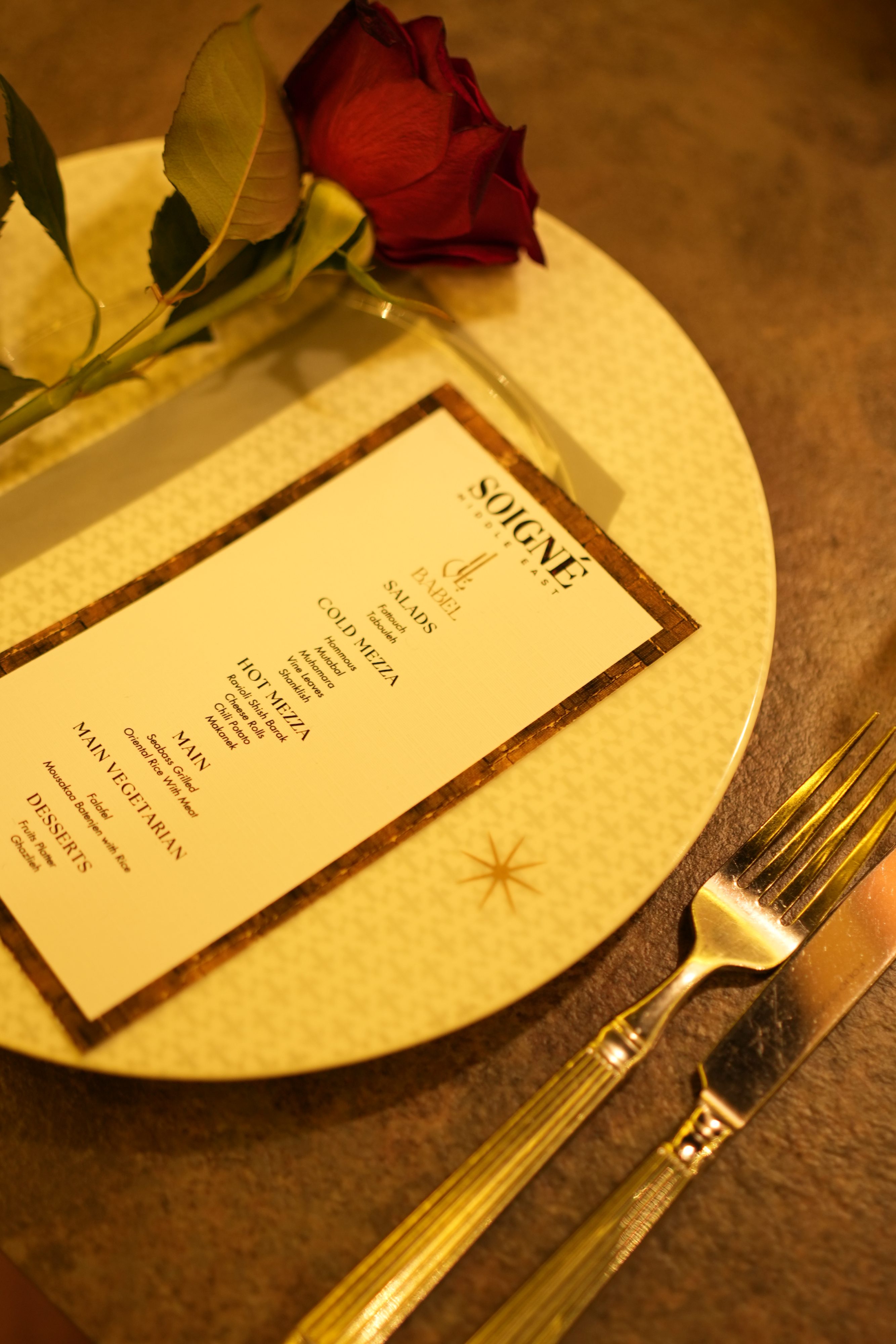
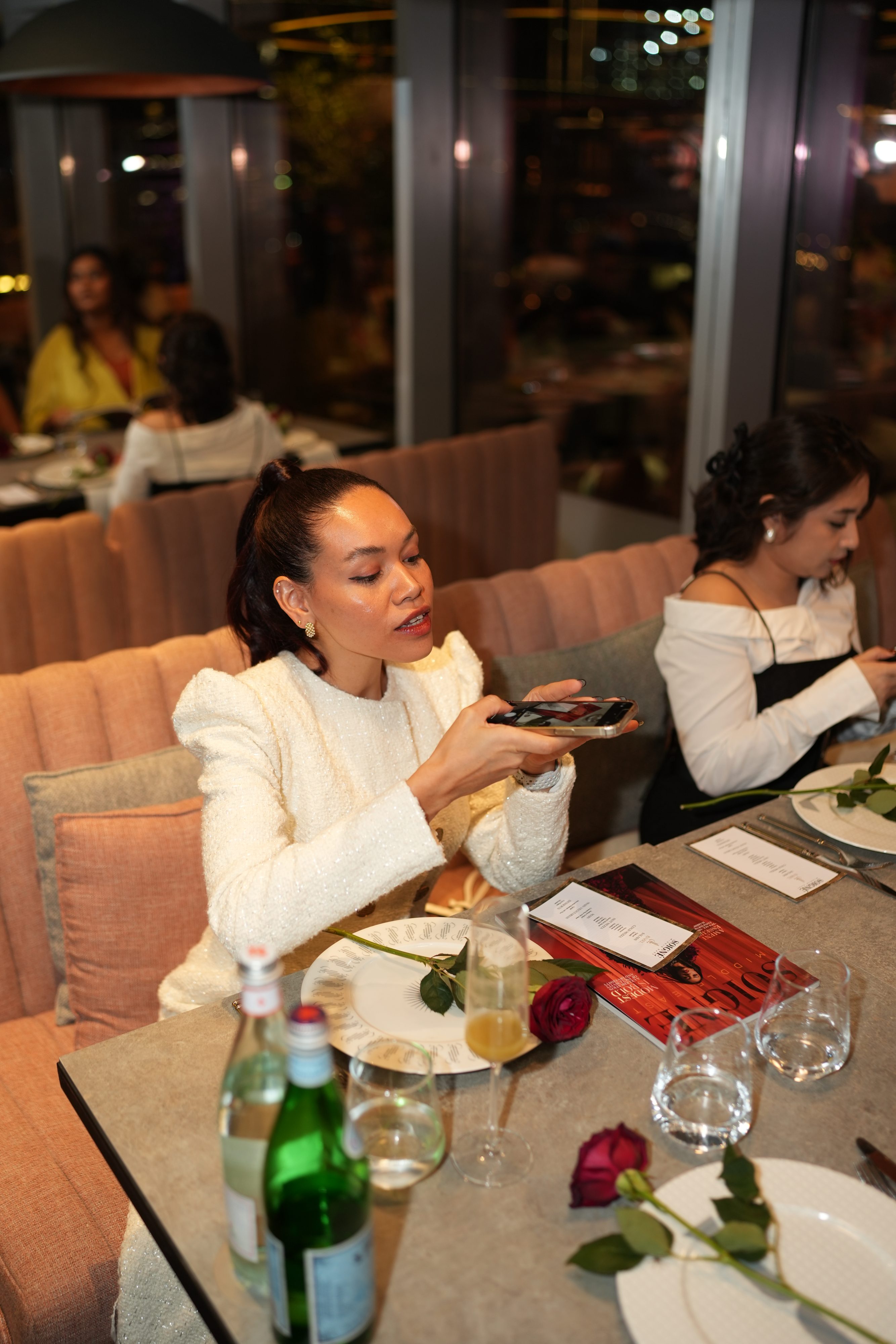
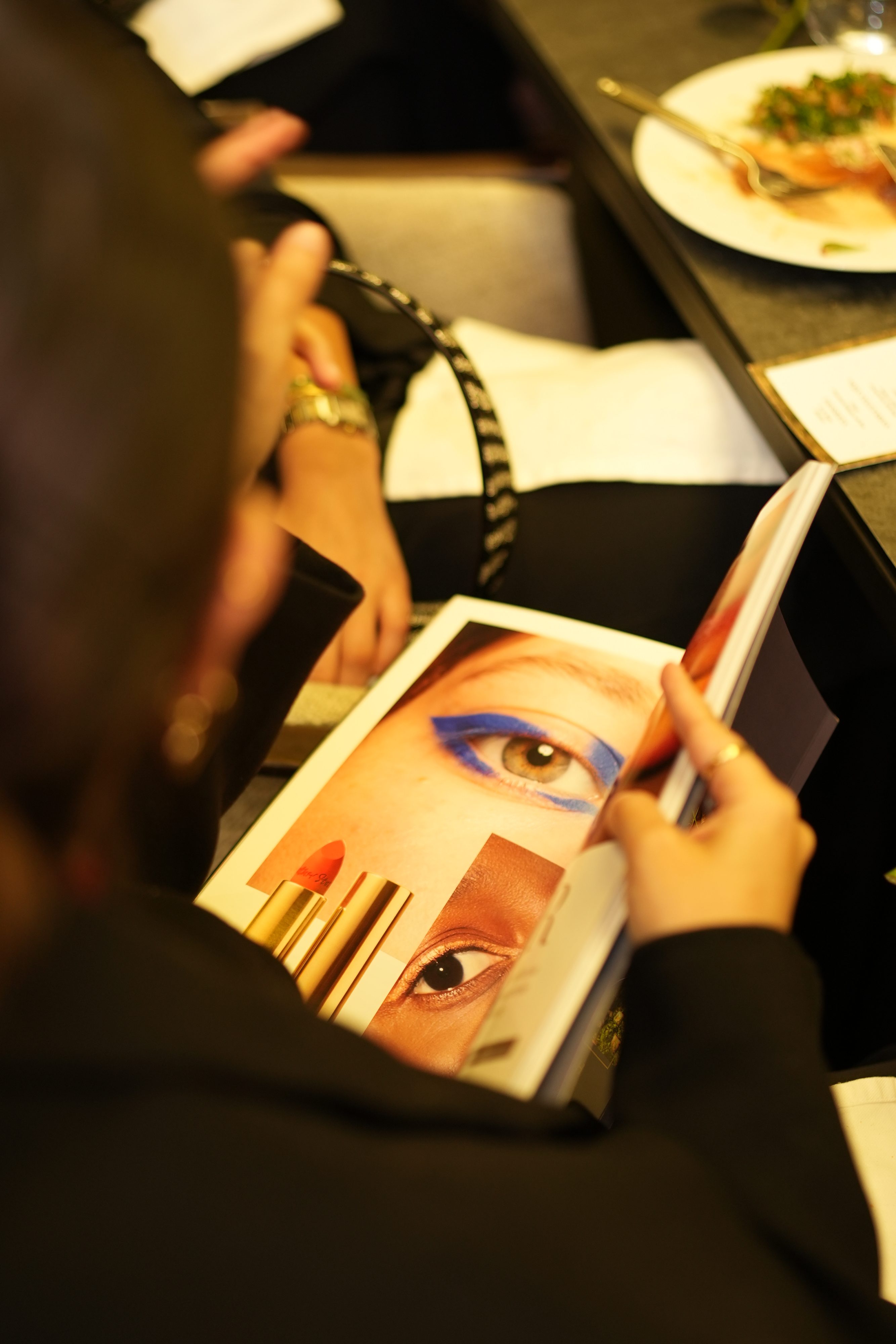
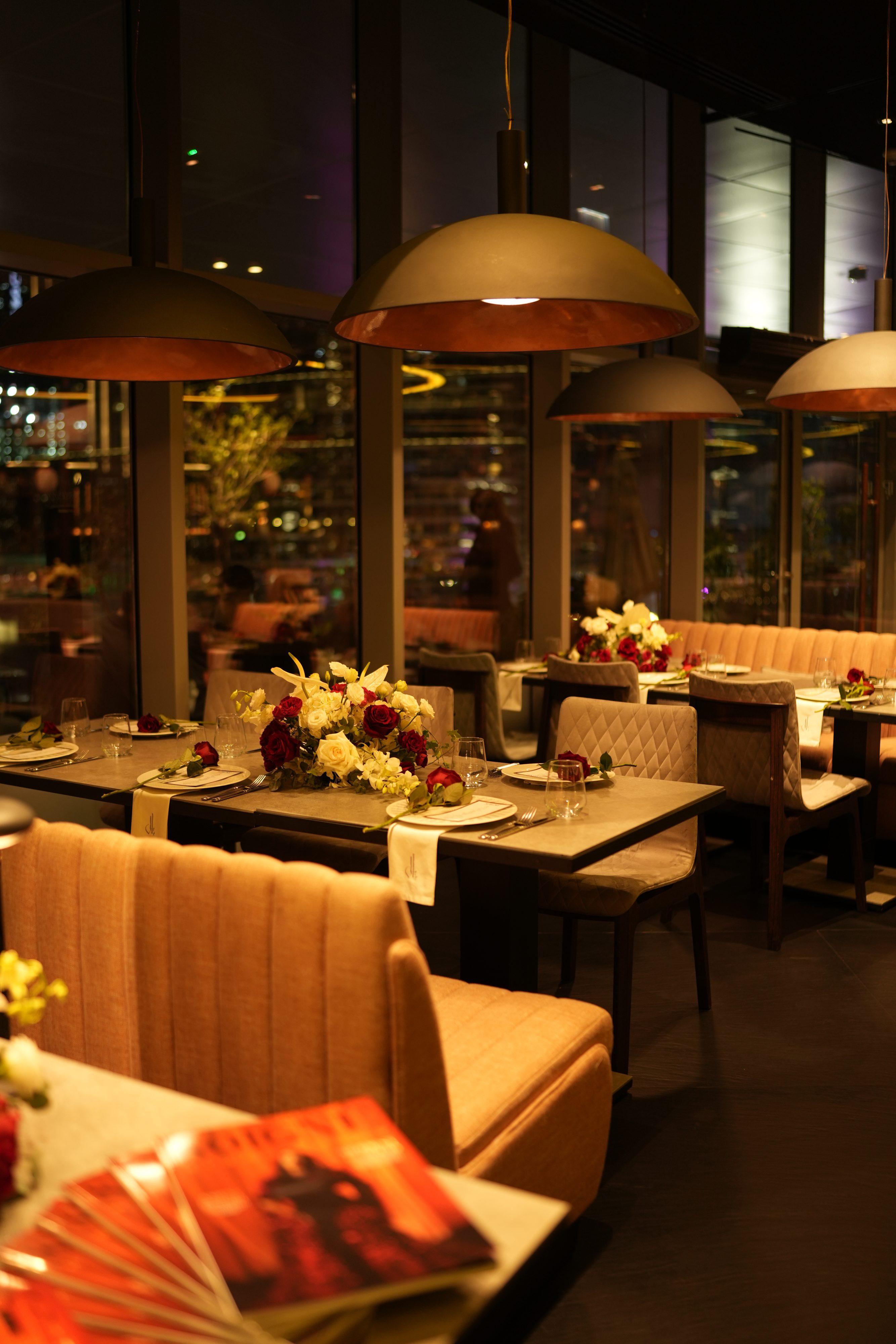
The choice of venue for a launch event is itself an editorial statement — a communication about what the publication values and what register it wishes to occupy in the cultural landscape. Babel at Dubai Mall’s Fashion Avenue communicates sophistication, accessibility, and the specific ambition of a brand that understands the city it is operating in.
Babel is one of Dubai Mall’s most considered dining destinations — a Lebanese restaurant whose design intelligence and culinary quality have established it as a venue for gatherings that require both a beautiful setting and a genuine sense of occasion. Located in Fashion Avenue, the mall’s luxury retail corridor, it sits at the intersection of the commercial and the cultural that Dubai has made its own. Choosing it for Soigné’s launch was a statement about the kind of modest fashion media company Soigné intends to be: one that operates at the level of the city’s genuine luxury culture rather than its tourist approximation.
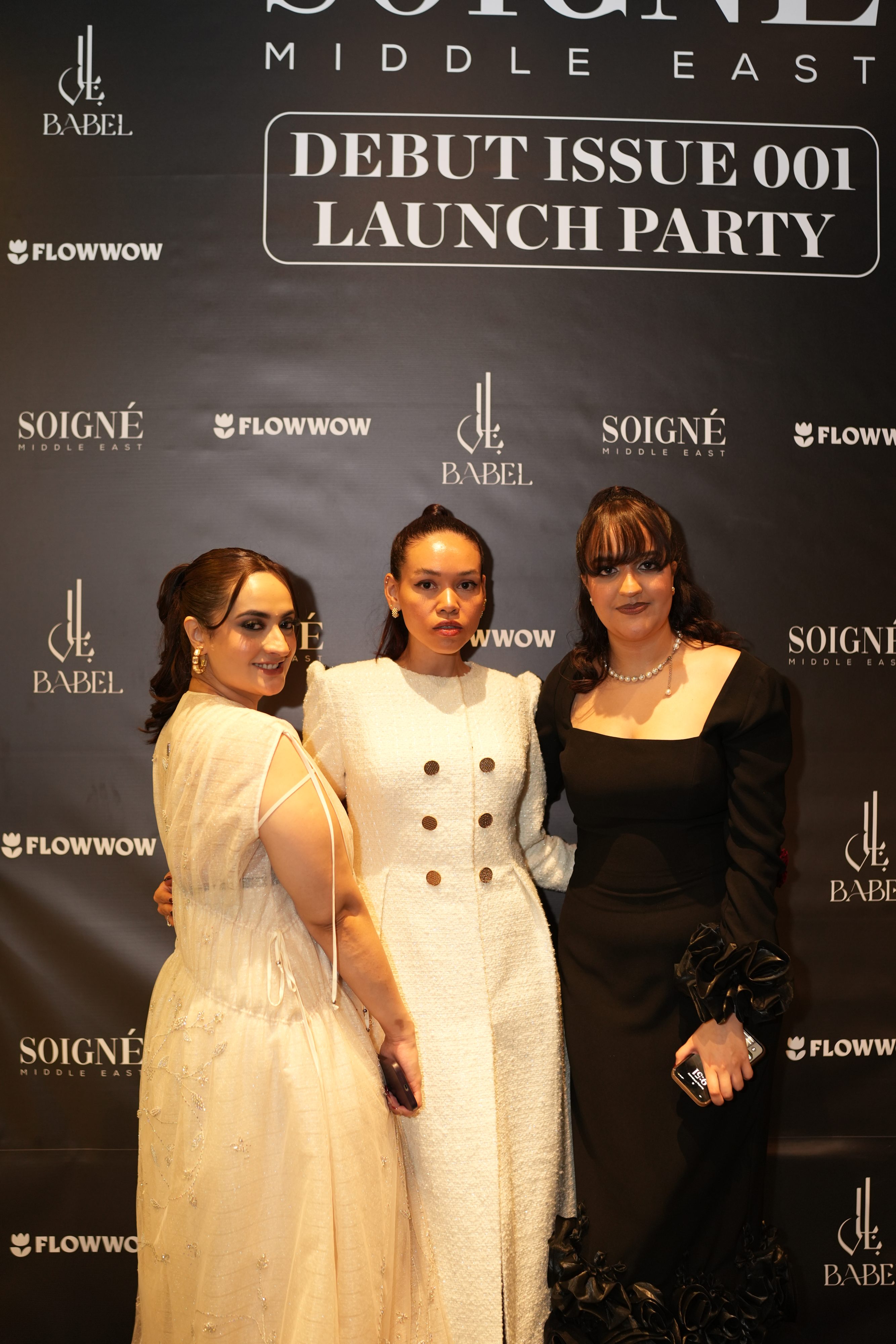
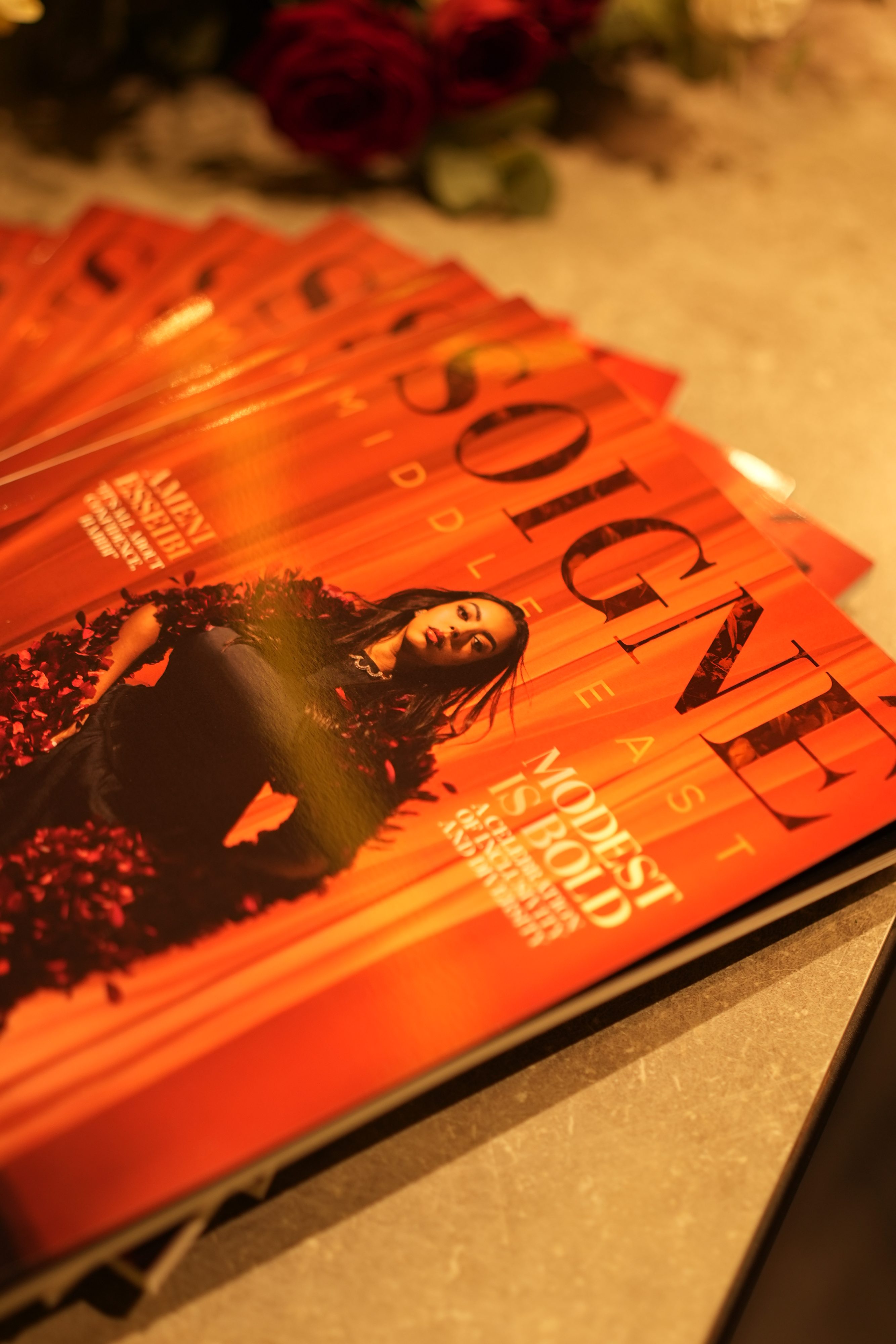
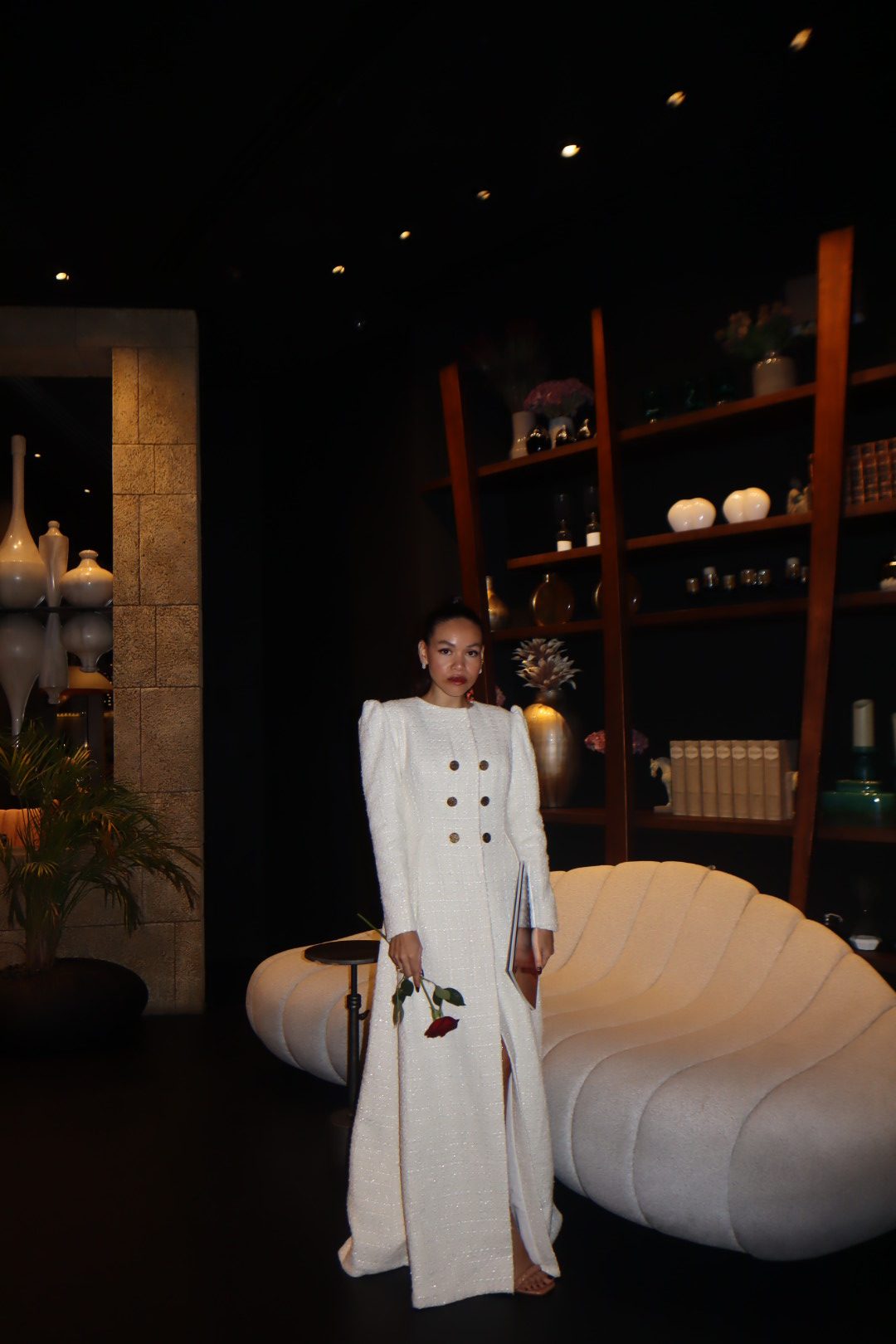
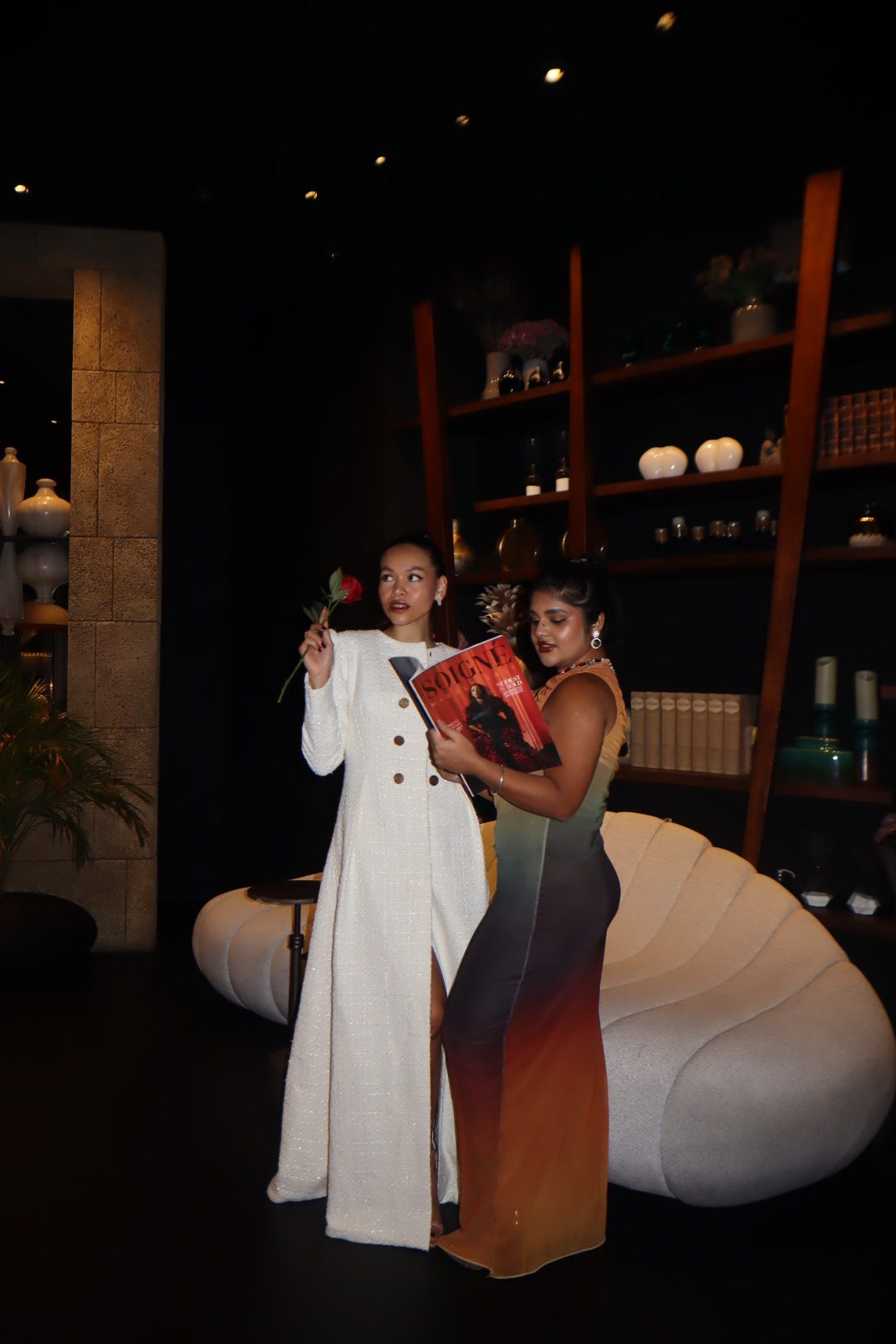
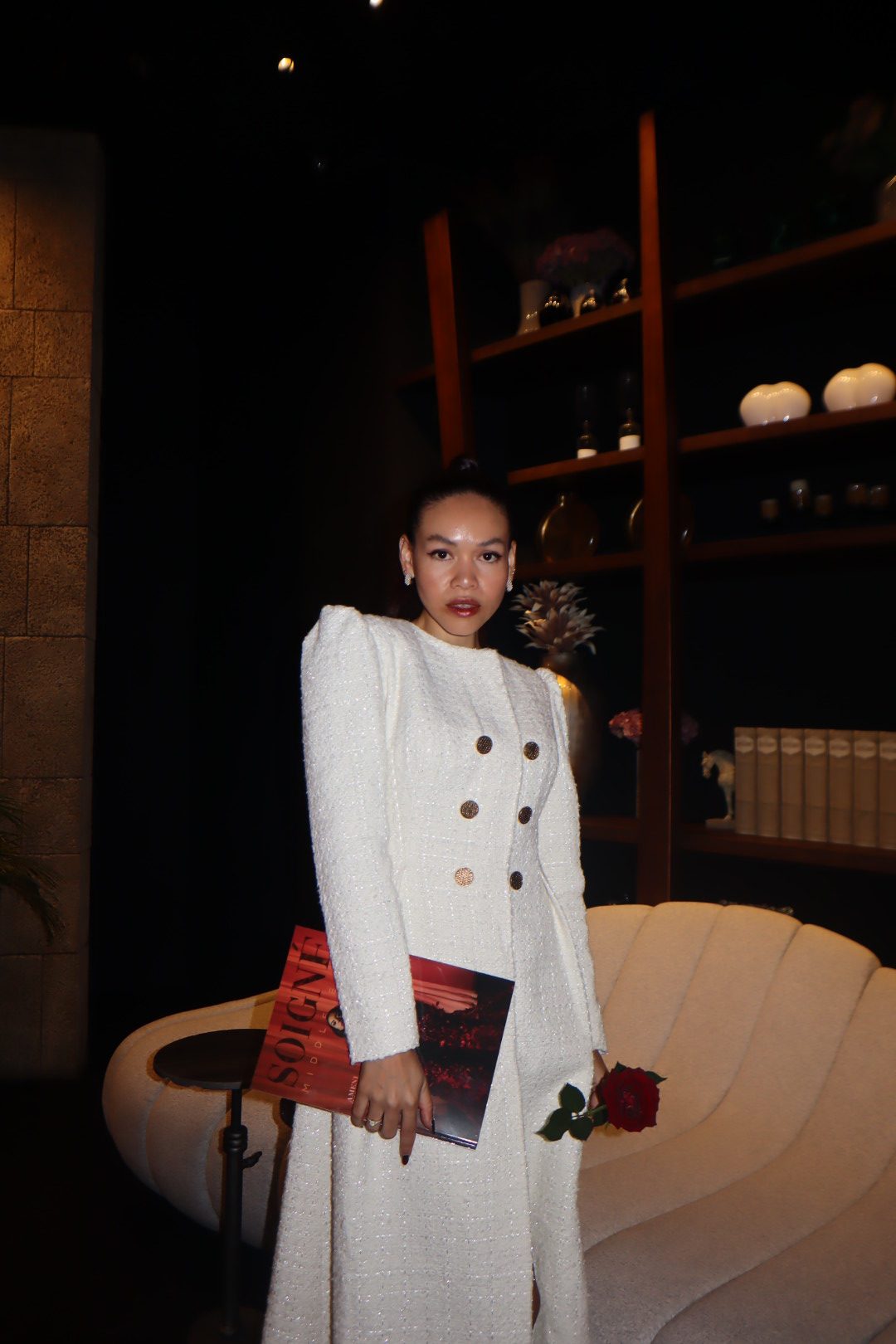
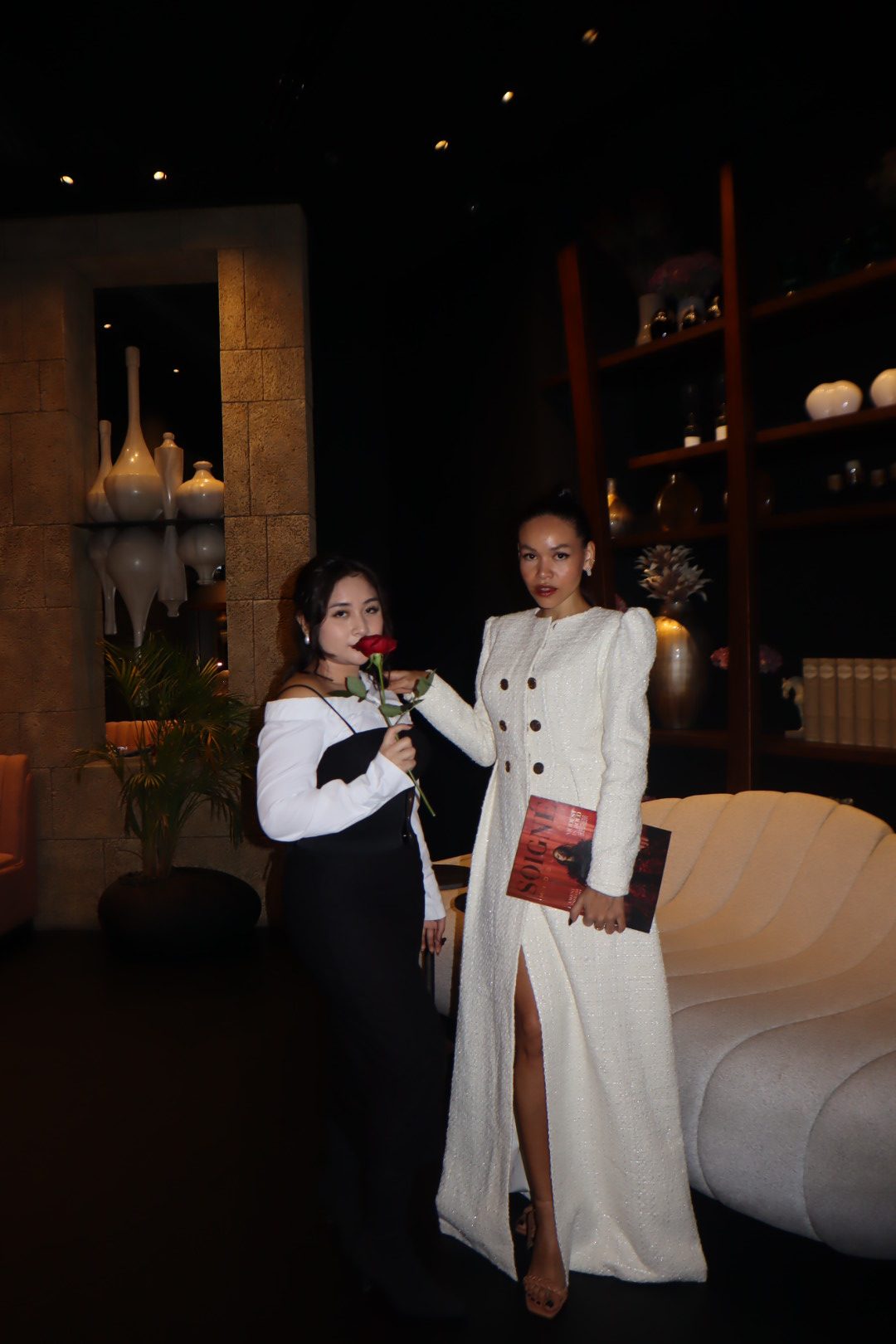
The Soigné Middle East launch evening was constructed around connection rather than performance — an intimate dinner format in which the guests were the content rather than the backdrop. The designers, editors, influencers, and cultural figures who attended were not there to be photographed against a branded installation. They were there to engage with the magazine’s vision, to be among the first to hold its inaugural print issue, and to be part of the conversation that the publication exists to sustain. This distinction — between an event as a content-generation exercise and an event as a genuine gathering — is visible in the quality of what the evening produced.
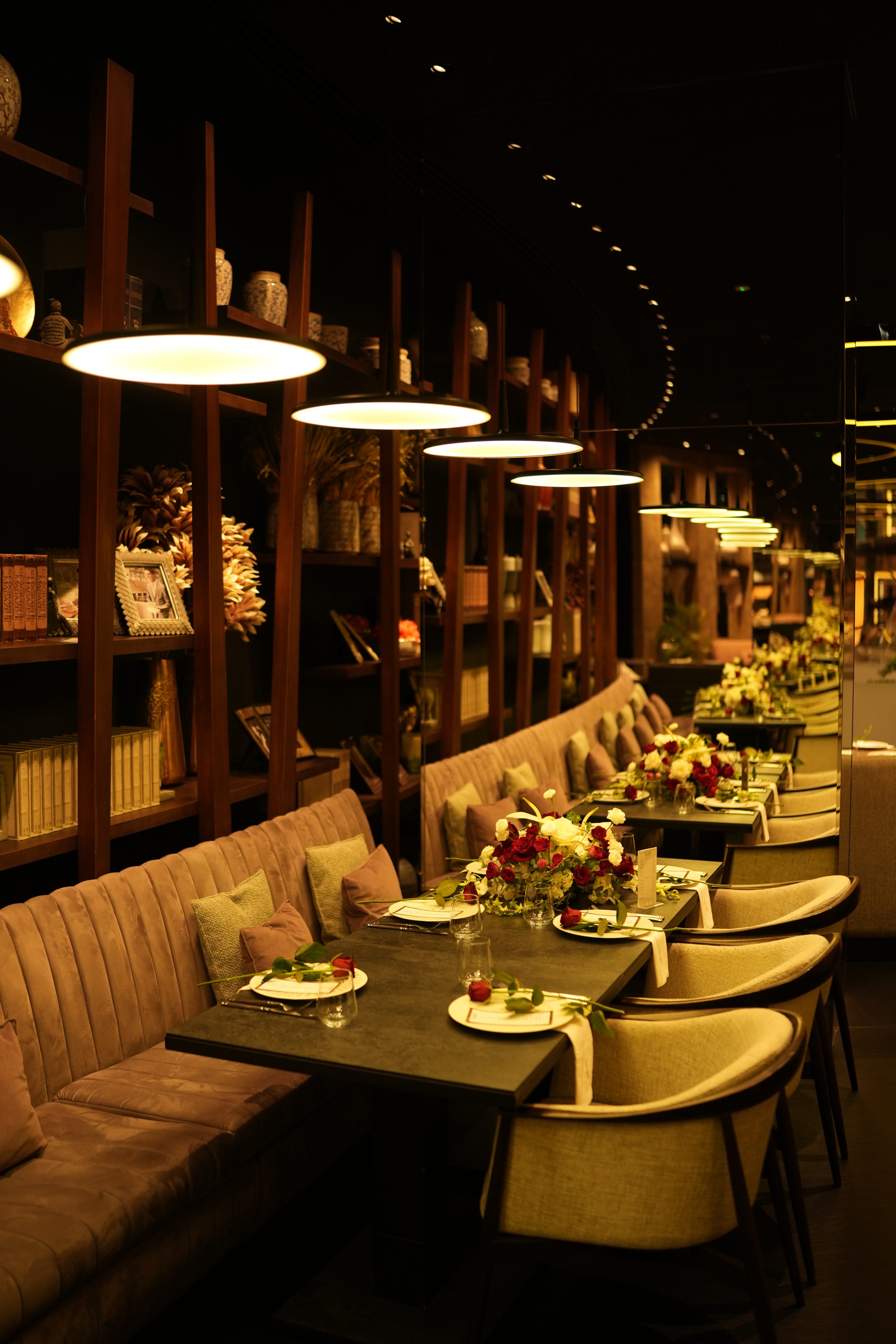
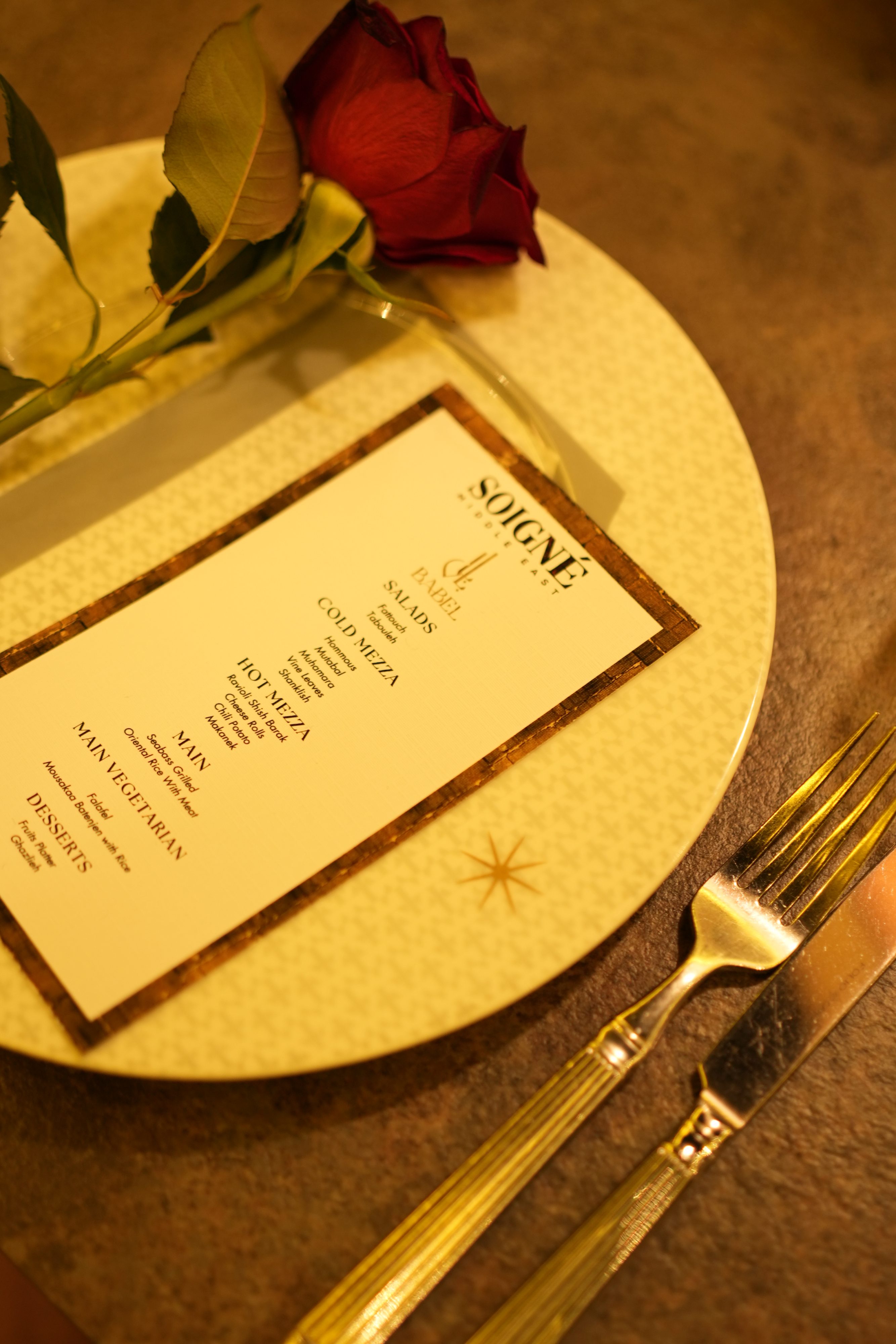
The venue’s open yet intimate layout — soft lighting, delicate floral arrangements, Mediterranean-inspired dishes that reflected the diversity of the guests in attendance — allowed for meaningful interaction between guests in a way that felt personal rather than choreographed. The conversations that developed across the evening — about the future of modest fashion, about the role of media in shaping how a community understands its own creativity, about what Dubai’s position as a global fashion city means for the visibility of Middle Eastern design — were the kind that do not happen at events designed primarily for content generation.
As Harper’s Bazaar has explored in its coverage of the global modest fashion movement, modest fashion has moved from a niche category to a cultural phenomenon that is reshaping the global fashion industry — producing designers, influencers, and consumers whose influence extends far beyond the communities where the practice originated. The publication that can speak to this community with genuine intelligence has an audience that mainstream fashion media has consistently underserved. Soigné Middle East is that publication.
Ameni Esseibi and the faces of Soigné Middle East — the editorial statement made physical
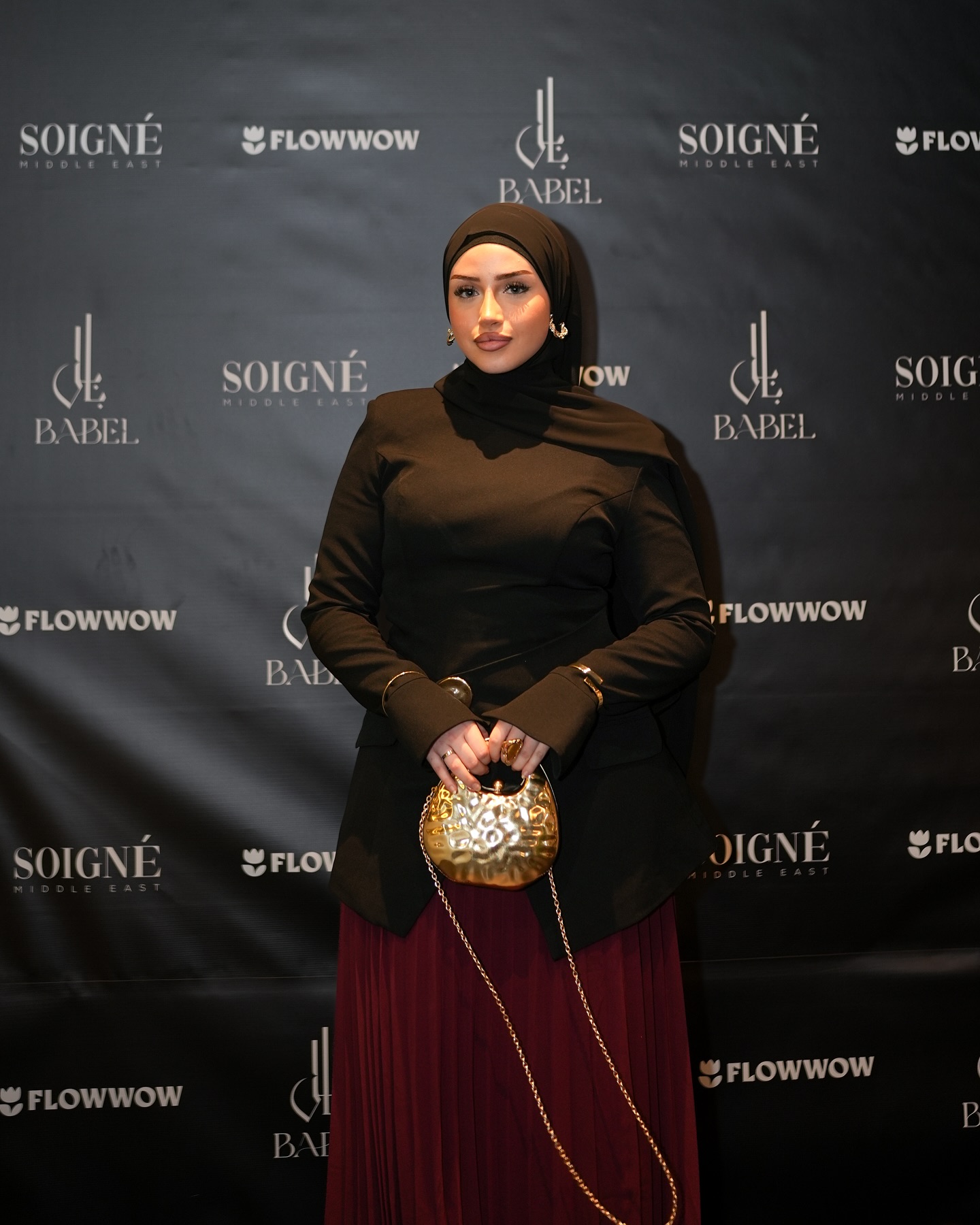
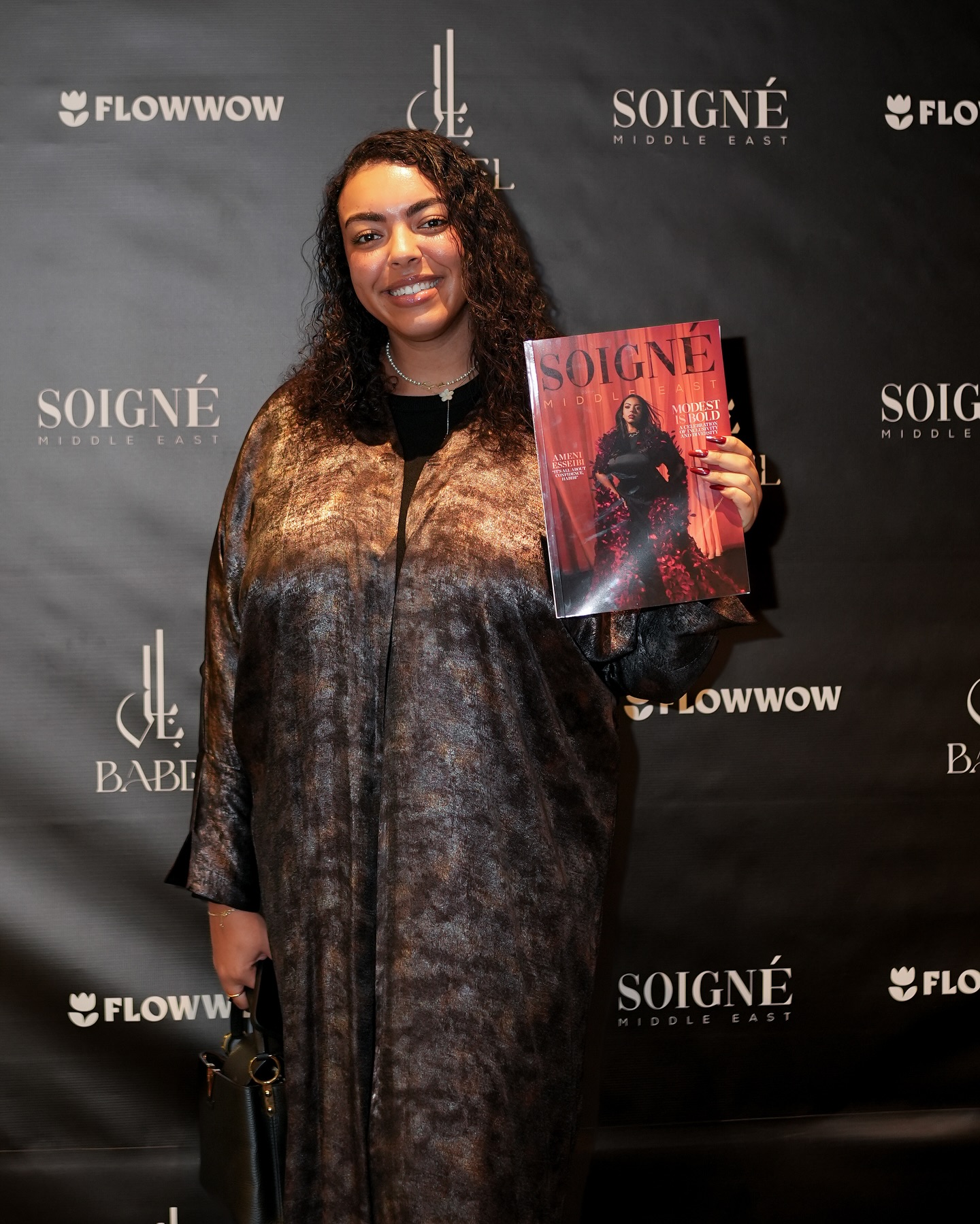
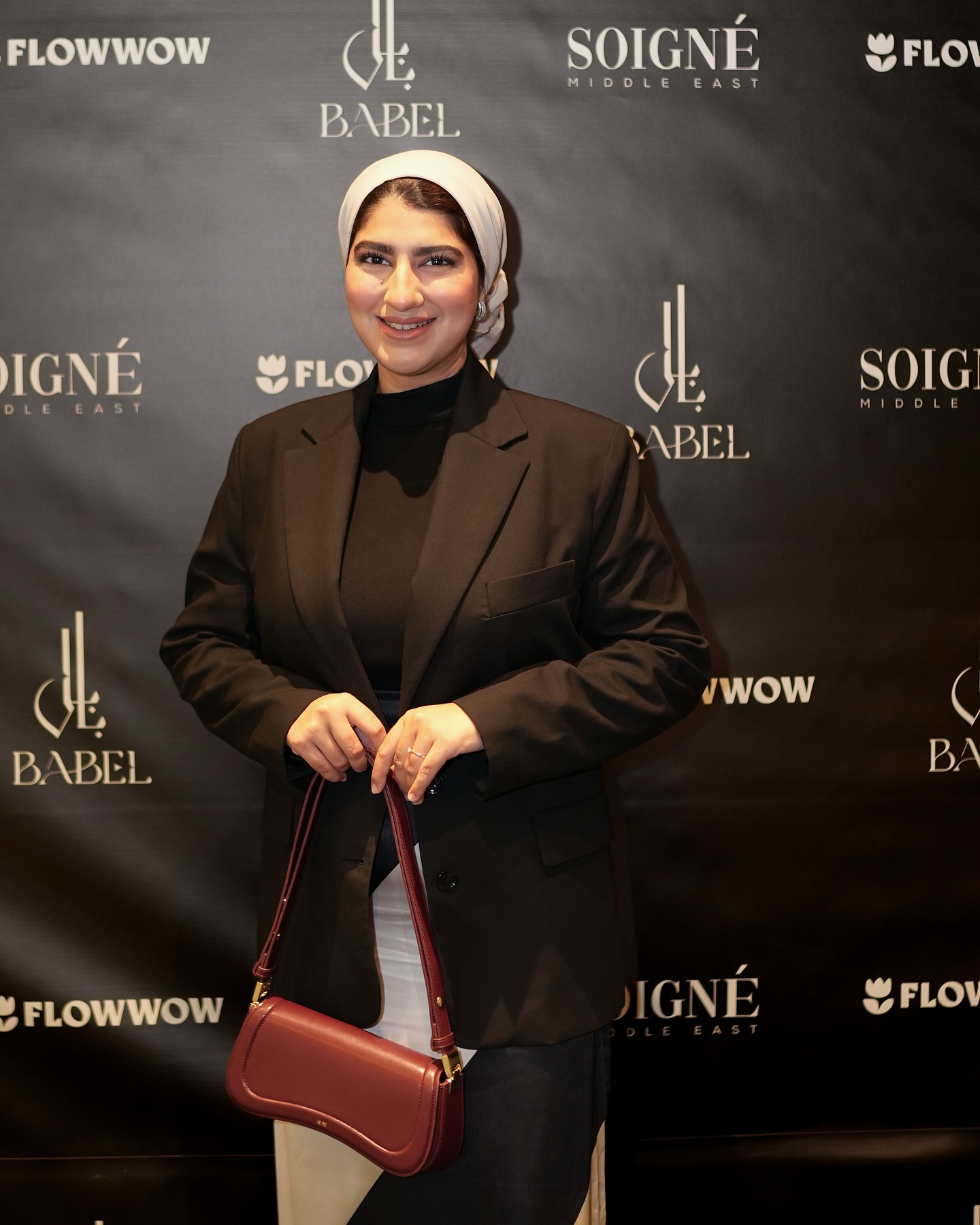
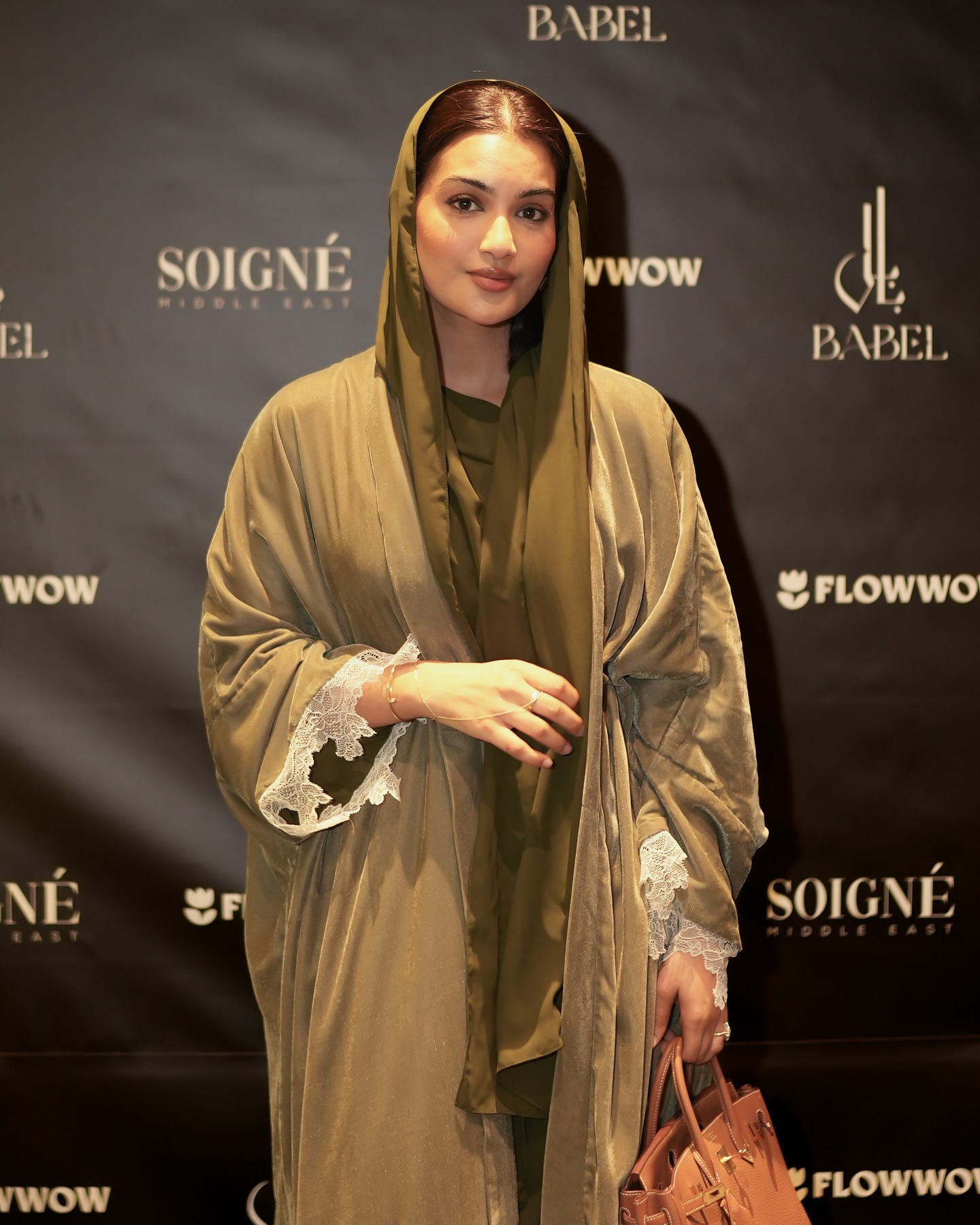
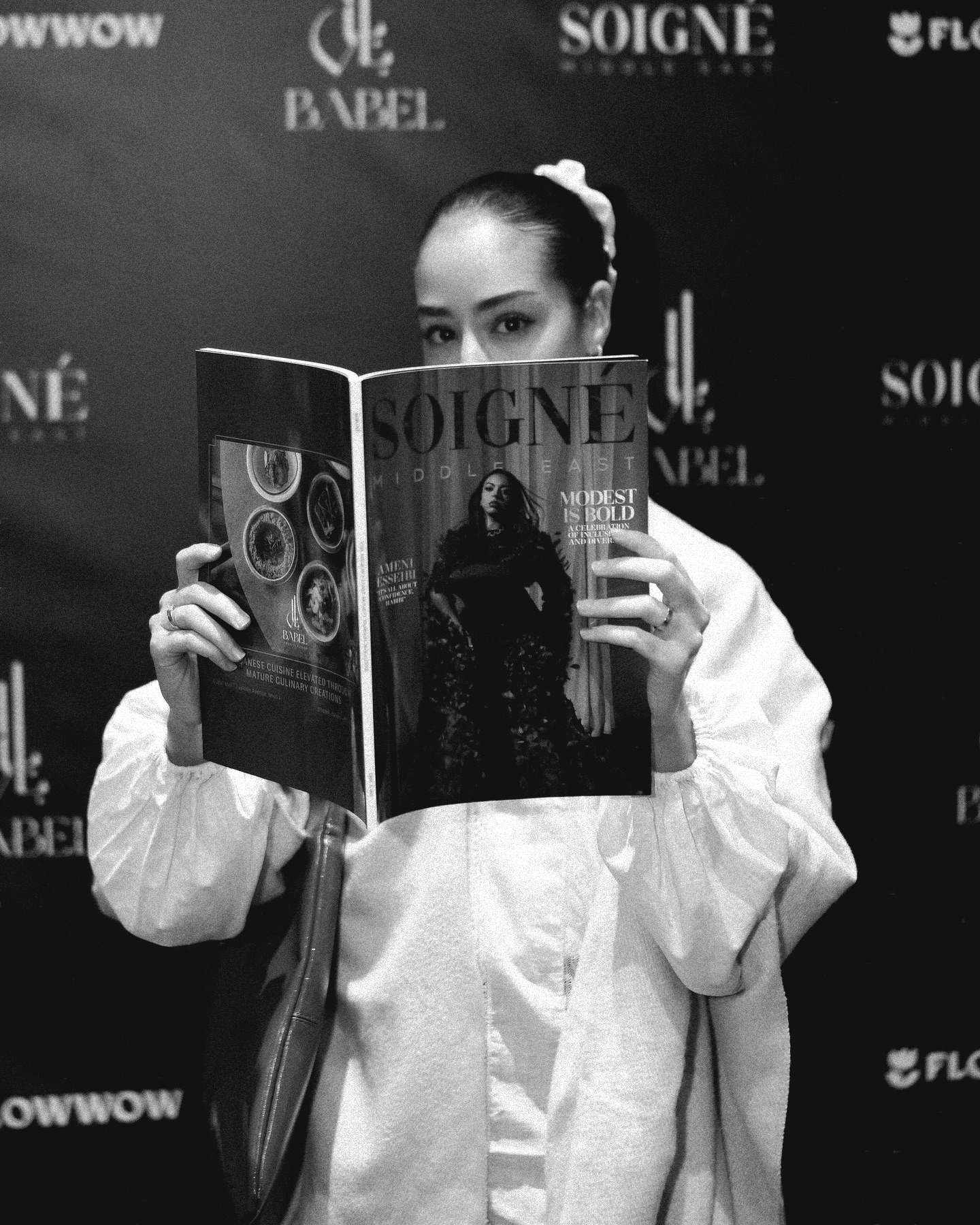
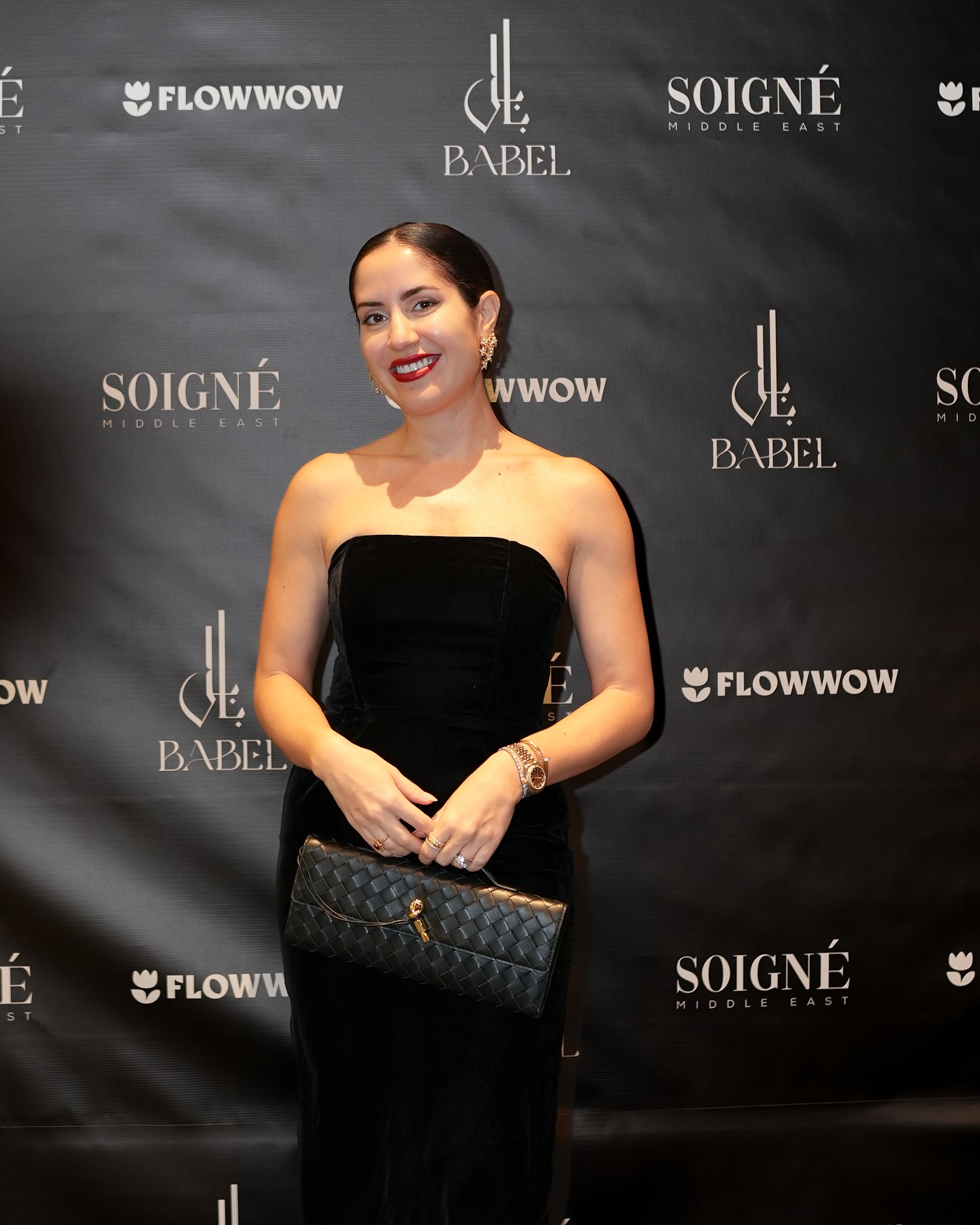
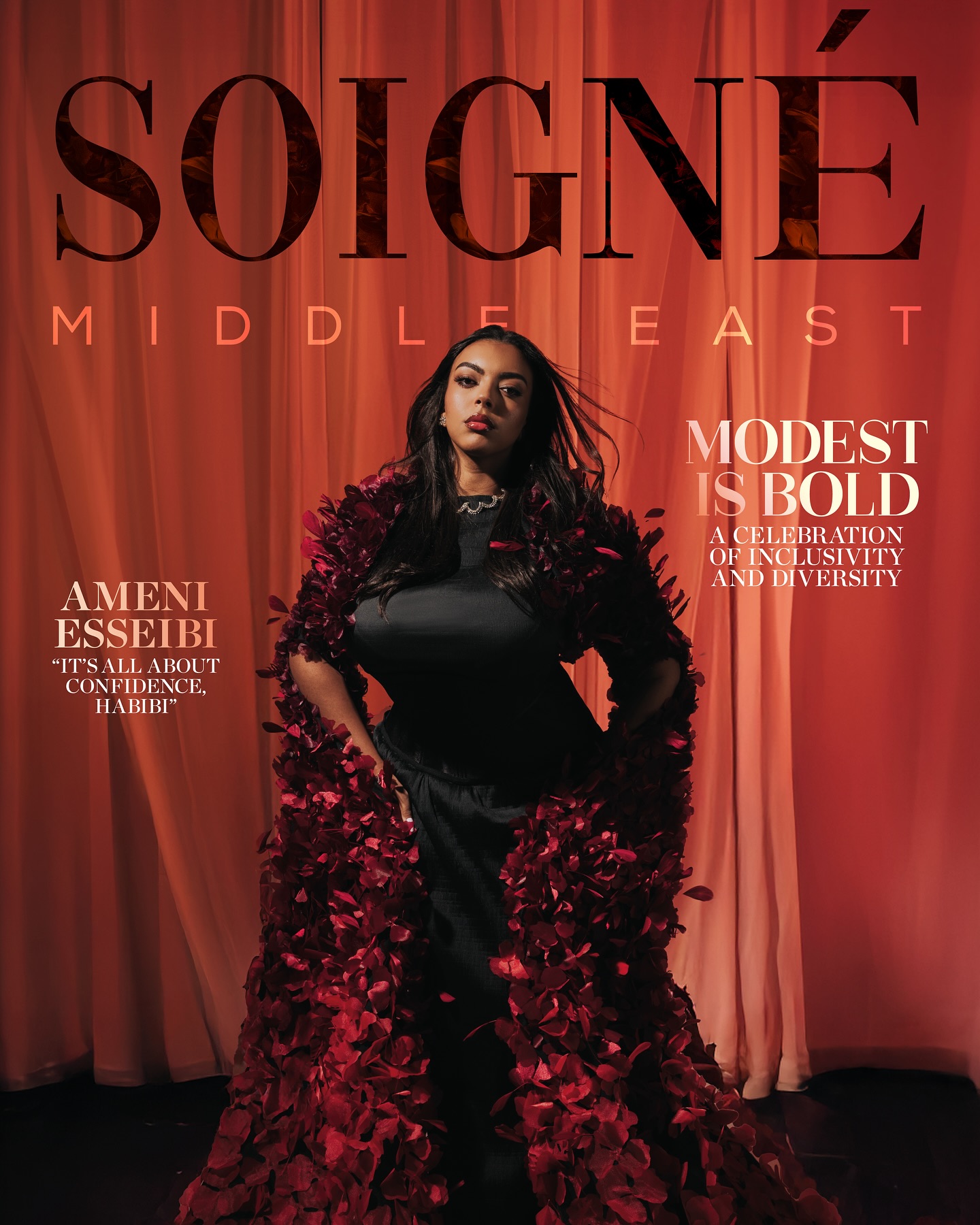
Ameni Esseibi, the cover star of Soigné Middle East’s inaugural print issue, represented at the Babel launch what the magazine represents in its pages: a woman whose relationship to modest fashion is defined by her own terms rather than by the expectations of an industry that has historically had limited space for women who dress modestly. Her presence was not incidental celebrity endorsement but the editorial statement made physical.
Ameni’s presence at the launch embodied the kind of powerful, creative, individual femininity that Soigné Middle East exists to celebrate and amplify — a woman who is not afraid to break boundaries and pave the way for future generations of modest fashion designers, stylists, and influencers. Her advocacy for fashion that embraces individuality, modesty, and empowerment reflected precisely the editorial position that distinguishes Soigné from every existing fashion media title operating in the Middle East.
The attendance of Netflix MENA stars and cultural influencers at the Soigné launch further underlined the connection between modest fashion, entertainment, and media in the contemporary cultural landscape. These figures have been instrumental in shaping the contemporary cultural landscape of the Middle East, and their involvement with Soigné Middle East signals the magazine’s desire to build a bridge between fashion and other creative industries — highlighting the interconnectedness of all forms of artistic expression in a region whose creative output is increasingly defining global culture.
The understanding that the objects and garments we choose to wear are statements about who we are — chosen for their resonance with our own identity rather than for their conformity to any external standard — connects the modest fashion philosophy to the broader culture of intentional personal aesthetic explored in The Language of Modern Necklaces: Metals, Stones, and the New Codes of Personal Luxury: the argument that the most meaningful choices in personal style are those made with the most precise self-knowledge. Modest fashion, at its most considered, is this principle applied to the full dressed self.
Why Soigné Middle East matters beyond its community — fashion media as cultural infrastructure
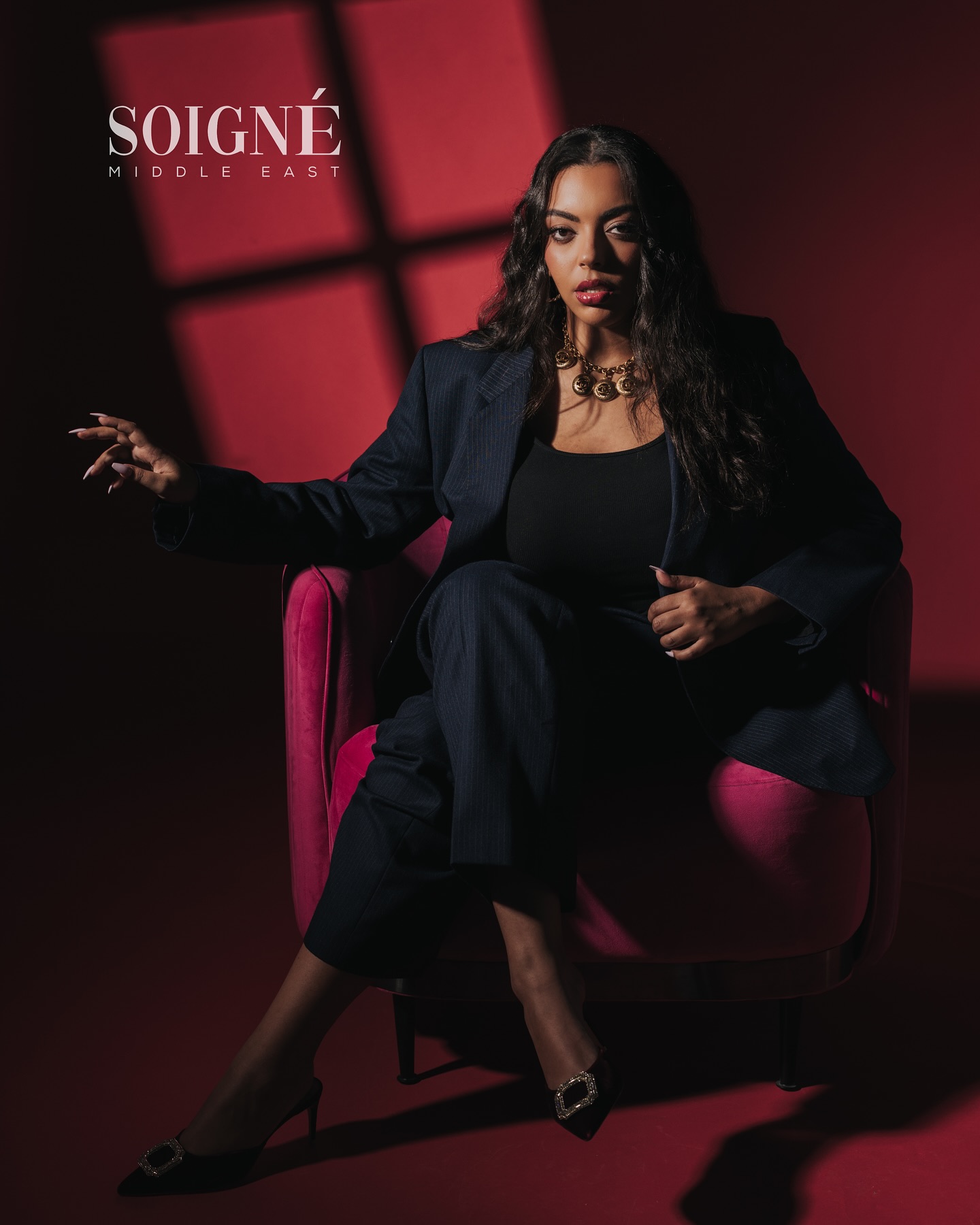
The publication that successfully represents an underserved community does not merely provide that community with a mirror. It provides the broader fashion culture with a window — an entry point into a creative world whose richness and complexity the mainstream media has systematically failed to convey. This is how fashion media works at its most significant: not by reporting on what is happening, but by being part of what makes it happen.
Fashion media shapes how the fashion industry understands itself. The designers that publications feature, the models they cast, the aesthetics they legitimise, the conversations they elevate — all of these constitute the industry’s self-image, and that self-image determines which directions the industry moves in. A fashion publication that systematically excludes modest dressing from this conversation produces an industry that underinvests in modest fashion design, underrepresents modest fashion consumers, and misunderstands its own global market. A publication that holds modest fashion at its centre produces a different industry — one with a more accurate map of the world it is operating in.
This is why Soigné Middle East matters to people who have no particular personal investment in modest dressing. The magazine’s existence changes the informational environment of the fashion industry in the region, and the fashion industry’s informational environment changes what gets designed, what gets funded, what gets distributed, and ultimately what gets worn. The most significant fashion publications are those that make visible what was present but unseen — and in making it visible, change how the industry understands itself.
The modest fashion community in the Middle East and globally has developed a sophisticated visual culture, a network of designers of genuine talent, and a consumer demographic with the purchasing power and the aesthetic intelligence to support serious fashion media. What has been missing is not the community’s readiness for a publication of this quality — it is the publication’s arrival. As Vogue’s coverage of modest fashion and its cultural significance documents, the modest fashion movement has produced some of the most creatively significant work in contemporary design — challenging the industry’s inherited assumptions about what constitutes elegance, what constitutes modernity, and what constitutes fashion authority.
The commercial and cultural scale of the global modest fashion market — and the specific opportunity it represents for fashion media that can serve it with genuine intelligence — has been documented in the most authoritative fashion industry analysis. As McKinsey’s analysis of the global fashion market and underserved demographics establishes, the most significant growth opportunities in fashion are consistently located in the markets and communities that existing media and retail infrastructure has underserved — communities with significant purchasing power and sophisticated aesthetic judgment whose needs the industry has been slow to recognise and respond to. Soigné Middle East is the publication building the editorial infrastructure for this recognition.
The future Soigné Middle East is building — biannual print, daily digital, and the long project of trust
A fashion publication is a long-term cultural project, not a launch event. What it becomes is determined not by the quality of its first issue alone but by the consistency with which it maintains its values across every subsequent issue — and by the depth of trust it builds with the community whose stories it is responsible for telling. Soigné Middle East has positioned itself with unusual clarity for a debut publication.
The biannual print format is itself a statement about how Soigné understands its role. In an era in which digital content production is accelerating without clear relationship to quality, the decision to produce a modest fashion print magazine twice a year — with the time, care, and resource investment that serious print requires — communicates that Soigné is interested in the kind of fashion journalism that takes the time it needs. The daily digital presence provides the speed that contemporary media requires. The biannual print provides the depth that the modest fashion community deserves. The combination is the architecture of a media company that understands its audience’s full range of needs.
The principle that the most significant creative work is produced when practitioners develop a genuine, culturally rooted understanding of the community they are serving — rather than adapting a framework developed for a different audience — runs through the most considered approaches to beauty and fashion across categories. The Ritual of Skin: Texture, Scent, and the Return of Sensory Luxury explores what this principle looks like in a beauty context: the brand built from genuine understanding of its community’s needs producing something that brands built around generic appeal cannot replicate. Soigné Middle East embodies the same principle in fashion media — editorial intelligence rooted in the specific, authentic experience of the community it serves.
The modest fashion industry moves billions. It shapes the wardrobes of Muslim consumers across more than fifty countries and the aesthetic choices of millions of non-Muslim women who have found in the modest aesthetic a framework for dressing that aligns with their own values and preferences. It has produced a generation of designers whose work deserves the serious critical attention that only quality editorial can provide. Soigné Middle East is the print publication that will provide it — and in doing so, it will contribute to the legitimisation and the growth of an industry whose creative potential has been consistently underestimated by the media that should know better.
The evening at Babel was intimate by design — small enough that the conversations were genuine, curated enough that the people in the room were there for a shared purpose, warm enough that the celebration felt like what it was rather than what it was documented as. This is the quality that distinguishes a launch from a media event: the presence in the room of people who believe in what they are launching, who understand why it matters, and who are there because they want to be part of it rather than because being there serves another purpose. Soigné Middle East launched on this foundation. It is the strongest foundation a publication can have.
“The most significant fashion publications are those
that make visible what was present but unseen —
and in making it visible,
change how the industry understands itself.
Soigné Middle East has arrived to do exactly this.
The modest fashion community it serves
has been ready for years.
The publication has finally arrived.”

