
On LEED-certified architecture disappearing into Al Hajar limestone, the 1,200-year rose water tradition of Jabal Akhdar’s cliff villages, the aflaj water intelligence of Oman’s mountain communities, and why the most consequential luxury destinations are those where the landscape itself is the primary architectural material
At more than 2,000 metres above sea level, where the Damask roses of Jabal Akhdar bloom against grey limestone cliffs and the air is fifteen degrees cooler than the coast below, luxury takes on a different meaning. The greatest privilege here is not excess. It is perspective — the specific quality of attention that arrives when the usual stimuli of contemporary life are removed, and what remains is the silence of an ancient mountain, the fragrance of a thousand-year rose tradition, and the particular clarity of a sky with almost no light pollution. Alila Jabal Akhdar does not offer an escape from the world. It offers a more precise relationship with the one that existed before the world became what it currently is.
The resort’s name contains its own intelligence. Alila is Sanskrit for “surprise” — the specific quality of encounter with something genuinely unexpected, something that does not conform to the category one had prepared to receive. And the surprise at Alila Jabal Akhdar is consistent: that a building of this architectural seriousness and this material intelligence exists at the edge of a cliff in the Al Hajar mountain range; that a rose water tradition documented in the ninth century by the Arab polymath Al-Kindi is still being practised in the villages immediately adjacent to the property; that the ancient aflaj irrigation channels — hand-carved water courses recognised by UNESCO as an outstanding example of human engineering — are still delivering water to orchards of pomegranate, walnut, apricot, and peach on the same terraced slopes where they have been delivering it for centuries. The surprise is that so much has survived with so little compromise.
Architecture as camouflage — how a building disappears into a mountain
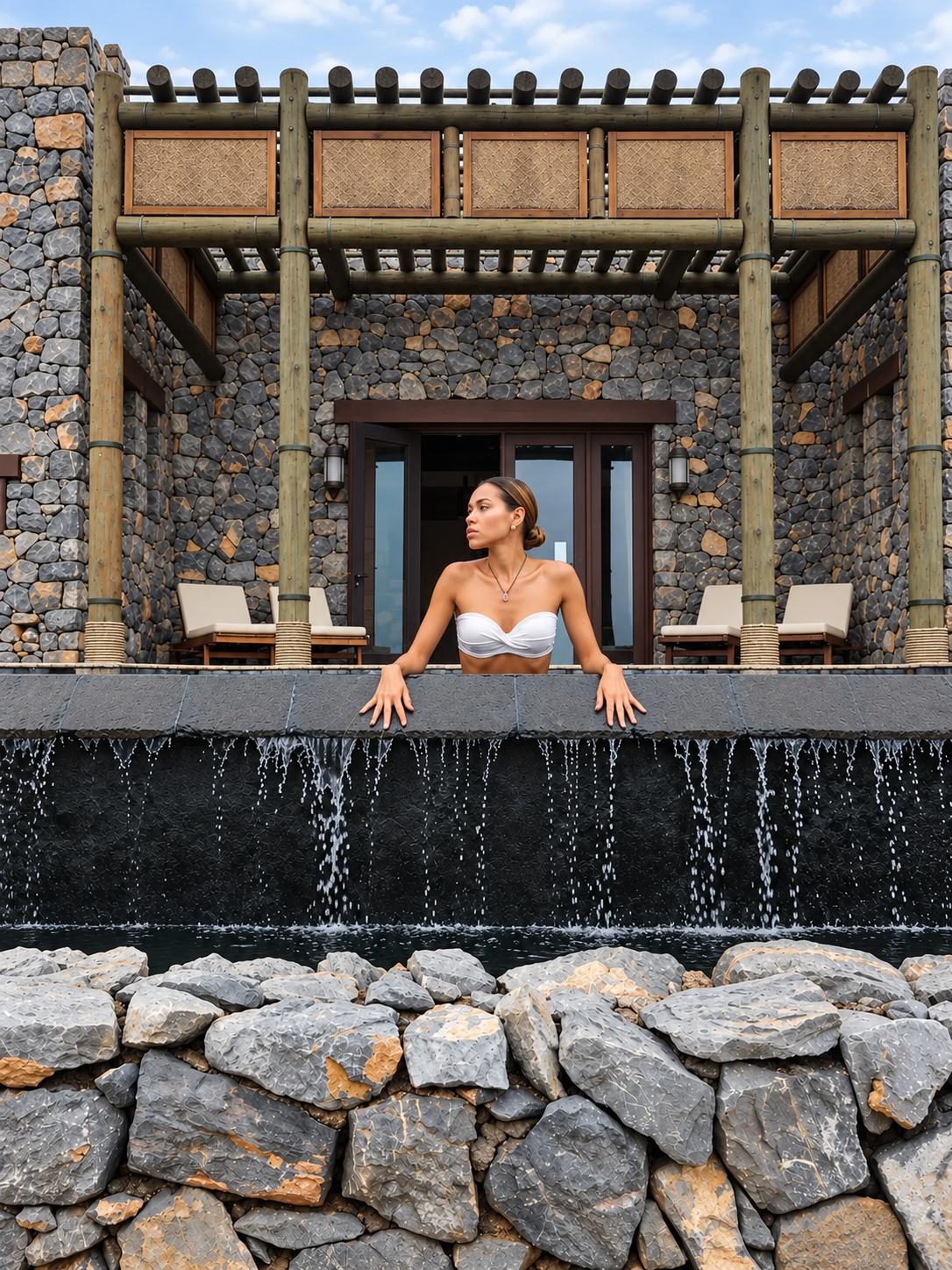
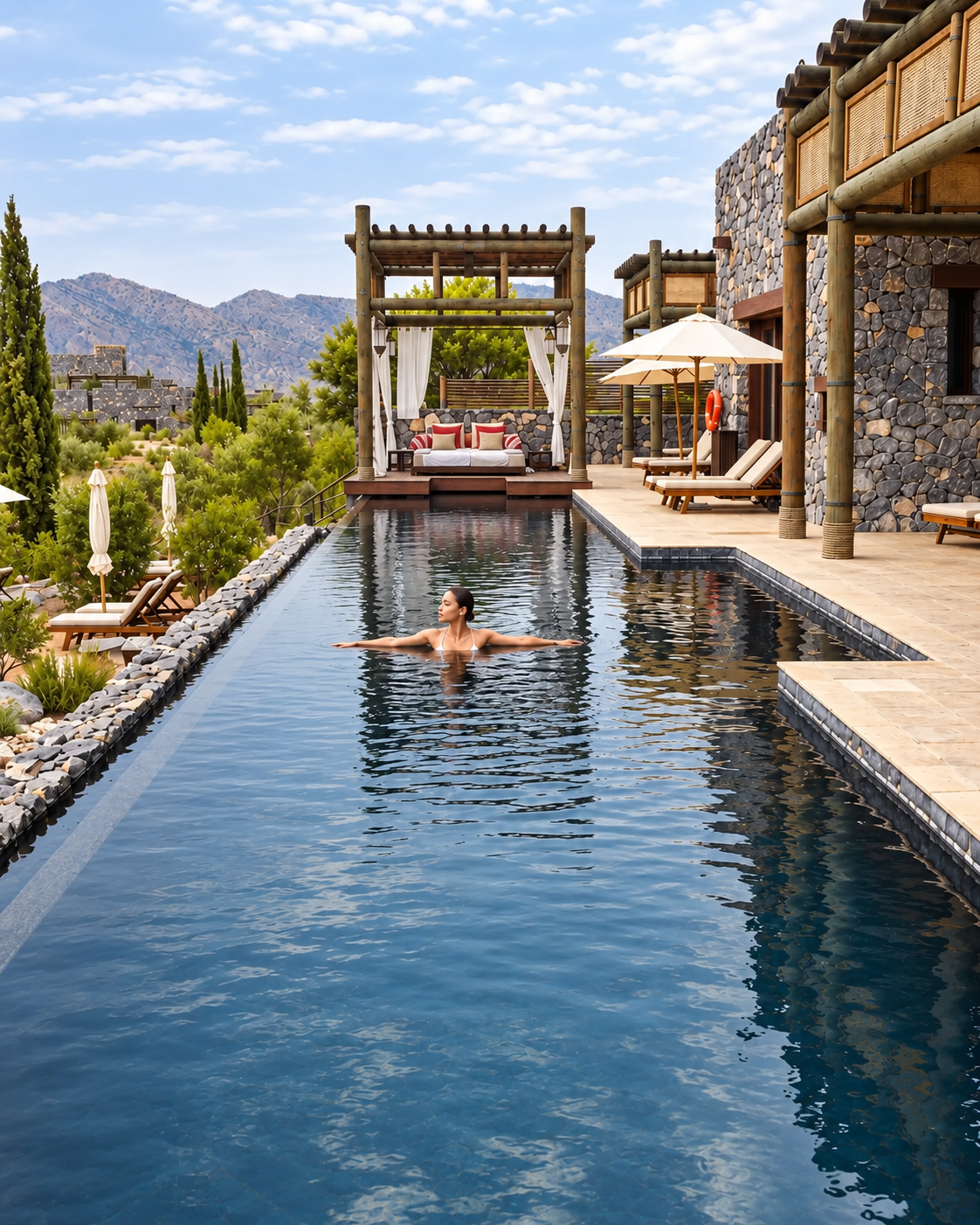
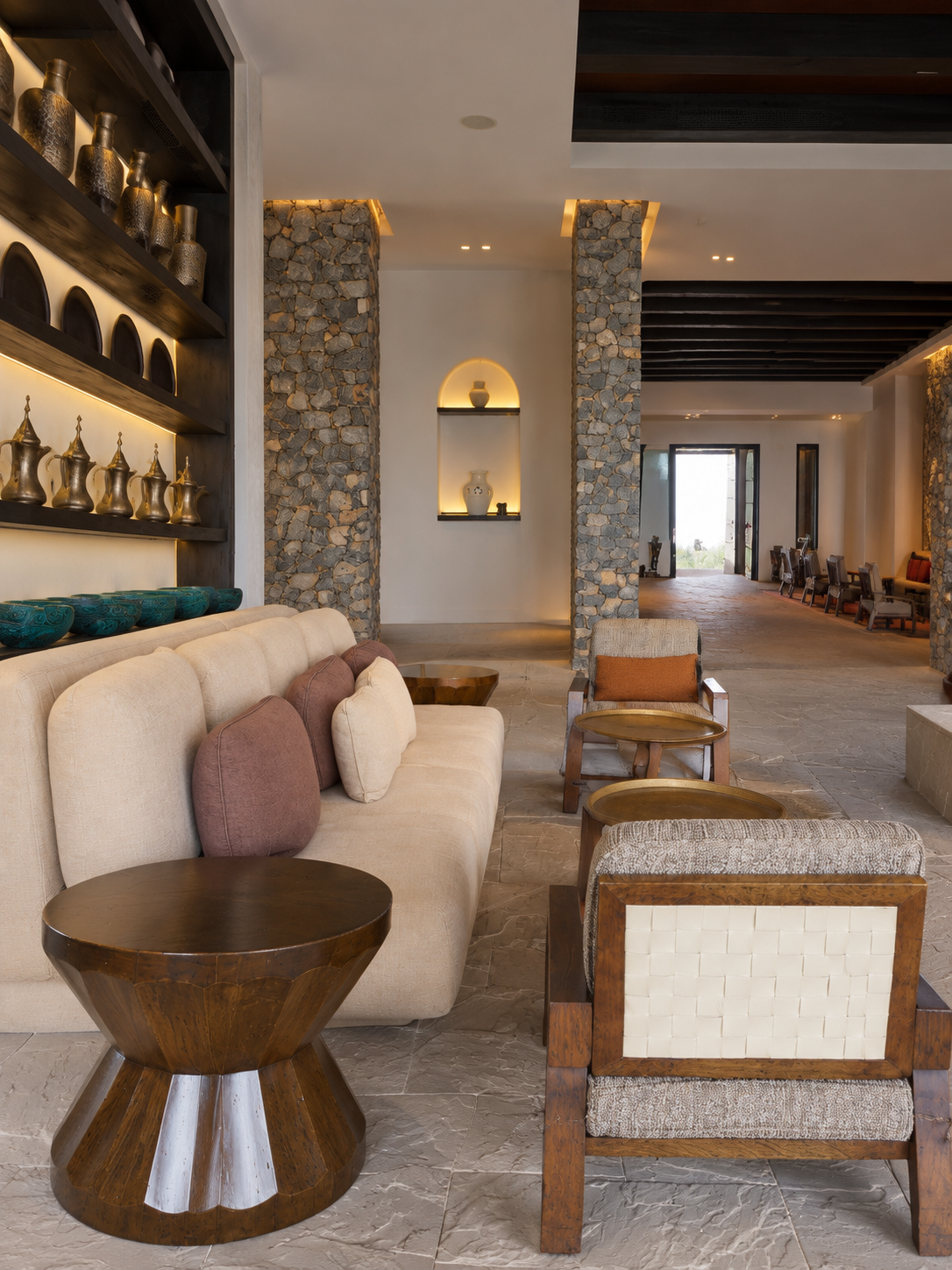
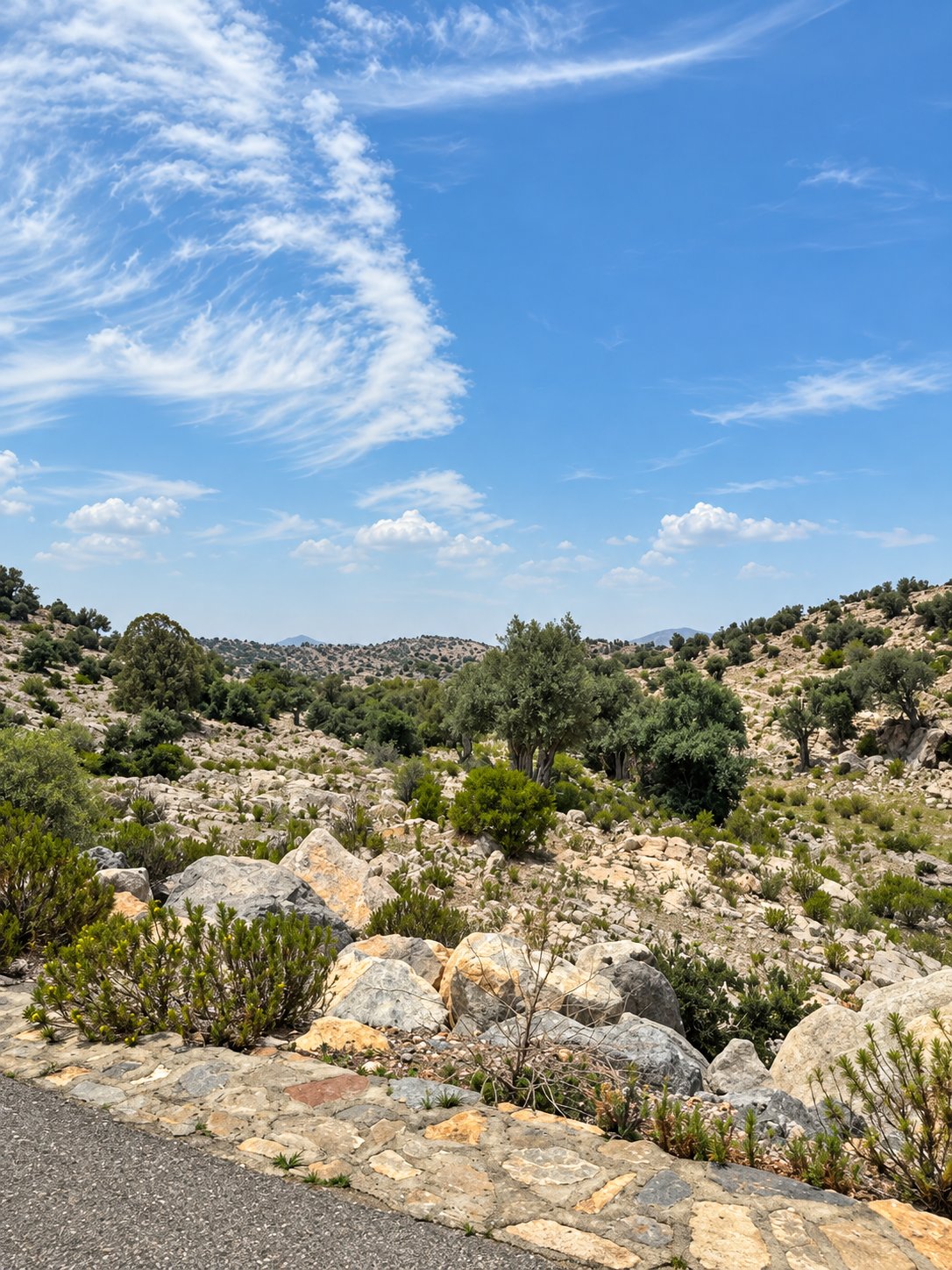
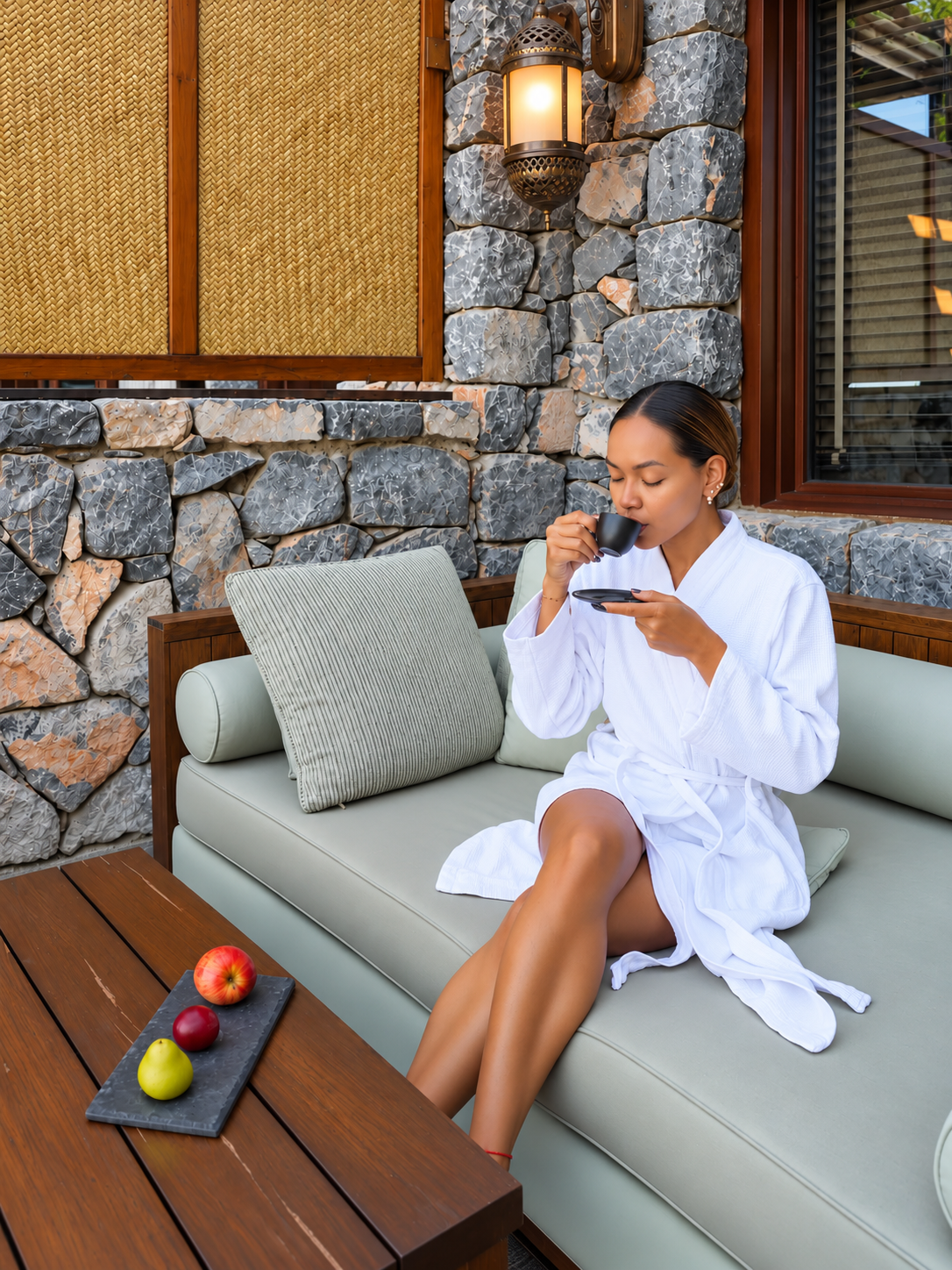
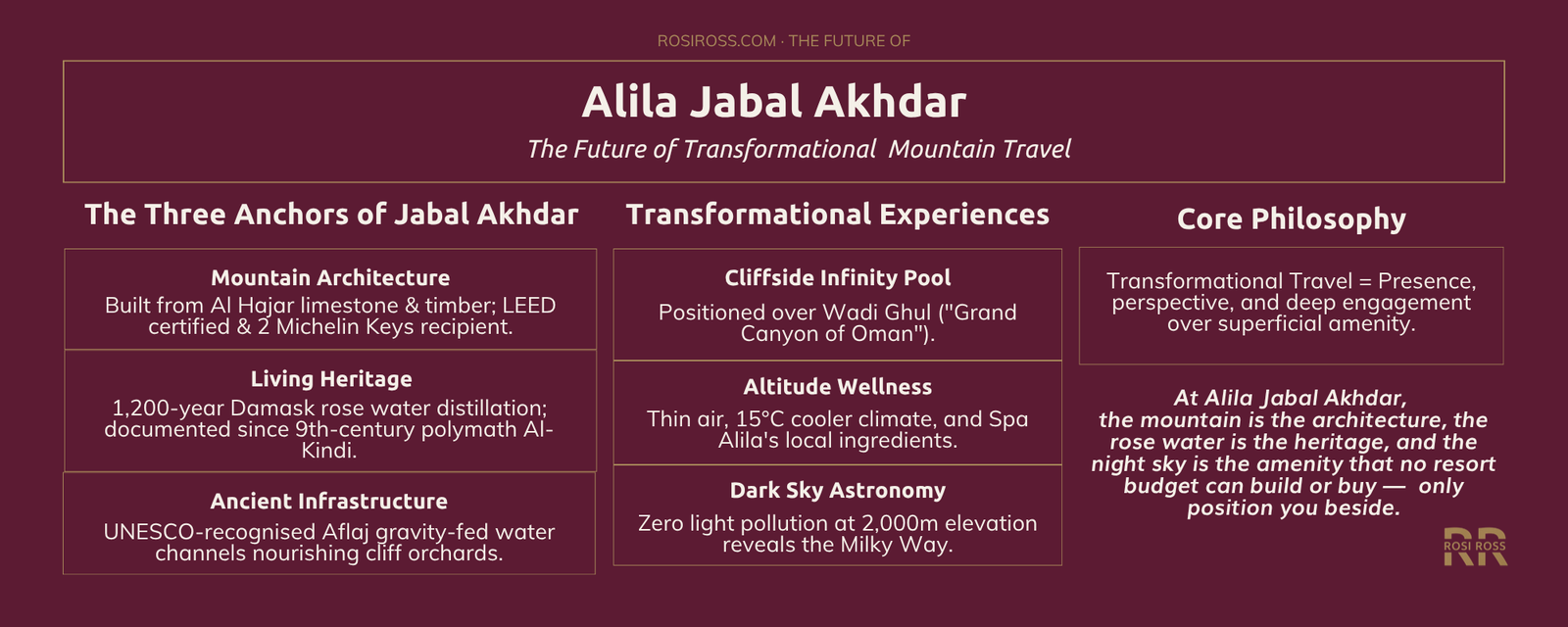
The primary architectural achievement of Alila Jabal Akhdar — designed by UK-based firm Atkins in collaboration with Thailand’s P49 Design, and certified to LEED standard, making it among the most rigorously environmentally assessed luxury properties in the Middle East — is not what it adds to the landscape. It is what it withholds from it. The Michelin Guide’s award of Two Keys to Alila Jabal Akhdar — the Guide’s recognition for an exceptional hotel stay — is notable specifically because the Guide’s inspectors cited design intelligence and sense of place rather than amenity volume as the defining quality. The 78 rooms and suites, ranging from 52 to 361 square metres, are built from locally sourced grey stone and timber that mirror the geology of the plateau on which they sit. The roof profiles are flat and low, following the horizontal logic of the cliff edge rather than asserting a vertical presence against it. From most angles of approach, the resort is difficult to distinguish from the rock formation it occupies. This is not aesthetic modesty. It is a design philosophy: the understanding that in a landscape of this power and specificity, the building’s highest aspiration is to become part of it.
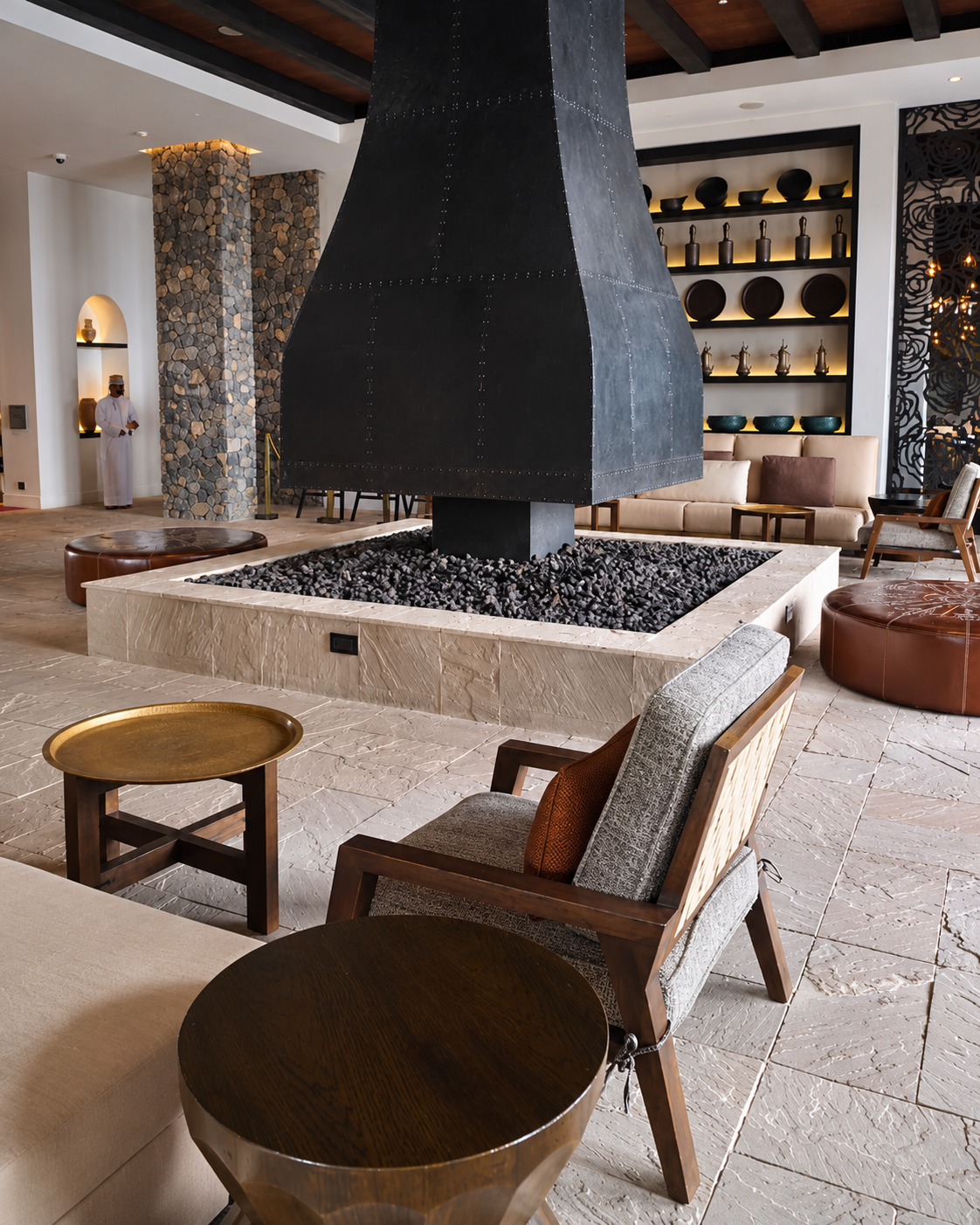
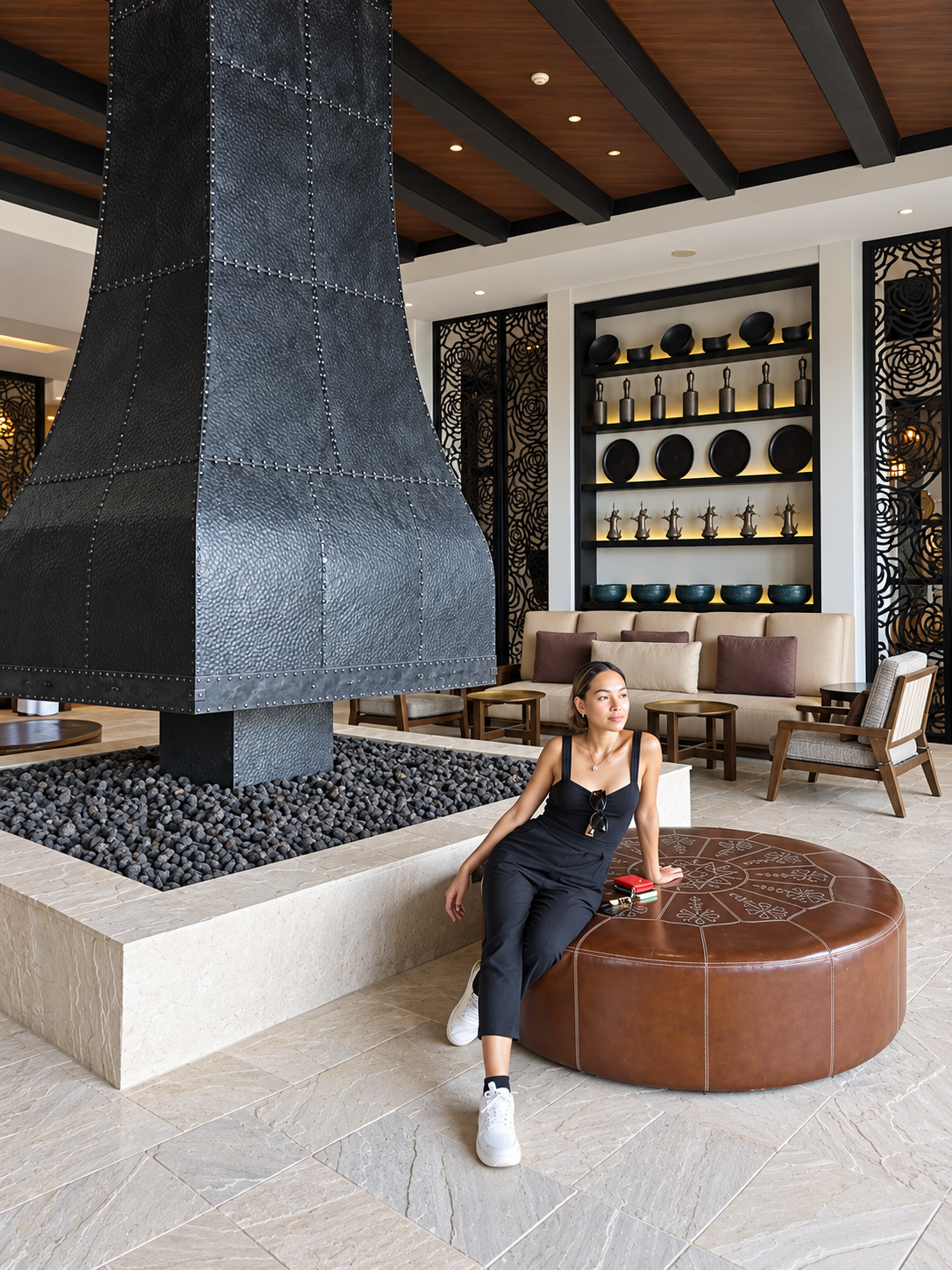
As Lampoon Magazine’s architectural review observes, the décor combines Omani fabrics embroidered with Kashmiri motifs, opaque green glass lamps, and engraved wood panels — a material register that is archaeological without being archival. The vocabulary that informs the interior design draws from the architectural heritage of Omani fort construction — the same military-domestic tradition that produced the great forts of Nizwa, Bahla, and Al Rustaq. Fort-like doors in heavy timber, wooden rafters, engraved wood panels, Omani fabrics embroidered with Kashmiri motifs, opaque green glass lamps: the interior material register is archaeological without being archival, referencing a specific visual culture without reproducing it as pastiche. The lobby fireplace — functional against the mountain cold that descends after dark at this elevation — is the room’s social and thermal anchor, and its presence speaks more precisely about the climate and character of this environment than any amenity list could. The same architectural intelligence that distinguishes the finest contemporary luxury destinations — the commitment to materials, proportions, and spatial decisions that respond to their specific site rather than importing a generic luxury aesthetic — is what Alila Jabal Akhdar achieves, in a context that makes the achievement more demanding and therefore more legible.
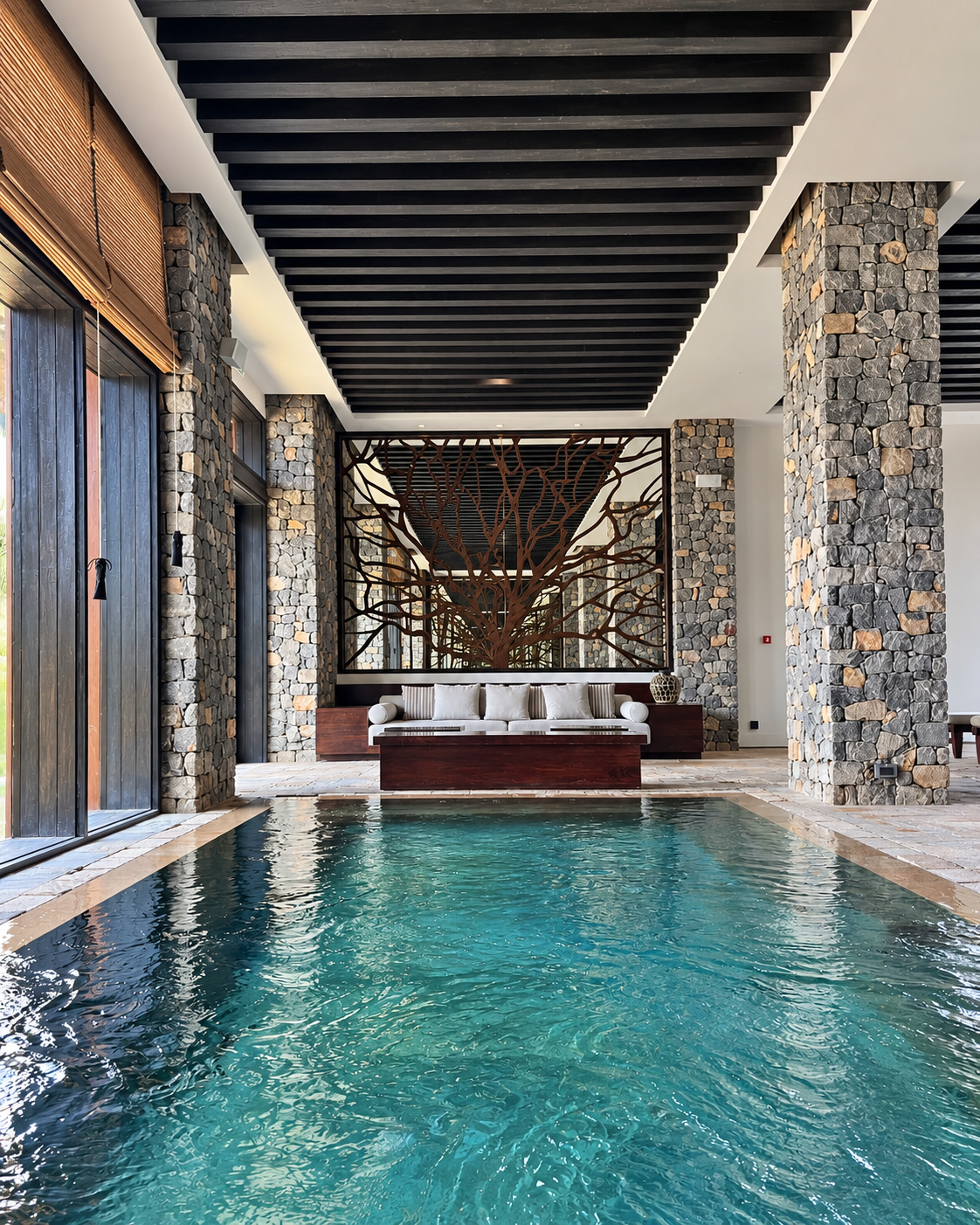
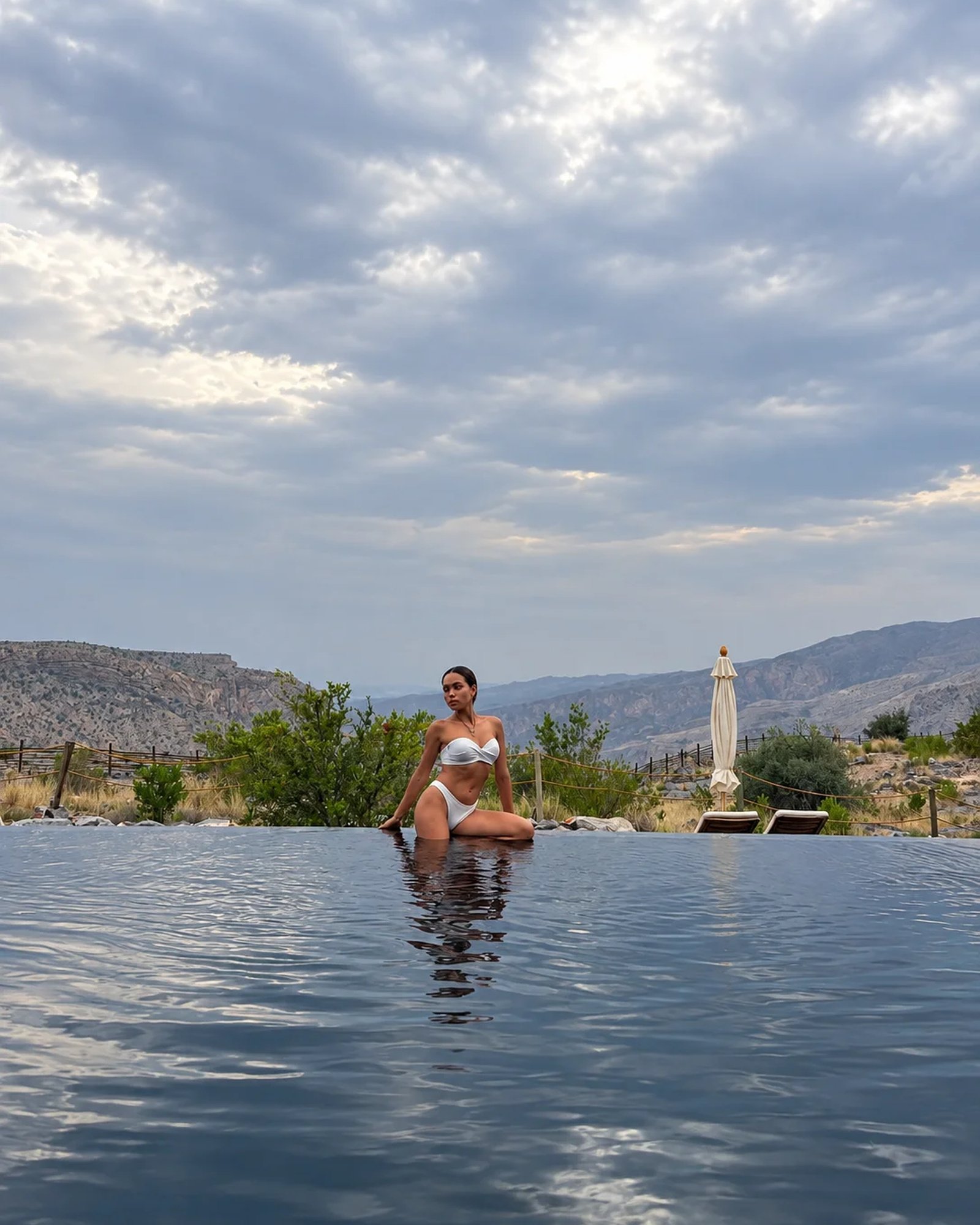
The infinity pool positioned at the cliff edge is the resort’s most dramatic single gesture — and its most photographed. But its significance is not primarily visual. It is spatial: the pool’s placement at the precise point where the resort’s stone terraces give way to the gorge creates an environment in which the body exists simultaneously within a made structure and at the edge of an unmade landscape of extraordinary scale. Wadi Ghul — the canyon directly below the resort, sometimes called the Grand Canyon of Oman — drops several hundred metres from the cliff edge on which the pool sits. Swimming here does not feel like a resort amenity. It feels like a position within a geological argument.
LEED — Leadership in Energy and Environmental Design — is the most widely recognised international framework for the environmental assessment of buildings, developed by the US Green Building Council. In luxury hospitality, LEED certification requires that a property meets measurable standards across sustainable site development, water efficiency, energy and atmosphere performance, materials sourcing, and indoor environmental quality. Alila Jabal Akhdar’s LEED certification is significant not merely as an environmental credential but as an architectural discipline: the requirement to use locally sourced materials, minimise site disturbance, manage water with precision, and integrate the building with its natural context produced design decisions that are simultaneously environmentally responsible and aesthetically superior to what standard construction practice would have delivered. In the most considered contemporary luxury resorts, environmental responsibility and design intelligence are not competing priorities. They are the same priority, expressed through the same decisions.




The rose and the mountain — a 1,200-year tradition in the villages above the gorge
The single most important cultural fact about Jabal Akhdar is one that most luxury travel writing about the region mentions and few adequately convey: the rose water tradition practised in the cliff villages of Al Aqr, Al Ayn, Al Shirayjah, and Saiq is not a heritage experience curated for visitors. It is an active, economically significant, generationally continuous agricultural and artisanal practice whose earliest written documentation appears in Al-Kindi’s Book of Perfume Chemistry and Distillation — a ninth-century Arab text that constitutes one of the oldest recorded treatments of perfume science in history. The process has been transmitted between families in these villages for more than 1,200 years without meaningful interruption.
The Damask rose cultivated on Jabal Akhdar’s terraced slopes — known locally as ward al jabal (the mountain rose) and botanically as Rosa Damascena, the same variety that produces the rose oil of Bulgaria and the rose water of Iran — grows at approximately 2,700 metres above sea level in conditions that combine the mountain’s mild microclimate with the aflaj water system that has irrigated these terraces for centuries. Approximately 4,000 individual rose bushes thrive across the villages, concentrated in the terraced fields that descend the cliff faces in a pattern of agricultural engineering that is itself a form of landscape art. The harvest season runs from March to May, peaking in April, when pickers rise before dawn to gather the blossoms at the moment their fragrance is most concentrated — before the day’s heat volatilises the essential oils. The freshly picked roses are transported within hours to traditional distillation units: tarnished silver bowls and clay ovens in which the petals are placed over water, heated until the steam carries the rose essence through copper condensing vessels and collects as rose water in receiving vessels below.
The resulting product — fragrant, medicinal, and ceremonially significant in Omani culture — perfumes homes, flavours food and coffee, is used in cosmetic and therapeutic preparations, and represents a specific form of material heritage that connects the mountain’s agricultural present to its documented past across more than a millennium. As The National’s documentation of Oman’s rose water tradition records, the tradition remains family-based, the recipes and techniques passed between generations, with some family processes recognised by the Oman Heritage Foundation as outstanding examples of living cultural practice. The most resonant contemporary fragrances draw on exactly this kind of provenance — materials with documented history, processes with cultural specificity, scents that carry meaning beyond their chemical composition. Jabal Akhdar’s rose water is the original expression of that intelligence, practised on the same mountain, by the same families, through the same techniques, for twelve centuries.



The aflaj — ancient water intelligence as living landscape
The terraced agricultural landscape of Jabal Akhdar is maintained by one of the oldest and most sophisticated systems of water management in the world: the aflaj (singular: falaj), a network of hand-carved irrigation channels that capture water from natural mountain springs and deliver it, through gravity and precise gradient engineering, to agricultural terraces at lower elevations. The aflaj system is not a historical relic. It is a functioning infrastructure that currently supplies water to the orchards and rose gardens of Jabal Akhdar’s cliff villages, operating through the same principles and in some cases through the same physical channels that were constructed centuries ago.
UNESCO recognised the aflaj of Oman as a World Heritage element in 2006 — one of the most specific recognitions in the World Heritage framework, acknowledging not a building or a city but a water management system as an outstanding example of human ingenuity in relationship with natural environment. The recognition reflects what the aflaj system actually represents: the accumulated engineering intelligence of a society that solved the problem of water distribution in an arid mountain environment without mechanical pumping, chemical treatment, or industrial infrastructure, using only the geometry of gravity and the precision of hand-carved stone channels that can be maintained and adjusted by the communities they serve.
The visible aflaj channels that run alongside the hiking trails adjacent to the resort — stone-lined courses a few centimetres wide, delivering a continuous flow of clear mountain water to pomegranate and apricot terraces below — are one of the most quietly extraordinary sights available to guests willing to walk slowly enough to notice them. They are the material evidence of a civilisation that understood its environment with a depth that contemporary engineering, for all its sophistication, is still attempting to replicate in its sustainable design credentials. Alila Jabal Akhdar’s own water management — rainwater collection for kitchen gardens, sophisticated filtration systems eliminating single-use plastic, practices that mirror the mountain’s pre-existing relationship to water — is most legible when understood in the context of these ancient channels running a few hundred metres from the resort’s terraces.
Aflaj (singular: falaj) are ancient gravity-fed irrigation channels that distribute water from mountain springs and underground aquifers to agricultural land in Oman. The system — in use across the Arabian Peninsula for at least 3,000 years, with some Omani examples dating to the pre-Islamic period — uses precisely calibrated gradients to move water through stone-lined or underground channels from source to field without mechanical assistance. UNESCO inscribed the Aflaj Irrigation Systems of Oman on the World Heritage List in 2006, recognising them as an outstanding example of human interaction with natural environment — a living engineering tradition in which communities maintain, repair, and manage shared water infrastructure according to traditional legal and social frameworks that have governed water rights in these communities for generations. In the context of Jabal Akhdar, the aflaj that supply the rose gardens and orchards of Al Aqr, Al Ayn, Saiq, and adjacent villages are directly visible along the hiking trails adjacent to Alila Jabal Akhdar, making them available for direct encounter rather than merely historical description.


Rooms at the edge of the world — the design intelligence of the guest experience
The 78 rooms and suites at Alila Jabal Akhdar — ranging from 52 to 361 square metres, each oriented toward the mountain panorama and designed with floor-to-ceiling glazing that brings the gorge, the canyon walls, and the changing quality of mountain light into the interior as the primary visual element — are not designed to compete with the landscape. They are designed to frame it. This distinction is fundamental to the resort’s architectural philosophy and to the specific quality of the guest experience it produces.
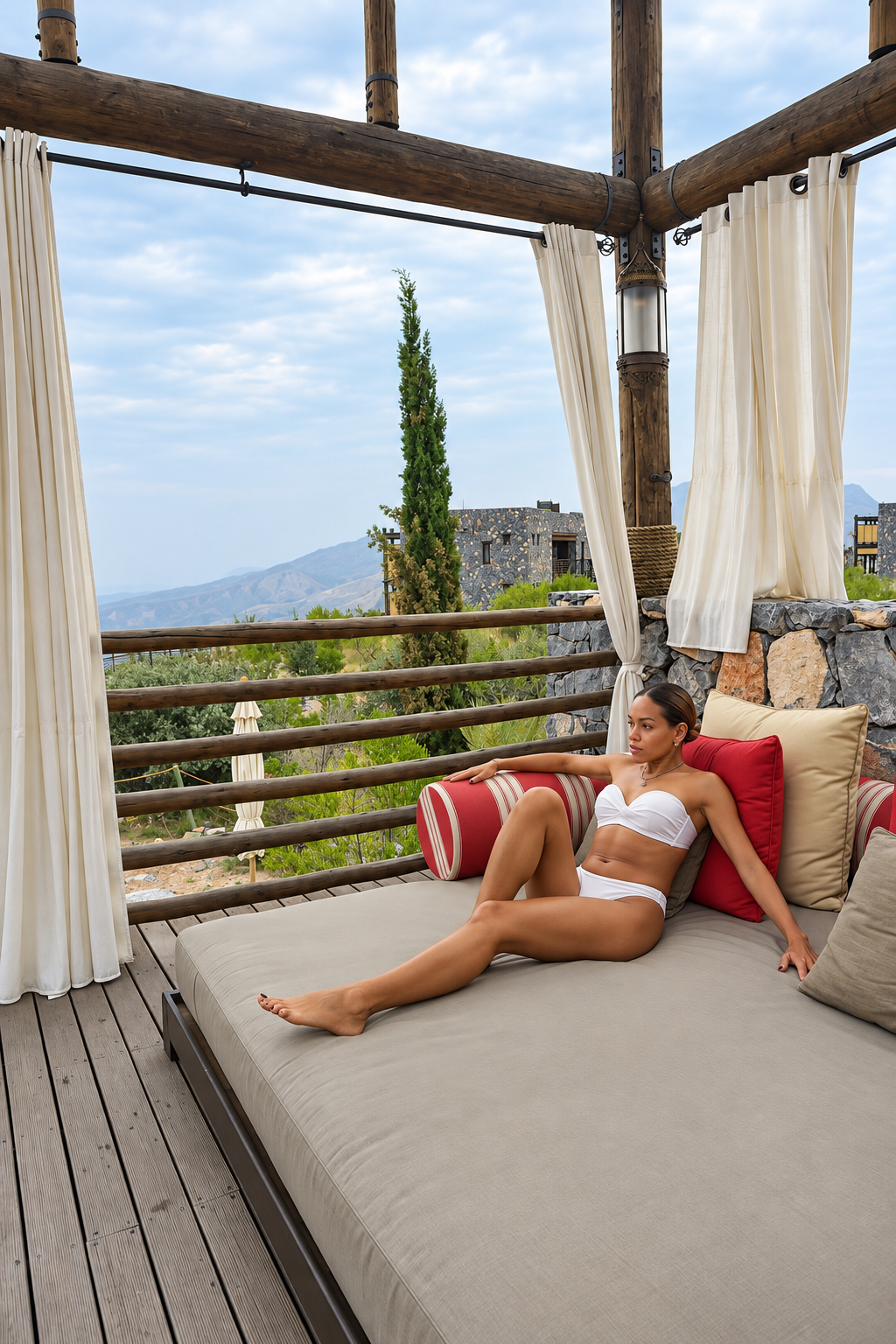
The interior material palette is consistent with the exterior’s geological logic: stone floors that extend the cliff’s surface character into the room, timber details that reference the fort-building tradition of Oman’s mountain communities, textiles in the earth tones and deep indigos of Omani craft tradition. The private balconies — extending from each room over the canyon void — are the rooms’ most important spatial feature, not because they provide an additional amenity but because they provide a position: a specific location in space from which the relationship between the built structure and the natural landscape can be experienced directly, without the mediation of glass. At dawn, when the first light defines the canyon walls in sharp relief and the temperature is cold enough to require a shawl, the balcony is where the resort’s essential argument is most completely legible: that the best luxury environment is one that does not separate its inhabitants from the natural world but positions them within it with greater precision and greater intimacy than they could achieve without the structure’s assistance.
After dark, the sky becomes what Alila Jabal Akhdar’s elevation and remoteness make uniquely available: one of the darkest night-sky environments accessible from a luxury property in the Middle East. With almost no light pollution at 2,000 metres above sea level, the constellations are visible with a clarity that most of the resort’s guests will not have encountered since childhood, if at all. The Milky Way crosses the sky as a visible structure rather than a photographic phenomenon. The resort’s astronomy sessions — conducted on the terraces with telescopes trained on planets and star clusters — are not an amenity add-on. They are the natural consequence of being located in a place where the sky has not been erased by the light of human settlement. The finest luxury properties understand that their most valuable asset is not what they have built but what their location makes possible — and at Alila Jabal Akhdar, what the location makes possible includes a relationship with the universe above that no urban luxury address can approximate.




The Spa Alila and the wellness of altitude — restoration through environment
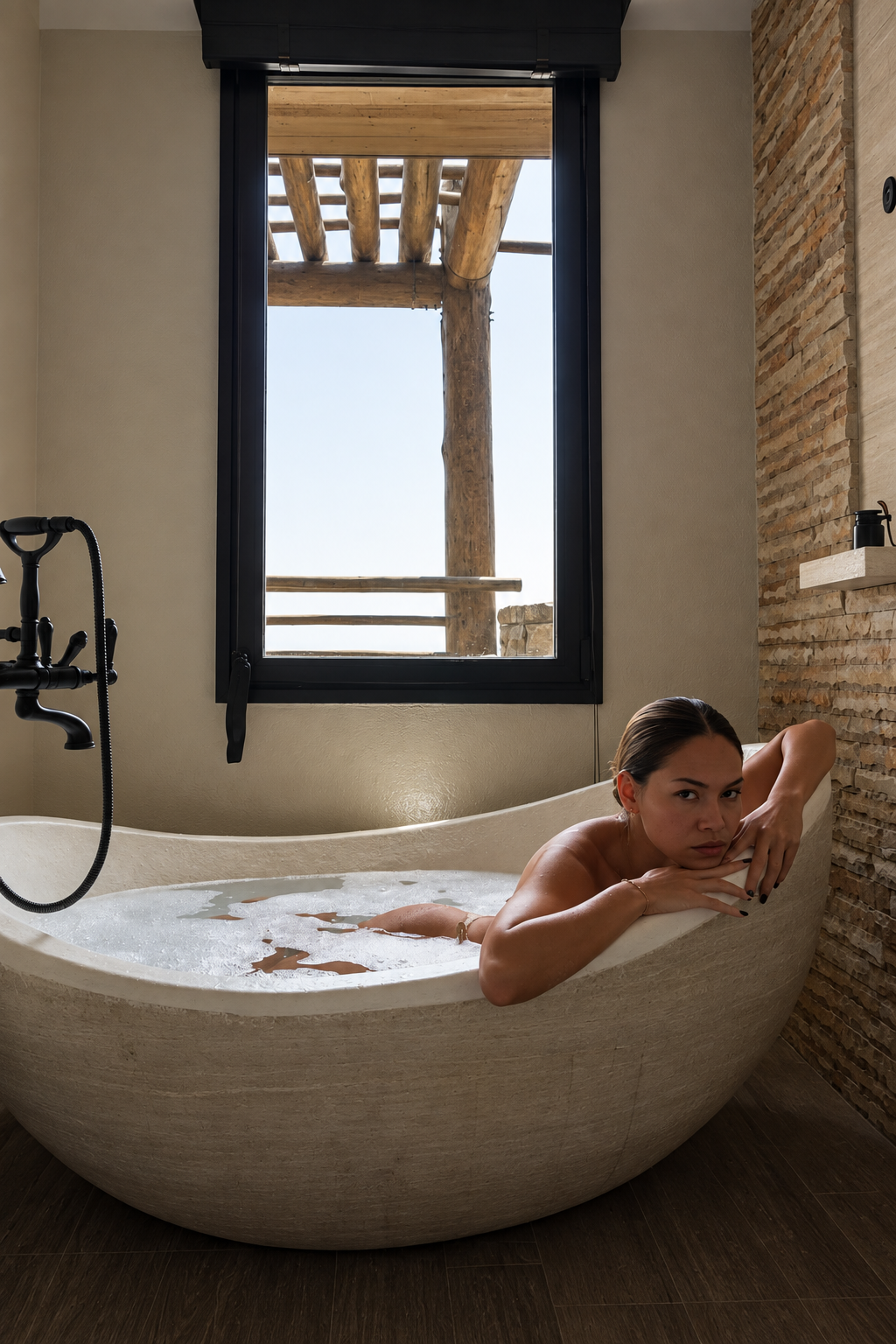
The wellness proposition at Alila Jabal Akhdar is grounded in a specific environmental fact before it engages with any treatment or programme: altitude itself is a physiological experience. At 2,000 metres, the air is measurably thinner, the UV exposure higher, the temperature range through the day more dramatic, and the quality of silence more complete than at sea level. The body responds to this environment differently — more slowly at first, then with a specific quality of attention and presence that guests consistently describe as one of the most distinctive aspects of the Jabal Akhdar experience. The mountain does not ask the visitor to relax. It produces relaxation through the specific conditions it imposes: cooler air, less noise, less stimulus, a horizon that is mountains rather than screens.
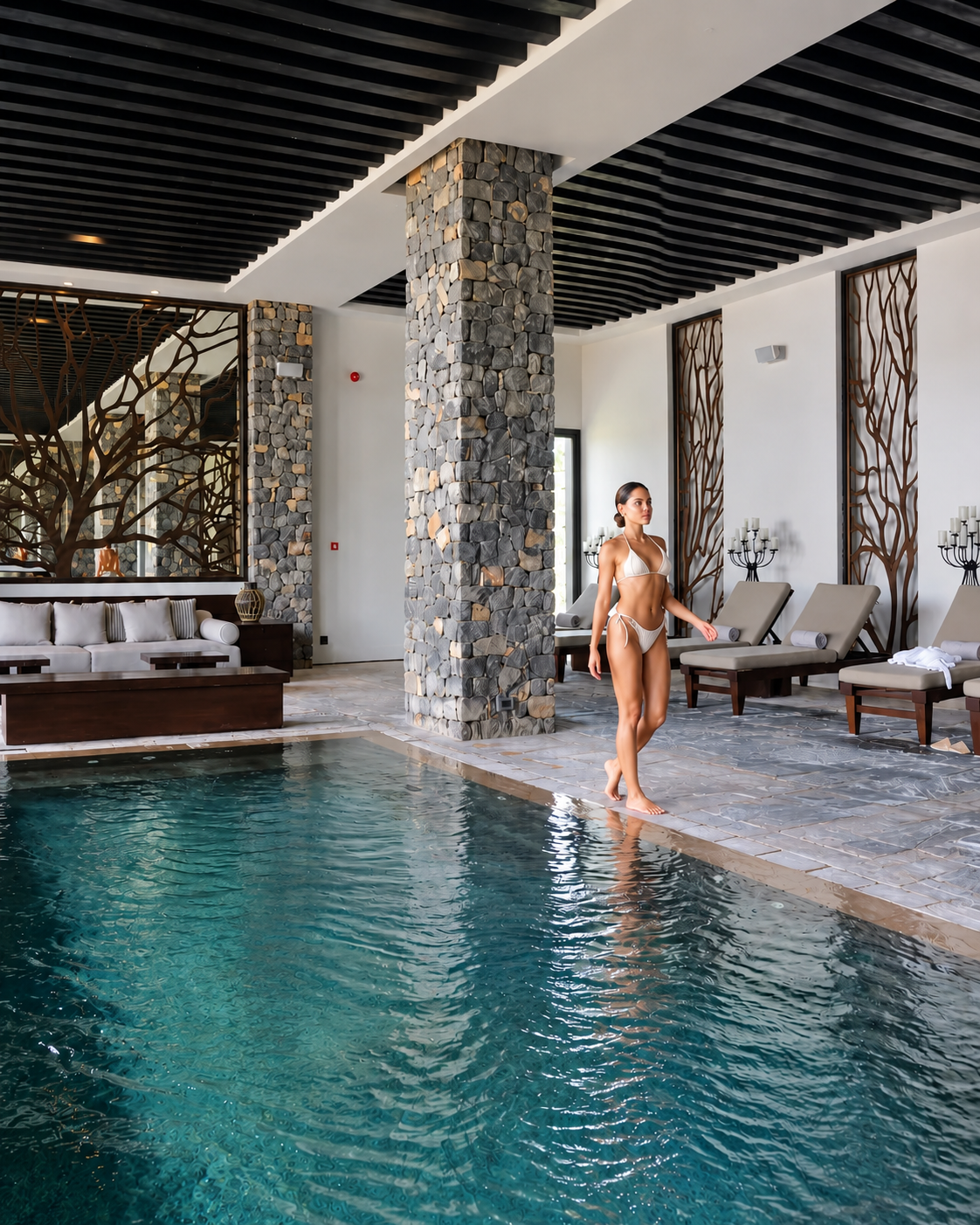
The Spa Alila responds to this environment with a treatment philosophy that treats altitude and mountain air as primary therapeutic agents rather than incidental backdrop. The Spa Kitchen — a distinctive element of the Alila wellness concept — allows guests to understand the specific ingredients used in their treatments: locally harvested herbs, rose water from the adjacent villages, natural mineral-rich clays from the mountain geology. The interactive dimension of the Spa Kitchen is not a marketing gesture. It is an educational proposition: the understanding that the most effective wellness experience is one in which the recipient understands what is being applied to their body and why — the same intelligence that distinguishes a considered skincare routine from an accumulation of products. The most effective skin care is always the most precisely understood — and the Spa Kitchen translates this principle into an immersive learning environment.
The sunrise yoga sessions conducted on the resort’s outdoor terraces — with the canyon below and the dawn sky above, in air cool enough to require layers — are among the most specifically Jabal Akhdar experiences the resort provides. The environment transforms what would be a standard wellness practice into something genuinely distinctive: the specific combination of elevation, cold air, the quality of mountain light at dawn, and the silence of a landscape not yet disturbed by the day’s activity creates conditions for mindful practice that no spa interior, however beautifully designed, can replicate. This is the essential argument of nature-based wellness at its most complete: that the most restorative environment is not the one most carefully controlled but the one most honestly encountered.


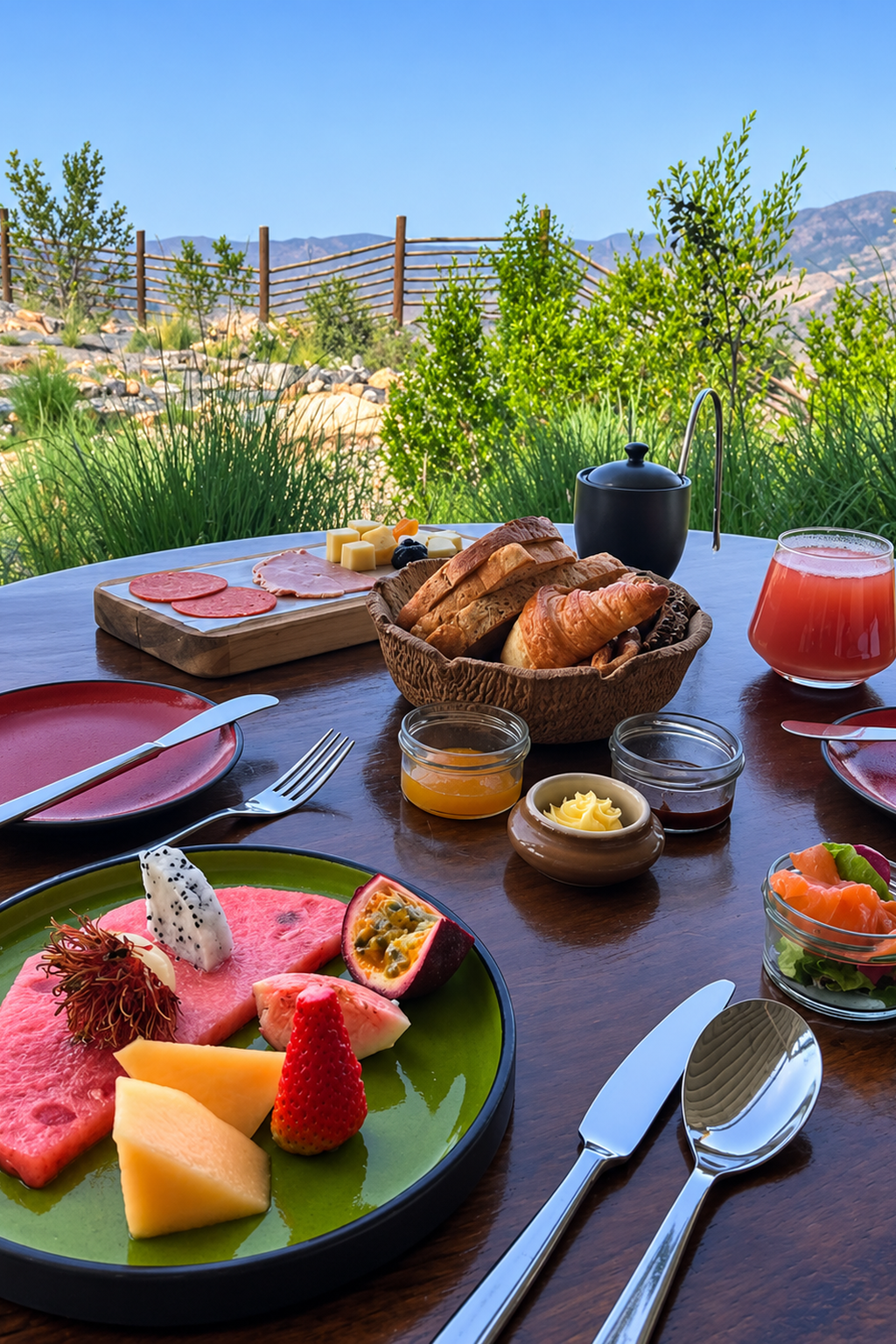


Eating the mountain — gastronomy as landscape intelligence
The culinary programme at Alila Jabal Akhdar begins with a geographical fact: the mountain’s elevation and mild microclimate produce agricultural conditions unlike those available anywhere else in Oman. Pomegranates, walnuts, almonds, peaches, apricots, figs, grapes, and olives grow on the terraced slopes of the villages adjacent to the resort — fruits that the harsh desert climate of coastal and interior Oman cannot support at the same quality or in the same variety. The rose water distilled in Al Aqr and Al Ayn perfumes Omani coffee and flavours the sweets that are among the most specific expressions of Omani hospitality. The local honey — produced from the mountain’s diverse flora including the Damask rose — carries a flavour complexity that lowland honey cannot match.
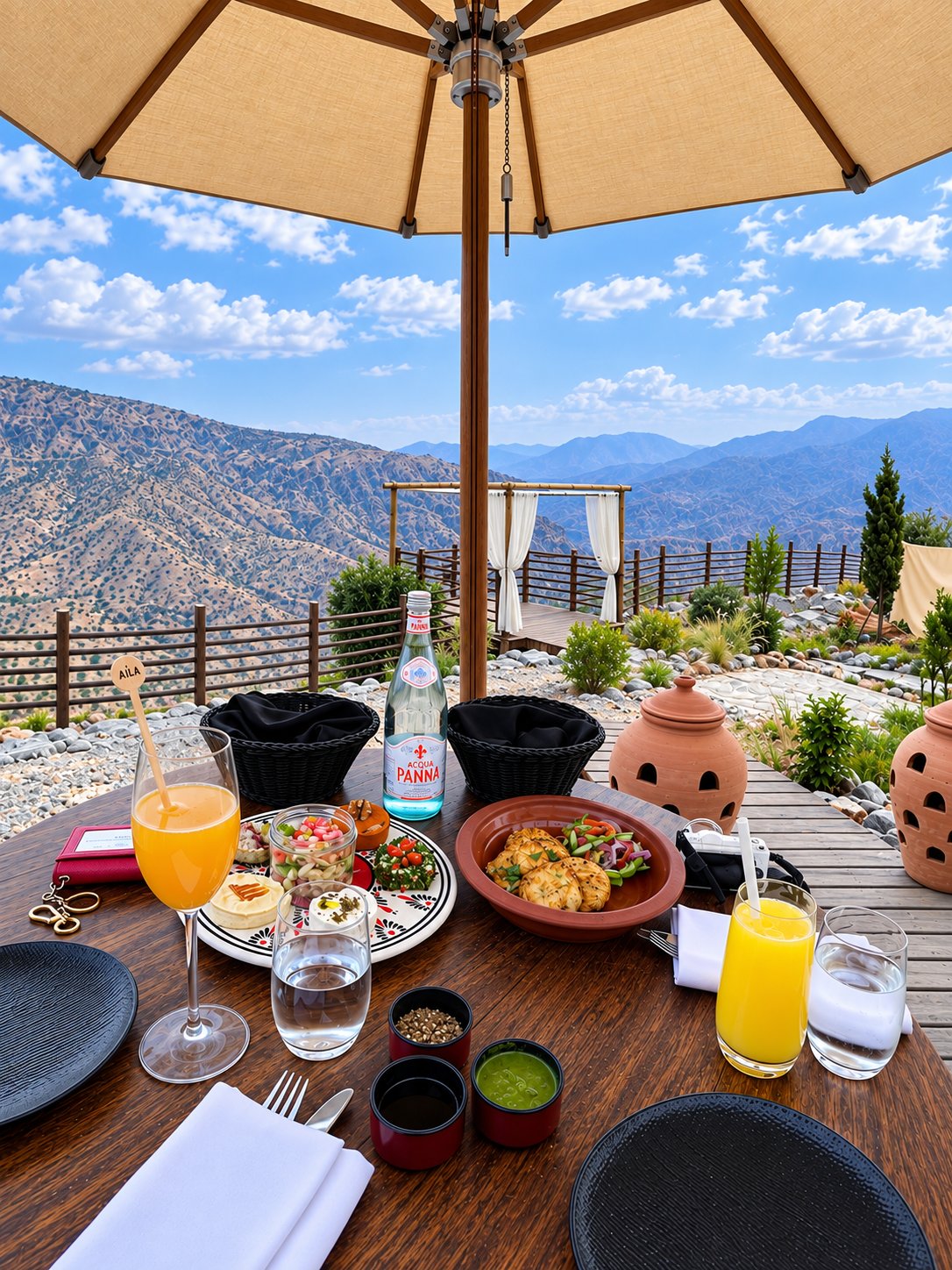
The Juniper Restaurant translates this agricultural specificity into a dining philosophy rooted in the mountain’s own produce: menus that change with the season, that reflect the availability of what the surrounding landscape is currently providing, and that position Omani culinary tradition — the slow-cooked meats, the saffron rice, the date-and-rose preparations — within a contemporary dining context without erasing the cultural specificity that makes them meaningful. Dining outdoors — on the terraces above the gorge, under a sky that becomes a spectacle after dark — is not merely a scenic experience. It is a complete engagement with the environment: the temperature of the mountain air, the smell of the landscape, the quality of light that falls differently at this elevation, all of which contribute to the flavour and the memory of what is eaten. The most considered dining experiences understand that the environment is the meal’s first course — and at Alila Jabal Akhdar, the first course is one of the most dramatic natural environments in the Middle East.
Transformational travel describes a category of travel experience that produces genuine and lasting change in the traveller — in their perspective, their self-understanding, their relationship to the natural world, or their sense of what constitutes value and meaning in their life — rather than simply providing comfort, entertainment, or the accumulation of experiences. It is distinguished from conventional luxury travel not by its price point or its amenity level but by the depth of its engagement: the degree to which the environment, the culture, and the specific conditions of the place produce a different quality of attention, reflection, and presence in the person who encounters them. Alila Jabal Akhdar represents transformational travel in its most architecturally complete form: the elevation, the silence, the 1,200-year rose water tradition in the adjacent villages, the UNESCO-recognised aflaj channels running alongside the hiking trails, the night sky visible in its full astronomical depth — these are not amenities. They are conditions that change how a person thinks and feels, and the resort’s architecture, programme, and service philosophy exist specifically to maximise the depth of encounter with them.



The hiking culture of Jabal Akhdar — landscape as the primary activity
The most important activity available at Alila Jabal Akhdar is not offered by the resort. It is offered by the mountain. The hiking trails that connect the resort to the ancient villages of the plateau — Al Aqr, Al Ayn, Al Shirayjah, Wadi Bani Habib (the ghost village, abandoned and preserved in the specific quality of arrested time that uninhabited places carry) — pass through a landscape that is simultaneously geological, agricultural, and archaeological. The same path that crosses a gorge of Al Hajar limestone also passes aflaj channels, rose terraces, walnut orchards, and the ruins of pre-Islamic settlements whose foundations are visible in the cliff faces they were carved into.
The via ferrata — a mountain climbing route using fixed iron rungs and cables bolted into the cliff face — is among the most unusual adventure offerings available at a luxury property in the region. It requires no climbing experience, only the willingness to be at the cliff face rather than looking at it from the terrace, and it produces a relationship with the Al Hajar geology that no amount of vista-gazing from a comfortable balcony can approximate. The mountain becomes legible in a different register from this position: its scale, its structure, and its physical character understood through the body rather than through the eye.
The Saiq Plateau — twenty minutes from the resort — offers the most complete view of the Damask rose landscape during the March-to-May season, when the terraced hillsides are covered in the specific pink that ward al jabal produces at full bloom. This is not a managed display. It is an agricultural fact: the same bloom that has been occurring on these slopes since before Al-Kindi wrote about it in the ninth century, timed by the mountain’s climate rather than by a tourism calendar, and ending when the season ends rather than when the visitor’s schedule requires. The finest natural luxury experiences share this quality: they are not produced for the visitor but encountered by them, and the encounter is on the landscape’s own terms.
A mountain retreat becomes a luxury destination when its elevation, remoteness, and natural character provide conditions that cannot be replicated at sea level or in an urban environment, and when the hospitality architecture is sufficiently intelligent to maximise the depth of encounter with those conditions rather than substituting comfort for them. The defining luxury of a genuine mountain retreat is not what it offers indoors but what its location makes accessible outdoors: the quality of air, the specific temperature range, the astronomical clarity of the night sky, the silence of an environment distant from urban noise, and the physical landscape available for encounter at walking pace. Alila Jabal Akhdar provides all of these conditions, and adds a cultural dimension — the living rose water tradition, the UNESCO-recognised aflaj irrigation, the ancient villages on adjacent trails — that transforms the natural experience into a cultural one. The mountain is the luxury amenity. The resort’s architecture and service exist to position the guest within it with maximum intelligence and minimum distraction.
Oman as a luxury destination — why the least visible country in the Gulf produces the most lasting impressions
Oman occupies a specific and unusual position in the global luxury travel landscape: a country of extraordinary natural and cultural wealth that has consistently declined to compete on the terms that most Gulf destinations have accepted. Where others have built upward and outward — taller towers, larger malls, more ambitious infrastructure spectacles — Oman has built slowly, selectively, and with a consistency of cultural positioning that reflects a genuine national confidence in what the country already possesses. The Al Hajar mountains, the ancient falaj systems, the living craft traditions of Muscat’s souqs, the frankincense trade routes of Dhofar, the whale shark migrations of the Arabian Sea coast: these are not manufactured attractions. They are what Oman is, and the country’s approach to tourism has consistently been to protect and present what it is rather than to create what it is not.
Nizwa — one hour from Alila Jabal Akhdar — is the most complete available introduction to this positioning. The ancient capital of Oman’s interior, whose circular fort is among the most architecturally distinctive in the Arabian Peninsula and whose Friday livestock market is among the most authentically functioning traditional markets in the Arab world, provides a cultural counterpoint to the mountain’s natural experience that makes the combination of the two into something more than either is alone. The traveller who spends two days in Nizwa and three nights at Alila Jabal Akhdar has encountered Oman at two different registers of depth — the historic city and the ancient mountain — and has understood something about this country that no amount of reading can substitute for. The most significant cultural travel encounters share this quality: the place teaches something that cannot be learned any other way, and what it teaches is specific to that place alone.
The distance between Muscat International Airport and Alila Jabal Akhdar — approximately two and a half hours by road, with the final ascent requiring a four-wheel-drive vehicle and passing through an army checkpoint that controls access to the plateau — is not an inconvenience. It is the experience itself beginning. The drive from the coast through the Hajar foothills, the moment when the road begins its switchback ascent, the checkpoint that marks the transition from the ordinary world to the plateau, the progressive unfolding of the canyon landscape as altitude increases: all of this is the resort’s arrival sequence, and it is the most honest introduction to what Alila Jabal Akhdar is — a place that requires commitment to reach, and that repays commitment with an experience whose depth is proportional to the effort invested in arriving at it.
“The greatest luxury is not separation from the world.
It is a more precise relationship with it.
At Alila Jabal Akhdar,
the mountain is the architecture,
the rose water is the heritage,
the aflaj channels are the infrastructure,
and the night sky
is the amenity that no resort budget
can build or buy —
only position you beside.
Stillness, here,
is not the absence of something.
It is the presence
of everything that was always there,
finally audible.”

