
On why small, repeated actions build identity more reliably than any dramatic transformation, and what separates a habit from a ritual in a life designed with real intention
A meaningful life is rarely built through dramatic transformation. It is constructed through intentional moments, repeated over time. The modern ritual is the bridge between who we are today and who we are becoming.
We have more technology, more information and more convenience than any previous generation, and many people describe feeling further from themselves as a result. This is not a contradiction so much as a consequence. Constant connectivity and accelerated work cycles have blurred nearly every boundary between personal and professional life, and the outcome is a genuine appetite for practices that restore focus, emotional regulation and a working sense of who is actually doing the deciding.
The modern definition of success has shifted accordingly. It is measured less by achievement or income alone, and increasingly by the capacity to remain clear, resilient and grounded while everything around a person continues to accelerate. The research on how that capacity is built is more modest, and more useful, than the wellness industry tends to suggest. It points consistently in one direction: small, repeated, intentional actions outperform dramatic resolutions.
Why Rituals Matter Again
A ritual is not defined by cost. It is defined by intention. A morning walk, a skincare routine or the deliberate preparation of coffee can all become rituals the moment they create genuine presence rather than passing time.
Rituals have reasserted themselves for reasons that track closely together: rising awareness of mental health, digital fatigue from constant stimulation, a broader movement toward slow living, and a shift from consumption toward experience as the more reliable source of satisfaction. What separates a ritual from a habit performed on autopilot is the presence of attention within it.
What is the difference between a habit and a ritual? A habit is automatic: brushing teeth, checking a phone on waking. A ritual carries deliberate meaning attached to the action, which is what makes it capable of shaping identity rather than simply filling time.
There is also experimental evidence that ritual does something habit alone does not. In a series of studies published in 2016, Alison Wood Brooks and colleagues at Harvard Business School found that people who performed a simple ritual before an anxiety-provoking task, such as singing in public or solving a maths problem, reported feeling less anxious and performed better than those who did not. Earlier work by Michael Norton and Francesca Gino found that ritual reduced the intensity of grief after loss. The mechanism appears to be a restored sense of control: a ritual gives an uncertain moment a shape.

The Science of Building Identity Through Repetition
Structure reduces the number of decisions a person has to make each day, and it creates a sense of predictability that is protective under stress. But the deeper mechanism is identity formation: the actions a person repeats become evidence, to themselves, of who they are. Someone who reads every morning becomes, over time, a reader. Someone who trains consistently becomes an athlete, regardless of where they started. Someone who protects deliberate mental space becomes, in a fairly literal sense, someone who has learned to value themselves.
The behavioural research gives this idea a timescale. A frequently cited study by Phillippa Lally and colleagues at University College London, published in 2010, followed volunteers as they built a new daily behaviour and found that the time to reach automaticity varied widely, from 18 to 254 days, with a median of 66. Habit formation is neither instant nor fixed at the popular “21 days”. Separately, work by Wendy Wood and colleagues has suggested that a large share of everyday behaviour, on the order of 40 percent, is performed habitually in stable contexts rather than through fresh decisions. Taken together, the findings make a quiet point: a life is largely the sum of what is repeated, so what is repeated deserves choosing.
Rituals also function as transition points in a life that otherwise offers few natural boundaries. A morning ritual prepares the mind for the day ahead; an evening one signals, to the nervous system as much as the calendar, that rest may begin. Sleep research consistently supports consistent pre-sleep routines as a foundation of good sleep, which in turn underpins mood, attention and emotional regulation.
Meditation: Training the Inner World
Meditation deserves consideration well beyond its spiritual origins, as a modern cognitive practice for attention control and emotional regulation, accessible regardless of religious background. In an environment engineered to compete for human attention, the capacity to direct that attention deliberately has become something close to a competitive advantage.
The evidence is encouraging but should be described precisely. A widely cited 2014 meta-analysis in JAMA Internal Medicine, covering 47 randomised trials, found moderate evidence that mindfulness meditation programmes improve anxiety, depression and pain, with weaker evidence for effects on stress and quality of life, and no evidence that they outperform other active treatments such as exercise or medication. Research reviewed by Harvard Medical School and the National Institutes of Health’s Center for Complementary and Integrative Health similarly treats the practice as a trainable skill with measurable benefits for stress reactivity and attention, rather than as a cure or a lifestyle badge.
How do rituals improve mental health? Largely through consistency rather than intensity. A regular meditation time, practised in a distraction-free environment, does more over months than an occasional long session ever could. It is best understood not as a quick fix but as the ongoing development of a working relationship with one’s own mind, and as a complement to professional care where care is needed, not a replacement for it.



Yoga and Movement: The Intelligence of the Body
Yoga extends past fitness into something closer to a philosophy of connection between movement, breath and awareness. Modern wellness research increasingly recognises what contemplative traditions have long assumed: that the body stores stress and emotion in ways a purely cognitive approach cannot fully address. The Mayo Clinic has documented yoga’s association with improved flexibility, cardiovascular health and nervous system regulation, outcomes that arrive alongside a less easily measured but equally real sense of emotional stability.
The broader case for movement is among the strongest in mental health research. Systematic reviews, including work published by the Cochrane Collaboration, have found that regular exercise is associated with meaningful reductions in depressive symptoms, and the World Health Organization’s physical activity guidance recommends regular moderate activity for adults, in part because of its links to mental wellbeing. Evidence specific to yoga is encouraging for stress and mood but varies in quality, so it is best read as one well-supported form of movement rather than a unique one. The body, understood this way, is not simply something to train. It is something to listen to.
Beauty Rituals: Emotional Architecture
Beauty rituals are not only about appearance. They are about identity, sensory experience and self-respect: a form of emotional architecture built through repeated attention to how a space, or a body, actually feels.
A skincare routine performed with genuine attention functions as a moment of mindfulness in its own right, no different in structure from a brief meditation. This is the philosophy behind an approach like Fjaka, the Adriatic concept of mindful ease built directly into a beauty ritual, a reminder that skincare and psychological restoration were never entirely separate categories.
The sensory dimension has a physiological basis. Smell is unusual among the senses in that the olfactory pathway connects directly to the limbic regions involved in emotion and memory, which is why a scent can return a person to a moment decades old. Slow, tactile self-care gives the nervous system a consistent cue to settle. None of this makes a beauty ritual a treatment for anxiety or low mood, and it should not be framed as one. It makes it something more modest and more reliable: a daily occasion for attention.





Reading, Learning and Expanding the Mind
Reading remains one of the more reliably underestimated rituals available, dismissed by some as passive leisure despite evidence of benefits for stress, cognition and long-term brain health. In a 2013 study from Emory University, neuroscientist Gregory Berns and colleagues found that reading a novel was associated with heightened connectivity in brain regions linked to language and sensation that persisted for days afterwards. A 2016 study from Yale, which followed older adults over twelve years, found that book readers lived longer than non-readers, although observational research of this kind shows association, not proof of cause.
In an information environment built around short-form content, the ability to sustain deep engagement with a single text has become its own kind of reclaimed attention: a countercultural act performed quietly, one page at a time.





Travel as a Ritual of Perspective
Travel functions less as consumption than as an interruption of automatic behaviour, a deliberate reminder that other ways of living exist and function perfectly well. Leaving a familiar environment can increase creativity and self-reliance, and travelling with trusted companions adds a second layer of value: shared cost, collaborative planning and a specific kind of bond built through navigating the unfamiliar together.
The research is honest about limits. Studies of holidays and wellbeing generally find real gains in mood and energy, but they also find that these gains often fade within weeks of returning to work. That is a useful reason to treat travel as one ritual among many rather than a cure, and to carry something of its attention home. It is also why the quality of the experience matters more than its length. This argument runs alongside the case for preparation as the thing that enables freedom rather than restricting it, and echoes the slower, more considered relationship to place explored in an island built on continuity rather than spectacle.





Self-Awareness: Understanding the Person Behind the Goals
Before transforming a life, it is worth genuinely understanding the person currently living it. Self-awareness, of values, patterns, strengths and honest weaknesses, is the foundation every other ritual in this piece is quietly built on top of.
Why is self-awareness important? Because it is the mechanism through which every other practice actually produces change. Meditation without self-awareness is simply relaxation; travel without it is simply a change of scenery. Journaling, honest feedback from trusted people and structured reflection all serve the same function: surfacing the values and patterns a person is otherwise too close to see clearly.
Psychology gives this a research footing. Work on expressive writing, pioneered by James Pennebaker, has found modest but consistent benefits from writing honestly about difficult experiences, and the American Psychological Association has long identified self-reflective practice as an important contributor to emotional regulation and decision quality. The effects are real but modest, and reflection works best when it leads to a change in behaviour rather than a loop of rumination. The difference, clinicians note, is between asking “what can I learn?” and replaying “what is wrong with me?”





Mindset: The Operating System Behind Success
Mindset functions as the interpretive filter through which a person notices opportunity, absorbs setback and decides what to do next, which makes it arguably the most consequential asset any individual maintains: it determines what everything else in a life is measured against. Cultivating it deliberately means examining existing beliefs honestly, surrounding oneself with people and information that support growth rather than simply agreement, and protecting that mindset from environments engineered to erode it.
It is worth keeping the research in proportion. Carol Dweck’s work on growth mindset brought the idea into public life, and a large 2018 meta-analysis by Victoria Sisk and colleagues found that its average effects on achievement are small, though more meaningful for some groups, such as students under academic pressure. The sober conclusion is that mindset helps most as part of a wider system of habits, relationships and conditions, not as a single lever. Continuous learning belongs to the same system: sustained mental activity across life is associated with greater cognitive resilience in later years, a protective factor researchers describe as cognitive reserve, though it is not a guarantee against decline.





Mentorship: The Shortcut Through Experience
A mentor’s real value lies less in the answers they provide than in the possibilities they help someone else see, having already navigated terrain their mentee has not yet crossed. Watching someone act, rather than simply hearing their advice, adds a dimension no amount of guidance alone can substitute for. Mentorship functions as accelerated pattern recognition, borrowed temporarily from someone further along the same road.
It is also a relationship, and relationships are among the most robust predictors of wellbeing in the research literature. A 2010 meta-analysis by Julianne Holt-Lunstad and colleagues, covering 148 studies and more than 300,000 participants, found that people with stronger social relationships had about a 50 percent greater likelihood of survival over the follow-up periods studied, an effect comparable to well-known lifestyle risk factors. The finding is correlational, but it is consistent across decades of work. A good mentor offers guidance and, just as importantly, a sustained human connection.




The Ritual Edit: Objects That Support the Practice
Objects do not create a ritual; attention does. But the right object can make a ritual easier to begin and harder to skip, which is where its value lies. These are chosen for the practice each one supports, not for what it promises.
Disclosure: this section contains affiliate links. If you purchase through them, rosiross.com may earn a commission at no cost to you.
For the Morning Ritual
A deliberate morning is one of the simplest anchors for a day, and a beautiful cup is a small physical cue that the start is intentional rather than rushed.

For Movement
The most reliable mental health benefit of exercise comes from doing it regularly, and comfortable, well-cushioned footwear lowers the friction of the daily walk or run.

For the Evening Wind-Down
Scent travels directly to the brain’s emotion and memory centres, which makes a consistent evening fragrance a useful signal that the day is ending. It is a cue, not a treatment.

For the Body
Dry brushing is best understood as a tactile, sensory ritual rather than a medical therapy. Its value is the slow, deliberate attention it asks of the person doing it.

For Self-Awareness
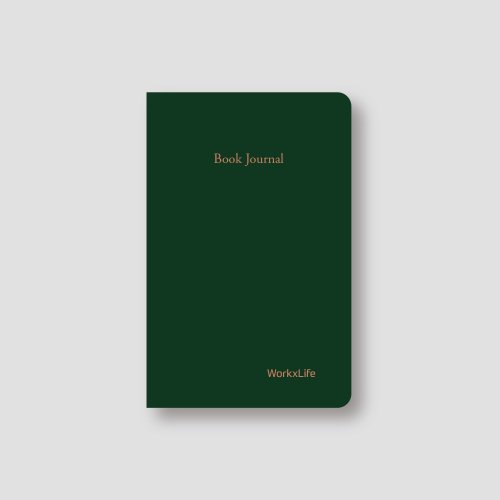
Writing is among the most accessible tools for reflection. A dedicated book journal gives reading and reflection a place to live, so that what is learned is retained rather than forgotten.
The New Luxury of Attention
As wellness culture matures, its focus is shifting toward attention, emotional intelligence and genuinely personalised wellbeing rather than the accumulation of products or experiences. The next form of meaningful luxury may not be more possessions. It may simply be more clarity, more uninterrupted time and more control over how a life is actually spent.
The insight is not new, only newly pressing. In 1971 the economist and cognitive scientist Herbert Simon observed that a wealth of information creates a poverty of attention: the more a world supplies, the more scarce the capacity to take any of it in. A century earlier the psychologist William James had put the same idea more plainly, writing that a person’s experience is what they agree to attend to. Both were describing the same fact from different angles. Attention is not a feature of a life. It is the substance of it, because whatever receives it becomes the experience.
What has changed is the scale of the competition. Most of the tools, platforms and environments of modern life are designed, with great skill, to capture attention rather than protect it. In that setting, the ability to decide where attention goes is no longer a given. It has become something that has to be defended, and, like most things that must be defended, something with real value.
What the Research Suggests
The evidence on attention and wellbeing is suggestive rather than conclusive, and it should be described that way. In a well-known 2010 study in Science, psychologists Matthew Killingsworth and Daniel Gilbert used a smartphone app to sample people’s thoughts and moods during daily life. They found that participants’ minds were wandering for a large share of their waking hours, close to half, and that people reported being less happy when their minds wandered than when they were focused on what they were doing, even when the activity itself was not especially pleasant. The result does not prove that attention causes happiness, but it points at a pattern: presence and wellbeing tend to travel together.
This is consistent with the broader literature on mindfulness and attentional control discussed earlier in this article, which finds modest but real benefits for anxiety, mood and stress reactivity. The honest summary is that deliberate attention is not a cure for anything. It is a condition that makes other good things, such as rest, connection, work and pleasure, more fully available.
This is why the language of luxury is shifting. The traditional markers of luxury were external and accumulative: more objects, more access, more visibility. The emerging markers are internal and subtractive: uninterrupted time, unscheduled space, a calendar with room in it, a phone that stays in another room, a morning no one else has a claim on. These are harder to buy and harder to display, which is part of what makes them valuable. They cannot be delivered; they have to be designed and then protected.
It is a shift from external consumption toward internal investment, and it runs parallel to an instinct visible across other corners of considered living: a home built around meaningful objects rather than disposable ones, a craftsmanship tradition like Gond painting that survives because it was never rushed, and the deliberate stillness preserved inside temples standing at the centre of one of the world’s fastest-moving cities. In each, value comes from care, time and continuity rather than volume. Attention, in every one of these contexts, has become the resource worth protecting most.

The Counterargument
It would be too easy to present attention as a pure virtue, and it should be said plainly that the language of “digital detox” and “protecting your focus” can itself become a status symbol, available mainly to those with the time, flexibility and income to step away. Many people cannot silence a phone because their work, their family or their circumstances require them to be reachable. A luxury that only some can afford is a fair thing to question.
The more useful framing is therefore not total withdrawal but proportion: small, protected pockets of attention, such as the first hour of the day, a daily walk, a meal without a screen or a weekly block of unbroken time. The research on habits suggests these small, consistent choices accumulate far more reliably than occasional dramatic retreats, and they are accessible to almost anyone willing to decide in advance what the pocket is for.
The greatest investment was never becoming someone else. It is creating the conditions to become fully, specifically yourself: a project built not through dramatic transformation but through small, intentional moments, repeated with enough consistency that they eventually stop looking like effort and start looking, simply, like identity.
That is the quiet argument beneath every ritual in this piece. Each one, whether a morning walk, a page read, a conversation with a mentor or a candle lit at the end of the day, is a decision about where attention goes. Made once, it is a gesture. Made often enough, it is a character. And a life, seen from far enough away, is simply the sum of what it was paid attention to.
“A ritual asks
almost nothing of a day —
a few minutes,
a cup held a little longer,
a page read
before the phone is reached for.
And yet, repeated
across enough ordinary mornings,
it becomes the architecture
of an entire identity.
Not a transformation.
Just a life,
built quietly,
one deliberate moment
at a time.”

