On luxury footwear design theory, the biomechanics of the sculptural heel, Italian craftsmanship, and why the most considered investment shoes are those chosen for what they do to the body — not merely what they do to an outfit
The shoe is the only element of dress that physically changes the body. Not the way it is perceived — the way it actually moves, stands, and occupies space. This is not a metaphor. It is biomechanics. And at the level of the most considered luxury footwear, it is also design theory. Modern luxury footwear is no longer defined by aesthetics alone. It is defined by what it does to the body in motion — and by how that motion changes the presence of the person within it.
Footwear has always occupied an unusual position in the hierarchy of dress. It sits furthest from the face, closest to the ground, and yet it determines more about how a person is perceived in motion than almost any other garment. The quality of an entrance — the specific weight and rhythm of approach, the way the body holds itself as it crosses a room — is shaped from the ground up. A luxury shoe is not a finishing touch. It is a foundation, in the most literal architectural sense: the structure upon which everything above it rests, and through which every movement is mediated.
The evolution of luxury footwear from decoration to architecture is not a recent development, but the sophistication with which contemporary designers have pursued it is. The best luxury footwear of the current era does not simply look interesting — it performs a structural function, altering the body’s geometry, redistributing its weight, and changing the angle at which it meets the world. These are the concerns of engineering as much as aesthetics, and the luxury footwear designers who take them seriously produce pieces that function differently from anything that merely prioritises visual effect.
Giuseppe Zanotti has operated within this luxury footwear understanding since the inception of his eponymous label in 1994. His three governing design principles — line, style, and research — are not marketing language. They are a design methodology: the commitment to finding the precise geometry of each piece, the aesthetic register in which it operates, and the material and structural innovation required to produce the intended effect. The result, across three decades of Italian luxury footwear design, is a body of work in which sculptural shoes consistently function as what Zanotti himself has called a natural extension of the foot — not something added to the body, but something that becomes part of it.
The broader context in which Zanotti’s sculptural luxury footwear design language operates — the cultural shift toward shoes as a primary vehicle of self-definition rather than a supporting element of dress — is explored in Quiet Luxury with Giuseppe Zanotti on this site. What follows here is the design theory beneath that intelligence: the structural and philosophical argument for why Zanotti’s sculptural footwear occupies its particular position in the luxury design landscape.
The language of sculpture — Zanotti’s luxury footwear design vocabulary
Every designer who works at the intersection of footwear and architecture develops a formal vocabulary — a set of recurring structural devices that, over time, constitute a recognisable luxury design language. In Zanotti’s case, that vocabulary is unusually specific: knots, cages, straps, metallic accents, crystal embellishment, structural open heels, and the tension between weight and transparency. These are not decorative choices. They are architectural strategies, each solving a different problem in the relationship between the luxury shoe and the body it inhabits.
The knot — most fully realised in the INTRIIGO KNOT 90 — is among the most ancient structural metaphors in design: the point at which tension is held, where forces that might otherwise dissipate are concentrated into a single coherent form. A knotted strap across the foot does not merely hold the luxury shoe in place. It draws the eye to the arch, emphasises the narrowing of the ankle, and creates a visual focal point that the rest of the silhouette orbits. The knot is restraint rendered as drama — one of Zanotti’s most precise expressions of the design principle that the strongest structural element is often the smallest one.

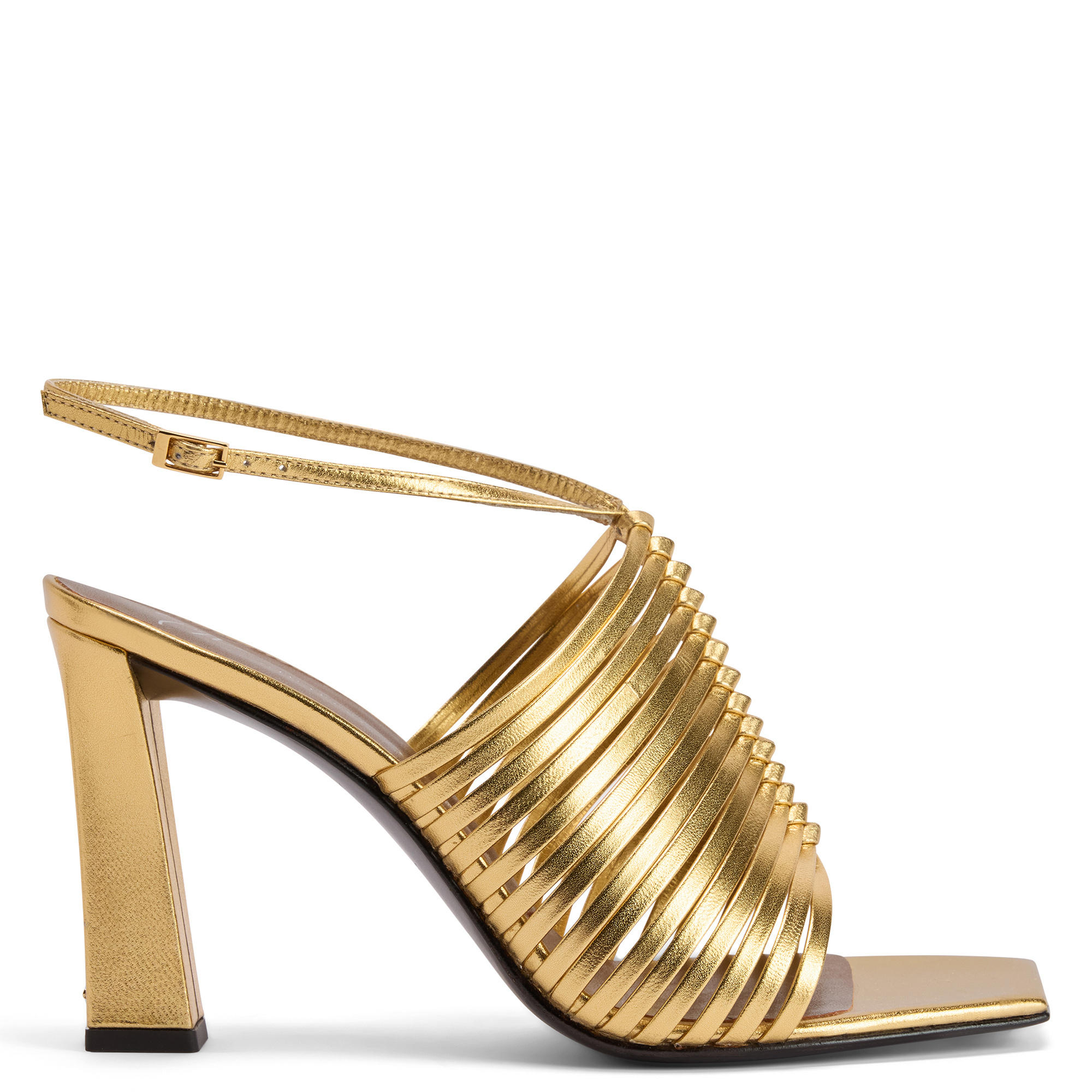
The cage — in the GZ MYA CAGE 90 — inverts the knot’s logic. Where the knot concentrates, the cage distributes: a lattice of luxury straps that covers the foot without enclosing it, creating a simultaneous impression of structure and transparency. The cage luxury shoe belongs to a long tradition of architectural thought in which the most expressive structures are those that reveal their own engineering — that show the logic of their construction as part of their aesthetic argument. The foot within a cage heel is both held and displayed, both protected and exposed, and that formal tension is precisely its power as a piece of luxury footwear design.

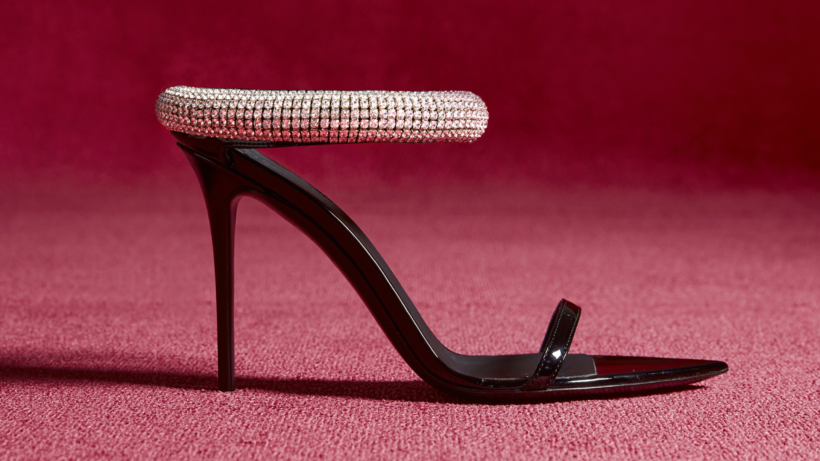
The BRIVIDO CRUZ 105 occupies a different position in this luxury footwear vocabulary: the sculptural statement piece in which the heel itself becomes the primary design element — a structural luxury form that would be legible as design even without a body to inhabit it. This is luxury footwear operating at the level of object design. Pieces that carry their meaning independently of context, that would sit in a museum case with the same authority they bring to a social environment. The distinction matters because it identifies the level of design ambition at which Zanotti consistently operates: not fashion-seasonal but permanently significant.
The heel as identity tool — elevation, psychology, and the architecture of presence
Height is not merely a measurement in luxury footwear. It is a psychological stance — a choice about how the body will relate to the space it inhabits and the people within it. The decision to add ninety, one hundred, or one hundred and fifteen millimetres of heel to a silhouette is a decision about the quality of presence being projected. The heel is the most legible identity signal available in the vocabulary of luxury dress.
The psychology of elevation has been studied extensively and the findings are consistent: height confers authority in social perception. The physiological mechanisms are straightforward — taller people are perceived as more dominant, more confident, and more capable of holding space — but in luxury footwear, the psychological dimension operates on an additional layer. The wearer knows they are elevated. The conscious knowledge of physical height produces a postural response — the spine lengthens, the shoulders align, the gaze level shifts — that changes not only how the wearer is perceived but how they perceive themselves. This is the interior function of the luxury heel: not merely what it communicates to others but what it produces in the wearer.
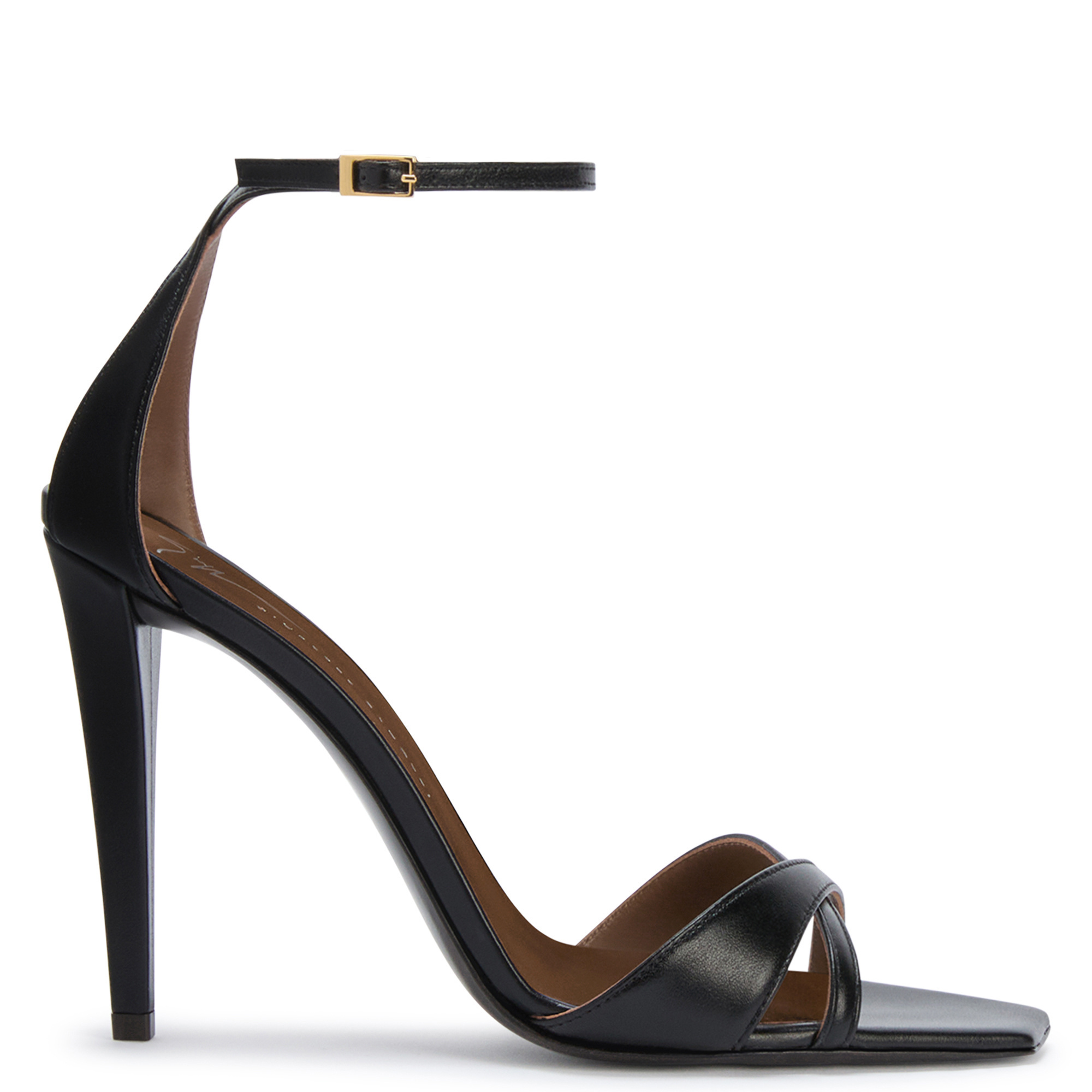
The AUDRINETTE 105 and the PAT PLATFORM 115 are not simply high luxury shoes. They are architectural platforms in the structural sense: elevated luxury bases that literally change the relationship between the body and the floor, between the wearer and the room. The platform heel distributes its height differently from the stiletto — the elevation is shared between heel and toe, producing a more stable base and a different quality of gait. Where the stiletto demands constant micro-adjustment, the platform allows a more grounded assertiveness. Both produce elevation. The psychological quality of that elevation differs.

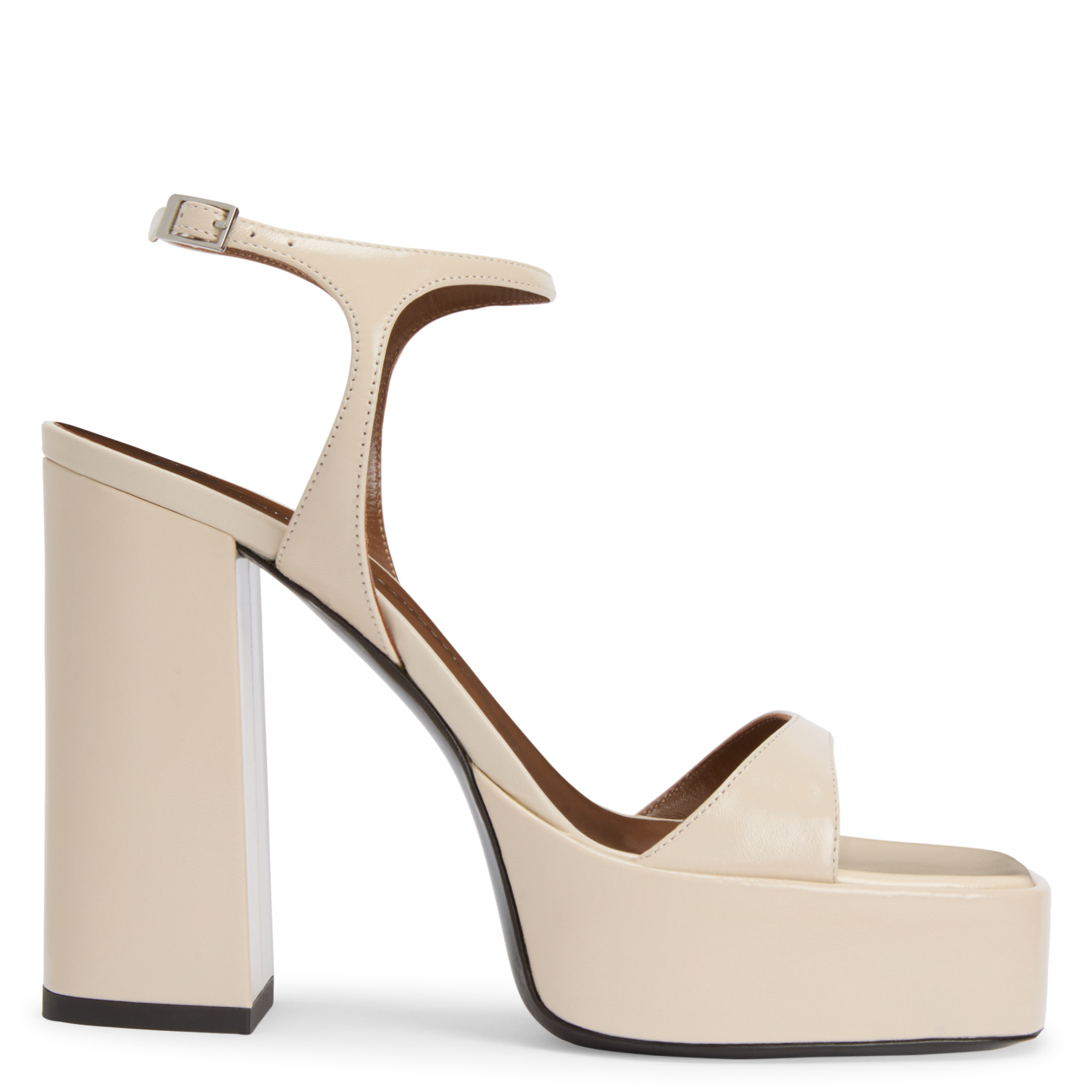
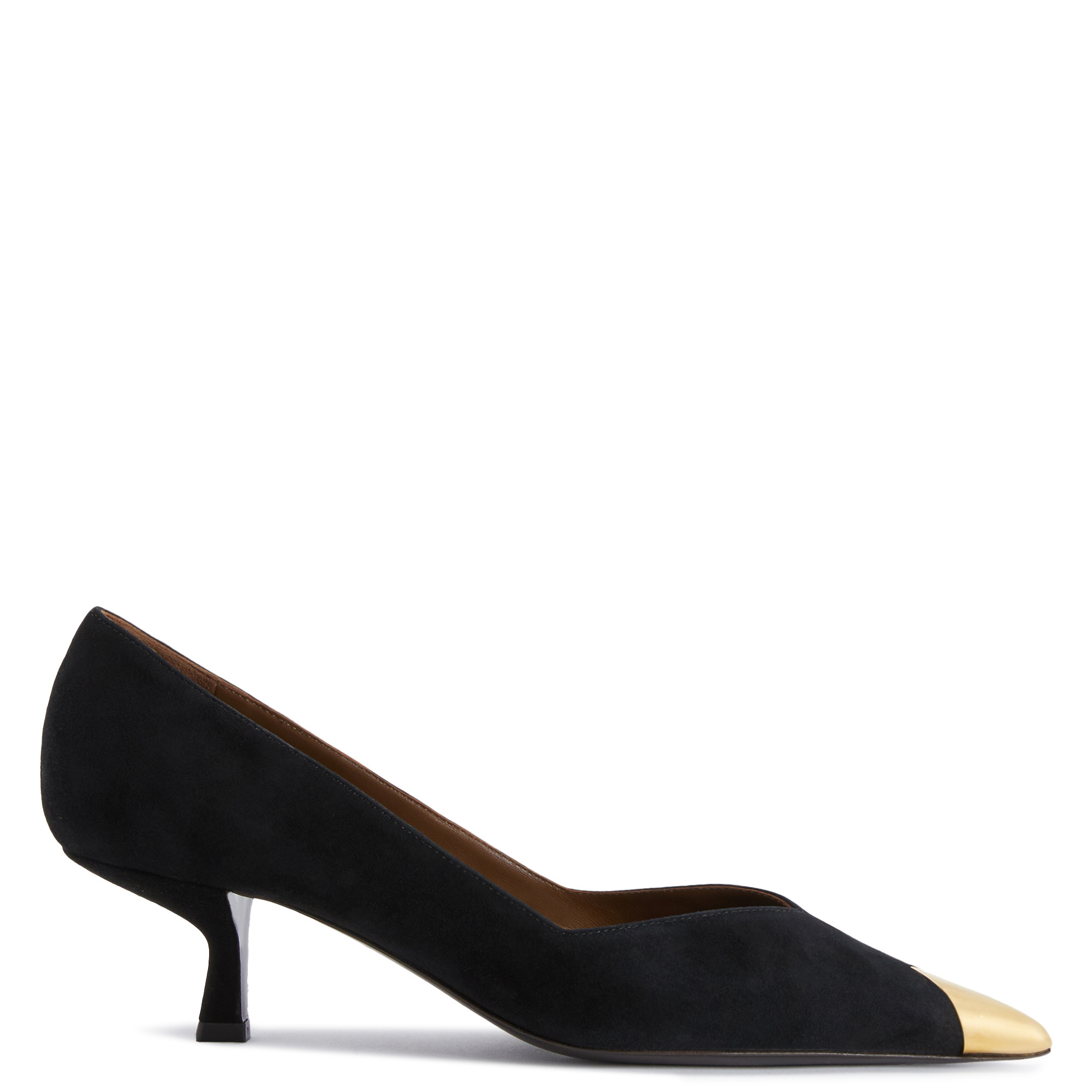
The MELAINE 50 occupies a different position in this luxury footwear hierarchy — not the drama of extreme height but the considered refinement of moderate elevation. A fifty-millimetre heel carries a different argument: that presence is not always a function of maximum extension, that luxury authority can be communicated through proportion rather than height, that the most sustained confidence is the one that does not require effort to maintain. In a luxury footwear collection defined by its extremes, the moderate heel is the piece that reveals the depth of the design intelligence — the understanding that the full range of the vocabulary constitutes a more complete statement than any single register could achieve.
The cultural significance of heel height as a coded language of luxury power and identity is well established in fashion editorial analysis. As Harper’s Bazaar has explored in its examination of power dressing and its psychological dimensions, the heel has functioned across cultures and centuries as one of the most legible signals of status and self-presentation available to the wearer — not because height is inherently powerful, but because the choice to wear height communicates something about the wearer’s relationship to visibility, attention, and the social register they are choosing to occupy. Zanotti’s luxury footwear work understands this history and builds upon it with the precision of a designer who has spent thirty years refining the argument.
The luxury footwear collection as design ecosystem — architectural minimalism and the Icons archive
A luxury footwear collection is not a product range. A collection is a conversation — between pieces that share a design language while occupying different registers within it, each one revealing something about the others by the contrast it provides. Zanotti’s architectural minimalism register is where that design conversation reaches its most refined expression.
The modern elegance register within Zanotti’s luxury footwear vocabulary — represented by the GZ MYA ISIDE 90 — is the purest expression of architectural minimalism in the collection. These are luxury footwear pieces defined by what they withhold: the strap reduced to its essential geometry, the heel refined to its precise structural requirement, the silhouette resolved to the minimum intervention that produces the maximum effect. Architectural minimalism in luxury footwear is not simplicity. It is the result of extensive subtraction — the sustained removal of everything that is not necessary, until what remains is irreducible.
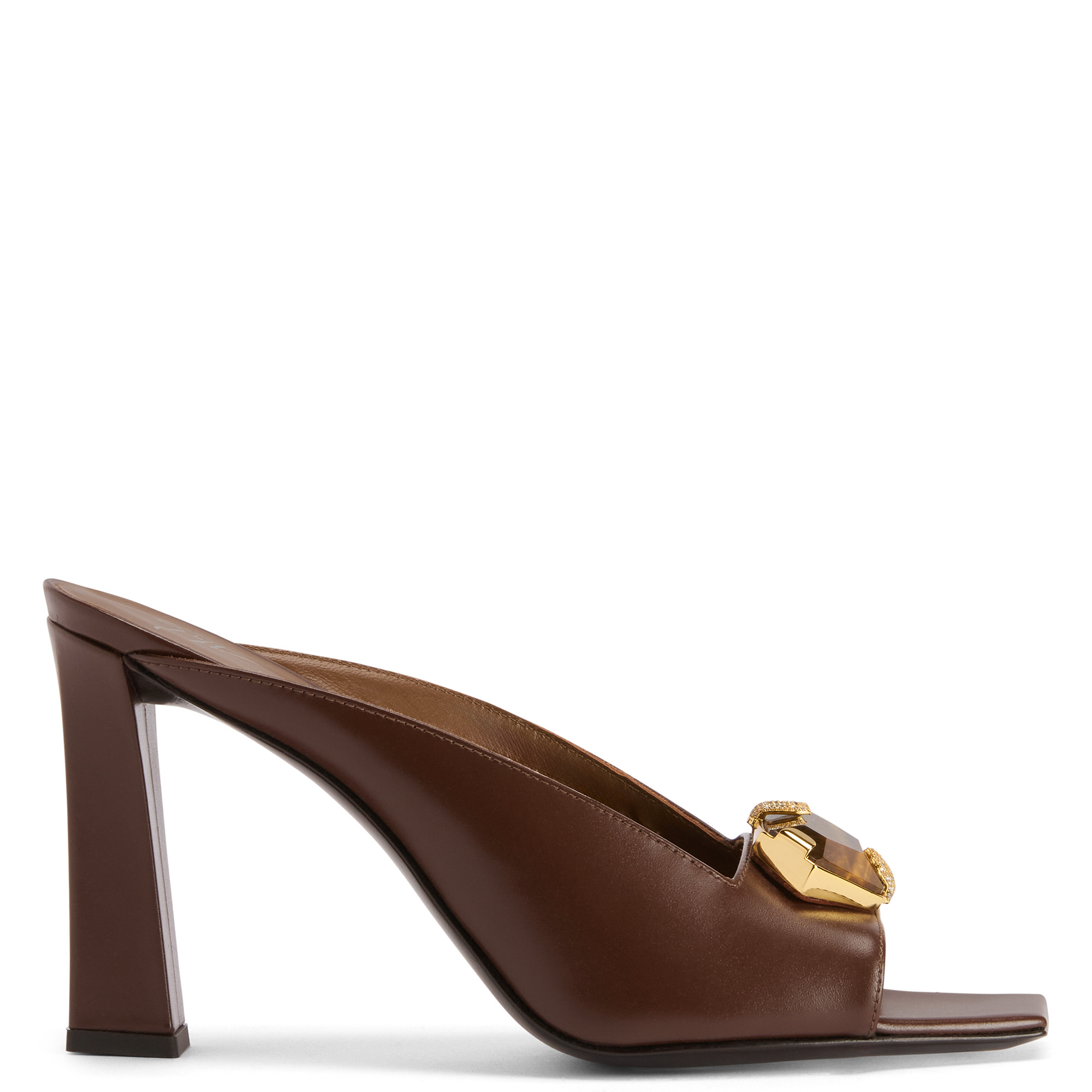
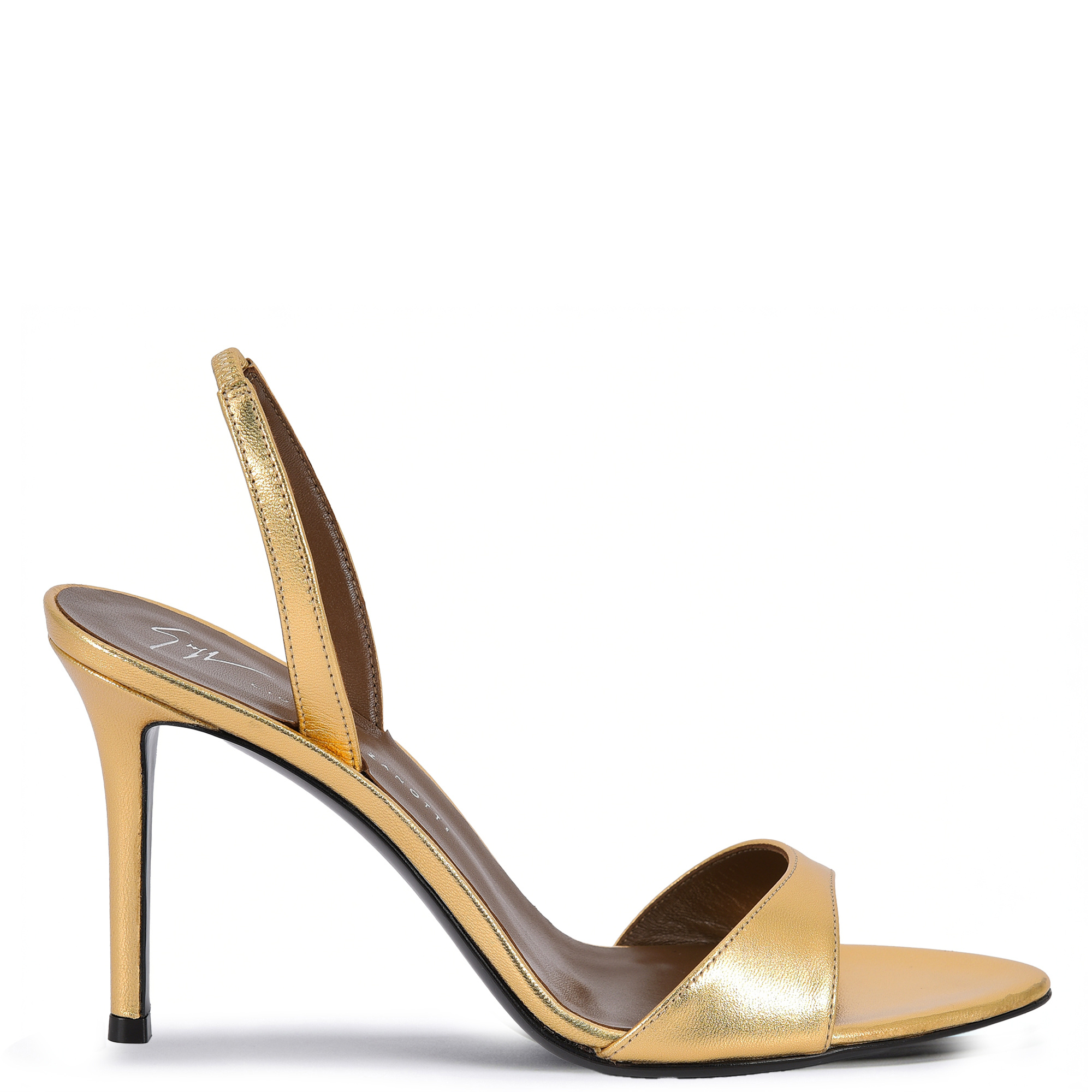
The JANE SANDAL 90 achieves luxury footwear minimalism through the logic of the single strap: the minimal formal element that, at the right placement and angle, produces the maximum structural argument. A luxury sandal that holds the foot with one precisely positioned strap is not making a modest claim. It is making the most confident claim available to the luxury footwear form — the assertion that the design requires nothing more, that any addition would be a concession rather than an expression of design intelligence.
The LILIBETH 90 and the TALIA MULE 90 extend this luxury footwear minimalism into different formal registers. The LILIBETH carries the architectural strap logic into a more fluid silhouette. The TALIA MULE introduces the specific structural tension of the backless luxury shoe — where the absence of a back strap means the shoe must be held by the foot’s own geometry, and the wearer’s gait must adapt to the shoe’s requirements. This negotiation is not a compromise. It is a choreography between the luxury footwear design and the body that inhabits it.

The ICON RING 90 occupies the most precisely positioned role in the luxury footwear ecosystem: the piece in which branding becomes design language rather than logo visibility — where the ring detail at the toe functions simultaneously as a structural element, a jewellery reference, and a house signature. Since the launch of the original Ring sandal — the first jewelled design that defined Zanotti’s aesthetic luxury identity, worn early in the label’s history by Charlize Theron — the ring motif has recurred in the collection as a formal commitment rather than a nostalgic reference. It connects the current luxury footwear collection to thirty years of design conversation.
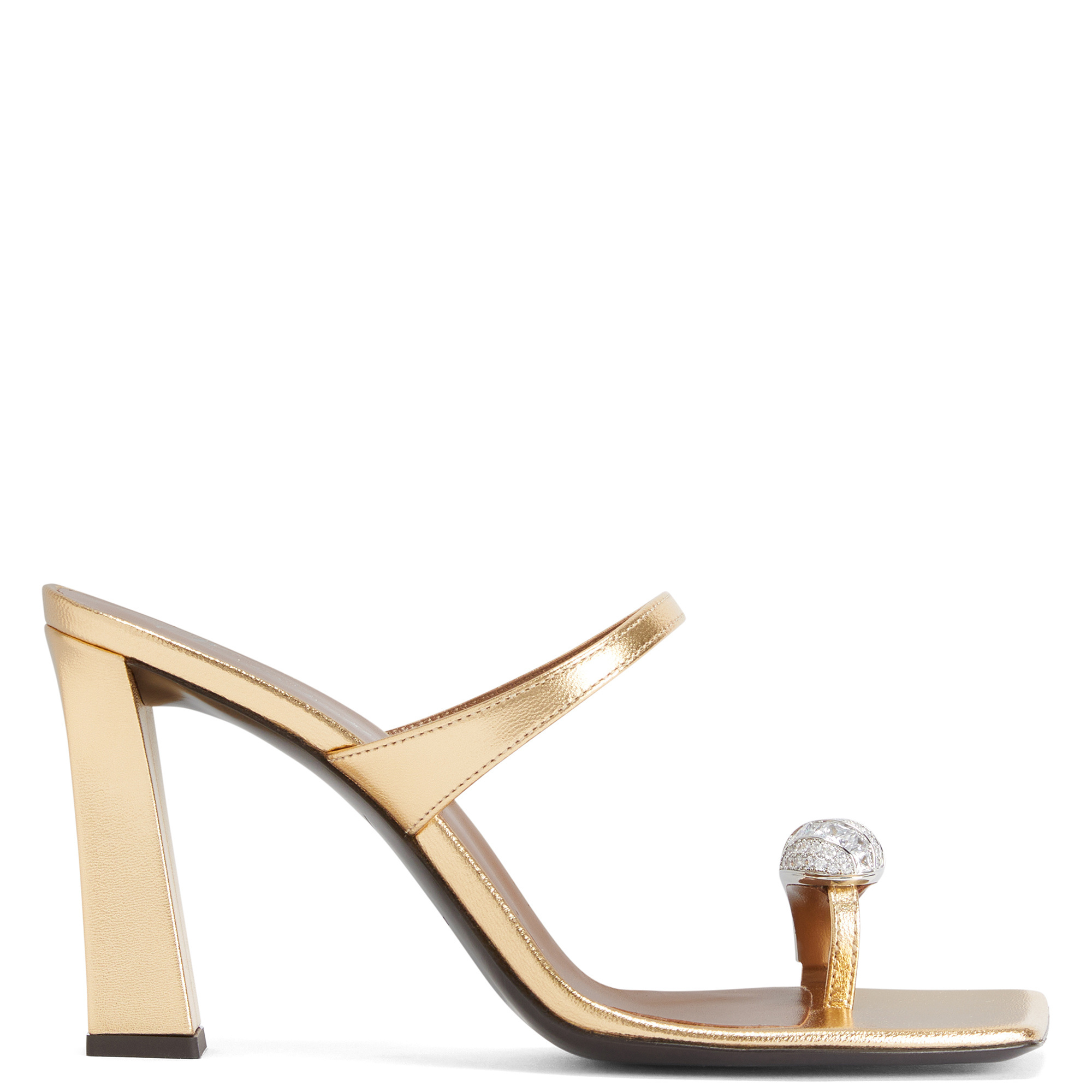
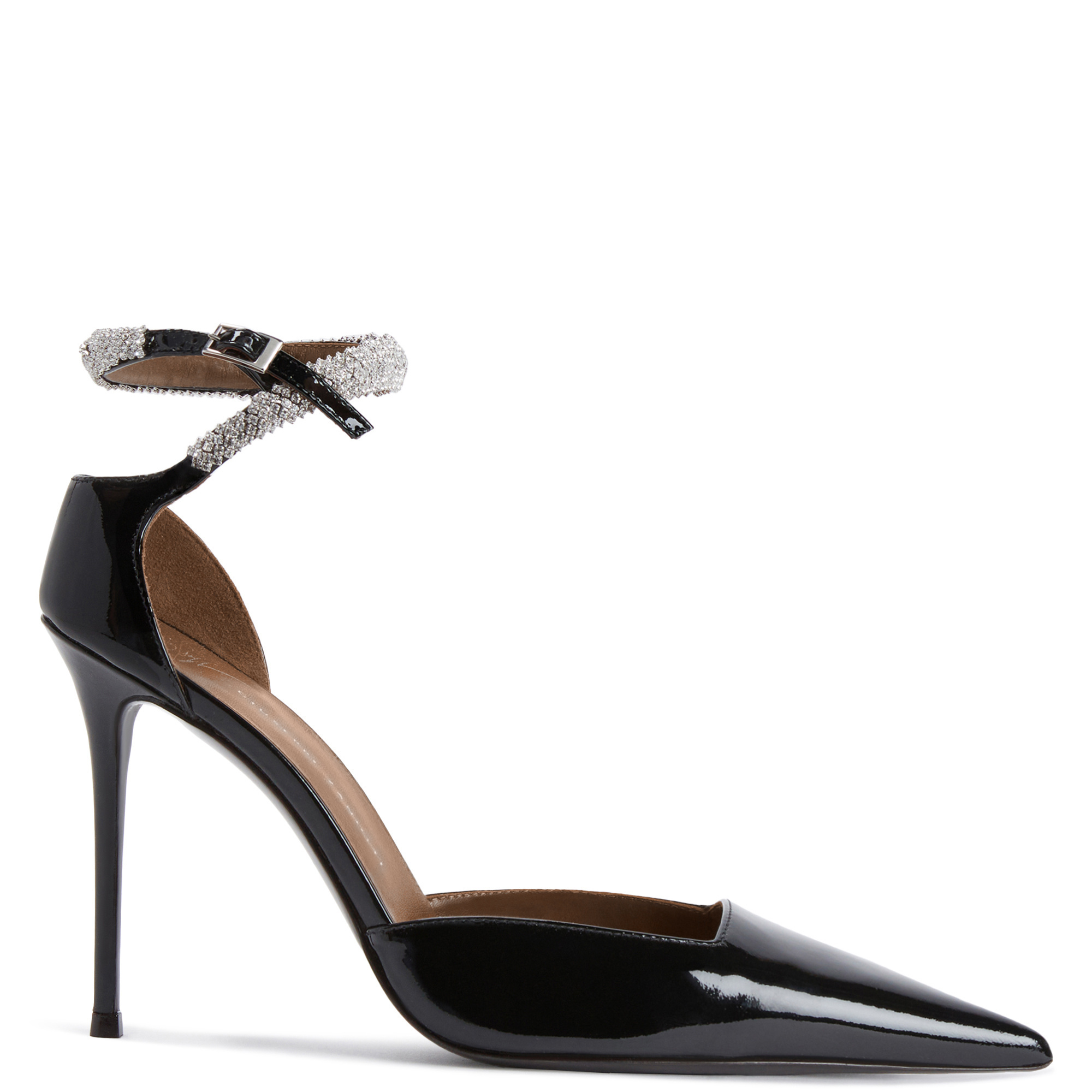
The ELENIE 105 closes this register of the luxury footwear collection with a heel at one hundred and five millimetres that carries architectural minimalism into its most elevated expression — the precise meeting point between structural ambition and refined elegance that defines Zanotti’s most enduring luxury footwear design positions.
The luxury footwear archive as a form of cultural authority — the accumulated design decisions that give a luxury object its meaning beyond any single season — is a principle that operates across categories of considered luxury. In fine jewellery, the equivalent depth is explored in Inside the World of Robert Wan: the argument that investment-grade luxury is defined not by price or visibility but by the irreplaceable quality of what has been made and the design history that gives each piece its authority. A Zanotti heel from the Icons archive and a Robert Wan pearl carry the same form of luxury value — the kind that compounds rather than depreciates, that becomes more rather than less significant as time passes.
The body in motion — biomechanics as luxury footwear aesthetics
A luxury shoe changes the body before it changes its appearance. The structural decisions embedded in the design — heel height, toe geometry, strap placement, material weight — each produce specific biomechanical effects that alter gait, posture, and the spatial relationship between the wearer and their environment. In luxury footwear design, the biomechanics are the aesthetics. They are not consequences of the design. They are its primary argument.
The gait produced by a high luxury heel is one of the most culturally loaded forms of movement in contemporary dress. The heel-wearing gait is not simply a modified version of flat-footed walking but a distinct mode of movement — one that produces specific changes in the body’s centre of gravity, the distribution of weight across the foot, and the muscular engagement required to maintain balance and propulsion. These changes produce the specific quality of movement that defines the luxury heel’s cultural power: the slower, more deliberate pace; the increased vertical oscillation of the hips; the elongation of the visual line from foot to knee to hip.
Zanotti’s luxury footwear design process explicitly acknowledges this relationship. The Adele wedge — created in collaboration with Lady Gaga, designed to reach the perfect balance between suspension and stability — was conceived around the challenge of producing elevation without a conventional heel structure. The solution required extensive structural research: the calculation of load distribution across an unusual geometry, the identification of materials that could carry the required weight with the required lightness, and the testing of prototypes against the actual biomechanical demands of performance movement. This is engineering. It is also luxury footwear design. At the level at which Zanotti operates, the two are the same discipline.
The way in which a carefully chosen luxury object changes the wearer’s relationship to their own presence is a theme that runs through the most considered approaches to personal luxury across every category. In fine jewellery, that relationship is explored with equivalent depth in The Language of Modern Necklaces: Metals, Stones, and the New Codes of Personal Luxury: the argument that the objects we choose to wear closest to ourselves function not merely as decoration but as extensions of identity — chosen for what they communicate about who we are, and worn in ways that change how we feel about being ourselves. A Zanotti luxury heel and a Dower and Hall talisman are built on the same psychological principle. Only the register differs.
The new era of luxury footwear — sculptural heels, cultural authority, and the investment argument
The return of the sculptural luxury heel is not a trend reversal. It is a cultural reckoning — the reassertion, after a period in which comfort and casualness dominated the conversation, of luxury footwear as a vehicle for the most complex and considered forms of self-expression available through dress. When everything is available to everyone simultaneously, the most powerful luxury statement becomes the one that cannot be replicated by algorithm.
The relationship between luxury footwear and cultural mood has always been direct. The stiletto’s emergence in the post-war period was inseparable from the cultural context of femininity being simultaneously constrained and celebrated. The platform’s resurgence in successive eras has tracked specific moments of cultural assertion and visibility politics. The current resurgence of the sculptural luxury heel is occurring within a cultural moment defined by the reassertion of individual self-expression against a background of homogenising social media aesthetics.
The sculptural luxury heel is not for everyone, and that is precisely its cultural authority. It requires commitment: the commitment to a certain quality of luxury presence, a certain willingness to be seen, a certain comfort with the attention that height and structure inevitably attract. As a collectible luxury design object, the Zanotti heel occupies a position that few other categories of fashion can claim. The archive — from the Slim Sandal, drawn on a restaurant tablecloth in a moment of inspiration, to the Pyramid Sandal, originated as a metallic body belt for Beyoncé and subsequently resolved into one of the house’s signature silhouettes — constitutes a design history that is simultaneously a cultural history.
The reassertion of sculptural design as the primary vehicle for luxury self-expression — across footwear, jewellery, fragrance, and fashion — is part of the same broader cultural movement toward objects chosen for what they mean rather than what they announce. As Business of Fashion’s analysis of the luxury footwear market and its cultural significance documents, shoes have maintained their position as one of fashion’s most powerful luxury categories precisely because they combine emotional resonance with design permanence — the capacity to carry cultural meaning across seasons in ways that clothing rarely achieves. Zanotti’s thirty-year archive is one of the most complete demonstrations of this principle available in contemporary luxury design.
The enduring value of luxury design objects that carry genuine creative intelligence — whose authority rests on Italian craft tradition, proportion, and material knowledge rather than brand recognition alone — is one of the most consistent findings in the analysis of how luxury retains cultural and financial relevance across market cycles. As McKinsey’s analysis of luxury in the digital age establishes, the luxury category that sustains its authority is the one that preserves its irreducible qualities — the craftsmanship, the unique design, the personalisation — while developing the digital intelligence to communicate those qualities to new audiences. Zanotti’s luxury footwear archive embodies precisely these qualities.
The choice of a sculptural Zanotti luxury heel — made with knowledge of its design history, worn with consciousness of what it communicates — is the same kind of considered decision that defines the most intelligent luxury wardrobe at every level. The New Language of Quiet Luxury: Inside the Timeless Wardrobe of Apparis explores this logic through the lens of material permanence and ethical construction — the same slow, considered decision-making process that produces a Zanotti luxury heel chosen for its design intelligence rather than its season. Both are arguments for the same form of luxury investment: in objects that compound in meaning rather than diminish in relevance.
What sculptural luxury footwear builds — the architecture of presence
The history of Giuseppe Zanotti is the history of a luxury footwear designer who understood, before it was common practice to say so, that shoes were not fashion’s footnote but its foundation — not the last decision made in composing a dressed self but potentially the most structurally significant one. The label’s three governing principles — line, style, and research — are not coincidentally ordered. Line comes first because proportion is the foundation of everything. Style comes second because aesthetic identity is what gives proportion its cultural content. Research comes third because neither line nor style can be sustained at the highest level without the sustained investigation of material, structure, and technique.
What Zanotti has built across thirty years is not simply a luxury footwear brand. It is a design archive — a sustained investigation into the formal possibilities of the luxury shoe as an object that simultaneously structures the body and expresses the self. The knot, the cage, the sculptural heel, the ring detail, the platform, the minimal strap: each of these formal devices is a position in an ongoing design conversation, and the luxury footwear collection in any given year is a continuation of that conversation rather than a departure from it.
The cultural argument for the sculptural luxury heel — for footwear that makes demands of the body, that asserts a design position with clarity and commitment, that functions as an architectural object worn on the person — is ultimately an argument about the relationship between form and presence. The body in motion within a Zanotti luxury heel is not the same body in motion without it. The gait is different. The posture is different. The spatial relationship to the room is different. And those differences — which are biomechanical before they are aesthetic, structural before they are symbolic — produce a quality of presence that the most considered luxury footwear design exists to engineer.
“Luxury footwear today is no longer about finishing an outfit.
It is about constructing presence.
In the work of Giuseppe Zanotti,
shoes become architectural objects that define
how the body occupies space,
and how identity is expressed through structure, height, and movement.
The luxury shoe is the foundation.
Everything else is built upon it.”

