
On the end of the showroom as a retail format, the emergence of experiential design destinations, the case for Galician craftsmanship within Dubai’s global luxury culture, and what it means when furniture stops being a purchase and becomes a philosophy of living
The most significant shift in luxury interior design over the past decade is not a shift in style. It is a shift in the question being asked. Where previous generations of interior consumers asked what a room should look like, the current generation is increasingly asking what a room should feel like — and, more profoundly, what the objects within it should mean. The answer to that question is driving one of the most important structural transformations in the global design industry: the return of the handmade, the resurgence of artisan craftsmanship, and the emergence of a new kind of interior destination where furniture is not displayed but experienced.
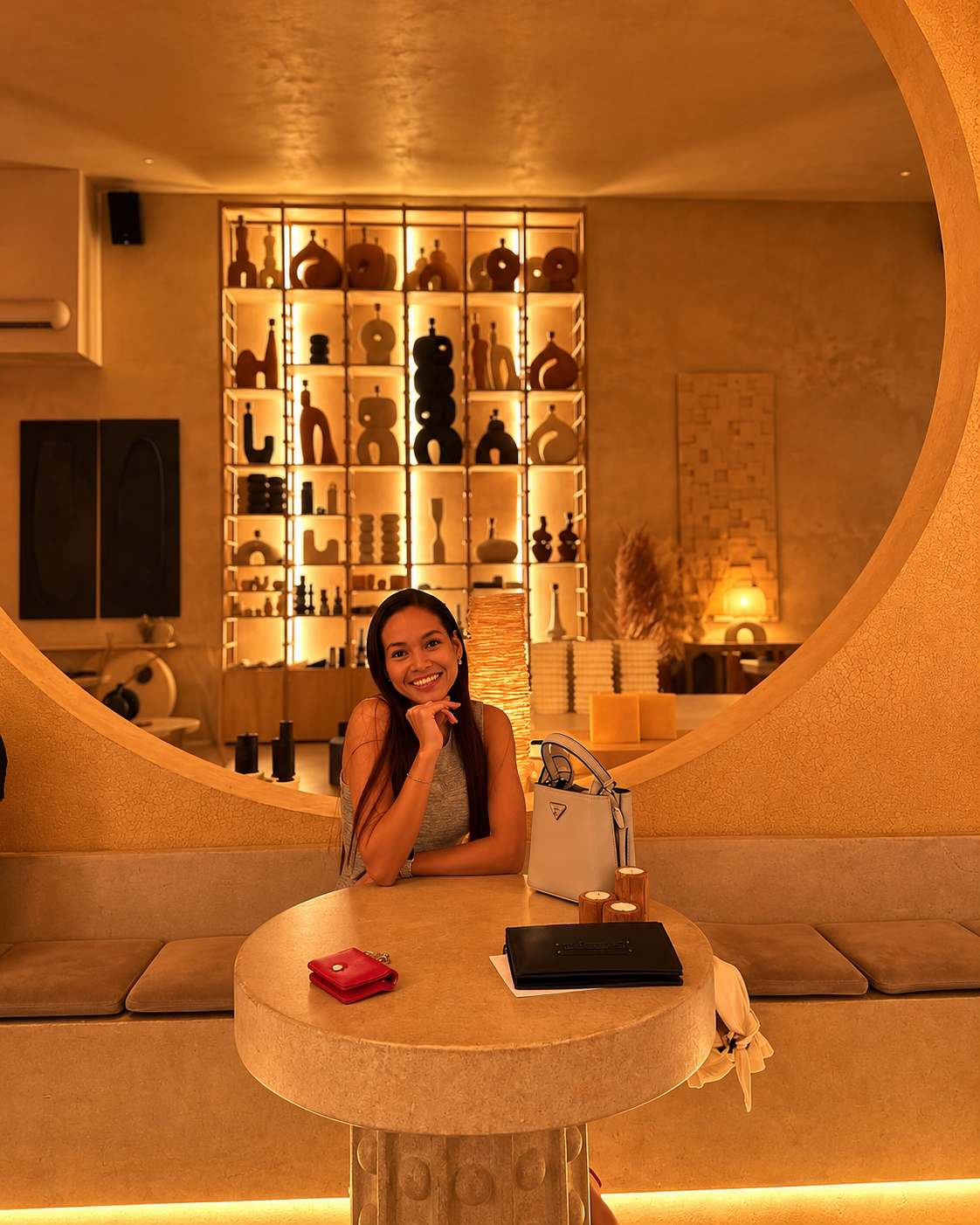
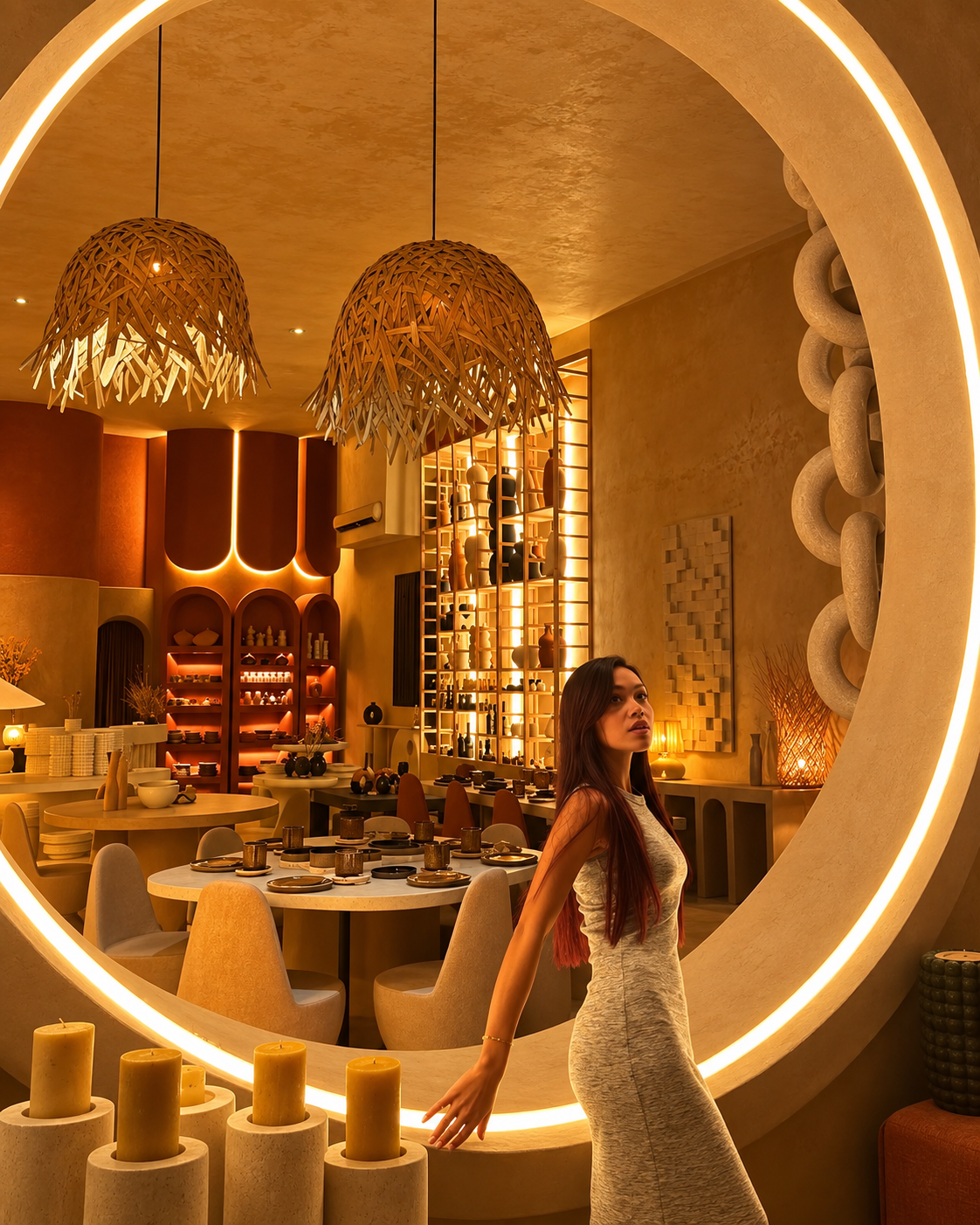
La Nena Dubai, in Al Quoz — brought to life by the Spanish design company A Vida Group, which has been a reference in cementitious coating and material innovation since its founding in 2005 — is one of the most complete available expressions of this transformation operating in the Gulf. It is not a showroom. It is not a café. It is not a concept store in the way that term is ordinarily understood. It is a living environment in which design philosophy, artisan craftsmanship, culinary experience, and material intelligence converge into a single immersive encounter — one that allows the visitor to understand not simply what A Vida Group’s handcrafted collections look like but what they propose as a way of living.
This editorial examines La Nena Dubai as a case study in the future of luxury interiors — not as a venue to be visited but as an argument to be understood. It is an argument about what materials mean when they are chosen with intelligence, what craftsmanship communicates when it is understood rather than merely appreciated, and what a home becomes when its objects carry the weight of human skill, cultural heritage, and genuine intention.


Beyond the showroom — the rise of the experiential design destination
The traditional furniture showroom operated on a logic that was fundamentally retail in its architecture: objects arranged for inspection, priced for transaction, selected for the widest possible appeal to the largest possible audience. The environment existed to facilitate a decision. The furniture was separated from any context that might make it mean something beyond its own material properties. A sofa was a sofa. A table was a table. The showroom made no claim about the kind of life that these objects might make possible.
This model has been under structural pressure for several years, and the pressure is intensifying. The global luxury furniture market — valued at $32.34 billion in 2025 and projected to reach $44.78 billion by 2031 at a compound annual growth rate of 5.57% — is being reshaped by a shift in consumer expectation that no traditional showroom format can adequately serve. The contemporary luxury consumer does not need to enter a physical space to evaluate a furniture object’s dimensions, price, or material specifications. That information is available digitally, and the digital presentation of it has become extremely sophisticated. What a physical space must provide — and what only a physical space can provide — is something that cannot be digitised: the experience of being within a specific aesthetic world, of understanding how objects relate to each other and to the atmosphere that surrounds them, of encountering design as a living proposition rather than a product specification.
The most significant furniture retail developments of recent years reflect this understanding. The same logic that has transformed luxury hospitality — from venues that serve a function toward environments that propose an experience — is restructuring how the most forward-thinking design brands present themselves to the world. The showroom as inspection space is being replaced by what might more accurately be called the design destination: a place whose primary function is not transaction but immersion, not selection but education, not evaluation but encounter.
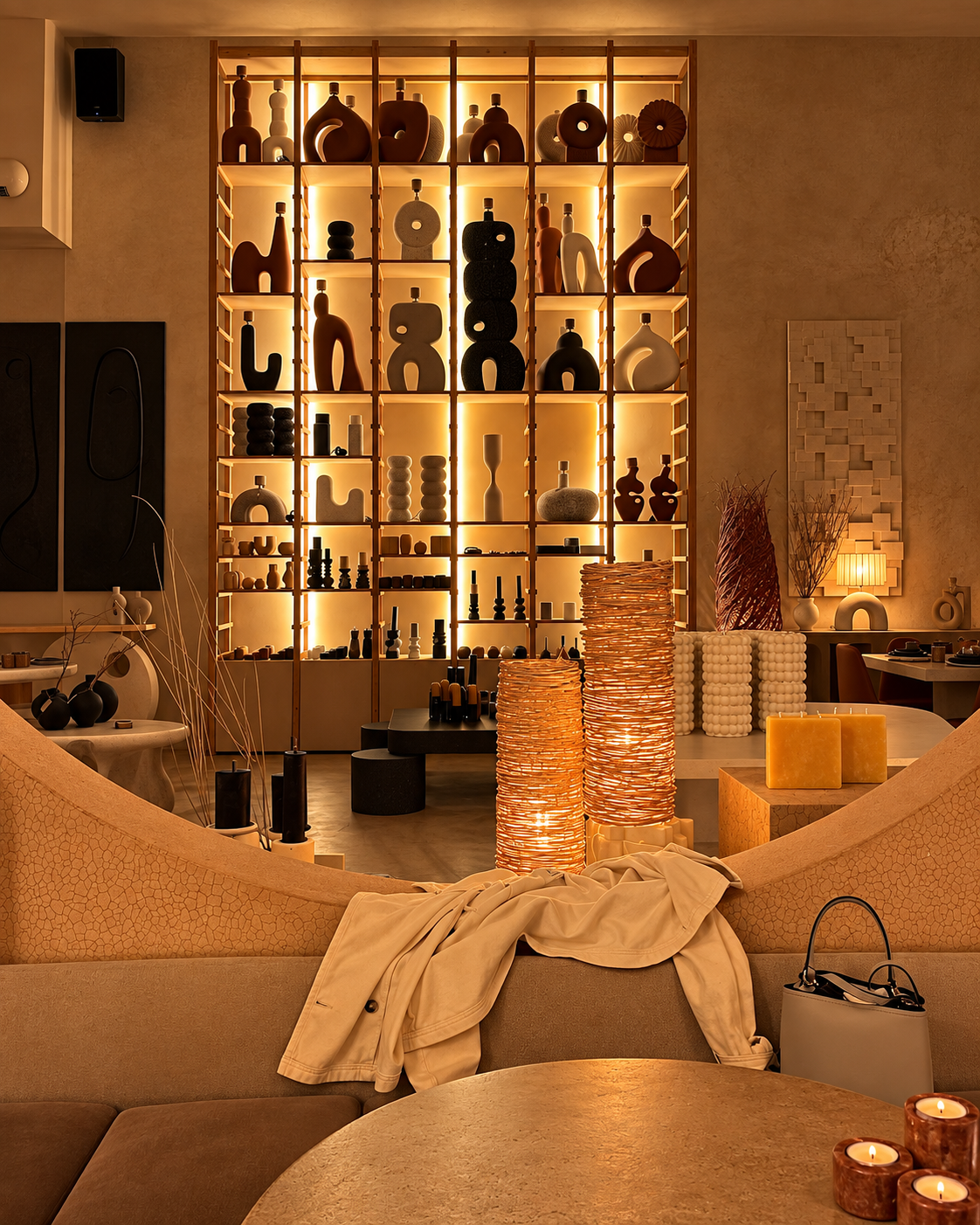
La Nena Dubai is a design destination in this precise sense. The integration of café experience, retail collection, and bespoke project services within a single environment is not a hospitality strategy grafted onto a retail concept. It is the natural expression of a philosophy in which design is understood as something lived rather than something owned. The slow decor movement — which advocates for choosing each piece of furniture “for a lifetime” and applying an investment mindset rather than immediate consumption — finds one of its most complete spatial expressions in this kind of environment. The visitor who arrives for coffee and leaves three hours later having considered a complete interior commission has not been manipulated by a clever retail format. They have been educated by an environment that makes the philosophical argument for its own design language more eloquently than any catalogue or sales conversation could.
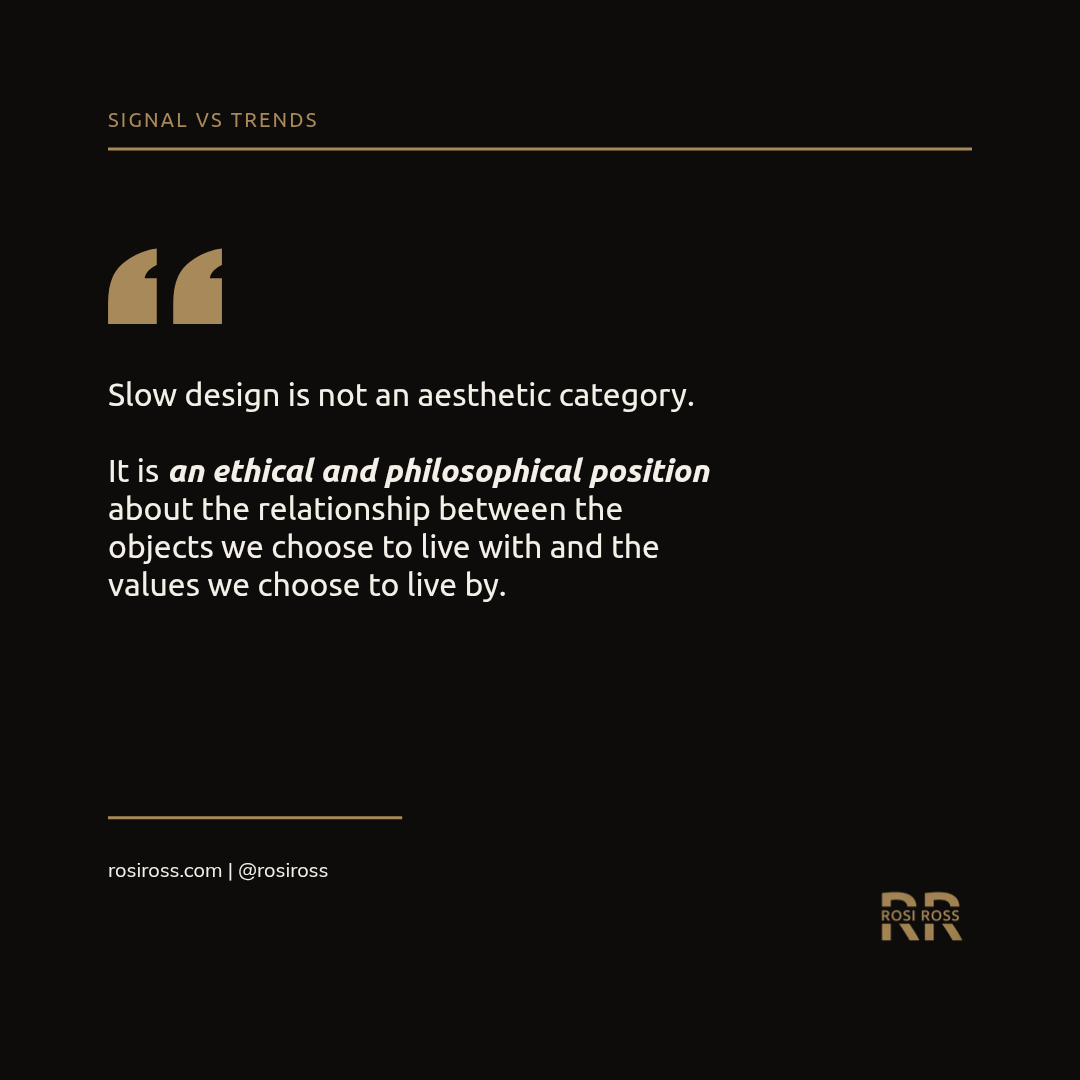
Slow design is a design philosophy that applies the principles of the broader Slow movement — developed in opposition to the speed, volume, and disposability of mass consumption — to the creation and selection of interior objects. It prioritises craftsmanship over efficiency, longevity over trend, material authenticity over surface finish, and the human story behind an object over the object’s purely aesthetic properties. In practice, slow design means choosing furniture made by identifiable artisans using traditional techniques and natural materials; selecting objects designed to age beautifully rather than to remain unchanged; and building interiors around pieces that will mean more in ten years than they do today rather than pieces that will be replaced in three. Slow design is not an aesthetic category — it is an ethical and philosophical position about the relationship between the objects we choose to live with and the values we choose to live by.
 The modern heirloom home — why consumers are returning to handcrafted furniture
The cultural argument for handcrafted furniture is not a nostalgic one. It is a structural response to a specific failure of mass production that the most design-literate consumers have identified with increasing precision. Mass production created accessibility — it made furniture available at price points that made the furnished home possible for populations that would previously have had no access to it. But in accomplishing this, it eliminated the specific qualities that had historically made furniture valuable beyond its function: the evidence of human skill in its making, the individuality that prevents any two pieces from being identical, the relationship between material and form that only emerges when an artisan works a specific piece of wood or clay or stone with direct physical attention.
The market data reflects this shift with increasing clarity. According to the New York Design Center’s 2025 interior trends survey, “traditional craftsmanship is seeing a significant revival in furniture design, as consumers increasingly value quality, uniqueness, and sustainability.” The global market for arts and crafts — encompassing objects made with human skill and manual technique — is projected to reach $74.3 billion by 2033, up from $45.3 billion in 2024. The collectible design market, which sits at the most elevated intersection of artisan craft and artistic intention, was valued at $23.6 billion in 2025 and is projected to reach $43.8 billion by 2034, growing at 7.1% annually. New York’s design auction sales in June 2025 alone reached $65 million — a 64% year-over-year increase that no purely financial explanation can account for. As LUXUO’s analysis of the craft-over-consumption movement documents, craft has become “a value system rooted in human skill and material integrity” rather than a decorative category — a structural reorientation that the auction data confirms at the commercial level. These are the numbers produced by a cultural shift, not a market correction.
The analogy that best captures what is happening is the one the brief implies: handcrafted furniture is becoming the interior equivalent of a luxury watch or a fine jewellery piece. The comparison is instructive not because the price points are necessarily equivalent but because the value proposition is structurally identical. A luxury watch’s value is not located primarily in its function — telling the time is something a smartphone accomplishes with greater precision. Its value is located in the evidence of human mastery in its mechanism, in the specific history of the manufacture that produced it, in the knowledge that the person wearing it understands something about horology that the person wearing a mass-produced alternative does not. The same logic applies to the most considered material objects in every category: value accrues to the object that rewards understanding, that becomes more significant as the owner’s knowledge of its making deepens, and that carries a human story that no industrial process can replicate.
A Vida Group’s La Nena Home collections, launched in 2020 as an expansion from the company’s foundation in cementitious coatings and architectural surface innovation, embody this proposition with a specificity that distinguishes them from the broader market of “artisan-inspired” design. The pieces are not artisan-inspired. They are artisan-made — produced by craftspeople from Galicia, Spain’s north-western autonomous community, using traditional manual techniques and local natural materials that have defined the region’s material culture for generations. The distinction matters because it is the difference between an aesthetic vocabulary borrowed from craft and an actual craft tradition — one that carries the specific knowledge, the specific material intelligence, and the specific human history that make a handmade object genuinely irreplaceable rather than simply expensive.


The language of materials — where texture becomes atmosphere
The most consequential misunderstanding in contemporary interior design is the treatment of materials as decoration — as surface effects applied to the exterior of objects to make them visually appealing. This misunderstanding is comprehensible because it describes how materials function in mass-produced furniture: as finishes, as coatings, as the last stage in a manufacturing process that has already determined the object’s form, proportion, and structural character. In handcrafted furniture, materials function differently. They are not applied to the object. They are the object — and the form that emerges from them is as much a function of their specific properties as of the artisan’s intention.
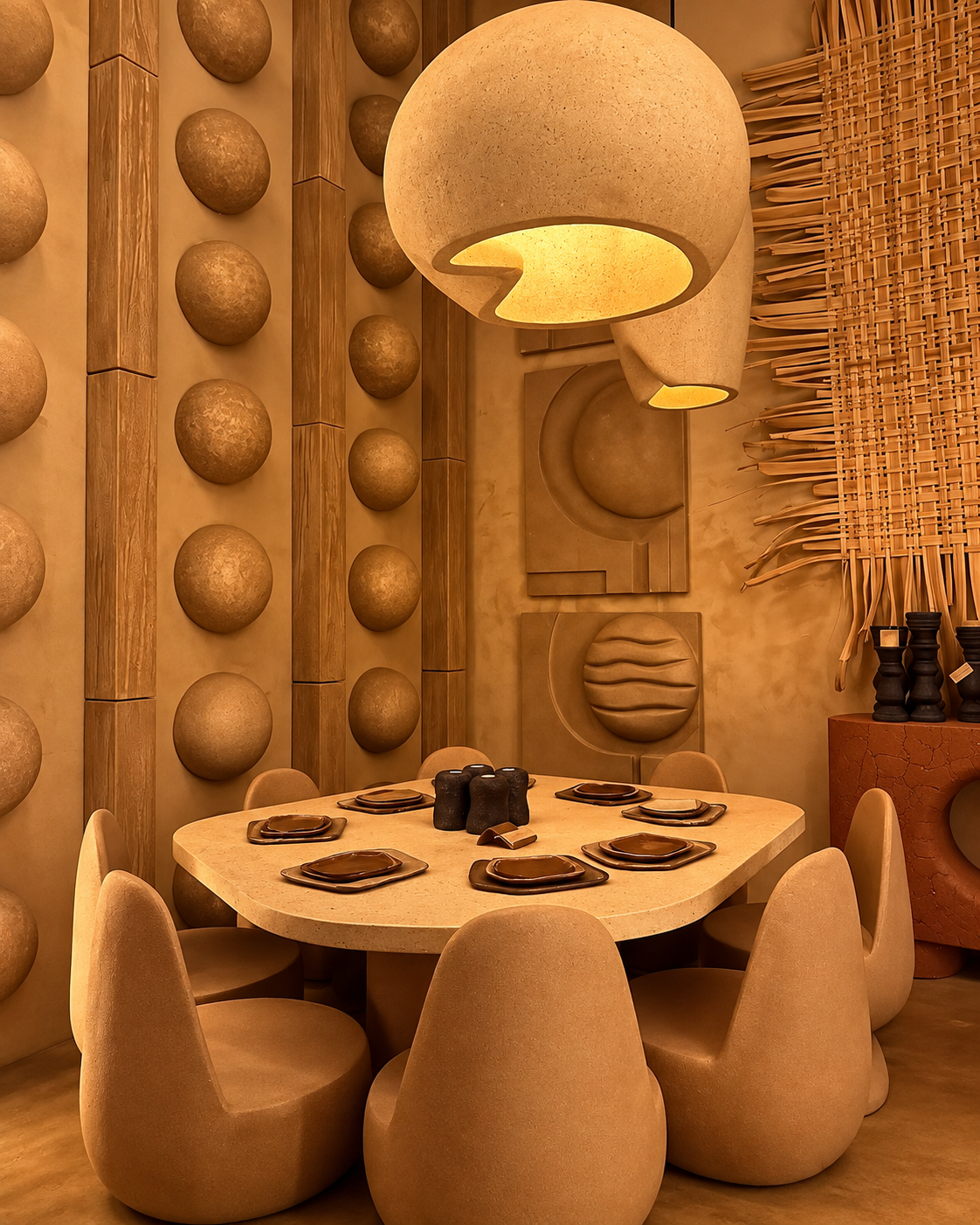
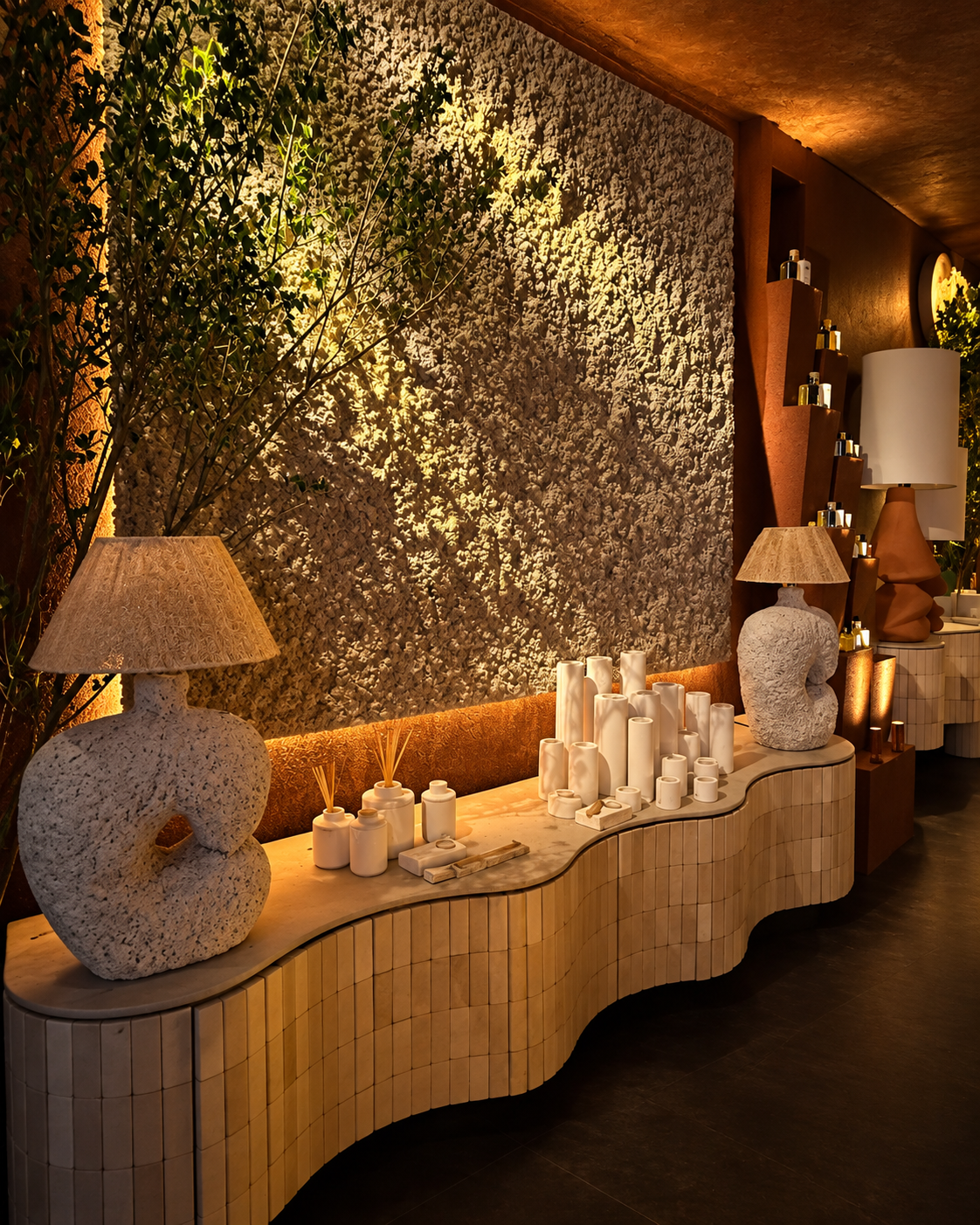
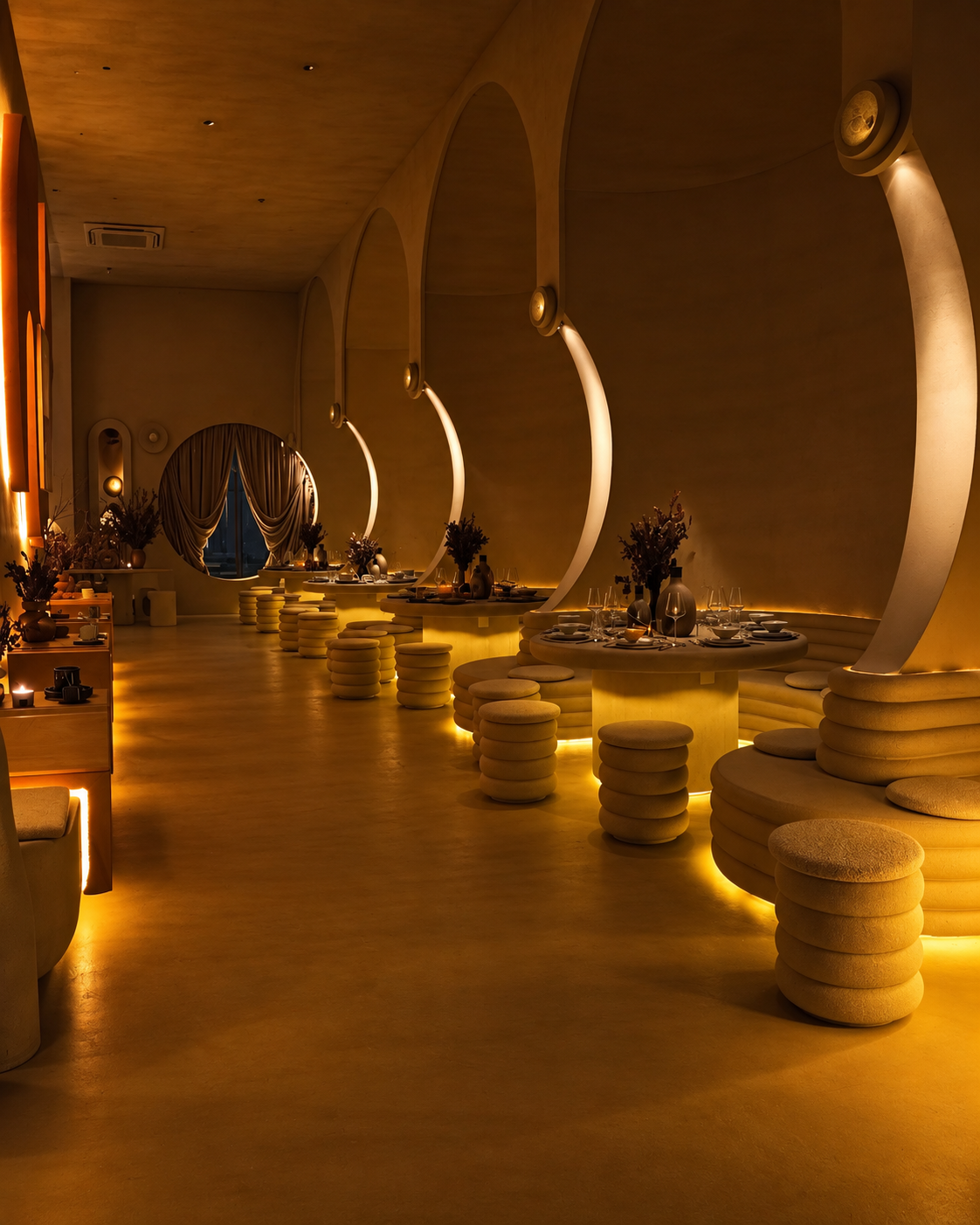
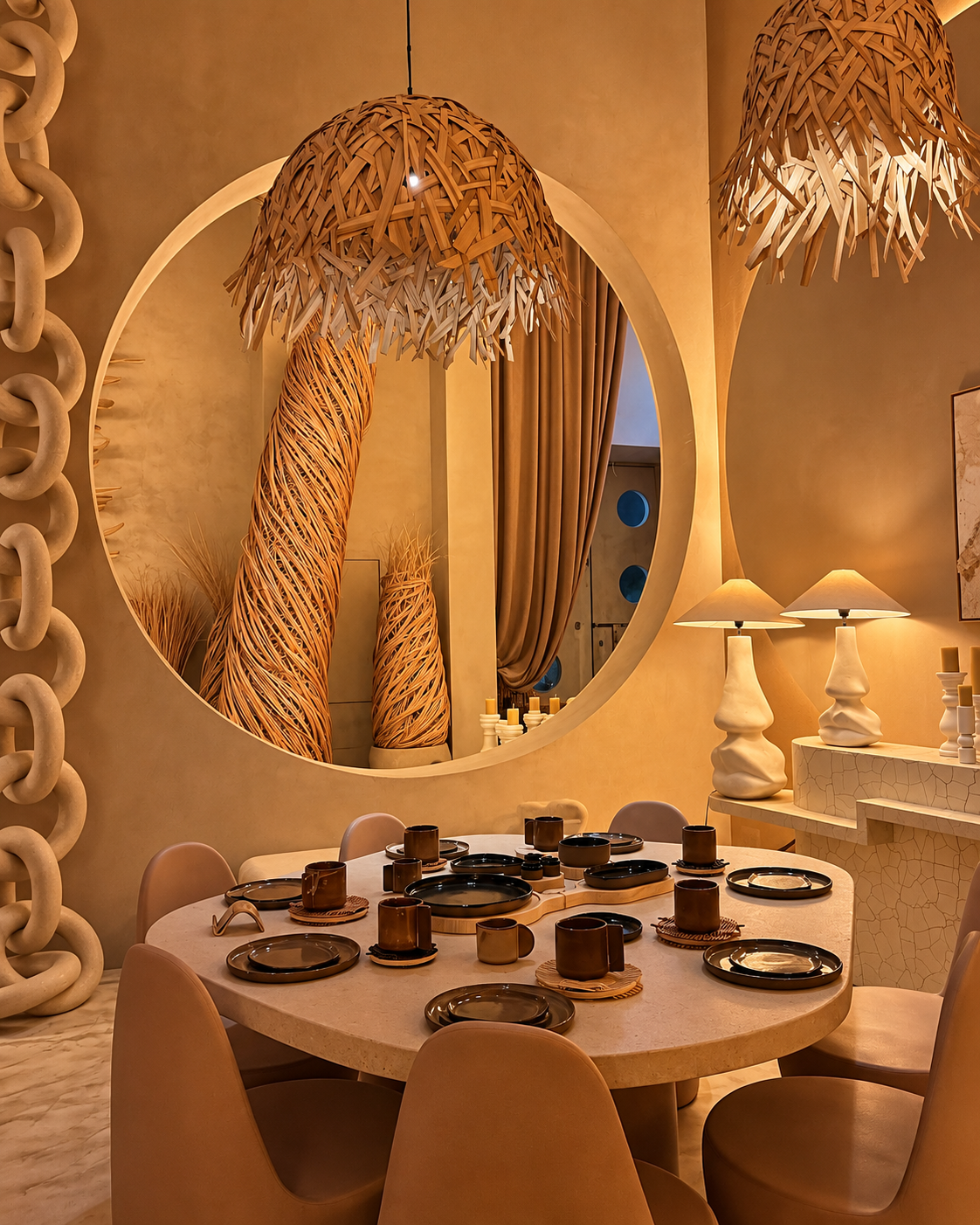
La Nena Dubai’s interior and its collections demonstrate this distinction in ways that are immediately perceptible even to visitors without a specific design education. The surfaces are not smooth in the way that industrial finishes are smooth — they carry the specific micro-texture of materials that have been worked by hand, with variations in depth and tone that respond to natural light differently at different times of day and from different angles of approach. The earth tones — deep clay, warm ochre, the particular brown-grey of dried mineral pigment — are not paint colours applied to neutral surfaces. They are the colours of the materials themselves, of Galician clay and mineral pigment that carry these tones as intrinsic properties rather than as applied finishes. The organic forms — the sinuous curves, the shapes that reference biological rather than geometric logic — are not decorative gestures imposed on a rectilinear structure. They are the forms that emerge naturally from the shaping of materials by human hands rather than by industrial tooling.
This distinction produces a specific quality of atmosphere that no industrial interior can fully replicate. A raw surface — one that reveals rather than conceals the nature of the material from which it is made — creates warmth not as a design strategy but as a physical fact: the eye reads the variation and irregularity of a hand-worked surface as evidence of human presence, and the emotional response to human presence is warmth. An organic form creates softness not because curved lines are softer than straight ones but because the brain reads curves as the shapes produced by natural forces — by water, wind, growth — rather than by industrial machines, and the emotional register of natural forms is fundamentally different from that of geometric precision. A natural pigment creates visual depth because the tonal variation within a mineral colour is more complex than that achievable through synthetic colouring, and visual complexity rewards sustained attention in ways that visual uniformity does not.
Material intelligence, in the context of interior design, describes the capacity to understand how specific materials — their physical properties, their origins, their behaviour over time, their visual and tactile qualities — influence the atmospheric character of the spaces and objects they constitute. A designer working with material intelligence does not select materials for their appearance alone but for the specific emotional and spatial effects that their intrinsic properties produce: the warmth of an unglazed terracotta surface, the visual depth of a mineral pigment, the specific quality of light absorption and reflection in a hand-polished stone, the way a natural fabric moves differently in different light conditions. Material intelligence is what separates interiors that feel designed from interiors that feel alive — and it is the quality that handcrafted furniture communicates most directly, because the artisan’s engagement with specific materials over time produces an understanding of their properties that industrial manufacturing, by definition, cannot develop.
A Vida Group’s foundation in cementitious coatings — in the material science of surfaces that respond to their environment, that change character with light and humidity and age — is directly legible in La Nena’s interior and collections. The surfaces are designed to be lived with rather than preserved from living: they will acquire, over time, the specific patina of use that no new finish can replicate and that distinguishes a genuinely inhabited interior from a staged one. This is material intelligence applied at the level of design philosophy: the understanding that the most beautiful surface is not the one that most closely approximates perfection at the moment of installation but the one that becomes most itself as the years accumulate.
Spanish craftsmanship meets Dubai modernity — a cultural dialogue between Galicia and the Gulf
The cultural geography of La Nena Dubai is specific and significant. Galicia — Spain’s north-western autonomous community, bounded by the Atlantic Ocean and sharing a border with Portugal — has one of Europe’s most distinctive and least internationally recognised artisan traditions. Its material culture is shaped by the specific character of its landscape: granite, clay, the particular quality of Atlantic light, a maritime climate that makes stone and ceramics the natural material vocabulary of its buildings and objects. Galician craftsmanship is not the gilded, maximalist tradition of Castile or the sunny Mediterranean aesthetic that dominates international perceptions of Spanish design. It is restrained, material-centred, and rooted in a long tradition of working with what the land provides rather than importing beauty from elsewhere.
The artisans of Galicia who produce La Nena Home’s collections bring this specific tradition — its techniques, its material vocabulary, its philosophical relationship to natural materials — to objects that are then introduced into one of the world’s most cosmopolitan design markets. Dubai’s design culture is simultaneously one of the most global and one of the most receptive to precisely the kind of authenticity that Galician craftsmanship represents. The city’s international luxury consumers — residents and visitors from across Europe, Asia, the Arab world, and the Americas — have the cultural literacy to recognise genuine craft heritage when they encounter it, and the discernment to distinguish it from the decorative gestures that imitate it.
La Nena Dubai resolves this cultural encounter with a design intelligence that neither subordinates the Galician tradition to Dubai’s aesthetic context nor presents it as a foreign importation disconnected from its location. The arches and curves that punctuate the interior reference the architectural vocabulary of the region — the sinuous geometries that appear in Islamic architectural tradition, the archways that mediate between interior and exterior in the vernacular architecture of the Gulf — while the materials and techniques remain unmistakably Galician. The result is not cultural fusion in the superficial sense of combining visual motifs from different traditions. It is cultural dialogue in the more substantive sense of creating a space where two distinct but philosophically compatible traditions — both rooted in natural materials, organic forms, and the value of skilled human work — can be experienced as a coherent whole. The most sophisticated luxury experiences in Dubai achieve precisely this kind of cultural intelligence: a sense of genuine rootedness within a global context that makes them feel simultaneously specific and universal.



Furniture as art — the return of collectible design
The collectible design market — the category of interior objects that exist at the intersection of functional furniture and artistic creation, produced in limited editions or as singular pieces by identifiable designers and artisans — is one of the fastest-growing segments of the luxury market. Its growth reflects a fundamental shift in how the most sophisticated interior consumers understand the objects they choose to live with. The modern home, for this consumer, is not a coordinated scheme assembled from a single source but a biographical collection — a gathering of objects chosen individually for their specific qualities, their provenance, their relationship to the owner’s developing aesthetic intelligence, and their capacity to reward continued attention over years and decades of habitation.
This shift in consumer psychology has specific implications for what furniture must now be, beyond its functional requirements. It must be legible as an individual object — one that can be understood independently of the setting in which it appears and that retains its identity across the different contexts and companions that a life of habitation will provide. It must carry evidence of its own making — the marks of specific human decisions and physical engagements that distinguish it from every other object of superficially similar appearance. And it must be capable of ageing — of becoming more itself, more particular, more saturated with the specific history of its use, as the years accumulate around it.
Artisan furniture describes pieces created through skilled manual techniques by identifiable craftspeople, in contrast to furniture produced primarily through industrial manufacturing processes. The distinction is not simply one of production method but of design intention and material outcome. Artisan furniture is made in the knowledge that the human hand introduces variation that industrial tooling cannot replicate — variation that is not a defect to be minimised but a quality to be preserved, because it is the evidence of the specific physical engagement between the artisan and the material that gives each piece its individual character. In the context of luxury interior design, artisan furniture occupies the same position as limited-edition art or bespoke tailoring: it is valued not only for what it looks like but for what it demonstrates about the skill, the knowledge, and the cultural tradition that produced it.
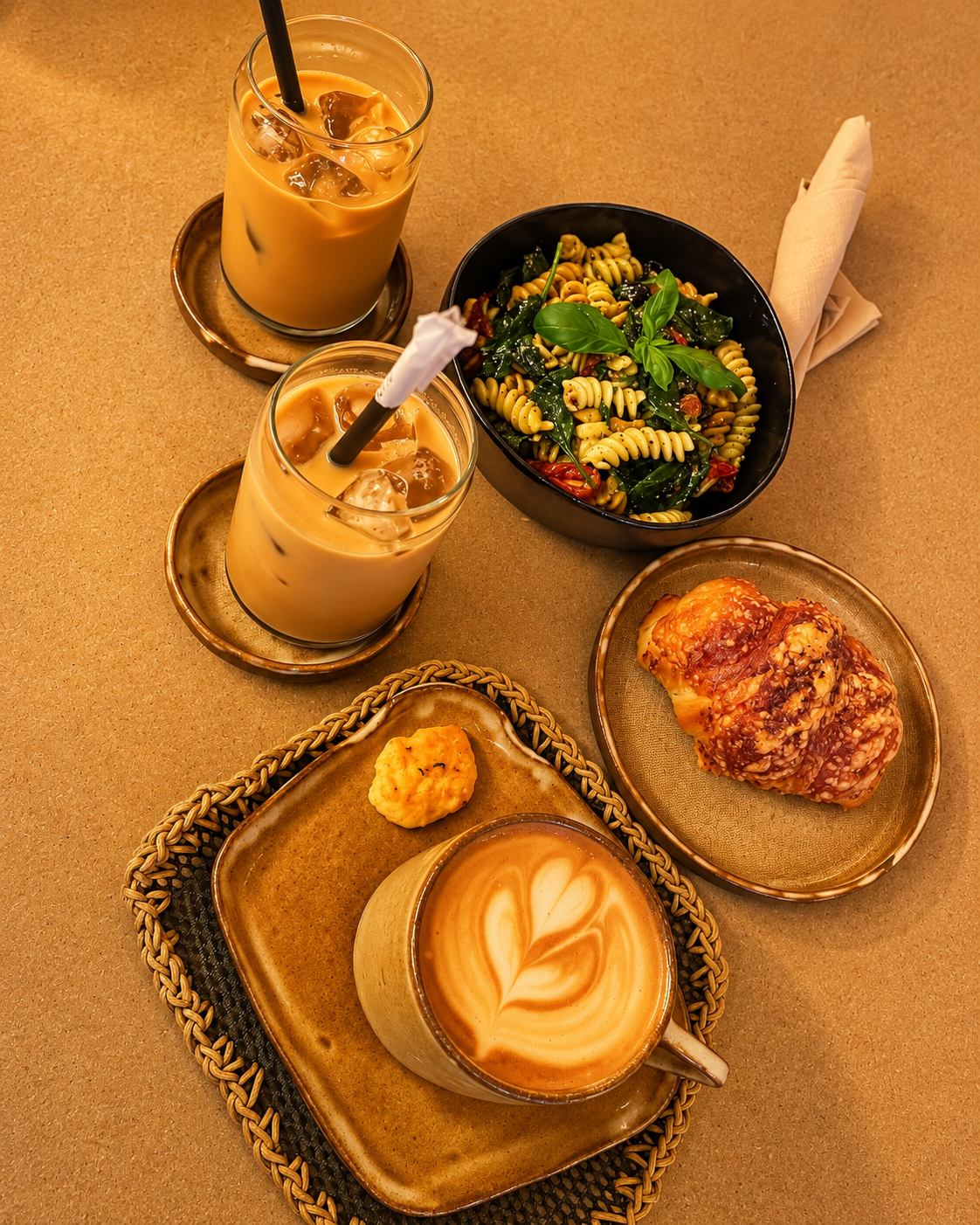
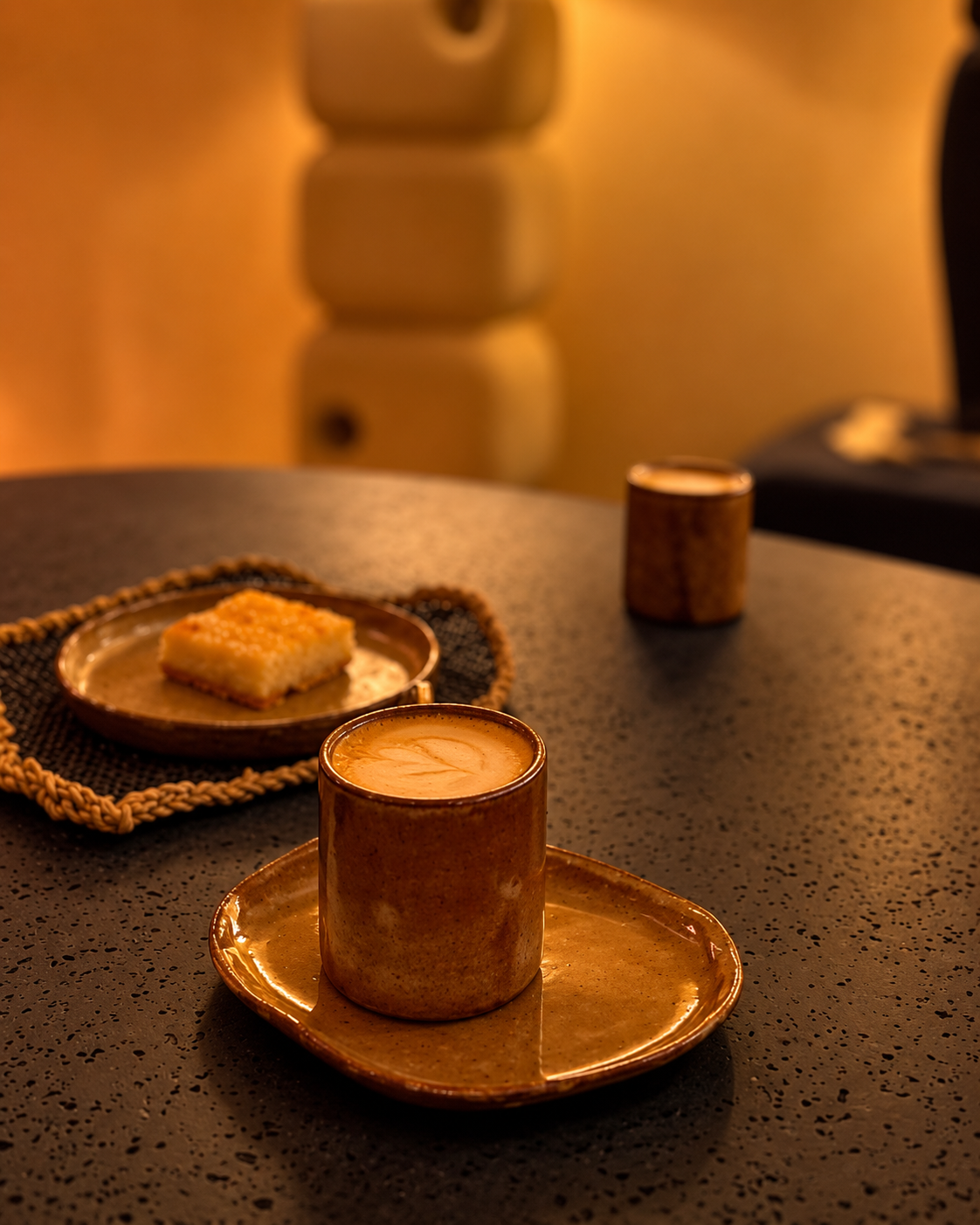
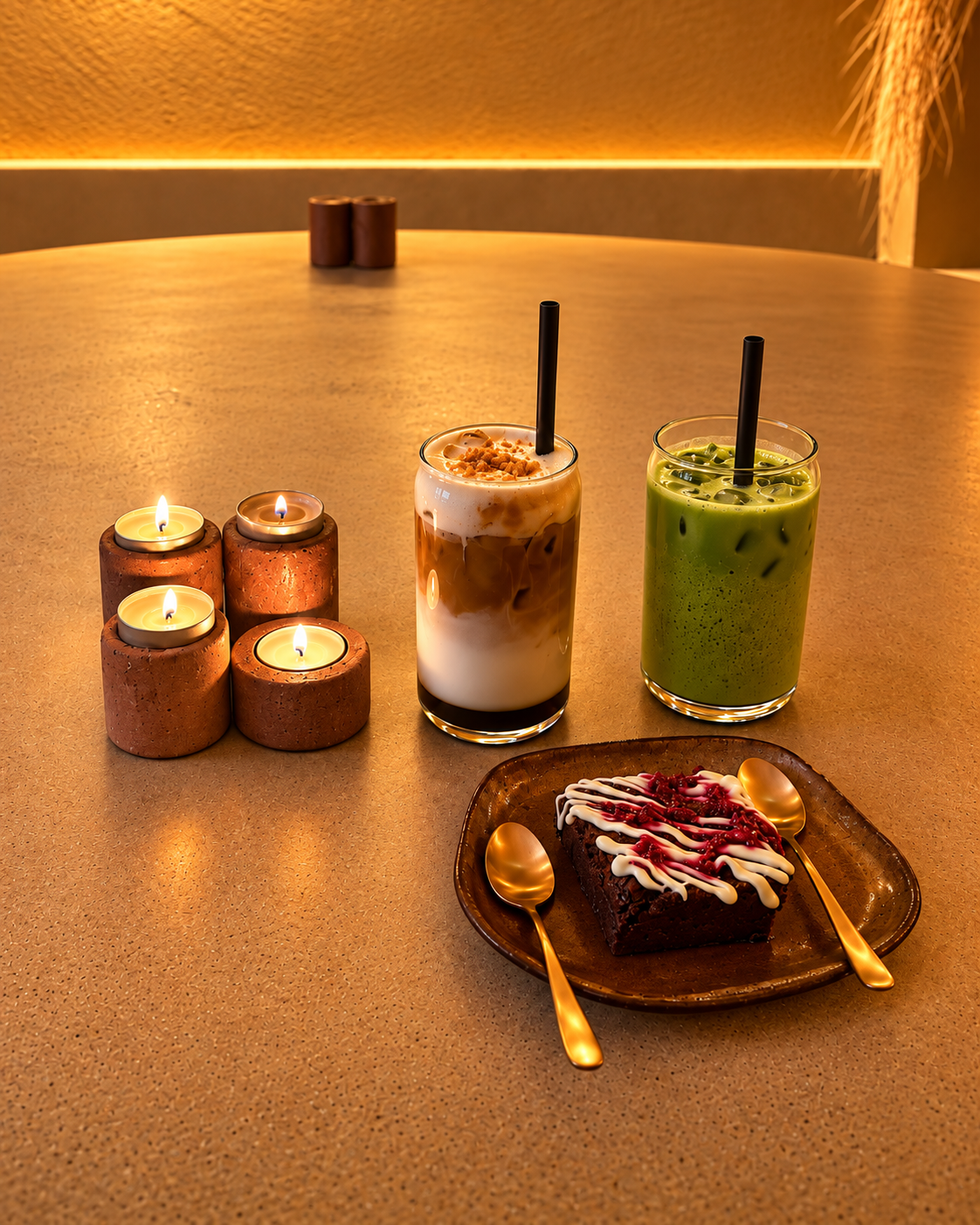
La Nena Home’s collections embody all of these qualities. Each piece produced by A Vida Group’s Galician artisans is unique in the specific sense that the material variations inherent in hand production — the slight differences in pigment depth, the organic irregularities of hand-formed clay, the specific mark left by a particular artisan’s technique — make it impossible for any two pieces to be identical even when they are produced from the same design. The tableware served within La Nena Dubai’s café environment is the same tableware available for acquisition in its retail space — a decision that is simultaneously practical and philosophically coherent: the visitor encounters these objects not as products to be evaluated but as participants in a living design environment, and the experience of drinking coffee from a handmade La Nena ceramic fundamentally changes the register in which that ceramic is understood when it appears in the retail context moments later.
The integration of the bespoke project service — the facility for architects, interior designers, and private clients to engage with A Vida Group’s team around specific commissions — positions La Nena Dubai not only as a retail destination but as a creative studio in the fuller sense of that term. It is a place where the design conversation begins, where material samples and completed objects coexist with the expertise required to apply them to specific residential or commercial projects, and where the boundary between encountering a design language and commissioning its application dissolves. The most considered consumer choices in any category follow this pattern: understanding precedes acquisition, and the space that enables understanding creates a different kind of loyalty than the space that simply facilitates transaction.


The future of luxury living — designing homes with meaning by 2030
The trajectory of luxury interior design toward 2030 is not a trajectory toward more — more expense, more complexity, more surface spectacle. It is a trajectory toward more meaning: toward spaces that communicate their values as clearly as their aesthetics, toward objects that carry cultural intelligence as well as material beauty, and toward homes that are understood as environments of sustained habitation rather than stages for the performance of status.
The structural forces driving this trajectory are mutually reinforcing. Sustainable luxury — the understanding that the most responsible relationship with beautiful objects is to choose them with care, acquire them with knowledge, and keep them indefinitely — is converging with biophilic design, which understands the human nervous system’s evolved preference for natural materials and organic forms, which is converging with the broader slow design movement, which insists that the value of an interior object is located in its longevity and its human story rather than in its novelty. Each of these movements, independently significant, is pointing in the same direction: toward the kind of interior environment that La Nena Dubai already proposes as its core argument.
The multi-sensory dimension of future luxury living — the understanding that the home environment communicates through smell, sound, and touch as well as through visual composition — is particularly relevant to La Nena’s design philosophy. An interior composed of natural materials engages the senses differently from one composed of synthetic equivalents: the slight roughness of unglazed ceramic under the fingertip, the specific smell of mineral pigment in a sun-warmed room, the acoustic softness of a space where natural materials absorb rather than reflect sound — all of these contribute to the atmospheric character of the environment in ways that are not reducible to visual design but that the most sophisticated interior consumers have learned to recognise and to seek out.
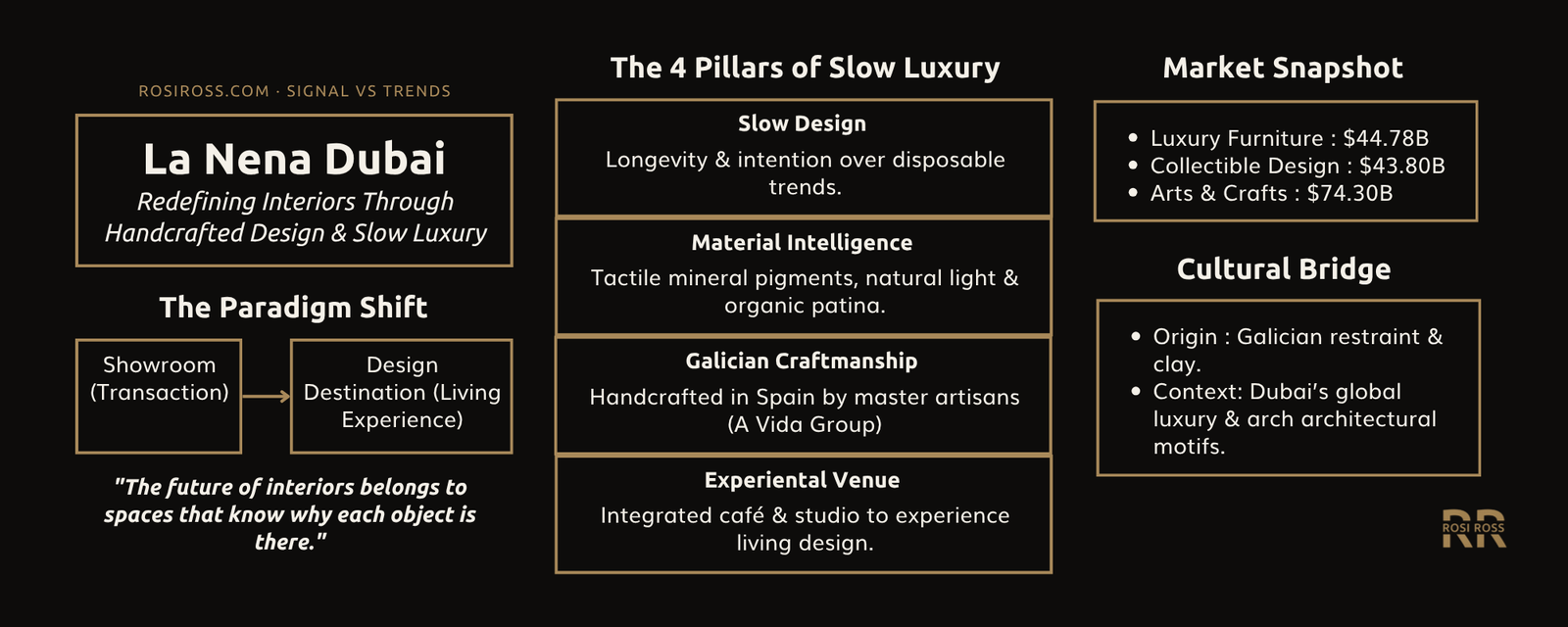
Collectible design describes interior objects — furniture, lighting, ceramics, decorative pieces — created with the artistic intent, material quality, and production singularity that give them value beyond their functional purpose. The term emerged in the early 2000s as design galleries began representing furniture designers with the same framework applied to fine art: individual authorship, limited production, critical contextualisation, and a secondary market in which provenance and authenticity determine value. The collectible design market was valued at $23.6 billion in 2025 and is growing at 7.1% annually, reflecting a fundamental shift in how the most sophisticated consumers understand the relationship between living with beautiful objects and investing in cultural value. Collectible design is distinguished from luxury furniture by the specificity of its authorship — by the identifiable human story behind each piece — and from art by its functional dimension: these are objects designed to be used, lived with, and understood through the specific experience of habitation.
The hospitality-inspired home — the understanding that the domestic environment should provide the same quality of sensory and emotional attention that the world’s finest hotels have learned to deliver — is the register in which La Nena Dubai most directly speaks to future directions in luxury living. The café experience at La Nena is not peripheral to the design proposition. It is central to it. The act of being served excellent coffee in a handmade ceramic cup, in a room whose surfaces carry the warmth of natural mineral pigment and whose forms reference both Galician and Gulf architectural traditions, is itself the argument: this is what it feels like to inhabit a space where every decision has been made with intelligence and intention. Take that experience home. Let it define the standard against which domestic comfort is measured. The finest hospitality environments have always understood that their real function is not to provide a service but to propose a way of being in the world — and the most meaningful interiors make the same proposition in a domestic register.
By 2030, the home that the most considered consumers are building will not be defined by the brands it contains or the square footage it encompasses. It will be defined by the coherence of its material philosophy — by the evidence that every object within it was chosen with understanding, acquired with knowledge, and positioned with the intention that it remain in place not until the next redesign but for as long as the life lived within the space continues to develop and deepen. La Nena Dubai proposes this vision not as a future aspiration but as a present reality: a place where that philosophy is already being lived, already being made visible in the warmth of clay surfaces and the weight of hand-formed ceramics and the specific quality of a light that falls differently on organic form than on the geometric precision of industrial manufacture.
The future of interiors will not be defined by how much we own. It will be defined by what we choose to keep — and by the depth of understanding we bring to that choice. The same intelligence that guides the selection of objects designed to outlast trends in any category applies to interiors with particular force, because no category of object is more continuously present in daily life than the furniture and surfaces of the home. Choose well. Choose slowly. Choose objects whose makers you can name and whose techniques you can understand. La Nena Dubai is a place that makes this choice possible — not by limiting what is available but by deepening what is knowable about every object within it.
“The future of interiors will not belong
to the spaces that contain the most beautiful objects.
It will belong to the spaces
that know why each object is there.
La Nena Dubai is a space that knows.
Every surface carries its origin.
Every form carries its maker.
Every material carries its argument.
The art of living slowly
is the art of choosing with that kind of knowledge —
and building a home
that becomes more itself
as the years deepen around it.”

