
Iftar is not simply dinner. It is the breaking of a fast observed since dawn — a moment that arrives every evening of Ramadan with the weight of spiritual commitment and the warmth of collective release. In Dubai, it has become something else besides: one of the most genuinely moving dining experiences available in any city in the world. The Iftar is the point at which spiritual practice and human warmth converge most visibly — the moment when the private act of fasting becomes the collective act of eating, and when the discipline of the day is released into the ease of the evening.
Ramadan in Dubai is understood, by those who have experienced it, as the most significant cultural event the city produces. The holy month transforms the city in ways that are both visible and invisible: the hours shift, the atmosphere deepens, the nights come alive with a social intensity that the rest of the year does not quite replicate. Residents who have lived through multiple Ramadans in Dubai describe a specific quality to the city during this period — a quality of presence, of community, of the particular warmth that is produced when millions of people are simultaneously oriented toward the same act of devotion and renewal.
The cannon fires at sunset. Or the call to prayer begins. The specific signal varies by neighbourhood and by year, but what follows is consistent: across the city, in thousands of homes and hundreds of restaurants and hotel ballrooms and garden tents erected for the month, people who have been fasting since before sunrise sit down together to eat. The date arrives first — always the date, the Prophet’s own choice for breaking the fast, the sweetness that the body recognises before the mind has had time to catalogue it. Then the soup. Then the spreading abundance of a meal that has been prepared with the knowledge that it will feed people who genuinely need it.
For those experiencing Ramadan Iftar in Dubai for the first time — whether as residents new to the city or as visitors who have chosen this period deliberately — the Iftar is the most accessible entry point into what the holy month actually means. It is not a tourist experience of a religious practice. It is an invitation to the table, extended with the generosity that is itself one of Ramadan’s defining values. Hospitality during Ramadan is understood as an act of worship. To be invited is to be offered something genuine.

Dubai’s dining culture has developed a complexity and cultural depth that its reputation for spectacle does not always convey. The Ramadan Iftar is the most significant annual expression of this depth — the meal that most fully captures what the city understands about the relationship between food, community, and the quality of time spent at a shared table. As GQ Middle East’s coverage of Ramadan culture and dining in Dubai reflects, the holy month transforms the city in ways that reward those who approach it with genuine cultural openness — producing experiences of hospitality, community, and culinary depth that the rest of the year does not replicate.
The same intelligence about hospitality that produces the most considered everyday dining — explored in Why Lah Lah Is Dubai’s Most Considered Girls’ Night Out — reaches its highest expression during Ramadan, when the act of sharing a meal carries the full weight of the month’s spiritual intention.
The best Iftar venues in Dubai — where the city breaks its fast
The range of Iftar experiences available in Dubai during Ramadan reflects the city’s own complexity — the coexistence of deep cultural tradition and international cosmopolitanism that makes it unlike any other city in the region. The quality that distinguishes the most considered Iftar venues from the merely convenient ones is the sense that the environment has been designed to serve the people within it rather than to impress them.
The Jumeirah Beach Hotel Ramadan Garden, situated in Janat al Bahar with unobstructed views of the iconic Burj Al Arab, represents the luxury hotel Iftar tradition at its most carefully realised. The setting — a garden arranged for the month, with the iconic sail-shaped hotel visible across the water — creates the kind of atmosphere that only Dubai’s geography makes possible: the grandeur of the city’s skyline as the backdrop for a moment of genuine quietude. Live oud and qunan music provide the sonic register that the Iftar occasion requires: melodic, unhurried, providing atmosphere without demanding attention. The Iftar spread includes live stations, mezze, and the Ramadan juices — tamarind, qamar al din — at AED 310 per person. The Private Majlis option, available for groups of up to twenty at a minimum spend of AED 7,000, provides exclusive Burj Al Arab views alongside the more intimate version of the same experience. Suhoor follows from 9:30 PM at AED 210 per person, with Mixed Grill, Ouzi, and Shawarma in the shisha lounge.
At Zabeel House The Greens, the Social Company restaurant offers what the family-style Iftar is designed to produce: the particular warmth of shared dishes, of food arriving at the table to be passed rather than plated, of the meal as an act of collective generosity rather than individual selection. The Middle Eastern and North African sharing set menu — cold mezze, warm bread, rich mains, traditional desserts — replicates the domestic Iftar table within a restaurant context in a way that feels genuine rather than performed, at AED 155 per person. For groups requiring more space, Lah Lah’s outdoor terrace hosts a private Iftar at AED 185 per person, with live Mixed Grill stations in the distinctive pan-Asian atmosphere of the hotel’s most celebrated restaurant.
The spirit of the Iftar table — what Ramadan means in Dubai


No other meal in Dubai’s annual calendar carries the weight that the Iftar carries. It is a meal that arrives at the end of a day of willing deprivation, shared with people who have made the same choice, at a moment whose significance has been observed in the same form for fourteen centuries. The Iftar is not the most elaborate meal Dubai produces. It is the most significant.
The practice of fasting from dawn to sunset — abstaining from food, drink, and other physical needs — is one of the Five Pillars of Islam, the foundational obligations that structure Muslim practice across cultures and geographies. During Ramadan, this daily fast is understood as an act of devotion, of spiritual discipline, and of solidarity with those who go without by necessity rather than choice. The month carries an atmosphere of increased prayer, heightened charity, and a particular quality of communal consciousness that even those who are not fasting can perceive in the city around them.
The Iftar itself — the breaking of the fast at sunset — is understood within this framework not merely as the end of hunger but as the end of a period of spiritual concentration and the beginning of the evening’s communal celebration. The specific foods of the Iftar carry their own significance: the date that begins every meal as an act of Sunnah, the lentil or harira soup that is the traditional first warming after a day of deprivation, the spread of mezze and shared dishes that represents the abundance that is one of Ramadan’s recurring themes. These are not arbitrary culinary choices. They are a language that has been spoken in the same form across every Ramadan Iftar table.
The range and quality of Iftar experiences available in Dubai during Ramadan has established the city as one of the most significant destinations for those who wish to experience the holy month in a context that combines cultural authenticity with world-class hospitality. As Condé Nast Traveller’s coverage of Dubai’s Ramadan dining culture documents, Dubai’s ability to hold deep cultural tradition and international cosmopolitanism simultaneously is nowhere more visible than during Ramadan — when the city’s most significant communal practice becomes accessible to the full spectrum of its resident and visitor population.
The diversity of the Iftar table — Dubai’s culinary range during Ramadan


One of the most distinctive qualities of the Ramadan Iftar in Dubai is the range of culinary traditions through which it is expressed. The city’s cosmopolitan character means that the holy month is observed through a dozen different culinary languages simultaneously — and that all of them are authentic, because all of them are sincere.
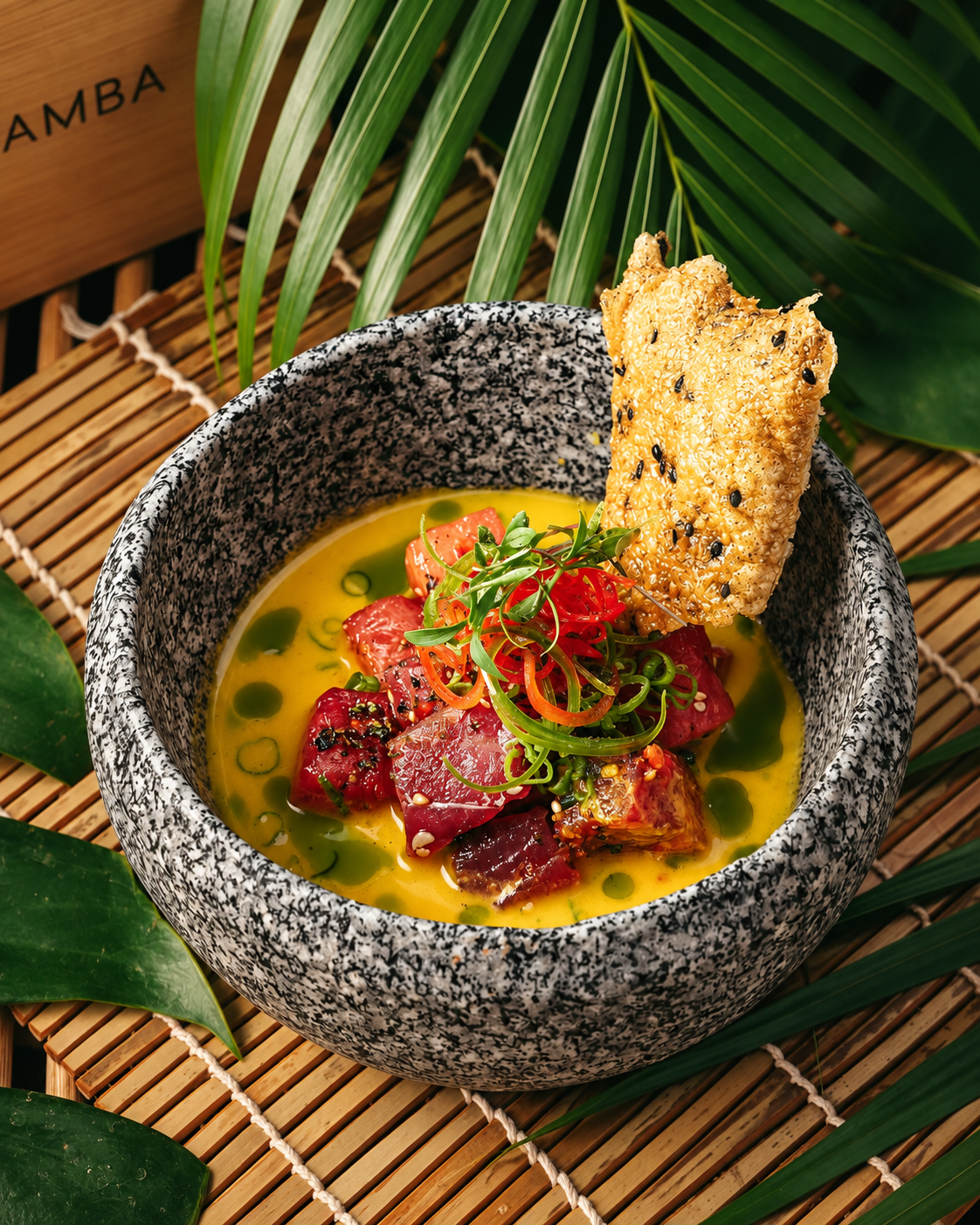
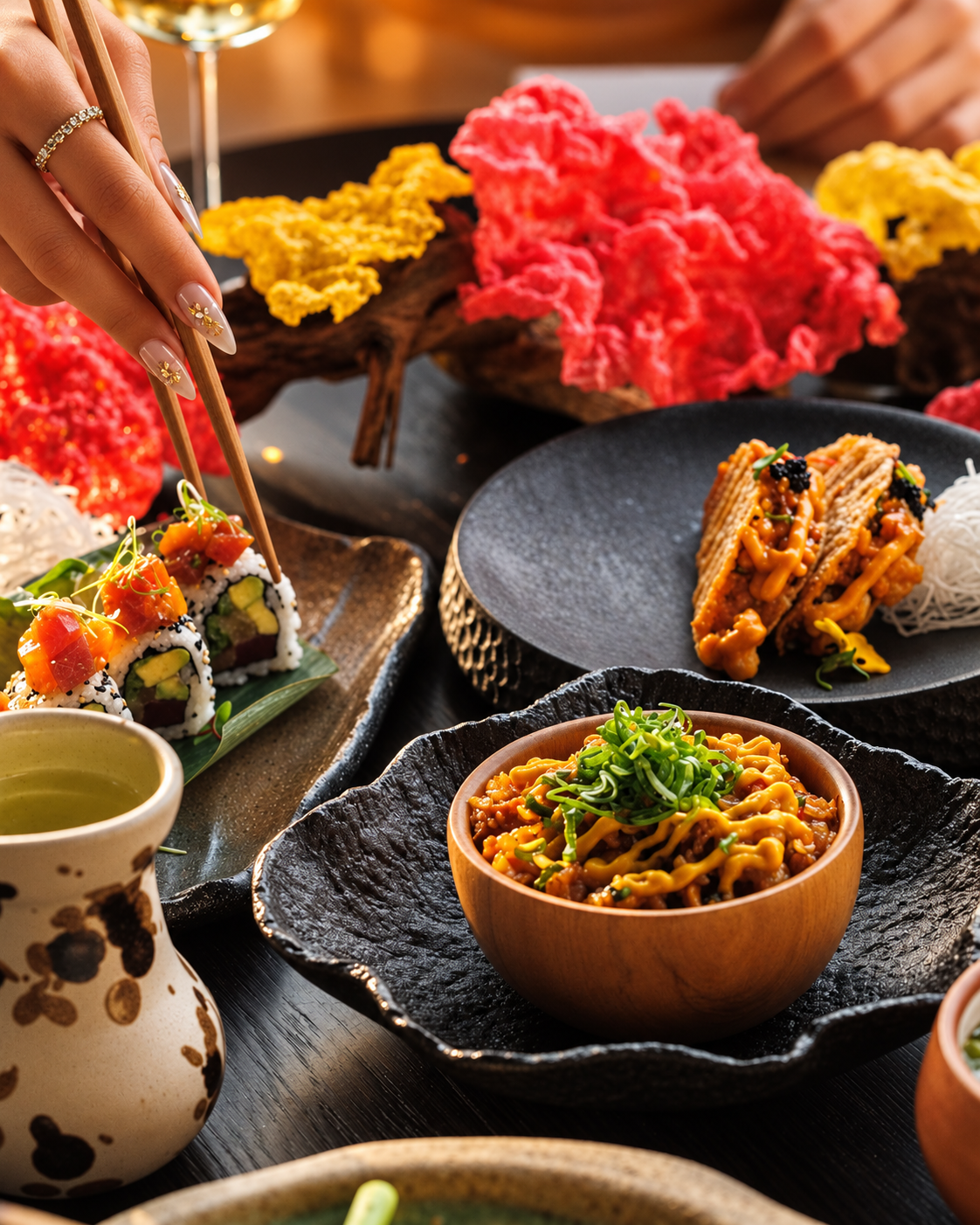
SUSHISAMBA at Palm Jumeirah offers what the most forward-looking Iftar venues in Dubai represent: the understanding that the spirit of Ramadan — communal generosity, the sharing of food, the gratitude of the meal after deprivation — can be expressed through culinary traditions beyond the specifically Arab ones. The Iftar begins with a date, as it always begins, and with SUSHISAMBA’s signature SAMBARETTI smoothie shot — Lyre’s Amaretti, yuzu juice, coconut milk, and almond syrup — as the Ramadan welcome. The menu that follows draws from Japanese, Brazilian, and Peruvian traditions in the fusion style that SUSHISAMBA has made its identity. The panoramic Ain Dubai and Palm views provide the Dubai-specific setting. Open Sunday to Thursday 6 PM – 2 AM, Friday to Saturday 6 PM – 3 AM.
Alaya at DIFC takes a different position: the traditional Iftar in a contemporary Gate Village setting, the classic dishes given the elegance of one of Dubai’s most architecturally distinguished dining districts without compromising the cultural integrity of the meal. Lentil soup, hummus, baba ghanoush, lamb shank, baklava, Umm Ali — these are the dishes of Ramadan across the Arab world, and their presence at Alaya is not a concession to the traditional but an assertion of it. AED 300 per person, daily from sunset.
Nazcaa at Address Dubai Mall offers the most deliberately unexpected Iftar in the city — a Peruvian-inspired set menu beginning with kabocha cream soup and moving through rib-eye or corn-fed baby chicken with arroz chaufa, closing with kunafa and butterscotch ice cream. This is not cultural confusion. It is the recognition that Ramadan’s spirit of generosity, of the meal shared after genuine deprivation, is not the exclusive property of any single cuisine. AED 250 per person, daily from sunset.
Raffles Dubai‘s Azur offers a buffet celebrating the flavours of the Middle East with live Arabic stations — grilled meats and fish, hot and cold mezze, traditional salads — at AED 245 per person, with private garden cabanas at AED 295 for groups of four or more. The garden setting carries the specific atmosphere that the most considered Iftar venues produce: an environment in which the act of breaking fast together is supported rather than overshadowed by the setting.
African Queen at J1 Beach brings the warmth and vibrancy of African culinary traditions to the Ramadan Iftar table — sweet potato hummus, African curry, the particular vibrancy of a beachside setting at AED 350 per person. Casa Amor at Mandarin Oriental Jumeirah provides the intimate luxury of a beachside Iftar by the sea — milk sharbat, shrimp, Australian Black Angus rib-eye, Umm Ali, ocean views — at AED 285 per person from 18:30 to 20:00 daily.
The understanding that the most valuable dining experiences are those in which the environment actively serves the communal act occurring within it connects to what Dubai’s best hospitality offers across the full range of the city’s offerings. A Day at Nikki Beach Dubai and the New Rituals of Leisure explores what collective presence in a well-designed space produces — the specific social warmth that shared experience generates. The Iftar table is the most complete expression of this principle in Dubai’s cultural calendar.
The social and spiritual significance of the Ramadan Iftar — what the shared table produces


The social and psychological dimensions of communal fasting — the specific qualities of solidarity, empathy, and collective orientation that a shared practice of deprivation produces — have been documented at the institutional level as well as the cultural one. As the ERF has explored in its analysis of Ramadan’s social significance, the month-long practice of shared fasting and communal breaking of the fast produces measurable benefits in social cohesion, empathy, and community connection — benefits that extend beyond the observing community to those who participate in good faith from outside it. The Iftar table is where these benefits are most directly experienced.
What Dubai offers during Ramadan that no other city quite replicates is the combination of the sacred and the cosmopolitan — the deepest religious and cultural tradition of the region, practiced with sincerity, within a city that has welcomed the full range of the world’s traditions and learned to honour all of them. The Iftar at a hotel garden with Burj Al Arab views, the Iftar at a fusion restaurant in the DIFC, the Iftar in someone’s home with guests from a dozen different countries: all of these are authentic to what Dubai is, and all of them are animated by the same spiritual intention.
The understanding that the most consequential exchanges between people happen in physical spaces where the conditions for genuine connection have been deliberately created runs through Dubai’s culture across professional and social contexts alike. Money, Culture, and Capital: Inside the Event That Shaped Dubai’s Web3 Elite explores what this principle produces in a professional context: the gathering space designed around the quality of conversation it enables. The Iftar table represents the same principle at its deepest cultural expression — a space where the conditions for genuine human connection have been created not by design consultants but by centuries of spiritual practice.
The Alaya, Nazcaa, and African Queen Iftar experience — Ramadan’s full culinary range


The specific foods of the Ramadan Iftar carry their own symbolic register across every culinary tradition through which Dubai expresses the holy month. What each venue brings to the Iftar table is not merely a menu but a cultural proposition: a statement about how the spirit of Ramadan — generosity, communal abundance, the gratitude of the meal after deprivation — can be expressed through the specific culinary language of that kitchen.
At Alaya DIFC, the traditional Iftar sequence — dates, lentil soup, hummus, baba ghanoush, fattoush, lamb shank, baklava — is the sequence that the Ramadan table has followed across the Arab world for generations. Every element of this meal is a decision to honour the cultural continuity of what the Iftar represents: not a contemporary restaurant concept overlaid on a religious practice, but a religious practice given the elegance and seriousness of a contemporary restaurant context. Reservations: +971 4 570 6289.


At Nazcaa, the Peruvian-inspired Ramadan menu makes the same claim through a different culinary vocabulary — the claim that the spirit of the Iftar is not the property of any single cuisine but the property of any meal prepared with sincerity and shared with generosity. Kabocha cream soup followed by rib-eye or corn-fed baby chicken, closing with kunafa and butterscotch ice cream: the flavours are Lima’s, but the spirit is Ramadan’s. Reservations: +971 4 542 4200.



Suhoor in Dubai — the quiet meal before dawn
Suhoor is the least performed meal of Ramadan — the one that happens in the hours before the city has fully assembled itself for the day, when the night’s social energy has quieted and what remains is the specific intimacy of people who are preparing for something together. It carries a different atmosphere from the Iftar: less celebratory, more contemplative, oriented toward the fast that is about to begin rather than the one that has just ended.
The Suhoor venues that capture this quality best are those that understand what the meal is for: sustenance and stillness, not spectacle. A garden terrace in the hours after midnight. The sound of water and the relative silence of a city that is between its modes. Food that is heavier and more sustaining than the Iftar spread, designed for the long day ahead. The shisha that accompanies many Suhoor settings is not incidental — the deliberate, unhurried ritual of the shisha is precisely aligned with the Suhoor’s temporal register. These are hours not designed for efficiency. They are designed for the specific quality of conversation that only the late night produces.
The Jumeirah Beach Hotel’s Suhoor offering — Mixed Grill, Ouzi, Shawarma, the shisha lounge, from 9:30 PM to 1:00 AM at AED 210 per person — and Raffles Garden’s à la carte Suhoor service under the night sky from 9:00 PM to 1:00 AM represent two versions of the same experience: the meal that prepares rather than celebrates, the gathering that is social rather than spectacular, the setting that honours the specific atmosphere of the pre-dawn hours without trying to amplify it into something it is not.


How to approach the Iftar as a guest — etiquette, timing, and cultural presence
To be present at an Iftar in Dubai — whether as a resident, a visitor, or a first-time guest of the holy month — is to be offered a form of hospitality whose depth goes beyond the culinary. It is an invitation to participate in one of the most significant collective acts that the city undertakes together. The etiquette of the Iftar is not complicated, but it is worth understanding precisely.
The meal does not begin until the call to prayer or the cannon signals the end of the fast — and at the tables of those who are fasting, this moment is awaited with a patience and a readiness that guests are expected to honour. The date is the first food. The soup or juice follows. The full spread comes after. This sequence is not arbitrary, and respecting it — even at a restaurant where non-fasting guests might be tempted to begin before the signal — is the most basic form of cultural courtesy.
Modest dress is appropriate for Ramadan dining across virtually all venues, and particularly for those in more traditional settings. The general spirit of the month calls for restraint in presentation as much as in consumption — understood as appropriate to the occasion, as dressing for a significant meal rather than a casual one. As Time Out Dubai’s essential guide to Ramadan etiquette and cultural participation establishes, the approach that produces the most meaningful experience of the holy month in Dubai is one grounded in cultural respect, genuine curiosity, and the willingness to participate.
The warmth of the Iftar table is real and it is specific — the specific warmth of people who have been fasting together and are now eating together, who share in the physical relief of the evening’s arrival and in the gratitude that the meal produces. For those who are not fasting, this warmth is offered rather than assumed: an invitation to understand, through participation, something of what the month means. The guest who receives this invitation with genuine openness and respect is likely to find, in the Ramadan Iftar, one of the most moving communal dining experiences available anywhere.

Why the Ramadan table matters — the cultural authority of the shared fast
The most enduring experiences in any city are those whose value rests not on novelty but on depth — on the accumulated meaning of a practice that has been observed consistently, across generations, in the same form, for the same reasons. The Iftar holds. It has held, in the same essential form, for fourteen centuries. That is its authority, and it is an authority that no restaurant concept or menu innovation can manufacture or replace.
The social function of Ramadan in Dubai is not merely the provision of communal dining experiences. It is the annual reinvestment of the city’s social fabric — the month in which the various communities that make up Dubai’s extraordinarily diverse population find common ground in the shared experience of the holy month’s rhythms. Muslims and non-Muslims, residents and visitors, the long-established and the newly arrived: all of these are invited to the Iftar table, and the invitation is always genuine.
The most enduring luxury is the most considered rather than the most visible — the preference for what holds over what announces. The New Language of Quiet Luxury: Inside the Timeless Wardrobe of Apparis explores this principle in the context of fashion. The Iftar holds the same principle at the deepest cultural level available to a city’s dining life: the meal whose significance comes not from what it costs or how it photographs but from what it means — to those who have been fasting since dawn, and to those who have been welcomed to their table.
The specific timings, pricing, and menus of individual Iftar venues in Dubai change each year — adjusted to the specific dates of Ramadan in the Islamic lunar calendar, which shifts approximately eleven days earlier each year relative to the Gregorian calendar. The venues themselves represent the consistent quality and range of Dubai’s Iftar culture, each bringing its own register to the month in ways that remain stable even as specific details change. The recommendation for planning an Iftar experience in Dubai is always to contact the venue directly in the weeks approaching Ramadan, when the specific programme for that year will be confirmed. Reservations are advisable — often essential — for the most popular venues, particularly for larger groups or those seeking Private Majlis settings.
“The Iftar is not the most elaborate meal Dubai produces.
It is the most significant.
Because its significance comes not from the food
but from the act of sharing it —
and from the specific human warmth
that the shared table generates
when everyone at it has been oriented
toward the same act of devotion since sunrise.”

