
On why a flawless complexion has quietly become the most reliable travel accessory, and what actually happens to skin inside a pressurised cabin worth taking seriously
The air inside an aircraft cabin is drier than most deserts on earth. That single fact, more than any single product, is the entire argument for treating skincare on a flight as genuinely non-negotiable rather than optional indulgence.
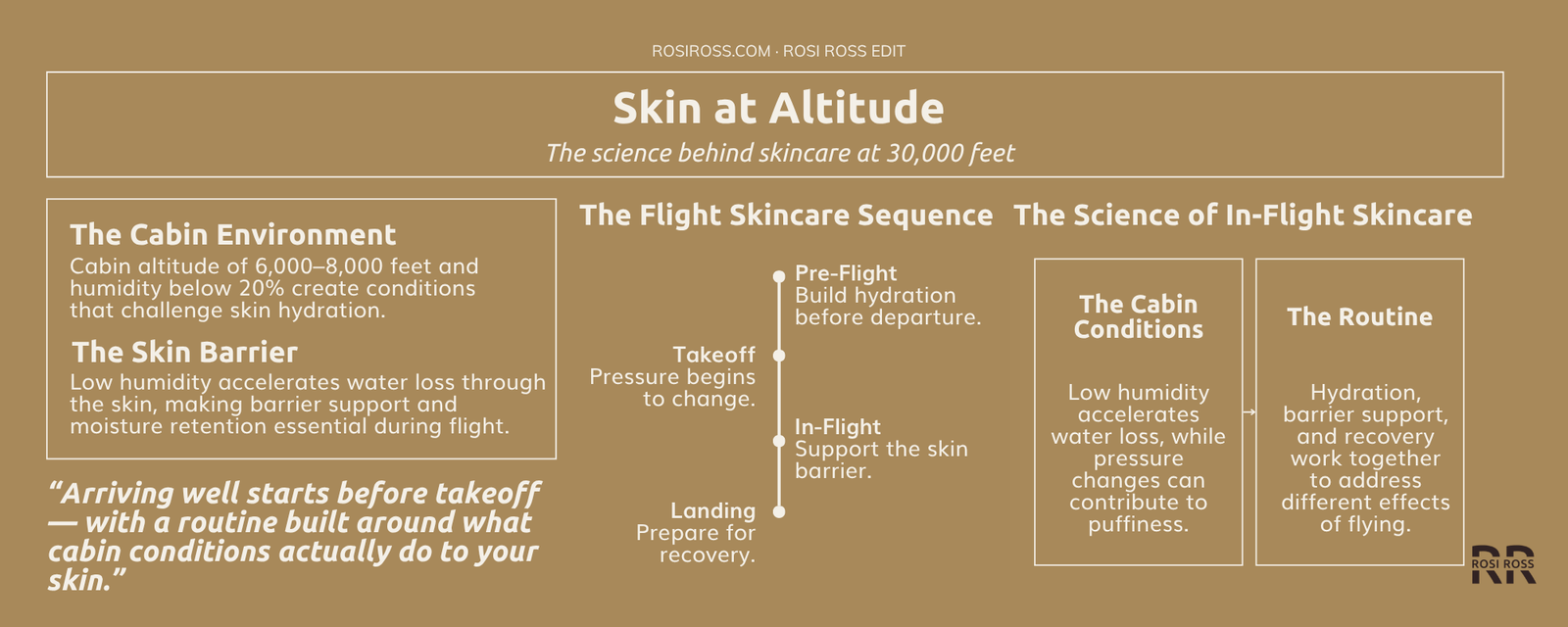
A flight is, in strictly environmental terms, one of the more hostile settings skin regularly encounters — a fact rarely considered until the moment a complexion arrives at its destination looking considerably worse than it departed. Cabin humidity typically sits below twenty percent, a figure the World Health Organization has documented as standard across commercial aircraft, against the forty to seventy percent range most skin actually requires to function comfortably. That single gap in moisture explains nearly every complaint associated with long-haul travel: tightness, dullness, and a complexion that reads noticeably older by the time the seatbelt sign switches off for landing.
The Physics of a Pressurised Cabin
A cruising aircraft is not, in any meaningful sense, replicating sea level inside its fuselage. It is replicating somewhere between six and eight thousand feet of altitude — and the body, including the skin, responds to that difference whether or not a passenger ever notices.
Building a fuselage strong enough to maintain true sea-level pressure at cruising altitude would add substantial weight and fuel cost, so regulators settled on a compromise decades ago: under FAA regulation 14 CFR 25.841, commercial cabins are permitted to pressurise to the equivalent of up to eight thousand feet, with most modern aircraft targeting the lower end of a six-to-eight-thousand-foot range. At that altitude, research summarised by the U.S. National Academies of Sciences confirms that blood oxygen saturation in a healthy adult typically drops from a sea-level baseline of around ninety-eight percent to somewhere between ninety-three and ninety-five percent. This is not dangerous for most travellers, but it is not nothing either: mildly reduced oxygen saturation is directly associated with the low-grade fatigue and sluggish circulation many passengers notice by the midpoint of a long flight — and skin, which depends on healthy microcirculation to deliver nutrients and carry off waste at the cellular level, is one of the more visible places that reduced circulation shows up, in the form of a duller, less immediately radiant complexion than the same skin would show at ground level.
The pressure change carries a second, less discussed consequence. As cabin pressure drops during ascent, any gas trapped in the body’s tissues expands by as much as twenty-five to thirty percent, a mechanic the U.S. National Academies of Sciences has documented in detail in its own review of aircraft cabin air quality. This expansion is generally associated with ears and sinuses, but the same pressure shift also affects fluid distribution more broadly, contributing to the mild, generalised puffiness — particularly around the eyes and lower face — that many travellers notice on descent, quite apart from anything caused by dehydration alone.

Why Cabin Air Deserves to Be Taken Seriously
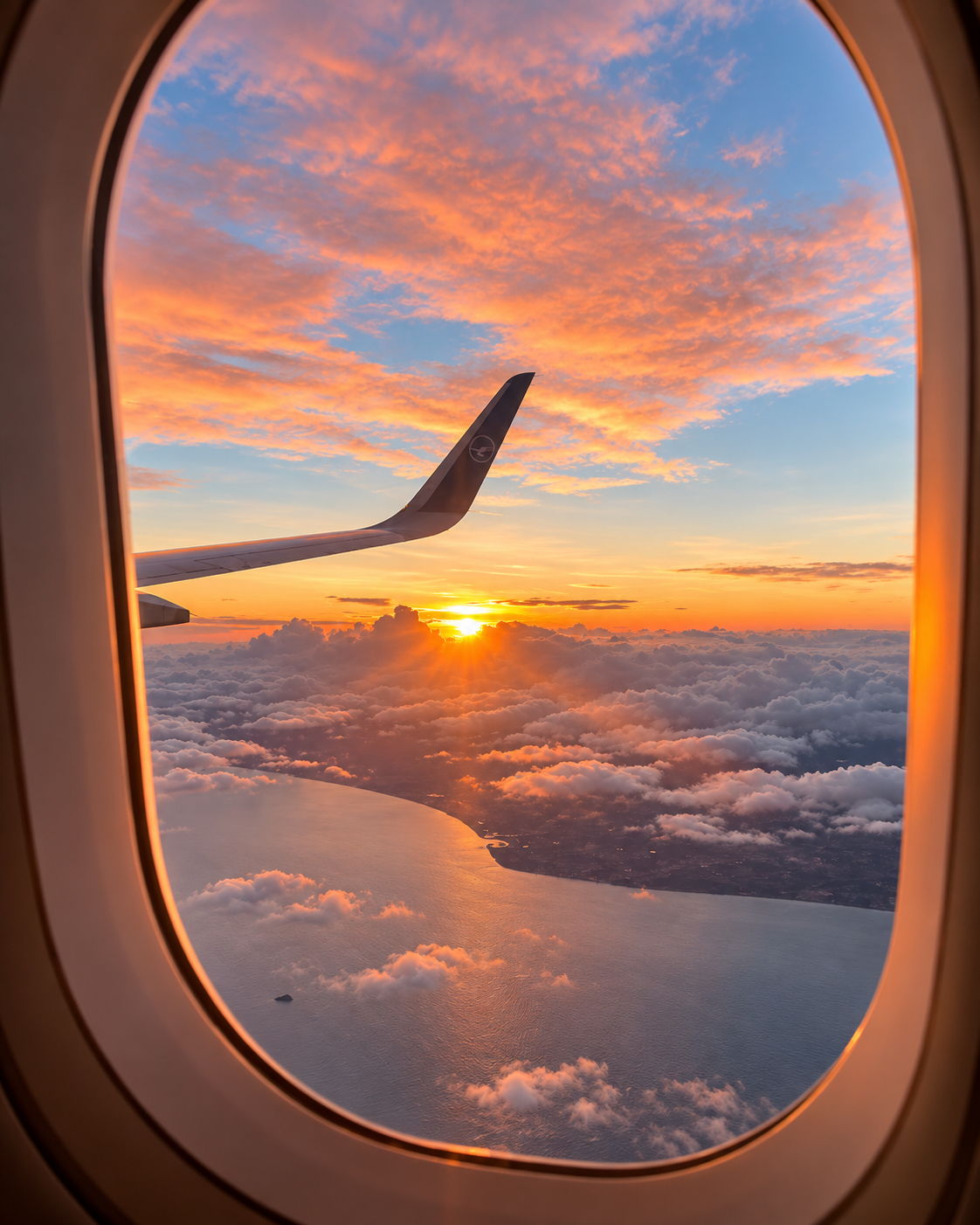
Ultraviolet intensity rises with altitude, because there is less atmosphere above to absorb it. The World Health Organization’s guidance on the UV Index describes an increase of roughly ten to twelve per cent for every thousand metres climbed, and at commercial cruising altitude the thinner atmosphere leaves far less filtering between the sun and the aircraft. Aircraft windows filter UVB effectively, but they do not block UVA, the longer wavelength associated with collagen breakdown and premature ageing as well as skin cancer risk.
This is not a minor technicality. A 2015 research letter in JAMA Dermatology, by researchers at the University of California, San Francisco, measured UV inside the cockpit of a flying aircraft. The windshield blocked UVB completely at every altitude measured, but UVA passed through, and the readings rose with height. By the authors’ calculation, about fifty-seven minutes at 30,000 feet delivered the same carcinogenic UVA dose as a twenty-minute session in a UVA tanning bed. The authors were careful about the limits: the measurements came from a single small aircraft with an acrylic windshield, taken around midday on two occasions, and they called for more measurements across different aircraft. Flying above thick cloud or snow, which reflect UV, could raise exposure further.
The wider occupational evidence points the same way. A systematic review and meta-analysis in JAMA Dermatology, pooling nineteen studies and more than 266,000 participants, found that pilots and cabin crew appear to have roughly twice the incidence of melanoma of the general population. The researchers proposed that altitude-related UV exposure may contribute, alongside other factors, and noted that crew radiation exposure is monitored for ionising radiation but not for UV. A pilot’s cockpit hours are not a window-seat passenger’s, and the study does not show that an occasional long-haul flight carries the same risk. But the principle carries over in smaller doses: a long daytime flight beside an open window is a period of real, if modest, UVA exposure.
Combine that with cabin air that is notably dry, which can accelerate transepidermal water loss, and the case for a considered in-flight skincare protocol stops being a beauty-editor indulgence. It becomes something closer to basic environmental hygiene: a broad-spectrum sunscreen applied before a daytime flight, a barrier-supporting moisturiser, and the window shade lowered when the light is strong, no different in principle from protecting your skin on a genuinely sunny day.


The Real Mechanism Behind Cabin Dehydration
Skin does not simply “dry out” on a flight in any vague sense. A specific, measurable process called transepidermal water loss accelerates the moment ambient humidity drops below what the skin barrier is equipped to handle — and understanding that mechanism changes which products actually work at altitude.
The outermost layer of skin, the stratum corneum, functions according to what dermatologists frequently describe as a brick-and-mortar structure: flattened, protein-rich cells called corneocytes serve as the bricks, held together by a lipid matrix of ceramides, cholesterol, and free fatty acids that functions as the mortar. This structure is what normally keeps transepidermal water loss, the continuous, passive evaporation of water from deeper skin layers into the surrounding air, within a manageable range. When ambient humidity falls low enough — as it reliably does inside a cabin sitting below twenty percent, against skin’s preferred range of forty to seventy — the gradient between the water content of the skin and the dry air surrounding it steepens sharply, and water evaporates from the stratum corneum considerably faster than the body can replace it from underlying tissue.
This is where flight skincare requires a genuinely different strategy than a normal routine, and where a common assumption actively backfires. Humectant ingredients — hyaluronic acid and glycerin foremost among them — work by binding water and drawing it toward the skin’s surface, and they perform excellently in normal indoor humidity. Published research in the cosmetic chemistry literature has demonstrated that in sufficiently low-humidity conditions, precisely the conditions found inside an aircraft cabin, humectants can reverse their usual function: with no ambient moisture available to draw from the air, they begin pulling water out of the skin’s own deeper layers instead, toward the drier surface, where it is then lost. This is the scientific case for layering an occlusive — an ingredient such as squalane, ceramides, ceramide-supporting botanicals, or a genuinely rich body butter — directly on top of any humectant serum before a flight, rather than relying on the humectant alone: the occlusive layer seals the surface, physically slowing water’s escape into the cabin’s dry air regardless of which direction a humectant beneath it might otherwise be pulling.
Pre-Flight Preparation
The most effective flight skincare begins well before boarding. Deep hydration, applied the night or morning before departure, gives skin a genuine reserve to draw from once cabin air begins pulling moisture out — a strategy considerably more effective than attempting to catch up mid-flight once dehydration has already set in.
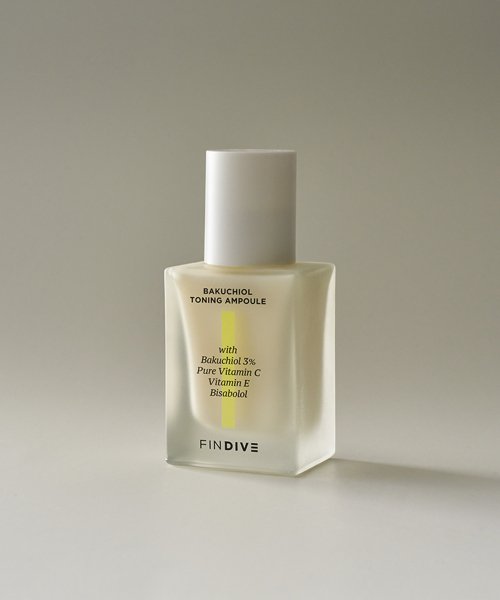

A bakuchiol-based toning ampoule the evening before departure supports skin barrier function without the sun-sensitivity concerns that come with a retinol applied right before hours of UV exposure at altitude, while a clarifying clay treatment the day before travel clears the surface debris and excess oil that would otherwise compete with hydration once the flight actually begins.




In-Flight Ritual
Once airborne, the priority shifts entirely toward damage limitation — replenishing what cabin air removes in real time rather than attempting a full routine better suited to a bathroom counter than a middle seat.
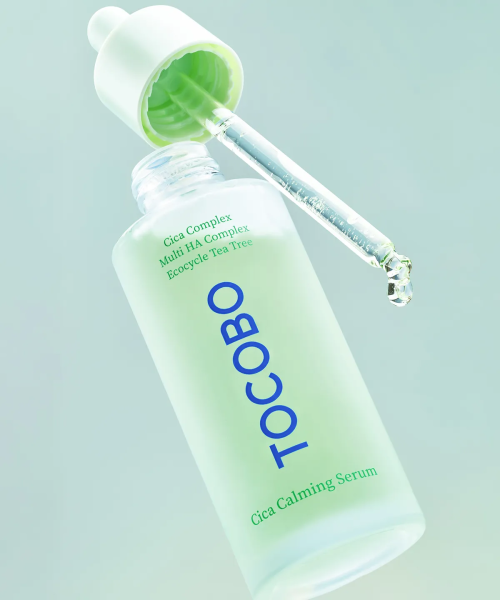
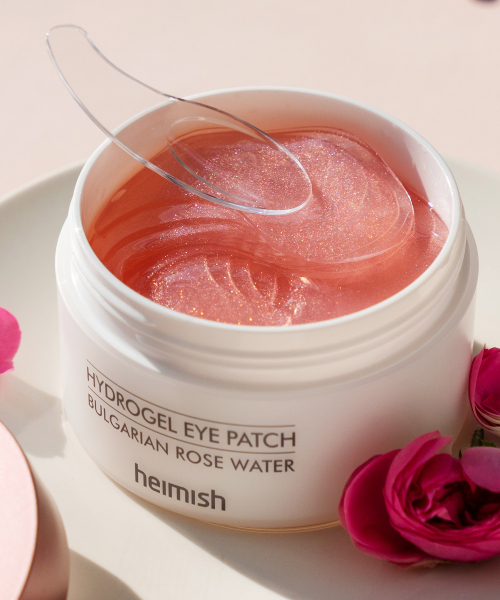


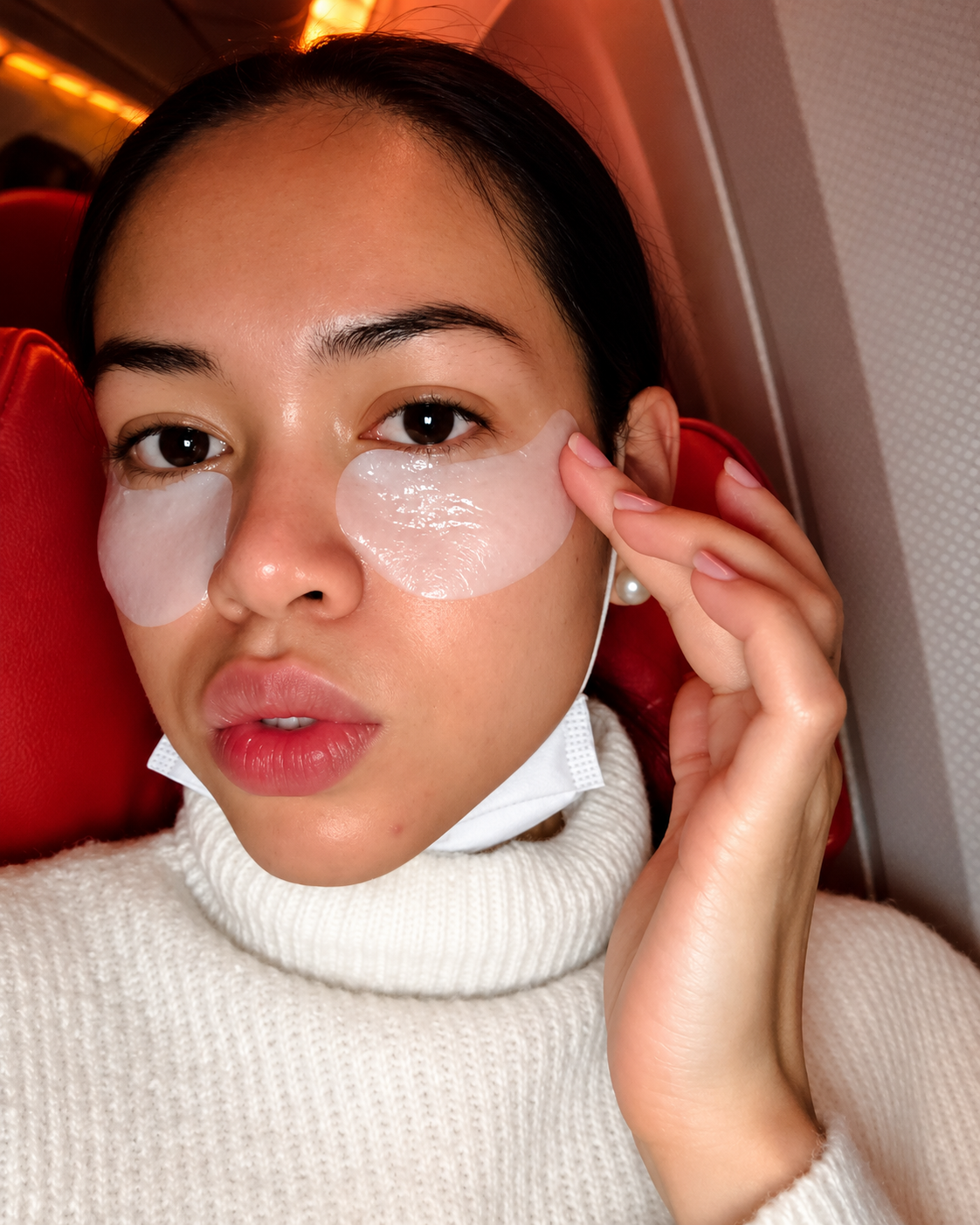
A cica-based calming serum, applied periodically throughout a flight, helps soothe the low-grade irritation dry cabin air tends to provoke, while hydrogel eye patches address the specific vulnerability of the thin skin around the eyes — among the first areas to show visible fatigue after several hours at altitude. A genuinely protective lip treatment matters more than most travellers assume, given how quickly lips crack in the same dry environment attacking the rest of the face, and a magnesium-rich body butter applied to hands and pulse points does double duty: hydration where cabin air is most aggressive, and a genuine calming effect for a body sitting still for hours longer than it was designed to. A dedicated hand cream, reapplied regularly given how often hands touch tray tables, armrests, and shared surfaces throughout a flight, rounds out the in-flight layer.
Post-Flight Recovery
Skin arriving at its destination has typically spent several hours losing moisture faster than it could reasonably replace it, which makes the immediate post-flight window a genuine recovery opportunity rather than simply the resumption of a normal routine.


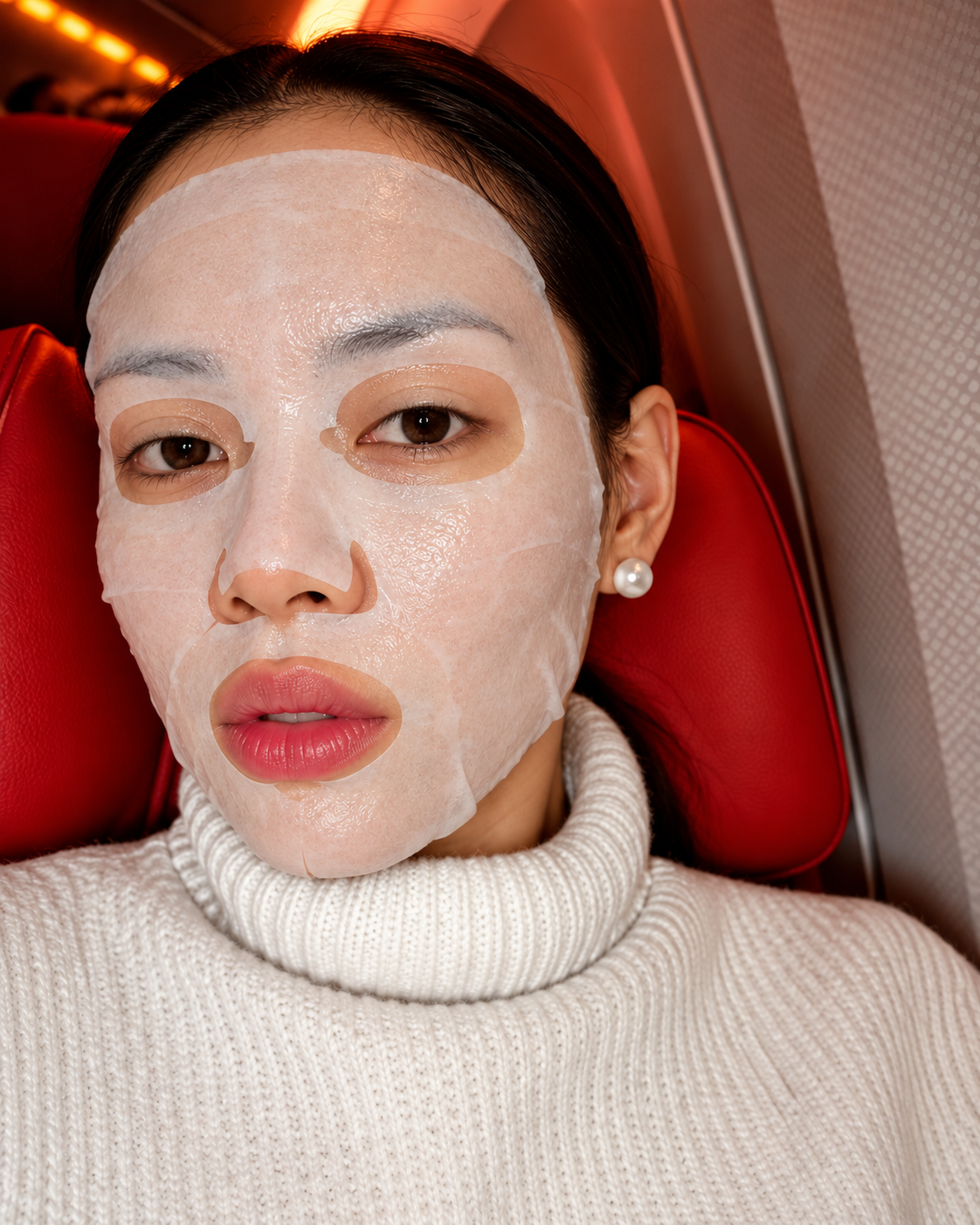
A genuinely nourishing sheet mask, applied within the first hour of arrival, delivers a concentrated dose of moisture back into skin that has spent the flight losing it steadily, while an oxygenating facial mask addresses the dullness and sluggish circulation that come from hours of recycled air and prolonged sitting. A lash and brow serum, kept in rotation regardless of travel schedule, supports the kind of long-term resilience that makes a complexion look genuinely rested rather than simply concealed the morning after arrival.
Why This Discipline Matters
The considered traveller has always understood that arriving well is as much a part of the journey as the destination itself — an instinct Vogue has long applied to travel beauty coverage, and one Condé Nast Traveler has increasingly treated as inseparable from genuine travel intelligence rather than a footnote to it. The same discipline that governs a considered beauty ritual rooted in the Adriatic’s own regional knowledge applies just as directly at thirty thousand feet, and the sequencing logic behind the skin’s own nocturnal repair biology is precisely what a flight interrupts most aggressively — humectant, barrier support, and protection, applied in the right order, regardless of whether the destination is a bed or a boarding gate. A traveller headed toward the quiet coastline of Naxos or the layered energy of Mykonos arrives considerably better prepared to actually enjoy either, having spent the flight protecting rather than simply enduring their skin — the same seasonal material intelligence explored in this series’ approach to winter dressing, applied here to the body’s largest organ rather than its wardrobe.
A flawless complexion was never simply a beauty aspiration. At altitude, it is closer to an act of genuine preparation — a working knowledge of what reduced cabin pressure, falling oxygen saturation, and accelerating transepidermal water loss are each doing to skin in real time, and a routine built specifically to counter each mechanism rather than simply hoping for the best. The most considered travellers treat their skin the same way they treat everything else worth protecting: with real intention, grounded in what is actually happening at thirty thousand feet, well before any of it becomes visible on arrival.
“No one arrives anywhere
by accident
looking rested.
At thirty thousand feet,
the air itself
is working against you —
drier than any desert,
closer to a sun
that no window
was ever built
to fully filter out.
The considered traveller
was never simply lucky.
She simply started
before the plane
had even left the ground.”

