
On the Parthenon as architecture’s most complete argument for mathematical beauty, the Acropolis Museum as the contemporary conversation with that argument, the Ilias Lalaounis Jewelry Museum as the living inheritance of Greek craft intelligence, and why Athens remains one of the world’s most compelling destinations for travellers who understand that the most extraordinary cities are not those that preserve the past but those that allow it to continue influencing the future
Every generation discovers Athens differently. For the ancient philosophers who walked its stoa and argued in its agora, it was the birthplace of ideas — the specific geography where democracy, rhetoric, philosophy, and the concept of the examined life first took institutional form. For the artists and architects who arrived from the eighteenth century onward, it was a source of formal intelligence: the place where the principles of proportion, balance, and the mathematical relationship between structure and ornament could be studied at their most complete expression. For the contemporary traveller, Athens offers something more complex and more interesting than either of these framings: a city where the past is not a museum exhibit but an active presence, where ancient marble and modern coffee shops and Byzantine churches and contemporary design hotels and street art and Michelin-starred gastronomy coexist in the same neighbourhood without requiring the city to choose between them.
Athens is not simply a destination built around ruins. It is a city where history remains part of everyday life — where the Acropolis is the backdrop of a morning commute, where the streets of Monastiraki contain both Roman-era foundations and contemporary jewellers whose design intelligence draws on 2,500 years of Greek goldsmithing tradition, where the dinner table is one of the places where Greek cultural identity is most specifically and most pleasurably expressed. This is what distinguishes Athens from the merely ancient: it is ancient and alive simultaneously, and the aliveness is not despite the antiquity but because of it.
The Parthenon — the architecture of eternity
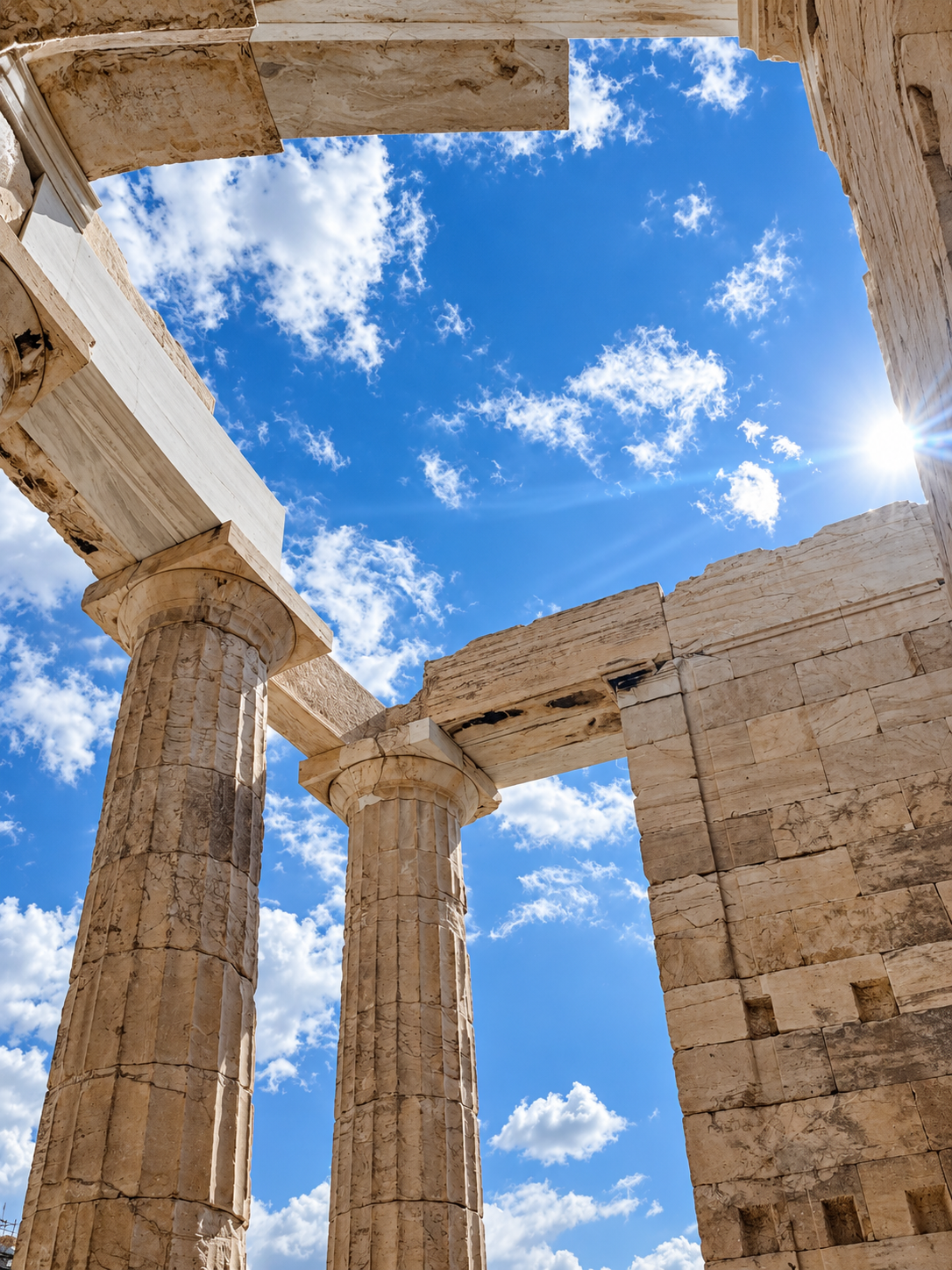
The Parthenon was built between 447 and 432 BCE on the Acropolis of Athens, commissioned by the statesman Pericles as the centrepiece of a rebuilding programme following the Persian sack of the Acropolis in 480 BCE. Its architects were Iktinos and Kallikrates; its sculptural programme was overseen by Phidias, the most celebrated sculptor of the fifth century BCE, who also created the chryselephantine — gold and ivory — statue of Athena Parthenos housed within. The building is dedicated to Athena Parthenos, the Virgin Athena, patron goddess of Athens. It measures 69.5 by 30.9 metres, has 46 outer Doric columns, and was constructed from approximately 22,000 tons of Pentelic marble quarried from Mount Pentelicus, sixteen kilometres from Athens, and transported by ox-cart before being lifted into position with cranes and pulleys. The Delian League treasury — the financial resource of Athens’ alliance of Greek city-states, moved from Delos to the Acropolis in 454 BCE — funded the project, making it as much a political statement as a religious one.
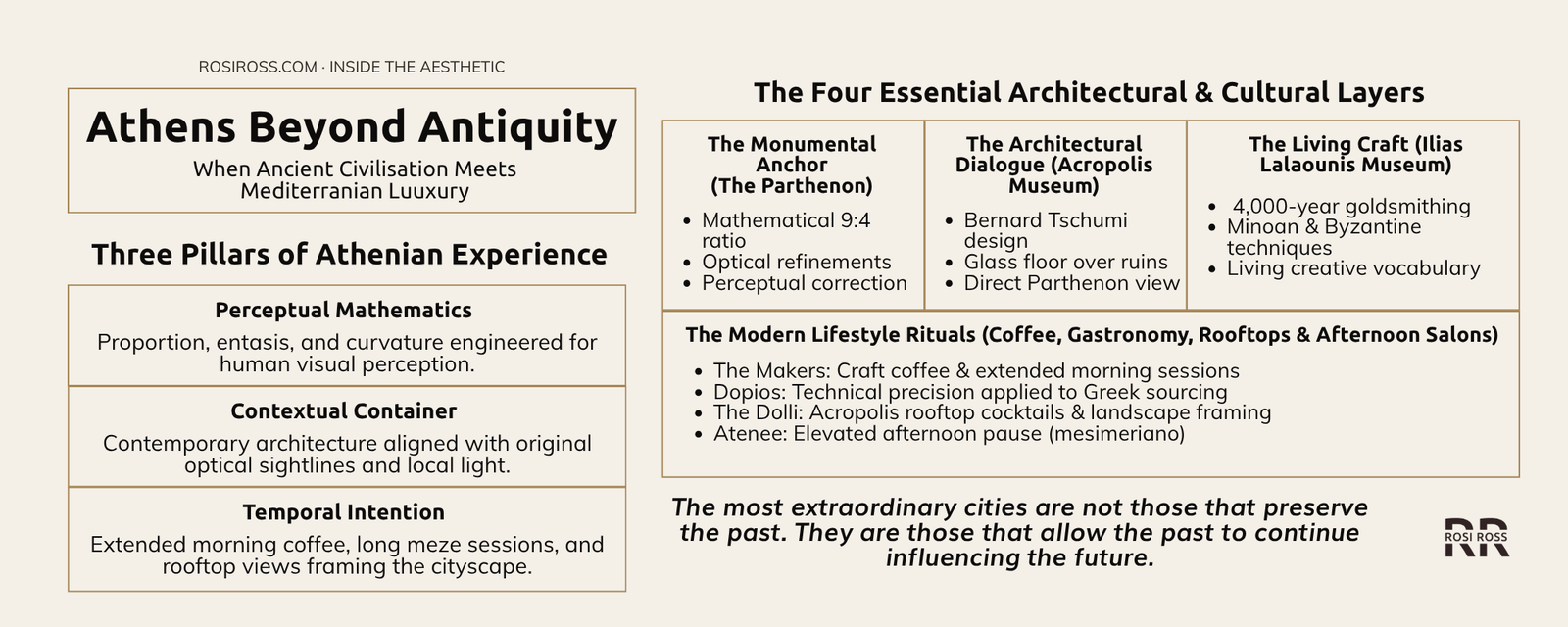
These are the facts. What they do not adequately communicate is what the experience of encountering the Parthenon actually involves — and why it involves it, which is a different kind of question from the merely historical one. The Parthenon endures not simply because it is old or because it is recognisable. It endures because it represents one of the most complete available expressions of a design philosophy that understands beauty as a function of mathematical relationship rather than of decoration or accumulation. The temple’s proportional system — the 9:4 ratio that governs the relationship between its width and length, between its width and height, and between the spacing and diameter of its columns — is not a coincidence of pleasing form but the deliberate application of a mathematical intelligence that the architects and the culture they represented understood as the fundamental basis of aesthetic value.
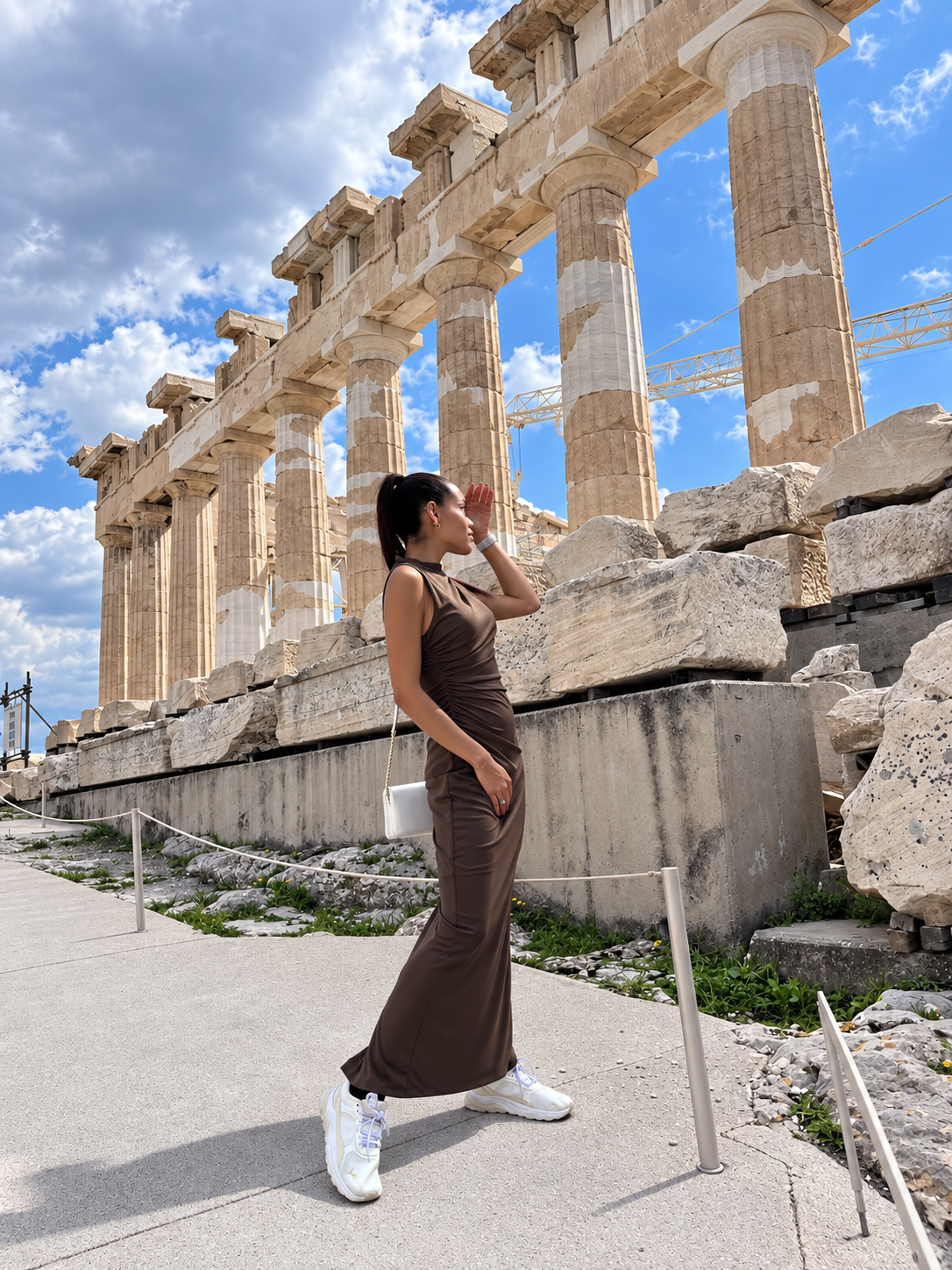
The optical refinements of the Parthenon are the most specific evidence of this intelligence. Every column tapers slightly inward as it rises and bulges very slightly outward at its middle — a refinement called entasis — because a perfectly straight column, at this scale and in this Mediterranean light, would appear to curve inward and look thin in its middle. The stylobate — the platform on which the columns rest — curves slightly upward at its centre because a perfectly flat platform, at this length and in this light, would appear to sag. The columns at the corners are slightly thicker and more closely spaced than the interior columns because the eye reads differently at the corners of a building than at its centre. These are not aesthetic preferences. They are perceptual corrections: the application of a precise understanding of how human vision operates to the problem of making a building look exactly the way the mind’s ideal of it would look, rather than the way its literal measurements would produce. As Britannica’s architectural analysis of the Parthenon confirms, it is generally considered the culmination of the development of the Doric order precisely because these refinements represent the technique applied at its highest level of sophistication.
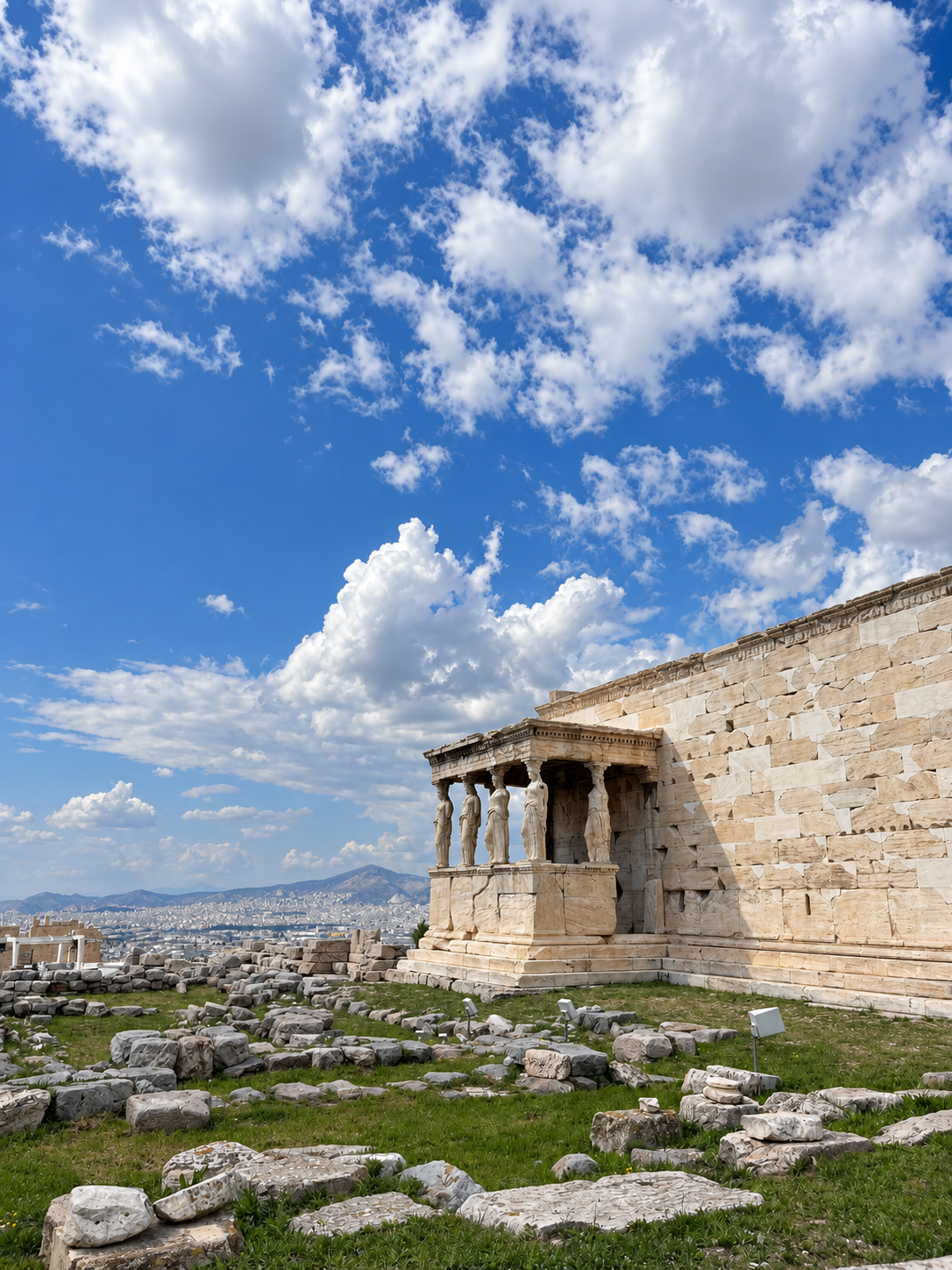
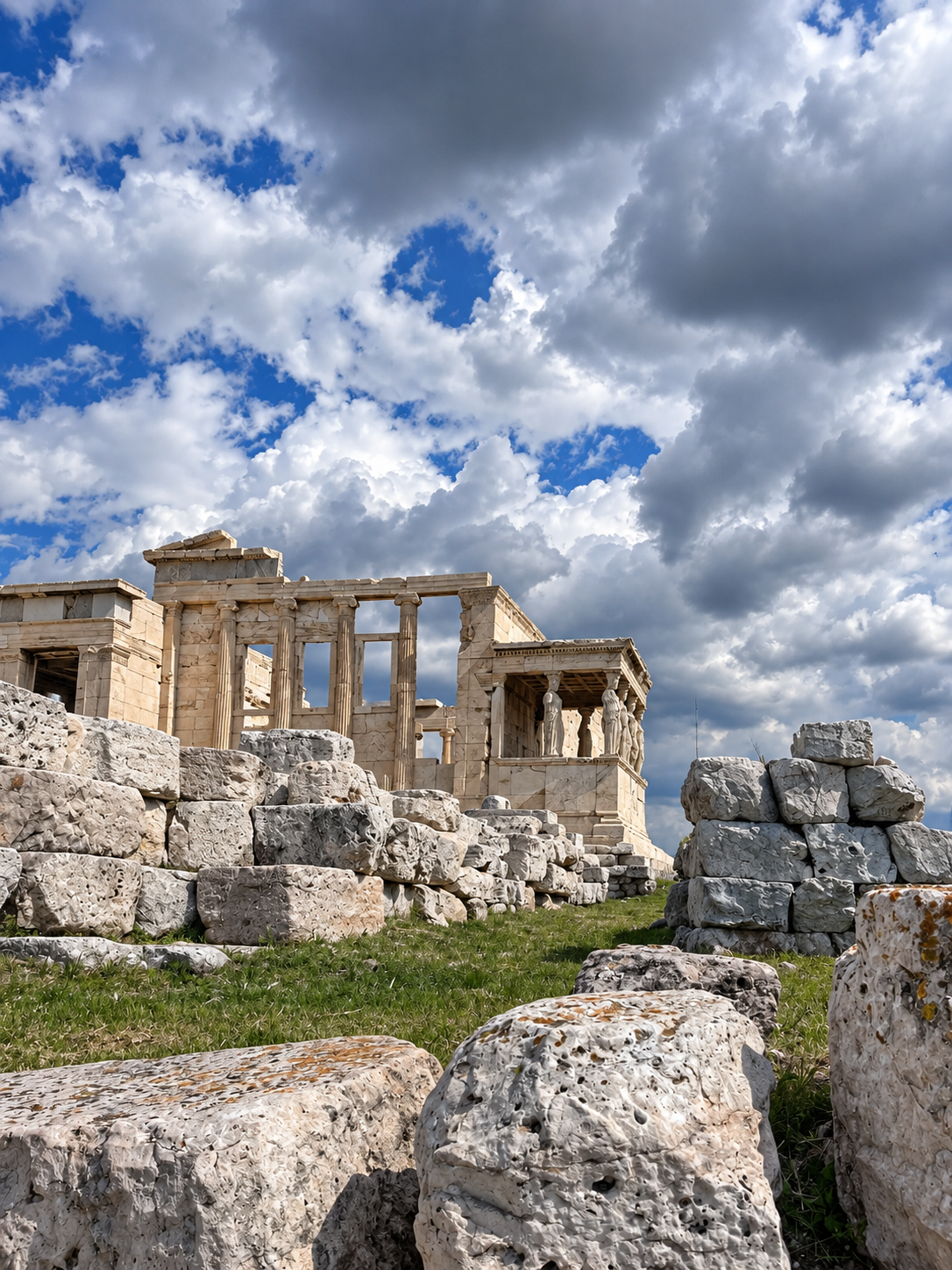
The Parthenon is a Doric marble temple on the Acropolis of Athens, dedicated to the goddess Athena Parthenos, built between 447 and 432 BCE under Pericles by the architects Iktinos and Kallikrates with the sculptor Phidias overseeing the artistic programme. It is considered the finest surviving example of classical Greek architecture for two reasons: the mathematical precision of its proportional system (the 9:4 ratio governing the relationship between width, length, and height), and the sophistication of its optical refinements (entasis in the columns, curvature of the stylobate platform, thickening of corner columns) — corrections applied to counteract the specific ways in which human vision distorts large-scale architecture viewed in Mediterranean light. It remains influential not as a historical artefact but as a permanent argument that beauty is a function of mathematical relationship precisely applied to perceptual reality.



The Acropolis Museum — the contemporary conversation with antiquity
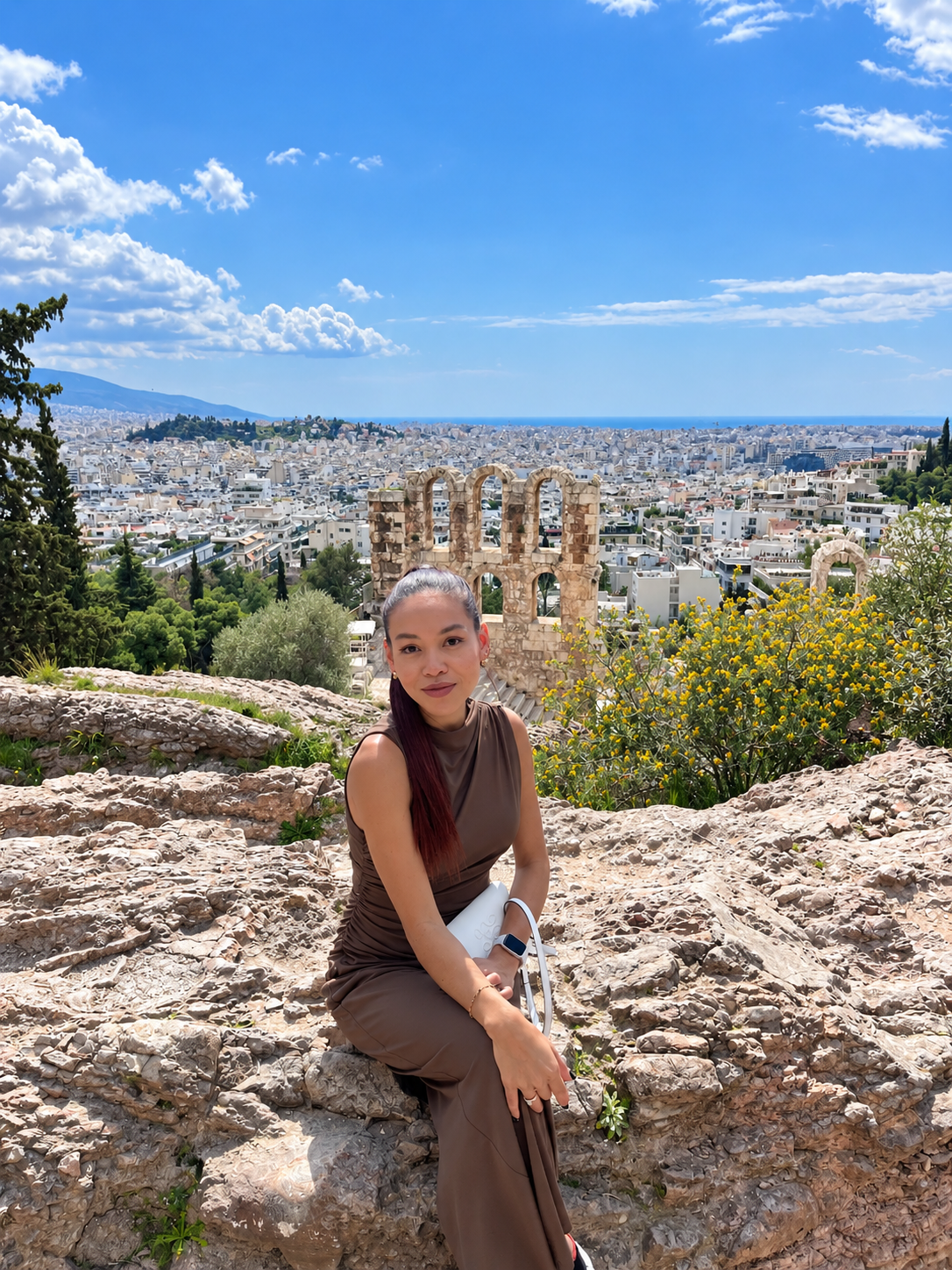
The Acropolis Museum opened on June 20, 2009, and represents one of the most considered acts of cultural architecture of the twenty-first century. Designed by Bernard Tschumi Architects of New York and Paris with Athens-based Michael Photiadis as local associate architect, at a cost of €130 million and with 14,000 square metres of exhibition space — ten times the capacity of the previous Acropolis museum — the building was conceived around three governing principles: light, movement, and the explicit relationship between the museum’s contents and the building from which they came. It sits 300 metres southeast of the Parthenon at the foot of the Acropolis, and its design assumes at every level that the Parthenon is visible — that the relationship between the object and its source is not a historical reference but a direct spatial one, maintained by the building’s orientation and its most significant architectural feature: the Parthenon Gallery, positioned on the museum’s top floor and aligned precisely with the temple on the hill above, its windows offering the specific sightline that makes the relationship between the original and what was removed from it simultaneously legible.
More than 100 concrete pillars support the building over the remains of an ancient Athenian neighbourhood discovered during pre-construction excavations — a discovery that would have halted most projects but that Tschumi integrated into the museum’s fundamental architectural argument. The glass-floored ramp through which visitors ascend from ground level reveals these ancient remains below, creating a movement sequence in which the visitor literally walks above Athens’s own buried past on the way to encountering its most celebrated objects. The friezes, metopes, and caryatids that the museum houses are placed in natural light wherever possible, because the specific quality of Mediterranean light — directional, warm, high-angled in summer, raking in winter — is the light for which the sculptures were carved and in which they were intended to be seen. To see them in artificial museum lighting alone is to see them in conditions their makers did not intend and that their surfaces do not fully reveal. The most architecturally serious cultural institutions understand that the design of the container is as important as the quality of what it contains — and that the relationship between the two is where the most significant cultural experiences occur.
The political dimension of the Acropolis Museum is inseparable from its cultural one. The building was designed with the specific intention of providing the conditions that would support the return of the Parthenon sculptures currently held by the British Museum — demonstrating, through its architectural seriousness and its capacity, that Athens could house and display them with the same quality of care and the same sophistication of presentation that London provides. This argument is still unresolved. What the museum achieves independently of its resolution is the creation of a space in which the relationship between Athens and its own cultural heritage is experienced with a clarity and an emotional weight that no other institution provides.



The Ilias Lalaounis Jewelry Museum — Greek craft intelligence as living tradition
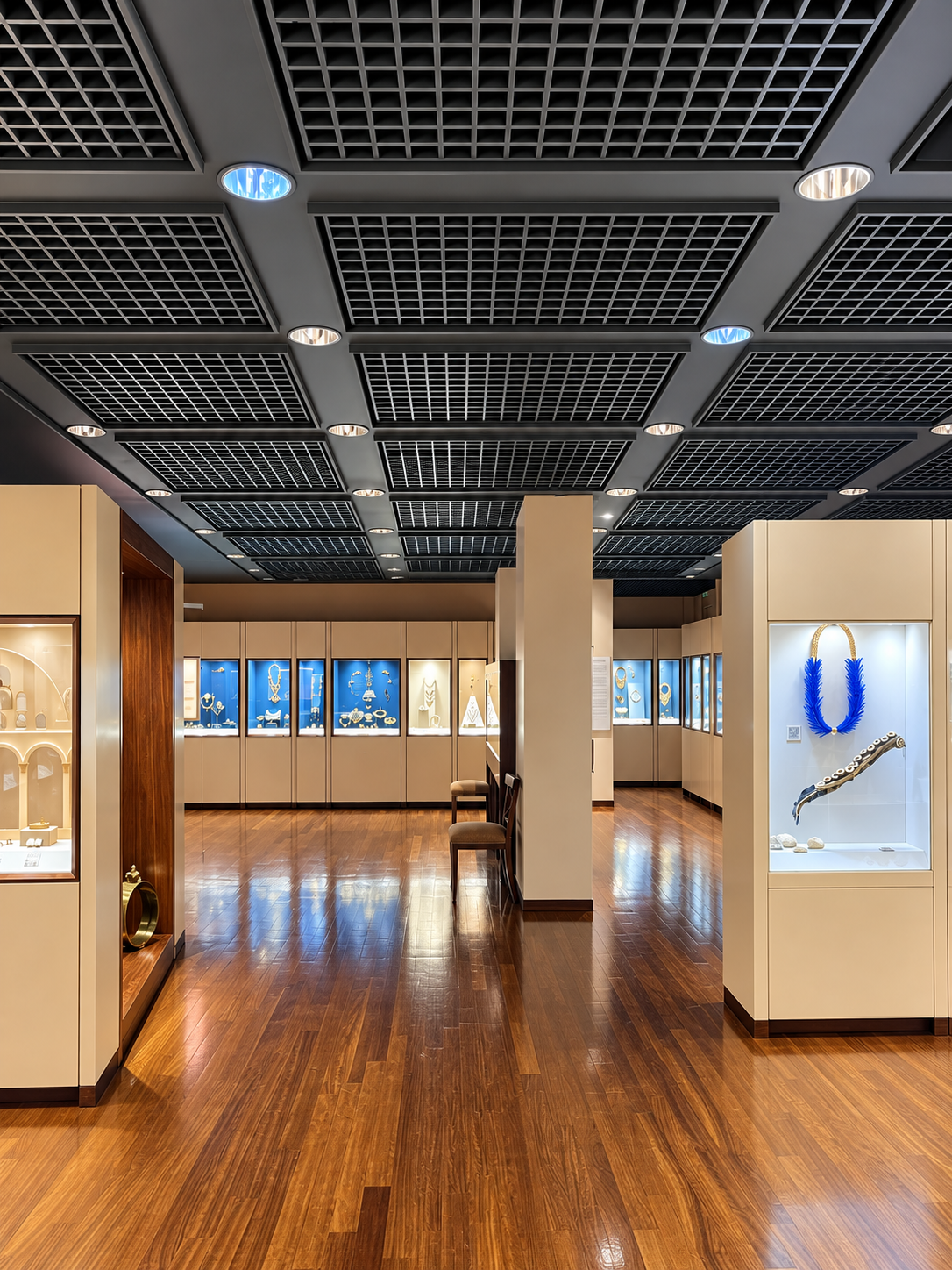
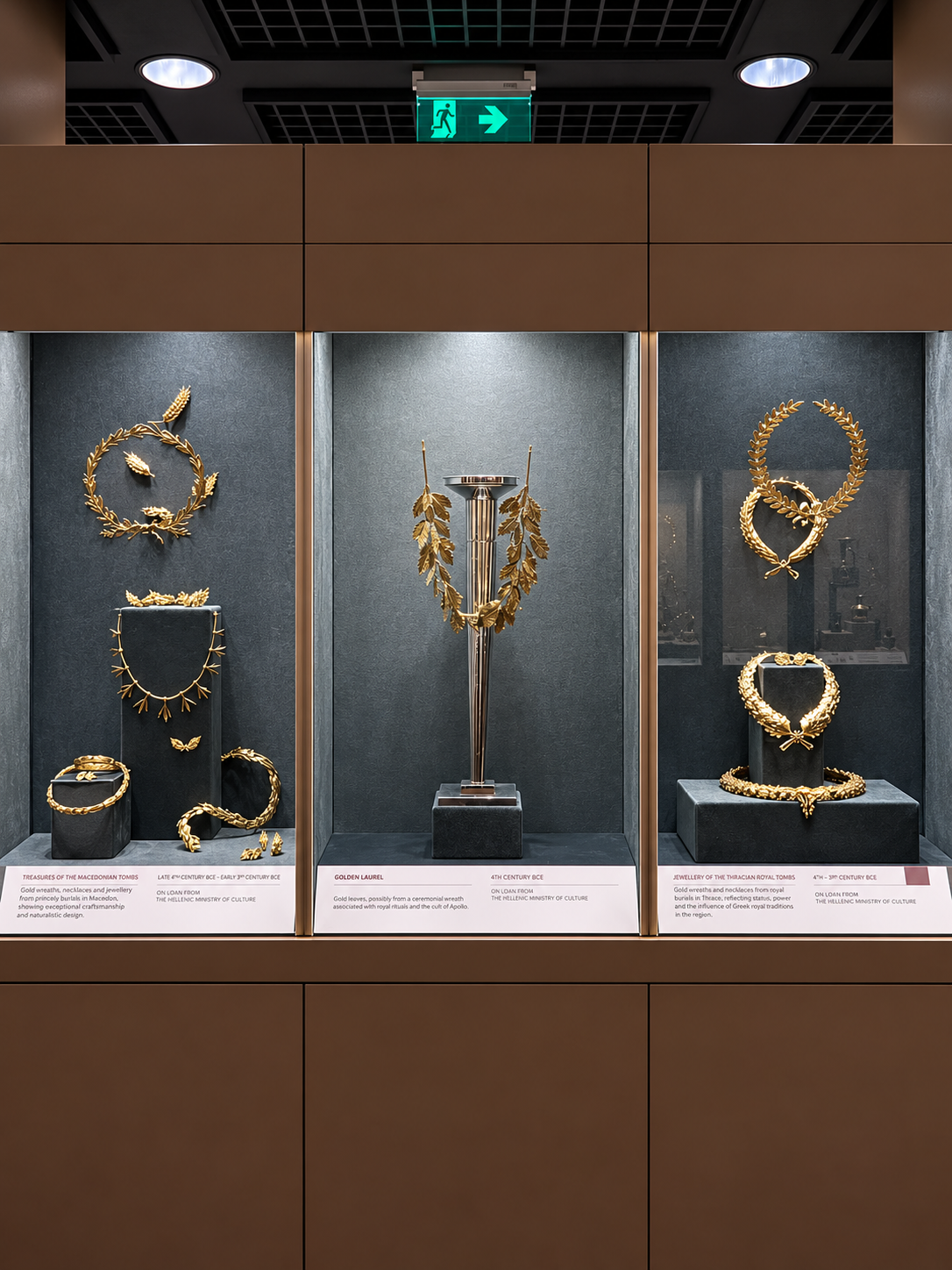
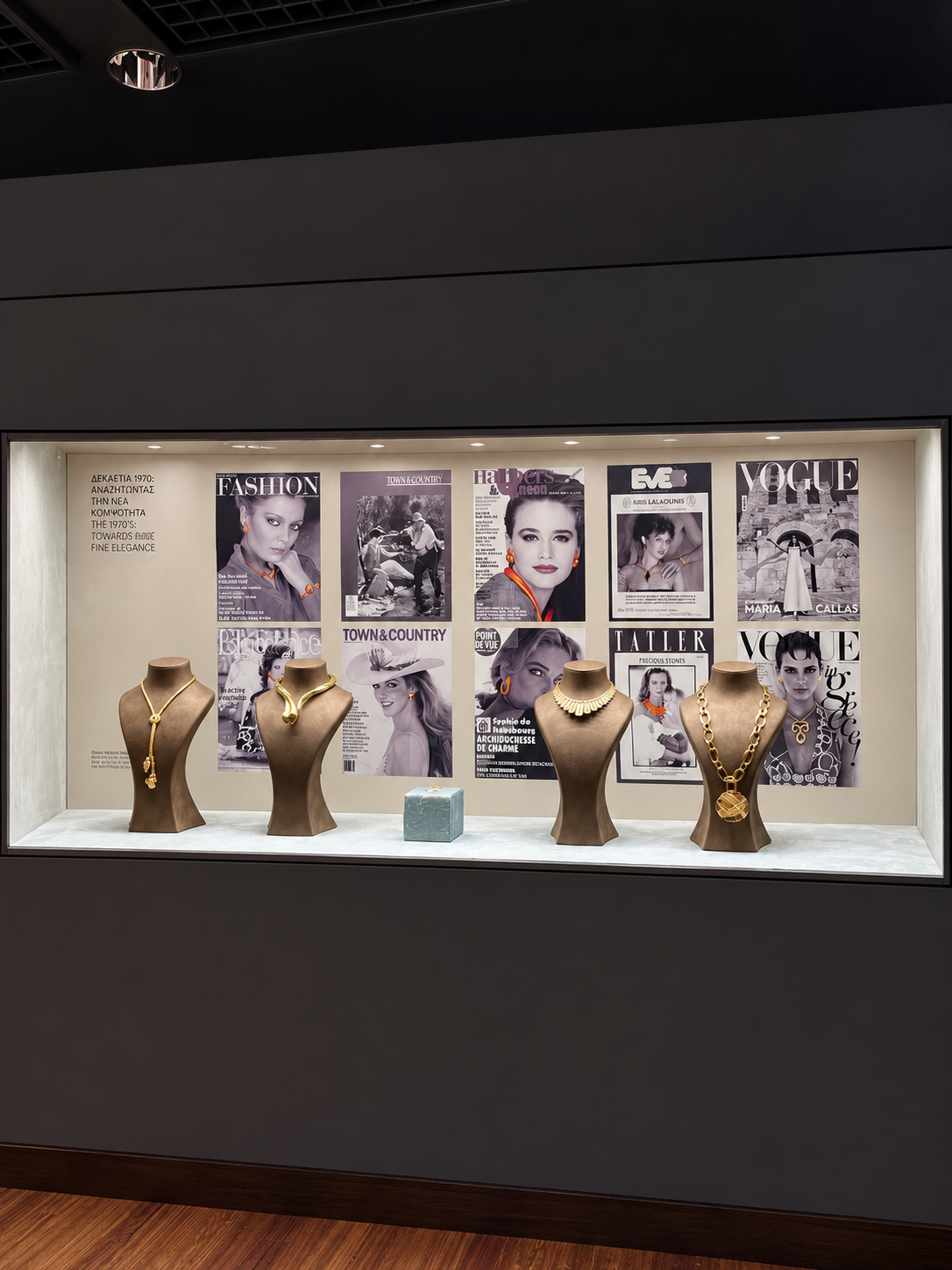
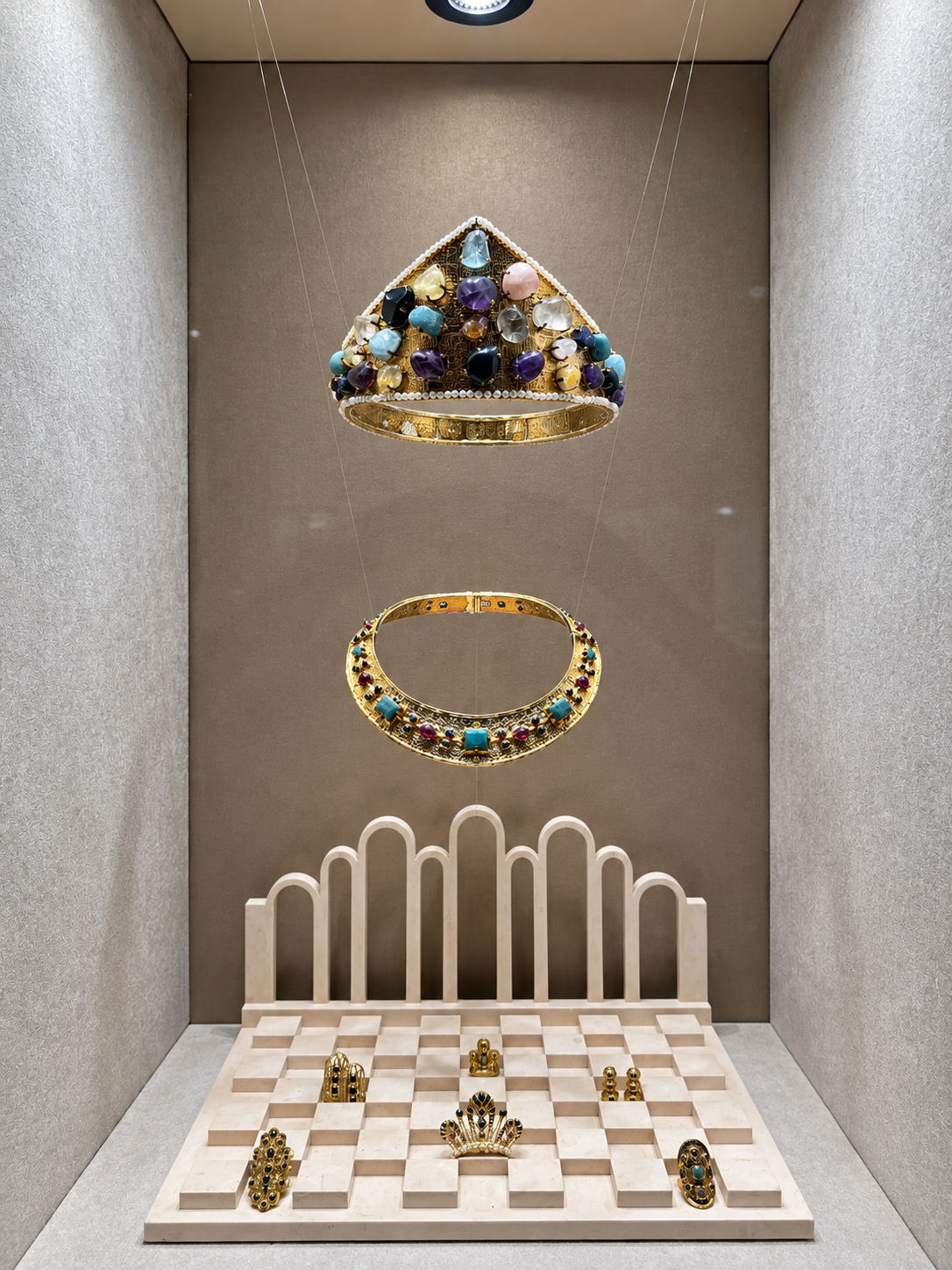
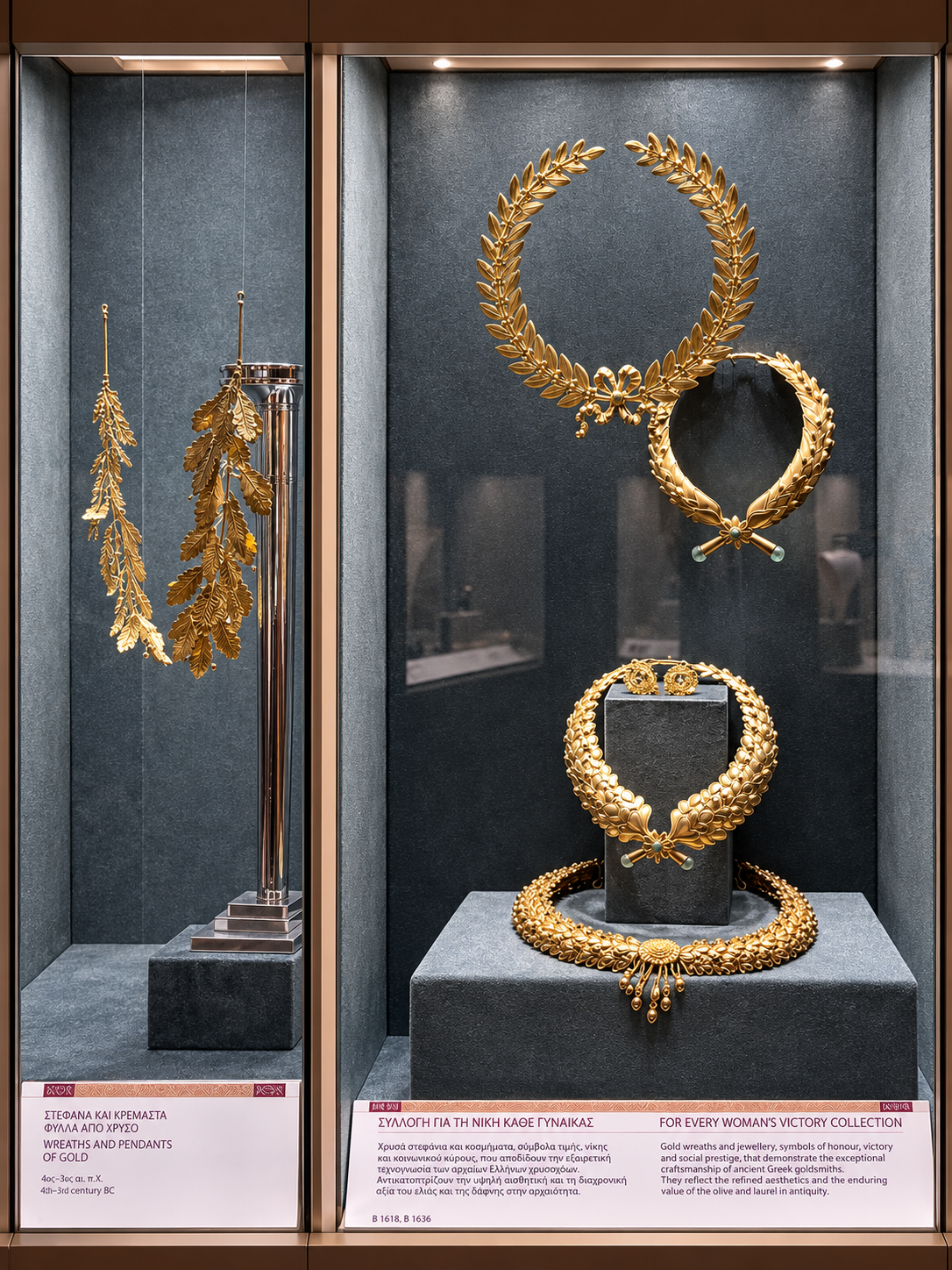
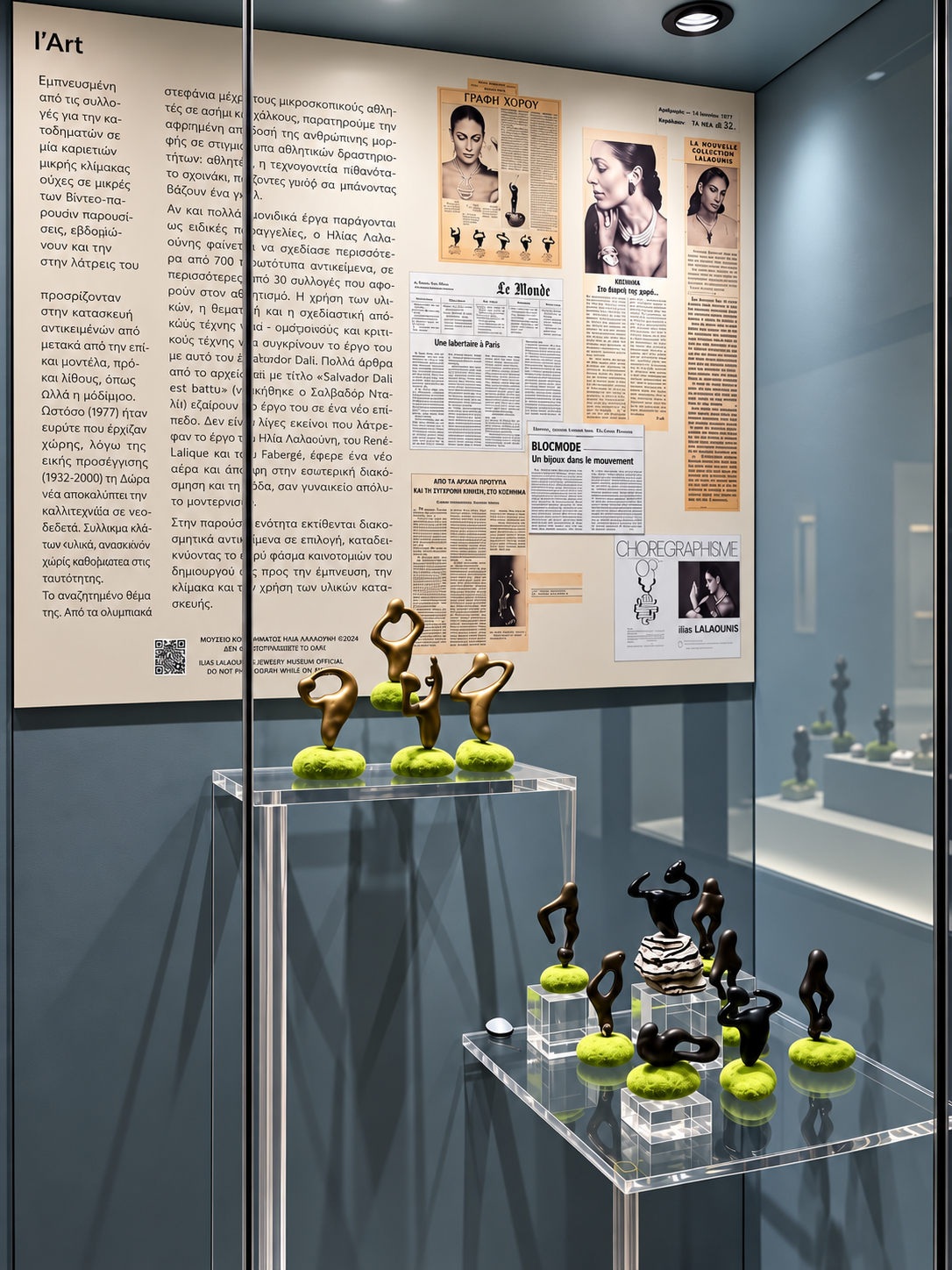
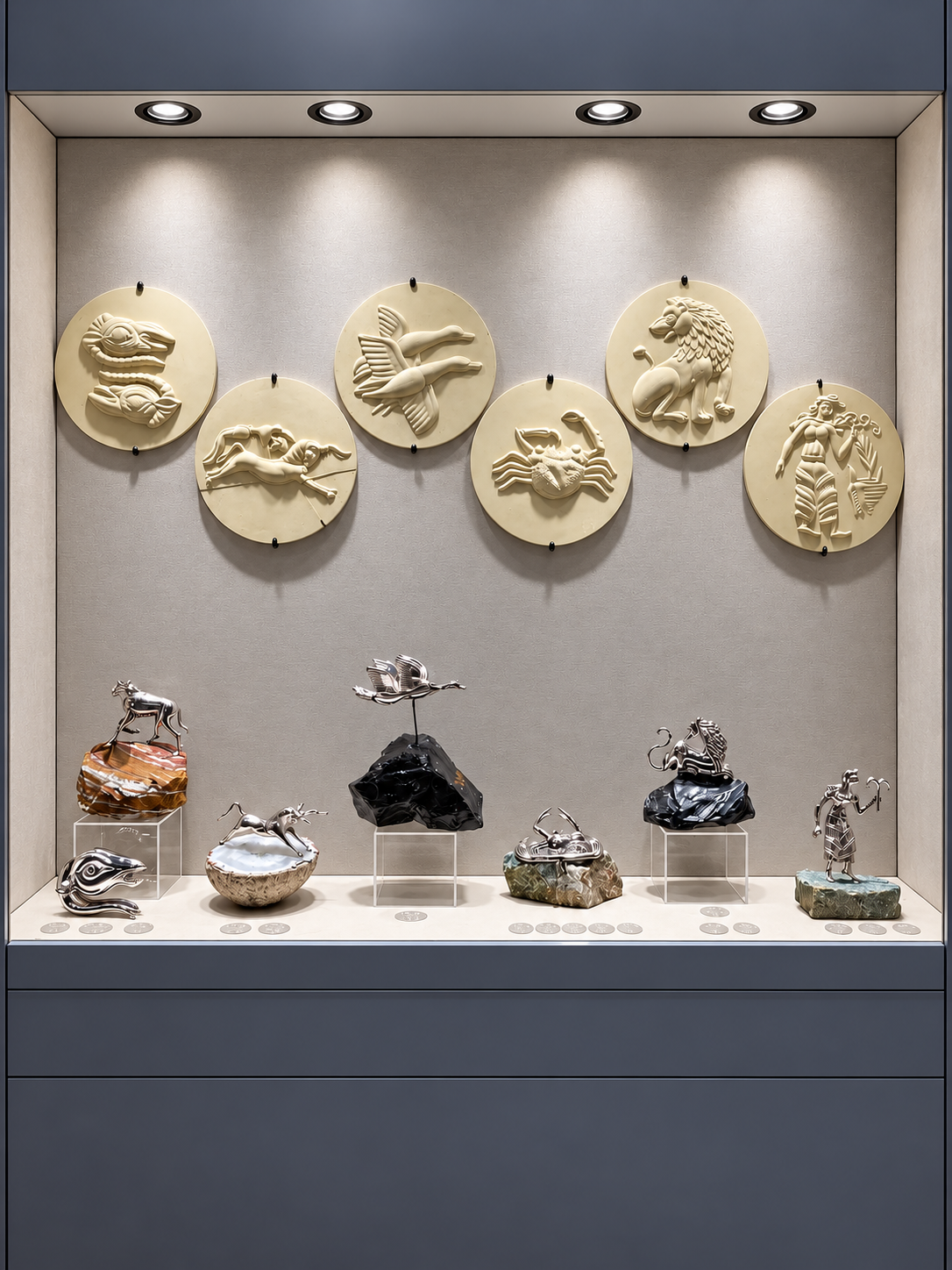
The Ilias Lalaounis Jewelry Museum at 12 Kallisperi Street, in a 1930s Athenian modernist building that housed the workshops of Ilias Lalaounis Greek Gold from 1968 — the first modern jewellery workshops in Greece to apply ancient techniques to contemporary design at international level — is one of the least predictable and most rewarding cultural experiences Athens provides. It is, specifically, a museum dedicated to the work of a single jeweller: Ilias Lalaounis, who died in 2013 at the age of 93, and who spent his career demonstrating that the Greek goldsmithing tradition — one of the oldest and most technically sophisticated in the world, rooted in Minoan, Mycenaean, Classical, and Byzantine metalworking — was not a historical discipline but a living one, capable of producing contemporary work of genuine artistic significance.
What Lalaounis understood, and what the museum communicates with unusual clarity, is that the Greek jewellery tradition is not merely decorative in its heritage but conceptual: it draws on mythology, cosmology, architecture, the natural world, and the mathematical systems that governed Greek artistic production across multiple civilisations. His pieces reference the granulation technique of Minoan goldsmiths, the filigree work of Byzantine craftsmen, the zoomorphic forms of ancient Greek gold work, and the proportional systems of classical architecture — not as historical quotation but as a living creative vocabulary, reinterpreted through a twentieth and twenty-first century aesthetic sensibility that makes the historical reference unmistakable without making the contemporary application feel archaeological. The most resonant contemporary jewellery draws on exactly this kind of historical depth — the understanding that craftsmanship traditions with genuine longevity carry meaning that contemporary design alone cannot manufacture.
The Ilias Lalaounis Jewelry Museum at 12 Kallisperi Street, Athens, is dedicated to the work of Ilias Lalaounis (1920–2013), the goldsmith who established the first modern jewellery workshops in Greece in 1968 and spent his career translating Greek goldsmithing heritage — Minoan, Mycenaean, Classical, and Byzantine — into contemporary design at international level. The museum is housed in the 1930s modernist building that served as Lalaounis’s original workshops, giving it the specific quality of a working space transformed into a cultural institution rather than a purpose-built museum. Its significance for understanding Greek craft heritage lies in the demonstration that classical Greek material intelligence — the granulation techniques of Minoan goldsmiths, the filigree work of Byzantine craftsmen, the mathematical systems governing Greek artistic proportion — is not a historical archive but a living design vocabulary capable of producing work of contemporary artistic significance.




The Makers Coffee — the ritual of the Athenian morning
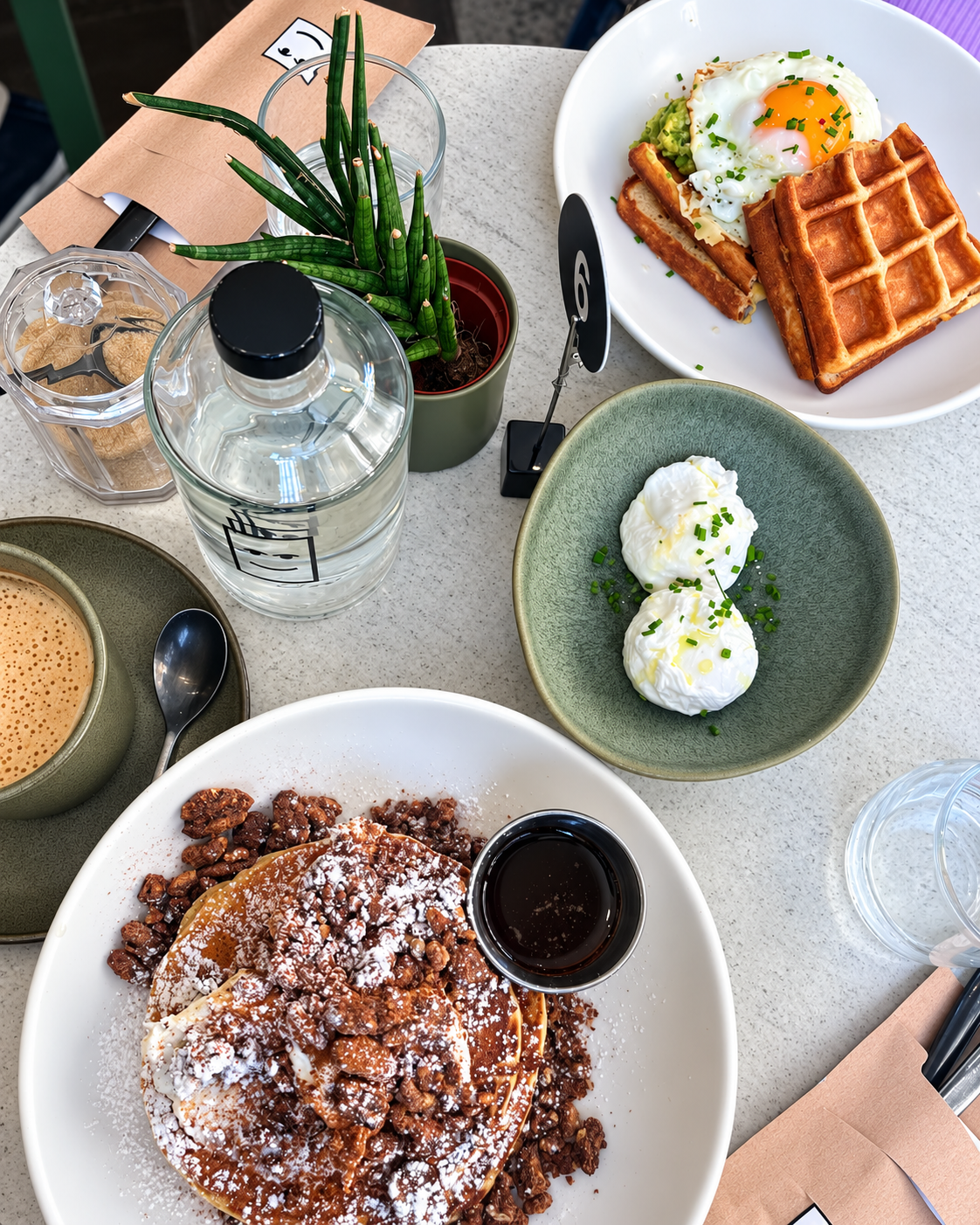
Greece has one of the most specific coffee cultures in the world — and one of the most misunderstood by visitors who arrive expecting the espresso culture of Italy or the filter tradition of northern Europe. The Greek relationship to coffee is neither of these: it is the specific culture of the frappé (cold instant coffee, invented in Thessaloniki in 1957 by Nestlé representative Dimitris Vakondios during the Thessaloniki International Trade Fair), the freddo espresso and freddo cappuccino that have largely displaced it among a younger generation, and the slow, socially extended café session that treats the coffee not as a fuel to be consumed rapidly but as the occasion for a duration of time whose social, professional, and personal dimensions are as important as its caffeination. The Greek café is not a quick stop. It is a destination.
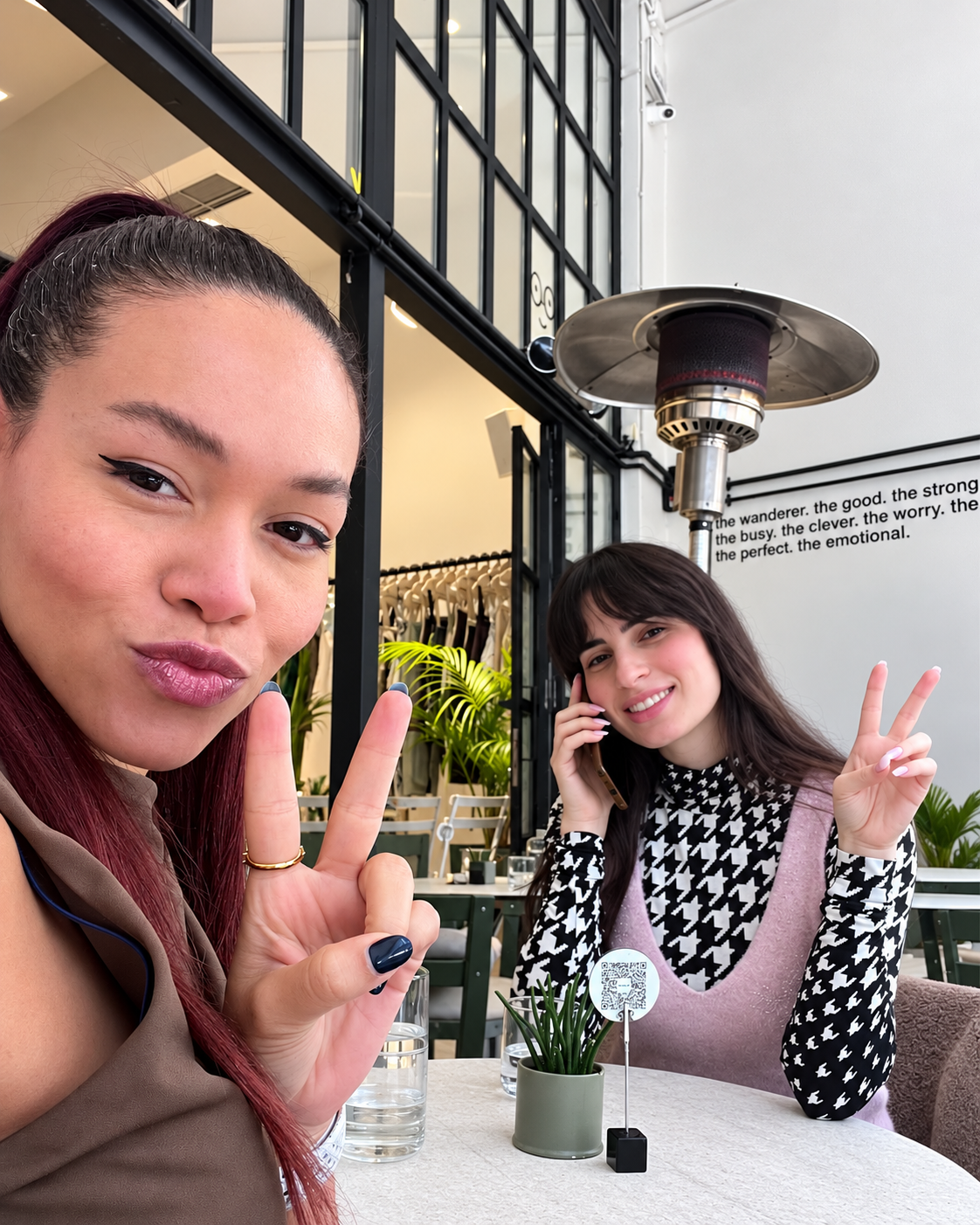
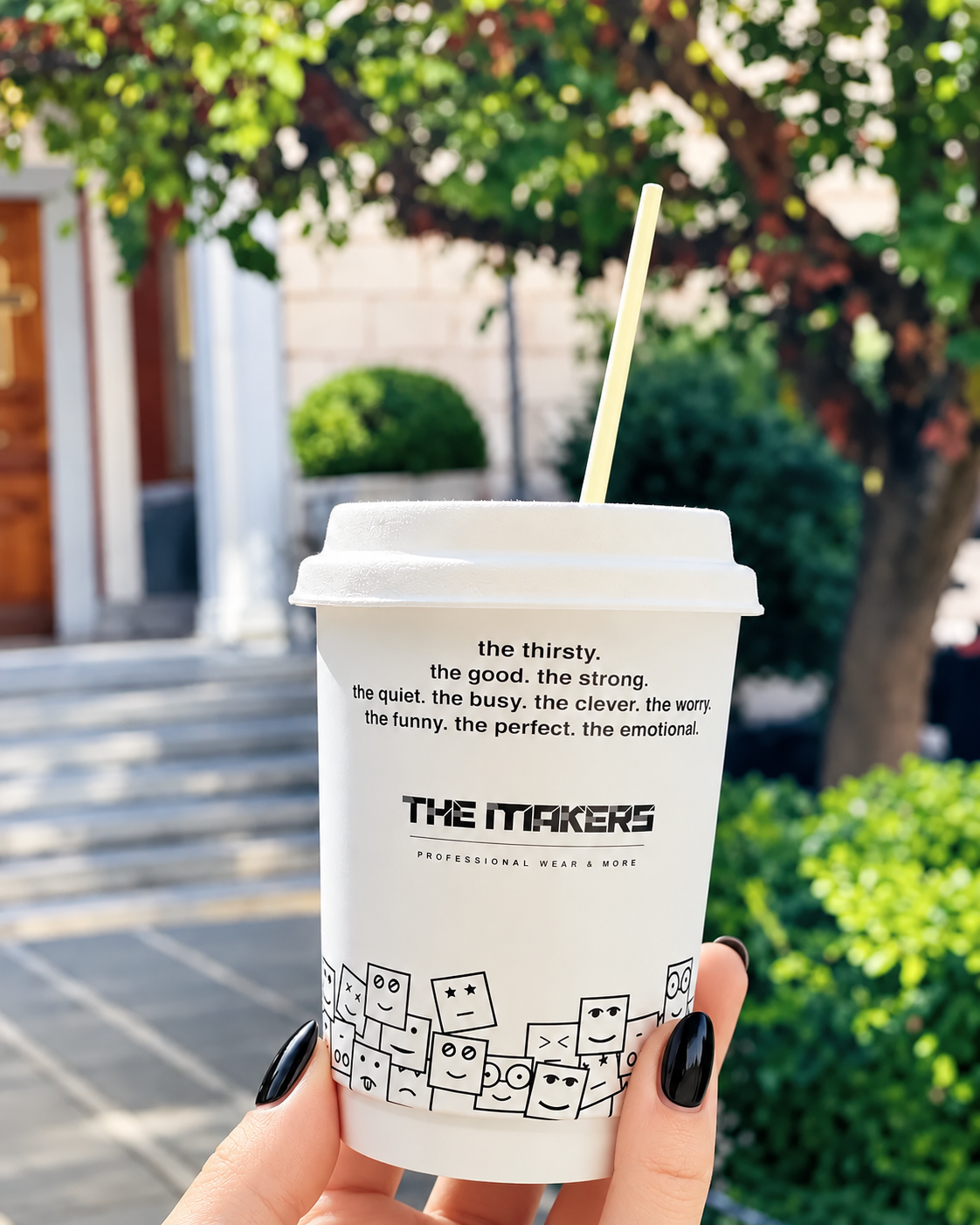
The Makers Coffee in Athens represents this culture at its most considered contemporary expression: the artisanal, design-conscious café whose commitment to coffee quality as a craft extends from the sourcing and roasting of the beans through the specific preparation of each drink to the precision of the environment in which it is served. The aroma of freshly brewed coffee, the artisanal pastries, the specific quality of light in the morning: these are not ambient details but the deliberate construction of a sensory environment that understands the morning coffee ritual as an experience with its own aesthetic integrity. The finest hospitality experiences across every category share this understanding: that what appears to be a simple daily ritual — a cup of coffee, a cup of tea — is the point at which the quality of attention an institution brings to its craft becomes most directly and most intimately perceptible.




Dopios Athens — the intelligence of contemporary Greek gastronomy
Greek cuisine has undergone a transformation in the past two decades that deserves more serious attention from the international culinary community than it typically receives. The transformation is not from traditional to modern in the sense of abandoning or replacing the culinary heritage — the specific flavour architectures of olive oil, lemon, herbs, grilled seafood, legumes, and the specific Mediterranean agricultural palette that has shaped Greek cooking for millennia. It is a transformation in the depth and precision with which that heritage is understood and applied: the movement from quantity and generosity as the primary culinary values toward quality, sourcing specificity, and the kind of technical rigour that reveals rather than replaces the character of traditional ingredients.
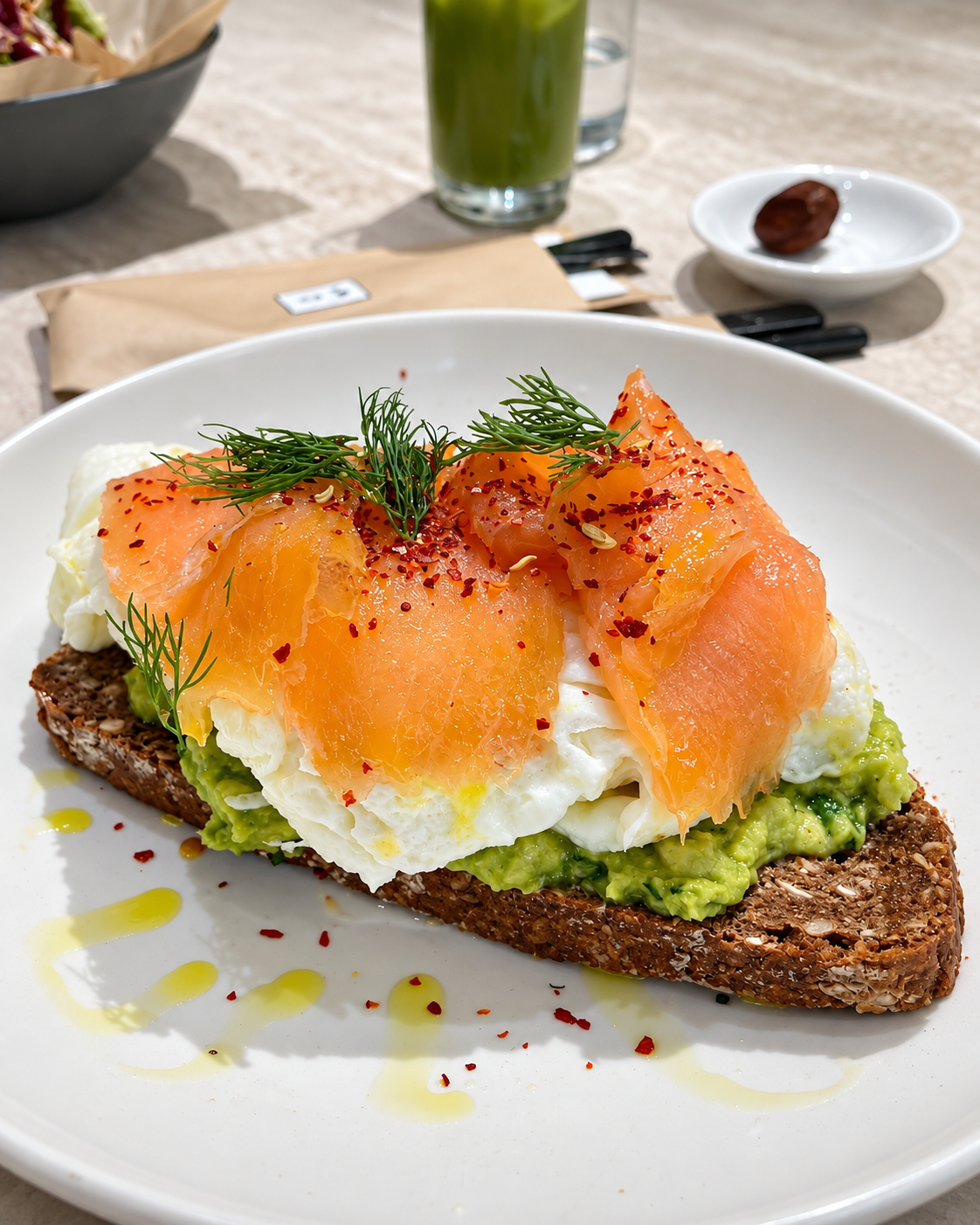
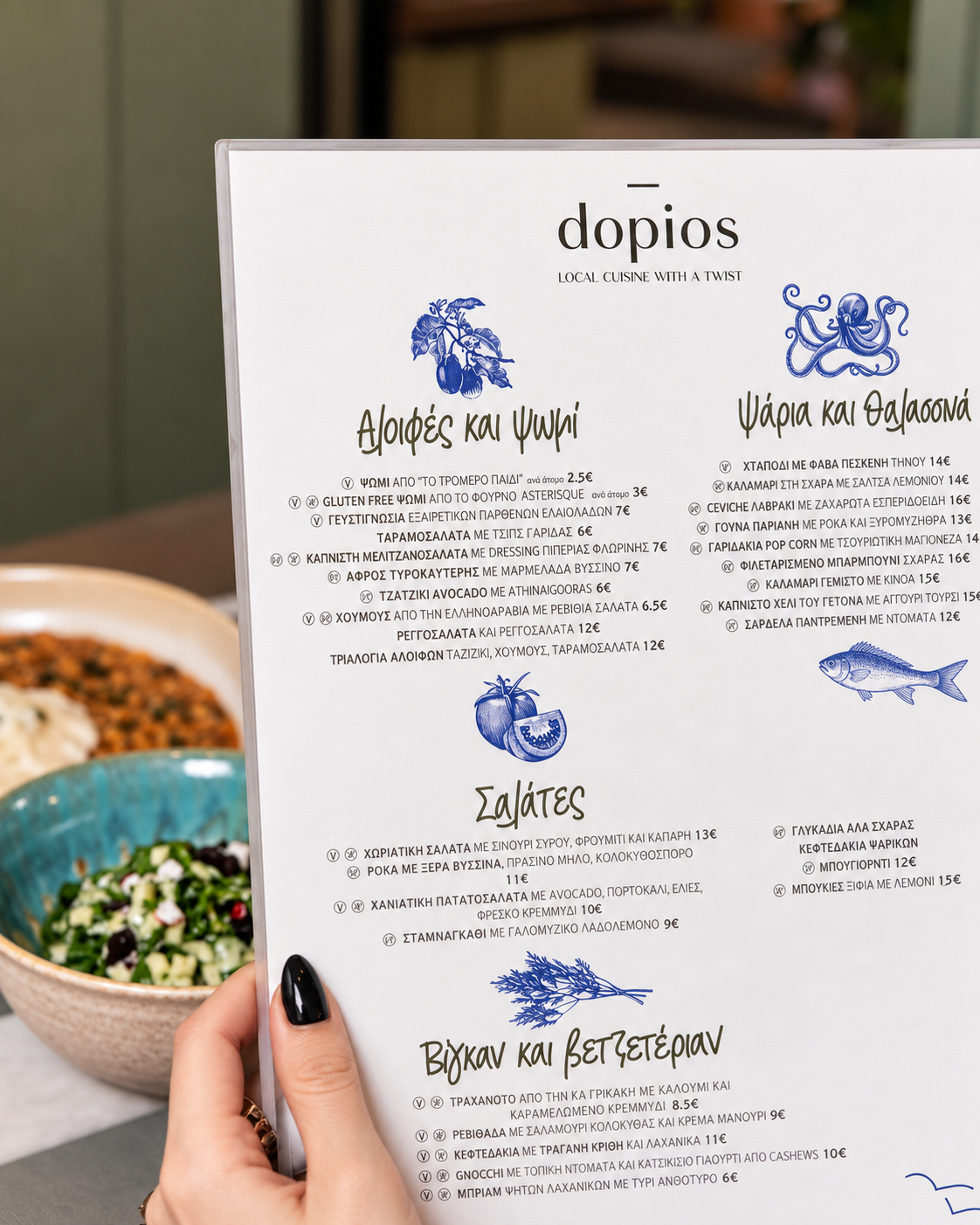
Dopios Athens represents this evolution with particular clarity. The restaurant’s name — the Greek word for “local” — encapsulates its philosophy: the commitment to sourcing ingredients from identifiable local producers, to understanding the specific character of Greek regional agricultural and marine production, and to applying contemporary culinary technique in the service of revealing that character rather than concealing it. The tender grilled octopus is not a modernised version of a traditional dish. It is a traditional dish prepared with the precision that its specific qualities — the texture achieved through the specific preparation sequence of freezing, slow cooking, and high-heat finishing — require in order to be fully expressed. The meze plates are not a fashion statement but a cultural argument: that the Greek tradition of sharing multiple small preparations at a single table is among the most sophisticated and most pleasurable approaches to communal dining that any culinary tradition has produced. The finest contemporary dining experiences across the Mediterranean world share this quality: a cooking philosophy that achieves contemporary relevance not through the rejection of tradition but through the depth of its engagement with it.
Contemporary Greek gastronomy is defined by the convergence of two developments: the recovery and deepening engagement with the specific character of Greek regional agricultural, pastoral, and marine production — the olive oils of specific islands, the seafood of specific Aegean fishing grounds, the legumes of specific highland regions, the cheeses of specific pastoral traditions — and the application of technical culinary precision in their preparation. The result is a cuisine that is simultaneously more traditional and more sophisticated than the taverna culture that international visitors have historically encountered: more traditional because it is more precisely rooted in specific Greek ingredients and preparation methods, more sophisticated because the technical understanding of how those ingredients perform at their best produces results that casual or volume-focused cooking cannot achieve. Athens has emerged as the primary expression of this evolution, with a restaurant culture that spans from the technically ambitious to the quietly excellent and that increasingly attracts serious culinary attention from a Mediterranean dining audience accustomed to the finest Italian, Spanish, and French cooking.




The Dolli — the rooftop ritual and the city from above
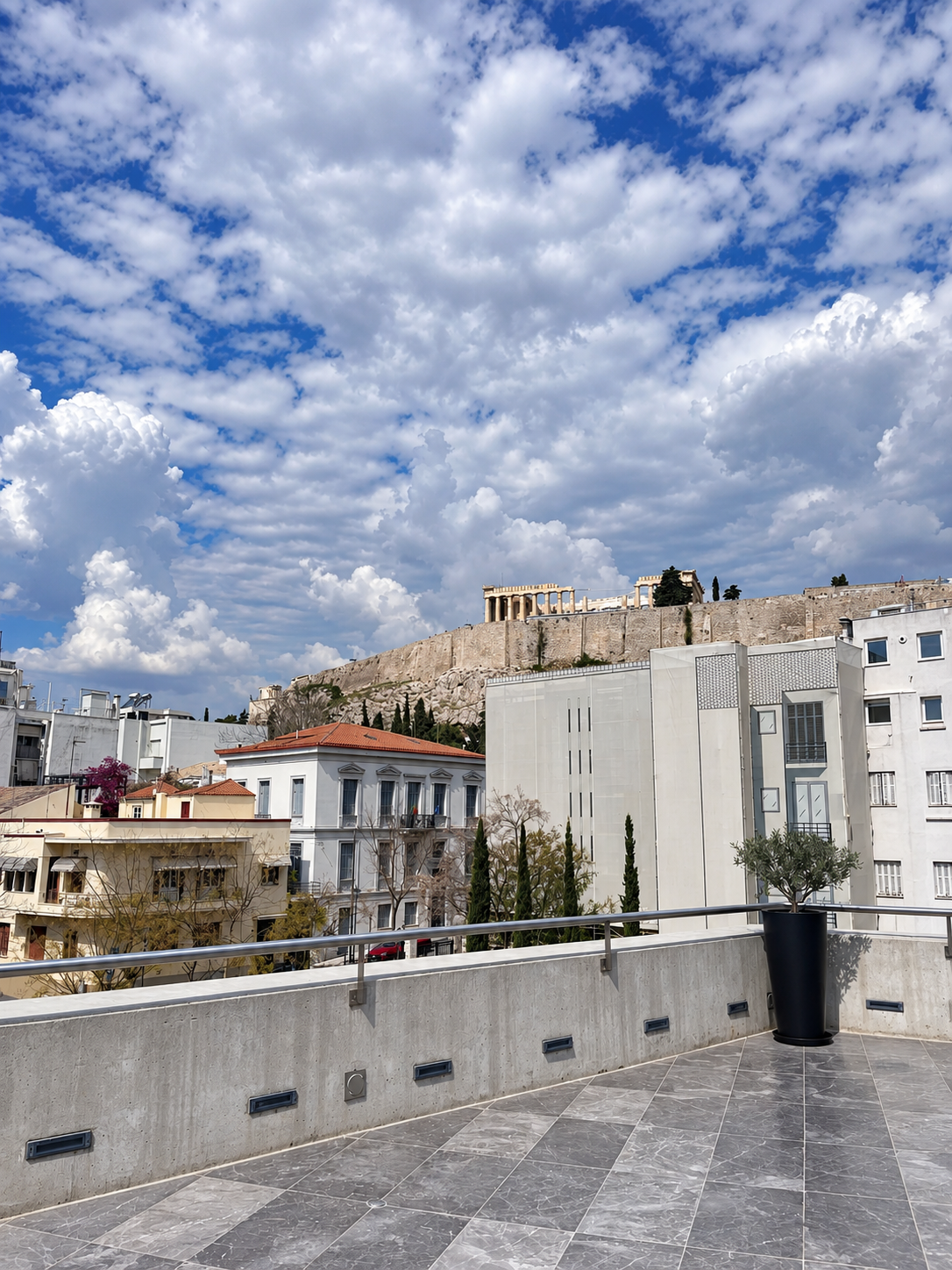
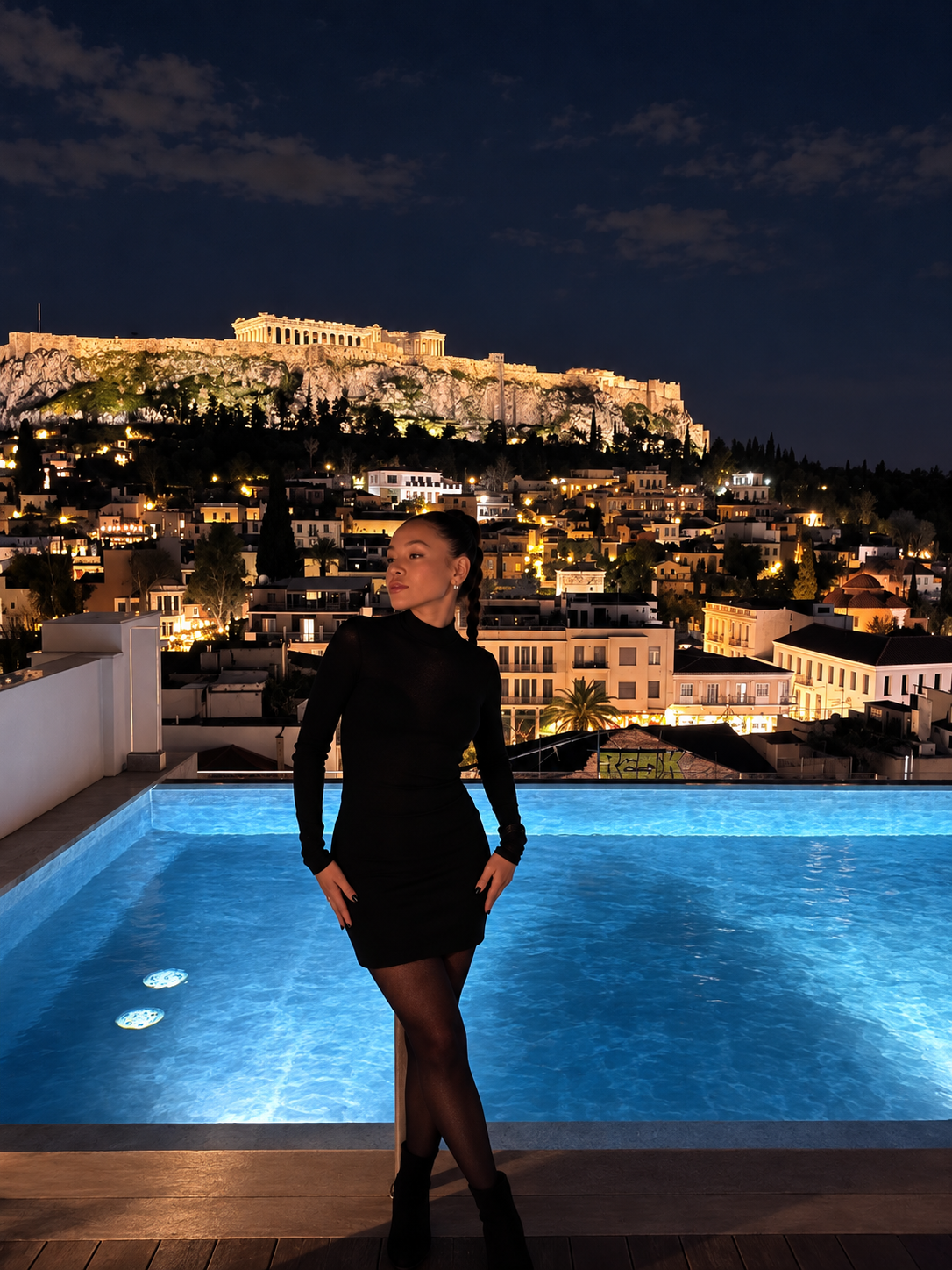
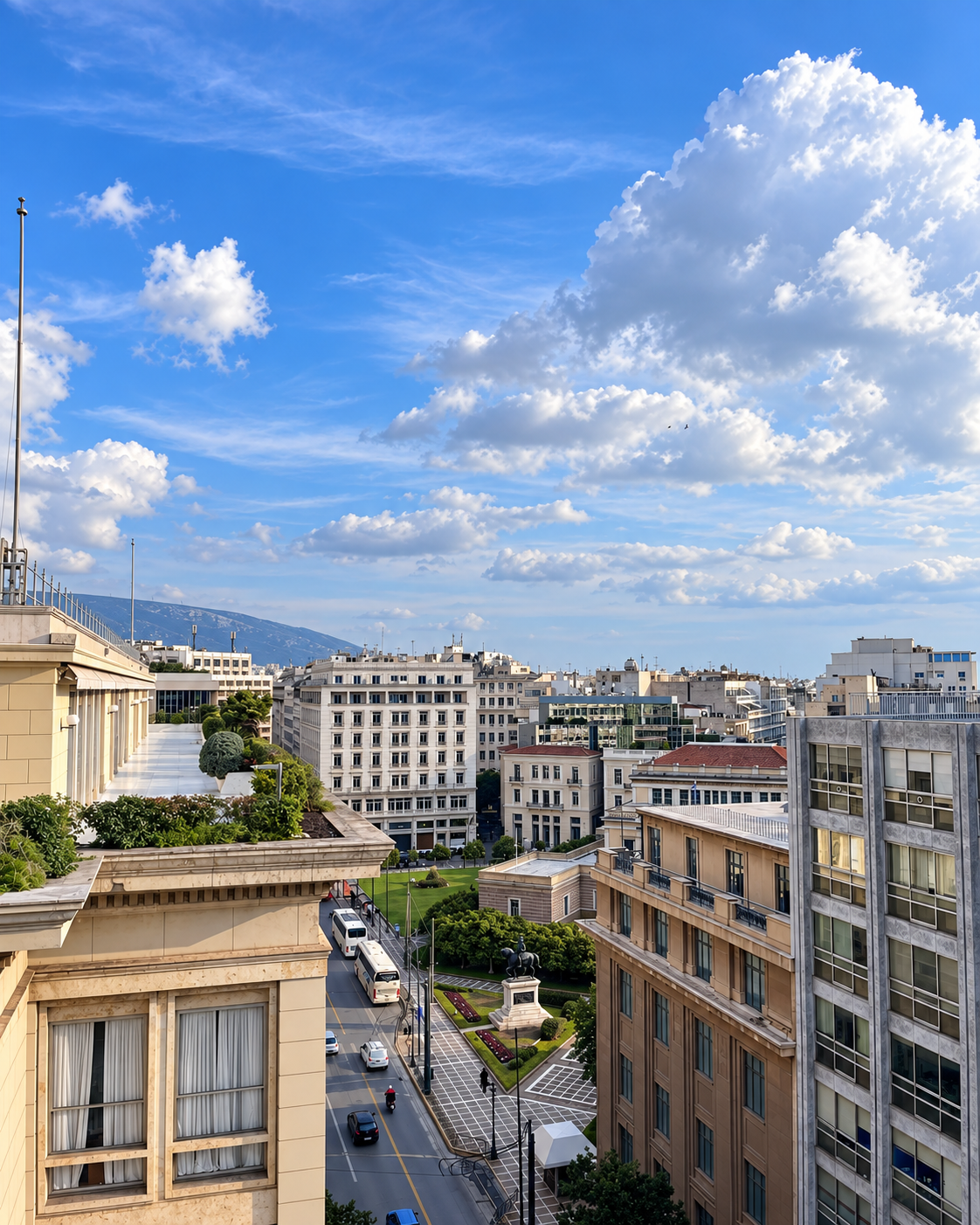
The Athenian rooftop is one of the most specific urban pleasures available in the Mediterranean world — and its specific quality derives from a geographical fact that no amount of interior design can replicate: the Acropolis is visible from almost every elevated point in the city, and the experience of looking at it from above the level of the streets — with the city spread in all directions below and the illuminated marble above — produces an encounter with the relationship between ancient and modern Athens that the street level does not provide. At street level, the Acropolis is glimpsed between buildings, contextualised by the density of the contemporary city. From a rooftop, it organises the entire cityscape: every neighbourhood, every neighbourhood’s character, every direction of the city’s spread becomes legible in relation to the rock and the temple at its centre.
The Dolli captures the modern Athenian ritual of observing the city from above — the specific cocktail culture that has developed around the city’s rooftop bars, which combine the visual experience of the illuminated Acropolis with the sensory pleasures of a considered drinks programme and the social register of an evening in a city that understands how to inhabit its own beauty. The cocktail infused with local herbs — the specific character of Greek herbs, particularly the mountain oregano, thyme, and mastic that define the flavour palette of the Greek landscape — is not a marketing gesture but a genuine expression of place: the understanding that what a city tastes like is as specific to its geography and its cultural inheritance as what it looks like. The most considered luxury experiences in any destination understand that the environment is the primary offering and that everything else — the drink, the food, the service — exists to deepen the encounter with it rather than to substitute for it.






Atenee — the afternoon as a cultural institution
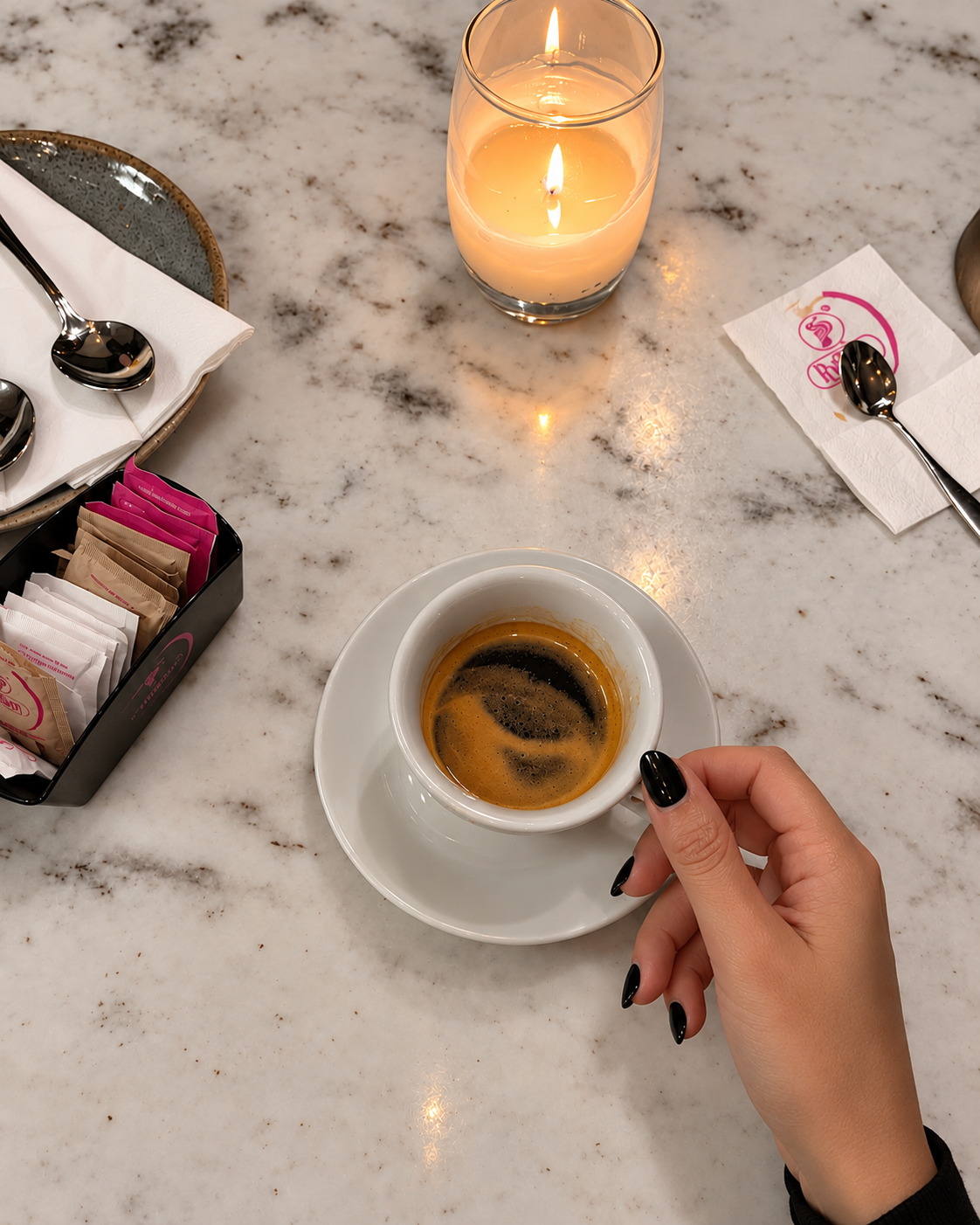
The afternoon in Athens occupies a different temporal register from the afternoon in most northern European or American cities. The combination of Mediterranean climate, the cultural inheritance of the mesimeriano — the midday rest that once organised Greek daily time around the heat of the afternoon — and the social tradition of the extended café session has produced a specific relationship to the hours between lunch and evening in which the afternoon is not a transition between productive periods but a valued experience in its own right: the time for the long coffee, the slow read, the unhurried conversation, the pastry eaten without purpose other than pleasure.
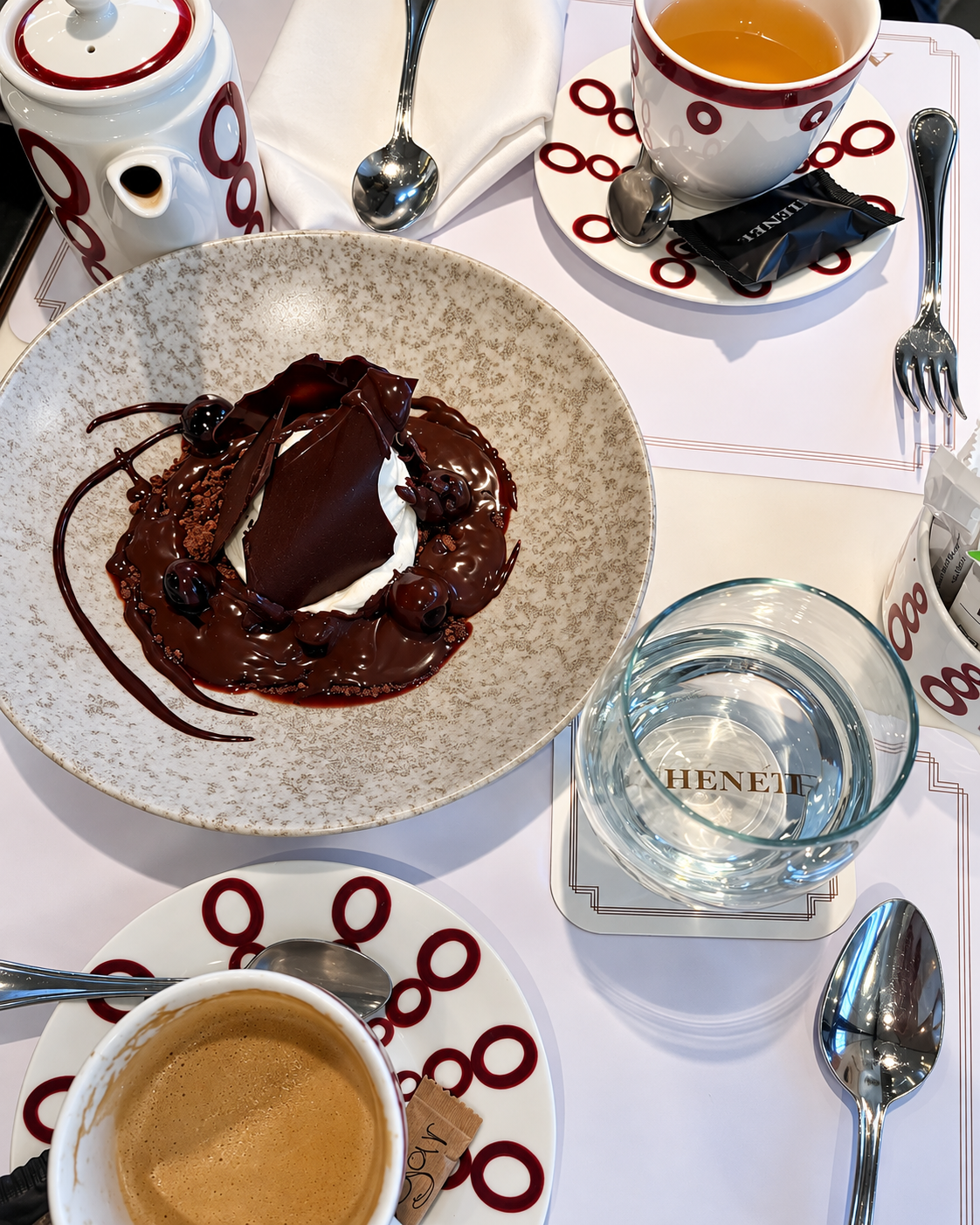
Atenee addresses this temporal register with the specific intelligence of a space designed for the quality of its afternoon: the refinement of its tea selection, the care of its pastry programme, the considered elegance of an environment that understands the afternoon as a cultural occasion rather than a commercial interval. The selection of teas from classic blends to exotic infusions, served with pastries and finger sandwiches in an environment whose aesthetic communicates the specific kind of serene, unhurried elegance that makes afternoon tea the ritual it is at its best — this is not the reproduction of a British tradition in a Greek context. It is the expression of a Greek sensibility about the afternoon’s value in the specific material vocabulary of a refined contemporary Athenian café. The ritual of afternoon tea at its most considered is always an argument about time: what it is worth giving an afternoon to, and how the quality of that giving makes the afternoon feel like a different category of experience from the merely filled one. Atenee makes this argument in Greek.




Athens and the future of cultural travel
The cities that will define the future of the most considered luxury travel are not those that offer the newest hotels or the most recently developed infrastructure. They are those that possess what no amount of construction budget can create: the accumulated depth of a place where significant human activity has occurred over generations, and where that accumulation is still perceptible in the streets, the buildings, the food, the conversations, and the specific quality of light falling on marble that has been standing for two and a half millennia.
Athens possesses this quality in a degree that very few cities in the world can match. The most significant cultural travel encounters share the same essential property: the place teaches something about human ambition, human beauty, and human intelligence that could not be learned any other way, and what it teaches is specific to that place alone. Athens teaches this through the Parthenon’s proportional argument, through the Acropolis Museum’s contemporary conversation with it, through the Lalaounis Museum’s demonstration that craft traditions with genuine depth remain alive in the hands of those who understand them, through the gastronomy of a culture that has been eating from the same sea and the same land and the same agricultural tradition for millennia, and through the specific quality of an Athenian evening in which the illuminated Acropolis provides the backdrop for a cocktail, a dinner, and a conversation that belongs to the present and to all the centuries that produced it simultaneously. The most extraordinary Mediterranean destinations are those that allow the past to continue influencing the present — and Athens is one of the world’s most complete expressions of what that influence, sustained across twenty-five centuries, actually looks like.
“The most extraordinary cities
are not those that preserve the past.
They are those that allow the past
to continue influencing the future.
Athens is ancient marble and new gastronomy
and the specific quality of afternoon light
on stone that has been standing
for twenty-five centuries.
It is a city where history is not remembered.
It is lived —
in the mathematics of the Parthenon’s columns,
in the goldsmith’s inherited technique,
in the octopus grilled above the charcoal,
in the coffee held longer than it takes to drink it,
in the illuminated Acropolis
that organises every Athenian evening
from above.”

