
On the structural evolution of luxury retail beyond department stores, the Maison de la Plage and Harvey Nichols Dubai collaboration at West Beach Palm Jumeirah, coastal space as sensory luxury medium, and why the most significant development in contemporary luxury commerce is the dissolution of the boundary between shopping, dining, and identity formation
Luxury is no longer purchased in spaces — it is experienced within atmospheres. The Maison de la Plage and Harvey Nichols Dubai collaboration represents a structural shift in how luxury brands extend their ecosystems: the fusion of hospitality and retail as one continuum, the rise of destination-led luxury commerce, the transformation of beach culture into curated retail theatre, and the evolution of Harvey Nichols from luxury department store into lifestyle orchestrator. The beach is no longer an escape from retail culture. It becomes its most refined expression.
Traditional retail hierarchies are dissolving. The luxury consumption model that defined the previous century — the department store as endpoint, the flagship as destination, the shopping environment as a contained architectural space separate from the rest of lived experience — is being replaced by something more fluid, more atmospheric, and more aligned with how the most considered contemporary luxury consumers actually inhabit their lives. They do not move from experience to shopping and back again. They exist within a continuous lifestyle narrative in which the boundaries between these categories have ceased to be meaningful.
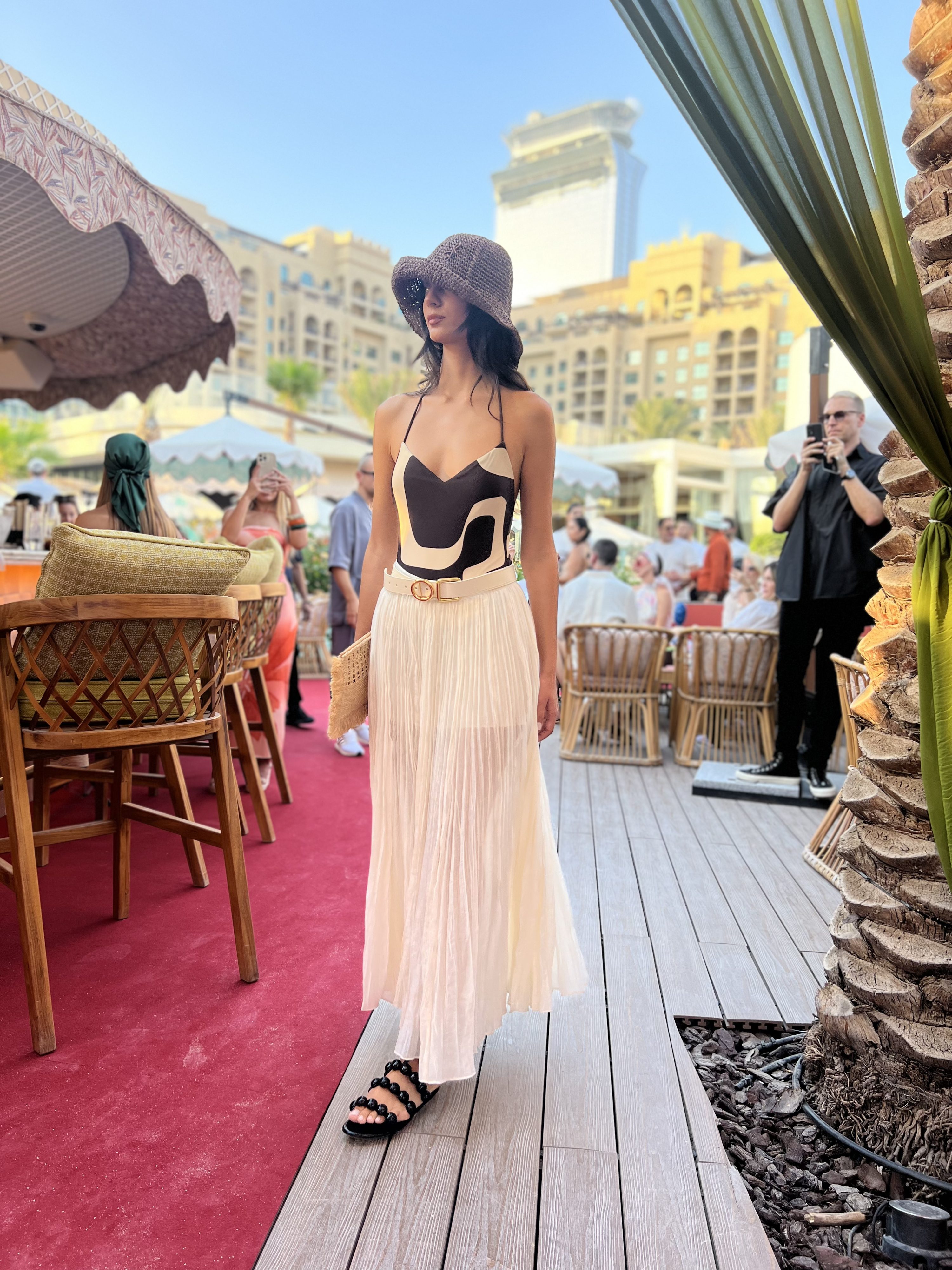
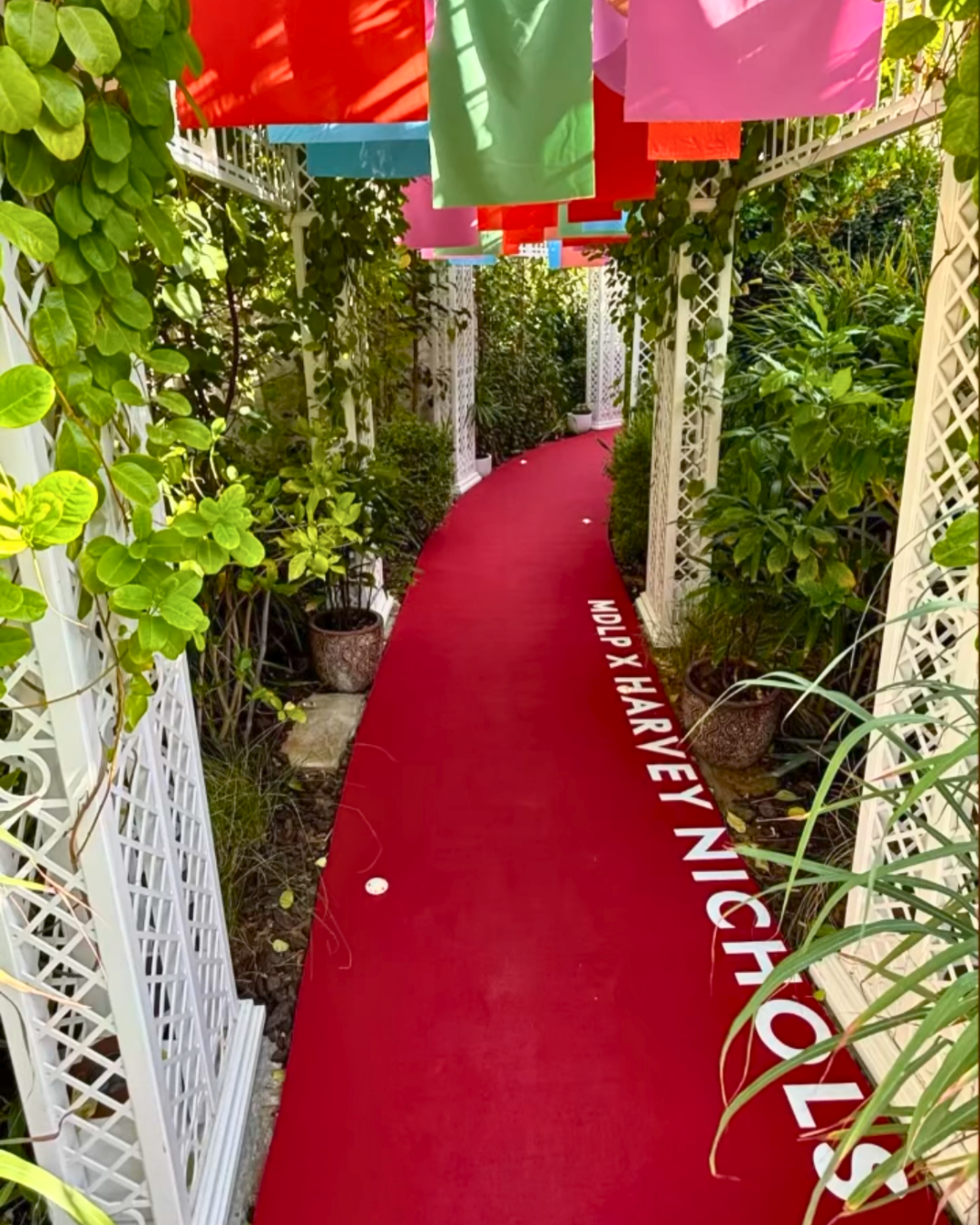
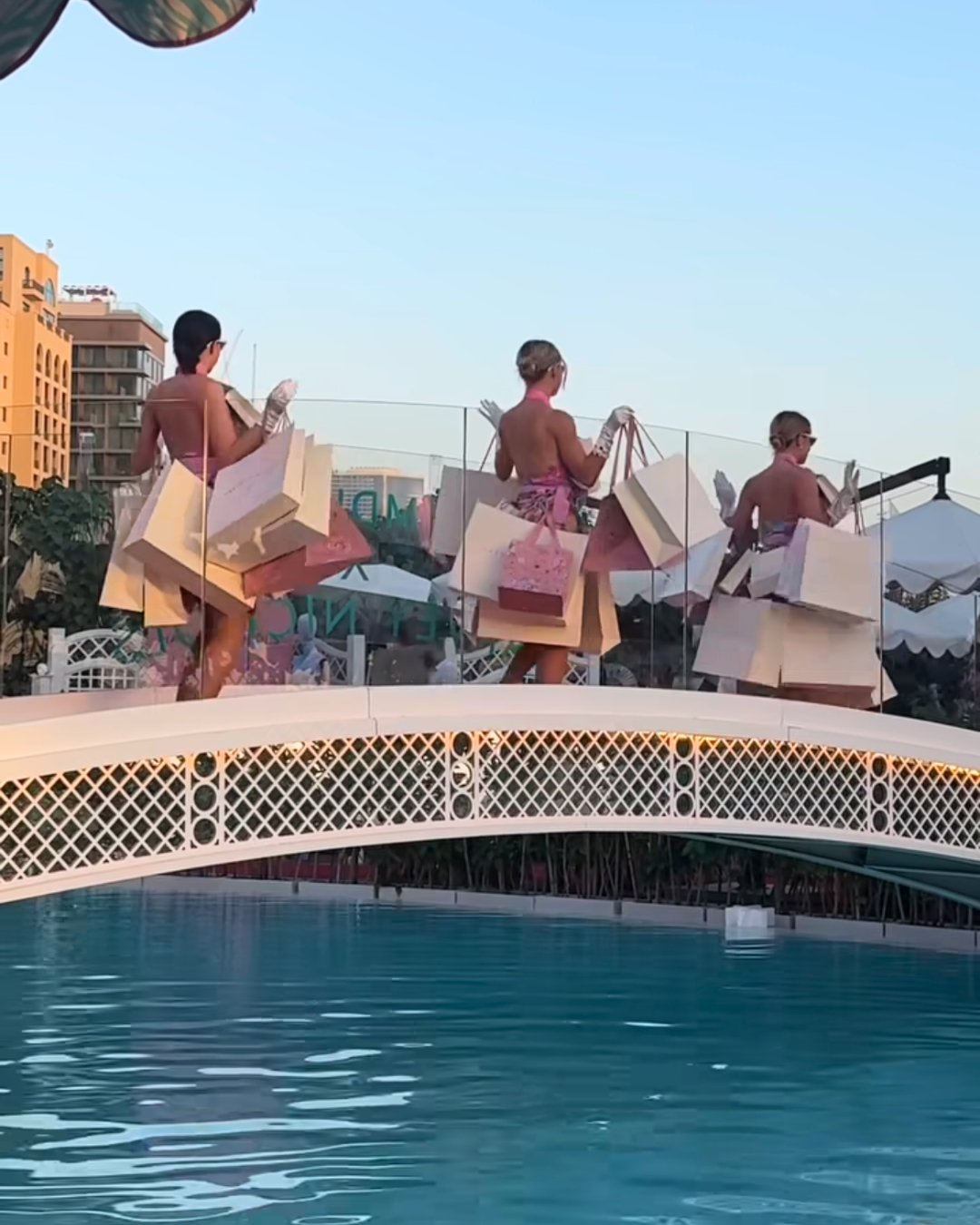
The Maison de la Plage and Harvey Nichols collaboration at West Beach, Palm Jumeirah, is one of the most complete available expressions of this structural shift in Dubai’s luxury retail landscape. A runway show by the sea, featuring Jacquemus, Alaïa, Missoni, Oseree, and Paco Rabanne against the backdrop of Palm Jumeirah’s coastal light, is not simply an event that happened to occur near a beach. It is a deliberate editorial statement about where luxury lives now — and about the specific quality of attention that a beachside setting commands from consumers whose urban retail environments have long since reached the limits of their capacity for sensory impression.
The broader context of how Dubai’s most considered hospitality and lifestyle destinations function as luxury identity ecosystems connects this collaboration directly to the understanding of experiential luxury explored across this site’s lifestyle editorial. A Day at Nikki Beach Dubai and the New Rituals of Leisure explores the specific quality of social experience that coastal luxury environments produce — the particular combination of ease, visibility, and curated atmosphere that makes the beach club the defining luxury social institution of the contemporary Gulf. The Maison de la Plage and Harvey Nichols partnership extends this logic into the retail register: the beach as not merely a leisure destination but a commercial frontier.
Harvey Nichols as cultural curator — the evolution from luxury retailer to lifestyle ecosystem architect
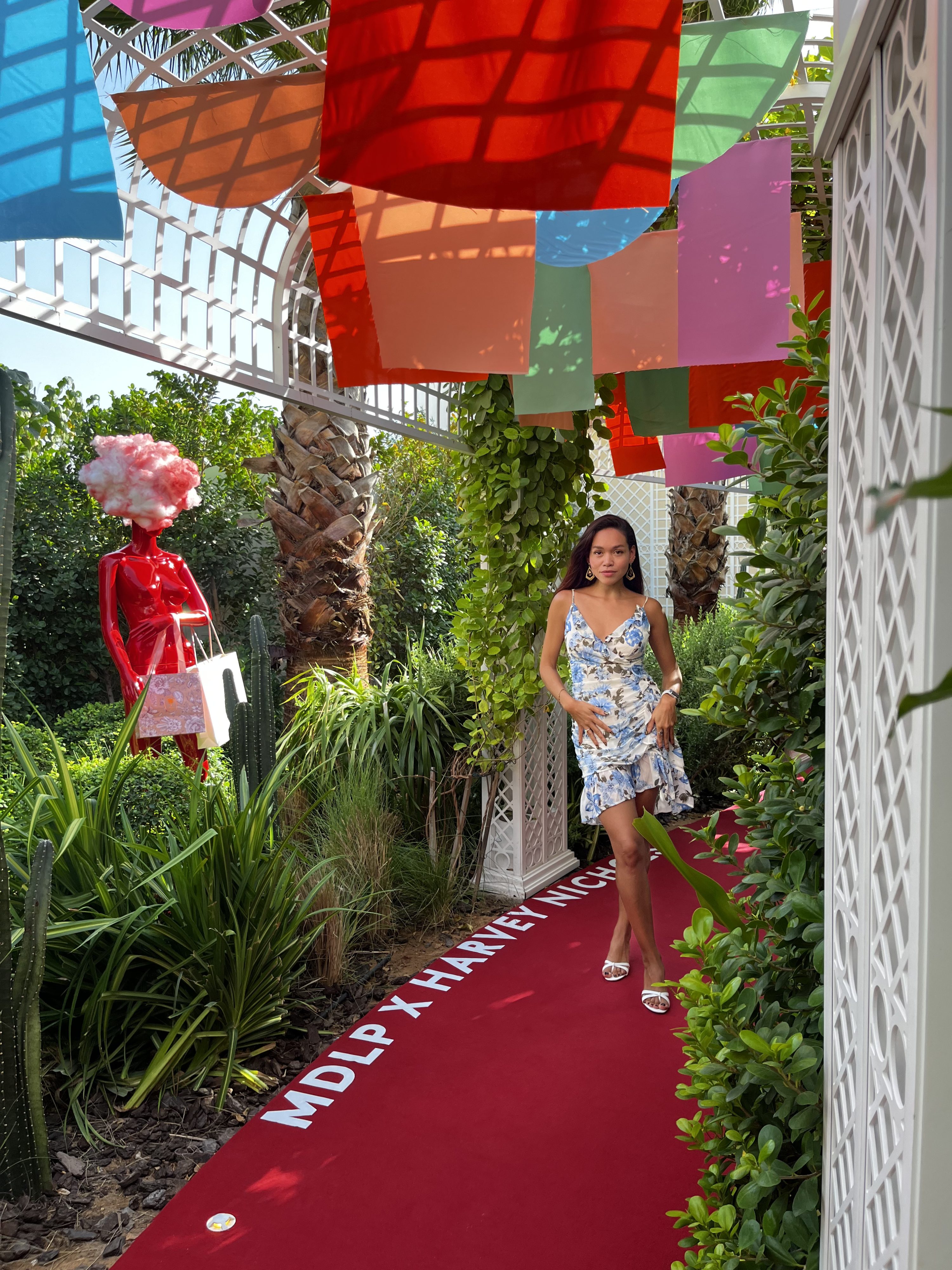
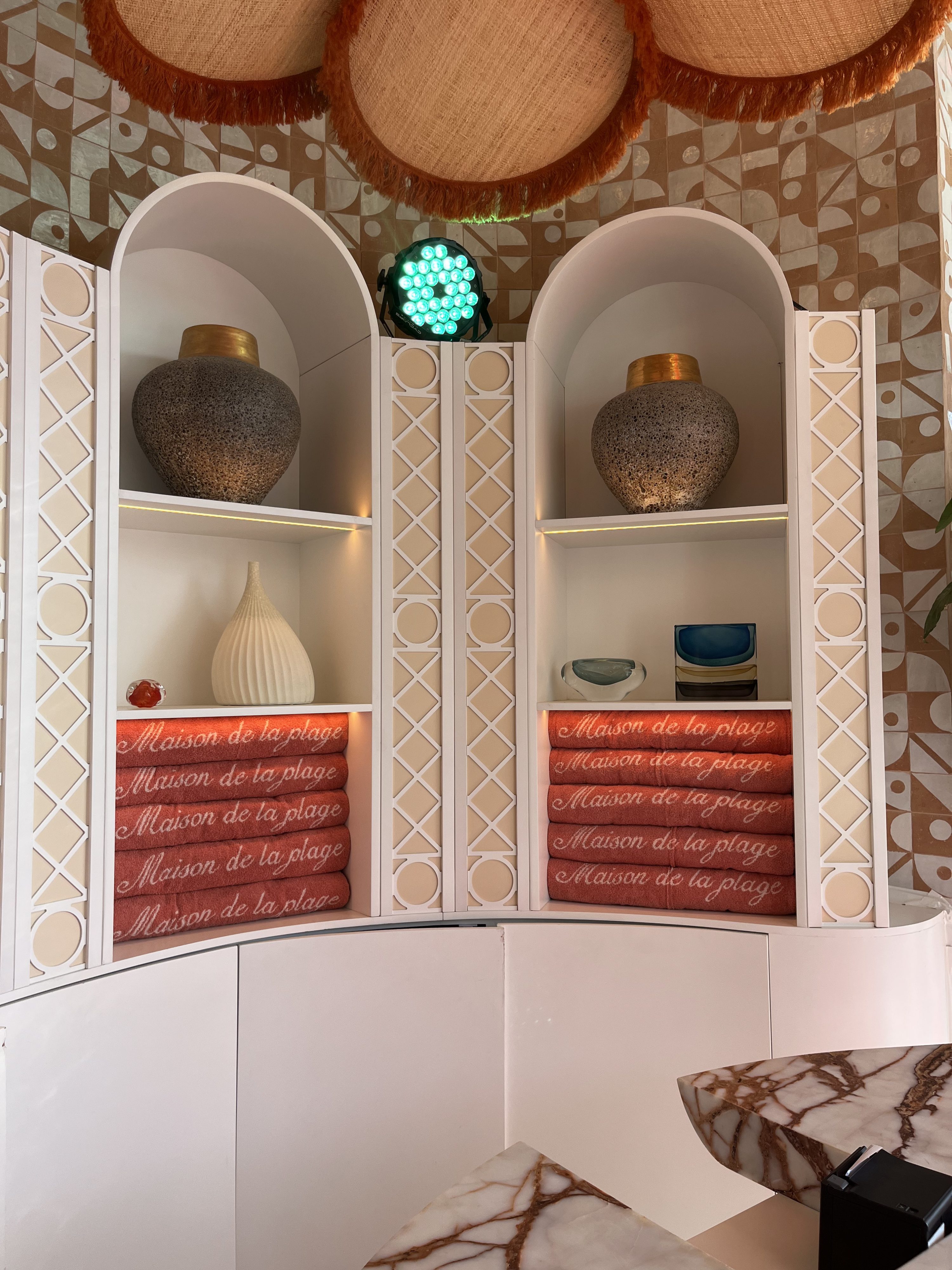
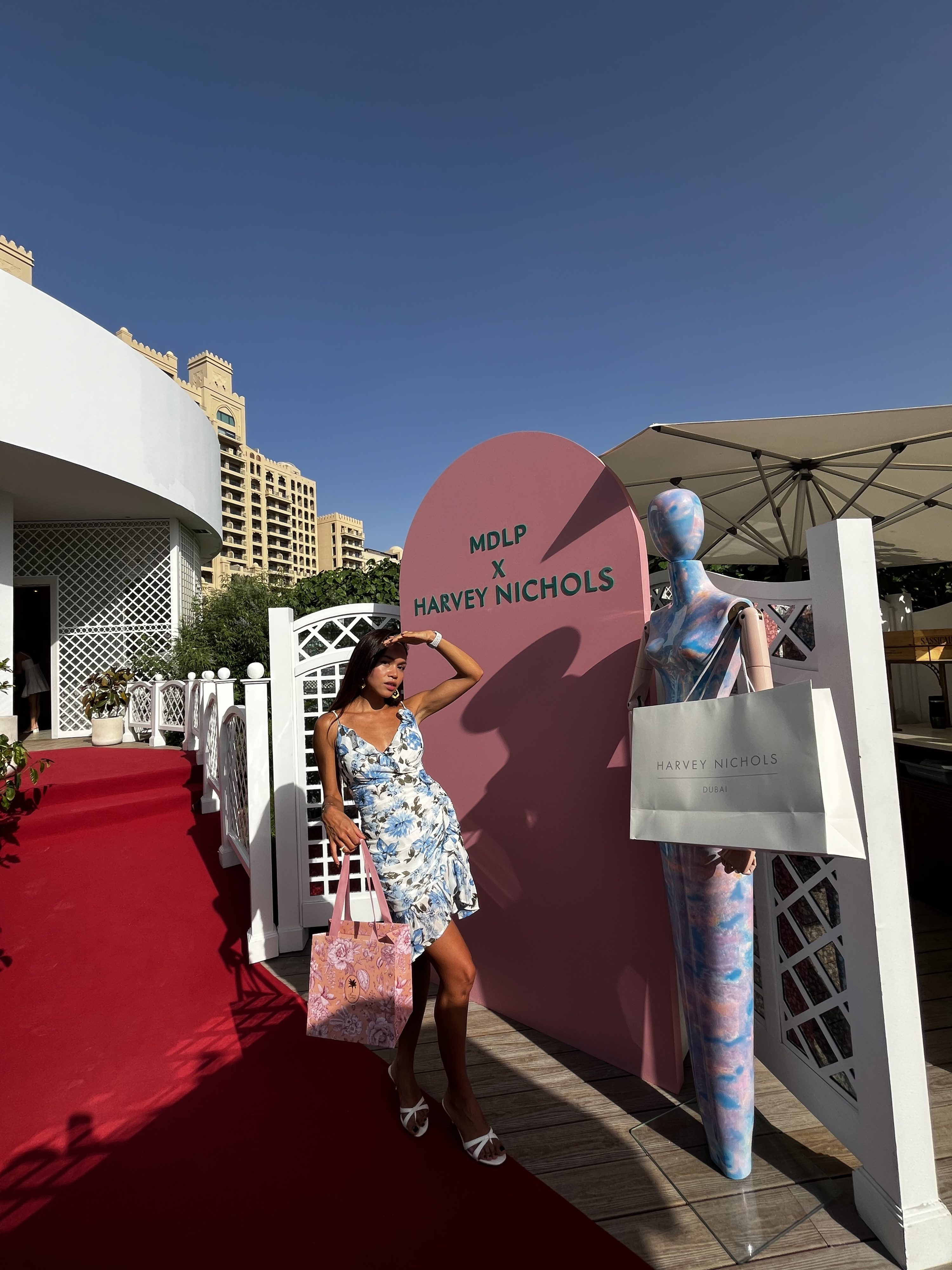
To understand the significance of the Harvey Nichols and Maison de la Plage collaboration, it is necessary to understand what Harvey Nichols has been becoming — and what that evolution means for the structure of luxury retail in Dubai. Spanning over 136,900 square feet and showcasing more than three hundred international and local brands, Harvey Nichols Dubai is not merely the largest luxury department store in the region. It is the most significant single expression of luxury retail curation available to Dubai’s consumer market. And the Maison de la Plage partnership is its most visible statement yet that curation is no longer confined to the store floor.
The traditional department store model operated through a logic of comprehensive selection: the store as the most complete available single location for luxury product discovery, whose value was proportional to the breadth of its range and the prestige of its brand portfolio. This model served the luxury consumer of a previous era — the consumer for whom product access was the primary challenge, and the department store’s resolution of that challenge through comprehensive physical assembly was its primary value proposition. The contemporary luxury consumer faces no product access problem. The internet has resolved the access challenge completely. What it has not resolved — what it has, in fact, made more acute — is the experience challenge: the specific, embodied quality of understanding what a garment or a lifestyle object actually means when encountered in the right context, with the right atmosphere, among the right people.
Harvey Nichols’ move into destination-led experiential retail — bringing its curation capacity to bear not within a store but within the atmospheric conditions of Maison de la Plage’s West Beach environment — is a response to this challenge that is simultaneously a commercial strategy and a cultural statement. The statement is: Harvey Nichols’ curation is not a property of the store building. It is a property of the editorial intelligence that Harvey Nichols brings to any environment it inhabits. The runway at Maison de la Plage carries the same aesthetic authority as the store floor in Downtown Dubai — and in the context of Palm Jumeirah’s coastal light and the specific social atmosphere of a West Beach afternoon, it carries it with an additional quality of experiential resonance that no indoor retail environment can replicate.
As Bloomberg’s analysis of GCC luxury retail growth and destination strategy and Business of Fashion’s analysis of experiential retail and luxury destination strategy together document, the department stores building the most durable competitive positions in the contemporary luxury market are those that understand their role as lifestyle curators rather than product distributors — those whose relationships with consumers are defined by the quality of the editorial intelligence they bring to product selection and context creation, rather than by the physical infrastructure of the store itself.
Maison de la Plage as luxury medium — coastal space and the sensory architecture of experiential retail
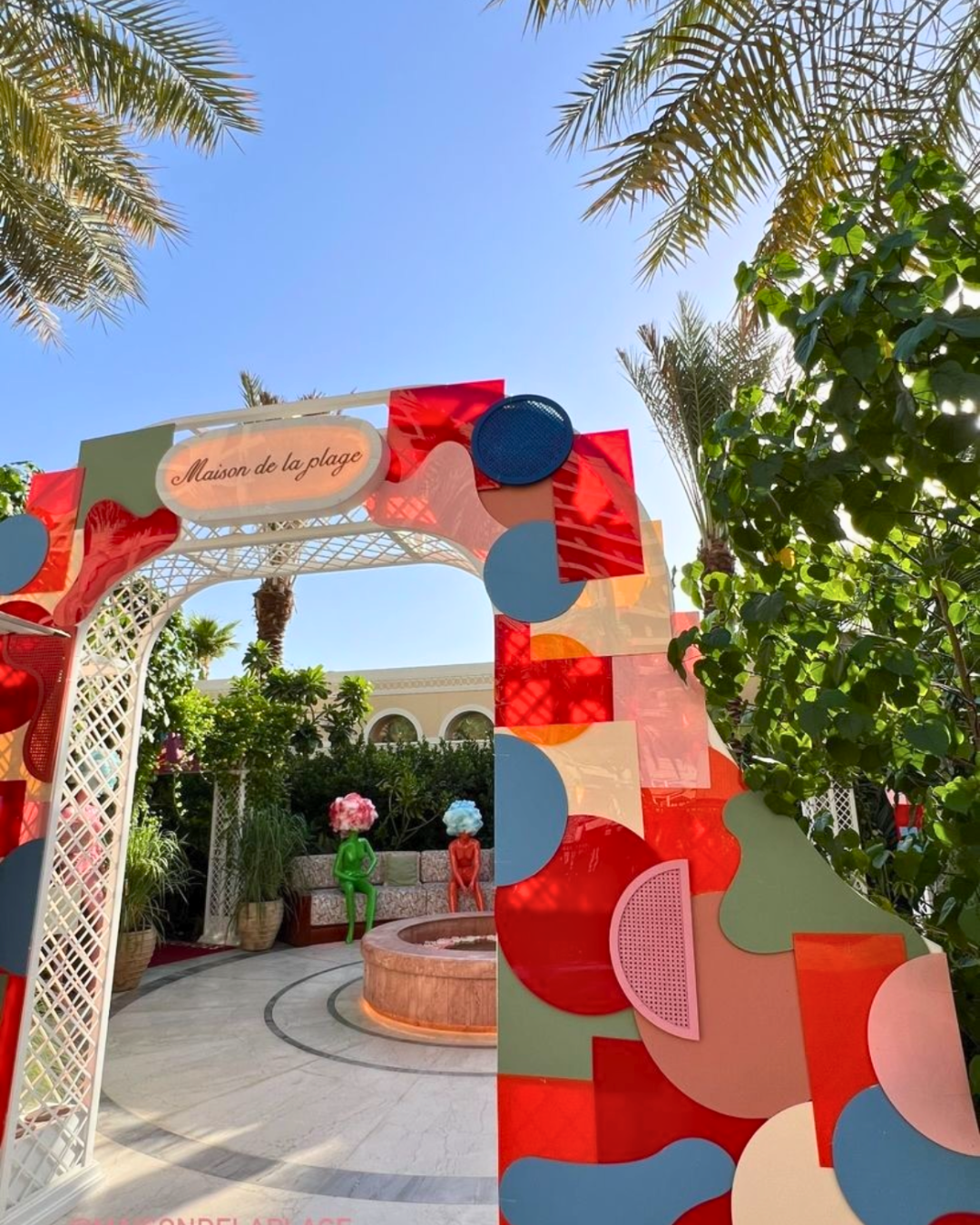
The most important thing to understand about the Maison de la Plage and Harvey Nichols collaboration is that Maison de la Plage is not the venue for an event. It is the medium through which the event’s meaning is produced. The French Riviera-inspired architecture, the pristine West Beach frontage, the Palm Jumeirah context, the specific quality of coastal light at the hour when a Dubai afternoon begins its transition toward evening — all of these are as much a part of what Harvey Nichols is communicating as the Jacquemus minimalism or the Missoni kaleidoscopic prints on the runway itself.
The beach as a luxury medium has specific sensory properties that no indoor retail environment possesses. Natural light — unfiltered, shifting, responsive to the hour and the season — is the most honest possible merchandising tool. It reveals fabric texture, garment drape, and colour with an accuracy that artificial lighting cannot replicate and frequently conceals. The coastal air carries a specific quality of ease — the specific ease that the proximity of water and the sensation of openness produce in the human nervous system — that is the atmospheric equivalent of the Izakaya’s social engineering, except that the engineering in this case is done by geography rather than by design. The sensory openness of the beach replaces the controlled dramaturgy of the store environment with something more elemental and, in the context of luxury consumption, more powerful: the encounter with a garment or a lifestyle object in a condition of genuine ease, without the social performance that urban retail environments require.
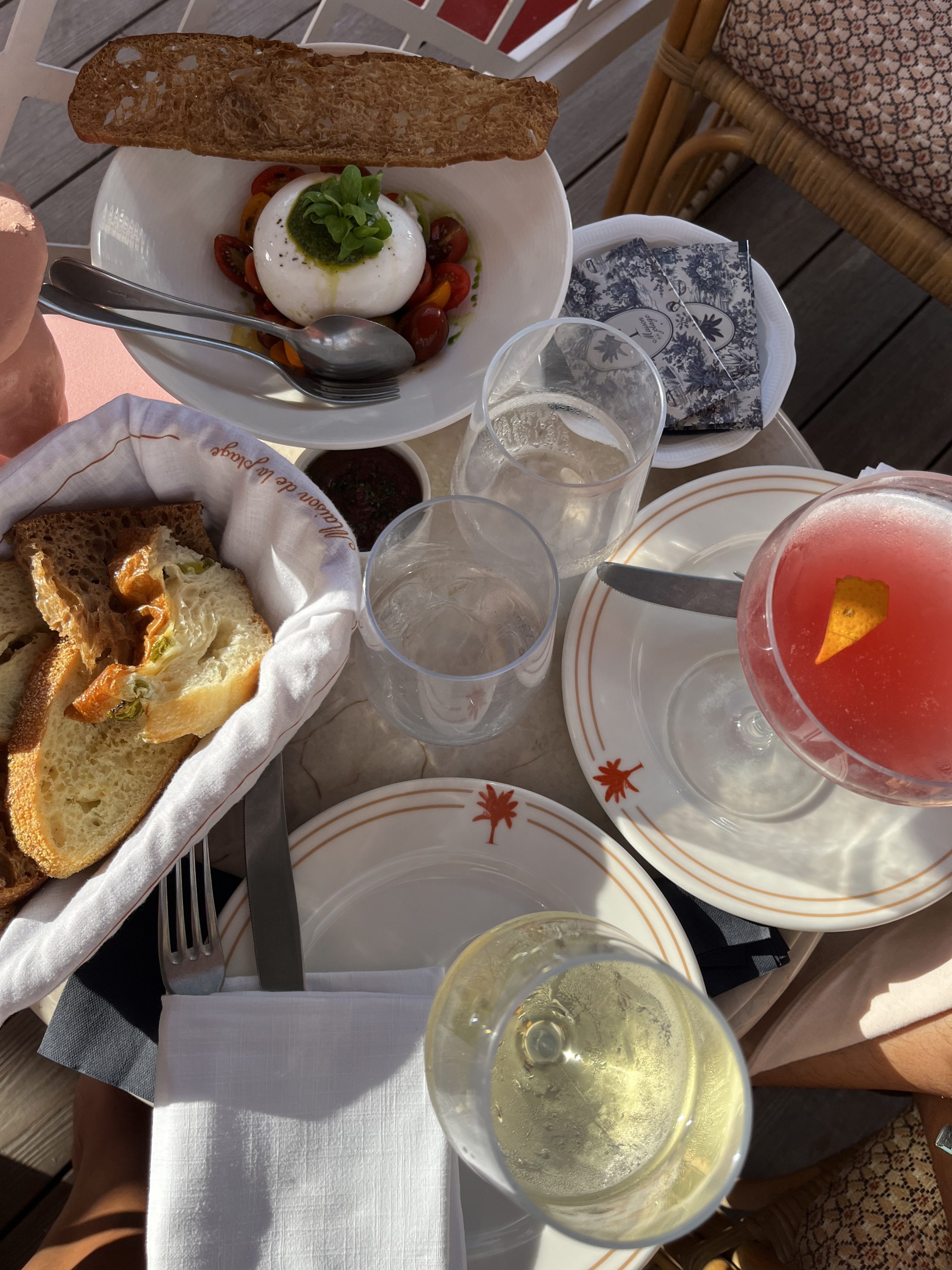
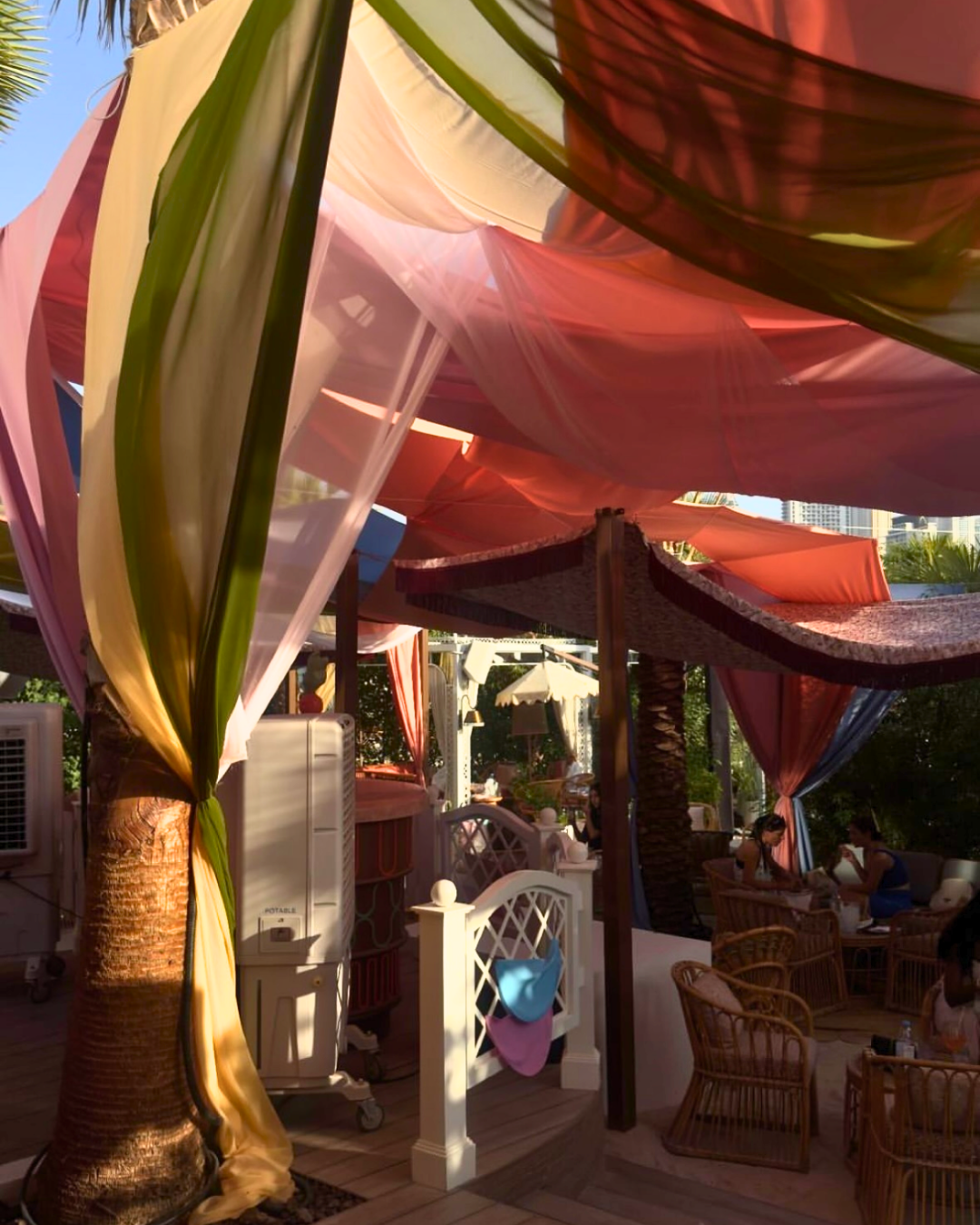
Maison de la Plage’s specific qualities — the cabanas, the coastal dining, the private beach access, the branded gelato cart that provided an artisanal sweet intermission between runway moments — constitute a hospitality intelligence that converts the beach into a staged luxury environment without losing the specific ease that makes the beach valuable as a retail context. The Harvey Nichols branded gelato cart is not a minor detail. It is the event’s most precise statement about the register it is operating in: the luxury that presents itself through pleasure rather than through prestige, through sensory generosity rather than through architectural authority.
The runway — Jacquemus, Alaïa, Missoni, Oseree, and Paco Rabanne at West Beach
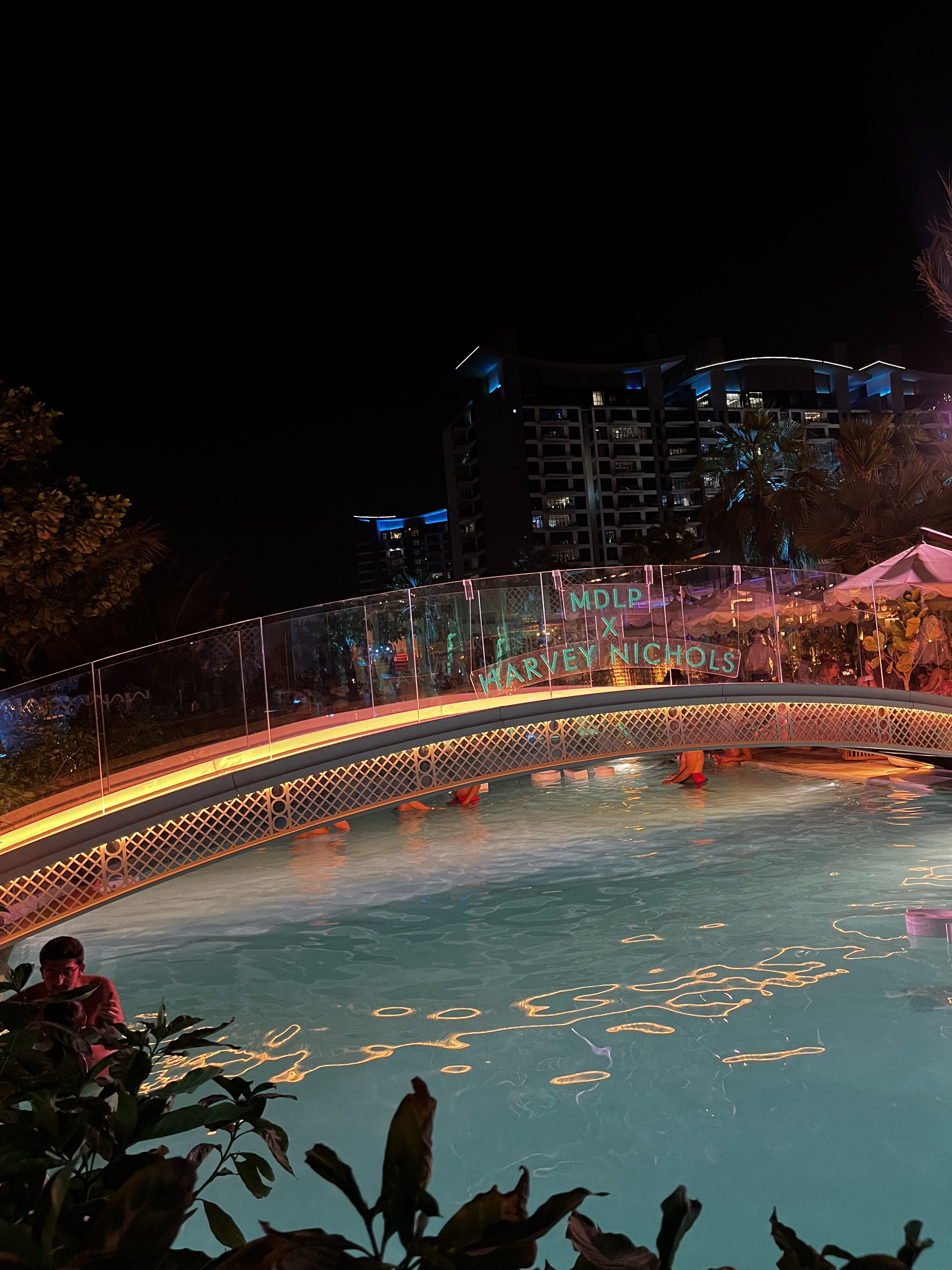
The designer selection for the Maison de la Plage and Harvey Nichols runway was not a comprehensive survey of the store’s portfolio. It was an editorial statement — a curated argument about which fashion languages are most precisely aligned with the specific atmosphere that coastal luxury produces, and about what the Harvey Nichols perspective on that alignment looks like when expressed through designer selection rather than through words.
Jacquemus — whose entire design philosophy is built around the Mediterranean sensory register, around the specific combination of architectural minimalism and bodily ease that the South of France produces — is the most natural possible choice for a Palm Jumeirah coastal runway. The minimalist lines and soft pastel hues that define Jacquemus’s most celebrated work are not merely aesthetically aligned with the Maison de la Plage setting. They are conceptually aligned: both are expressions of the understanding that the most sophisticated luxury is the kind that appears effortless while requiring the most precise intelligence to produce. Jacquemus at the beach is not a fashion house in a setting. It is a fashion philosophy encountering the landscape that most fully expresses its own values.
Missoni’s signature zigzag prints — kaleidoscopic, kinetic, entirely unrepeatable — carry a different but equally precise alignment with the coastal luxury register. The Missoni knitwear tradition is one that has always understood movement as its primary medium: the way that the body’s motion through the world activates the pattern, the way that the play of coastal light across the surface of a Missoni knit produces a visual experience that no static display can replicate. On the Maison de la Plage runway, in the specific quality of West Beach’s late afternoon light, Missoni was exactly where it most fully makes sense.
Alaïa’s sculptural designs — whose authority rests entirely on the relationship between garment architecture and the body that wears it — and Oseree’s playful coastal confidence and Paco Rabanne’s metallic futurism complete a designer roster that covers the full emotional spectrum of coastal luxury: the ethereal, the architectural, the exuberant, and the boldly contemporary. Together, they constitute the most coherent available single editorial statement about what Harvey Nichols understands coastal luxury to mean — and about what Maison de la Plage’s West Beach setting makes possible as a context for that statement.
Dubai’s seasonal fashion dynamic — why the GCC’s winter creates the world’s most distinctive luxury retail moment
The Maison de la Plage and Harvey Nichols collaboration is timed to one of the most distinctive and most commercially significant seasonal moments in the global fashion calendar: the transition into Dubai’s winter — the period when the city’s social and retail calendar reaches peak intensity, when global fashion houses plant their flags in the Gulf’s warm sand, and when the specific fashion dynamic of the GCC market — its perpetual summer sensibility refined by the cooler months’ capacity for layering and structured dressing — produces the most creative and commercially interesting versions of what luxury fashion can mean in this part of the world.
Dubai’s winter is unlike any other retail season. The weather produces conditions — warm enough to sustain summer’s lightness, cool enough to support the structural sophistication of winter fashion — that require fashion brands to develop collections specifically calibrated for this unique climatic register. Lightweight fabrics remain supreme, but paired with oversized blazers, statement accessories, and the specific kind of textural layering that coastal cool produces. The Maison de la Plage runway captured this dual-season dynamic precisely: the flowing ethereal dresses and structured bold swimwear that simultaneously spoke to Dubai’s permanent summer register and to the seasonal shift that the GCC’s winter social calendar demands.
For international luxury brands, this seasonal dynamic creates one of the most commercially significant launch windows in the global retail calendar. The concentration of ultra-high-net-worth consumers, the peak of the region’s social calendar, and the specific appetite for fashion that Dubai’s winter season produces make this the moment at which the Gulf market most directly rewards brands that understand its specific aesthetic logic. Harvey Nichols has been at the forefront of this understanding — and the Maison de la Plage collaboration is its most visible expression of that position in the coastal luxury register.
The understanding that the most enduring luxury choices are those made with genuine self-knowledge — chosen for how they hold rather than how they announce — connects the Maison de la Plage and Harvey Nichols collaboration to the broader quiet luxury sensibility explored across this site’s fashion editorial. The New Language of Quiet Luxury: Inside the Timeless Wardrobe of Apparis makes the foundational argument: that what endures in fashion is what was chosen with precision and intelligence rather than with trend compliance. The Jacquemus and Alaïa pieces on the Maison de la Plage runway are, in this sense, the coastal luxury wardrobe equivalent of the investment dressing philosophy — pieces that reward the decision to acquire them with a quality of wear that compounds across seasons. The same logic that governs the investment wardrobe governs investment jewellery: The Return of the Pearl: Inside the Quiet Luxury of Robert Wan makes precisely this argument in the context of Tahitian pearl investment — that the object chosen for its intrinsic quality and natural rarity compounds in value and meaning through the same patient logic that the best fashion investment pieces embody.
Soft commerce and the aesthetic of the collaboration — linen, sand, glass, and the new luxury brand vocabulary
The visual and emotional tone of the Maison de la Plage and Harvey Nichols collaboration defines a new aesthetic category that the most considered luxury retail partnerships are increasingly occupying: soft commerce — the condition in which selling is so completely embedded in experience design that the commercial transaction becomes a natural consequence of the atmospheric encounter rather than its explicit purpose.
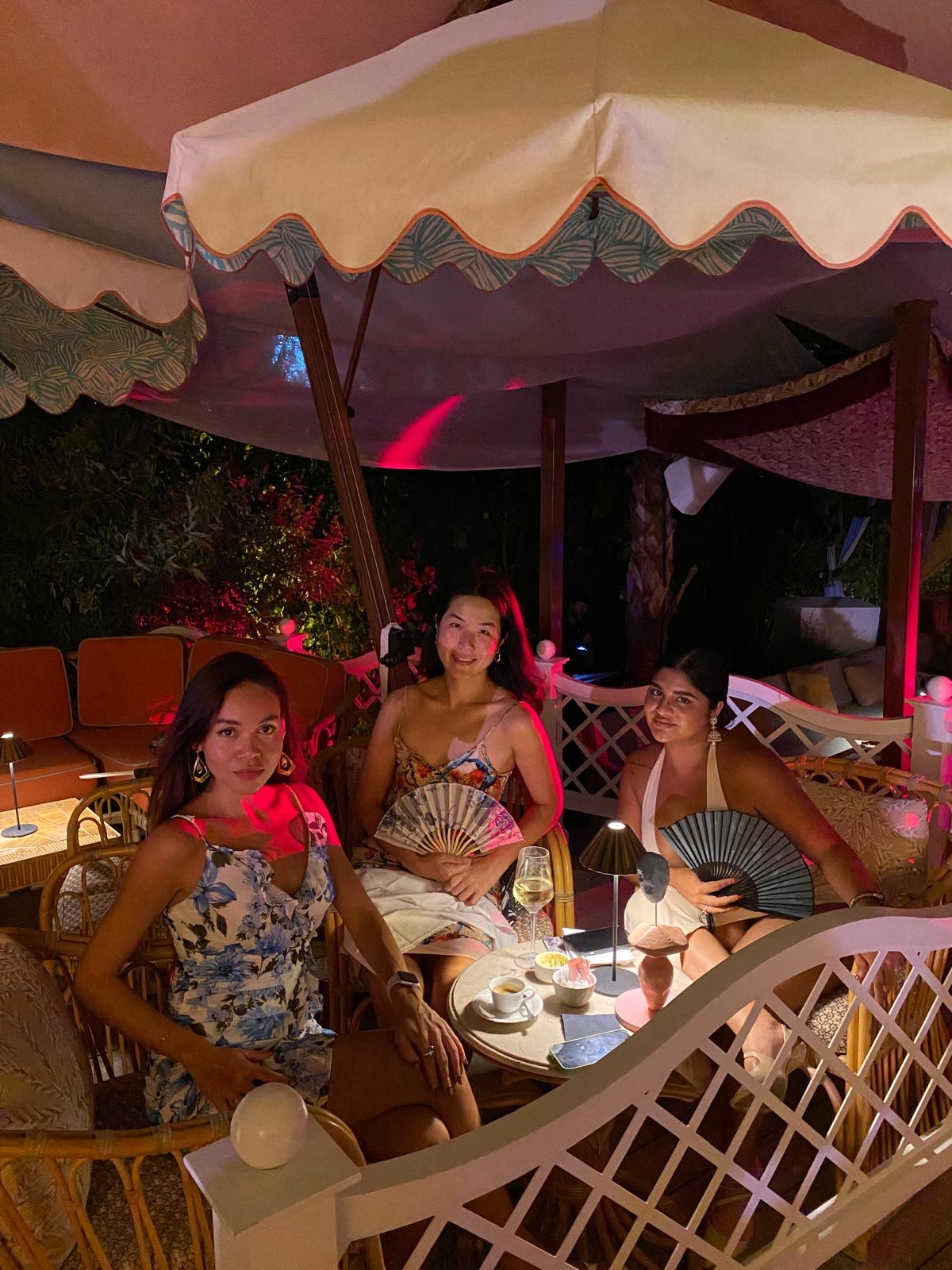
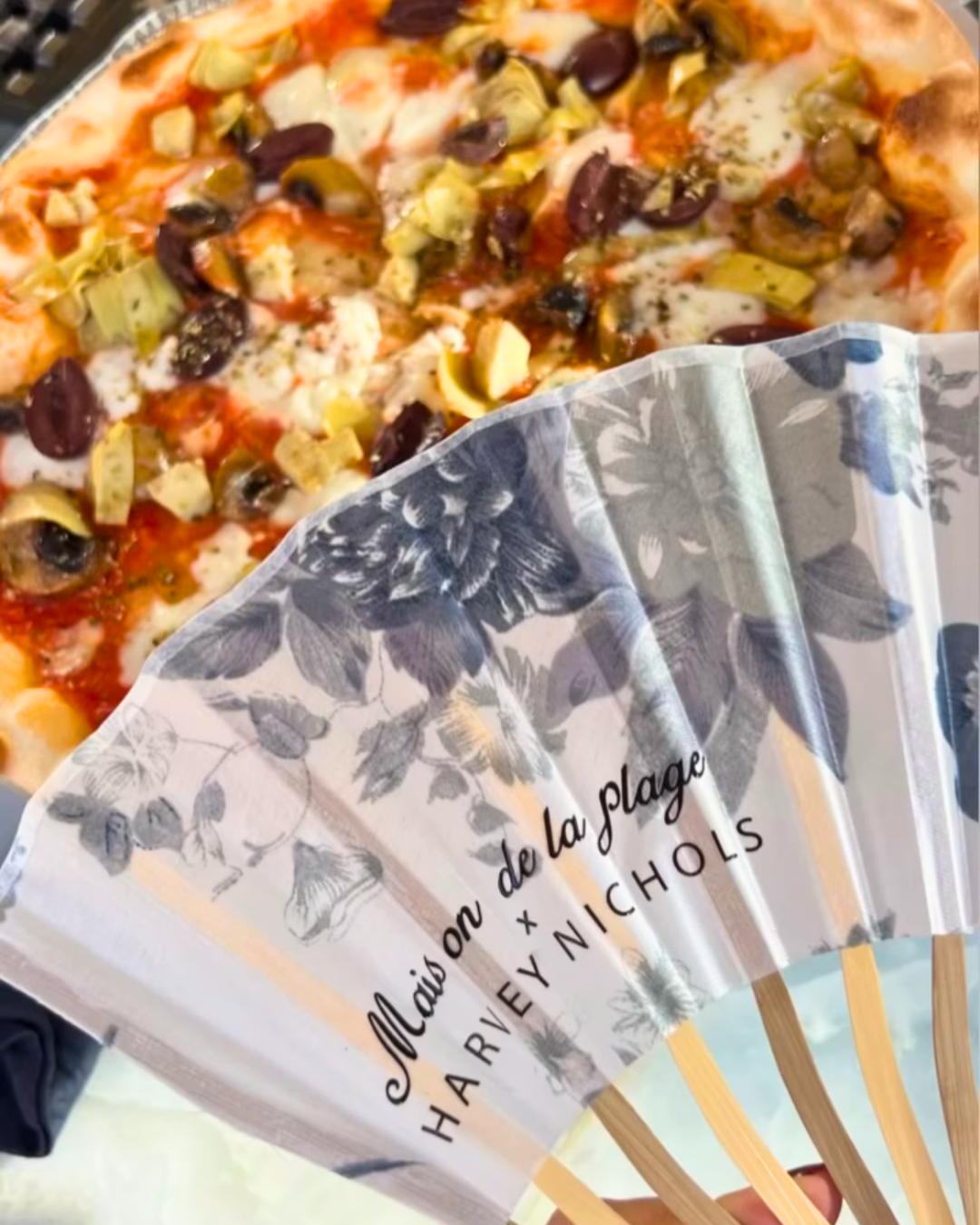
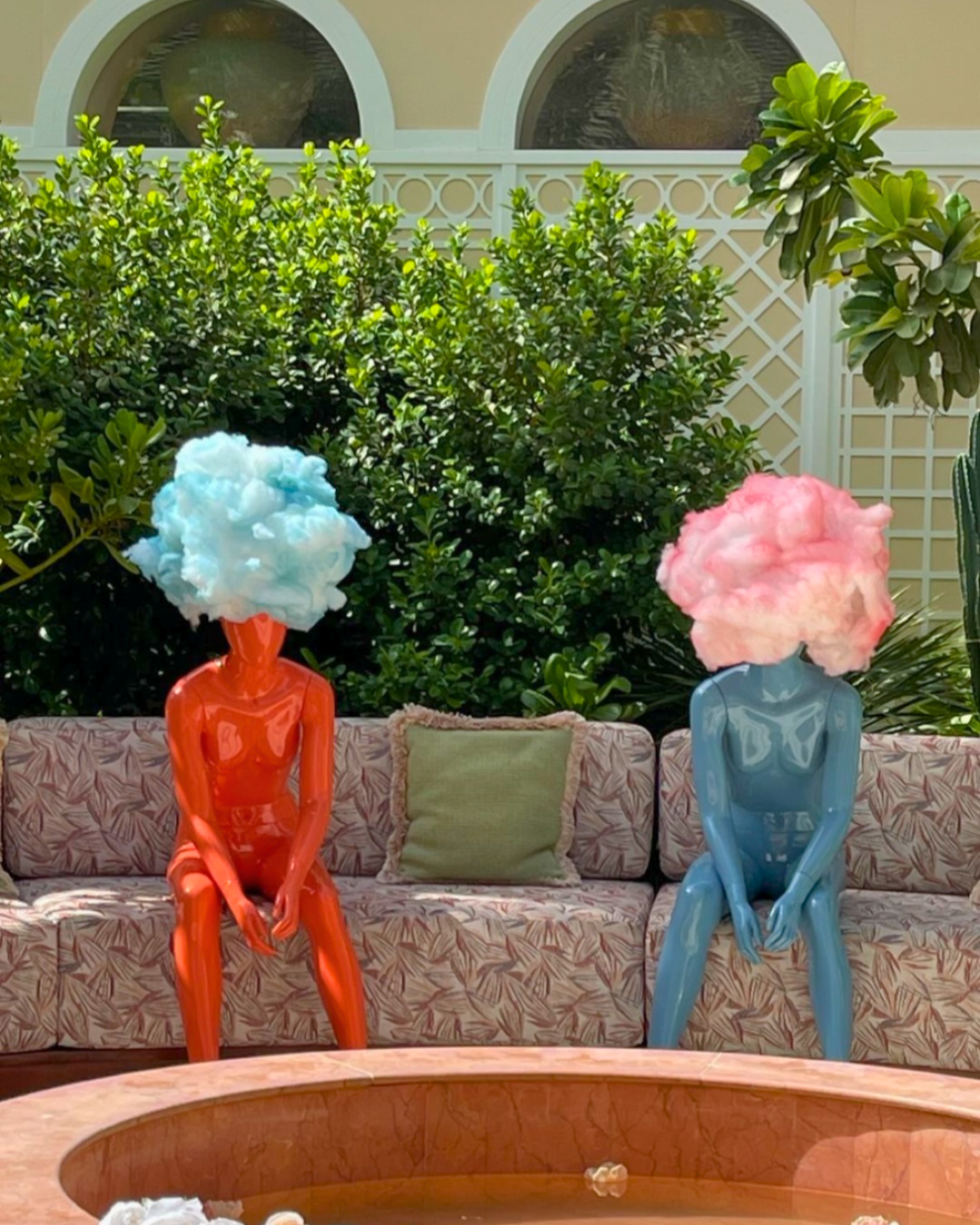
The specific visual vocabulary of the collaboration — linen, sand, glass, and water; the private cabanas; the branded gelato cart; the DJ’s lounge and tropical house programming; the champagne that accompanied the fashion moments — constitutes a coherent sensory environment whose luxury signal is produced through understatement rather than through ostentation. There is no explicit retail pressure in this environment. There is no moment at which the consumer is asked to make a purchasing decision. There is only the sustained encounter with beautiful things in a beautiful place, in the company of people who share the same aesthetic reference points and the same understanding of what a certain quality of afternoon should feel like. The purchasing decision, when it comes, is not a transaction. It is a continuation of the experience.
This is the most sophisticated mechanism available to luxury retail — the creation of an atmospheric context so precisely aligned with the consumer’s own identity aspirations — a principle explored with equal precision in the context of fine jewellery acquisition in The Language of Modern Necklaces: Metals, Stones, and the New Codes of Personal Luxury, where the most significant luxury purchases are those made within conditions of genuine self-knowledge rather than commercial pressure that the desire for the products encountered within it requires no activation beyond the encounter itself. Harvey Nichols, through the Maison de la Plage collaboration, is deploying this mechanism at the highest available level of execution. The result is not a sales event. It is a cultural event that produces commercial outcomes — and the distinction is everything.
As Vogue’s analysis of the future of luxury retail and experiential destination strategy documents, the luxury brands building the most durable consumer relationships are those whose commercial encounters are indistinguishable from cultural encounters — whose products are encountered within atmospheric conditions so precisely aligned with the consumer’s own aesthetic identity that the act of acquiring them feels like self-expression rather than consumption. The Maison de la Plage and Harvey Nichols collaboration is the Gulf luxury market’s most complete available expression of this principle.
The future of luxury partnerships — destination retail, distributed ecosystems, and post-store strategy
The Maison de la Plage and Harvey Nichols collaboration is not a one-time event. It is a prototype — the most visible available expression of the structural direction in which luxury retail partnerships are moving, and a blueprint for the post-store luxury strategy that the most forward-thinking retailers and hospitality brands are beginning to execute simultaneously.
The direction is clear: more hybrid collaborations between luxury retailers and lifestyle venues, department stores embedding themselves into destination ecosystems rather than expecting destination traffic to come to them, and the replacement of the flagship store as the primary luxury brand expression with a distributed network of atmospheric environments in which the brand’s editorial intelligence is expressed through context and curation rather than through architecture and product density.
In this model, a Harvey Nichols collaboration with Maison de la Plage is not a marketing activation that supports the store’s core retail operation. It is an extension of the store’s core retail operation into the atmospheric conditions that its most valuable consumers inhabit when they are not shopping — the conditions in which their relationship to luxury, to self-presentation, and to the specific brands that define their aesthetic identity is most actively formed. The store meets the consumer where they are, rather than waiting for the consumer to come to where the store is.
The parallel with how the most considered luxury hospitality destinations operate as social and identity ecosystems — explored in The New Geography of Experiential Luxury Dining in Dubai — is direct and structurally significant. The restaurants and beach clubs that produce the most enduring consumer loyalty are those whose environments are so precisely aligned with their guests’ identity aspirations that the visit feels like self-expression. The luxury retail partnership that achieves the same alignment — that creates an atmospheric encounter with products so precisely tuned to the consumer’s own aesthetic identity that acquisition feels inevitable — is the partnership that produces the most durable commercial relationship available to the luxury market. As McKinsey’s analysis of luxury retail’s future and experiential strategy confirms, the retail environments generating the highest long-term consumer value are consistently those that produce genuine emotional states rather than merely transactional satisfaction. The Maison de la Plage and Harvey Nichols collaboration is the Gulf luxury market’s most complete expression of this future, executed in the present.
“The Maison de la Plage and Harvey Nichols collaboration
signals a decisive shift in how luxury is constructed and consumed.
The retail environment is no longer contained
within architectural boundaries —
it is expanding into atmospheric, sensory-driven landscapes
where commerce is embedded within experience itself.
In this new paradigm, luxury is not defined
by where a product is sold,
but by the emotional and environmental context
in which it is encountered.
Here, the beach is no longer an escape from retail culture.
It becomes its most refined expression.”