

On the cultural migration of the Japanese Izakaya tradition, Chef Ikegami Takahiko’s robatayaki mastery, ATTIKO Dubai’s architectural translation of informal ritual into elevated social experience, and why the informality that once defined Tokyo’s neighbourhood dining culture has become one of luxury hospitality’s most powerful design tools
The Izakaya was never meant to be exceptional — it was meant to be habitual, familiar, and socially grounding. Yet in global cities like Dubai, formats such as those experienced at ATTIKO Dubai reveal a new cultural condition: everyday rituals are no longer inherited. They are reconstructed, elevated, and re-performed within engineered environments. What emerges is not a replication of Tokyo’s Izakaya culture, but a reinterpretation of its emotional logic — one where informality itself becomes a luxury object.
In Tokyo, the Izakaya is unremarkable. It is the restaurant you do not choose — it is the one you end up in, with colleagues who stayed past the end of the working day, ordering another round of sake and another plate of yakitori because nobody is ready to return to the rest of their evening. The Izakaya does not try to be significant. Its significance is precisely in its not-trying: the low lighting is not designed, the noise is not engineered, the ease of the room is not manufactured. It is the ease of a space that has been used, consistently, by the same kinds of people for the same kinds of purposes over many years. The Izakaya earns its atmosphere the way a neighbourhood earns its character — through repetition and inhabitation rather than through design.
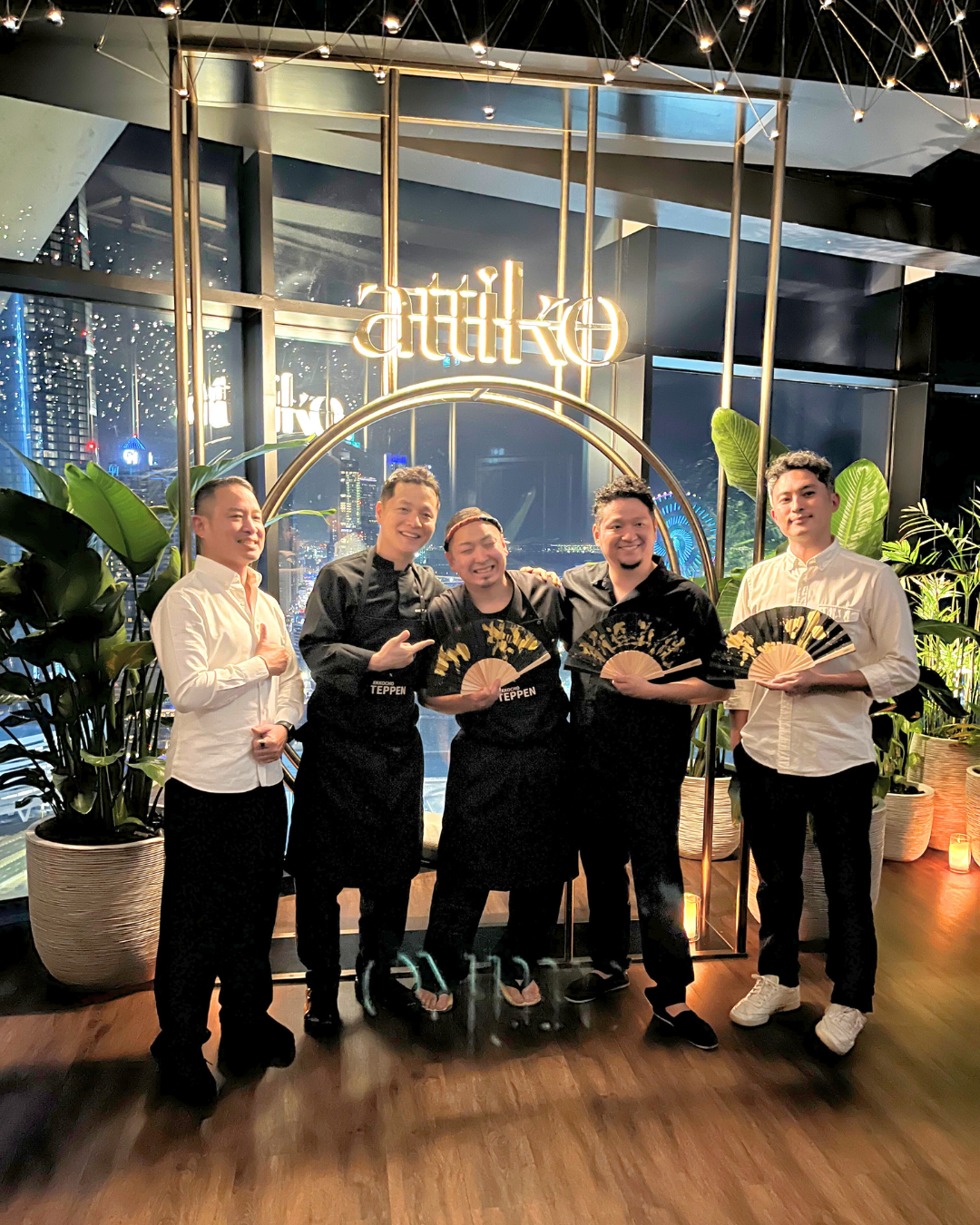
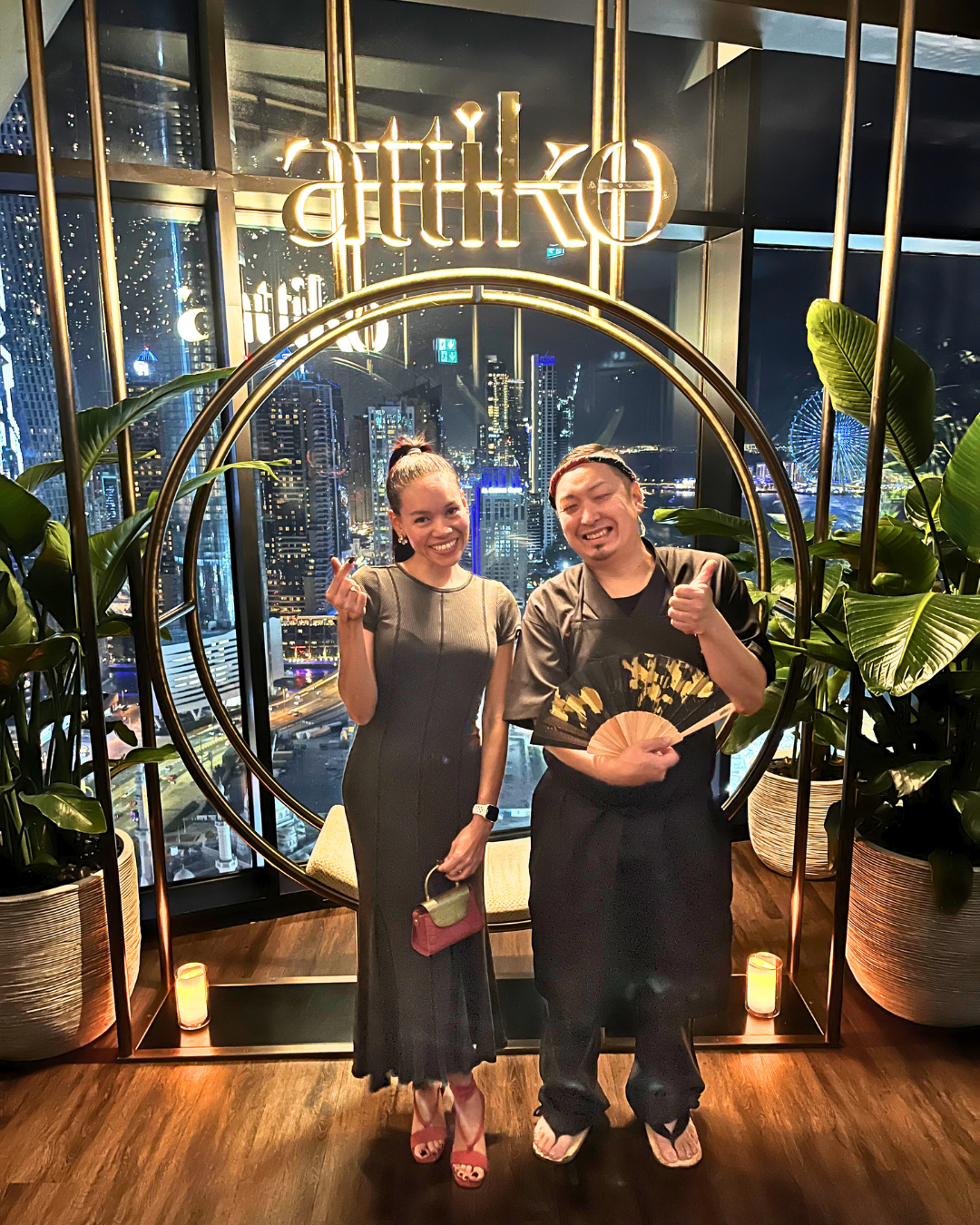
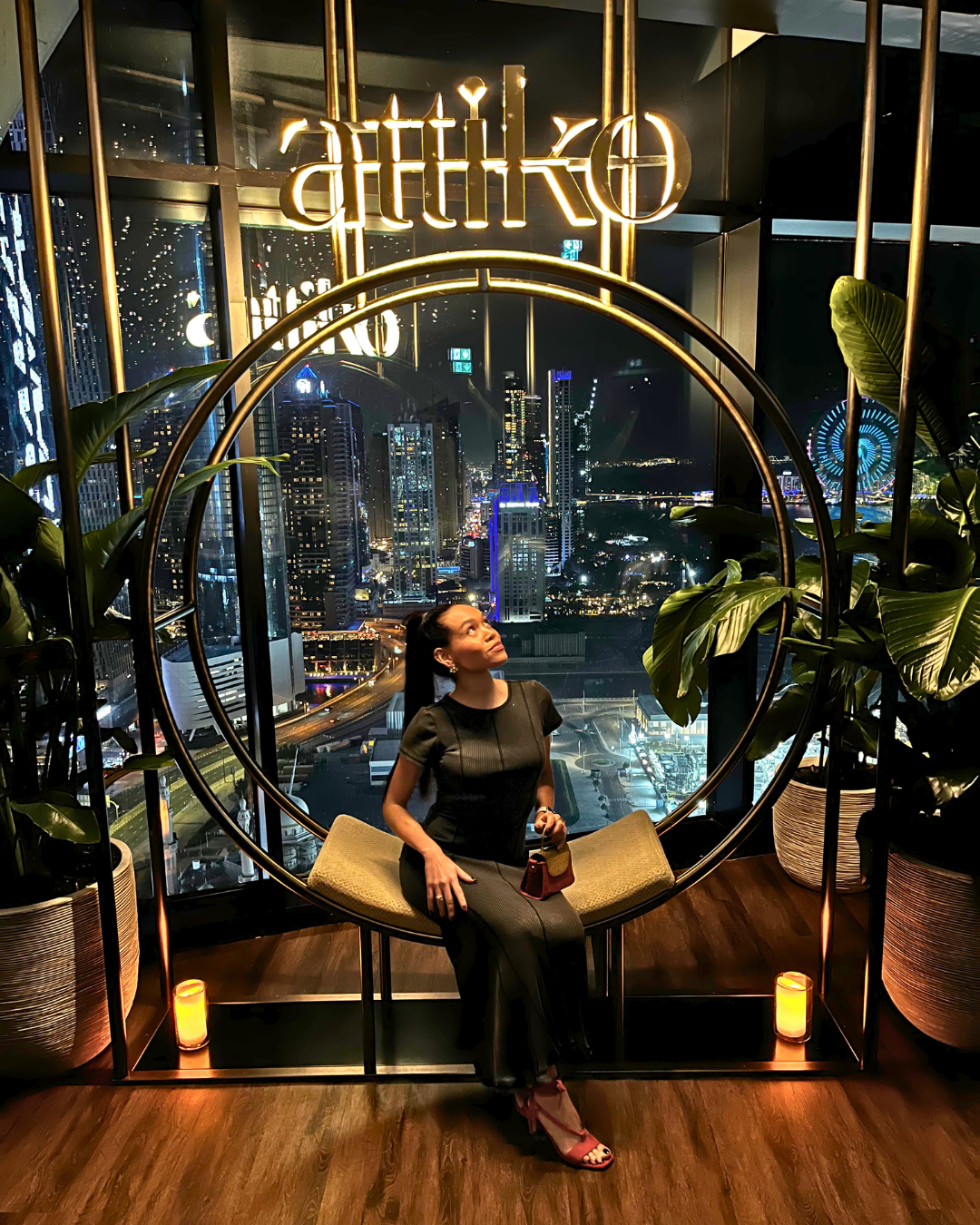
At ATTIKO Dubai, perched above Dubai Harbour with the city’s illuminated skyline as its permanent backdrop, this tradition arrives in the most different possible context. And in arriving here, it reveals something precise about how contemporary luxury hospitality works — and about what the global appetite for authenticity and informality means when that informality is reconstructed within one of the most intentionally designed dining environments in the city.
The broader context of how Dubai transforms imported cultural formats into elevated experiential luxury — amplifying their aesthetic intensity and repositioning them within luxury architectural ecosystems — is explored across this site’s dining and lifestyle editorial. Why Lah Lah Is Dubai’s Most Considered Girls’ Night Out explores the Bangkok-inspired pan-Asian register of this same cultural translation dynamic: the specific way Dubai takes the atmosphere of another city’s most emotionally intelligent hospitality format and reconstructs it at an elevation that is simultaneously authentic and entirely its own.
Izakaya as cultural infrastructure — a behavioural system, not a menu category
To understand what ATTIKO Dubai is doing with the Izakaya format, it is necessary to understand what Izakaya actually is — and why its particular emotional intelligence makes it one of the most powerful hospitality formats available for cultural reinterpretation. The Izakaya is not a cuisine. It is a social technology — a set of behavioural conditions engineered over centuries to produce a specific quality of human interaction.
The term Izakaya (居酒屋) is a fusion of the words meaning to stay and sake shop — a direct record of its origin during the Edo period, when sake houses began allowing patrons to linger and eat alongside their drinks. What emerged over the centuries was not merely a restaurant format but a social institution: the space in which the rigid hierarchies of Japanese professional and social life were temporarily suspended, where the shared plates and communal ordering dissolved the formal dining etiquette that governed every other context, and where the specific quality of ease that comes from eating from the same dishes as everyone else at the table produced a social levelling that Japanese culture found valuable precisely because it was so rare.
The Izakaya’s social mechanics are specific and replicable: communal ordering without hierarchy, shared plates that require negotiation and generosity, sake as social lubricant rather than luxury signal, low lighting that flattens visibility differences, acoustic warmth that provides cover for conversation without demanding silence. These are not aesthetic choices. They are behavioural engineering — the systematic creation of conditions under which a particular quality of human interaction becomes possible. The genius of the Izakaya format is that it achieves this through apparent simplicity: the casualness is the engineering, and the engineering is invisible.
As the Financial Times has explored in its analysis of Japanese culinary culture and its global migration, the Izakaya format has travelled internationally not because of the food but because of the social conditions it produces — because the specific quality of human interaction it engineers is one that urban professionals in every global city are seeking, and finding in very few other contexts. What makes ATTIKO Dubai’s interpretation of this format significant is not that it has imported the Izakaya’s cuisine, but that it is attempting to import the Izakaya’s social conditions — and doing so within an architectural context that is almost precisely the opposite of the neighbourhood context that originally produced them.
Chef Ikegami Takahiko and the robatayaki tradition — mastery as the foundation of cultural translation
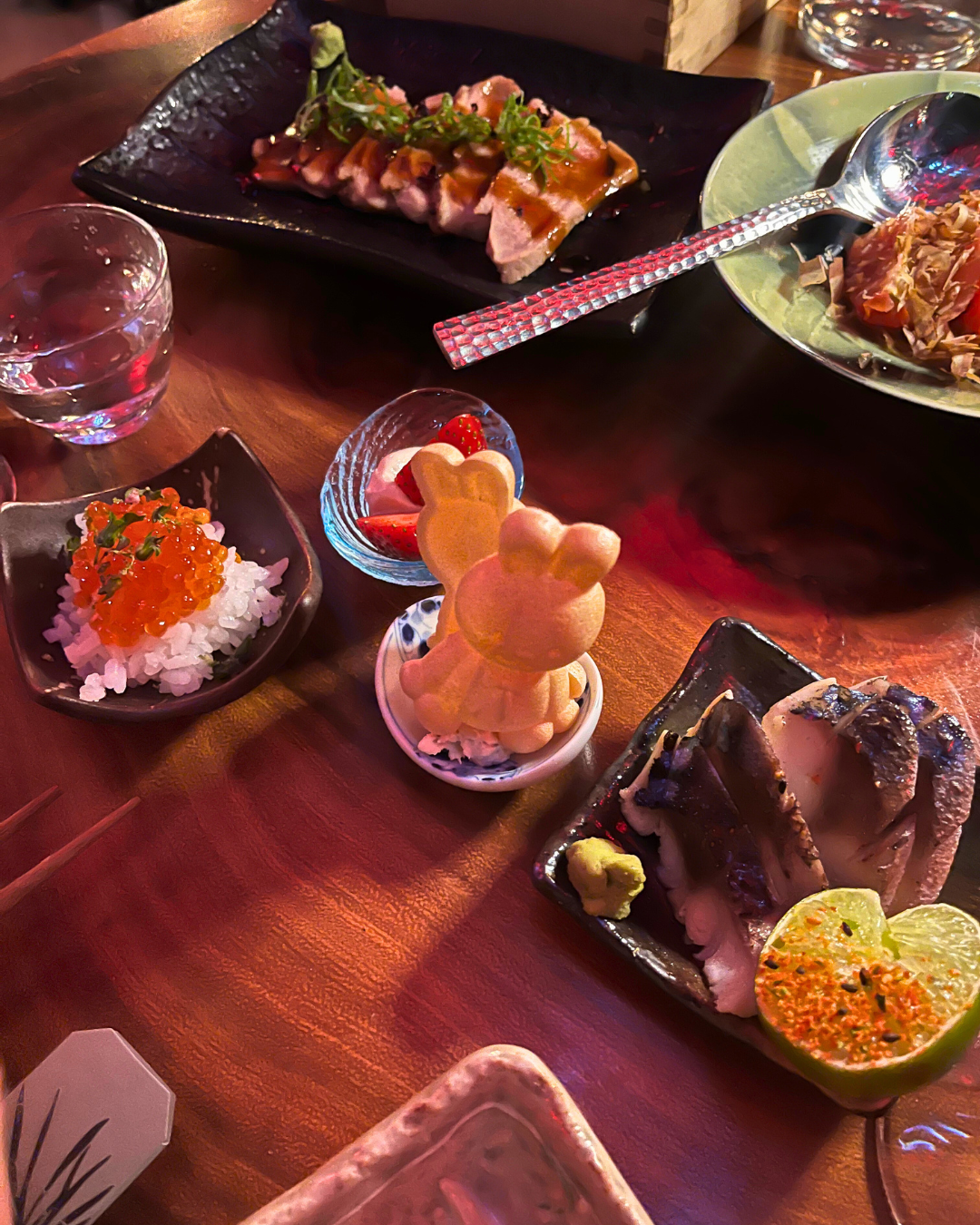
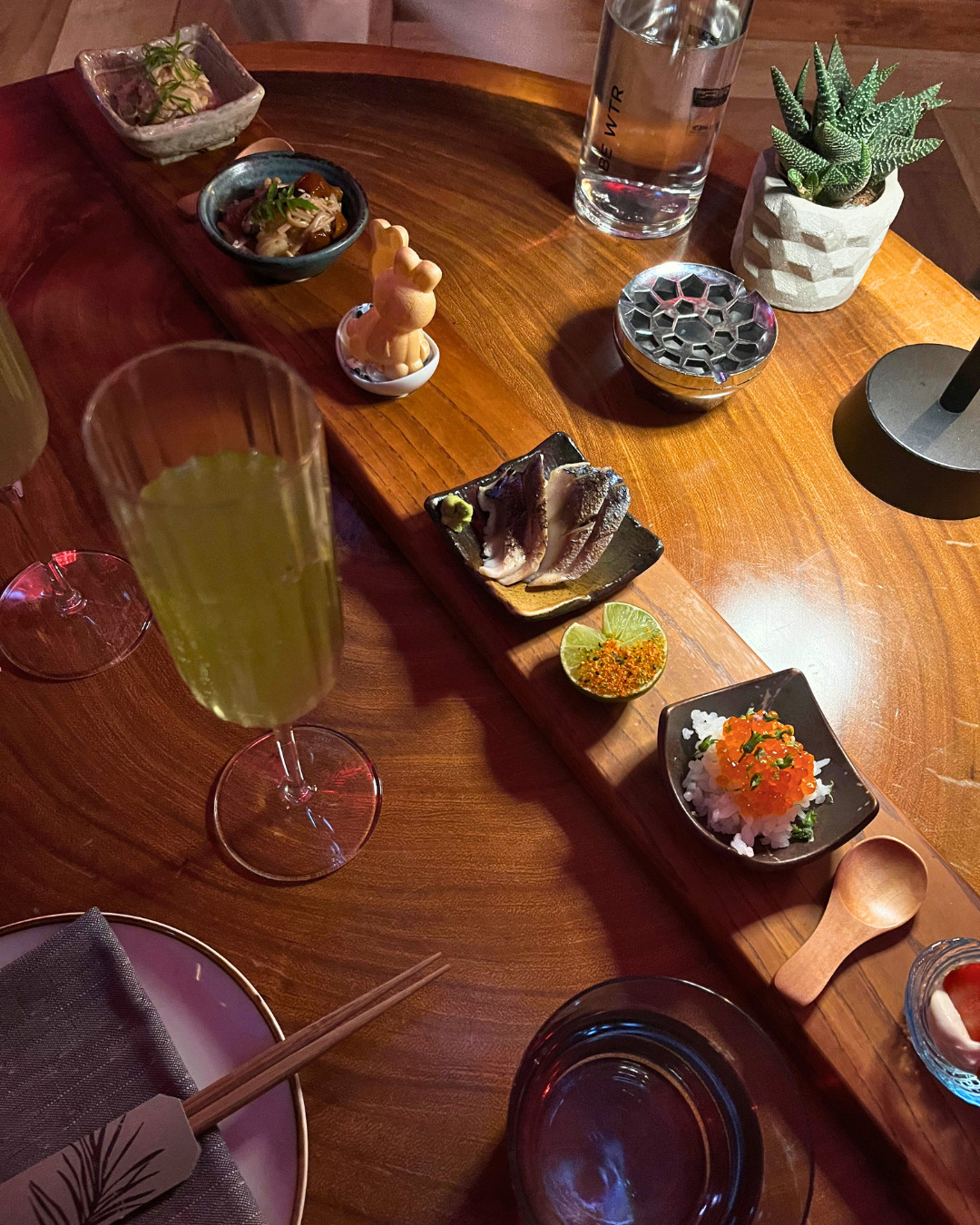
At the heart of the ATTIKO Dubai Izakaya experience is Chef Ikegami Takahiko — a figure whose relationship to the robatayaki tradition is not curatorial but constitutive. He did not study the tradition and decide to deploy it. He has spent a career inhabiting it, building through the Tokyo institution Zekkocho Teppen a body of work that is simultaneously deeply traditional and entirely contemporary. This is the only foundation from which genuine cultural translation is possible.
Robatayaki — fireside cooking — is one of the oldest Japanese grilling traditions, originating in the coastal fishing villages of Hokkaido, where fishermen slow-cooked their catch over binchotan charcoal. The binchotan is the key technical element: a white oak charcoal that burns clean and extraordinarily hot, imparting a deep umami smokiness into everything it touches without the chemical interference of conventional charcoal. The result is a flavour profile — the specific combination of char and purity, of intense heat applied to the finest possible ingredients — that exists nowhere in the culinary world outside of this specific technique applied with this specific material.
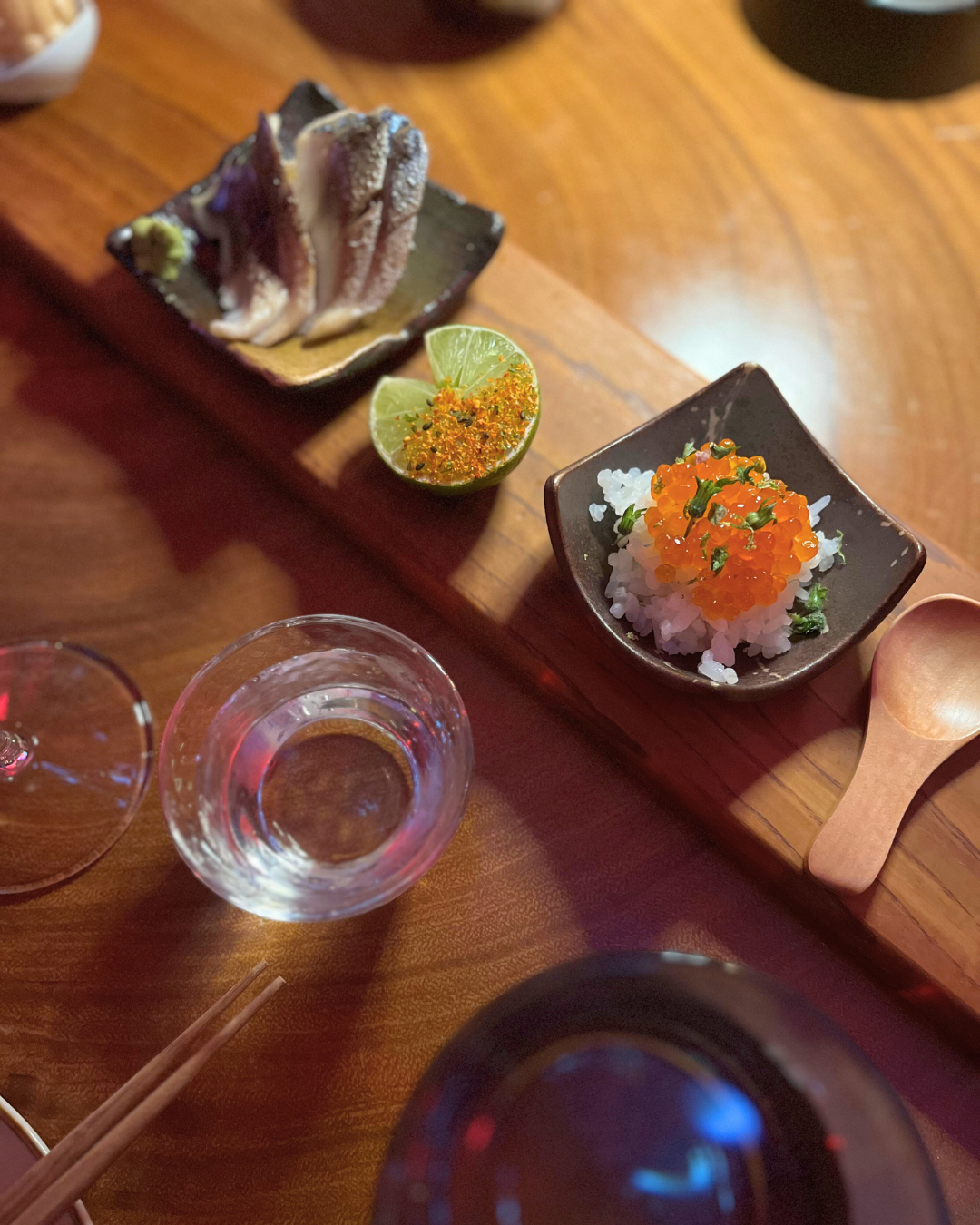
Chef Takahiko’s interpretation of this tradition at ATTIKO Dubai unfolds through dishes that carry the behavioural intelligence of the Izakaya format within the technical precision of robatayaki mastery. The golden-crisp meat and potato korokke croquettes — their outer shell giving way to a velvety, savoury interior — carry the nostalgic comfort register of the best Tokyo Izakaya cooking: food that is entirely unpretentious in its emotional intention and entirely precise in its technical execution. The Chilean seabass with white miso is the Kyoto register of the same intelligence: balance as the governing principle, the buttery flakiness of the fish meeting the fermented sweetness of the glaze with the slight char of masterful grilling producing a smokiness that the citrus finish resolves into something entirely unified.
The Wagyu truffle sliders occupy the position that only the most confident cultural translators can occupy: the point at which Izakaya comfort food and contemporary luxury dining become indistinguishable from each other, where the marbled richness of the beef, the earthy decadence of the shaved truffle, and the delicate sweetness of the house-made brioche produce a harmony that is simultaneously the most ambitious and the most straightforwardly pleasurable thing on the table. This is the specific flavour signature of a chef who has understood that honouring a tradition does not mean refusing to extend it.
The sake programme that accompanies each course at the ATTIKO Izakaya experience is as deliberately constructed as the food itself. A crisp, floral Junmai Daiginjo with the korokke; an aged sake with deep umami notes alongside the miso-glazed seabass; a fuller-bodied sake with caramelised depth paired with the Wagyu. These are not pairings in the conventional wine-pairing sense — they are continuations of the meal’s narrative, each sip woven into the fabric of the evening’s emotional arc, making every bite a moment held rather than merely consumed.
The architectural translation — from street-level to skyline-level sociality at ATTIKO Dubai
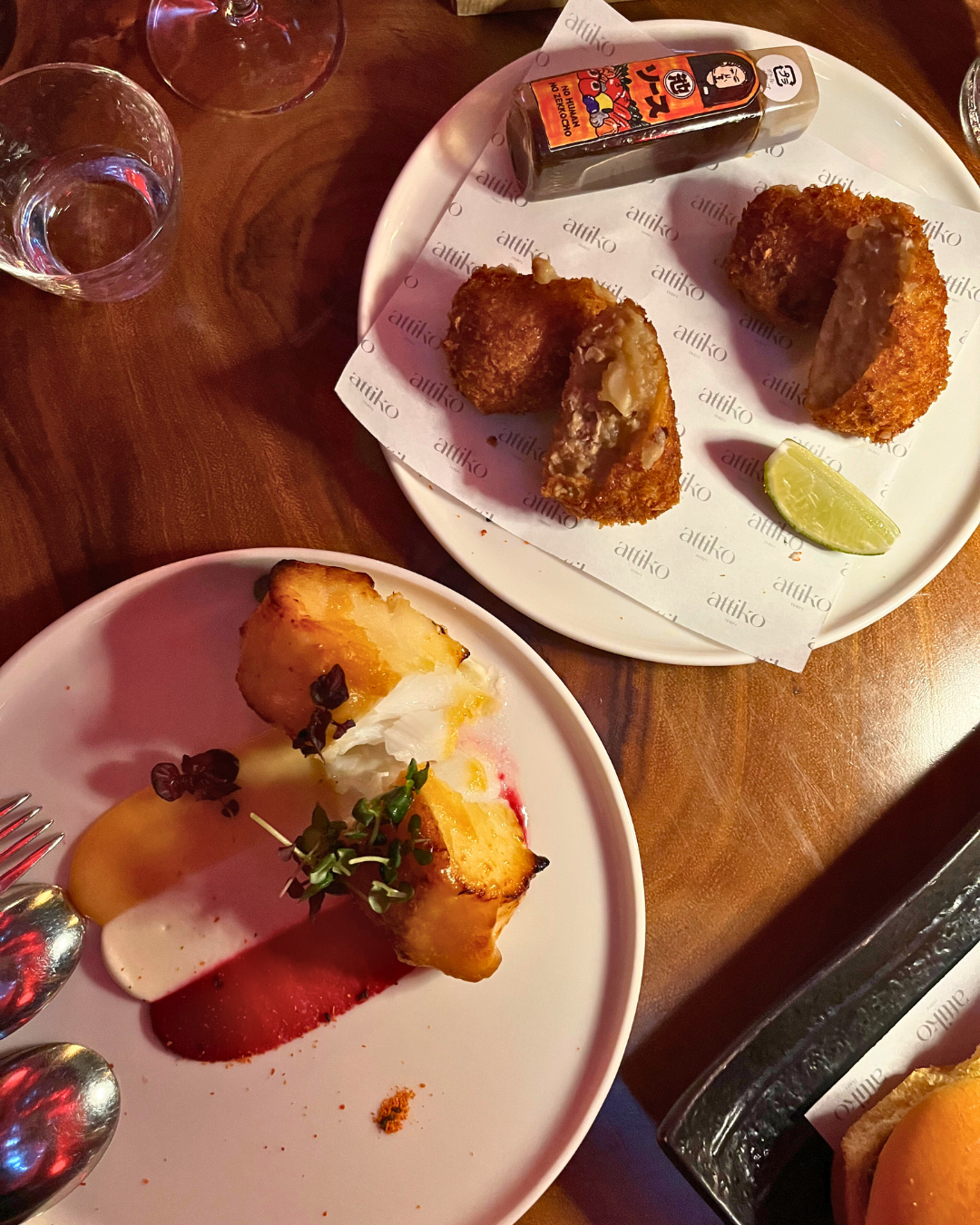
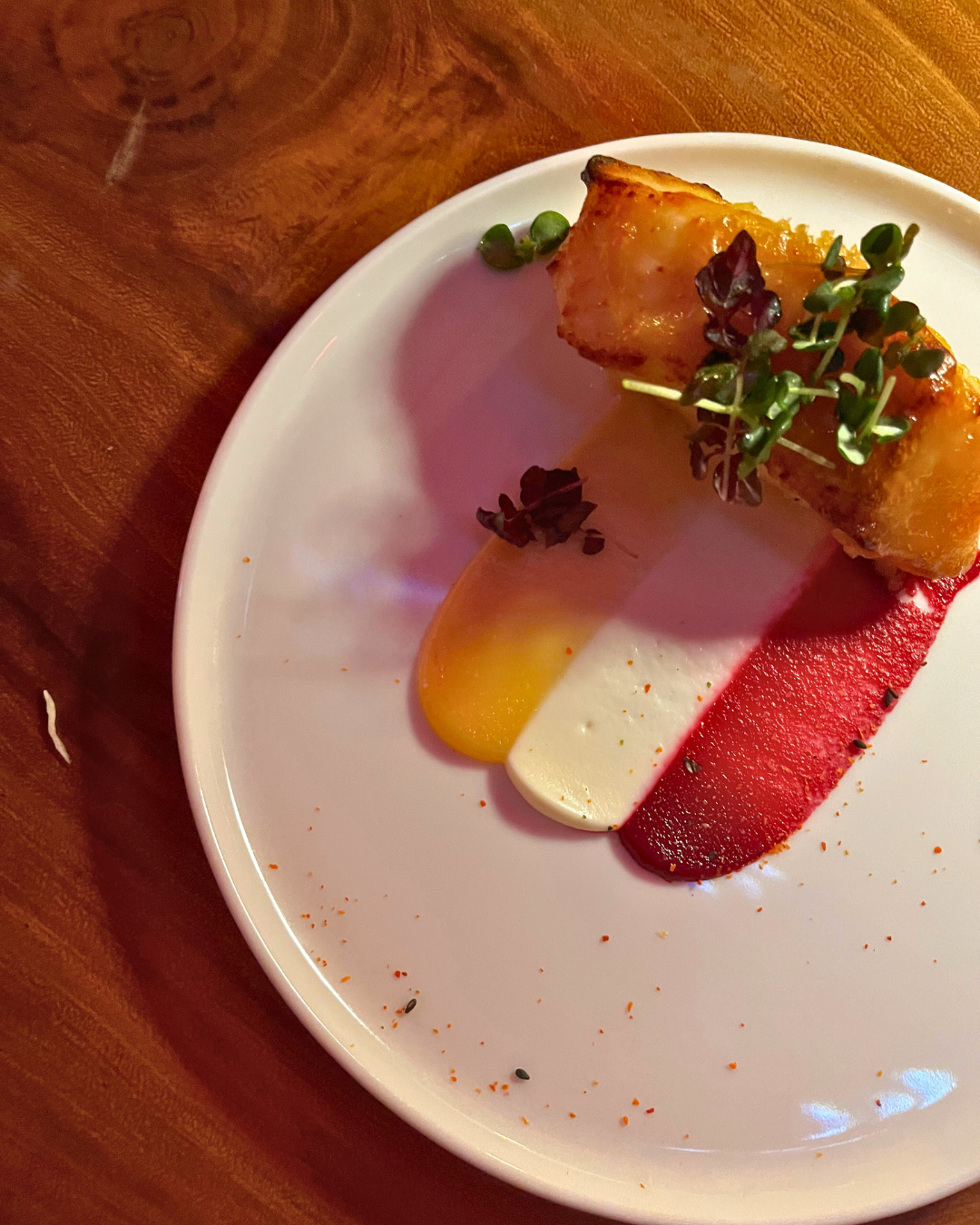
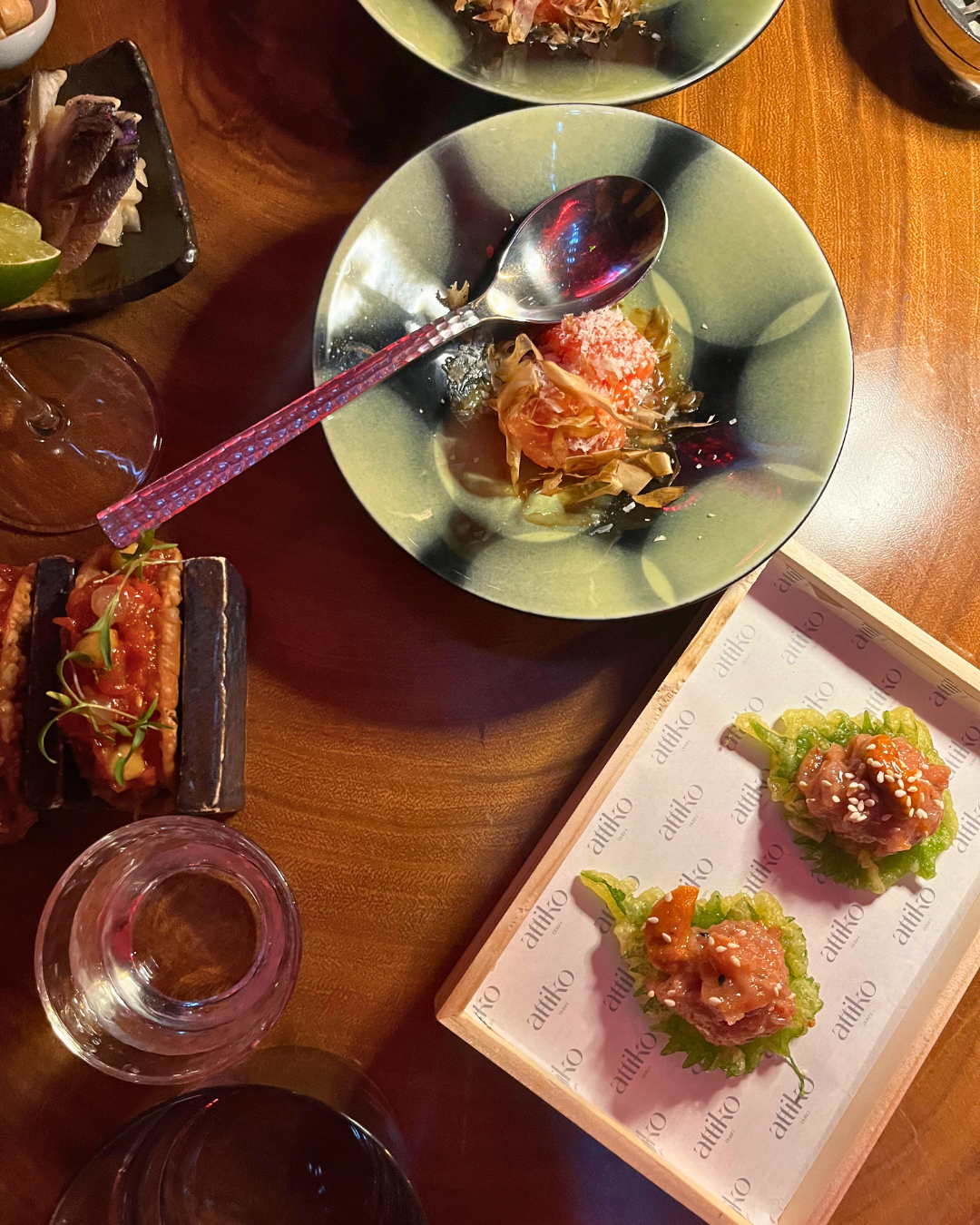
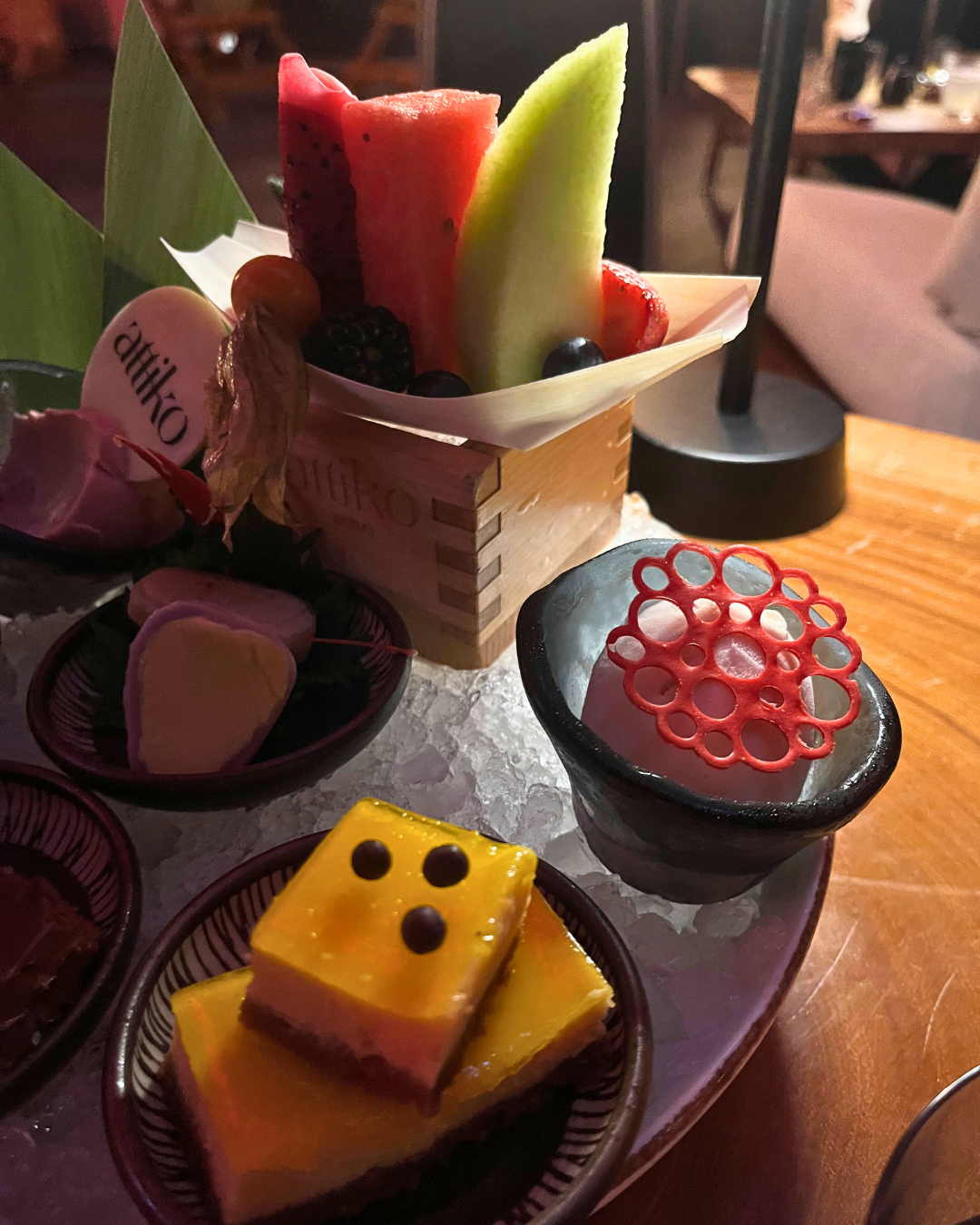
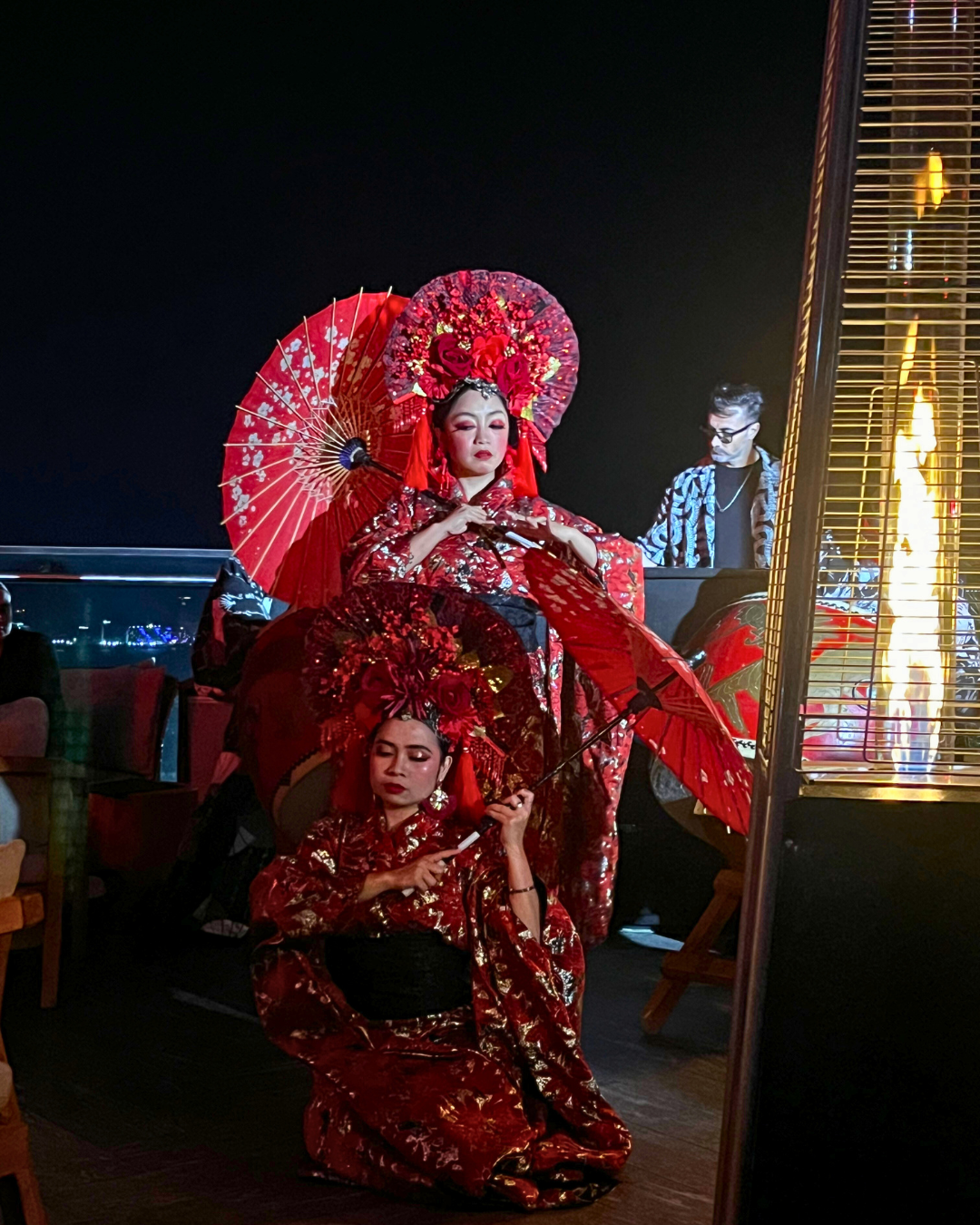
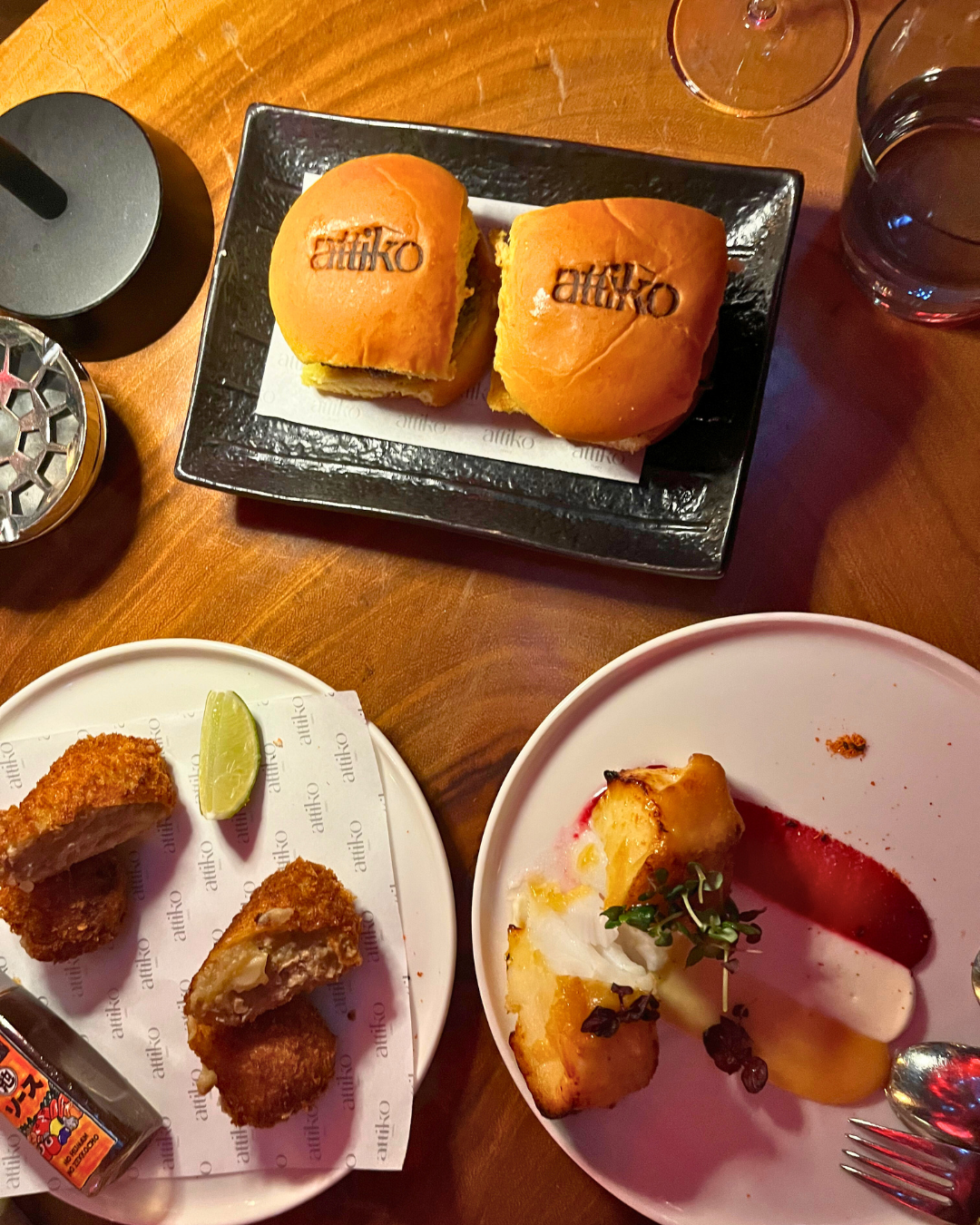
The central paradox of the ATTIKO Dubai Izakaya experience is spatial: the format that produces its social conditions through neighbourhood enclosure, through the specific warmth of a street-level space in which everyone is equally visible and equally contained, is being deployed within a vertical luxury environment in which the panoramic openness of the Dubai skyline is the primary spatial fact. This is not a problem the experience has failed to solve. It is the tension the experience is designed to hold.
At ATTIKO Dubai, the Izakaya format is not replicated — it is re-authored through the specific conditions of the venue. The vertical spatial drama of Dubai Harbour’s skyline replaces the neighbourhood street’s horizontal enclosure. Curated lighting environments replace the casual warmth of the original format’s worn surfaces. Designed acoustics replace the organic noise of a full Izakaya in a Tokyo backstreet. And panoramic visibility — the sense of being elevated above the city, in sight of it but removed from it — replaces the neighbourhood enclosure that originally produced the Izakaya’s social conditions.
What ATTIKO produces in this translation is not the Izakaya’s atmosphere but the Izakaya’s emotional logic: the specific quality of social ease that the format’s shared plates, its communal ordering, its multiple rounds of sake and small bites, its willingness to let the evening go on as long as it needs to go on — all of this remains structurally intact within an environment that could not be more different from the one that originally produced it. The informality is reconstructed through extreme intentionality. The ease is engineered through high capital intensity. The spontaneity is curated. And the result — paradoxically, and precisely — is a version of the Izakaya’s social magic that is entirely authentic to both its Japanese origin and its Dubai context.
The Taiko drumming and traditional-meets-modern dance performances that accompanied the Chef Takahiko evening at ATTIKO add a further layer to this architectural translation: the sonic and kinetic language of Japanese cultural tradition introduced into a luxury Dubai rooftop environment, not as decoration but as structural support for the temporal suspension that the best Izakaya experiences produce. When the Taiko rhythm fills the space, the city below becomes backdrop rather than destination, and the evening becomes its own complete world. This is precisely the condition the original Izakaya was built to produce — by entirely different means, in an entirely different context, with the same essential outcome.
The luxury of controlled informality — why engineered spontaneity is contemporary hospitality’s most valuable product
The ATTIKO Dubai Izakaya experience illuminates a cultural condition that is becoming one of the defining tensions of contemporary luxury hospitality: the simultaneous desire for ease and the impossibility of ease in environments designed for luxury. The guest who arrives at ATTIKO seeking the informal social conditions of a Tokyo Izakaya is seeking something that the design intelligence of the venue cannot, by its nature, simply provide. The ease has to be manufactured — and the manufacturing has to be invisible.
This is the new luxury paradox: the more effortless the experience feels, the more engineered it is behind the scenes. The Izakaya’s original ease was the ease of accumulated habit — the ease of a space that had been used so many times by so many similar people for so many similar purposes that the atmosphere had been worn into it, like the surface of a wooden counter that has absorbed decades of sake and conversation. The ease of ATTIKO Dubai’s Izakaya experience is entirely different in origin and entirely similar in effect: the product of thousands of intentional decisions about lighting calibration, acoustic management, plate sequencing, sake pairings, and the specific rhythm of arrival and removal that makes an evening feel paced by the people at the table rather than by the kitchen behind it.
High-income urban consumers have shifted consistently toward preference for experiences that produce genuine emotional ease over those that produce mere visual impressiveness. The deepest expression of this preference in Dubai’s cultural calendar is explored in Ramadan in Dubai: The Best Iftar Experiences of the Year — where the shared table carries the full weight of spiritual and communal intention, and where the quality of ease produced by eating together is the most significant form of luxury the city produces annually. The Izakaya and the Iftar table operate on the same foundational principle: that the most significant dining experiences are those in which the act of sharing food produces something in the people sharing it that the food alone could not have produced. As Vogue’s analysis of the contemporary luxury hospitality shift toward experiential authenticity documents, the most significant development in luxury dining culture is the preference for spaces that feel genuinely relaxed rather than merely expensive — where the design intelligence is present but invisible, where the effort is invisible but the ease is entirely real. The ATTIKO Dubai Izakaya experience is a laboratory for exactly this condition.
The broader principle — that the spaces and experiences we choose define and reinforce our sense of who we are — connects the Izakaya’s social intelligence to the wider culture of intentional personal aesthetic explored across this site’s editorial. At Nette Al Barari, Where Dubai Slows Down explores the same tension at a different register: the designed space that produces genuine ease, the carefully considered environment that makes the hours within it feel self-generating rather than managed. ATTIKO Dubai’s Izakaya experience operates within the same understanding — that the most sophisticated hospitality is the kind that knows exactly what it is trying to produce and provides it without the labour being visible to the people it is being provided for.
The social economy of the Izakaya in a global city — networking-neutral luxury and the dissolution of dining hierarchy
One of the most commercially significant properties of the Izakaya format — the property that makes it so useful as a social infrastructure in the context of Dubai’s internationally mobile professional class — is its capacity to dissolve the formal dining hierarchies that most luxury restaurant formats maintain. The shared plate, the communal order, the multiple rounds of small dishes that arrive throughout the evening rather than in a defined sequential progression: these are not merely culinary conventions. They are social engineering tools that produce a specific quality of interaction that no other dining format reliably replicates.
In the traditional luxury restaurant environment, the hierarchy of the table is maintained through the structure of the meal: who orders first, who is served first, what choices communicate about status and knowledge. The tasting menu format — sequential, chef-directed, removing individual choice entirely — resolves this hierarchy by eliminating it. The Izakaya resolves it differently: by making sharing and communal decision-making the structural logic of the meal, so that the hierarchy is dissolved through participation rather than through removal of agency. Everyone at the table is equally invested in what arrives next. Everyone is equally responsible for the rhythm of the evening. The result is a quality of social ease that the most carefully choreographed tasting menu cannot replicate, because the ease comes from the participation rather than from the observation of someone else’s expertise.
In Dubai’s context — a city in which the networking dimensions of social dining are never entirely absent, where the professional and the personal exist in closer proximity than in most other global cities — the Izakaya’s networking-neutral quality has a specific commercial value. A table at ATTIKO during an Izakaya evening is a table at which the social conditions are configured to produce genuine connection rather than transactional proximity. The shared food dissolves the formal register. The sake provides the social lubricant without the performances of connoisseurship that wine culture sometimes introduces. The multiple small courses provide the natural conversational punctuation that a single-plate main course cannot. The result is an environment in which the most commercially valuable kind of relationship — the kind based on genuine affinity rather than strategic positioning — is most likely to develop.
This is the deepest argument for the Izakaya format in a luxury global city context, and the deepest argument for what ATTIKO Dubai is doing with it. The experience is not simply a Japanese restaurant offering elevated by a spectacular setting. It is a social technology — one of the most refined and most emotionally intelligent social technologies that any culinary tradition has produced — deployed within an environment whose architectural ambition is matched by the cultural intelligence of what it is serving. As the World Economic Forum has identified in its analysis of social connection and life satisfaction, the quality of shared experience is among the most consistent predictors of genuine wellbeing — and the dining format that most reliably produces genuine shared experience is the one that engineers its social conditions as carefully as it engineers its food.
Dubai as cultural amplifier — how the city transforms everyday rituals into elevated global references
The ATTIKO Dubai Izakaya experience is not an isolated phenomenon. It is a case study in one of Dubai’s most significant and least discussed hospitality capabilities: its function as a cultural amplification engine, importing global cultural formats, increasing their aesthetic intensity, repositioning them within luxury architectural ecosystems, and exporting them back into the global consciousness as elevated references. Dubai does not merely receive global culture. It transforms it. The full landscape of how Dubai’s most considered hospitality destinations operate as cultural transformation engines — from coastal waterfront dining to rooftop hybrid environments — is explored in The New Geography of Experiential Luxury Dining in Dubai: the editorial case for why Dubai’s most significant restaurants function not as venues but as immersive cultural operating systems for identity and belonging.
The city’s structural conditions for this transformation are specific and replicable: an internationally mobile consumer base whose aesthetic reference points span every significant cultural hospitality tradition simultaneously; a luxury architectural infrastructure that provides the physical conditions for aesthetic amplification; a government-supported creative economy that actively encourages cultural experimentation; and a density of ultra-high-net-worth consumers whose willingness to invest in genuinely exceptional experiences provides the commercial foundation for the ambition that cultural amplification requires.
Within this framework, the Izakaya becomes something that it has never been in its original context — rare, aestheticised, and intentional. The more informal the cultural origin, the more curated its international expression. The more habitual the source, the more elevated the reinterpretation. This is not cultural appropriation — it is cultural translation, executed with the genuine respect for the original format that Chef Ikegami Takahiko’s presence at ATTIKO embodies and the seriousness of the venue’s design intelligence confirms.
As Business of Fashion’s analysis of experiential luxury and the future of hospitality identifies, the most significant shift in luxury consumer behaviour globally is the consistent preference for experiences that produce genuine emotional states over products that merely signal status. The ATTIKO Dubai Izakaya experience is the fullest possible expression of this shift in a Dubai context: a format whose original power was entirely emotional — the power of ease, of shared food, of the evening that goes on as long as it needs to — reconstructed within a luxury architectural environment with the technical mastery and cultural seriousness that genuine emotional power requires.
For those planning a Dubai social calendar that covers the full range of what the city’s experiential dining culture offers — from the intimate neighbourhood register explored in A Day at Nikki Beach Dubai and the New Rituals of Leisure to the broader landscape of Dubai’s experiential dining ecosystem — the ATTIKO Izakaya experience represents the most complete available synthesis of cultural intelligence, culinary mastery, and architectural dramaturgy that the city currently produces.
“The Izakaya was never meant to be exceptional —
it was meant to be habitual, familiar, and socially grounding.
Yet at ATTIKO Dubai, a new cultural condition becomes visible:
everyday rituals are no longer inherited.
They are reconstructed, elevated, and re-performed
within engineered environments.
What emerges is not a replication of Tokyo’s Izakaya culture
but a reinterpretation of its emotional logic —
one where informality itself becomes a luxury object,
and dining is defined not by what is served
but by how familiarity is architected,
staged, and experienced at altitude.”