
On the structural evolution of Dubai Fashion Week from regional showcase to global commercial platform, the GCC luxury fashion market’s growth trajectory, The Showroom as B2B acceleration infrastructure, and why Dubai is not participating in the global fashion system — it is actively redesigning its logic
Dubai Fashion Week is not a stage. It is a market activation engine. The traditional fashion week model — rooted in seasonal storytelling, press cycles, and the slow conversion of editorial attention into retail momentum — is being structurally disrupted. Dubai Fashion Week represents a new archetype: a transactional fashion ecosystem where visibility is directly convertible into commercial expansion, retail penetration, and brand equity acceleration. Dubai Fashion Week is not participating in the global fashion system. It is actively redesigning its logic.
Paris, Milan, London, and New York remain the symbolic centres of global fashion authority. But symbolic capital no longer guarantees commercial conversion, and brands operating under increasing pressure to demonstrate measurable ROI on cultural participation are evaluating the global fashion calendar with a different set of criteria. The question being asked is no longer where a fashion week sits in the hierarchy of cultural prestige — it is what a fashion week produces in terms of market outcomes, retail relationships, and commercial acceleration for the brands that participate in it.
Dubai Fashion Week answers this question differently from any other event on the global fashion calendar. It does so because Dubai itself is structured differently — not as a market that luxury brands serve, but as a market-making infrastructure that luxury brands enter. The GCC region, comprising the United Arab Emirates, Saudi Arabia, Qatar, Kuwait, Bahrain, and Oman, constitutes one of the highest concentrations of ultra-high-net-worth individuals in the world. Luxury spending in the region is not merely high — it is structurally configured to reward brands that understand the specific dynamics of a consumer base that is globally mobile, digitally hyper-informed, brand-sensitive but culturally adaptive, and driven by exclusivity, experience, and identity signalling at a level that few other markets replicate.
The broader context of fashion authority redistribution — of which Dubai Fashion Week is a significant expression — is explored in From Editors to Engineers: The Power Shift Reshaping the Met Gala and the Future of Fashion Authority and The Devil Wears Prada 2 and the Power Shift: Legacy, Technology, and the Future of Fashion Authority. Dubai Fashion Week sits at the intersection of these shifts: the redistribution of fashion capital away from legacy Western hubs, the democratisation of fashion week participation, and the emergence of commercially integrated fashion ecosystems in which cultural positioning is directly tied to market expansion.
Dubai Fashion Week as commercial infrastructure — the collapse of the traditional fashion week utility model
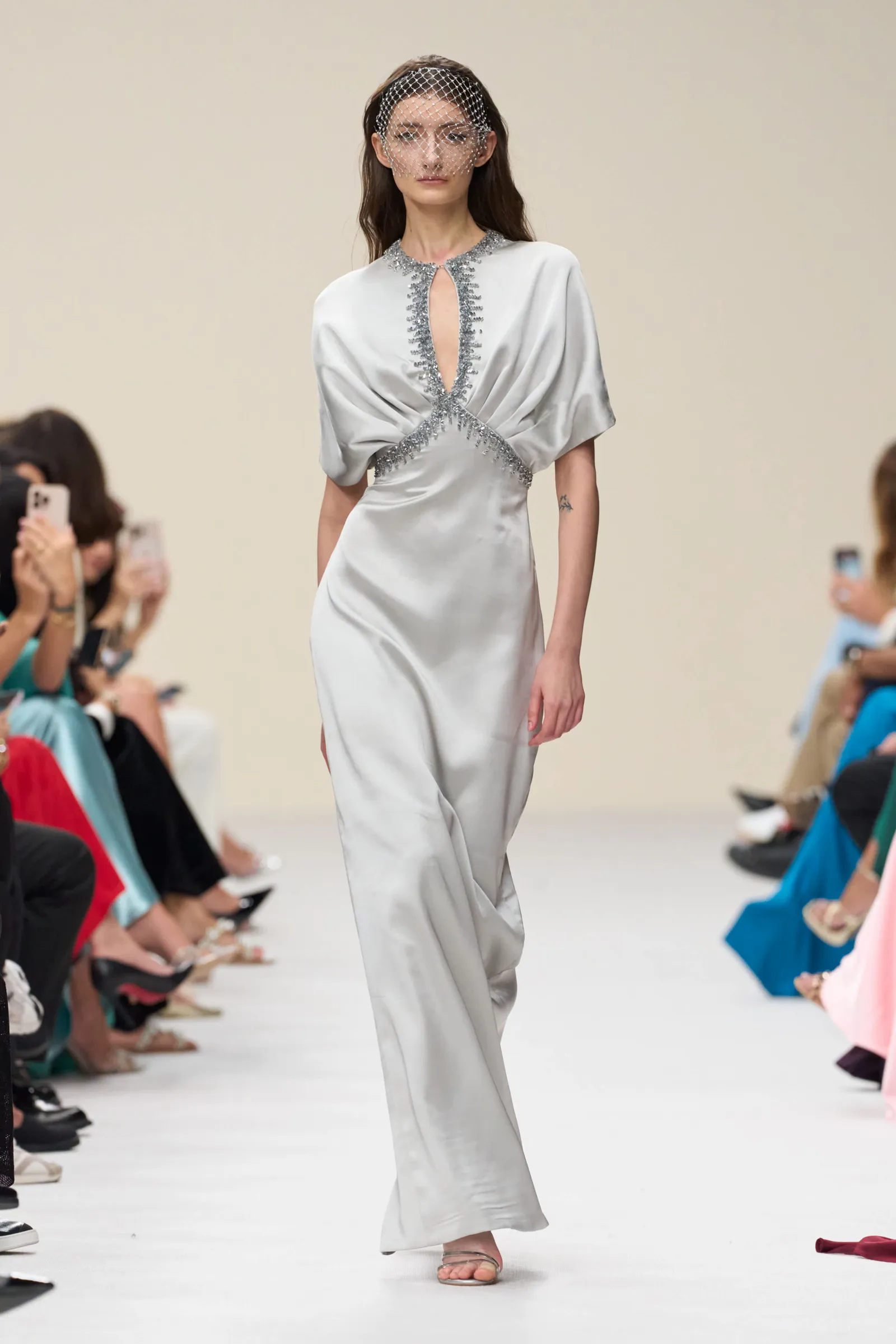
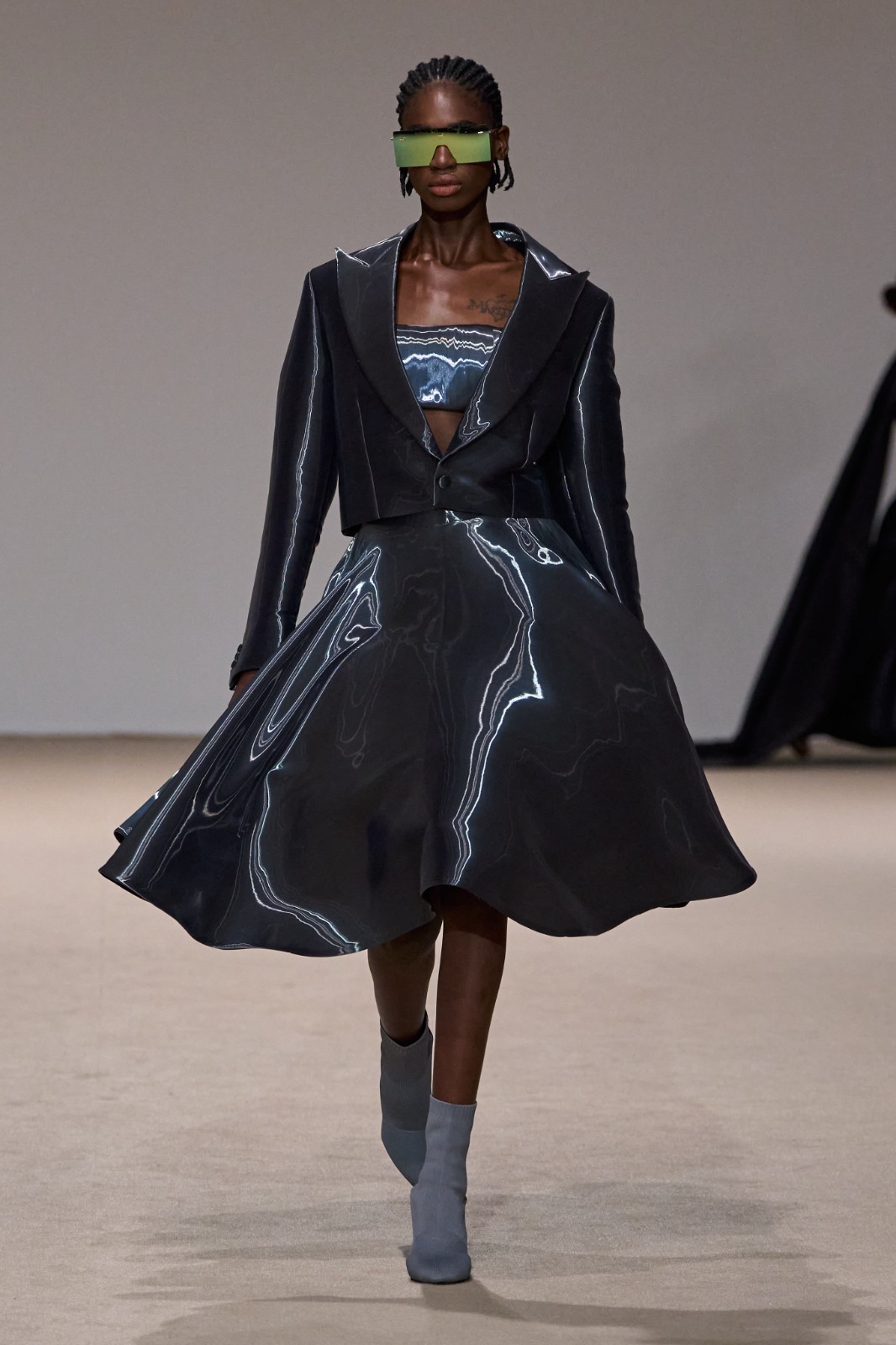
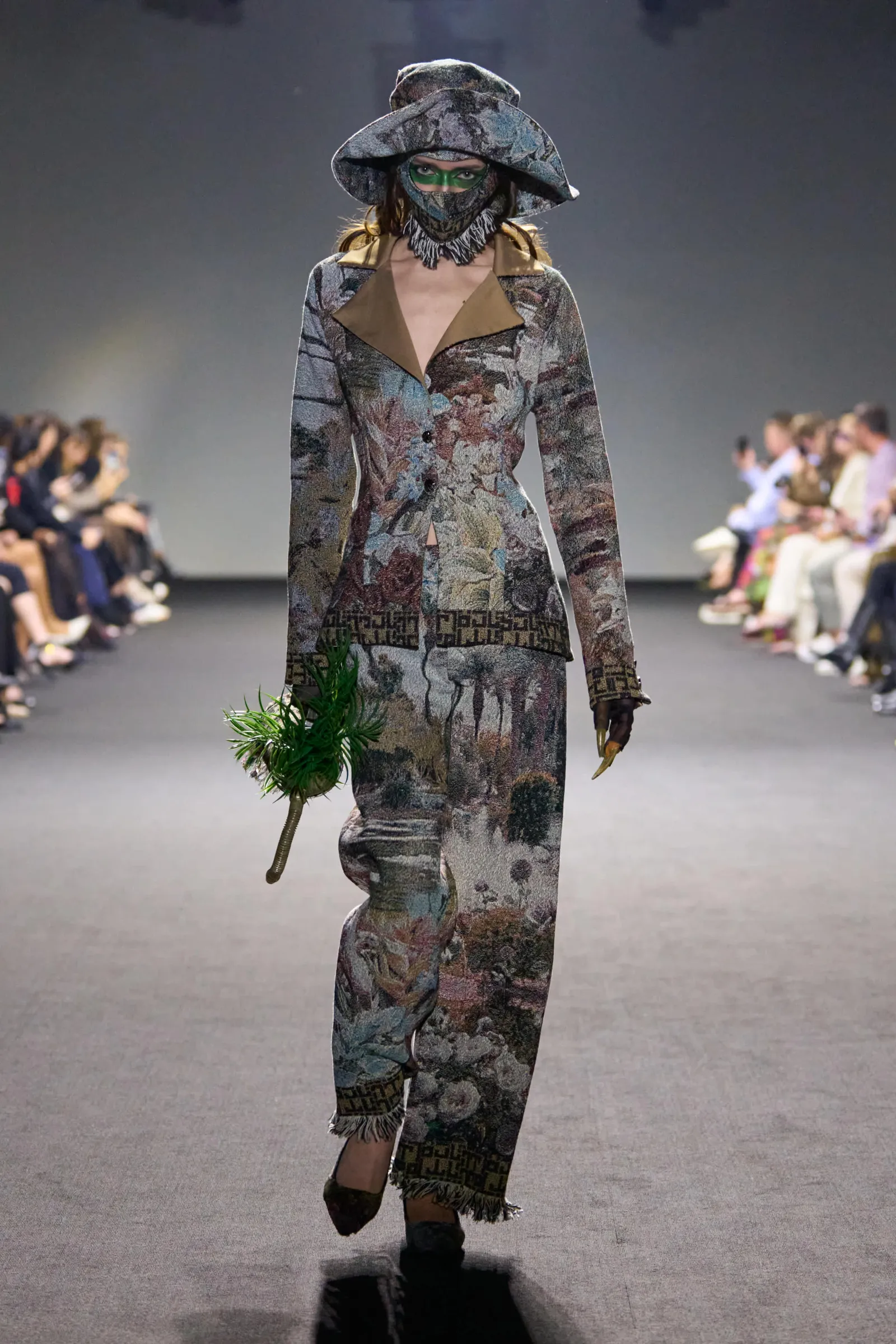
The traditional fashion week model operated on a clear and stable logic: runway presentations generated press coverage, press coverage generated consumer awareness, consumer awareness generated seasonal retail demand. This model worked when information was scarce, when the editorial cycle was the primary mechanism for translating fashion into culture, and when the geographic concentration of luxury consumption in a small number of Western markets made the traditional fashion capitals structurally essential. None of these conditions holds in the same way now.
The digital-native luxury consumer has collapsed the temporal gap between runway and desire. Social media has replaced the editorial cycle as the primary mechanism for converting fashion presentation into consumer intent. And the geographic distribution of luxury spending has shifted significantly toward markets that the traditional fashion week system was not built to serve. The brand that optimises exclusively for Paris or Milan press coverage is optimising for a conversion mechanism whose power has been substantially diminished by the same digital infrastructure that has made Dubai Fashion Week possible.
Dubai Fashion Week’s structural advantage is the directness of its commercial conversion chain. Where the traditional fashion week model operates across a sequential chain — runway to press to editorial to retail — Dubai Fashion Week operates across a compressed, simultaneous system: runway presentation, immediate influencer amplification, real-time buyer engagement in The Showroom, and direct retail partner activation, all occurring within the same event ecosystem. The distance between presentation and commercial outcome is not weeks or months. It is, in the most successful cases, the duration of the event itself.
As McKinsey and Business of Fashion’s State of Fashion analysis consistently identifies, the brands navigating the current fashion economy most successfully are those developing the agility to operate across multiple commercial registers simultaneously — cultural storytelling, digital amplification, immediate retail conversion, and sustained brand equity building — rather than those optimising for any single one. Dubai Fashion Week is the fashion week that is architecturally designed for exactly this multi-register commercial operation.
The GCC luxury fashion market — structural dynamics and why Dubai commands premium brand attention
To understand why Dubai Fashion Week has become a strategic priority for global luxury brands, it is necessary to understand the specific structural dynamics of the GCC luxury fashion market — not merely as a high-spending consumer base, but as a market that operates according to its own distinct logic of brand adoption, retail distribution, and luxury consumption.
The GCC luxury market is one of the fastest-growing luxury segments globally, expanding at a rate that consistently outpaces the mature Western markets. As Bloomberg’s analysis of Gulf luxury market growth and brand opportunity confirms, the structural conditions producing this expansion — rising ultra-high-net-worth population, government investment in lifestyle infrastructure, and an affluent consumer base whose appetite for luxury is culturally embedded rather than trend-driven — are long-term structural factors rather than cyclical peaks. Dubai stands at the epicentre of this growth — home to some of the world’s most significant luxury retail destinations, including The Dubai Mall, Mall of the Emirates, and Dubai Hills Mall, all catering to ultra-high-net-worth consumers whose relationship with luxury fashion is defined by exclusivity, craftsmanship, and the willingness to invest at price points that few other markets sustain at comparable volumes.
GCC consumers spend significantly more on luxury fashion per capita than their Western counterparts. According to research by Bain and Company, luxury spending in the Gulf region runs eight to ten times higher than equivalent Western consumer segments — a differential that reflects not merely higher disposable income but a culturally embedded preference for luxury as the primary register of self-expression, social identity, and aspiration. This consumer does not distinguish meaningfully between runway, retail, and social media — they exist within a continuous consumption loop in which each element reinforces and accelerates the others.
The luxury retail infrastructure that serves this consumer is equally significant. The presence of organisations including the Chalhoub Group — operating brands including Louis Vuitton, Dior, and Fendi across the region — and the Al Tayer Group, managing Gucci, Prada, and Saint Laurent’s GCC retail footprint, means that the buyers and distribution partners available at Dubai Fashion Week are not aspirational regional retailers. They are the operational infrastructure of the global luxury industry’s most significant growth market. A conversation at The Showroom during Dubai Fashion Week is a conversation with the decision-makers who control luxury brand access to one of the highest-value consumer ecosystems in the world.
The Showroom — Dubai Fashion Week’s B2B acceleration infrastructure
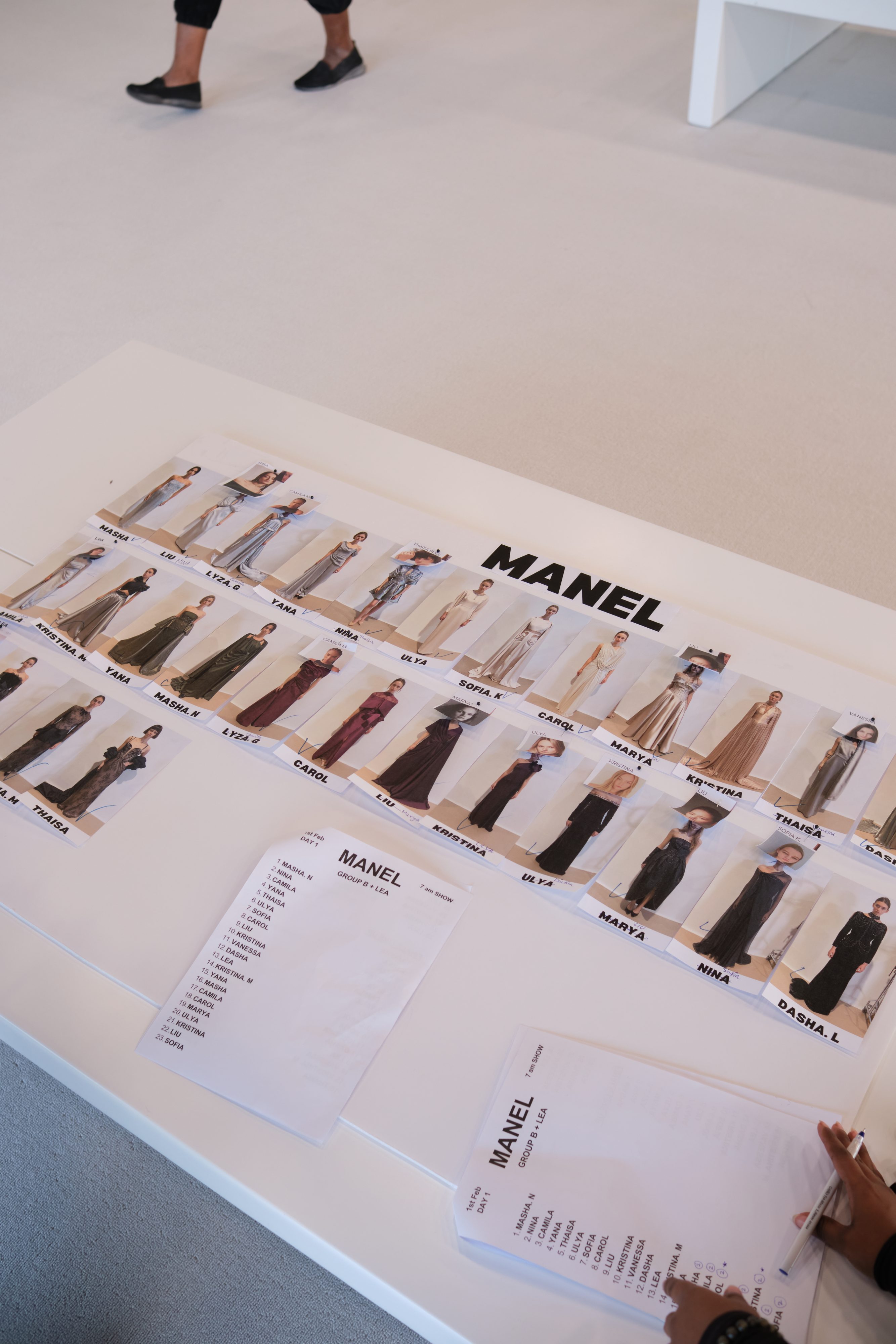
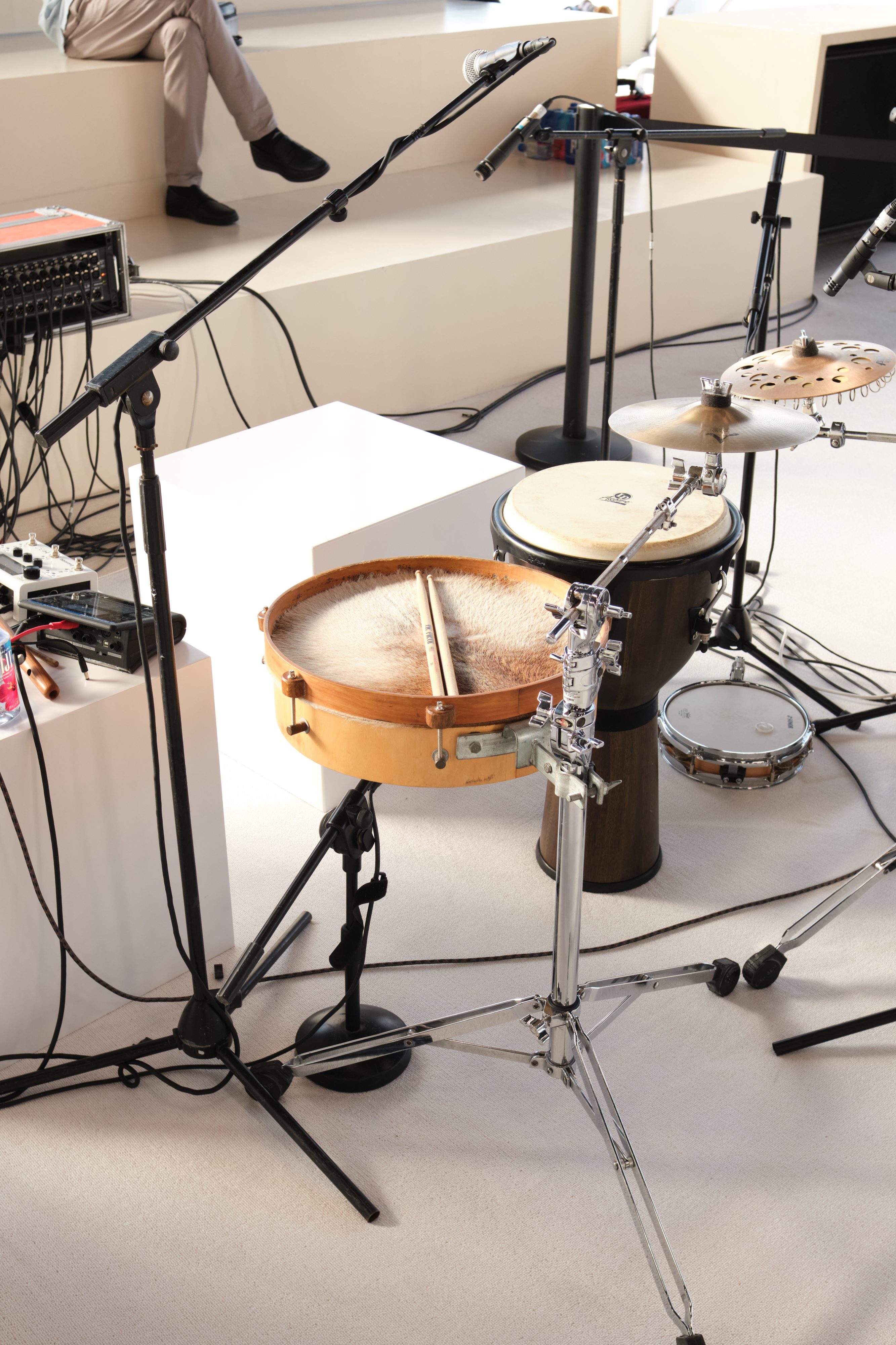
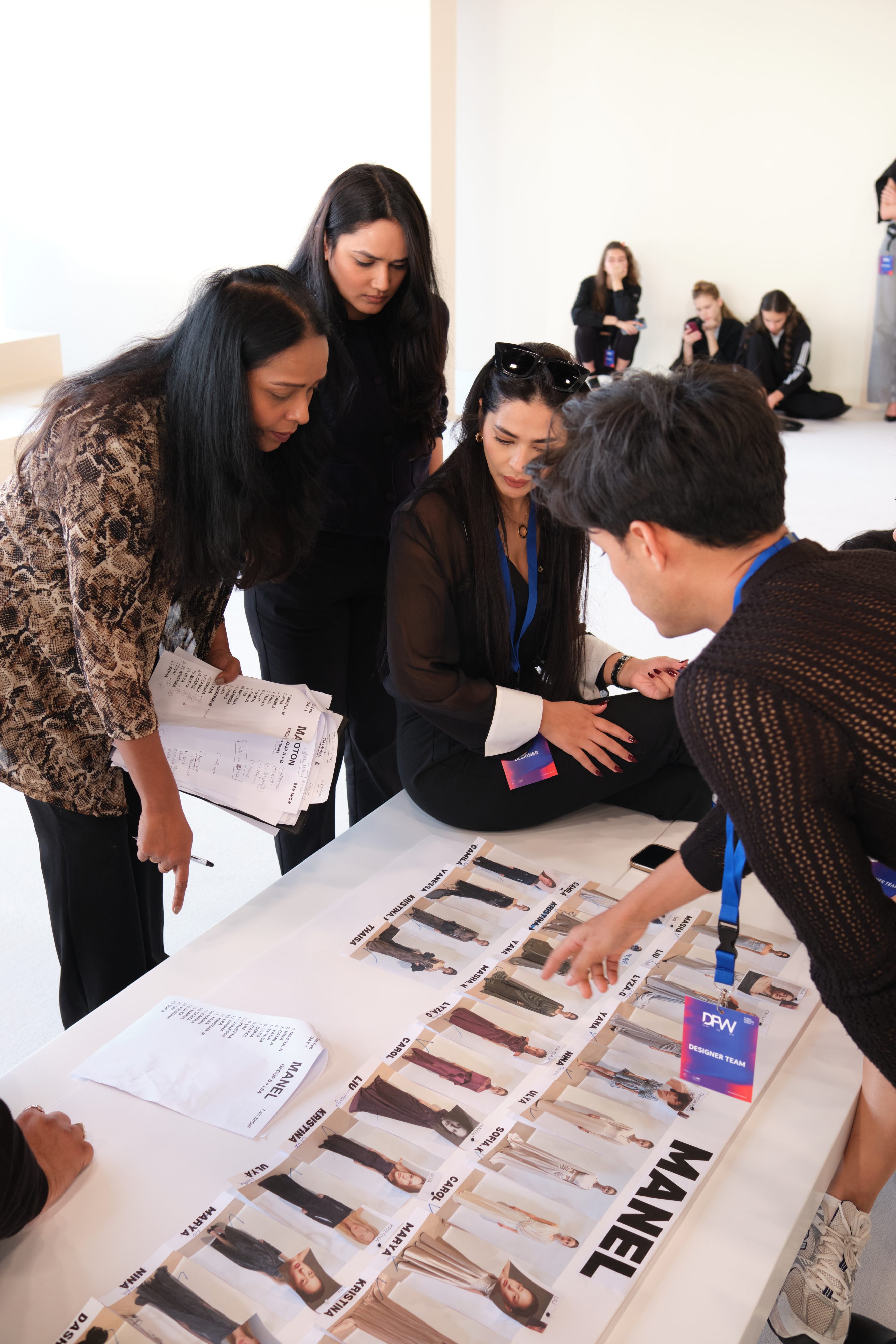
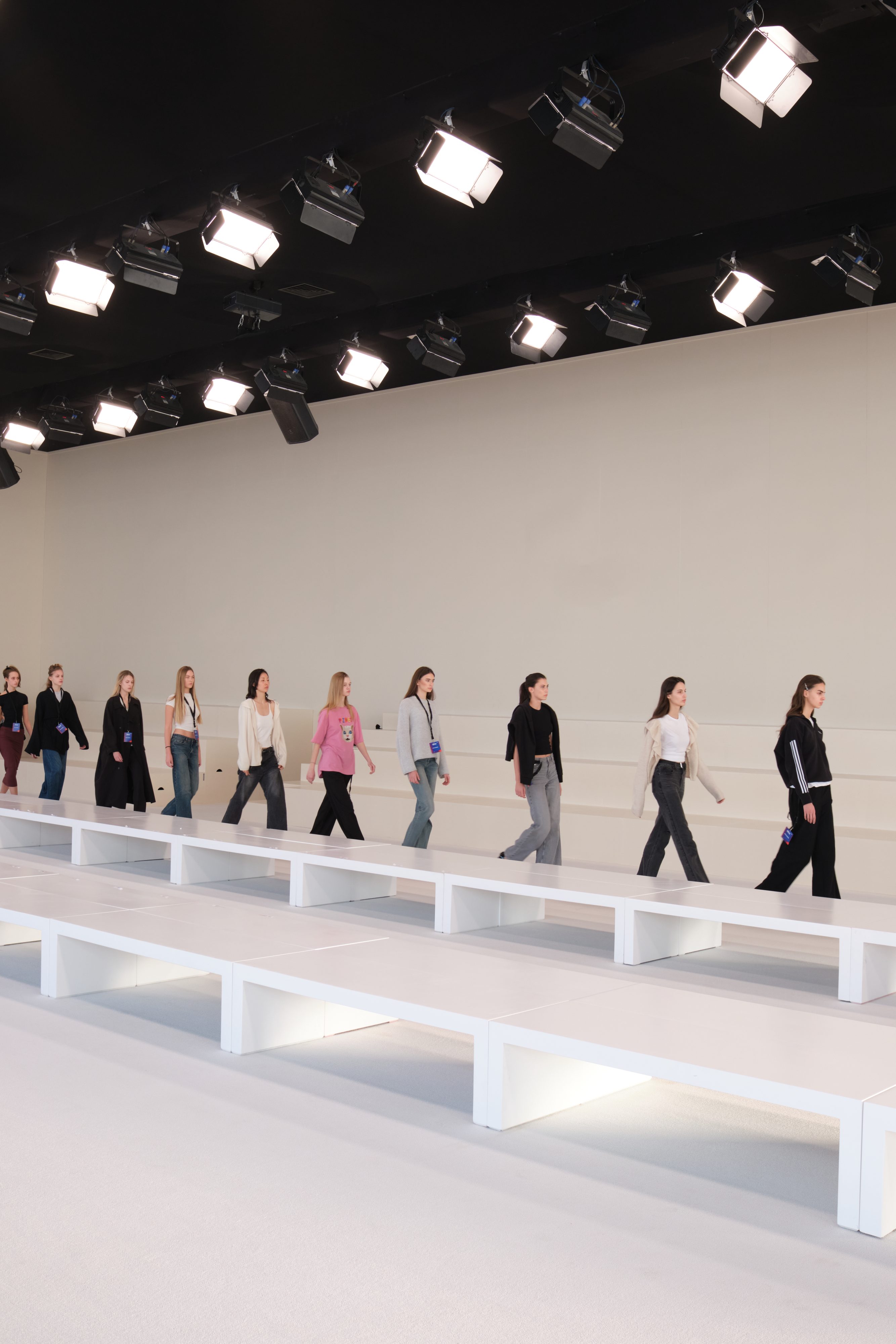
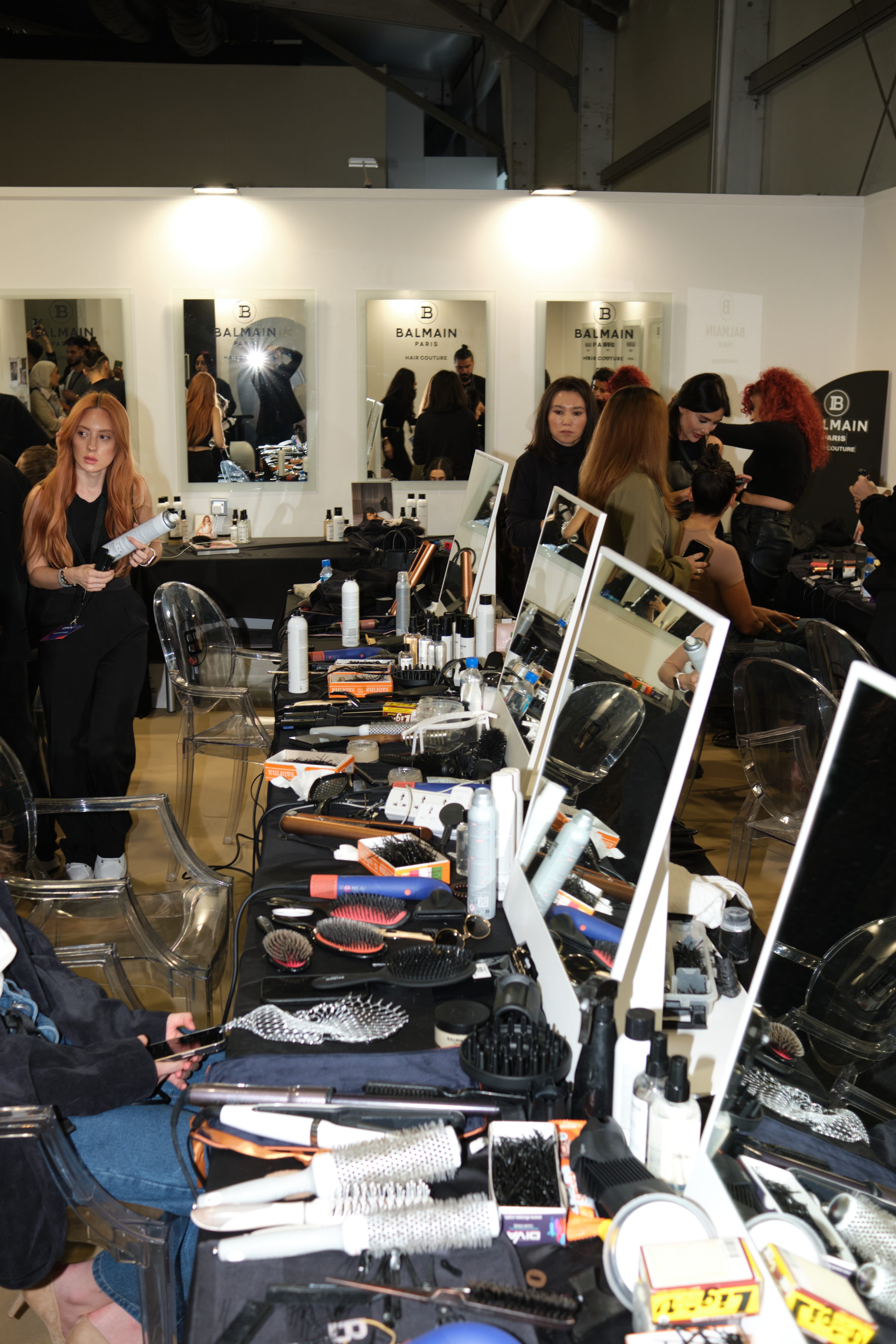
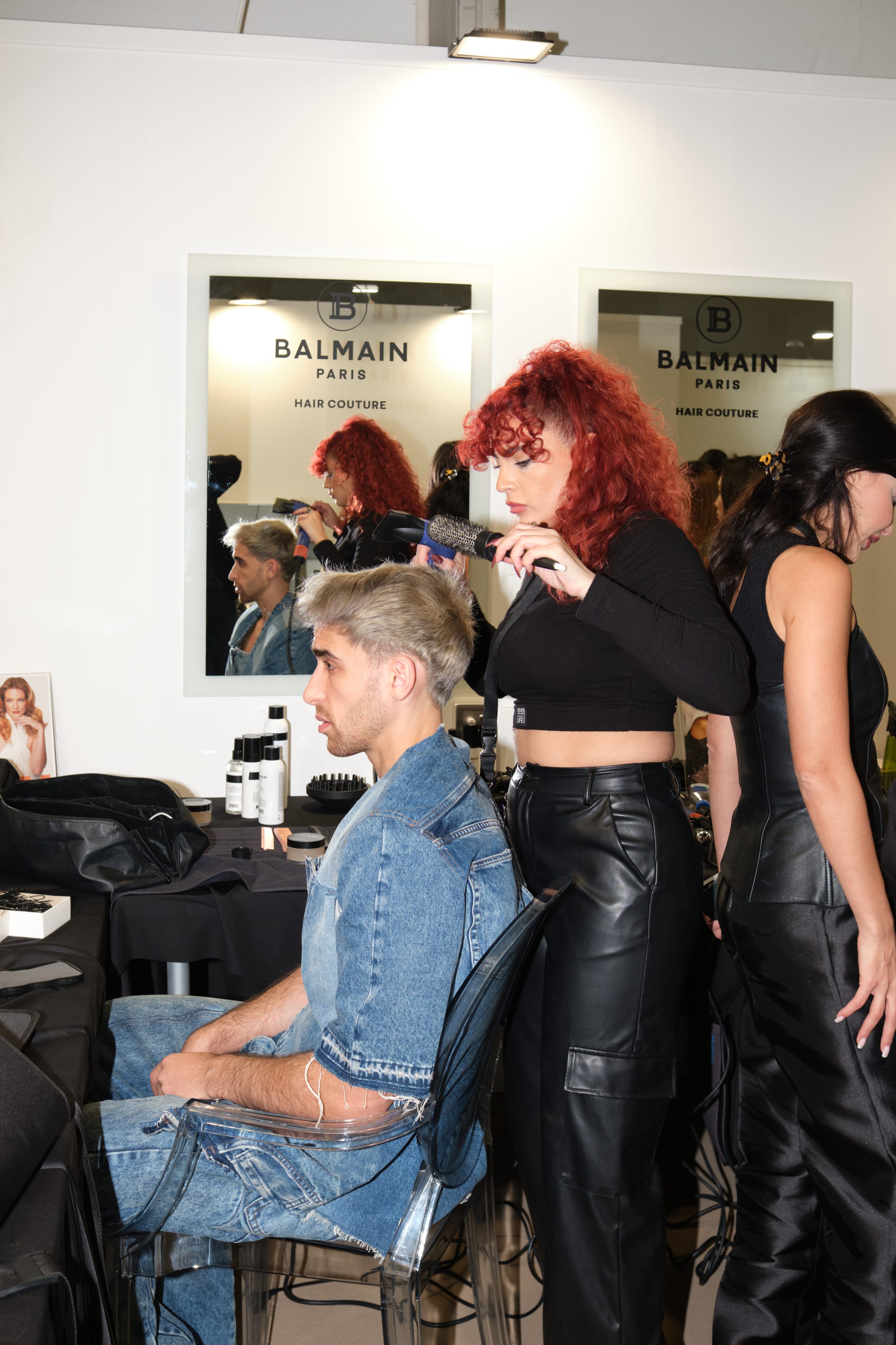
The most strategically significant element of Dubai Fashion Week for international brands is not the runway. It is The Showroom — a curated B2B environment in which commercial relationships are formed, retail partnerships are initiated, and the distance between brand presentation and market entry is compressed to a fraction of what the traditional fashion capital model would require.
The Showroom at Dubai Fashion Week functions as a high-stakes commercial meeting environment rather than a conventional exhibition space. Unlike the press-focused front-row economy of Paris or Milan, where physical access to a runway show generates editorial coverage rather than direct commercial outcomes, The Showroom is explicitly structured to produce retail partnerships. Buyers from the region’s most significant luxury retail groups attend with specific acquisition briefs. Emerging brands enter with the specific intention of securing distribution agreements. The environment is designed around the logic of commercial conversion rather than cultural spectacle.
For brands entering the GCC market, this compression of the commercial timeline is the most significant structural advantage Dubai Fashion Week offers. The GCC fashion market continues to operate on a relationship-driven model in which personal introduction, proximity, and demonstrated cultural understanding are preconditions for serious retail consideration. In Western markets, these relationships are built across years of editorial coverage, trade show attendance, and gradual retail penetration. At The Showroom, the introduction infrastructure is provided by the event itself, and the conversion timeline compresses accordingly.
The specific value propositions The Showroom provides for participating brands include: strategic brand positioning matched to the appropriate buyer segments; facilitated one-to-one introductions with retail decision-makers; real-time market feedback from buyers assessing collections against their clientele’s current demand profile; and post-event analytics enabling data-driven refinement of regional market strategy. For a brand entering the GCC for the first time, this represents a market entry compression that would otherwise require years of relationship-building to replicate independently.
The success of The Showroom format is measurable. Brands including Maison Yeya, Bouguessa, and Nathalie Trad have cited Dubai Fashion Week’s Showroom as a pivotal mechanism in their regional growth — not as a launching pad for media attention but as the specific site at which distribution relationships were formed and retail partnerships secured. The event’s function as commercial infrastructure rather than cultural showcase is its most significant and most consistently underappreciated strategic characteristic.
Strategic value for global brands — the four dimensions of Dubai Fashion Week commercial acceleration
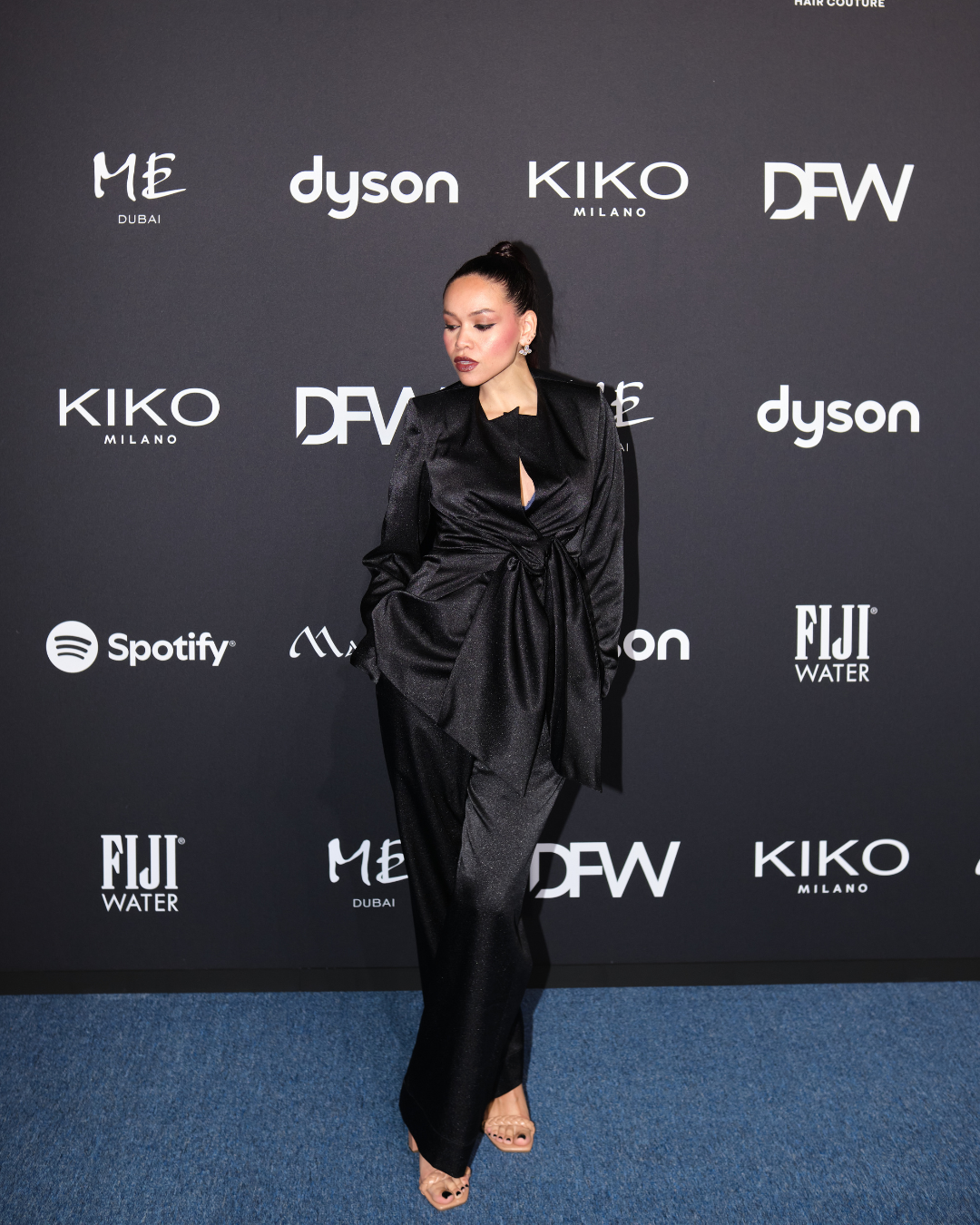
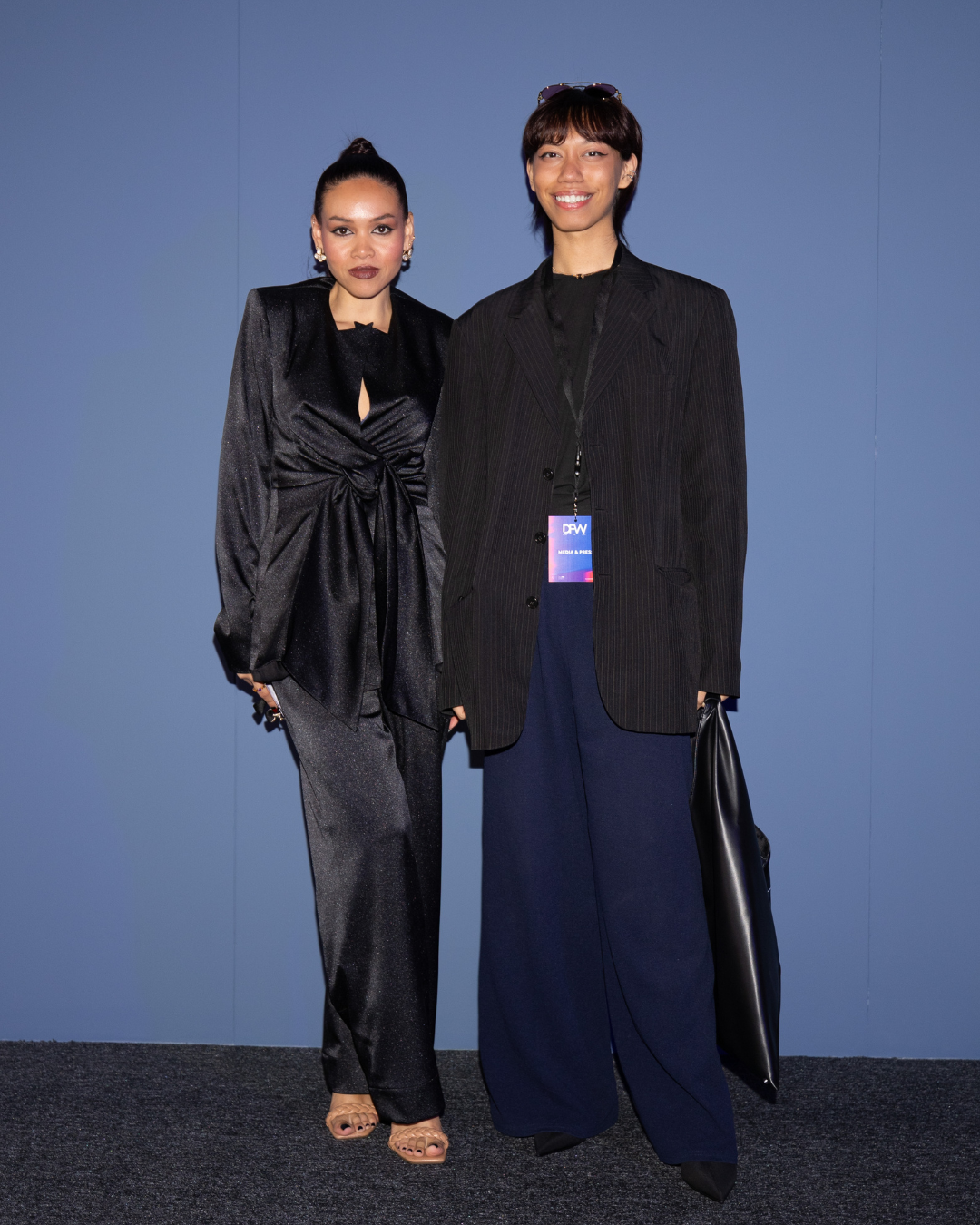
Global luxury brands participating in Dubai Fashion Week are accessing four distinct dimensions of commercial value that the traditional fashion week model cannot provide simultaneously — market entry compression, consumer testing, retail partner alignment, and cultural localisation. Understanding each dimension separately, and how they operate in combination, is the foundation of any intelligent Dubai Fashion Week strategy.
Market Entry Compression. The GCC luxury market’s relationship-driven commercial logic means that market entry without local relationships is structurally constrained. Dubai Fashion Week provides the introduction infrastructure that compresses this process — connecting brands directly with the buyers, distributors, and retail partners whose endorsement is the precondition for serious market penetration. What would otherwise require multiple trade show cycles, cold outreach, and years of brand-building in the region can be initiated within a single event participation.
Consumer Testing at Premium Velocity. The Dubai Fashion Week consumer audience is one of the most commercially responsive luxury consumer populations accessible at any single fashion event globally. Ultra-high-net-worth individuals, globally mobile professionals, and fashion-forward residents whose aesthetic sophistication spans multiple major fashion cultures simultaneously constitute a testing environment whose feedback carries commercial weight disproportionate to its geographic specificity. A collection that generates genuine enthusiasm at Dubai Fashion Week is a collection with demonstrably broad luxury market appeal.
Retail Partner Alignment. The presence at Dubai Fashion Week of buyers from the region’s most significant luxury retail infrastructure — Chalhoub Group, Al Tayer Group, Ounass, Harvey Nichols Dubai, Bloomingdale’s Middle East — means that retail partner conversations initiated during the event are conversations with operational decision-makers rather than gatekeepers to decision-makers. The commercial proximity is real and the timelines are compressed relative to any other access mechanism.
Cultural Localisation Intelligence. The GCC market’s specific cultural parameters around modest fashion, heritage craft appreciation, and the particular codes through which luxury is understood and expressed in the region represent a genuine design intelligence challenge for international brands. Direct consumer engagement at Dubai Fashion Week provides the localisation feedback that no amount of market research can fully replicate — the specific, embodied understanding of how a collection reads to a GCC luxury consumer that only proximity and direct response can generate.
The intersection of these four dimensions is what produces the market acceleration that serious luxury brands are increasingly treating as the primary argument for Dubai Fashion Week participation. The event is not a cultural platform with some commercial utility — it is a commercial infrastructure with genuine cultural authority, and the distinction matters enormously for how participation is planned and evaluated.
The hybrid luxury consumer — the demand profile shaping Dubai Fashion Week’s global relevance
The consumer whose purchasing behaviour Dubai Fashion Week is most directly designed to activate is not the regionally specific luxury buyer of previous generations. It is the globally mobile luxury consumer — a profile that has become the defining demand force across every significant luxury market and whose particular concentration in Dubai makes the city’s fashion ecosystem uniquely valuable for brands seeking to understand and serve this consumer at scale.
The hybrid luxury consumer is globally mobile across London, Dubai, Paris, and equivalent lifestyle circuits. They are the same consumer whose relationship to fashion is defined by intention over trend — the sensibility explored in The New Language of Quiet Luxury: Inside the Timeless Wardrobe of Apparis — and whose preference for pieces chosen for how they hold rather than how they announce translates directly into a preference for brands that demonstrate cultural intelligence over those that merely project heritage authority. They are digitally hyper-informed — aware of emerging designers, global fashion week outcomes, and luxury market developments across multiple markets simultaneously. They are brand-sensitive but culturally adaptive — selecting brands for their quality, identity positioning, and cultural intelligence rather than for their historical status alone. And they are driven by exclusivity, experience, and identity signalling at a level that makes them resistant to the mass luxury approach and highly responsive to the brands that demonstrate genuine understanding of who they are.
This consumer does not distinguish between the runway, the retail environment, and the social media feed. They exist within a continuous consumption loop in which each element informs and accelerates the others — a brand seen on a runway at Dubai Fashion Week is a brand encountered in a social feed within hours, available for purchase within days, and potentially integrated into a personal aesthetic identity within weeks. The compression of this cycle is one of the most significant structural advantages that Dubai Fashion Week’s digital integration provides for participating brands.
The cultural complexity of the GCC luxury consumer — their simultaneous engagement with global fashion culture and regional aesthetic traditions, including the growing sophisticated market for modest luxury fashion — is a dimension that the most strategically intelligent participating brands treat as a creative opportunity rather than a constraint. Soigné Middle East: The Modest Fashion Magazine the Region Has Always Deserved explores the creative and commercial depth of the modest fashion market that Dubai Fashion Week is increasingly positioned to serve — a market whose scale and sophistication the global fashion industry has been slow to recognise and whose visibility at Dubai Fashion Week is one of the most commercially significant developments in the event’s evolution.
The influence economy meets institutional fashion — content-native runway architecture
One of the most structurally significant ways in which Dubai Fashion Week differs from the traditional fashion week model is in its integration of the influence economy into the fundamental architecture of the event — not as a supplementary marketing layer applied to a runway presentation, but as a structural component of how the event generates commercial value for participating brands.
The traditional fashion week model generated media value through editorial coverage — the decisions made by fashion editors about which collections were significant enough to merit sustained attention in the publications whose readership shaped trade and consumer behaviour. This model required a sequential delay: collection presented, photographed, edited, published, then consumed by the audience whose response would eventually translate into commercial outcomes. The digital disruption of this cycle has been complete and irreversible.
Dubai Fashion Week’s content-native architecture acknowledges this disruption and builds the commercial model around it rather than against it. Influencers at Dubai Fashion Week are not peripheral attendees seeking proximity to editorial authority — they are front-row economic drivers whose real-time amplification of a collection, deployed across platforms and geographies simultaneously, produces consumer intent at a speed and scale that the editorial cycle at its most powerful never achieved. The social media output of a successful Dubai Fashion Week presentation is not a documentation of a cultural event. It is the event’s primary commercial product, delivered to a global audience within the hours of a runway show.
As Business of Fashion’s analysis of the influence economy and institutional fashion strategy documents, the brands that navigate this landscape most successfully are those that treat influencer engagement as commercial infrastructure rather than marketing supplementary — building influencer relationships that produce sustained brand authority rather than transactional campaign coverage. Dubai Fashion Week is the fashion event whose architecture most completely reflects this understanding.
Dubai Fashion Week versus global fashion capitals — competitive positioning and the new fashion hierarchy
The most useful frame for understanding Dubai Fashion Week’s position in the global fashion economy is not comparison with Paris, Milan, London, and New York but distinction from them. Dubai Fashion Week does not compete on tradition, heritage authority, or the accumulated cultural weight of decades of institutional fashion history. It competes on execution velocity, market conversion efficiency, and commercial proximity to one of the world’s highest-value luxury consumer ecosystems.
Paris retains its position as the undisputed centre of fashion’s symbolic authority — the city where luxury heritage is most densely concentrated and where editorial prestige remains most directly convertible into global brand positioning. Milan’s craftsmanship authority, New York’s commercial retail dominance, and London’s creative experimentation register each serve specific functions within the global fashion ecosystem. None of these functions is what Dubai Fashion Week provides, and the brands that approach Dubai with the expectation of replicating their Paris or Milan experience will consistently underperform those that approach it on its own terms.
Dubai’s competitive advantage is structural rather than cultural: the speed at which commercial relationships are formed, the directness of the conversion from presentation to retail partnership, the density of ultra-high-net-worth consumers accessible within a single event, and the government-supported creative economy infrastructure — including Dubai Design District and the Fashion Forward initiative — that provides brands with operational support for regional market establishment that no other fashion capital provides as systematically. The UAE government’s active promotion of the creative and fashion industries is not incidental to Dubai Fashion Week’s commercial utility — it is one of its most significant structural characteristics.
The trajectory is clear: as global luxury brands continue to reassess the ROI of traditional fashion week participation, Dubai is emerging not as an alternative to the established fashion circuit but as a parallel infrastructure of fashion capitalism — where visibility is immediate, influence is monetised, and cultural positioning is directly tied to market expansion outcomes. The question for any brand with serious GCC market ambitions is not whether Dubai Fashion Week belongs in its strategic calendar. It is how participation should be structured to maximise the commercial value the event’s architecture is designed to produce.
The future of Dubai Fashion Week — from regional calendar event to global commercial operating system
The evolution of Dubai Fashion Week from a regionally significant fashion event to a globally strategic commercial platform is not a future projection. It is an already-occurring structural development whose trajectory is pointing consistently in the same direction — toward greater commercial integration, higher global brand participation, deeper digital architecture, and more direct alignment between runway presentation and retail conversion.
The sustainability dimension of Dubai Fashion Week’s evolution is among its most commercially significant emerging characteristics. The growing emphasis on eco-conscious luxury — biodegradable materials, ethical sourcing, circular fashion principles, zero-waste production — is reshaping the GCC luxury market in ways that are creating genuine commercial opportunity for brands whose sustainability credentials are authentic rather than performative. As Vogue’s coverage of sustainable luxury and its future in global fashion markets documents, consumers in the most significant growth markets are increasingly treating sustainability as a purchase driver rather than a marketing consideration. Dubai Fashion Week is positioning itself as the platform where sustainable luxury innovation is most visible to the GCC’s high-value consumer base.
The modest fashion dimension of Dubai Fashion Week’s evolution is equally significant. The sophisticated global market for modest luxury fashion — a market whose scale exceeds three hundred billion dollars and whose GCC concentration makes Dubai the most strategically important single location for brands seeking to serve it — is one whose creative and commercial depth is increasingly reflected in Dubai Fashion Week’s programming and participation profile. The intersection of global luxury brand strategy and modest fashion market opportunity is one of the most commercially significant developments in the contemporary fashion economy, and Dubai Fashion Week is the event most directly positioned at that intersection.
Dubai Fashion Week is not simply part of the future of fashion weeks. It is producing the template for what the post-runway fashion event becomes: a commercially integrated, digitally native, influence-embedded, buyer-proximate market activation system that measures its success not in column inches but in retail partnerships formed, markets entered, and commercial relationships established. This is the new logic of the fashion calendar. Dubai arrived there first.
“Dubai Fashion Week is redefining the function of the modern fashion calendar.
It is no longer simply a platform for seasonal storytelling —
it is an operational system for market entry,
cultural alignment, and commercial acceleration.
As global brands reassess the ROI of traditional fashion weeks,
Dubai is emerging not as an alternative,
but as a parallel infrastructure of fashion capitalism —
where visibility is immediate, influence is monetised,
and cultural positioning is directly tied to market expansion.
Dubai Fashion Week is not participating in the global fashion system.
It is actively redesigning its logic.”

