
On the Egyptian Museum and the NMEC as complementary archives of civilisational memory, the social choreography of Khan El Khalili bazaar, Ahmed and his son as the human geography of Cairo, and why the most enduring souvenir of any Egypt journey is not what you carry home but what the city’s hospitality deposits in you
Cairo’s monuments may define its global image, but its people define its emotional reality. The National Museum of Egyptian Civilization preserves the memory of ancient Egypt. Khan El Khalili preserves the rhythm of communal life. And somewhere on the road to Ain Sokhna, in conversations shared between strangers who no longer feel like strangers, another layer of Egypt quietly reveals itself. Because the true luxury of Cairo is not exclusivity. It is warmth. And in a world increasingly optimised for efficiency and distance, that kind of hospitality feels almost revolutionary.
Travellers arrive in Cairo searching for antiquity. What they leave remembering is human warmth. This is Cairo’s most significant travel secret — not that its monuments are extraordinary, which they are, but that the spaces between the monuments are animated by a quality of social generosity that few other cities in the world produce consistently and apparently effortlessly. The tea offered without transaction. The conversation that extends well past the point of necessity. The driver who becomes, across the course of a journey, something closer to a cultural interpreter. The merchant who speaks with pride rather than performance, whose enthusiasm for the object they are selling is inseparable from their enthusiasm for the civilisation it represents.
Cairo overwhelms visually and sonically in the specific way that only cities of this scale, density, and historical layering can. But beneath the intensity — the traffic, the noise, the sheer kinetic pressure of one of the world’s most populated cities living at full volume — there exists an extraordinary softness. The Egyptian cultural inheritance that the country’s monuments have preserved in stone is also preserved in the social behaviour of its people: a hospitality philosophy so deeply embedded in the culture’s DNA that it manifests not as a curated service standard but as a genuine instinct, expressed with the same naturalness with which ancient Egyptians expressed their religious convictions in the temples they built.
The Cairo hospitality experience exists in continuous dialogue with the city’s deeper layers of cultural meaning — the material culture and historical depth explored in The Connoisseur’s Guide to Authentic Papyrus in Cairo and the architectural and cosmological intelligence examined in Beyond the Postcard: Why Visiting Saqqara, Memphis, and Giza with a Historian Changes Everything. The three articles together constitute the most complete available portrait of what Cairo offers the considered traveller: the intellectual depth of its ancient past, the material culture of its living craft traditions, and the human warmth that is its most consistently underestimated and most lastingly memorable quality.
The Egyptian Museum — walking through a portal to another civilisation
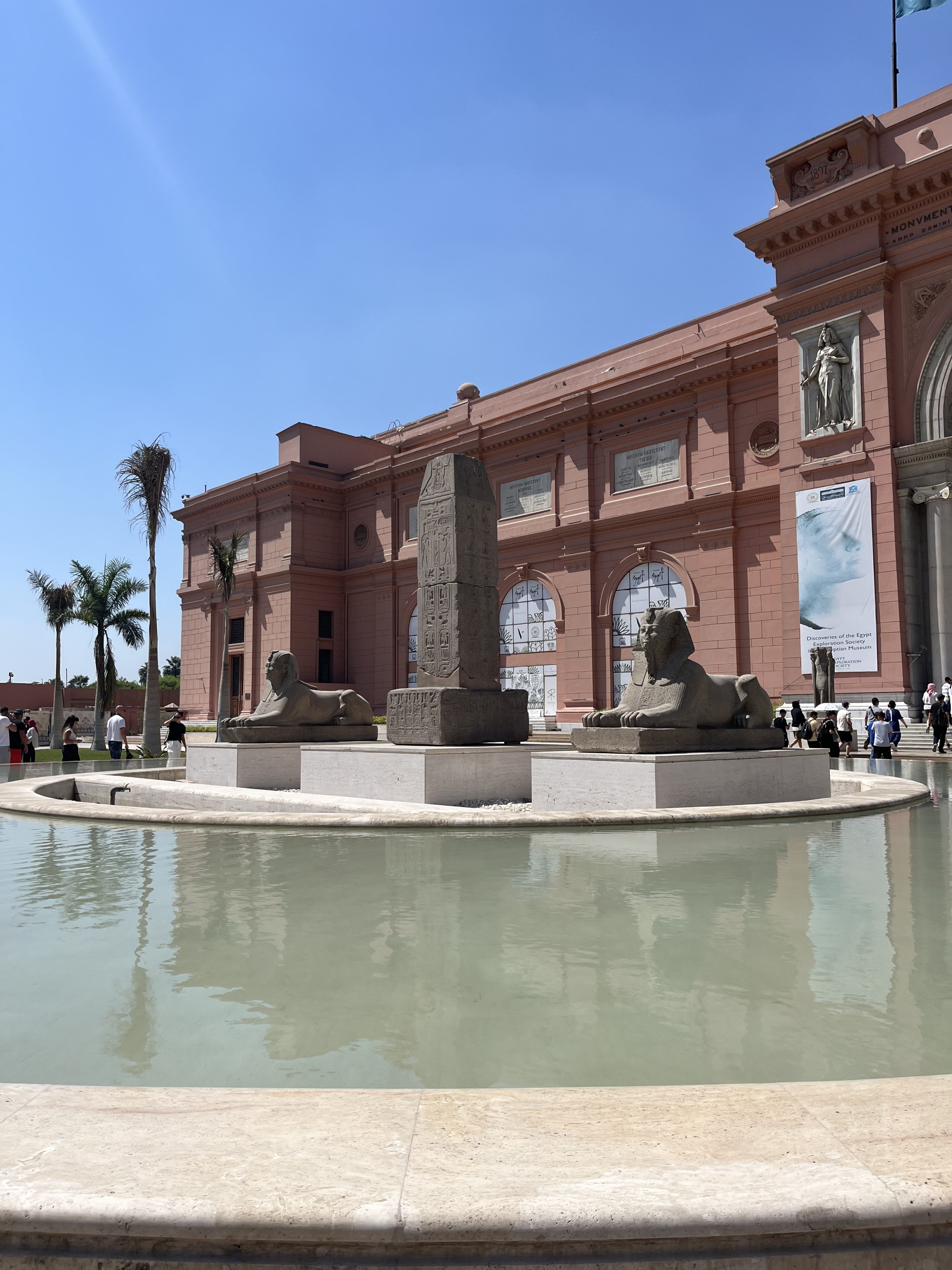
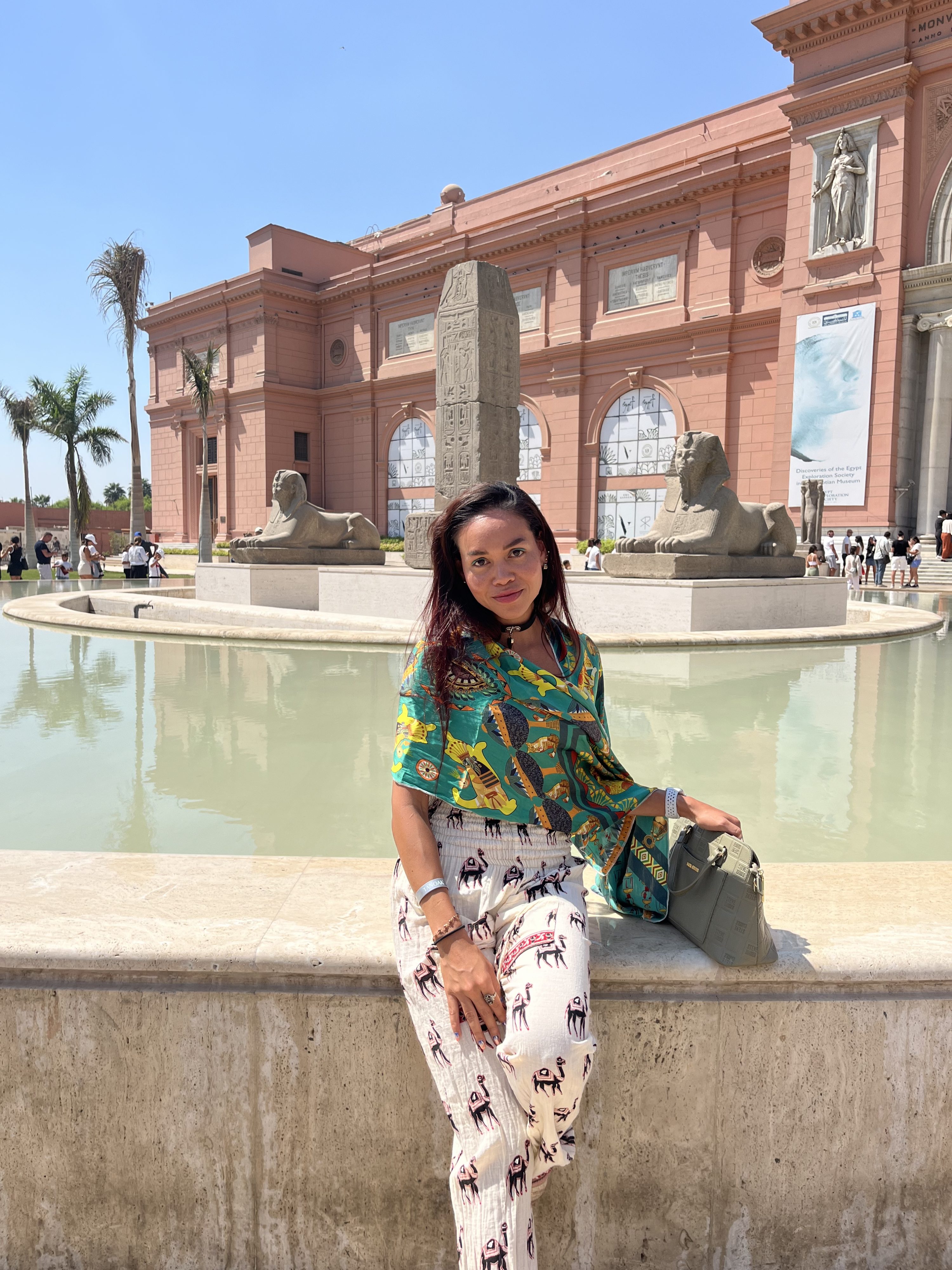
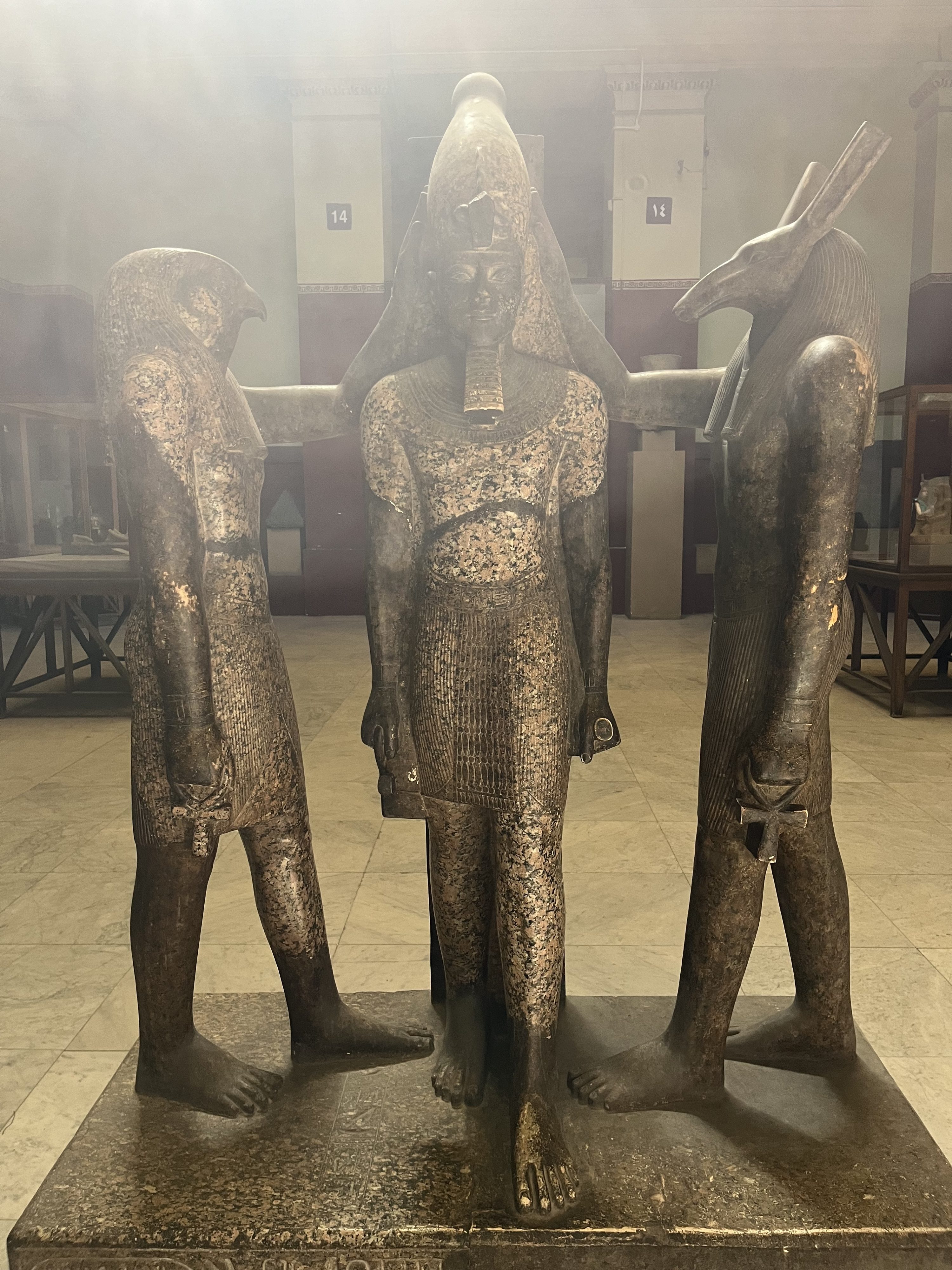
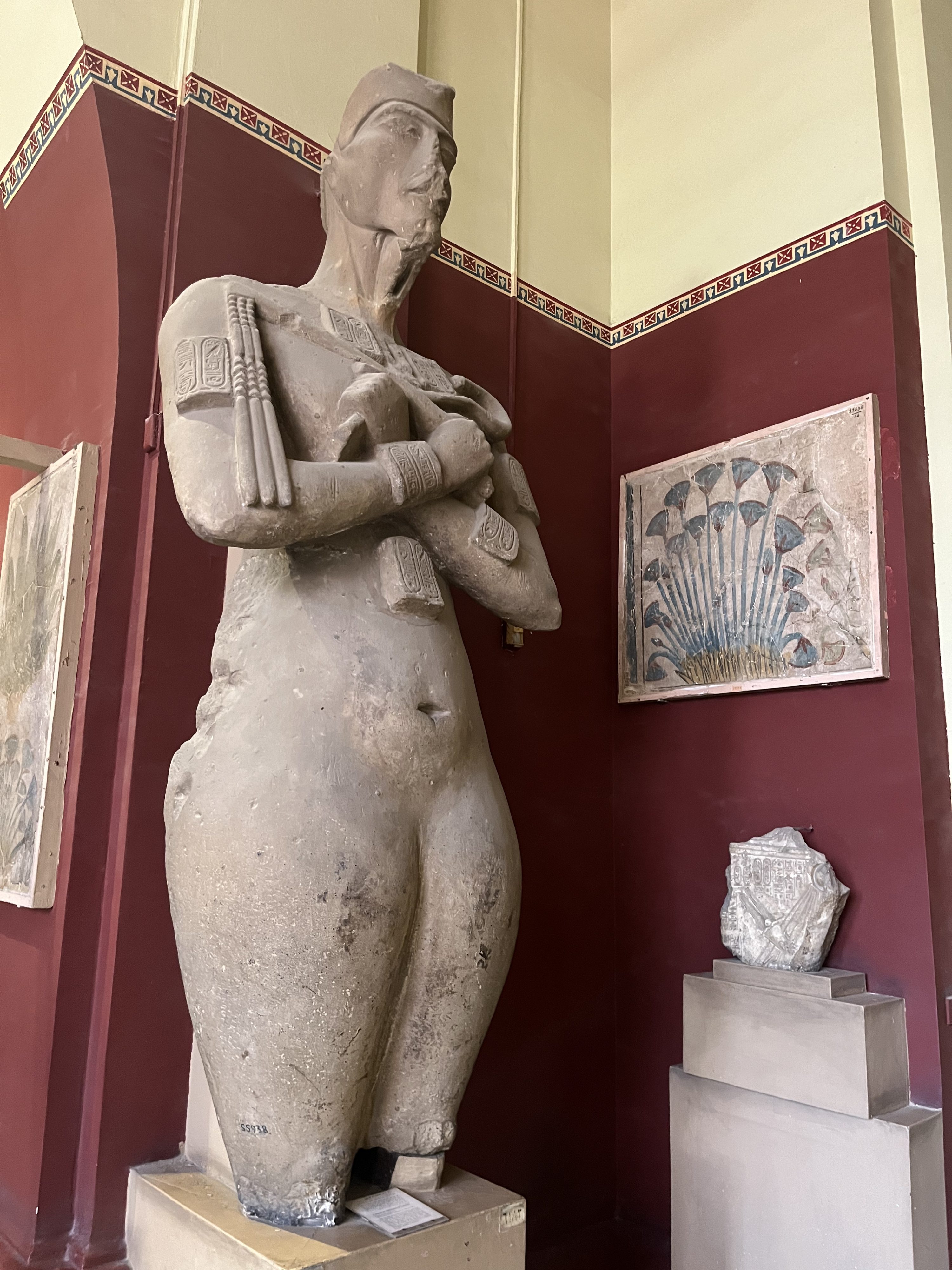
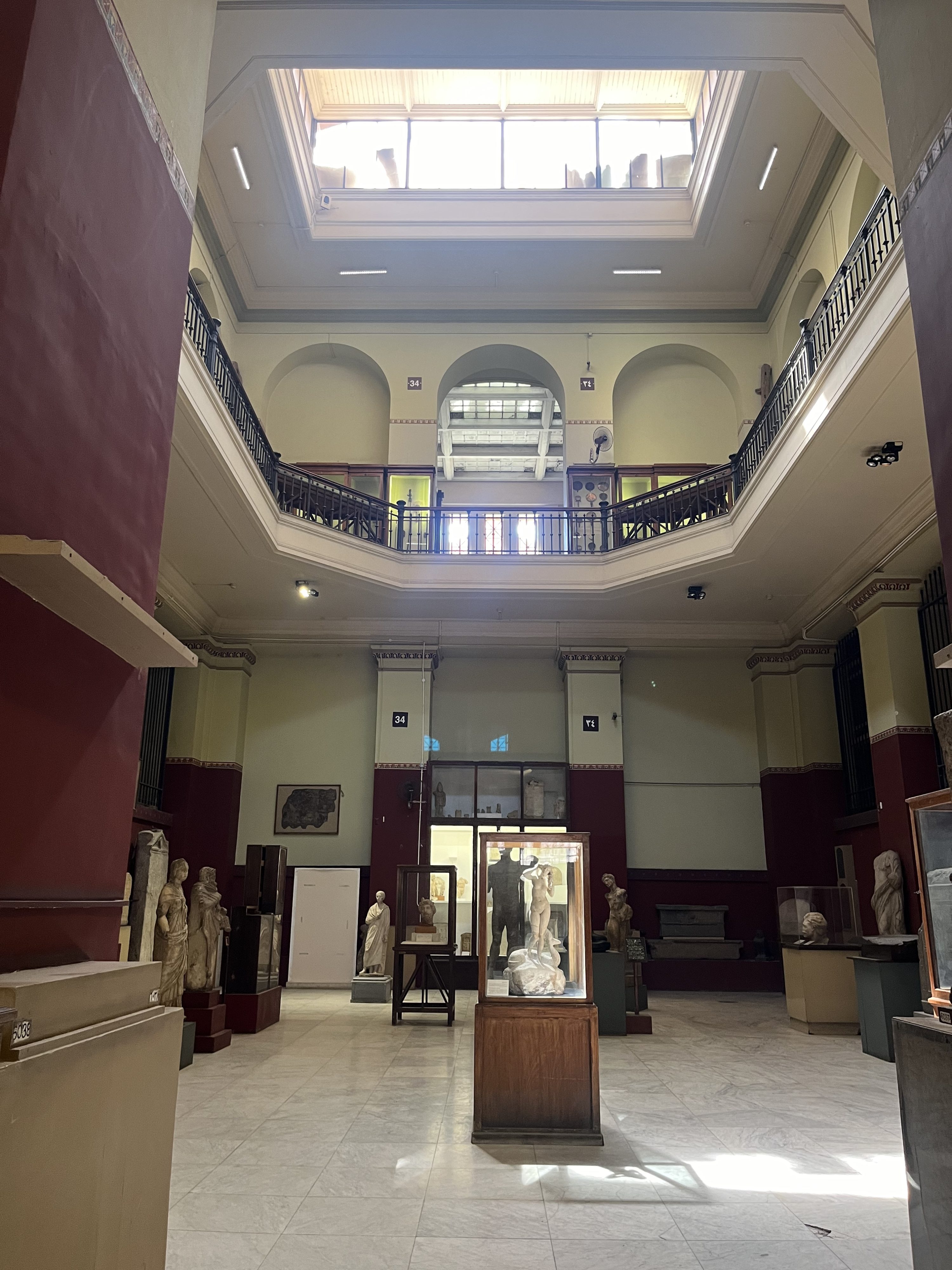
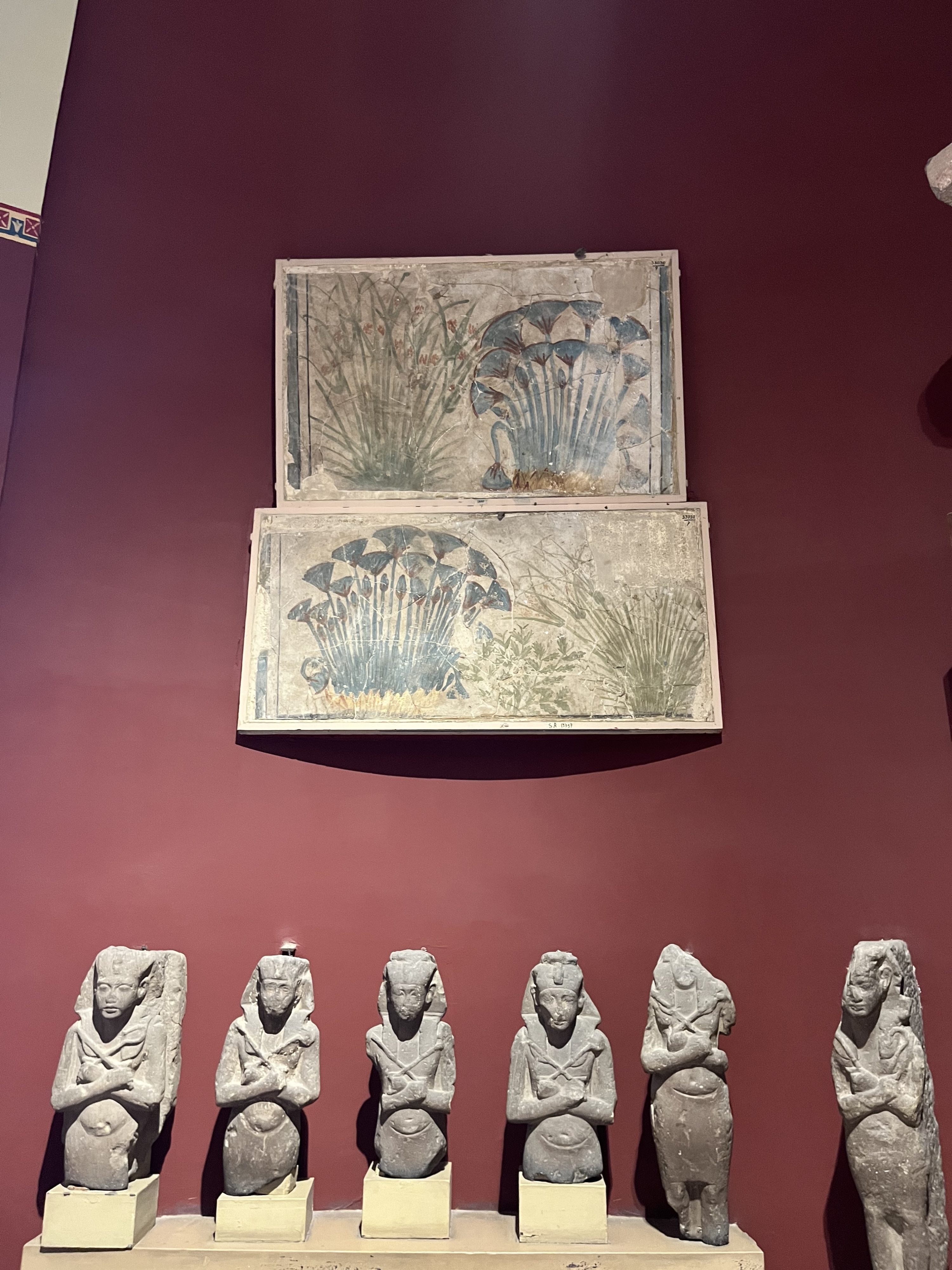
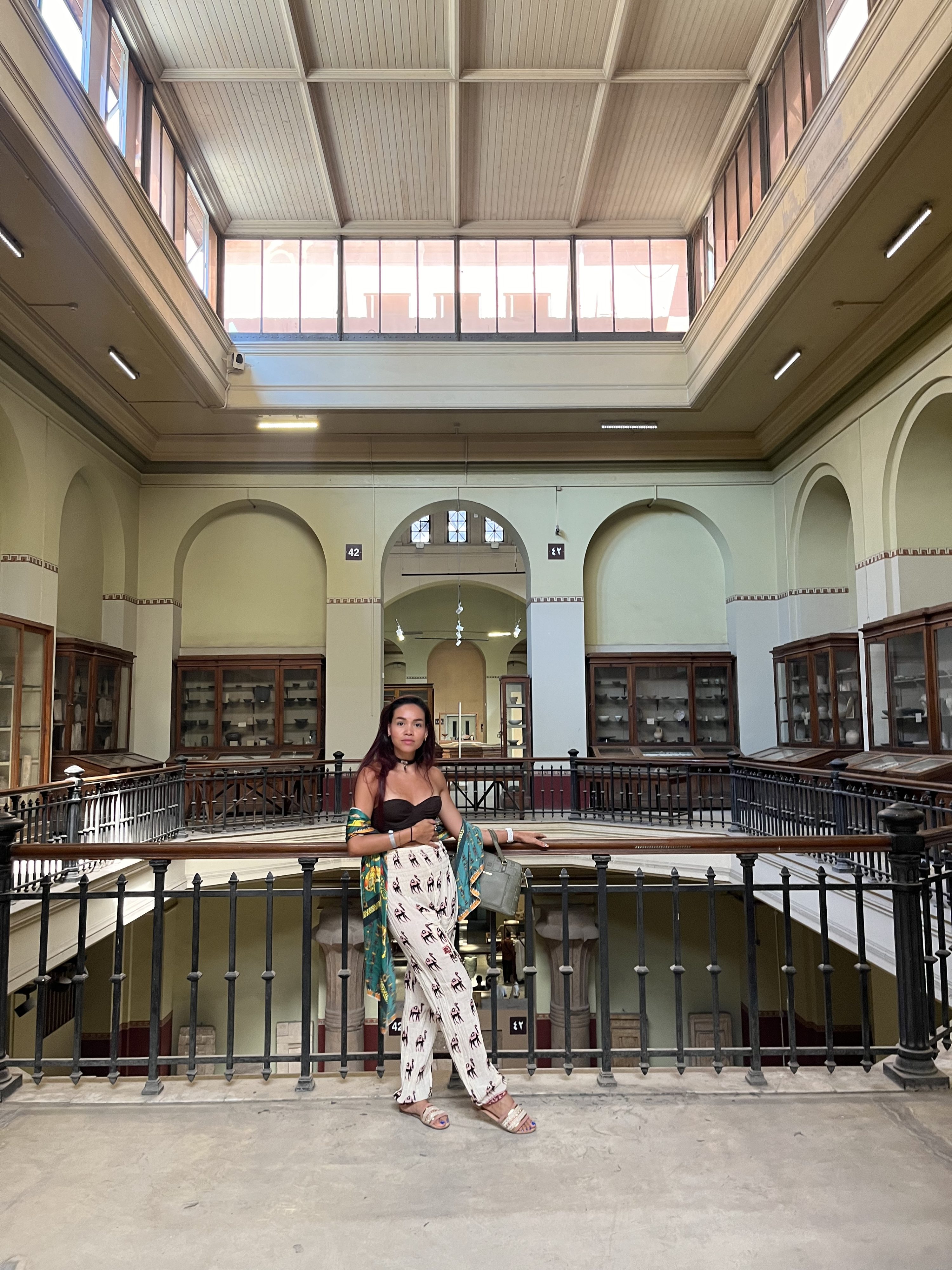
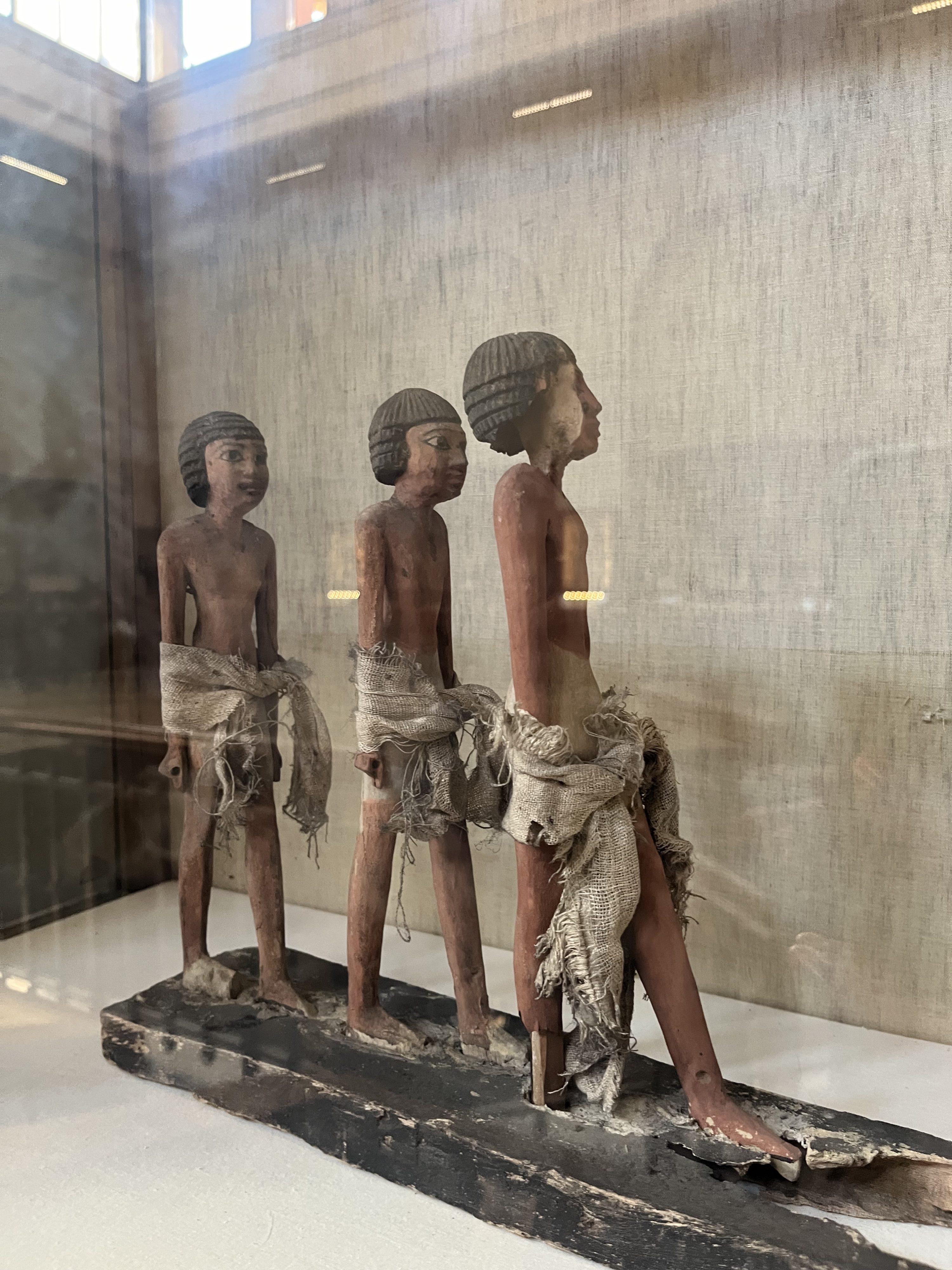
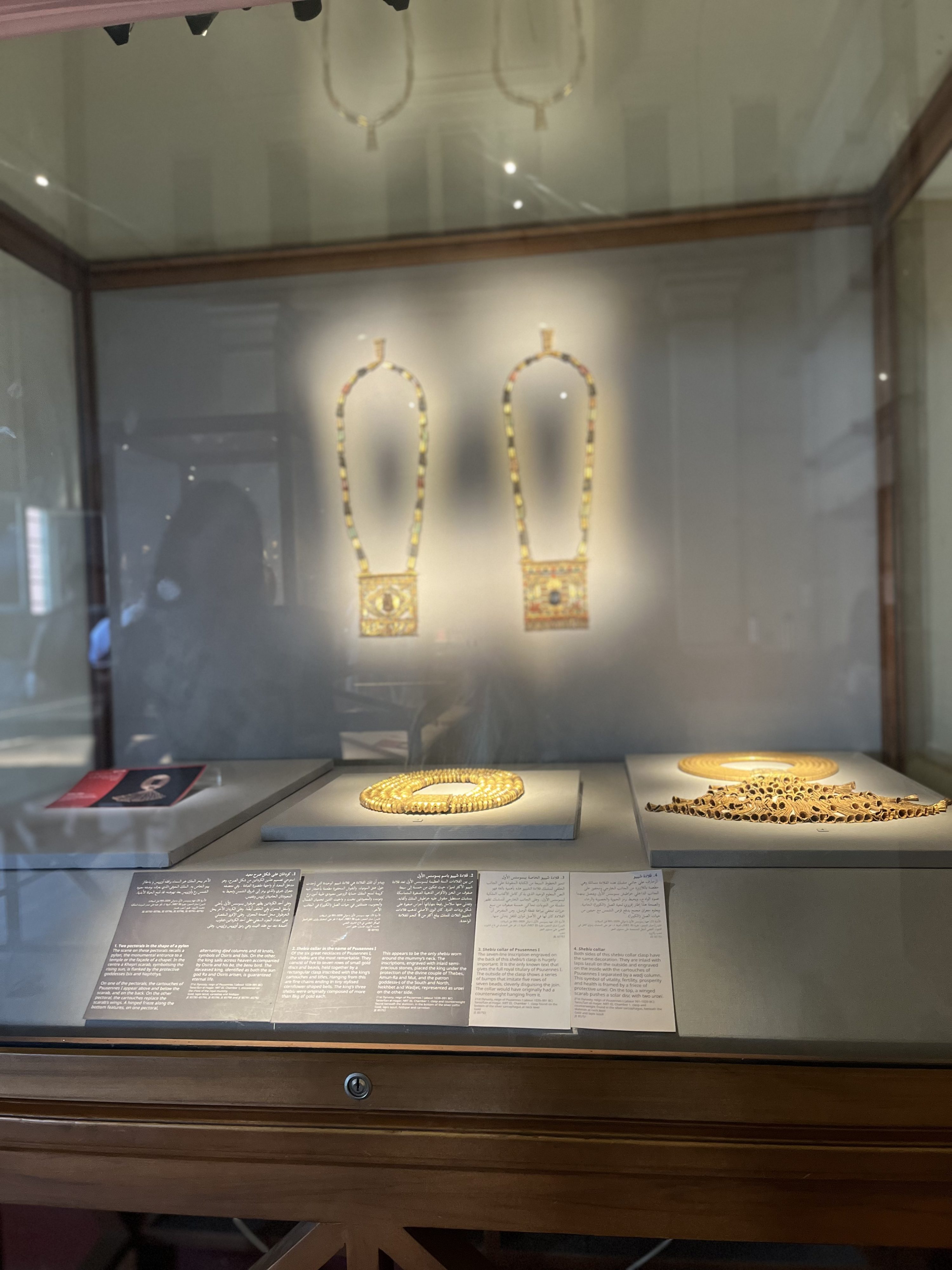
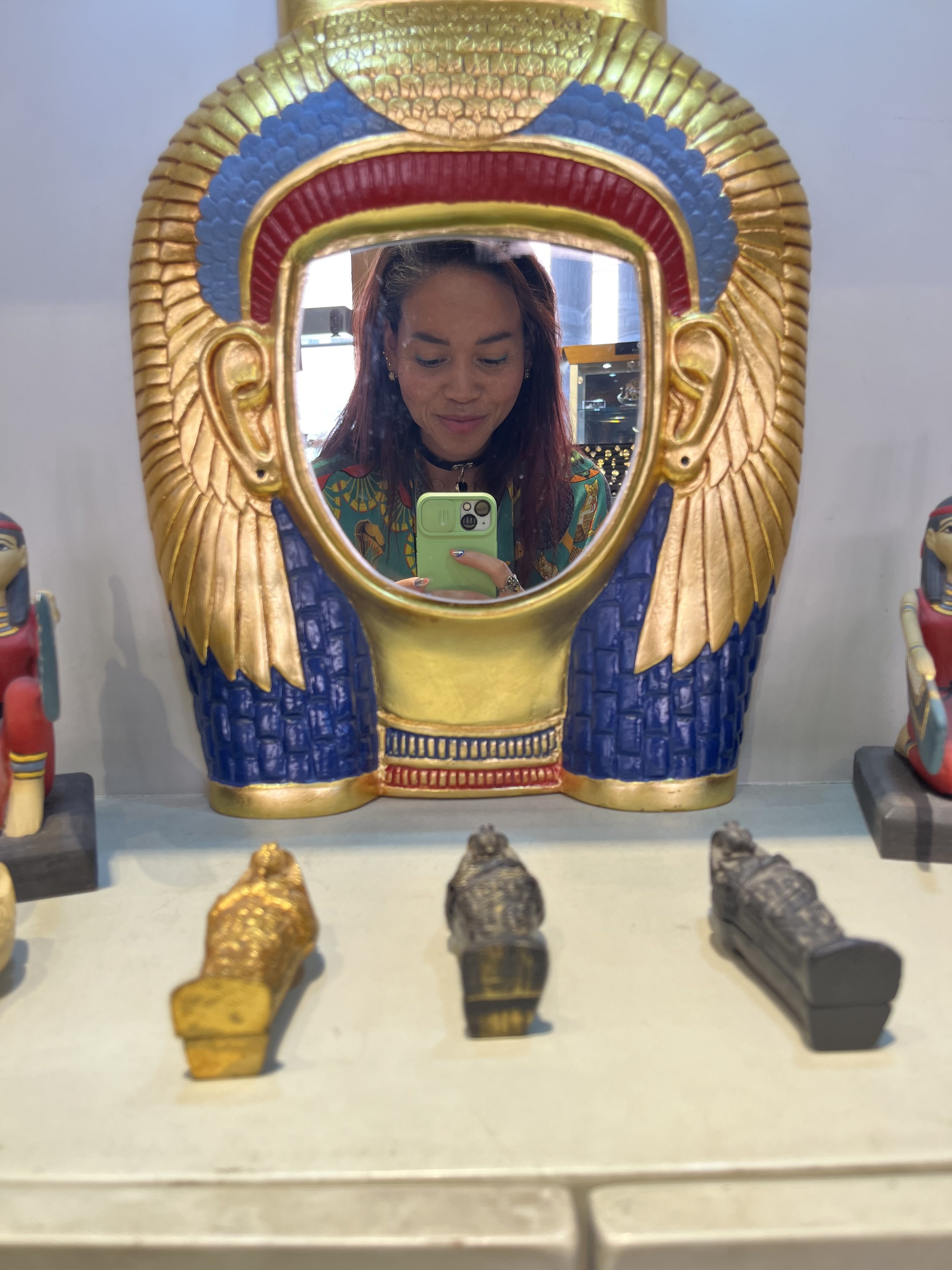
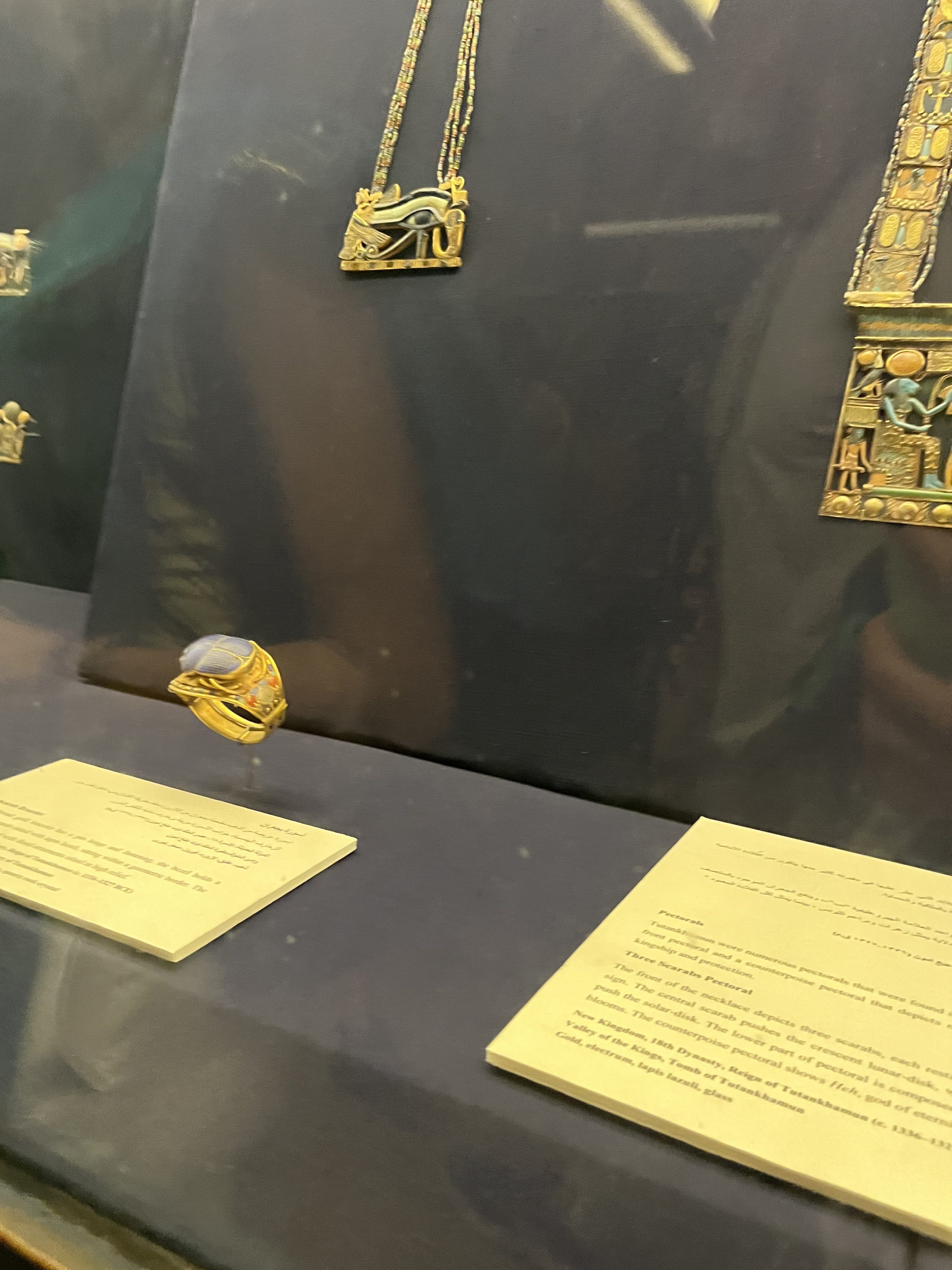
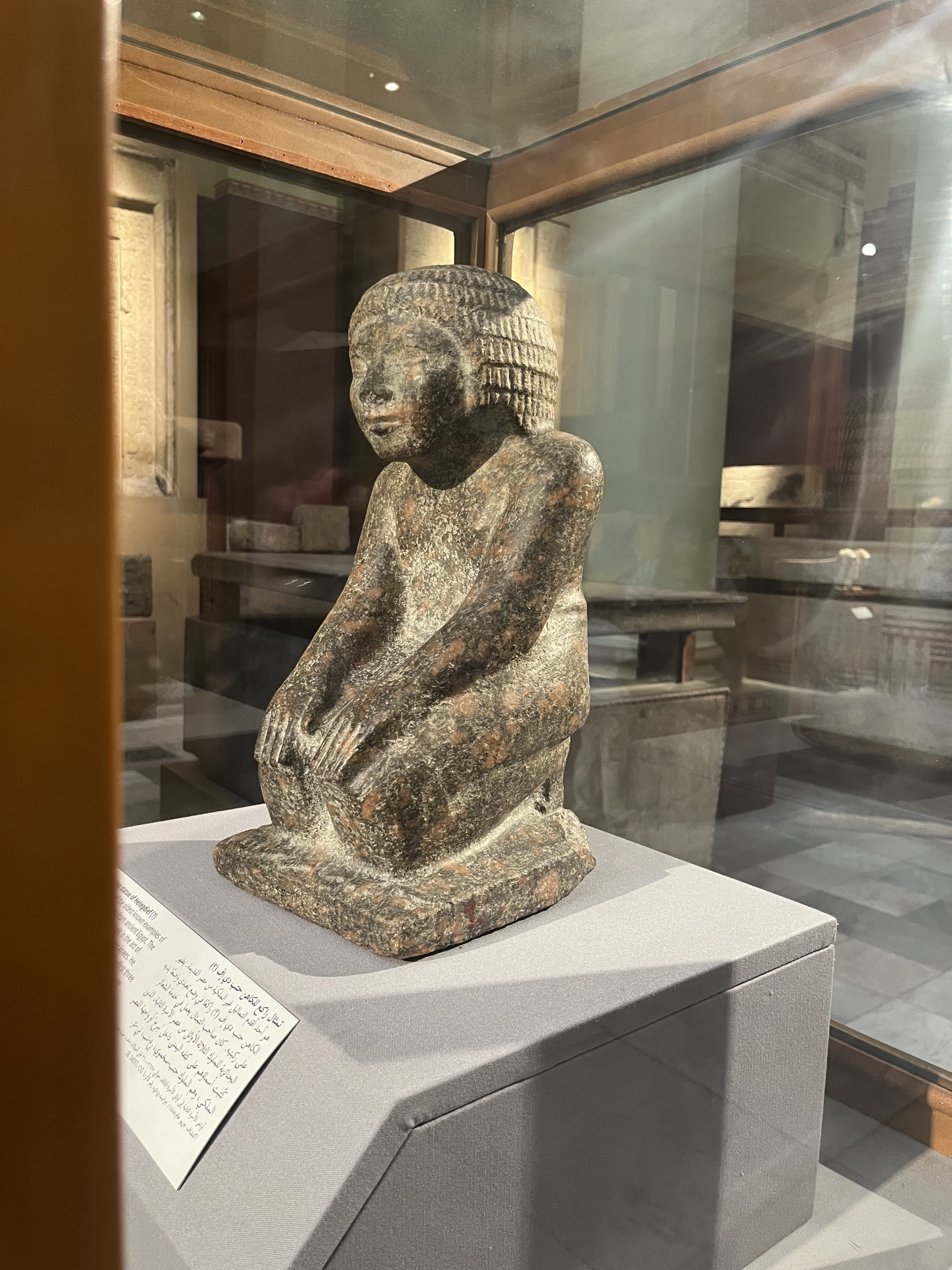
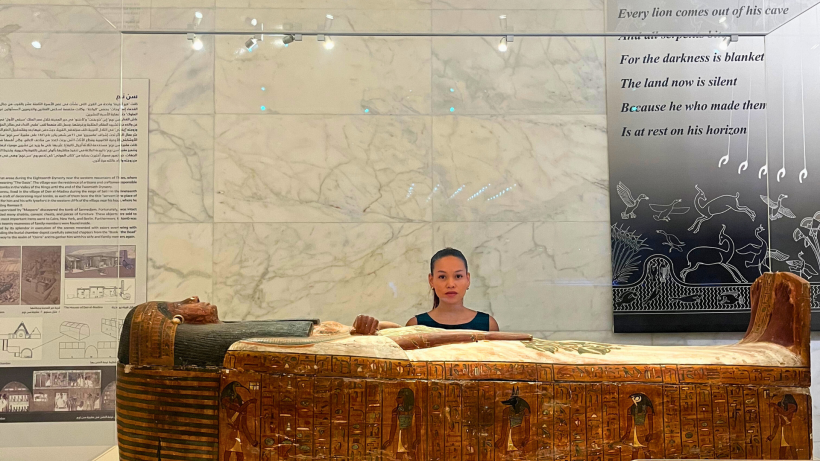
The Egyptian Museum at Tahrir Square is not merely the starting point of the Cairo cultural itinerary. It is the intellectual foundation on which everything else in the city’s historical landscape rests — the archive that holds the physical objects through which ancient Egyptian civilisation made its most concentrated statement about what it valued, what it believed, and what it considered worth preserving across time.
Established in its current form in the early twentieth century, the Egyptian Museum houses one of the world’s most extensive collections of ancient Egyptian artefacts, from the transcendently beautiful treasures of Tutankhamun’s tomb — the gold death mask, the ceremonial furniture, the nested coffins whose innermost layer contains one of the most extraordinary objects ever produced by human hands — to the more quotidian objects that reveal how the ancient Egyptians actually lived: the cosmetic containers, the agricultural tools, the domestic furniture, the children’s toys. The collection is overwhelming in the fullest sense of the word, and this is precisely its value: it refuses the edited, curated encounter with antiquity and insists instead on the comprehensive one, the encounter that produces genuine understanding of scale rather than the selective impression of highlight.
The museum’s upper floors — consistently overlooked by the majority of visitors who exhaust themselves in the ground-floor galleries and the Tutankhamun rooms — contain some of the collection’s most intimate and most intellectually revealing material. The everyday objects, the personal effects, the medical instruments, the writing equipment: these are the artefacts that most completely collapse the distance between the ancient Egyptian and the contemporary visitor, because they reveal a civilisation whose practical intelligence and sensory sophistication were as refined as any that has existed since. Arriving early — before the tour groups that arrive mid-morning — and using the digital ticketing machine to bypass the traditional queue are the practical decisions that make the difference between a genuinely absorbing museum experience and a crowded, pressured one.
The National Museum of Egyptian Civilization — civilisation as continuous narrative
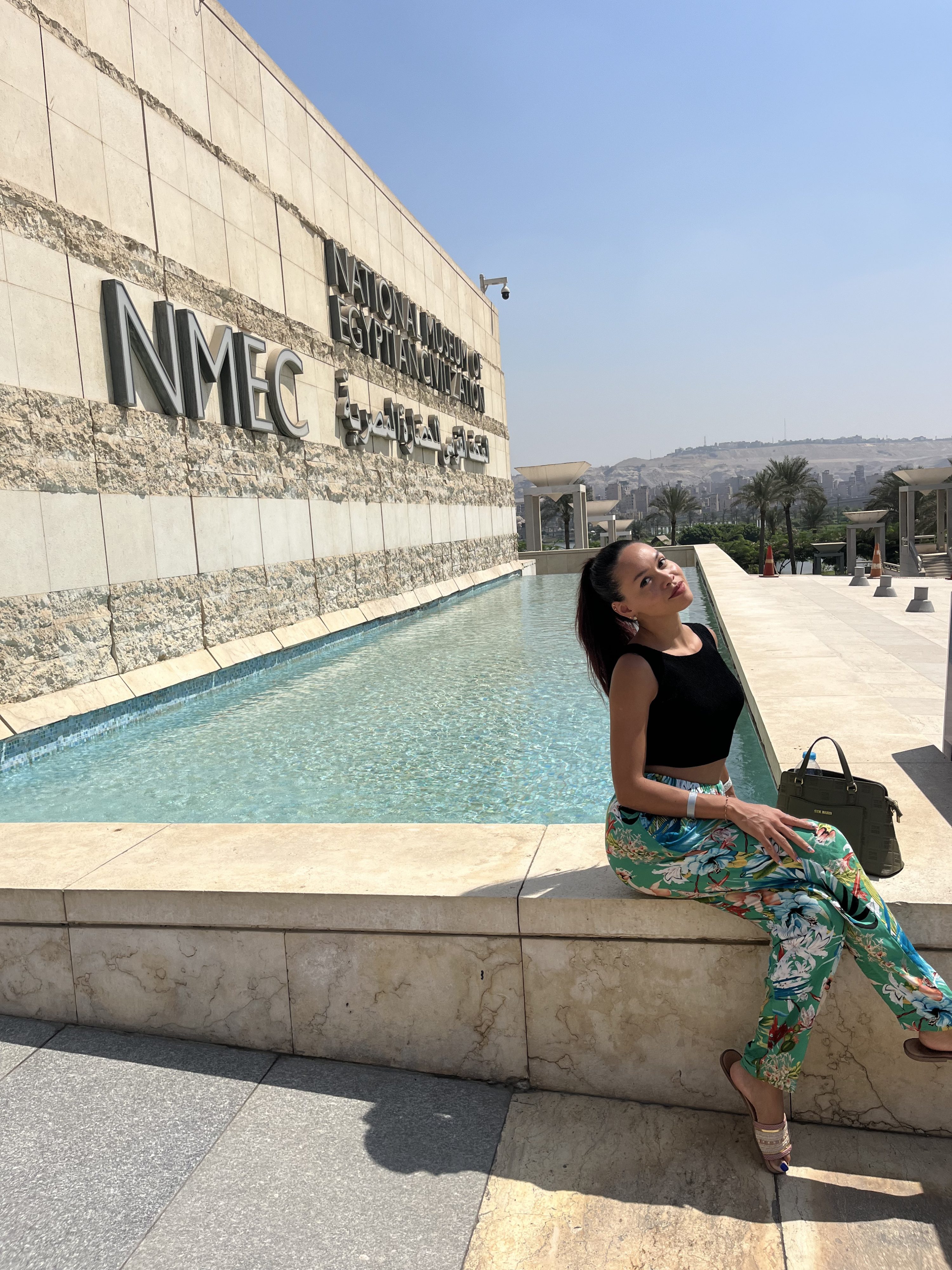
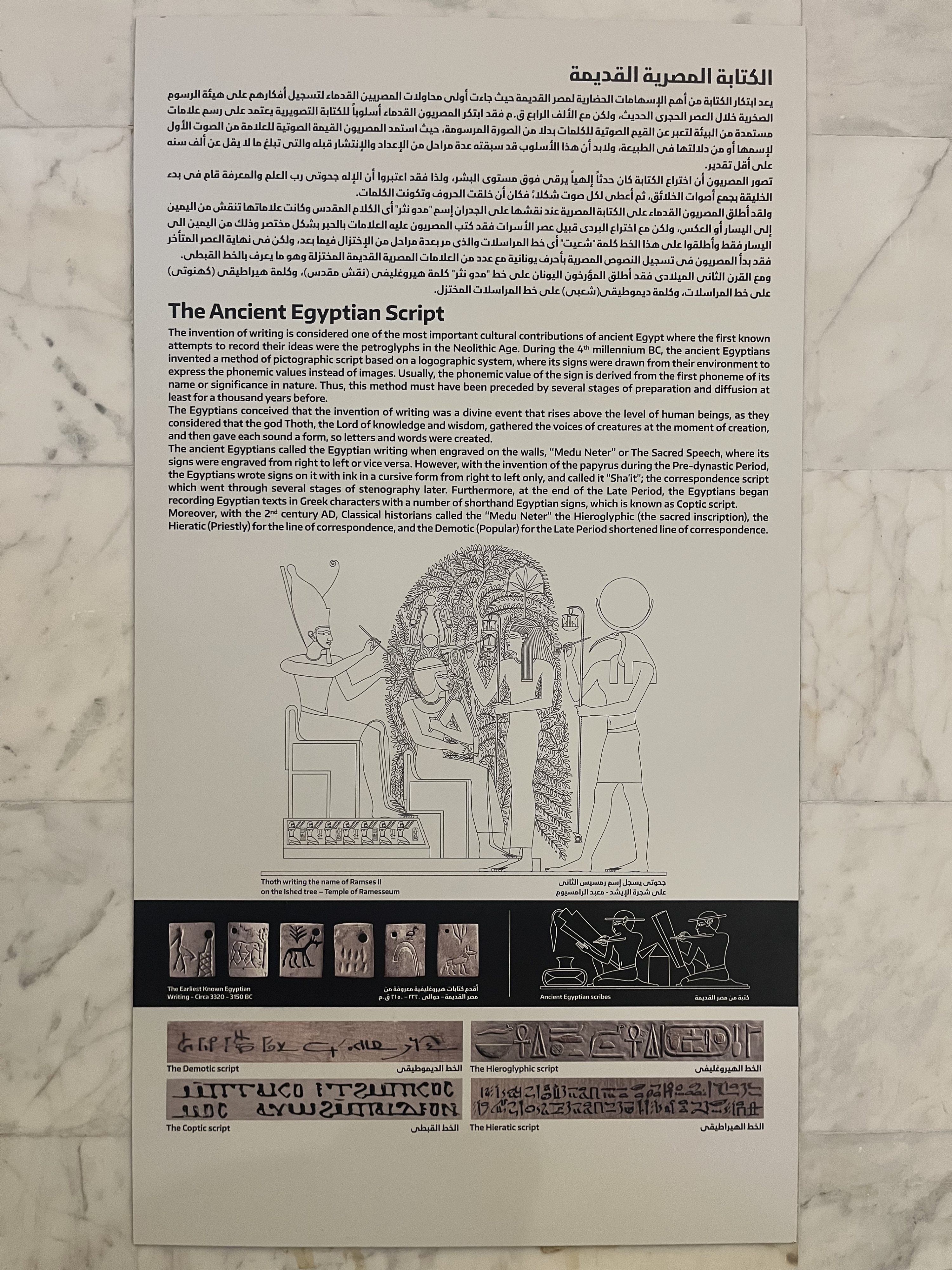
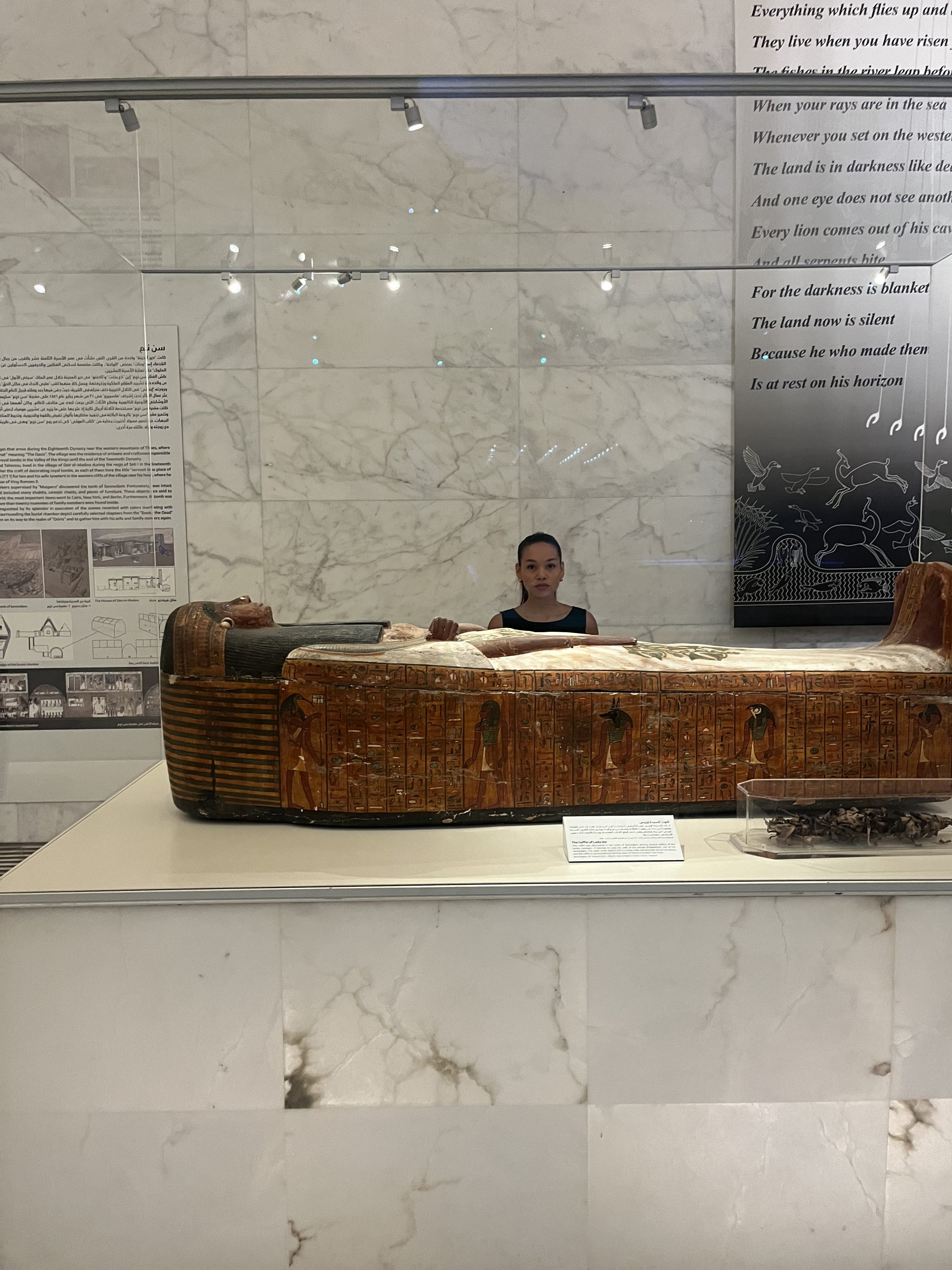
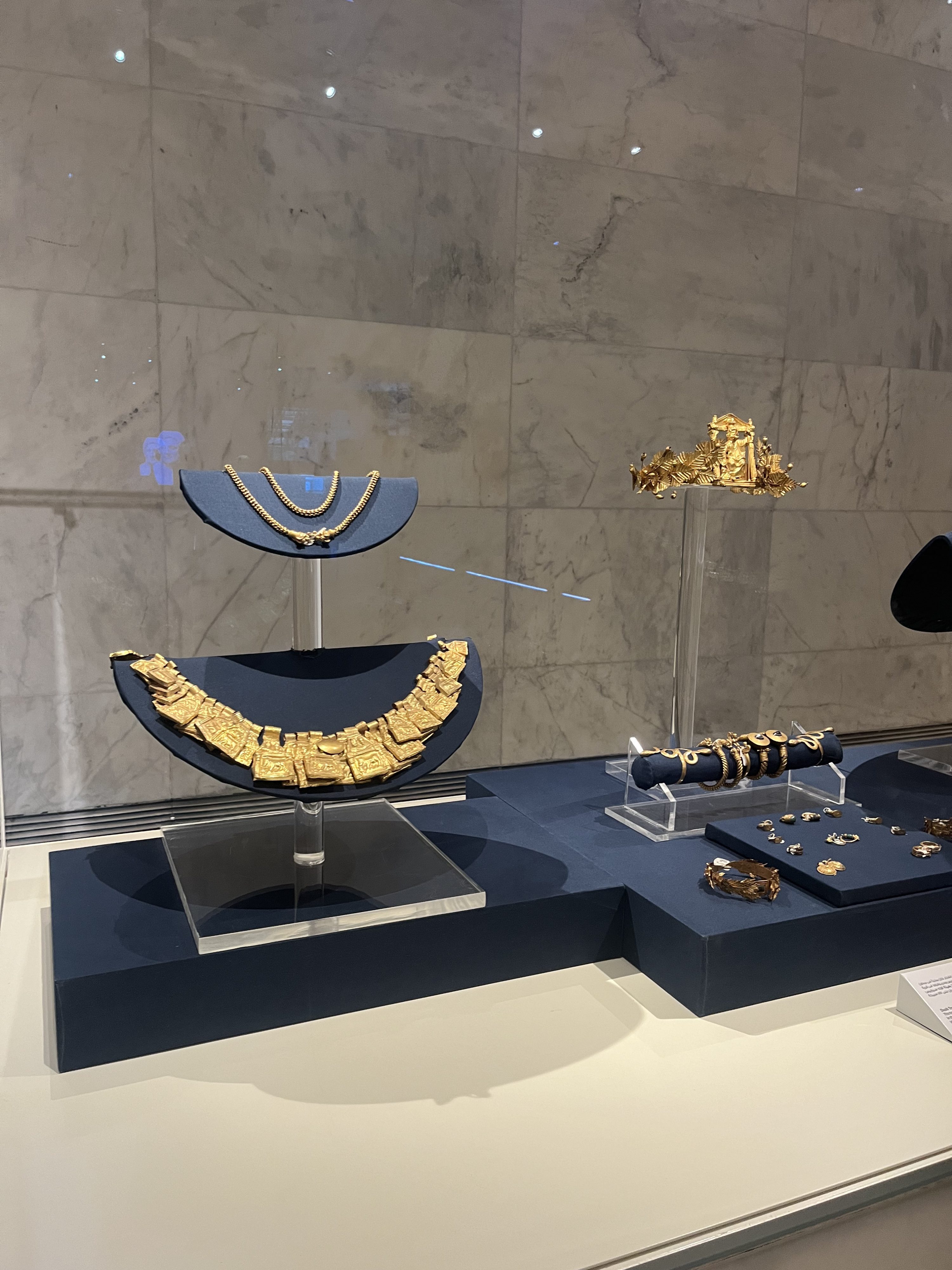
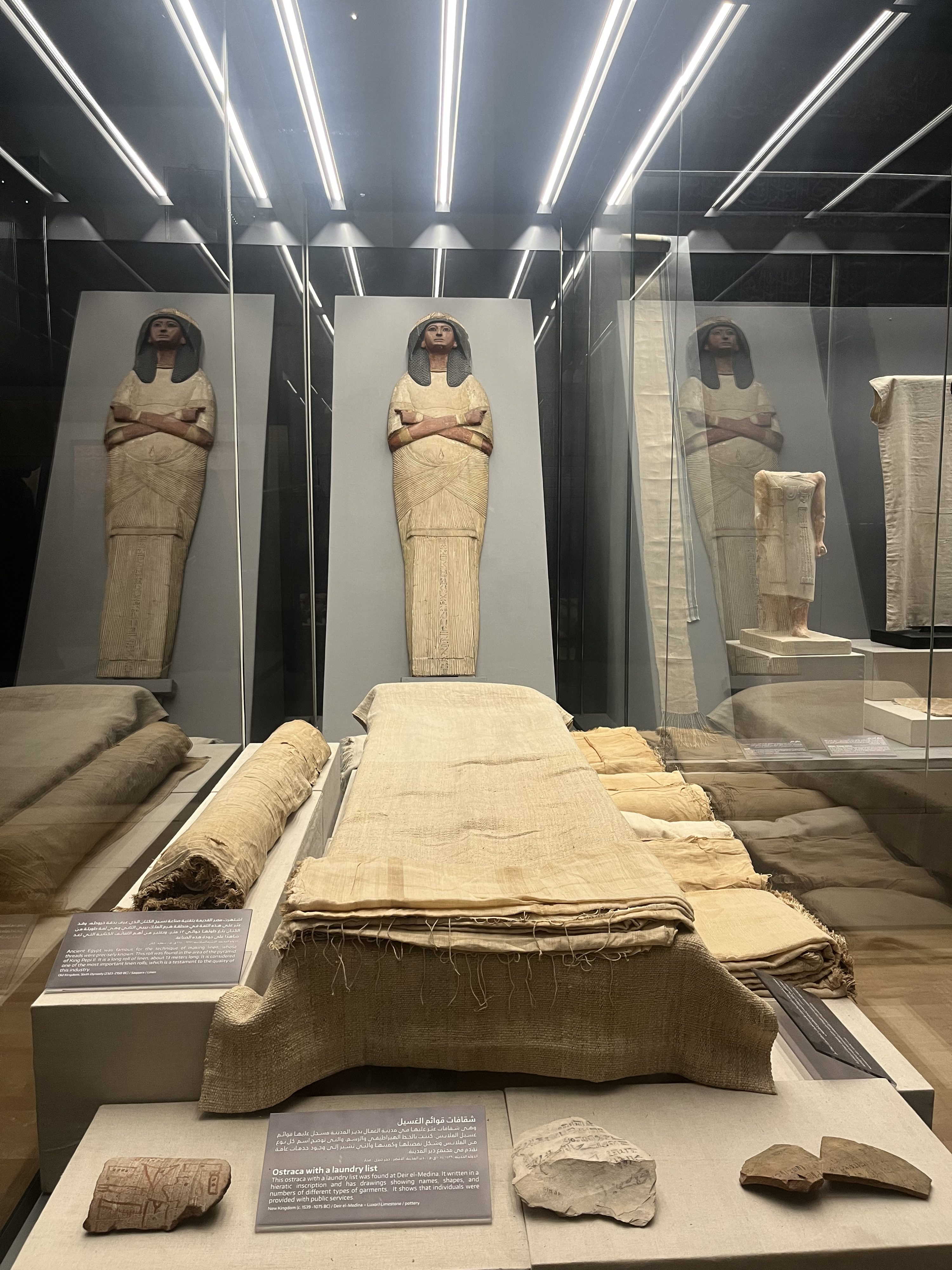
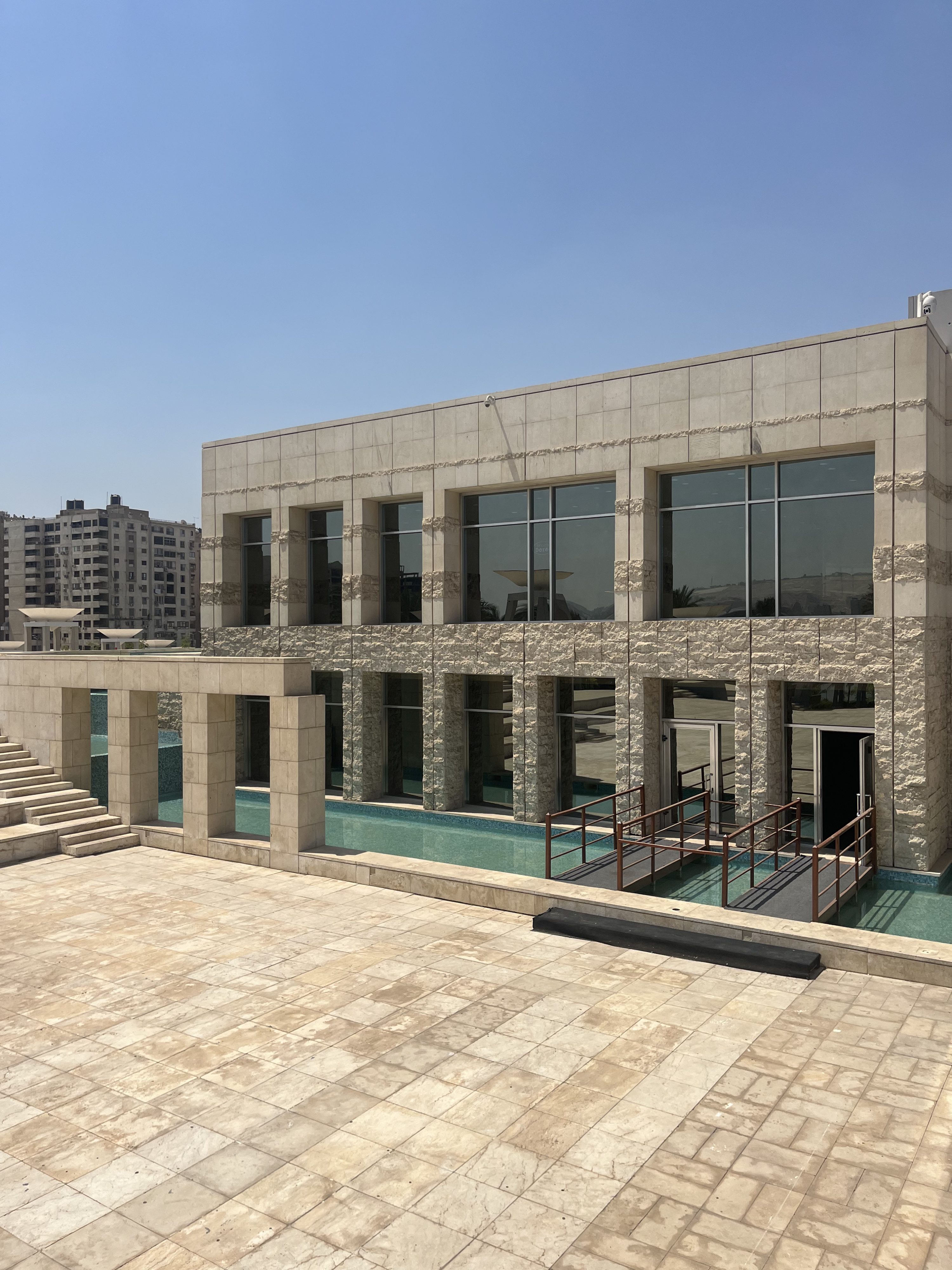
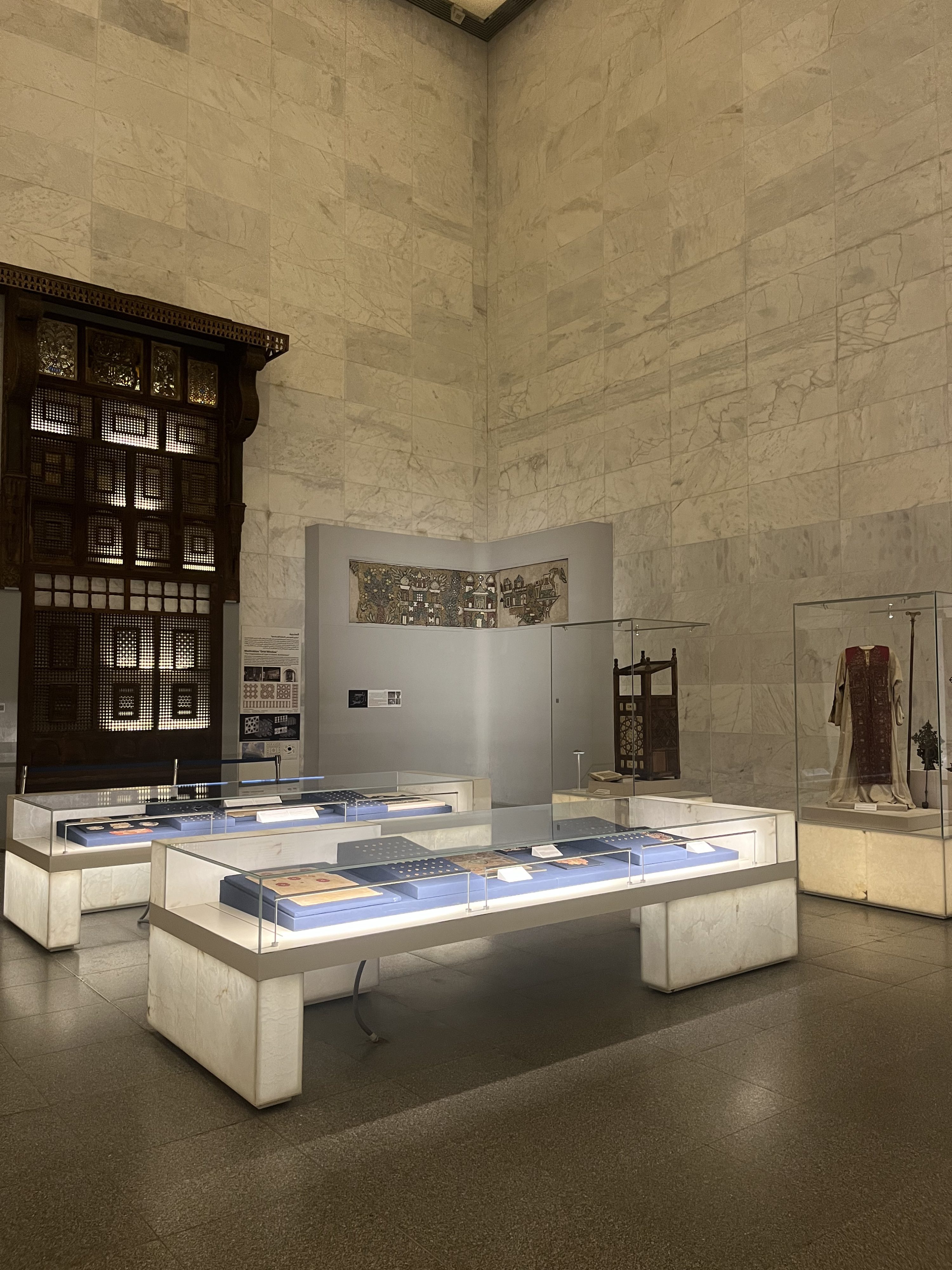
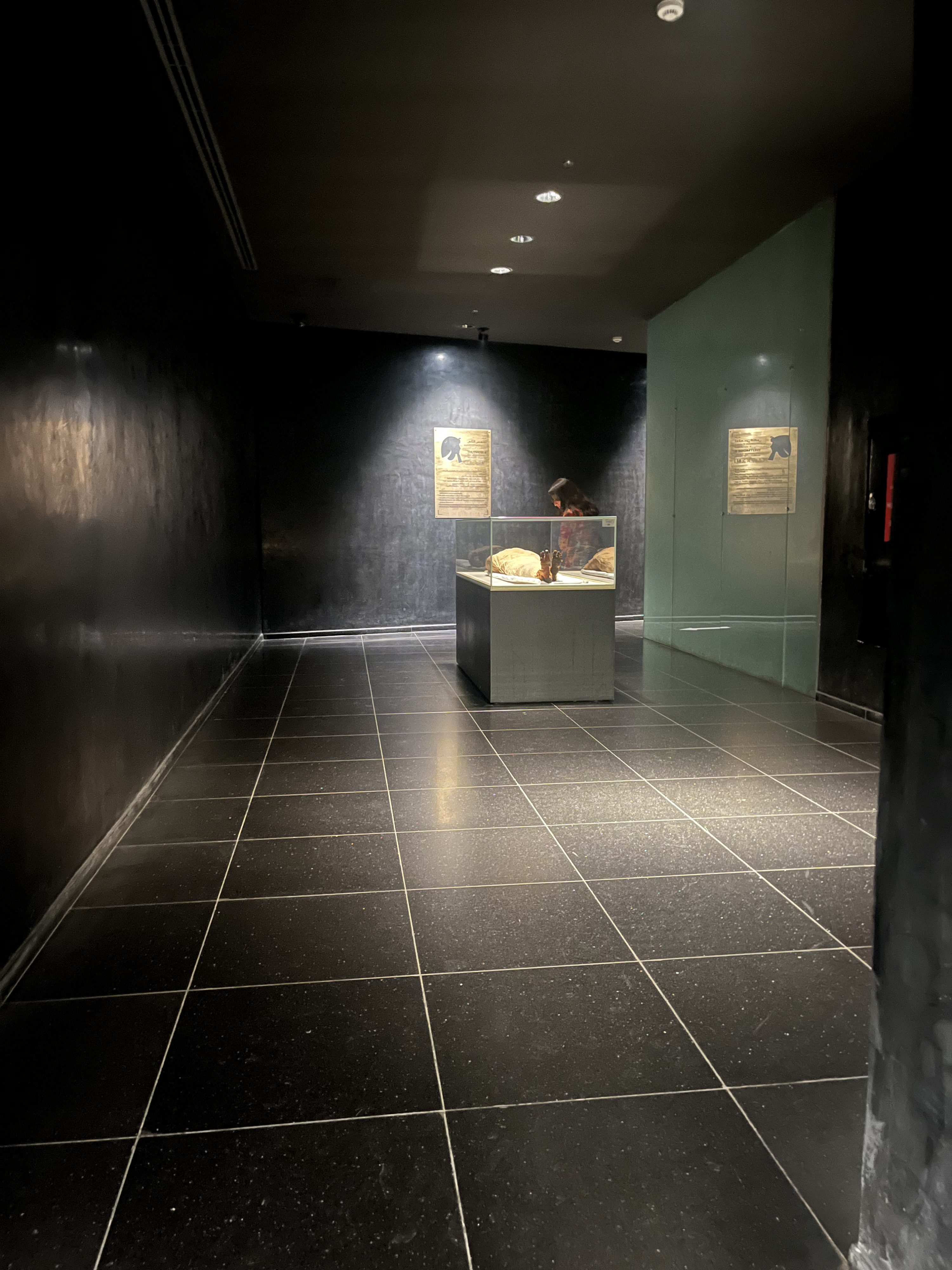
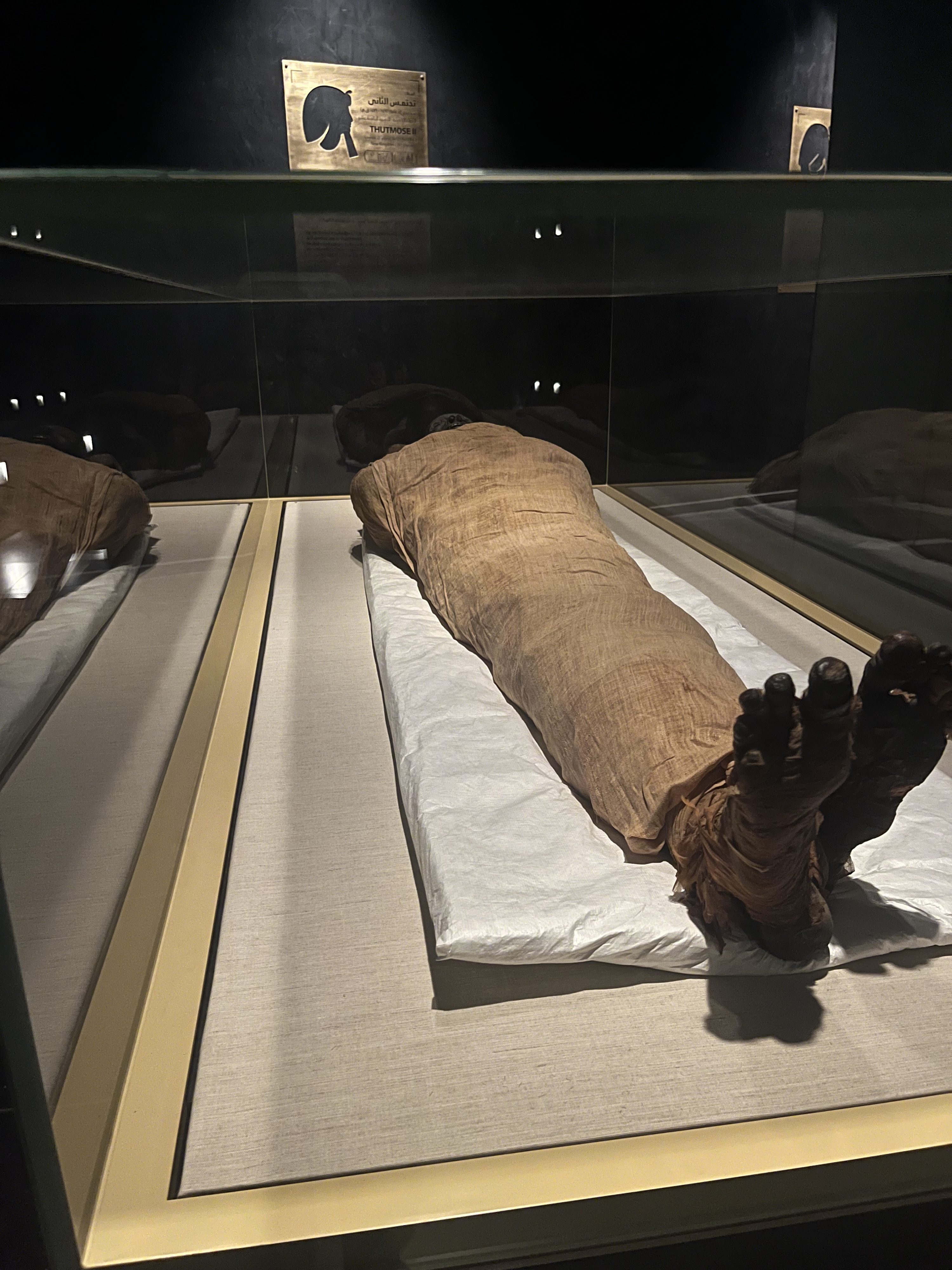
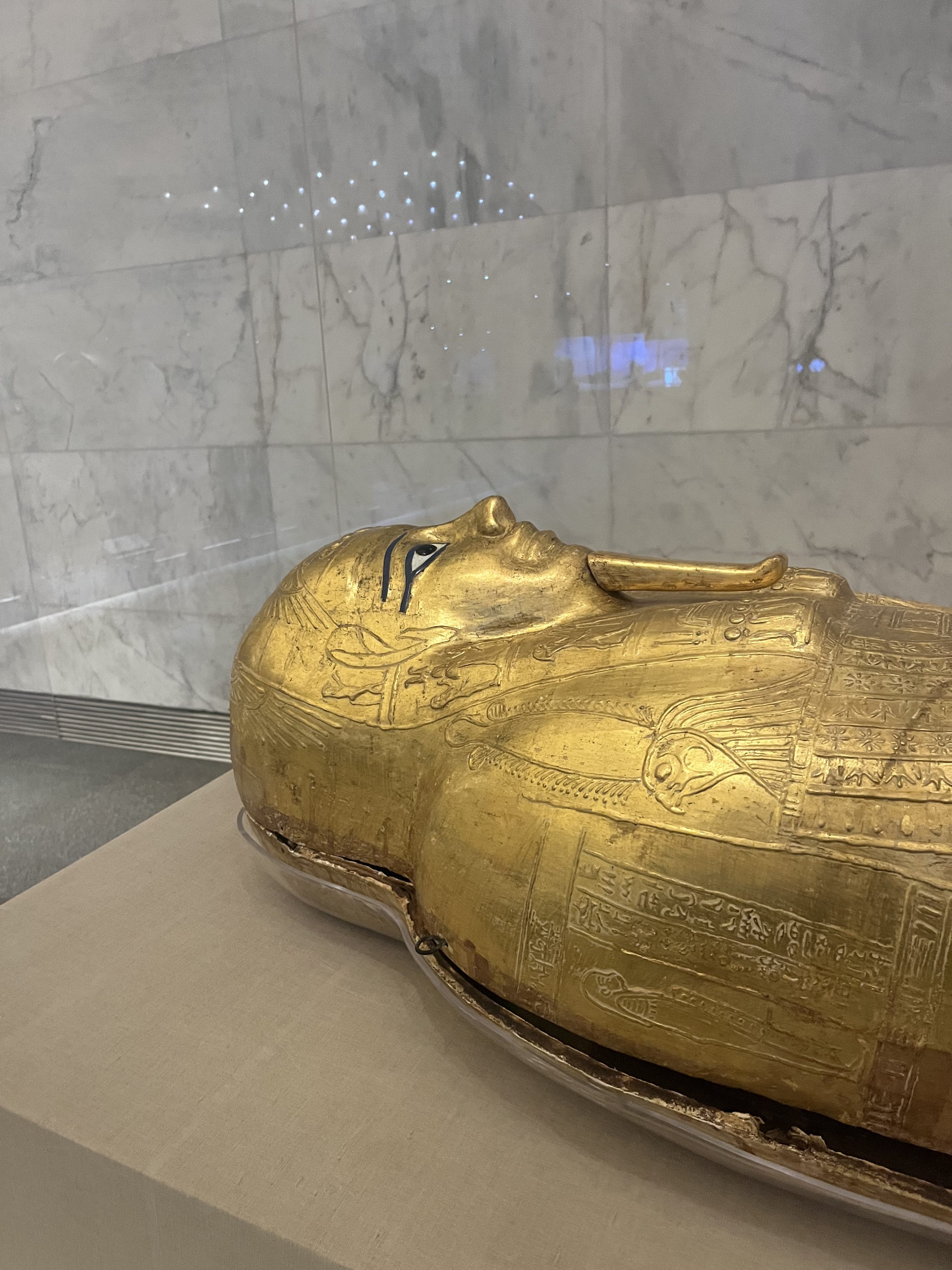
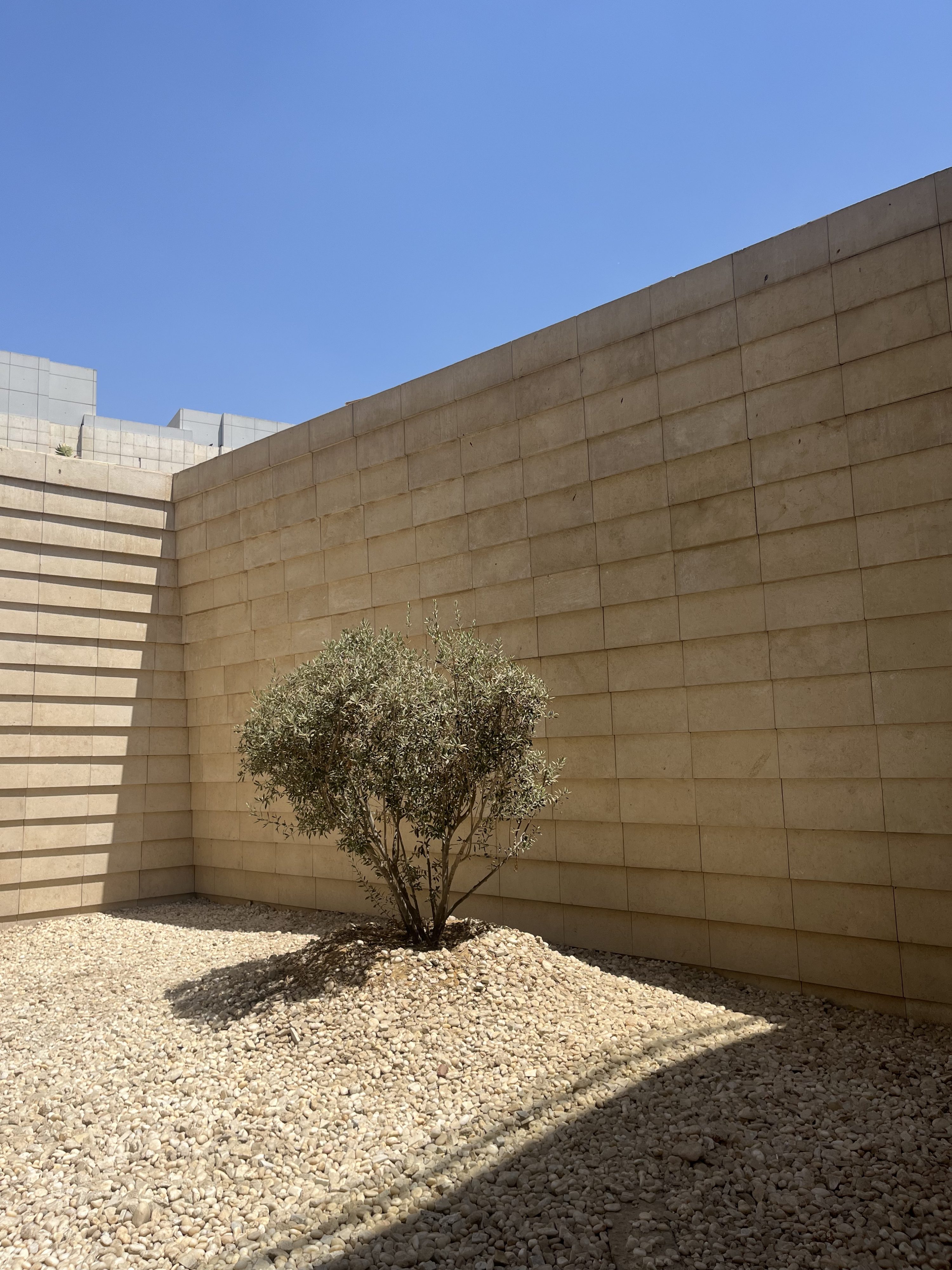
The National Museum of Egyptian Civilization in the Fustat district represents a fundamentally different and equally essential approach to the Egyptian cultural archive. Where the Egyptian Museum organises its collection by dynasty and object type — the traditional archaeological curatorial logic that produces depth within specific periods — the NMEC organises its collection chronologically and thematically, presenting Egyptian civilisation as a continuous narrative from the Predynastic era to the present day rather than as a series of distinct historical episodes.
The NMEC’s most dramatic and most moving exhibit is the Royal Mummies Hall — a space designed with the specific intention of producing genuine emotional response rather than merely archaeological interest. The twenty-two royal mummies, transferred from the Egyptian Museum in a nationally televised ceremony that constituted an act of cultural reverence as much as a logistical exercise, are presented in individual illuminated cases within a vast, dark chamber whose atmosphere is calibrated to communicate the weight of what it contains. These are the actual physical remains of the individuals who built, governed, and defined the civilisation whose monuments draw millions of visitors to Egypt annually. The confrontation with that fact — with the specific face, the specific physical form, the specific material presence of Ramses II or Amenhotep III lying in a glass case within touching distance — is one of the most genuinely extraordinary experiences available anywhere in contemporary cultural tourism.
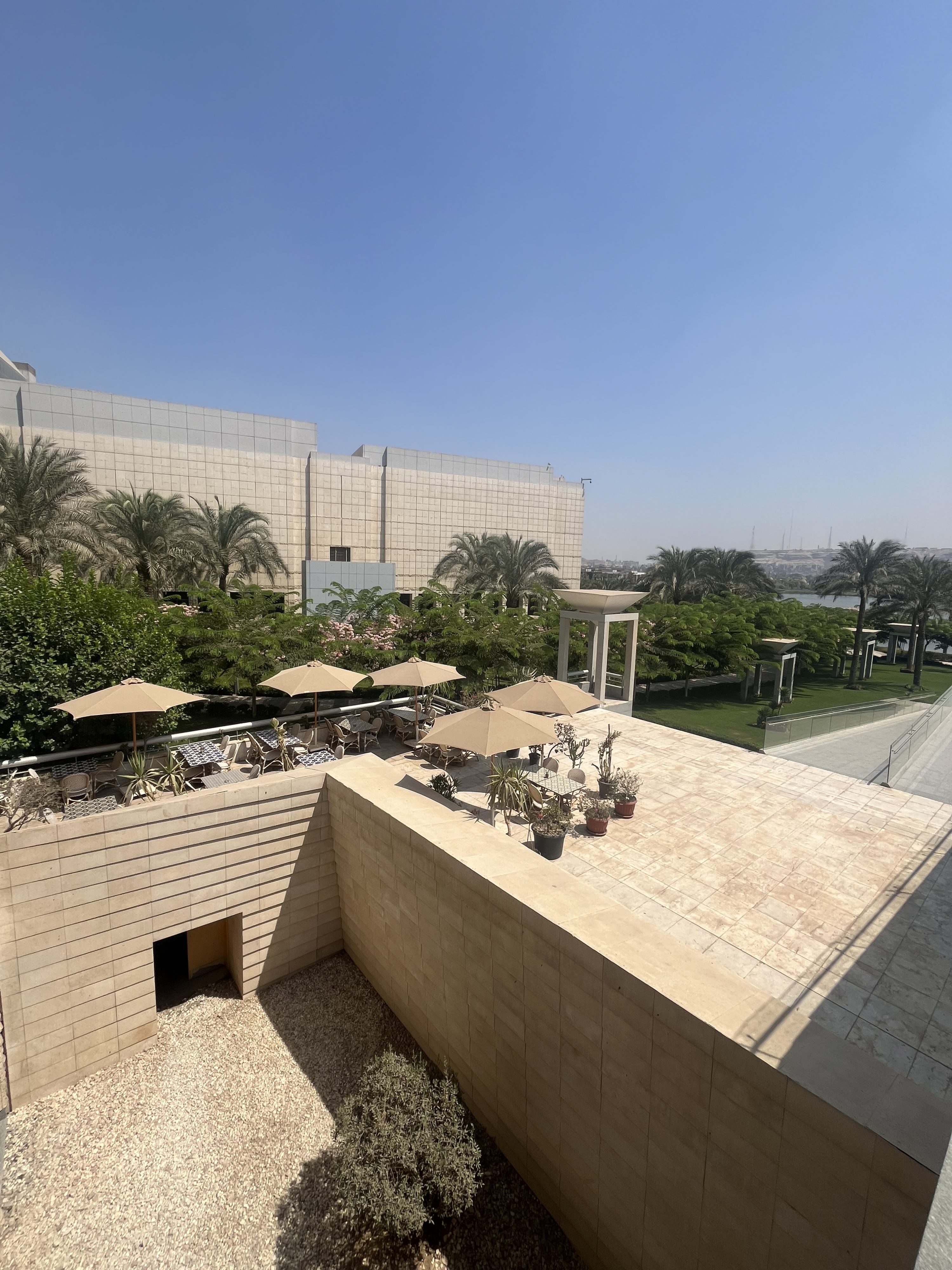
The museum’s panoramic terrace, from which Old Cairo’s layered skyline is visible in a single wide-angle sweep — minarets, Coptic churches, Fatimid architecture, and the haze of the living city extending to the desert horizon — provides the contemplative counterpoint to the emotional intensity of the Mummies Hall: the specific quality of a vista that converts individual historical fragments into a coherent civilisational whole. The museum’s lower-floor shops offer curated souvenirs at prices comparable to Khan El Khalili but without the bazaar’s navigational complexity — a useful option for travellers whose itinerary does not allow for the unhurried engagement that the bazaar rewards. As Condé Nast Traveller’s cultural guide to Cairo identifies, the NMEC represents the most significant development in Egyptian cultural tourism since the opening of the Grand Egyptian Museum — a genuinely world-class institution whose modernity of presentation does not diminish but amplifies the depth of the civilisational story it tells.
Khan El Khalili — commerce as conversation and the bazaar as living museum
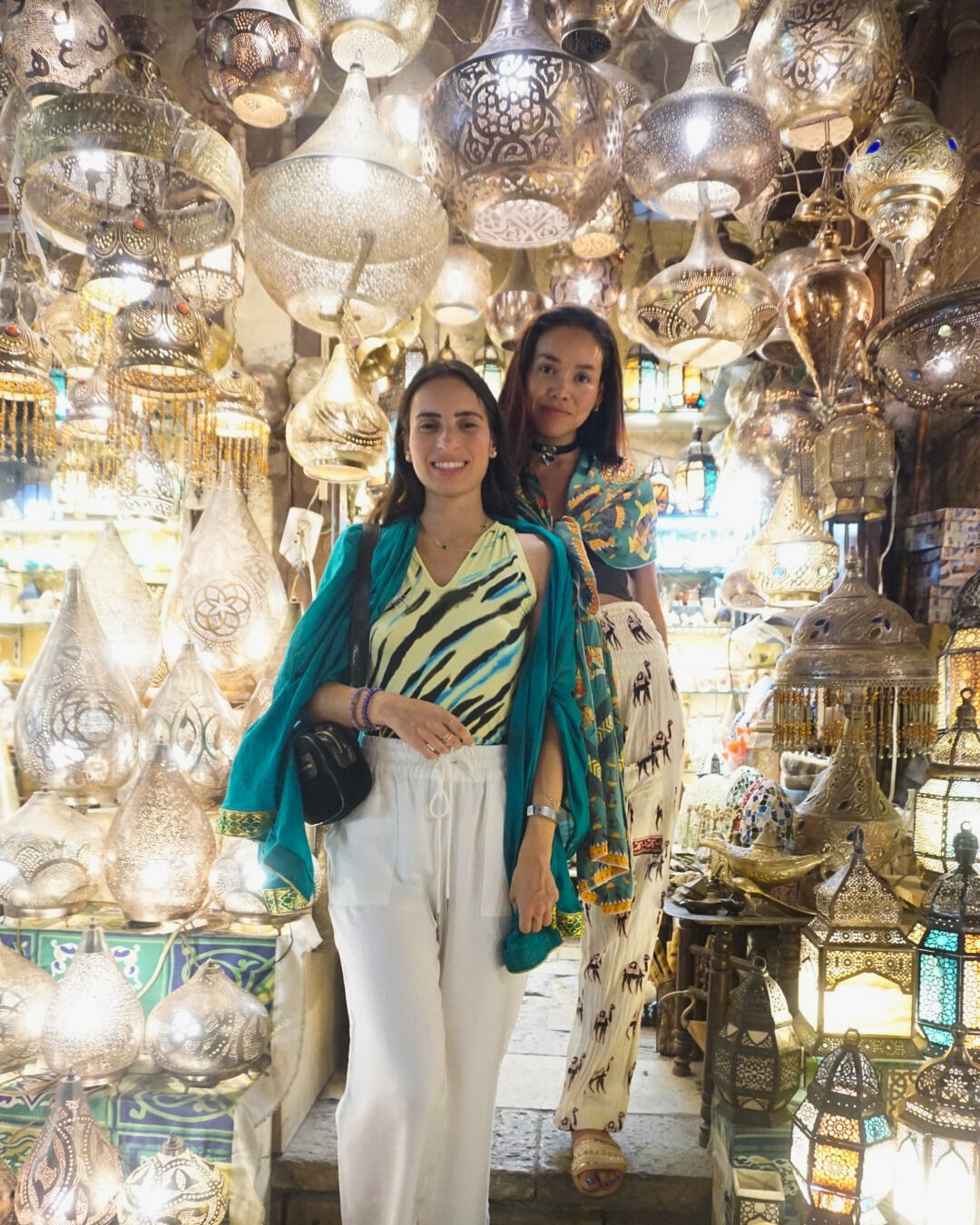
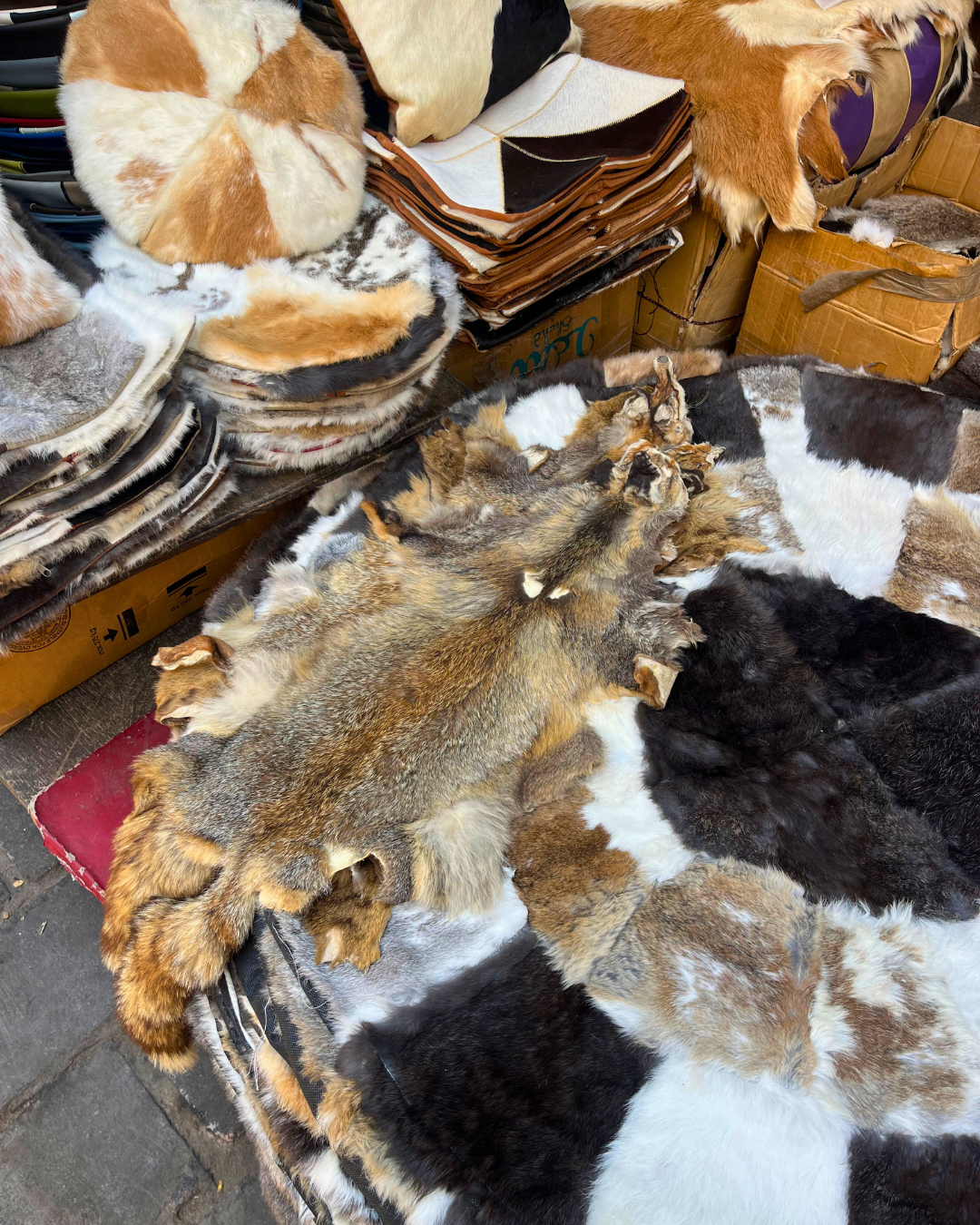
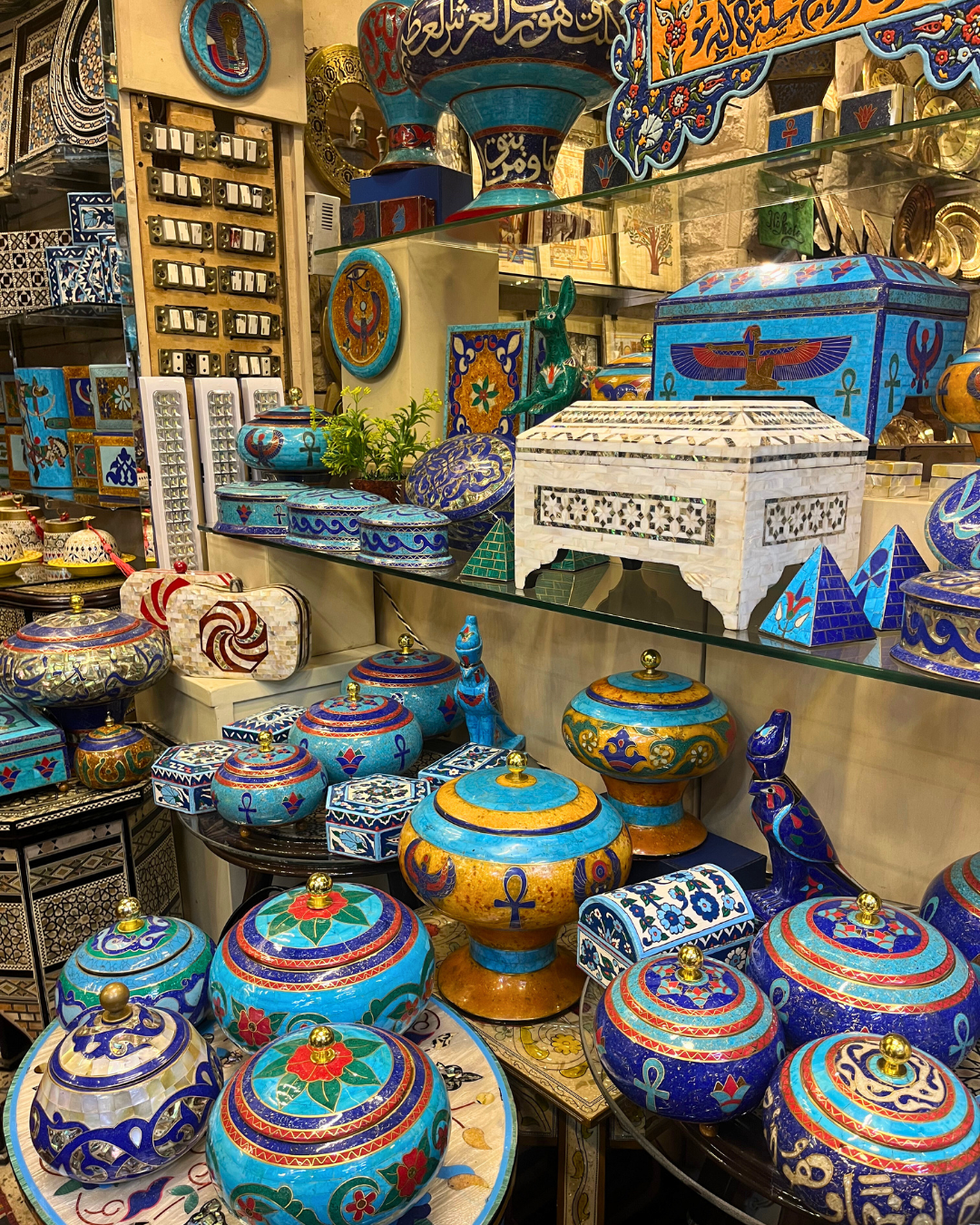
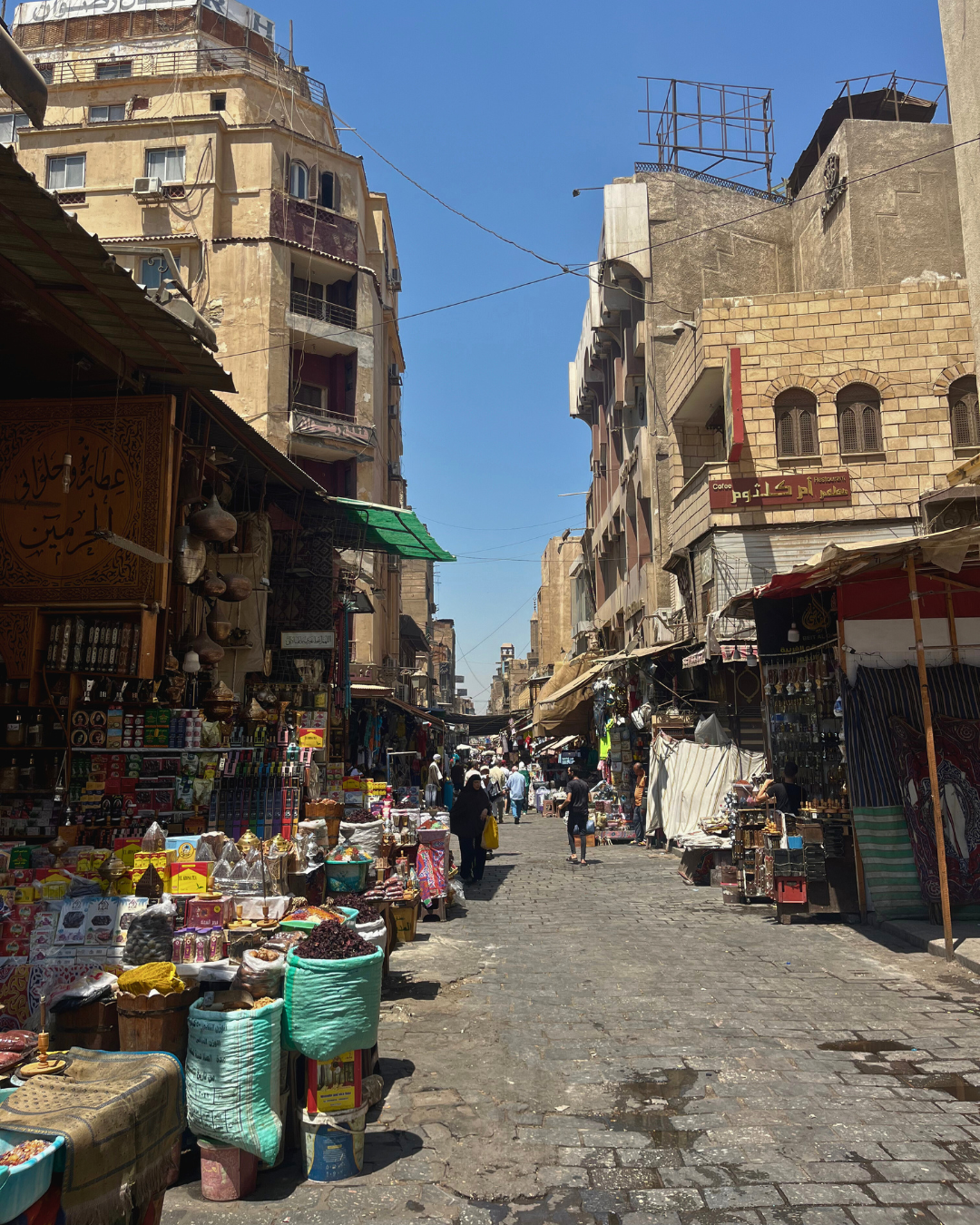
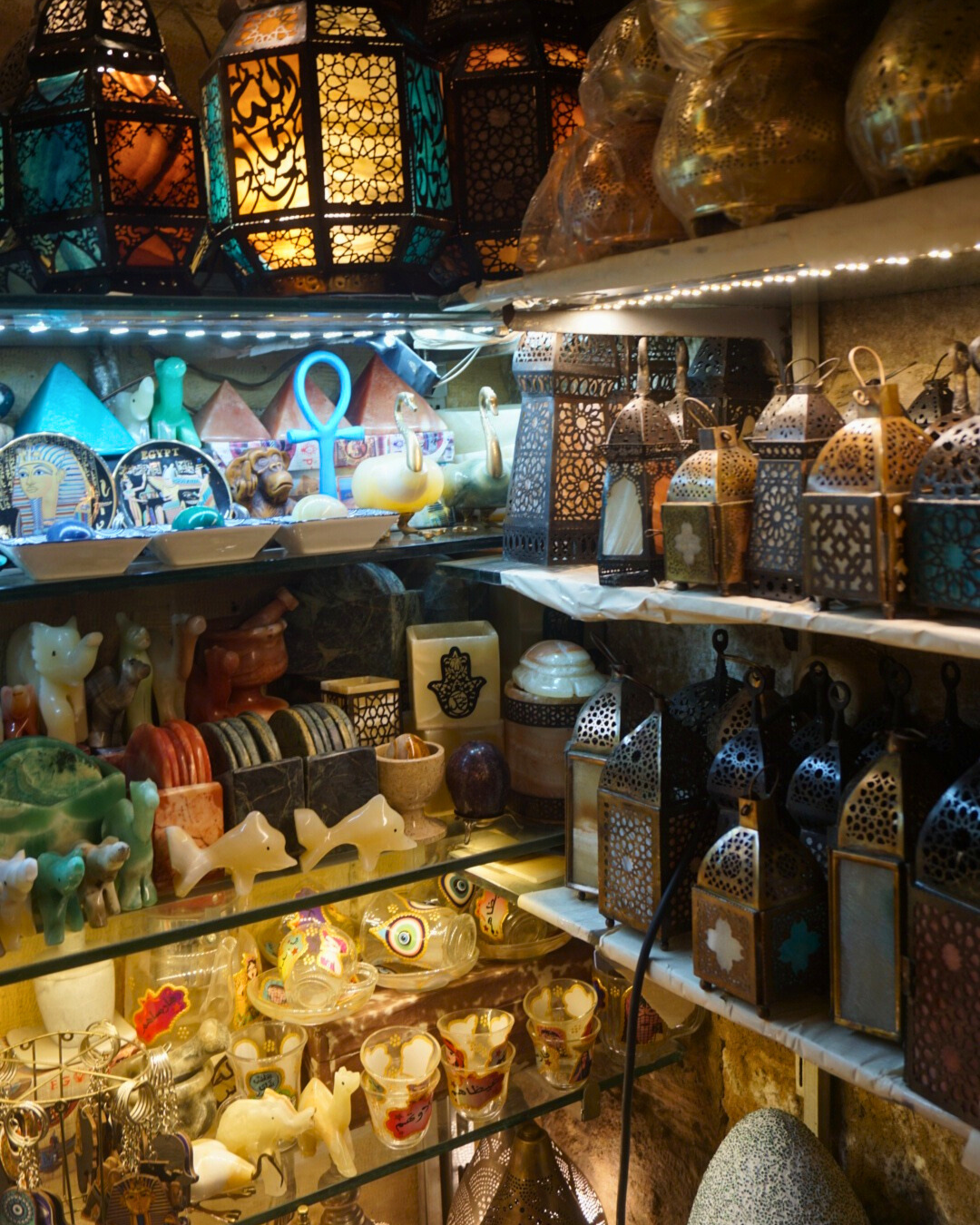
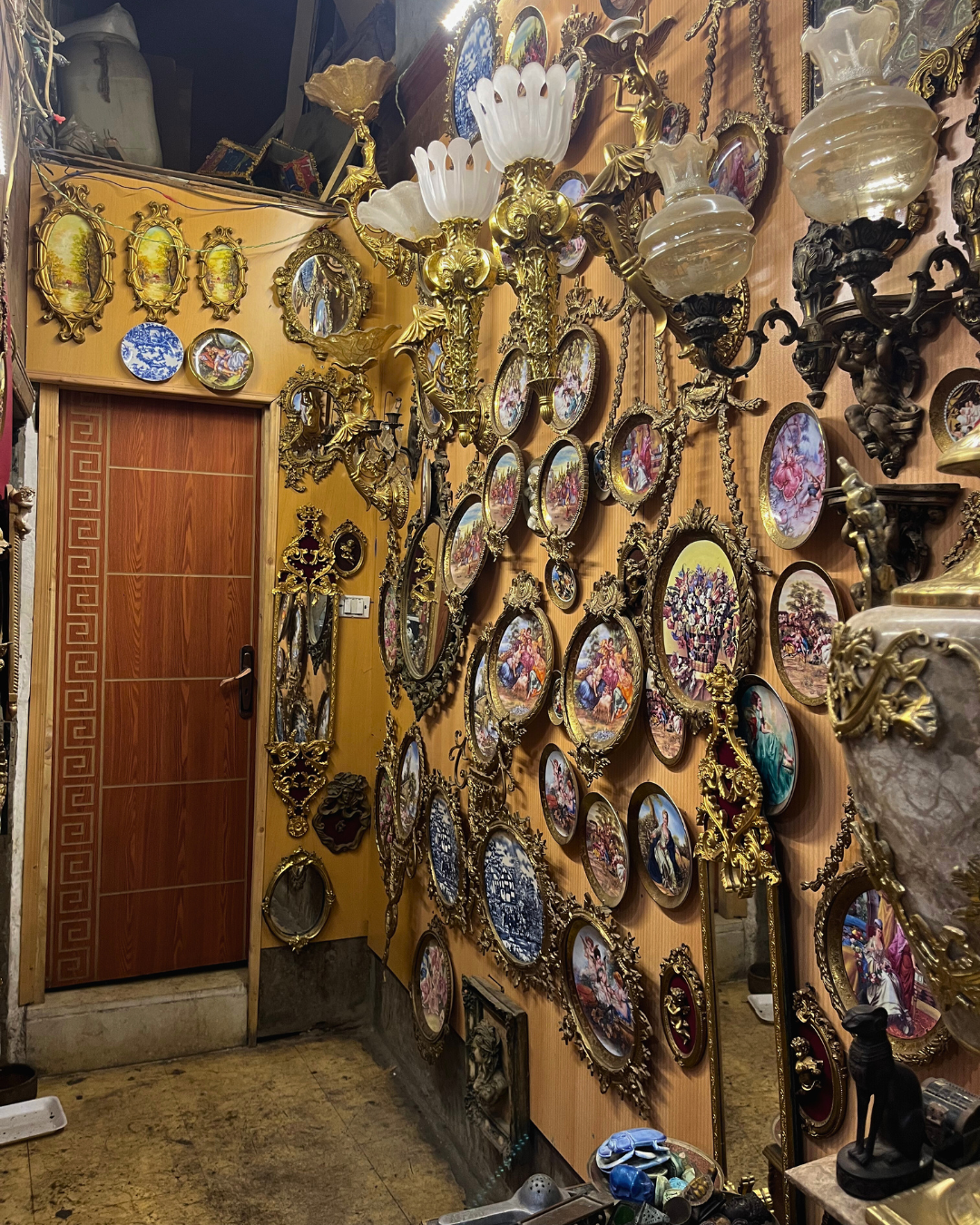
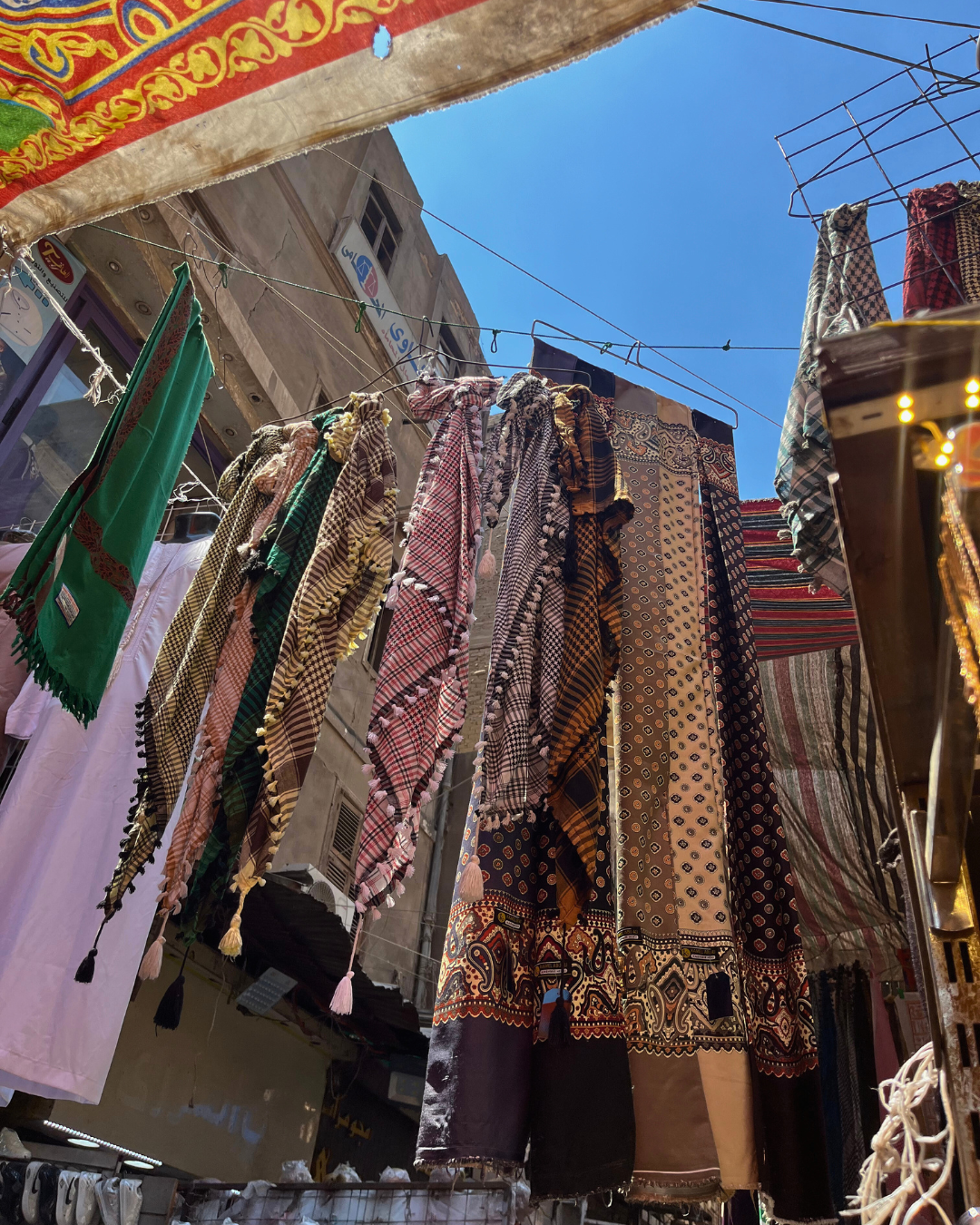
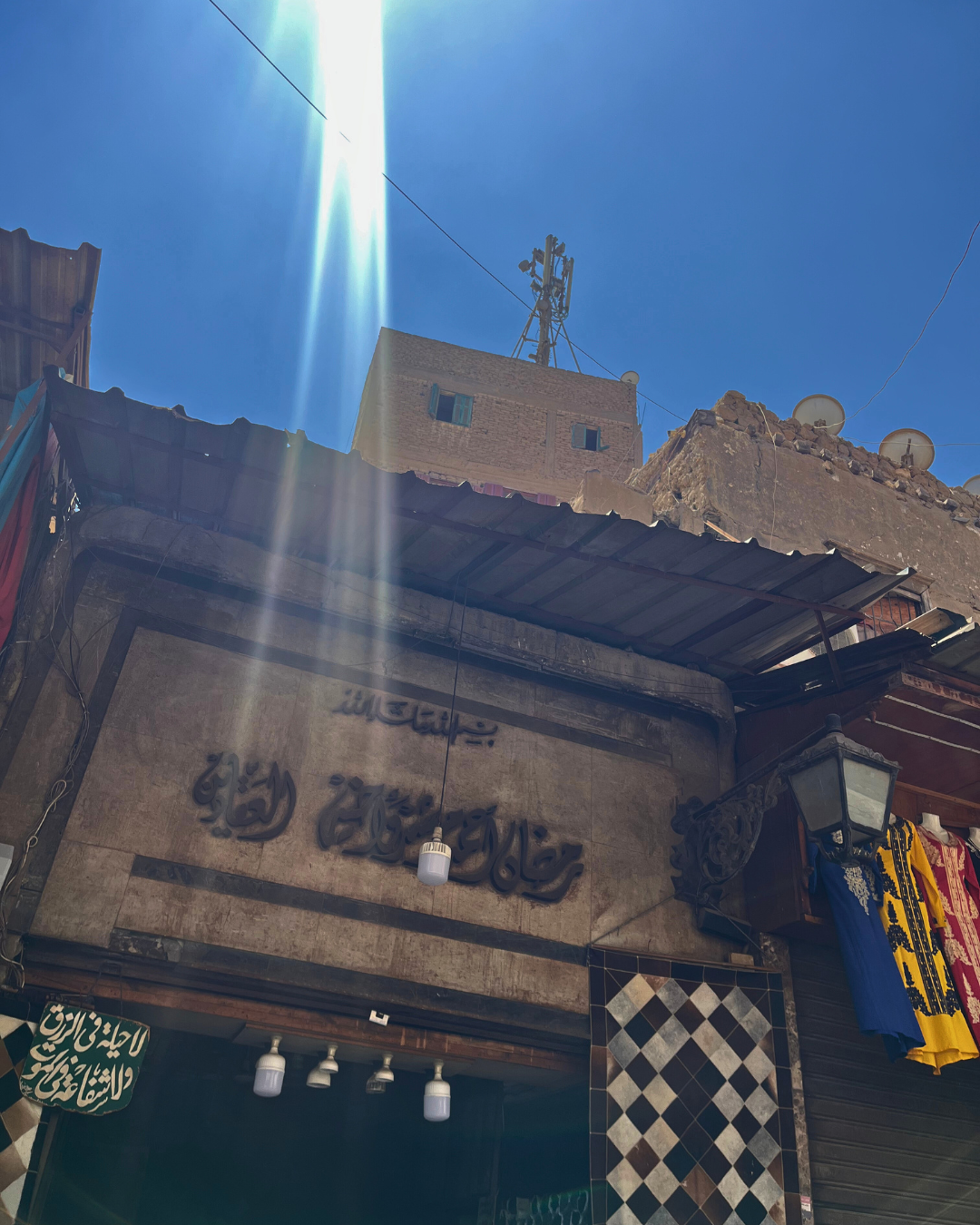
Khan El Khalili is not merely a market. It is one of the oldest continuously operating commercial spaces in the world — established during the Mamluk period of the fourteenth century, on a site whose mercantile history extends back further still — and its significance as a cultural experience rests not primarily on what it sells but on what it embodies: the specific social choreography of the Egyptian bazaar, in which commerce is inseparable from conversation, transaction is embedded in relationship, and the act of buying and selling is understood as a form of social engagement rather than an economic exchange.
The bazaar’s architecture is itself a cultural document: the ornate Mamluk-period facades, the decorative arches, the narrow alleys whose spatial logic was designed for the specific social rhythms of a pre-modern commercial culture in which proximity and conversation were the primary mechanisms of trust. The maze of streets that disorients the first-time visitor — whose instinct is to navigate efficiently, to find the specific object they came for and complete the transaction — is not a design failure but a design intention: the bazaar is built to slow you down, to force the kind of engagement with the space and its inhabitants that produces the social encounters that are the bazaar’s primary product.
The merchants of Khan El Khalili engage visitors with storytelling rather than urgency — a specific quality of hospitality that is at once commercial strategy and genuine cultural expression. The vendor who explains the provenance of a piece of jewellery, who contextualises a spice within the culinary history that gives it meaning, who bargains with humour and warmth rather than pressure, is not performing hospitality for the tourist. They are expressing a social philosophy that is continuous with the bazaar’s six-hundred-year tradition of commerce as conversation. Bargaining here is not adversarial — it is choreographic, a structured social dance whose outcome is less important than its performance. Approaching it with a smile and a genuine willingness to engage produces the quality of encounter that makes Khan El Khalili one of the most memorable social experiences available in any city in the world.
A practical note: the bazaar is vast enough to require multiple visits if you have specific objects in mind. Asking for directions to specific sections before entering — the gold quarter, the spice market, the antiques district — saves the disorientation that the unoriented first visit inevitably produces. The second visit, armed with the spatial knowledge acquired in the first, is consistently more productive and more pleasurable than the first. As UNESCO’s World Heritage designation of Historic Cairo confirms — and as the World Economic Forum’s analysis of living heritage markets and cultural preservation identifies — spaces like Khan El Khalili represent a category of cultural heritage that no museum can replicate — the heritage of a social practice that is still alive, still evolving, still producing the specific human encounters that constitute its deepest value.
Ahmed and his son — the human geography of Cairo
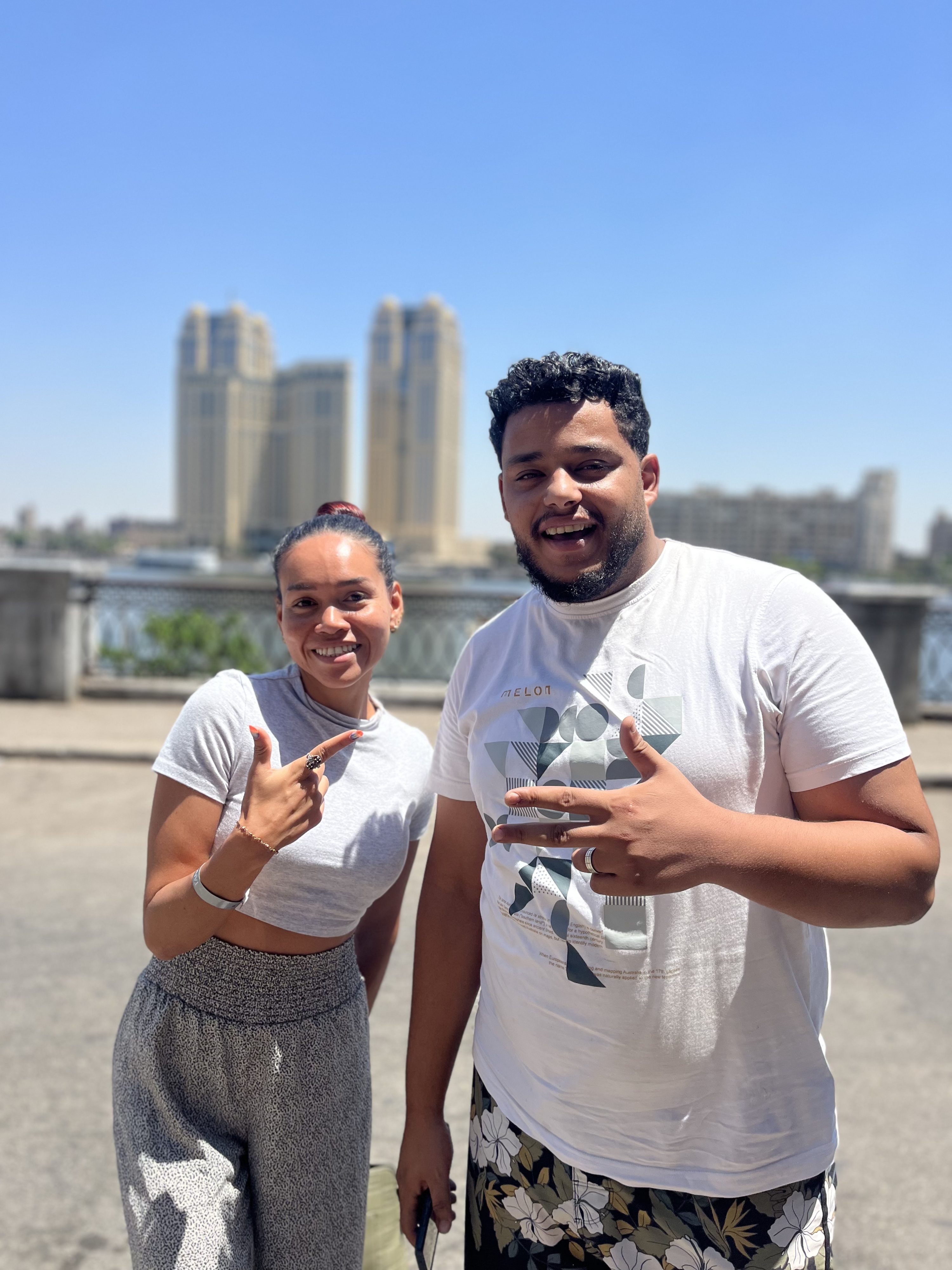
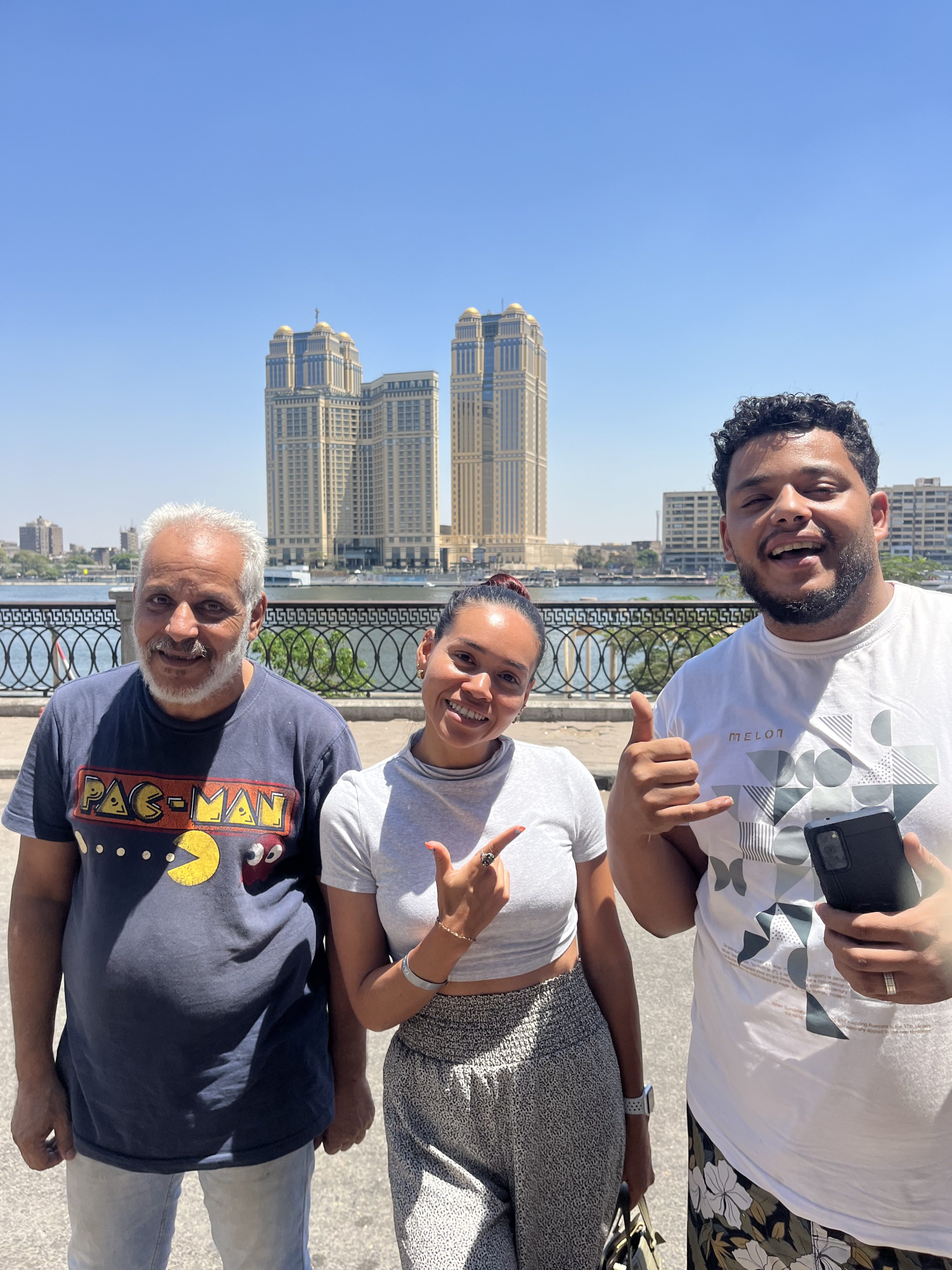
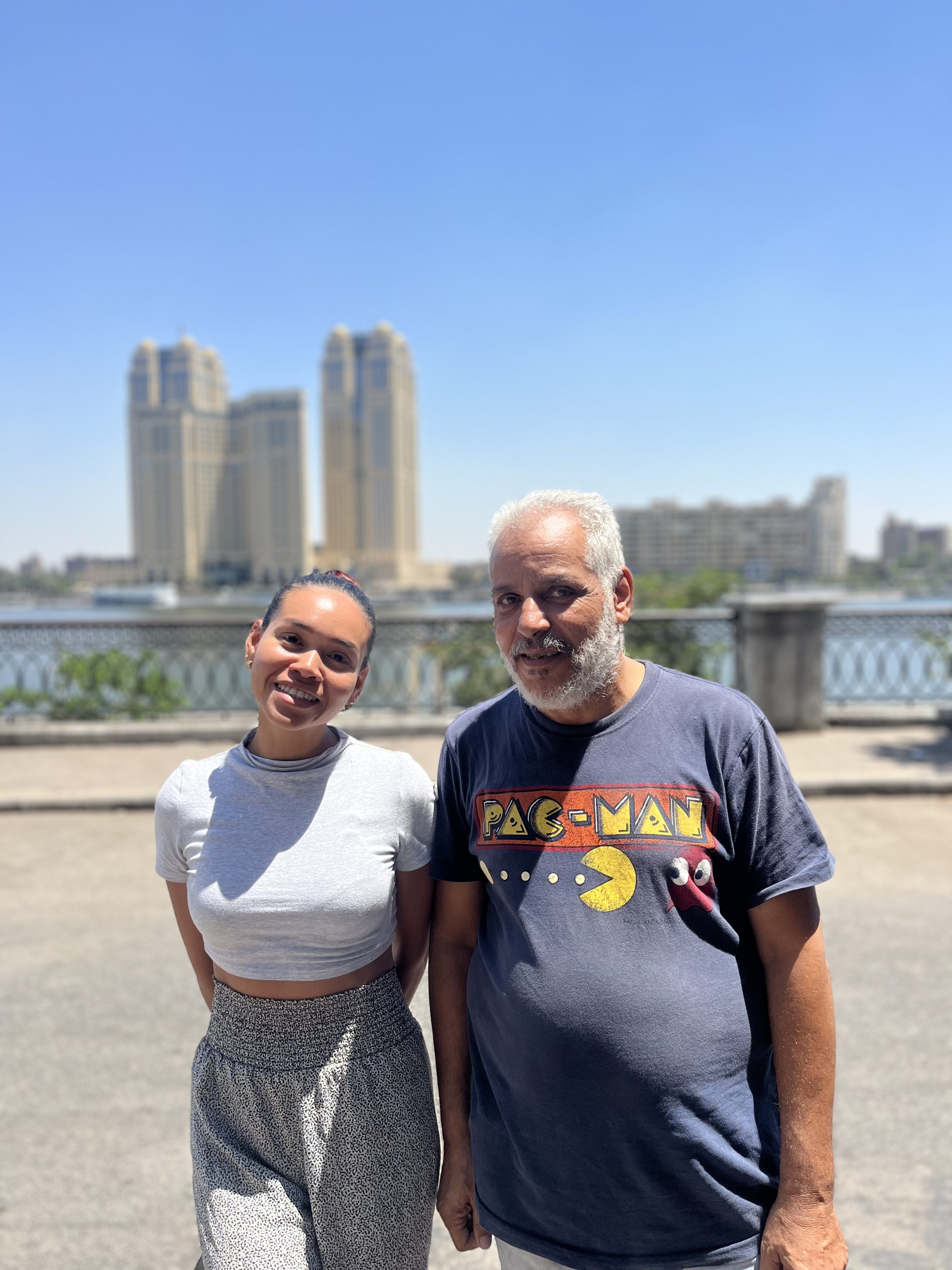
The most memorable encounter of any Cairo journey is rarely found in a museum or a monument. It is found in the human encounters that the city produces with the specific generosity of a culture whose hospitality philosophy is not a learned professional competence but an inherited social instinct. Ahmed and his son — the driver and navigator whose partnership transformed what might have been routine transportation into the most culturally revealing dimension of the entire Egypt experience — are the fullest available expression of this inheritance.
Ahmed came recommended through the specific form of traveller intelligence that no guidebook or booking platform can fully substitute: the Careem driver hired on the second day who seemed, in the specific quality of his attention and his manner, to be someone worth trusting with more than a single journey. The instinct proved correct. Ahmed’s knowledge of Cairo is not the professional guide’s curated selection of authorised narratives but the indigenous knowledge of someone who has inhabited the city across decades — who knows which routes carry which qualities of urban experience, which conversations produce genuine insight, when to speak and when to be quiet and let the landscape speak instead.
His son’s presence added a generational dimension to the experience that enriched it in ways that neither alone could have provided. Where Ahmed’s knowledge is historical and deep, rooted in a Cairo that has been lived rather than observed, his son’s is contemporary and lateral — the Cairo of the current moment, with its specific social energies, its evolving neighbourhoods, its relationship to modernity and tradition that is different from his father’s without being in conflict with it. Together, they provided a stereoscopic portrait of the city that the conventional tourist experience rarely achieves: the sense of Cairo as a place inhabited by specific, complex, fully dimensional human beings whose lives constitute the city’s actual substance rather than its backdrop.
The journey to Ain Sokhna — approximately two and a half hours from Cairo through the specific landscape transition that the Egyptian desert produces as the city’s density gradually releases into the open coastal plain — was not merely transportation. It was the specific quality of a long road conversation that produces the particular intimacy of travel: the kind that bypasses the social protocols of professional relationship and arrives, gradually, at the genuine exchange of perspectives that constitutes actual cross-cultural understanding. Ahmed and his son can be reached at +201060521218 or +201025011896 — a contact that represents not merely a practical recommendation but an endorsement of the specific quality of human engagement that the most considered Cairo journey requires.
The understanding that genuine human warmth is the most enduring form of travel luxury — that what compounds in meaning across the years following a journey is not the monuments visited but the encounters had — connects the Cairo hospitality experience to the broader philosophy of considered living explored across this site. The Return of the Pearl: Inside the Quiet Luxury of Robert Wan makes the same argument in the context of material culture: the object acquired with genuine knowledge and worn consistently across decades deepens in meaning through the accumulated history of the relationship rather than depleting through repetition. The Cairo journey absorbed with genuine attention to its human as well as its historical dimensions works identically — it deepens rather than depletes with the passage of time and the accumulation of reflection. Why Lah Lah Is Dubai’s Most Considered Girls’ Night Out makes the same argument in the context of Dubai hospitality: the most significant dining and social experiences are those in which the environment understands what the people within it need and provides it without requiring them to ask. Ahmed and his son understood what their passengers needed from the journey to Ain Sokhna — the combination of information and silence, of story and space — and provided it with the specific grace of people for whom hospitality is not a service but a calling. As Business of Fashion’s analysis of hospitality culture and human connection in luxury travel documents, the travel experiences generating the highest emotional return are consistently those defined by genuine human engagement rather than curated perfection — those in which the unpredictable, unreplicable quality of a specific human encounter is the experience itself.
Cairo’s monuments may survive for millennia. The warmth of the people who animate the spaces between them — the merchants of Khan El Khalili, the museum staff who light up when a visitor asks a genuinely interested question, the drivers who become storytellers on the road to Ain Sokhna — is the city’s most fragile and most precious inheritance. The traveller who arrives at Cairo with the specific intention of encountering both its history and its humanity will leave with something that no amount of subsequent travel will easily replicate: the understanding of what a civilisation looks like when its ancient dignity and its contemporary warmth are continuous with each other, when the same generosity that built the temples and commissioned the papyri and laid the foundations of Western knowledge is still available, on any given day, in the streets of the living city. Ramadan in Dubai: The Best Iftar Experiences of the Year explores the deepest expression of this principle in the Gulf context — hospitality as spiritual practice, the shared table as the highest form of social architecture. In Cairo, this same principle is expressed not in a single annual season but continuously, in the ordinary daily life of an extraordinary city.
Cairo as a living civilisation — hospitality as the continuity of cultural DNA
The most significant intellectual shift that Cairo produces in the traveller who approaches it with genuine attention is the dissolution of the boundary between ancient Egypt and contemporary Egypt — the recognition that the civilisation whose monuments have drawn wonder for four and a half millennia is not a completed historical event but an ongoing cultural project, still being enacted daily in the social behaviour of the people who inhabit the city that was once Memphis, that contains within its body the ruins of every significant era of Egyptian history, and that carries forward into the present tense a set of social values whose connection to the ancient past is not metaphorical but structural.
The hospitality that characterises Cairo’s best human encounters is not a coincidence of individual personality. It is an inheritance — a specific quality of social behaviour that has been transmitted across generations within a culture whose foundational value system placed the welcome of the stranger at the centre of ethical obligation. The ancient Egyptians embedded this value in their funerary theology: the weighing of the heart ceremony in the Book of the Dead included, among the negative confessions the deceased was required to make before Osiris, the denial of having failed to offer food to the hungry or water to the thirsty. Hospitality was not merely a social virtue in ancient Egypt. It was a religious one — a criterion of the moral life whose violation carried consequences that extended beyond the social into the cosmic.
This is what Ahmed understood, and what his son understands, and what the merchants of Khan El Khalili express with every conversation that extends past the point of commercial necessity. The warmth they offer is not a product they are selling. It is the most ancient and most persistent expression of a cultural identity that has survived the fall of every empire that has ruled the Nile Valley since the first dynasties established it five thousand years ago. Cairo is not merely a city with a significant ancient past. It is a city whose ancient past is still alive in the present behaviour of its people — and the traveller who understands this arrives not at a destination but at a civilisation.
“Cairo’s monuments may define its global image,
but its people define its emotional reality.
The National Museum of Egyptian Civilization
preserves the memory of ancient Egypt.
Khan El Khalili preserves the rhythm of communal life.
And somewhere on the road to Ain Sokhna,
in conversations shared between strangers
who no longer feel like strangers,
another layer of Egypt quietly reveals itself.
Because the true luxury of Cairo is not exclusivity.
It is warmth.
And in a world increasingly optimised
for efficiency and distance,
that kind of hospitality feels almost revolutionary.”