
On the evolution of the beach club from coastal amenity to architectural proposition, Dubai’s unique position as the city where Arabian hospitality, Mediterranean aesthetic vocabulary, and global luxury culture converged into a new hospitality category, and why the most compelling contemporary beach clubs are not places to lie in the sun but immersive lifestyle ecosystems that have changed how the world understands leisure
Dubai did not invent the beach club. It reinvented what a beach club could be. In a city whose relationship to leisure has always been architecturally serious — where the question asked of every recreational space is not merely what it provides but what kind of world it proposes — the beach club evolved from a place to swim into something more consequential: a complete sensory environment in which architecture, cuisine, music, fashion, and the specific quality of Gulf light converge into an experience that is as deliberately composed as any hotel interior or restaurant. The beach became a stage. The day beside it became a lifestyle proposition. And the category Dubai created in the process became one of the defining expressions of how global luxury hospitality understands leisure in the contemporary moment.
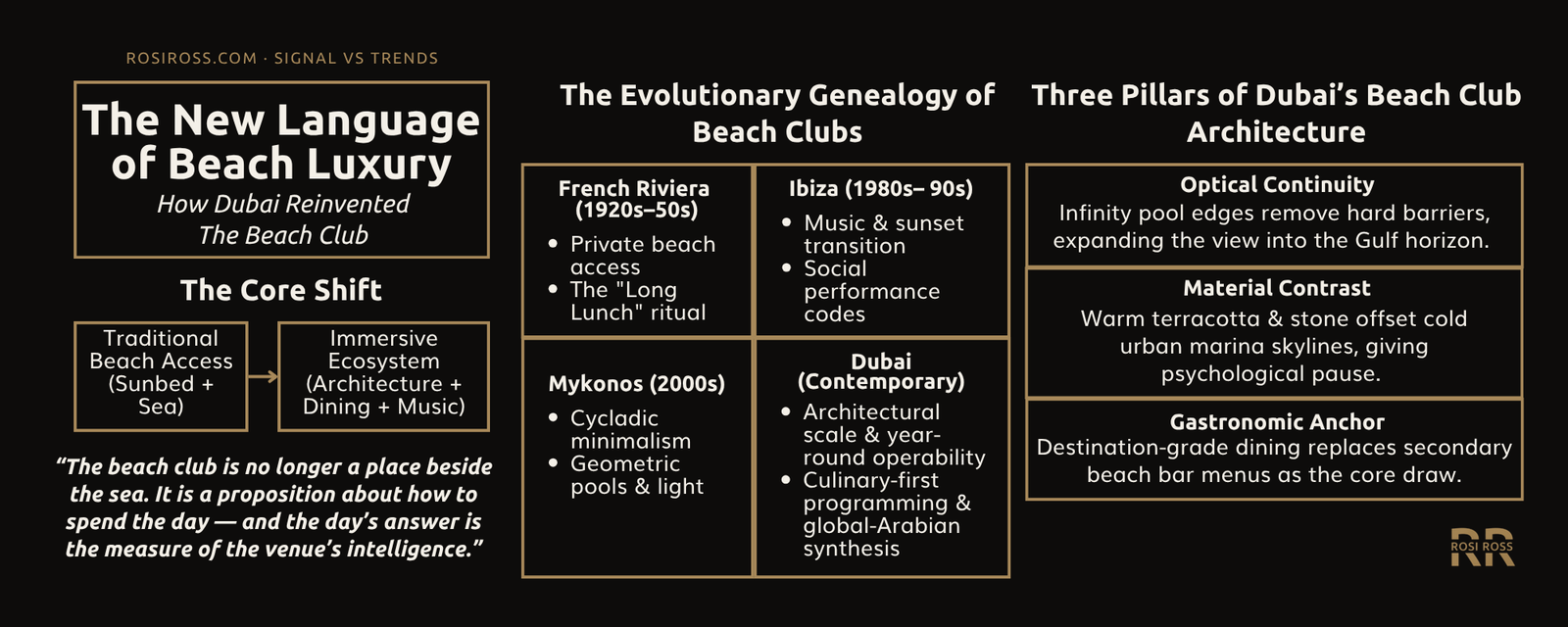
This is not an argument about individual venues. It is an argument about a cultural shift that Dubai accelerated and that has now spread across every major luxury travel destination in the world. The Mediterranean beach clubs of Saint-Tropez and Ibiza provided the original vocabulary — the whitewashed surfaces, the infinity edge, the long lunch that becomes a sunset ritual, the specific combination of relaxation and social performance that defines the beach club as a social form. Dubai took this vocabulary and applied to it the same architectural ambition and hospitality intelligence that it has applied to every category it has entered. The result is a beach club culture that is simultaneously global in its references and specific in its expression — and that has become, for both residents and visitors, one of the most consistently rewarding dimensions of the Dubai experience.
The evolution of the beach club — from coastal relaxation to lifestyle architecture
The beach club, as a specific form of hospitality, emerged from the intersection of two twentieth-century developments: the democratisation of leisure time and the discovery of the Mediterranean coast as the aspirational destination of European summer. The beach bars of the French Riviera in the 1920s and 1930s — the plage privée that allowed the establishment to control the quality and exclusivity of the coastal experience — established the basic proposition: paying for access to a curated environment that the public beach could not provide. The specific contributions of Saint-Tropez, from the 1950s and 1960s onward, were two: the introduction of the long lunch as a central ritual of the beach day, and the understanding that the beach club’s visual identity — the specific colours, textures, and social composition of the space — was as important as its physical amenities.
Ibiza added the dimension that completed the contemporary beach club’s identity: music. The synthesis of poolside leisure, Mediterranean dining, electronic music culture, and the specific social performance of dressing for a beach club — treating the beach day as an occasion with its own wardrobe requirements, its own arrival and departure rituals, its own social codes — created the template that the global luxury beach club has been executing and refining ever since. Mykonos extended this formula with the specific vocabulary of Mediterranean minimalism: whitewashed surfaces, strong geometric pools, the specific relationship between architecture and the Aegean light that falls on it. The same destination aesthetic codes that govern travel wardrobe decisions govern beach club design: Saint-Tropez, Ibiza, and Mykonos each produce a specific visual language that the world’s most successful beach clubs translate into their own contexts.
What Dubai understood, and what distinguishes its beach club culture from the venues that simply replicate these references, is that the Mediterranean template is not a destination formula but a hospitality philosophy — one that can be applied, with intelligence and specificity, to a Gulf coastline that has its own climate, its own light, its own luxury hospitality tradition, and its own internationally diverse audience. The beach clubs that have succeeded most completely in Dubai are those that have understood this distinction: not the ones that most faithfully reproduce a Balearic aesthetic but the ones that have used that aesthetic as a starting point for something specifically, compellingly Dubaian.
A beach club is a hospitality venue that combines beach or pool access with dining, leisure, entertainment, and social experience in a curated physical environment. The category originated on the French Riviera in the early twentieth century as a paid-access alternative to the public beach, evolved through Saint-Tropez’s long-lunch culture, Ibiza’s synthesis of music and Mediterranean dining, and Mykonos’s minimalist architectural vocabulary into a global hospitality category. In its contemporary form, the beach club is not defined primarily by its beach access but by the completeness of the lifestyle experience it proposes: the quality of its architecture and landscape design, the sophistication of its culinary programme, the curation of its music and social atmosphere, and the degree to which its physical environment creates an emotional experience that the guest carries beyond the hours spent within it. Dubai has been the city that most deliberately elevated this proposition into a full architectural and experiential ambition.
Dubai’s beach club identity — where Arabian hospitality meets global coastal culture
Dubai’s conditions for beach club culture are, in the most direct sense, ideal. The climate provides approximately 300 days of sun annually. The Arabian Gulf coastline offers a specific quality of light — warm, reflective, high-angled for much of the year — that creates the photographic and sensory environment in which beach club architecture is most legible and most beautiful. The city’s international population and visitor base brings the cultural appetite for the beach club format from every context in which it has already been established, while also providing the specific combination of disposable income, aesthetic sophistication, and leisure time that sustains a high-quality beach club culture commercially.
But the more interesting dimension of Dubai’s beach club identity is not the structural one — not the climate or the coastline or the economics — but the cultural one. Dubai is a city that has consistently approached hospitality not as a service industry but as an architectural and experiential discipline: a set of questions about what a space should propose, what atmosphere it should create, and what kind of life it should allow its occupants to experience during their time within it. The same intelligence that has produced some of the world’s most considered dining experiences in Dubai has been applied to the beach club category: the understanding that the difference between a place where people eat and drink and a destination that defines how people understand luxury is a matter of the depth and coherence of the design vision behind it.
The result is a beach club scene of genuine diversity and genuine ambition — one that spans Mediterranean fantasy and urban coastal retreat and destination resort and family lifestyle and international brand interpretation, and that does all of these things at a level of execution that makes Dubai one of the defining cities in the global conversation about what beach luxury means and what it can be. The broader luxury hospitality ecosystem that Dubai has built provides the context within which its beach clubs operate — a city already accustomed to the highest standard of international hospitality design, and a visitor base that arrives with expectations formed by the world’s best hotels, restaurants, and leisure destinations.
Design intelligence — the architecture of relaxation
The most consequential design decision a beach club makes is not the choice of furniture or the selection of a colour palette. It is the decision about the relationship between the built environment and the natural one — specifically, the question of how architecture mediates between the guest and the specific quality of light, water, and horizon that the coastal setting provides. The infinity pool has become the central symbol of this mediation not simply because it is visually dramatic but because it solves a specific perceptual problem: the hard edge between a contained body of water and the natural environment beyond it creates a visual barrier that reduces rather than extends the sense of connection to the landscape. The infinity edge removes this barrier, allowing the eye to travel from the pool’s surface to the sea or sky beyond without interruption — creating the specific quality of expanded visual space that is the most distinctive perceptual experience a well-designed beach club provides.
BCH:CLB at the W Dubai – Palm Jumeirah represents the Mediterranean-inspired beach club proposition at its most deliberately composed. The whitewashed architecture — a direct reference to the Cycladic aesthetic of Mykonos — creates the specific quality of light reflection that Mediterranean whitewash achieves: surfaces that absorb rather than deflect the sun’s intensity, producing a warm luminosity rather than a harsh glare. The oversized infinity pool at the venue’s centre, with its daybed arrangements extending across the water, eliminates the conventional separation between poolside relaxation and pool immersion — creating an environment in which the guest exists simultaneously within and beside the water. The beach houses with their swim-up bars and private amenities represent the further articulation of this logic: the dissolution of the boundary between accommodation and leisure, between private space and social environment, that defines the most considered beach club design.


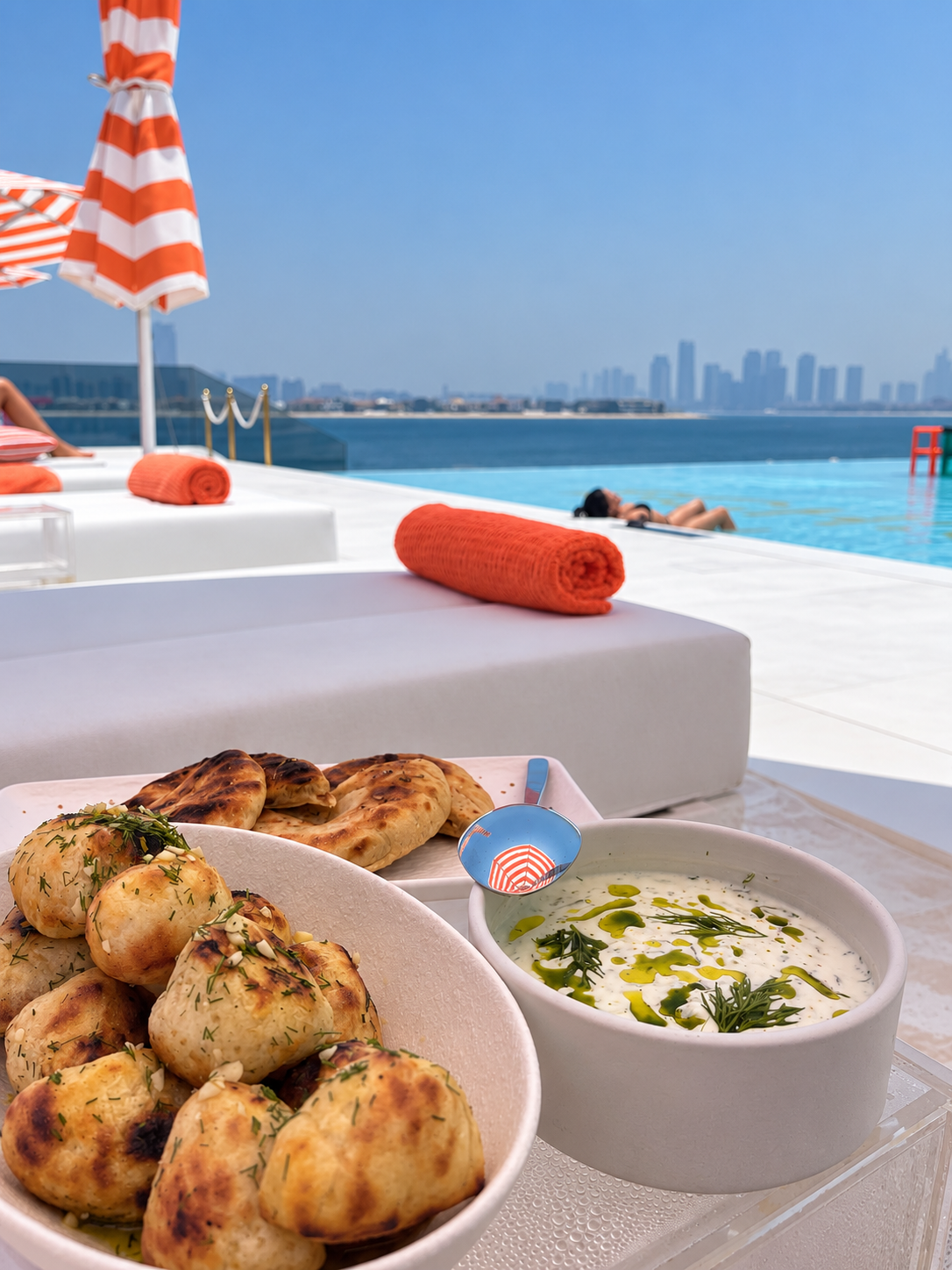

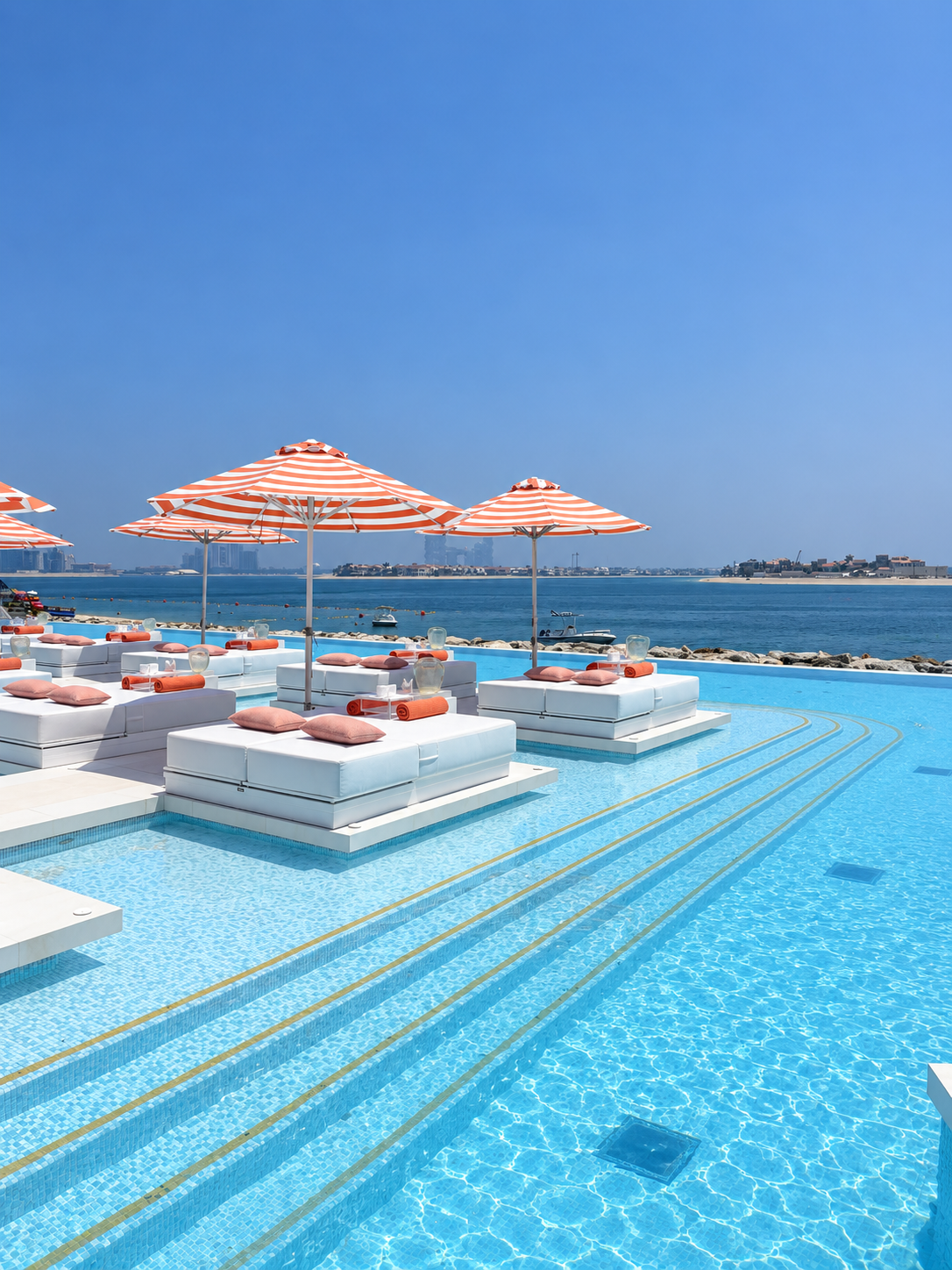
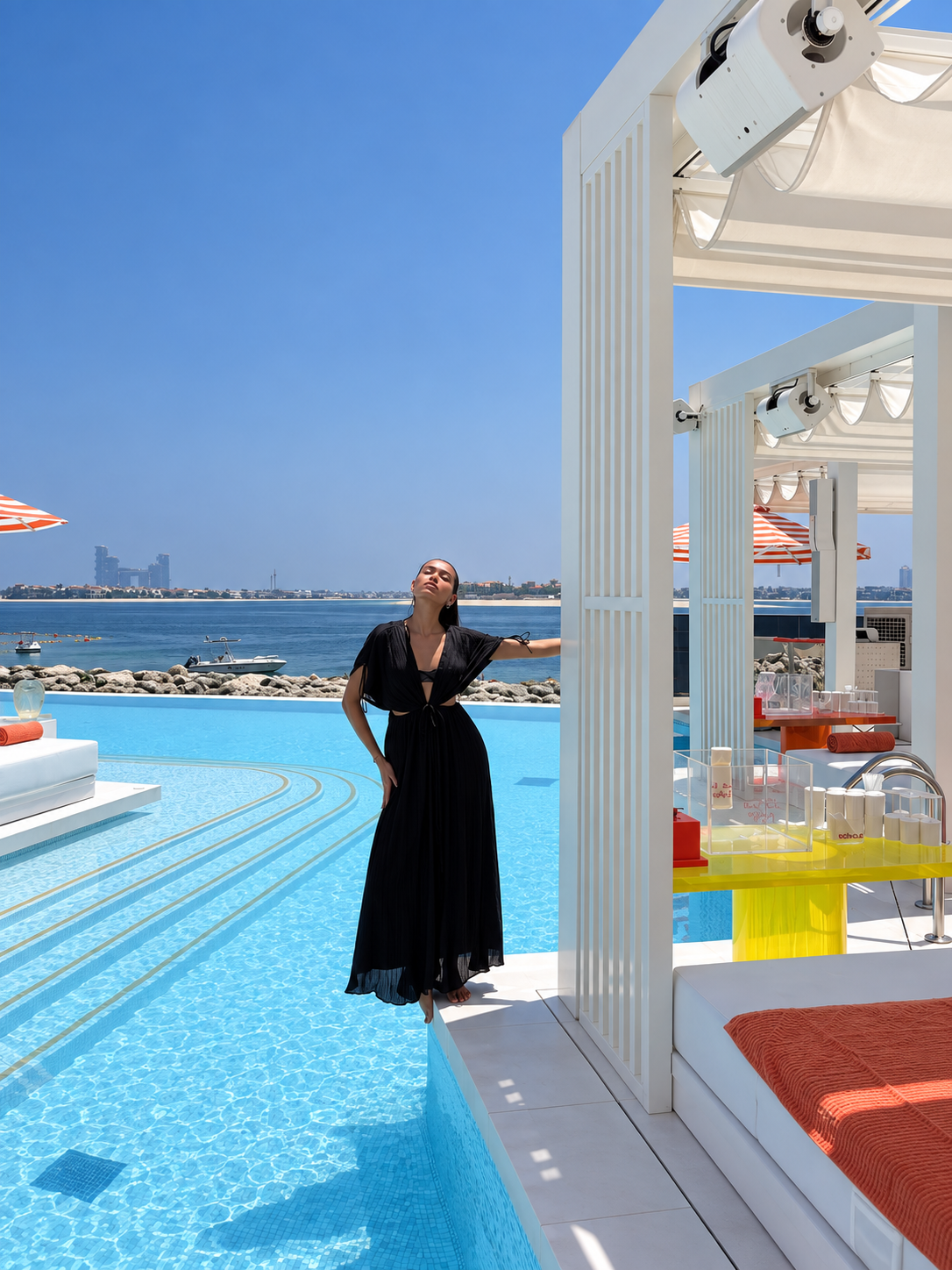
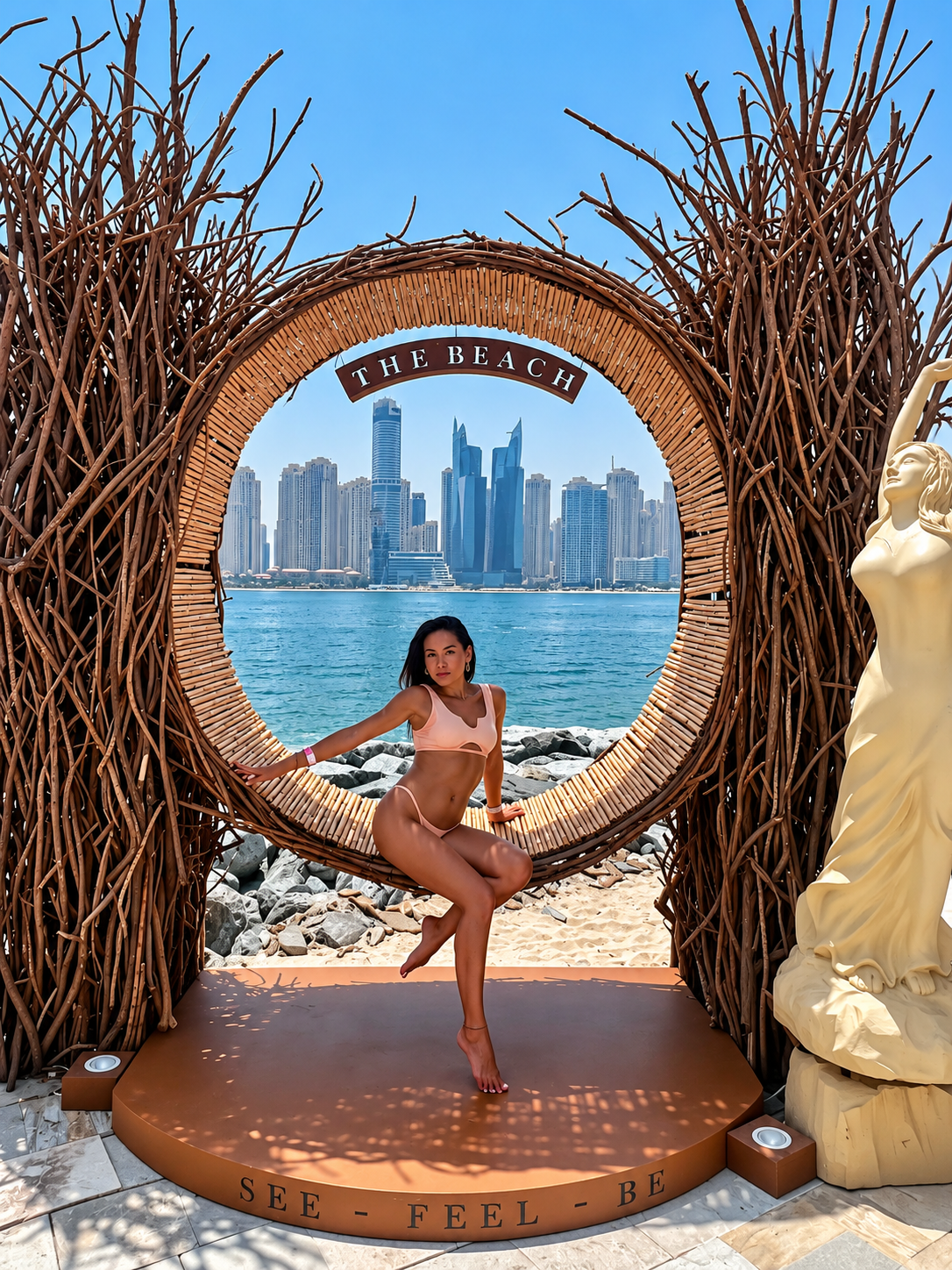
Be Beach Club at Dubai Harbour occupies a different position within the Dubai beach club landscape — one defined by its relationship to the Marina skyline rather than to the Palm’s resort geography. The choice of earth-inspired materials and natural tones in a venue that faces one of the most visually dramatic urban skylines in the world is a specific design intelligence rather than a generic luxury aesthetic: the warmth of terracotta, stone, and organic textile references creates a visual and tactile counterpoint to the city’s hard geometry that produces a specific quality of emotional contrast — the sense of having left the urban environment behind without having left it visually. The Mediterranean coastal identity — the rustic-luxe register that communicates ease and material authenticity rather than glamour and spectacle — becomes a form of psychological permission: the architecture tells the guest that they have arrived somewhere that operates by different rules from the city surrounding it.


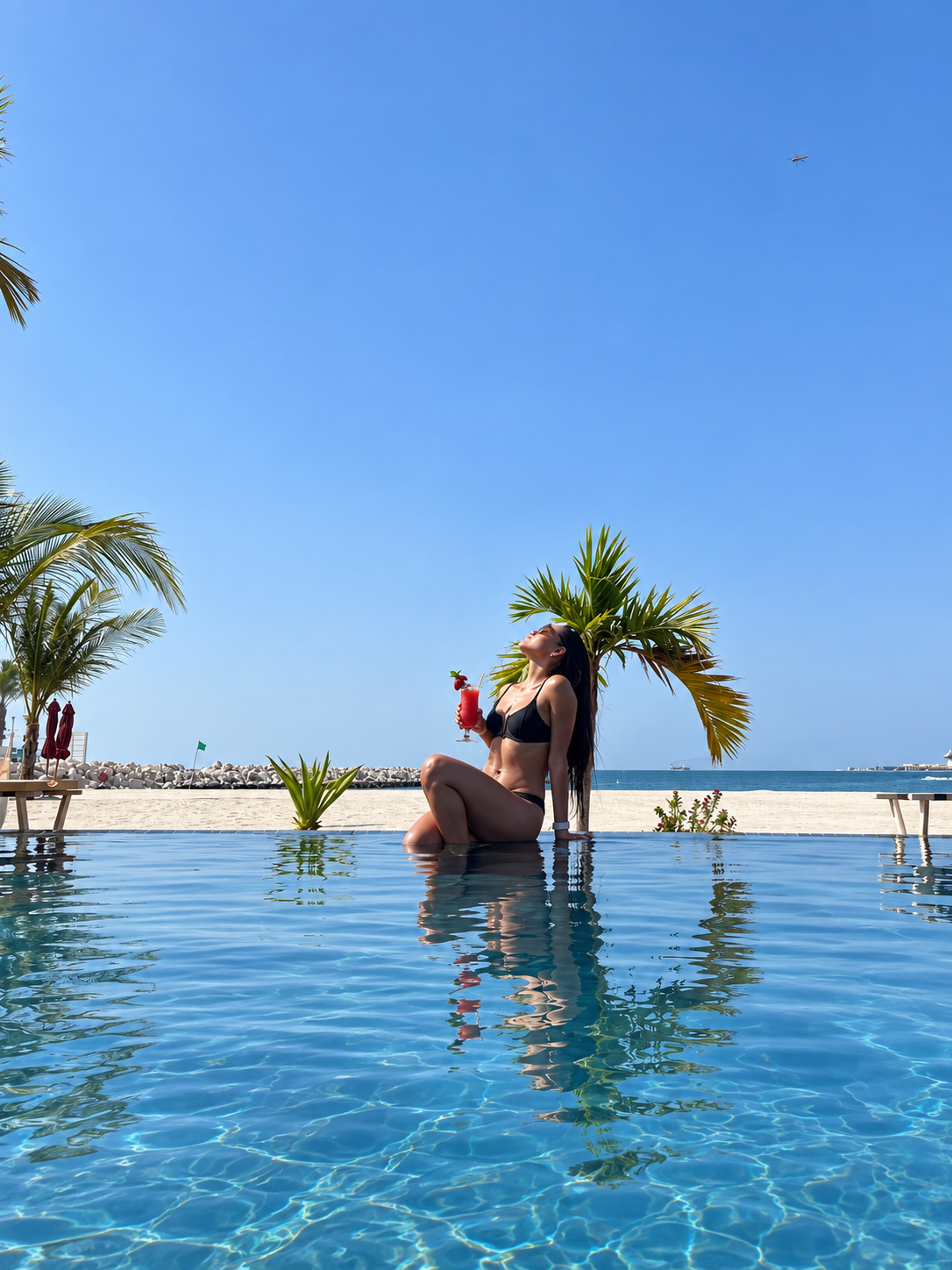
The infinity pool — a pool whose edge is engineered to create the visual impression of water extending without boundary into the surrounding landscape — became the defining architectural element of luxury beach club design because it resolves a specific perceptual problem: the hard edge between a contained body of water and a natural horizon creates a visual barrier that reduces the sense of spatial connection to the landscape. The infinity edge removes this barrier, creating a continuous visual plane between the pool’s surface and the sea, sky, or cityscape beyond. In beach club contexts, this visual continuity serves an experiential function beyond the aesthetic: it creates the specific impression of being simultaneously within a curated environment and at the edge of something unbounded — the specific tension between enclosure and expansion that defines the most compelling contemporary leisure architecture. Dubai’s beach clubs have deployed the infinity pool not as a standard luxury amenity but as a central architectural argument about the relationship between the built environment and the Gulf’s horizon.
The new gastronomy of the coast — why food became the beach club’s central proposition
The transformation of the beach club from a place to swim into a full lifestyle destination was driven, more than by any other single development, by the elevation of food from a secondary service to a primary experience. The beach restaurant that offered a menu of casual Mediterranean dishes — the grilled fish, the meze, the salad — as an accompaniment to a day of sunbathing was replaced, progressively and then rapidly, by the beach club whose culinary proposition was sophisticated enough to justify a visit on its own terms: a destination dining experience that happened to be located beside a pool.
This shift reflects a broader development in contemporary luxury hospitality. The traveller who understands that the finest available culinary experience at a given destination is as important as the finest available hotel room — who plans a trip around a reservation as much as around accommodation — is the same traveller who approaches the beach club as a gastronomic and sensory destination rather than simply as access to a pool. The venues that have recognised this are those whose food and beverage programmes are genuinely distinguished: not merely adequate, not merely appropriate to their setting, but capable of standing as the primary reason for a visit in the absence of any other justification.
Soul Beach at JA The Resort – Jebel Ali represents the most complete integration of culinary identity with beach club experience available in Dubai. The menu’s South of France inspiration is not a generic Mediterranean reference but a specific culinary positioning: the specific combination of Provençal herb traditions, Mediterranean seafood preparation techniques, and the specific register of coastal French cuisine that belongs to the region between Marseille and the Italian border. A culinary identity this specific creates a coherence between the dining experience and the broader leisure proposition — the sun, the sea, the long afternoon — that a more generic menu cannot achieve. Soul Beach’s 3,000-square-metre beachfront, its 26-metre sunbed configuration at the pool’s edge, its dual beach bars and rooftop event space create the physical framework within which this culinary proposition is experienced. The finest hospitality venues in Dubai understand that food is never simply the meal — it is the most immediately sensory component of an experience whose total effect is the sum of architecture, cuisine, atmosphere, and time.



The social ritual of the Dubai beach club — where leisure becomes culture
The beach club, at its most culturally significant, is not primarily a leisure facility. It is a social institution — a specific kind of gathering place that creates the conditions for a particular form of social life: relaxed enough to permit the dissolution of professional formality, curated enough to attract the specific social composition that makes the environment feel significant, visually compelling enough to make presence within it feel like a form of self-expression. The beach club is, in this sense, the contemporary equivalent of the salon or the promenade: a structured social environment in which the rules of ordinary professional and domestic life are temporarily suspended and replaced by a different set of codes around appearance, conversation, and the shared experience of an environment specifically designed for pleasure.
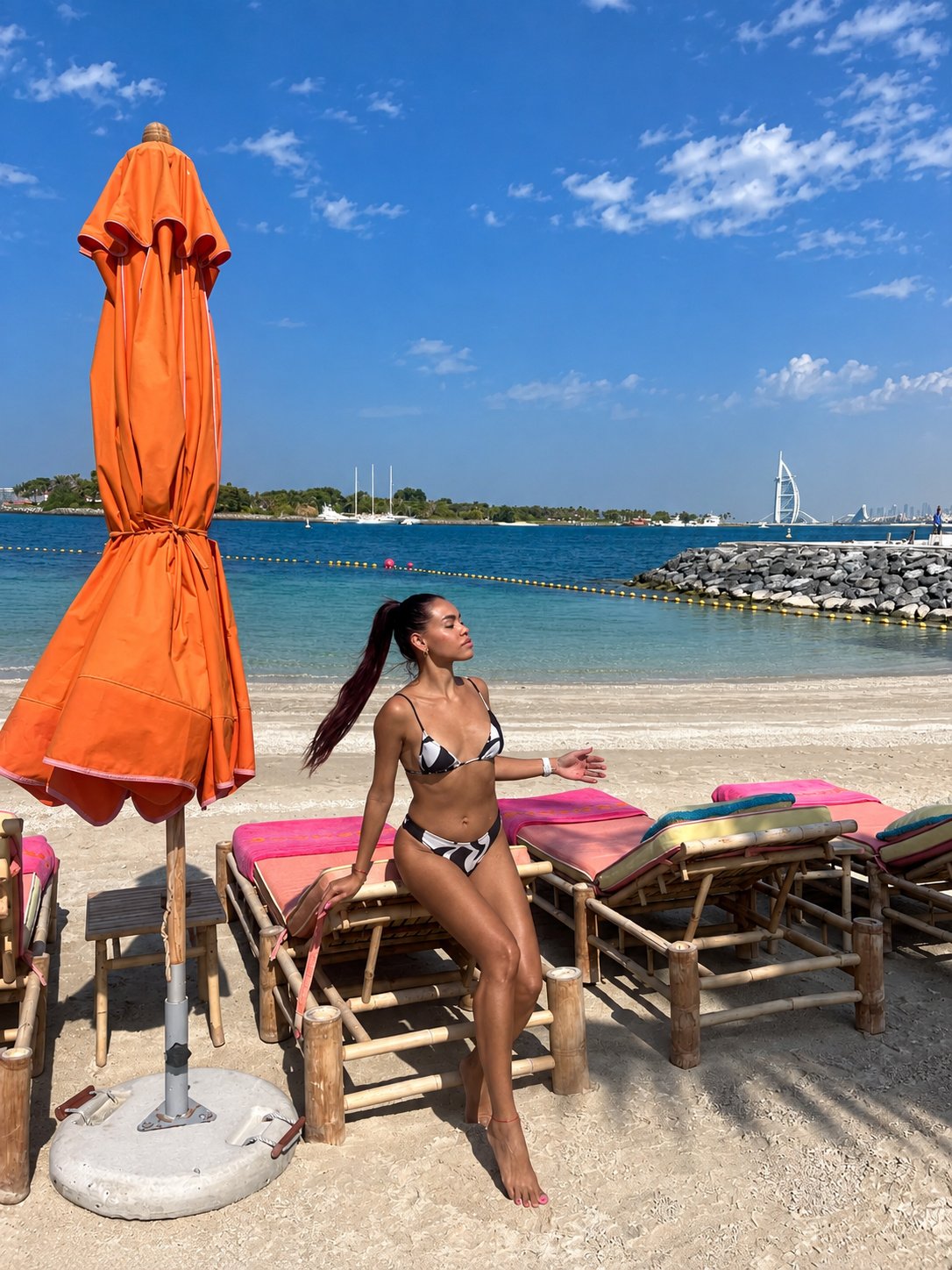
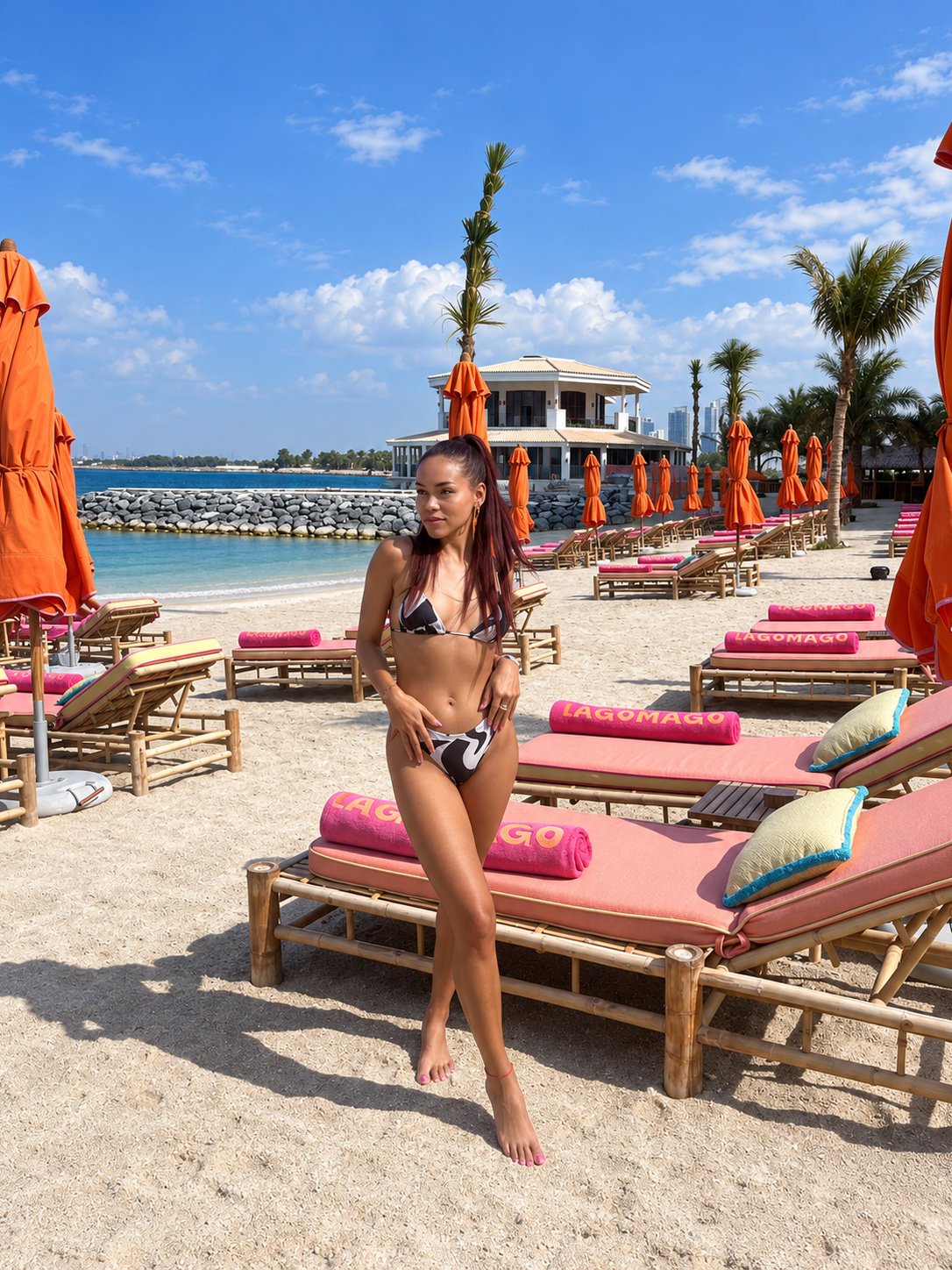
Tagomago at Palm Jumeirah — the Ibiza-inspired beach club whose Balearic vocabulary of colour, music programming, and social energy brings a specific Mediterranean island identity to the Gulf — demonstrates this social dimension most explicitly. The adults-only swimming pool and its chic sunbed configuration create a social space with specific boundaries: the beach itself is accessible to all ages, the pool is a curated social environment. The chiringuito-style restaurant and relaxed beach bar establish the specific register of social interaction — informal enough to permit the conversation that flows between strangers at a beach bar, structured enough to ensure that the interactions occur within an aesthetic framework that communicates something about the values of the environment. The signature pink towels and bright orange palm trees are not incidental decorative choices but specific visual codes that communicate the Tagomago identity as clearly as a fashion house’s colour palette communicates its aesthetic position. The most culturally sophisticated beach destinations understand that their identity is constructed through exactly this kind of deliberate signalling — that the beach club’s social life is inseparable from the visual environment in which it occurs.




The family beach experience — luxury hospitality across generations
One of the most significant developments in the evolution of Dubai’s beach club culture has been the expansion of the category to encompass the full range of the luxury traveller’s life — including its multi-generational dimension. The beach club that serves only the young, the unencumbered, and the social-performance-oriented is a beach club that excludes a significant proportion of the luxury market. The venues that have understood this have developed hospitality propositions that maintain the quality of design, cuisine, and service that defines the category at its best while creating environments that are genuinely welcoming to families, to children, and to the specific form of social life that multiple generations sharing a beach day produce.
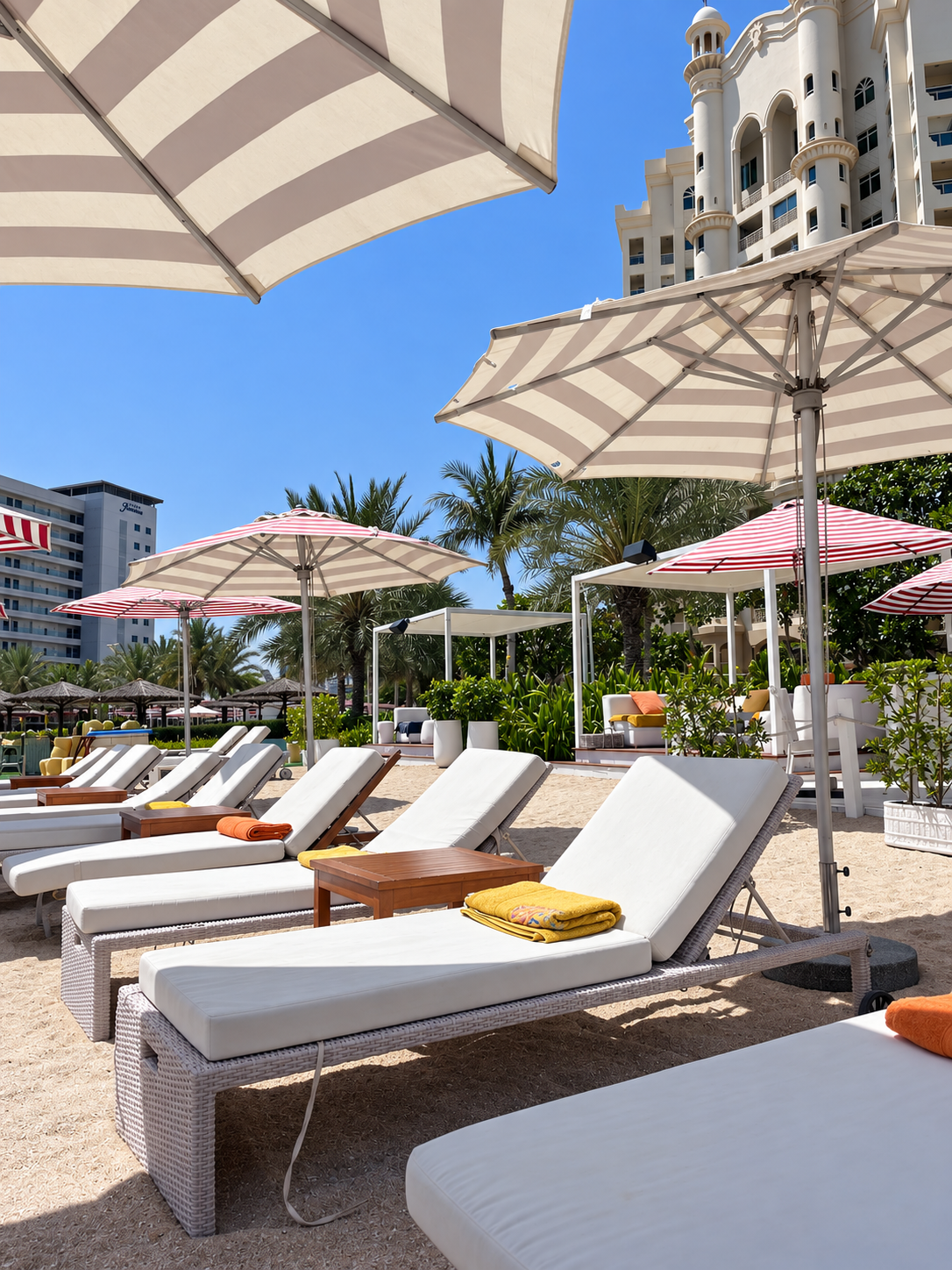
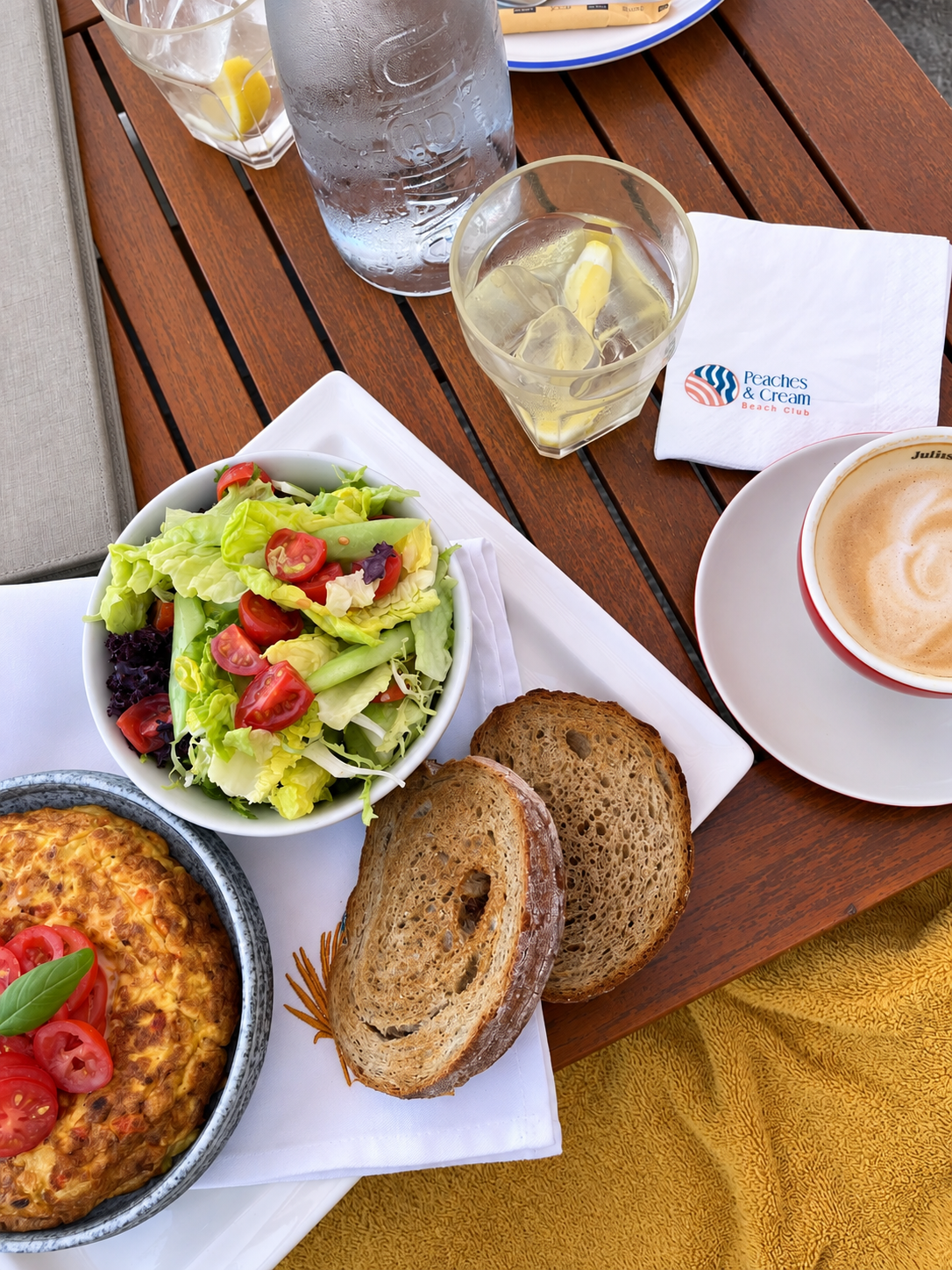
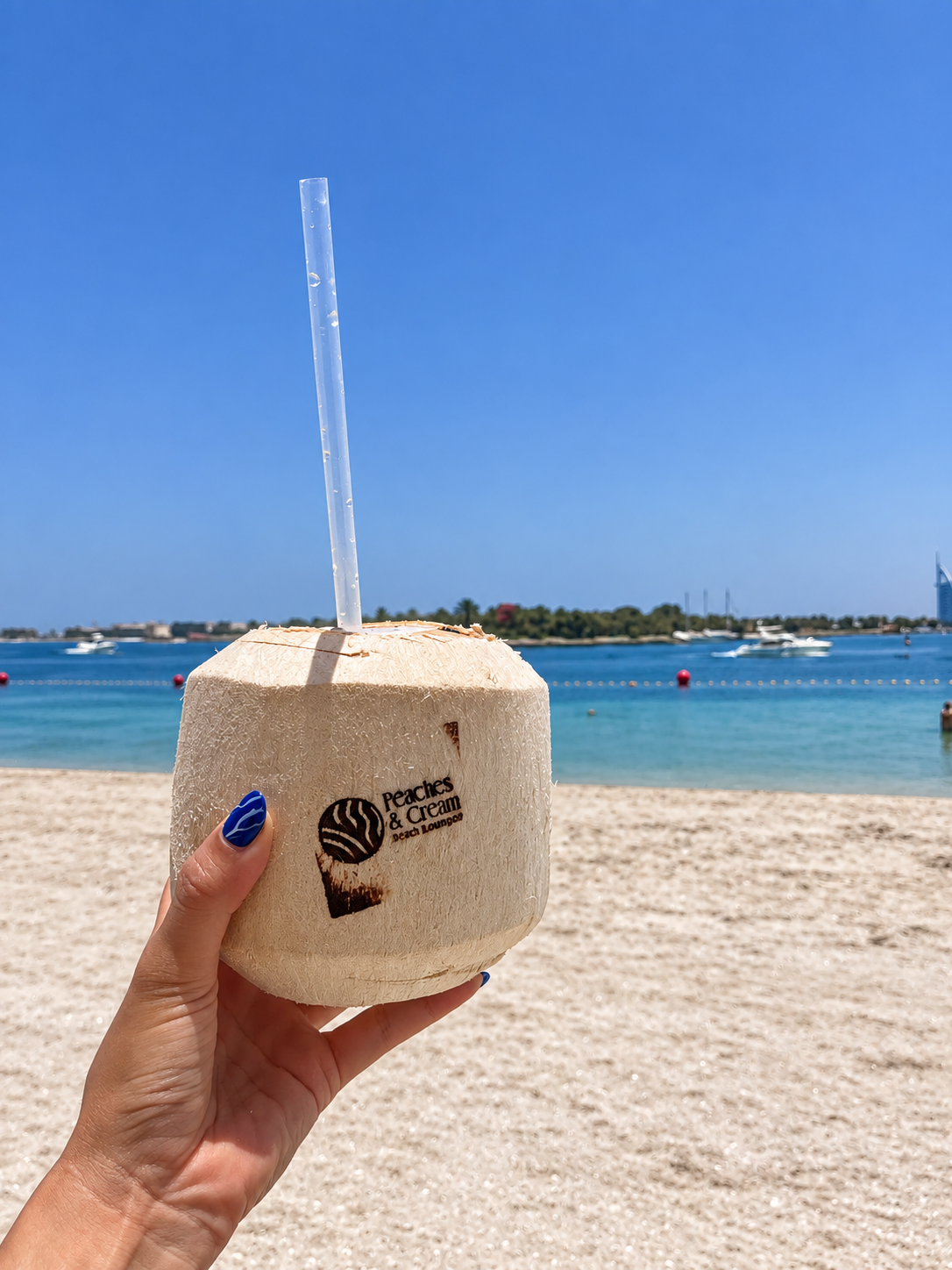
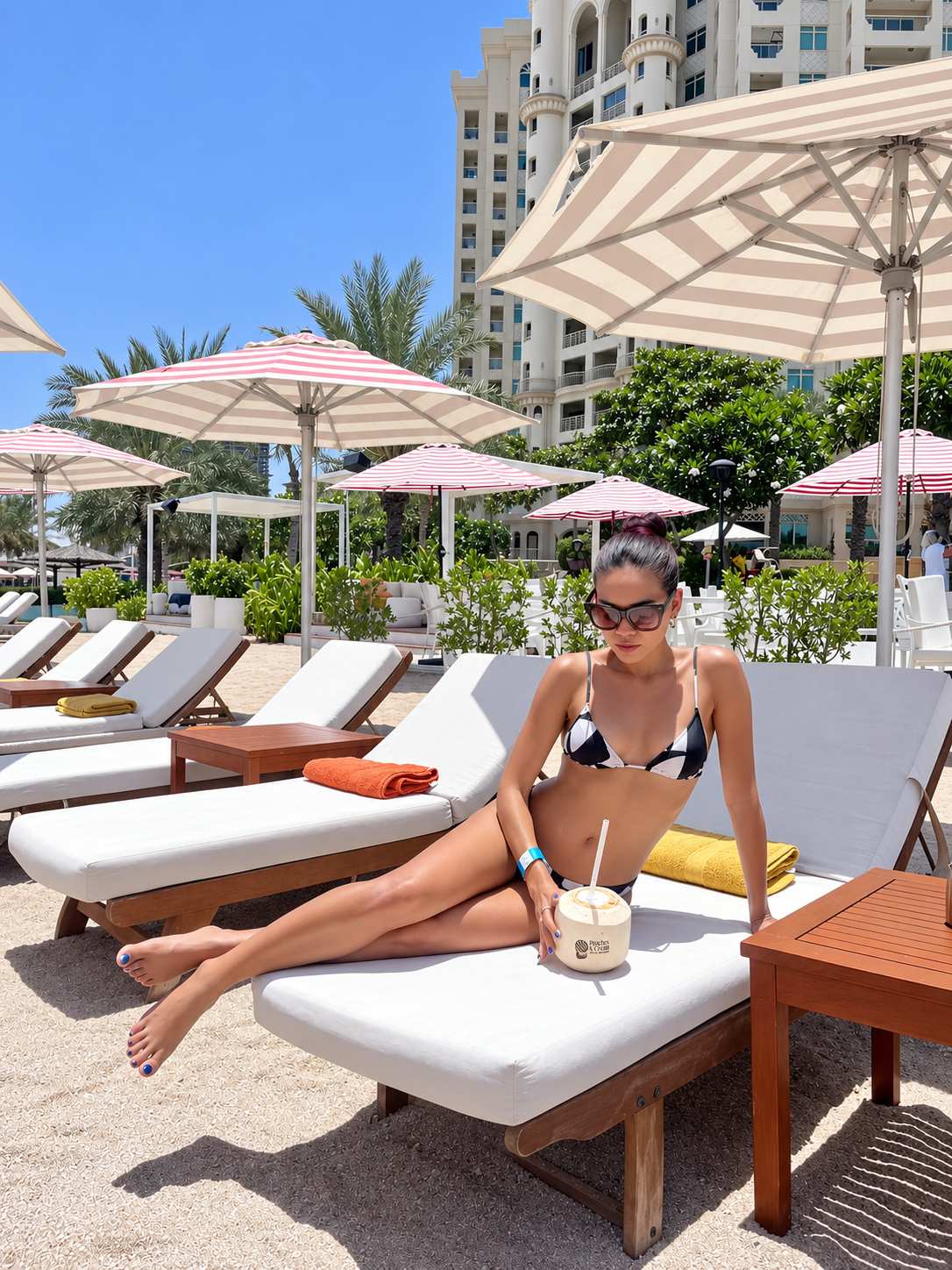
Peaches & Cream on Palm Jumeirah represents this proposition with specific intelligence. The name itself communicates the register — warm, playful, accessible, without sacrificing aesthetic care — and the environment delivers on it: the candy-striped parasols and colourful restaurant interior provide the visual distinctiveness that makes a beach day feel like an occasion rather than simply an outing, while the expansive terrace and free beach access create the ease and space that a family day requires. The dining proposition is central rather than incidental: Peaches & Cream is a beach restaurant that offers beach access, rather than a beach club that offers a restaurant. This distinction — the reversal of the conventional hierarchy — is what makes the experience genuinely family-appropriate rather than merely family-tolerant. The finest travel destinations understand that the most sophisticated approach to luxury is the one that can accommodate the full range of what a life actually contains — including its youngest and its most varied members.


Dubai beach clubs are distinguished from their equivalents in Saint-Tropez, Ibiza, or Mykonos by three properties operating simultaneously. First, architectural ambition: Dubai’s beach clubs are typically more deliberately designed than their Mediterranean counterparts — the product of a city that approaches every hospitality category as an architectural problem requiring a serious spatial solution. Second, cultural synthesis: while Mediterranean beach clubs operate within a specific regional aesthetic tradition, Dubai’s venues combine references from multiple traditions — Mediterranean, Arabian, contemporary global — in a way that is specific to a city built for an international audience. Third, year-round operability: Mediterranean beach clubs are seasonal, creating a concentrated cultural intensity during summer months; Dubai’s extend through most of the year, producing a more sustained social institution rather than a seasonal ritual. The combination produces a beach club culture that is both globally conversant and specifically Dubaian — one that the world’s most sophisticated leisure travellers recognise as a category in its own right.
The future of beach luxury — what the most considered venues are building toward
The trajectory of luxury beach club development is moving in a direction that mirrors the broader movement of luxury hospitality: away from excess and spectacle toward specificity, authenticity, and the kind of experience that rewards genuine attention rather than producing immediate impression. The venues that will define the beach club category in its next iteration are those whose design, culinary, and social propositions are built around a coherent point of view about what a day beside the water should feel like — not the most elaborate, not the most photographed, but the most precisely conceived and the most honestly executed.
Wellness integration is one of the most significant directions in which the category is developing. The beach club that offers only pool access and dining misses the dimension that the most considered contemporary luxury traveller is increasingly seeking: the restorative quality of a day spent in genuine relationship with light, water, air, and the specific sensory environment of the Gulf coastline. The introduction of spa services, yoga and movement programming, and wellness-oriented culinary options into the beach club format extends its relevance from a daytime social destination to a more complete wellbeing experience — one that serves the traveller’s desire not merely to be entertained but to be restored. The most forward-thinking luxury destinations in the region have understood this shift most completely: that the future of luxury travel is defined by the depth of the restorative experience it provides, not the scale of the spectacle it offers.
The sustainability dimension is equally consequential. A beach club whose environmental relationship to the coastline it occupies is extractive rather than regenerative — one that takes the quality of the Gulf’s light and water as a given without contributing to the preservation of the ecosystem that produces them — is a beach club whose long-term proposition is undermined by its own operation. The most considered venues are those that understand their coastal setting as something requiring active stewardship rather than passive enjoyment, and whose design, material choices, and operational practices reflect this understanding as clearly as their infinity pools and their menu design. The same intelligence that defines the slow design movement in interior culture — the conviction that the most lasting luxury is always that which is most thoughtfully in relationship with its environment — is the intelligence that will define the beach club category at its most enduring.
Beach clubs have moved from supplementary hotel amenity to primary travel destination because contemporary luxury travellers increasingly define the quality of a trip not by the hotel room they sleep in but by the specific experiences they inhabit during waking hours. The beach club — which typically occupies the most socially active and aesthetically heightened portion of the day, from mid-morning through sunset — has become the venue in which the most significant social, sensory, and visual experiences of a luxury trip occur. In Dubai specifically, where the beach club culture has been developed to a level of design and culinary sophistication that rivals the city’s hotel and restaurant landscape, the beach club day is as planned and as anticipated as a restaurant reservation or a hotel stay — chosen, booked, and curated as a deliberate component of the luxury travel itinerary rather than an improvised supplement to it.
“Dubai did not simply create beaches.
It created environments
where architecture, cuisine, culture, and lifestyle
merge into one unforgettable experience.
The beach club is no longer a place beside the sea.
It is a proposition about how to spend the day —
and the day’s answer
is the measure of the venue’s intelligence.
The greatest luxury experiences
are no longer defined by what they provide.
They are defined by what they create.”

