

On the intellectual transformation of the Egyptian travel experience, the Step Pyramid of Djoser, the ruins of ancient Memphis, the Giza Necropolis, and why a certified Egyptologist historian is the single most significant decision any considered traveller to Egypt can make
To visit Saqqara, Memphis, and Giza without historical interpretation is to encounter only the surface of ancient Egypt. But with a historian, the experience changes fundamentally. The pyramids stop being objects and become arguments — about power, mortality, divinity, permanence, and the human desire to outlive time itself. In Egypt, history is not hidden inside museums. It remains embedded in landscape, geometry, and stone. A historian simply teaches you how to read it.
Modern tourism has developed a specific relationship with ancient Egypt that is, in its way, a form of cultural impoverishment masquerading as access. The Pyramids of Giza are among the most photographed objects in human history — their silhouette is familiar to billions of people who will never visit them, and familiar in a different way to the millions who do. The familiarity is the problem. An image consumed through a screen, through a travel magazine, through the filtered Instagram feed of ten thousand previous visitors, arrives already mediated — already stripped of the specific qualities of scale, silence, and material presence that constitute the genuine encounter with a place of this significance. The traveller who arrives at Giza having seen its image a thousand times is, paradoxically, less prepared to see it than the traveller who has never seen it at all.
The historian resolves this problem not by providing more information — there is no shortage of information about the Pyramids — but by providing interpretation: the specific intellectual and emotional context that allows the traveller to understand what they are looking at rather than merely confirm that it matches the image they arrived with. The difference between seeing and understanding is the presence of a mind that has spent years learning to read the specific language in which this landscape speaks — the language of architecture, cosmology, dynastic politics, funerary theology, and the specific Egyptian understanding of time and eternity that produced everything visible on the Giza Plateau.
The understanding that direct encounter with genuine expertise transforms an experience from observation into comprehension connects the historian-led Egypt journey to the broader philosophy of considered travel explored across this site — and to the specific argument that the most significant luxury available to the contemporary traveller is not the finest hotel or the most exclusive access, but the quality of understanding that the experience produces. The same principle governs every category of considered luxury explored here, from the Forbes Middle East summit whose value lies in the quality of conversation it enables rather than the spectacle it produces — documented in Inside the Forbes Middle East Sustainability Leaders Summit — to the historian-led Egyptian journey whose value lies in the comprehension it produces rather than the monuments it visits. The same intelligence that governs the most considered choices in collecting and material culture — explored in The Connoisseur’s Guide to Authentic Papyrus in Cairo — applies with equal precision to the historian-led Egyptian journey: the encounter shaped by genuine knowledge is always richer, always more enduring, always more transformative than the encounter shaped by spectacle alone.
Saqqara — where the idea of eternity was first engineered in stone
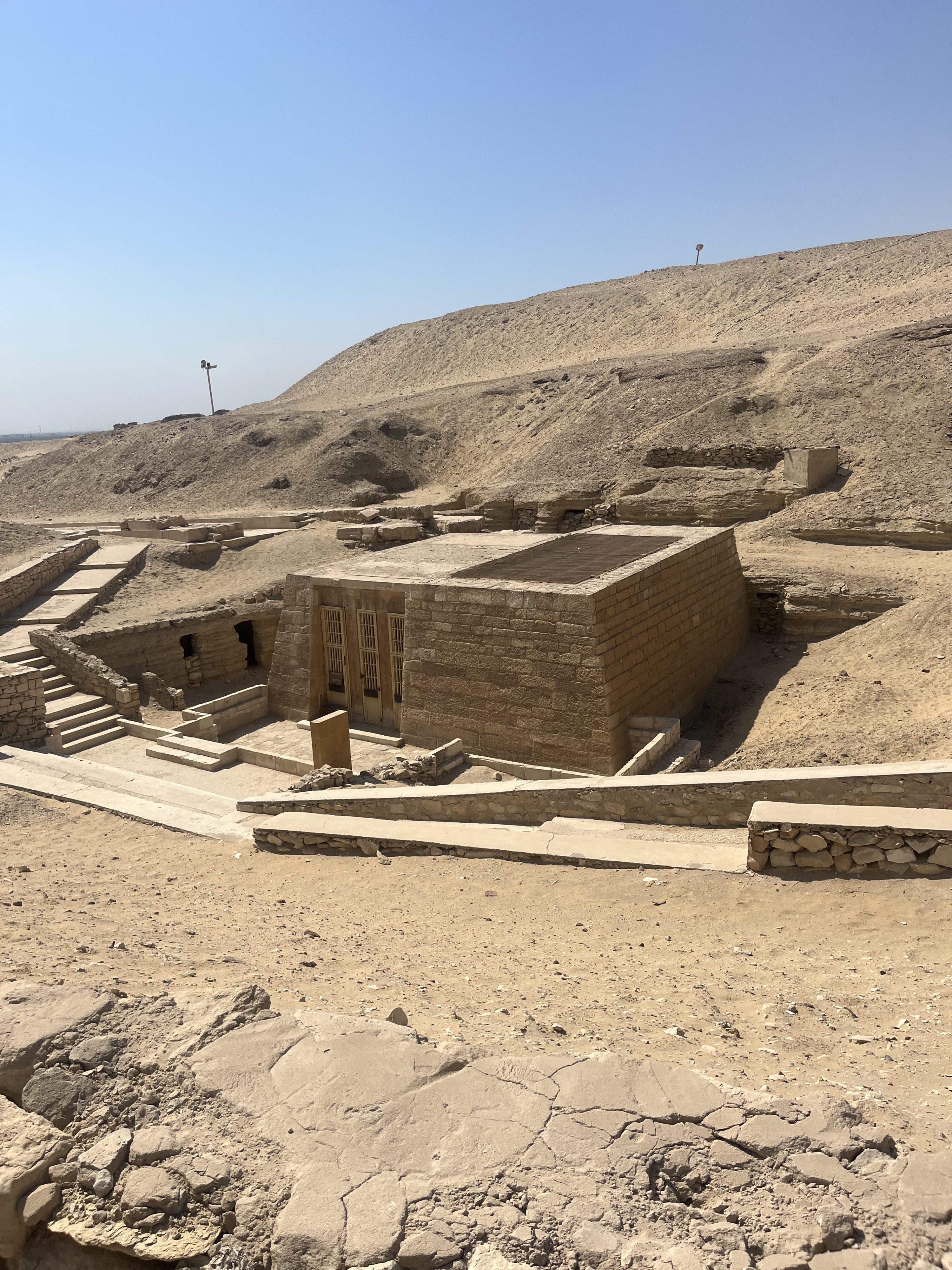
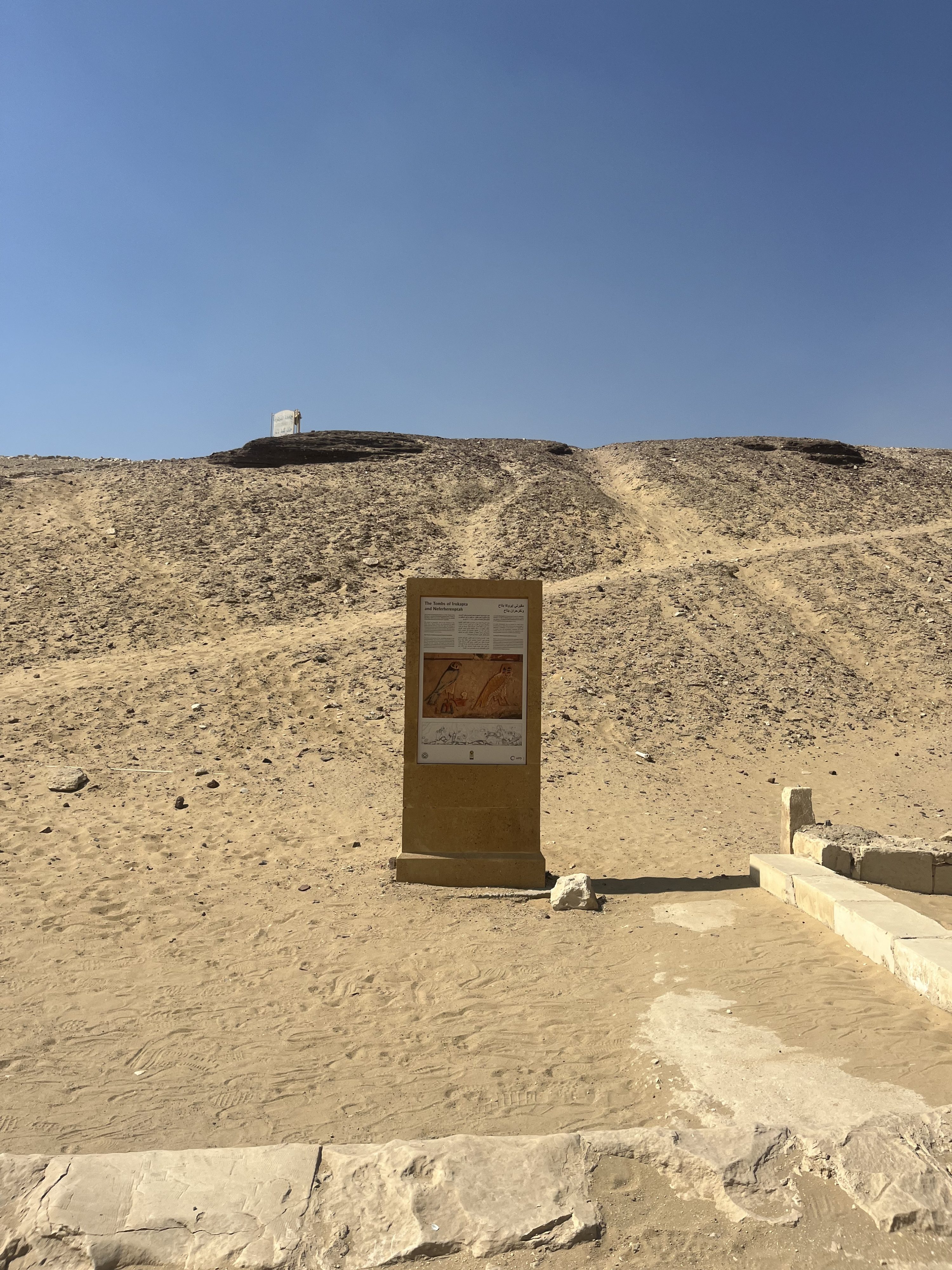
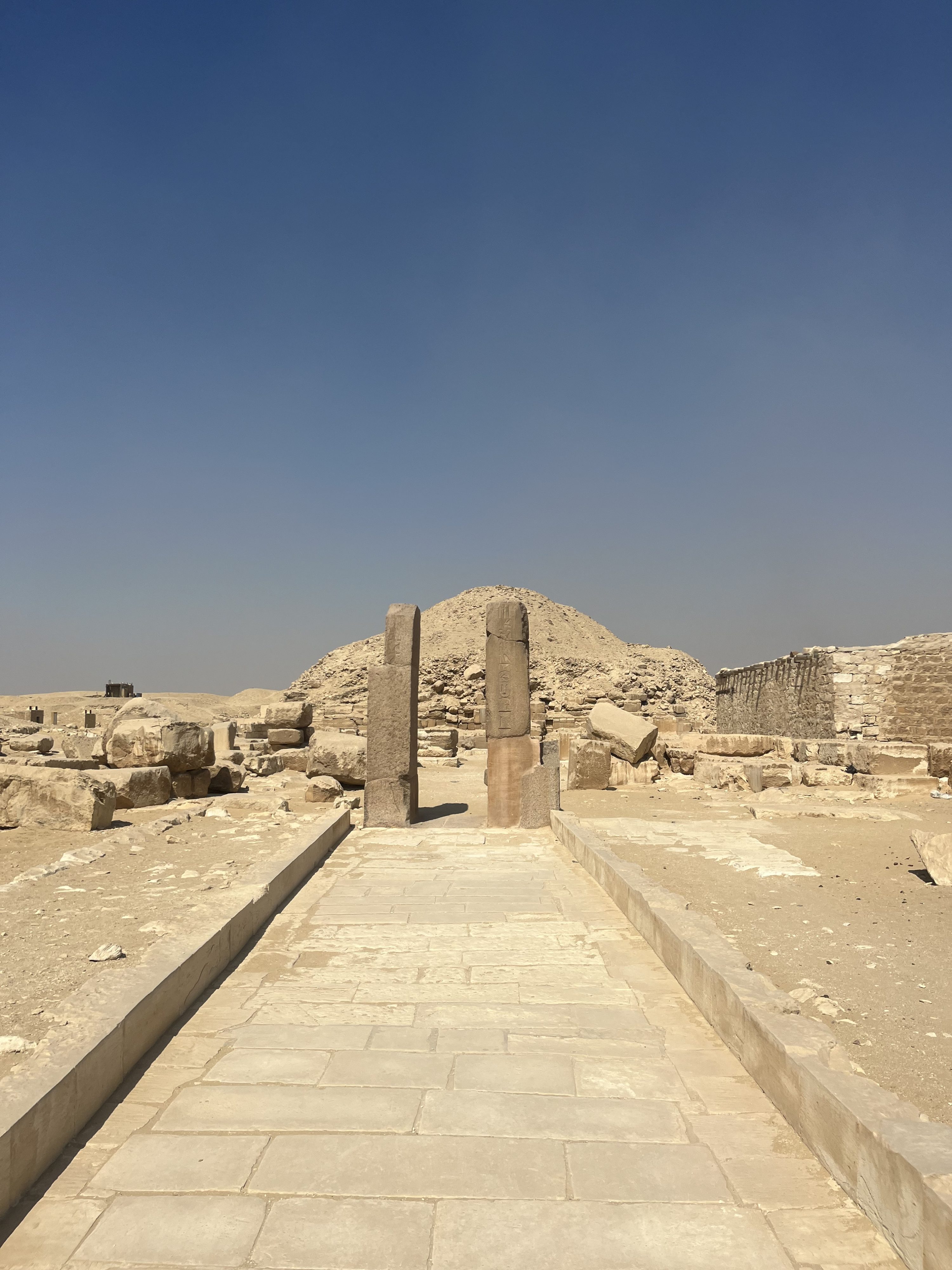
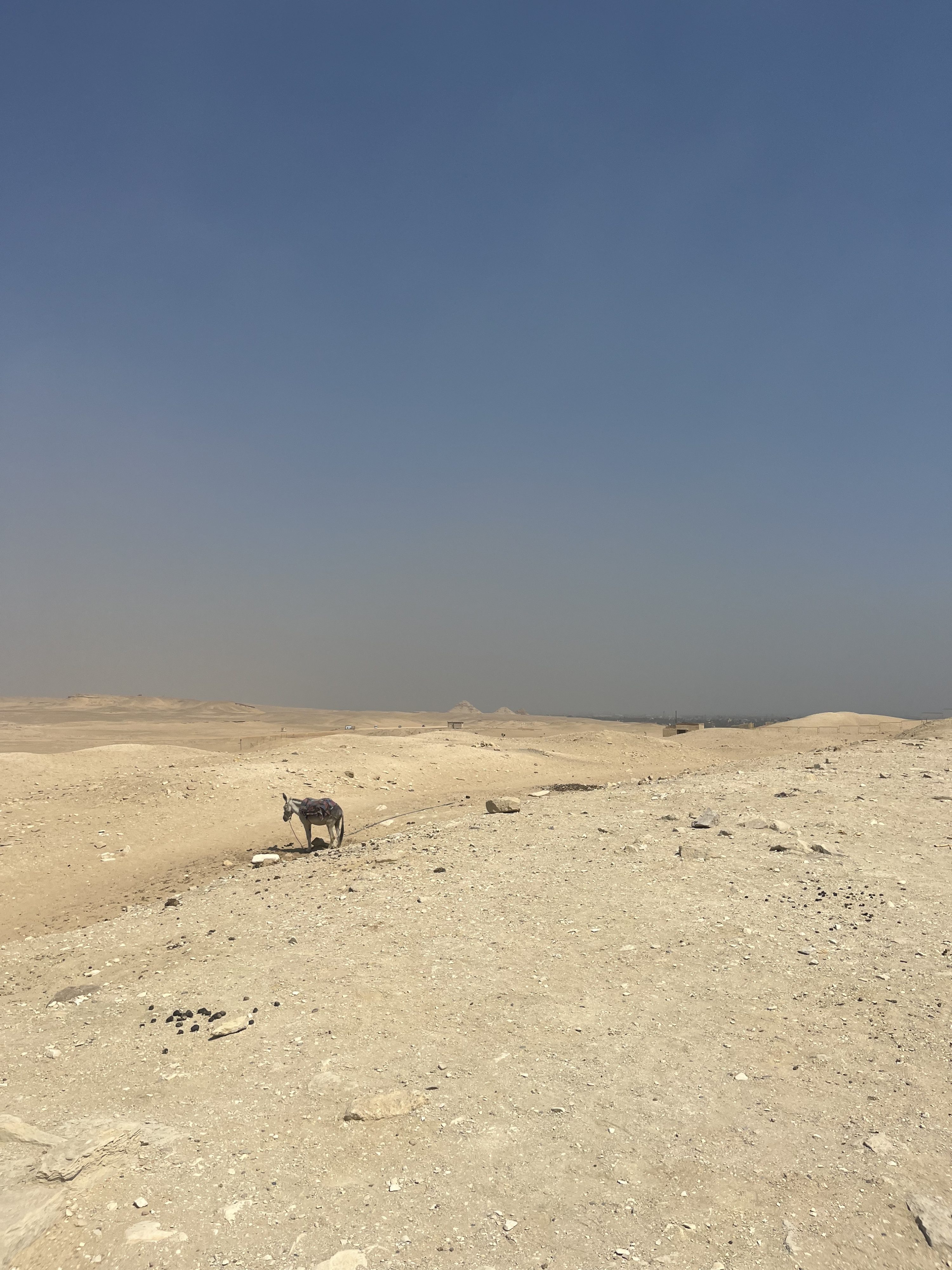
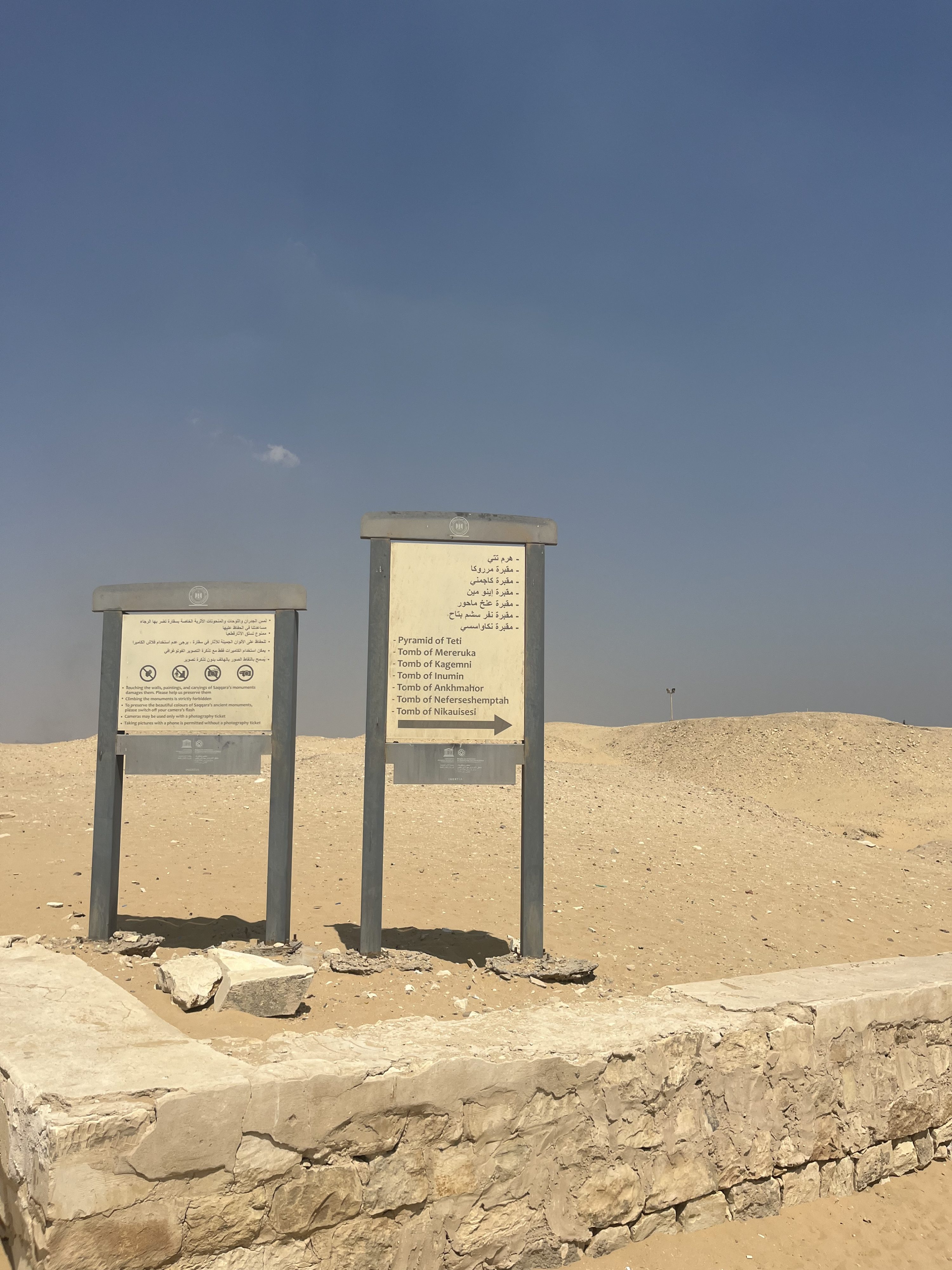
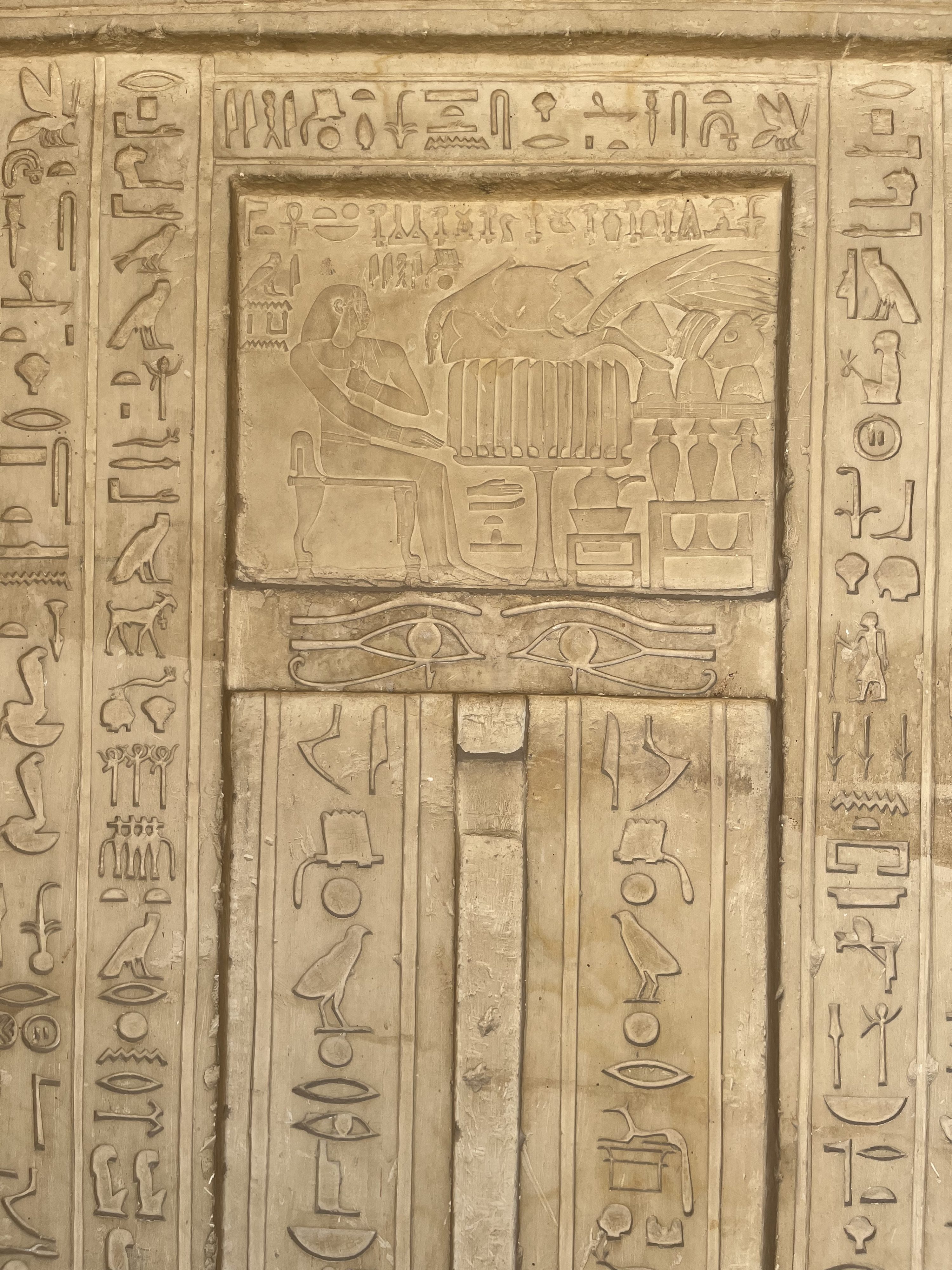
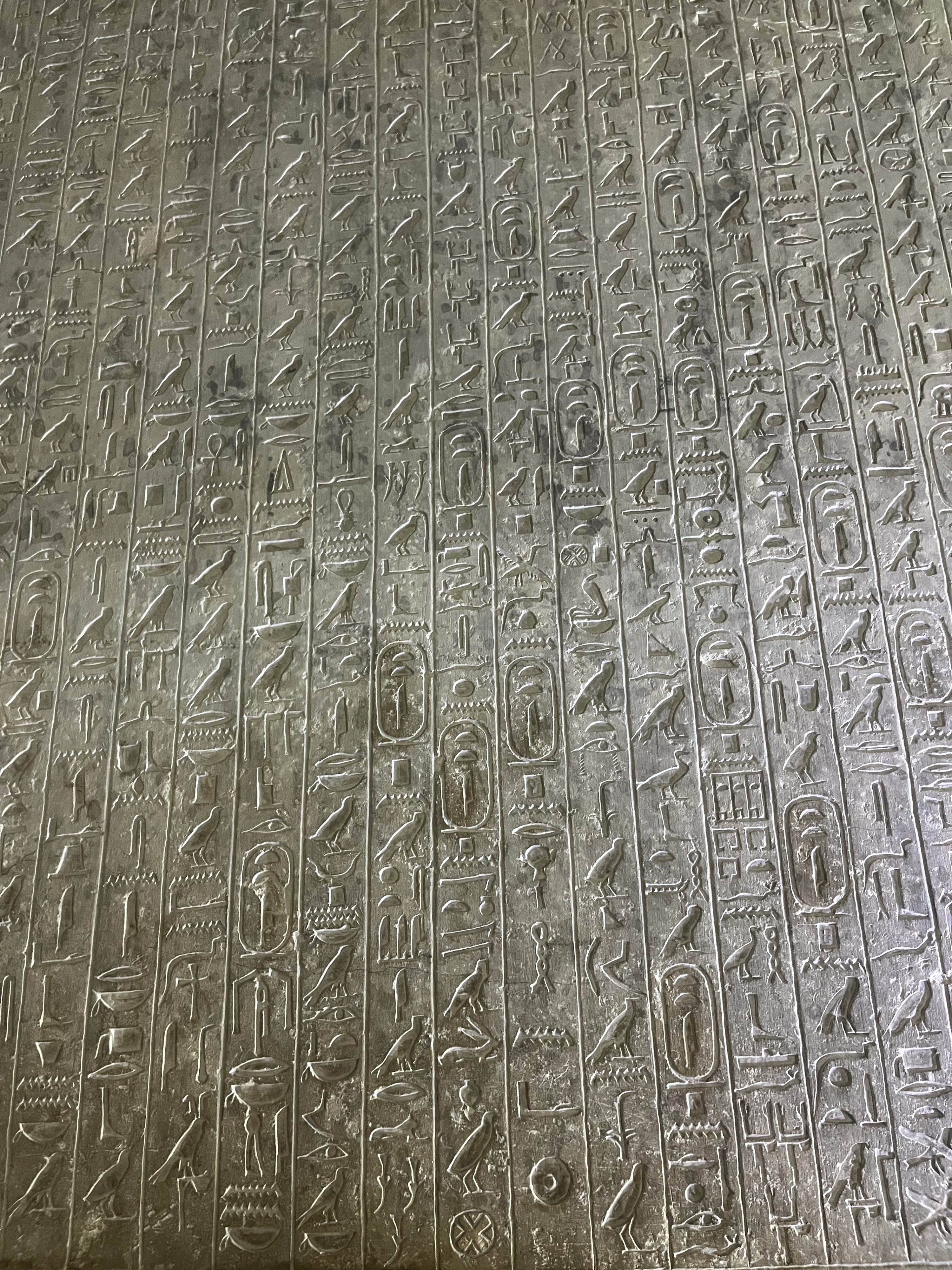
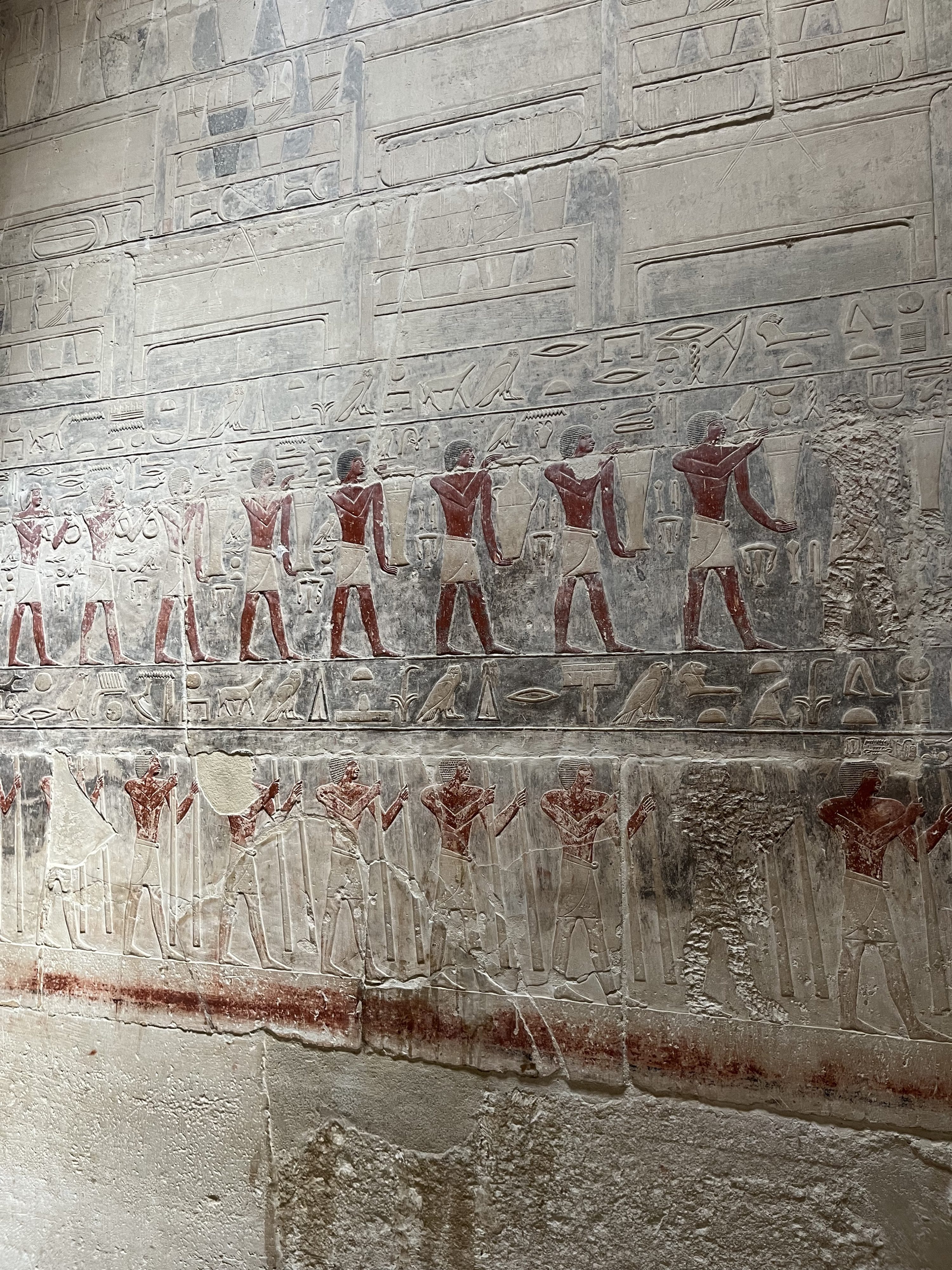
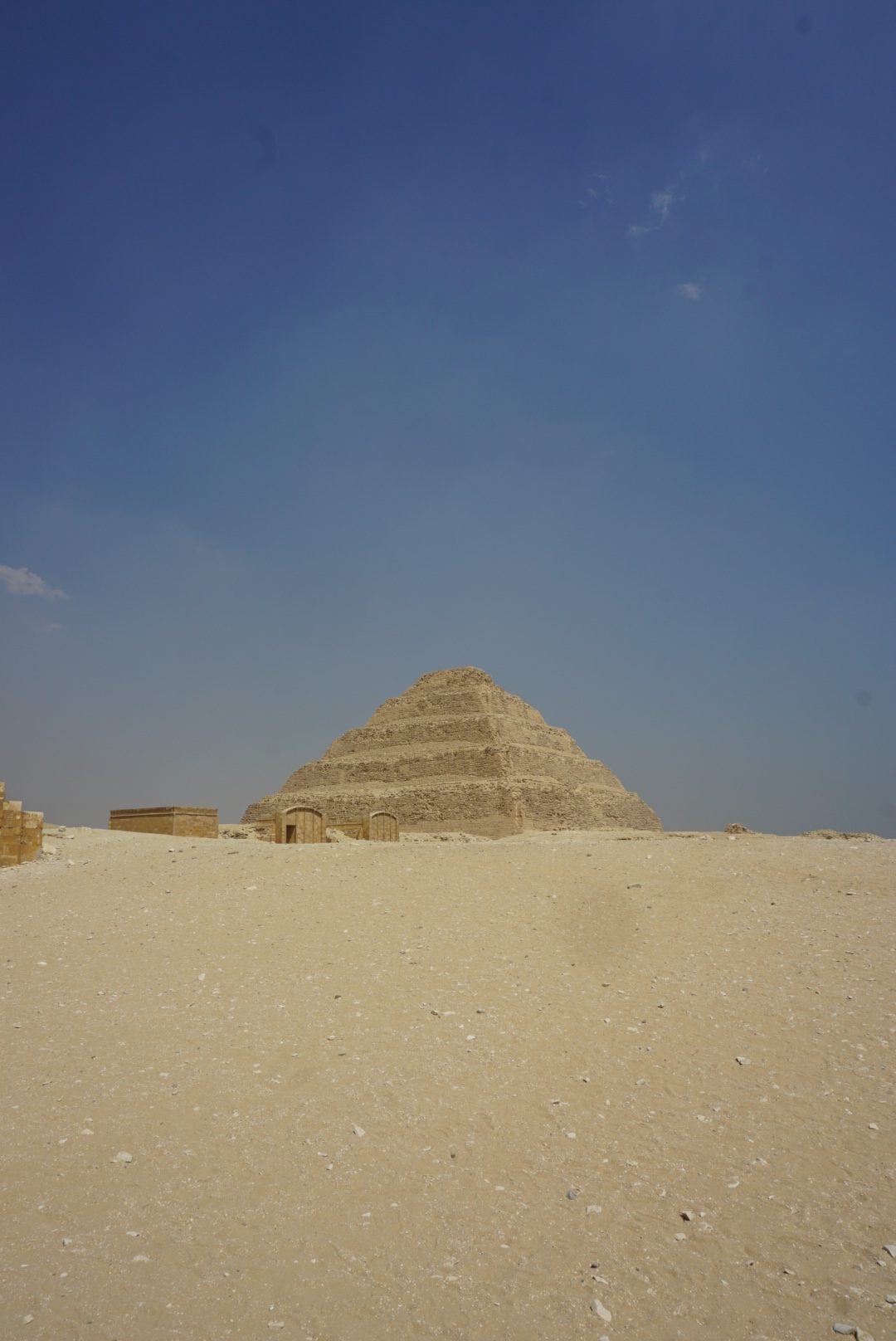
Saqqara is not where Egypt’s pyramid story is most famous — that is Giza. It is where the story begins. The Step Pyramid of Djoser, designed by the architect Imhotep during the Third Dynasty, is the world’s oldest monumental stone structure: the first time in human history that a civilisation decided that its most significant architecture should be built not from mud brick and timber, which decay, but from stone, which endures. This decision — made approximately 4,600 years ago, on the desert plateau south-west of Memphis — changed not only Egyptian architecture but the trajectory of human construction ambition permanently.
Our historian guide Mahmoud — known throughout the Giza region as Memo — brought to Saqqara precisely the quality of interpretation that transforms an extraordinary archaeological site from visually impressive to intellectually alive. His expertise is that of a certified Egyptologist whose engagement with these sites is not the practiced enthusiasm of a professional tour guide but the genuine passion of a scholar whose knowledge of dynastic Egypt is structural rather than anecdotal: rooted in the specific historical, theological, and political contexts that make the sites legible rather than merely spectacular.
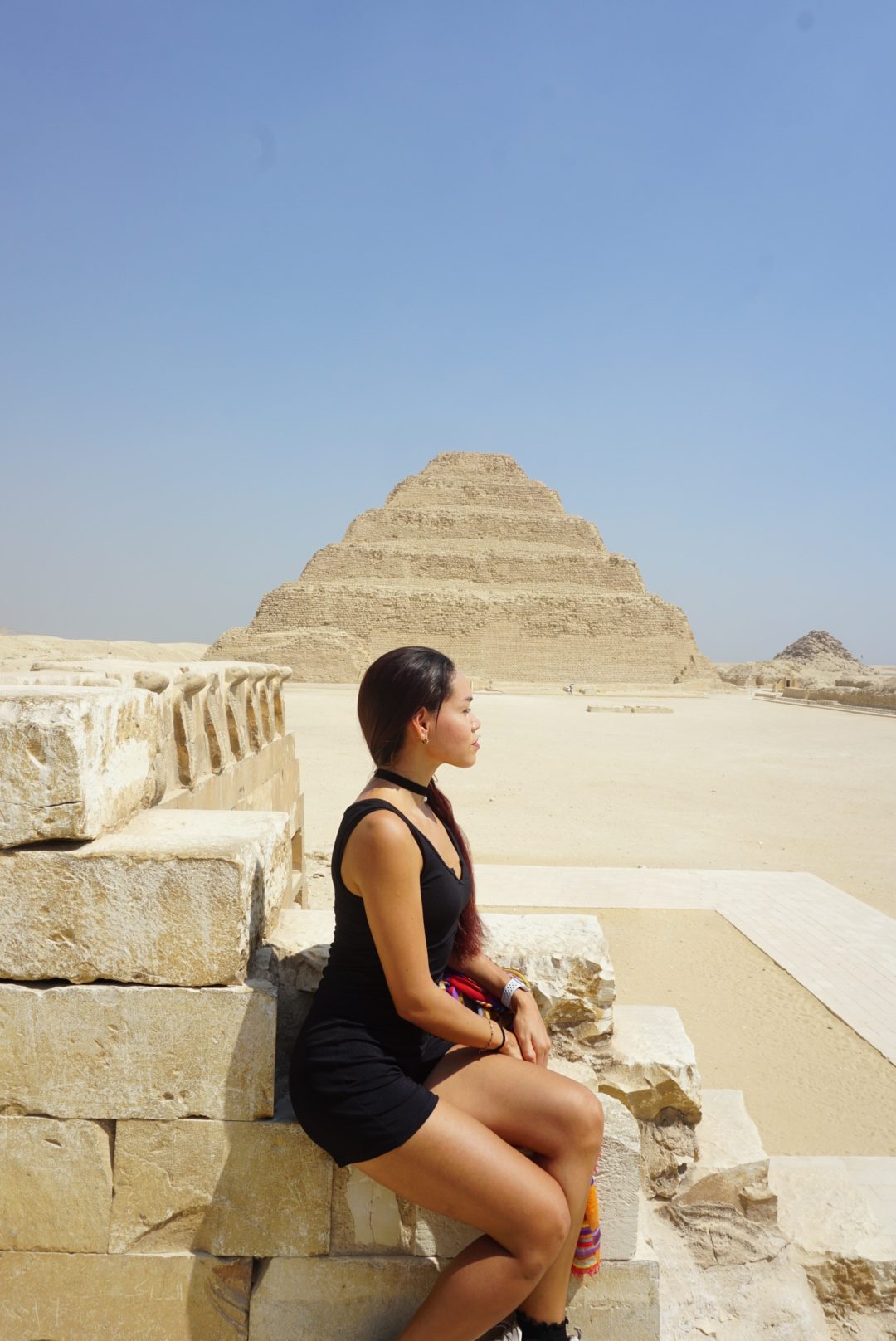
Standing before the Step Pyramid, Memo explained its significance not primarily as a burial monument but as an architectural argument — a statement about the nature of divine kingship and its relationship to permanence. Imhotep’s decision to stack six mastaba-form layers into a stepped pyramid was not purely aesthetic. It was cosmological: the stepped form created a staircase between earth and sky, a structural metaphor for the pharaoh’s ascent to the divine realm. The pyramid was not merely a tomb. It was a machine for the production of immortality.
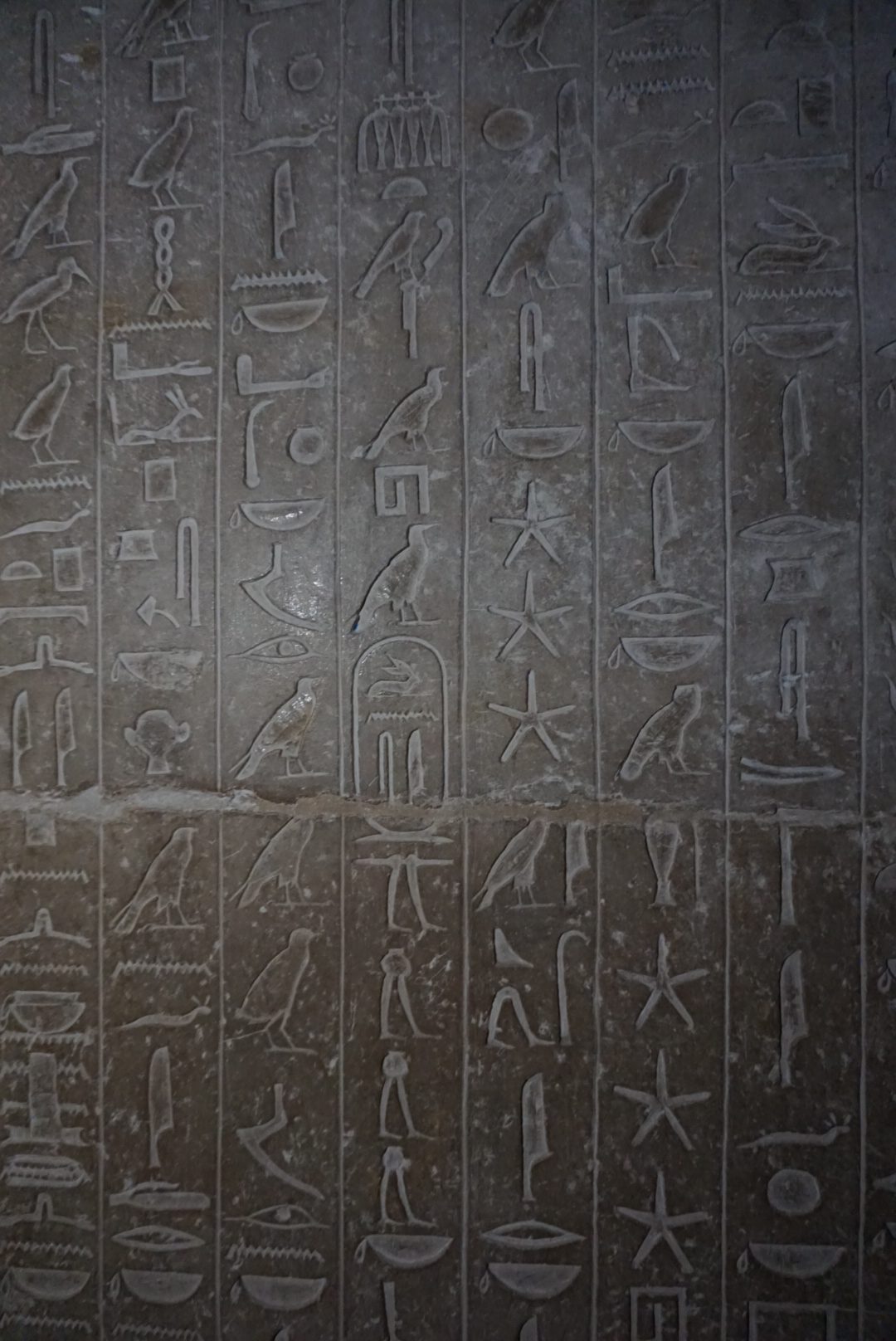
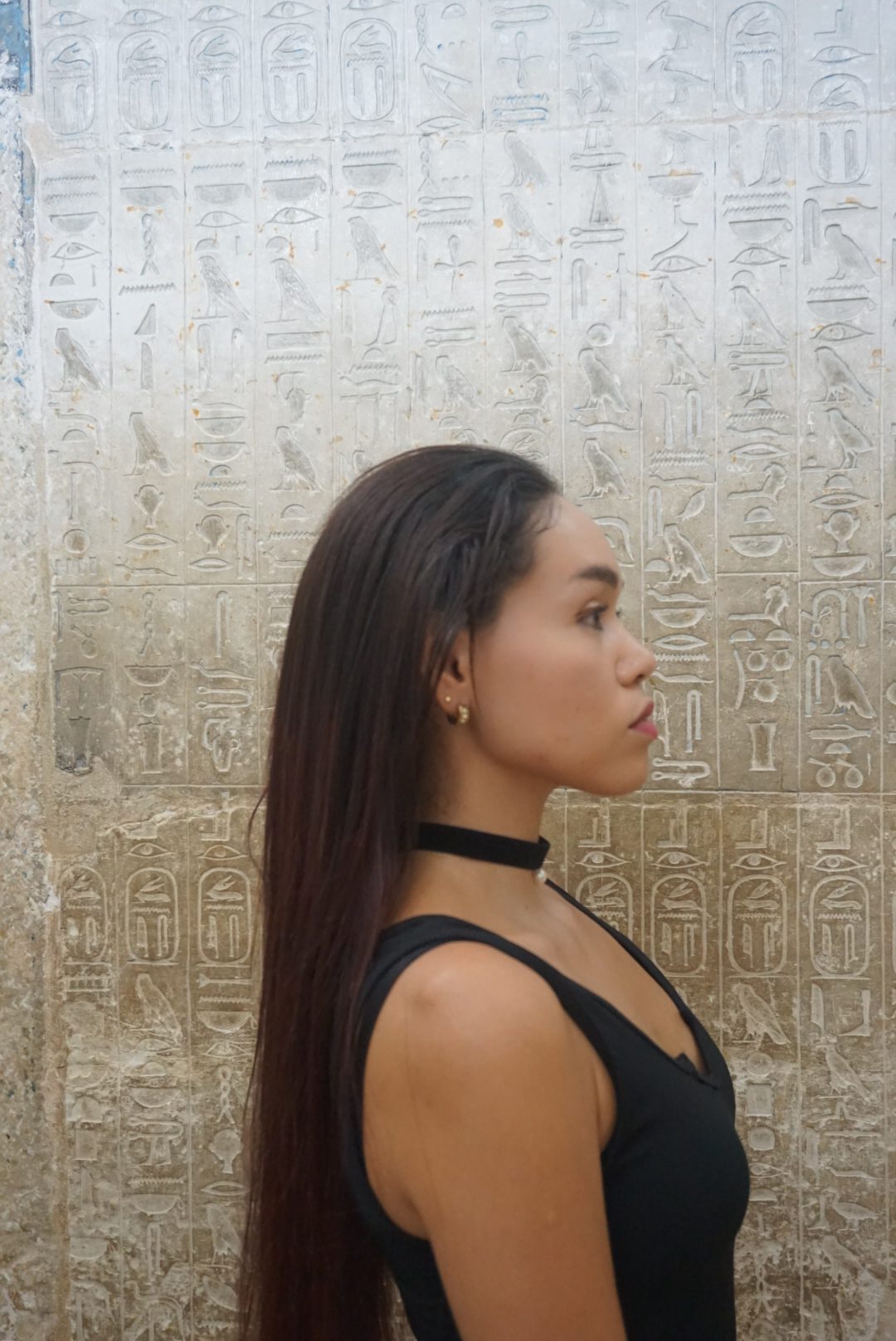
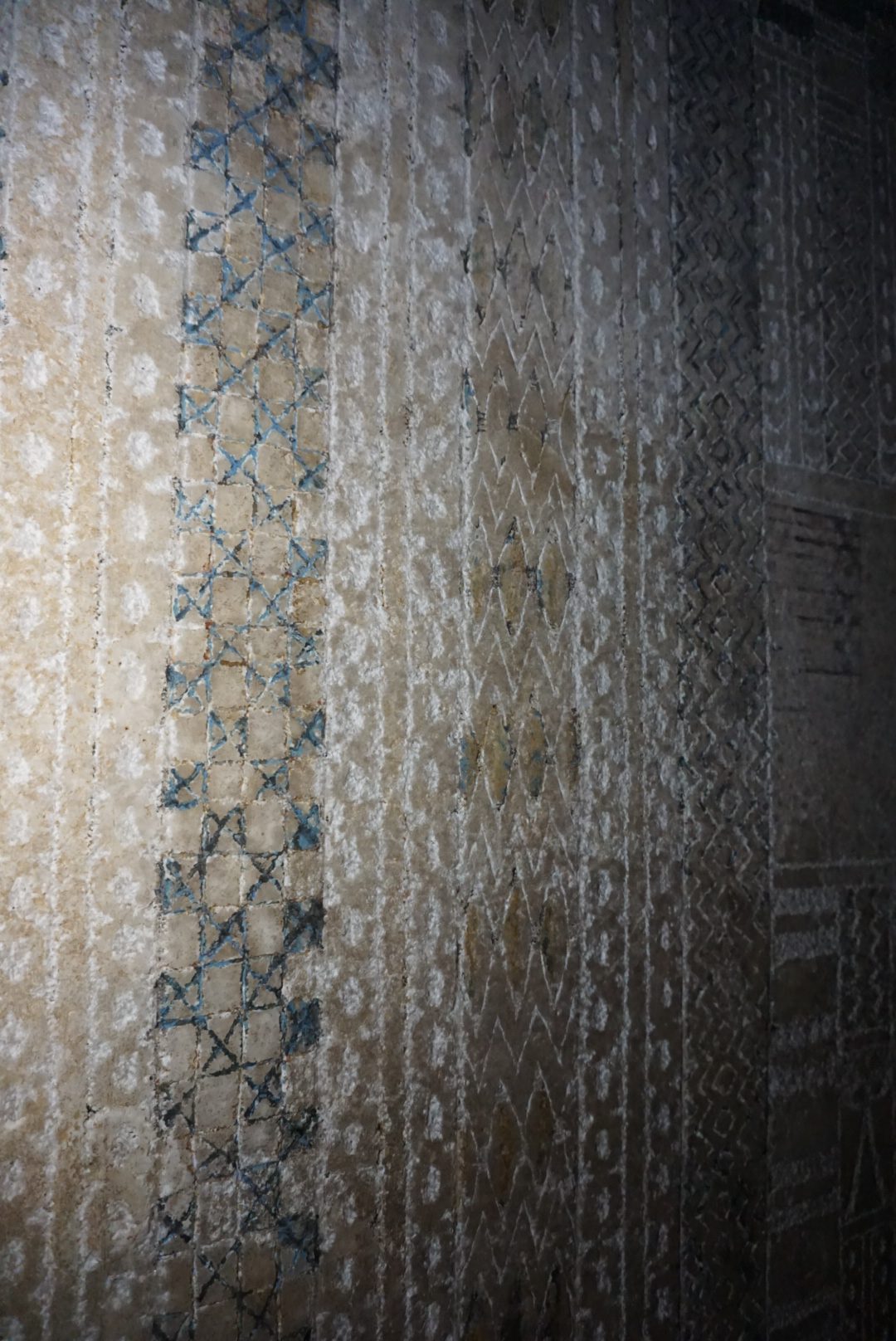
Inside one of the smaller pyramids at Saqqara, where the walls are covered with the Pyramid Texts — some of the oldest religious writings in the world, inscribed to guide the pharaoh through the challenges of the afterlife — the experience of being in the presence of a historian becomes most acute. Without interpretation, these hieroglyphic columns are visually extraordinary but semantically opaque. With Memo’s guidance, they become legible as a sophisticated theological system: a structured account of the soul’s journey through the Duat, the Egyptian underworld, whose specific challenges and the specific magical protections the inscribed texts provide constitute a complete cartography of the afterlife. The Pyramid Texts are not decoration. They are the oldest preserved religious instruction manual in human history.
The Saqqara complex extends well beyond the Step Pyramid — a vast necropolis whose lesser-known tombs and structures contain some of the most intimate and detailed depictions of daily life in ancient Egypt available anywhere. The mastaba tombs of the Old Kingdom officials surrounding the royal pyramid contain painted reliefs of farming, fishing, hunting, music-making, and domestic activity rendered with a specificity of observed detail that constitutes, across five thousand years, a complete portrait of a civilisation. As UNESCO’s World Heritage documentation of the Memphis and its Necropolis confirms, the Saqqara complex represents one of the most significant concentrations of ancient cultural heritage available anywhere in the world — a designation that underscores the importance of approaching it with the level of intellectual engagement that a historian makes possible.
Saqqara’s carpet schools — craft, community, and the living economy of the ancient village
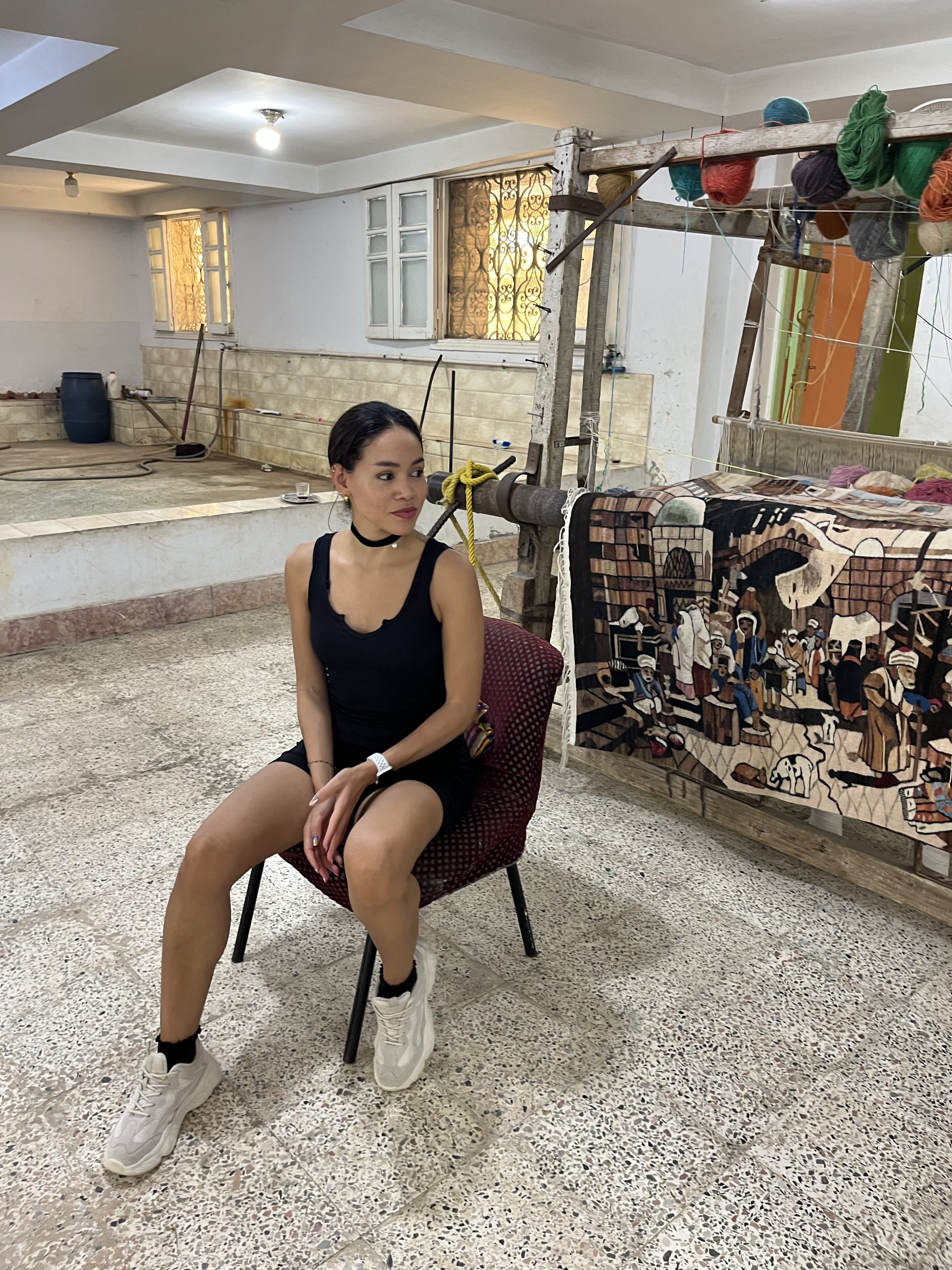
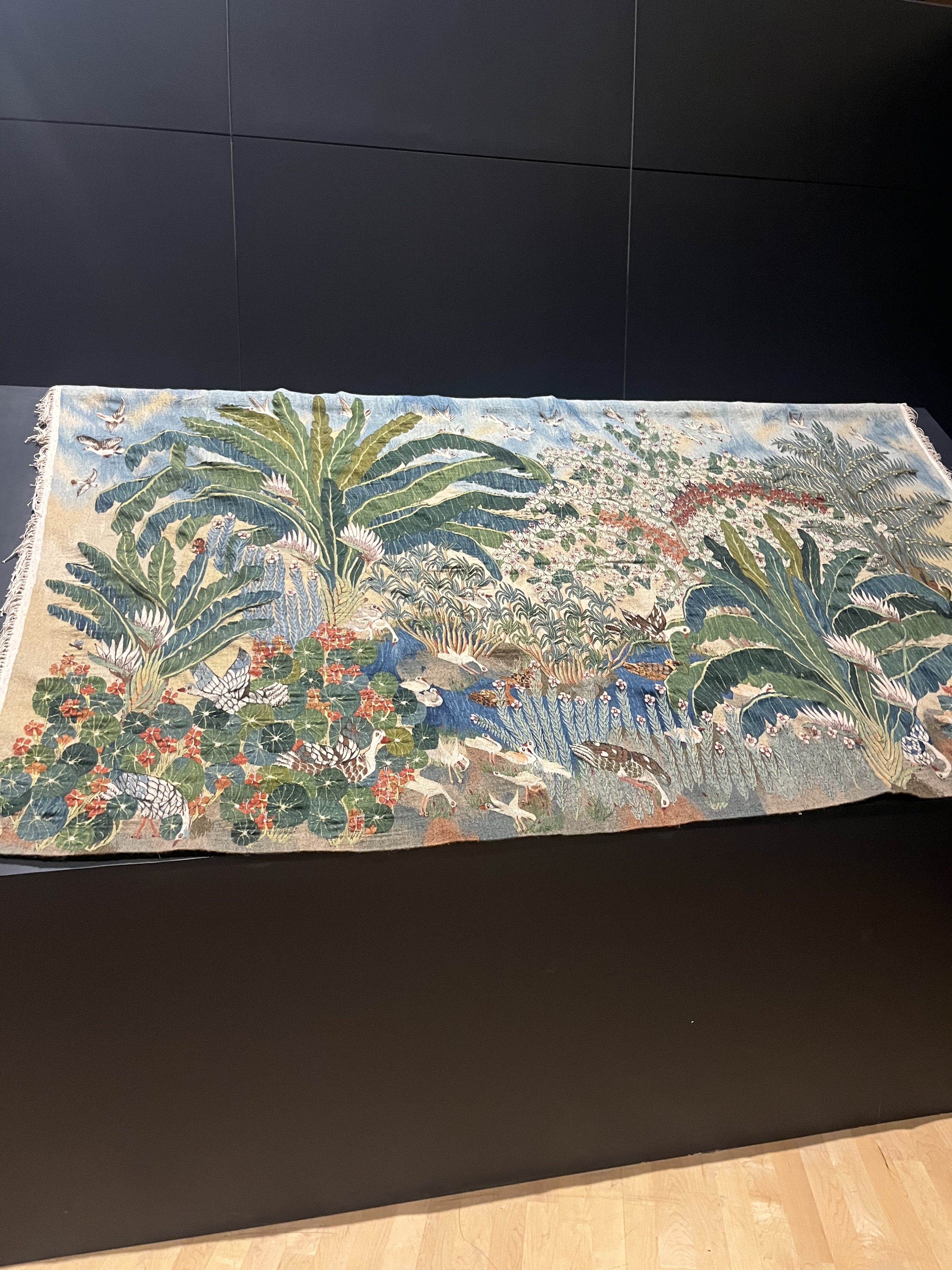
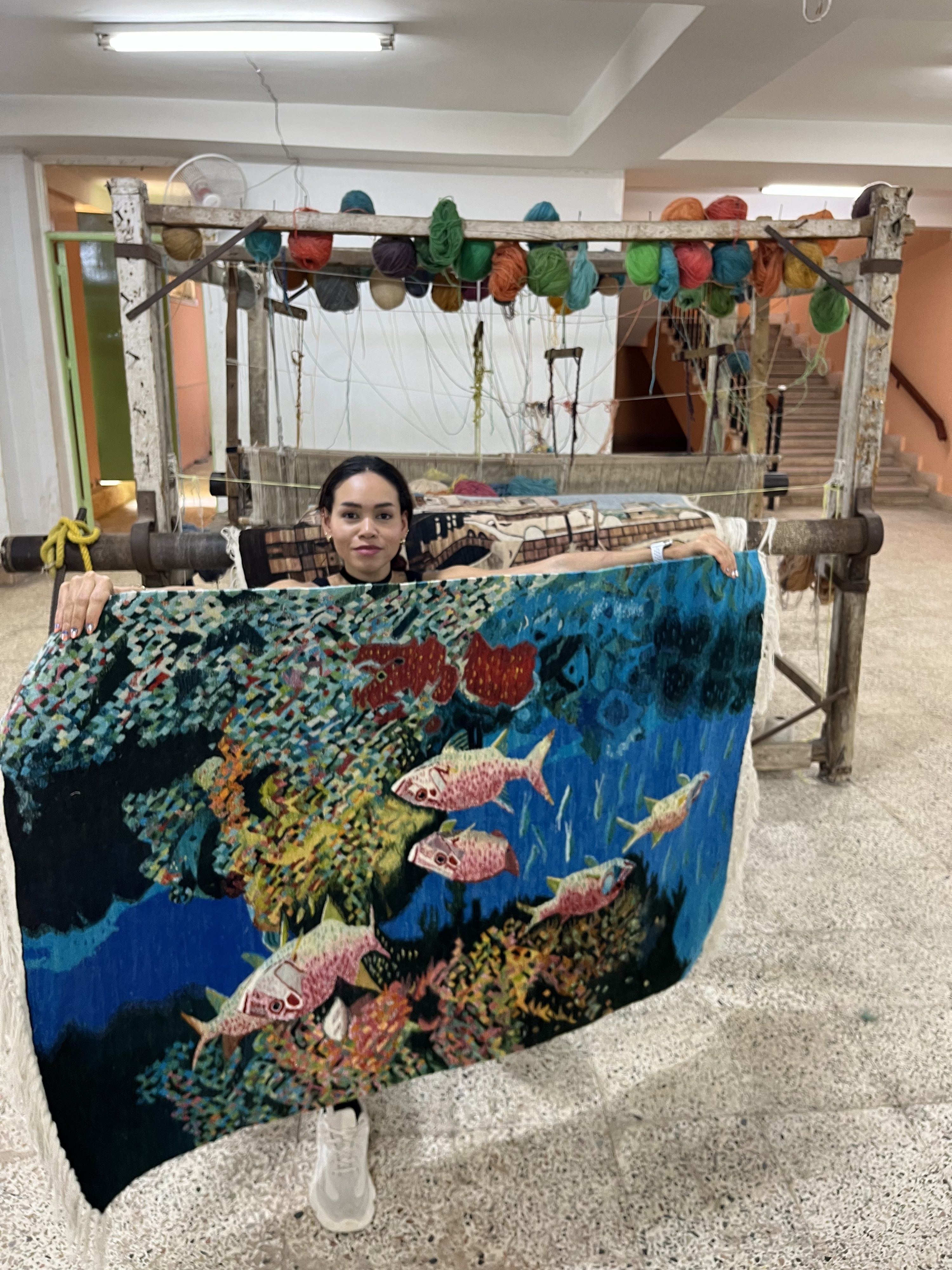
Nestled within the ancient village of Saqqara, adjacent to one of the world’s most significant archaeological landscapes, the Egyptian carpet schools represent a dimension of the Saqqara experience that most itineraries overlook entirely — and that the historian-led journey is uniquely positioned to illuminate, because the same intelligence that reads the Pyramid Texts can also contextualise the living craft traditions that persist in the communities surrounding the monuments.
The carpet schools of Saqqara are educational and economic institutions simultaneously — sites where the ancient art of handwoven carpet production is transmitted from one generation to the next through apprenticeship and practice rather than through formal academic instruction. Students, predominantly young locals between approximately ten and twenty-two years of age, learn the meticulous techniques of the craft: the specific hand movements required to tie the knots whose density determines the carpet’s quality, the design vocabulary of Egyptian geometric and figurative patterns whose visual language connects to the same aesthetic tradition as the wall paintings in the nearby tombs, the colour relationships that have been refined across centuries of production in this specific cultural and geographic context.
The carpet schools contribute to the Saqqara community in ways that extend beyond the economic, though the economic dimension is significant: the artisans who complete their training earn incomes that constitute meaningful contributions to their families’ livelihoods — Memo noted that skilled young artisans can earn approximately USD 250 per month, a figure that provides genuine social mobility in the community context. Beyond the individual economic benefit, the schools maintain the craft tradition as a living practice rather than a preserved artefact — ensuring that the knowledge of how to produce these objects remains embodied in human hands rather than documented only in museum catalogues.
The connection between the carpet school tradition and the broader philosophical argument for considered cultural travel — the argument that the most significant travel experiences are those that engage with the living culture of a place rather than merely its historical residue — resonates with the same understanding that makes the historian-led Egyptian journey so transformative. The traveller who visits the Saqqara carpet school is not consuming a tourist product. They are encountering a community whose economic and cultural life is continuous with the ancient landscape that surrounds it, whose craft tradition carries the aesthetic DNA of the paintings in the tombs that the Step Pyramid was built to protect.
Memphis — the invisible infrastructure of Egypt’s imperial civilisation
Memphis occupies a specific and frequently misunderstood position in the Egyptian travel experience. It is not Giza — it lacks the monumental scale and the global iconographic recognition that makes the Pyramids immediately comprehensible even without historical context. And this is precisely its value for the historian-led journey: Memphis requires interpretation to be understood, and the understanding it produces is proportionally more significant for having required the effort.
Memphis was, for most of the pharaonic period, the political, administrative, and religious capital of Egypt — the city from which the unified kingdom was governed, the economic and logistical hub through which the resources of the entire Nile Delta and Valley were managed, and the sacred site of the cult of Ptah, the creator god whose theological importance in the Egyptian cosmological system was second to none. The city’s strategic position at the junction of Upper and Lower Egypt made it the geographical expression of pharaonic unity — the place where the two crowns were held together by the king whose legitimacy depended on maintaining the balance of the two lands.
What survives at Memphis today — the colossal prone statue of Ramses II, the scattered remnants of temple complexes and administrative buildings, the smaller artefacts in the open-air museum — represents only a fraction of what this city once was. Memo’s expertise transforms this apparent limitation into an interpretive opportunity: the absent city becomes more rather than less interesting when a historian can reconstruct its layout, its population, its economic functions, and its religious character from the traces that survive and the documentary record that illuminates what has been lost. Memphis is not a disappointment for the prepared traveller. It is a lesson in how civilisations leave behind not only monuments but absences — and in how the imagination, trained by knowledge, can populate those absences with the life they once contained.
The proximity of the carpet schools to the Memphis site provides a natural extension of the historian’s interpretive function into the present tense of the surrounding community — a reminder that the ancient capital’s legacy is not only preserved in monuments but lives in the craft practices, agricultural patterns, and social structures of the villages that occupy the same landscape it once dominated.
Giza — beyond monumentality, toward cosmological argument
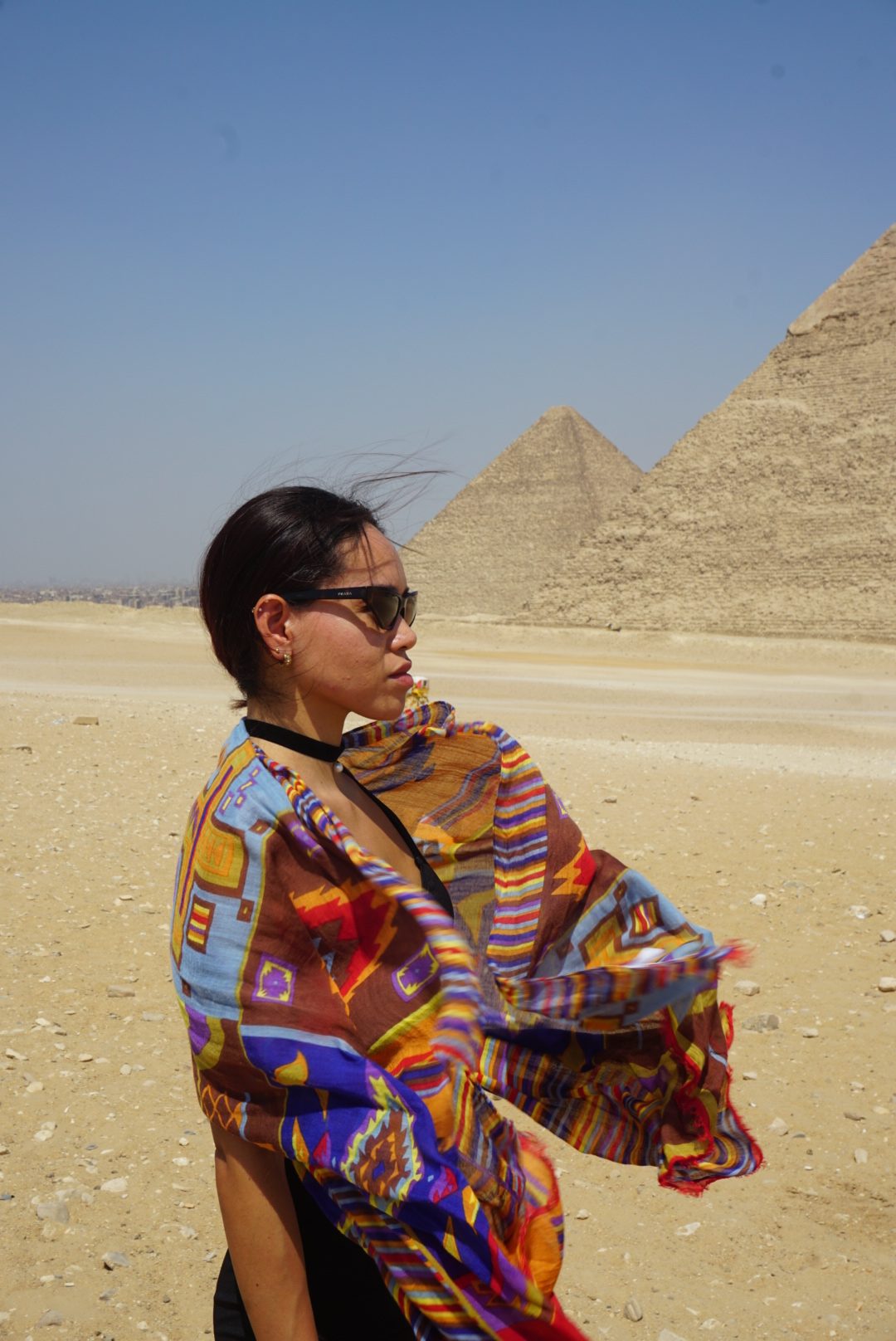
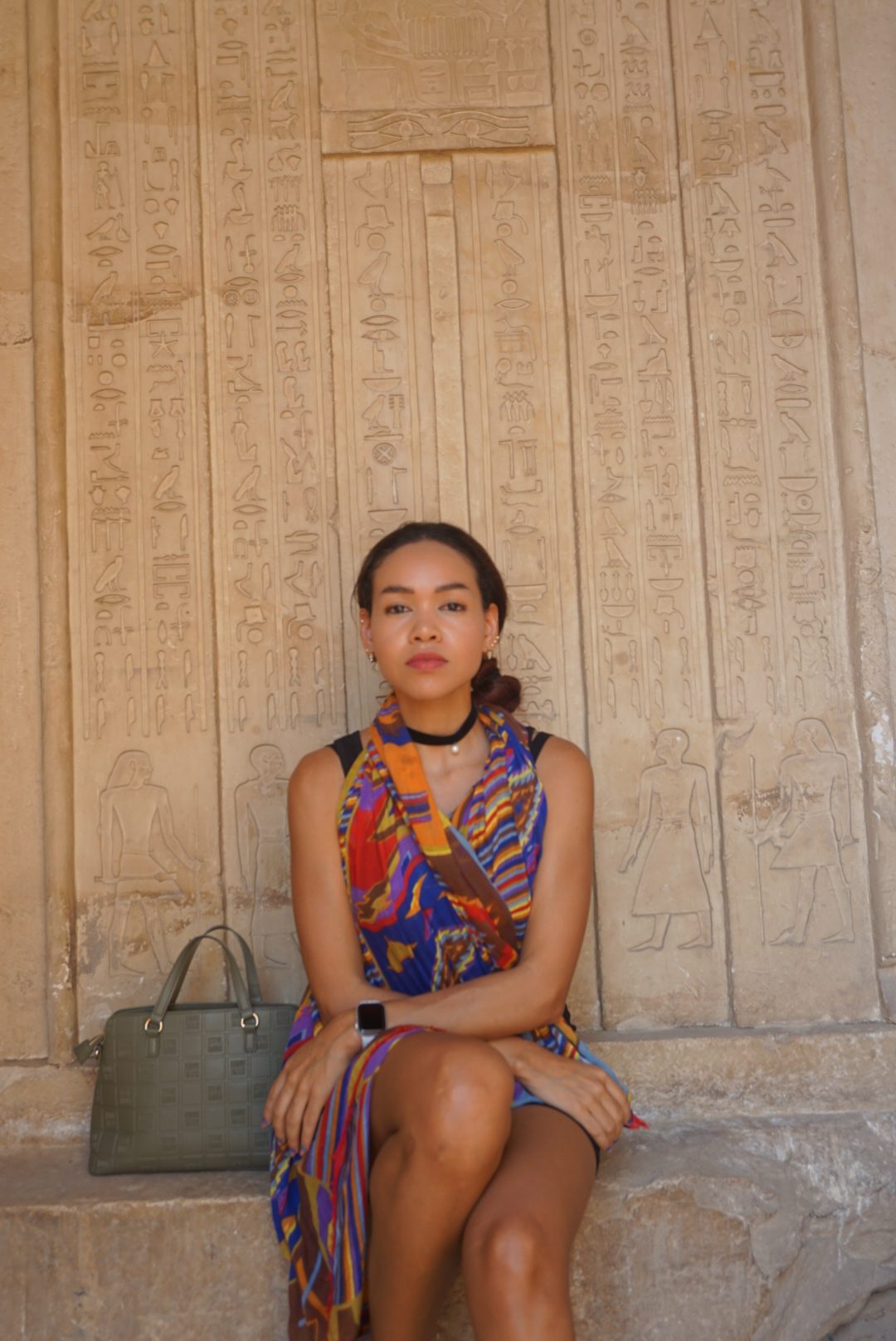
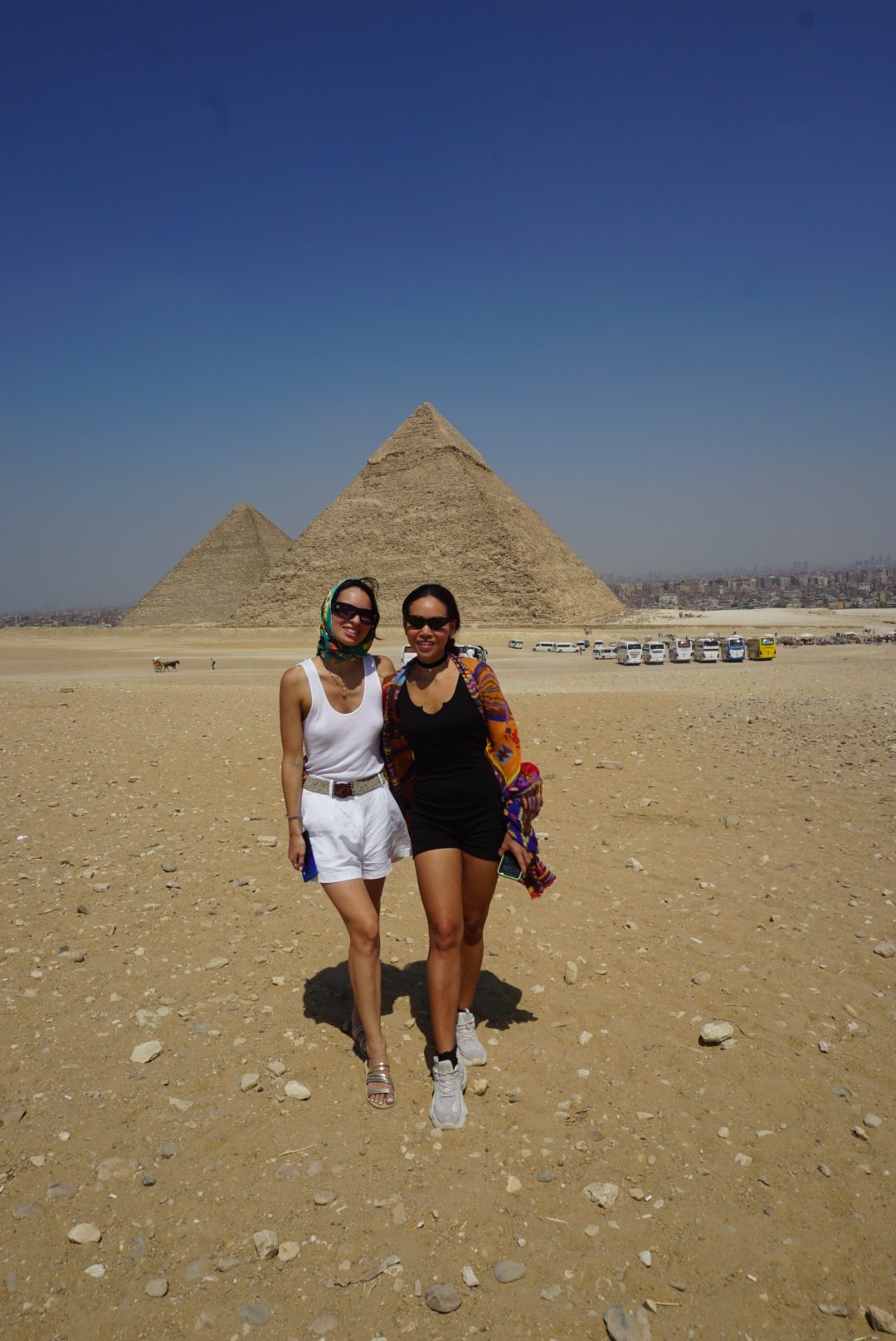
Giza is where the historian-led Egyptian journey reaches its culmination — and its greatest interpretive challenge. The Great Pyramid of Khufu, the Pyramid of Khafre, the Pyramid of Menkaure, and the Great Sphinx constitute the most recognisable ancient monuments in the world. The challenge they present to the historian is not the provision of information — it is the restoration of genuine encounter in the face of the most thoroughly mediated landscape on the planet.
Memo’s expertise at Giza operates at precisely the level that the site demands: not the recitation of the well-known facts — that the Great Pyramid was the tallest human-made structure for nearly four thousand years, that its construction required an estimated 2.3 million stone blocks — but the restoration of the cosmological and political argument that the entire Giza complex was constructed to make. The alignment of the three pyramids with the stars of Orion’s Belt, reflecting the Egyptian identification of that constellation with Osiris and the realm of the dead. The orientation of the pyramid’s passages toward specific stars, encoding the pharaoh’s path to immortality in the architecture of the tomb itself. The specific relationship between the Sphinx — whose gaze is directed precisely east, toward the rising sun — and the solar theology that underpins the entire funerary complex.
Inside the Great Pyramid, climbing the steep Grand Gallery toward the King’s Chamber, the historian’s presence is felt most acutely as a form of temporal companionship. The narrow passage, the rough-hewn granite of the chamber walls, the specific quality of silence that exists within a sealed stone structure of this mass and antiquity: these are qualities that no photograph or description can prepare a visitor for. Memo’s narration of the chamber’s function — not merely as a repository for a physical body but as a precise instrument for the pharaoh’s transformation into a divine being, a place where the rituals of Opening of the Mouth were performed to animate the ka and ensure the soul’s successful passage into the eternal realm — converts the physical experience of being inside the pyramid from archaeological tourism into something closer to genuine philosophical encounter.
As Business of Fashion’s analysis of intellectual tourism and luxury travel and Condé Nast Traveller’s guide to Egypt’s most significant travel experiences both identify, the quality that distinguishes the most memorable Egyptian journeys from the merely impressive ones is consistently the depth of intellectual engagement that the experience produces — the degree to which the traveller leaves with genuine understanding of what they have seen rather than simply a portfolio of photographs confirming that they were present. The historian makes this quality available.
The sensibility that the most significant experiences reward slowing down — explored in At Nette Al Barari, Where Dubai Slows Down — finds its most ancient expression in Egypt, where the monuments themselves were built on the same premise: that the most significant things require time, attention, and the willingness to stay in the presence of what you do not yet fully understand. The full intellectual and cultural depth of the Egyptian landscape — from the authentic papyrus that preserves the hieroglyphic vocabulary of the Pyramid Texts into contemporary material culture, to the historian who restores that vocabulary to its architectural context — constitutes the most complete available travel experience in Egypt. The Connoisseur’s Guide to Authentic Papyrus in Cairo explores the material dimension of this intellectual engagement. The historian-led journey to Saqqara, Memphis, and Giza is its architectural and cosmological complement: the two experiences together constitute the most complete available intellectual encounter with one of humanity’s most significant civilisations.
The historian as temporal translator — intellectual tourism as the highest form of luxury travel
The redefinition of luxury travel that has been reshaping the most engaged segment of the global travel market is precisely the redefinition that the historian-led Egyptian experience embodies: the movement from experiential consumption toward intellectual encounter, from the accumulation of impressive moments toward the deepening of genuine understanding. The most significant luxury available to the contemporary traveller is not the finest hotel suite or the most exclusive access to a monument after hours. It is the quality of comprehension that the experience produces — the specific transformation that occurs when the landscape of ancient Egypt becomes legible as a coherent intellectual system rather than an impressive but opaque collection of monumental objects.
A practical note for the Giza experience: arrive at the plateau in the first hour after opening. The early morning light on the pyramid stones carries a warmth and specificity that the midday sun flattens into bleached uniformity. The Sphinx at sunrise — early light across its features revealing the depth of its carving in ways that later hours obscure — is one of the most genuinely extraordinary visual experiences available in the contemporary world. The interior of the Great Pyramid is best approached with awareness that the physical conditions — the narrow ascending passage, the steep Grand Gallery, the sealed atmosphere of the King’s Chamber — are as much part of the experience as the chamber’s historical significance. A historian like Memo does not merely provide commentary. He contextualises these conditions: the specific architectural decisions that produced them, the theological intentions they served, and the human experience of navigating them that connects the contemporary visitor to every person who has entered this space across four and a half millennia.
Memo — Mahmoud, certified Egyptologist, reachable at mahmoud_hamed@yahoo.com or +201001493559 — embodies precisely this quality of intellectual service. His expertise is not the performance of knowledge but its genuine possession: the specific depth of understanding that comes from years of scholarly engagement with the dynastic chronology, the theological systems, the architectural history, and the political context of ancient Egypt, deployed in service of the traveller’s genuine comprehension rather than their superficial satisfaction. A historian of this quality does not recite dates. He reconstructs worldviews. He does not explain what the monuments are. He illuminates what they mean.
When booking any historian-led Egyptian experience, ensure that the guide holds certified Egyptologist credentials rather than a general tour guide licence — the distinction is significant and directly proportional to the quality of interpretive depth available. Plan the Saqqara, Memphis, and Giza circuit as a sequential narrative rather than isolated site visits, arriving at Giza last as the culmination of the architectural and theological argument that Saqqara initiates. Arrive at Giza early — the plateau in the first hour after sunrise, before the daily tourist volume builds, carries a quality of light and silence that approaches the encounter with the monuments that a serious historian deserves to facilitate. As the World Economic Forum has identified in its analysis of cultural heritage and the future of sustainable tourism, the most durable form of travel engagement — for the traveller and for the heritage site — is one defined by genuine intellectual encounter rather than visual consumption. The historian-led Egyptian journey is the fullest available expression of this principle in one of the world’s most significant cultural landscapes.
The understanding that the most enduring travel experiences are those that produce genuine knowledge rather than accumulated impressions connects the historian-led Egypt journey to the broader philosophy of considered luxury explored across this site. The New Language of Quiet Luxury makes the foundational argument: what endures is what was chosen with intelligence rather than immediate impression. The historian-led Egyptian journey is this principle at the scale of civilisation. The Return of the Pearl: Inside the Quiet Luxury of Robert Wan makes the same argument in the context of material culture: the object acquired with genuine knowledge of what makes it exceptional is the object whose value compounds rather than depletes across time. The Egyptian travel experience shaped by a historian’s interpretation is exactly this kind of investment — one whose returns deepen with every year of sustained reflection on what was genuinely understood rather than merely seen.
“To visit Saqqara, Memphis, and Giza
without historical interpretation
is to encounter only the surface of ancient Egypt.
But with a historian, the experience changes fundamentally.
The pyramids stop being objects
and become arguments —
about power, mortality, divinity, permanence,
and the human desire to outlive time itself.
In Egypt, history is not hidden inside museums.
It remains embedded in landscape, geometry, and stone.
A historian simply teaches you how to read it.”