

On the structural evolution of leadership summits in the Gulf, the UAE’s sustainability agenda, the intersection of corporate strategy and environmental responsibility, and why the Forbes Middle East Sustainability Leaders Summit functions not as a conference but as a capital coordination layer for the region’s most consequential green economy decisions
The Forbes Middle East Sustainability Leaders Summit is not a conference. It is a strategic coordination layer — a compressed environment where capital allocation, executive influence, and regional sustainability agenda-setting occur simultaneously across business, media, technology, and environmental sectors. Leadership summits in the Gulf are evolving from knowledge-sharing forums into active capital orchestration environments. In this environment, the Middle East is not simply hosting global conversations about sustainability. It is actively designing the frameworks through which those conversations translate into strategy, investment, and long-term economic direction.
The summit gathered top leaders, decision-makers, innovators, and environmental advocates under the theme of shaping a sustainable tomorrow — a theme whose ambition reflects the specific moment the Gulf occupies in the global sustainability transition. The region confronts critical environmental challenges — water scarcity, climate adaptation, and food security among them — that are not abstract policy concerns but immediate operational realities for every sector of the regional economy. At the same time, the UAE and its Gulf neighbours are executing some of the most ambitious sustainability transformation programmes in the world, driven by national visions whose commitment to economic diversification, renewable energy, and sustainable urban development is backed by sovereign capital at a scale that few other jurisdictions can deploy.
Chaired by H.E. Dr. Thani bin Ahmed Al Zeyoudi, UAE Minister of State for Foreign Trade, the Forbes Middle East Sustainability Leaders Summit brings together the executive infrastructure through which these ambitions are translated into decisions: the corporate leaders, sovereign capital networks, technology executives, and policy architects whose combined authority over the Gulf’s sustainability trajectory makes this the most significant gathering of environmental and economic leadership the region produces.
The broader context of how leadership summits and high-density convergence events function as capital orchestration environments — rather than merely knowledge-sharing forums — is explored across this site’s Web3 and technology intelligence editorial. Inside Dubai’s Web3 Infrastructure: Blockchain, AI, and Digital Capital and Money, Culture, and Capital: Inside the Event That Shaped Dubai’s Web3 Elite document the same structural dynamic in the digital economy: the gathering that functions as a deal-flow adjacency environment, where proximity equals opportunity and the corridor conversation is the primary site of consequential decision-making.
The Gulf as a strategic sustainability command layer — why the UAE is structurally suited to host global environmental leadership convergence
To understand why the Forbes Middle East Sustainability Leaders Summit has become one of the most strategically significant sustainability gatherings in the global calendar, it is necessary to understand the specific structural conditions that make the UAE — and Dubai and Abu Dhabi in particular — the most consequential site for this kind of convergence. The Gulf’s position in the global sustainability transition is not peripheral. It is central, and structurally so.
The UAE’s Net Zero by 2050 strategic initiative and Saudi Arabia’s Vision 2030 are not merely national policy frameworks — they are the largest sovereign-backed sustainability transformation programmes currently executing at speed in the global economy. The scale of capital being deployed — across renewable energy, sustainable infrastructure, water technology, circular economy systems, and green finance — positions the Gulf not as a market following global sustainability trends but as a market producing them. The decisions made in Abu Dhabi and Dubai about which technologies to deploy at scale, which sustainability frameworks to adopt, and which international partnerships to anchor are decisions that reverberate across the global green economy.
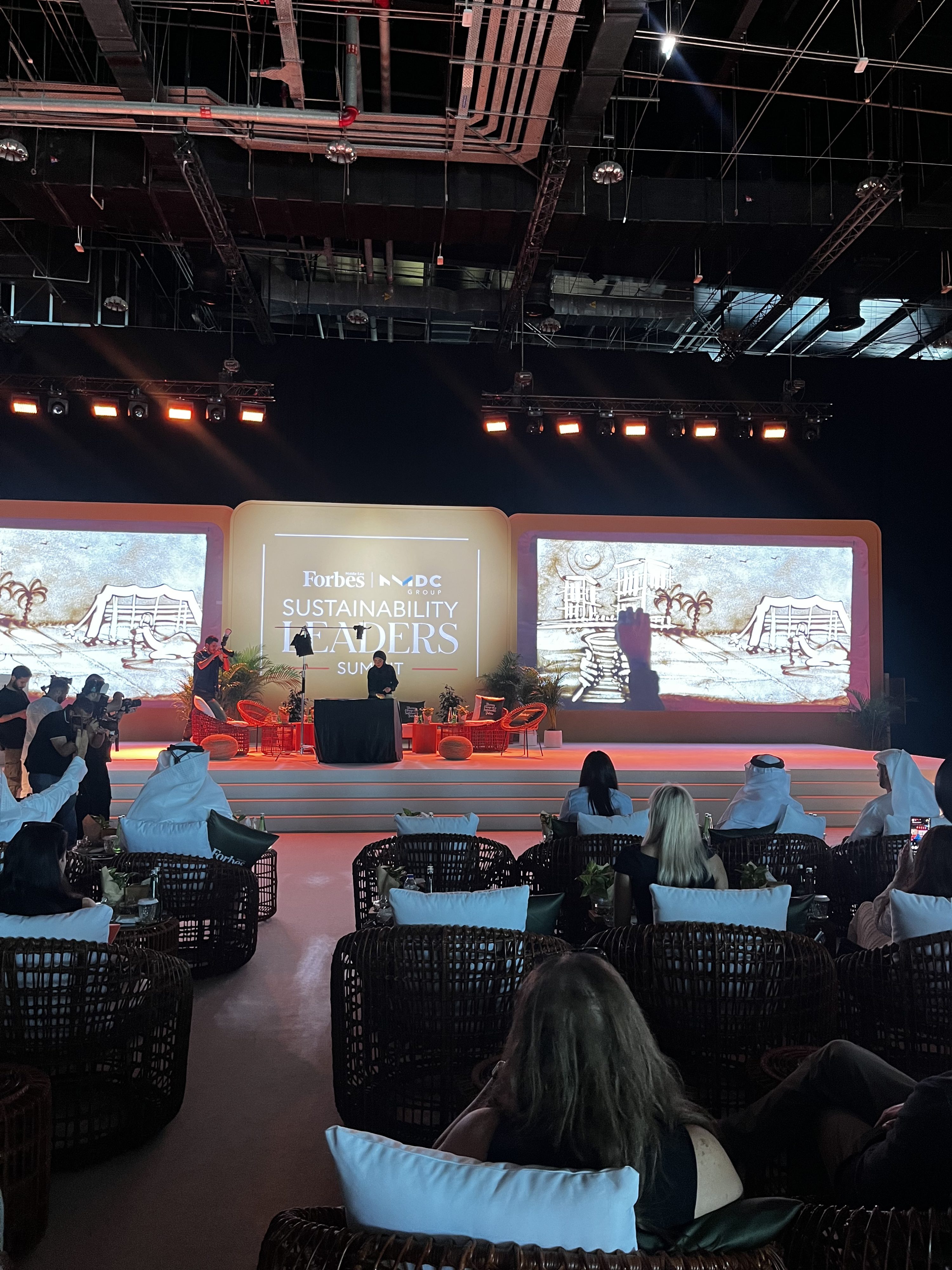
Against this backdrop, the Forbes Middle East Sustainability Leaders Summit functions as the executive coordination layer through which these decisions are shaped in real time. Participants are not attendees of a conference — they are the decision-makers whose collective authority over capital allocation, policy direction, and corporate sustainability strategy constitutes the actual operating infrastructure of the Gulf’s green economy transition. The panels, keynotes, and workshops that structure the summit provide the framework. The conversations that happen around them — in the corridors, in the networking breaks, in the private meetings that the summit’s invitation structure makes possible — are where the most consequential decisions begin.
As the World Economic Forum has identified in its analysis of the Middle East’s sustainability transition, the Gulf’s structural advantages in executing green economy transformation — sovereign capital depth, rapid policy execution cycles, concentration of global corporate regional headquarters, and frictionless executive mobility — make it a decision acceleration zone for global sustainability capital. The Forbes Middle East Sustainability Leaders Summit is the event that concentrates these advantages into their most productive convergence.
The Honey Workshop by Hatta Honey — sustainable apiculture as biodiversity infrastructure
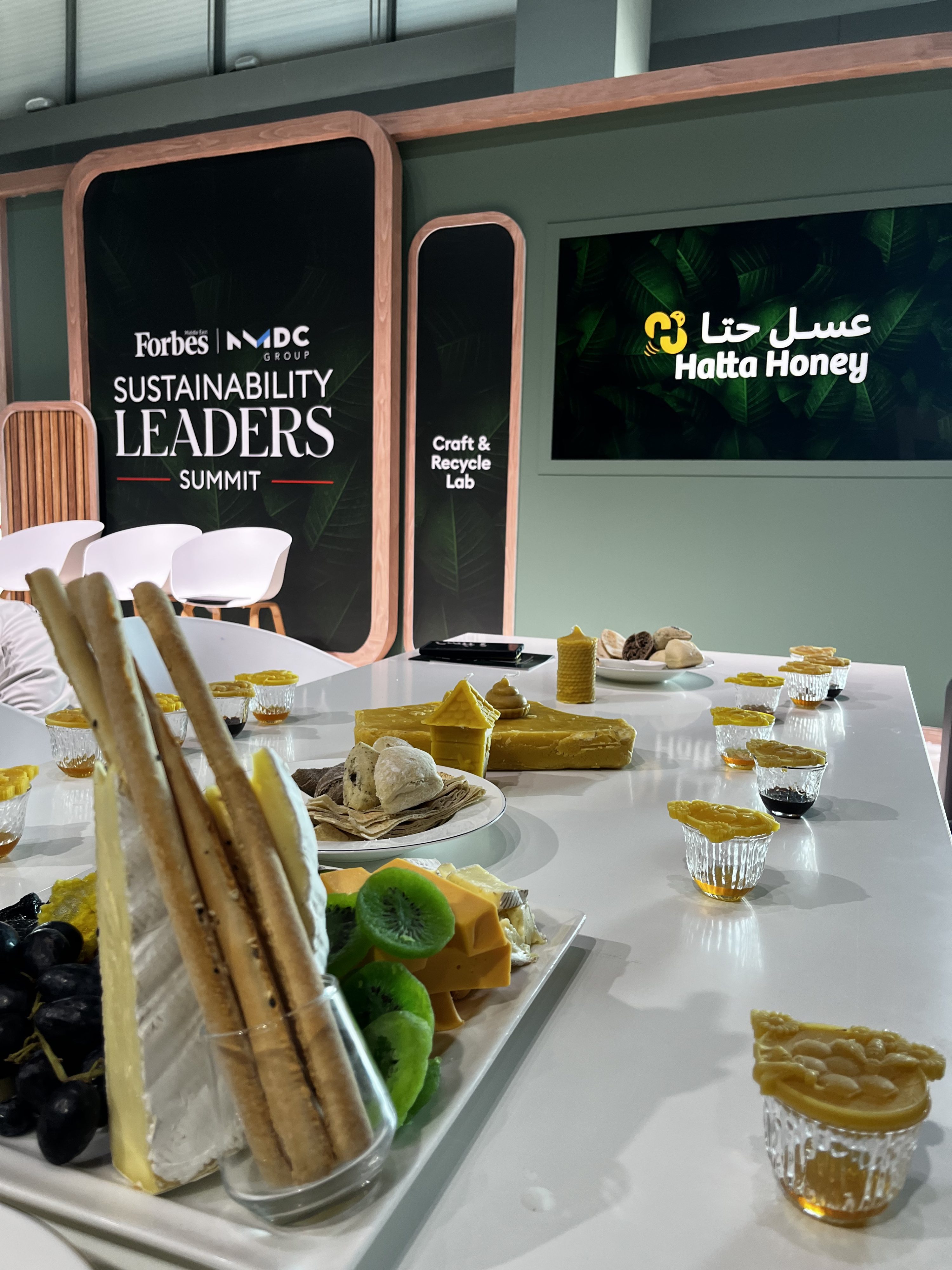
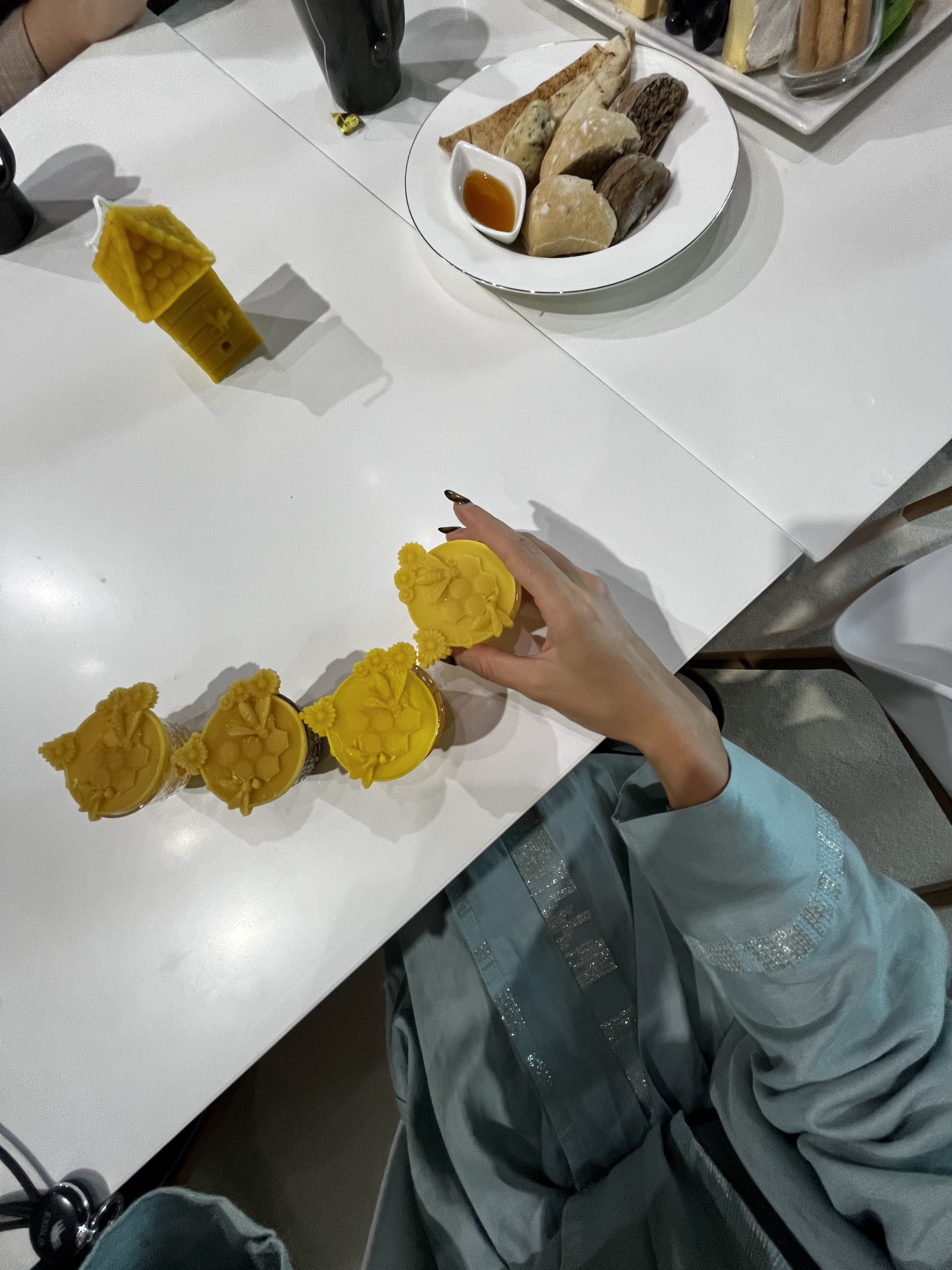

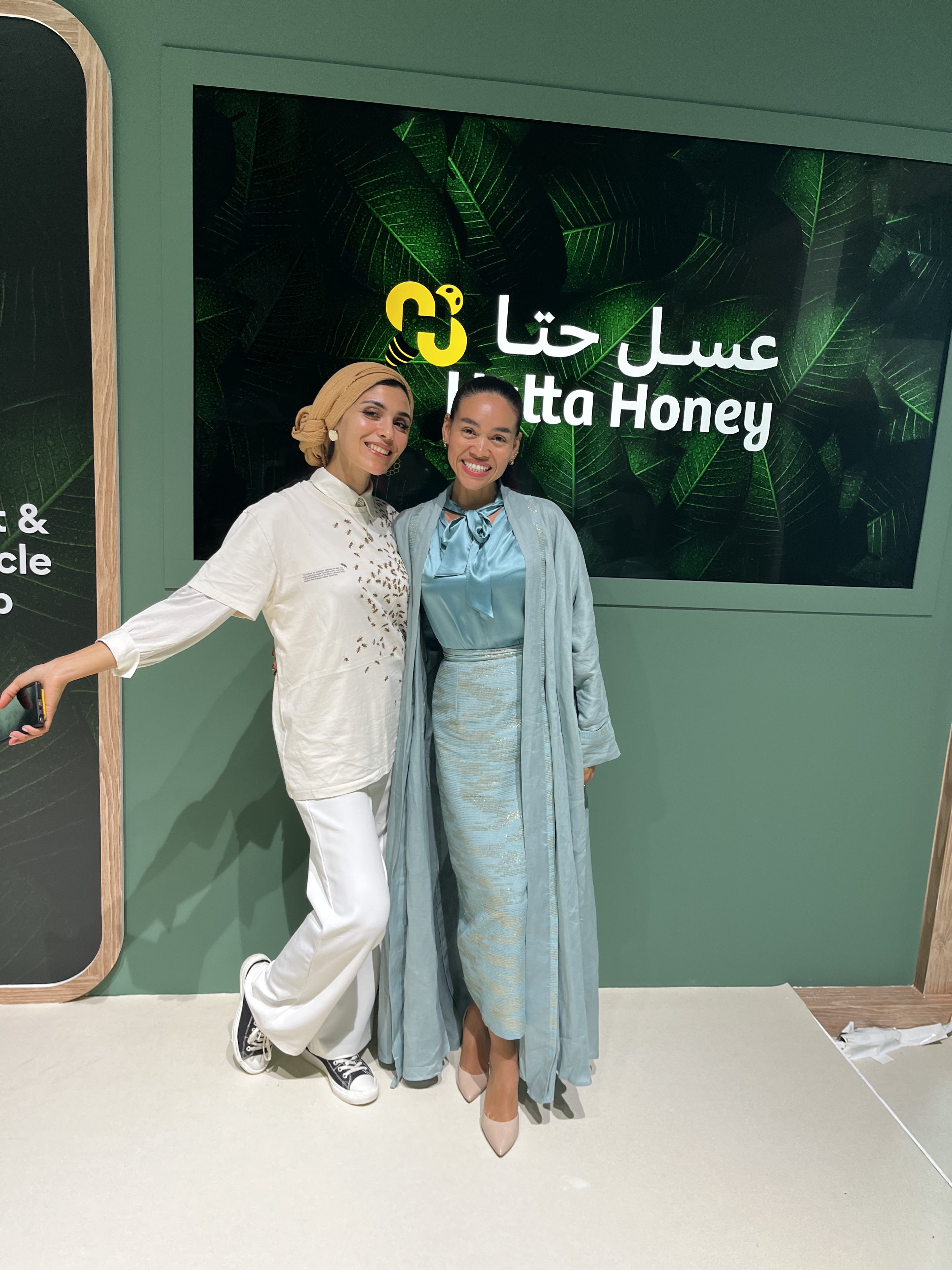
Among the most memorable elements of the Forbes Middle East Sustainability Leaders Summit was the hands-on workshop dimension — the recognition that sustainability understanding is deepened through practice rather than through observation alone. The Honey Workshop by Hatta Honey and the Candle-Making Workshop by Innara UAE were not merely educational activities. They were microcosms of the sustainability movement, demonstrating that environmentally responsible practices can be woven into the fabric of every industry.
Hatta Honey, established over fourteen years and managing more than four thousand colonies producing up to twenty tons of honey per season, represents the UAE’s most significant indigenous sustainable apiculture operation. The Honey Workshop invited summit participants into the world of beekeeping with a specific purpose that extended far beyond honey production: to illuminate the relationship between bee population health and the broader ecological systems on which food security, agricultural productivity, and biodiversity depend.
The decline in global bee populations due to climate change, pesticide use, and habitat loss is not a peripheral environmental concern. It is a food security crisis in formation — one whose implications for agricultural ecosystems, human nutrition, and the ecological balance that sustains both are among the most consequential of the environmental challenges that the sustainability leadership community must address. Hatta Honey’s approach — chemical-free beekeeping, natural habitat preservation, and an ecotourism dimension that builds environmental education into the operation’s economic model — represents precisely the kind of systems-level sustainability thinking that the Forbes summit exists to amplify.
The workshop left a lasting impact on participants not because it was intellectually impressive but because it was experientially grounding: the specific, embodied understanding of how a single species in a single ecological context carries implications for food systems, biodiversity networks, and human communities that extend far beyond the immediate environment. This is the kind of sustainability education that changes how executives make decisions — not through the provision of data but through the production of genuine understanding.
The Candle-Making Workshop by Innara UAE — sustainable consumer goods as systemic change
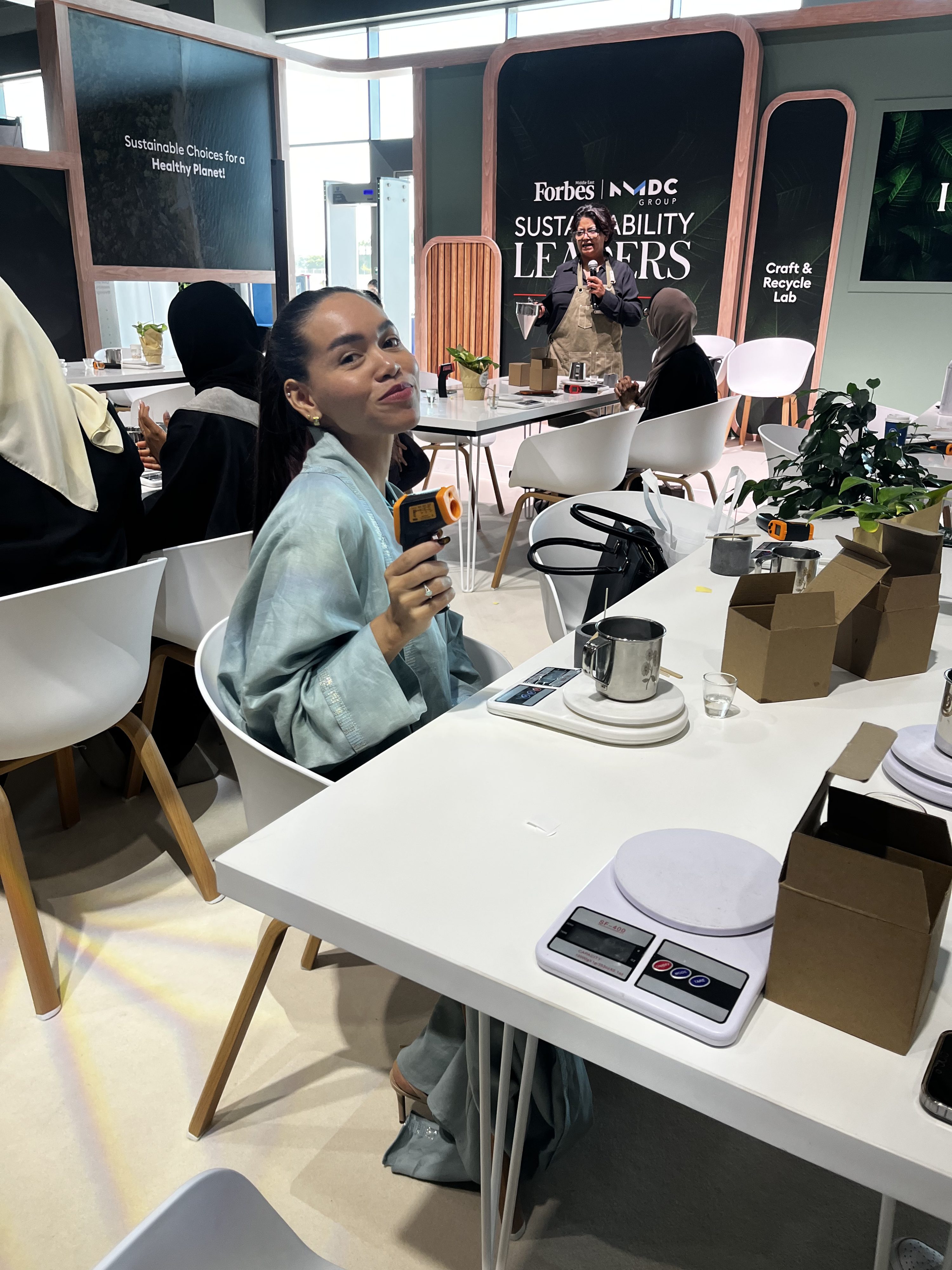
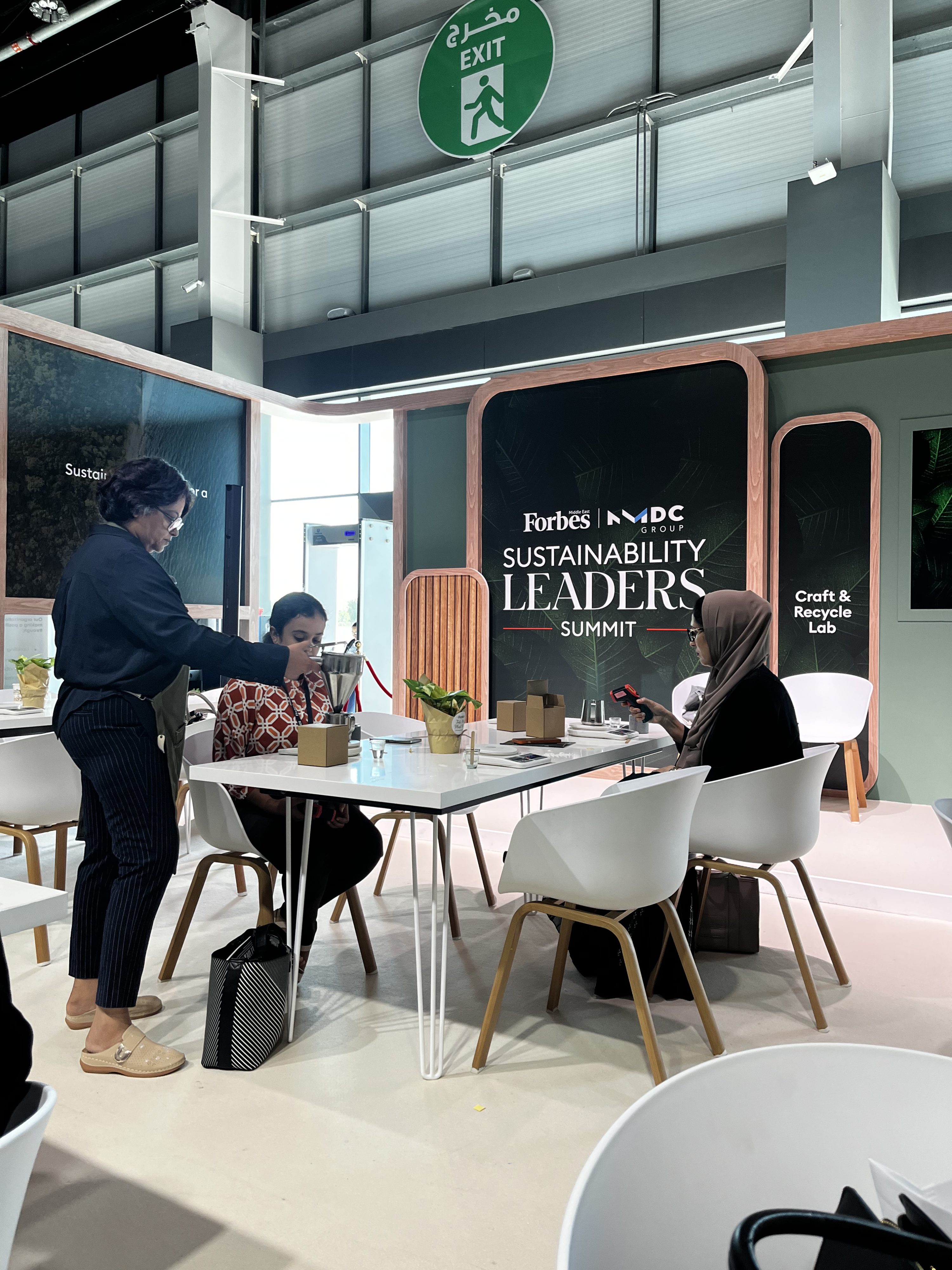
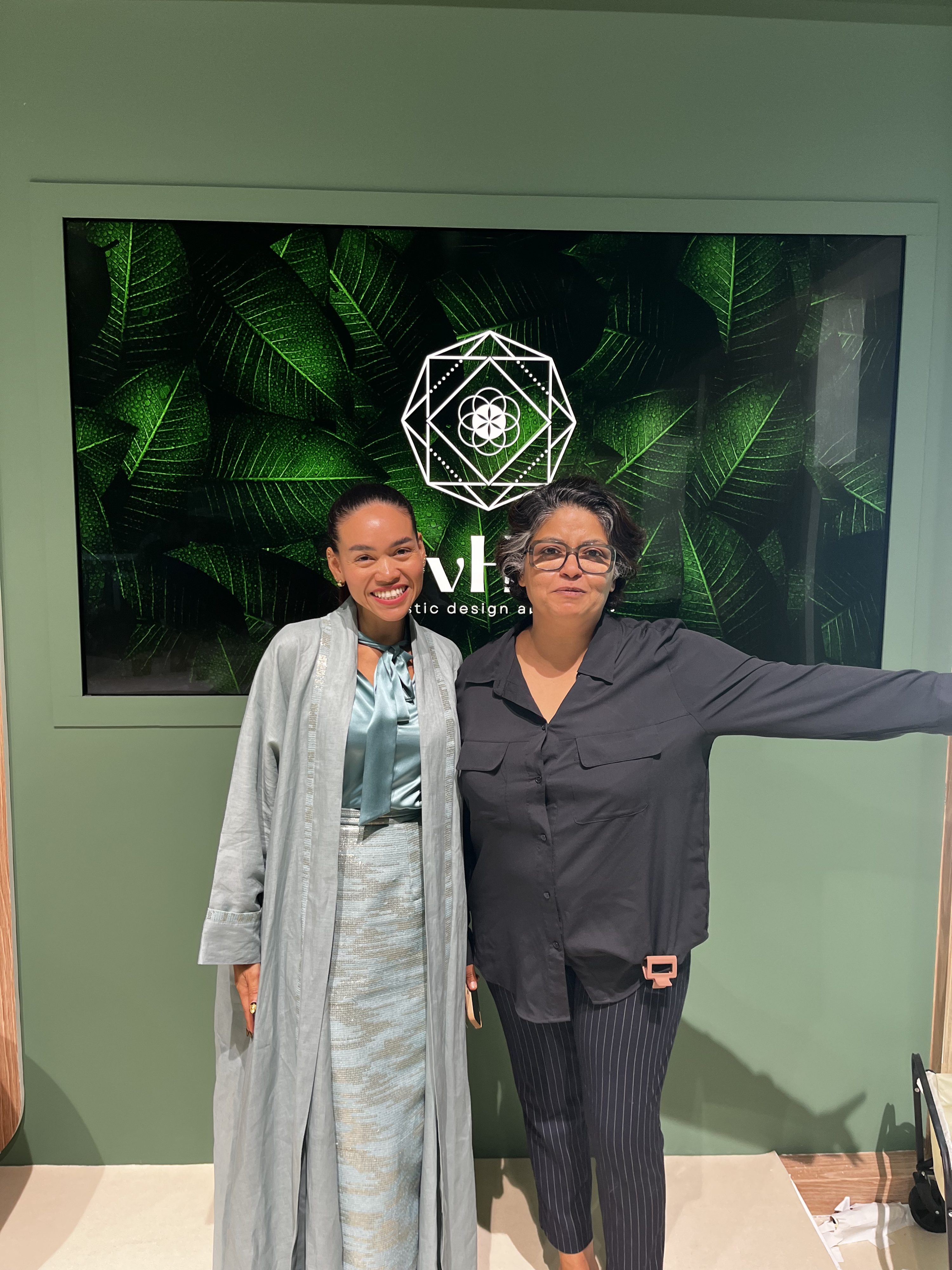
The Candle-Making Workshop by Innara UAE approached the sustainability agenda from a different but equally instructive angle: the understanding that the most significant shifts in environmental impact occur not at the level of industrial transformation alone but at the level of the billions of small consumer decisions that aggregate into the material conditions of the planet. Consumer goods sustainability is not a marginal dimension of the environmental challenge. It is one of its most structurally significant.
The conventional candle-making process relies on paraffin — a petroleum byproduct that emits harmful toxins when burned — produced through supply chains whose environmental footprint is substantially higher than the product’s modest domestic significance suggests. Innara UAE’s approach — natural waxes, eco-friendly wicks, biodegradable packaging, and a production philosophy that embeds environmental responsibility into every element of the manufacturing process — demonstrates that the transition to sustainable consumer goods is not a theoretical aspiration but a practically achievable operational reality.
The workshop’s deeper significance, however, lay not in the specific product but in the principle it demonstrated: that sustainability is not limited to agriculture, energy, or infrastructure. It permeates every industry, from wellness and beauty to home décor and consumer lifestyle — and the companies that understand this are building competitive advantages that will compound over time as consumer preferences continue to shift toward eco-conscious brands. Participants left with a candle and with the specific, actionable understanding that the product choices available to consumers are choices that carry environmental consequences, and that the brands which make sustainable choices in their production processes are the brands that will earn and retain the most valuable consumer relationships in the decades ahead.
Technology, AI, and the infrastructure of sustainable transformation



The Forbes Middle East Sustainability Leaders Summit’s technology dimension addresses one of the most consequential questions in contemporary sustainability strategy: how do the most powerful tools of digital and computational innovation — artificial intelligence, blockchain, renewable energy systems — create the conditions for environmental transformation at the scale and speed that the urgency of climate change requires?
Artificial intelligence’s role in sustainability transformation is shifting from theoretical possibility to operational deployment across the Gulf’s most significant industries. AI-driven resource management systems — predicting demand, optimising energy distribution, identifying waste reduction opportunities across supply chains — are producing measurable reductions in environmental impact across manufacturing, logistics, urban infrastructure, and agricultural production. The summit’s technology panels documented this deployment with the specificity that separates genuine operational intelligence from aspirational sustainability positioning.
Blockchain technology’s contribution to sustainability — through the creation of traceable, transparent supply chains that allow consumers and regulators to verify the environmental credentials of products and production processes — addresses one of the most persistent structural barriers to sustainable economic transformation: the information asymmetry between producers who know their environmental impact and consumers and investors who cannot independently verify it. By creating immutable records of materials sourcing, production processes, and carbon footprint, blockchain provides the accountability infrastructure that sustainable supply chains require to function with the transparency that genuine environmental responsibility demands.
Renewable energy remained the summit’s most significant technology discussion, reflecting the UAE’s accelerating investment in solar and wind capacity. As Bloomberg’s analysis of the UAE’s renewable energy strategy and net zero trajectory documents, the scale of solar and wind capacity deployment underway in the Gulf — anchored by projects including Abu Dhabi’s Noor Energy 1 and Dubai’s Mohammed bin Rashid Al Maktoum Solar Park — represents not merely a national energy transition but a demonstration of renewable deployment at scale whose lessons are directly applicable to every economy with comparable solar resource conditions. The scale of the Gulf’s renewable energy ambition — driven by both environmental commitment and economic diversification strategy — positions the region as one of the most important laboratories for renewable energy deployment at scale currently operating in the global economy. The technology and policy decisions being made in Abu Dhabi and Dubai are not merely national decisions. They are contributions to the global renewable energy knowledge base that will shape how other economies with similar climate conditions approach their own transitions.
As McKinsey’s analysis of sustainable business transformation documents, the companies that are building the most durable competitive advantages in the sustainability transition are those integrating environmental responsibility into their core operational strategy rather than treating it as a compliance or communications function. The Forbes Middle East Sustainability Leaders Summit provides the executive environment in which this integration is most directly discussed, challenged, and advanced.
The intersection of sustainability and business strategy — from compliance to competitive advantage

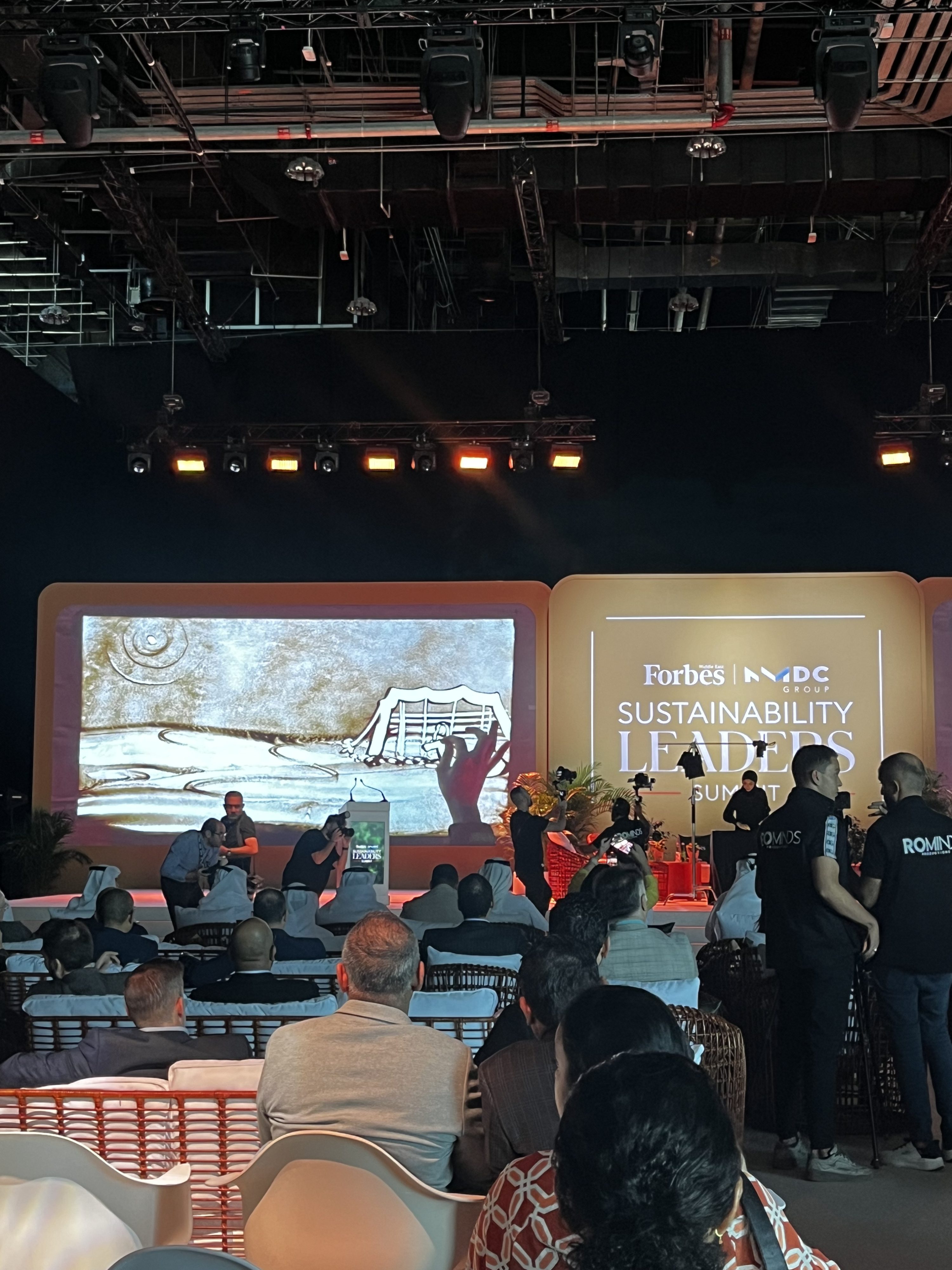

The most structurally significant shift documented at the Forbes Middle East Sustainability Leaders Summit is the transition in how corporate leadership understands the relationship between sustainability and business performance. The previous generation of corporate sustainability engagement was defined by compliance and risk management — the reduction of environmental exposure, the satisfaction of regulatory requirements, the management of reputational risk. The current generation is defined by something fundamentally different: the recognition that sustainability is a source of competitive advantage, innovation opportunity, and long-term value creation.
Global consumers are prioritising eco-conscious brands with a consistency and a purchasing power that has moved sustainability from a values-based preference to a commercial imperative. Investors are integrating ESG metrics into capital allocation decisions with an institutional rigour that has made sustainability performance a financial variable rather than a social responsibility metric. Employees — particularly the most talented and most mobile — are choosing employers whose values align with their own environmental commitments, making sustainability culture a talent acquisition and retention factor. The companies that understood this shift early are now building competitive positions whose depth is becoming visible as the market consequences of the transition compound.
The Forbes Middle East Sustainability Leaders Summit provides the executive forum in which these competitive dynamics are analysed with the candour and precision that only a closed, invitation-driven environment makes possible. The panels and keynotes provide the structured framework. But it is the direct exchange between executives who are navigating the same structural challenges — who are making the same difficult decisions about capital allocation, operational transformation, and strategic positioning — that produces the intelligence most valuable to participants. This is the function that no published report or public conference can replicate: the specific understanding that comes from being in the room with the people who are making the decisions.
The understanding that the most significant value in any high-density convergence event is produced not in the formal programme but in the direct exchanges it makes possible connects the Forbes Middle East Sustainability Leaders Summit to the broader intelligence about how leadership ecosystems function. Singapore Web3 Intelligence: Why the Most Structurally Coherent Blockchain Market Rewards Proximity Over Observation makes precisely this case in the context of digital economy ecosystems: that the most consequential intelligence about any market is available only to those who are physically present within the environment that produces it. The same principle applies to the Gulf’s sustainability economy — and to the Forbes summit that concentrates its most significant decision-makers in a single room.
The individual dimension of sustainability transformation — the understanding that consumer choices, lifestyle decisions, and personal advocacy constitute a collective force whose aggregate impact is as significant as corporate or governmental action — was a consistent thread throughout the summit’s programme. Individuals drive change by supporting companies and policies that prioritise the environment, by making purchasing decisions that reward sustainable production, and by advocating within their professional and personal networks for the environmental standards they hold. The most powerful individual sustainability action is not the personal carbon footprint reduction alone — it is the cultural influence that committed individuals exercise over the organisations and communities within which they operate. As Business of Fashion’s analysis of corporate sustainability strategy and consumer demand documents, the brands that are building the most resilient market positions are those whose environmental commitments are genuine rather than performative — because consumers in the most significant growth markets can now distinguish between the two with a precision that makes greenwashing commercially as well as ethically costly.
Forbes as influence infrastructure — how the summit functions as an executive visibility and capital legitimacy platform
The Forbes brand’s role in the Forbes Middle East Sustainability Leaders Summit — and the broader significance of how Forbes’s Middle East editorial presence functions as a legitimising infrastructure for regional brand and market positioning, as explored in the context of Dubai Fashion Week’s commercial ecosystem — extends beyond event organisation is not merely that of an event organiser. Forbes functions as an ecosystem architect — curating executive visibility, legitimising emerging markets and sustainability frameworks through editorial authority, and structuring dialogue between capital and culture in ways that produce outcomes that neither would generate independently. The summit is an extension of Forbes’ role as a global authority layer for business prestige systems, translated into the specific context of the Gulf’s sustainability economy.
Executive visibility is a strategic asset class in the contemporary leadership economy. The C-suite executives, sovereign capital managers, and sustainability directors who participate in the Forbes Middle East Sustainability Leaders Summit are not simply attending a conference — they are placing themselves within a visibility infrastructure whose editorial credibility, global reach, and institutional association with business legitimacy produce reputational returns that compound across the professional ecosystems within which they operate. Presence at the summit signals geopolitical and market relevance. It communicates that the executive in question is operating at the level at which the most significant Gulf sustainability decisions are made — and that their perspective on those decisions has been recognised as worth including in the forum through which they are shaped.
This visibility infrastructure has specific commercial consequences. The executives who are most visible at the Forbes Middle East Sustainability Leaders Summit are those most likely to be approached by the sovereign capital networks, corporate development teams, and strategic partnership architects whose attendance at the summit is itself a signal of their seriousness about the Gulf’s sustainability market. The summit operates as a compressed transaction environment where proximity equals opportunity — where the informal meeting, the corridor conversation, and the shared workshop experience produce the relational foundation from which the most significant partnerships and investments are subsequently built.
The parallel between how this operates in the sustainability economy and how it operates in Dubai’s technology and Web3 ecosystems is precise and illuminating. Deep Dive into Dubai’s AI and Web3 Festival documents the same structural dynamic in the digital economy context: the curated invitation environment that produces deal flow and strategic alignment not through the formal programme but through the density of consequential relationships it makes possible. The Forbes Middle East Sustainability Leaders Summit is the most complete expression of this dynamic in the Gulf’s sustainability economy.
The convergence of industries that the Forbes summit produces — technology leaders shaping AI and digital sustainability infrastructure, luxury and retail executives redefining eco-conscious consumer economies, financial institutions managing green capital flows, and media and creative leaders shaping the narratives through which sustainability is understood and valued — creates what might be called a multi-sector intelligence stack: an environment in which the sustainability challenge is approached simultaneously from every institutional perspective that has the power to address it, producing a quality of strategic insight that no single-sector gathering could replicate. This is the Forbes Middle East Sustainability Leaders Summit’s most significant and most durable contribution to the Gulf’s sustainability agenda — not any individual decision made within it, but the accumulated intelligence produced by the regular convergence of the region’s most consequential leaders within a shared frame of reference and purpose.
“The Forbes Middle East Sustainability Leaders Summit reflects a broader transformation
in how global influence is structured.
Leadership is no longer exercised solely within boardrooms or institutions —
it is increasingly shaped within curated ecosystems
where capital, narrative, and sustainability strategy converge in real time.
In this environment, the Middle East is not simply hosting global conversations.
It is actively designing the frameworks
through which those conversations translate into strategy,
investment, and long-term economic direction.
The summit therefore operates as more than an event.
It functions as a temporary architecture of global decision-making —
where influence is not reported, but produced.”