
On IKIGAI as a design operating system, the monarch butterfly as identity narrative, Gothic femininity as emotional philosophy, and why this Dubai Fashion Week moment signals fashion’s evolution from aesthetic production into applied cultural thought
This moment at Dubai Fashion Week signals a profound shift in the language of fashion. With Adolfo Domínguez’s IKIGAI philosophy, Ihab Jiryis’ identity-driven narrative construction, and Weinsanto’s emotionally charged design expression, fashion moves beyond aesthetics into a realm of structured thought. Clothing is no longer simply designed — it is conceptualised, articulated, and philosophically grounded. Dubai Fashion Week is not only presenting collections. It is hosting a new form of cultural discourse where fashion becomes a medium for understanding how individuals locate meaning, identity, and purpose within a rapidly evolving global landscape.
Fashion is entering a new intellectual phase. The shift is visible in how the most significant designers at Dubai Fashion Week are positioning their work — not as collections in the seasonal sense, as responses to trend cycles and editorial calendar imperatives, but as conceptual frameworks: systems of thought encoded in textile, silhouette, and structure that articulate a designer’s understanding of what fashion is for and what it can mean for the person who inhabits it.
This shift reflects a genuine cultural development in how luxury consumers relate to the things they choose to wear. The consumer who has spent a decade accumulating products defined by their trend alignment and their brand association has arrived, eventually, at a different set of questions — not about what to acquire next but about what any of it means, and whether the choices they are making with their wardrobes are choices that reflect genuine self-knowledge or choices that reflect external pressure. The designer whose work can address these questions — who can offer, through a collection, a framework for thinking about identity and purpose and the relationship between inner life and outer presentation — is offering something that the purely aesthetic collection cannot provide. Dubai Fashion Week’s most philosophically ambitious segment demonstrates what this offering looks like at its most fully realised.
The broader context of how Dubai Fashion Week functions as a platform for intellectual fashion discourse — and how the commercial infrastructure of the event enables conceptual collections to reach the buyers and institutional investors whose engagement is essential for philosophy-led fashion to achieve commercial scale — is developed in Dubai Fashion Week: Why Global Brands Now Treat DFW as a Market Activation Engine. The present editorial examines the specific philosophical and cultural intelligence that each featured designer deploys — and what that intelligence reveals about where fashion authority is moving.
Adolfo Domínguez and IKIGAI — purpose as a design operating system
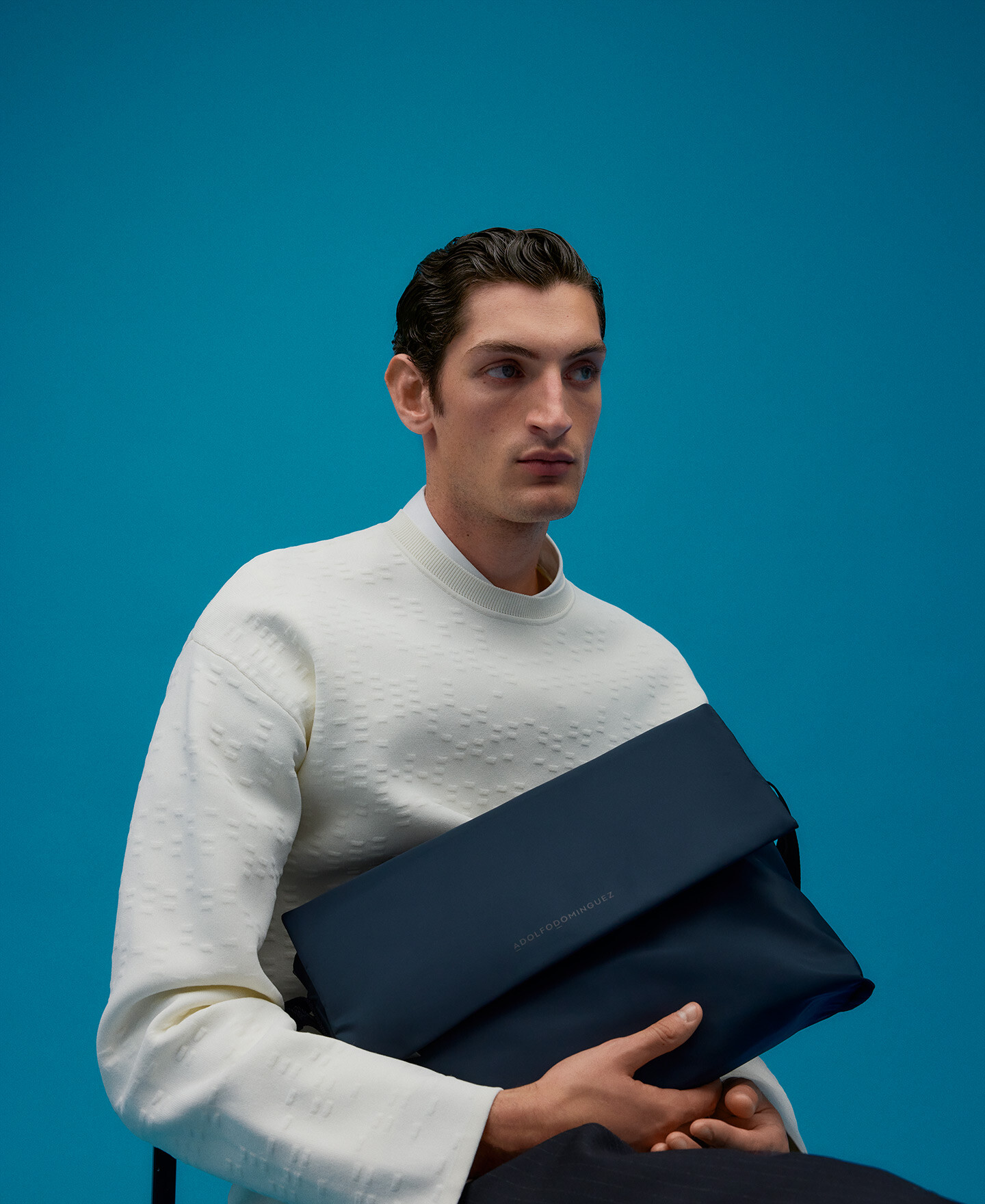
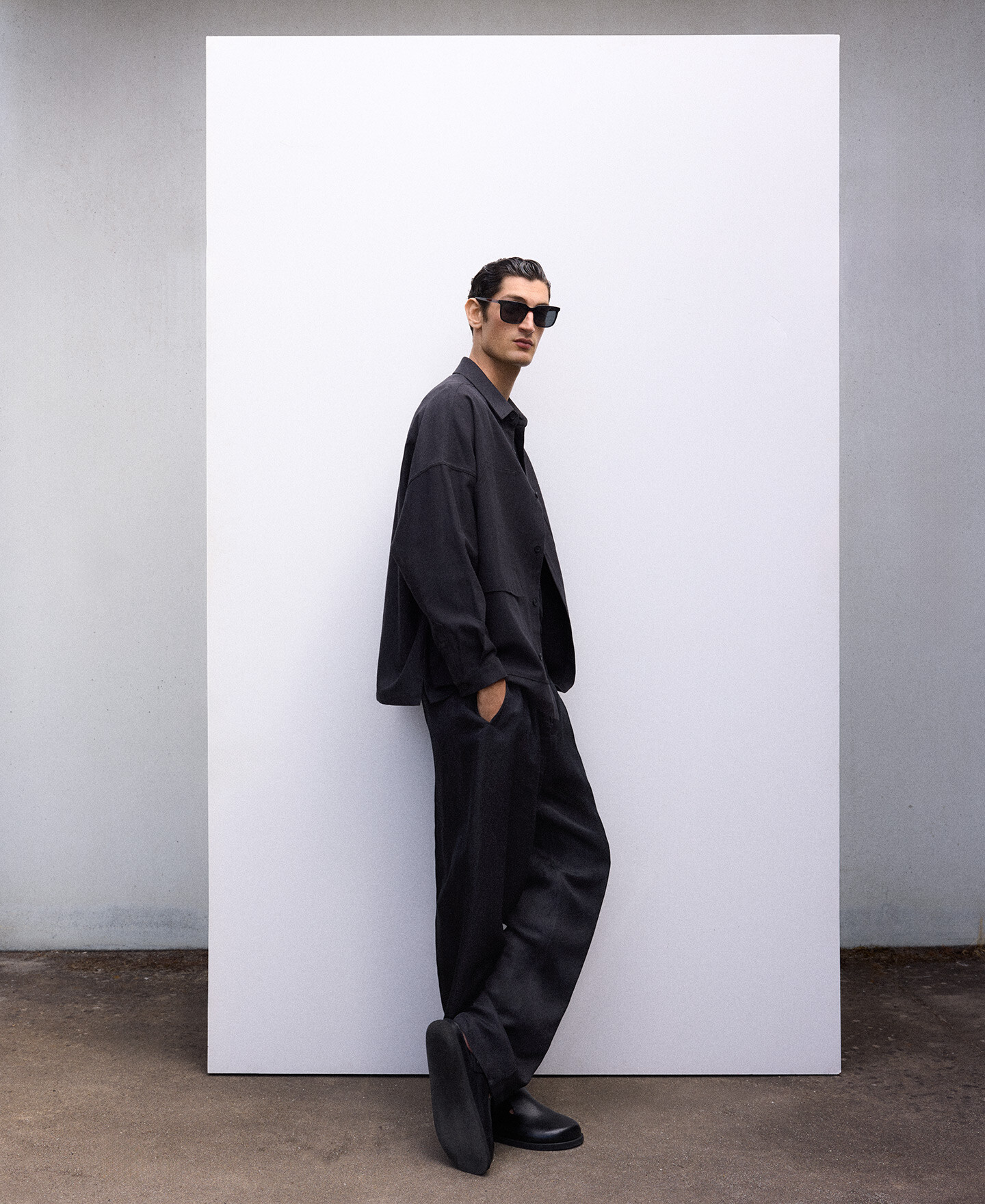
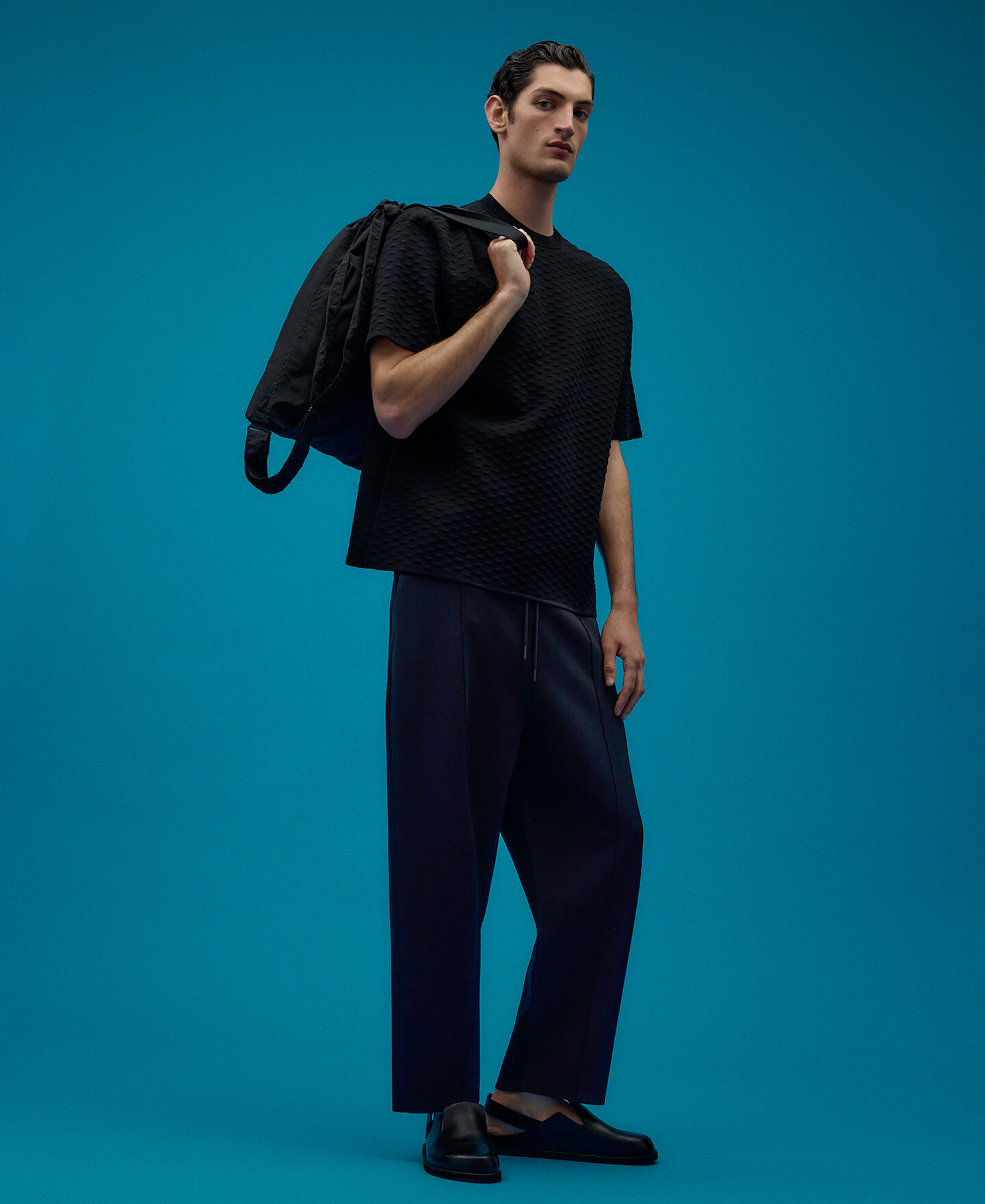
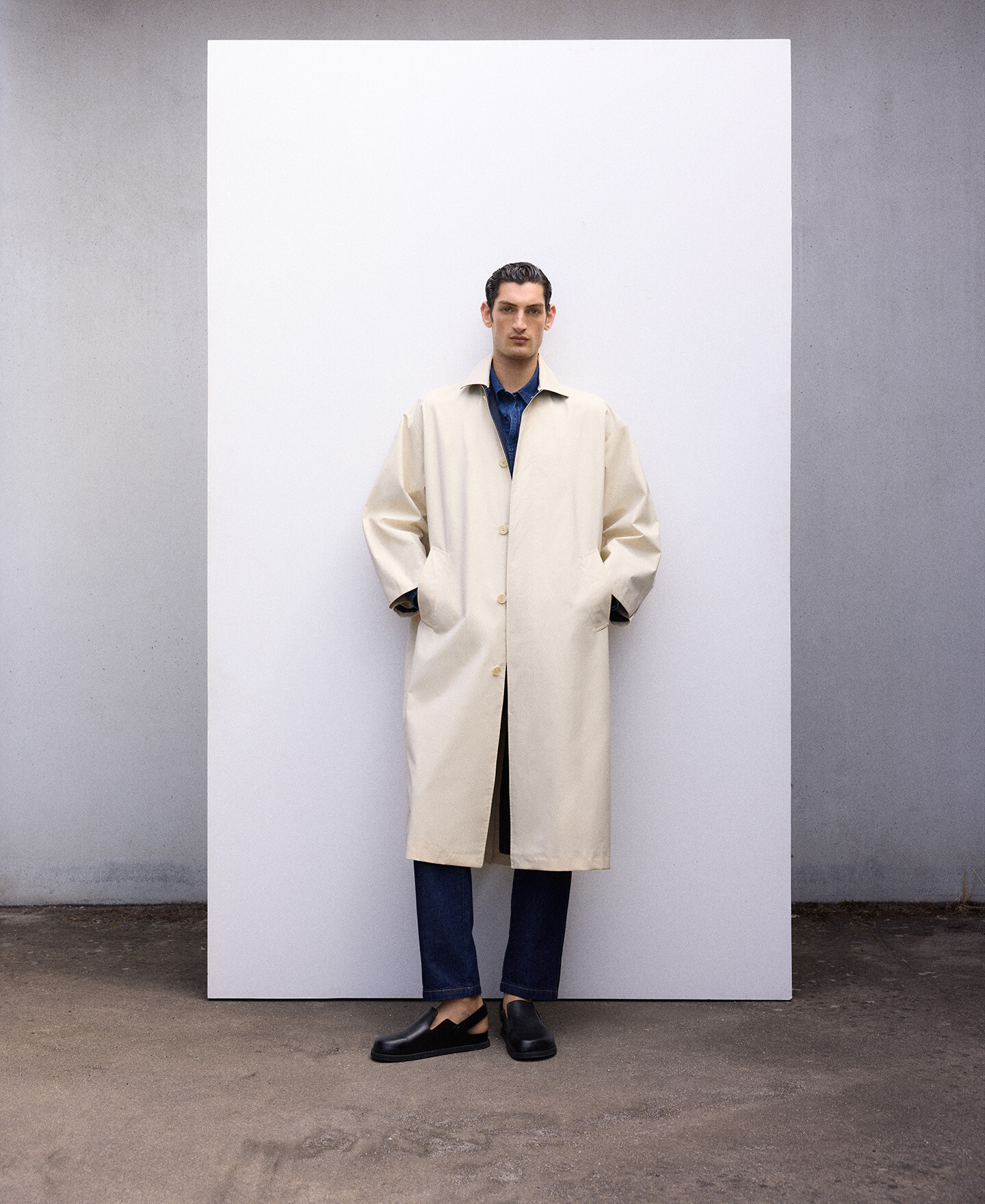
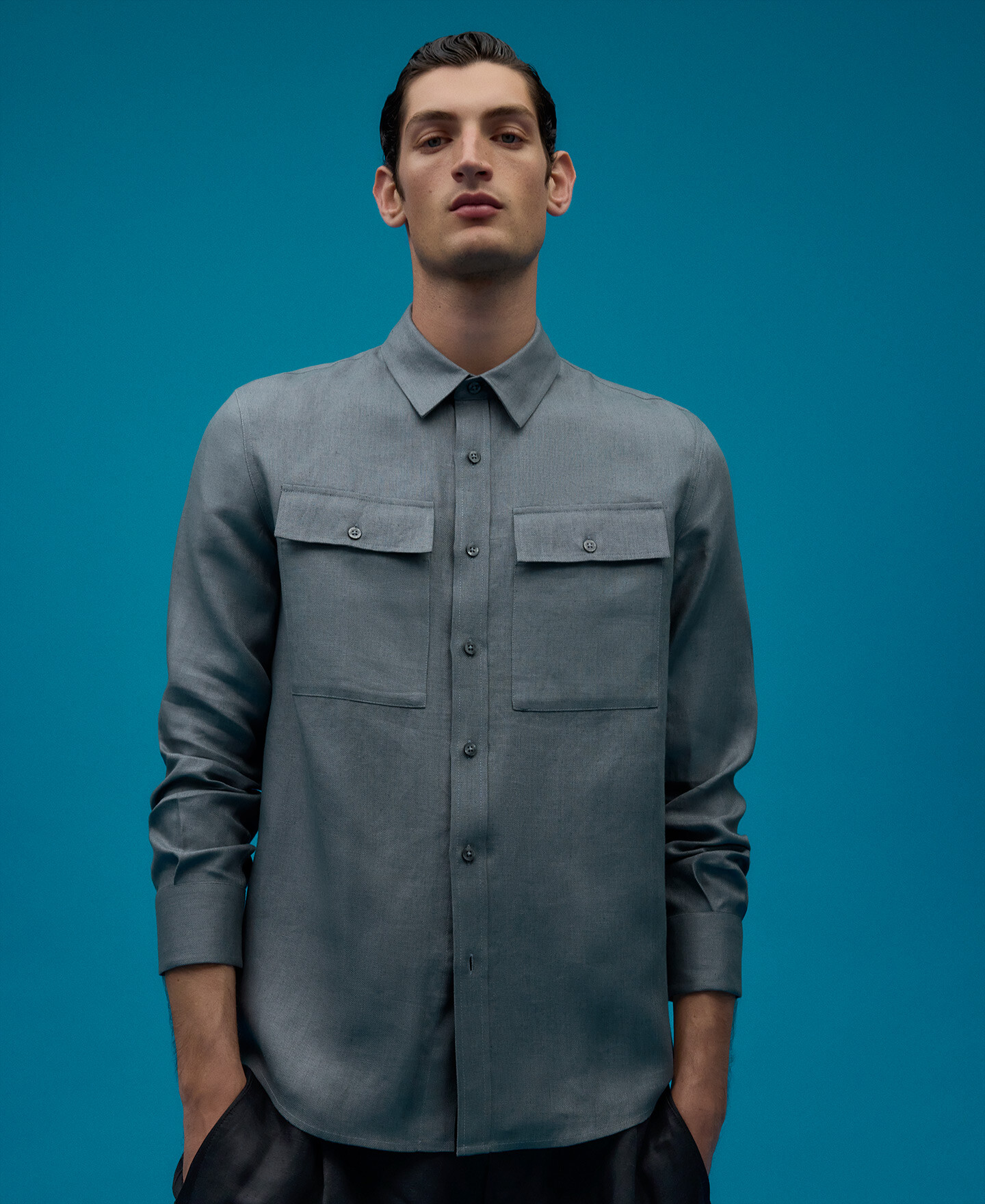
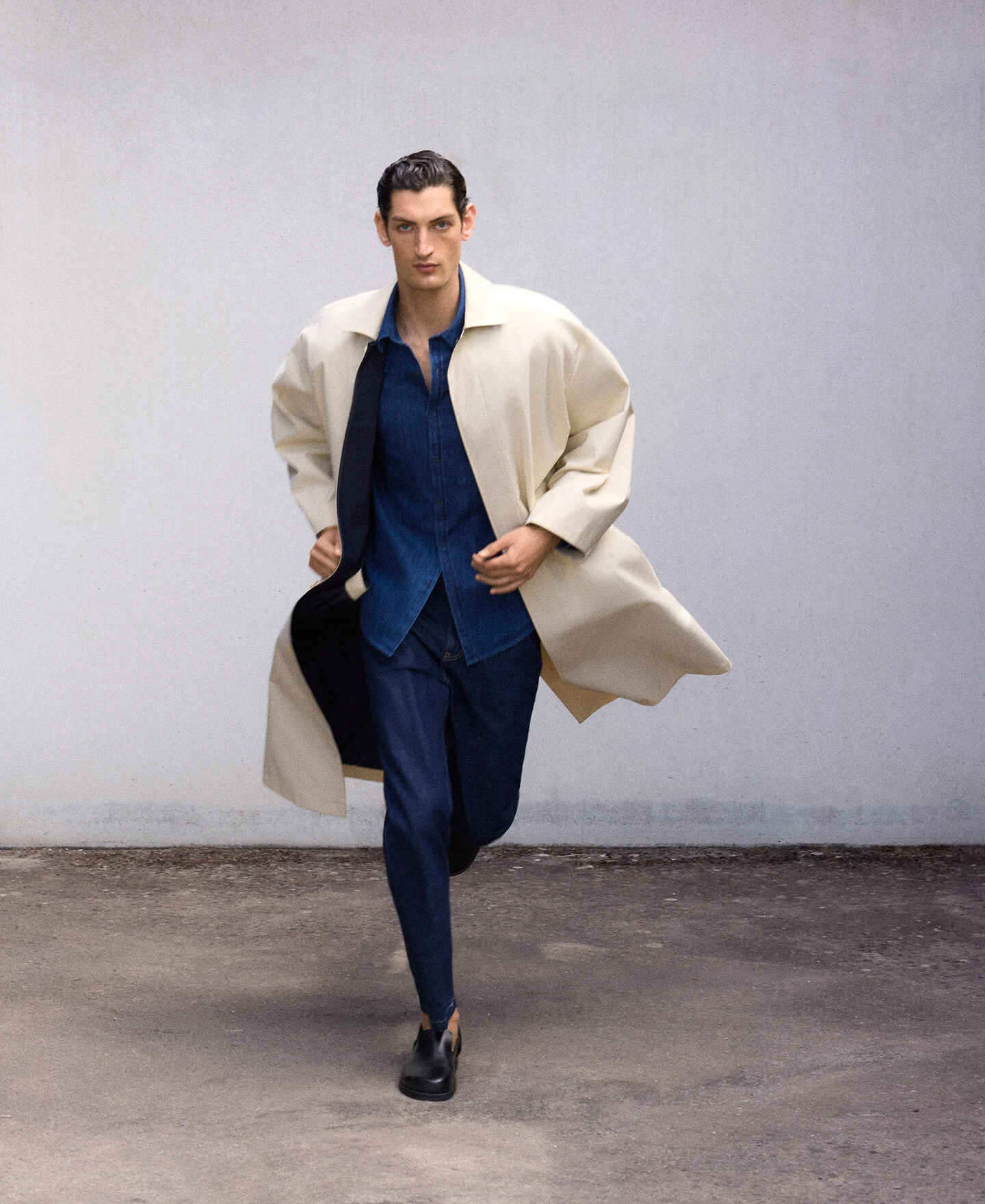
Adolfo Domínguez’s IKIGAI collection is not a collection inspired by Japanese philosophy. It is a collection that is, in its structural logic, an application of that philosophy to the specific design problem of what clothing should be. The distinction matters enormously for understanding what makes this collection one of the most intellectually significant presentations at Dubai Fashion Week — and why IKIGAI, properly understood, is not a mood board reference but a design operating system.
IKIGAI — translated loosely as finding one’s purpose in life, but more precisely as the intersection of what you love, what you are good at, what the world needs, and what you can be paid for — is a framework for understanding the conditions under which a human life feels meaningful rather than merely functional. Applied to fashion design, the framework produces a set of questions that most seasonal collection design does not ask: What does this garment contribute to the life of the person who wears it, beyond its visual appeal? What is its relationship to utility, to longevity, to the specific activities and contexts that constitute that person’s actual existence? How does it age, and what does its aging communicate about the quality of the decisions made in its construction?
The IKIGAI collection’s answers to these questions are visible in every element of its design language. The subtle textures of crumpled fabrics communicate a relationship to time — the understanding that the garment’s character deepens rather than diminishes through use. The fluidity of cascading ruffles expresses the specific quality of clothing that moves with the body rather than imposing structure upon it. The asymmetrical cuts and the carefully balanced palette — neutral tones in conversation with vibrant hues — reflect the IKIGAI principle of balance: the specific equilibrium between utility and beauty, between what a garment must do and what it aspires to be, that the most considered design achieves.
The commitment to sustainability that runs through the Domínguez design philosophy is not a separate ethical dimension applied to an existing aesthetic approach. It is the direct consequence of the IKIGAI framework applied to fashion production: if the garment is designed for purposeful longevity rather than seasonal obsolescence, then the materials, the construction methods, and the production ethics are not optional considerations but structural requirements. Adriana Domínguez, Executive President of the house, was present at the exhibition — an underscoring of the institutional commitment to these values that extends beyond the design studio into the brand’s leadership and commercial identity.
The argument that the most enduring fashion choices are those made with genuine self-knowledge — that the investment wardrobe and the IKIGAI-aligned wardrobe are, at their deepest level, the same wardrobe — connects Adolfo Domínguez’s philosophical framework to the broader quiet luxury sensibility explored in The New Language of Quiet Luxury: Inside the Timeless Wardrobe of Apparis. Both are expressions of the same foundational intelligence: fashion as a system for purposeful living rather than as a series of seasonal statements about who one is at a particular moment in trend time.
Ihab Jiryis — the monarch butterfly, transformation, and identity as narrative construction
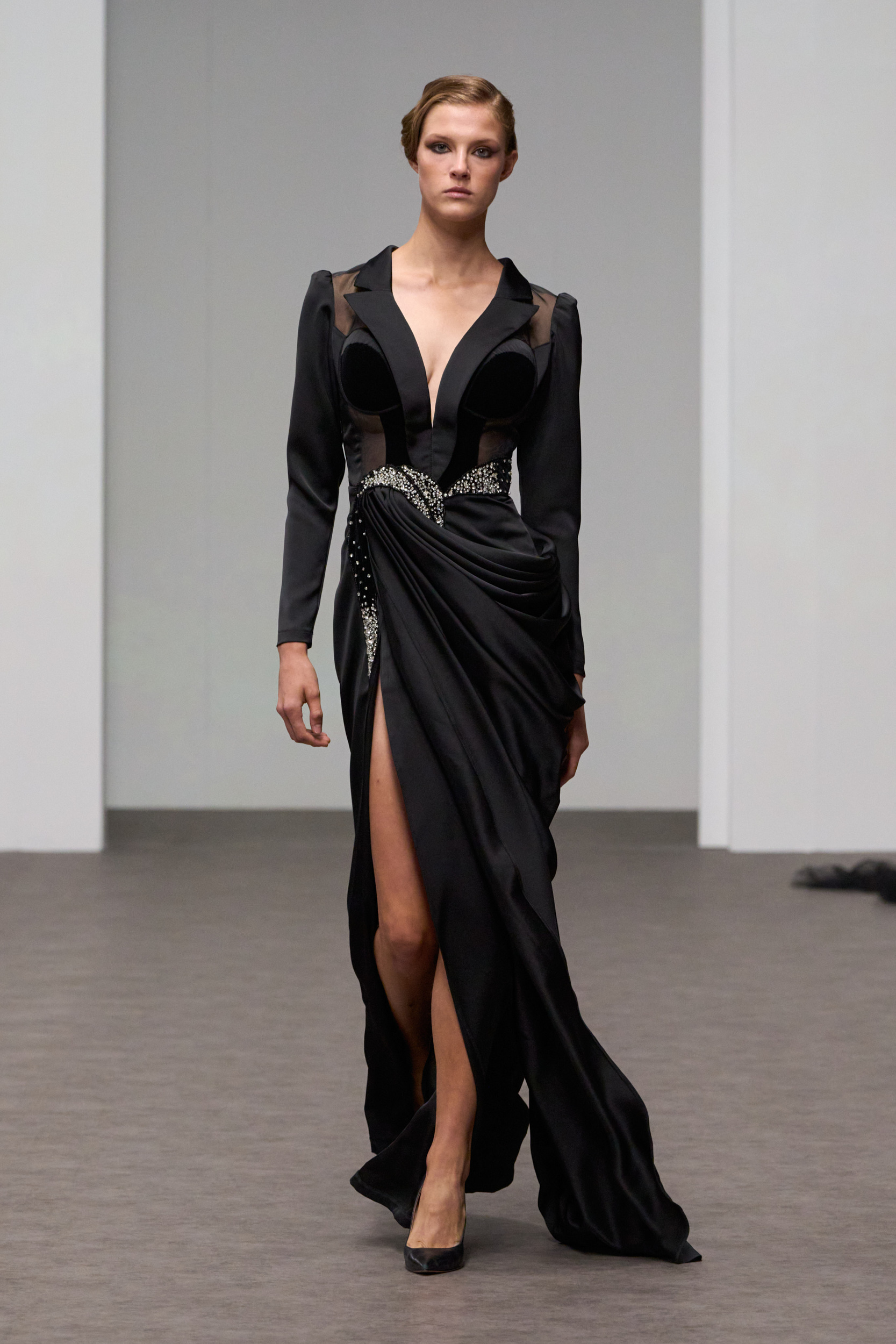
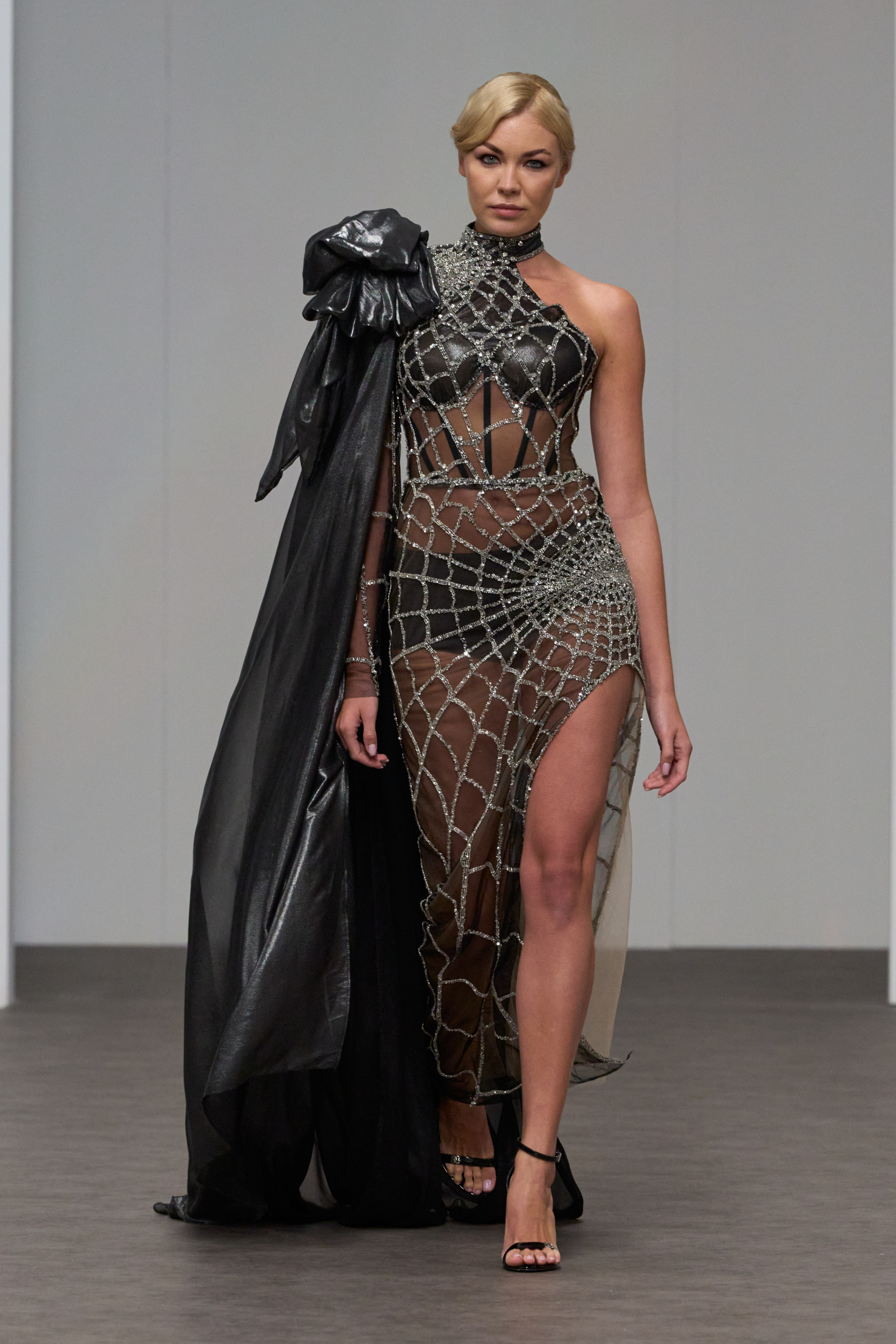
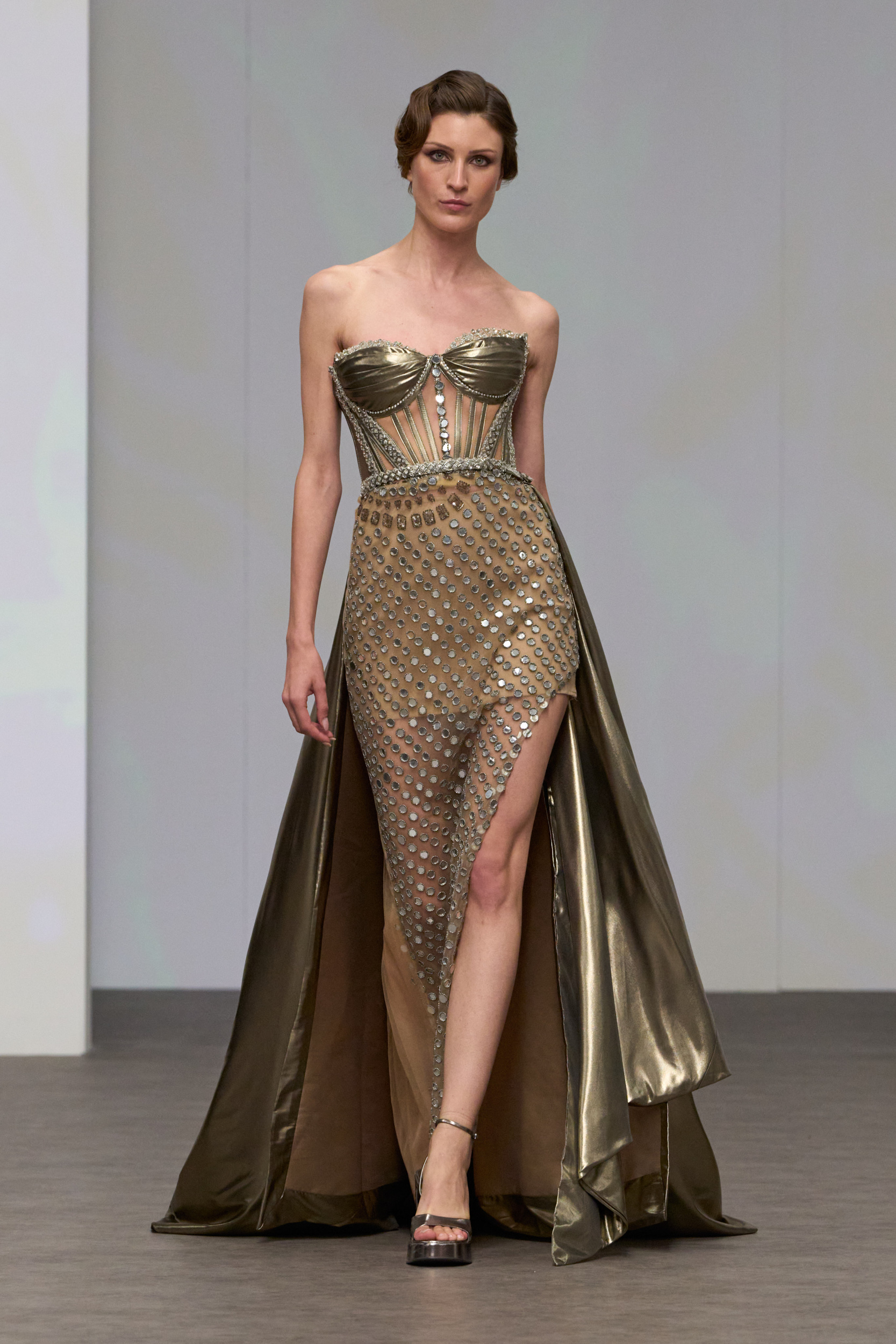
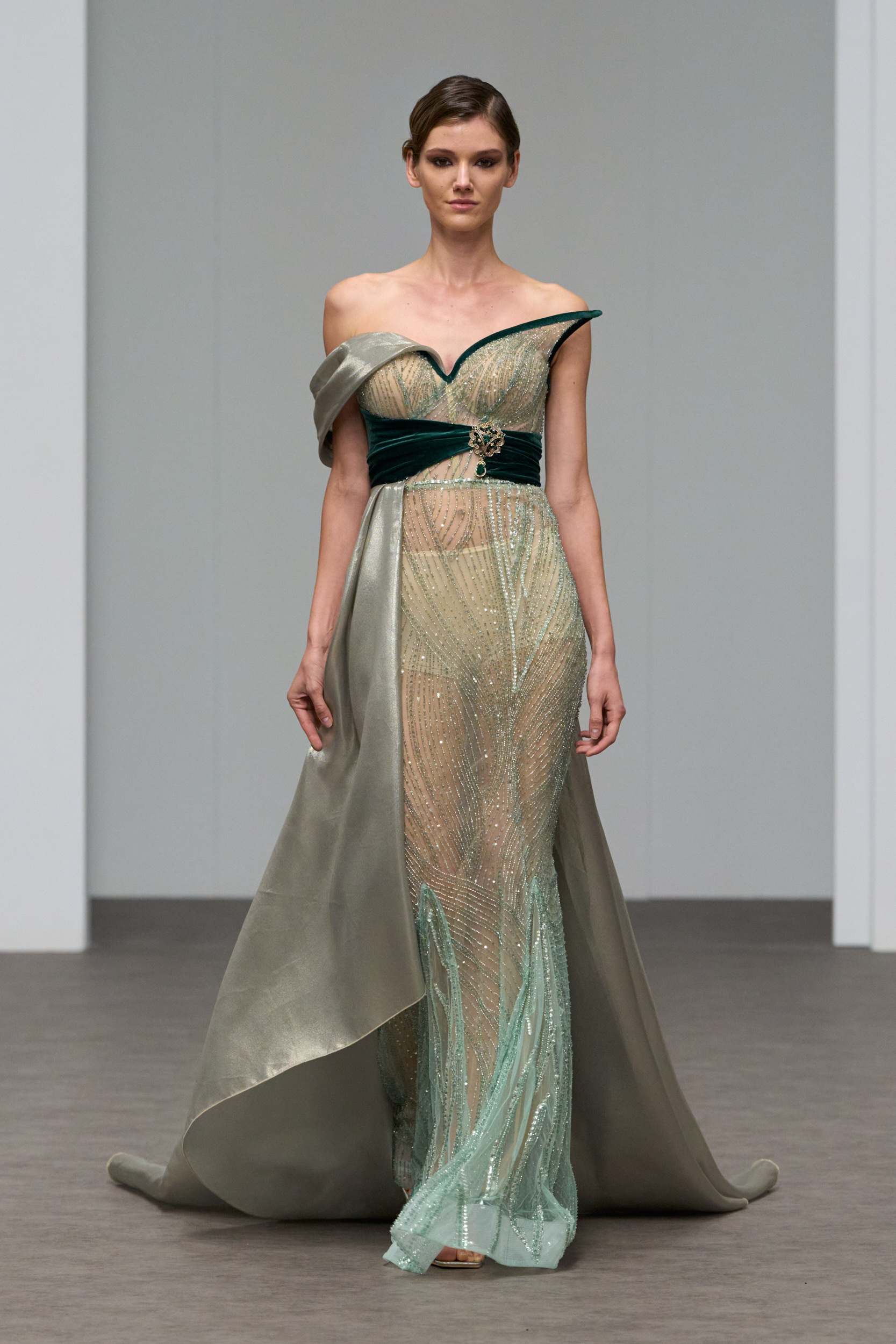
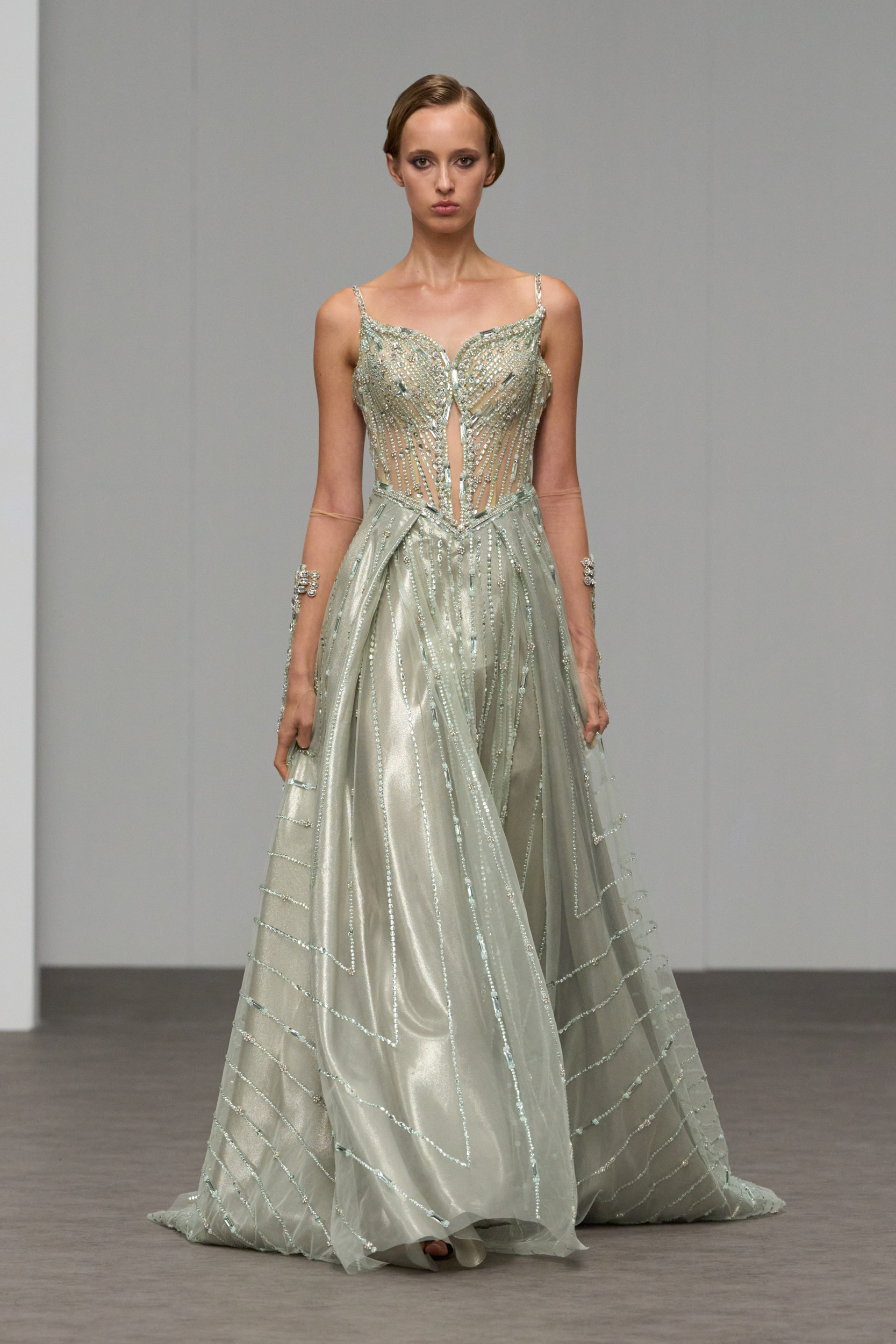
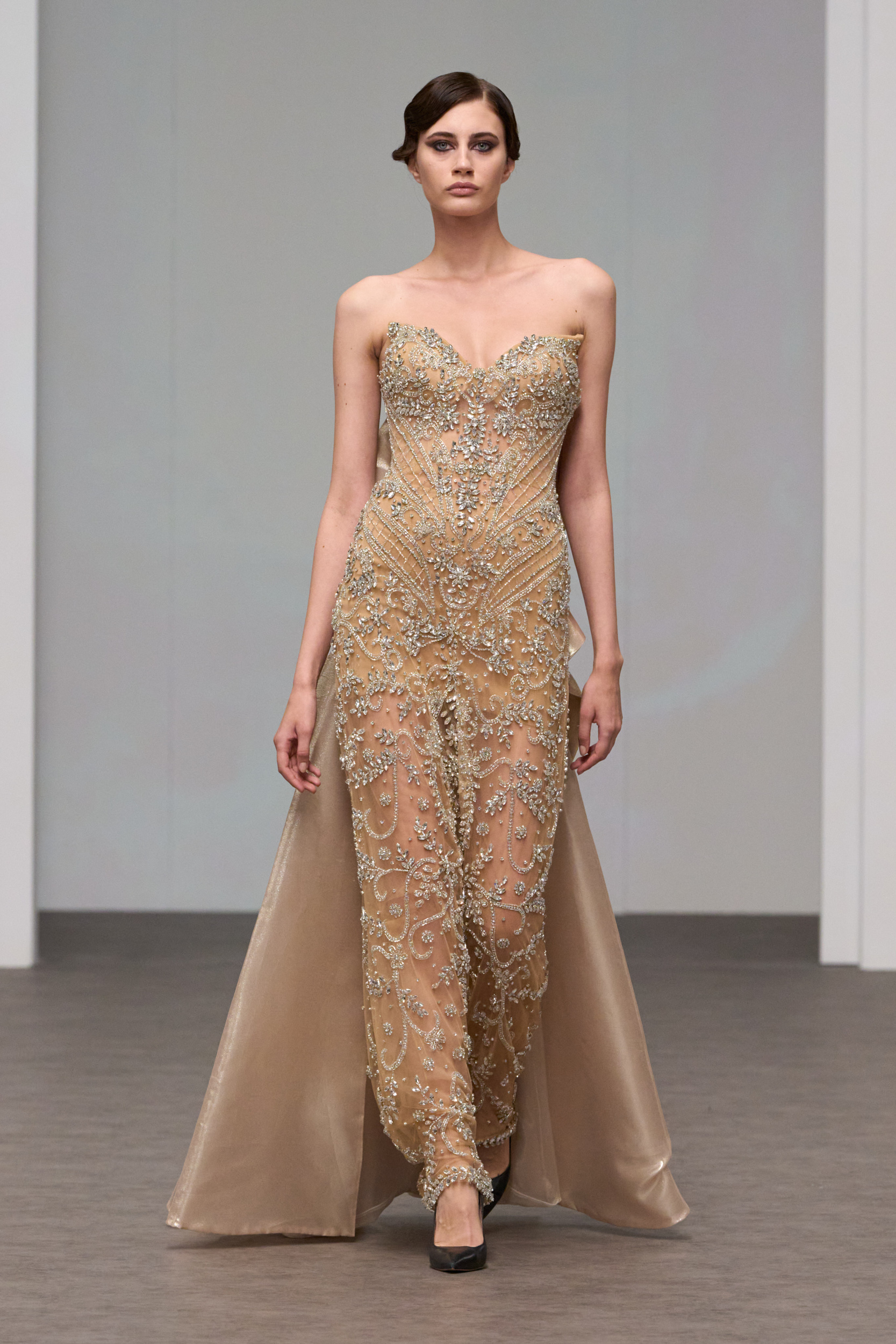
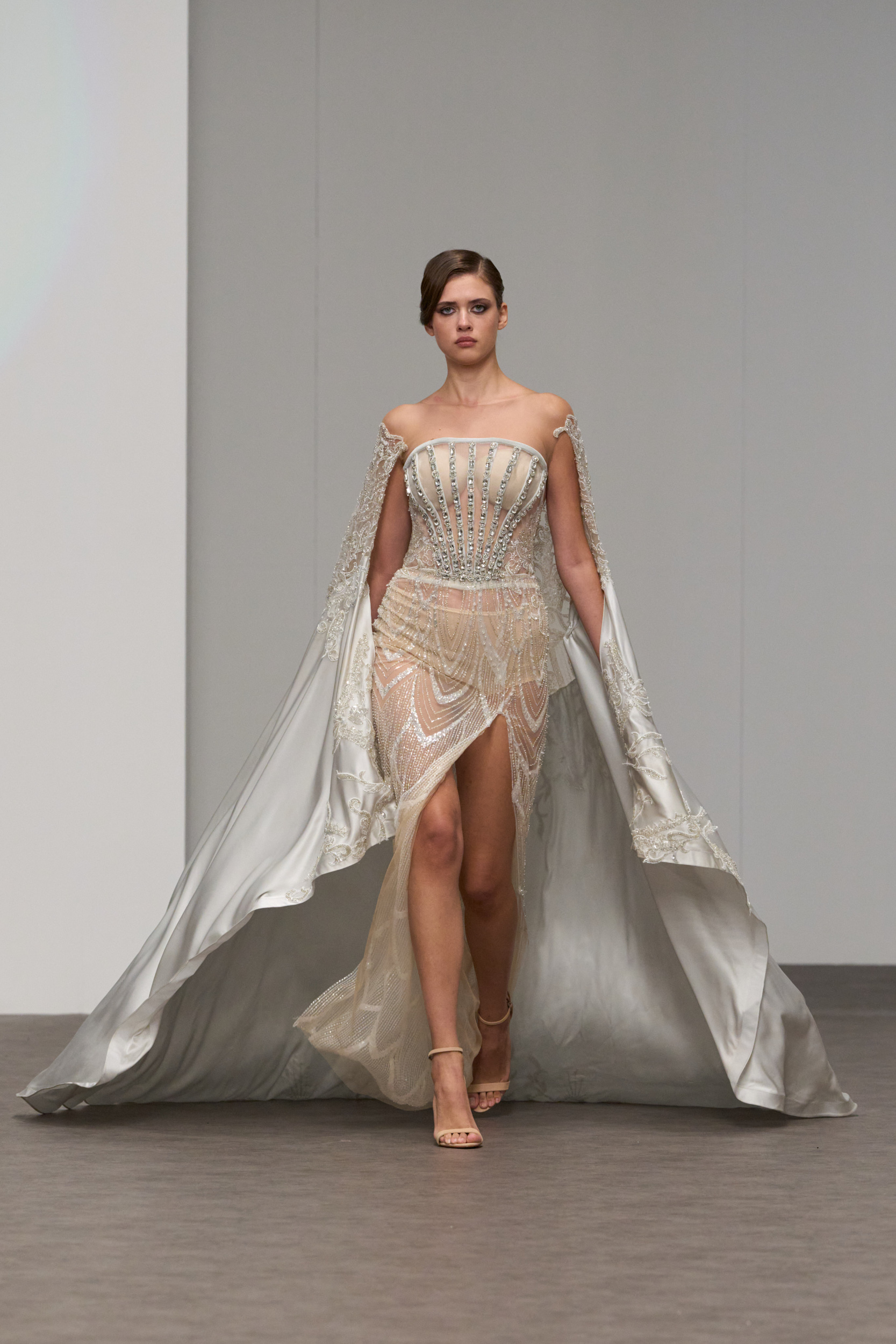
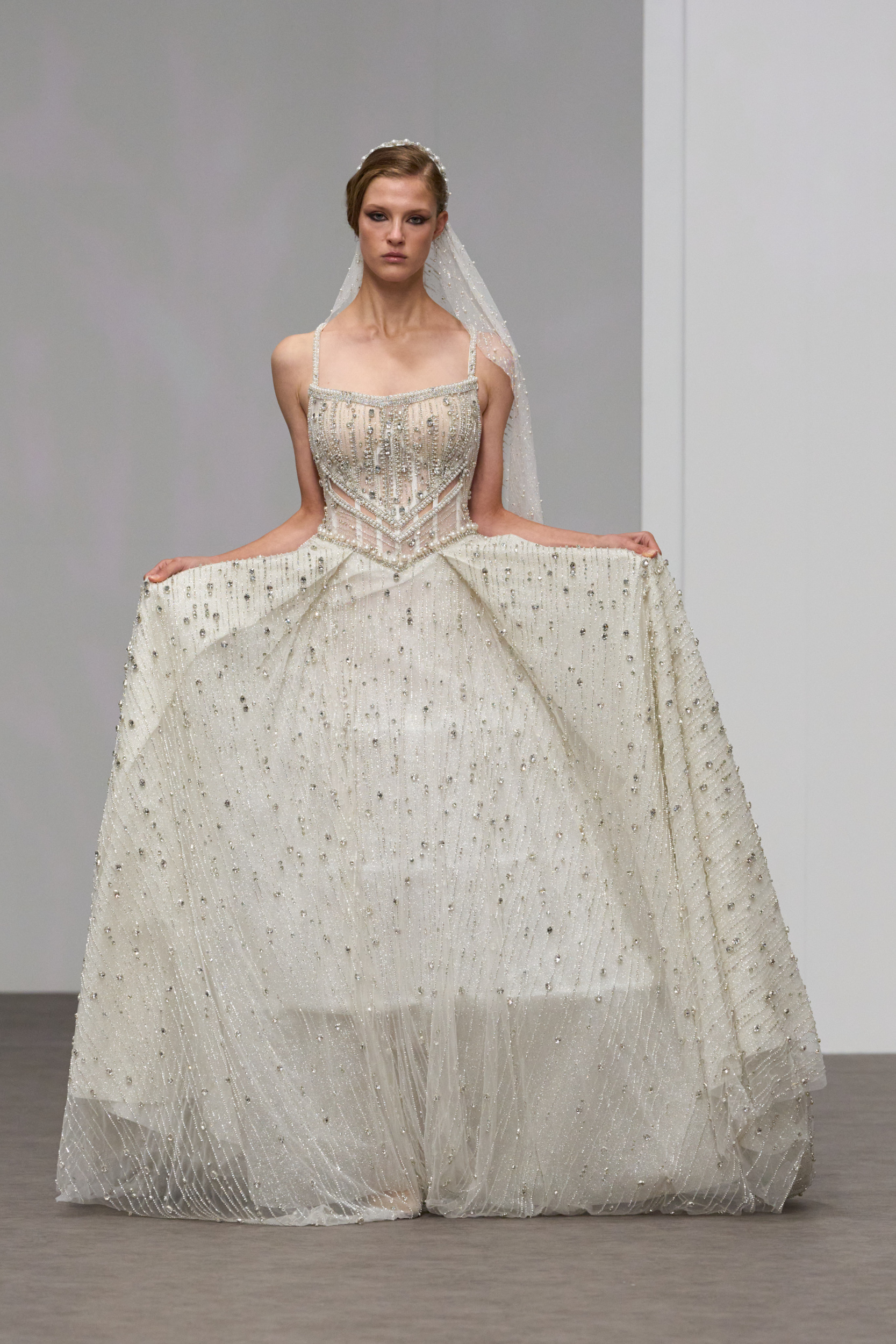
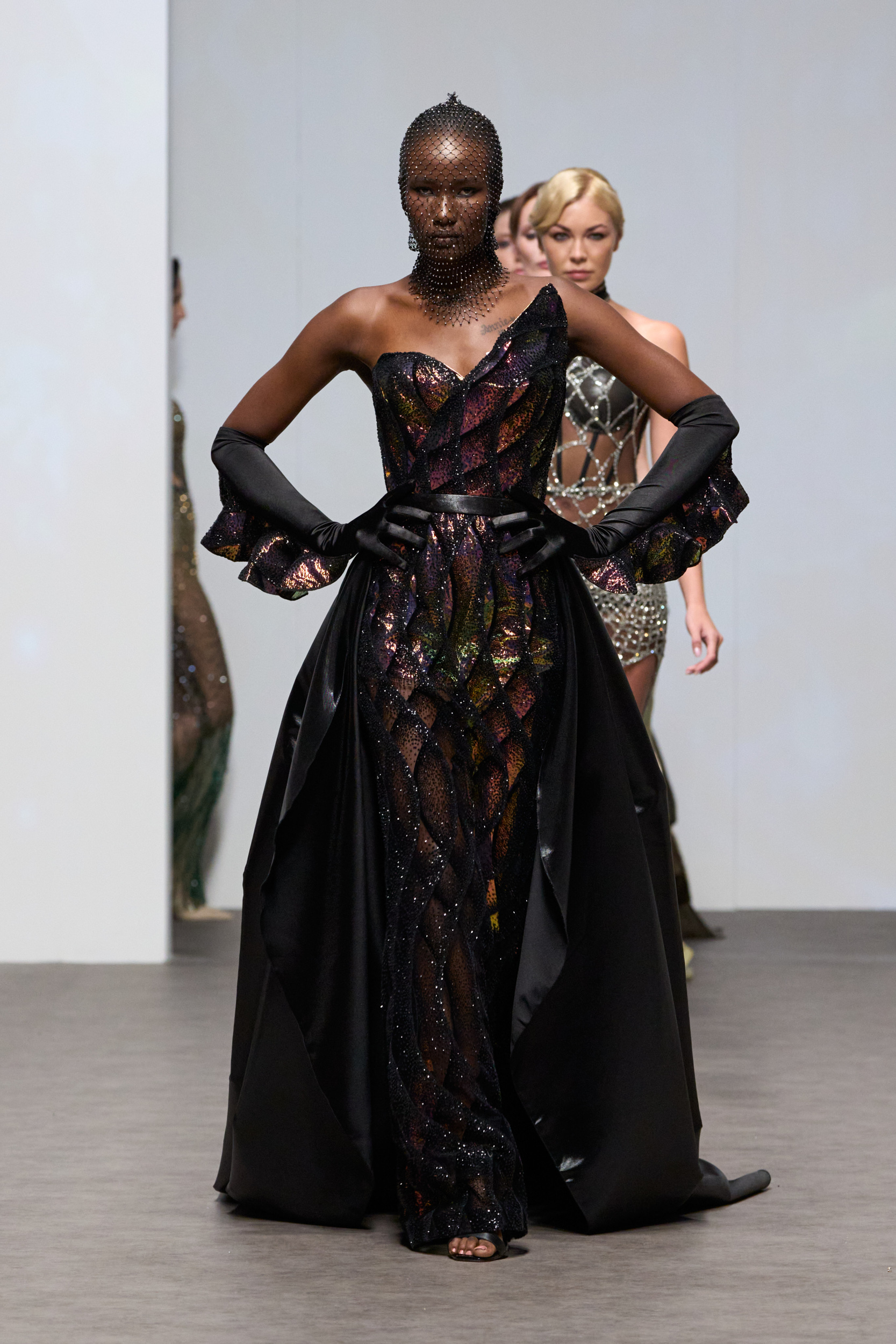
Ihab Jiryis’ Spring/Summer collection, inspired by the transformative journey of the monarch butterfly, is one of the most conceptually precise presentations at Dubai Fashion Week — a collection in which the central metaphor is not decorative but structural, shaping every element of the design language from the silhouette to the embroidery to the specific quality of movement that the garments produce on the runway.
The monarch butterfly’s journey is one of the most extraordinary biological narratives available: the transformation from caterpillar through chrysalis to winged form, the subsequent migration across thousands of kilometres guided by a navigational intelligence that science has not fully explained, the multigenerational relay through which the migration is completed by butterflies that are not the same individuals who began it. The narrative is about transformation, yes — but more precisely it is about transformation that carries memory, that maintains direction across radical change, that produces something entirely new while remaining connected to the originating impulse that set the journey in motion.
Jiryis’ gowns flutter down the runway like delicate wings — each piece intricately embroidered and designed to capture the essence of transformation in fabric. The voluminous skirts and fitted bodices that define the collection’s silhouette language are not arbitrary formal choices. They are translations of the butterfly’s specific physical form — the combination of lightness and structure, of the ephemeral and the precisely engineered, that constitutes the visual language of metamorphosis — into a garment construction logic. The playful silhouettes carry the exuberance of genuine transformation, while the couture-level embroidery carries the seriousness of a maker who understands that the most significant design work is always the product of discipline as much as inspiration.
The bridal-inspired elements within the collection connect Jiryis’ transformation narrative to the specific cultural register of the most significant life transitions — the moments in which identity is most consciously and most deliberately remade. This is fashion operating at the level of emotional infrastructure: the garment as a container for the experience of becoming, as well as for the identity that has been become. The Middle Eastern couture tradition that Jiryis is working within — and the specific cultural intelligence he brings to it from his own layered heritage — gives these garments a depth of narrative resonance that the purely aesthetic couture collection cannot achieve. As Business of Fashion’s analysis of Middle Eastern couture and identity-driven design documents, the designers producing the most globally significant work from this tradition are those whose engagement with cultural narrative is as rigorous as their engagement with craft.
Weinsanto — Lady de Weinsanto, emotional philosophy, and fashion as punk rock opera
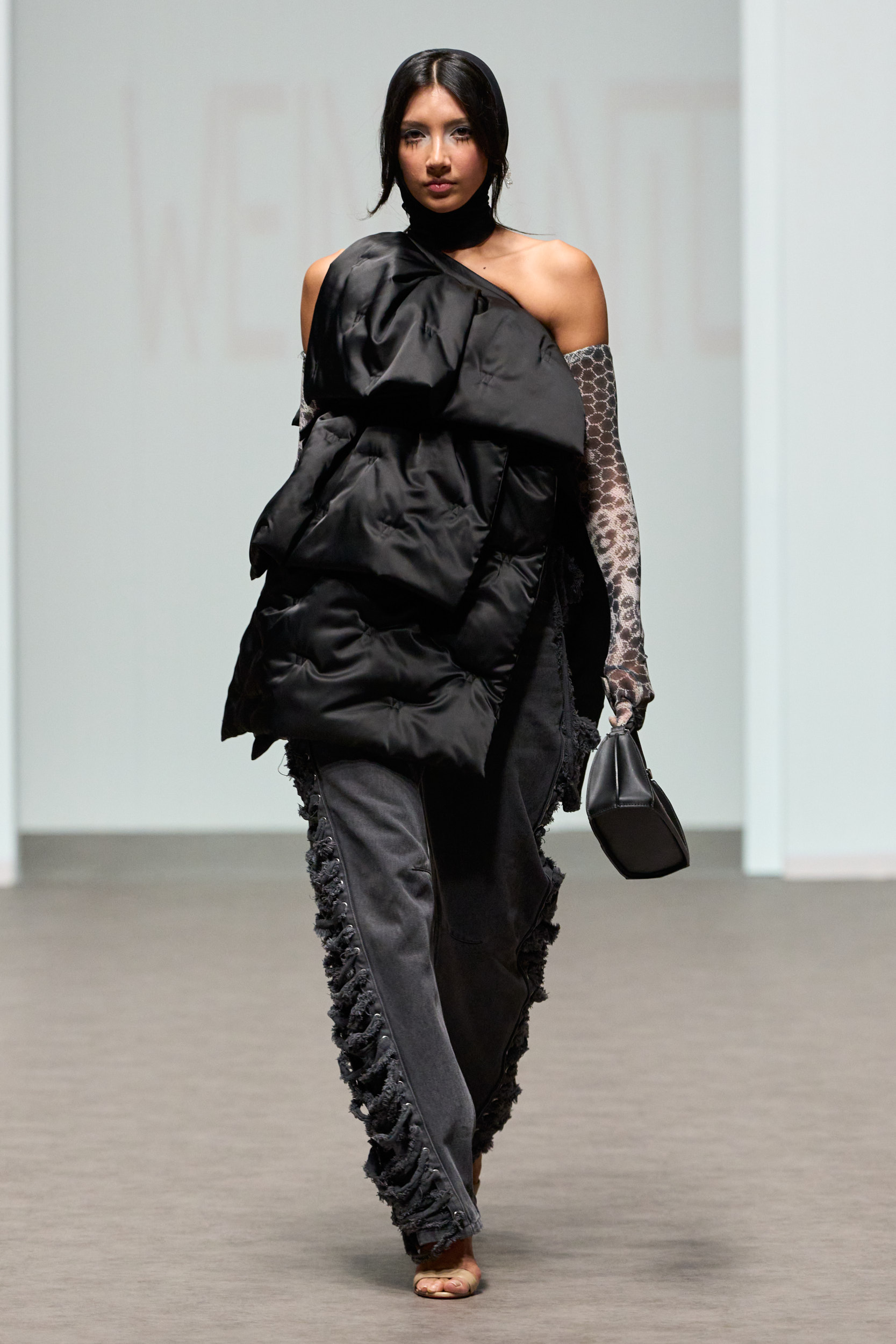
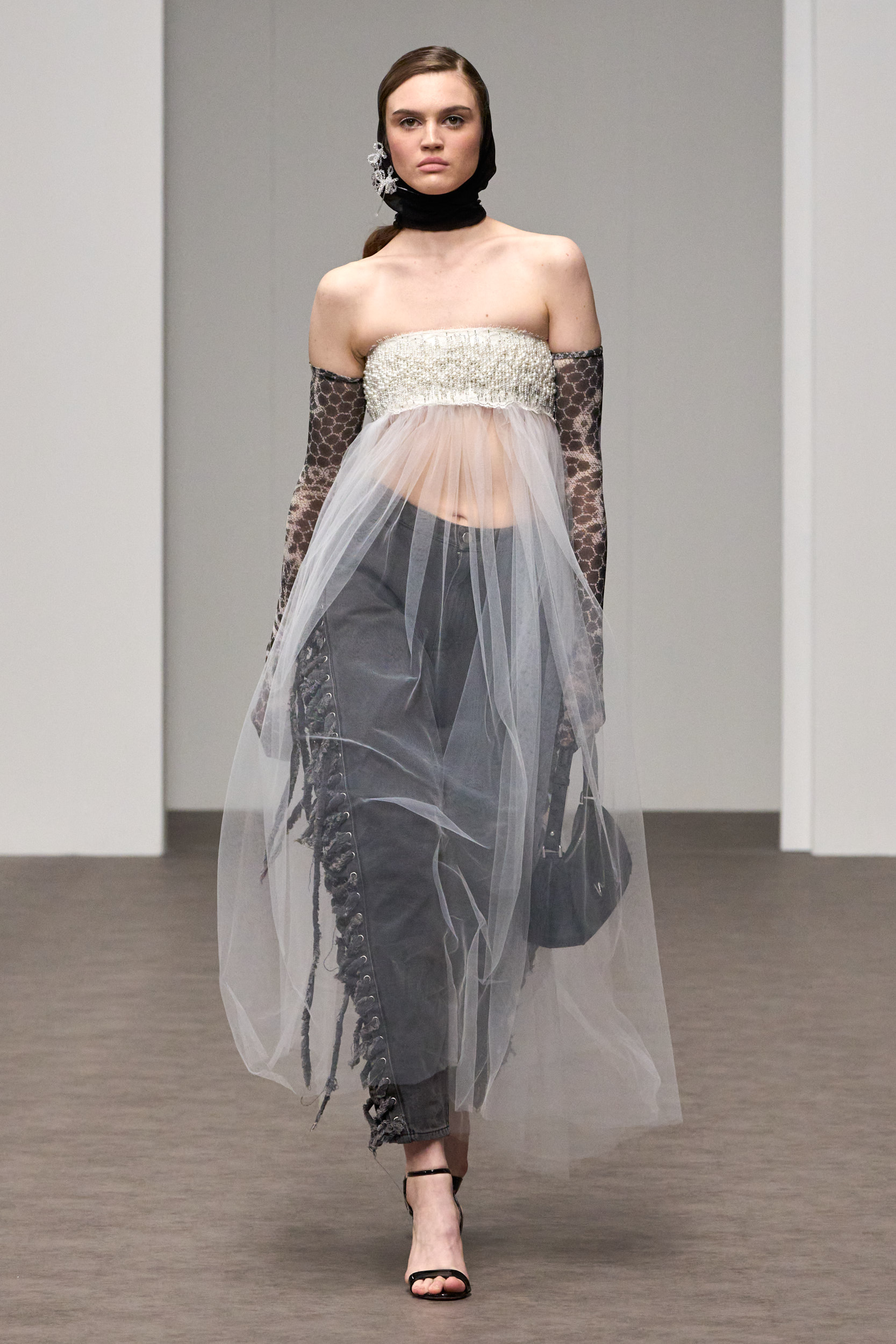
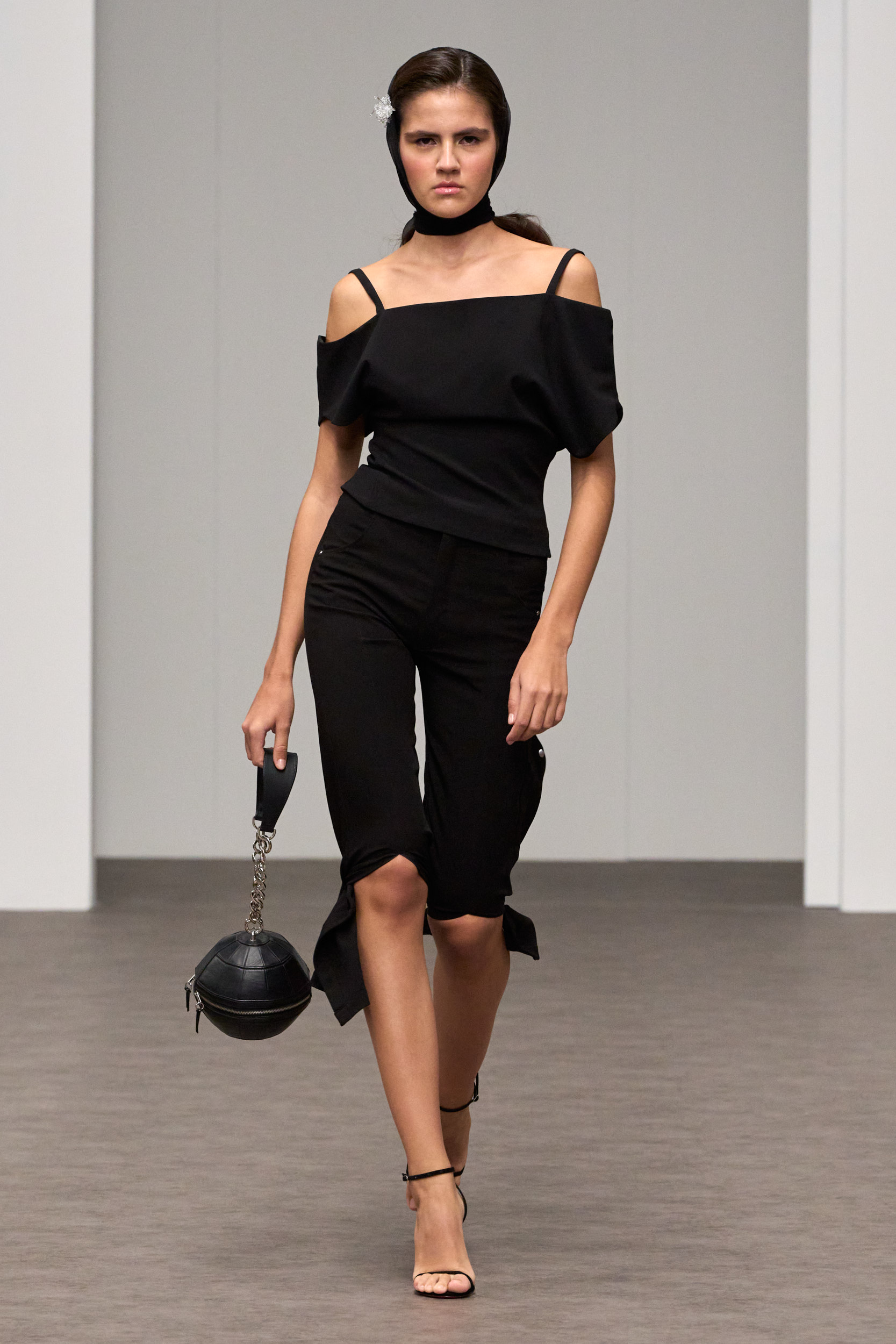
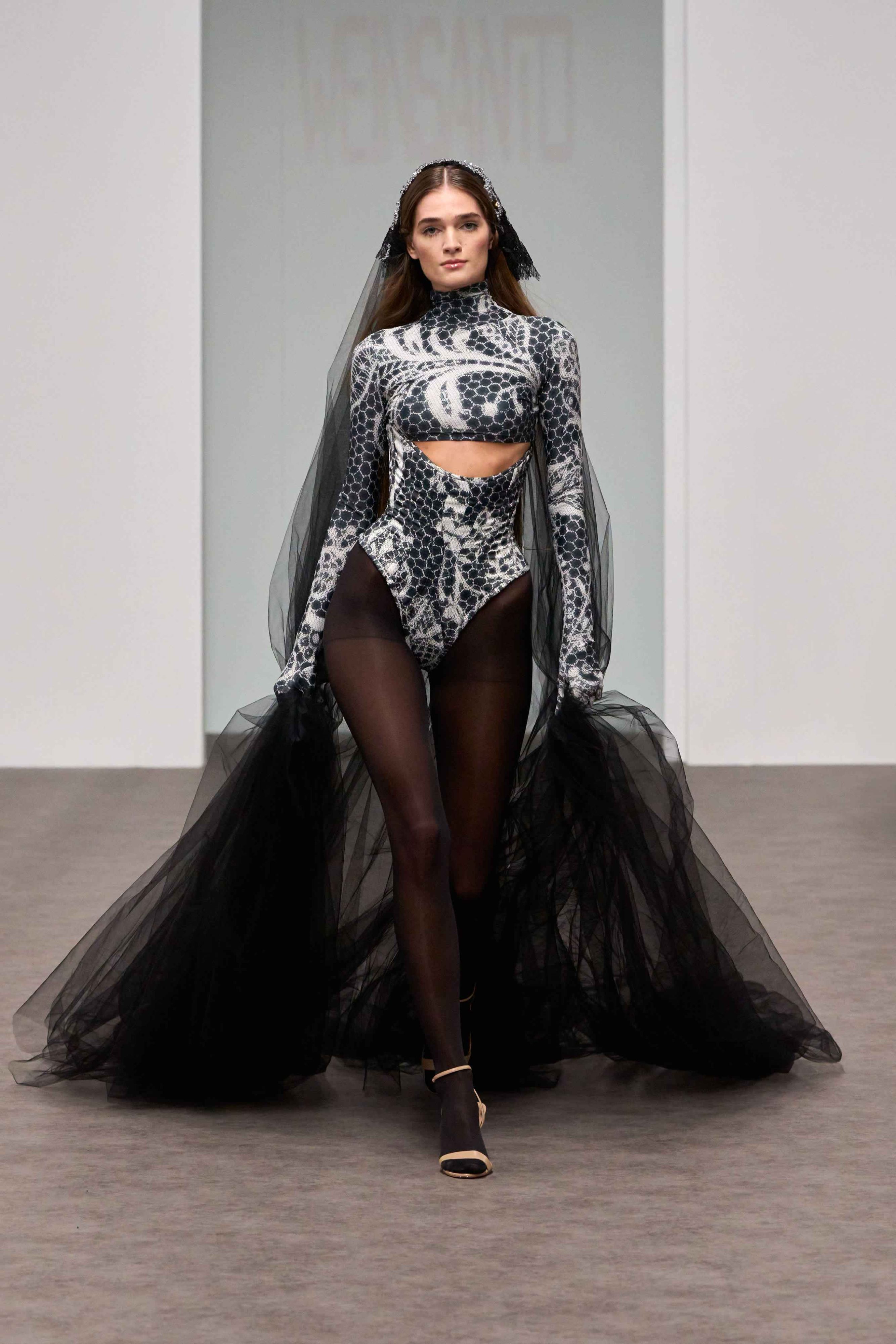
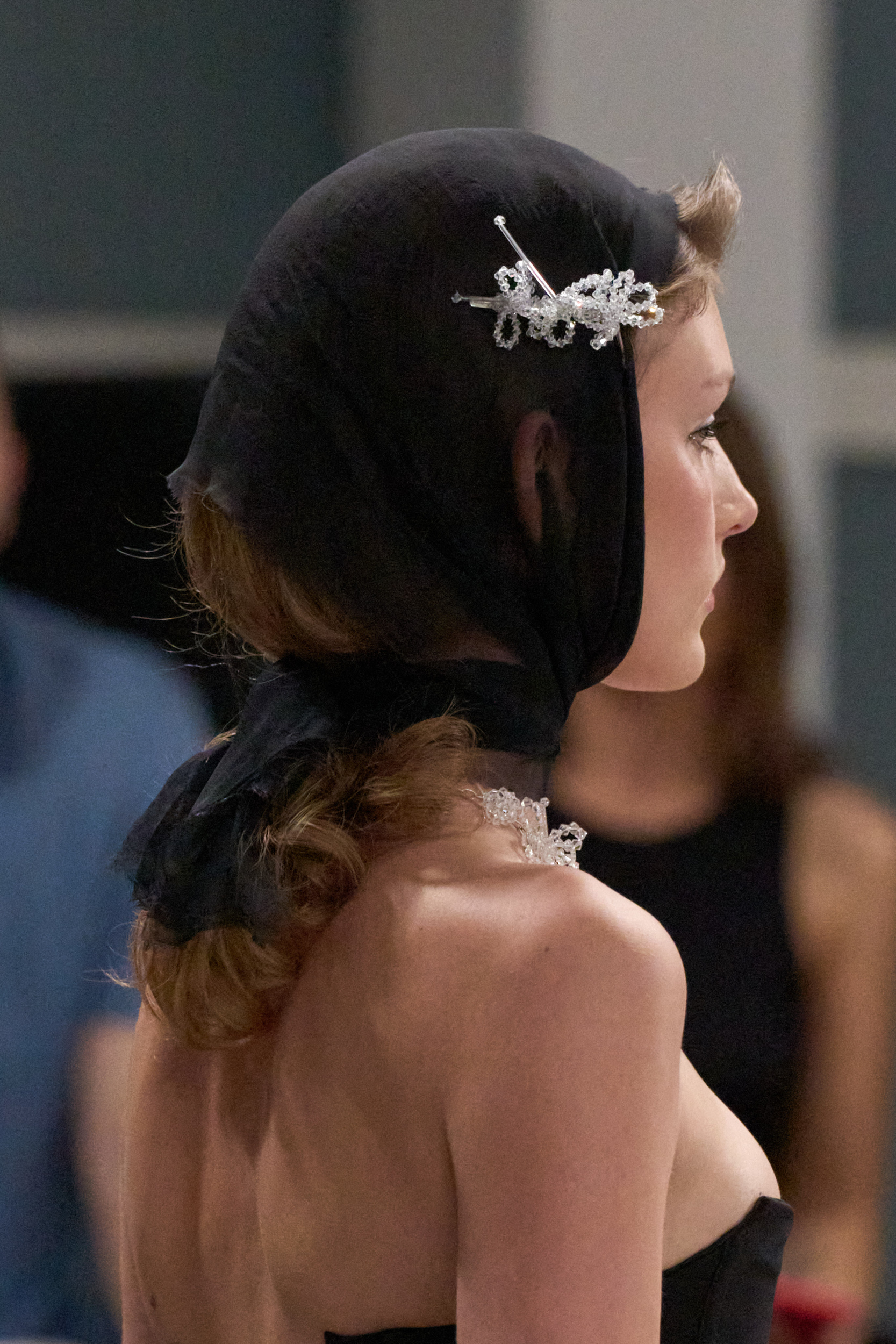
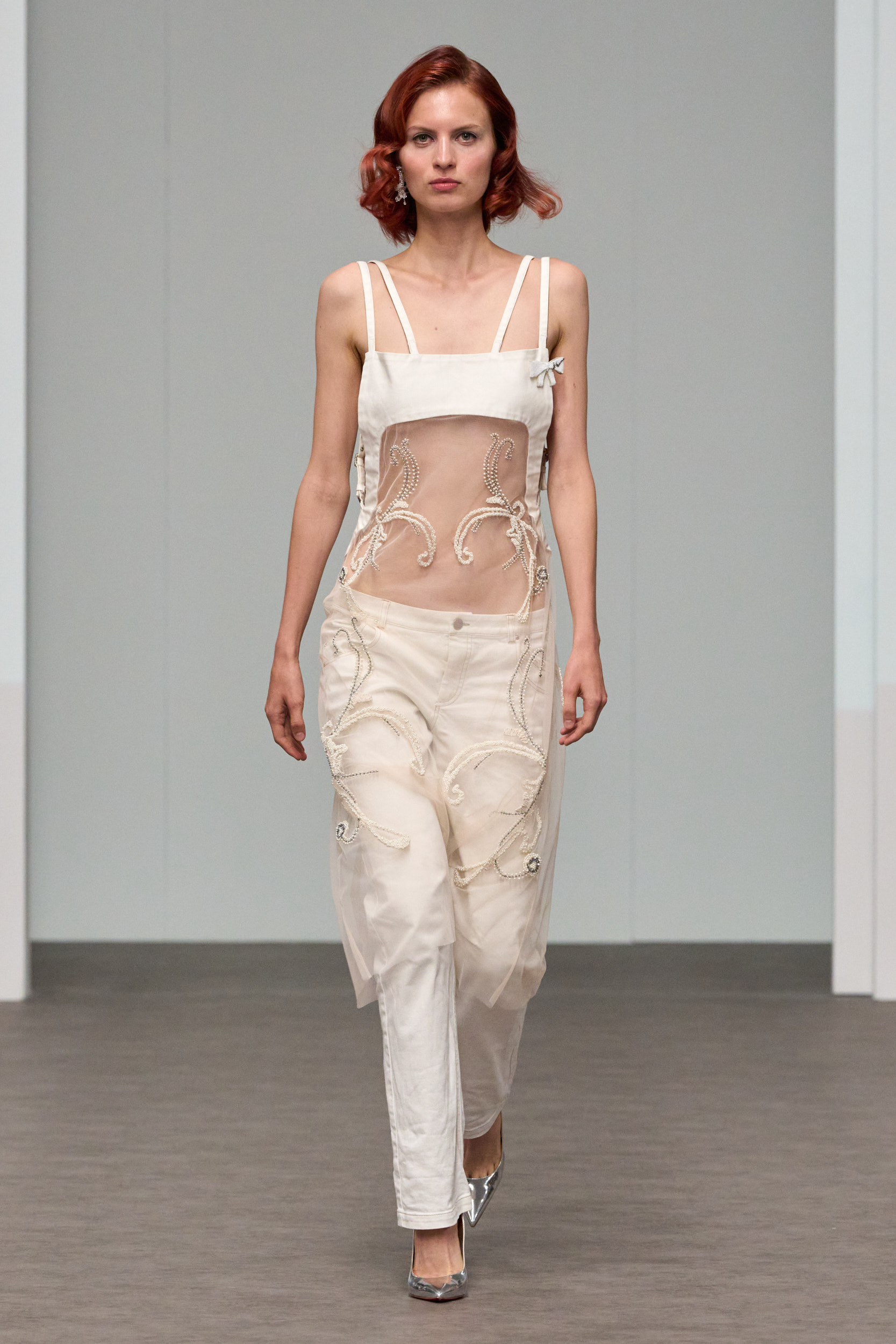
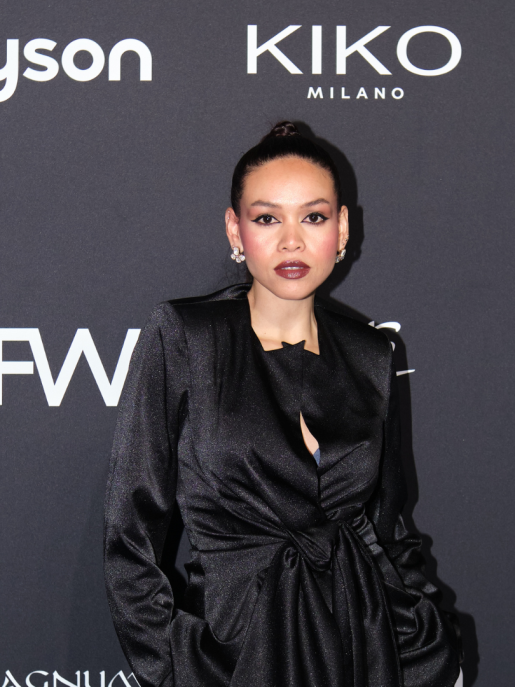
Victor Weinsanto’s Lady de Weinsanto, presented by the Fédération de la Haute Couture et de la Mode, is the most emotionally ambitious presentation at this segment of Dubai Fashion Week — and the most formally challenging, because the emotions it is working with are not the comfortable ones. The collection’s Gothic undertones, its acid greens and fiery fuchsias against dominant black, its fusion of Sophie Halette lace and dead-stock leather, its Ugo Nardini orchestral score that turns the runway into what it is: a punk rock opera about what femininity actually contains when it is allowed to be fully itself.
The comparison to Jean Paul Gaultier is apt and precise — not because Weinsanto’s aesthetic is Gaultier’s, but because the design philosophy occupies the same intellectual territory: the conviction that the most powerful fashion is the fashion that refuses the consoling fictions that conventional femininity has been asked to maintain, that confronts the full emotional and psychological complexity of women’s experience rather than aestheticising only its agreeable surface. The corsets that redefine traditional femininity in the Lady de Weinsanto collection are not the corsets of restriction — they are the corsets of claimed power, of the specific pleasure that comes from inhabiting a garment whose structure expresses intention rather than accommodation.
The oversized strapless XXL bag crafted from dead-stock leather is the collection’s most structurally significant single piece — not for its formal innovation, though that is considerable, but for what it communicates about the philosophical position of the whole. Dead-stock leather is material with a history, rescued from the obsolescence that fashion’s acceleration has made standard. In a collection that is explicitly about resilience — about the specific femininity that has survived everything that tried to diminish it — the choice of material with a survival history is not incidental. It is the design philosophy made physical.
Weinsanto’s contribution to the intellectual fashion conversation at Dubai Fashion Week is the articulation of emotion as structural design logic rather than decorative effect. The most significant luxury fashion is increasingly the fashion that allows its wearer to inhabit the full complexity of their emotional life rather than performing only its most acceptable dimensions. As Vogue’s analysis of emotional couture and contemporary femininity in fashion documents, the designers engaging most seriously with this territory are producing work that resonates with audiences whose relationship to fashion is defined by depth of meaning rather than by surface appeal — and those audiences are consistently the most commercially significant in the contemporary luxury market.
IKIGAI as a global fashion framework — meaning-driven luxury and the post-aesthetic consumer
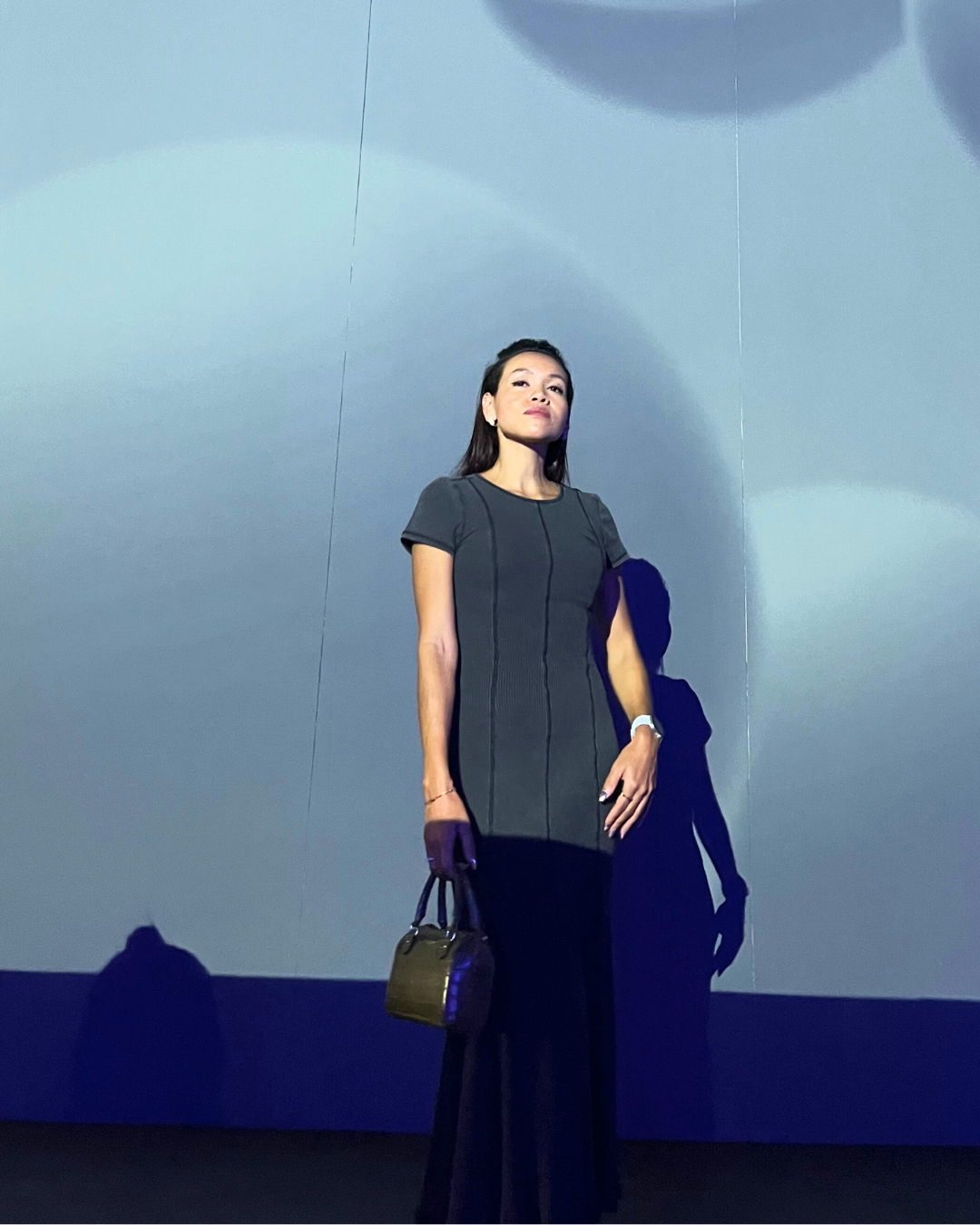
The significance of the IKIGAI framework extends beyond Adolfo Domínguez’s specific collection into a broader analysis of where luxury fashion consumption is moving — and why the most commercially significant development in the contemporary luxury market may be the emergence of the meaning-driven consumer whose relationship to fashion is defined by existential alignment rather than by trend participation or brand association.
The IKIGAI consumer does not shop — in the conventional sense of browsing options and selecting the most appealing. They invest: in garments whose relationship to their own life is understood and chosen with the same deliberateness that they bring to other significant decisions. The question they are asking — does this contribute to a life that feels purposeful and coherent? — is not a question that most fashion marketing is designed to answer. But it is the question that the most sophisticated contemporary luxury consumers are increasingly asking, and the brands that develop the capacity to answer it — through design intelligence, through sustainable production, through the cultivation of genuine long-term relationships with consumers rather than transactional single-purchase encounters — are the brands that will define the luxury market’s next significant commercial phase.
The parallel between the IKIGAI framework and the investment jewellery philosophy explored in The Return of the Pearl: Inside the Quiet Luxury of Robert Wan is precise: the Tahitian pearl chosen for its intrinsic quality and natural rarity, worn consistently across decades until it carries the emotional history of the person who has inhabited it, is the jewellery equivalent of the IKIGAI-aligned garment. Both are chosen for how they compound in meaning through sustained relationship rather than for how they read in a single moment of maximum visibility. This is the most enduring form of luxury investment available — and it is exactly the form of investment that the intellectual fashion movement at Dubai Fashion Week is making its foundational argument for.
Dubai Fashion Week’s positioning as a global platform for conceptual fashion discourse — its capacity to hold Adolfo Domínguez’s IKIGAI philosophy alongside Ihab Jiryis’ identity narrative construction alongside Weinsanto’s emotional couture philosophy, and to present all of these as equally valid contributions to the same intellectual conversation — is its most significant institutional achievement. The fashion week that can do this is not merely a commercial event or a cultural calendar moment. It is, as the design work presented here demonstrates, a site of genuine intellectual production: the place where fashion’s most serious questions are being asked and, in the specific language of textile and silhouette and structure, answered. As McKinsey’s State of Fashion analysis consistently documents, the fashion brands building the most durable commercial positions in the contemporary luxury market are those whose consumer relationships are grounded in genuine meaning rather than in the management of aspiration — and the intellectual fashion movement that Dubai Fashion Week is nurturing is the most significant available source of the design intelligence that those relationships require.
The broader fashion culture of the region — the specific creative depth that Dubai’s positioning as a global fashion hub is making visible and commercially viable — connects the intellectual fashion conversation at Dubai Fashion Week to the emerging regional luxury ecosystem explored in Dubai Fashion Week and the New Architecture of Regional Luxury. The intellectual fashion and the identity-driven regional luxury are not separate conversations. They are the same conversation about what fashion means in an era that has exhausted the possibilities of fashion as pure aesthetics — and Dubai Fashion Week is the most significant available platform for conducting that conversation at the level of rigour and global visibility it deserves.
Dubai Fashion Week as a platform for conceptual fashion — the designer as cultural philosopher
The most significant institutional development in Dubai Fashion Week’s evolution is not its commercial infrastructure — the retail partnerships, the B2B activation, the compressed market entry timelines — but its capacity to position the Middle East as a curator of intellectual fashion narratives. The presence of Adolfo Domínguez’s IKIGAI philosophy, Ihab Jiryis’ identity narrative construction, and Weinsanto’s emotional couture philosophy within the same programme is a statement about what Dubai Fashion Week understands its role to be: not merely a showcase for beautiful things but a platform for structured thinking about what fashion means.
The designer as cultural philosopher is an evolving role that the most significant fashion figures of the current era are increasingly occupying — not as a secondary layer of meaning added to their design work but as the foundational identity from which their design work emerges. When Adolfo Domínguez produces a collection called IKIGAI, the name is not a marketing decision. It is a philosophical commitment — a public statement about what the house believes fashion is for and what it owes to the people who inhabit its garments. When Ihab Jiryis chooses the monarch butterfly as his central narrative, the choice is not metaphorical decoration but design methodology: the butterfly’s specific transformation logic determining the collection’s silhouette development, material selection, and movement quality. When Weinsanto names his collection Lady de Weinsanto, the name claims an entire emotional and cultural territory — the specific femininity that has been underserved, underrepresented, and underestimated by the mainstream fashion conversation — and commits to addressing it with the full force of couture construction.
The new luxury consumer who responds to this intellectual dimension of fashion is not a niche demographic. They are the mainstream luxury consumer of the coming era — the consumer who has outgrown the purely aspirational relationship to fashion and is seeking something more substantial: the brand and the designer whose work constitutes a genuine argument about how to inhabit a life, whose garments carry the specific weight of considered thought rather than the lightness of trend compliance. This consumer is already the most commercially significant figure in the luxury market’s most valuable segments, and their presence at Dubai Fashion Week — in the front rows, in the discussion panels, in the purchasing decisions that the event’s commercial infrastructure is designed to enable — is the clearest available signal that the intellectual fashion movement is not a critical category but a commercial one.
The understanding that fashion functions as cultural infrastructure — that the most significant design work is the work that equips its wearer with a more complete understanding of who they are and what they value — connects the intellectual fashion conversation at Dubai Fashion Week to the cultural infrastructure analysis developed across this site’s full editorial scope. Soigné Middle East: The Modest Fashion Magazine the Region Has Always Deserved makes precisely this argument in the context of fashion media: that the publication built from genuine cultural understanding produces a more significant form of infrastructure than the publication built from commercial calculation. The designer whose work is grounded in genuine philosophical conviction — whether that conviction is IKIGAI’s purposeful alignment, the monarch butterfly’s transformative identity narrative, or Weinsanto’s emotional architecture of resilient femininity — is producing the same category of genuine cultural infrastructure in material form. As Harper’s Bazaar’s analysis of philosophy-led design and intellectual luxury documents, the designers building the most enduring consumer relationships are consistently those whose work carries genuine conceptual depth — whose collections are not about what is fashionable but about what is true, in the specific sense that only fashion can make something true: by giving it form that can be inhabited, worn, and lived.
“This moment at Dubai Fashion Week signals a profound shift
in the language of fashion.
With Adolfo Domínguez’s IKIGAI philosophy,
Ihab Jiryis’ identity-driven narrative construction,
and Weinsanto’s emotionally charged design expression,
fashion moves beyond aesthetics
into a realm of structured thought.
Clothing is no longer simply designed —
it is conceptualised, articulated, and philosophically grounded.
Dubai Fashion Week is not only presenting collections.
It is hosting a new form of cultural discourse
where fashion becomes a medium for understanding
how individuals locate meaning, identity, and purpose
within a rapidly evolving global landscape.”