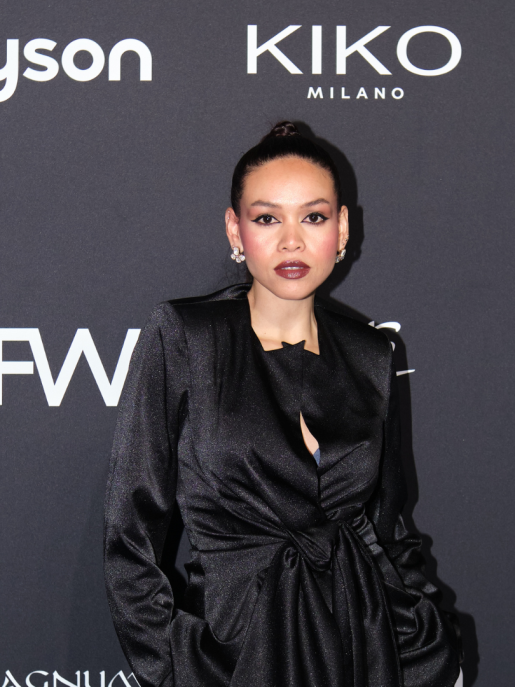

On inclusive luxury, architectural couture, cultural narrative through craft, maximalist spectacle, and why this Dubai Fashion Week lineup reveals elegance not as a singular ideology but as a distributed system of identity expression across overlapping cultural registers
Contemporary elegance is no longer a fixed aesthetic — it is a spectrum of identity systems. This day at Dubai Fashion Week reveals a structural truth about contemporary fashion: from the inclusive fluidity of Dima Ayad to the architectural couture of Heba Jasmi and Michael Cinco’s global spectacle language, modern luxury is defined not by uniformity but by coexistence. Dubai Fashion Week is not merely showcasing designers — it is curating a multidimensional framework of what fashion means in a post-centralised industry. In this environment, elegance is no longer prescribed. It is constructed, negotiated, and continuously redefined across overlapping cultural systems.
Elegance has historically been defined by its exclusions. The codes of acceptable dress in any luxury culture — the specific combinations of silhouette, material, proportion, and occasion-appropriateness that communicated membership in the social world that luxury fashion addressed — were always as much about what was excluded as what was included. The slim silhouette. The restrained palette. The seasonal collection as the unit of cultural authority. These conventions were not arbitrary. They were the product of specific historical conditions — the concentration of fashion authority in a small number of European capitals, the editorial system that translated that authority into global cultural norms, and the retail infrastructure that distributed those norms to the consumers whose aspiration powered the industry’s economics.
Dubai Fashion Week’s most significant contribution to the global fashion conversation is the systematic dismantling of these exclusions — not through argument but through demonstration. When Dima Ayad’s inclusive luxury and Heba Jasmi’s architectural couture and Michael Cinco’s maximalist spectacle and Humariff’s bridal fantasy and Anaya’s Gaudí-inspired structural femininity all share a runway schedule without hierarchy, the implicit claim is the most powerful available: that all of these are equally valid expressions of what contemporary elegance is, and that the fashion system that can hold them all simultaneously is more sophisticated than the one that required a single standard.
The structural context of how Dubai Fashion Week functions as a commercial acceleration platform — and why the diversity of its design roster reflects a deliberate institutional strategy rather than incidental range — is developed in Dubai Fashion Week: Why Global Brands Now Treat DFW as a Market Activation Engine. The present editorial examines the specific aesthetic and cultural intelligence that each featured designer brings to the Dubai Fashion Week runway — and what their coexistence within a single programme reveals about the direction contemporary elegance is moving.
Dima Ayad — inclusivity as structural luxury and the empowerment infrastructure of inclusive design
Lebanese designer Dima Ayad’s commitment to inclusive design is not a marketing strategy applied to an existing aesthetic. It is the foundational principle from which every garment decision flows — the understanding that the most powerful fashion is the fashion that makes the full range of women feel that it was designed for them, rather than that they must conform to it. Ayad’s collection embodies this understanding at the level of structural luxury: the specific design intelligence required to produce garments that celebrate the female form without restricting it across the full range of body types.
The collection’s vibrant, colourful fabrics — ombre satin, delicate floral sequins, playful lace — are balanced with structured silhouettes that carry the aesthetic weight of the collection without imposing it on the body. This balance is the most technically demanding achievement in inclusive fashion design: producing garments that read as fully resolved aesthetic statements regardless of the body that wears them, rather than garments designed for a single idealised silhouette and then adapted. Bright blues, soft pastels, and rich earthy tones feel like a garden in full bloom — each piece carefully crafted to tell a story of empowerment, proving that femininity and strength are deeply intertwined rather than in opposition.
The effortless transition from day to night — pieces that move from casual daytime to elegant evening without requiring a change of garment — is the functional expression of the same underlying design intelligence: the commitment to serving the full complexity of women’s lives rather than a single idealised moment within them. Dima Ayad represents the normalisation of inclusive luxury as a design principle, not a category — the understanding that the most commercially significant luxury market of the coming decades is the one that has been most systematically underserved by the existing industry.
The argument that the most significant fashion choices are those made with genuine self-knowledge — chosen for how they hold rather than how they announce — connects Dima Ayad’s inclusive design philosophy to the broader quiet luxury sensibility explored in The New Language of Quiet Luxury: Inside the Timeless Wardrobe of Apparis. Both are expressions of the same foundational intelligence: luxury defined by the quality of the relationship between garment and wearer rather than by any externally imposed standard of how that relationship should look.
Anaya — Gaudí’s Reverie, architectural femininity, and nature-inspired design systems
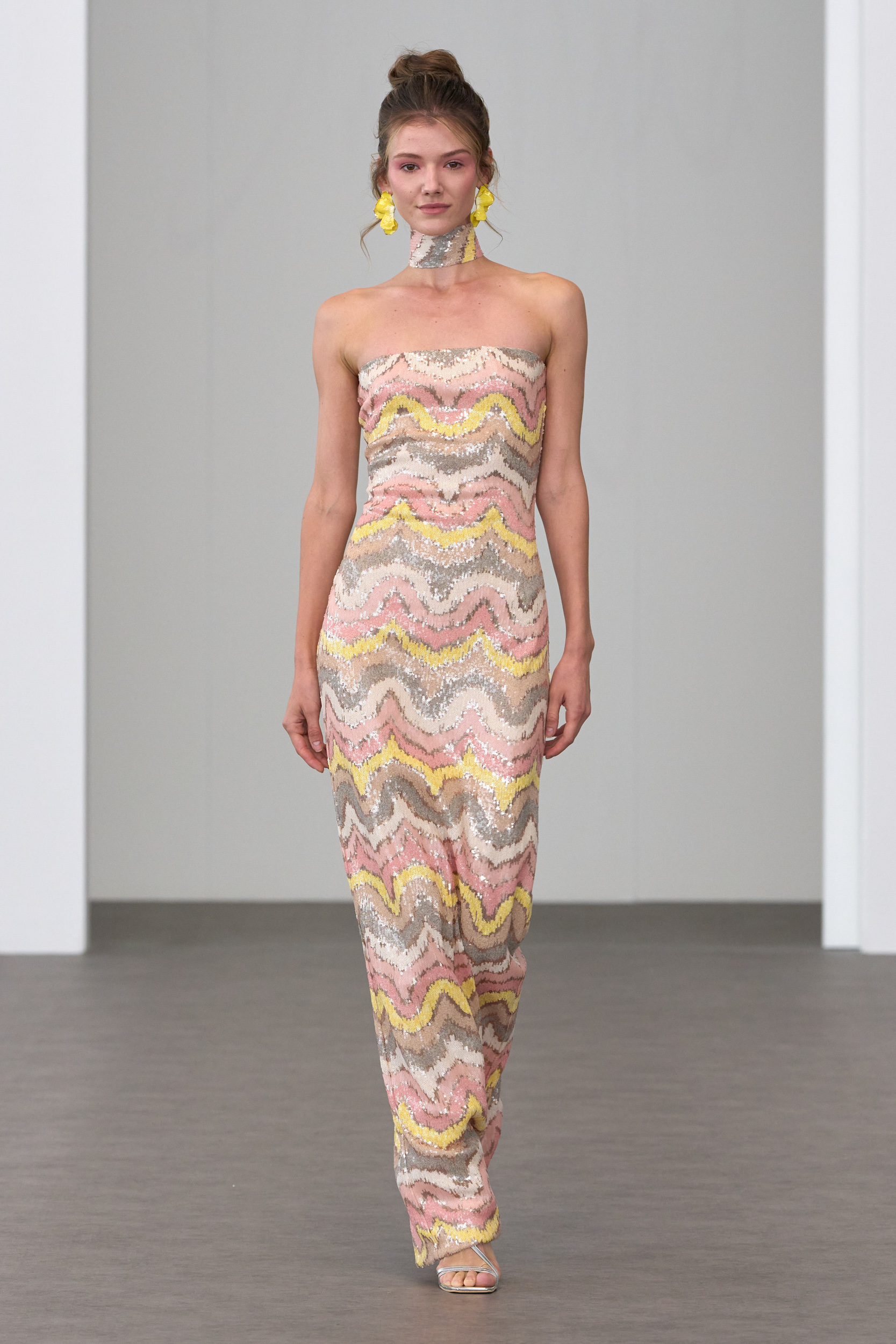
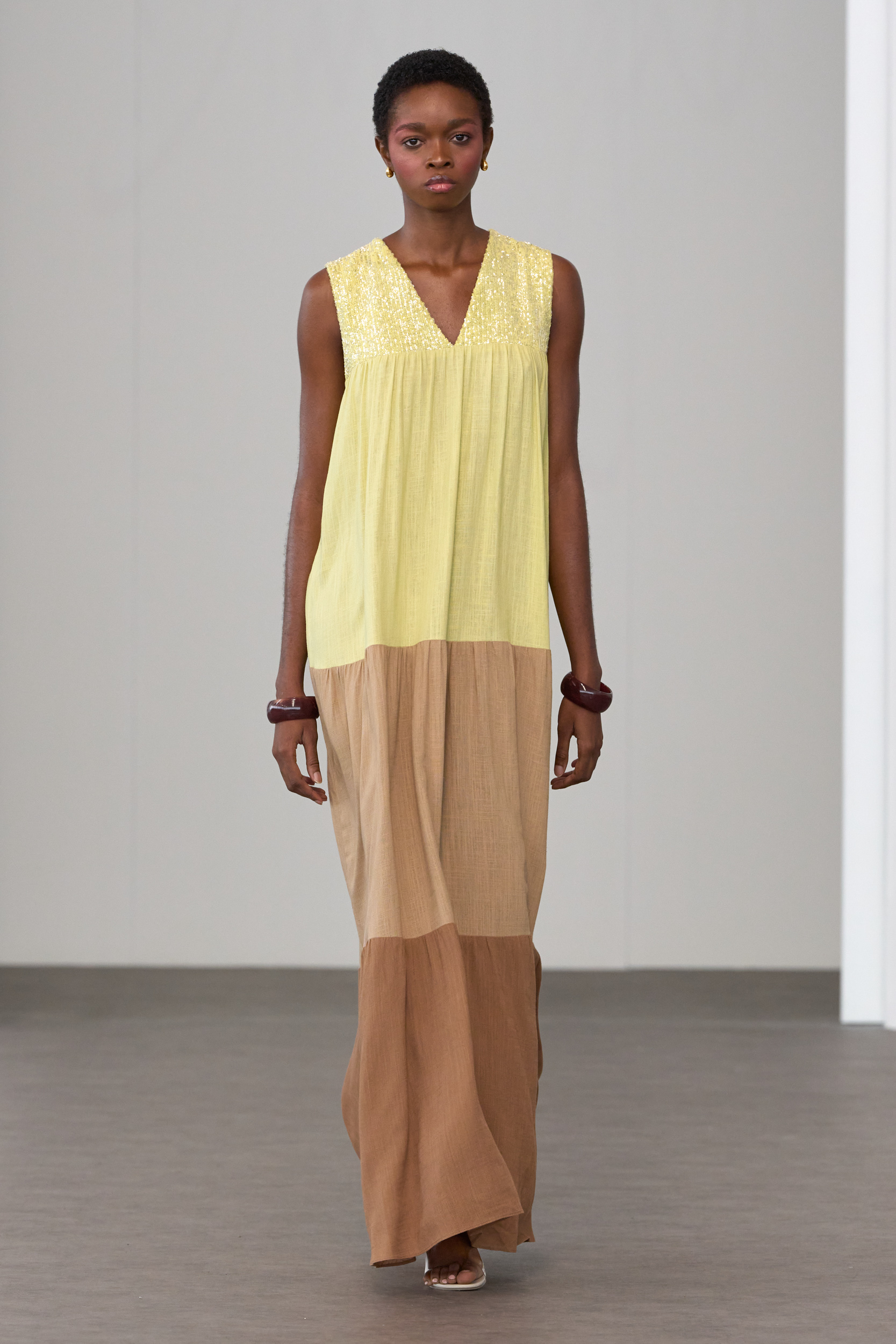
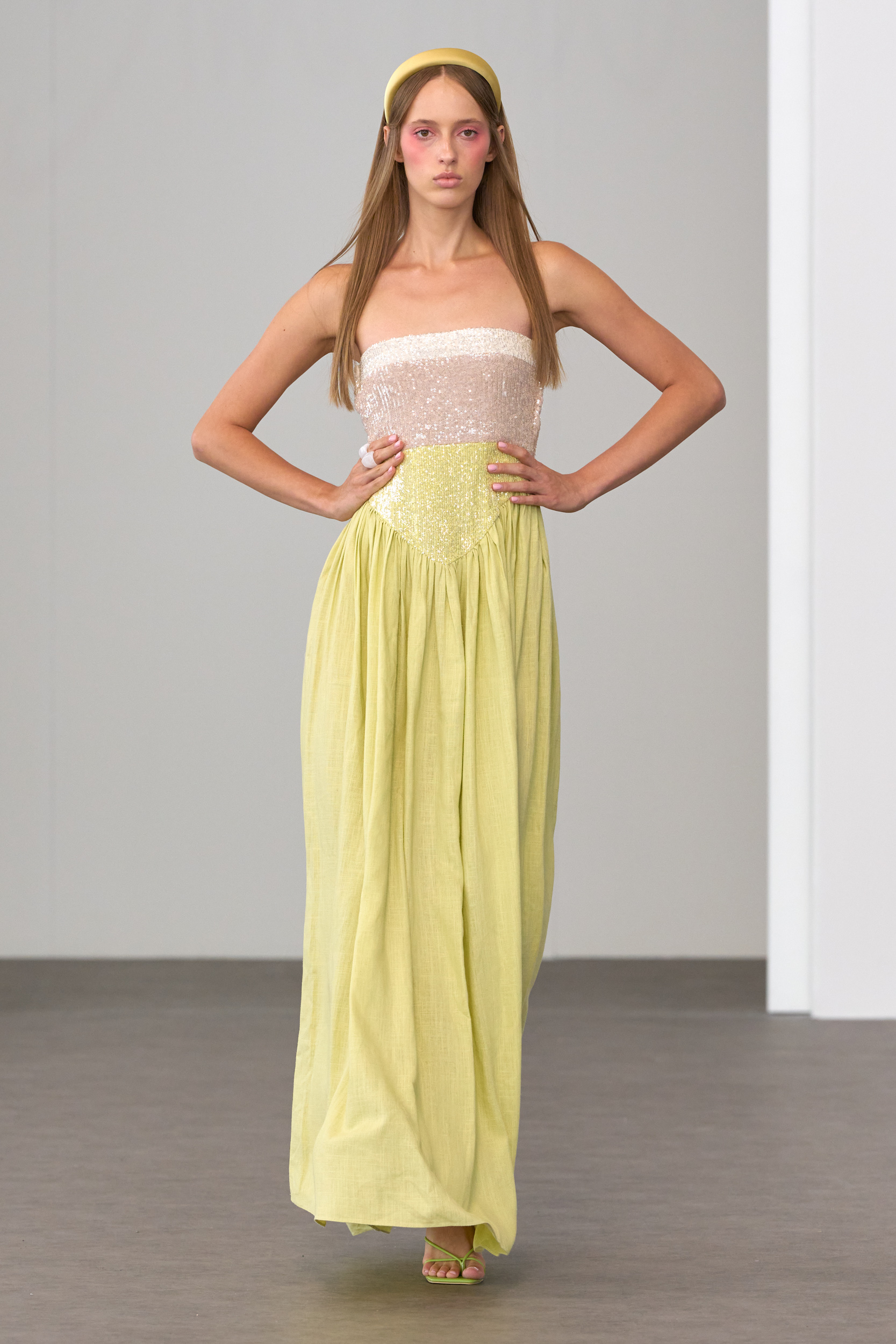
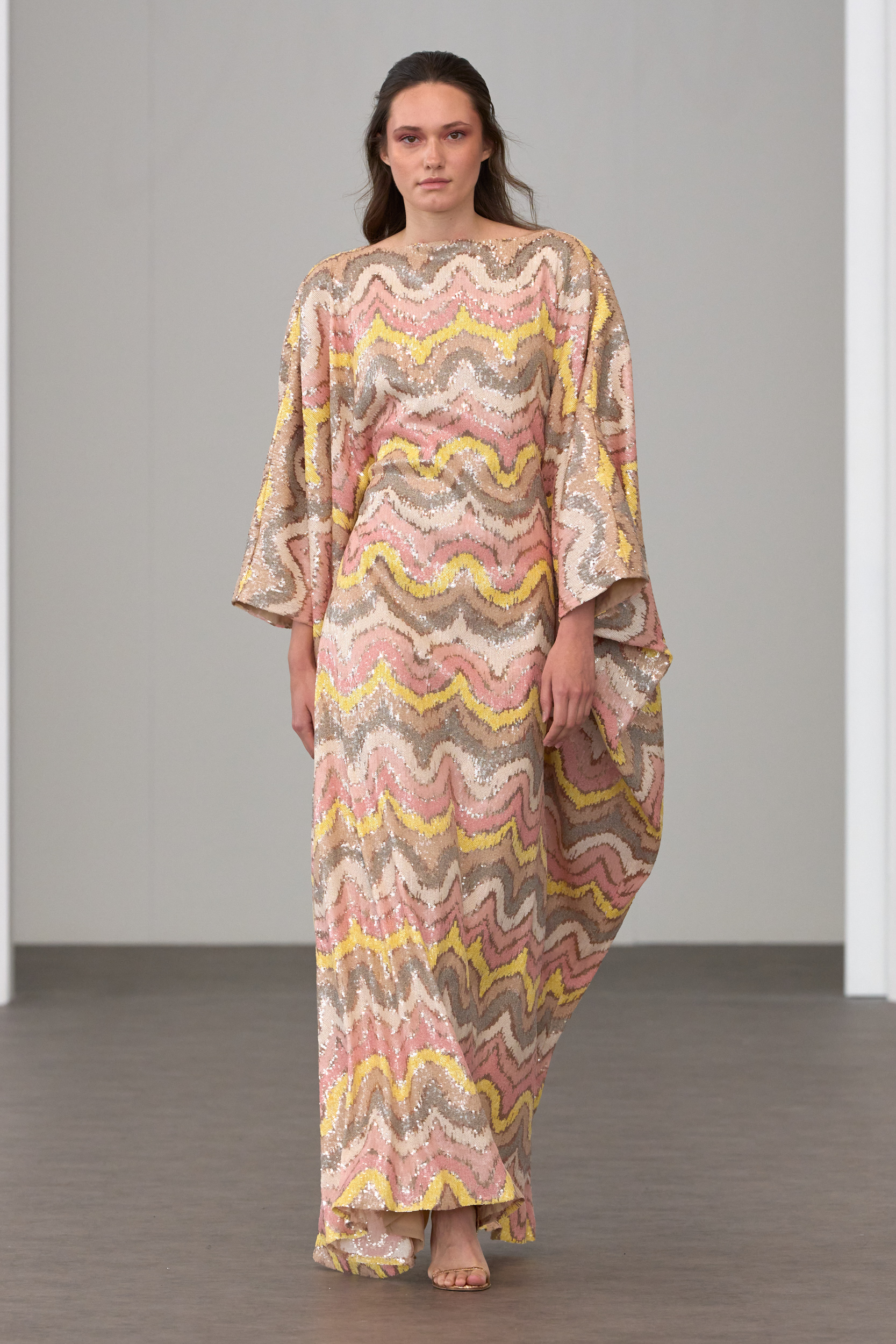
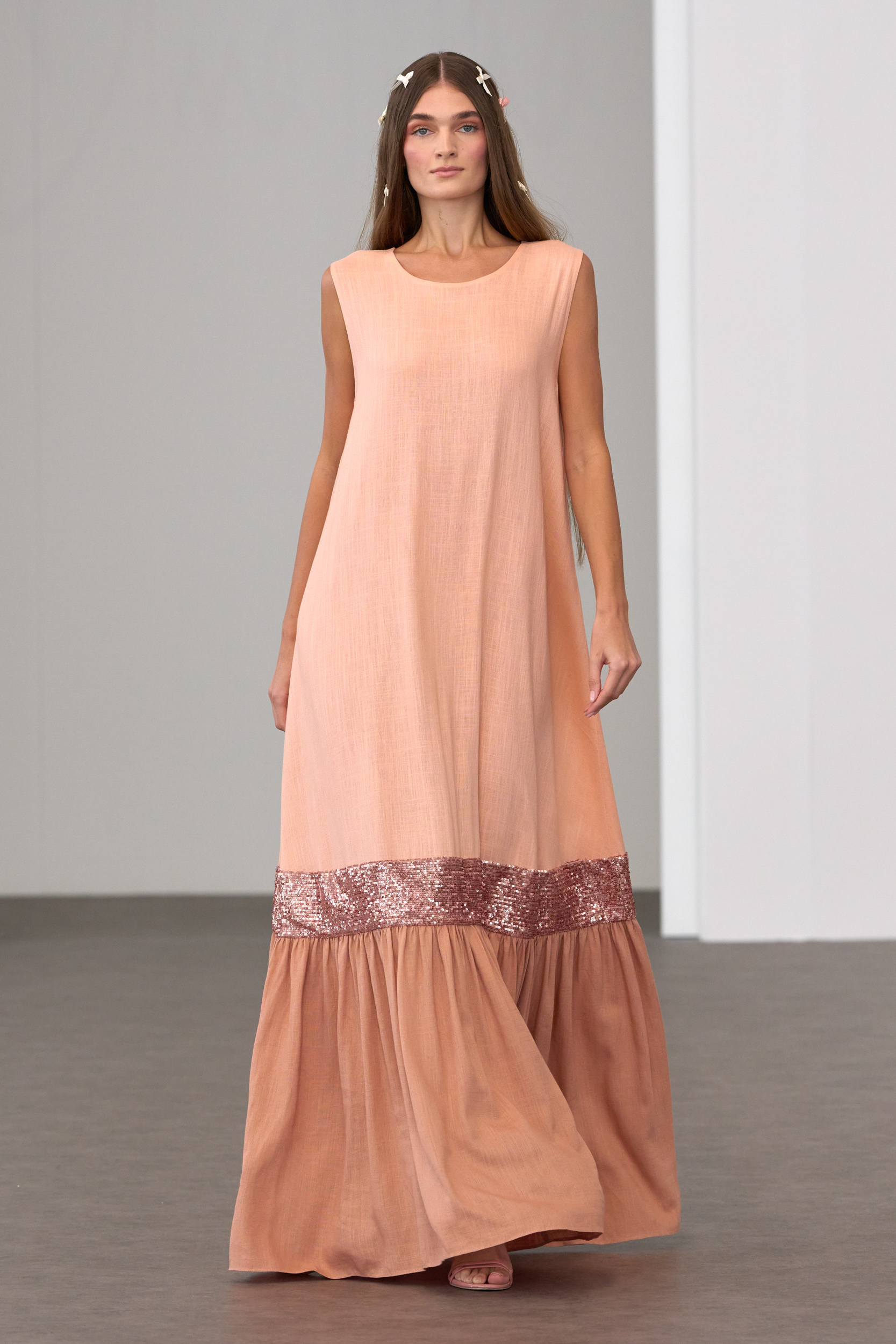
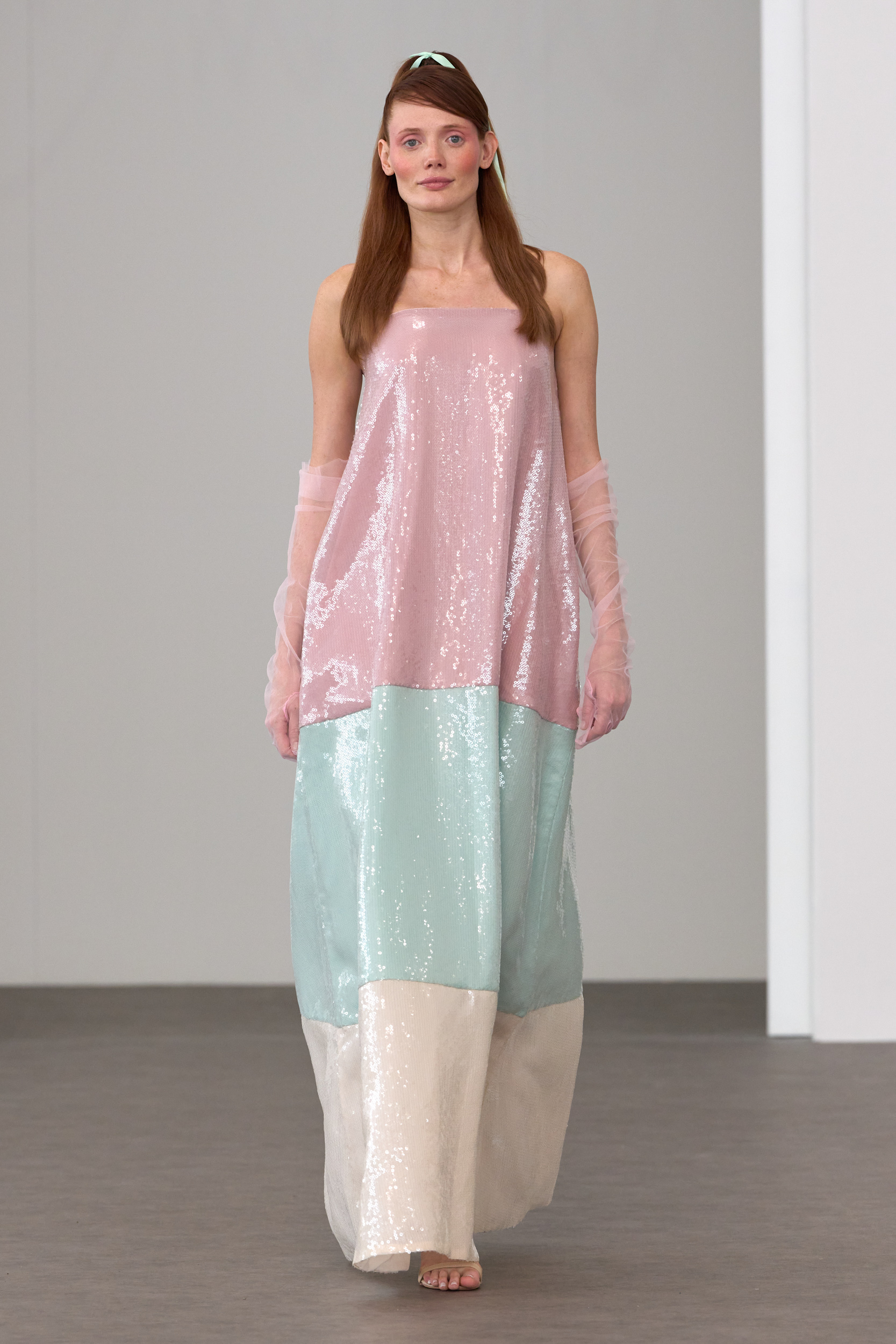
Anaya’s Gaudí’s Reverie collection is one of the most conceptually precise design statements to appear at Dubai Fashion Week — a collection whose reference is not superficial but structural, translating the specific design intelligence of Antoni Gaudí’s architectural philosophy into a fashion language that carries genuine intellectual weight rather than merely aesthetic allusion.
The connection to Gaudí is not decorative. It is philosophical: the same conviction that organic forms, nature-inspired motifs, and the deliberate rejection of the straight line produce the most living and human architecture translates directly into the design logic of Anaya’s garments. Glass organza, double-weave satins, and hand-dyed ombre beaded tulles reflect the textures and colours found in Gaudí’s masterpieces — the dynamic surfaces of Park Güell, the undulating facades of Casa Batlló — but they do so through the specific intelligence of fashion construction rather than through visual quotation.
The three-dimensional draping, laser cutting, and ombre colour dyeing that define the collection’s technical vocabulary are not stylistic choices made in service of Gaudí’s aesthetic. They are design solutions to the same problem that Gaudí was solving: how to produce form that feels alive, in motion, responsive to the human body that inhabits it rather than imposed upon it. The collection’s garments appear to be in motion even when still — the fluid quality that ombre dyeing introduces to fabric is the fashion equivalent of the undulating facades whose beauty is inseparable from their sense of dynamic energy.
Anaya’s Gaudí’s Reverie demonstrates the design intelligence that distinguishes the most significant emerging luxury brands from those that merely reference cultural authority: the capacity to engage a historical reference at the level of its foundational principles rather than its surface aesthetics, and to produce from that engagement a design language that is entirely contemporary and entirely its own.
Heba Jasmi — State of Art, architectural couture, and structured identity as design discipline
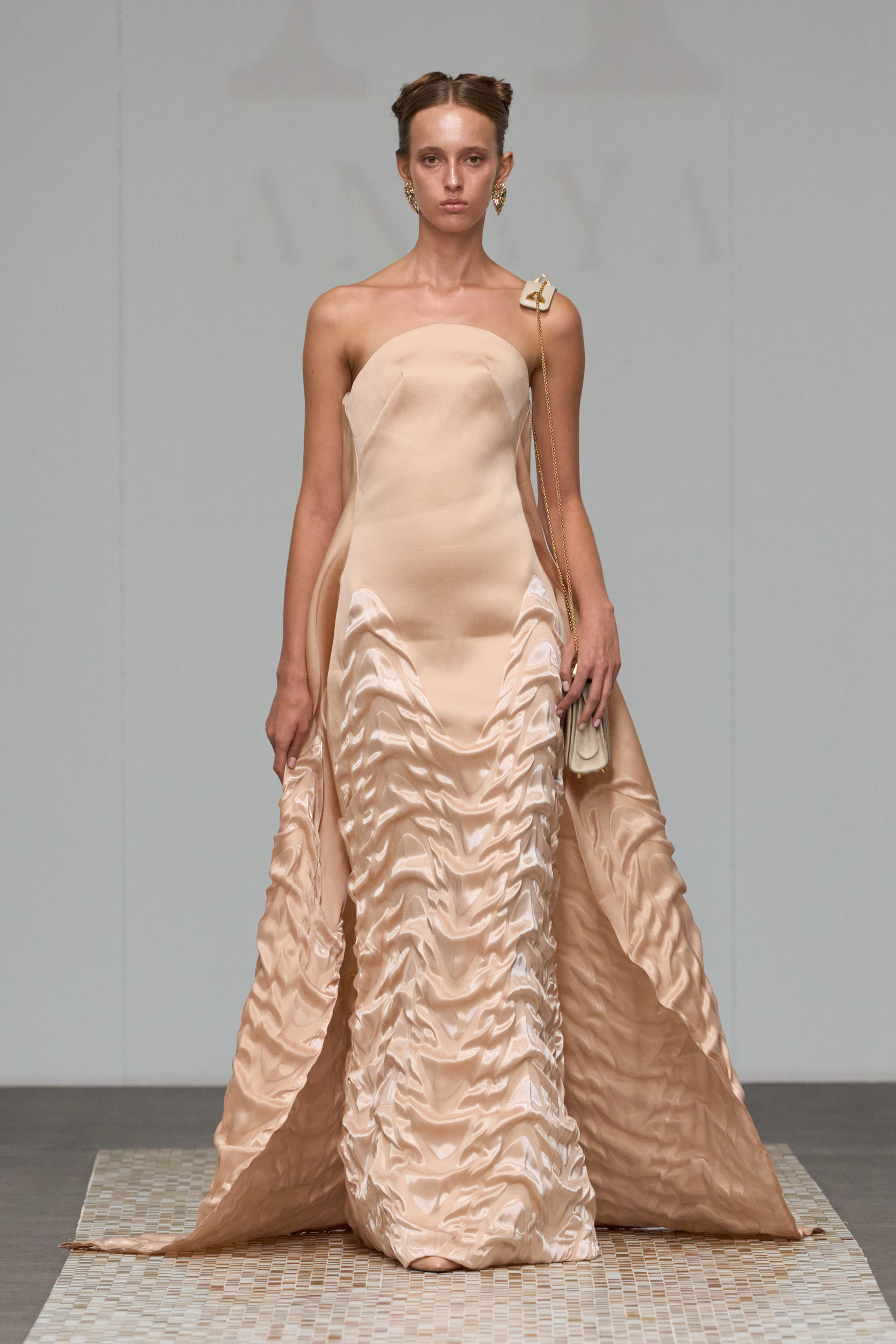
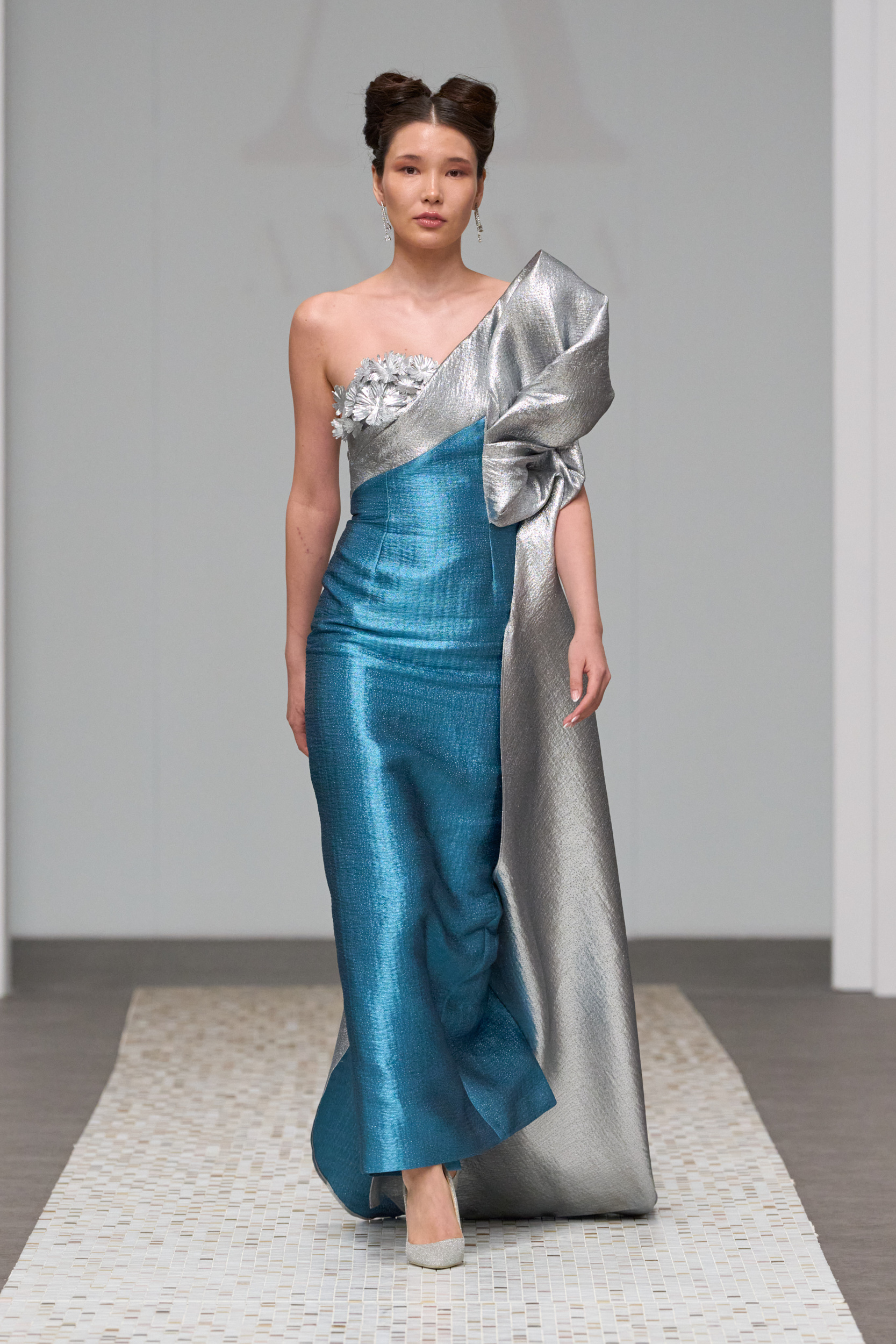
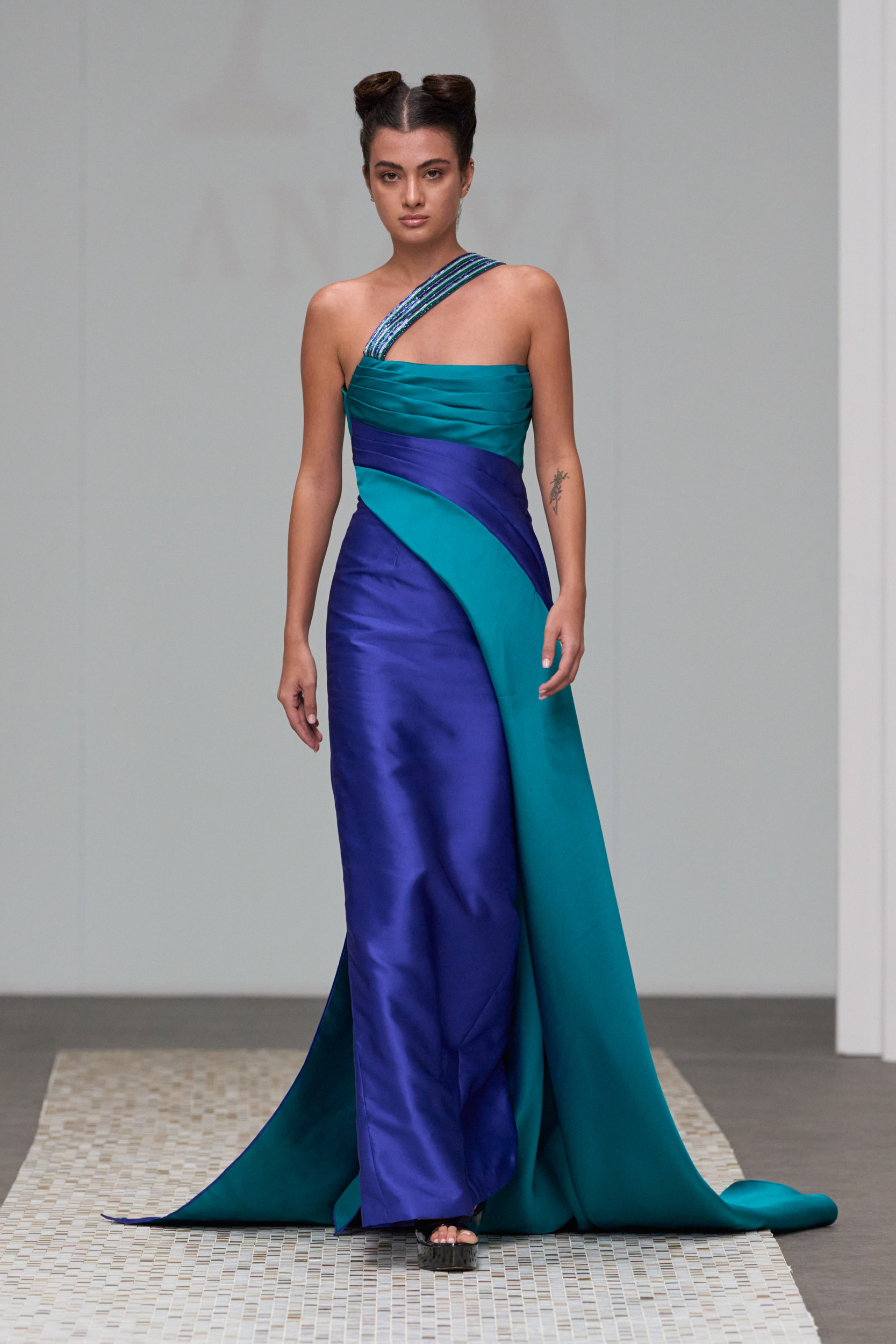
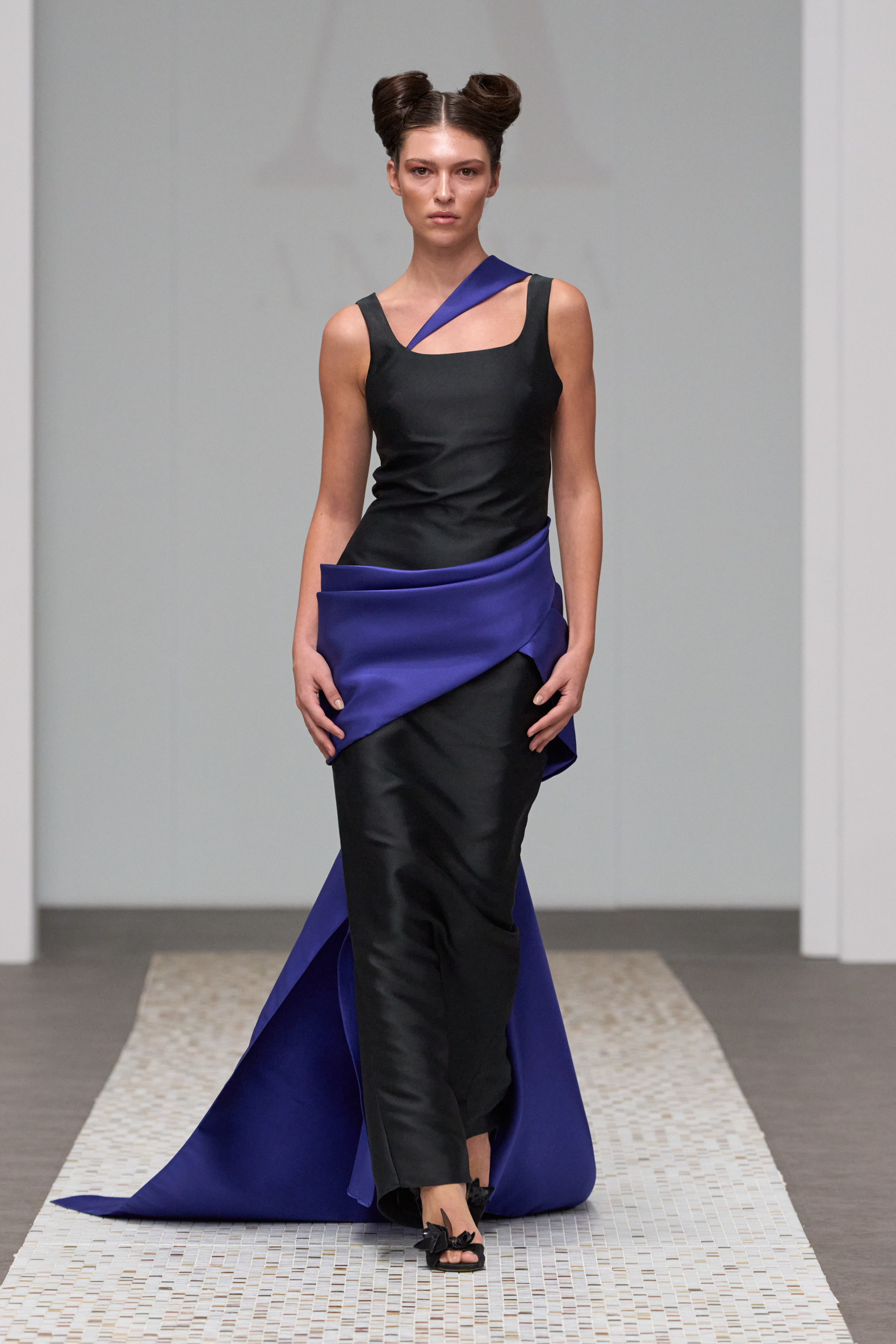
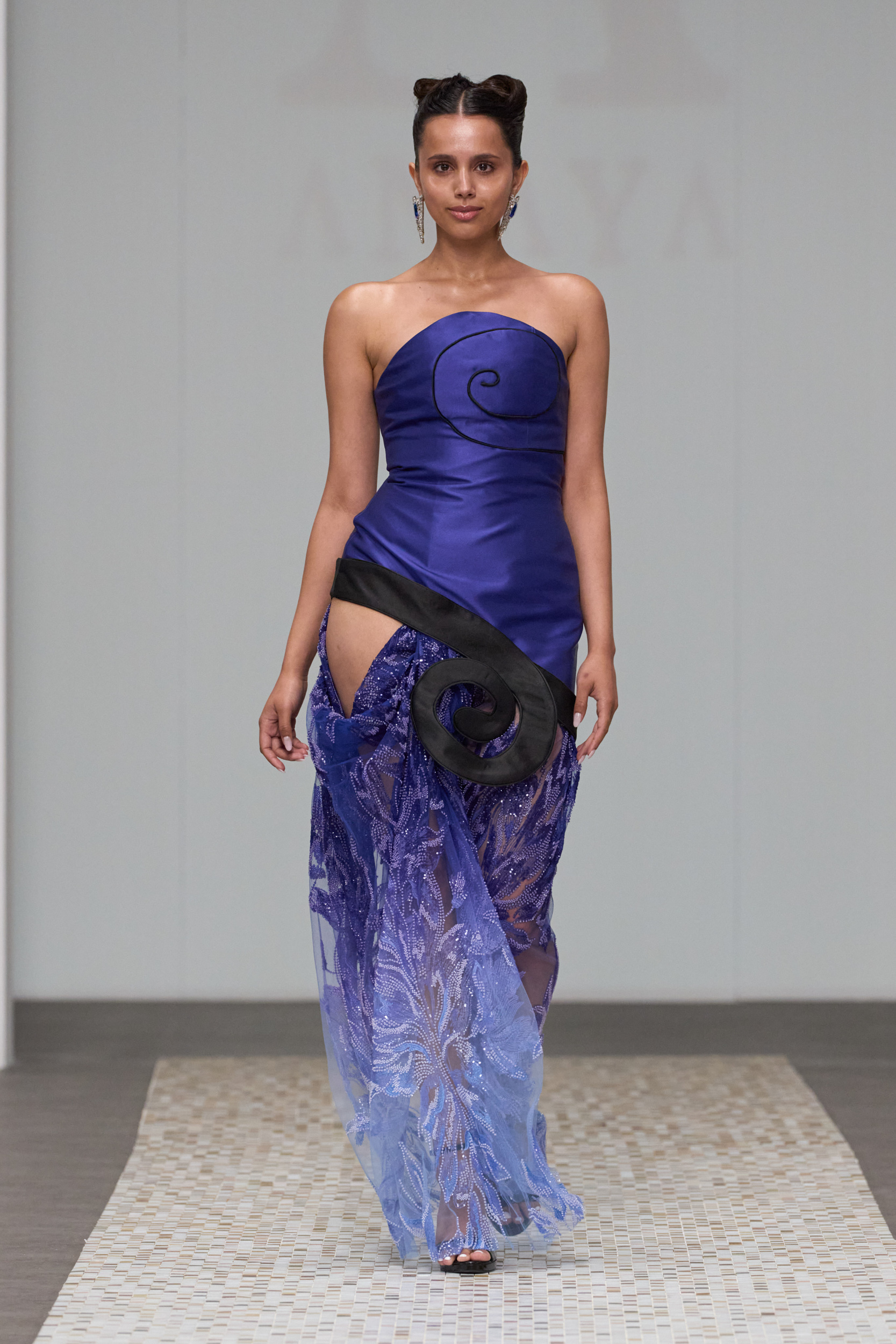
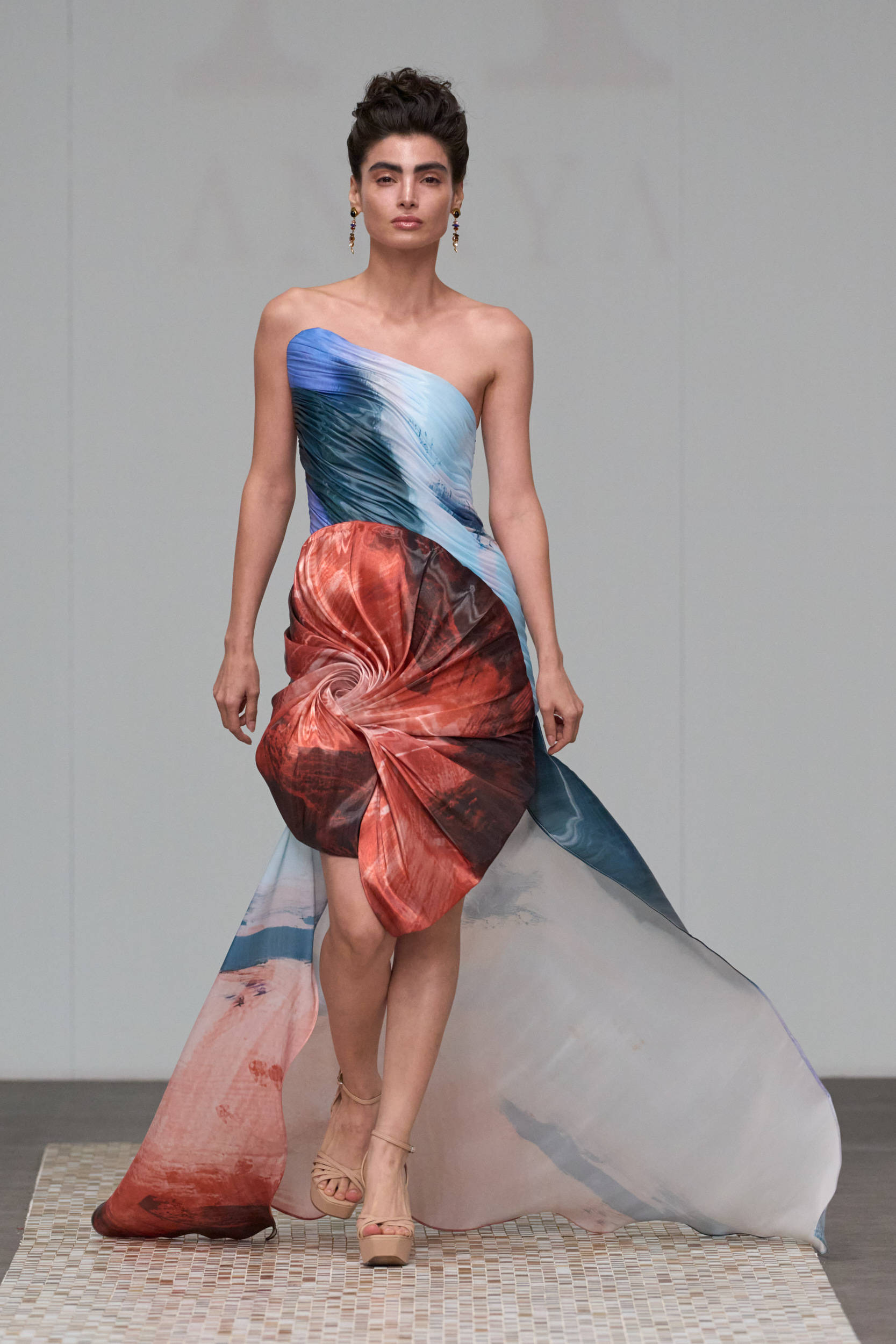
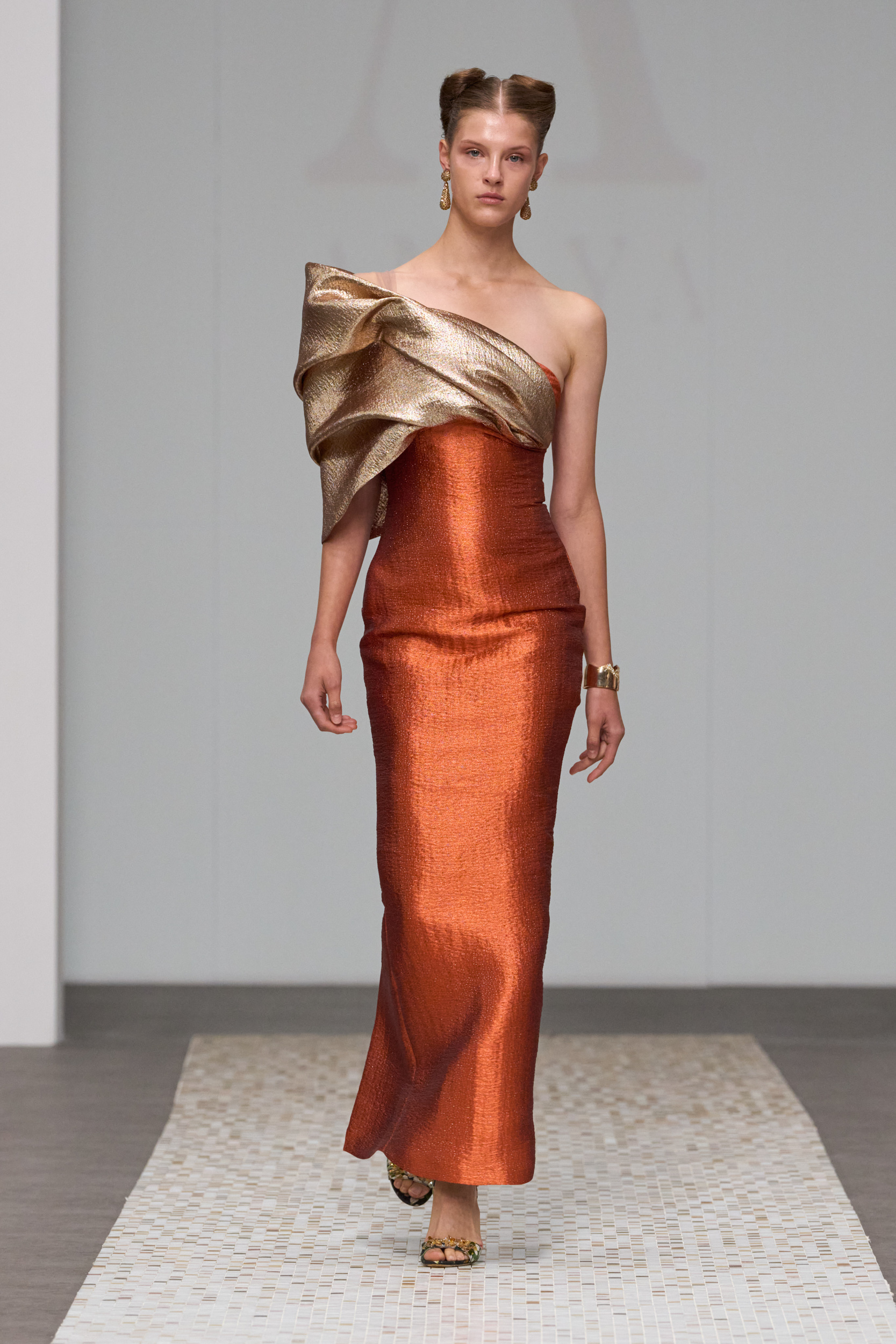
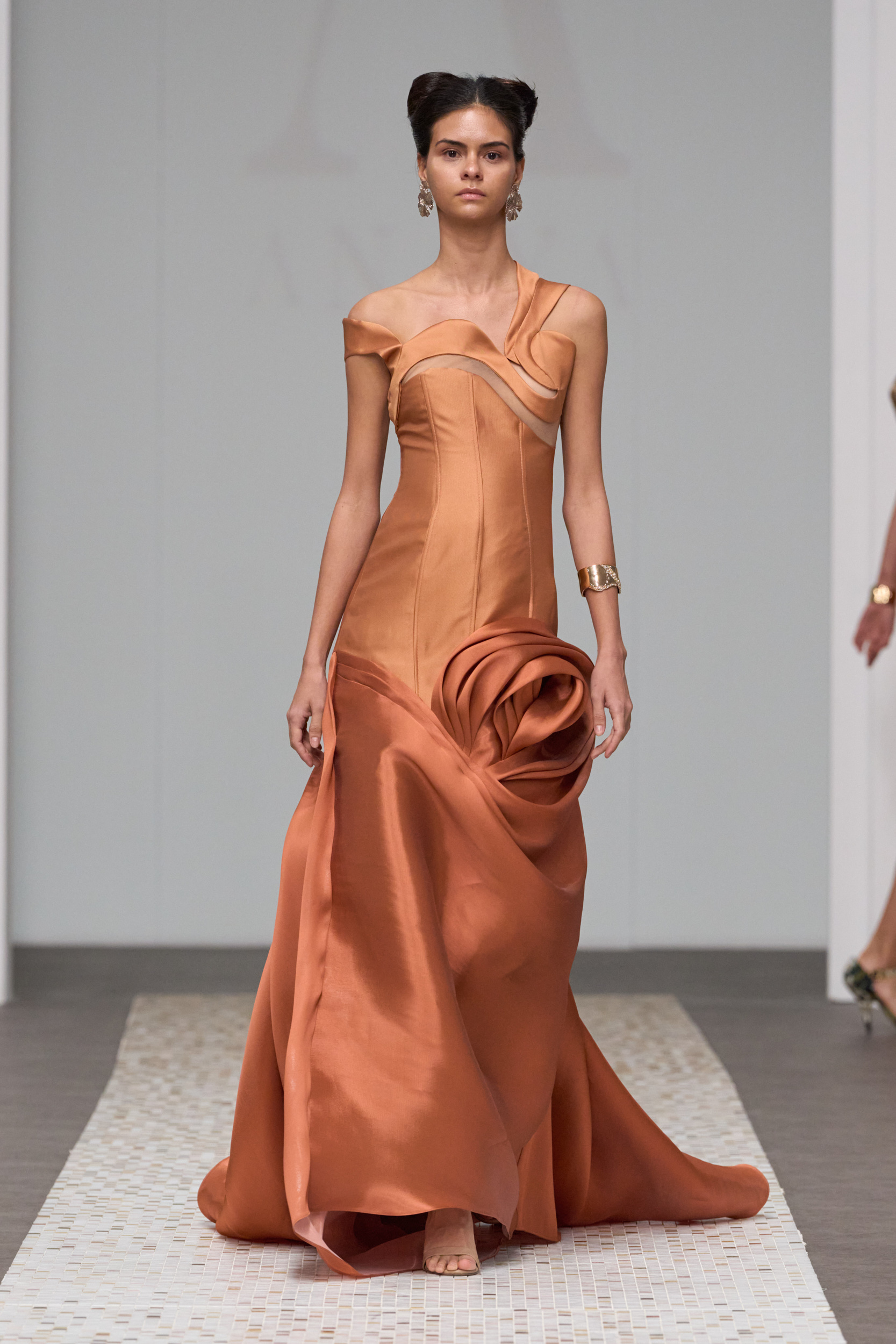
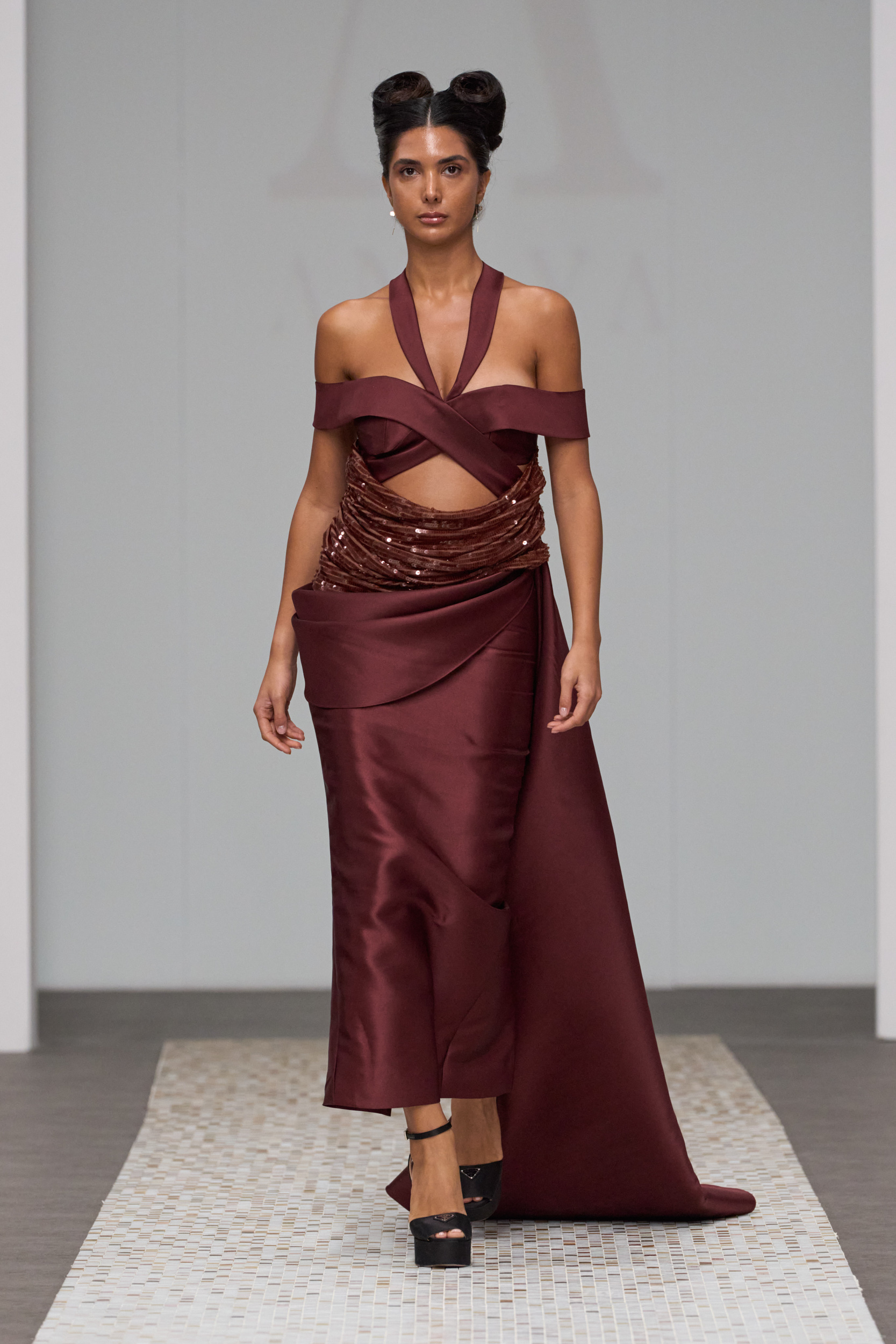
Emirati designer Heba Jasmi’s State of Art collection exemplifies the specific design intelligence that architectural couture requires: the capacity to produce garments whose formal authority is as complete and as demanding as the best structural design, while maintaining the wearability and emotional resonance that fashion demands from even its most architecturally ambitious expressions.
The collection celebrates the female form with flowing volumes and structured embroidery — a combination that carries genuine formal tension rather than merely aesthetic variety. The flowing volume and the structured embroidery are not compromising each other; they are each expressing a different dimension of the same design vision, in which strength and softness are understood as complementary rather than opposing qualities. The intricate lacework and abstract embroidery prints — each garment a tapestry of bold artistic statements — communicate the specific design intelligence of a maker who understands surface treatment not as decoration but as meaning: the embedding of narrative within the textile itself.
The vibrant colours — pinks, blues, greens — reflect the dynamic energy of Jasmi’s designs without overwhelming the formal intelligence that drives them. The State of Art collection is undeniably high fashion in its ambition and its execution, yet it possesses the accessibility that distinguishes the most considered couture from the merely spectacular: the invitation to the modern woman to embrace her own artistry through the garment rather than to stand back and admire it from a distance.
Heba Jasmi’s position as an Emirati designer producing work of this quality at Dubai Fashion Week is itself a statement about where the centre of regional fashion intelligence is shifting. The argument that the most significant creative work emerges from genuine cultural rootedness — explored in the context of modest fashion media in Soigné Middle East: The Modest Fashion Magazine the Region Has Always Deserved and, in the context of personal luxury objects, in The Language of Modern Necklaces: Metals, Stones, and the New Codes of Personal Luxury — applies with equal force to couture design: the designers whose aesthetic intelligence is rooted in the specific cultural experience they bring to their work are producing the most original and most durable contributions to the global fashion conversation.
Humariff — bridal fantasy, modest couture, and the modern bride as design addressee
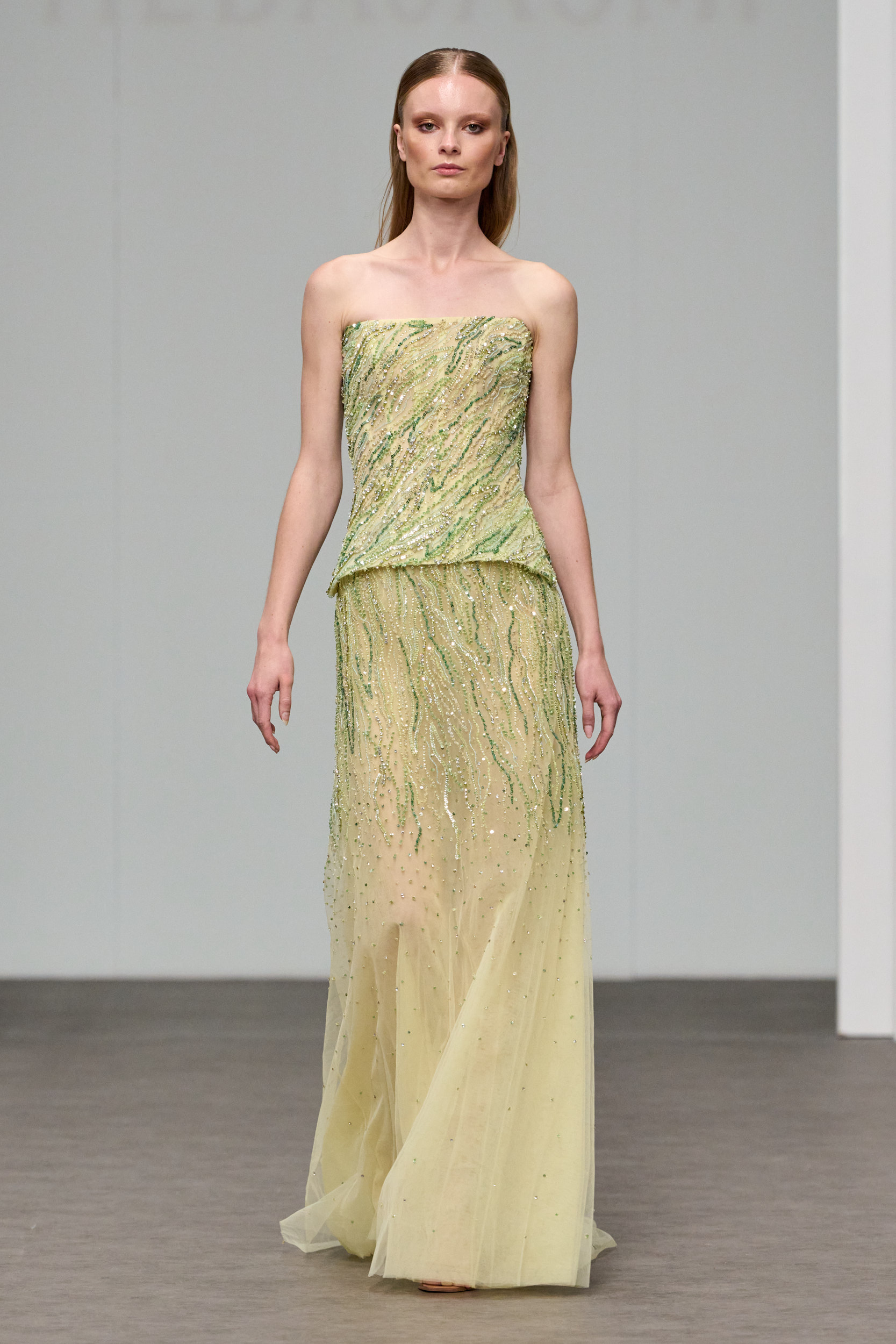
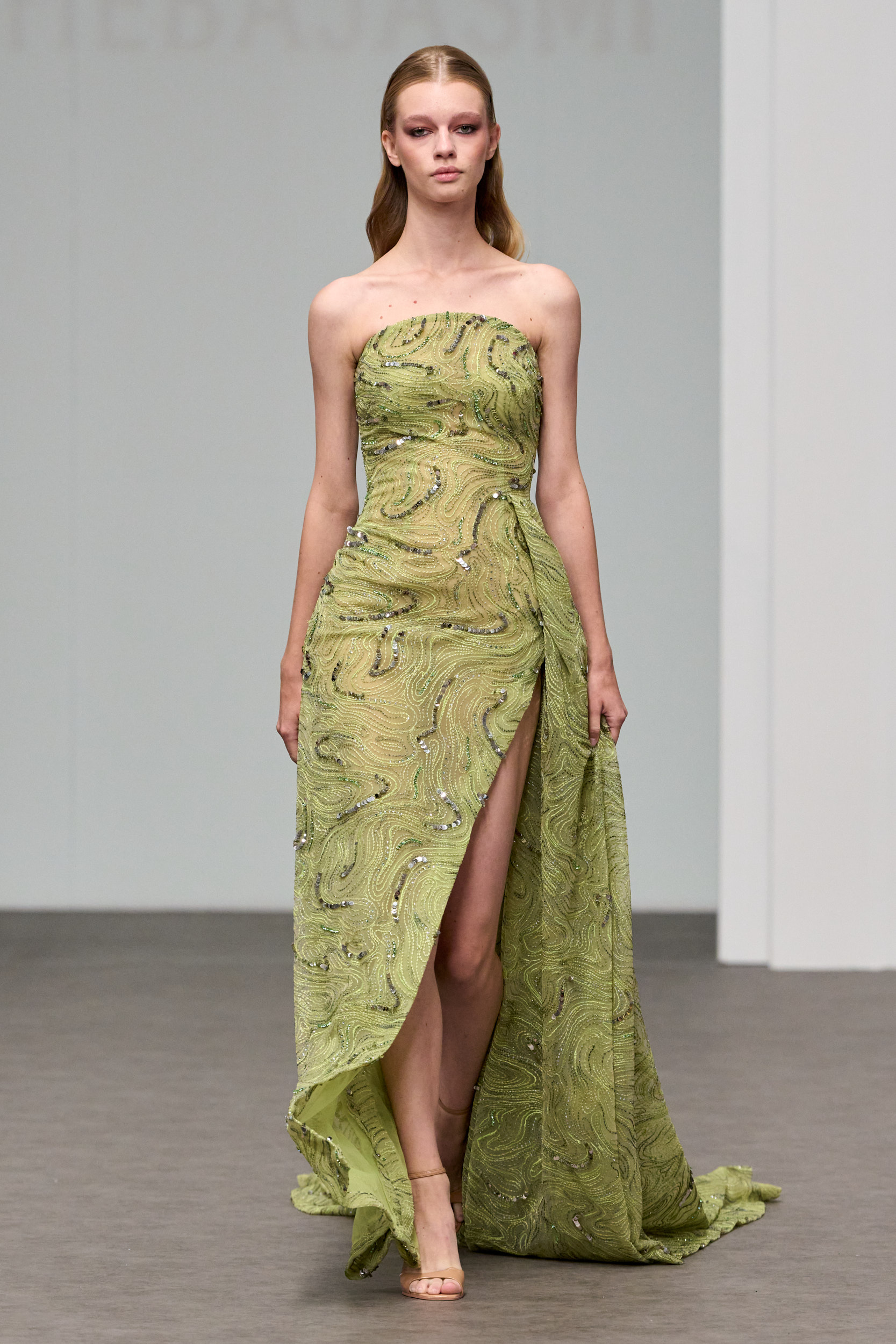
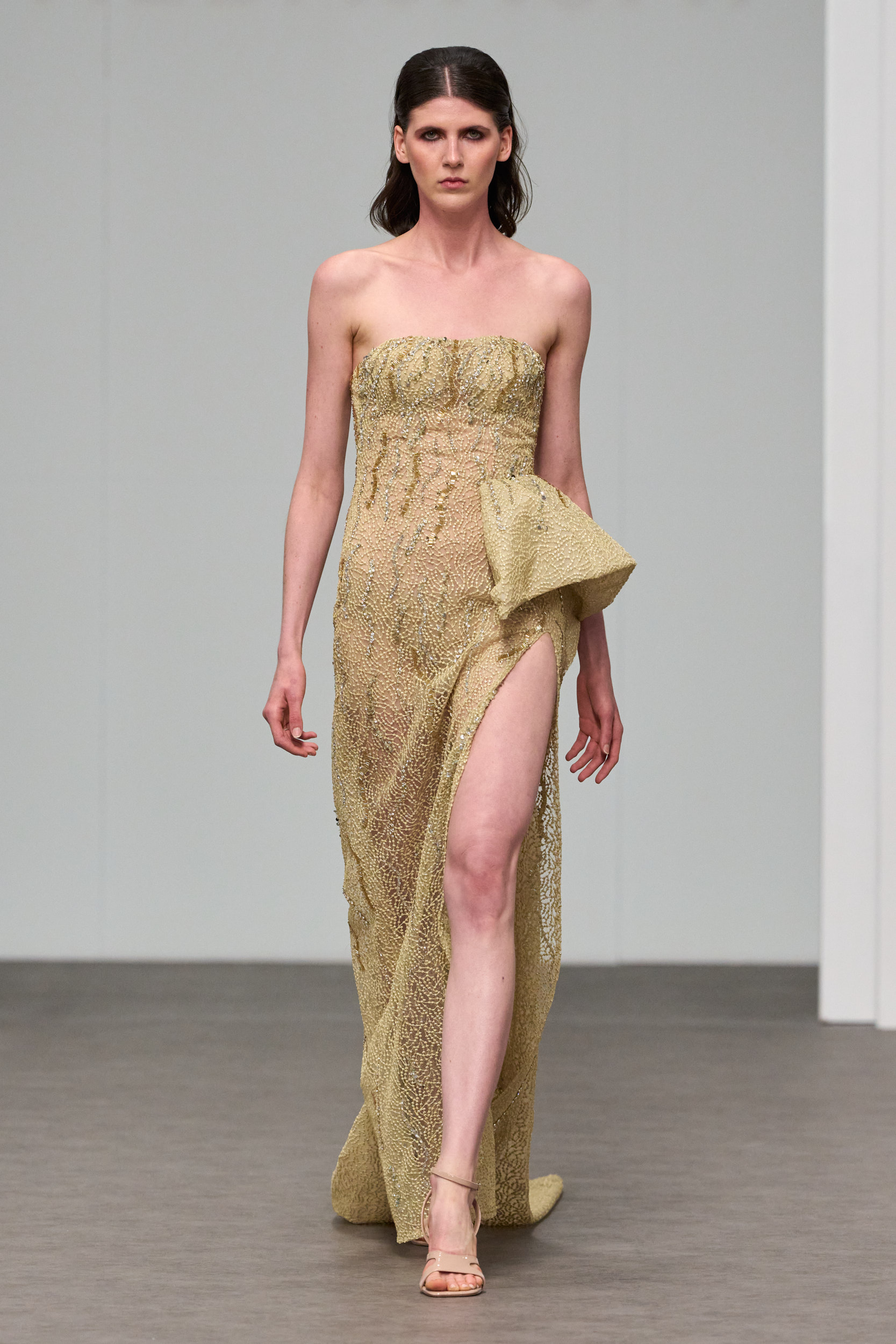
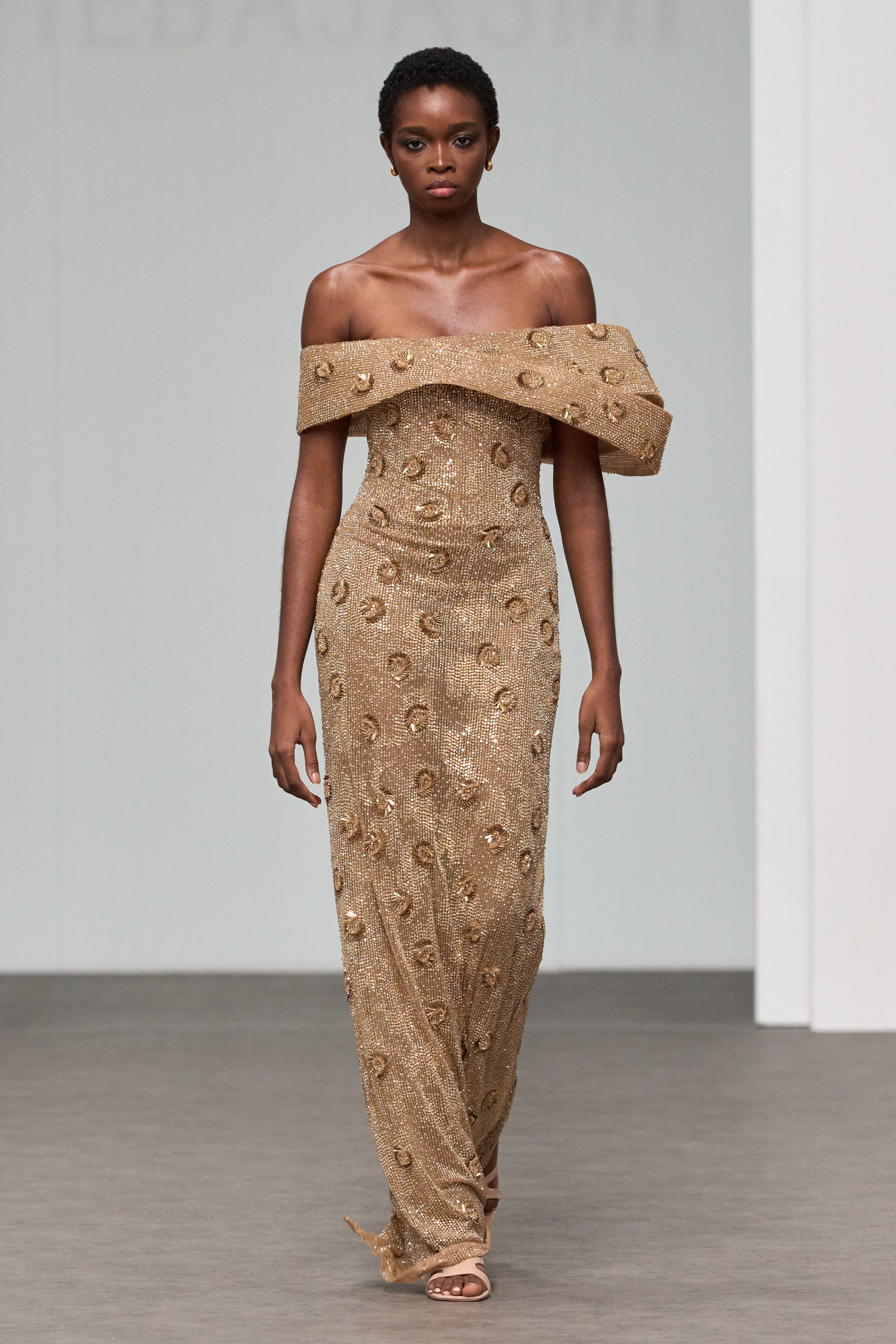
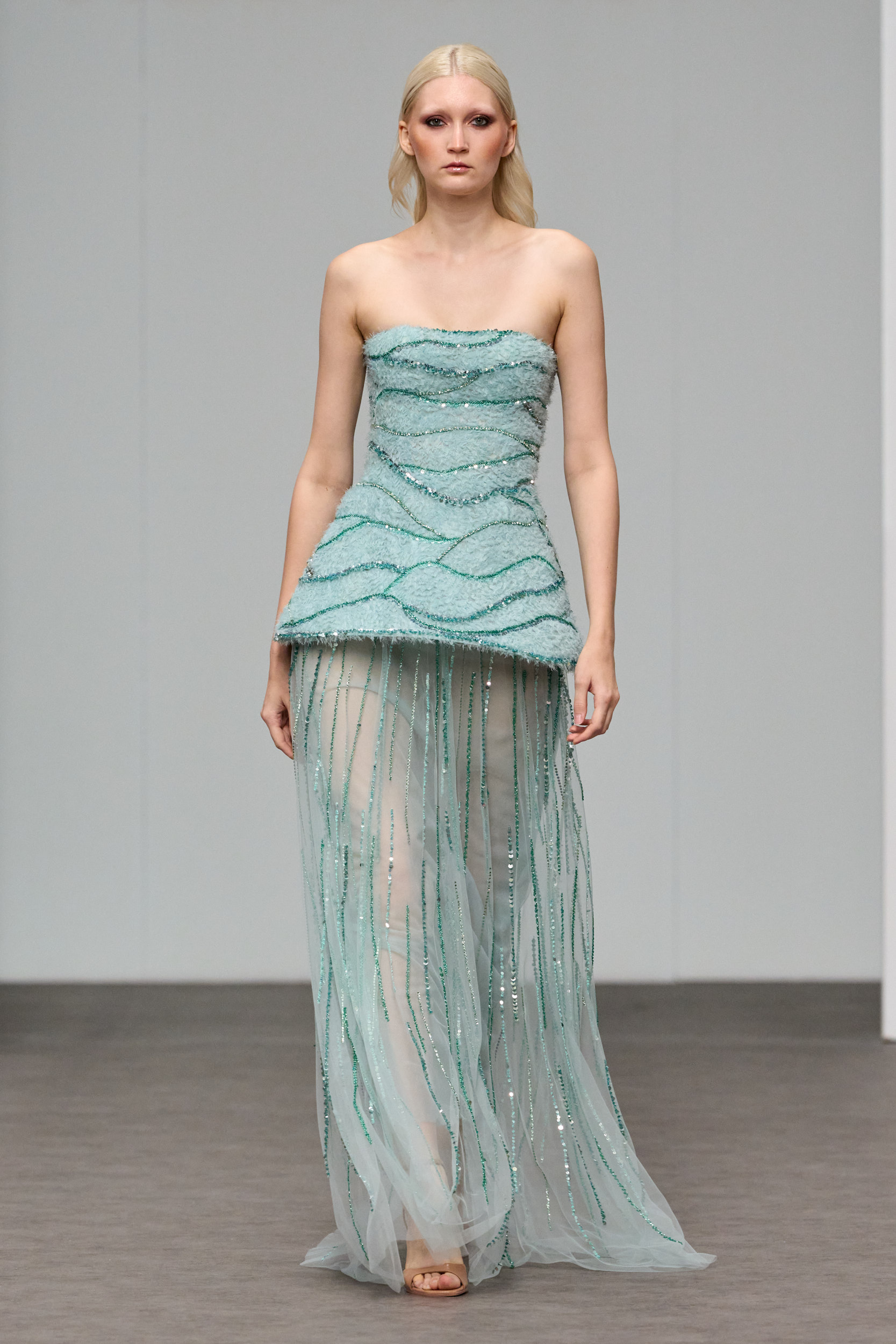
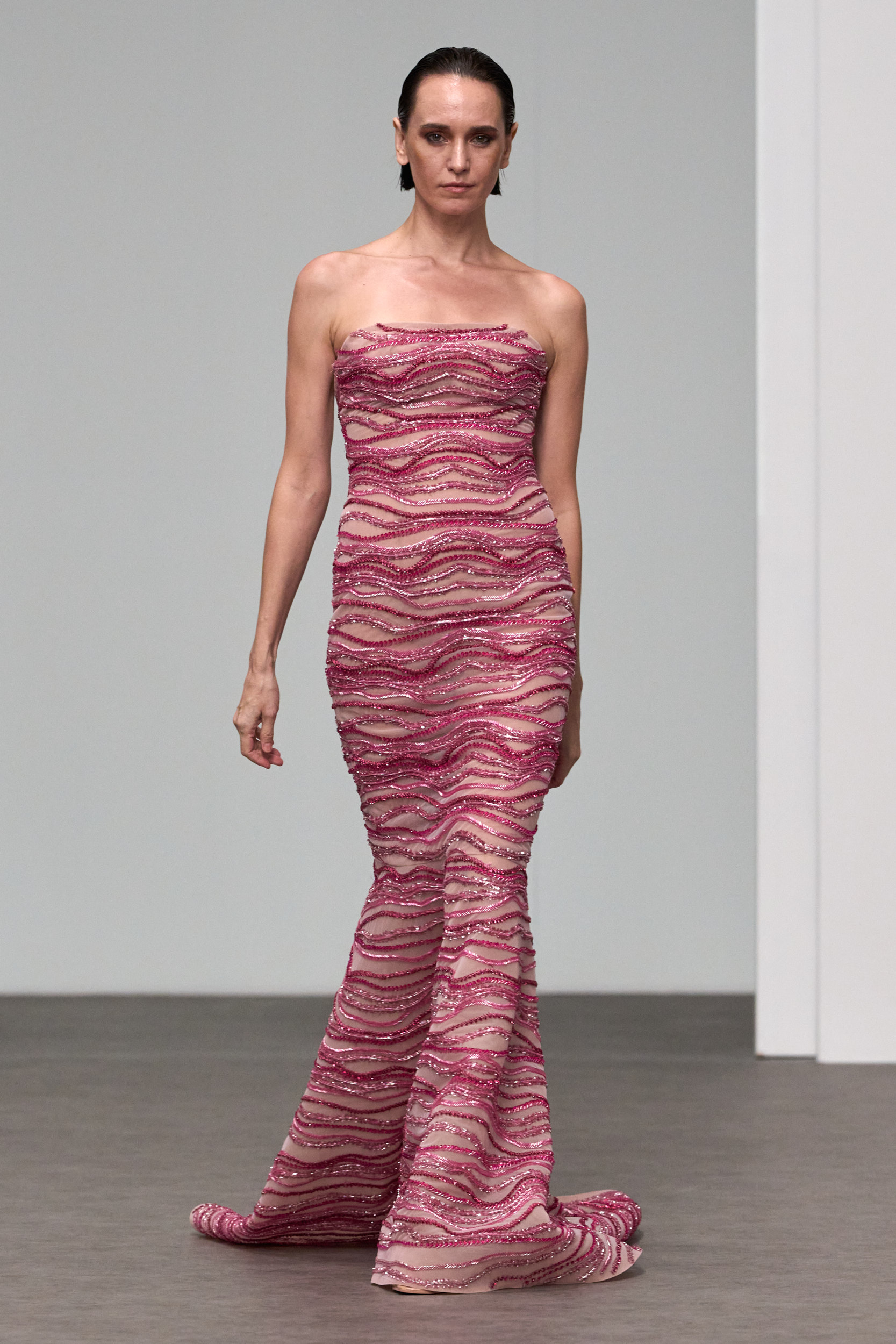
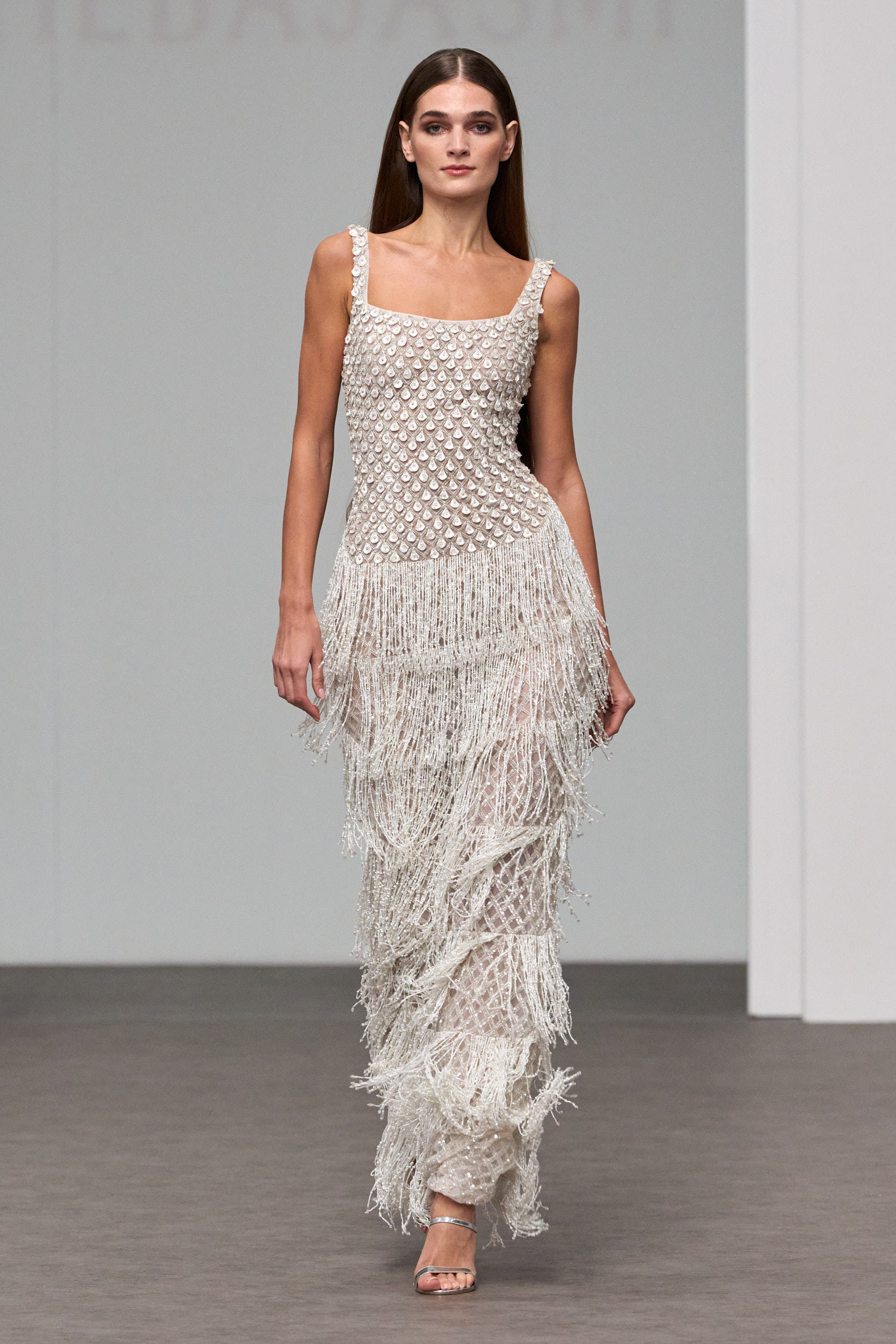
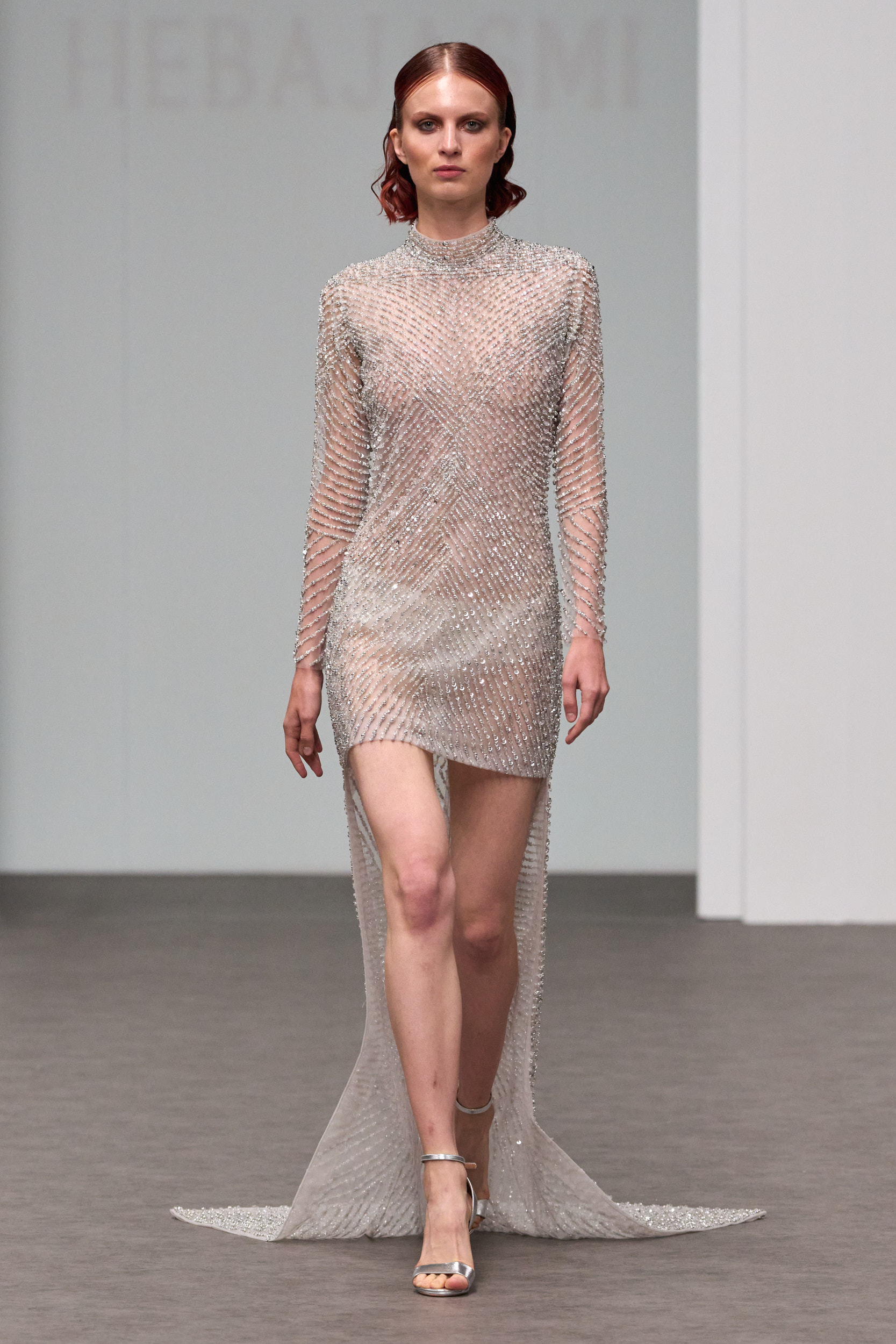
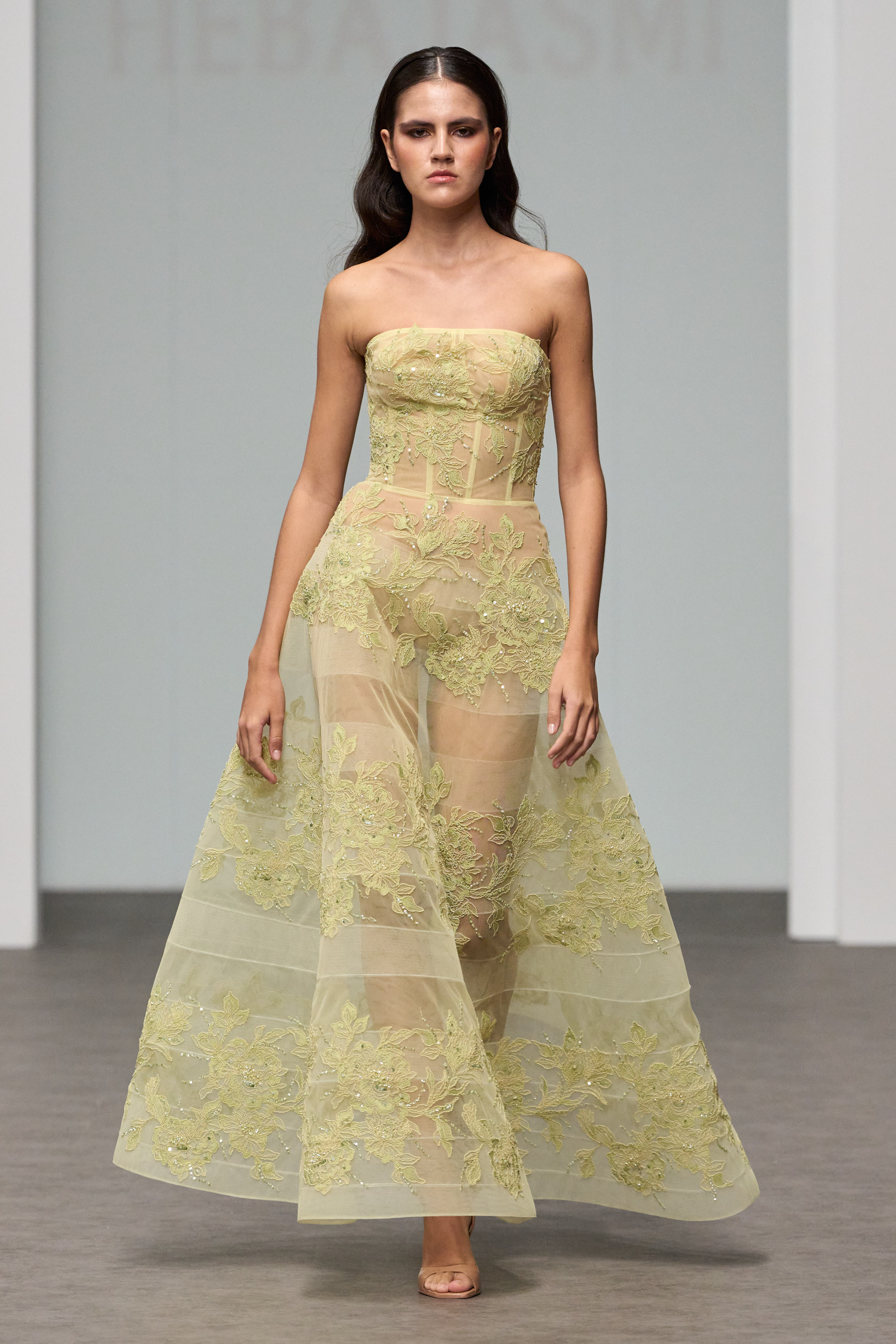
Tamam Humariff’s collection is one of the most structurally significant presentations at Dubai Fashion Week for a reason that extends beyond the quality of any individual garment: it represents the most sophisticated available expression of the modest bridal aesthetic as a fully realised couture category — one in which the commitment to modesty is not a constraint on design ambition but the specific creative brief from which the collection’s most extraordinary garments emerge.
The bridal gowns in Humariff’s collection deploy luxurious fabrics — velvet, taffeta, layers of delicate tulle — in silhouettes whose volume and structure evoke regal romance without sacrificing the coherence of the design vision. Victorian-inspired drapery adds dramatic flair; voluminous skirts give each gown a fairytale quality that is rooted in specific historical tradition rather than generic fantasy. The soft whites, delicate blues, and pastel hues create a dreamlike serenity — the specific quality of an aesthetic register that knows what it is doing and does it completely rather than hedging between multiple possibilities.
The wrapped, long-sleeve gowns with high necklines and structured silhouettes are the collection’s most technically demanding pieces — and its most commercially significant. They represent the specific design intelligence required to make coverage feel like choice rather than restriction: the understanding that the most sophisticated modest fashion is the kind that communicates the full authority of its wearer’s aesthetic vision through every detail of its construction, rather than the kind that merely covers without designing. Humariff’s bridal fantasy makes this argument at the level of couture — and in doing so, contributes to the broader repositioning of modest luxury as a fully realised creative category rather than a market accommodation.
Michael Cinco — hyper-couture as global spectacle language and the Roman Opus collection
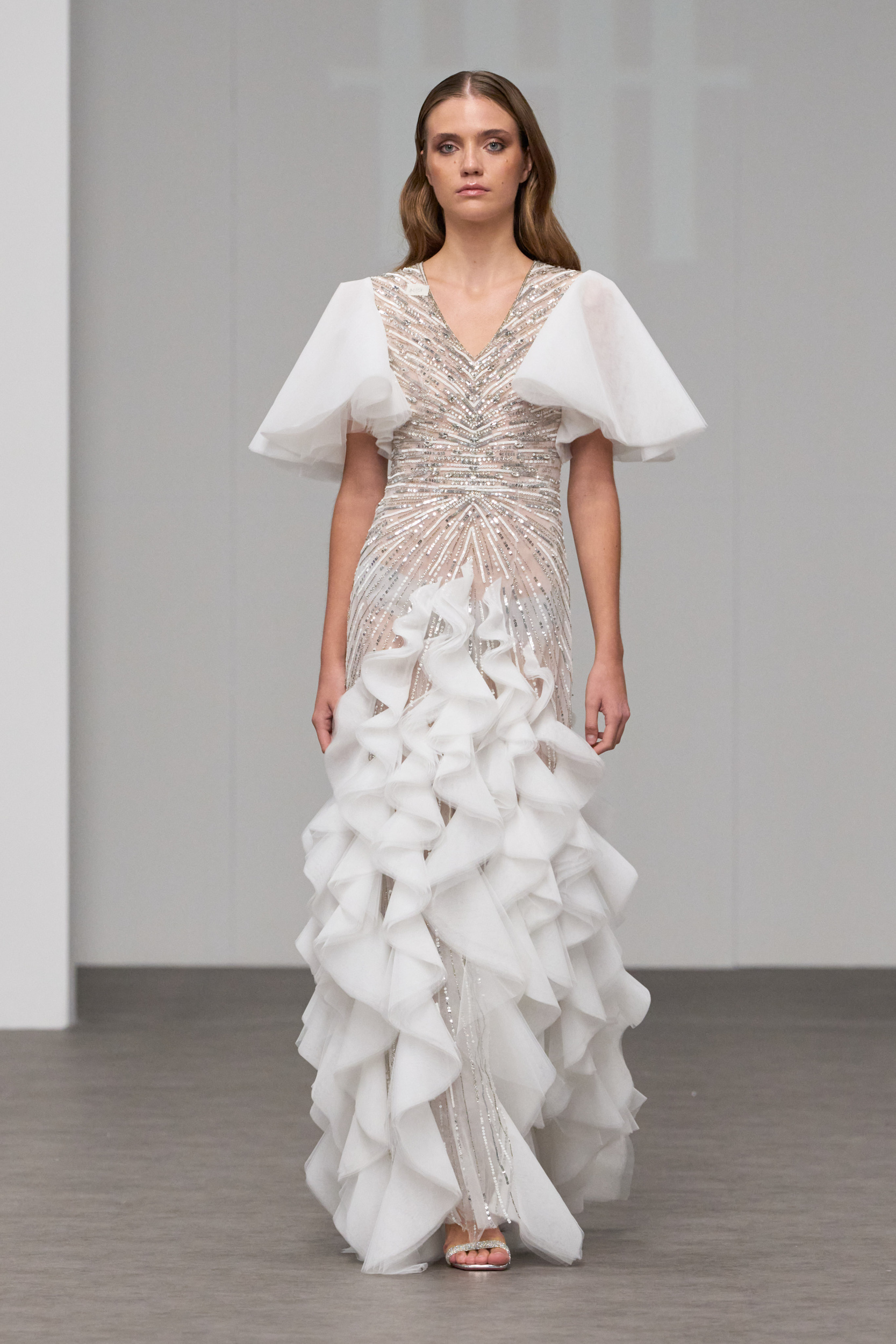
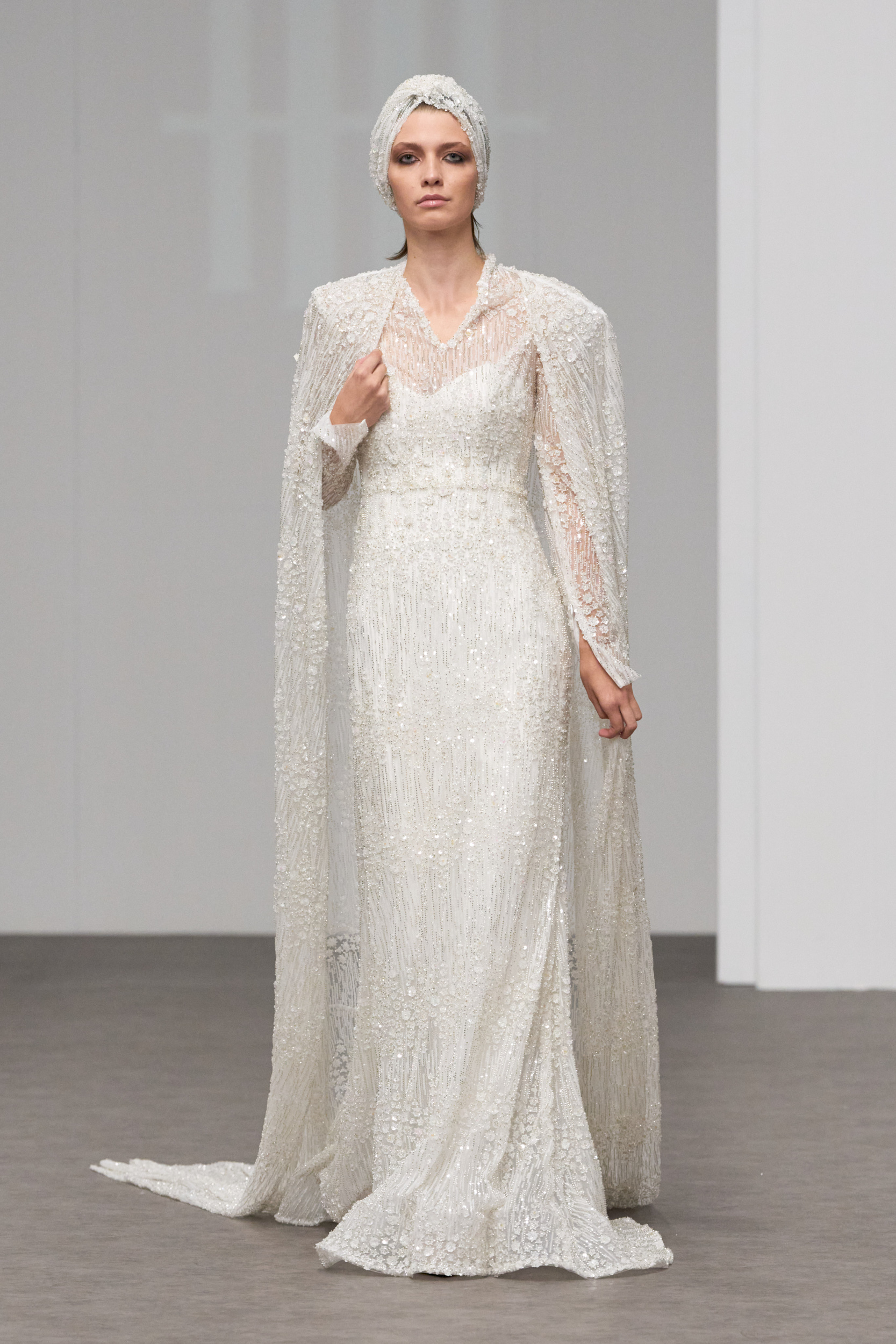
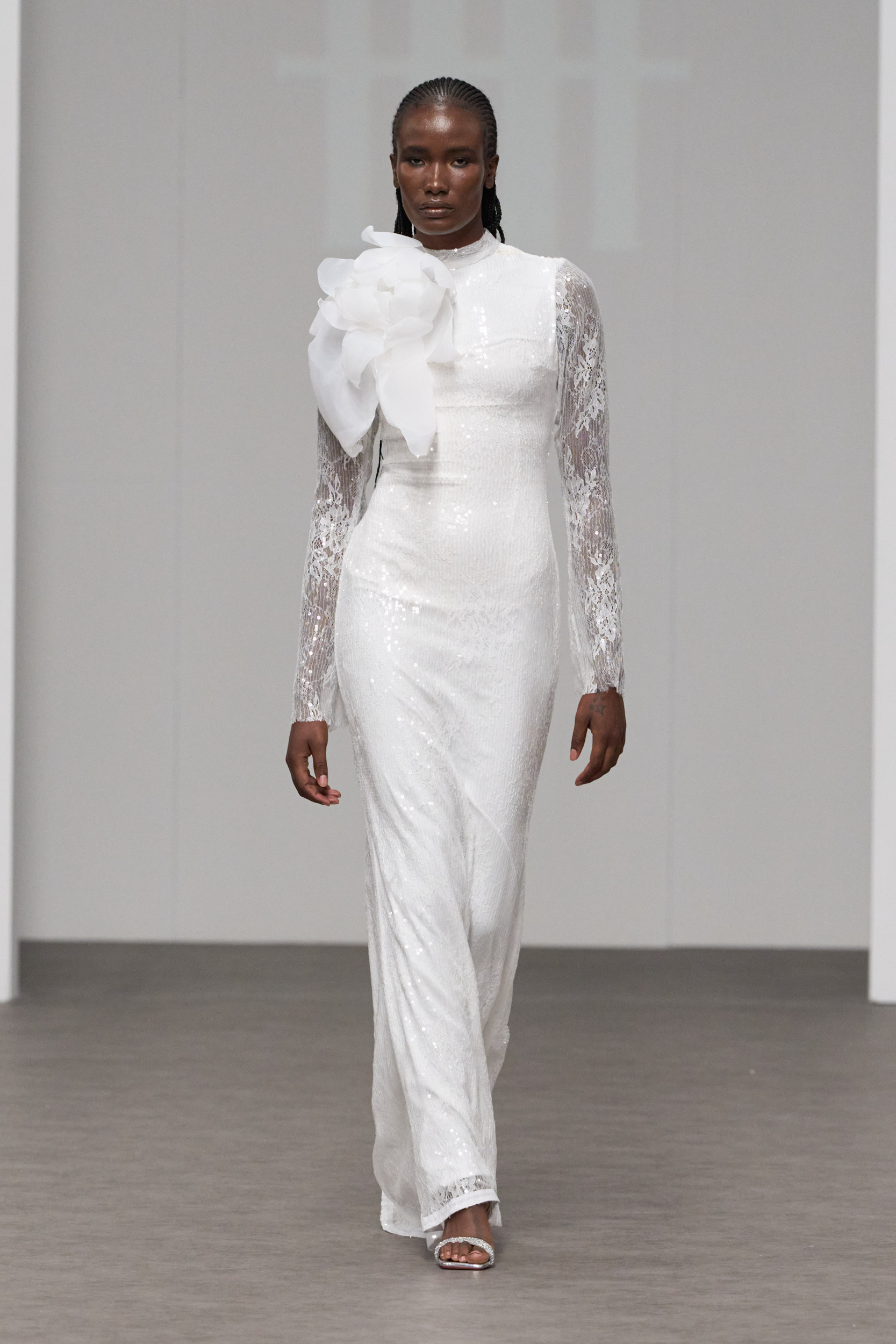
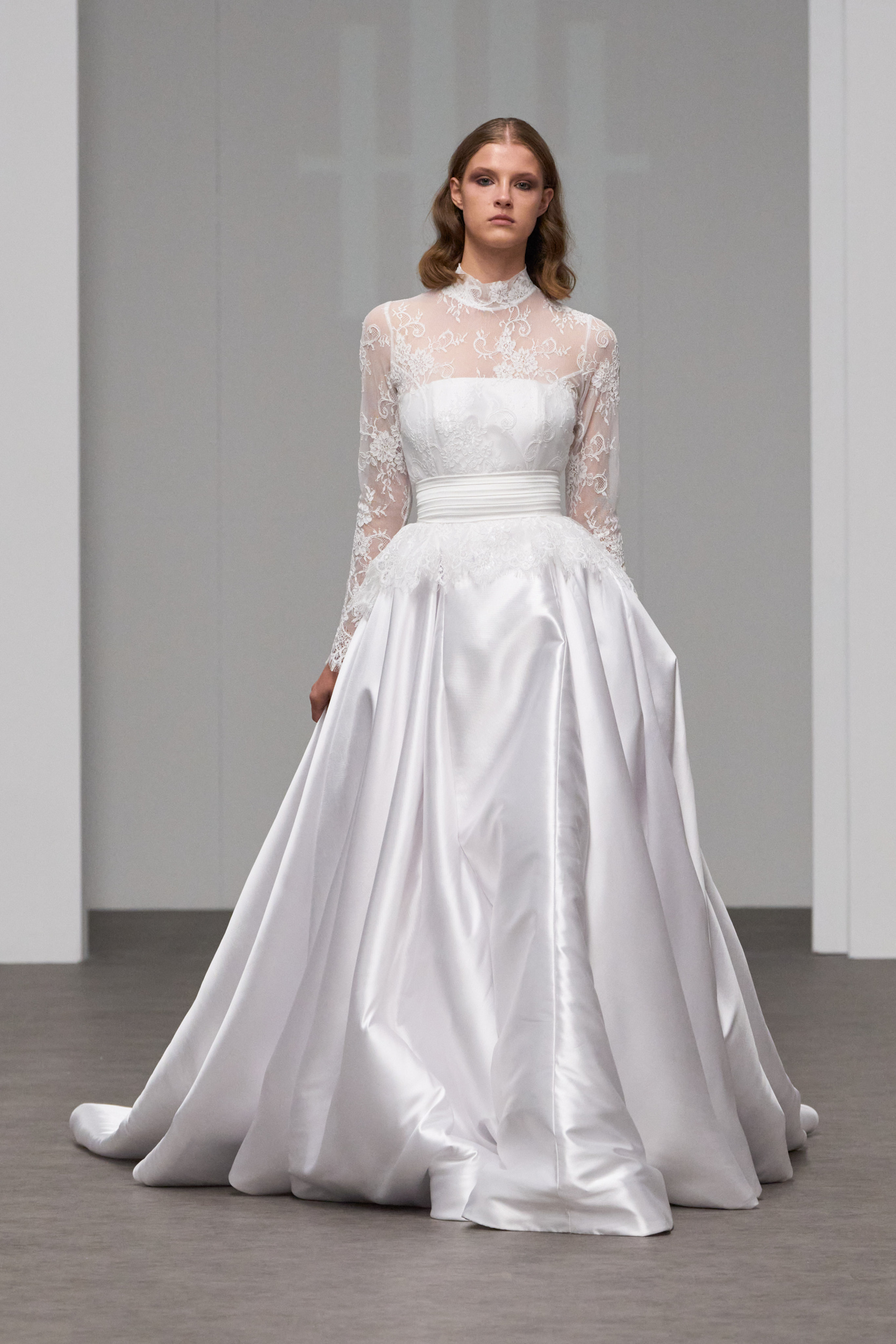
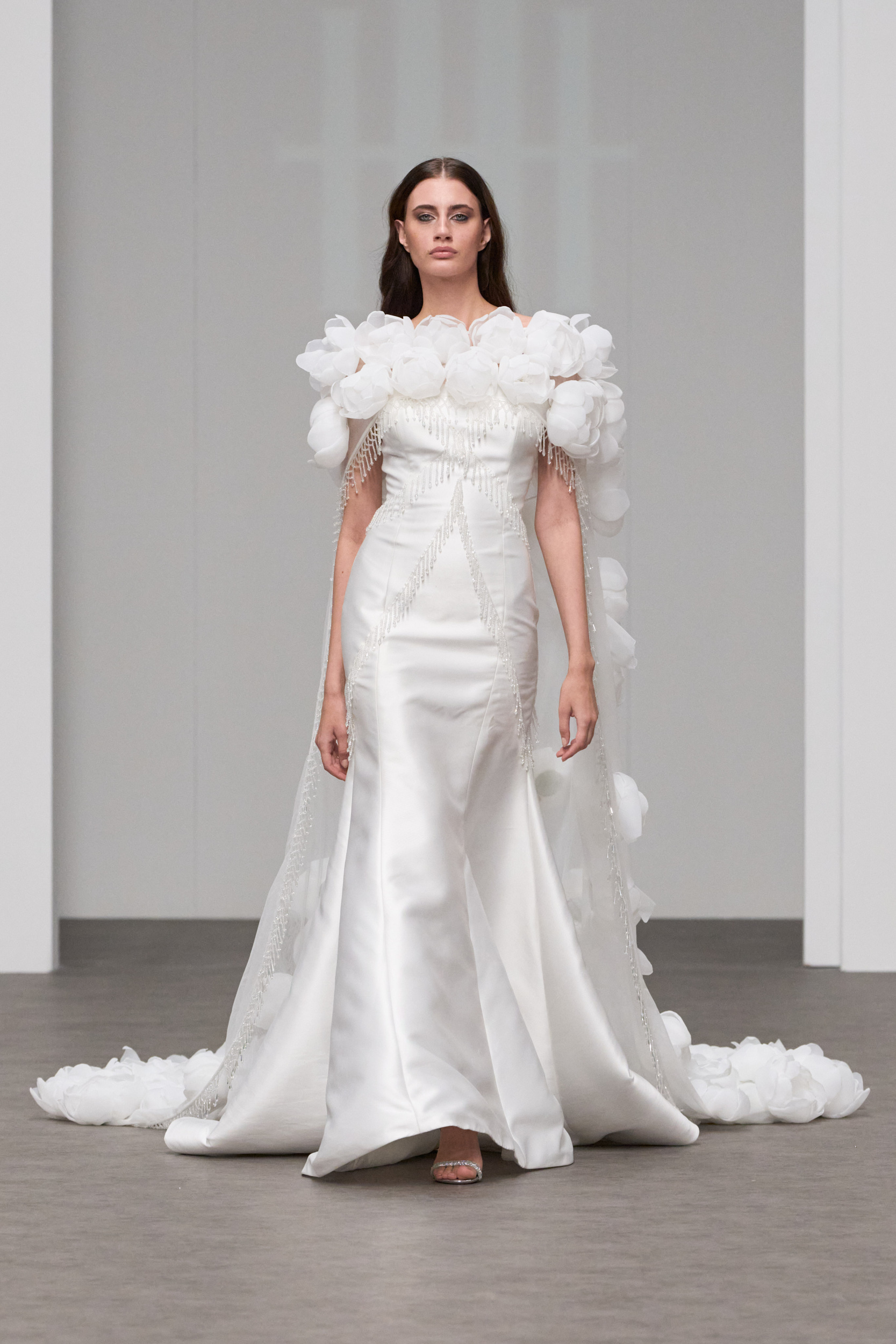
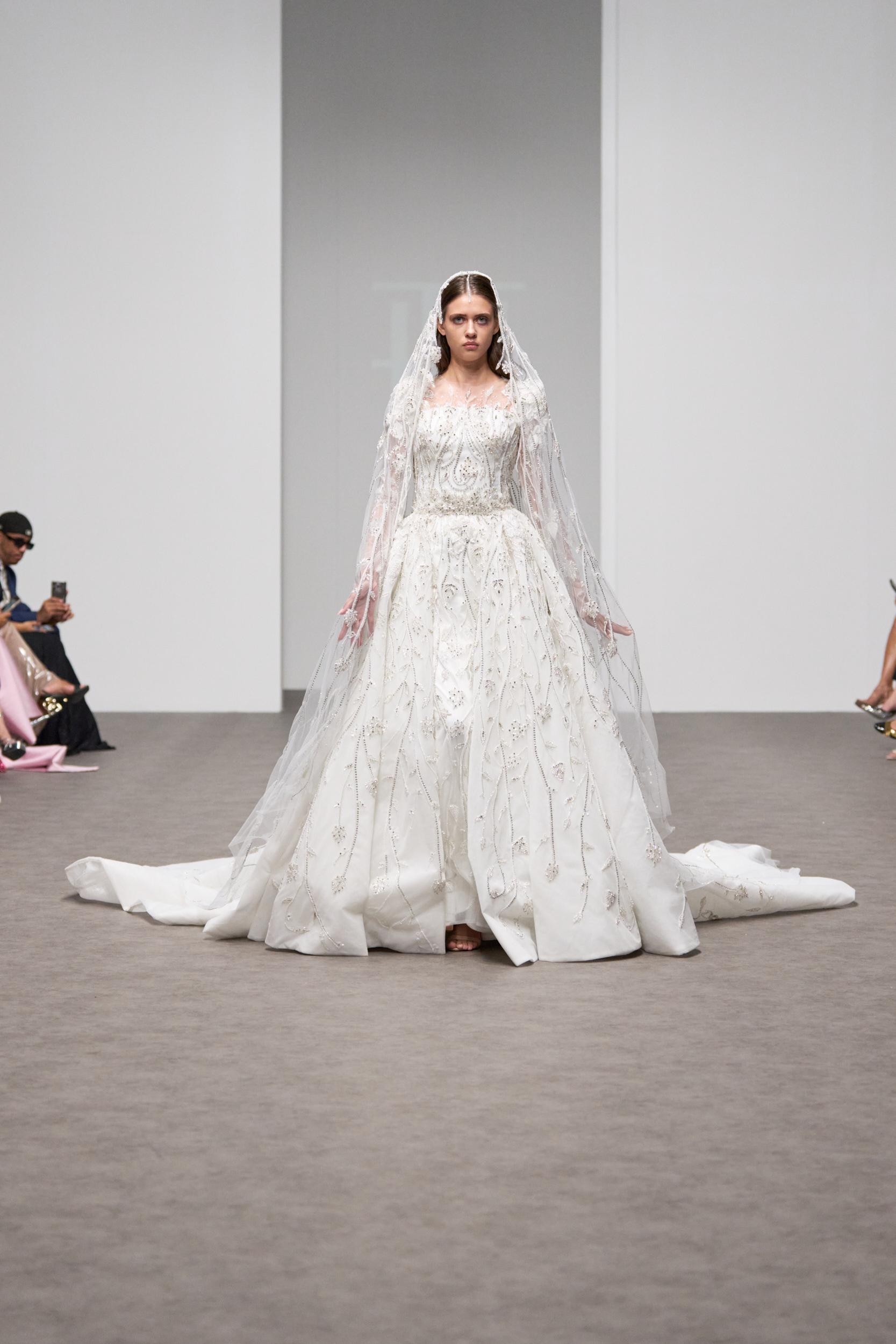
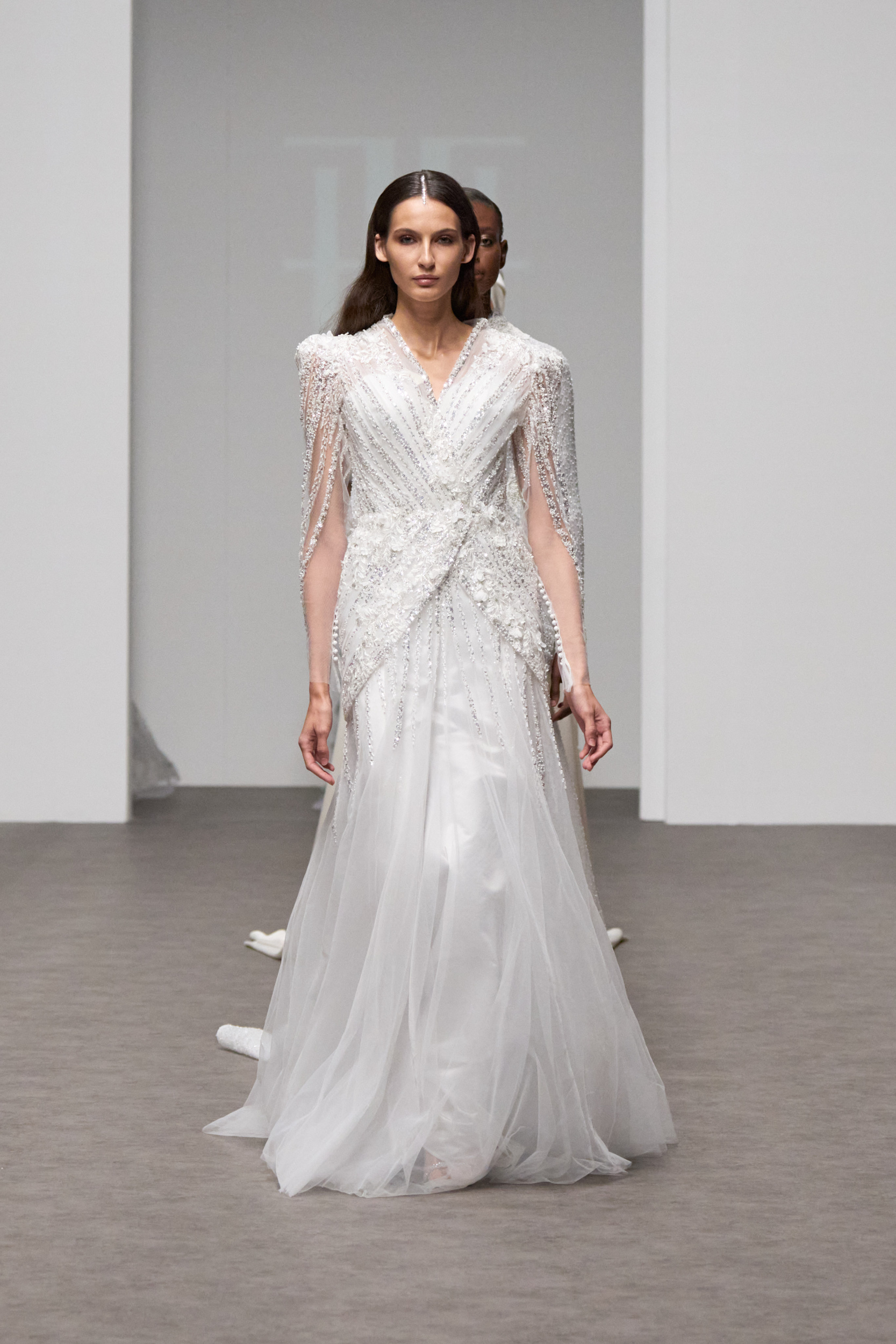
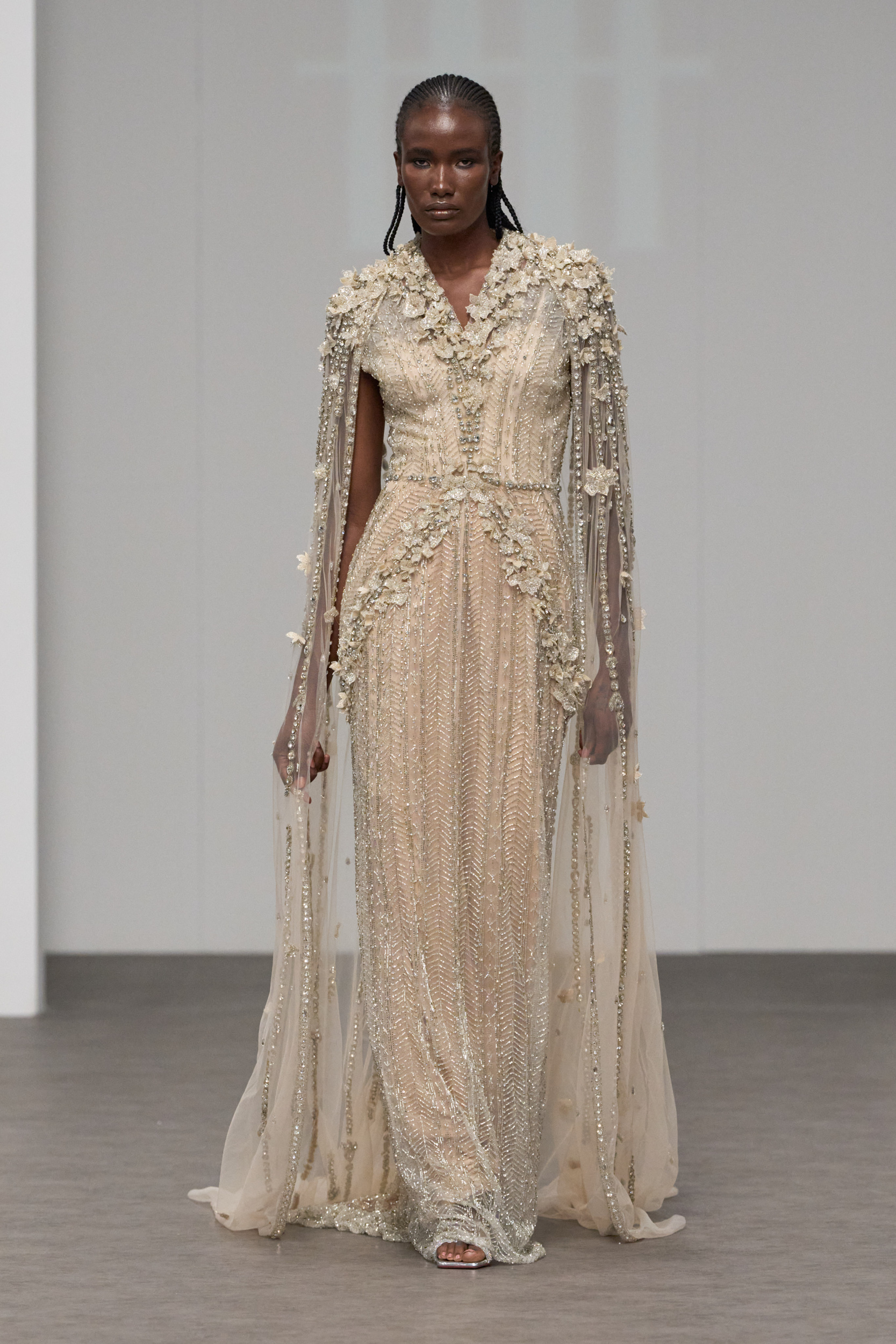
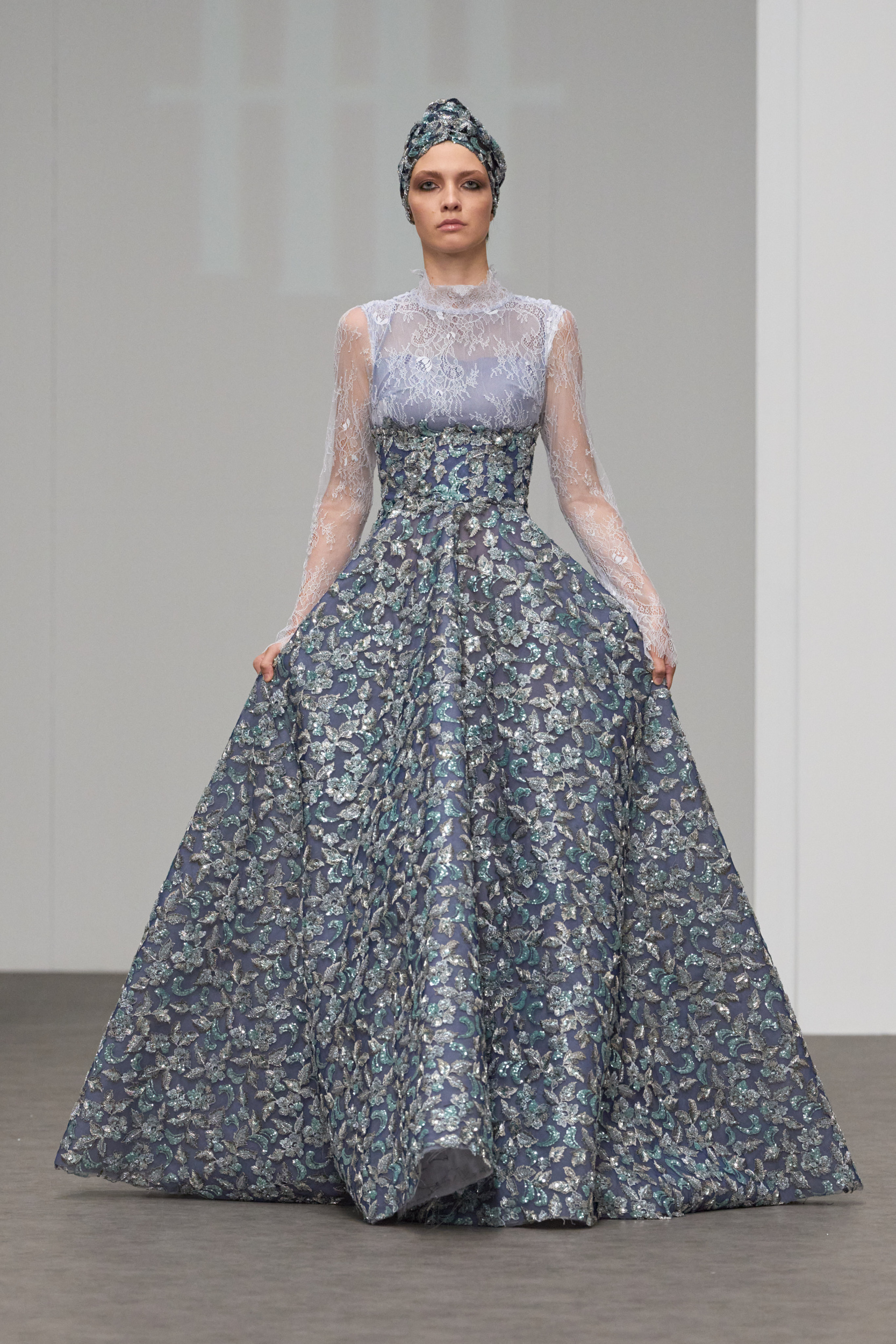
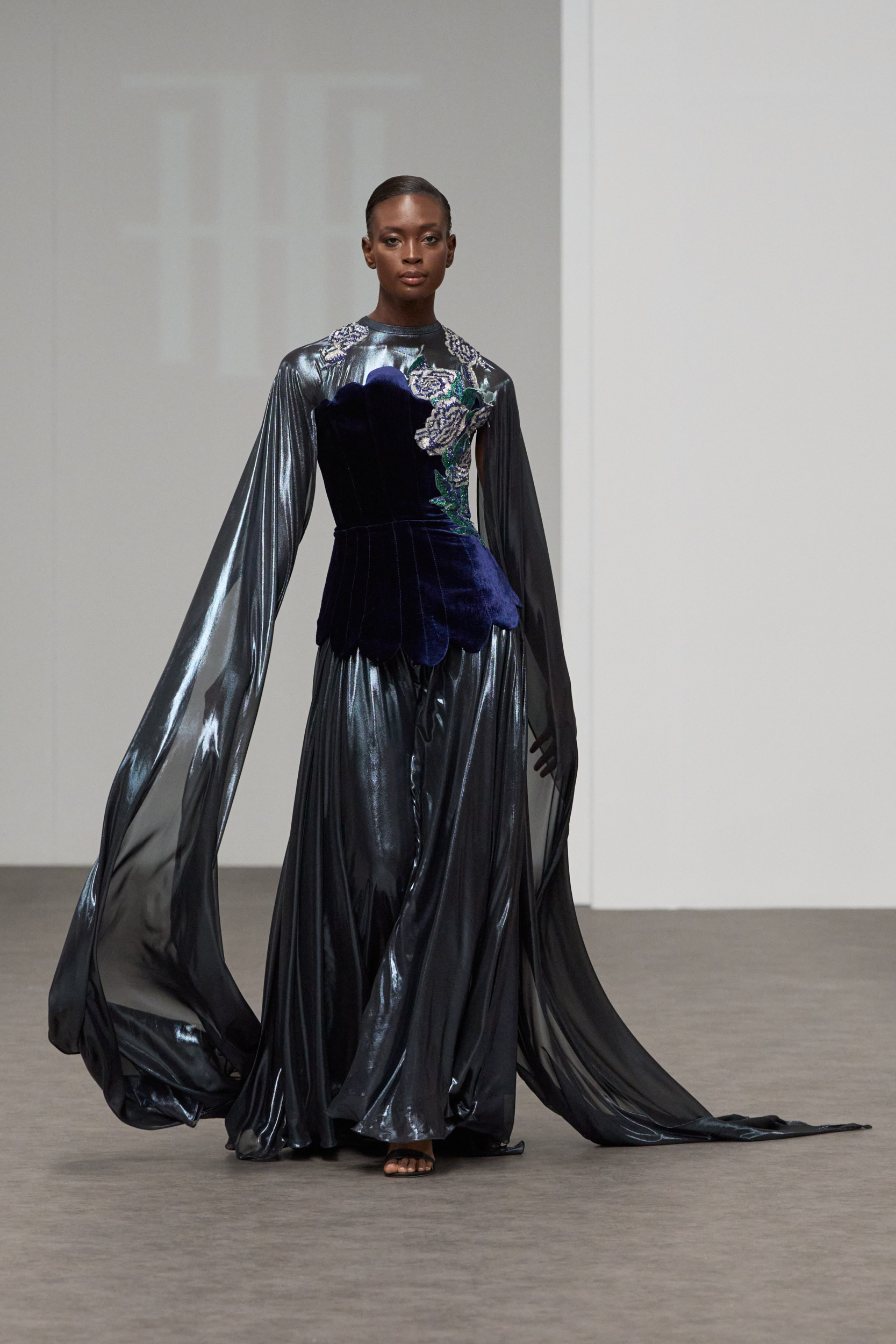
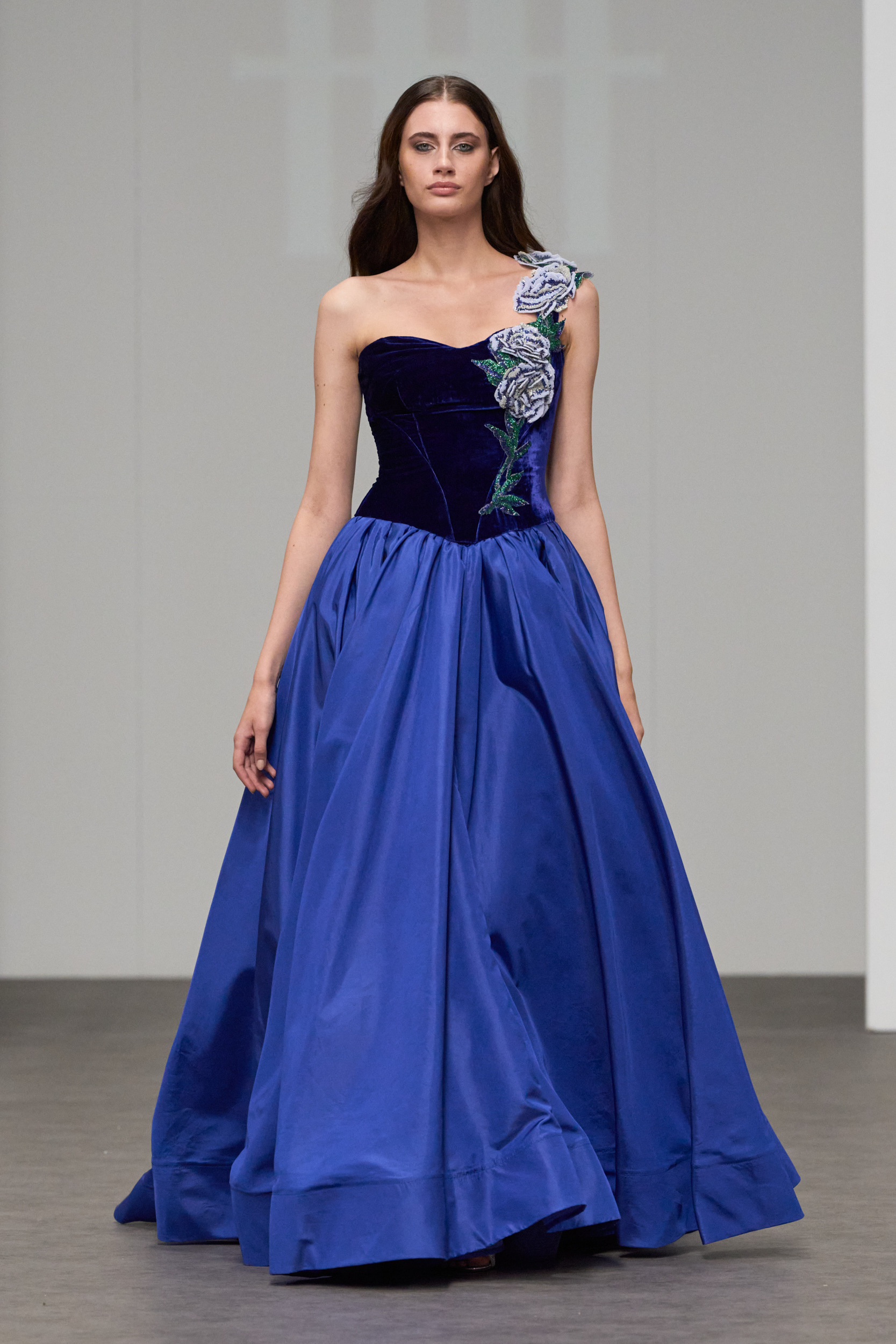
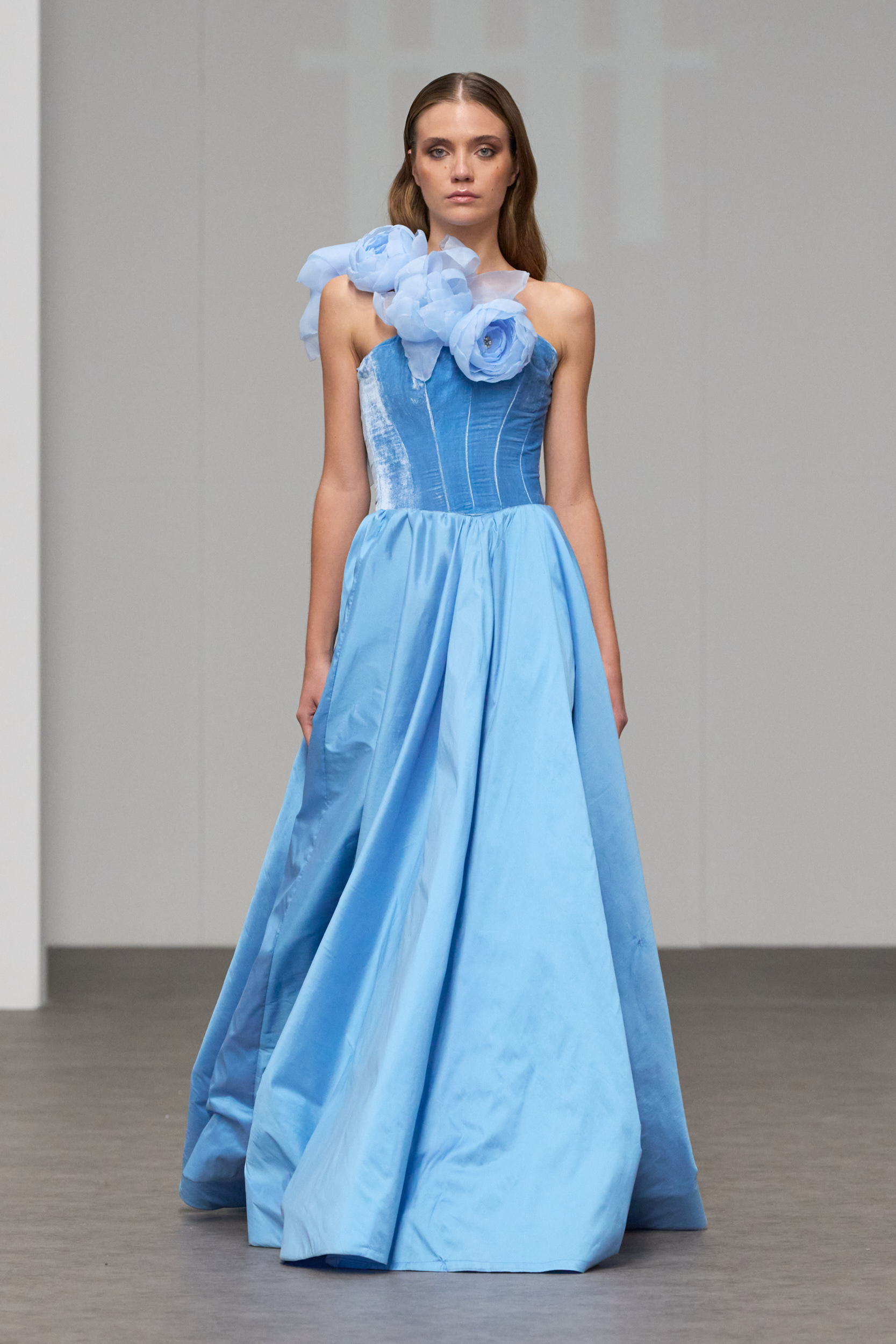
Michael Cinco’s Roman Opus collection is the most complete available expression of what maximalist couture achieves when it is executed with the technical mastery and the historical intelligence that the ambition requires. This is not spectacle for its own sake. It is spectacle as design philosophy — the understanding that fashion at its most formally ambitious is capable of producing emotional and aesthetic states that more restrained design registers cannot access, and that the pursuit of those states requires the full deployment of couture’s most demanding technical capabilities.
The collection’s engagement with ancient Rome is not superficial historical reference but genuine design dialogue — the kind that only a designer who has studied what Roman fashion actually meant, architecturally and culturally, can produce. The gold and silver accents woven throughout the collection are not decorative additions to contemporary silhouettes. They are the design vocabulary of a civilization that understood ornament as architecture — as the structural element through which the relationship between the dressed body and the social world it inhabits is most precisely defined. Gowns as grand as Roman architecture. Models moving like Roman goddesses, draped in fabric that floats as they walk.
The debut of the Michael Cinco Luxury Micro Diamond Collection — combining haute couture with technological innovation through the integration of micro diamonds into the fabric construction — marks a new chapter in the luxury fashion conversation about what couture can mean in an era where both the tools available to designers and the expectations of their most engaged consumers have expanded beyond the boundaries of traditional craft. This is not fashion digitisation. It is fashion evolution: the expansion of couture’s technical vocabulary to include the material possibilities that the current era makes available, in service of the same aesthetic ambitions that have defined great couture since its inception.
As Vogue’s analysis of couture maximalism and spectacle luxury fashion evolution documents, the designers producing the most culturally significant maximalist couture are those whose ambition is matched by technical mastery — those whose scale and ornamental complexity are the expression of a complete and coherent design vision rather than the accumulation of impressive elements. Michael Cinco’s Roman Opus is precisely this: a collection whose maximalism is the product of design conviction rather than design excess.
The coexistence of fashion languages — Dubai Fashion Week as a multi-register elegance platform
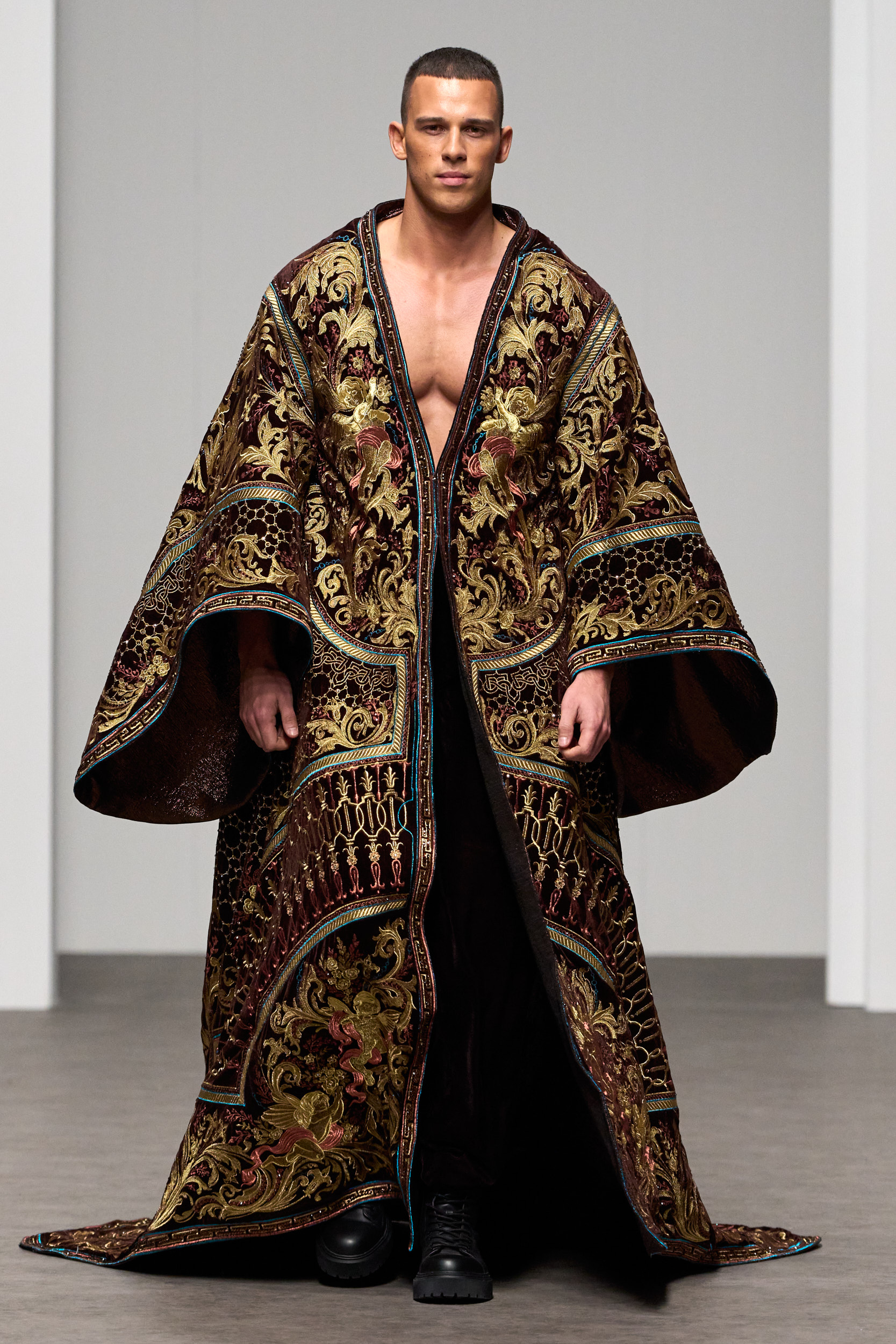
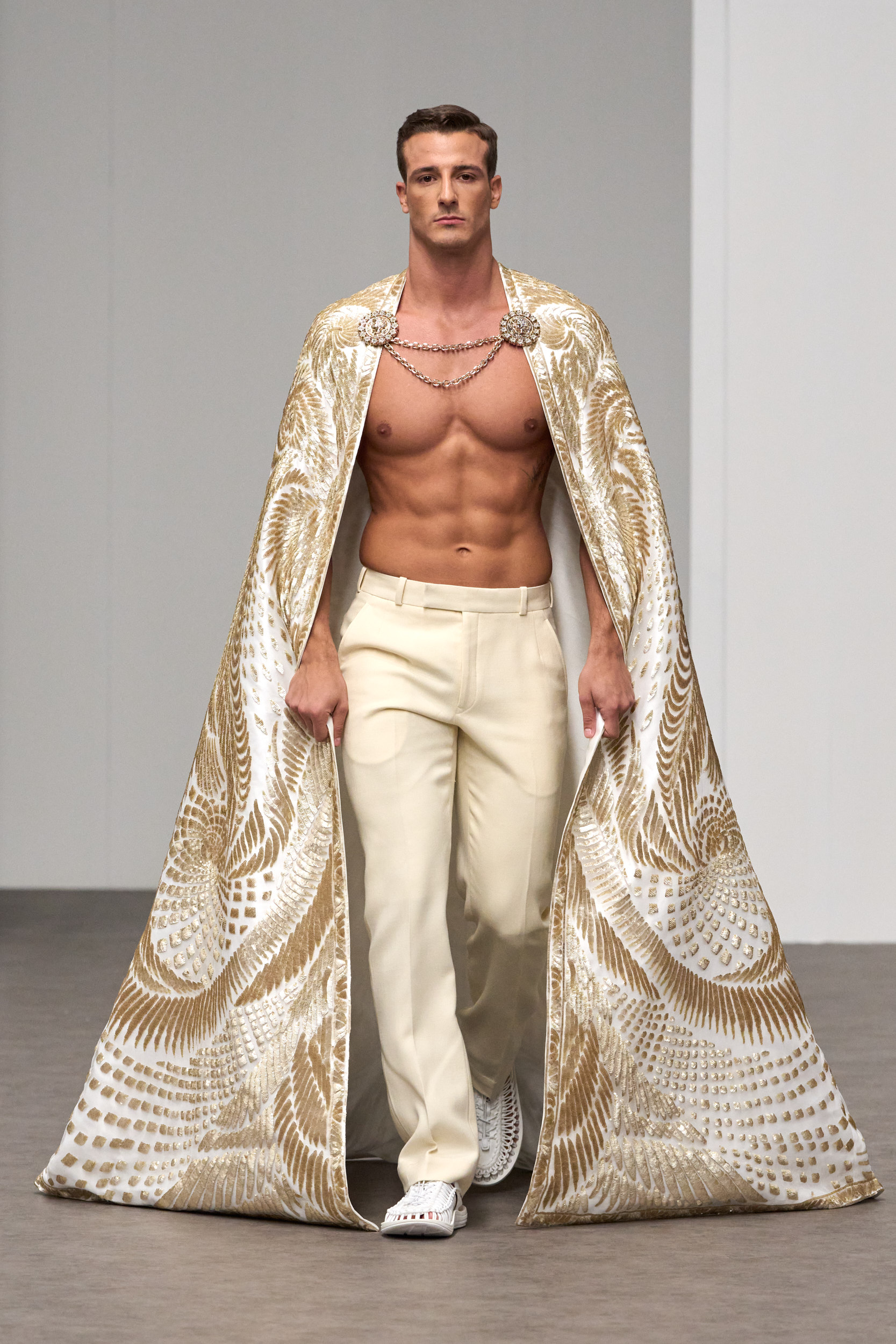
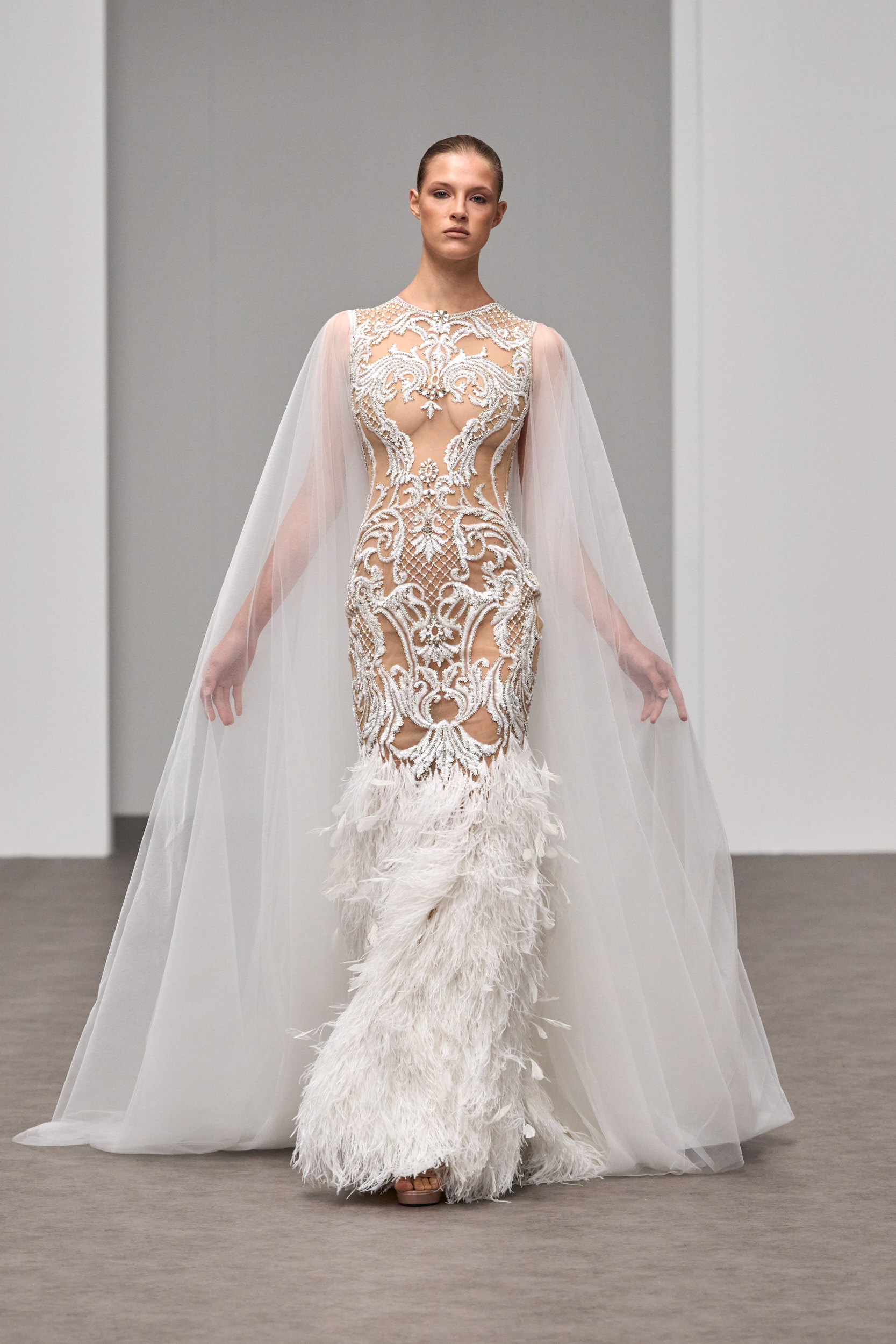
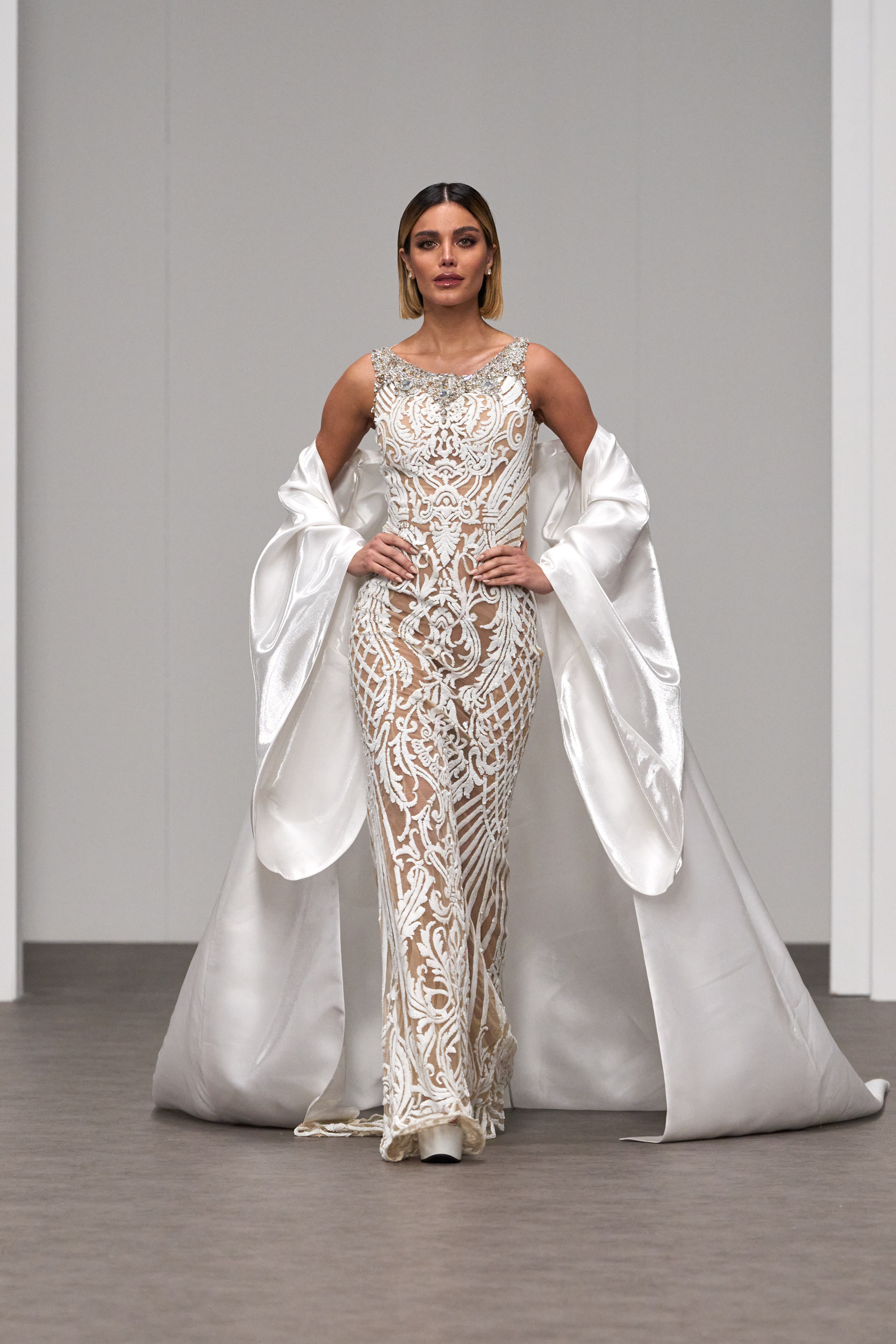
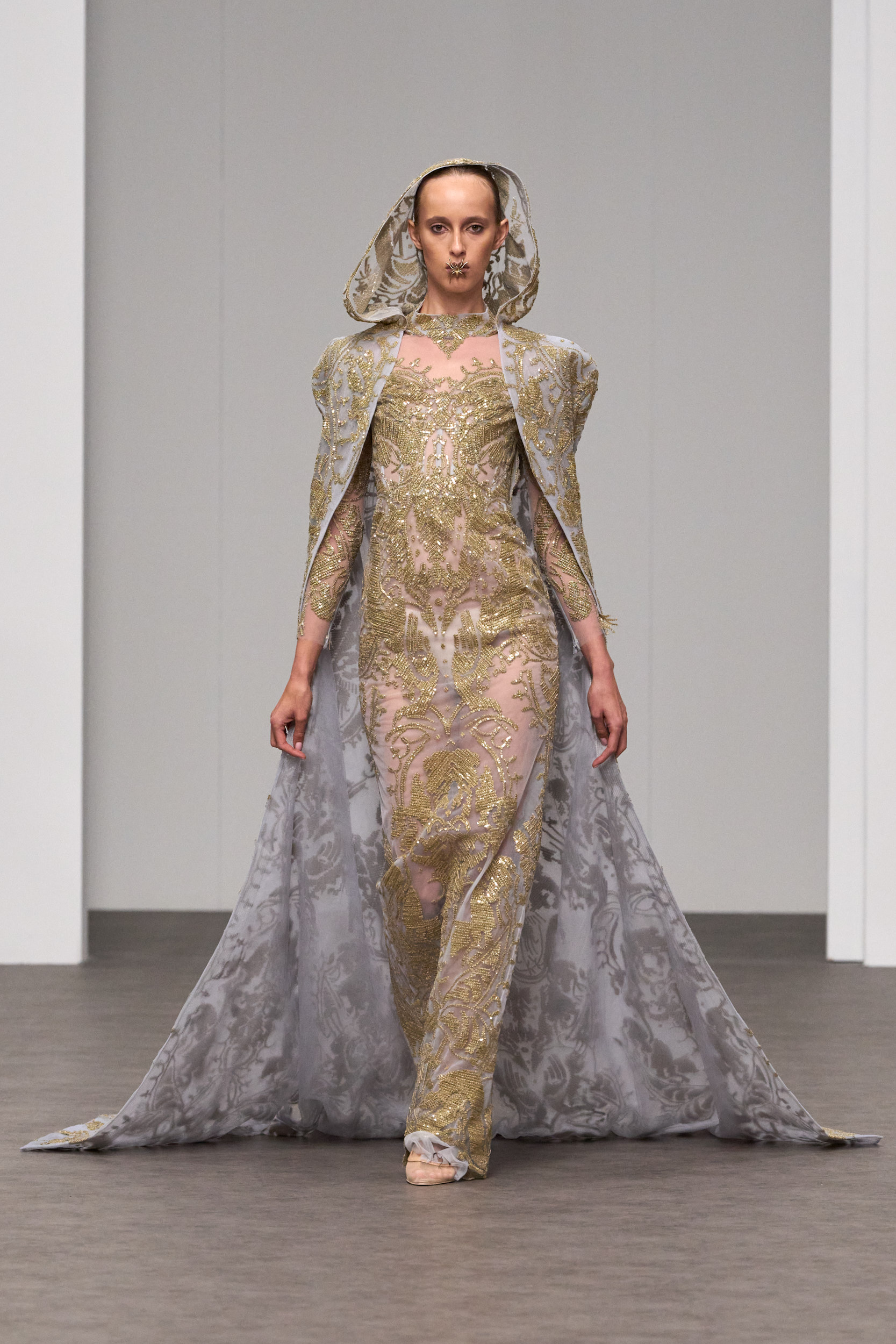
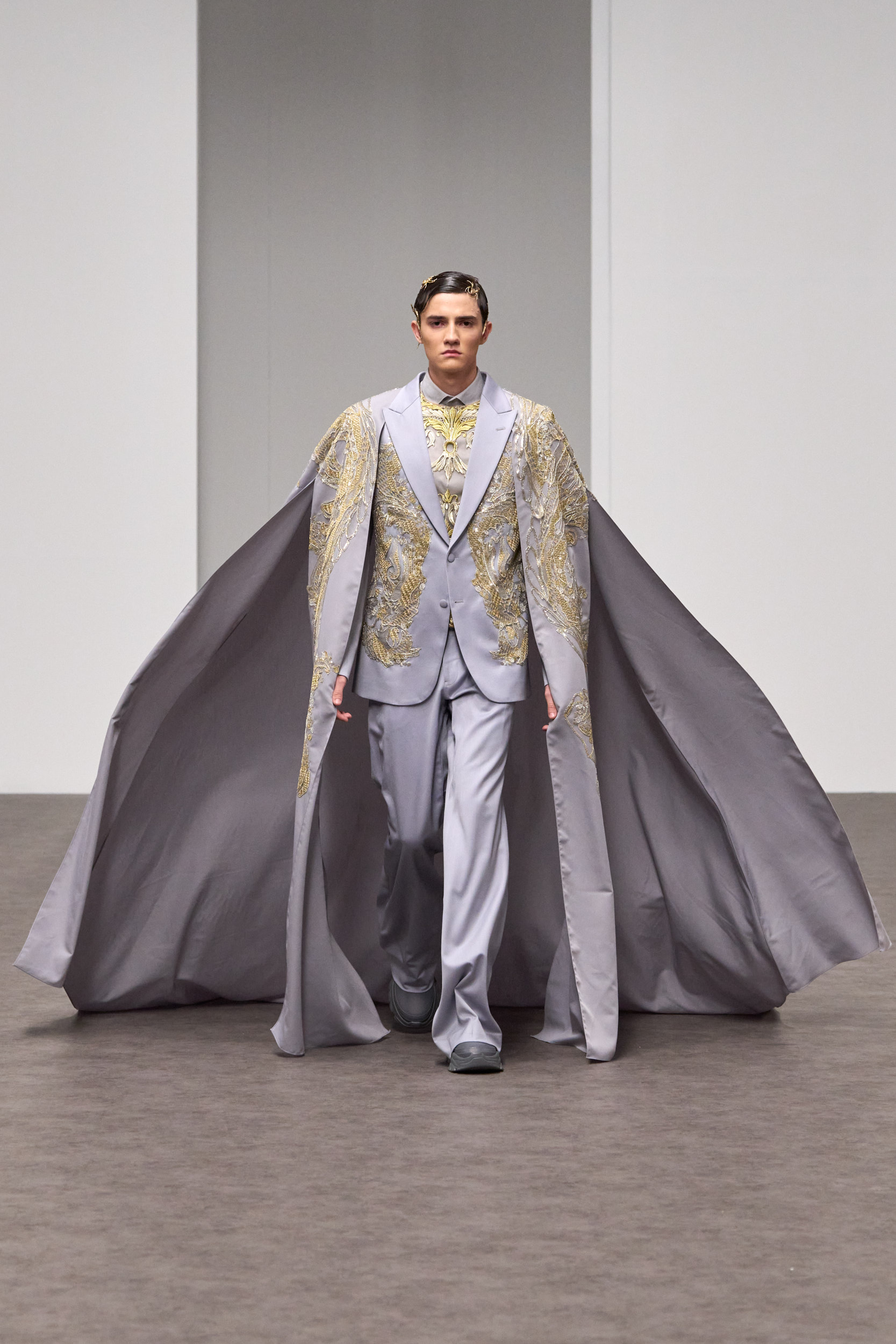
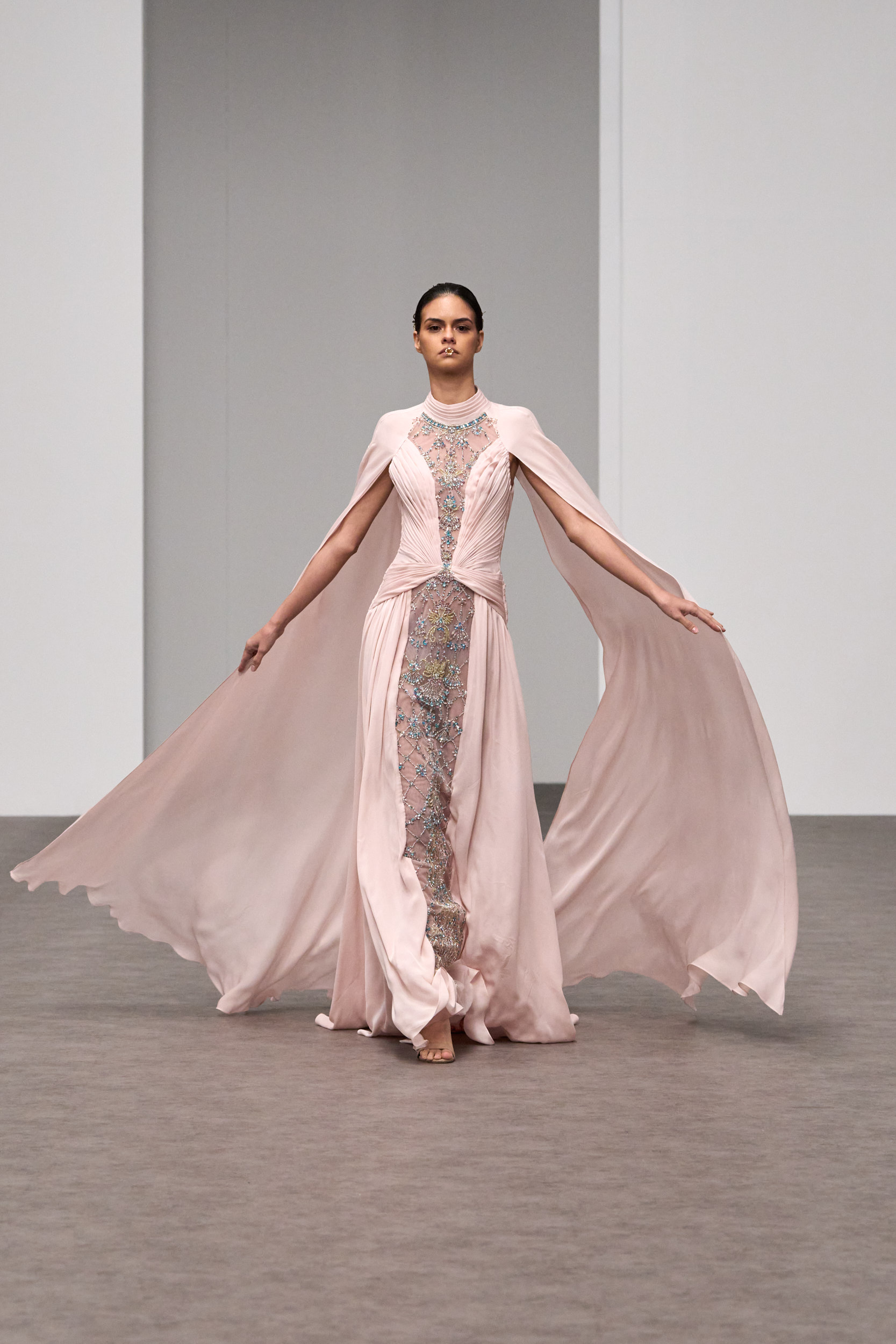
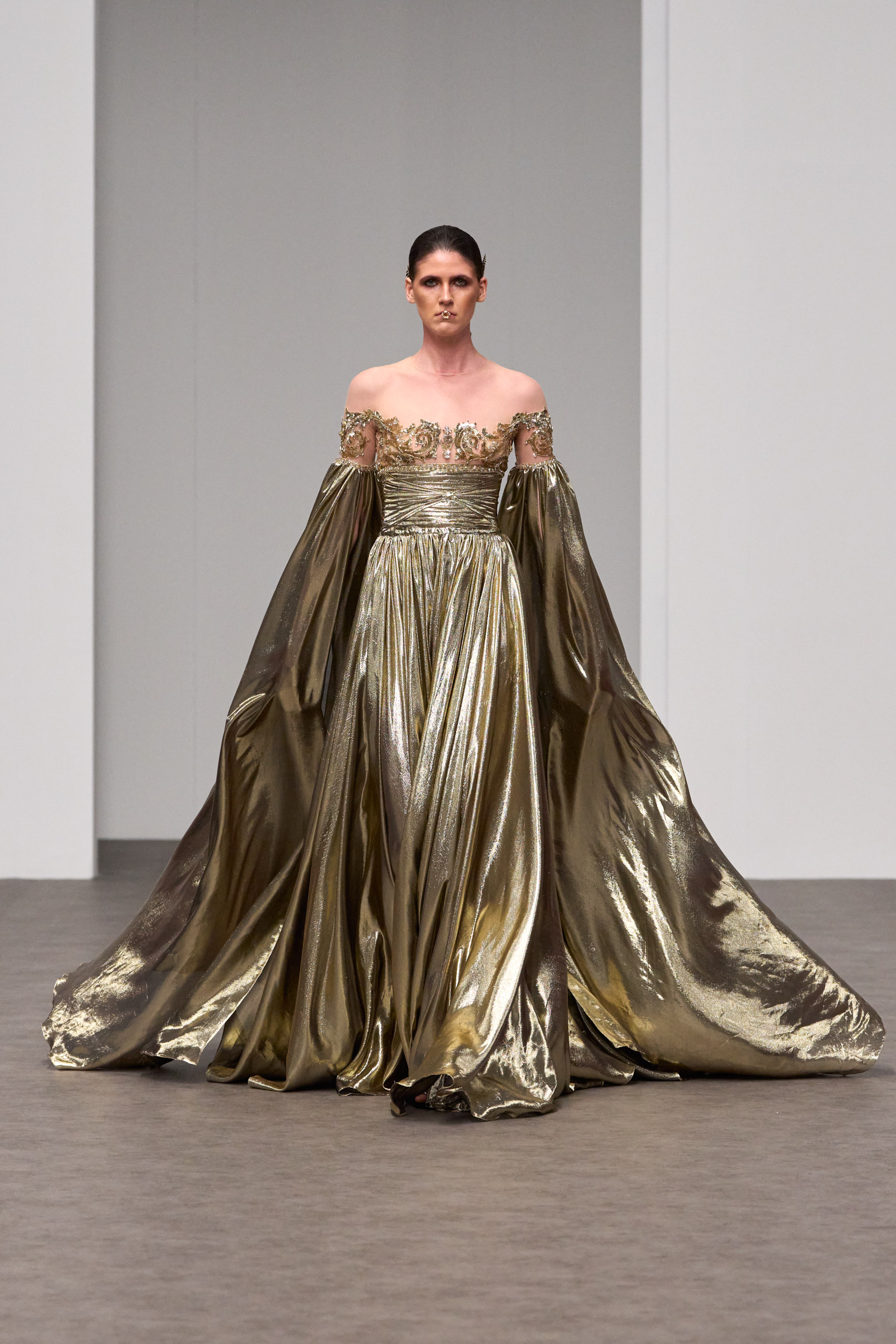
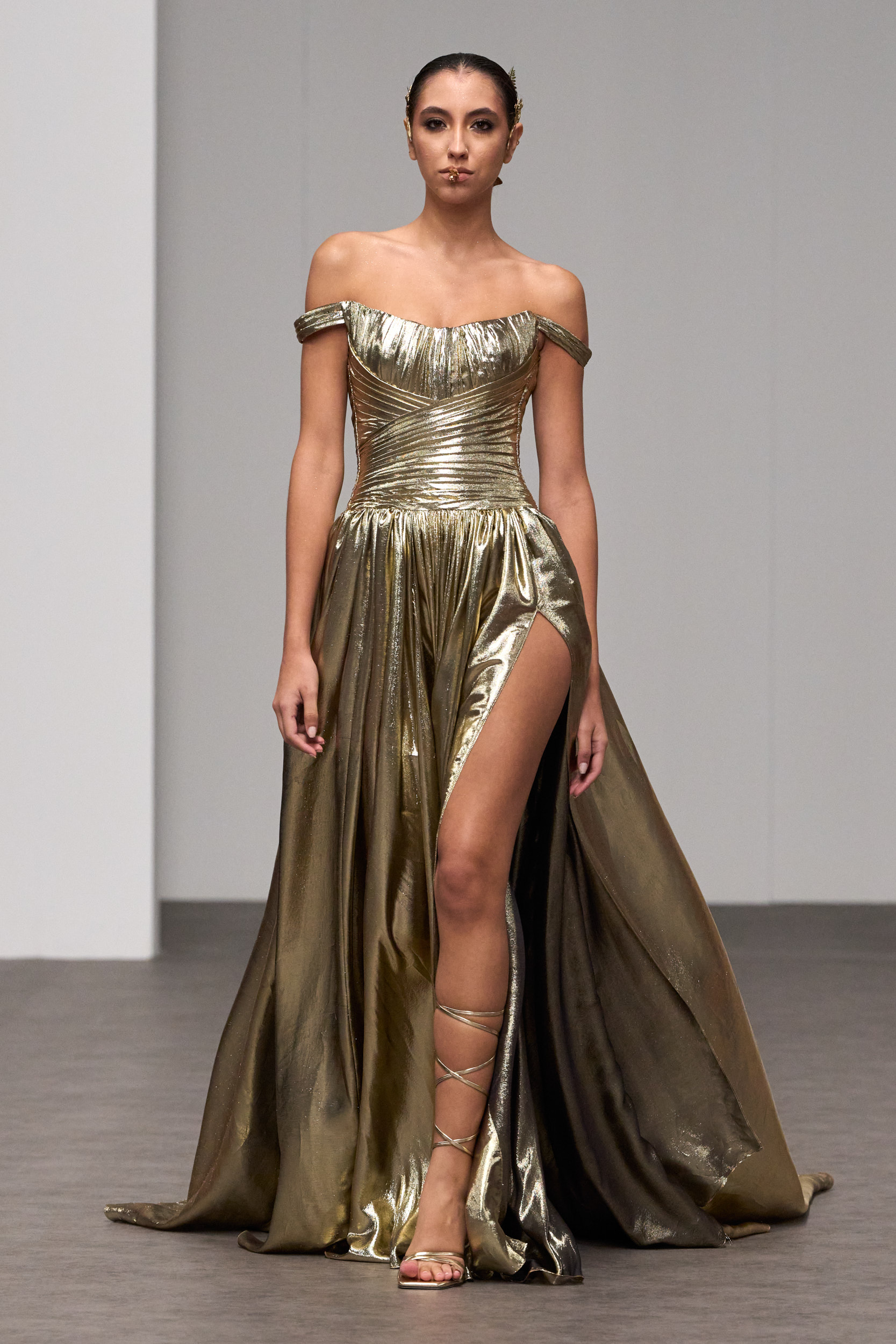
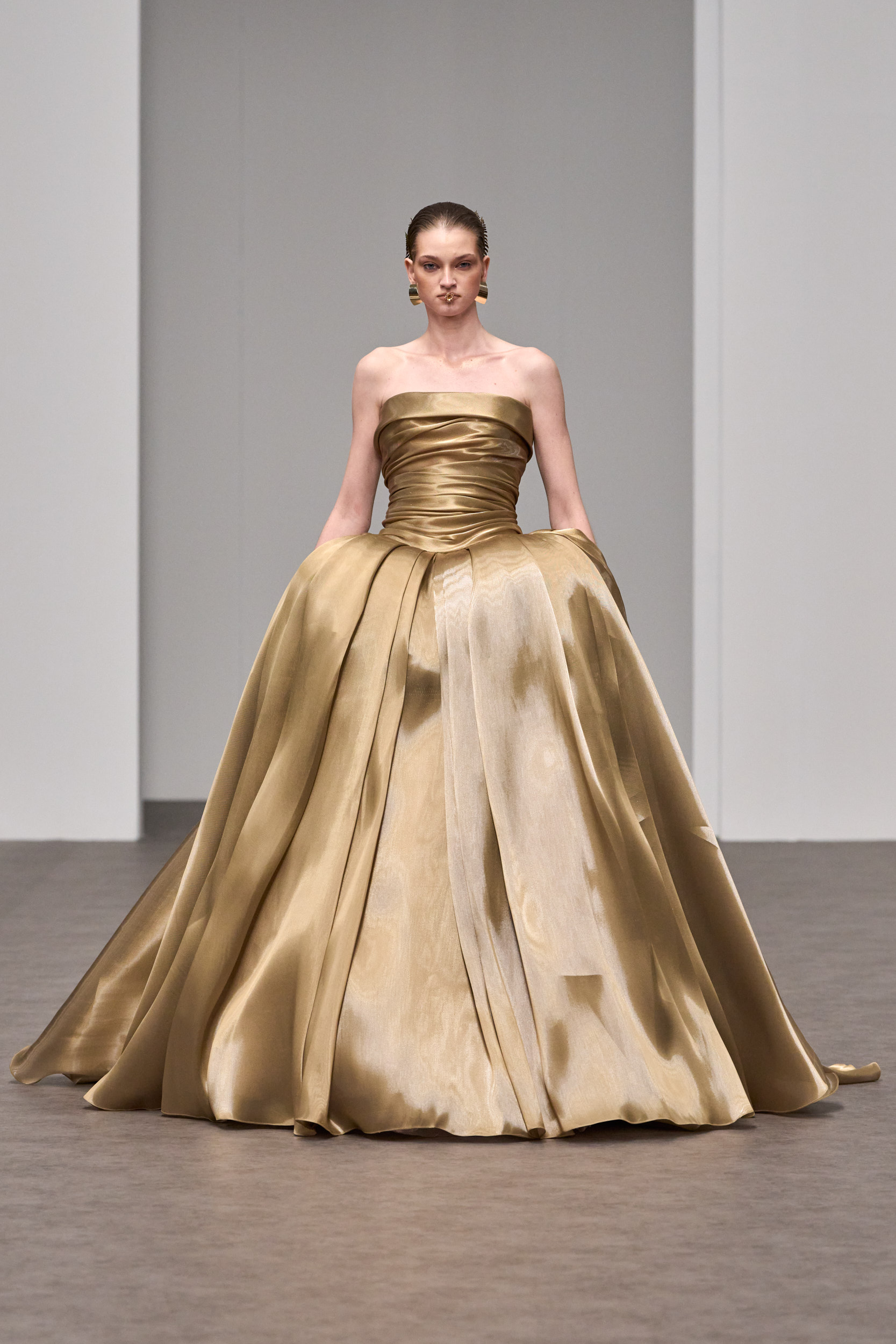
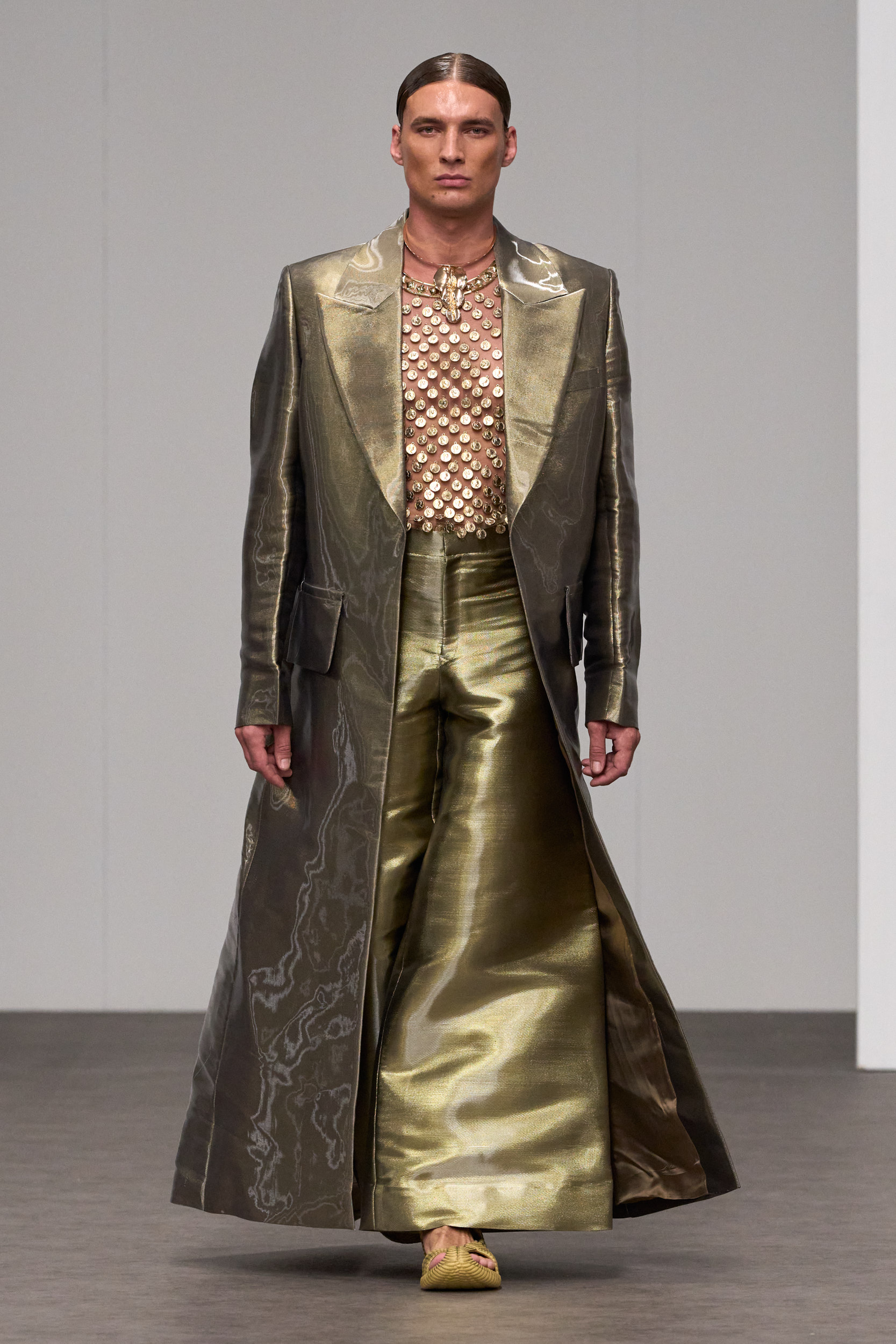
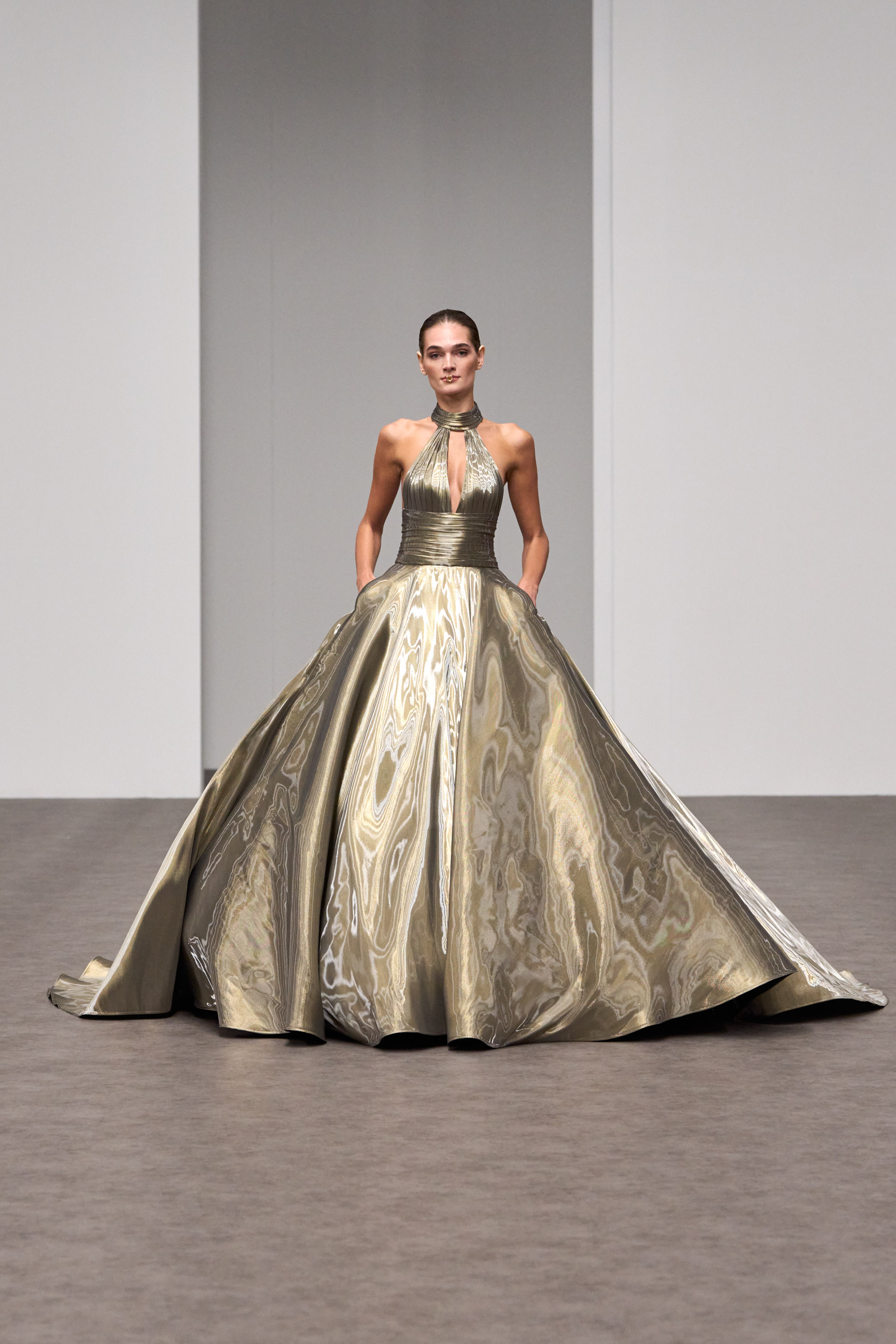
The most intellectually significant aspect of this Dubai Fashion Week lineup is not any individual collection but the fact of their coexistence — the institutional statement that the programme makes by presenting Dima Ayad’s inclusive fluidity and Michael Cinco’s maximalist spectacle and Heba Jasmi’s architectural precision and Humariff’s modest bridal fantasy and Anaya’s structural femininity within the same curated context, without hierarchy, as equally valid expressions of what contemporary elegance is.
This coexistence is not accidental. It is the product of a curatorial intelligence that understands Dubai Fashion Week’s function not as a showcase for a single aesthetic but as a platform for the full range of design philosophies that the contemporary luxury consumer inhabits simultaneously. The woman who responds to Dima Ayad’s inclusive empowerment aesthetic is not a different person from the woman who is moved by Michael Cinco’s Roman grandeur. She is the same person in different modes, at different moments, for different occasions — and the fashion ecosystem that can address all of those modes with equal seriousness is the one that will earn her most sustained engagement.
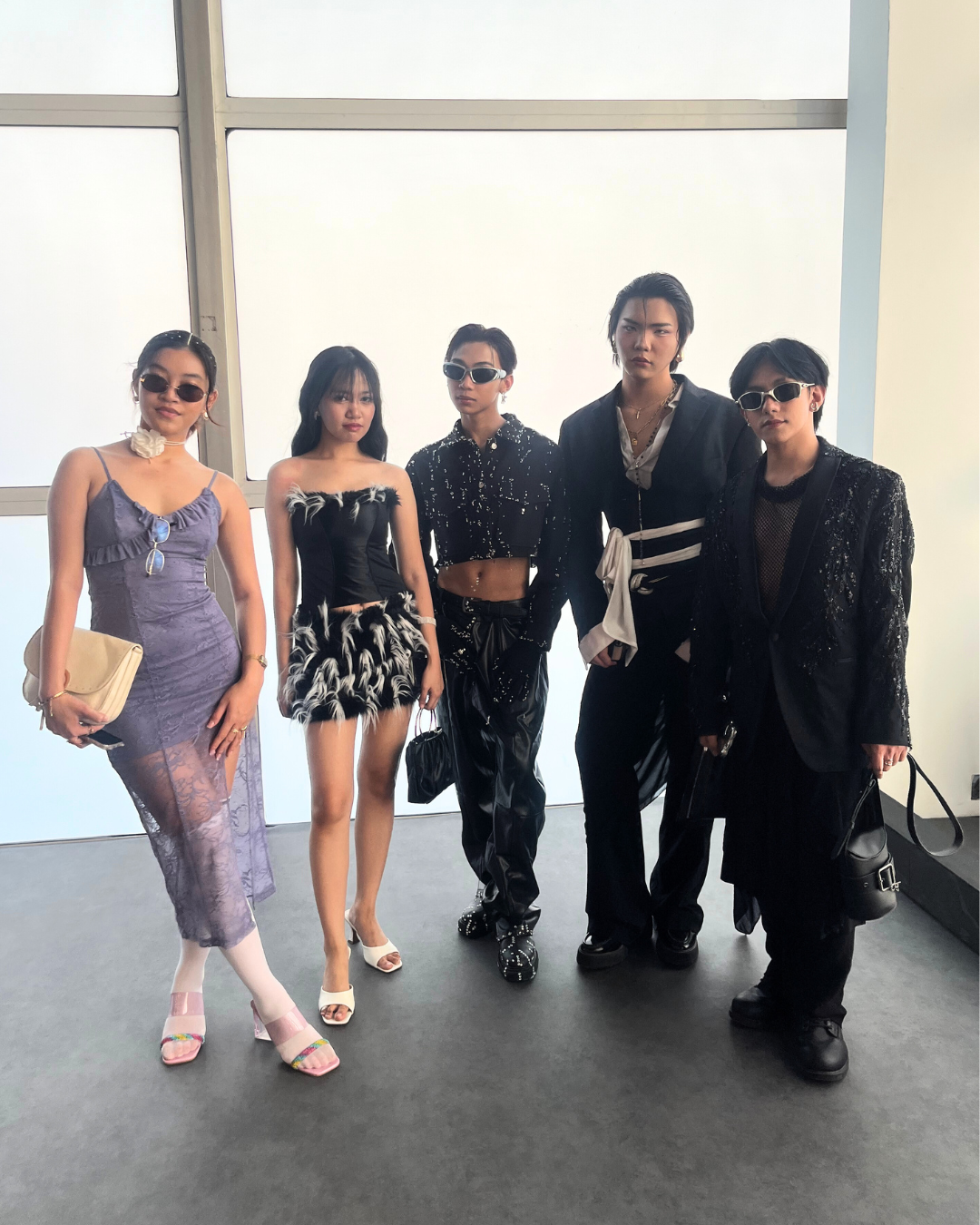
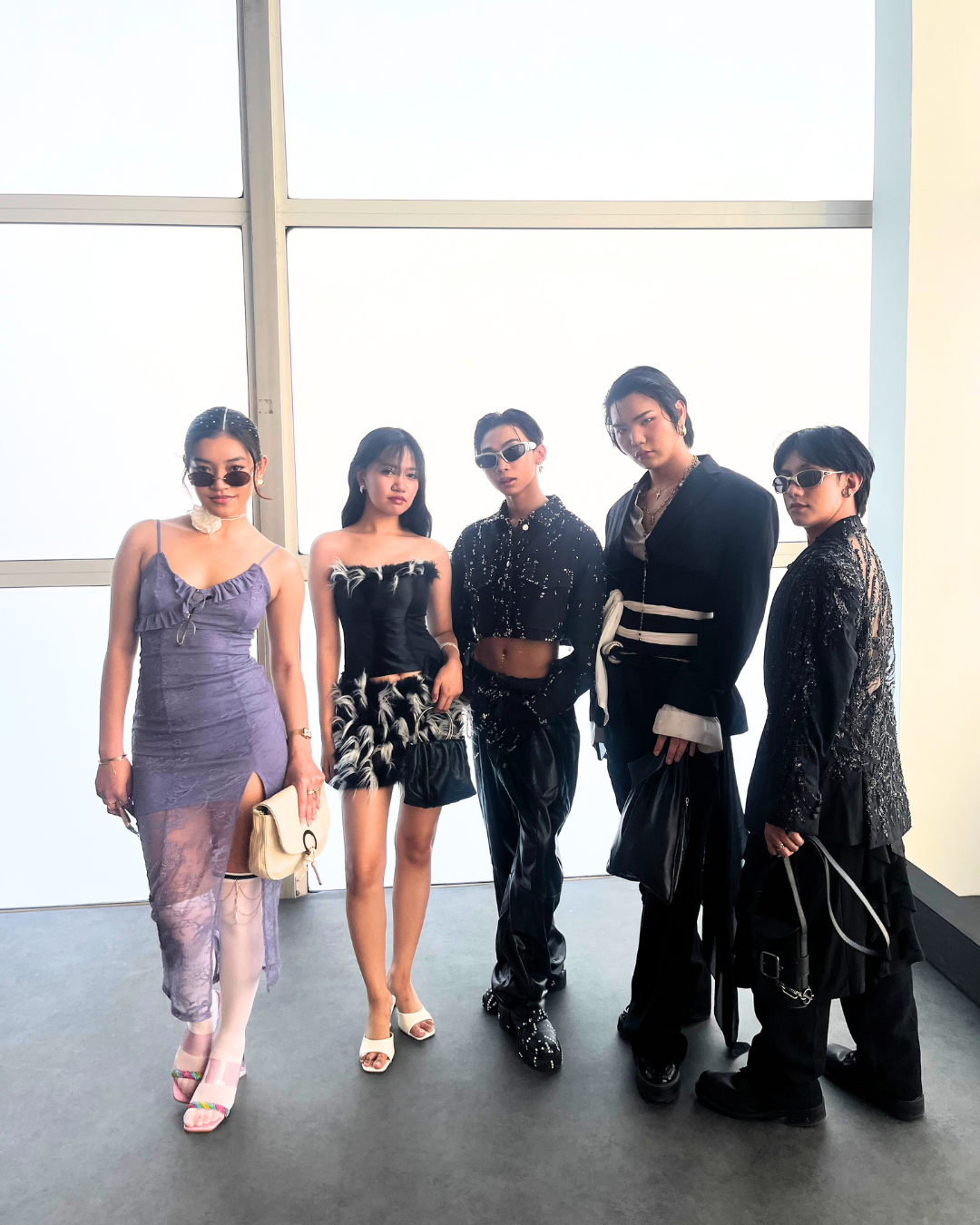
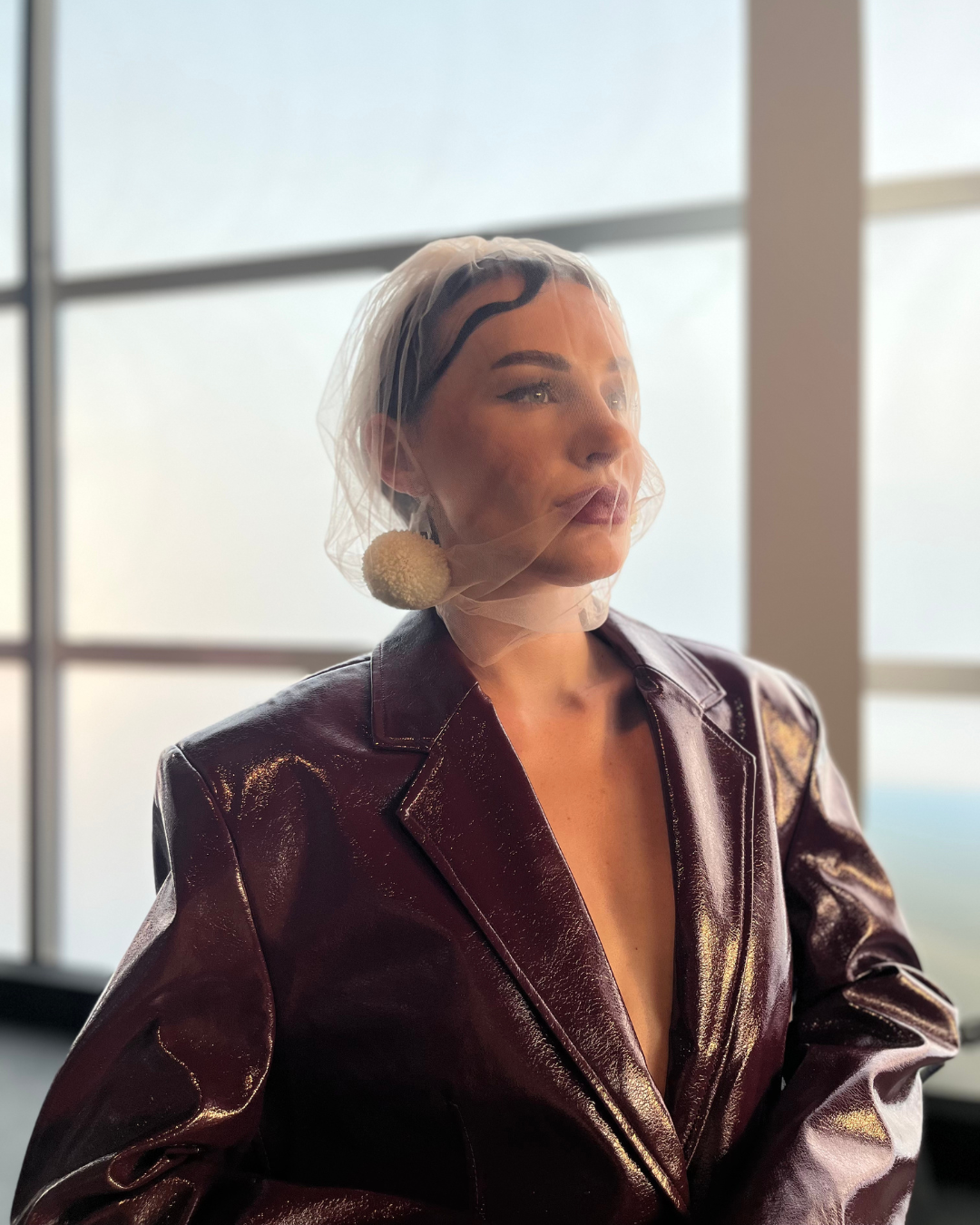
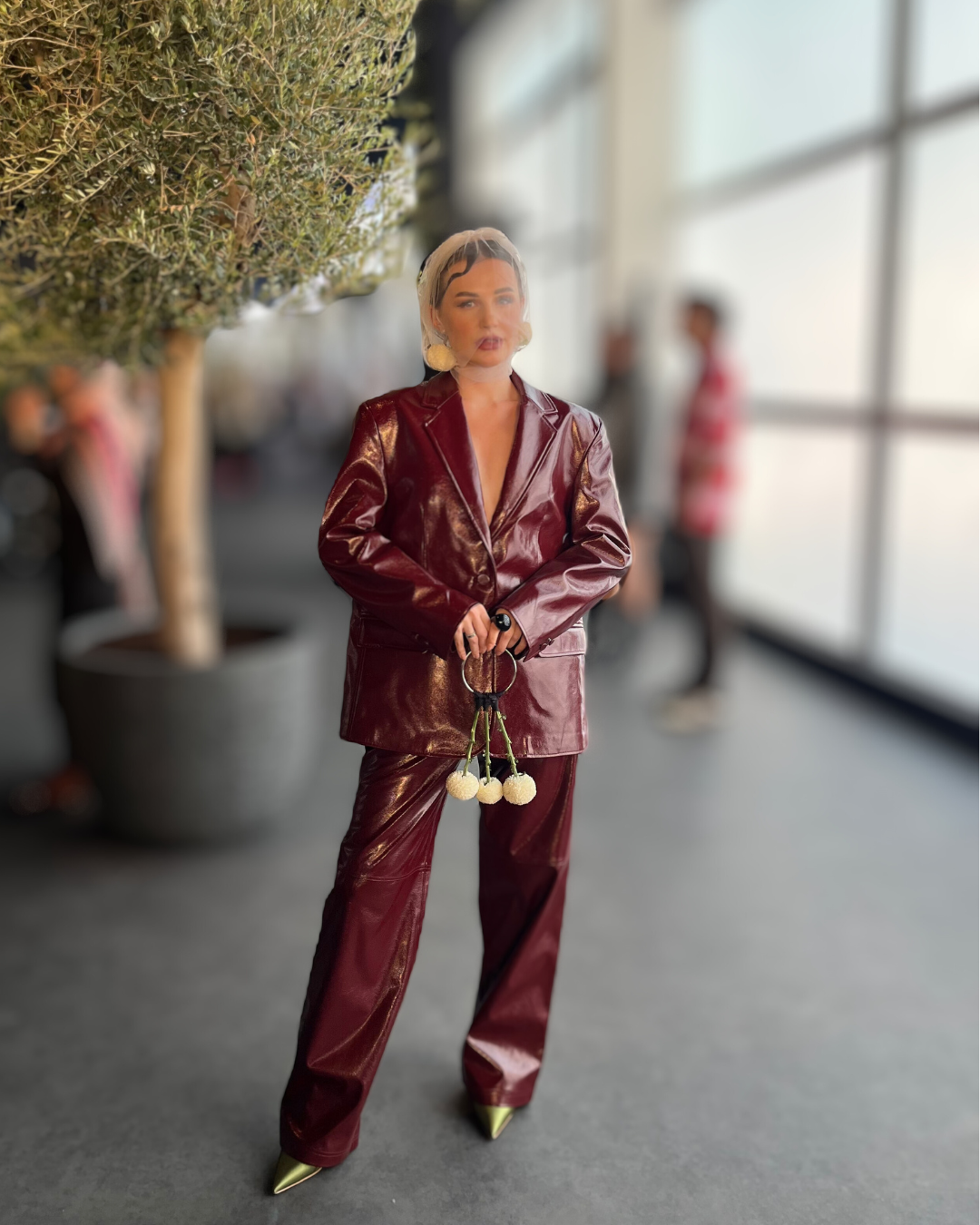
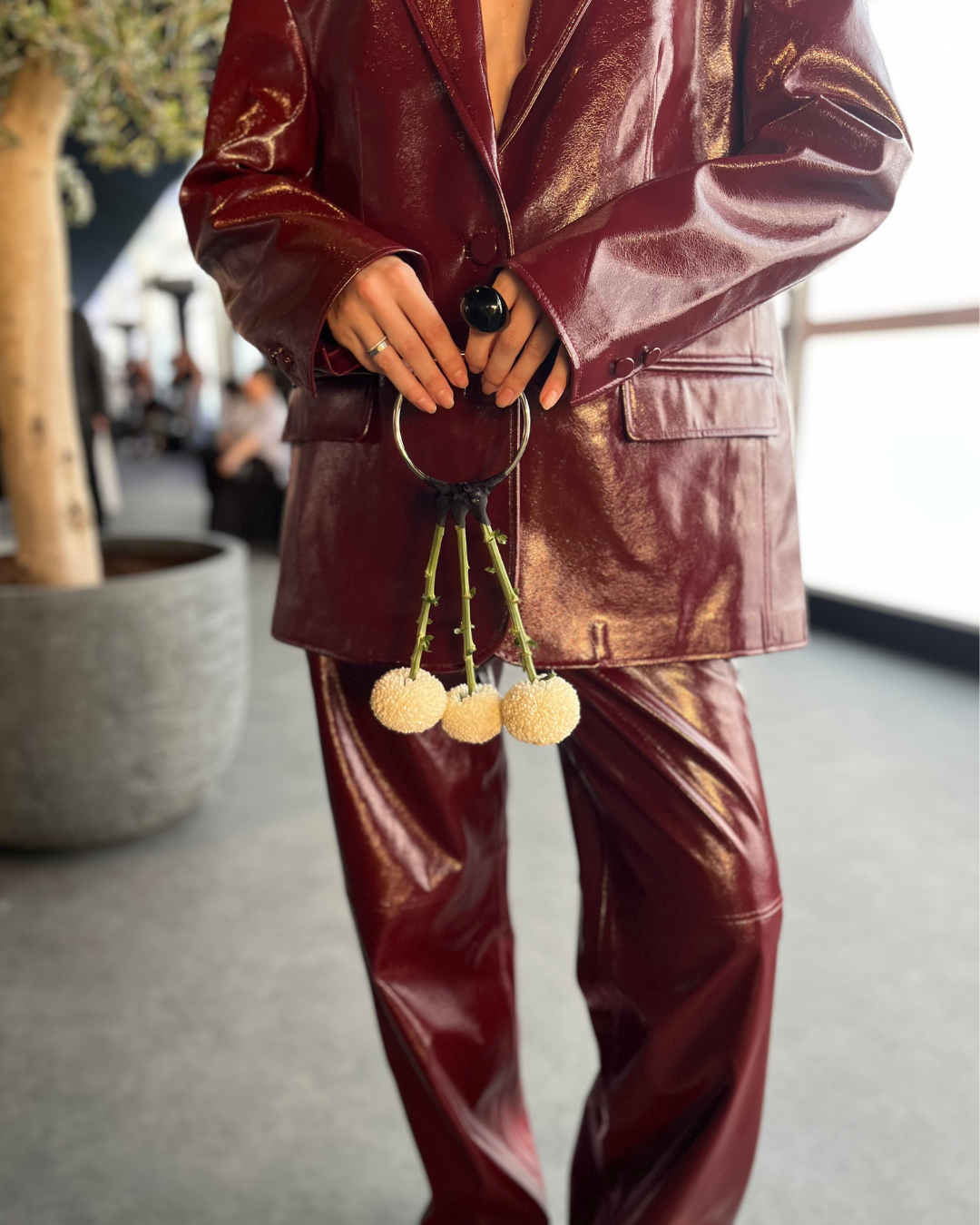
The star-studded front row — influencers and celebrities whose own aesthetic range reflected the same pluralism as the runway — embodied this principle visually. The Blade Runner-inspired ensembles by Filipino influencers @rachel.camaclang and @leilauren_, mixing lace, sequins, and Gentle Monster-style eyewear with Alexander Wang sharp tailoring, operated in the same aesthetic register as Michael Cinco’s spectacle couture — the understanding that fashion at its most visually ambitious is an act of confident self-definition rather than decoration. The cinematic surrealism of @themaritur’s colour-block face-covering ensemble evoked a different register entirely — the specific quality of fashion that makes you look twice and then a third time, because its intelligence reveals itself gradually rather than immediately.
As Harper’s Bazaar’s analysis of inclusive luxury fashion and design evolution and Business of Fashion’s analysis of fashion aesthetic pluralism and regional luxury coexistence together document, the fashion ecosystems producing the most significant cultural impact are those that understand diversity of design language as a strength rather than a challenge to editorial coherence — those that can hold multiple aesthetic registers in genuine dialogue rather than requiring conformity to a single standard. Dubai Fashion Week’s most ambitious editorial achievement is exactly this: the creation of a platform where the full spectrum of contemporary elegance can be expressed simultaneously, and where the coexistence of those expressions is itself the most powerful argument about what fashion is becoming.
The understanding that the most significant fashion intelligence is produced not within any single aesthetic tradition but at the intersections between them connects the Dubai Fashion Week elegance spectrum to the broader cultural intelligence documented across this site. Dubai Fashion Week and the New Architecture of Regional Luxury explores the same principle through the lens of emerging regional luxury brands — the argument that the redistribution of global fashion authority is being produced not by a single new aesthetic but by the emergence of multiple design languages whose coexistence constitutes the new fashion map. The elegance spectrum documented in this editorial and the regional luxury architecture documented in that one are the same phenomenon examined from different angles. Together they constitute Dubai Fashion Week’s most complete available articulation of what contemporary fashion means. As McKinsey’s State of Fashion analysis consistently confirms, the fashion brands achieving the most durable consumer relationships are those whose design intelligence addresses the full complexity of their consumers’ aesthetic lives — rather than those that optimise for a single idealised profile whose narrowness was always the fashion system’s most significant commercial limitation. The consumer who arrives at Dubai Fashion Week and encounters Dima Ayad’s inclusive empowerment aesthetic in the afternoon and Michael Cinco’s maximalist Roman spectacle in the evening is not experiencing a contradiction. They are experiencing the full range of what their own relationship to fashion actually contains — the quiet confidence of the garment chosen for how it holds, and the specific pleasure of the garment that announces itself with complete conviction. Both are authentic. Both are elegant. Both are expressions of the same underlying intelligence: the knowledge, increasingly held by the most sophisticated luxury consumers in the world, that the most considered fashion life is the one that makes room for the full complexity of who you are rather than requiring you to choose a single register and maintain it without variation.
“This day at Dubai Fashion Week reveals a structural truth
about contemporary fashion:
elegance is no longer a singular ideology
but a distributed system of expression.
From the inclusive fluidity of Dima Ayad
to the architectural couture of Heba Jasmi
and Michael Cinco’s global spectacle language,
the lineup demonstrates that modern luxury
is defined not by uniformity, but by coexistence.
Dubai Fashion Week is not merely showcasing designers —
it is curating a multidimensional framework
of what fashion means in a post-centralised industry.
Elegance is no longer prescribed.
It is constructed, negotiated,
and continuously redefined
across overlapping cultural systems.”