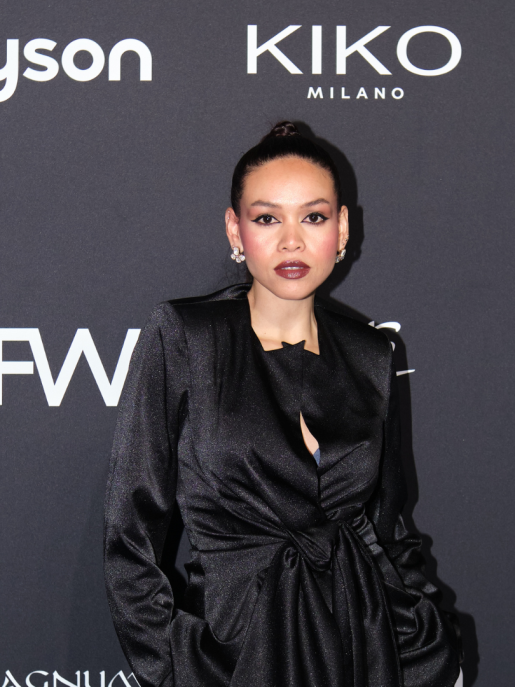

On the Mustika collection’s Malay cultural heritage, Amjad Khalil’s Beyond Black transformation narrative, Erick Bendana’s 505 street-to-luxury elevation, and why the opening day of Dubai Fashion Week is establishing couture as a distributed system of cultural expression rather than a geography-bound tradition
The opening day of Dubai Fashion Week signals a decisive shift in the global couture conversation. With Rizman Ruzaini’s sculptural cultural heritage, Amjad Khalil’s emotional narrative construction, and Erick Bendana’s transregional refinement, couture is no longer confined to a singular geography or aesthetic tradition. Instead, it emerges as a distributed system of cultural expression — fluid, interconnected, and globally legible. Dubai Fashion Week is not simply opening a season. It is opening a new framework for how couture is defined, interpreted, and ultimately understood within the evolving landscape of global luxury.
Fashion weeks are no longer sequential showcases of trends. They function as curated geopolitical-cultural statements — the assembled programme of a fashion week communicating, through its specific combination of designers and aesthetic positions, a coherent argument about where fashion authority currently resides and where it is moving. The opening day carries the most concentrated version of this communicative function: it establishes the tone, the intellectual framework, and the cultural geography within which the rest of the week will be understood.
Dubai Fashion Week’s opening day, with its specific combination of Malaysian heritage couture, North African emotional narrative, and Nicaraguan street-to-luxury elevation, makes an argument that no single European fashion capital is currently positioned to make: that couture is a global language rather than a regional tradition, that the designers who speak it most fluently are not necessarily those with the deepest connection to Paris or Milan, and that the authority of a couture house rests on the quality of its cultural intelligence and the precision of its craft rather than on its geographic proximity to the inherited centres of fashion prestige.
The structural analysis of how Dubai Fashion Week functions as a commercial and cultural acceleration platform — and why the diversity of its opening day roster reflects a deliberate institutional strategy — is developed in Dubai Fashion Week: Why Global Brands Now Treat DFW as a Market Activation Engine. The present editorial examines the specific cultural and creative intelligence that each opening day designer brings — and what their convergence at Dubai Fashion Week reveals about the direction of global couture authority.
Rizman Ruzaini — Mustika, Malay cultural heritage, and the kebaya as contemporary couture language

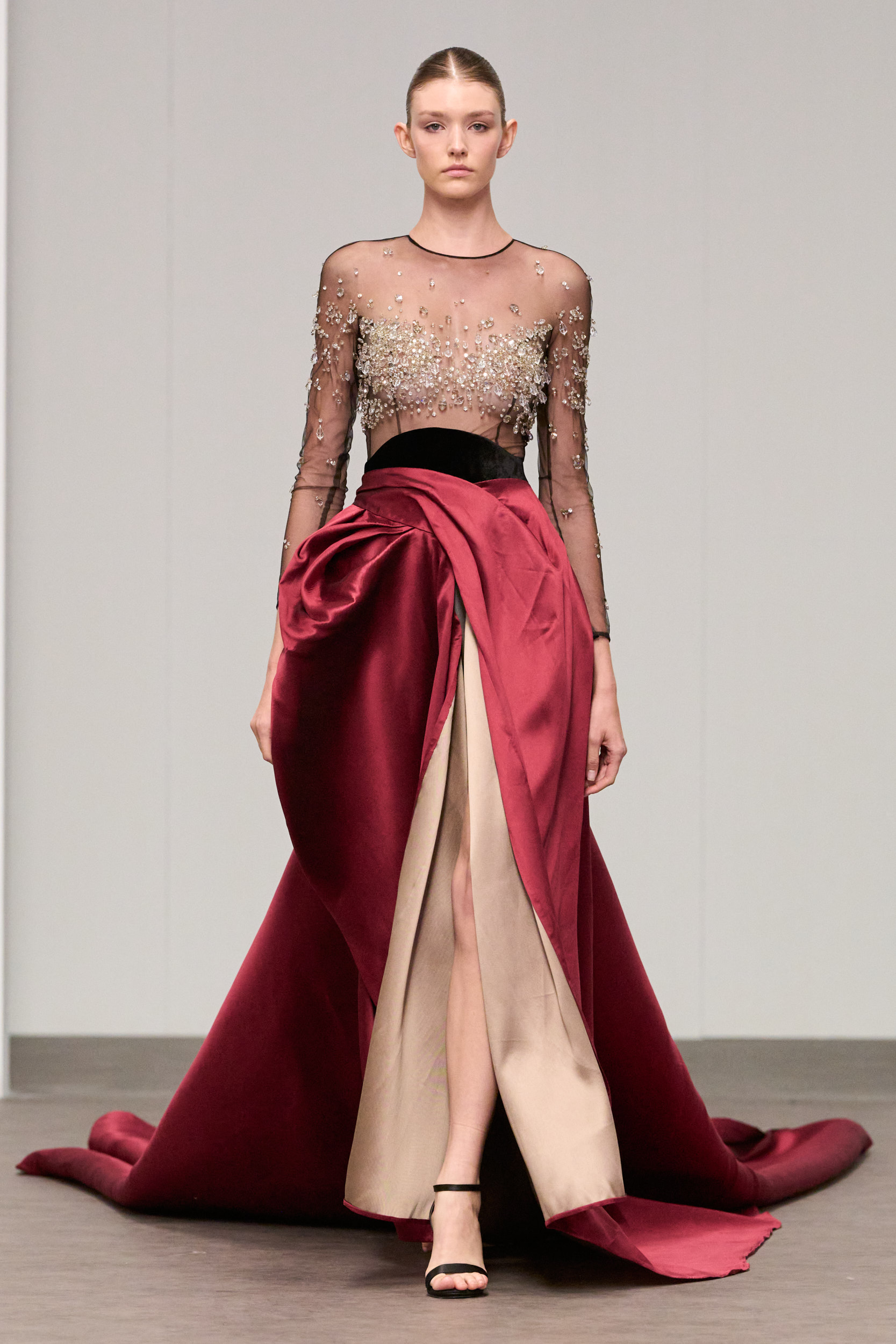
Malaysian design duo Rizman Nordin and Ruzaini Jamil have built one of the most culturally coherent luxury fashion identities in Southeast Asian couture — a brand whose creative authority rests not on trend participation or international reference but on the specific depth of its engagement with the Malay cultural heritage that has shaped both designers’ creative intelligence since the brand’s founding. The Mustika collection is the fullest available expression of that engagement.
The collection’s inspiration — the 1999 film Perempuan Melayu Terakhir, a cinematic ode to the traditional values and aesthetics of Malay culture — is not a surface reference. It is a portal into the specific visual and cultural language that the film preserves: the kebaya, the batik, the intricate tambour beading that constitutes one of Southeast Asia’s most demanding textile crafts. For Ruzaini Jamil, the collection carried personal weight that extended the cultural reference into the biographical: his late grandmother, Tok Puteh Surin, whose photograph sparked a nostalgic journey into the aesthetics of 1950s Malay femininity, where the kebaya was not merely a fashion choice but a symbol of a woman’s identity within her cultural and social context.
The kebaya — the traditional blouse-dress combination worn across Malaysia, Indonesia, and surrounding regions, its delicate lace and embroidery carrying centuries of cultural significance — is the collection’s foundational garment. Rizman Ruzaini’s modern interpretations honour this foundation without being constrained by it: the intricate embroidery and tambour beading that define the collection’s surface language are executed with the precision of couture craft while the silhouettes speak to a contemporary sensibility that makes the cultural heritage legible to audiences who may not share it but can respond to the quality of its translation.
The batik motifs — a method of dyeing fabric using wax-resistant techniques that has been integral to Malaysian cultural life for centuries — are translated into modern designs through the specific intelligence of designers who understand these patterns not as decorative elements but as a language whose grammar they have spent careers learning to deploy with precision. This is the quality that distinguishes Rizman Ruzaini’s cultural heritage engagement from the appropriation that masquerades as global fashion: the designs carry the authority of genuine knowledge rather than the superficiality of aesthetic inspiration.
The announcement of a new Rizman Ruzaini store opening in Dubai — made at the same moment as the Mustika collection’s runway debut — is the commercial confirmation of the cultural argument the collection makes. Southeast Asian couture is not arriving in Dubai as an exotic curiosity. It is establishing a permanent presence in one of the world’s most commercially significant luxury markets, on the basis of creative authority that the market has recognised and validated. As Business of Fashion’s analysis of Southeast Asian couture and global luxury market expansion documents, the regional luxury brands achieving the most durable international commercial positions are those whose aesthetic intelligence is rooted in specific cultural depth rather than in the generic international luxury vocabulary.
Amjad Khalil — Beyond Black, the transformation narrative, and emotional couture as storytelling system
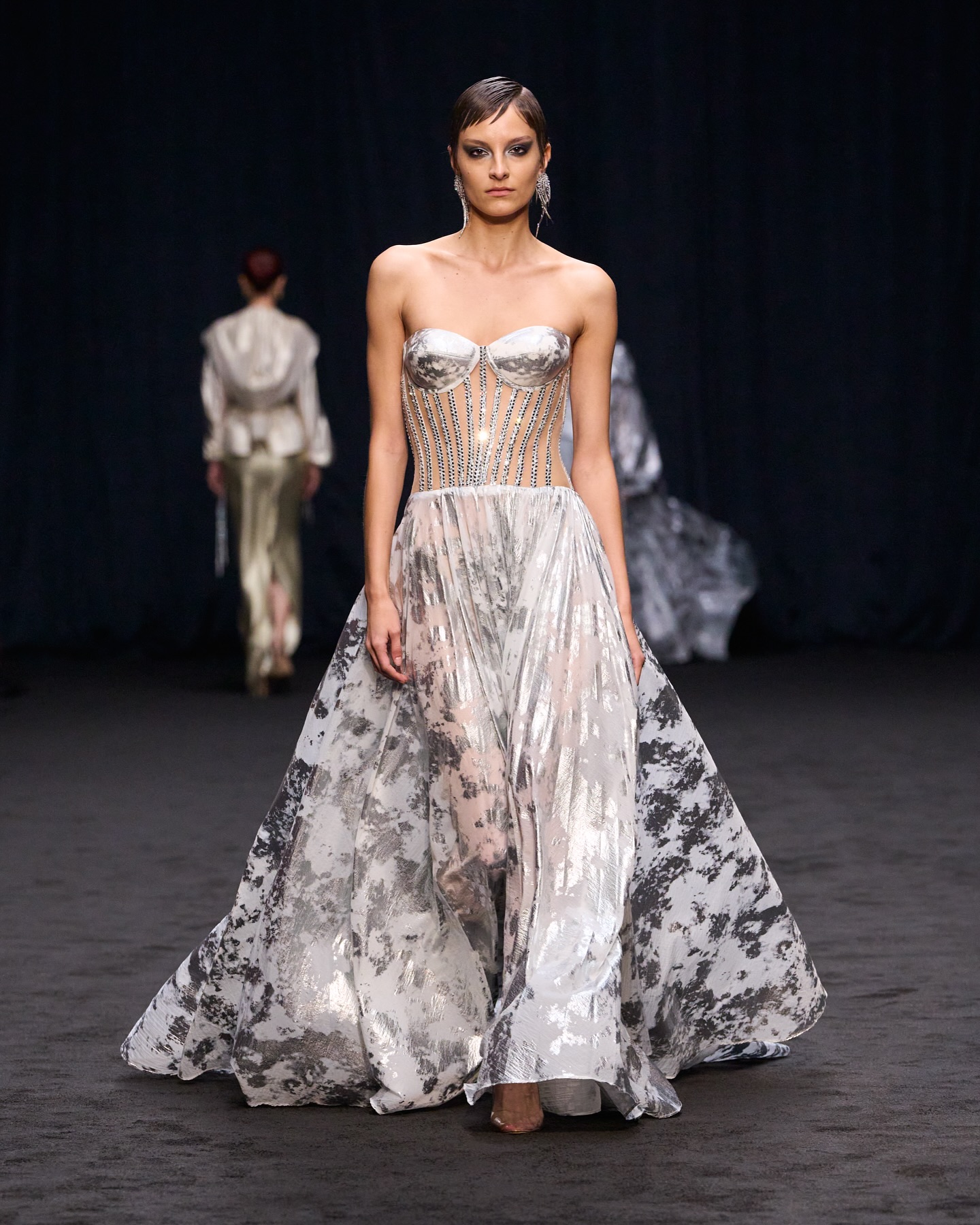
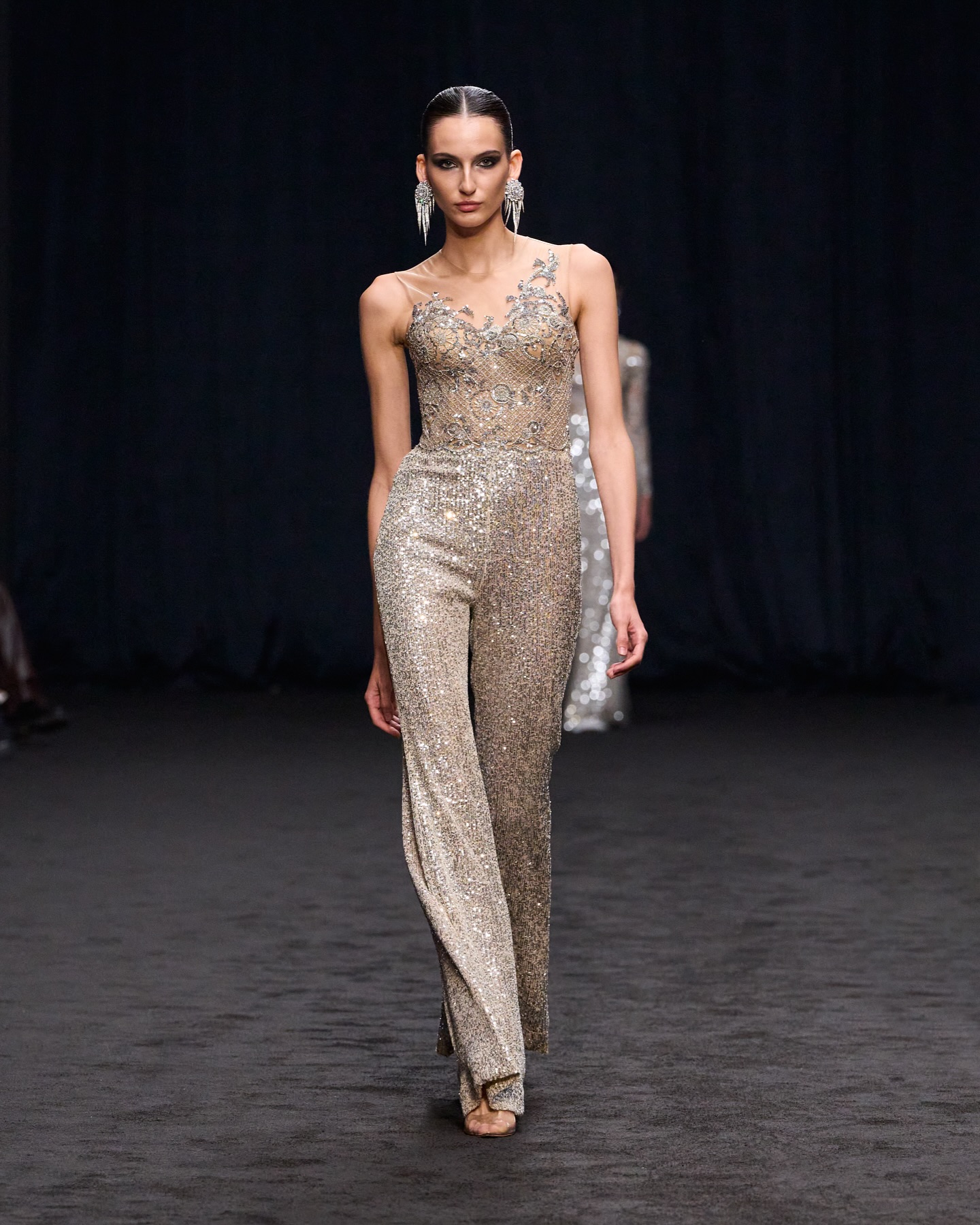
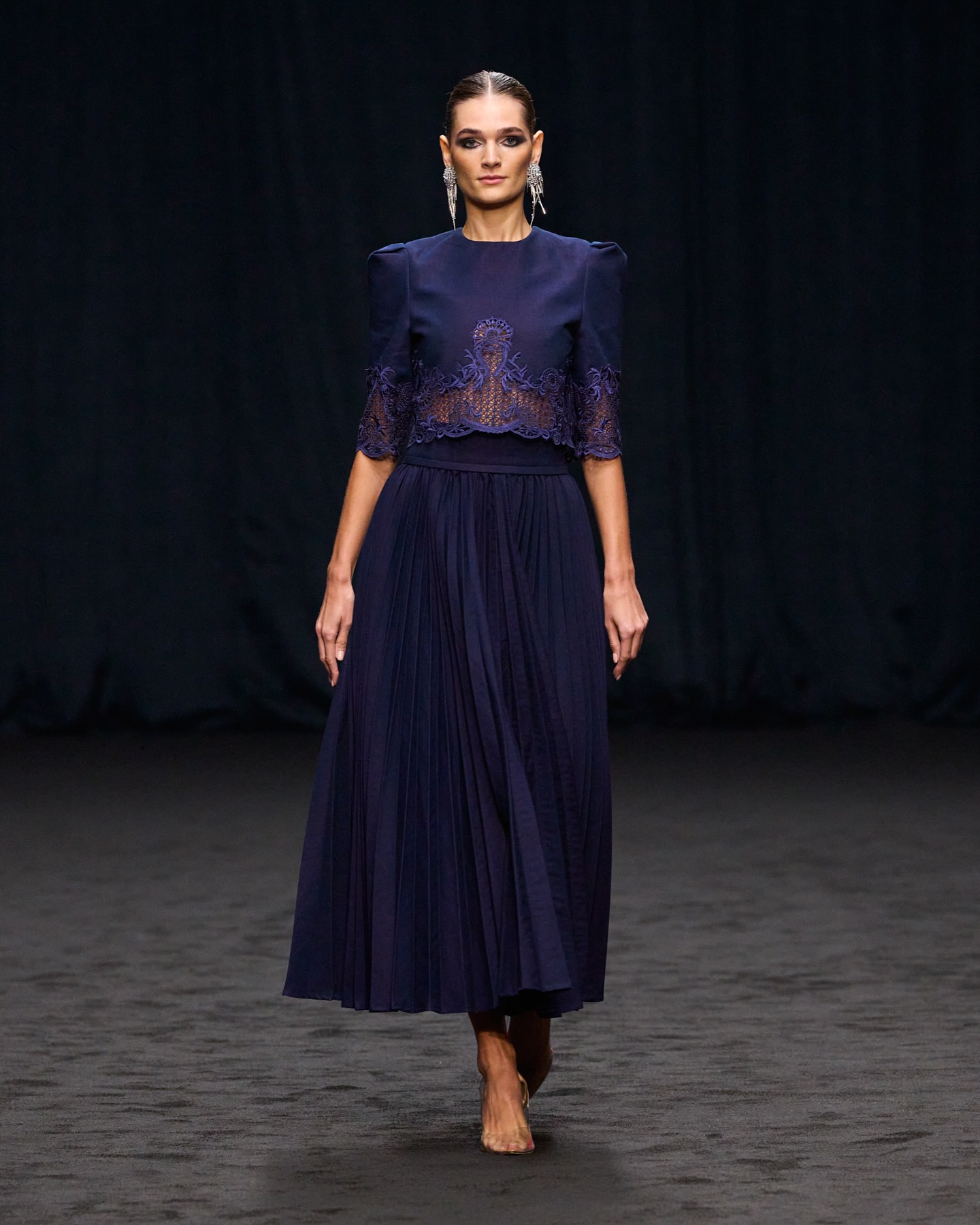
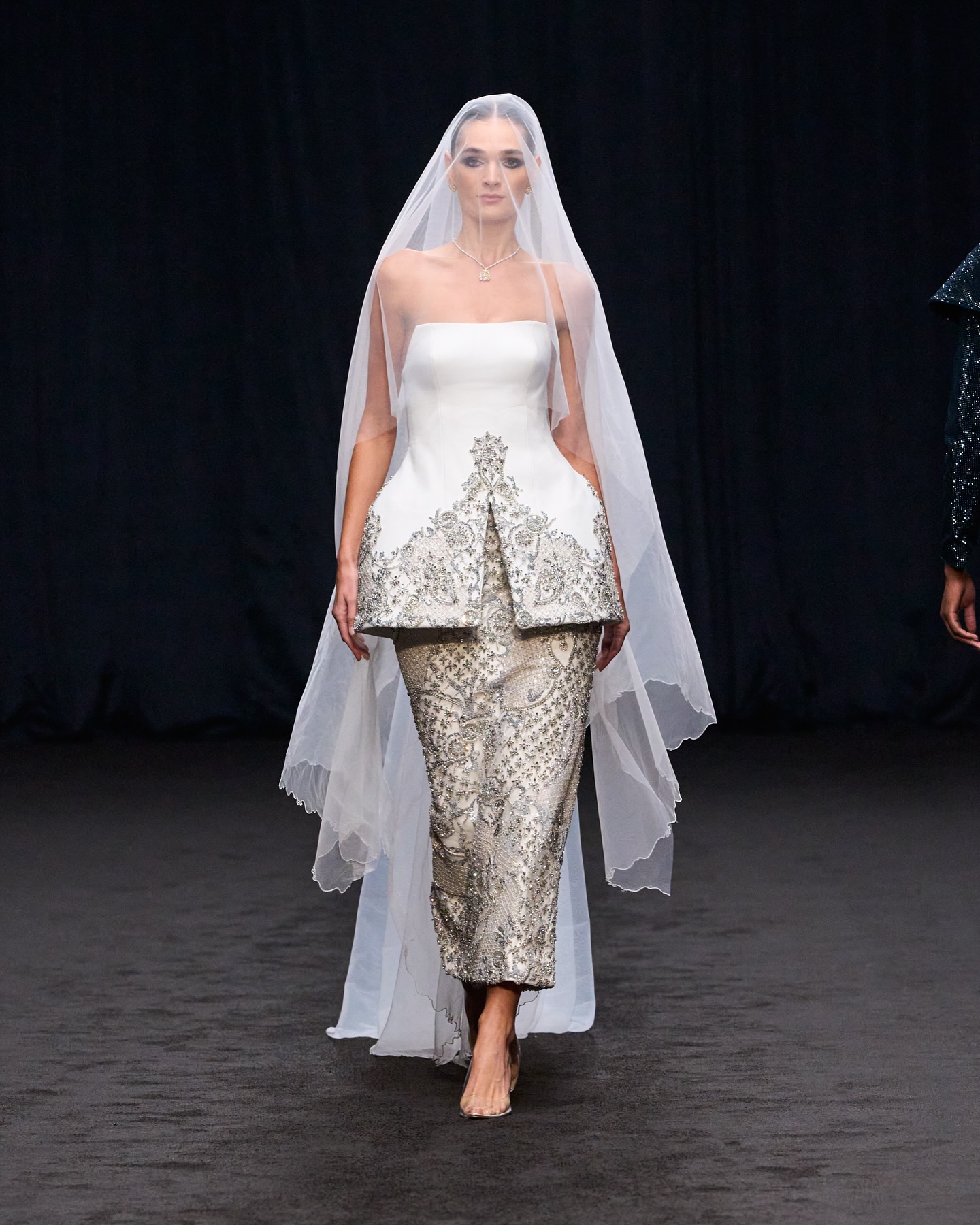
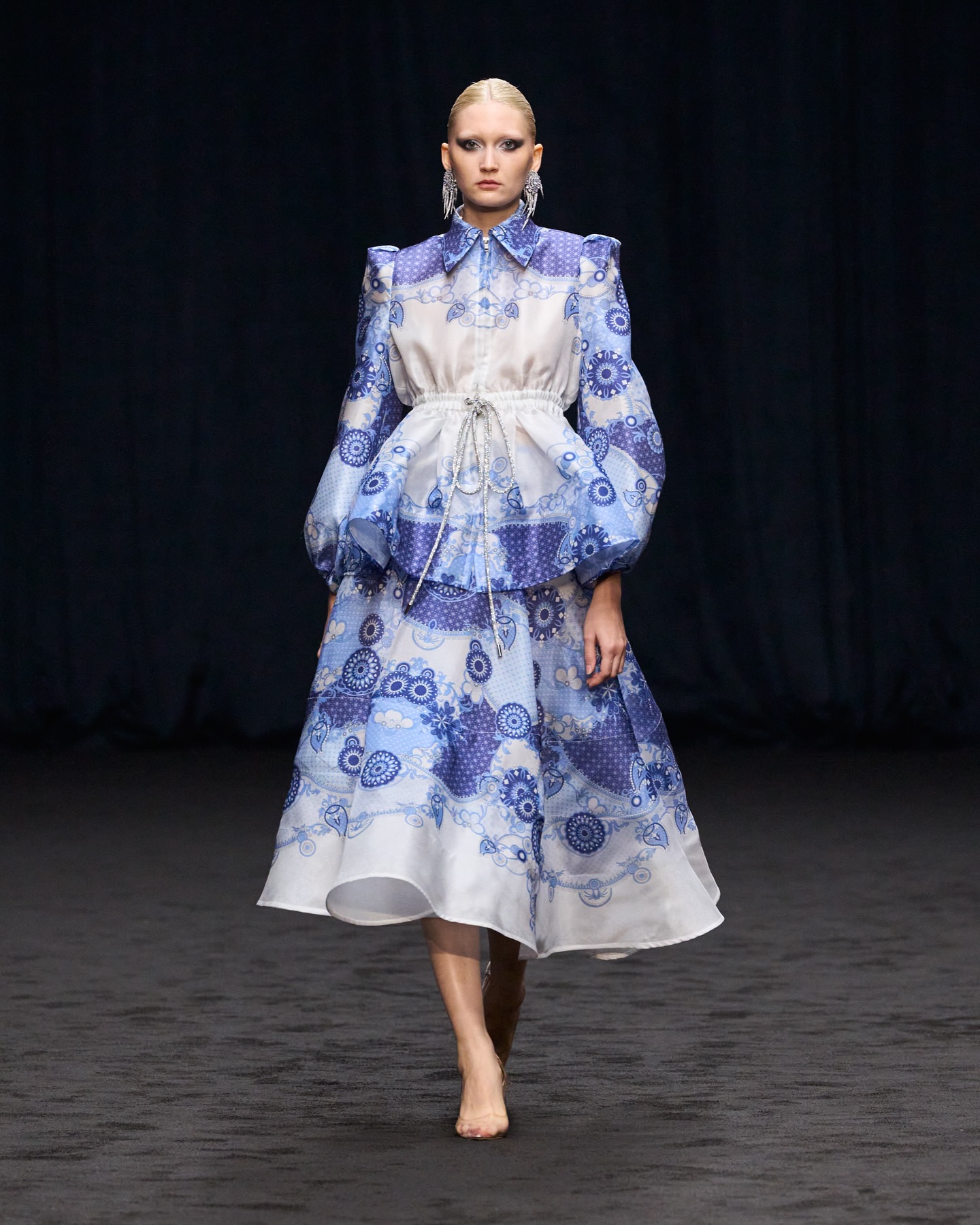
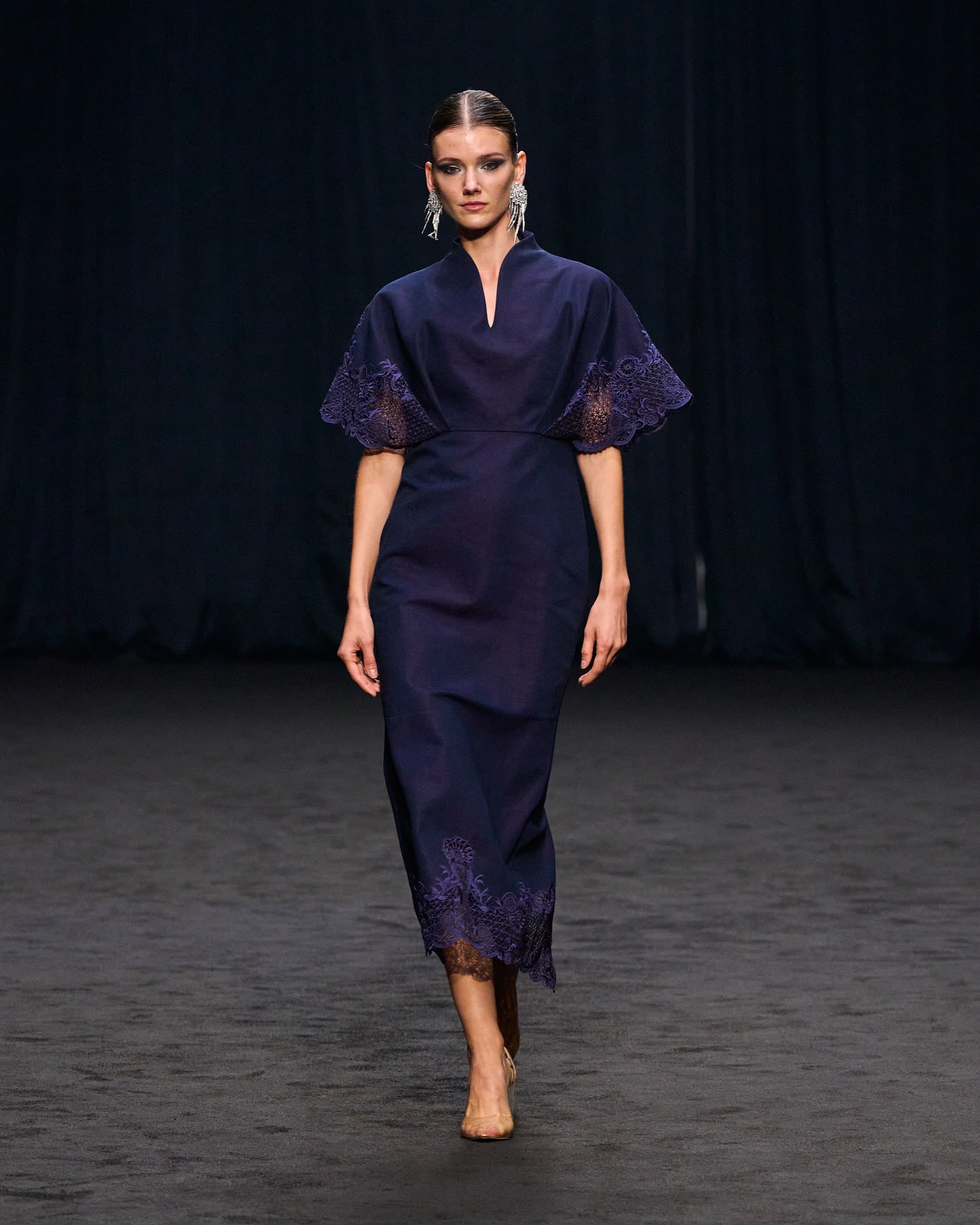
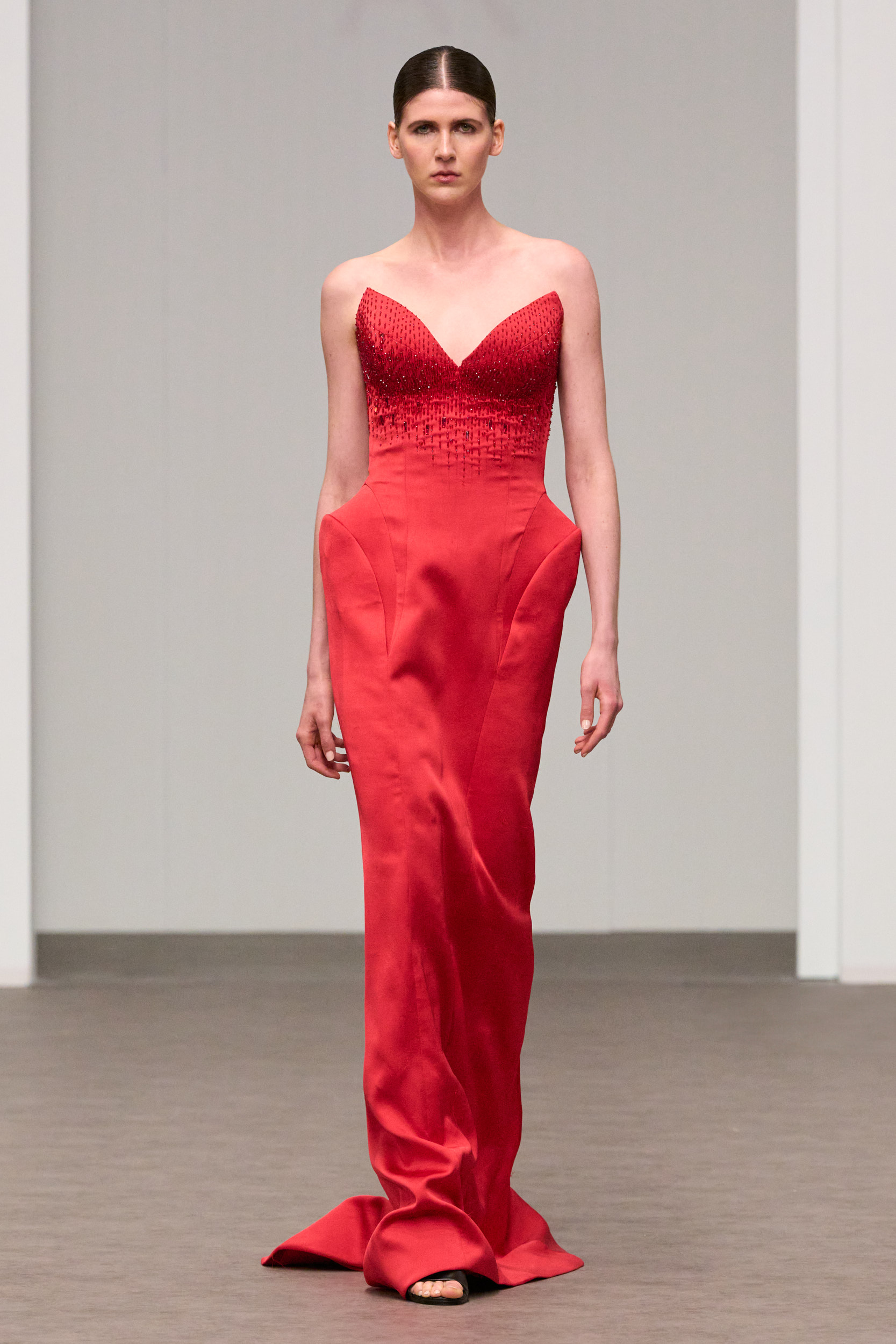
Libyan designer Amjad Khalil’s Beyond Black collection is one of the most emotionally ambitious presentations at Dubai Fashion Week — a collection whose conceptual framework is not aesthetic but narrative, using the full resources of haute couture construction to tell a story about transformation that the visual language of fashion can communicate with a precision and an intimacy that no other medium can replicate.
The title’s movement — Beyond Black — encodes the collection’s central argument in three words: that darkness is not a destination but a location in a journey, that the movement through it produces something that the arrival in light could not have produced without it, and that the garments designed to accompany this movement are not decorative objects but emotional infrastructure. The collection’s dark, rich tones gradually giving way to lighter, more ethereal hues is not a colour story in the conventional fashion sense. It is a temporal narrative — the progression of a human experience told through the specific visual language that fabric, silhouette, and movement make available.
Khalil’s mastery of the compositional elements that transform a runway presentation into an immersive experience — the soundtrack chosen not as background but as narrative device, each track’s emotional register calibrated to its position in the collection’s arc; the model selection driven not by conventional casting criteria but by the capacity of each model to embody a specific chapter in the transformation story; the fabric choices whose movement quality carries their own emotional information — constitutes a design intelligence that operates simultaneously across multiple sensory registers. The result is a collection that lingers after the final model leaves the runway, not as a series of remembered garments but as an experienced emotional state.
The North African cultural intelligence that Khalil brings to his couture practice — the specific combination of traditional aesthetic elements and contemporary narrative construction that defines the most significant design work emerging from the region — connects Beyond Black to the broader intellectual fashion conversation that Dubai Fashion Week is increasingly positioned to host. As Harper’s Bazaar’s analysis of North African couture and global fashion narrative documents, the designers from the region whose work is gaining the most significant international traction are those whose emotional intelligence is as rigorous as their technical mastery — those whose garments carry genuine cultural depth rather than aesthetic allusion. The most significant cultural identity in contemporary luxury fashion is the hybrid one: rooted in specific heritage, fluent in global luxury language, and capable of producing work that speaks across cultural boundaries without sacrificing the specificity that gives it authority — the same principle explored in the context of modest fashion media in Soigné Middle East: The Modest Fashion Magazine the Region Has Always Deserved, where the publication built from genuine cultural rootedness produces a more significant form of cultural infrastructure than any publication built from commercial calculation or external imposition. Amjad Khalil’s work operates precisely at this intersection.
Erick Bendana — 505, Nicaraguan heritage, and the elevation of street style into global couture
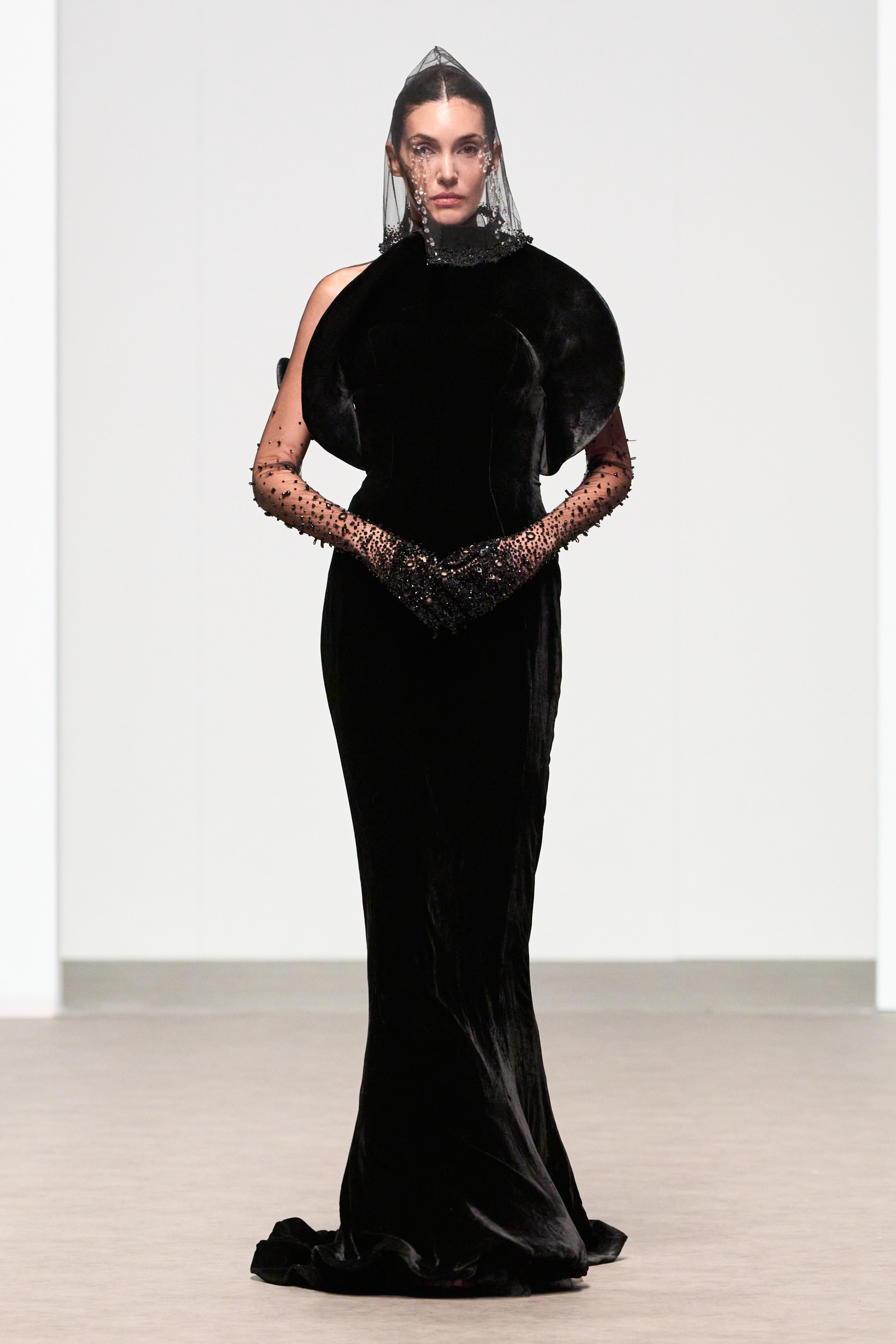


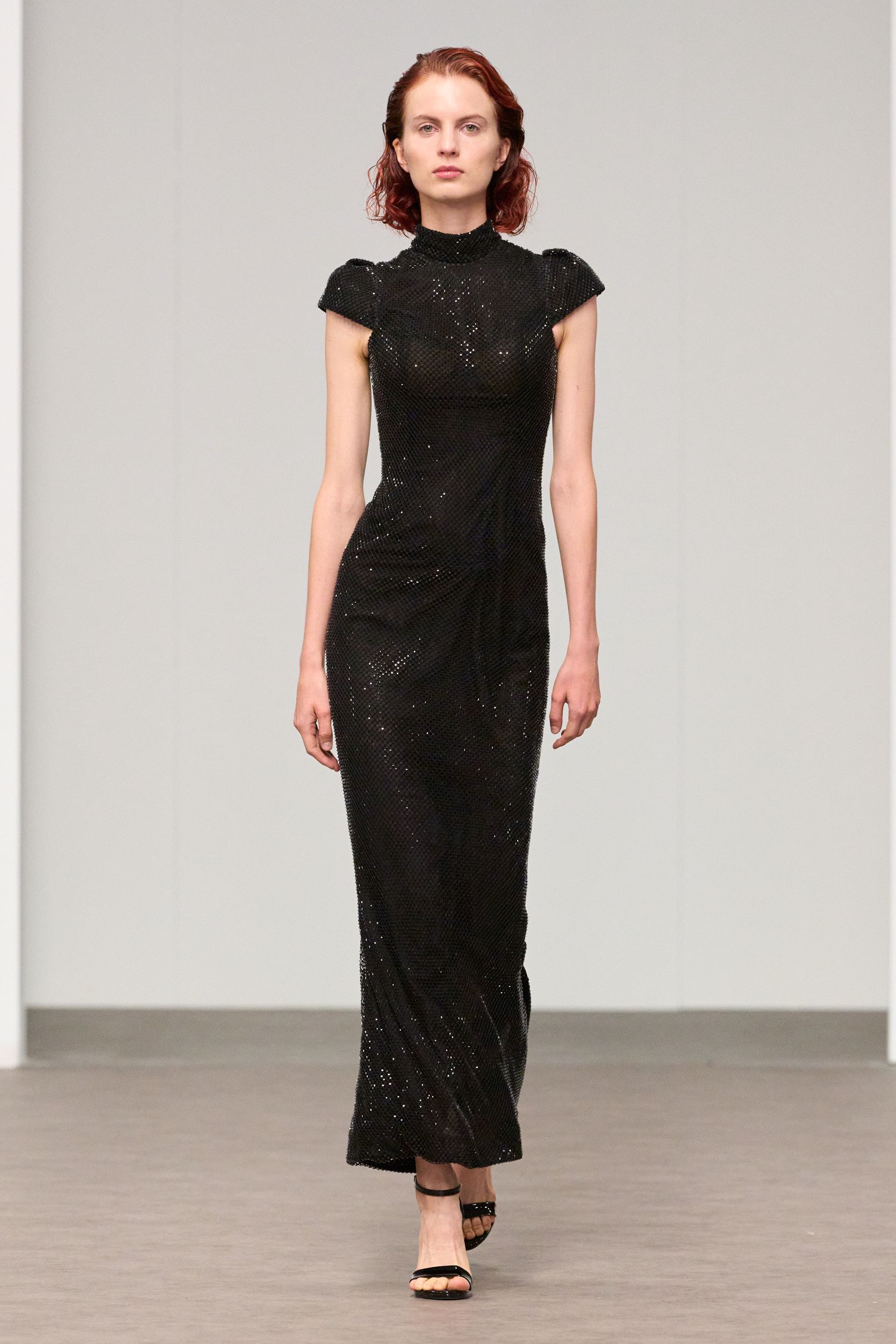

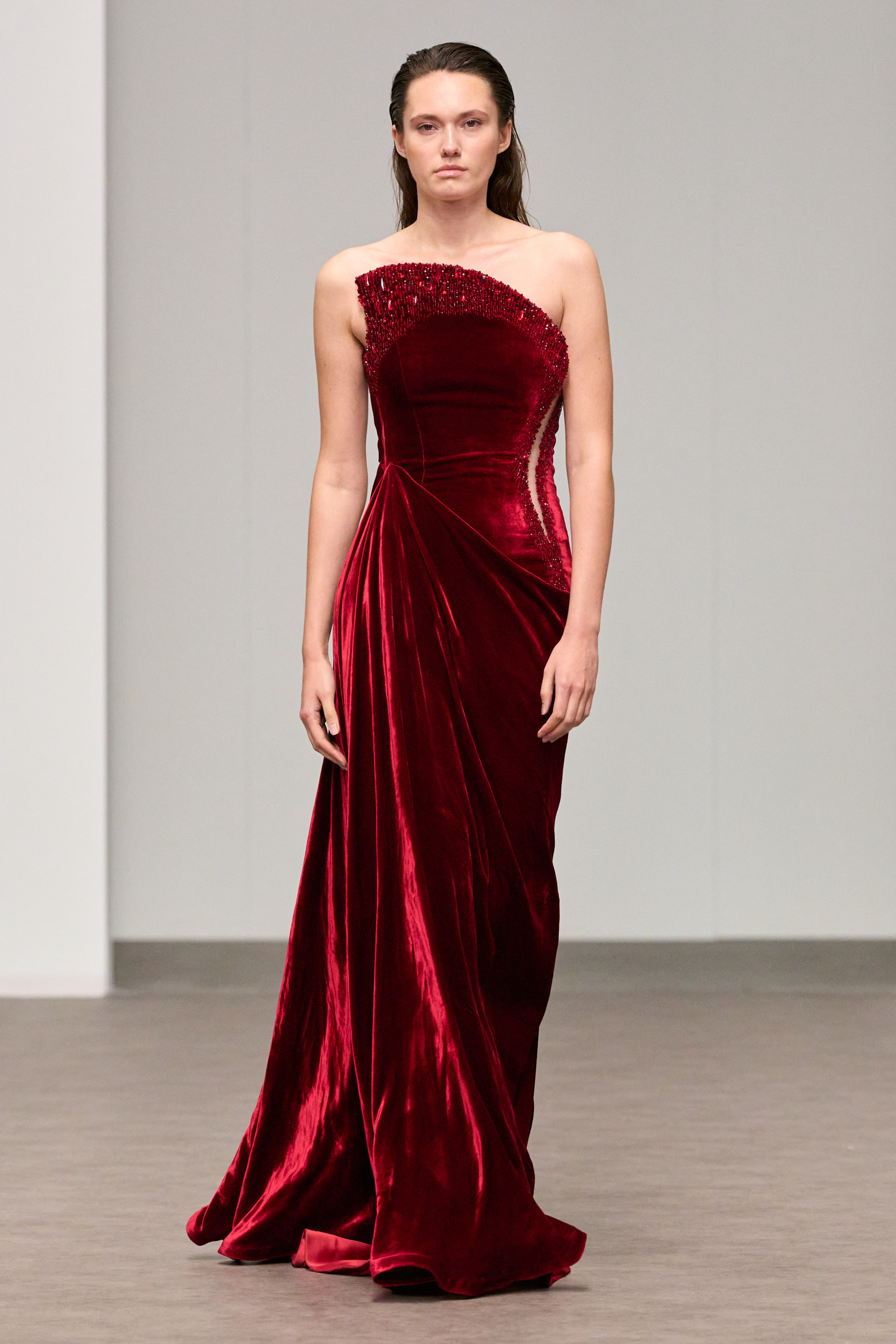

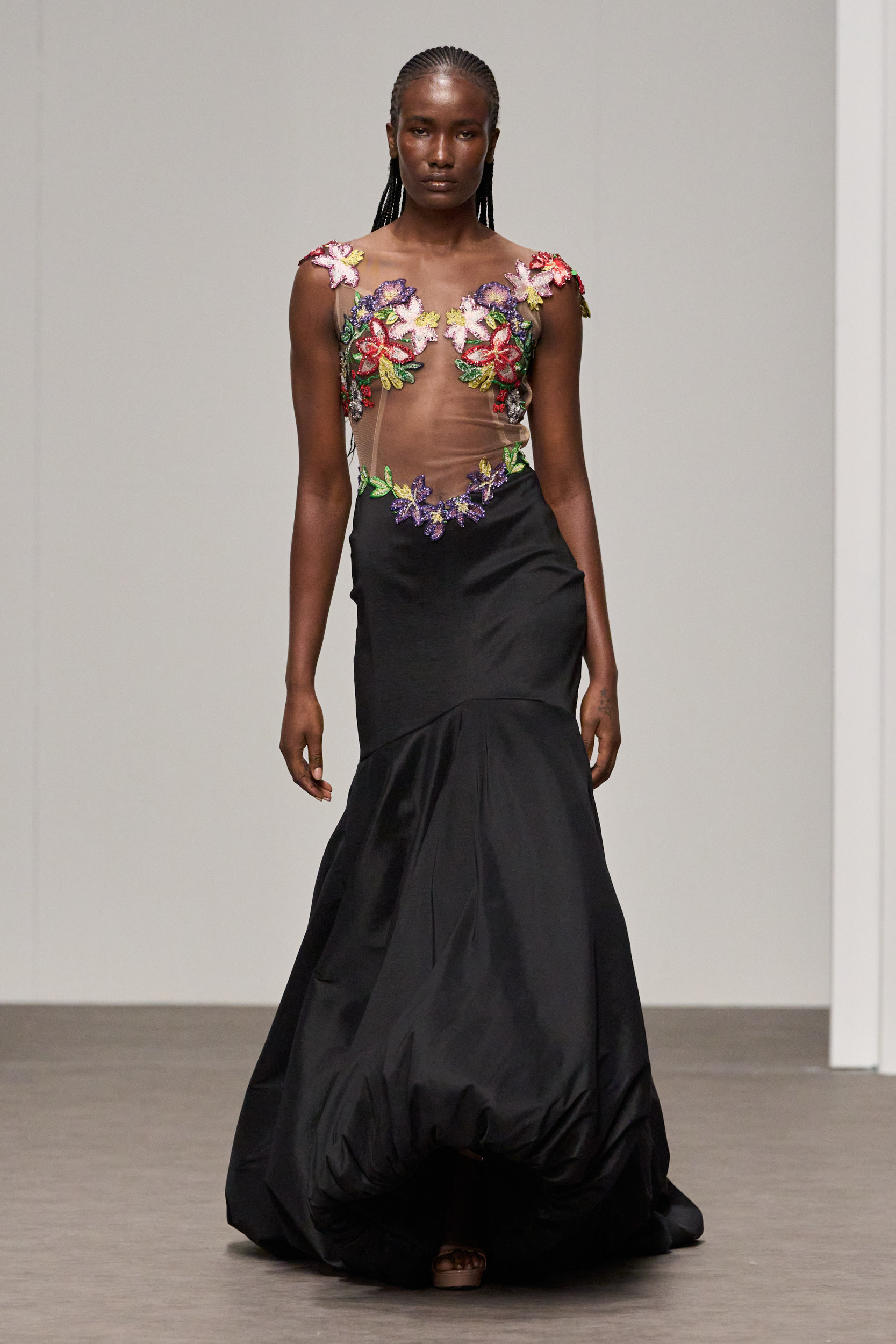
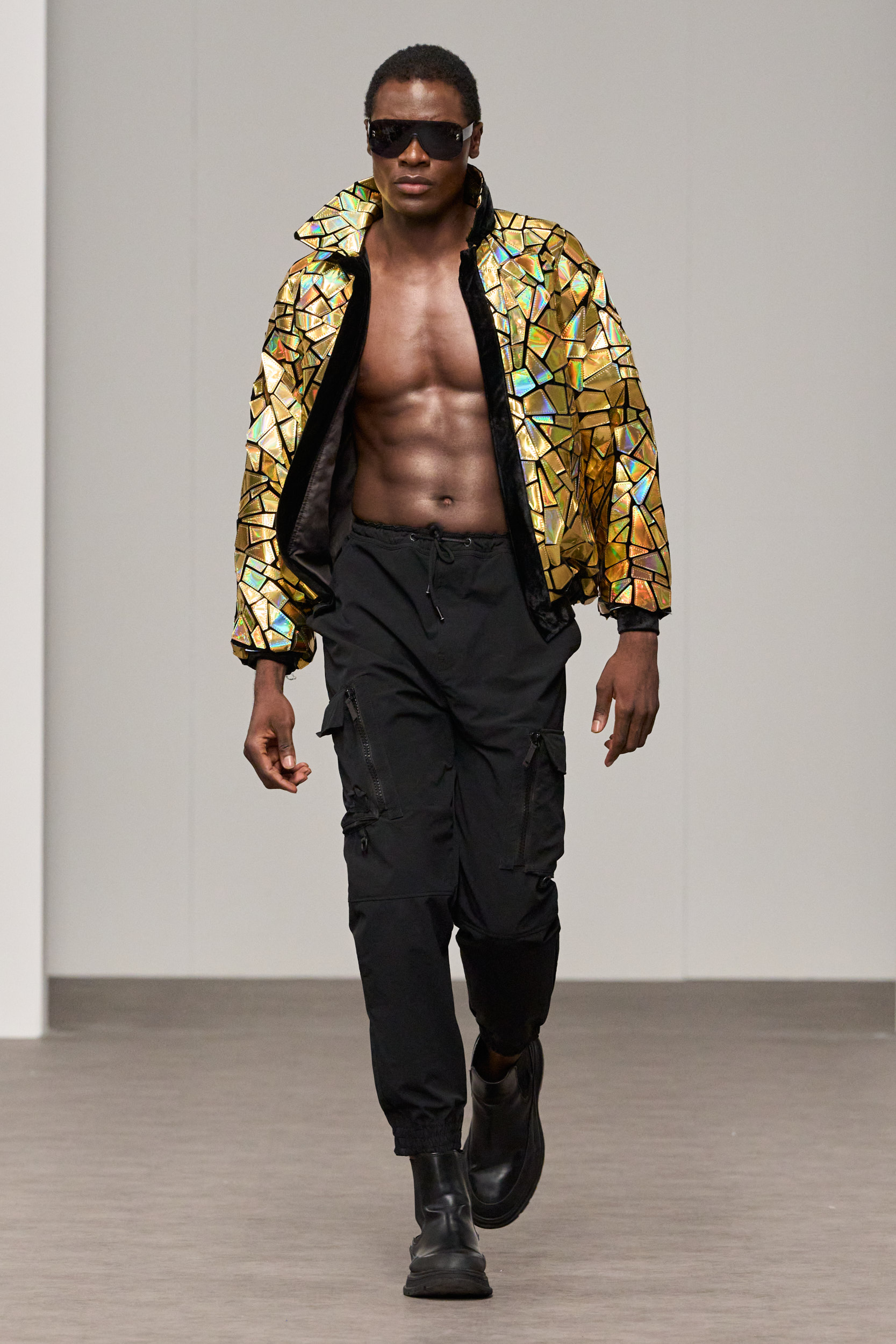
Nicaraguan designer Erick Bendana’s 505 collection — named for Nicaragua’s country code, a direct declaration of cultural rootedness — represents the most formally ambitious version of the street-to-luxury elevation that the most commercially significant emerging luxury designers are increasingly pursuing. The collection’s genius is its demonstration that these two registers are not in opposition but are, in the most intelligent design, expressions of the same underlying creative intelligence deployed at different scales of formality.
Bendana’s cultural practice — the weaving of Nicaraguan folklore, traditional dances, and indigenous symbols into a contemporary luxury language — is neither nostalgic nor decorative. It is the specific form of design authority that emerges when a designer has internalised their cultural heritage deeply enough to translate it rather than merely reference it. The prints inspired by Nicaraguan folklore carry their original meaning into the contemporary garment not through preservation but through transformation: the pattern’s cultural grammar remains intact while its formal expression speaks to the aesthetic vocabulary of global luxury.
The collection’s narrative arc — from the street-rooted opening pieces through the progressive elevation of the runway to the spectacular grand finale of evening and bridal gowns — is the clearest possible demonstration of the argument that 505 is making: that the street and the runway are not as far apart as the fashion industry’s inherited hierarchies have assumed, and that the designer who moves between them with genuine fluency is producing the most interesting and the most globally legible luxury of the current era. The evening gowns that close the collection are rooted in the same cultural intelligence as the streetwear pieces that open it. The elevation is formal, not essential — the same creativity at different registers of application.
The consistent ability to make fashion that feels both accessible and aspirational — the specific quality of design that speaks to the full range of its potential audience rather than to a single idealised consumer — is the most commercially significant capability available to an emerging luxury designer. Bendana has developed this capability through the specific form of cultural intelligence that his Nicaraguan heritage provides: an aesthetic that is simultaneously rooted in community, elevated through craft, and legible across the full global range of luxury consumers whose appetite for fashion with genuine cultural content is one of the most significant demand forces currently shaping the industry. The argument that the most enduring fashion choices are those made with genuine self-knowledge — that the investment wardrobe is always the one chosen for identity resonance rather than trend compliance — connects Bendana’s cultural precision to the broader quiet luxury sensibility explored in The New Language of Quiet Luxury: Inside the Timeless Wardrobe of Apparis. As Vogue’s analysis of Latin American luxury fashion and its global couture emergence documents, the designers from the region achieving the most significant international commercial positions are those whose cultural rootedness is as rigorous as their technical mastery.
The transregional couture system — Dubai as the global translation engine for distributed luxury authority


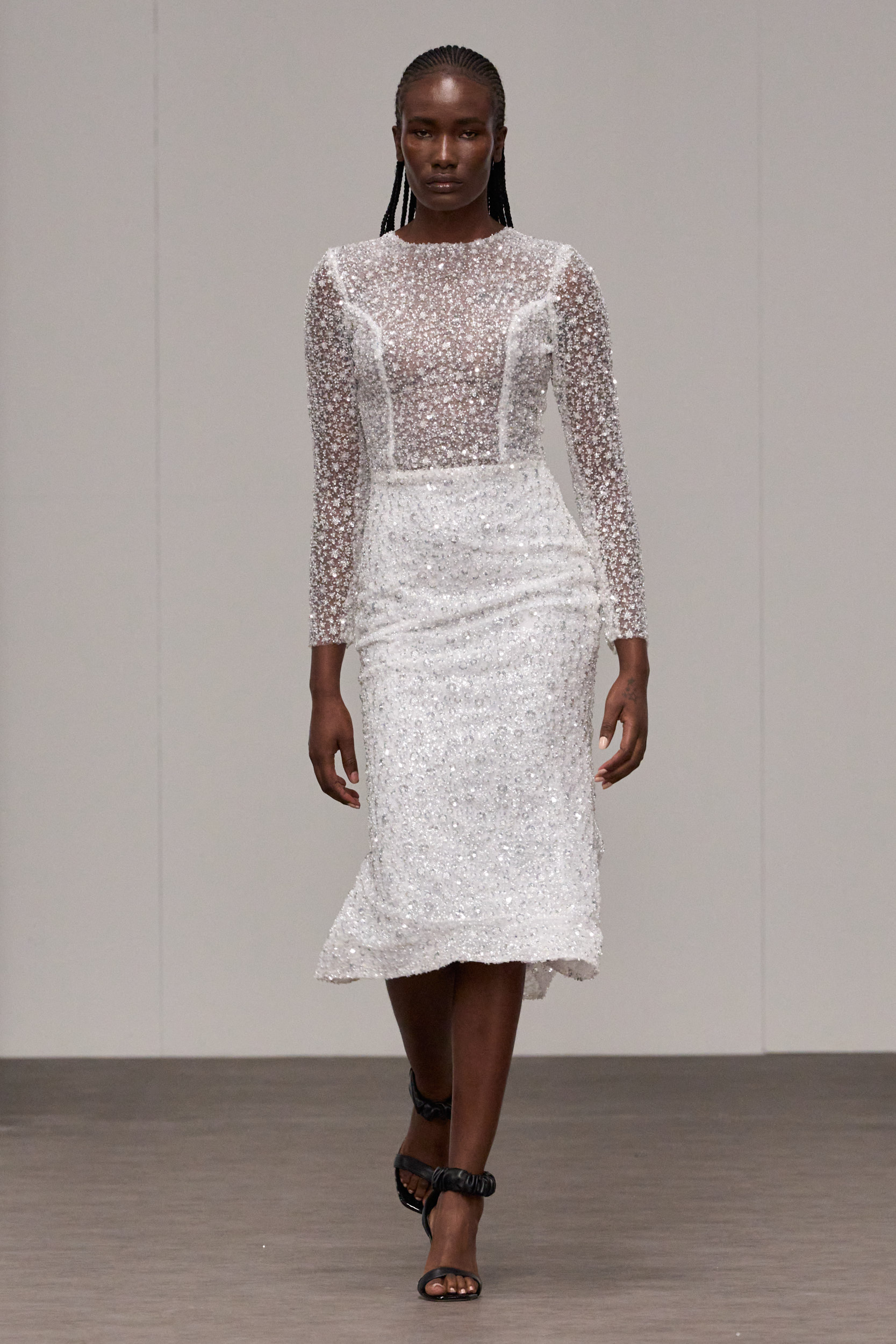
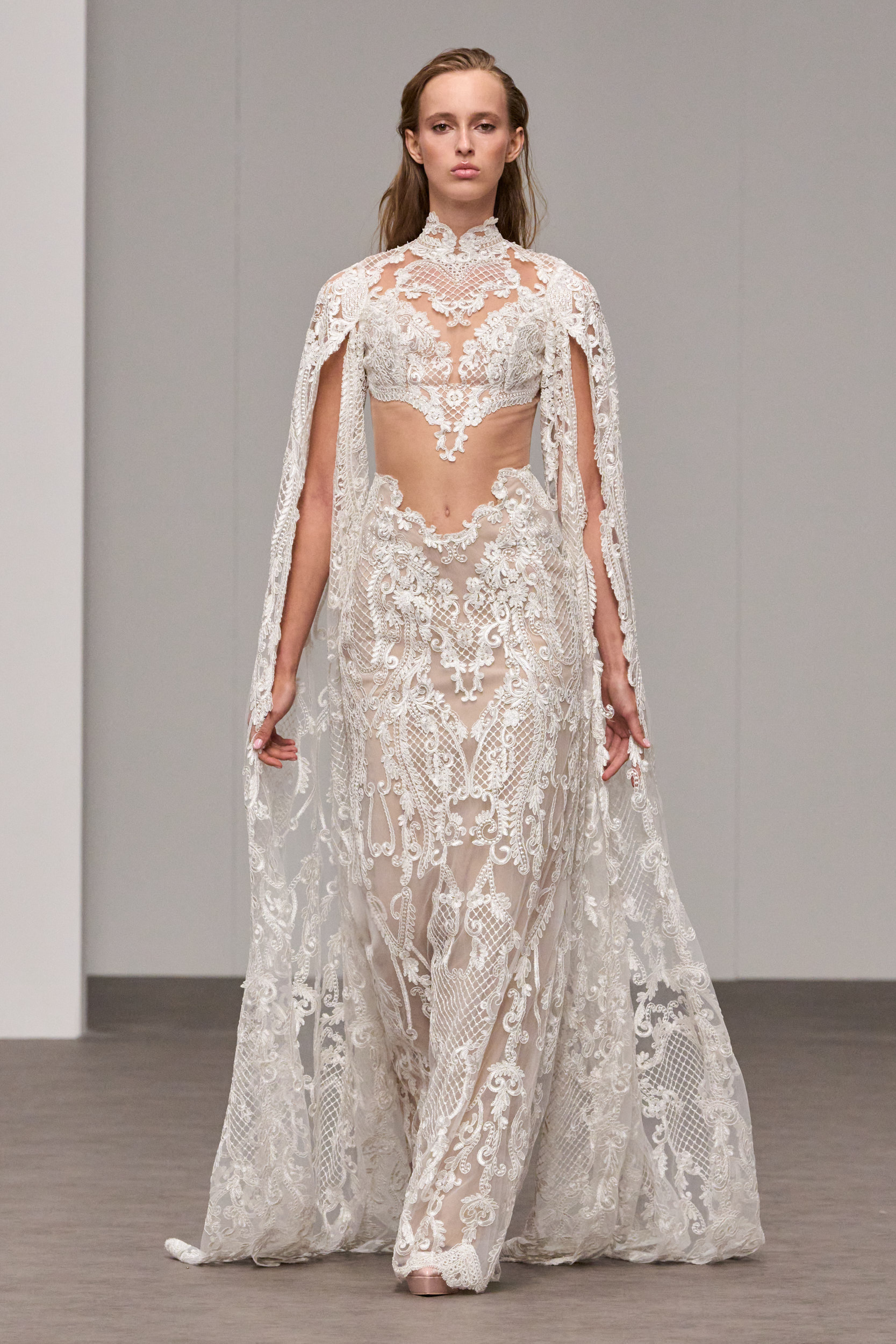
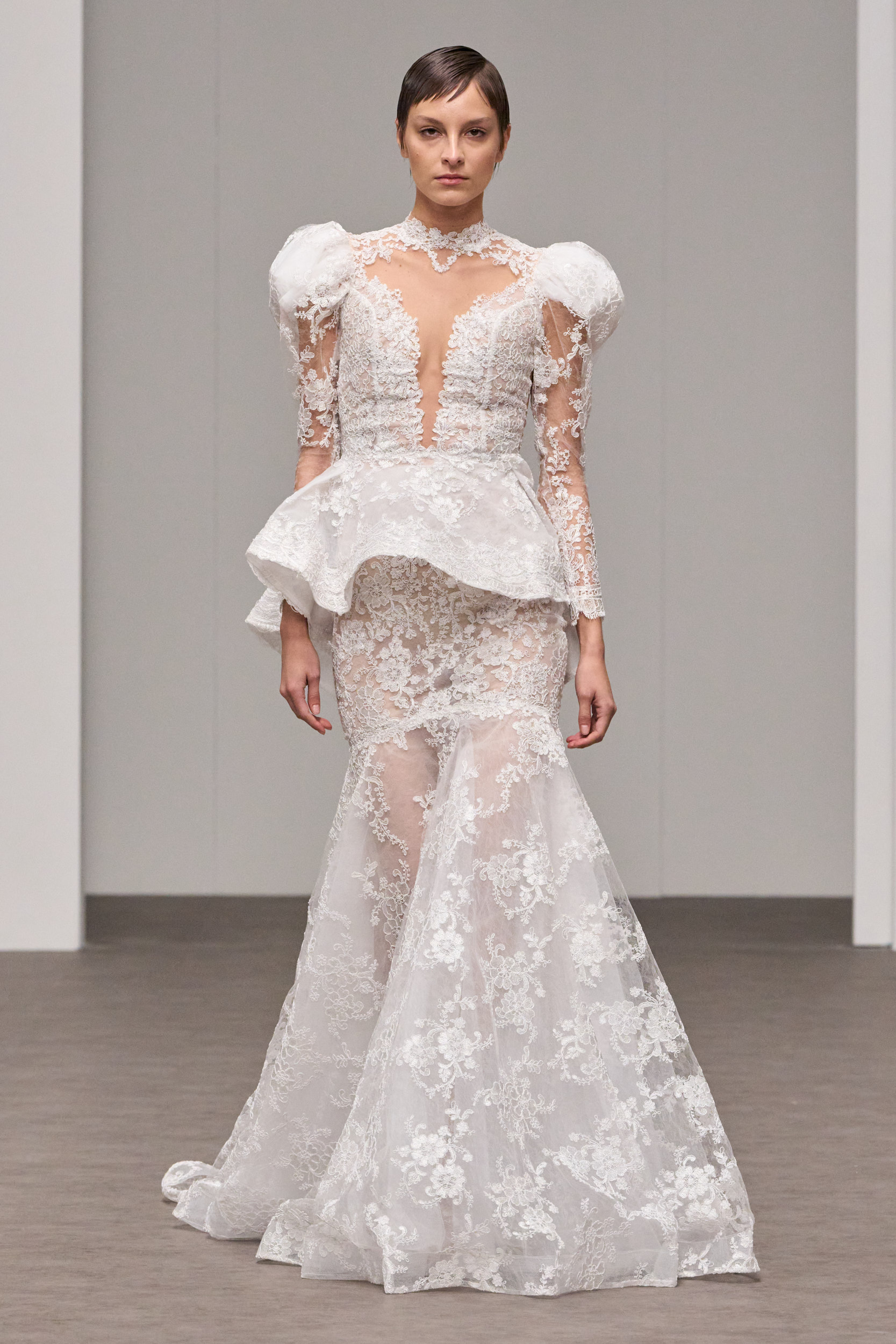
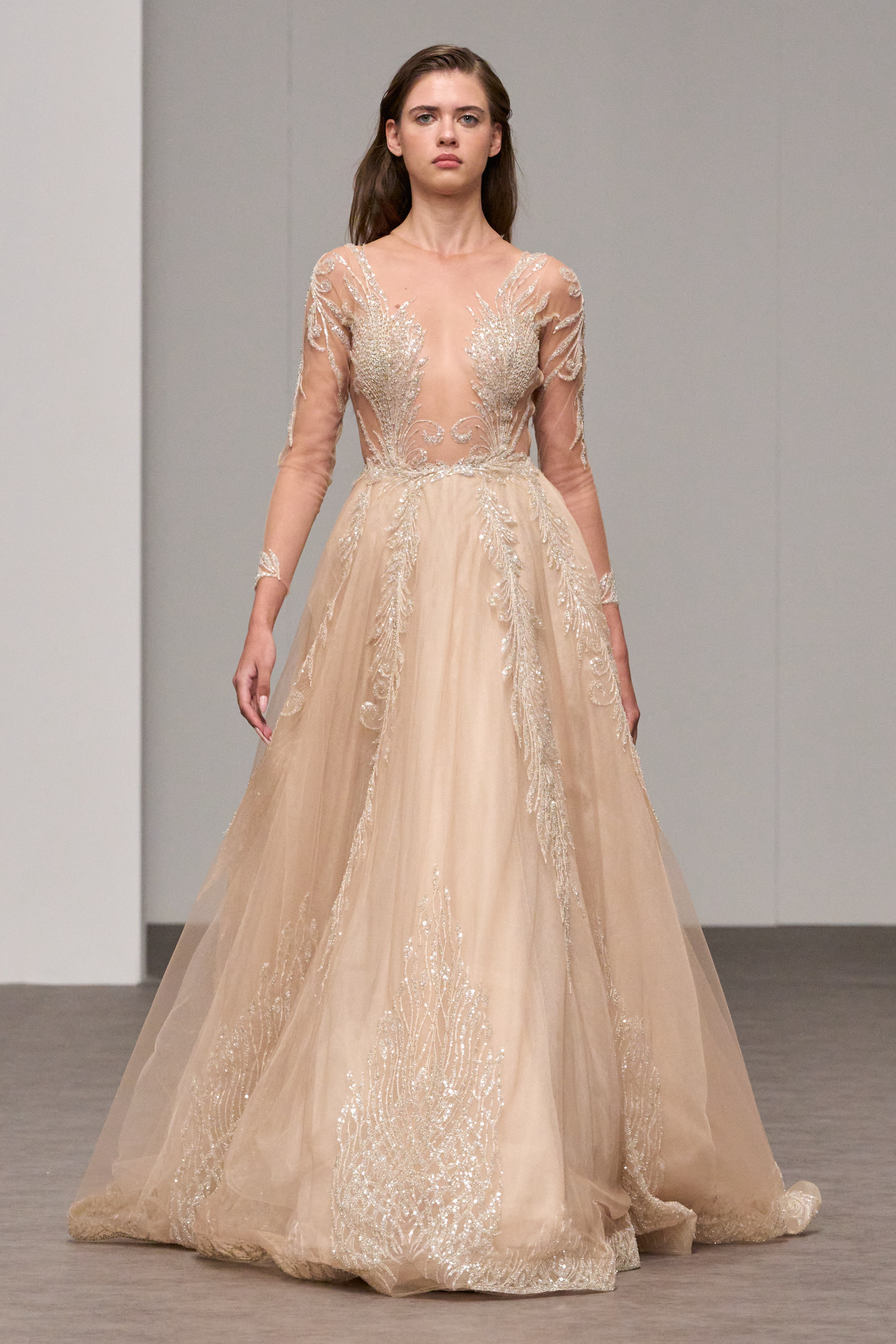
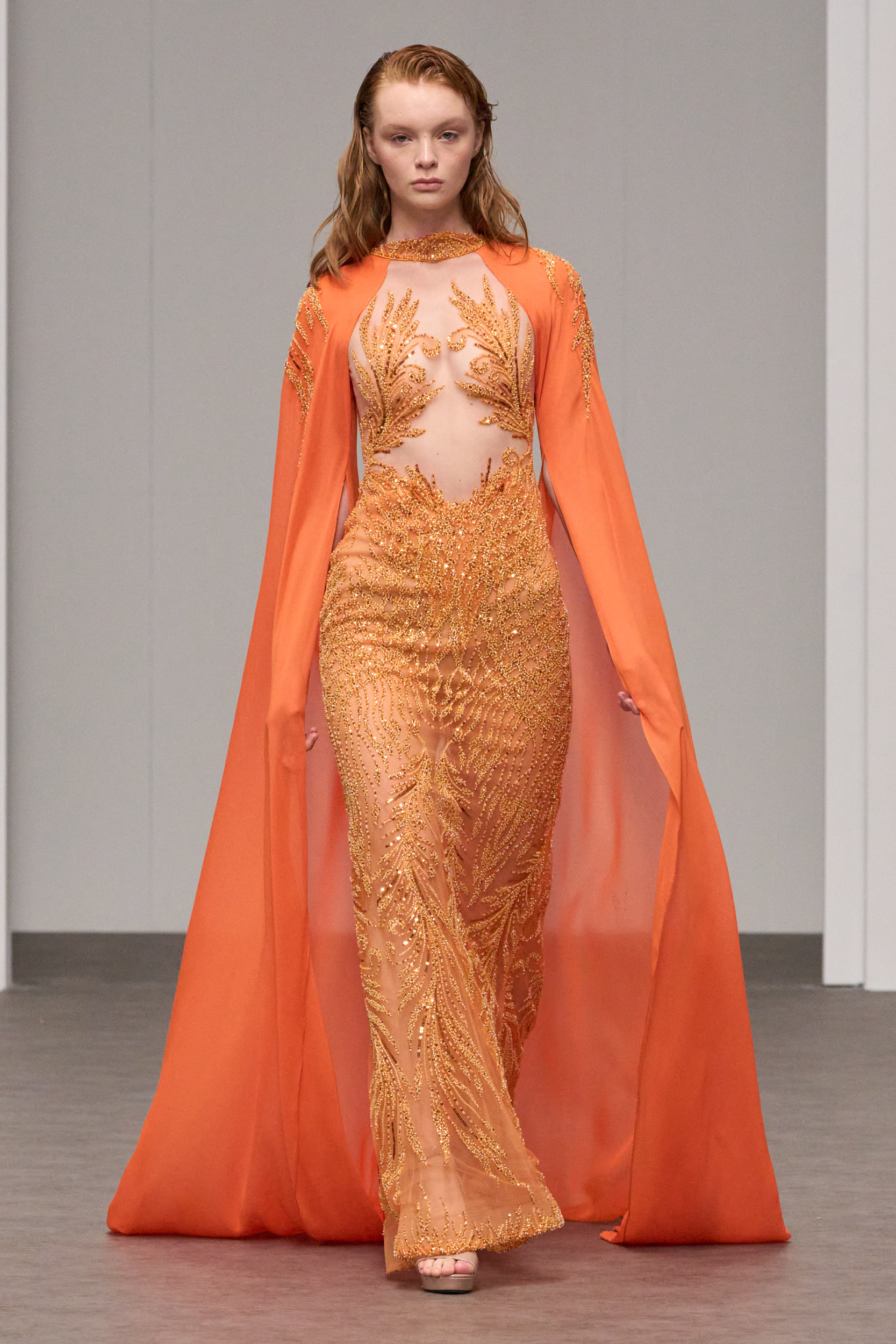
The convergence of Rizman Ruzaini’s Malaysian cultural heritage, Amjad Khalil’s North African emotional narrative, and Erick Bendana’s Nicaraguan street-to-luxury intelligence on the Dubai Fashion Week opening day is not a coincidental programme assembly. It is a curatorial argument about what couture is becoming — and about Dubai’s specific function in the global fashion ecosystem as the city most structurally positioned to make this argument visible and commercially productive.
Dubai’s function in the transregional couture conversation is precisely what the editorial brief for this day’s programme establishes: translation. The city’s specific combination of geographic positioning between the fashion communities of Southeast Asia, North Africa, and Latin America on one axis, and the luxury retail markets of the Gulf, Europe, and Asia on another; its density of internationally mobile consumers whose aesthetic reference points span every significant global luxury culture; and its institutional infrastructure for connecting emerging design talent with the buyers, investors, and editorial decision-makers whose engagement is the prerequisite for global commercial scale — all of these constitute the translation infrastructure that no other city currently provides in the same form or at the same scale.
The new couture geography that emerges from this translation function is multi-polar rather than mono-centric. As the World Economic Forum’s analysis of cultural diversity and the redistribution of global luxury authority documents, the most significant structural shift in the contemporary luxury market is the consistent movement of creative authority away from the traditional European capitals toward the regions and communities whose aesthetic intelligence has been most systematically underserved by the existing fashion infrastructure. Dubai Fashion Week is the most significant institutional mechanism through which this redistribution is being made commercially legible and commercially productive simultaneously — the platform that connects the creative intelligence of Southeast Asian, North African, and Latin American couture with the buyer relationships, retail partnerships, and editorial visibility that transform design authority into market authority. Paris retains its symbolic authority — the accumulated weight of the couture tradition cannot be dissolved by a single generation of redistribution, however significant. But the authority to produce couture that matters commercially and culturally — the authority that rests on the quality of the design intelligence and the depth of the cultural engagement rather than on institutional heritage alone — is genuinely distributed across the geographies represented on Dubai Fashion Week’s opening day programme.
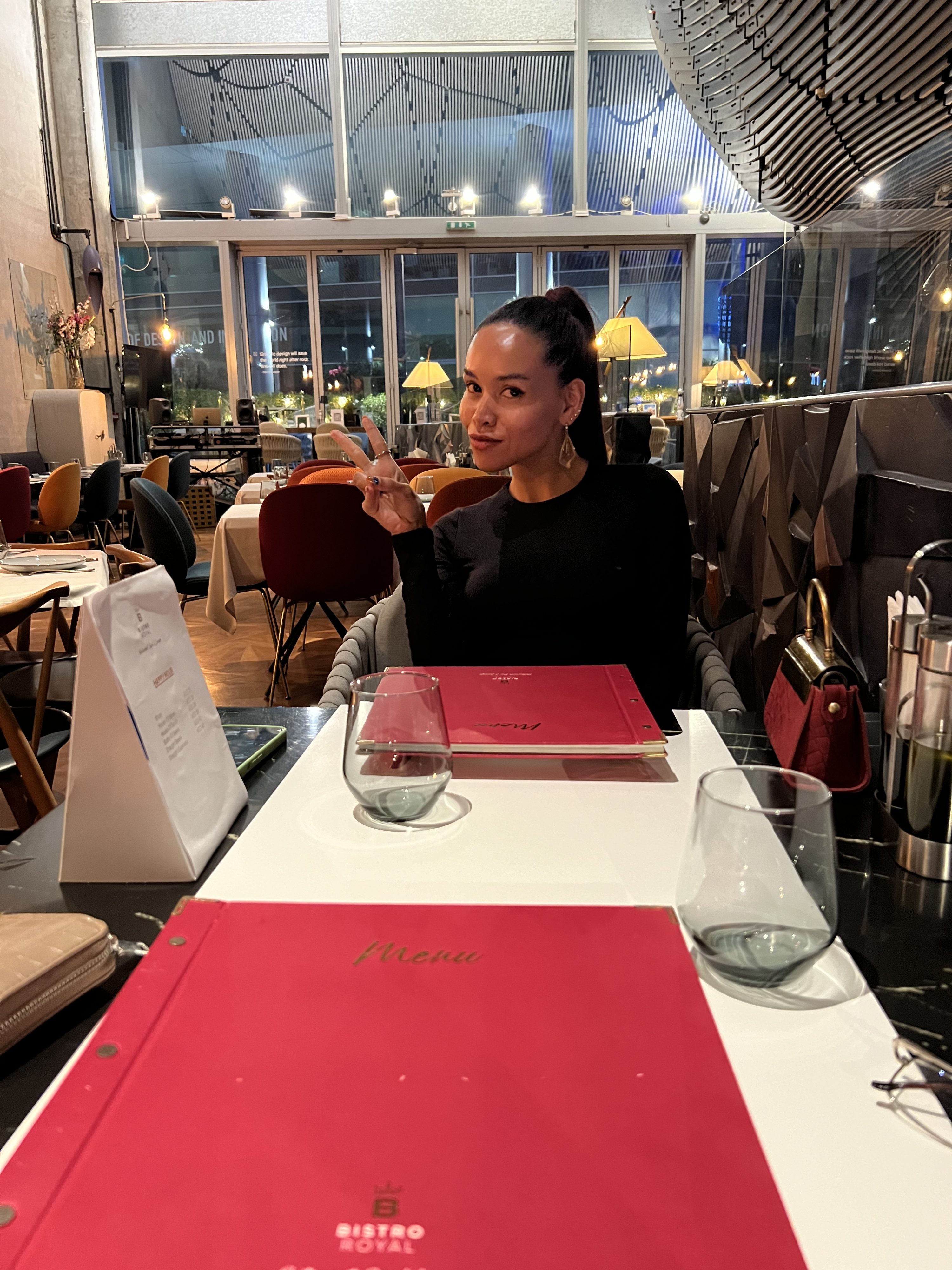
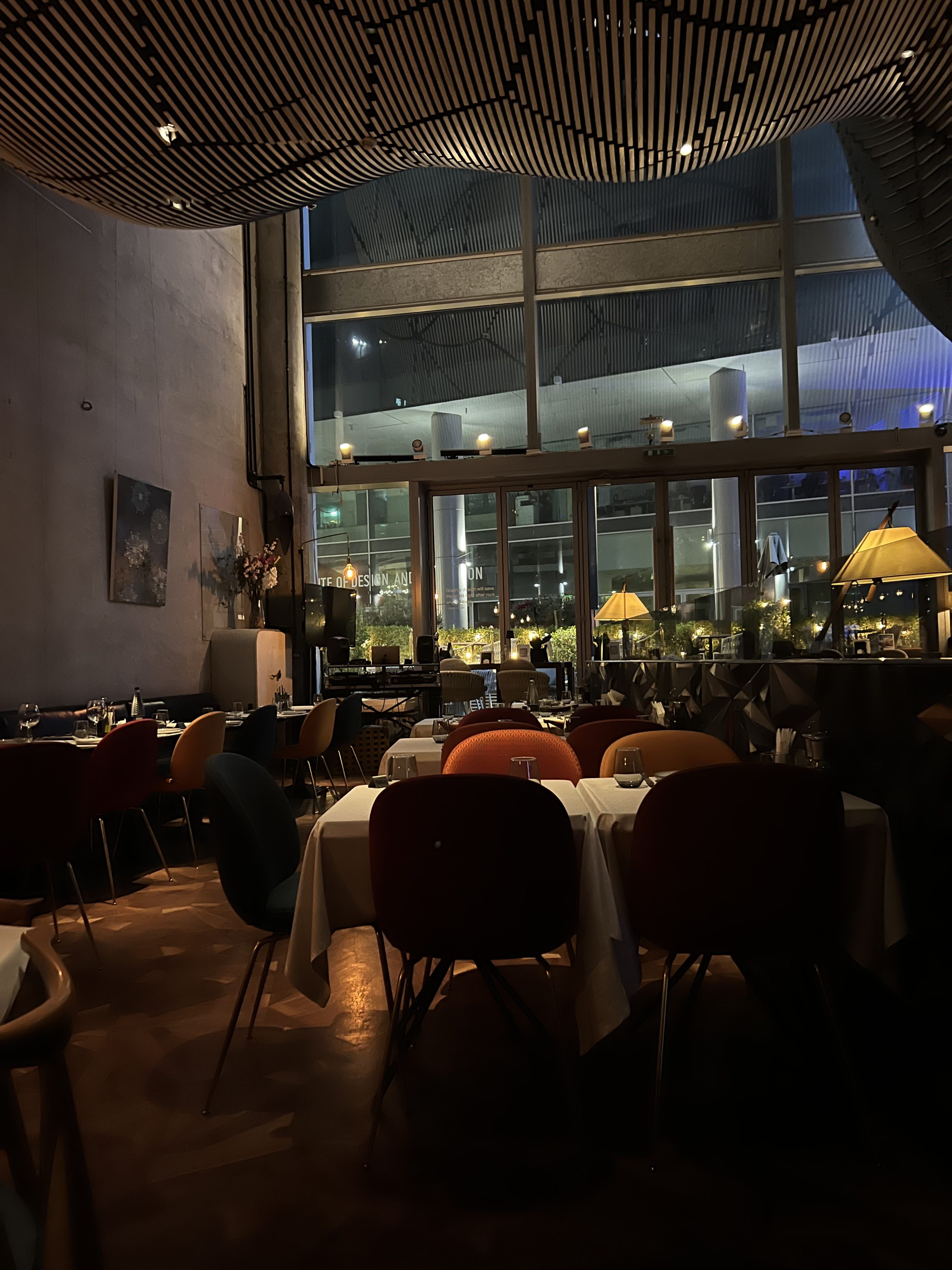
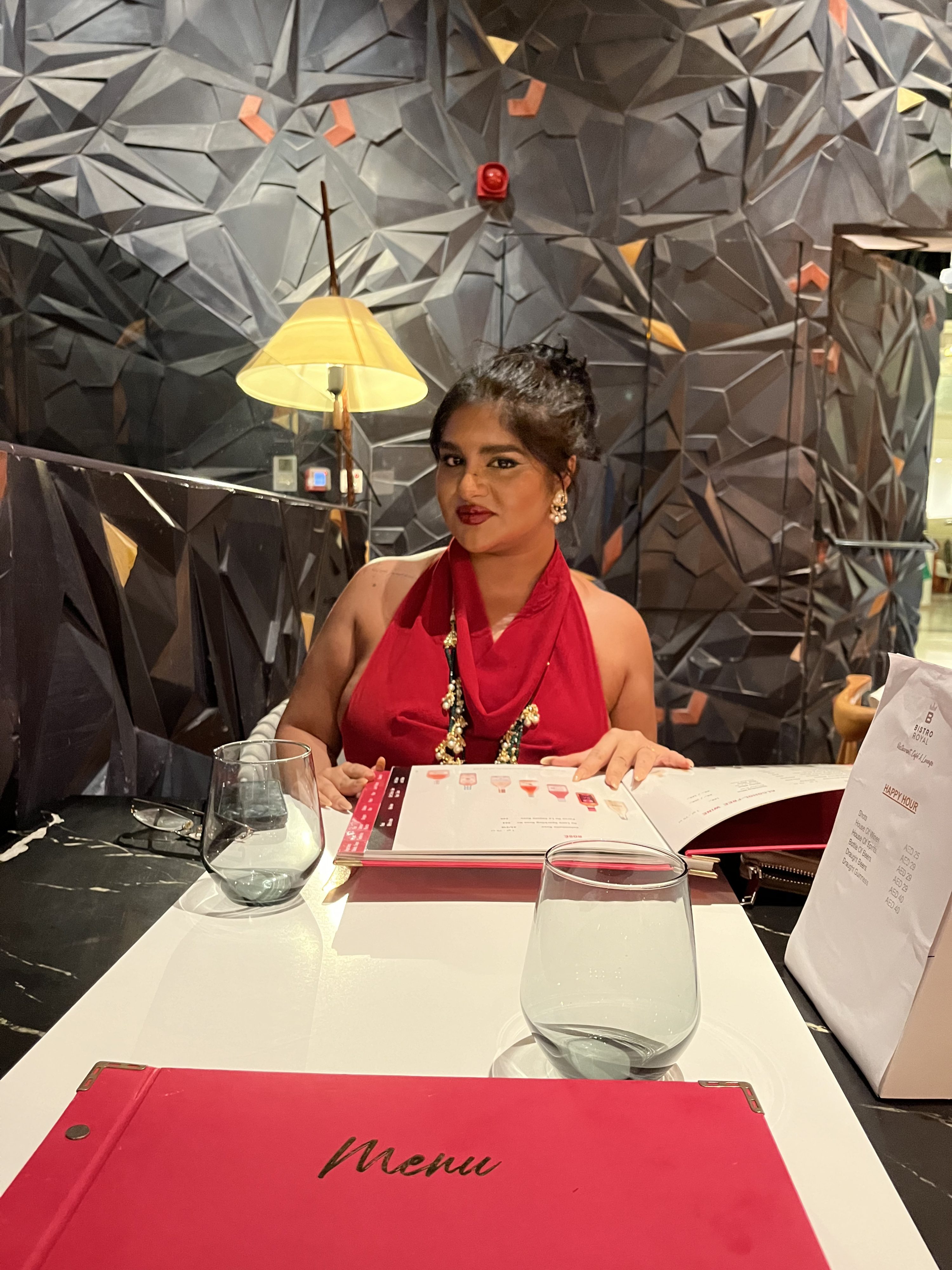
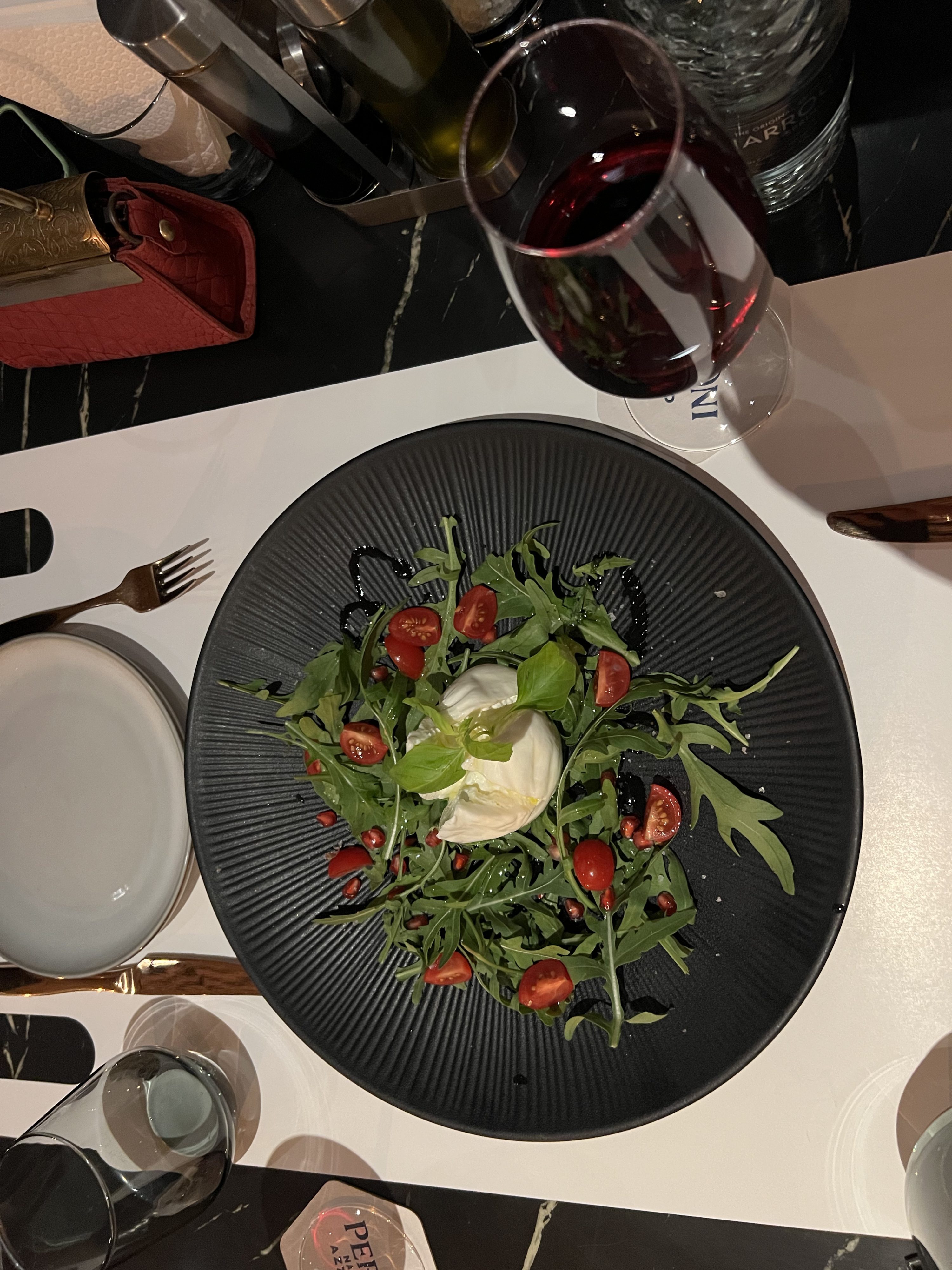
The intimate dinner at Bistro Royal in Dubai Design District that concluded Day One embodied this principle at its most personal and most human scale: the fashion conversation extending beyond the runway into the lived experience of the city, the connections formed at previous Dubai Fashion Week editions renewing over impeccable food in the warm ambiance of a Design District restaurant. Fashion at its most enduring is always about the connections it enables rather than the garments alone — the specific quality of shared experience that produces the relationships and the loyalties that the runway, on its own, cannot manufacture. The evening at Bistro Royal — with its impeccable food, its warm ambiance, and the specific pleasure of a reunion with someone who was present at the beginning of the Dubai Fashion Week journey — is itself a form of cultural documentation: the record of how a fashion week becomes part of a life rather than merely a calendar event, how the connections formed around shared aesthetic intelligence compound in meaning across the years and the seasons and the successive editions of an event that is itself growing in authority with each iteration. This is the dimension of Dubai Fashion Week that no audit of its commercial infrastructure or its critical programme can fully capture: the specific quality of a city that rewards consistent presence, that accumulates meaning for the people who return to it repeatedly, that produces not just a single memorable evening but the longer narrative that makes each subsequent evening more significant than the one before. The transregional couture conversation that Rizman Ruzaini, Amjad Khalil, and Erick Bendana opened on the first night is not concluded at the end of the show. It continues in the conversations at Bistro Royal, in the relationships that the week produced, in the design intelligence that each encounter with a different cultural aesthetic deposits in the people present for it. Dubai Fashion Week accumulates. That is its most significant quality — and the one that no single article, however comprehensive, can fully convey. The opening night is the beginning of a conversation that the rest of the week, and every subsequent edition, continues.
The relationship between the intellectual content of Dubai Fashion Week’s programme and the commercial infrastructure that enables its most significant designers to reach their most important audiences connects the opening day’s cultural argument to the broader institutional analysis developed across this site. Dubai Fashion Week and the New Architecture of Regional Luxury explores the same distributed couture authority through the lens of the emerging regional luxury brands whose Day Five presence demonstrated that the opening day’s argument had been borne out across the full week’s programme. Together with the intellectual fashion dimension explored in The New Intellectualism of Contemporary Fashion at Dubai Fashion Week, they constitute Dubai Fashion Week’s most complete available articulation of how global couture authority is being redistributed — and why Dubai is the most significant institutional environment in which that redistribution is currently occurring.
As McKinsey’s State of Fashion analysis consistently identifies, the fashion brands achieving the most durable commercial positions in the global luxury market are those whose cultural authority is genuine rather than manufactured — those whose creative intelligence is rooted in specific cultural depth and expressed through the kind of craft mastery that only sustained commitment to a design practice produces. Rizman Ruzaini’s Malaysian couture heritage, Amjad Khalil’s North African emotional intelligence, and Erick Bendana’s Nicaraguan luxury translation each embody this principle precisely. Their convergence on Dubai Fashion Week’s opening day is not a representation exercise. It is a demonstration of what global couture looks like when authority is distributed by merit rather than inherited by geography.
“The opening day of Dubai Fashion Week signals a decisive shift
in the global couture conversation.
With Rizman Ruzaini’s cultural heritage,
Amjad Khalil’s emotional narrative construction,
and Erick Bendana’s transregional refinement,
couture is no longer confined to a singular geography
or aesthetic tradition.
Instead, it emerges as a distributed system
of cultural expression —
fluid, interconnected, and globally legible.
Dubai Fashion Week is not simply opening a season.
It is opening a new framework
for how couture is defined, interpreted,
and ultimately understood
within the evolving landscape of global luxury.”