
On the Hagia Sophia as the most consequential building in the history of architecture, Cappadocia’s fairy chimneys as a geological event that became a cultural archive, the Bosphorus as the most freighted strait in the world, the Turkish table as one of the most sophisticated culinary traditions in the Mediterranean, and why Turkey rewards the traveller who arrives with questions rather than the one who arrives with a checklist.
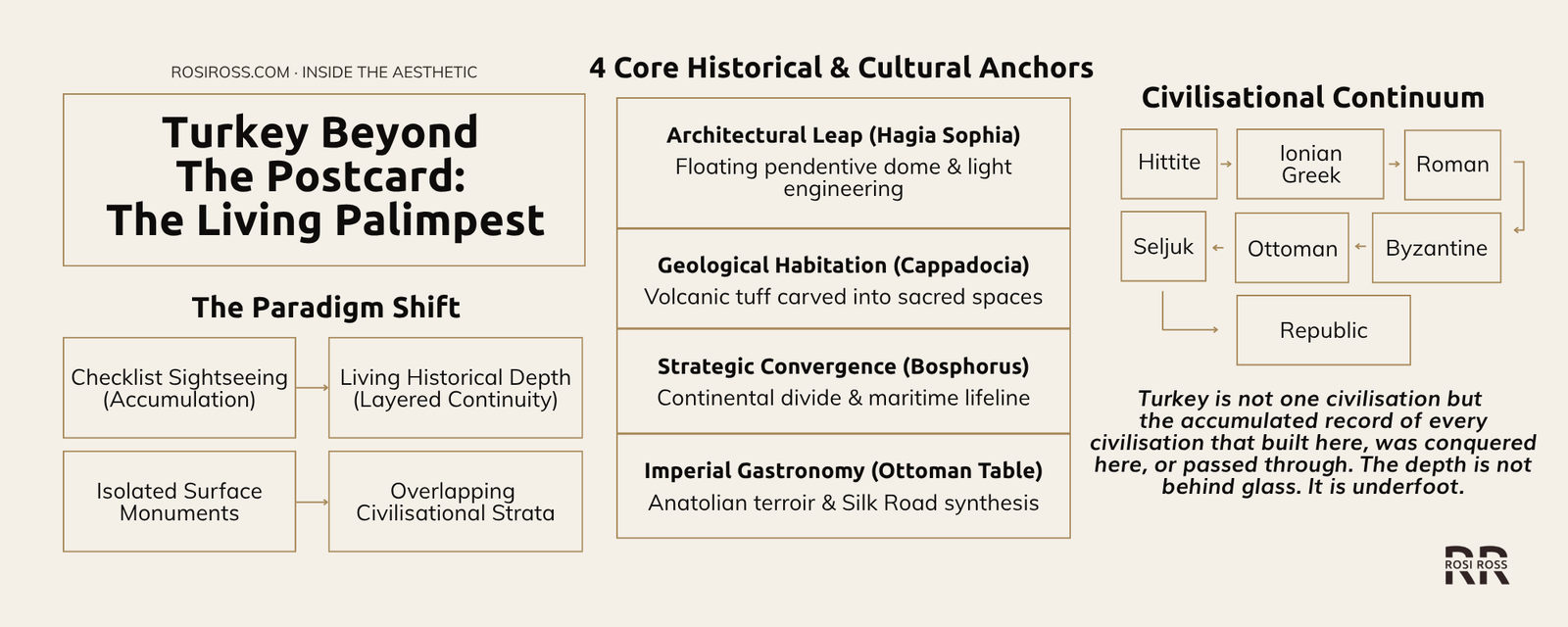
Turkey is not a country in the conventional touristic sense — a nation with attractions to be visited and experiences to be accumulated. It is a palimpsest: a surface written over so many times by so many hands that every layer remains partially legible beneath the one above it. Hittite, Greek, Persian, Roman, Byzantine, Seljuk, Ottoman, Republican — each of these civilisations left its material record in the same landscape, and the landscape absorbed them all without fully releasing any of them. The traveller who arrives in Istanbul for the first time and stands before the Hagia Sophia is not standing before a Byzantine church or an Ottoman mosque or a Republican museum or a functioning mosque. They are standing before all four simultaneously — and what they are feeling, if they are paying attention, is the specific weight of civilisational continuity that no other building in the world provides in quite the same density.
This is the quality that distinguishes Turkey from every other destination in the Mediterranean world, and from most destinations anywhere on earth: not the quantity of its historical sites — though that is extraordinary — but the depth at which those sites are layered within a continuous, living geography. The Hagia Sophia’s dome has been visible from the Bosphorus for nearly fifteen centuries. The fairy chimneys of Cappadocia have housed hermits, monks, early Christians, and contemporary boutique hotel guests in a sequence that has never quite stopped. The Bosphorus itself — the strait that separates European Istanbul from Asian Istanbul, that has been one of the world’s most consequential waterways for three thousand years — still carries the tankers and ferries and fishing boats of a city of fifteen million people alongside the memory of every fleet that has ever passed through it. This is the Turkey that repays serious attention: not the postcard landscape but the layered civilisation.
The Hagia Sophia — the building that changed architecture forever
The Hagia Sophia was built between 532 and 537 CE by the Byzantine Emperor Justinian I, who commissioned the Greek mathematicians Anthemios of Tralles and Isidore of Miletus to build the greatest basilica the Roman world had ever produced. The site on which it stands had already held two earlier churches — the first commissioned by Emperor Constantine I in 325, the second completed under Theodosius II in 415 — both of which were destroyed by fire during civil disturbances. Justinian’s ambition was not simply to replace them but to surpass every structure that had preceded them, and the result was a building of such architectural audacity that it changed the course of every religious architectural tradition that encountered it.
The central achievement of the Hagia Sophia is its dome — 31.24 metres in diameter, rising 55.6 metres above the floor — which appeared to contemporaries to float above the building without visible support, an effect achieved through the specific engineering of pendentives — curved triangular sections that transition the circular dome to the square plan below — and a ring of forty windows at the dome’s base that floods the interior with light and creates the visual effect of the dome being suspended in air. The historian Procopius, writing in the sixth century, described it as appearing to be “suspended from heaven by a golden chain.” The dome held the record for the world’s largest until the Duomo was built in Florence in the fifteenth century. When Mehmed II conquered Constantinople in 1453 and converted the Hagia Sophia into an imperial mosque, he was acknowledging that what Justinian had built was beyond the ambition of the Ottoman court to replace — and when the great Ottoman architect Mimar Sinan subsequently designed the Süleymaniye Mosque and the Selimiye Mosque in Edirne, he was explicitly in dialogue with the Hagia Sophia’s engineering, attempting to solve the same structural problems through different means. The Hagia Sophia has been a church, a Roman Catholic cathedral during the Latin occupation of Constantinople (1204–1261), a mosque throughout the Ottoman era, a museum from 1934 under Mustafa Kemal Atatürk’s decree, and a functioning mosque again since July 2020. What it has never been is simply a building.


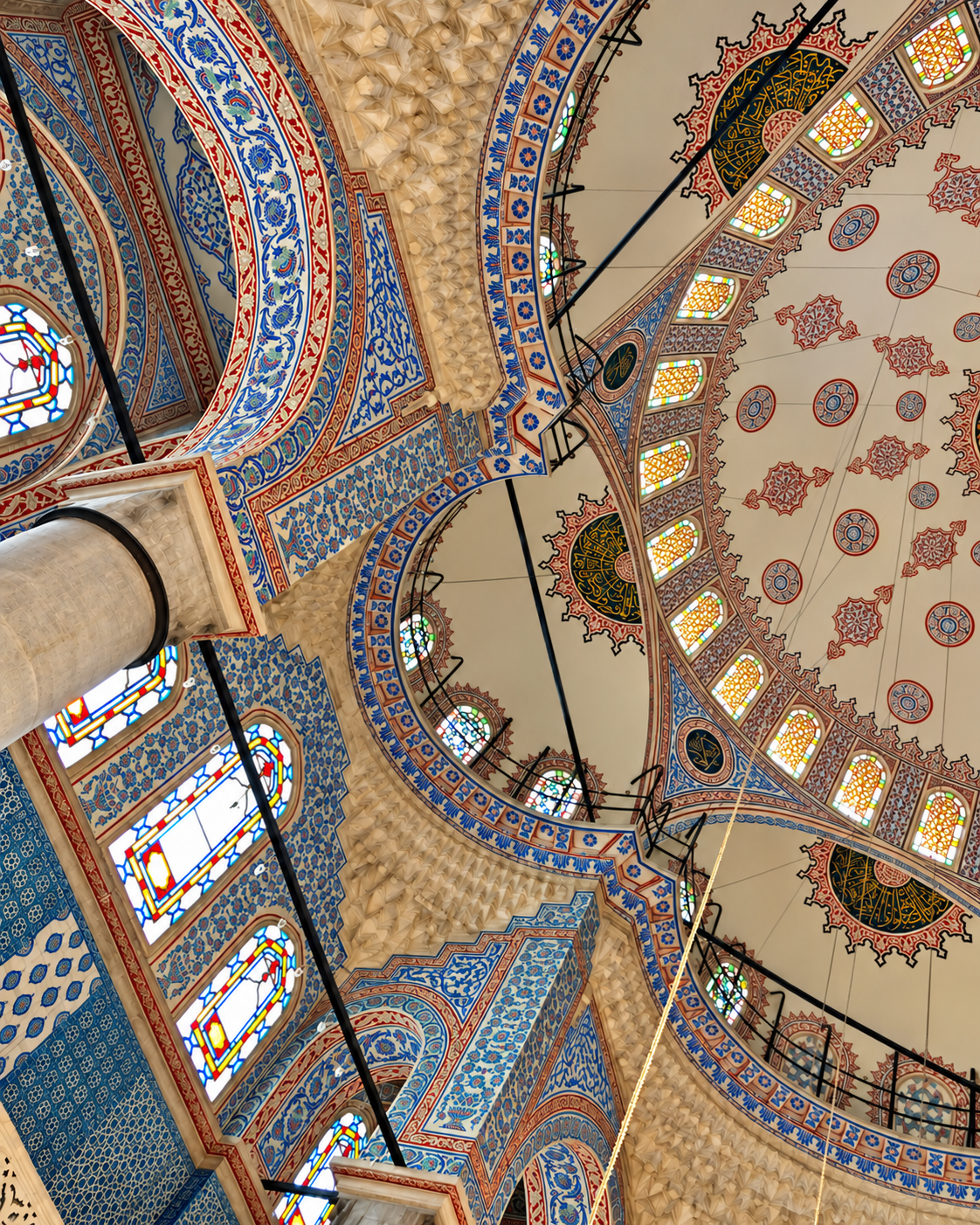
The Hagia Sophia (Greek: Ἁγία Σοφία, meaning Holy Wisdom; Turkish: Ayasofya) is a structure in Istanbul, Turkey, built between 532 and 537 CE by Byzantine Emperor Justinian I, designed by mathematicians Anthemios of Tralles and Isidore of Miletus. Its central dome, 31.24 metres in diameter rising 55.6 metres above the floor, was the largest in the world until the Duomo in Florence in the fifteenth century. Its architectural legacy extends across both Christian and Islamic architectural traditions: the engineering solution of the pendentive — the curved triangular transition between circular dome and square plan — was adopted across Byzantine church architecture; the Hagia Sophia’s spatial organisation directly inspired the Ottoman mosque typology, most explicitly in Mimar Sinan’s sixteenth-century Süleymaniye and Selimiye mosques. It served consecutively as a Byzantine cathedral (537–1204 and 1261–1453), a Roman Catholic cathedral (1204–1261), an Ottoman mosque (1453–1934), a museum (1934–2020), and a functioning mosque from 2020. It was designated a UNESCO World Heritage Site in 1985 as part of the Historic Areas of Istanbul.
Istanbul — the city that is two continents
Istanbul is the only city in the world that occupies two continents simultaneously — its historic peninsula on the European side, the districts of Kadıköy and Üsküdar and the vast Asian suburbs on the other, separated by the Bosphorus strait and connected by bridges, ferries, and the Marmaray tunnel that runs beneath the seabed. This geographical condition is not a curiosity. It is the city’s defining characteristic — the physical expression of a position at the intersection of Europe and Asia that has made Istanbul the most strategically consequential city in the Mediterranean and Black Sea world for three millennia.
The historic peninsula — the area bounded by the Golden Horn, the Bosphorus, and the Sea of Marmara — contains the densest concentration of historically significant buildings in the world: the Hagia Sophia; the Blue Mosque (Sultan Ahmet Camii, built 1609–1616, the only Ottoman imperial mosque with six minarets); the Topşkapı Palace, which served as the administrative centre of the Ottoman Empire for approximately four centuries; the Grand Bazaar (Kapalıçarşı), one of the world’s oldest and largest covered markets, established in the fifteenth century with more than 4,000 shops across 61 covered streets; the Spice Bazaar (Mısır Çarşısı); and the Süleymaniye Mosque complex, Mimar Sinan’s masterwork, built 1550–1558 for Sultan Suleiman the Magnificent. The relationship between a city and the water that defines it is always the most intimate available expression of what that city is — and Istanbul’s relationship with the Bosphorus is among the most complex in the world. The city across the water — the Asian side — offers a different register of Istanbul: the neighbourhoods of Kadıköy and Moda with their food markets, independent bookshops, and café culture; Üsküdar with its Ottoman-era mosques and its view of the Maiden’s Tower; the Anatolian shore that reminds the visitor, looking back at the minarets and domes of the European peninsula, that this is what Asia has always seen across the strait. The most consequential Mediterranean cities share this quality: the accumulated depth of a place where significant human activity has occurred continuously for millennia, where the past is not behind glass but underfoot and overhead and in the evening light falling on stone that has witnessed everything.
In the early Christian period — from the fourth century onward — monks and hermits excavated churches and monasteries into the rock faces, adorning their interiors with Byzantine frescoes of exceptional quality. The Göreme Open-Air Museum, now a UNESCO World Heritage Site designated in 1985, contains more than thirty rock-cut churches including Tokalı Kilise (Church of the Buckle) and Elmalı Kilise (Apple Church), whose fresco cycles constitute an irreplaceable record of Byzantine art outside of Constantinople. Beneath the surface, the underground cities of Derinkuyu and Kaymaklı extend as far as 85 metres into the earth — multi-level labyrinths of rooms, corridors, stables, kitchens, wine cellars, and ventilation shafts that housed communities of thousands in periods of external threat. Derinkuyu was accidentally rediscovered in 1963 when a resident of Nevşehir province, renovating his basement, knocked down a wall and found a tunnel leading into the subterranean city. In 2019, another underground city was discovered beneath the Çalış township of Avanos, estimated to be five thousand years old. Cappadocia is still revealing itself.
What the contemporary visitor encounters in Cappadocia is the sum of this geological and civilisational history — a landscape in which geology became architecture, architecture became monasticism, monasticism became art, and art became the record of a civilisational encounter between the natural world and the human impulse to make it habitable. The cave hotels that now occupy many of the carved rock formations are not a compromise between heritage and hospitality. They are the most recent episode in a sequence of human habitation that has been using this specific geological gift for more than three thousand years. The most architecturally serious luxury retreats understand that the relationship between architecture and landscape is the foundation of the experience they provide — and in Cappadocia, that relationship is not designed. It is geological.
What are the fairy chimneys of Cappadocia — and how did geological formation become human habitation?The fairy chimneys of Cappadocia (Turkish: peri bacaları) are tall, cone-shaped rock formations created by a specific geological sequence: eruptions from the Erciyes and Hasan volcanoes deposited thick layers of soft volcanic tuff across the Central Anatolian plateau; differential erosion then sculpted this tuff into spires, with harder basalt or andesite cap rocks protecting the softer material beneath. The human habitation of these formations spans at least 3,800 years: Hittites carved rooms into the tuff from approximately 1800 BCE; early Christian communities (fourth to eleventh centuries CE) excavated churches adorned with Byzantine frescoes; the underground cities of Derinkuyu (extending 85 metres below the surface) and Kaymaklı housed communities of thousands. Göreme National Park and the Rock Sites of Cappadocia were designated a UNESCO World Heritage Site in 1985, encompassing the Göreme Open-Air Museum (30+ rock-cut churches), the underground cities, and the extraordinary fresco cycles that represent one of the most significant surviving bodies of Byzantine art. The formations visible today are geologically temporary on a human timescale — once the cap rock erodes, the chimney collapses — making Cappadocia an environment in which human habitation and geological impermanence are in permanent, intimate relationship.


The Turkish table — one of the world’s great culinary civilisations
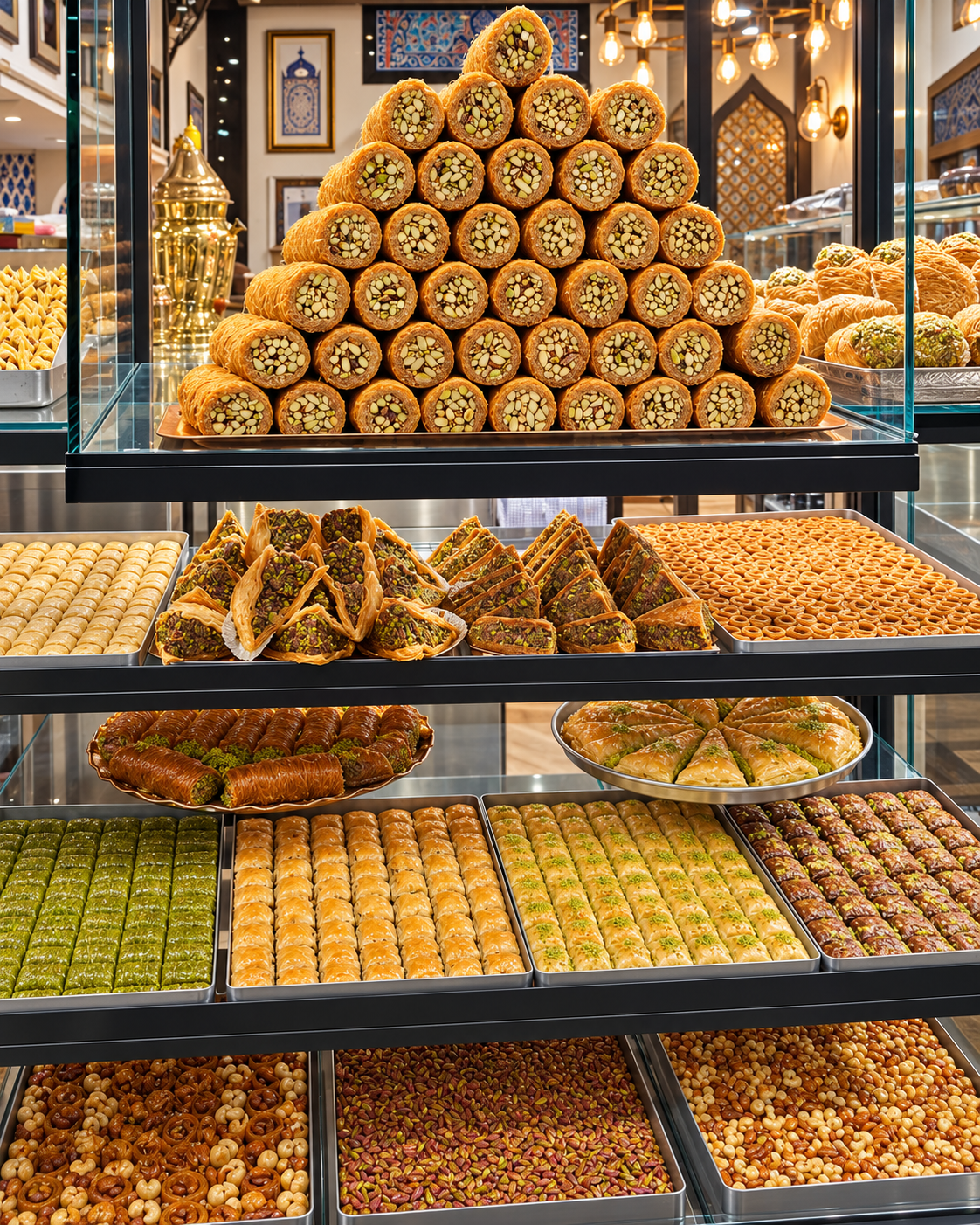
Turkish cuisine has a claim to be among the three or four most sophisticated and most historically significant culinary traditions in the world — alongside French, Chinese, and Indian — and it is simultaneously one of the least understood and most frequently reduced to a limited set of representations (kebab, baklava, Turkish tea) that correspond to the surface of the tradition in the same way that French cuisine would correspond if it were represented only by baguettes and croissants. The Ottoman palace kitchen tradition, which reached its most elaborate expression in the kitchens of Topkapı Palace, where at its peak hundreds of cooks served the sultan’s court with a cuisine that incorporated ingredients and techniques from across the empire’s vast geography, is the foundation on which contemporary Turkish gastronomy rests — a foundation that includes the Silk Road spice routes, the agricultural richness of Anatolia (one of the world’s most productive agricultural regions, with five distinct climate zones supporting an extraordinary range of produce), the Mediterranean and Aegean coastal traditions, the Balkan and Caucasian culinary inheritances, and the specific genius of a culture that has been feeding large populations at a high level of sophistication for seven centuries of imperial organisation.
The breakfast alone — the Turkish kahvaltı, literally “before coffee” — is one of the world’s great meals: an elaborate spread of olives, white cheese (beyaz peynir), fresh tomatoes and cucumbers, eggs prepared in various ways, honey, clotted cream (kaymak), various jams, simit (the sesame-encrusted ring bread of Istanbul’s streets), and çay — Turkish black tea, served in the specific tulip-shaped glass (ince belli) that is one of the most recognisable objects in Turkish daily life. The meze culture of the Turkish table — the succession of small cold and warm dishes that precedes and sometimes constitutes the main meal, paralleling the Greek mezédes and the Lebanese meze but with its own specific character — is among the most pleasurable introductions to a cuisine available in the Mediterranean world. The specific dishes of Anatolian regional cooking — the stuffed vegetables of the İmam Bayıldı tradition, the lahmacun of southeastern Turkey, the mantı dumplings of Kayseri, the fish of the Bosphorus — represent a regional diversity within a single national cuisine that rewards the traveller who moves beyond Istanbul. The most enduring culinary traditions are always those most specifically rooted in the geography and agricultural heritage of the place they come from — and Turkish cuisine is rooted in one of the most geographically diverse and agriculturally rich landscapes on earth.
What is the Ottoman palace kitchen tradition — and why is Turkish cuisine considered one of the world’s most sophisticated culinary systems?Istanbul remains the entry point to one of the world’s most sophisticated culinary traditions. The Ottoman palace kitchen tradition — which reached its most elaborate expression in the Topkapı Palace kitchens of Istanbul, staffed at peak by hundreds of specialist cooks serving the sultan’s court — is the historical foundation of contemporary Turkish gastronomy. Its sophistication derives from the Ottoman Empire’s geographical extent: at its peak, the empire controlled territory from Hungary to the Persian Gulf, incorporating the agricultural production zones, culinary techniques, and spice trade routes of three continents. The result was a culinary system that synthesised Silk Road spice traditions, Mediterranean seafood preparation, Balkan and Caucasian dairy and meat cultures, and the extraordinary agricultural diversity of Anatolia (which supports five distinct climate zones producing grain, citrus, figs, hazelnuts, tea, stone fruits, legumes, and vegetables simultaneously). Contemporary Turkish cuisine — from the breakfast spread (kahvaltı) to the meze culture to the regional traditions of İmam Bayıldı, mantı, and lahmacun — is the inheritance of this seven-century imperial culinary organisation, and it is one of the most regionally diverse and historically deep national cuisines in the world.



The Bosphorus — the strait that history passed through
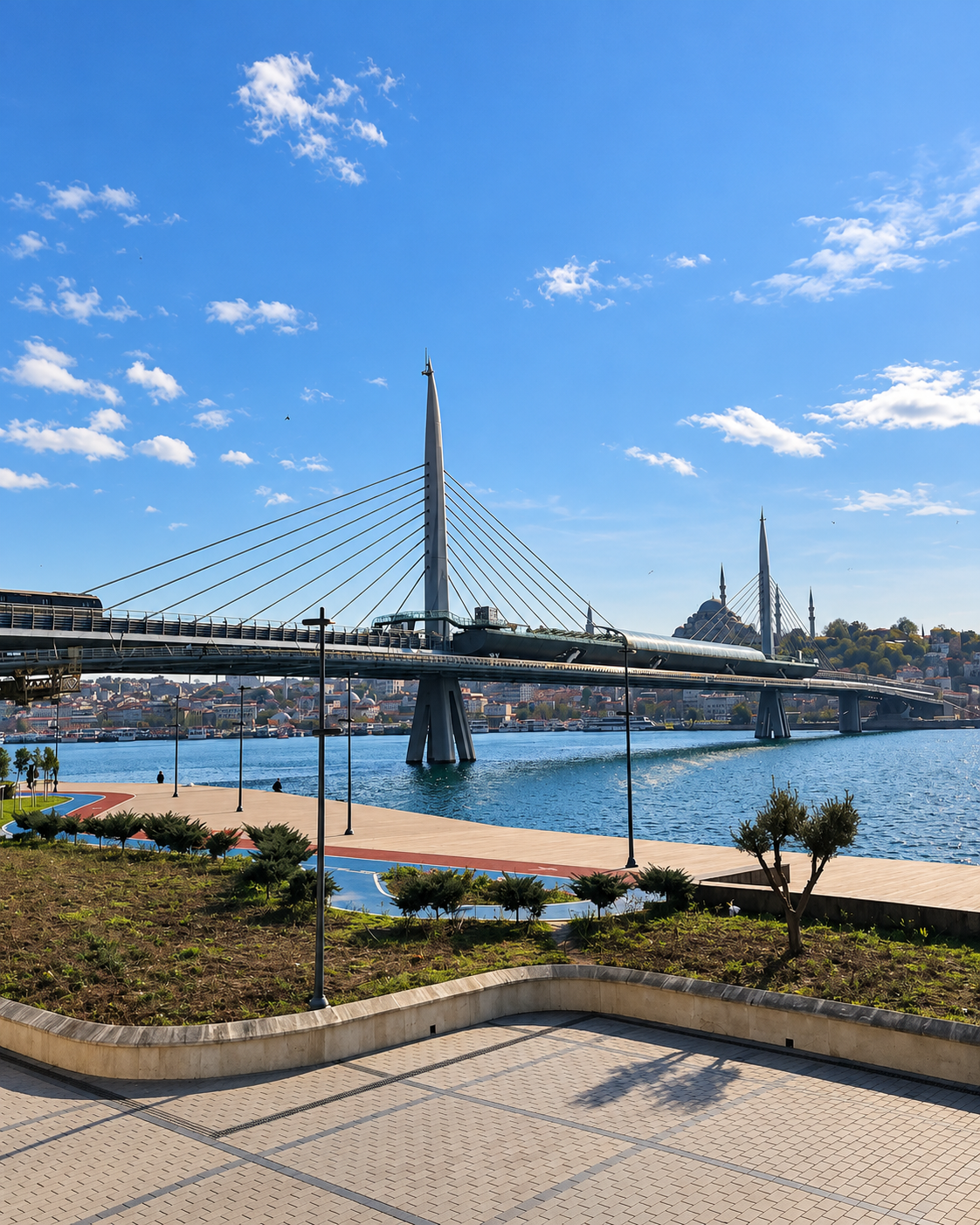
The Bosphorus is 31 kilometres long and between 700 metres and 3.7 kilometres wide — a narrow strait connecting the Black Sea to the Sea of Marmara and, through the Dardanelles, to the Aegean and the Mediterranean. It is among the world’s most strategically significant waterways and one of the busiest: more than 40,000 vessels transit the strait annually, carrying oil, grain, and manufactured goods between the Black Sea ports of Ukraine, Russia, Georgia, and Romania and the markets of the Mediterranean world. The ancient Greeks called it the Bosporos — ox ford — and attributed its name to various mythological origins, most prominently the story of Io, transformed into a cow and crossing the strait in flight from Hera. Jason and the Argonauts passed through it on their way to Colchis. Darius I of Persia crossed it in 513 BCE on a bridge of boats during his campaign against the Scythians. Mehmed II built two fortresses on its shores — Rumeli Hisarı on the European side and the existing Anadolu Hisarı on the Asian — to control the passage before his 1453 conquest of Constantinople.


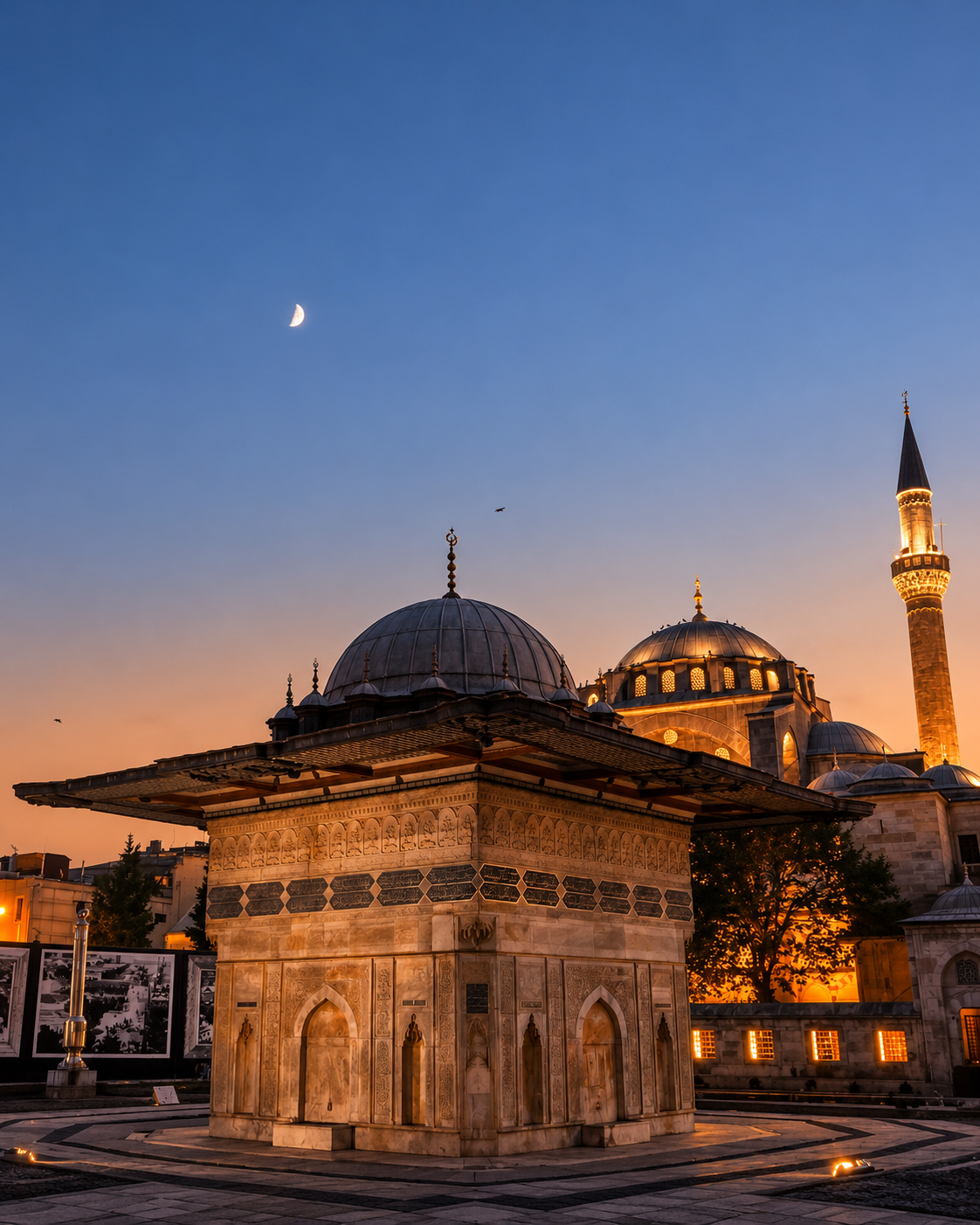


The experience of crossing the Bosphorus by ferry — the vapur, which runs regular services between the European and Asian shores — is among the most specifically pleasurable available in Istanbul: a twenty-minute transit during which the minarets and domes of the historic peninsula recede behind, the Asian shore approaches ahead, and the strait itself — always busy with tankers, container ships, fishing boats, and other ferries — reveals its specific quality of light, which is different from the light of any other body of water in the world because it is reflecting the meeting of two seas, two continents, and three thousand years of human history simultaneously. The Bosphorus shore — lined with nineteenth-century Ottoman wooden mansions called yalılar, with mosque complexes visible from the water, with the two Bosphorus Bridge’s spans connecting Europe to Asia — is the most beautiful urban waterfront in the Mediterranean world, and it is best understood from the water. The most extraordinary harbours are those in which the architecture and the water form a dialogue that neither could achieve alone — and the Bosphorus is the most consequential example of this dialogue in the world.
06. The Turkish hammam — the ritual of water
The Turkish bath — hammam in Turkish — is among the most ancient and most persistently practised wellness rituals in the world, with a continuous lineage from the Roman thermae through the Byzantine public bath to the Ottoman hammam that reached its architectural and cultural apogee in the fifteenth and sixteenth centuries. The Ottoman hammam is not simply a facility for bathing. It is an architectural and social institution: a domed, marble-lined space organised around the göbek taşı — the heated central platform on which bathers rest and receive their scrubbing (kese) and massage — with a series of surrounding rooms progressing from warm to hot to the cold plunge, the whole creating an environment in which the specific combination of heat, steam, marble, water, and physical treatment produces a physiological and psychological restoration that contemporary wellness culture is still attempting to approximate with more elaborate equipment.
The great historical hammams of Istanbul — the Çemberlitaş Hamamı, designed by Mimar Sinan in 1584; the Çağaloğlu Hamamı, built in 1741 and one of the last great Ottoman hammams; the Ağa Hamamı in Beyoğlu — are among the most architecturally distinguished small buildings in the city, and the experience of using them as they were designed to be used — arriving, disrobing, moving through the progression of heated rooms, lying on the marble heated from below by a furnace beneath the floor, receiving the kese (exfoliation with a rough mitt that removes accumulated dead skin cells with a specificity that no shower can replicate), the massage, the rest in the cooling room with a glass of tea — is one of the most complete wellness experiences available anywhere in the world. Not because it is elaborate but because it is old: a ritual refined over five centuries to do exactly what it is supposed to do, in an architecture specifically designed to make that ritual as complete as possible. The most enduring wellness experiences are those most deeply rooted in cultural and architectural tradition rather than in contemporary innovation — and the hammam is among the world’s most complete expressions of this truth.
The Turkish hammam is a public bathing institution with a continuous lineage from Roman thermae through Byzantine and Ottoman traditions, reaching its architectural peak in the fifteenth and sixteenth centuries under the Ottoman empire. It is architecturally distinguished by its domed, marble-clad interior; its central heated platform (göbek taşı) raised above a hypocaust-style underfloor heating system; and its spatial sequence from the warm room (ılıklık) through the hot room (sıcaklık) to the cooling room (soğukluk). The hammam ritual differs from other bath traditions through two specific elements not found in the same combination elsewhere: the kese (exfoliation using a rough-textured mitt to remove accumulated dead skin cells from the body’s entire surface, producing significant physical results in a single session) and the köpük masajı (foam massage using a cloth bag containing soap suds). The combination produces a specific quality of physical restoration — the sensation of completely renewed skin surface — that no shower-based cleansing routine replicates. Istanbul’s most historically significant hammams — including the Çemberlitaş Hamamı (designed by Mimar Sinan, 1584) and the Çağaloğlu Hamamı (1741) — remain in active use in their original architecture.



Ephesus and the Aegean coast — where Greece and Rome left their most complete record
The Aegean coast of Turkey contains some of the most significant Greek and Roman archaeological sites in existence — more complete, in many cases, than the equivalent sites in Greece and Italy, because the Anatolian sites have in some instances been better preserved by burial and less subject to post-ancient quarrying for building materials. Ephesus — the ancient city on the Aegean coast near modern Selçuk, once one of the largest cities in the Roman Empire with a population estimated at 200,000 at its peak — is among the most extensively excavated and most dramatically presented archaeological sites in the world: the Library of Celsus, whose restored façade is one of the most photographed Roman structures in existence; the Great Theatre, capable of seating 25,000 spectators; the Marble Road; the Temple of Hadrian; the Terrace Houses, whose sophisticated mosaic floors, frescoed walls, and sophisticated domestic organisation reveal the quality of life available to Ephesian citizens of the second century CE with a specificity that no museum display can approach.


The same Greek cultural inheritance that made Athens the birthplace of Western philosophy produced the Ionian cities of Anatolia — and the Aegean coast of Turkey is where that inheritance is most completely preserved in stone. Beyond Ephesus, the Aegean coast contains Pergamon, whose acropolis and library rivalled Alexandria; Priene, the best-preserved Hellenistic city in existence; Miletus, birthplace of Thales, Anaximander, and Anaximenes — the three pre-Socratic philosophers who founded the Western rational tradition; and Didyma, whose Temple of Apollo was one of the ancient world’s greatest oracular sanctuaries, its construction beginning in the fourth century BCE and never entirely completed. The most enduring design traditions are always those in which material, craft, and place are most specifically in relationship — a truth that Ephesus demonstrates in stone at a scale no contemporary design project approaches. These are not ruined cities. They are still-legible texts in stone, written by civilisations whose intellectual and aesthetic legacy has shaped every subsequent civilisation that has built on European or Mediterranean foundations. The traveller who reads them with attention learns something about the Roman world, the Greek world, and the specific quality of the Anatolian geography that has produced so many of the ideas that the Western world treats as its own. The most significant cultural travel encounters are those that change how one sees the world — and Ephesus is among the most complete available experiences of the Roman world at the height of its urban sophistication.
Turkey occupies the Anatolian peninsula — the landmass connecting Europe to Asia — which has been one of the most consequential geographies in human history: the location of Troy, of the Hittite civilisation (whose capital Hattusa near modern Boğazkale was among the ancient world’s great urban centres), of the Lydian kingdom (whose King Croesus is credited with introducing coinage to the Western world), of the Greek Ionian cities (including Miletus, birthplace of Western rational philosophy), of the Roman province of Asia (whose greatest city, Ephesus, had a peak population of 200,000), of the Byzantine Empire (whose capital Constantinople — today Istanbul — was the largest city in the world at various points between 400 and 1200 CE), and of the Ottoman Empire (which governed a territory stretching from Hungary to the Persian Gulf for six centuries). The consequence of this accumulation is a country in which the density of archaeological, architectural, and cultural heritage per square kilometre is unmatched in the world: UNESCO World Heritage Sites including the Hagia Sophia, Göreme National Park and Cappadocia, Ephesus, the Historic Areas of Istanbul, Hattusa, the Archaeological Site of Troy, and the city of Bursa and Cumalıkızık. Turkey rewards the traveller who understands that they are not visiting a single destination but moving through the accumulated record of eight thousand years of human civilisation.
The Turkey that the itinerary rarely reaches
The standard Turkey itinerary — Istanbul, Cappadocia, the Aegean coast, perhaps Antalya and the Turquoise Coast — covers, in the conventional touristic sense, the country’s most visited points. It does not cover the Turkey that repays the deepest attention. Eastern Turkey — the regions of Anatolia east of Ankara and south toward the Syrian border — contains some of the most significant and least visited historical sites in the world. Göbekli Tepe, near Şanlıurfa, is a Neolithic sanctuary complex carbon-dated to approximately 9,600–8,200 BCE — making it the oldest known monumental architecture in human history, predating Stonehenge by seven thousand years and the Egyptian pyramids by six. Its discovery and ongoing excavation have fundamentally revised archaeological understanding of the relationship between organised religion, complex social organisation, and the development of agriculture: the evidence suggests that ritual gathering at Göbekli Tepe may have preceded and motivated the agricultural settlement previously assumed to have preceded it.
The city of Mardin, perched on a limestone ridge above the Mesopotamian plain near the Syrian border, is one of the most architecturally compelling towns in the Middle East: a city of honey-coloured stone buildings built into the hillside in a dense, organic urban fabric that has evolved over two thousand years of continuous habitation, where Arab, Kurdish, Syriac Christian, and Turkish cultures have coexisted in a specific version of Anatolian pluralism. Şanlıurfa — ancient Edessa — is a city of profound religious significance to Judaism, Christianity, and Islam simultaneously: the traditional birthplace of Abraham, the site of the Pool of Abraham (Balıklıgöl), and home to a culture of pilgrimage and sacred memory that produces one of the most specifically atmospheric urban environments in the Middle East. The Black Sea coast, the Pontic mountains, the Kars plateau near the Armenian border with its extraordinary ghost city of Ani — these are the dimensions of Turkey that reward the traveller who has already exhausted the itinerary and is ready to discover that the country behind it is three times as large and ten times as deep.
“Turkey is not a destination.
It is a palimpsest —
a surface written over so many times
by so many hands
that every layer remains partially legible
beneath the one above it.
Hittite, Greek, Persian, Roman,
Byzantine, Seljuk, Ottoman, Republican.
The traveller who arrives with questions
rather than a checklist
discovers that the country
does not simply have a past.
It is still living in it.”

