
On the distinction between hydration and moisturisation, the lipid architecture of the stratum corneum, why ceramides matter more than the moisture buzzword, how skin type, climate, and age change what the barrier actually needs, and why the future of moisturisation is barrier intelligence rather than simply adding water
What happens when you moisturise your face? Most people would answer: you add moisture. But the skin’s relationship with water is considerably more complex than this answer implies — and understanding that complexity is the difference between choosing a moisturiser because its texture feels good and choosing one because its formulation addresses what the skin’s barrier actually requires. Water is constantly moving through the epidermis. The outermost layer must retain enough water to remain flexible and functional while limiting excessive loss to the environment. When this balance fails, the consequences are not simply dryness. They are barrier dysfunction — a state in which the skin’s capacity to regulate its own water and protect against environmental challenge is compromised.
Healthy-looking skin is not simply hydrated skin. It is skin that can manage water. That distinction is the intellectual backbone of this article. A sophisticated moisturiser has to work within a larger biological system: water and humectants and natural moisturising factors and lipids and barrier integrity and transepidermal water loss and environmental exposure and age. The products examined here function as case studies in different moisturising philosophies, each illuminating a specific dimension of this system — not as a list of items to purchase but as evidence for a set of principles about what moisturisation actually is and what it needs to accomplish.
Hydration and moisturisation are not the same thing
The conflation of hydration and moisturisation is the most consequential misunderstanding in everyday skincare. Hydration refers specifically to the amount and availability of water within the outer layers of skin — the stratum corneum, the outermost layer of the epidermis. Moisturisation is the broader process of improving skin softness, flexibility, and barrier function through a combination of humectants, emollients, and occlusive ingredients that work through different mechanisms. A product can temporarily increase water content without necessarily addressing why that person’s skin is losing water rapidly — which is why someone can apply a hydrating serum and still feel dry thirty minutes later.
The distinction becomes particularly important when diagnosing what a specific skin is actually experiencing. A person whose skin produces adequate sebum but whose barrier lipids are disrupted — by over-cleansing, by environmental stress, by topical actives applied without adequate recovery time — may experience dryness and sensitivity without having inherently dry skin. A person living in an air-conditioned environment may experience low ambient humidity conditions that accelerate transepidermal water loss regardless of their skin type. A person using a heavy humectant serum in a dry climate may find that the humectants draw water from the deeper layers of their skin rather than from the dry air, temporarily worsening the experience of dryness. The moisturiser that addresses these different situations must address different causes — and no single formulation optimises for all of them simultaneously. The same ingredient intelligence that governs the most considered approach to sun protection governs moisturisation: understanding what a formulation actually does, at the level of its component ingredients and their mechanisms, is the prerequisite for choosing the one most precisely suited to a specific skin in a specific context.
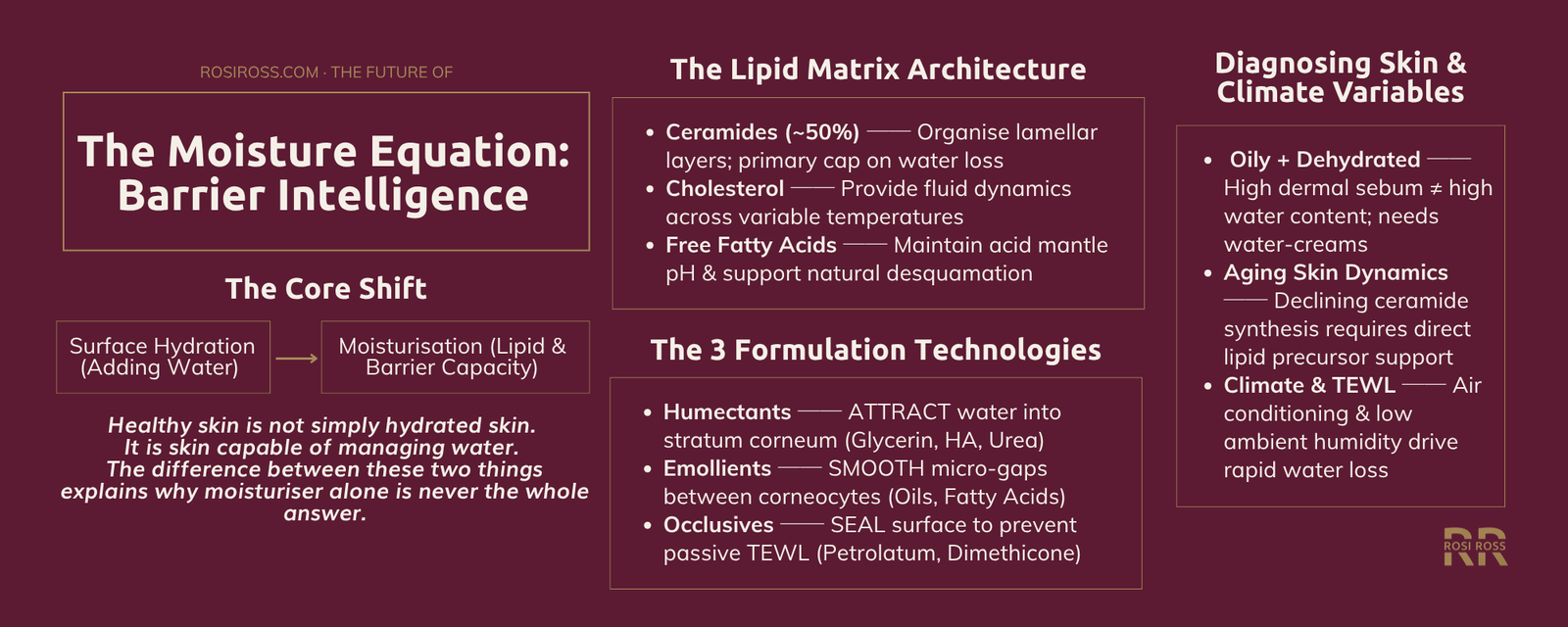
Hydration refers to the water content of the stratum corneum — the outermost layer of the epidermis — and the availability of that water to maintain the layer’s flexibility and functional integrity. Moisturisation is the broader process of improving skin softness, suppleness, and barrier function through ingredients that work through three distinct mechanisms: humectants (glycerin, hyaluronic acid, urea, sodium PCA) that attract water to the outer skin from the environment or deeper epidermal layers; emollients (fatty acids, plant oils, esters) that fill the spaces between corneocytes and smooth the skin’s surface texture; and occlusives (petrolatum, dimethicone, beeswax) that form a physical barrier on the skin’s surface that reduces the rate of transepidermal water loss. A product that provides only humectancy without occlusion or lipid support may temporarily increase surface water content without addressing the barrier dysfunction that causes water to leave the skin rapidly.
The skin barrier runs on lipids — and why ceramides are the architecture, not the buzzword
The stratum corneum is a remarkable structure — a layer of flattened, dead skin cells called corneocytes embedded in a matrix of intercellular lipids that controls the passage of water and other substances through the skin’s outermost surface. The architectural metaphor of bricks and mortar is useful as a starting point: the corneocytes are the bricks, and the lipid matrix is the mortar that holds them in organised relationship. But the metaphor understates what the lipid matrix actually does. It is not simply structural. It is dynamic, responsive to environmental conditions, subject to disruption by surfactants, solvents, and pH changes, and capable of repair when provided with the appropriate lipid precursors.
The three primary lipid classes of the stratum corneum — ceramides, cholesterol, and free fatty acids — are present in approximately equimolar ratios in healthy barrier function. Ceramides, which constitute approximately 50% of the stratum corneum lipid matrix by weight, are the most structurally significant: they are the lipid class most directly responsible for organising the barrier’s lamellar structure, the layered lipid arrangement that is most effective at limiting transepidermal water loss. Cholesterol provides fluidity to the lipid matrix, maintaining its ability to function across a range of temperatures. Free fatty acids contribute to the stratum corneum’s slightly acidic pH, which supports the activity of the enzymes responsible for corneocyte shedding and limits the growth of pathogenic microorganisms.
When ceramide levels are depleted — by aggressive cleansing, by exfoliating actives, by environmental stress, by the natural changes of ageing — the lamellar structure of the lipid matrix becomes disorganised, and transepidermal water loss increases. This is the biological basis of the ceramide category in skincare: not marketing vocabulary but a specific formulation response to a documented mechanism of barrier dysfunction. The Kopari Moisture Whipped Ceramide Cream addresses this mechanism directly — a lipid-supportive formulation designed to replenish the ceramide component of the barrier and restore the lamellar organisation that reduces water loss. Applied to skin whose barrier has been disrupted, this kind of ceramide-rich formulation does not simply feel comfortable on the surface. It provides the lipid substrate that the barrier’s repair mechanisms can use to restore its structural integrity. The most effective barrier-supporting ingredients are those that most closely mirror the lipid composition of the barrier they are supporting — and ceramides are the most structurally specific available.

Humectants, emollients, and occlusives — the three technologies of moisturisation
The three-part framework of humectants, emollients, and occlusives is the most useful conceptual tool for understanding why moisturisers behave differently and why no single moisturiser is universally optimal. Each category addresses a different aspect of the skin’s water management system, and the most effective moisturiser formulations are those that combine all three in proportions appropriate to the skin type, skin condition, and environmental context they are designed to serve.
Humectants attract water. The most widely used humectants — glycerin, hyaluronic acid, urea, sodium PCA, panthenol — are water-soluble molecules that bind water through hydrogen bonding, holding it in the outer layers of the skin. In a humid environment with adequate barrier integrity, humectants can draw water from the air into the stratum corneum. In a dry environment or on a compromised barrier, they may draw water from the deeper epidermal layers, producing a temporary surface effect followed by increased transepidermal water loss as water redistributes. The Dr. Brandt Hydraglass Prep Serum Gel exemplifies the humectant-first approach: a lightweight, water-based formulation designed to increase hydration at the surface level as a preparatory step before subsequent moisturisation, demonstrating that humectant and emollient/occlusive functions are most effective when applied sequentially rather than simultaneously in a single product.

Emollients soften and smooth. They work by filling the spaces between corneocytes and smoothing the surface irregularities that make skin feel rough — rather than by adding water or reducing water loss. The Dr. Brandt Daytime Face Firming Cream combines emollient-rich textures with a daytime moisturiser’s structural requirements — firm enough to provide a cosmetic base, sufficiently emollient to support the barrier’s flexibility across the environmental exposure of a full day. The Dr. Brandt Glassaholic Face Serum Peel addresses the surface dimension from a different angle: a peel formulation that removes the accumulated corneocyte layers that can make skin surface texture appear rough and dull, creating a smoother surface for subsequent moisturisation to work on.


Oily skin can still be dehydrated — why sebum production and water content are different variables
The most persistent error in skincare directed at oily and blemish-prone skin is the conflation of sebum production with hydration status. These are governed by different biological mechanisms — sebum is produced by sebaceous glands in the dermis, while the stratum corneum’s water content is regulated by the barrier’s lipid matrix and the availability of natural moisturising factors — and they can be independently high or low. A person can have high sebaceous activity producing significant surface oil while simultaneously having a disrupted barrier and insufficient stratum corneum water content: a combination that manifests as oily-feeling skin that is simultaneously sensitive, reactive, and prone to tightness after cleansing.
The moisturising strategy appropriate for this combination requires a formulation that provides adequate hydration and barrier support without adding occlusive or emollient weight that would compound the sensation of excess sebum. The e.l.f. Cosmetics Blemish Breakthrough Acne Calming Water Cream exemplifies this approach: a water-cream texture that provides humectant hydration and barrier-calming actives in a lightweight, gel-adjacent formulation that does not read as moisturiser-heavy on oily skin while still addressing the hydration deficit that oily skin can experience as much as any other skin type. The instinct to avoid moisturiser entirely on oily skin — based on the intuition that adding anything to already-oily skin compounds the problem — is one of the most common causes of reactive, sensitised oily skin, because it allows barrier function to deteriorate in the very skin type that generates the most friction with cleansers and active treatments.

Why aging skin requires a different moisture strategy
The relationship between age and barrier function is more nuanced than the simple claim that older skin is dry. The more accurate formulation is that aging skin experiences changes to multiple components of the barrier system simultaneously — changes that can increase its susceptibility to moisture loss and barrier disruption and that require a more deliberate and specifically calibrated moisturising strategy than younger skin typically needs.
These changes include: alterations in the lipid composition of the stratum corneum, with ceramide synthesis declining with age; slower recovery from barrier disruption caused by environmental stress, cleansing, or active ingredients; changes to the filaggrin breakdown products that constitute the natural moisturising factor; and reduced sebaceous activity that decreases the skin’s own lipid contribution to surface moisture. The combined effect is a skin that is more susceptible to transepidermal water loss, less able to recover quickly from barrier challenges, and more likely to exhibit dryness, roughness, and sensitivity as consequences of what is fundamentally a lipid and barrier integrity problem rather than simply a water availability problem. The moisturising strategy that addresses this — richer emollient textures, ceramide-supportive lipid formulations, reduced reliance on active ingredients that further challenge the barrier, more consistent application — is not simply adding more water. It is providing the lipid substrate and barrier support that the skin’s own declining synthesis capacity no longer provides in sufficient quantity. The LAWLESS Mini Forget the Filler Perfecting Vegan Relief Facial Moisturiser addresses this register with a formulation that prioritises surface smoothing and temporary plumping — the immediate visual consequence of restoring adequate hydration to a dehydrated stratum corneum, which makes the layer more uniform and visually smoother. The most considered approach to performance skincare recognises that the visual language of plumping and smoothing describes a real biological phenomenon: well-hydrated corneocytes swell slightly, reducing the visual prominence of surface dehydration lines.

Transepidermal water loss (TEWL) refers to the passive diffusion of water vapour through the skin to the external environment — a process that occurs continuously regardless of sweating, at a rate determined by the integrity of the stratum corneum’s lipid barrier. In healthy skin with intact barrier function, TEWL is maintained at a low level by the organised lamellar lipid structure of the stratum corneum. When the barrier is disrupted — by detergent exposure, physical trauma, inflammatory conditions, UV damage, or depletion of the lipid matrix components — TEWL increases, the skin loses water more rapidly, and the compensatory mechanisms that support hydration are overwhelmed. TEWL is used clinically as the primary measurement of barrier integrity because it directly reflects the functional competence of the stratum corneum’s lipid organisation. A moisturiser that reduces TEWL — through occlusive ingredients that physically slow water vapour transmission, or through lipid ingredients that support barrier reorganisation — is addressing barrier function rather than simply applying water to the surface.
Your climate changes what your skin needs — the adaptive moisturising equation
The same moisturiser applied to the same skin produces a different result in Dubai in July, London in February, New York in August, and Seoul in November. This is not simply a sensory difference — a cream that feels appropriate in a dry winter climate can feel heavy and insufficient in a humid summer environment — but a functional one. Ambient humidity directly affects transepidermal water loss: in low-humidity environments, the concentration gradient driving water vapour from the skin to the air increases, accelerating TEWL and creating greater demand for occlusive or lipid-rich barrier support. In high-humidity environments, the gradient is reduced, TEWL decreases, and the skin may require only lighter humectant support rather than heavy occlusion.
Air conditioning creates a specific microclimate consideration: artificially dehumidified indoor air in a hot climate can produce TEWL rates more comparable to cold dry climates than to the warm humid outdoor environment the skin encounters outside. The same climate variables that change how fragrance molecules perform on skin change what the barrier requires from a moisturiser. A person moving between air-conditioned indoor spaces and humid outdoor environments in Dubai or Singapore experiences barrier conditions that change multiple times in the course of a single day — which is why a travel-adaptive moisturising strategy, rather than a fixed product application, is the most accurate approach to skincare across multiple climate contexts. The Vegan Relief Facial Moisturiser and the 9WISHES VB Premium Tone-Up Cream SPF21 represent the lighter-texture end of the facial moisturiser spectrum — formulations appropriate for humid or warm environments where the barrier’s primary need is surface-level hydration and photoprotection rather than heavy lipid support.


Antioxidants and SPF in the moisturiser — the daytime formulation equation
The daytime moisturiser occupies a position in the skincare routine that requires it to perform several functions simultaneously: it must provide adequate hydration and barrier support, prepare the skin’s surface for the environmental exposure of the day, and increasingly incorporate additional active benefits — antioxidant protection, photoprotection, or cosmetic finish — that address the specific daytime challenges the skin faces. This multifunctionality is the source of the daytime moisturiser’s increasing sophistication as a formulation category.
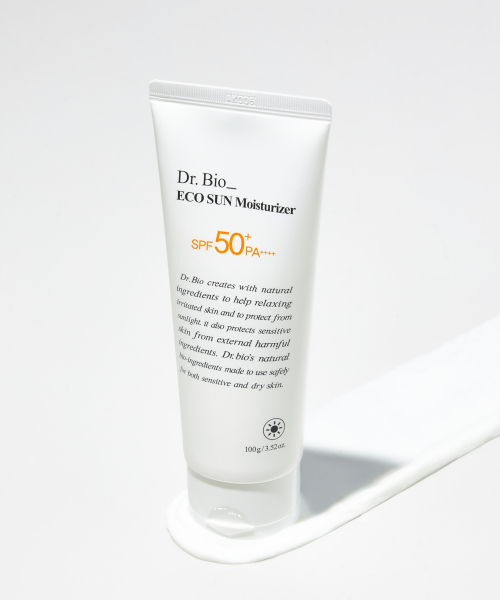
Vitamin C in a moisturiser formulation — as in the Bliss Bright Idea Vitamin C Moisturiser — serves the antioxidant function of neutralising the reactive oxygen species generated by UV exposure and environmental pollution before they can initiate the inflammatory and oxidative processes that contribute to barrier disruption and visible ageing. This is distinct from the brightening benefit that Vitamin C is most commonly marketed for: the antioxidant mechanism is the primary skincare benefit, and it operates upstream of both visible skin tone changes and collagen degradation. The DR. BIO ECO SUN Moisturiser addresses the photoprotection dimension — a daytime formulation that combines moisturising benefit with UV filtering, relevant for skin that receives significant sun exposure and requires both barrier support and photoprotection from a single product. The distinction between what SPF in a moisturiser provides and what a dedicated sunscreen provides remains important: a moisturiser with SPF is appropriate for incidental daily sun exposure; dedicated photoprotection is required for extended or intense sun exposure.

The body has different moisture economics — and deserves its own strategy
Body skin is frequently treated as an extension of facial skincare — a surface to which leftover or budget versions of facial moisturising products are applied as an afterthought. This treatment reflects a misunderstanding of the body skin’s specific characteristics and moisturising requirements. Body skin covers a significantly larger surface area, is subject to more extensive cleansing with surfactant-containing products, is more frequently exposed to hot water, is shaved in many areas, and has different sebaceous activity patterns from facial skin — typically less oiliness in areas like the lower legs, which are among the body regions most susceptible to chronic dryness and barrier disruption.
The humanrace Humidifying Body Cream represents the barrier-supportive approach to body moisturisation: a formulation with sufficient emollient and occlusive weight to address the barrier challenges of skin that has been cleansed with surfactants and exposed to environmental conditions, while remaining practical for application across a large surface area. The MALIN+GOETZ Vitamin B5 Body Lotion represents the lighter-texture alternative — a lotion formulation appropriate for daily maintenance moisturisation of body skin that does not require heavy lipid repair, with panthenol (Vitamin B5) providing the humectant and healing support that makes it suitable for routine use across varied skin conditions. The principle governing body moisturiser selection is the same as for facial moisturiser selection: the most appropriate formulation is determined by the specific barrier condition and environmental context of the skin being moisturised, not by a generic preference for heavy or light textures.


Humectants are ingredients that attract and bind water molecules — either from the environment or from the deeper layers of the skin — into the stratum corneum. Common humectants include glycerin, hyaluronic acid, urea, sodium PCA, panthenol, and sorbitol. Emollients are ingredients that fill the spaces between corneocytes and smooth the surface texture of the skin — they improve the sensory character of skin without primarily affecting water content or water loss. Common emollients include fatty acids, plant oils, esters, and silicones. Occlusives are ingredients that form a physical barrier on the skin’s surface that reduces the rate of transepidermal water loss by slowing water vapour transmission — they do not add water to the skin but reduce the rate at which water leaves it. Common occlusives include petrolatum, dimethicone, beeswax, and lanolin. The most effective moisturisers combine all three categories because hydration without retention produces a temporary effect that fades as water redistributes; retention without hydration may feel heavy without improving water availability; and emollients without either humectancy or occlusion improve texture without addressing water management.
The future of moisturisation is barrier intelligence
The trajectory of skincare formulation — toward microbiome awareness, barrier-first philosophy, personalised routines adapted to individual skin’s specific needs rather than generic skin-type categories, and climate-adaptive strategies that account for the environmental conditions in which skin is actually living — points toward a future in which the question “which moisturiser is best?” is replaced by the more useful question: “what does my skin require under these conditions?”
The same analytical literacy that governs the most considered approach to lip care ingredients applies to moisturisation: understanding the mechanism is the prerequisite for choosing the right product. This shift requires a different relationship between the skincare consumer and their skin — one characterised by observation rather than prescription, by understanding the biological mechanisms that determine skin condition rather than simply following a routine recommended by a brand. The same evidence-based approach that is reshaping how the most considered beauty consumers relate to skincare broadly is reshaping how they relate to moisturisation specifically: moving away from the assumption that more ingredients, higher concentrations, or more elaborate routines produce better outcomes, and toward the more precise understanding that the most effective moisturising routine is the one most specifically calibrated to the skin’s actual biological requirements in its actual environmental context. The future moisturiser is not necessarily the most complex one or the most expensive one. It is the one that most precisely addresses the moisture equation as the individual’s skin is currently experiencing it — water, lipids, barrier integrity, climate, age, and the specific conditions of the life being lived in and through it.
The skin barrier refers to the functional capacity of the stratum corneum — the outermost layer of the epidermis — to regulate the passage of water and other substances between the body and the external environment. Its primary structural element is the lamellar lipid matrix: alternating layers of ceramides, cholesterol, and free fatty acids organised in a specific crystalline arrangement that limits transepidermal water loss while allowing the controlled passage of some substances. Barrier integrity describes the degree to which this lipid structure is intact and organised — when integrity is high, TEWL is low and the skin retains water effectively; when integrity is compromised, TEWL increases, the skin loses water more rapidly, and its vulnerability to irritants, allergens, and microorganisms increases. All effective moisturisation ultimately supports barrier integrity — either by providing the water that the barrier’s own lipid structure is failing to retain (humectants), by smoothing and filling structural irregularities (emollients), by slowing water loss from the surface (occlusives), or by providing the lipid components that allow the barrier’s own repair mechanisms to restore its structural organisation (ceramides, cholesterol, fatty acids).
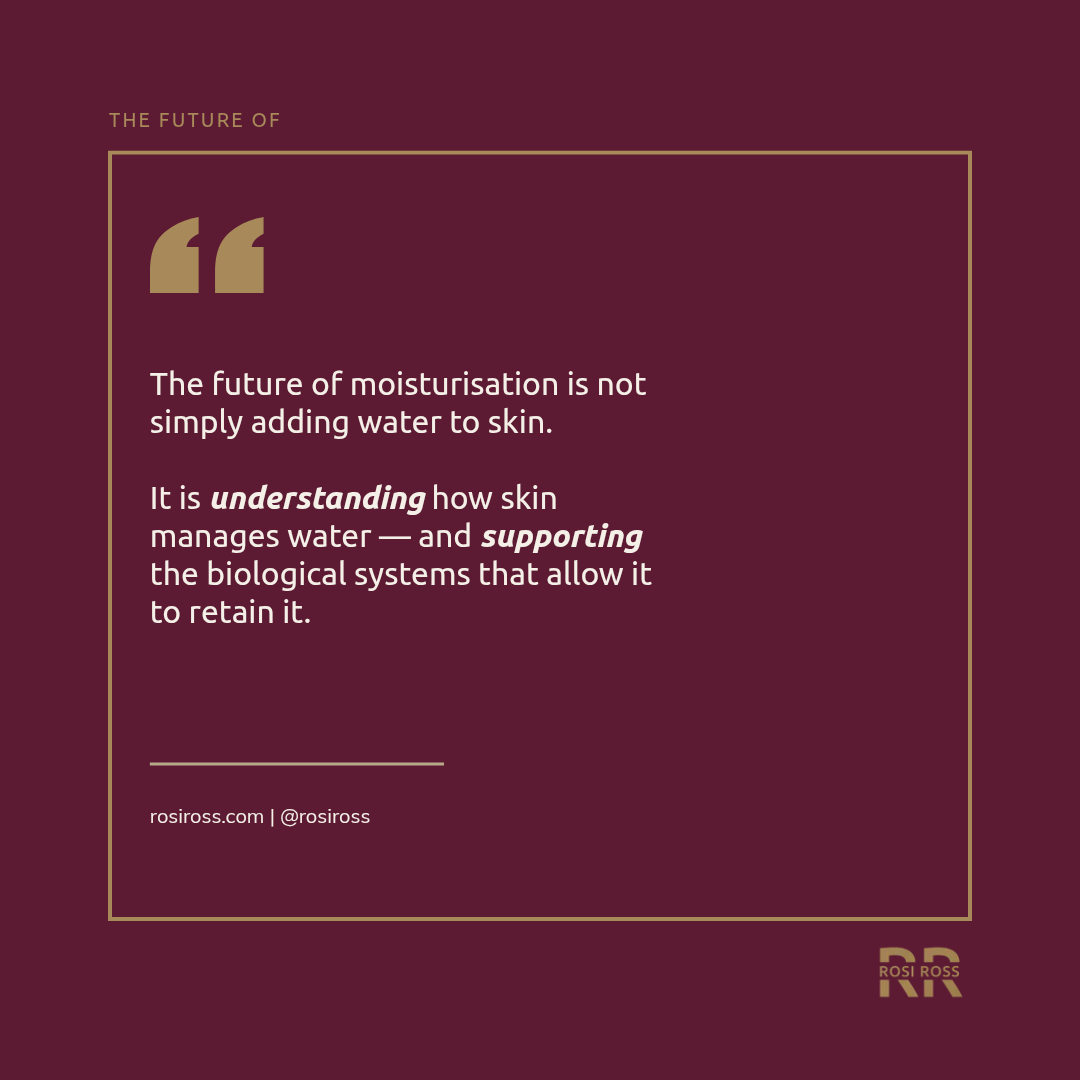
“The future of moisturisation
is not simply adding more water to skin.
It is understanding how skin manages water —
and supporting the biological systems
that allow it to retain it.
Ceramides. Cholesterol. Fatty acids.
The architecture of the barrier
that holds everything in.
The moisturiser that understands this
is not necessarily the richest
or the most expensive
or the most elaborately formulated.
It is the one most precisely calibrated
to the moisture equation
as the skin is currently experiencing it.”

